254 This is an Open-Access article distributed under the terms of the Creative Commons Attribution Non-Commercial License (http://
creativecommons.org/licenses/by-nc/3.0) which permits unrestricted non-commercial use, distribution, and reproduction in any medium, provided the original work is properly cited.
J. Mushrooms 2017 December, 15(4):254-258 http://dx.doi.org/10.14480/JM.2017.15.4.254 Print ISSN 1738-0294, Online ISSN 2288-8853
© The Korean Society of Mushroom Science
*Corresponding author E-mail : [email protected] Tel : +82-31-290-6227 Received November 30, 2017 Revised December 15, 2017 Accepted December 21, 2017
양송이에서 포식성 스키미투스응애 (Stratiolaelaps scimitus)를 이용한 버섯응애류의 생물적 방제 효과
윤정범 · 김동환 · 양창열 · 서미혜 · 김형환*
국립원예특작과학원 원예특작환경과
Biological control of mushroom mites using predatory mite Stratiolaelaps scimitus in button mushroom (Agaricus bisporus) cultivation
Jungbeom Yoon, Hyeonghwan Kim*, Donghwan Kim, Changyeol Yang, and Mihye Seo
Horticultural and herbal crop environment division, National Institute of Horticultural and Herbal Science, RDA, 100, Nong- saengmyeong-ro, Iseo-myeon, Wanju-gun, Jeollabuk-do, 55365, Republic of Korea.
ABSTRACT: Mushroom mites have recently caused severe damage to sawdust beds, mushroom mycelia, and fruiting bodies;
therefore, they have reduced the production of the button mushroom, Agaricus bisporus, in greenhouses. There are currently no registered pesticides for mushroom mites. It is necessary to selectively control mushroom flies and mites without affecting the growth of the mushroom. We examined biological control of mushroom mites using predatory mite Stratiolaelaps scimitus in button mushroom cultivation. As a result, a three times treatment (1 treatment after water cleaning, 1 treatment after fungus inoculation, and 1 treatment before or after casing) was most effective at controlling mushroom mites, with 3.000 predatory mites (3 bottles) scattered evenly over 165–230 m2 every 1–2 m. Predatory mite Stratiolaelaps scimitus could control mushroom flies and mites at the same time and could be used at any time during cultivation.
KEYWORDS: Agaricus bisporus, Biological control, Mushroom mite, Stratiolaelaps scimitus
양송이 재배지에 발생하여 배지, 균사, 자실체를 가해하 며 버섯 품질을 저하시키고 생산량을 감소시키는 주요 해 충으로는 버섯파리류, 버섯응애류, 버섯선충류가 있다. 이 러한 해충들은 균상의 유기물, 버섯 균사, 자실체를 가해 하거나 각종 병원균을 매개하여 직간접적으로 피해를 주
고 있으며, 재배사의 집단화 등으로 피해는 해마다 늘어 나고 있다(Yoon et al, 2016). 특히 과거에는 돌발적으로 피해를 주었던 버섯응애류가 최근에는 양송이 주산지를 중심으로 빈번하게 발생하여 피해 농가가 확산되고 있어 효과적인 방제기술이 요구된다.
버섯응애류 방제용으로 등록된 약제는 아직까지 없으며 적용 가능한 살충제가 있다고 하더라도 잔류 문제로 인하 여 사용 시기에 제약이 많아 방제에 어려움이 있다. 또한 향후 2019년부터 농약 허용물질목록 관리제도(Positive List System, PLS)가 확대 적용되면 등록되지 않은 살충 제는 사용이 불가능하다. 따라서 양송이 생장에는 영향이 없이 안전하면서 버섯응애류만 선택적으로 방제할 수 있 는 친환경 방제기술 개발이 절실하다.
버섯응애류는 버섯파리류에 편승하여 이동할 수 있으며 버섯파리류 1개체당 버섯응애류 60개체 정도까지 편승할 수 있다고 보고되어(Fletcher and Gaze, 2008; Keum et al., 2015) 버섯응애류 뿐만 아니라 버섯파리류 방제 또한 중요하다.
법(kim et al., 2012; kim et al., 2013)과 LED 유인등+끈 끈이트랩을 이용한 물리적 방제법(kim et al., 2014)을 복 합적으로 이용한 버섯파리 친환경 종합관리기술이 개발 되어, 2016년부터 원예특작 신기술 보급 사업을 통해 각 지역의 버섯 재배지에서 추진되고 있다. Cabrera et al.
(2004, 2005)과 Jandricic et al.(2006) 또한 포식성 천적 을 이용한 방제 효과와 그 가능성을 시사했다.
본 연구는 양송이의 버섯응애류 피해증상과 버섯파리를 포식하는 포식성 천적 응애 스키미투스응애를 이용한 버 섯응애류의 생물적 방제효과를 검정하였다.
스키미투스응애의 버섯응애류 포식량 조사
겹겹이 접은 필터페이퍼 5장을 증류수로 적신 후 72×72×100 mm의 플라스틱 용기(Insect breeding box, SPL)내 벽면쪽에 넣고 시판하는 스키미투스응애(Stratiolaelaps scimitus, syn. Hypoaspis miles)(마일즈응애, 경농) 성충을 얇은 붓을 이용하여 1개체씩 용기 안으로 옮긴 후 48시간 절식시켰다. 부여 양송이 재배사에서 채집한 버섯응애류 를 10개체부터 10개체씩 늘여 100개체까지의 처리구를 설정하여, 수분을 공급한 필터페이퍼 1장이 깔린 직경 6 mm 페트리디쉬에 48시간 절식시킨 스키미투스응애 1 개체와 버섯응애류를 넣고 24시간 후 버섯응애류의 치사 개체수를 현미경으로 관찰하여 스키미투스응애 1개체당 버섯응애류 포식량을 조사하였다.
스키미투스응애의 버섯응애류 방제효과 실증 조사 버섯응애류가 발생하여 피해를 주고 있던 양송이 재배 농가(부여)에서 스키미투스응애를 재배사에 처리하여 방 제효과를 시험하였다. 재배사 면적은 7×15 m, 균상베드 면적은 1.2×12 m였으며 전체 4단 2줄로 이루어져 있었다.
시험은 페상 후 입상 전 물청소 시기를 기준으로 물청소 만 한 무처리구, 약제(에톡사졸)+열스팀 처리구, 스키미투 스 1회 처리구(물청소 후 재배사 바닥에 스키미투스응애 1회 처리), 스키미투스 2회 처리구(물청소 후 바닥 1회+균 접종 후 1회 처리), 스키미투스 3회 처리구(물청소 후 바 닥 1회+균 접종 후 1회+복토 후 1회 처리)를 설정하여 40 일 후 각 시험구에서의 버섯응애류 밀도를 조사하였다.
스키미투스응애는 10,000마리/병를 설정한 처리구에 맞게 1~3회 바닥이나 균상베드 위에 1~2 m 간격으로 골고루 흩어 뿌렸다. 버섯응애류 밀도는 약 4 g 정도의 복토 흙덩 이를 무작위로 채집 후 현미경으로 조사하였다.
양송이의 버섯응애류 피해증상
양송이의 버섯응애류 피해증상을 Fig. 1에 나타내었다.
버섯응애류가 발생하여도 밀도가 낮을 경우 육안으로 관 찰이 어려우며 밀도가 높아지면 복토 표면이나 버섯 자실
체 위에 부분적으로 연갈색 녹 가루처럼 관찰되었다. 방 치할 경우 번식력이 강해 1~2주면 균상 전체가 연갈색 가 루가 가득 앉은 것처럼 보이며 시간이 더 경과되면 바닥 에도 같은 현상이 보였다. 재배초기에 밀도가 높을 경우 균사가 복토층 위로 전혀 자라지 않아 수확이 이루어지지 않았다. 즉 수확 전 버섯응애류 밀도가 높을 경우 1주기 수확 후 자실체가 형성되지 않아 2주기 수확이 전혀 이루 어지지 않았다. 재배농가에서는 버섯응애류가 관찰되면 형성되었던 자실체만 수확 후 폐상하였다. 폐상 시 열스 팀 처리만을 할 경우 버섯응애류가 열을 피해 바닥으로 이동하기 때문에 응애류 약제나 포르말린 등을 병행 처리 후 물청소를 하는 경우도 있었다. 한번 발생했던 재배사 에서는 폐상 후 소독을 하지 않을 경우 다음 재배에서도 계속해서 발생하였다.
스키미투스응애의 버섯응애류 포식량
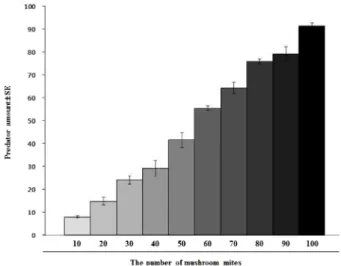
스키미투스응애의 버섯응애류 포식량은 버섯응애류 10 개체 투입구에서 7.9마리, 20개체 투입구에서 14.8마리, 30개체 투입구에서 24마리, 40개체 투입구에서 29.2마리, 50개체 투입구에서 41.5마리, 60개체 투입구에서 55.4마 리, 70개체 투입구에서 64.3마리, 80개체 투입구에서 75.8마리, 90개체 투입구에서 79.2마리, 100개체 투입구 에서 91.4마리를 나타냈으며, 스키미투스응애의 버섯응애 류 포식량은 버섯응애류 개체수가 증가할수록 포식량도 증가하였다(Fig. 2). 현미경으로 관찰한 결과 스키미투스 응애는 구침(Fig. 3)으로 찌르면서 이동하며, 구침에 찔린 버섯응애류를 포식하는 경우도 있었지만 찌른 후 재빨리 이동해서 다른 개체를 찌르는 현상도 관찰되어 에너지 흡 수만의 목적이 아니더라도 포식 활동(구침으로 찌르는 움 직임)을 하는 것으로 판단된다. 스키미투스응애는 활발한 이동 중 구침으로 여기저기 찌르는 습성이 있어 찔린 먹 이원은 포식되거나 찔린 상처로 인해 약해지거나 치사한 Fig. 1. Mushroom damage of mushroom mites.
다. 제한된 공간에 버섯응애류의 밀도가 높을수록 스키미 투스응애와 버섯응애류의 조우 확률은 높아지고 스키미 투스응애의 잦은 포식 활동으로 인해 상처 난 버섯응애류 개체수도 증가하기 때문에 버섯응애류 개체수가 증가할 수록 스키미투스응애 포식량도 증가한 것으로 판단된다.
예비실험으로 스키미투스응애 50개체와 버섯응애류 300 개체 이상을 직경 6 mm 페트리디쉬에 넣은 결과 스키미 투스응애에게 찔려 상처 난 버섯응애류가 약해져 있을 때 주위에 있던 스키미투스응애들이 집단으로 모여 포식하 는 현상이 관찰되어 스키미투스응애의 밀도가 높을수록 버섯응애류의 포식량 및 치사량은 더 많아질 것으로 판단 된다.
스키미투스응애의 버섯응애류 방제효과
실증 시험 결과 스키미투스응애 3회 처리는 10~40일까 지 버섯응애류의 밀도가 균일하게 0에 가깝게 유지되었으 나, 그 외 처리구에서는 시간이 경과되면서 버섯응애류 밀도가 점차적으로 높아졌다(Fig. 4). 물청소 후 40일이 경과된 지점에서의 버섯응애류 밀도는 무처리 732.3, 약 제+열스팀 처리 574.1, 스키미투스응애 1회 처리 414.7,
스키미투스응애 2회 처리 196.9 스키미투스응애 3회 처리 0으로 나타났다.
Fig. 5는 처리간의 양송이 생산량을 비교한 결과이다.
무처리 737.0, 약제+열스팀 처리 748.3, 스키미투스응애 1회 처리 937.0 스키미투스응애 2회 처리 2246.0, 스키미 투스응애 3회 처리 3079.3으로 나타났다. 무처리 및 관행 농가(약제+열스팀), 스키미투스응애 1회 처리에서 1~2주 기만의 수확으로 그친 것에 비하여 스키미투스응애를 처 리하였을 때에는 4주기까지 안정적으로 버섯이 생산되어 3배 이상의 차이를 보였다.
따라서 스키미투스응애 30,000마리(3병)를 재배사 165
~230 m2 기준으로 균상 준비 전 물청소 후 1회, 균 접종 후 1회, 복토 전후 1회 등 3회를 1~2 m간격으로 골고루 균상 위에 처리하면 버섯응애류 방제를 효과적으로 할 수 있을 것으로 판단된다. 스키미투스응애의 처리만으로 양 송이의 주요 해충인 버섯파리의 알, 유충, 번데기, 버섯응 Fig. 2. The predator amount of Stratiolaelaps scimitus
according to the number of mushroom mites.
Fig. 3. The stylet of Stratiolaelaps scimitus.
Fig. 4. Biological control effect of Stratiolaelaps scimitus against mushroom mites on mushroom cultivation.
10~40days represent mean the number of days after water cleaning before spreading compost in beds.
Fig. 5. Comparison of mushroom production by Stratiolaelaps scimitus treatment.
양송이에서 스키미투스응애를 이용한 버섯파리 Lycoriella solani (Jess and Kilpatrick, 2000), Bradysia matogrossensis (Moraes et al., 2007; Castilho et al., 2009) 등의 버섯파 리리류 방제 효과에 관한 보고는 다수 있으나 스키미투스 응애를 이용한 버섯응애류 방제효과에 관한 보고는 처음 이다. 최근에는 스키미투스응애의 다양한 생태, 생리에 관 한 연구가 진행되고 있다(Lin et al, 2017; Wen et al, 2017).
양송이에서 발생하는 버섯응애류에는 Tarsonemid mites (Tarsonemus myceliophagus), Pygmy mites (Microdispus lambi, syn. Brennandania lambi), Red pepper mites (Siteroptes mesembrinae, syn. Pygmephorus mesembrinae), Digamasellus fallax 등이 있으며(Fletcher and Gaze, 2008), Pumnuan et al. (2010)은 Luciaphorus perniciosus, Itisha and Anita (2017)은 Tyrophagus putrescentiae이 향후 버섯재배에서 방제가 필요한 버섯응애로 분류하였다.
Keum et al. (2015)은 국내 발생한 버섯응애 Arctoseius cetratus를 보고하였다. 국내 버섯응애류에 관한 연구가 아직까지 미흡한 실정이며 향후 국내 버섯응애류의 발생 종, 생태, 방제에 대한 연구가 시급하다. 본 연구는 기존 에 버섯파리의 알, 유충, 번데기의 생물적 방제 수단으로 이용되고 있던 포식성 천적인 스키미투스응애가 버섯응애 류의 생물적 방제에도 사용될 수 있는 기초자료를 제공하 였다.
적 요
과거 돌발적으로 피해를 주었던 버섯응애류가 최근 양 송이 주산지를 중심으로 빈번하게 발생하여 피해 농가가 확산되고 있다. 버섯응애류 방제용으로 등록된 약제는 아 직까지 없으며 적용 가능한 살충제가 있다고 하더라도 잔 류 문제로 인하여 사용 시기에 제약이 많아 방제에 어려 움이 있다. 따라서 양송이 생장에는 영향이 없이 안전하 면서 버섯파리, 버섯응애류만 선택적으로 방제할 수 있는 친환경 방제기술 개발이 절실하다. 본 연구에서는 버섯파 리를 포식하는 포식성 천적 응애 스키미투스응애를 이용 한 버섯응애류의 생물적 방제효과를 검정하였다. 그 결과 스키미투스응애 30,000마리(3병)를 재배사 165 ~230 m2 기준으로 균상 준비 전 물청소 후 1회, 균 접종 후 1회, 복토 전후 1회 등 3회를 1~2 m 간격으로 골고루 균상 위 에 처리하면 버섯응애류 방제를 효과적으로 할 수 있을 것으로 판단되며 스키미투스응애의 처리만으로 양송이의 주요 해충인 버섯파리의 알, 유충, 번데기, 버섯응애류를 동시에 방제할 수 있으며 작기 중 사용 시기에 구애받지 않고 사용할 수 있는 것이 장점이다.
이 연구는 2017년도 농촌진흥청 국립원예특작과학원의 공동연구사업(PJ011125022017)으로 수행된 연구결과입 니다.
References
Cabrera AR, Cloyd RA, Cloyd, Zaborski, ER. 2004. Effects of greenhouse pesticides on the soil-dwelling predatory mite Stratiolaelaps scimitus (Acari: Mesostigmata: Laelapidae) under laboratory conditions. J Economic Entomol. 97:793-799.
Cabrera AR, Cloyd RA, Cloyd, Zaborski, ER. 2005. Lethal and sub-lethal effects of Novularon (Pedestal?) on the soil-dwlling predatory mite, Stratiolaelaps scimitus (Womersley) (Acari:
Mesostigmata: Laelapidae), under laboratory conditions. J Entomol Sci. 40: 47-53.
Castilho RC, Moraes GJ, Silva ES, Freire RAP, Eira FCD. 2009.
The predatory mite Stratiolaelaps scimitus as a control agent of the fungus gnat Bradysia matogrossensis in commercial production of the mushroom Agaricus bisporus. Inter J Pest Manage. 55:181-158.
Fletcher JT, Gaze RH. 2008. Mushroom pest and disease control, A colour handbook. Manson publishing, London, UK, pp.145-165.
Itisha RG, Anita M. 2017. Damage potential of Tyrophagus putrescentiae Schrank (Acari: Acaridae) in mushrooms. Emer Life Sci Res. 3:6-15.
Jandricic S, Scott-Dupree CD, Broadbent AB, Harris CR, Murphy G. 2006. Compatibility of Atheta coriaria with other biological control agents and reduced-risk insecticides used in greenhouse Floriculture Integrated Pest Management Programs for Fungus Gnats. Canadian Entomologist. 138:712- 722.
Jess S, Kilpatrick M. 2000. An integrated approach to the control of Lycoriella solani (Diptera:Sciaridae) during production of the cultivated mushroom (Agaricus bisporus). Pest Manag Sci. 56:477-485.
Keum ES, Kang MG, Jung CE. 2015. New record of Arctoseius cetratus (Sellnick, 1940) (Mesostigmata:Ascidae) phoretic to sciarid fly from mushroom culture in Korea. Korean J Environ Biol. 33:209-214.
Kim HH, Cho MR, Kang TJ, Ahn SJ, Lee CJ, Cheong JC. 2012.
Damage and biological control of dark winged fungus gnats, Lycoriella ingenua (Diptera: Sciaridae) in a shiitake cultivation. J Mushrooms Sci Prod. 10:184-190.
Kim HH, Kim DH, Yang CY, Kwon SJ, Jeon SW, Song JS, Cho MR, Lee CJ, Cheong JC. 2013. Biological control of mushroom flies using the predatory mite Hypoaspis aculeifer in a shiitake cultivation. J Mushrooms Sci Prod. 11:230-239.
Lin GG, Tanguay A, Guertin C, Todorova S, Brodeur J. 2017. A new method for loading predatory mites with entomopathogenic fungi for biological control of their prey.
Biol Control. 115:105-111.
Moraes GJ, Silva ES, Vaz AC, Castilho CR. 2007. Biological control of Bradysia matogrossensis (Diptera: Sciaridae) in mushroom cultivation with predatory mites. Exp Appl Acarol.
42:87-93.
Pumnuan J, Chandrapatya A and Insung A. 2010. Acaricidal activities of plant essential oils from three plants on the mushroom mite, Luciaphorus perniciosus Rack (Acari:
Pygmephoridae). Pakistan J Zool. 42:247-252.
Wen MF, Chi H, Lian YX, Zheng YH, Fan QH, You MS. 2017.
Population characteristics of Macrocheles glaber (Acari:
Macrochelidae) and Stratiolaelaps scimitus (Acari:Laelapidae)
reared on a mushroom fly Coboldia fuscipes (Diptera:
Scatopsidae). Institute of Zoology, Chinese Acad Sci. 00:1–11.
Yoon JB, Kim HH, Jung CR, Kang, MG, Kwon SJ, Kim DH, Yang CY, Seo MH. 2016. Molecular identification of the dominant species of dark-winged fungus gnat (Diptera: Sciaridae) from button mushroom (Agaricus bisporus) in Korea. Korean J Entomol. 55:471-475.