©
2010 The Korean Nutrition Society DOI 10.4163/kjn.2010.43.4.404서울지역 유통 채소류 섭취에 따른 잔류 농약의 위해성 평가
*장미라
1§·문현경
2·김태랑
1·육동현
1·김정헌
1·박석기
1서울시보건환경연구원 강남농수산물검사소,1 단국대학교 식품영양학과2
Dietary Risk Assessment for Pesticide Residues of Vegetables in Seoul, Korea
*Jang, Mira1§·Moon, Hyunkyung2·Kim, Taerang1·Yuk, Donghyun1·Kim, Junghun1·Park, Seoggee1
1Gangnam Agro-marin Products Inspection Center, Seoul Metropolitan Government Research Institute of Public Health and Environment, Seoul 138-701, Korea
2Department of Food Science & Nutrition, Dankook University, Yongin 448-701, Korea
ABSTRACT
This paper specifically discusses the risk assessment on the pesticide residues in vegetables collected from traditional markets, big marts and departments in the southern part of Seoul. Vegetable samples were 6,583 cases from January to December in 2009. Monte-Carlo simulation was used to calculate the uncertainty for the risk index using pesticide residues, average dietary intake for vegetables and acceptable daily intake. Deterministic risk indexes were 7.33% of diethofencarb, 5.13% of indoxacarb, 3.96% of EPN, 3.92% of diniconazole and 3.09% of chlorothalonil, respectively.
And other pesticides were below 3%. Distributions of risk indexes obtained by the Monte-Carlo simulations were similar to the deterministic values, even though the confidence intervals for 95% were very wide. We confirmed that health risks caused by eating vegetables exceeded maximum residue limits of pesticide are very low and the population is generally safe, judging from the risk indexes located between 0.07 to 9.49%. (Korean J Nutr 2010; 43(4): 404 ~ 412) KEY WORDS: pesticide residues, dietary risk assessment, vegetables.
서 론
농약은 현대농업에 있어서 필수불가결한 농업자재로서 농산물의 생산성 제고 및 품질향상에 크게 기여하여 오늘 날 풍요로운 먹거리의 공급이 가능하도록 하였을 뿐 아니 라, 농산물의 생력화를 통해 노동력과 농업생산비 절감에 중요한 역할을 함으로써 농업인의 삶 향상에 큰 공헌을 하 였다. 이러한 장점에도 불구하고 농약은 생물을 살멸하는 화합물로서 정도의 차이는 있으나 독성을 가지고 있으므로 사용하는 농업인 또는 제조공정에 종사하는 사람의 건강을 해칠 우려가 있으며, 적절하게 사용하지 않을 경우 작물의 약해는 물론 환경오염을 유발시킬 가능성이 있다. 또한 농 산물에 일정량 이상 잔류될 경우 건강에 심각한 영향을 초 래하므로 농산물을 포함한 식품 중 잔류농약 문제는 사회
적으로 중요한 이슈가 되어왔다.1)
농약 사용의 증가로 인한 부작용을 최소화하기 위해 세계 보건기구 (WHO)를 비롯한 식량농업기구 (FAO), 미국환 경청 (EPA) 등에서는 잔류농약의 한계치나 권고치 등을 제 정하여 농산물의 관리에 이용하고 있다. 농약으로 인한 위 해도 (Risk)는 1일 섭취되는 식품 중 각 농약성분의 함유 량을 적분하여 위해도 계수를 곱하는 방식을 취하게 된다.
현재까지 발표된 다수의 연구들2-4)은 위해도를 계산하는데 필요한 요소들의 평균값을 이용한 결정론적인 값 (Deter- ministic value)으로 위해도를 제시하고 있다. 그러나 1일 섭 취하는 식품은 성별, 지역, 직업 등에 따라 분포가 다양하 고 식품 중에 포함된 농약성분은 농산물의 세척 및 요리 방 법에 따라 잔류량의 정도가 크게 차이가 날 수 있다. 따라 서 식사섭취로 인한 농약의 위해도는 위해도 계산에 필요 한 각 요소들의 분포에 기반한 확률론적인 값 (Stochastic value)으로 제시되어야 식품관리 정책수립 및 의사결정 도 구로 적절히 이용될 수 있을 것으로 판단된다. 따라서 본 연구에서는 2009년 서울 강남지역 시장, 대형 마트 및 백 화점에서 유통되고 있는 채소류를 대상으로 잔류농약 성분 을 분석하여 그 특성을 파악하고, 잔류허용기준을 초과한 채 접수일:2010년 6월 10일 / 수정일:2010년 6월 22일
채택일:2010년 6월 24일
*This work was supported by Seoul Metropolitan Government Research Institute of Public Health and Environment.
§To whom correspondence should be addressed.
E-mail: [email protected]
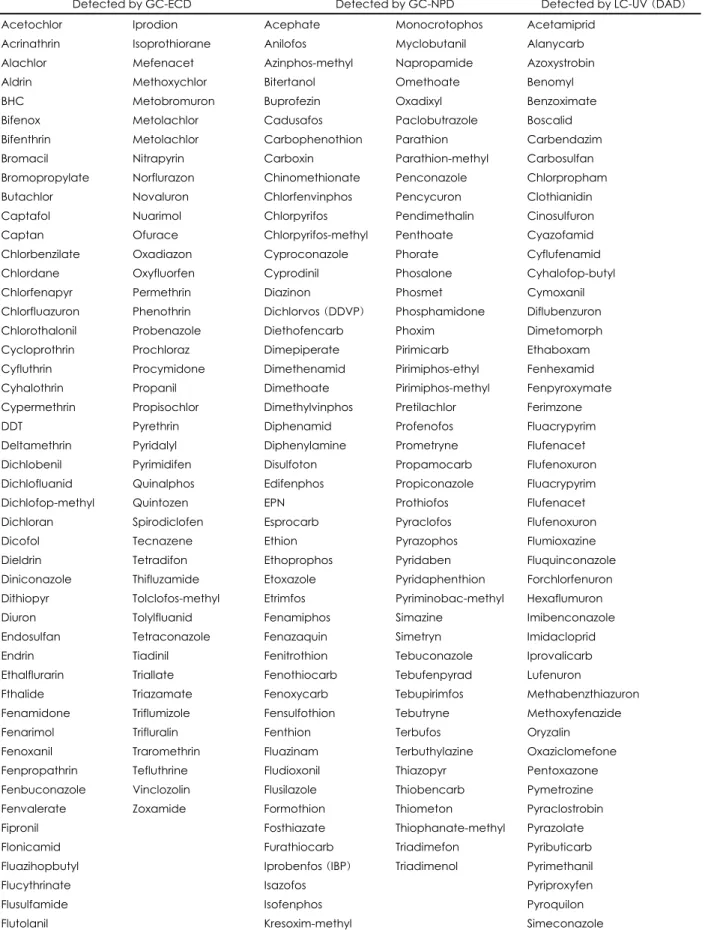
Table 1. Analyzed pesticides in vegetables
Detected by GC-ECD Detected by GC-NPD Detected by LC-UV (DAD) Acetochlor Iprodion Acephate Monocrotophos Acetamiprid Acrinathrin Isoprothiorane Anilofos Myclobutanil Alanycarb Alachlor Mefenacet Azinphos-methyl Napropamide Azoxystrobin Aldrin Methoxychlor Bitertanol Omethoate Benomyl BHC Metobromuron Buprofezin Oxadixyl Benzoximate Bifenox Metolachlor Cadusafos Paclobutrazole Boscalid Bifenthrin Metolachlor Carbophenothion Parathion Carbendazim Bromacil Nitrapyrin Carboxin Parathion-methyl Carbosulfan Bromopropylate Norflurazon Chinomethionate Penconazole Chlorpropham Butachlor Novaluron Chlorfenvinphos Pencycuron Clothianidin Captafol Nuarimol Chlorpyrifos Pendimethalin Cinosulfuron Captan Ofurace Chlorpyrifos-methyl Penthoate Cyazofamid Chlorbenzilate Oxadiazon Cyproconazole Phorate Cyflufenamid Chlordane Oxyfluorfen Cyprodinil Phosalone Cyhalofop-butyl Chlorfenapyr Permethrin Diazinon Phosmet Cymoxanil Chlorfluazuron Phenothrin Dichlorvos (DDVP) Phosphamidone Diflubenzuron Chlorothalonil Probenazole Diethofencarb Phoxim Dimetomorph Cycloprothrin Prochloraz Dimepiperate Pirimicarb Ethaboxam Cyfluthrin Procymidone Dimethenamid Pirimiphos-ethyl Fenhexamid Cyhalothrin Propanil Dimethoate Pirimiphos-methyl Fenpyroxymate Cypermethrin Propisochlor Dimethylvinphos Pretilachlor Ferimzone
DDT Pyrethrin Diphenamid Profenofos Fluacrypyrim Deltamethrin Pyridalyl Diphenylamine Prometryne Flufenacet
Dichlobenil Pyrimidifen Disulfoton Propamocarb Flufenoxuron Dichlofluanid Quinalphos Edifenphos Propiconazole Fluacrypyrim Dichlofop-methyl Quintozen EPN Prothiofos Flufenacet
Dichloran Spirodiclofen Esprocarb Pyraclofos Flufenoxuron Dicofol Tecnazene Ethion Pyrazophos Flumioxazine Dieldrin Tetradifon Ethoprophos Pyridaben Fluquinconazole Diniconazole Thifluzamide Etoxazole Pyridaphenthion Forchlorfenuron Dithiopyr Tolclofos-methyl Etrimfos Pyriminobac-methyl Hexaflumuron Diuron Tolylfluanid Fenamiphos Simazine Imibenconazole Endosulfan Tetraconazole Fenazaquin Simetryn Imidacloprid Endrin Tiadinil Fenitrothion Tebuconazole Iprovalicarb Ethalflurarin Triallate Fenothiocarb Tebufenpyrad Lufenuron
Fthalide Triazamate Fenoxycarb Tebupirimfos Methabenzthiazuron Fenamidone Triflumizole Fensulfothion Tebutryne Methoxyfenazide Fenarimol Trifluralin Fenthion Terbufos Oryzalin Fenoxanil Traromethrin Fluazinam Terbuthylazine Oxaziclomefone Fenpropathrin Tefluthrine Fludioxonil Thiazopyr Pentoxazone Fenbuconazole Vinclozolin Flusilazole Thiobencarb Pymetrozine Fenvalerate Zoxamide Formothion Thiometon Pyraclostrobin Fipronil Fosthiazate Thiophanate-methyl Pyrazolate Flonicamid Furathiocarb Triadimefon Pyributicarb Fluazihopbutyl Iprobenfos (IBP) Triadimenol Pyrimethanil Flucythrinate Isazofos Pyriproxyfen Flusulfamide Isofenphos Pyroquilon Flutolanil Kresoxim-methyl Simeconazole
소류를 섭취하였을 경우 인체 위해도를 몬테카를로 시뮬레 이션 (Monte-Carlo Simulation)을 이용하여 평가하였다.
재료 및 방법
재료 및 분석농약
2009년 1월부터 12월까지 서울 강남지역 시장, 대형 마 트 및 백화점 등에서 유통되고 있는 채소류 6,583건에 대 해 잔류농약을 분석하였다. 분석농약은 Table 1과 같이 258종을 대상으로 조사하였다.
시약 및 기구
농약 표준품은 Riedel-de Haen사 (Germany), Chem Service (USA), Dr. Ehrenstorfer GmbH (Germany) 그 리고 Wako (Japan) 등의 제품을 사용하였으며, 일반시약
은 잔류농약분석용 및 HPLC용을 사용하였다. 분석기기는 GC (6890 및 7890, Agilent, USA)와 HPLC (1100, Agil- ent, USA)를 사용하였으며, 농약을 최종 정성 확인하기 위 해 GC/MSD (5975i, Agilent, USA), LC/MSD (6130, Agil- ent, USA)를 사용하였다.
분석방법
시료전처리 방법 및 분석과정은 식품공전5) 중 잔류농약시 험법과 Lee 등6)의 동시 다성분 분석법에 따라 추출·정제한 후 GC-ECD, GC-NPD 및 HPLC-DAD로 분석하였으며 기 기분석조건은 Table 2-4에 나타내었다.
위해성평가
인체 위해성평가는 위해성 평가 (risk assessment)와 위 해도 관리 (risk management)로 나눌 수 있다. 위해성 평
Table 1. Continued
Detected by GC-ECD Detected by GC-NPD Detected by LC-UV (DAD)
Fluvalinate Linuron Tebufenozide
Folpet Malathion Teflubenzuron
Heptachlor Metconazole Thenylchlor
Hexaconazole Methidathion Thiacloprid
Imazalil Metribuzin Thiamethoxam
Indoxacarb Mevinphos Trifloxystrobin
Indanofan Molinate Triflumuron
Table 2. GC-NPD and GC-μECD conditions used in the determination of the residual pesticides
Instrument Agilent 6890N
Detector Nitrogen-phosphorus detector μElectiomn capture detector
Column DB-1701 14% cyanopropyl phenyl methyl (30 m × 320 μm ID × 0.25 μm film thickness) HP-5 5% phenyl methyl siloxane (30 m × 320 μm ID × 0.25 μm film thickness) Oven temp. 100 ℃ (2 min) → 10 /min℃ → 200℃
(1 min) → 10 /min℃ → 260 ℃ (9 min)
150 ℃ (2 min) → 10 /min℃ → 240℃
(2 min) → 15 /min℃ → 270 ℃ (25 min) Injection temp. 210℃ 230℃
Detector temp. 320℃ 280℃
Gas flow N2(1.5 mL/min) N2 (1.5 mL/min)
Air (60 mL/min)
H2(4 mL/min)
Table 3. GC-MSD conditions used in the determination of the residual pesticides
Instrument Agilent 6890N
Column HP-5MS 5% phenyl methyl siloxane (30 m × 250 μm ID × 0.25 μm film thickness) Oven temp. 100 ℃ (2 min) → 10 /min℃ → 280 ℃ (10 min)
Injection temp. 230℃
Carrier gas He (splitess, 1.0 mL/min)
MSD Ionization method Electron impact at 70 eV Ion source temp. 230℃
Transfer line temp. 280℃
Scan range 50-550 m/z (2.91 scan/sec)
가는 위험성 확인 (hazard identification), 노출평가 (ex- posure assessment), 양-반응 평가 (dose-response as- sessment) 및 위해도 결정 (risk characterization)으로 세분 할 수 있다.7) 위험성이 확인된 독성물질은 노출평가와 양반응평가를 통해 인구집단에서 위해도의 수준을 결정하 고 식품섭취의 위험성을 판별하게 된다. 본 연구에서는 잔 류농약에 대한 양-반응관계는 KFDA (Korea Food Drug Administration) 잔류농약 데이터베이스8)의 ADI (Acce- ptable Dietary Intake)값을 사용하였고 ADI값이 설정되 지 않는 물질은 일본이나 CODEX, EU 자료를 이용하였다
(Table 5). ADI는 동물실험을 통해 생산된 값으로 안전계 수가 고려된 상당히 엄격한 값이며 몸무게 (kg)당 허용가 능 값으로 제시된다. 인체노출평가 계산에 사용한 한국 성 인의 평균 몸무게는 62.8 kg9)을 이용하였고, 체중의 분포는 산업자원부 기술표준원에서 제공하는 자료를 바탕으로 tri- angle distribution을 가정하였다. 따라서 평균 몸무게 62.8 kg인 성인을 한국인의 대표개인 (Representative person) 으로 가정할 경우 ADI는 다음식과 같이 계산할 수 있다.
Acceptable Daily Intake = ADI (mg/kg/day) × Body
Weight (62.8 kg) (1)
채소류를 통해 일일 섭취되는 농약의 추정량 (EDI: Es- timated Daily Intake)은 채소류에 포함되어 있는 농약의 양 (농도)과 일일 섭취하는 채소류양의 곱이 되며, 농약과 채소류의 종류를 고려하면 다음과 같이 나타낼 수 있다.
Estimated Daily Intake (mg/day/person) =
i = 1 n
j
j = 1 k
j
[(Pesticide Average Conc. (mg/kg)) i × (Daily Food Intake (kg/day/person) i] (2) 여기서, i는 채소류별 잔류농약을, j는 채소류 일일섭취량 을 나타낸다. 채소류 섭취량은 국민건강영양조사10)의 식품 별 1인1일 평균섭취량자료를 사용하였으며 정규분포를 가 정하였다. 잔류농약이 포함된 채소류 섭취가 안전한지의 여 부는, 식 3과 같이 허용가능한 일일 농약섭취량 (ADI)와 일일 섭취되는 농약의 추정량 (EDI)의 비 (Ratio)를 통해 결정할 수 있다. 만약 이 값이 100보다 크면 클수록 일일 허용가능 농약섭취량을 많이 초과하는 것이므로 위해하다 고 판단할 수 있으며, 100보다 작으면 작을수록 위해가능 성이 적은 것으로 판정할 수 있다.
Risk Index = EDI
ADI × 100 (3)
식 3과 같이 계산된 잔류농약으로 인한 위해도의 불확실 성을 평가하기 위해 Monte-Carlo Simulation (Crystal Ball 2000.5, Decisioneering, Inc., 2004)을 실시하였다.
결 과
회수율 및 검출한계
각 농약성분의 회수율은 70~120%정도로 다성분동시분 석법으로 가능하였고 변이율은 10% 미만이었다. ECD 분석
Table 4. HPLC-UV conditions used in the determination of the re- sidual pesticides
Instrument Agilent 1200 series Column ZORBAX Eclipse XDB-C18
(5.0 μm, 4.6 × 150 mm) Detector Diode arrary detector
(λ: 254 nm, scan λ: 190-400 nm) Flow rate 1.0 mL/min
Column oven 30℃
Injection vol. 10 μL
Mobile phase A (water), B (methanol)
Time (min) A (%) B (%)
00.00 70 030
05.00 50 050
10.00 20 080 15.00 05 095
20.00 00 100
23.00 50 050 25.00 70 030
Table 5. ADIs of pesticides from chronic dietary exposure Pesticides ADI (mg/kg/day) Azoxystrobin 0.181)00 Carbendazim 0.03000 Chlorothalonil 0.03000 Chlorpyrifos 0.01000 Diazinon 0.00200 Diethofencarb 0.0042)0 Dimethomorph 0.23)000 Diniconazole 0.00200 Endosulfan 0.00600 EPN 0.00140 Etoprophos 0.00040 Indoxacarb 0.00361) Kresoxim-methyl 0.36000 Procymidone 0.10000 Tetraconazole 0.0041)0 1) Japan, 2) EU, 3) CODEX
농약성분의 검출한계는 0.0001~0.01 mg/kg이었고, NPD 분석성분의 경우 0.005~0.01 mg/kg, HPLC 분석성분의 경우 0.001~0.01 mg/kg이었다.
채소류별 분포 현황
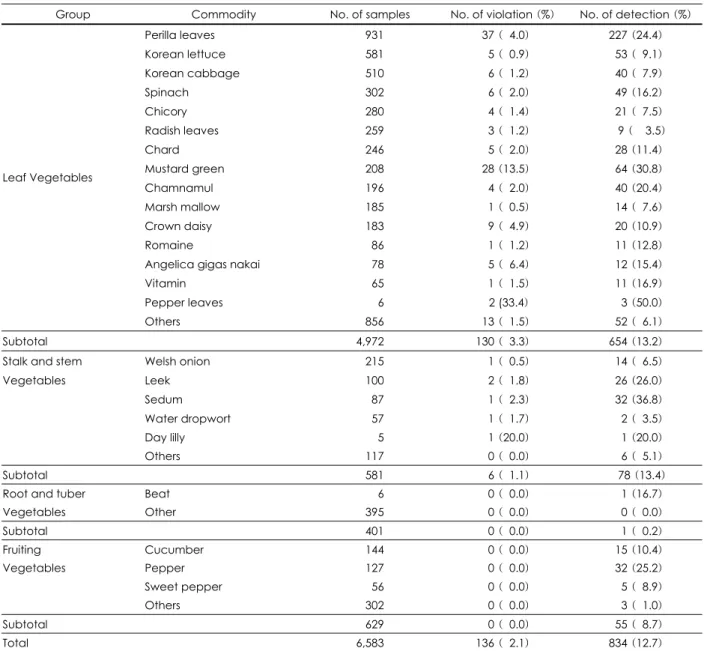
2009년 서울 강남지역에 유통된 채소류 6,583건에 대하 여 동시 다성분 잔류농약 모니터링 결과는 Table 6과 같이, 엽채류가 4,972건 (75.5%)으로 가장 많았고 과채류가 다 음으로 629건 (9.6%)을 차지하였으며 엽경채류 581건 (8.8%), 근채류 401건 (6.1%)이었다. 전체 채소류 중 농 약이 검출된 시료는 834건으로 12.7%를 차지하였고 이중 에서 잔류허용기준을 초과한 시료는 136건으로 전체 채소 류 중 2.1%를 차지하였다. 채소류 중 들깻잎이 농약 검출
률과 허용기준 초과율이 가장 높았으나 실제 섭취시는 유 통과정 및 세척, 조리과정 등을 거치는 동안 농약성분의 분 해로 검출량이 감소될 것으로 판단된다.
농약별 분포 현황
유통채소류 중 농약 잔류허용기준을 3회 이상 초과한 농 약은 Table 7과 같이 총 16종이었으며 이 중 endosulfan 이 24회로 가장 많았다. 이는 전체 부적합 횟수 중 16.0%
를 차지하며, 다음으로 diniconazole 22회, paclobutrazol 15회, kresoxim-methyl 9회, ethoprophos 8회, diazinon 7회, chlorpyrifos 5회, carbendazim 5회로 잔류허용기준 을 초과하였다. 이들 농약은 최저잔류 허용기준이 대체적으 로 다른 농약보다 낮은 경우가 많았으며, 잔류허용기준을
Table 6. Vegetables violated Maximum Residue Limits (MRLs) for pesticides
Group Commodity No. of samples No. of violation (%) No. of detection (%) Perilla leaves 0,931 037 (04.0) 227 (24.4) Korean lettuce 0,581 005 (00.9) 053 (09.1) Korean cabbage 0,510 006 (01.2) 040 (07.9) Spinach 0,302 006 (02.0) 049 (16.2) Chicory 0,280 004 (01.4) 021 (07.5) Radish leaves 0,259 003 (01.2) 009 (003.5) Chard 0,246 005 (02.0) 028 (11.4) Mustard green 0,208 028 (13.5) 064 (30.8) Chamnamul 0,196 004 (02.0) 040 (20.4) Marsh mallow 0,185 001 (00.5) 014 (07.6) Crown daisy 0,183 009 (04.9) 020 (10.9) Romaine 00,86 001 (01.2) 011 (12.8) Angelica gigas nakai 00,78 005 (06.4) 012 (15.4) Vitamin 00,65 001 (01.5) 011 (16.9) Pepper leaves 000,6 002 (33.4) 003 (50.0) Leaf Vegetables
Others 0,856 013 (01.5) 052 (06.1)
Subtotal 4,972 130 (03.3) 654 (13.2)
Stalk and stem Welsh onion 0,215 001 (00.5) 014 (06.5) Vegetables Leek 0,100 002 (01.8) 026 (26.0)
Sedum 00,87 001 (02.3) 032 (36.8)
Water dropwort 00,57 001 (01.7) 002 (03.5) Day lilly 000,5 001 (20.0) 001 (20.0)
Others 0,117 000 (00.0) 006 (05.1)
Subtotal 0,581 006 (01.1) 0078 (13.4) Root and tuber Beat 000,6 000 (00.0) 001 (16.7) Vegetables Other 0,395 000 (00.0) 000 (00.0) Subtotal 0,401 000 (00.0) 001 (00.2) Fruiting Cucumber 0,144 000 (00.0) 015 (10.4) Vegetables Pepper 0,127 000 (00.0) 032 (25.2) Sweet pepper 00,56 000 (00.0) 005 (08.9)
Others 0,302 000 (00.0) 003 (01.0)
Subtotal 0,629 000 (00.0) 055 (08.7)
Total 6,583 136 (02.1) 834 (12.7)
초과한 상위 3개 농약이 40.7%로 거의 절반을 차지했다. 가 장 많이 검출된 농약은 procymidone으로 189건의 시료에 서 검출되었다. 잔류허용기준을 초과한 농약성분은 살충제 14종 62회, 살균제 19종 71회로 대다수를 차지했으며 제 초제는 2종 2회이었다. 식물생장조절제는 paclobutrazol 1 종이었으며 모두 겨자채에서 잔류허용기준을 초과한 것으 로 나타나 농약 사용자에 대한 교육 및 지도가 필요한 것으 로 판단된다. 하지만 국민건강영양조사에서 겨자채의 섭취 량이 존재하지 않아 위해성평가에서는 제외하였다.
위해성 평가
위해성평가를 위한 연구대상 농약은 농약 잔류량 분석결 과 3회 이상 잔류허용기준을 초과한 농약성분으로 채소류 섭취에 의해 인체에 축적될 우려가 있는 것으로 판단되는 성분을 대상으로 하였다. 인체노출 평가시 채소류 섭취에 의 한 농약 노출량의 평균값 사용으로 인해 발생할 수 있는 불 확실성을 정량화하기 위해 채소류의 농약 잔류량에 대한 확 률밀도함수를 판별하였다. 분석한 6,583건 농약 중 잔류 농 약이 허용기준을 초과하는 경우는 모두 150건으로 나타났
Table 7. Residual pesticides violated Maximum Residue Limits (MRLs)
Classification Pesticides No. of samples violated No. of samples detected Range (mg/kg)
Carbofuran 001 001
Chlorfenapyr 001 046
Chlorpyrifos 005 005 0.133-2.922
Cypermethrin 001 037
Diazinon 007 056 0.001-2.821
Endosulfan 024 100 0.010-6.453
EPN 004 005 0.074-1.417
Etoprophos 008 009 0.013-0.463
Fenpropathrin 001 003
Indoxacarb 004 012 0.075-10.925
Methidathion 002 004
Prothiofos 001 001
Pyridaben 002 011
Insecticide
Tebupirimfos 001 001
Azoxystrobin 004 059 0.191-12.778 Carbendazim 005 032 0.205-8.641 Chlorothalonil 003 011 0.045-31.039
Cyprodinil 001 001
Diethofencarb 003 059 0.056-11.944 Dimethomorph 004 035 0.387-7.038 Diniconazole 022 052 0.008-2.471
Fludioxonil 002 012
Flutolanil 002 003
Iprodione 001 005
Kresoxim-methyl 009 014 0.045-3.856
Metalaxyl 001 020
Metconazole 002 002
Pencycuron 002 007
Procymidone 003 189 0.010-34.625 Tetraconazole 003 009 0.078-3.117
Tolylfluanid 001 003
Trifloxystrobin 001 001
Fungicide
Vinclozolin 002 009
Etoxazole 001 001
Herbicide
Pendimethalin 001 002
Growth regulator Paclobutrazol 015 024 0.011-4.332
Total 150 841
으며 이중 잔류허용기준을 초과하는 농약은 endosulfan 외 35종이었고 채소류 종류는 들깻잎 외 27종이었다. 그러나 잔류농약이 허용기준을 초과하는 건수가 많지 않아 각 채소 별 잔류농약의 분포를 구하는 데 한계가 있었다. 따라서 본 연구에서는 허용기준을 초과하여 잔류농약이 가장 많이 검 출된 들깻잎의 endosulfan 잔류량 분포를 추정하여 다른 농약들도 각 채소에 대해 동일한 정도의 표준편차를 가지 는 확률밀도함수가 될 것이라고 가정하였다. Table 8은 들깻 잎에서 endosulfan의 잔류농약이 잔류허용기준 이상 검출 된 15건을 이용해 채소류 중에 함유된 확률밀도함수를 구 하기 위한 Anderson-Darling, Chi-Square, Komogorov- Smirnov테스트 결과이다. Anderson-Darling의 테스트에 서는 Lognormal함수가 채소류 중 endosulfan의 잔류량 분 포로 가장 적합한 것으로 나타났으며, Chi-Square와 Ko- mogorov-Smirnov테스트에서는 Wibull함수가 가장 적합한 것으로 나타났다. 본 연구에서는 환경측정데이터의 가장 일 반적인 분포로 알려진 Lognormal 함수를 잔류농약의 분포 로 가정하여 위해도 분석에 이용하였다. Fig. 1은 들깻잎 중
에서 잔류허용기준을 초과한 농약의 빈도분포와 Lognor- mal 함수를 이용하여 나타낸 확률밀도함수를 보여준다. 각 채소류별 일일 섭취량은 표준편차가 평균의 10%인 가우스 함수로 가정하고 EDI를 구하였다. 한편, ADI를 구하는데 사 용한 채소류 섭취대상자인 한국인의 평균몸무게는 62.8 kg 이며, 이를 확률밀도함수로 가정하기 위해 최고점은 평균몸 무게의 1.1, 최하점은 평균몸무게의 0.9인 삼각형 (Trian- gular)분포를 사용하였다.
Fig. 2은 endosulfan의 위해도에 대한 분포를 도시한 것 으로 식 3의 위해도 계산에 사용되는 입력인자들의 평균을 이용하여 계산한 결정론적 (deterministic) 값은 2.64%이 지만, 각 입력변수들의 분포를 이용하여 몬테카를로 방법으 로 불확실성을 분석한 결과, 평균은 2.71% 중앙값은 1.92%, 최소는 0.25%, 최대는 71.06%으로 나타났다. 따라서 위해
Table 8. Ranking distributions for selecting probability density func- tion of endosulfan in perilla leaves
Distribution Anderson-
darling Chi-square Komogorov- smirnov Lognormal 00.291) 00.401) 0.151) Wibull 00.331) 00.001) 0.131) Pareto 00.551) 01.601) 0.191) Gamma 00.661) 00.401) 0.221) Student’s t 01.431) 10.001) 0.351) Max Extreme 01.981) 04.801) 0.331) Logistic 02.311) 15.601) 0.361) Normal 03.061) 08.401) 0.321) Beta 03.081) 06.401) 0.321) Exponential 03.421) 07.601) 0.401) Min Extreme 03.561) 24.401) 0.391) Uniform 14.091) 24.401) 0.691) Triangular 15.231) 24.401) 0.621) 1) can be considered as the first
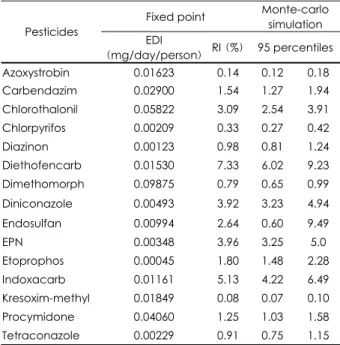
Table 9. Comparison between deterministic and stochastic re- sults for the risk index
Fixed point Monte-carlo simulation Pesticides
EDI
(mg/day/person) RI (%) 95 percentiles Azoxystrobin 0.01623 0.14 0.12 0.18 Carbendazim 0.02900 1.54 1.27 1.94 Chlorothalonil 0.05822 3.09 2.54 3.91 Chlorpyrifos 0.00209 0.33 0.27 0.42 Diazinon 0.00123 0.98 0.81 1.24 Diethofencarb 0.01530 7.33 6.02 9.23 Dimethomorph 0.09875 0.79 0.65 0.99 Diniconazole 0.00493 3.92 3.23 4.94 Endosulfan 0.00994 2.64 0.60 9.49
EPN 0.00348 3.96 3.25 5.0 Etoprophos 0.00045 1.80 1.48 2.28
Indoxacarb 0.01161 5.13 4.22 6.49 Kresoxim-methyl 0.01849 0.08 0.07 0.10 Procymidone 0.04060 1.25 1.03 1.58 Tetraconazole 0.00229 0.91 0.75 1.15
Probability
0.32 0.28 0.24 0.20 0.16 0.12 0.08 0.04 0.00
Frequency
5 4 3 2 1 0 0.00 0.20 0.40 0.60 0.80 1.00 1.20 1.40 1.60 Fit #1: Lognormal distribution Data values
Fig. 1. Frequency and probability density function for measured perilla leaves data.
Fig. 2. Uncertainty analysis for endosulfan using Monte Carlo si- mulation.
도 계수가 최악의 경우라도 (worst case, or conservative assumption) 100보다 작은 값으로 나타나므로, 채소류에 잔류하는 endosulfan에 의한 위해는 없는 것으로 판단할 수 있다. Table 9는 채소류 섭취에 따른 잔류농약의 위해도지 수를 결정론적인 값과 몬테카를로 시뮬레이션에 의한 확률 론적 값으로 나타낸 것이다. 결정론적 방법에 의한 위해도 는 diethofencarb 7.33%, indoxacarb 5.13%, EPN 3.96%
diniconazole 3.92% chlorothalonil 3.09%로 나타났고 기 타 농약은 모두 3% 이하로 나타났다. 몬테카를로 시뮬레이 션 분석결과 잔류농약의 위해도 분포는 결정론적 분석결과 와 비슷한 값을 나타내었으나, 95% 신뢰구간의 폭은 매우 넓게 나타났다. 그러나 위해도지수가 0.07~9.49% 범위에 있어 농약잔류허용기준을 초과한 성분에 기인한 인체 위해 도는 낮은 것으로 판단되었다.
고 찰
농약은 독성물질로 농산물에 사용된다는 점에서 인체에 직접적인 위해를 가져다 줄 수 있다. 따라서 농산물에 잔류 하는 농약의 식이섭취량을 추정하여 인체에 대한 위해여부 를 판단하고 농약사용에 따른 식품안전성을 확인하는 것이 필요하다. 본 연구에서는 서울 강남지역 시장, 대형 마트 및 백화점 등에서 유통되고 있는 채소류를 대상으로 잔류농약 성분을 분석하였고, 채소류 중 잔류허용기준을 초과하는 비 율이 높은 농약 성분을 선별하여 채소류 섭취에 의한 각 농 약의 인체 위해성을 파악하고자 하였다. 정량적 위해 평가 (Qualitative risk assessment)는 위해 성분의 ADI와 추 정된 섭취량을 비교하는 방법이 사용되고 있고 EPA에서는 새로운 위해 판단 지수로 Reference Dose (RfD)를 이용하 여 비교하는 방법을 사용하고 있다.11-13) 국내에서는 잔류허 용기준에 근거하여 이론적 식이 섭취량을 계산하여 ADI와 비교한 결과 chlorpyrifos 등 일부 성분의 비율이 높다고 보고하였다.2,14-16) 이러한 ADI 와의 비교를 통한 위해성 평 가는 위해물질의 허용량 결정과 안전사용기준 설정을 위한 기초 자료로서 의미가 있다.17) 최근 잔류농약에 대한 연구 는 기본적인 농약 잔류량을 조사하는 모니터링 제도와 더불 어 위해성 평가에 초점이 맞추어지고 있다. 특히 미국에서 는 매년 미국 식품의약품안전청 (Food and Drug Admini- stration)에서 자국내 생산 농산물과 수입 농산물에 대한 모 니터링을 실시하고 그 결과를 이용하여 식이섭취량에 따른 위해성 평가를 실시하고 있다.18)
본 연구에서 채소류 중 농약 잔류허용기준을 초과한 농 약은 endosulfan이 가장 많았고, 가장 많이 검출된 농약은
procymidone으로 189건의 시료에서 검출되었다. 이는 김 등19)이 procymidone은 잔류농약 모니터링에서 다빈도 검 출농약이라고 국내 유통 농산물의 농약 잔류실태 모니터링 에서 보고한 결과와 유사하였다. 채소류에서 잔류허용기준 을 초과한 농약에 대해 산출한 결정론적 위해지수는 dietho- fencarb 7.33%, indoxacarb 5.13%, EPN 3.96%, dini- conazole 3.92%, chlorothalonil 3.09%로 나타났고 기타 농약은 모두 3% 이하로 나타났다.
몬테카를로 시뮬레이션을 이용해 위해도의 불확실성을 평가한 결과, 잔류농약의 위해도 분포는 결정론적 분석결과 와 비슷한 값을 나타내었으나, 95% 신뢰구간의 폭은 매우 넓게 나타났다. 그러나 위해도지수가 0.07~9.49% 범위에 있어 잔류허용기준을 초과한 농약성분에 기인한 인체 위해 도는 낮아 대체적으로 안전한 수준이었다. 미국17)에서 실 시한 식이섭취 총량조사에서 대부분의 농약이 ADI의 1%
이하로 나타났다고 보고하였고, Ronchin 등20)은 식품의 평 균소비자는 약 5%내외, 임산부는 2%로 위해성이 낮아진 반면, 어린이는 6%이었다고 보고하였다. 일반적으로 정확 한 인체 위해성 평가는 섭취전의 식품에 대한 추정식이섭 취량을 구해야 한다. 따라서 채소류의 경우 세척·조리·가 공과정을 거치는 동안 소실되어 실제 섭취전의 농약 잔류량 은 더욱 낮아진다. 본 연구에서는 유통 중인 채소류를 분석 한 결과를 이용하였으므로 잔류농약의 양은 섭취전의 양에 비해 훨씬 높았을 것이다. 따라서 worst-case로 사용된 위 해성 평가에서 안전한 수준으로 나타났으므로 서울지역 유 통 채소류의 잔류농약에 의한 위해도도 외국의 경우와 유 사한 수준으로 안전한 것으로 판단된다. 일반적으로 유독성 분에 대한 인체노출량 (human exposure dose)이 ADI의 10% 미만일 때는 위험성을 걱정할 필요가 없고 10%를 초 과하게 되면 정밀조사와 철저한 법적규제를 필요로 하며 ADI의 30% 수준에 도달하게 되면 위험경고를 해야 되는 것으로 인식되고 있다.21) 따라서 본 연구결과가 10% 이내 수준을 나타내고 있긴 하지만 조리된 음식 중의 농약 잔류 데이터에 근거한 것이 아니므로, 향후 더 세밀한 식이 섭취 량 평가에 대한 연구가 필요할 것으로 판단된다.
요 약
2009년 1월부터 12월까지 서울 강남지역 시장, 대형 마 트 및 백화점 등에서 유통되고 있는 채소류에 대해 잔류농 약을 분석하여 잔류농약 위해성 평가를 실시하였다.
1) 유통 채소류 6,583건에 대하여 동시 다성분 잔류농 약 모니터링 결과, 엽채류가 4,972건 (75.5%)으로 가장
높은 비율을 차지하였으며 과채류 629건 (9.6%), 엽경채 류 581건 (8.8%), 근채류 401건 (6.1%)순이었다. 전체 채소류 중 농약 검출율은 12.7% (834건)이었고, 이중에서 잔류허용기준을 초과한 시료는 2.1% (136건)으로 나타났 다. 채소류 중 들깻잎이 농약 검출률과 허용기준 초과율이 가장 높게 나타났다.
2) 유통 채소류 중 농약 잔류허용기준을 3회 이상 초과 한 농약은 총 16종이었으며 이 중 endosulfan이 24회로 가장 많았다. 이는 전체 부적합 횟수 중 16.0%를 차지하였 으며, 다음으로 diniconazole 22회, paclobutrazol 15회, kresoxim-methyl 9회, etoprophos 8회, diazinon 7회, chlorpyrifos 5회, carbendazim이 5회 잔류허용기준을 초 과하였다. 이들 농약은 최저잔류 허용기준이 대체적으로 다 른 농약보다 낮은 경우가 많았으며, 잔류허용기준을 초과한 상위 3개 농약이 40.7%로 거의 절반을 차지했다. 가장 많 이 검출된 농약은 procymidone으로 189건의 시료에서 검 출되었다.
3) 농약잔류량과 채소류 평균섭취량 및 ADI로 부터 위해 지수 (HI)를 산출하였다. 결정론적 방법에 의한 위해도는 diethofencarb 7.33%, indoxacarb 5.13%, EPN 3.96%, diniconazole 3.92%, chlorothalonil 3.09%였으며 기타 농 약은 모두 3% 이하로 나타났다. 몬테카를로 시뮬레이션 분 석결과 잔류농약의 위해도 분포는 결정론적 분석결과와 비 슷한 값을 나타내었으나, 95% 신뢰구간의 폭은 매우 넓게 나타났다. 그러나 위해도지수가 0.07~9.49% 범위에 있어 농약잔류허용기준을 초과한 성분에 기인한 인체 위해도는 낮아 대체적으로 안전한 수준으로 판단된다. 하지만 본 연 구는 채소류에만 국한된 연구이므로 잔류농약이 포함된 농 산물 섭취로 인한 안전성 확보를 위해서는 농약잔류 허용 기준이 합리적으로 설정되어야 할 뿐만 아니라 위해성 평 가 및 모니터링이 효과적으로 수행되어야 할 것이다.
Literature cited
1) Seoul Metropolitan Government Research Institute of Public Health and Environment. The symposium on the management of toxic materials in food. Present & future of the management for pesticide residues in vegetables ; 2008. p.43
2) Chun OK, Lee YW. A Study on the of Pesticide Exposure by Food Intake. J Fd Hyg Safety 1999; 14(2): 201-215
3) Lee HM, Han JY, Yoon EK, Kim HM, Hwang IG, Choi DM, Lee KB, Won KP, Song IS, Park SE, Shin DC. Cumulative risk assess- ment of organophosphorus pesticides in the diet. J Fd Hyg Safety 2001; 16(1): 1-26
4) Han KT, Park HJ, Lee KS, Kim IJ, Kim KS, Cho SM. Pesticide residue survey and risk assessment of fruits in Daejeon. Korean J Environ Agric 2002; 21(4): 279-285
5) Korea Food and Drug Administration. Korea Food Code; 2009 6) Lee SM, Michael L, Papathakis, Hsiaoming C, Feng, Gray FH,
Joyce EC. Multipesticide residue method for fruits and vegetables.
Fresenius J Anal Chem 1991; 339(6): 376-383
7) Pyo HS, Park SR. Environmental analysis & human health risk assessment(1)-Analysis & risk assessment of chlorinated disin- fection by-products in drinking Water. Analytical Science & Tech- nology 2000; 13(6): 89-96
8) Korea Food and Drug Administration. Pesticide Residue Data- base. Available from: http://fse.foodnara.go.kr/residue/pesticides/
pesticides_info.jsp; 2010
9) Korea Research Institute of Standard and Science. Report of 5th Size Korea; 2004
10) Ministry of Health and Welfare. The Third Korea National Heaith
& Nutrition Examination Survey; 2005
11) EPA. Anticipated residues for chronic dietary exposure assessment for chlorpyrifos RED; 1999
12) EPA. Human risk assessment-chlorpyrifos; 2000 13) EPA. Toxicology chapter for chlorpyrifos; 2000
14) Lee SR, Lee MK, Kim NH. Computation of theoretical maximum daily intake and safety index of pesticides by Korean population, Korean J Food Sci Technol 1995; 27(4): 618-624
15) Lee MG, Lee SR. Computation of theoretical maximum daily in- take of pesticides by Korean population. Food Sci Biotecnol 2001;
10(2): 115-122
16) Lee SR, Lee MG. Present status and remedial actions with regard to legal limits of pesticide residues in Korea. Korean J Environ Agric 2001; 20(1): 34-43
17) Lee SR. Pesticides Problems and Regulatory Aspects in USA. Ko- rean J Environ Agric 1991; 10(2): 178-196
18) FDA. Food and Drug Administration pesticides programme-Re- sidues monitering; 2000
19) Kim HY, Yoon SH, Park HJ, Lee JH, Gwak IS, Moon HS, Song MH, Jang YM, Lee MS, Park JS, Lee KH. Monitoring of residual pesticides in commercial agricultural products in Koea. Korean J Food Sci Technol 2007; 39(3): 237-245
20) Ronchin M, Mariani F, Visentin S, Colosio C, Salamana M, Car- reri V, Maroni M. Risk assessment of dietary pesticide intake and the EDI/ADI ratio in the post marketing phase. 4th European pes- ticide residues workshop-pesticide in food and drink; 2002 21) Lee MG. Risk assessment of organophosphorus pesticides resi-
dues in Korean foods [dissertation]. Seoul: Ewha Womans Uni- versity; 1995