INTRODUCTION
Cardiovascular disease (CVD) is becoming more prevalent worldwide and is one of the leading causes of death.1 To lower CVD mortality, aggressive and comprehensive management of its risk factors, including dyslipidemia, hypertension, diabetes mellitus, and smoking, are crucial.2 The incidence of coronary artery disease (CAD) is rising in South Korea and although cerebral hemorrhage has declined since 2002, cerebral infarction is on the rise.3 This is speculated to be due to the elevated prevalence of dyslipidemia and diabetes mellitus with the growing obesity population, while hypertension is well-managed and smoking rate has reached a plateau.4 Thus, aggressive diagnosis and treatment of dyslipidemia, the most
Guideline
Eun-Jung Rhee ,1 Hyeon Chang Kim ,2 Jae Hyeon Kim ,3 Eun Young Lee ,4 Byung Jin Kim ,5 Eun Mi Kim ,6 YoonJu Song ,7 Jeong Hyun Lim ,8
Hae Jin Kim ,9 Seonghoon Choi ,10 Min Kyong Moon ,11 Jin Oh Na ,12 Kwang-Yeol Park ,13 Mi Sun Oh ,14 Sang Youb Han ,15 Junghyun Noh ,16 Kyung Hee Yi ,17 Sang-Hak Lee ,18 Soon-Cheol Hong ,19 In-Kyung Jeong ,20; On behalf of the Committee of Clinical Practice Guideline of Korean Society of Lipid and Atherosclerosis
1 Division of Endocrinology and Metabolism, Department of Internal Medicine, Kangbuk Samsung Hospital, Sungkyunkwan University School of Medicine, Seoul, Korea
2Department of Preventive Medicine, Yonsei University College of Medicine, Seoul, Korea
3 Division of Endocrinology and Metabolism, Department of Medicine, Samsung Medical Center, Sungkyunkwan University School of Medicine, Seoul, Korea
4 Division of Endocrinology and Metabolism, Department of Internal Medicine, Seoul St. Mary's Hospital, College of Medicine, The Catholic University of Korea, Seoul, Korea
5 Division of Cardiology, Department of Internal Medicine, Kangbuk Samsung Hospital, Sungkyunkwan University School of Medicine, Seoul, Korea
6Department of Nutrition and Dietetics, Kangbuk Samsung Hospital, Seoul, Korea
7Department of Food Science and Nutrition, The Catholic University of Korea, Bucheon, Korea
8Department of Food Service and Nutrition Care, Seoul National University Hospital, Seoul, Korea
9Department of Endocrinology and Metabolism, Ajou University School of Medicine, Suwon, Korea
10 Division of Cardiology, Department of Internal Medicine, Hallym University Kangnam Sacred Heart Hospital, Seoul, Korea
11 Department of Internal Medicine, Seoul Metropolitan Government Seoul National University Boramae Medical Center, Seoul, Korea
12 Cardiovascular Center, Division of Cardiology, Department of Internal Medicine, Korea University Guro Hospital, Seoul, Korea
13Department of Neurology, Chung-Ang University College of Medicine, Seoul, Korea
14Department of Neurology, Hallym University Sacred Heart Hospital, Anyang, Korea
15Division of Nephrology, Department of Internal Medicine, Inje University Ilsan Paik Hospital, Goyang, Korea
16 Division of Endocrinology and Metabolism, Department of Internal Medicine, Inje University Ilsan Paik Hospital, Goyang, Korea
17Department of Pediatrics, Wonkwang University Sanbon Medical Center, Gunpo, Korea
18 Division of Cardiology, Department of Internal Medicine, Severance Hospital, Yonsei University College of Medicine, Seoul, Korea
19Department of Obstetrics and Gynecology, Korea University Medical Center, Seoul, Korea
20 Division of Endocrinology and Metabolism, Department of Internal Medicine, Kyung Hee University Hospital at Gangdong, Kyung Hee University School of Medicine, Seoul, Korea
2018 Guidelines for the Management of Dyslipidemia in Korea
Received: Jun 9, 2019 Accepted: Jun 19, 2019 Correspondence to In-Kyung Jeong
Division of Endocrinology and Metabolism, Department of Internal Medicine, Kyung Hee University Hospital at Gangdong, Kyung Hee University School of Medicine, 892 Dongnam-ro, Gangdong-gu, Seoul 05278, Korea.
E-mail: [email protected]
Endorsed by Korea Society of Epidemiology, Korean Diabetes Association, Korean Endocrine Society, Korean Neurological Association, Korean Society for Biochemistry and Molecular Biology, Korean Society for Laboratory Medicine, Korean Society for The Study of Obesity, Korean Society of Obstetrics and Gynecology, Korean Society of Pediatric Endocrinology, The Korea Geriatrics Society, The Korean Academy of Family Medicine, The Korean Nutrition Society, The Korean Society for Preventive, The Korean Society of Heart Failure, The Korean Society of Hypertension, The Korean Society of Nephrology, The Korean Society of Sports Medicine
This article is being simultaneously published in Korean Journal of Internal Medicine and Journal of Lipid and Atherosclerosis by the Korean Association of Internal Medicine and the Korean Society of Lipid and Atherosclerosis.
Copyright © 2019 The Korean Society of Lipid and Atherosclerosis.
This is an Open Access article distributed under the terms of the Creative Commons Attribution Non-Commercial License (https://
creativecommons.org/licenses/by-nc/4.0/) which permits unrestricted non-commercial
use, distribution, and reproduction in any medium, provided the original work is properly cited.
ORCID iDs Eun-Jung Rhee
https://orcid.org/0000-0002-6108-7758 Hyeon Chang Kim
https://orcid.org/0000-0001-7867-1240 Jae Hyeon Kim
https://orcid.org/0000-0001-5001-963X Eun Young Lee
https://orcid.org/0000-0002-4968-5026 Byung Jin Kim
https://orcid.org/0000-0002-9008-8506 Eun Mi Kim
https://orcid.org/0000-0003-0901-2158 YoonJu Song
https://orcid.org/0000-0002-4764-5864 Jeong Hyun Lim
https://orcid.org/0000-0001-9232-9556 Hae Jin Kim
https://orcid.org/0000-0002-8958-7164 Seonghoon Choi
https://orcid.org/0000-0001-9247-2002 Min Kyong Moon
https://orcid.org/0000-0002-5460-2846 Jin Oh Na
https://orcid.org/0000-0002-5096-4428 Kwang-Yeol Park
https://orcid.org/0000-0003-4570-3538 Mi Sun Oh
https://orcid.org/0000-0002-6741-0464 Sang Youb Han
https://orcid.org/0000-0003-3312-0597 Junghyun Noh
https://orcid.org/0000-0001-8833-0300 Kyung Hee Yi
https://orcid.org/0000-0002-8123-1497 Sang-Hak Lee
https://orcid.org/0000-0002-4535-3745 Soon-Cheol Hong
https://orcid.org/0000-0002-9330-7620 In-Kyung Jeong
https://orcid.org/0000-0001-7857-546X Funding
None.
Conflict of interest
No potential conflict of interest relevant to this article was reported.
important risk factor for atherosclerosis, are critical for lowering the incidence and mortality of CAD and cerebral infarction.
To promote appropriate treatment of dyslipidemia, the Korean Society of Lipid and
Atherosclerosis (KSoLA) published the first guidelines for the management of hyperlipidemia in 1996, the second guideline in 2003, the second revision in 2009, and the third guidelines for treatment of dyslipidemia with added contents in 2015, in collaboration with 18 other relevant academic societies and organizations.5 However, new guidelines were published in Europe in 2016 and in the United States in 2017 based on new study findings, and new drugs, such as proprotein convertase subtilisin/kexin type 9 (PCSK9) inhibitors have been launched.6-8 Therefore, the KSoLA Treatment Guideline Committee developed the fourth guidelines for treatment and management of dyslipidemia specific to Koreans based on evidence and expert opinions on the dynamically changing treatment modalities for dyslipidemia.
The fourth guideline consists of information about the epidemiology of dyslipidemia, diagnosis and treatment criteria, lifestyle interventions, drug therapy, and dyslipidemia in specific patient groups. Finally, we present currently available data and the need to develop and validate scales to assess the risk of CVD specific to Koreans and CVD biomarkers appropriate for the Korean population. The level of evidence and strength of recommendations used in the fourth guideline are shown in Table 1. The fourth guideline is available in full text and an abstract form including tables and figures in Korean. This paper is an English summary of the full text. We hope the fourth guidelines for the treatment of dyslipidemia will be useful for health professionals treating dyslipidemia.
EPIDEMIOLOGY OF DYSLIPIDEMIA IN KOREANS
Cardiovascular disease in Koreans
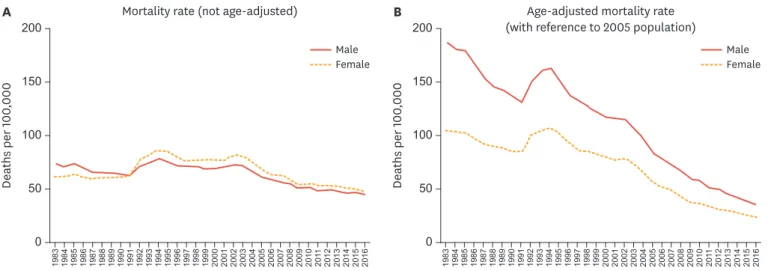
CVD is the leading cause of deaths worldwide, with an estimated 17 million people dying from CVD every year.1,2 In South Korea, the death rate resulting from diseases of the circulatory system was 187 men per 100,000 population and 145 women per 100,000 population in 1983 and 111 men per 100,000 population and 125 women per 100,000 in 2016, indicating little change over the years. However, the age-adjusted mortality rate, which excludes the influence of aging of the population during this period, decreased to about one-fifth of the initial rate (Fig. 1). Death from CAD has consistently increased since 1983, when the cause of death statistics were first measured, reaching 31 men per 100,000 and 26 women per 100,000 in 2016. However, age-adjusted mortality of CAD reached a peak in the early and mid-2000s and began to decline since then (Fig. 2). Deaths from cerebrovascular disease declined since 2000s, reaching 44 men per 100,000 and 47 women per 100,000 in 2016. Age-adjusted mortality for cerebrovascular disease has declined very quickly (Fig. 3). Among various cerebrovascular diseases, there were more deaths from cerebral hemorrhage (non-traumatic intracerebral hemorrhage and subarachnoid hemorrhage) until 2002, but deaths from cerebral infarction (ischemic stroke) have become more common since then. This is speculated to be due to the marked decline in the incidence and improved treatment outcomes of cerebral hemorrhage as a result of advances in treatment for hypertension.9
The prevalence and incidence of CVD are not accurately known due to a lack of nationwide statistics. Based on a review of various studies, however, the prevalence of CVD is rising
Table 1. Levels of evidence: classes of recommendation
Definition Phrasing
Level of evidence
A Clear evidence for the recommendation
Clearly proven through multicenter RCTs or meta-analysis with adequate content and power with high generalizability of findings
B Reliable evidence for the recommendation
Evidence found through well-performed cohort or patient-control group studies
C Possible evidence for the recommendation
Not reliable, but relevant evidence found through small RCTs, observational studies, or case series
E Expert opinions
No supporting evidence, but expert opinions based on clinical experience and expertise Classes of recommendation
Class I Clear evidence (A) and benefits, and high applicability in practice Recommended
Class IIa Reliable evidence (B) and benefits, and high or moderate applicability in practice Should be considered Class IIb Unreliable evidence (C or D) and benefits, but high or moderate applicability in practice May be considered Class III Unreliable evidence (C or D), may cause harm, and low applicability in practice Not recommended RCT, randomized controlled trial.
0 aths perDe 100,000 100
300 500
0
1983 1984 1985 1986 1987 1988 1989 1990 1991 1992 1993 1994 1995 1996 1997 1998 1999 2000 2001 2002 2003 2004 2005 2006 2007 2008 2009 2010 201
1
2012 2013 2014 2015 2016 1983 1984 1985 1986 1987 1988 1989 1990 1991 1992 1993 1994 1995 1996 1997 1998 1999 2000 2001 2002 2003 2004 2005 2006 2007 2008 2009 2010 201
1
2012 2013 2014 2015 2016
aths perDe 100,000 100
Mortality rate (not age-adjusted)
A B Age-adjusted mortality rate
(with reference to 2005 population)
300 500
200 400
200 400
Male
Female Male
Female
Fig. 1. Trends of cardio-cerebrovascular mortality among Koreans, 1983 to 2016 (source: cause of death statistics). (A) Mortality rate (not age-adjusted). (B) Age-adjusted mortality rate (with reference to 2005 population).
0 aths perDe 100,000 10
30 50
0
1983 1984 1985 1986 1987 1988 1989 1990 1991 1992 1993 1994 1995 1996 1997 1998 1999 2000 2001 2002 2003 2004 2005 2006 2007 2008 2009 2010 201
1
2012 2013 2014 2015 2016 1983 1984 1985 1986 1987 1988 1989 1990 1991 1992 1993 1994 1995 1996 1997 1998 1999 2000 2001 2002 2003 2004 2005 2006 2007 2008 2009 2010 201
1
2012 2013 2014 2015 2016
aths perDe 100,000 10
Mortality rate (not age-adjusted)
A B Age-adjusted mortality rate
(with reference to 2005 population)
30 50
20 40
20 40
Male
Female Male
Female
Fig. 2. Trends of coronary artery disease mortality among Koreans, 1983 to 2016 (source: cause of death statistics). (A) Mortality rate (not age-adjusted). (B) Age-adjusted mortality rate (with reference to 2005 population).
and the trend of incidence is predicted to vary according to the type of disease. Recent studies using health insurance claims data have reported the incidence of acute myocardial infarction (MI) to be about 50 and 10 per 100,000 for men and women, respectively.4,5,9 For cerebrovascular disease, the incidence of cerebral infraction and cerebral hemorrhage differs, where cerebral hemorrhage is declining quickly while cerebral infarction is slowly rising, eventually resulting in the number of cases of cerebral infraction outnumbering those of cerebral hemorrhage. It is generally believed that the incidence of CVD differs across regions and over time due to the changing distribution of CVD risk factors.10 The prevalence of hypertension in South Korea is largely consistent with the smoking rate reaching a lower plateau; however, the prevalence of diabetes mellitus and dyslipidemia is on the rise. Thus, it is predicted that CAD would become the most prevalent CVD in Korea.11,12
CVD risk factors and risk assessment for Koreans
The risk factors for CVD are well known, and the incidence of CVD varies across regions and time paralleling the distribution of these CVD risk factors across regions and time.10 Among CVD risk factors, those that have a significant impact on the disease but are able to be treated are referred to as major modifiable risk factors and include hypertension, diabetes, dyslipidemia, and smoking.12 Other CVD risk factors include family history, old age, lack of exercise, obesity, chronic inflammation, blood coagulation abnormalities, metabolic syndrome, depression, and stress. A Korean cohort study that analyzed the population attributable risk found that the contribution is the highest for hypertension, followed by smoking, dyslipidemia, and diabetes in men; the contribution by all four risk factors reaches 64%. In Korean women, the factor with the highest contribution to CVD risk was hypertension, followed by dyslipidemia, diabetes, and smoking (Table 1).13 Recently, many studies have attempted to assess CVD risk based on a comprehensive review of exposure to various CVD risk factors.14 Since the development of the Framingham risk score by the Framingham Heart Study to compute the 10-year risk of CAD using seven items of information (age, sex, total cholesterol, high density lipoprotein cholesterol [HDL-C], blood pressure, diabetes, and smoking), various CVD prediction models have been developed, and a CVD prediction recommendation guideline has been formulated. In South Korea, there are studies available that developed a stroke risk model, a CAD risk model, and a CVD risk assessment model using data from health check-up recipients.13,15-19
0 aths perDe 100,000 50
150 200
0
1983 1984 1985 1986 1987 1988 1989 1990 1991 1992 1993 1994 1995 1996 1997 1998 1999 2000 2001 2002 2003 2004 2005 2006 2007 2008 2009 2010 201
1
2012 2013 2014 2015 2016 1983 1984 1985 1986 1987 1988 1989 1990 1991 1992 1993 1994 1995 1996 1997 1998 1999 2000 2001 2002 2003 2004 2005 2006 2007 2008 2009 2010 201
1
2012 2013 2014 2015 2016
aths perDe 100,000 50
Mortality rate (not age-adjusted)
A B Age-adjusted mortality rate
(with reference to 2005 population)
150 200
100 100
Male
Female Male
Female
Fig. 3. Trends of cerebrovascular disease mortality among Koreans, 1983 to 2016 (source: cause of death statistics). (A) Mortality rate (not age-adjusted). (B) Age-adjusted mortality rate (with reference to 2005 population).
Distribution of lipid concentration in Koreans
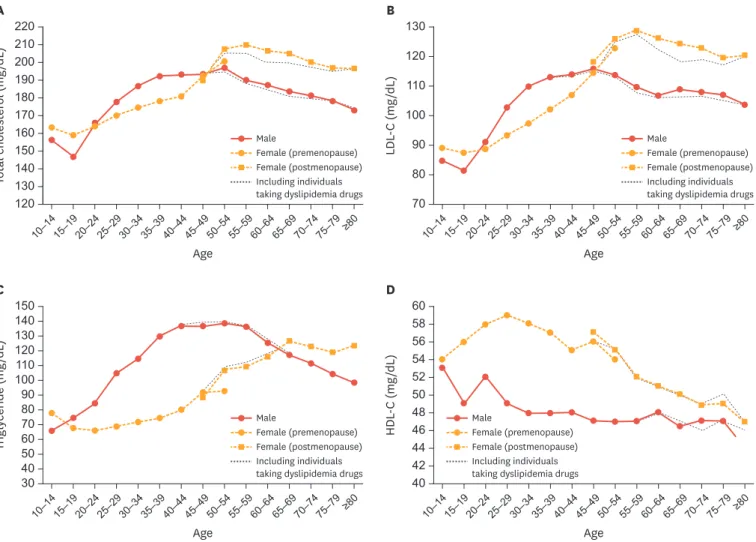
The distribution of serum lipid concentrations varies according to sex and age and there is a notable difference among women before and after menopause. Total blood cholesterol concentration was reported to slightly decrease in the 15- to 19-year-old age group compared to that in the 10- to 14-year-old group, but increase again after the age of 20 years in both sexes.20 In the teen years, total cholesterol is higher among women. In individuals in their thirties and forties, total cholesterol is higher among men, but women actually have a higher total cholesterol concentration after the mid-50s (Fig. 4A). Distribution of low density lipoprotein cholesterol (LDL-C) concentration is similar to that of total cholesterol (Fig. 4B).20 Triglyceride concentration on rapidly increases from the age of 10 to 40 years, is maintained at a high level between ages 40 to 60, and gradually decreases after the age of 60 in men. Conversely, in women, triglyceride concentration is very low until the ages of 30 to 40, begins to increase after the mid- 40s, and peaks after the age of 65 (Fig. 4C).20 HDL-C concentration is higher among women than men in across all age groups, and the gap is greater in the 20- to 30-year-old group (Fig. 4D).20 The prevalence of hypercholesterolemia in adults aged 30 years or older in South Korea (total cholesterol ≥240 mg/dL or on cholesterol-lowering drugs) has risen consistently, from 7% and 8% in men and women, respectively, in 2005, to 19% and 20%, respectively, in 2016 (Fig. 5A).21
80
LDL-C (mg/dL)
Age 100
120 130
120 70
Total cholesterol (mg/dL)
A B
90 110 220
210 200 190 180 170 160 150 140 130
10–1415–1920–2425–2930–3435–3940–4445–4950–5455–5960–6465–6970–74 ≥80 75–79
Age
10–1415–1920–2425–2930–3435–3940–4445–4950–5455–5960–6465–6970–74 ≥80 75–79 Male
Female (premenopause) Female (postmenopause) Including individuals taking dyslipidemia drugs
Male
Female (premenopause) Female (postmenopause) Including individuals taking dyslipidemia drugs
HDL-C (mg/dL)
Age 48
56 60
30 40
Triglyceride (mg/dL)
C D
44 52
46 54 58
42 50 150140
130120 100110 9080 7060 5040
10–1415–1920–2425–2930–3435–3940–4445–4950–5455–5960–6465–6970–74 ≥80 75–79
Age
10–1415–1920–2425–2930–3435–3940–4445–4950–5455–5960–6465–6970–74 ≥80 75–79 Male
Female (premenopause) Female (postmenopause) Including individuals taking dyslipidemia drugs
Male
Female (premenopause) Female (postmenopause) Including individuals taking dyslipidemia drugs
Fig. 4. Serum lipid concentrations by age, sex, and menopause in Korean general population. (A) Total cholesterol, (B) low density lipoprotein cholesterol (LDL-C), (C) triglyceride, and (D) high density lipoprotein cholesterol (HDL-C) (data source: Korea National Health and Nutrition Examination Survey 2010 to 2016).20
The prevalence of dyslipidemia was more than double that of hypercholesterolemia at 40.5%.
Sex- and age-differences indicate that the prevalence of dyslipidemia in men is the highest between the ages of 55 to 59 years (49%) and gradually declines thereafter, while prevalence in women is low between the ages of 20 to 44 years, after which it rapidly increases to 50%
between the ages of 60 to 64 years, eventually exceeding that of male counterparts (Fig. 5B).22 The prevalence of dyslipidemia is higher among individuals with other comorbidities, such as obesity, abdominal obesity, and diabetes than among those with no comorbidities.23
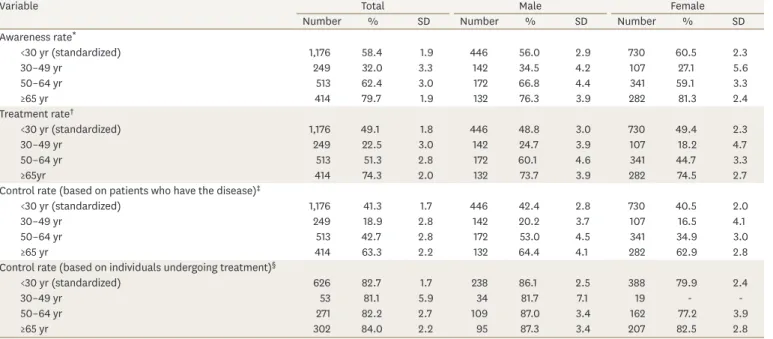
Fortunately, indices for management, such as hypercholesterolemia awareness rate, treatment rate, and control rates, have been improving. The hypercholesterolemia awareness rate (the percentage of individuals diagnosed among all those who have hypercholesterolemia) increased from 24% in 2005 to 58% in 2016. In the same period, the treatment rate (the percentage of patients taking cholesterol-lowering drugs) increased from 17% to 49%, the patient control rate (the percentage of patients with total cholesterol <200 mg/dL) increased from 11% to 41%, and the treated patients' control rate (the percentage of treated patients with total cholesterol <200 mg/dL) increased from 62% to 83% (Fig. 6).21 These management indices have improved in both men and women overall, but the awareness rate and treatment rates have remained low at about 20% to 30% among those below age 50 even until recently (Table 2).21
10
Prevalence (%)
Age Year
30 50 60
0 0
2005
evalPrence (%) 10
A B
20 40 20
30
2007 2008 2009 2010 2011
2012 2013 2014 2015 2016 20–24 25–29 30–34 35–39 40–44 45–49 50–54 55–59 60–64 65–69 70–74 ≥80 75–79 8.4
11.5 11.8 11.8 13.4 14.8 16.3 15.9 14.9
19.1 20.2 19.3 16.4 13.6 13.9
12.6 12.2 10.8 13.0
9.3 9.5 7.3
Male
Female Male
Female
Fig. 5. Trends in prevalence of hypercholesterolemia (A, source: National Health and Nutrition Examination Survey [KNHANES] 2005 to 2016) and sex and age- specific prevalence of dyslipidemia (B, source: KNHANES 2010 to 2012).21,22
%
40 80 100
0 20 60
2005 2007–2009 2010–2012 2013–2015 2016
62.3
73.5 78.8 84.3
82.7
24.0
38.8
47.4
57.7 58.4
45.5 49.1 37.3
26.9 20.3
29.9
39.7 41.3
10.817.3
Awareness rate Treatment rate
Control rate (based on individuals with disease) Control rate (based on individuals undergoing treatment)
Fig. 6. Trends in hypercholesterolemia management (source: National Health and Nutrition Examination Survey).
DIAGNOSIS AND TREATMENT CRITERIA FOR DYSLIPIDEMIA
Table 2. Management of hypercholesterolemia by age, 30 years or older (2016)21
Variable Total Male Female
Number % SD Number % SD Number % SD
Awareness rate*
<30 yr (standardized) 1,176 58.4 1.9 446 56.0 2.9 730 60.5 2.3
30–49 yr 249 32.0 3.3 142 34.5 4.2 107 27.1 5.6
50–64 yr 513 62.4 3.0 172 66.8 4.4 341 59.1 3.3
≥65 yr 414 79.7 1.9 132 76.3 3.9 282 81.3 2.4
Treatment rate†
<30 yr (standardized) 1,176 49.1 1.8 446 48.8 3.0 730 49.4 2.3
30–49 yr 249 22.5 3.0 142 24.7 3.9 107 18.2 4.7
50–64 yr 513 51.3 2.8 172 60.1 4.6 341 44.7 3.3
≥65yr 414 74.3 2.0 132 73.7 3.9 282 74.5 2.7
Control rate (based on patients who have the disease)‡
<30 yr (standardized) 1,176 41.3 1.7 446 42.4 2.8 730 40.5 2.0
30–49 yr 249 18.9 2.8 142 20.2 3.7 107 16.5 4.1
50–64 yr 513 42.7 2.8 172 53.0 4.5 341 34.9 3.0
≥65 yr 414 63.3 2.2 132 64.4 4.1 282 62.9 2.8
Control rate (based on individuals undergoing treatment)§
<30 yr (standardized) 626 82.7 1.7 238 86.1 2.5 388 79.9 2.4
30–49 yr 53 81.1 5.9 34 81.7 7.1 19 - -
50–64 yr 271 82.2 2.7 109 87.0 3.4 162 77.2 3.9
≥65 yr 302 84.0 2.2 95 87.3 3.4 207 82.5 2.8
SD, standard deviation.
*Hypercholesterolemia awareness rate (≥30 years): percentage of individuals diagnosed with hypercholesterolemia by a physician from the total number of individuals with hypercholesterolemia.
†Hypercholesterolemia treatment rate (≥30 years): percentage of individuals currently taking cholesterol-lowering drugs for at least 20 days a month from the total number of individuals with hypercholesterolemia.
‡Hypercholesterolemia control rate (≥30 years, based on individuals who have the disease): percentage of individuals with total cholesterol of <200 mg/dL from the total number of individuals with hypercholesterolemia.
§Hypercholesterolemia control rate (≥30 years, based on individuals undergoing treatment): percentage of individuals with total cholesterol of <200 mg/dL from the total number of individuals being treated for hypercholesterolemia.
Recommendation
Content Strength of
recommendation Level of evidence 1 Patients with CVD (CAD, peripheral artery disease, atherosclerotic ischemic stroke, transient ischemic attack) are classified as a
very high-risk group, and the treatment goal is to lower LDL-C levels to <70 mg/dL or by >50% from the baseline level for secondary prevention.
I A
2 If acute myocardial infarction occurs, administer statins immediately regardless of the baseline LDL-C level. I A 3 Patients with carotid disease (significant carotid artery stenosis), abdominal aortic aneurysm, or diabetes are classified as a high-
risk group. For this group, begin treatment when LDL-C concentration is ≥100 mg/dL for primary prevention. I A 4 Patients with two or more major risk factors other than LDL-C are classified as a moderate-risk group. For this group, administer
statin if LDL-C concentration is ≥130 mg/dL even after weeks or months of lifestyle adjustment. II B 5 Patients with one or fewer major risk factors other than LDL-C are classified as low-risk group. For this group, administer statin if
LDL-C concentration ≥160 mg/dL even after weeks or months of lifestyle adjustment. II B
6 If LDL-C concentration is ≥190 mg/dL, check whether the patient has other causes for hyperlipidemia, such as biliary obstruction,
nephrotic syndrome, hypothyroidism, pregnancy, use of glucocorticoids or cyclosporine and make necessary adjustments. I B 7 If LDL-C concentration is ≥190 mg/dL in absence of secondary causes, begin statin administration regardless of the risk. I A 8 If blood triglyceride concentration rises to ≥500 mg/dL, check for secondary causes of triglyceride elevation, such as weight gain,
drinking, carbohydrate intake, chronic kidney disease, diabetes, hypothyroidism, pregnancy, and use of estrogen, tamoxifen, or glucocorticoids and for other genetic problems that may cause abnormal lipid metabolism.
I A
9 If triglyceride concentration is consistently ≥500 mg/dL, drug therapy, such as fibrate and omega-3 fatty acid therapy, may be
initiated to prevent pancreatitis. II A
10 If triglyceride concentration is between 200–499 mg/dL with high LDL-C level, it is recommended to begin statin administration to
primarily lower LDL-C concentration to the targeted level. I A
11 If hypertriglyceridemia persists (≥200 mg/dL) even after lifestyle adjustment and statin administration in very high-risk and high-
risk patients, drugs that lower triglyceride levels, such as fibrate or omega-3 fatty acids, may be additionally used to prevent CVD. II B
Diagnostic approach and criteria
Dyslipidemia is generally asymptomatic, so a screening test is essential to identify patients requiring treatment. For screening of dyslipidemia, all adults aged ≥21 years and younger individuals with other risk factors, such as a family history of premature CVD and severe dyslipidemia, should undergo a fasting lipid test every 4 to 6 years to assess total cholesterol, triglyceride, HDL-C, LDL-C (calculated using the Friedewald equation or perform a direct assay when triglyceride level is ≤400 mg/dL), and non-HDL-C levels.6,24
For the measurement of triglyceride and LDL-C levels, individuals must fast for at least 12 hours before blood sampling. LDL-C concentration can be generally estimated from fasting total cholesterol, triglyceride, and HDL-C. That is, if the individual's triglyceride concentration is ≤400 mg/dL, very low density lipoprotein cholesterol (VLDL-C)
concentration can be estimated by dividing the triglyceride value by 5. As total cholesterol is the sum of LDL-C, HDL-C, and VLDL-C concentrations, LDL-C concentration can be calculated using the Friedewald equation below:
However, if the individual's triglyceride concentration >400 mg/dL, the LDL-C value estimated from the above equation is less accurate. In such cases, we recommend using the LDL-C direct assay.25 In addition, the cause of hypertriglyceridemia should be further investigated.
Treatment guideline
In this treatment guideline, we maintained the existing system of differentiating target LDL-C concentration based on the level of CVD risk factors, as previously used in the current treatment guideline in Korea, but modified and supplemented the specific risk factors and treatment standards with reference to study findings in Korea and abroad as well as with the 2013 American College of Cardiology (ACC)/American Heart Association (AHA), 2016 European Society of Cardiology (ESC)/European Atherosclerosis Society (EAS), and treatment guidelines published in other countries.6 One benefit of the 2013 ACC/AHA treatment guideline is that it simplified the criteria for statin administration to “four statin benefit groups,” but it has been reported that the practical application of the criteria would be difficult due to several problems.21 Therefore, we did not deviate significantly from the third revision of Korean dyslipidemia guidelines.
Very high-risk group
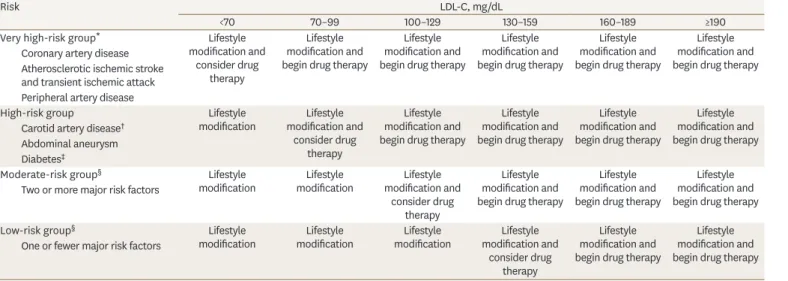
Patients with CVD (CAD, peripheral artery disease, ischemic stroke, transient ischemic attack) are classified as the very high-risk group. For this group, the goal should be set to lowering LDL-C to <70 mg/dL or by more than 50% of the baseline level for secondary prevention. Furthermore, when acute MI occurs, statin should be immediately administered regardless of the baseline LDL-C concentration (Tables 3 and 4).
In a foreign randomized trial to test low-dose or high-dose statin administration on 10,000 patients with stable angina with LDL-C <130 mg/dL, lowering LDL-C level close to 70 mg/dL with high-dose statin administration reduced CVD risk by about 22%.26 Furthermore, a meta- analysis of patients who received statin reported that preventive effects against CVD were the greatest when LDL-C was reduced to a level <70 mg/dL or by >50% of the baseline level.27
LDL − C(mg/dL) = total cholesterol – HDL − C – trigylceride 5
The 2018 AACE/ACE guidelines recommend that patients with atherosclerotic CVD and (1) atherosclerotic CVD continuing to progress even after lowering LDL-C to <70 mg/dL, (2) diabetes, (3) stage 3 or 4 chronic kidney disease, (4) heterozygous familial hypercholesterolemia (heFH), or (5) history of premature atherosclerotic CVD (men <55 years, women <65 years) should be classified into the extreme risk group and that the target for LDL-C should be set to <55 mg/dL.28 This recommendation stems from the Improved Reduction of Outcomes:
Vytorin Efficacy International Trial (IMPROVE-IT), which proved the superiority of combined statin and ezetimibe therapy for patients with acute coronary artery syndrome, and the Further Cardiovascular Outcomes Research with PCSK9 Inhibition in Subjects with Elevated Risk (FOURIER) study and the ODYSSEY OUTCOMES trial, which confirmed the effects of PCSK9 inhibitors.29-31 These three studies documented that lowering the targeted LDL-C concentration Table 3. Treatment according to risk and LDL-C concentration
Risk LDL-C, mg/dL
<70 70–99 100–129 130–159 160–189 ≥190
Very high-risk group* Lifestyle
modification and consider drug
therapy
Lifestyle modification and begin drug therapy
Lifestyle modification and begin drug therapy
Lifestyle modification and begin drug therapy
Lifestyle modification and begin drug therapy
Lifestyle modification and begin drug therapy Coronary artery disease
Atherosclerotic ischemic stroke and transient ischemic attack Peripheral artery disease
High-risk group Lifestyle
modification Lifestyle modification and
consider drug therapy
Lifestyle modification and begin drug therapy
Lifestyle modification and begin drug therapy
Lifestyle modification and begin drug therapy
Lifestyle modification and begin drug therapy Carotid artery disease†
Abdominal aneurysm Diabetes‡
Moderate-risk group§ Lifestyle
modification Lifestyle
modification Lifestyle modification and
consider drug therapy
Lifestyle modification and begin drug therapy
Lifestyle modification and begin drug therapy
Lifestyle modification and begin drug therapy Two or more major risk factors
Low-risk group§ Lifestyle
modification Lifestyle
modification Lifestyle
modification Lifestyle modification and
consider drug therapy
Lifestyle modification and begin drug therapy
Lifestyle modification and begin drug therapy One or fewer major risk factors
LDL-C, low density lipoprotein cholesterol.
*In case of acute myocardial infarction, begin statin therapy immediately regardless of the baseline LDL-C. Statin therapy may be considered for very high-risk group other than acute myocardial infarction even if LDL-C is <70 mg/dL.
†In case of significant stenosis of the carotid artery
‡Level of risk may be raised depending on the patient if patient has target organ damage or major cardiovascular disease risk factor.
§For moderate-risk and low-risk groups, statin therapy is considered when high LDL-C persists even after weeks or months of lifestyle modification.
Table 4. Target LDL-C and non-HDL-C goals according to risk category
Risk LDL-C, mg/dL Non-HDL-C, mg/dL
Very high-risk group <70 <100
Coronary artery disease
Atherosclerotic ischemic stroke and transient ischemic attack Peripheral artery disease
High-risk group <100 <130
Carotid artery disease* Abdominal aneurysm Diabetes†
Moderate-risk group <130 <160
Two or more major risk factors‡
Low-risk group <160 <190
One or fewer major risk factors‡
LDL-C, low density lipoprotein cholesterol; HDL-C, high density lipoprotein cholesterol.
*In case of significant stenosis of the carotid artery.
†The target may be lowered depending on the patient if patient has target organ damage or major cardiovascular disease risk factor.
†Age (male ≥45 years, female ≥55 years), family history of premature coronary artery disease, hypertension, smoking, hypo-HDL-C.
to below the previous target is additionally beneficial for prevention of major CVD events particularly for the extreme risk group. These findings suggest that it may be necessary to lower the LDL-C target level for patients with clinical apparent atherosclerotic CVD (particularly acute coronary artery syndrome). However, additional studies are needed to investigate cost- effectiveness and application in Korean patients.
Furthermore, a foreign randomized trial on 4,700 patients who experienced ischemic stroke or transient ischemic attack within 6 months found that the LDL-C concentration was 73 mg/dL in the statin group and 129 mg/dL in the placebo group and that the risks of stroke and CVD significantly decreased by 16% and 20%, respectively, in the statin group, which suggested that lowering LDL-C to close to 70 mg/dL through statin administration would also be helpful for patients who had an ischemic stroke.32 However, considering that the Korea Medical Insurance Corporation (KMIC) study and Japan's National Integrated Project for Prospective Observation of Non-communicable Disease and its Trends in the Aged (NIPPON DATA80) cohort study reported that hypertension, as opposed to hypercholesterolemia, was more strongly associated with cerebrovascular diseases and that high-dose statin administration reduced the incidence of ischemic stroke but increased that of hemorrhagic stroke, additional Korean studies are needed to further investigate the statin dose and LDL-C targets for preventing ischemic stroke.33
When acute MI occurs, it is recommended to administer statins immediately regardless of the baseline LDL-C level. In a randomized controlled trial on 4,500 patients who experienced an acute MI, the incidence of CVD was lower in the group that received statin immediately after MI than in the group that did not receive statin immediately after MI.34 In a Korean study, though a retrospective follow-up using registry, of about 1,000 patients whose LDL-C concentration was <70 mg/dL at the time of MI, the 1-year incidence of CVD was lower in the group that immediately received statin than in the group that did not.35 Thus, in light of Korean and foreign study findings, it is recommended to administer statin immediately after acute MI regardless of the baseline LDL-C concentration.
High-risk group
Patients with carotid disease (significant carotid artery stenosis), abdominal aortic
aneurysm, or diabetes are classified as a high-risk group. For this group, treatment is started when LDL-C concentration is ≥100 mg/dL for primary prevention.36,37 Furthermore, for diabetes patients with target organ damage or major CVD risk factors, the target could be lowered depending on the case (Tables 3 and 4).
In the North American Symptomatic Carotid Endarterectomy Trial (NASCET) that followed- up 1,415 patients who underwent carotid endarterectomy due to carotid artery stenosis, the risk of stroke on the ipsilateral side over a period of 8 years was 17.1% higher among patients with a carotid disease.38 Similarly, the European Carotid Surgery Trial (ECST) study showed that patients with symptomatic carotid artery stenosis had a higher cardiovascular mortality rate, with a 6-year mortality of 27% regardless of the degree of stenosis, and the 10-year cardiovascular mortality was estimated to be 30%.39,40 In addition, many studies reported that among patients with carotid artery stenosis without CVD, lowering LDL-C by administering statin reduced major cardiovascular events and mortality.41 Korean treatment guidelines also classified patients with carotid artery stenosis as the high-risk group but did not indicate a specific degree of stenosis.
Moderate-risk group
In line with existing Korean treatment guidelines, patients with two or more major risk factors other than LDL-C are classified into the moderate-risk group. Statin is administered if LDL-C concentration remains >130 mg/dL even after weeks or months of lifestyle adjustment (Tables 3-5). The major risk factors listed in the Adult Treatment Panel (ATP) III and Korean guidelines were used. Among these, smoking, hypertension, age, sex, and low HDL-C have also been adopted by other treatment guidelines, including the 2013 ACC/AHA, ESC/
EAS, and Japan Atherosclerosis Society (JAS).6,24,42 However, assessing risk based on these major risk factors is known to predict only about half of the actual cardiovascular risk; thus, individualized treatment goals should be set in consideration of other risk factors, such as obesity, physical activity, diet, levels of triglycerides, high sensitivity C-reactive protein (hs-CRP), lipoprotein(a), apolipoprotein, fibrinogen, homocysteine, and apolipoprotein B, as well as the ankle-brachial blood pressure index, carotid intimal medial thickening (<50%
stenosis but with evidence of clinical progression or accompanied by atherosclerotic plaque), and coronary calcium score.6,40
Low-risk group
Patients with one or fewer major risk factor other than LDL-C are classified as the low-risk group. In line with previous treatment guidelines, statin is administered if LDL-C remains
>160 mg/dL even after weeks or months of lifestyle adjustment (Table 3). In the revised guideline, LDL-C target was set to <160 mg/dL, but as other non-major risk factors were taken into consideration for the moderate-risk group, more aggressive treatment goals could be also set for the low-risk group depending on the case.40 If LDL-C concentration is
>190 mg/dL, other causes of dyslipidemia, such as biliary obstruction, nephrotic syndrome, hypothyroidism, pregnancy, and use of glucocorticoids or a cyclosporine, should be investigated and corrected. If LDL-C concentration is >190 mg/dL in absence of secondary causes, statin should be started irrespective of the level of risk.
Treatment guidelines for hypertriglyceridemia
The risk of acute pancreatitis is known to increase when blood triglyceride level exceeds 500 mg/dL, and in such cases, it is important to investigate secondary causes that may elevate triglyceride concentration, such as weight gain, drinking, carbohydrate intake, chronic kidney failure, diabetes, hypothyroidism, pregnancy, and use of estrogen, tamoxifen, and glucocorticoids, as well as genetic factors that may cause abnormal lipid metabolism.24,43 If triglyceride concentration remains ≥500 mg/dL even in the absence or correction of secondary causes, it is recommended to begin fibrate or omega-3 fatty acid therapy to prevent pancreatitis. Further, statin should be administered if triglyceride level is between 200 to 499 mg/dL with a high LDL-C level so as to primarily lower the LDL-C concentration to the targeted level. If hypertriglyceridemia persists (≥200 mg/dL) even after lifestyle adjustment and statin administration in the very high-risk and high-risk groups, drugs that lower Table 5. Major risk factors other than low density lipoprotein cholesterol*
Age: male ≥45 years, female ≥55 years
Family history of premature coronary artery disease: coronary artery disease before the age of 55 years for men and 65 years for women among parents and siblings
Hypertension: systolic BP ≥140 mmHg or diastolic BP ≥90 mmHg or taking antihypertensive drugs Smoking
Low HDL-C (<40 mg/dL)
BP, blood pressure; HDL-C, high density lipoprotein cholesterol.
*High HDL-C (≥60 mg/dL) is considered a protective factor, so one risk factor is deducted.
triglyceride concentration, such as fibrate and omega-3 fatty acid, can additionally be used to prevent CVD.
Statin, as opposed to other effective triglyceride-lowering drugs, such as fibrates, is recommended as the primary drug for patients with hypertriglyceridemia based on the multiple study findings indicating that statin administration is helpful for preventing CVD.44 Whether fibrate administration is effective in preventing CVD remains controversial. In a meta-analysis of randomized controlled trials (RCTs) to investigate the effects of medications for dyslipidemia on mortality, statin significantly decreased cardiovascular mortality, while fibrate did not significantly lower mortality compared to placebo.45 Considering that there have been no study findings suggesting that fibrate has superior effects to statin on preventing CVD in patients with hypertriglyceridemia, it would be appropriate to primarily administer statin in order to prevent CVD caused by hypertriglyceridemia.
Moreover, whether administration of fibrate or omega-3 fatty acid in addition to statin for patients with persistent hypertriglyceridemia even after lifestyle adjustment and statin administration lowers CVD risk is still a matter of debate. The Action to Control Cardiovascular Risk in Diabetes Action to Control Cardiovascular Risk in Diabetes (ACCORD) study reported that additional fibrate administration to about 5,500 patients with type 2 diabetes taking statin did not lower CVD or mortality. However, the same study found that pre-administration triglyceride concentration was low (162 mg/dL) in all patients and an additional analysis showed that among patients with pre-treatment triglyceride concentration ≥204 mg/dL with low HDL-C (≥34 mg/dL), the incidence of CVD differed between the fibrate (12%) and placebo (17%) groups.46 Therefore, adding triglyceride-lowering drugs, such as fibrate and omega-3 fatty acid, to the statin regimen is recommended for high-risk patients with persistent hypertriglyceridemia (≥200 mg/dL) even after lifestyle adjustment and statin administration to prevent CVD.
Follow-up monitoring
In line with previous Korean guidelines and foreign guidelines, the present revision also recommends lipid testing prior to administration and another round of testing 4 to 12 weeks after beginning administration to assess response and compliance, after which it is recommended to perform lipid tests at 3- to 12-month intervals depending on the patient's cardiovascular risk and degree of lipid reduction after drug administration. The revised guideline recommends performing a liver function test in addition to a lipid test.
In line with the existing guideline, the present revision also recommends termination of drug administration if patient develops myopathy symptoms and creatine kinase (CK) levels increase more than 10-fold. In Korea, blood creatinine levels should be measured before fibrate administration and after 3 months of administration and patients should be followed- up every 6 months if there are no other abnormal findings.
Conclusions
The 2013 ACC/AHA treatment guidelines could not be directly applied in Korea, as it did not reflect individual differences in drug responses by uniformly recommending a moderate- to-high dose of statin for all patients without a specific LDL-C target level, did not clearly examine the benefits and adverse reactions of high-dose statin administration, and may overestimate CVD risk in Korea. Additional studies are needed on the Korean population to set an appropriate statin dose and LDL-C target and specific goals for controlling risk factors and hypertriglyceridemia, which serve as the criteria for primary prevention.
LIFESTYLE INTERVENTIONS FOR DYSLIPIDEMIA
Diet therapy: recommendation
Energy
Obesity and overweight are related to dyslipidemia. Many studies with obese or overweight individuals found that total cholesterol, LDL-C, and triglyceride concentrations decreased with weight loss.47 Therefore, Energy intake should be appropriate to maintain healthy weight. According to WHO criteria, body mass index (BMI) of ≥30 kg/m2 is classified as obesity. However BMI of ≥25 kg/m2 proposed as obesity in Korea.48 Obese people can expect to improve blood cholesterol and triglyceride levels even by losing about 5% to 10% of current weight. In general, a low-calorie diet that is about 500 kcal less than one's usual intake has no particular harm to health and is reasonable to adhere to.
Fat
Traditionally, it was recommended to limit fat intake to treat dyslipidemia. Several studies have reported that limiting fat intake improves LDL-C levels, but in most cases, it is difficult to conclude that such improvement is an outcome of limiting total fat intake, as an interaction of multiple factors, such as weight loss and reducing saturated fats and trans fats, are involved. Moreover, when fat intake is limited, carbohydrate intake relatively increases, which in turn increases blood triglyceride level.49 However, an excessively high-fat diet may have an adverse impact on blood lipid levels by increasing saturated fat and energy intake, so an appropriate amount of fat should be consumed. The 2016 ESC/EAS guideline recommends individualized rules of percent fat intake but to take precaution so as not to exceed 35% of total energy consumption, as it may result in elevated saturated fat and energy intake.6 The average fat intake in Korean is about 20%. In Dietary Reference Intake (DRI) for Koreans 2015, 15% to 30% fat intake is recommended.50,51 However, considering that percent fat intake varies widely across individuals and fat intake has been on the rise recently, individuals should take precaution so as not to consume fats excessively. Overall, fat intake should be limited to within 30% of total energy consumption.
The type of fatty acids has a greater impact on blood lipid levels than total fat amount.
Replacing saturated fats to unsaturated fats could lower blood LDL-C level, and substituting trans fats to unsaturated fats contributes to improving blood triglyceride and HDL-C levels.52
Content Strength of
recommendation Level of evidence 1 Consume sufficient energy to maintain an appropriate body weight I A 2 Total fat intake should not exceed 30% of total energy intake IIa B
3 Limit saturated fat intake to <7% of total energy intake I A
4 Replace saturated fat with unsaturated fat but limit omega-6 polyunsaturated fat
intake to <10% of total energy intake IIa B
5 Avoid trans fatty acid intake I A
6 For patients with hypercholesterolemia, limit daily cholesterol intake to 300 mg. IIa B 7 Limit total carbohydrate intake to <65% of total energy intake and sugar intake to
10% to 20% of total energy intake IIa B
8 Eat fiber-rich foods to consume >25 g of dietary fiber I A
9 Limit daily alcohol intake to 1 to 2 shots I A
10 Eat diets rich in whole grains and multigrain, beans, vegetables, and fish IIa B Eat whole grain and multigrain as the staple
Eat sufficient amounts of vegetables
Eat fish, particularly blue-back fish 2 to 3 times a week Eat an adequate amount of fresh fruits
The 2016 ESC/EAS guideline recommends to limit saturated fats intake to <7% of total energy intake and to limit trans fat intake to <1% of total energy intake by avoiding processed foods.6 The 2013 AHA/ACC guideline recommends to limit saturated fatty acid intake to 5% to 6%
of total energy intake and to avoid trans fat intake.50 Some rich sources of saturated fats include fats of meats, skin of poultry, butter, and palm oil. The major sources of trans fats are hydrogenated oils, such as margarine and shortening, and trans fats are produced during heating oil in high temperature.
N-3 fatty acids do not have a positive effect on blood cholesterol levels but 2 to 4 g of n-3 fatty acids may help lower triglyceride level for those with hypertriglyceridemia.54 Although substituting saturated fat with polyunsaturated fat is effective in improving blood lipid levels, it is recommended to limit n-6 fatty acid intake to 10% of total energy intake.
Cholesterol intake has a less of an impact on blood LDL-C levels than saturated fats and trans fats and the effect varies widely across individuals. Due to insufficient evidence dietary cholesterol restriction in order to prevent serum LDL-C recommendation of dietary cholesterol was excluded from the 2015 Dietary Guideline for Americans. The 2013 AHA/
ACC guideline does not include a recommendation about cholesterol intake.53 The 2016 ESC/
EAS guideline recommends cholesterol intake be limited to 300 mg only for individuals with high serum cholesterol level.6 In DRI for Koreans 2015, it is recommended to reduce dietary cholesterol less than 300 mg.51 In this context, cholesterol intake need not be limited uniformly for the prevention of dyslipidemia, but excessive intake should be avoided for individuals with hypercholesterolemia.
Carbohydrates
Excessive carbohydrate intake, particularly simple sugar intake, elevates blood triglyceride level. In Western countries, recommendation on carbohydrate restriction is not separately specified, the proportion of carbohydrate intake is not high in general population. Instead, recommendations suggest simple sugar intake to be limited and to eat fiber-rich food sources of carbohydrates. Conversely, carbohydrate is a major portion of Koreans' diet, so Koreans should take precautions so as not to consume carbohydrates excessively. It is recommended that the total carbohydrate consumption be limited to 65% of daily energy intake, which is the upper limit of DRI for Koreans 2015 and simple sugars should be limited to 10% to 20%
of daily energy intake.51
Soluble fibers are beneficial in lowering blood cholesterol and triglyceride concentrations, and they are found in rich amounts in whole grains, seaweeds, and vegetables. The 2016 ESC/EAS guideline recommends people to consume 5 to 15 g of soluble fibers (25 to 40 g of total dietary fiber).6,55,56 It is recommended that people eat fiber-rich foods to ingest >25 g of dietary fiber.
Alcohol
Excessive alcohol consumption (≥10 to 30 g/daily) should be avoided, as it increases blood triglyceride levels.57 Hypertriglyceridemia due to alcohol consumption is associated with suppression of chylomicron degradation as a result of reduced lipoprotein lipase (LPL) activity. The 2016 ESC/EAS guideline recommends people to avoid heavy drinking (<20 to 30 g for men, <10 to 20 g for women) and to avoid drinking for patients with hypertriglyceridemia.6 Regardless of the type of alcohol, daily drinking should be limited to one to two drinks.
Dietary pattern
Recent dietary guidelines for CVD tend to emphasize the quality of overall diets, rather than focusing on individual nutrients. These changes are based on the accumulating evidence that quality of fat intake is more important than quantity of fat intake Studies of dietary patterns for the Western population such as Dietary Approaches to Stop Hypertension (DASH) or Mediterranean dietary patterns reported the effects of dietary patterns on blood lipid levels. Based on these results, the ACC/AHA guidelines adopt dietary patterns such as the DASH, the United States Department of Agriculture (USDA) food pattern, and AHA diet for dietary recommendations.53 The 2016 ESC/
EAS guideline also emphasizes the importance of healthy food choice.6
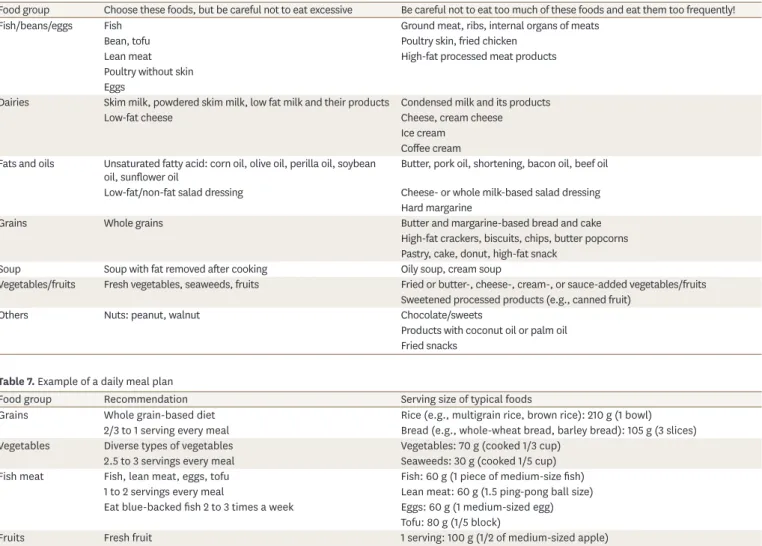
In Korea, few studies have examined the association between dyslipidemia and dietary patterns, but diets rich in whole grains, such as brown rice and whole wheat, with vegetables, legumes, fish, fruits, and dairy products may be helpful. Many Korean adults consume a typical high-carbohydrate low-fat diet compared to Western populations. Therefore, increasing the proportion whole grains instead of refined rice and balanced diet including adequate amounts of fish, beans, and fresh vegetables would be beneficial. Furthermore, although fresh fruits and milk are recommended, fruit concentrates and sweetened milk should be avoided. Table 6 shows a list for food choice, and Table 7 shows an example of the
Table 6. The list of foods to be recommended and to be avoided
Food group Choose these foods, but be careful not to eat excessive Be careful not to eat too much of these foods and eat them too frequently!
Fish/beans/eggs Fish Ground meat, ribs, internal organs of meats
Bean, tofu Poultry skin, fried chicken
Lean meat High-fat processed meat products
Poultry without skin Eggs
Dairies Skim milk, powdered skim milk, low fat milk and their products Condensed milk and its products
Low-fat cheese Cheese, cream cheese
Ice cream Coffee cream Fats and oils Unsaturated fatty acid: corn oil, olive oil, perilla oil, soybean
oil, sunflower oil Butter, pork oil, shortening, bacon oil, beef oil Low-fat/non-fat salad dressing Cheese- or whole milk-based salad dressing
Hard margarine
Grains Whole grains Butter and margarine-based bread and cake
High-fat crackers, biscuits, chips, butter popcorns Pastry, cake, donut, high-fat snack
Soup Soup with fat removed after cooking Oily soup, cream soup
Vegetables/fruits Fresh vegetables, seaweeds, fruits Fried or butter-, cheese-, cream-, or sauce-added vegetables/fruits Sweetened processed products (e.g., canned fruit)
Others Nuts: peanut, walnut Chocolate/sweets
Products with coconut oil or palm oil Fried snacks
Table 7. Example of a daily meal plan
Food group Recommendation Serving size of typical foods
Grains Whole grain-based diet Rice (e.g., multigrain rice, brown rice): 210 g (1 bowl)
2/3 to 1 serving every meal Bread (e.g., whole-wheat bread, barley bread): 105 g (3 slices)
Vegetables Diverse types of vegetables Vegetables: 70 g (cooked 1/3 cup)
2.5 to 3 servings every meal Seaweeds: 30 g (cooked 1/5 cup)
Fish meat Fish, lean meat, eggs, tofu Fish: 60 g (1 piece of medium-size fish)
1 to 2 servings every meal Lean meat: 60 g (1.5 ping-pong ball size) Eat blue-backed fish 2 to 3 times a week Eggs: 60 g (1 medium-sized egg)
Tofu: 80 g (1/5 block)
Fruits Fresh fruit 1 serving: 100 g (1/2 of medium-sized apple)
1 to 2 servings a day