Vol. 19, No. 12 pp. 740-748, 2018
Effects of Dietary Supplementation of Enzyme complex on Growth Performance, Carcass Characteristics and Meat storability in Broiler
Chickens
Ki-Hyun Kim
1, Jin-Young Jeong
1, Il-Hwan Song
2, Sung-Dae Lee
1, Sang-Yun Ji
1, Yoo-Kyong Lee
1, Ki-Taeg Nam
2*1National Institute of Animal Science, RDA
2Department of Animal Life and Environment Science, Hankyong National University
사료 내 복합효소제의 첨가가 육계 생산성 및 도체특성 및 저장성에 미치는 영향
김기현1, 정진영1, 송일환2, 이성대1, 지상윤1, 이유경1, 남기택2*
1농촌진흥청 국립축산과학원
2국립한경대학교 동물생명환경과학과
Abstract This study was conducted to investigate the effects of dietary supplementation of enzyme complex (metalloprotease and xylanase) on growth performance, carcass characteristics and meat storability of broiler chickens.
The experiment utilized a 2 (basal and low spec diets) × 3 (0, 0.5 or 1 g/kg of enzyme supplementation) factorial arrangement. A total of 360 male Ross broilers were randomly assigned into the following six groups: BD-T0 (basal diet + enzyme complex 0 g/kg), BD-T1 (basal diet + enzyme complex 0.5 g/kg), BD-T2 (basal diet + enzyme complex 1 g/kg), LD-T0 (low spec diet + enzyme complex 0 g/kg), LD-T1 (low spec diet + enzyme complex 0.5 g/kg), LD-T2 (low spec diet + enzyme complex 1 g/kg). Feed and water were provided ad libitum for 42 days, during which time feed intake and body weight were measured at one-week intervals. After the feeding trial, chickens were slaughtered by exsanguination and samples were collected. Feed intake was lower in the enzyme supplemented groups than the non-supplemented groups (p<0.05), as were body weight and gain (p<0.05). Thus, the feed conversion ratio improved in the enzyme supplemented groups relative to the non-supplemented groups (p<0.05). The carcass rate and production index were also significantly improved by supplementation with enzyme complex (p<0.05). Finally, the thiobarbituric acid reactive substances (TBARS) values were lower in the enzyme supplementation groups after 6 storage days (p<0.05). In conclusion, dietary supplementation with enzyme complex including metalloprotease and xylanase improved growth performance, carcass characteristics, and storability of broiler chicken meat.
요 약 본 연구는 육계사료 내 금속단백질분해효소와 xylanase를 포함하는 복합 효소제 첨가 급여가 육계 생산성, 도체특성 및 계육 저장성에 미치는 영향을 조사하기 위하여 실시하였다. 실험 디자인은 2 (기초사료, 저영양사료) x 3 (0, 0.5, 1 g/kg 효소첨가) 요인 배치로 설계하였다. 실험동물은 ross broilers 수컷 360수를 공시하여 다음의 6개의 시험 그룹에 완전임의 배치 하였다. BD-T0(기초사료+복합효소제 0 g/kg), BD-T1(기초사료+복합효소제 0.5 g/kg), BD-T2(기초사료+복합효소제 1 g/kg), LD-T0(저영양사료+복합효소제 0 g/kg), LD-T1(저영양사료+복합효소제 0.5 g/kg), LD-T2(저영양사료+복합효소제 1 g/kg). 사 료와 물은 42일 동안 자유채식을 실시하였으며, 사료섭취량과 체중은 1주 간격으로 측정하였다. 사양시험 종료 후에 방혈로 도살하고 분석에 필요한 시료를 채취하였다. 사료 섭취량은 효소첨가 그룹이 효소 비첨가 그룹에 비해서 유의하게 감소하였 으며, 체중과 일당증체량은 효소첨가 그룹이 효소 비첨가 그룹에 비하여 유의하게 증가하였다. 따라서 사료요구율은 복합효소 첨가에 의해 유의하게 개선되었다(p<0.05). 복합효소첨가 급여에 의하여 도체율과 생산지수 또한 유의하게 개선되었다 (p<0.05). TBARS는 계육 저장 6일차에 효소첨가 그룹이 효소 비첨가 그룹보다 낮은 값을 나타내었다(p<0.05). 본 연구의 결과 를 종합해보면, 사료 내 복합효소제의 첨가 급여는 생산성과 도체성적 그리고 저장성을 유의하게 개선시켰다.
Keywords : Metalloprotease, Xylanase, Growth performance, Meat storability, Broiler chickens
*Corresponding Author : Ki-Taeg Nam(Hankyong National Univ.) Tel: +82-31-670-5124 email: [email protected]
Received September 20, 2018 Revised (1st October 17, 2018, 2nd October 23, 2018) Accepted December 7, 2018 Published December 31, 2018
1. Introduction
Recently, alternative resources of fossil fuel have been widely developed due to an expansion of problems on the abnormal climate and reduction of carbon. Use of corn as an alternative material of fossil fuel is steadily increasing to produce bio-energy.
Unfortunately, corn is one of the primary feed ingredients in livestock. Increased use of corn for bio-energy production makes more difficult to supply corn for animal feed. In addition, the increase in international oil price and an abrupt exchange rate fluctuation cause to the increase of the grain price and transportation costs. Higher grain price and transportation costs lead to an increase of production costs for livestock products. To solve these problem, in recent decades, many researchers has been conducting various studies to demonstrate the effects of using of probiotics, enzymes, and functional materials on productivity improvement in livestock [1-3]. These researches suggest that use of enzyme to increase the digestibility of nutrients has been considerably significant [4,5].
Some feed ingredients, which has the high insoluble nutrients, result in slow growth rate in livestock because digestion and absorption of nutrients is inefficient in digestive tract [6,7]. Various exogenous breakdown enzymes such as β-glucanase, xylanase, pectinase, protease, cellulase, phytase, and amylase have been used to elevate the usefulness of unavailable nutrients such as non-starch polysaccharide (NSP) in monogastric animal [8,9]. Dietary supplementation of these exogenous enzymes has been reported to have some positive effects such as decline of feed cost, enhancement of productivity, and the reduction of environmental burden through decreasing livestock execrations [9-14].
The digestive enzymes (metalloprotease) having exorcist spider (Nephila clavata), which mainly inhabits in South Korea, Japan except for Hokkaido, Taiwan, and China, are known that have high
biological activity in a widely ranges of temperature and pH. The metalloprotease derived from bacteria, Serratia proteamaculans, isolated from this spider has high proteolytic activity, and the activity is increased by 3 or 4 times under the presence of metal ions.
Metalloprotease also has an anti-inflammatory function decomposing the inflammation substance [15].
Xylan is a group of hemicelluloses that are found in plant cell walls. It is degraded by xylanase [16].
However, monogastric animals have no these digestive enzyme. Dietary supplementation of xylanase increases the availability of NSP in the digestive tract of broiler [17]. We hypothesized that dietary supplementation of metalloprotease may make it increased of feed efficiency, and the use of xylanase enables the improvement of NSP availability.
Thus, the aim of this study was to investigate the effects of dietary supplementation of metalloprotease and xylanase on growth performance, carcasses characteristics and meat quality in broiler chickens.
2. Materials and Methods
2.1 Experimental design and diets
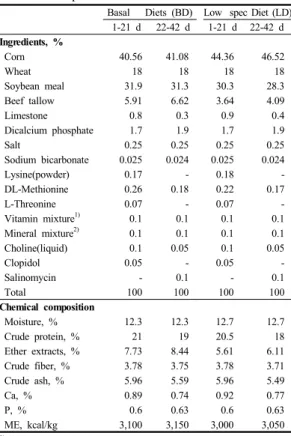
All experimental animals were cared for according to the Guide for the Care and Use of Laboratory Animals (Animal Care Committee, Hankyong National University). A total of 360 of one-day-old male Ross broiler chicks were obtained from a local hatchery, and were randomly allotted to 18 floor pens. A floor space of 0.105 m2 per bird was allowed in an open sided house. The treatments were divided into 2 by 3 factorial experimental design as follows; the experimental diets consist of 2 level energy diets (basal diet (BD) and low-spec diet (LD)) and 3 doses (0 (T0), 0.5 (T1) or 1 (T2) g/kg) of an enzyme complex. The BD was formulated to meet KRC (2007) requirements, and the LD was formulated with lower protein and energy levels compared to basal diet. Ingredients and chemical composition of experimental diets are shown
in Table 1. Used enzyme complex in this study was including metalloprotease 340,000 IU and xylanase 300,000 IU per kg. Feed and water were available ad libitum for 42 days.
Table 1. Ingredients and chemical composition of experimental diets
Basal Diets (BD) Low spec Diet (LD) 1-21 d 22-42 d 1-21 d 22-42 d Ingredients, %
Corn 40.56 41.08 44.36 46.52
Wheat 18 18 18 18
Soybean meal 31.9 31.3 30.3 28.3
Beef tallow 5.91 6.62 3.64 4.09
Limestone 0.8 0.3 0.9 0.4
Dicalcium phosphate 1.7 1.9 1.7 1.9
Salt 0.25 0.25 0.25 0.25
Sodium bicarbonate 0.025 0.024 0.025 0.024
Lysine(powder) 0.17 - 0.18 -
DL-Methionine 0.26 0.18 0.22 0.17
L-Threonine 0.07 - 0.07 -
Vitamin mixture1) 0.1 0.1 0.1 0.1
Mineral mixture2) 0.1 0.1 0.1 0.1
Choline(liquid) 0.1 0.05 0.1 0.05
Clopidol 0.05 - 0.05 -
Salinomycin - 0.1 - 0.1
Total 100 100 100 100
Chemical composition
Moisture, % 12.3 12.3 12.7 12.7
Crude protein, % 21 19 20.5 18
Ether extracts, % 7.73 8.44 5.61 6.11
Crude fiber, % 3.78 3.75 3.78 3.71
Crude ash, % 5.96 5.59 5.96 5.49
Ca, % 0.89 0.74 0.92 0.77
P, % 0.6 0.63 0.6 0.63
ME, kcal/kg 3,100 3,150 3,000 3,050
1)Vitamin mixture(content per kg diet): vit A, 12,500 IU; Vit D3, 5,000 IU; Vit E, 70 mg; Vit K3, 4 mg; Vit B1, 4 mg; Vit B2, 8 mg; Vit B6, 3.644 mg; Vit B12, 30 μg; Calcium pantothenate, 19.6 mg; Niacin, 70 mg; Folic acid, 1.94 mg; Biotin, 0.2 mg; Oxytrap, 25 mg.
2)Mineral mixture(content per kg diet): Mn, 100 mg; Zn, 80 mg; Se, 0.3 mg; Fe, 80 mg; Cu, 40 mg; I, 1 mg,; Co, 0.2 mg.
2.2 Growth performance
The body weight and feed intake were recorded weekly, and body weight gain and feed conversion ratio (FCR) were calculated from those data.
Production index was calculated using the following equation;
Production index = (livability × body weight) / (FCR × feeding day)ⅹ100
2.3 Carcass characteristics
At the end of experiment (42days), three chicks corresponding to the average weight from each group were selected, and were slaughtered by exsanguination.
The carcass weight was measured after the removal of head, feet, and internal organs. Then breast and thigh meat were harvested and weighed.
2.4 Storability test in meat
Changes in thiobarbituric acid reactive substances (TBARS) and volatile basic nitrogen (VBN) values of breast and thigh meat were measured during storage period (0 day, 3 day, and 6 day). The TBARS value was determined as described by Reitznerova et al. [18]
and expressed as mg malonaldehyde equivalents per kg sample. Briefly, 5 g of meat sample was added to 45 mL of 20% trichloroacetic acid (in 2 M phosphate solution) and homogenized using Ultra-Turrex T25 tissue homogenizer (Janke and Kenkel, IKA, Labor Tecnik, Germany), and the solution was filtered through Whatman No. 1 filter paper. After mixing 5 mL of filtrate with 5 mL of 2-thiobarbituric acid (0.005 M in water) in test tube, the test tubes were kept at room temperature in the dark for 15 h, and measured the absorbance at 531 nm using spectrophotometer (X-ma 1000, Human Co., Korea). VBN was measured by modified micro-diffusion assay according to the Standards for Processing & Ingredient Specifications of Livestock Product method (SPISLP, 2011) [19], and was calculated by following;
VBN (mg%) = [(a−b)×(0.14×f×100×d)/S]
where, a is the sample titer, b is the blank titer, f is a reagent factor, d is the sample dilution, and S is sample weight (g).
2.6 Statistical analysis
The statistical analysis of data was performed using SPSS software program (ver. 17.0). Growth performance, carcass characteristics, and storability among treatment groups were analyzed by 2 × 3
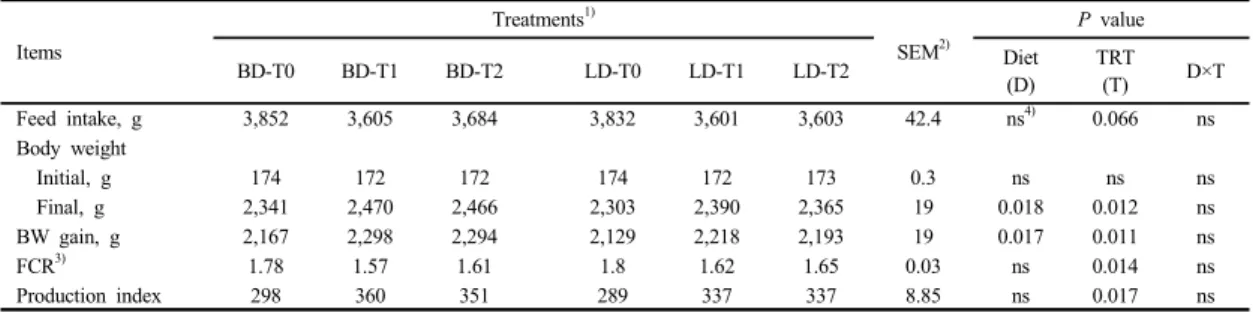
Table 2. Effects of dietary supplementation of enzyme complex on the growth performance in broiler chickens Items
Treatments1)
SEM2)
P value
BD-T0 BD-T1 BD-T2 LD-T0 LD-T1 LD-T2 Diet
(D) TRT
(T) D×T
Feed intake, g 3,852 3,605 3,684 3,832 3,601 3,603 42.4 ns4) 0.066 ns
Body weight
Initial, g 174 172 172 174 172 173 0.3 ns ns ns
Final, g 2,341 2,470 2,466 2,303 2,390 2,365 19 0.018 0.012 ns
BW gain, g 2,167 2,298 2,294 2,129 2,218 2,193 19 0.017 0.011 ns
FCR3) 1.78 1.57 1.61 1.8 1.62 1.65 0.03 ns 0.014 ns
Production index 298 360 351 289 337 337 8.85 ns 0.017 ns
1)BD-T0, basal diet + 0 g/kg enzyme complex; BD-T1, basal diet + 0.5 g/kg enzyme complex; BD-T2, basal diet + 1 g/kg enzyme complex;
LD-T0, low spec diet + 0 g/kg enzyme complex; LD-T1, low spec diet + 0.5 g/kg enzyme complex; LD-T2, low spec diet + 1 g/kg enzyme complex
2)SEM, Standard Error Mean
3)FCR, Feed Conversion Ratio
4)ns, non-significant (p>0.05)
Table 3. Effects of dietary supplementation of enzyme complex on the carcass characteristics in broiler chickens Items
Treatments1)
SEM2)
P value
BD-T0 BD-T1 BD-T2 LD-T0 LD-T1 LD-T2 Diet
(D) TRT
(T) D×T
Carcass ratio, % 73.1 76.1 75.7 74.0 75.2 75.0 0.25 ns3) <0.001 0.003
Meat percent, %
Breast 20.6 22.9 23.5 23.1 22.0 22.5 0.47 ns ns ns
Tight 8.0 8.2 7.6 8.3 7.9 8.0 0.17 ns ns ns
1)BD-T0, basal diet + 0 g/kg enzyme complex; BD-T1, basal diet + 0.5 g/kg enzyme complex; BD-T2, basal diet + 1 g/kg enzyme complex; LD-T0, low spec diet + 0 g/kg enzyme complex; LD-T1, low spec diet + 0.5 g/kg enzyme complex; LD-T2, low spec diet + 1 g/kg enzyme complex
2)SEM, Standard Error Mean
3)ns, non-significant (p>0.05)
factorial ANOVA. Significant differences on the change of meat storability as the time passed were analyzed by repeated-ANOVA. The significant differences among treatment groups were considered at P<0.05.
3. Results
3.1 Growth performance
The effects of dietary supplementation of enzyme complex on growth performance and production index are presented in Table 2. Although, the feed intake did not affected by the level of dietary energy and/or enzyme supplementation (p>0.05), it showed decreasing tendency by enzyme supplementation in both BD and LD groups (p=0.066). Final body weight and weight gain were significantly higher in BD group than LD
group (p<0.05). The supplementation of enzymes significantly increased the final body weight and body weight gain compared to non-enzyme supplemented groups (p<0.05). However, there was no significant difference between the level of supplemented enzyme (p>0.05). Although, FCR was not affected by the dietary energy levels, it was significantly improved by enzyme supplementation (p<0.05), and production index had also similar results with FCR.
3.2 Carcass characteristics
The effects of dietary supplementation of enzyme complex on carcass rate and meat percent are presented in Table 3. There were no significant changes in carcass rate between BD and LD groups. However, the carcass rate was significantly improved by supplementation of enzyme complex (p<0.05). Meat
percent was not affected by diet treatment and/or enzyme treatment.
3.3 Storability test in meat
The changes of TBARS and VBN of broiler breast and thigh meat during the storage periods were presented in Table 4 and 5. The values of TBARS and VBN were significantly increased in all groups as storage times passed (p<0.05). The TBARS of breast meat was significantly higher in BD groups compared to LD group at 0 and 6th day of storage (p<0.05).
Although there was no significant difference between
BD and LD groups, the TBARS in BD groups was observed to be higher than those of LD groups at 3rd day of storage. And, TBARS in thigh meat of BD groups also showed the higher value than LD groups at 6th day of storage (p<0.05). The dietary supplementation of enzyme complex did not affect to the changes in TBARS in thigh meat during overall storage periods. However, the value of TBARS in breast meat was significantly decreased in enzyme supplemented groups compared to non-supplemented enzyme groups at 6th day of storage (p<0.05).
Table 4. Changes in TBARS (mg malondialdehyde/kg sample)1) of breast and thigh meat in broiler chickens during storage periods
Items
Treatments2)
SEM3)
P value
BD-T0 BD-T1 BD-T2 LD-T0 LD-T1 LD-T2 Diet
(D) TRT
(T) D×T
Breast
0 day 0.26x 0.33x 0.35x 0.23x 0.24x 0.19x 0.02 0.003 ns4) ns
3 day 0.35x 0.38x 0.36x 0.26x 0.31x 0.23x 0.03 ns ns ns
6 day 0.97y 0.87y 0.72y 0.76y 0.70y 0.71y 0.03 0.003 0.013 ns
Thigh
0 day 0.33x 0.38x 0.33x 0.30x 0.26x 0.25x 0.02 ns ns ns
3 day 0.70y 0.72y 0.61y 0.61y 0.61y 0.52x 0.02 0.038 ns ns
6 day 1.07z 1.07z 0.95z 0.97z 0.89z 0.85y 0.03 0.014 ns ns
1)TBARS, thiobarbituric acid reactive substances
2)BD-T0, basal diet + 0 g/kg enzyme complex; BD-T1, basal diet + 0.5 g/kg enzyme complex; BD-T2, basal diet + 1 g/kg enzyme complex; LD-T0, low spec diet + 0 g/kg enzyme complex; LD-T1, low spec diet + 0.5 g/kg enzyme complex; LD-T2, low spec diet + 1 g/kg enzyme complex
3)SEM, Standard Error Mean
4)ns, non-significant (p>0.05)
x-zMeans within same column of each group without same superscripts are significantly different (p<0.05).
Table 5. Changes in VBN (mg %)1) of breast and thigh meat in broiler chickens during storage periods Items
Treatments2)
SEM3)
P value
BD-T0 BD-T1 BD-T2 LD-T0 LD-T1 LD-T2 Diet
(D) TRT
(T) D×T
Breast
0 day 24.9x 23.9x 27.3x 30.5x 26.6x 25.5x 0.83 ns4) ns ns
3 day 41.2y 40.8y 39.0x 41.0y 46.8y 41.9y 1.25 ns ns ns
6 day 55.4z 52.3z 56.0y 60.4z 58.6y 61.7z 1.14 0.016 ns ns
Thigh
0 day 30.7x 30.3x 26.6x 26.6x 28.4x 27.4x 1.33 ns ns ns
3 day 39.5x 39.5x 38.5x 41.9x 42.0xy 39.6x 1.04 ns ns ns
6 day 63.0y 68.0y 61.9y 64.4y 56.3y 57.4y 1.75 ns ns ns
1)VBN, volatile basic nitrogen
2)BD-T0, basal diet + 0 g/kg enzyme complex; BD-T1, basal diet + 0.5 g/kg enzyme complex; BD-T2, basal diet + 1 g/kg enzyme complex; LD-T0, low spec diet + 0 g/kg enzyme complex; LD-T1, low spec diet + 0.5 g/kg enzyme complex; LD-T2, low spec diet + 1 g/kg enzyme complex
3)SEM, Standard Error Mean
4)ns, non-significant (p>0.05)
x-zMeans within same column of each group without same superscripts are significantly different (p<0.05).
4. Discussion
Mushtaq et al. reported that feed intake was decreased to 4.67% by addition of xylanase and glucanase in chicken diet [20], and Yu et al. also resulted that the supplementation of protease to broiler feed decreases the feed intake during growing stage (22 to 38 days old) [21]. The result of present study corresponded with those previous reports. In this study, there was no significant difference in feed intake between BD and LD groups. Normally, reducing the energy content of the diet results in an increase in the feed intake [22]. This might mean that the level of reduced dietary energy in this study was insufficient to affect the feed intake. Many previous studies had reported that the dietary supplementation of enzyme, such as xylanase, amylase and protease, improved weight gain and FCR in broiler [17,20,23,24]. Wang et al. reported the degradation effect of enzyme supplementation on dietary components [4]. In addition, Gracia et al. found that enzymes improved the retention of N and the digestibility of ether extract [25]. Meanwhile, Cowieson and Ravindran concluded that the addition of a combination of xylanase, amylase and protease into broiler diets was effective in improving productive performance despite the response of dietary component digestibility was very limited [9].
Although, the nutrient digestibility was not analyzed in this study, our results showed similar result with those previous studies on growth performance and FCR.
More studies on nutrients digestibility of enzyme complex used in this study are necessary.
Wu and Ravindran found that there was no effect of the xylanase supplementation into wheat-based feed on breast muscle in chicken [23]. Kim also reported that the addition of enzymes in feeds with different energy and protein levels does not affect the meat percent in broiler chickens [26]. From the results mentioned above, we demonstrated that the dietary supplementation of metalloprotease and xylanase could improve the productivity and carcass rate without any negative influences such as reducing meat percent in
broiler chickens.
Excessive reactive oxygen species (ROS) oxidize the lipid and fatty acid, and induce the oxidative stress [27], then these oxidative stress causes an inflammatory reaction [28]. In the previous study of Lee et al., they reported that metalloprotease has anti-inflammatory activity [15]. This effect of metalloprotease might be proceeded from inhibition of ROS formation. In present study, the decreased TBARS in breast meat of enzyme supplementation groups at 6th day of storage might be occurred by anti-oxidant effect of metalloprotease. The anti-oxidative mechanism of metalloprotease has to be studied further. The VBN values were higher in the LD groups than BD groups at 6th day of storage (p<0.05), however there was no significant difference in VBN of breast and thigh meat between supplemented group and non-supplemented group of enzyme complex during storage period (p>0.05). From above results, the supplementation of metalloprotease and xylanase might have positive effect for expanding the storage period for broiler meat.
5. Conclusion
The dietary supplementation of metalloprotease and xylanase improves the productivity without negative effect on decline of carcass characteristics. Furthermore, the enzyme supplementation inhibits the lipid oxidation of breast meat during storage periods. Based on those results, it can be suggested that the metalloprotease and xylanase is useful as a feed additives for broiler.
References
[1] J. S. Yoo, Y. J. Chen, I. H. Kim. Effects of dietary complex probiotics on growth performance nutrient digestibility and blood characteristics in growing pigs. J.
Korea Acad. Industr. Coop. Soc., 8, pp 1266-1272, 2007.
[2] K. S. Shon, J. W. Hong, O. S. Kwon, B. J. Min, J. H.
Cho, Y. J. Chen, I. H. Kim, Effects of dietary Astragalus membranaces and dried-onion meal on growth performance and nutrient digestibility in pig diets. J.
Korea Acad. Industr. Coop. Soc., 5, pp 273-278, 2004.
[3] K. H. Kim, K. S. Kim, D. W. Kim, S. J. Sa, Y. H. Kim, Effects of supplementation of dietary betaine on apparent nutrient digestibility and physiological responses in finishing pigs. J. Korea Acad. Industr. Coop. Soc., 17, pp 407-414, 2016.
DOI: http://dx.doi.org/10.5762/KAIS.2016.17.12.407 [4] Y. Wang, L. I. Chiba, C. Huang, I. M. Torres, L. Wang,
E. G. Welles, Effect of diet complexity, multi-enzyme complexes, essential oils, and benzoic acid on weanling pigs. Livest. Sci., 209, pp 32-38, 2018.
DOI: https://doi.org/10.1016/j.livsci.2017.12.007
[5] J. W. Zhou, H. Liu, C. L. Zhong, A. A. Degen, G.
Yang, Y. Zhang, J. L. Qian, W. W. Wang, L. Z. Hao, Q. Qiu, Z. H. Shang, X. S. Guo, L. M. Ding, R. J. Long, Apparent digestibility, rumen fermentation, digestive enzymes and urinary purine derivatives in yaks and Qaidam cattle offered forage-concentrate diets differing in nitrogen concentration. Livest. Sci., 208, pp 14-21, 2018.
DOI: https://doi.org/10.1016/j.livsci.2017.11.020 [6] P. Celi, A. J. Cowieson, F. Fru-Nji, R. E. Steinert, A. M.
Kluenter, V. Verlhac, Gastrointestinal functionality in animal nutrition and health: New opportunities for sustainable animal production. Anim. Feed Sci. &
Technol., 234, pp 88-100, 2017.
DOI: https://doi.org/10.1016/j.anifeedsci.2017.09.012 [7] K. E. B. Knudsen, The nutritional significance of
“dierary fibre” analysis. Anim. Feed Sci. & Technol., 90, pp 3-20. 2001.
DOI: https://doi.org/10.1016/S0377-8401(01)00193-6 [8] M. G. Nikam, V. R. Reddy, M. V. L. N. Raju, K. K.
Reddy, J. Narasimha, Effect of dietary supplementation of non starch polysaccharide hydrolyzing enzymes on performance of broilers fed diets based on guar meal, rape seed meal and cotton seed meal. Inter. J. Livest.
Res., 7, pp 180-190. 2017.
DOI: https://doi.org/10.5455/ijlr.20170209070638 [9] A. J. Cowieson, V. Ravindran, Effect of exogenous
enzymes in maize-based diets varying in nutrient density for young broilers: growth performance and digestibility of energy, minerals and amino acid. Br. Poult. Sci., 49, pp 37-44, 2008.
DOI: https://doi.org/10.1080/00071660701812989 [10] A. J. Cowieson, H. Lu, K. M. Ajuwon, I. Knap, O.
Adeola, Interactive effects of dietary protein source and exogenous protease on growth performance, immune competence and jejunal health of broiler chickens. Anim.
Prod. Sci., 57, pp 252-261, 2016.
DOI: https://doi.org/10.1071/AN15523
[11] T. A. Woyengo, E. Beltranena, T. T. Zijlstra, Nonruminant nutrition symposium: Controlling feed cost by including alternative ingredients into pig diets: A review. J. Anim. Sci., 92, pp 1293-1305, 2014.
DOI: https://doi.org/10.2527/jas.2013-7169
[12] M. R. Bedford, Exogenous enzymes in monogastric nutrition-their current value and future benefits. Anim.
Feed Sci. & Technol., 86, pp 1-13, 2000.
DOI: https://doi.org/10.1016/S0377-8401(00)00155-3 [13] P. H. Selle, V. Ravindran, R. A. Caldwell, W. L. Bryden,
Phytate and phytase: Consequences for protein
utilization. Nutr. Res. Rev., 13, pp 255-278, 2000.
DOI: https://doi.org/10.1079/095442200108729098 [14] A. J. Cowieson, Factors that affect the nutritional value
of maize for broilers. Anim. Feed Sci. & Technol., 119, pp 293-305, 2005.
DOI: https://doi.org/10.1016/j.anifeedsci.2004.12.017 [15] K. E. Lee, C. H. Kim, H. J. Kwon, J. Y. Kwak, D. H.
Shin, D. S. Park, K. S. Bae, H. Y. Park, Biochemical characterization of an extracellular protease in serratia proteamaculans isolated from a spider. Korean J.
Microbio., 40, pp 269-274, 2004.
[16] Q. K. Beg, M. Kapoor, L. Mahajan, G. S. Hoondal, Microbial xylanases and their industrial applications: a review. Appl. Microbio. & Biotechnol., 56, pp 326-338, 2001.
DOI: https://doi.org/10.1007/s002530100704
[17] F. Gao, Y. Jiang, G. H. Zhou, Z. K. Han, The effects of xylanse supplementation on performance, characteristics of the gastrointestinal tract, blood parameters and gut microflora in broilers fed on wheat-based diets. Anim.
Feed Sci. & Technol., 142, pp 173-184, 2008.
DOI: https://doi.org/10.1016/j.anifeedsci.2007.07.008 [18] A. Reitznerová, M. Šuleková, J. Nagy, S. Marcincák, B.
Semjon, M. ˇCertík, T. Klempová, Lipid peroxidation process in meat and meat products: A comparison study of malondialdehyde determination between modified 2-thiobarbituric acid spectrophotometric method and reverse-phase high-performance liquid chromatography.
Mol., 22, pp 1-12. 2017.
DOI: https://doi.org/10.3390/molecules22111988
[19] SPISLP, Standard for Processing & Ingredient Specifications of Livestock Product. Animal, Plant and Fisheries Quarantine and Inspection Agency (APFQIA), Korea, pp. 300-302, 2011.
[20] T. Mushtaq, M. Sarwar, G. Ahmad, M. A. Mirza, T.
Ahmad, U. Noreen, M. M. H. Mushtaq, Z. Kamran, Influence of sunflower meal based diets supplemented with exogenous enzyme and digestible lysine on performance, digestibility and carcass response of broiler chickens. Anim. Feed Sci. & Technol., 149, pp 275-286, 2009.
DOI: https://doi.org/10.1016/j.anifeedsci.2008.06.008 [21] B. Yu, S. T. Wu, C. C. Liu, R. Gauthier, P. W. S. Chiou,
Effects of enzyme inclusion in a maize-soybean diet on broiler performance. Anim. Feed Sci. & Technol., 134, pp 283-294, 2007.
DOI: https://doi.org/10.1016/j.anifeedsci.2006.09.017 [22] E. Gopinger, E. L. Krabbe, D. Surek, L. S. Lopes, V. S.
Avila, Live performance, carcass and bone quality responses of grower and finisher broilers to dietary metabolizable energy levels. Braz. J. Poul. Sci., 19, pp 559-566. 2017.
DOI: http://dx.doi.org/10.1590/1806-9061-2017-0508 [23] Y. B. Wu, V. Ravindran, 2004. Influence of whole wheat
inclusion and xylanase supplementation on the performance, digestive tract measurements and carcass characteristics of broiler chickens. Anim. Feed Sci. &
Technol., 116, pp 129-139, 2004.
DOI: https://doi.org/10.1016/j.anifeedsci.2004.02.011 [24] A. J. Cowieson, O. Adeola, Carbohydrase, protease, and
phytase have an additive beneficial effect in nutritionally
marginal diets for broiler chicks. Poult. Sci., 84, pp 1860-1867, 2005.
DOI: https://doi.org/10.1093/ps/84.12.1860
[25] M. I. Gracia, M. J. Araníbar, R. Lázaro, P. Medel, G. G.
Mateos, Alpha-amylase supplementation of broiler diets based on corn. Poult. Sci., 82, pp 436-444, 2003.
DOI: https://doi.org/10.1093/ps/82.3.436
[26] J. U. Kim, J. Y. Kim, J. S. Kim, B. K. Lee, S. Y. Lee, W. S. Lee, S. J. You, B. K. Ahn, E. J. Kim, H. Y. Park, K. H. Son, D. H. Shin, C. W. Kang, Effects of Spider-Derived Protease (Arazyme®) Supplementation of Corn-Soy Diets on the Performance in Laying Hens at the Late Production. Kor. J. Poult. Sci., 36, pp 47-55, 2009.
DOI: https://doi.org/10.5536/KJPS.2009.36.1.047 [27] A. Carrier, Metabolic syndrome and oxidative stress: A
complex relationship. Antioxid. Redox. Signal.,, 26, pp 429-431, 2017.
DOI: https://doi.org/10.1089/ars.2016.6929
[28] J. H. Ryu, H. Ahn, J. Y. Kim, Y. K. Kim, Inhibitory activity of plant extracts on nitric oxide synthesis in LPS-activated macrophage. Phytoth. Res., 17, pp 485-489, 2003.
DOI: https://doi.org/10.1002/ptr.1180
Ki-Hyun Kim [Regular member]
•Mar. 2013 : Kyoto Univ., Applied biology, PhD
•Apr. 2013 ~ Feb. 2017 : National Institute of Animal Science, RDA, PostDoc
•Feb. 2017 ~ current : National Institute of Animal Science, RDA, Researcher
<Research Interests>
Animal nutrition physiology, Feed
Jin-Young Jeong [Regular member]
•Aug. 2002 : Gyeongsang Univ., Neurobiology, MS
•Feb. 2012 : Chungnam Univ., Biotechnology, PhD
•Jan. 2013 ~ current : National Institute of Animal Science, RDA, PostDoc
<Research Interests>
Animal nutrition, Metabolomics
Il-Hwan Song [Regular member]
•CEO, Gumgang farm
•Feb. 2017 : Hankyong Univ., Animal life and Science, MS
•Yonam College, Adjunct professor
•Korean college of agriculture and Fisheries, Placement professor
<Research Interests>
Swine, Feeding management
Sung-Dae Lee [Regular member]
•Mar. 2006 : Kagoshima Univ., Science of Bioresource Production, PhD
•Dec. 2007 ~ Dec. 2017 : National Institute of Animal Science, RDA, Researcher
•Jan. 2018 ~ current : National Institute of Animal Science, RDA, Senior Researcher
<Research Interests>
Monogastric nutrition, Feed, Climate changing
Sang-Yun Ji [Regular member]
•Mar. 2004 : Kunkuk Univ., Animal nutrition, MS
•Aug. 2006 ~ current : National Institute of Animal Science, RDA, Researcher
<Research Interests>
Animal nutrition physiology, Feed
Yoo-Kyong Lee [Regular member]
•Feb. 2016 : Gyeongsang Univ.
Applied biology, MS
•Oct. 2012 ~ current : National Institute of Animal Science, RDA, Researcher
<Research Interests>
Ruminant nutrition physiology
Ki-Taeg Nam [Regular member]
•Mar. 1992 : Tohoku Univ, Animal physiology, PhD
•Mar. 1998 ~ current : Hankyong Univ., Dep. of Animal life and Science, Professor
•Mar. 2017 ~ current : Head of green dairy center, Head of certification center of environment -friendly agricultural products
<Research Interests>
Animal physiology