저작자표시-비영리-변경금지 2.0 대한민국 이용자는 아래의 조건을 따르는 경우에 한하여 자유롭게 l 이 저작물을 복제, 배포, 전송, 전시, 공연 및 방송할 수 있습니다. 다음과 같은 조건을 따라야 합니다: l 귀하는, 이 저작물의 재이용이나 배포의 경우, 이 저작물에 적용된 이용허락조건 을 명확하게 나타내어야 합니다. l 저작권자로부터 별도의 허가를 받으면 이러한 조건들은 적용되지 않습니다. 저작권법에 따른 이용자의 권리는 위의 내용에 의하여 영향을 받지 않습니다. 이것은 이용허락규약(Legal Code)을 이해하기 쉽게 요약한 것입니다. Disclaimer 저작자표시. 귀하는 원저작자를 표시하여야 합니다. 비영리. 귀하는 이 저작물을 영리 목적으로 이용할 수 없습니다. 변경금지. 귀하는 이 저작물을 개작, 변형 또는 가공할 수 없습니다.
A Thesis
For the Degree of Master of Science
Effects of Various Levels of
Enzyme and Emulsifier Supplementation on
Growth Performance, Pork Quality,
Blood Profiles and Economic analysis in
Weaning to Finishing Pigs
사료 내 효소제 및 유화제의 수준별 첨가가
자돈 – 비육돈에 성장성적
, 혈액성상, 돈육 품질 그리고
경제성분석에 미치는 영향
August, 2018
By
Jun Hyung, Lee
School of Agricultural Biotechnology
Graduate School of Seoul National University
Effects of Various Levels of
Enzyme and Emulsifier Supplementation on
Growth Performance, Pork Quality,
Blood Profiles and Economic analysis in
Weaning to Finishing Pigs
사료 내 효소제 및 유화제의 수준별 첨가가
자돈 – 비육돈에 성장성적
, 혈액성상, 돈육 품질
그리고 경제성분석에 미치는 영향
지도교수
김 유 용
이 논문을 농학석사 학위논문으로 제출함
2018 년 8 월
서울대학교 대학원 농생명공학부
이 준 형
이준형의 농학석사 학위논문을 인준함
2018 년 7 월
위 원 장 (인)
부위원장 (인)
Summary
In domestic pig industry, one of concern is reduction the cost of production. In that cost, feed cost is occupying approximately 60% of whole production cost in pig industry and 95% of feed ingredients associate with that feed are imported from other countries. With that issues, the ingredients market for animal feed industry also has been growing since last decades. Then, environment concern as one of negative aspect with pig industry also has been leading to find out the effective methods of feedstuff digestibility in swine feed. In addition, there is limit in secretion of endogenous enzymes in interior of the body and digestibility of dietary fat source in animal feed. To improve the effective utilization of feed ingredients in animal feed, supplementation of enzyme and emulsifier can be beneficial way to fulfill the object of those issues. This experiment was conducted to evaluate the effect of various levels of enzyme and emulsifier supplementation on growth performance, carcass characteristics and economic analysis in weaning to growing to finishing pigs. A total of 192 weaning pigs ([Yorkshire × Landrace] × Duroc), average 7.26 ± 0.77 kg body weight (BW), were allotted to one of 6 treatments by BW and sex in 4 replications with 8 pigs per pen in 3 × 2 factorial design. Experimental diets were formulated with 0.10% or 0.15% of enzyme along with 0.00%, 0.05% or 0.10% of emulsifier, respectively. In growth performance, G:F ratio was increased with supplementation of emulsifier during late weaning and whole weaning period (P=0.01,0.02) and it was also increased when emulsifier supplementation level was 0.10% (P=0.02) during the whole growing period. The Average daily feed intake (ADFI) was increased during late growing period (P=0.03) when enzyme supplementation level was 0.15% and that result brought increased Average daily gain (ADG) during early finishing period (P=0.03) when enzyme supplementation level was 0.15%. In blood profiles, BUN, HDL and LDL did not make significant differences among treatments. In very low density lipoprotein(VLDL), the result made significant differences among treatments during late weaning period. Due to emulsifier supplementation decreased, VLDL concentration was changed. In triglyceride (TG), the result also made significant differences during late weaning period. As supplementation of emulsifier increased, TG in blood was decreased. In glucose, the result was similar as triglyceride and it was also affected by the level of emulsifier in diet during late weaning period. Free fatty acids in
blood was decreased during late weaning period by effect of supplementation of enzyme and/or emulsifier or synergistic effect of two feed additives. In pork quality, there was no significant difference in carcass trait among treatments except crude ash. The amount of crude ash was increased when emulsifier supplementation level was 0.05% (P=0.02). The cooking loss was increased as supplementation of enzyme and emulsifier was higher (P<0.01; P=0.03, respectively). In economic analysis during the whole experimental period, feed cost was decreased when enzyme as well as emulsifier was provided at 0.1%, respectively, (P<0.05) This result was derived from the improved feed efficiency by supplementation of enzyme and emulsifier. Consequently, supplementation of enzyme 0.10% with emulsifier 0.10% showed positive effect on growth performance, carcass characteristics and economic analysis of weaning to finishing pigs.
Keywords : Enzyme, Emulsifier, Weaning to Finishing Pig, Growth Performance, Economic Analysis
Contents
page Summary ··· ··· i Contents ··· iii List of Tables ··· V List of Figures ··· Vi List of Abbreviations ··· Vii Ⅰ. Introduction ··· 1Ⅱ. Review of Literature ··· 3
1. Introduction ··· 3
1.1 Global market and feed ingredients ··· 3
1.2 Environmental concern with livestock industry in korea ··· 5
2. The Objectives of Using Enzymes in Animal Feed ··· 7
2.1 Different types of enzyme in animal feed market ··· 7
2.1.1 Fiber-degrading enzyme ··· 8
2.1.2 Protein-degrading enzyme ··· 8
2.1.3 Starch-degrading enzyme ··· 9
2.1.4 Phytic acid-degrading enzyme ··· 9
3. Enzyme Supplementation to Swine Diets ··· 10
3.1 Digestibility ··· 10
3.2 Growth performance ··· 10
4. Fat digestion in Pigs ··· 11
4.1 Digestive Physiology and digestion of fat in Pigs ··· 11
4.2.1 Fat ··· 14
4.2.2 Dietary Fat Levels and Sources in Pigs ··· 15
4.2.3 Positive effects in utilization of fat ··· 17
4.2.3.1 Effects of Fat on Growth Performance in Swine...17
4.2.3.2 Effects of Fat on Nutrient Digestibility in Swine ··· 18
5. The Objectives of Using Emulsifiers in Animal Feed ··· 19
5.1 Definition of Emulsifier ··· 19
5.2 Effects of Exogenous Emulsifier in Pigs ··· 20
5.2.1 Lecithin ··· 20
5.2.2 Lysolecithin ··· 22
Ⅲ. Effect of Various Levels of Enzyme and Emulsifier Supplementation in Weaning to Growing-finishing Pigs Abstract ··· 23
Introduction ··· 25
Materials and Methods ··· 27
Results and Discussion ··· 30
Conclusion ··· 35
Ⅳ. Literature cited ··· 36
Ⅴ. Summary in Korean ··· 60
List of Tables
Ⅱ. Review of literature
Table 1. The change of production output per year...5
Table 2. Population of pig and nitrogen and phosphorus occurrence...6
Table 3. Digestibility of fat depend on fat sources and age of weaning pigs...14
Table 4. Category of lipid and examples...15
Table 5. Various types of fat source and ingredient...16
Table 6. Characteristics of fat sources...17
Ⅲ. Experiment Table 1. Formula and chemical composition of weaning phase 1...47
Table 2. Formula and chemical composition of weaning phase 2...48
Table 3. Formula and chemical composition of growing phase 1...49
Table 4. Formula and chemical composition of growing phase 2...50
Table 5. Formula and chemical composition of finishing phase 1...51
Table 6. Formula and chemical composition of finishing phase 2...52
Table 7. Effect of various levels of enzyme and emulsifier supplementation on growth performance in weaning to finishing pigs...53
Table 8. Effect of various levels of enzyme and emulsifier supplementation on growth performance in weaning to finishing pigs...54
Table 9. Effect of various levels of enzyme and emulsifier supplementation on blood profile in weaning to finishing pigs...55
Table 10. Effect of various levels of enzyme and emulsifier supplementation on blood profile in weaning to finishing pigs...56
Table 11. Effect of various levels of enzyme and emulsifier supplementation on blood profile in weaning to finishing pigs...57
Table 12. Effect of various levels of enzyme and emulsifier supplementation on pork quality...58
Table 13. Effect of various levels of enzyme and emulsifier supplementation on economic benefits...59
List of Figures
Ⅰ. Review of Literature
Figure 1. Corn and SBM price change in Korea ··· 4 Figure 2. Corn and SBM import change in Korea ··· 4 Figure 3. The activity of gastric lipase, pancreatic lipase, colipase, and carboxyl ester hydrolase in relation to the BW of pigs
pre-weaning ( ⃞) and post- weaning (∎) ··· 12 Figure 4. Development of pancreatic lipase activity in nursing piglets ···· 13 Figure 5. Two types of emulsifiers and their emulsion ··· 19 Figure 6. Chemical structure of lecithin ··· 21 Figure 7. Chemical structure of lysolecithin ··· 22
AA Amino acid
ADFI Average daily feed intake ADG Average daily gain
AID Apparent ileal digestibility
AOAC Association of official analytical chemists ATTD Apparent total tract digestibility
BUN Blood urea nitrogen BW Body weight CCK Cholecystokinin CP Crude protein DM Dry matter EE Ether extract EU European union FA Fatty acid
FCR Feed conversion ratio HDL High-density lipoprotein HLB Hydrophilic lipophilic balance MCFA Medium Chain Fatty Acid NRC National research council RCB Randomized complete block SAS Statistical analysis system SBM Soybean meal
SCFA Short Chain Fatty Acid SSL Sodium stearoty-2-lactylate UFA Unsaturated fatty acid VLDL Very low density lipoprotein
I. Introduction
As there are several extrinsic factors such as environment, amount of production, monopolistic market or bio fuel industry, price of feed ingredients were higher than before (Moon, 2012). Moreover, most of Korea’s animal feed industry relied on the cost of corn, wheat and soybean meal as primary ingredients for energy and protein sources in feed ingredients. In addition, most of energy resource in feed ingredients comprised approximately at 70% of total expense of feed for livestock. For that reaseon, swine industry had to concern with the cost of those ingredients (Saleh et al., 2004). Hence, many swine producers, companies and nutritionists looked forward to finding the strategies to reduce the feed cost and minimize the sacrificing of animal productivity.
There are starch, lipid and fiber as energy resource in animal feed and starch had been noticed that digestibility was near 90% in swine. Thus, there is few researches surmised that digestibility of starch cannot be improved any more (Li et al., 2015). However, it is known that digestibility of lipid as vegetable fats was near 70 to 80% and digestibility of lipid as animal fat was near 60 to 70% (Cera et al., 1988). Furthermore, dietary fiber in feed indicated that 40 to 60% of digestibility (Corey, 2016). Thus, the aim of reducing feed cost via improve the digestibility of lipid and dietary fiber as an energy source in animal feed has been focused.
To improve the digestibility of dietary fiber, supplementation of enzyme in feed was mentioned as solution through various of researches. Due to increased cost of feed ingredients, alternative feed resources were widely known in feed industry and various of enzymes also developed as feed additive. In addition, several researches have been proved that supplementation of enzyme improved monogastric animal’s digestibility (Choct et al., 1992; Baidoo et al., 1997). Concurrently, supplementation of enzyme in feed also improved swine’s growth performance as well (Kim et al., 2003; Omognenigun et al., 2004; Jo et al., 2012).
various of researches (Cera et al., 1990; Howard et al., 1990).
Consequently, the current study was conducted to evaluate the effect of various levels of enzyme and emulsifier supplementation on growth performance, blood profiles, pork quality and economic profits in weaning to finishing pigs.
II. Review of Literature
1. Introduction
1.1 Global market and feed ingredients
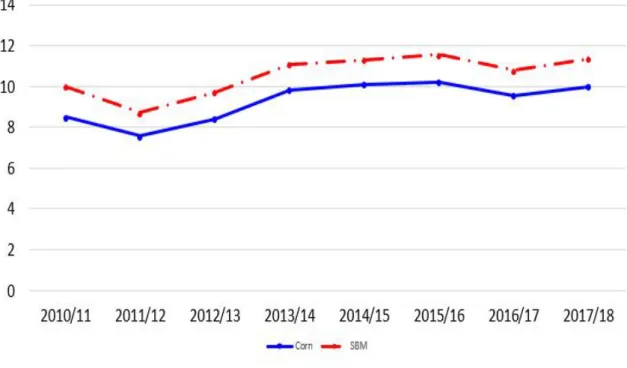
Feed cost is one of most important element in swine industry as it occupied large portion in total production cost of swine industry. In particular, corn and soybean meal (SBM) is concerned as important feed ingredients in feed industry. In accordance with above sentences, price of corn and SBM is still important issue in Korea swine industry. Since 2013, index mundi indicated that fluctuation of price of that grains and trend is continuously expensive than other grains as shown in Figure 1. Furthermore, since 2010, the change of grain (corn and SBM) import has been increasing every year. This change is still being threaten to Korea feed industry as shown in figure 2. Without doubt, feed industry of Korea cannot be disengaged from those two factors, price and amount of grain import if they are trying to make more stable status. In global, rapid economic growth in certain foreign countries such as China or India show increase of demand for food and livestock products, etc., so it also make increasing of cereal and oilseed demand for feed (FAO, 2009). Then, those arguments show that world’s grain demand will not decrease until there is huge change in economy rapidly. Extrinsic factors can also affect to gathering interest in alternative energy sources and introduce of new article or policy in United States or European Union (EU) as has important position in world grain economy and biofuel production (FAO, 2009).
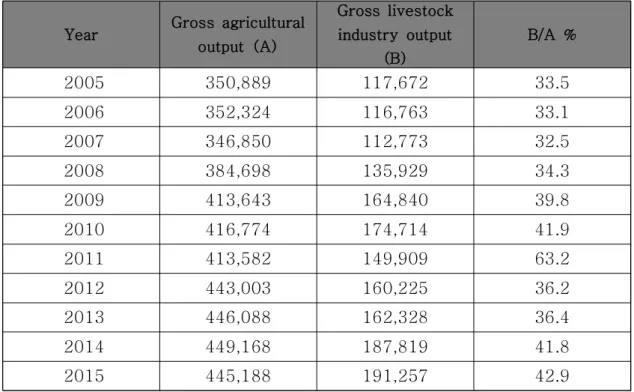
In addition, production of livestock in korea occupied near 40% in total agricultural production in Table 1. As shown from that table data, livestock production has located as important role in Korea and in agriculture of Korea as well. While this situation happening in Korea, it will affect to near 0.7% of purchased price, household spending and burden economy when there is 100% increase of major feed ingredient’s price such as corn, wheat or SBM (Moon, 2012).
Figure 1. Corn and SBM price change in Korea, won (Index mundi, 2018)
Year Gross agricultural output (A) Gross livestock industry output (B) B/A % 2005 350,889 117,672 33.5 2006 352,324 116,763 33.1 2007 346,850 112,773 32.5 2008 384,698 135,929 34.3 2009 413,643 164,840 39.8 2010 416,774 174,714 41.9 2011 413,582 149,909 63.2 2012 443,003 160,225 36.2 2013 446,088 162,328 36.4 2014 449,168 187,819 41.8 2015 445,188 191,257 42.9
Table 1. The change of production output per year in Korea
1.2 Environmental concern with livestock industry in Korea
In animal diet, one of important element is nutrition because of effects on animal’s growth, digestion, utilization and it also affect to environmental concern through out the outcome of nitrogen, methane or phosphorus via digestion such as manure (Mc Donald et al., 2011). As most of animal farm concern, manure from livestock doing important role in agriculture as resources of fertilizer to earth. However, that fertilizer can also bring negative effect in environment as pollution (Ha, 2010). That problem used to occurred between animal farm and other local resident and it can become a legal issue in society as well. In particular, nitrogen from manure, it was readily oxidized to nitrate due to malfunctioning of absorption from animal. Thus, it is possible to spoil the soil and is also easy to move into ground waters (Luo et al., 2002).
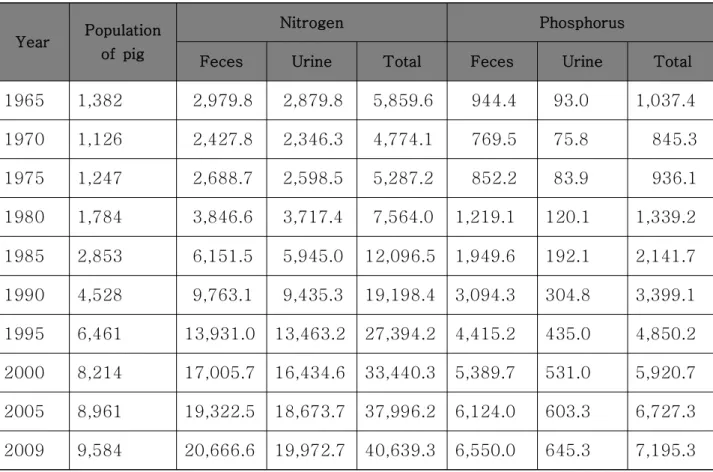
As statistic result, there are almost 40,640 metric ton of nitrogen and 7,195 metric ton of phosphorus were excreted from swine industry to soil and ocean in 2009
Year Population of pig
Nitrogen Phosphorus
Feces Urine Total Feces Urine Total
1965 1,382 2,979.8 2,879.8 5,859.6 944.4 93.0 1,037.4 1970 1,126 2,427.8 2,346.3 4,774.1 769.5 75.8 845.3 1975 1,247 2,688.7 2,598.5 5,287.2 852.2 83.9 936.1 1980 1,784 3,846.6 3,717.4 7,564.0 1,219.1 120.1 1,339.2 1985 2,853 6,151.5 5,945.0 12,096.5 1,949.6 192.1 2,141.7 1990 4,528 9,763.1 9,435.3 19,198.4 3,094.3 304.8 3,399.1 1995 6,461 13,931.0 13,463.2 27,394.2 4,415.2 435.0 4,850.2 2000 8,214 17,005.7 16,434.6 33,440.3 5,389.7 531.0 5,920.7 2005 8,961 19,322.5 18,673.7 37,996.2 6,124.0 603.3 6,727.3 2009 9,584 20,666.6 19,972.7 40,639.3 6,550.0 645.3 7,195.3
(unit: ,000 pig, MT/year) manure in ocean and soil even in the cave from Jeju island. There is one
statistical result about population of pig and nitrogen and phosphorus occurrence in Korea in Table 2.
Table 2. Population of pig and nitrogen and phosphorus occurrence in Korea
2. The Objectives of Using Enzymes in Animal Feed
In animal feed, there are few of ingredients cannot be digested by animal as feed ingredients. Since 19th century, researchers noticed animal diet need the enzyme to help meet animal’s digestibility and availability with their feed especially poultry first (Choct, 2006). However, their endeavor to improve the ingredient’s digestibility or availability was not fulfilled perfectly. Through animal digestive tract, the digestion efficiency cannot be reached 100%. In swine’s digestion, the efficiency of digestion near 85% (Kim, 2002). Hence, the supplementation of enzyme in animal feed help to improve the efficiency of digestion, availability and absorption of nutrients in the body.
There were some of benefits from using enzymes in animal feed as mentioned previous researches.
a. To improve efficiency and reduce the cost via breakdown of anti-nutrients allowing the animal to digest its feed more efficiently, leading to more meat or eggs per kilogram of feed.
b. For a better environment via improving digestion and absorption of nutrients, reducing the volume of manure produced and lowering phosphorus and nitrogen excretion.
c. Improving consistency via reducing the nutritional variation in feed ingredients, resulting in more consistent feed for more uniform animal growth and egg production. d. Helping to maintain gut health via improving nutrient digestibility, fewer nutrients are available in the animal’s gut for potential growth of disease-causing bacteria.
2.1 Different Types of Enzyme in Animal Feed Market
In animal feed market, there are various type of enzymes were introduced as feed additives. Then, Chemists used to define the enzymes through out the type of chemical reaction by catalysation and those were divided into six types; oxidoreductase, transferases, hydrolases, lyases, isomerases, ligases (McKee et al., 1996). However, when enzymes were used in animal feed as additives, they used to conducted as hydrolases. With that reason, enzymes for animal feed were divided into four different types such as fiber-degrading, protein-degrading, starch-degrading and phytic acid-degrading enzyme
2.1.1 Fiber-degrading enzyme
In the animal feed, fiber source as one of the feed ingredients cannot be digested well in monogastric animal while ruminants have various microorganisms in the rumen secret fiber digesting enzymes. In swine feed, there are various viscous cereals such as wheat, barley or rye. Those ingredients has large portion of fiber as soluble status, but it also has insoluble ingredients as β-glucan or arabinoxylan (Bedford et al., 1992).
Due to increased viscosity from those fibers, the small intestine can be interrupted in digestion. As a result, the reduced growth performance can be occurred in animal and that status can also brought incidence of digestive disorders.
In animal feed, there are various of fiber content due to extrinsic factors such as breed, growing location or climate. Moreover, in diet formular, fiber content may showed difference and it also contain different nutritional value with different value. At this point, the exogenous fiber-degrading enzymes may help the animal to digest those ingredients and it also improve feed efficiency and consistency of growth as well as reduce digestive disorders.
2.1.2 Protein-degrading enzyme
Proteases, protein-digesting enzymes, are used in swine and poultry nutrition to break down various of proteins from plant material in feed ingredients. Moreover, there is variability in the quality and availability of protein via different raw materials (Lewis, 2001). In vegetable protein sources such as soybean meal, lectins and trypsin inhibitors (anti-nutritional factors), those sources may lead to damage in gastro intestinal tract such as gut or small intestine and it also bring to interrupting the nutrient digestion. Due to those factors with underdeveloped digestion in young animals, piglets, it can lead to unable to make optimal use of the various storage proteins with feed ingredients such as soybean meal (glycin and β-conglycinin)(Sheppy, 2000). Thus, addition ot protease as enzyme in animal feed can help to break down of protein from feed ingredients and can be absorbed in the small intestine well. In addition, it also may help to reduce the negative effects of the trypsin or chymotrypsin inhibitors found in large portion from soybean, peas and phaselous beans (Huisman, 1990).
2.1.3 Starch-degrading enzyme
In animal feed, corn as classified of starch ingredients hold large portion in animal feed. However, the degree of starch digestibility can not be exceeded 85% in broilers during 4 to 21 days (Noy et al., 1995). In addition, differentiation with extrinsic factors in plant genetics, growing conditions, harvesting conditions, handling, drying, storage or process can contribute to variability in starch digestibility. Due to digestibility issue, amylase may improve the starch digestibility in small intestine and growth performance. In addition, amylases can break down starch in grains, grain by-products or other vegetable proteins.
During weaning phase, piglets can suffered from significant changes with carbohydrates in small intestine. When they compared with other phase, growing or finishing pigs, weaning piglets have significantly lower carbohydrase activity after weaning. Moreover, immune status is also not enough at this period, so addition of amylase in the diet can help to improve the digestibility and growth performance. In addition, it also improve the use of less cooked grain in the diet and that bring the positive effect as benefits of feed cost reduction in swine feed.
2.1.4 Phytic acid-degrading enzyme
To bone development and metabolic processes in animal, phosphorus has a important role. In addition, most of phosphorus in plant-derived ingredients, phytate, forms complexes with minerals such as proteins, starch, phosphorus and calcium and it also make them unavailable to absorption in the body. Most of swine and poultry, they do not produce the phatase enzyme by themselves to break down phytate. In addition, digestibility of phosphorus in swine and poultry is near 30 to 40% in animal feed. However, over half of the phosuphorus in feedstuffs is excreted as feces and it may bring environmental pollution issue. Addition of phytase in animal feed, it can help to broken down the phytic acid and also improve the absorption of phosphorus in the small intestine of the animal.
3. Enzyme Supplementation to Swine Diets
3.1 Digestibility
During weaning phase, supplementation of enzyme help to improve the digestibility of animal. The supplementation of xylanase improved ileal xylose digestibility in weaning pigs (Gdala et al., 1997) and β-glucanase also help to improve the digestibility of mixed linked β-glucan in weaning pigs (Li et al., 1996b; Jensen et al., 1998). However, those enzymes did not make positive effect in digestibility with starch and nitrogen. In addition, the supplementation of celluase and hemicellulase as enzyme in animal feed did not affect on the digestibility of dry matter, crude protein, organic matter and amino acids during growing phase in swine (Wubben, 1998). These various of results can be occurred due to the different of basal diet or formula.
In some of researches with phytase, supplementation of phytase made positive effect for improved apparent digestibility of nitrogen in growing pigs with corn and soy-bean based diet (Mroz et al., 1994). In addition, phytase may improved the apparent ileal digestibility of nitrogen and lysine by micobial phytase with linseed meal based diet (Officer et al., 1993).
3.2 Growth performance
Enzymes are characterized for each target feed ingredients such as carbohydrate, protein and fat, etc. In those enzymes, fiber and starch enzymes are known as beneficial in weaning pigs when fed diets on barley and wheat based diet (Inborr et al., 1993). Then, beta-glucanase supplementation also help to improve the rate of gain during weaning period (Bedford et al., 1992). With xylanase supplementation experiment, it showed that improved growth performance in poultry (Petterson et al., 1989) and in pigs as well (van Lunen et al., 1996). However, some of researches proved different result compared with petterson and van lunen did before. The result with xylanase supplementation was negative effect in growth of pigs (Thacker et al., 1991; Bedford et al., 192; Thacket and Baas, 1996; Mavromichalis et al., 2000). In addition, beta-glucanase also made no effect on daily gain or feed efficiency and this result also made divergence of opinion than previous research (Thacker et al., 1992; Jensen et al.,
1998). Enzyme complex include protease, cellulase, xylanase, α-galactosidase and amylase supplementation had also no effect on growth performance (Thacker, 2001).
4. Fat digestion in Pigs
4.1 Degestive physiology and digestion of fat in pig
In animal diet, dietary fat used to be hydrolyzed in the gastrointestinal tract by lipolytic enzymes came from stomach or pancreas usually. The gastrointestinal tract (GIT) of a pig has a complex envrionment as similar as other animal (De Lange et al., 2010). However, there are various extrinsic factors can affect to that environment such as gut physiology, immunology, body functions and pen status. Then, those factors may bring the negative effect to solve the problems in dietary mechanism especially in weaning pigs such as growth retardation (Davide, 2012). After weaning, most of weaning pigs suffering post-weaning syndrome due to stress and it made reduced feed intake and growth performance, so it can be negative effect until very last day of finishing pig (Moon, 2012). In addition, there is decreased villi height and morphological changes after weaning. Those issues are most effective change during pig’s lifetime (Cera et al., 1988a). Hence, the most important thing can be found in nutrient absorption and ability to adopt of new environment to weaning period.
Weaning can be defined as most important or dangerous period to piglets and they have to adopt malfunction of gut, infection and incidence of diarrhea (Jean-Paul et al., 2004). In the interior of organ from weaning pigs, pigs secrete very small amount of the bile salts at birth and during early development stages, so it does not enough to work for emulsification (Jones et al., 1991; Orban et al., 2001). In addition, early weaning pigs have limited ability of digesting and utilizing dietary fat compared with older pigs (Pettigrew et al., 1991). In figure 1, enzyme activities such as gastric lipase, pancreatic lipase and carboxyl ester hydrolase during weaning period can be affected depend on age and body weight (Jensen et al., 1997).
Figure 3. The activity of gastric lipase, pancreatic lipase, colipase, and carboxyl ester hydrolase in relation to the BW of pigs pre-weaning ( ⃞) and post- weaning (∎) (Jensen et al., 1997).
Dietary fat is hydrolyzed in the gastrointestinal tract due to lipolytic enzymes extracted from the stomach and pancreas (Gu et al., 2003). The lipase activity from stomach has an pH of 6.2 but there is only 3% found in the pancreas and 30 – 50% of dietary lipid can be hydrolized in the stomach to diacylglycerols, monoacylglycerols and free fatty acids in newborn pigs (Newport et al., 1985). In addition, gastric lipase also increased slowly until 21 d of age and the total activity of gastric lipase was significantly higher when 28 d of age than 21 d. However, the total activity of gastric lipase was less than pancreatic lipase (Liu et al., 2001). Thus, the process of fat digestion used to occur in the small intestine and fat from small intestine may help to release of CCK associate with secreation of bile salts into the small intestine (Gabbrielle, 2010).
The aim of bile is to break down the large size of fat globules into small size and pancreatic lipase also can break down the triacylglyceride into the free fatty acids
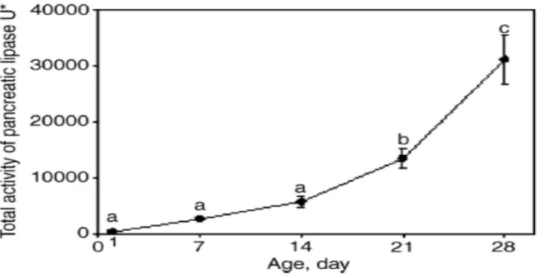
and mono- and diacylglycerides (Gabbrielle, 2010). The pancreatic lipase level and activity are very low if they do not start to suckling to receive enough nutrients for growth (Jack et al., 2014). In figure 2, when piglet starts to sucking, pancreatic lipase can be increased so fast during 14 d to 28 d of age (Liu et al., 2001).
Figure 4. Development of pancreatic lipase activity in nursing piglets. Means without common letters(a-c) differ significantly(p<0.05) (Liu et al., 2001)
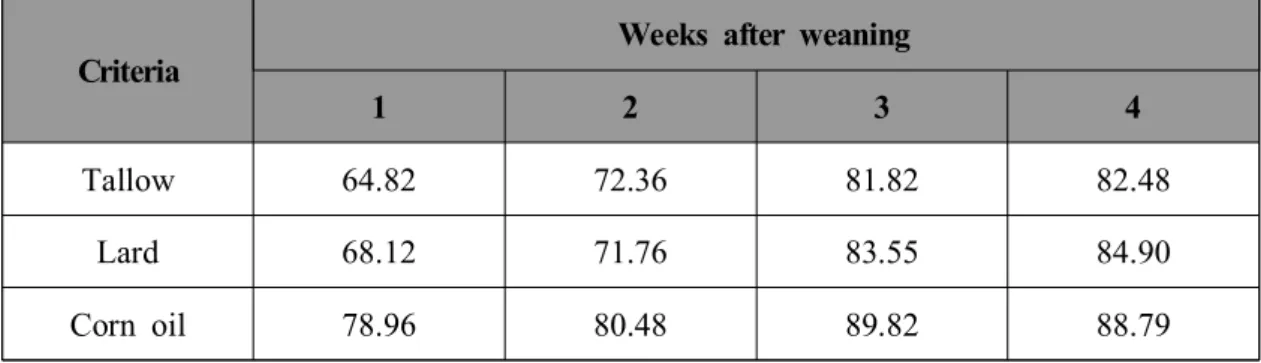
The pancreatic lipase activity was increased as the pigs grew in 8 weeks of age (Corring et al., 1978). In addition, one research demonstrated that pancreatic lipase activity was significantly increased during 2 d to 35 d of sucking piglets and first 3 days postweaning made reduced activity, but that problem was recovered through out the weaning period. Moreover, in the digestion of fat, piglets made different result with various fat sources and age of piglet (Cera et al., 1988b).
Criteria Weeks after weaning
1 2 3 4
Tallow 64.82 72.36 81.82 82.48
Lard 68.12 71.76 83.55 84.90
Corn oil 78.96 80.48 89.82 88.79
Table 3. Digestibility of fat depend on fat sources and age of weaning pigs
(Cera et al., 1988b)
4.2 Dietary Fat in pigs
4.2.1 Fat
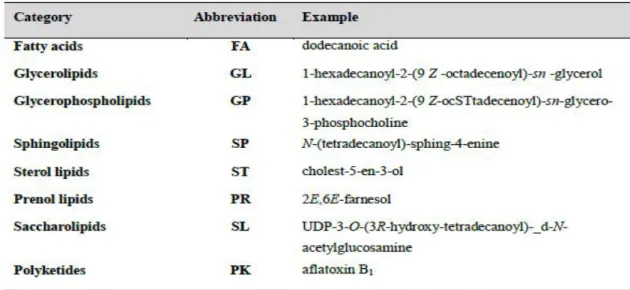
As usual, Fat means one of ingredients from foods. That is clearly fatty in nature or greasy in texture and immiscible as against water (Gurr, 1984). The simple concept to define the difference between fat and oil is the physical form at room temperature such as solid and liquid, respectively. Fat has known as condensed energy source when it supplemented in animal diet and also contains near 2.3 times as much more energy compared with carbohydrates in grain. To add the fat source as ingredient in animal diet, it can reduce the form of dust from feeds and also help to improve palatability (Choi, 2014). In addition, term ‘lipid’used by scientists to describe a various group of biological substances as a chemically that are usually hydrophobic in nature and in many times soluble by organic solvents (Smith, 2000). In general, lipids can be defined as a hydrophobic or amphipathic small molecule and also categorized through their specific chemical sturucture as well in Table 2 (Fahy et al., 2005).
Table 4. Category of lipid and examples (Fahy et al., 2005)
With addition of fat for animal diet, one research demonstrated that there was no improvement of gain weight or feed efficiency (Frobish et al., 1970). In various types of fat sources, coconut oil and butter were utilized frequently compared with lard, corn oil or soybean oil (Frobish et al., 1970). Moreover, other research showed that addition of fat in piglets diet, it affect to decrease in growth and increase in energy required per unit of gain (Frobish et al., 1969). In addition, supplementation of fat in 21 days old piglet’s diet also resulted in significant reduction in the feed required per unit of gain (Sewell et al., 1965). There is discrepancy to use a fat source in diet, but it can happened via age of pigs or type of fat source (Eusebio et al., 1965).
4.2.2 Dietary Fat Levels and Sources in Pigs
In animal feed, various types of fat are used as feed ingredient and those sources are in table 3. There are the animal fat sucg as tallow, lard and poultry fat. For feed grade vegetable fat sources, there are soybean oil, canola oil, corn oil, coconut oil, rapeseed oil, palm oil, palm oil mix and sun flower oil (NRC 1998).
Criteria Ingredient
Animal fat Tallow, lard and grease : Include rendered fats from beef or pork by-products
Poultry fat Fats from 100% of poultry offal Feed grade
vegetable fat
Canola oil, soybean oil, acidulated vegetable soap stocks and other refinery by-products
Mixed feed grade Blends of tallow, grease, poultry fat and restaurant grease Oilseeds
(Fats not extracted)
Whole canola seeds: ether frozen or canola screenings used as ‘slow release’ fat sources. Process through hammer mill
or roll to improve utilization of energy Table 5. Various types of fat source and ingredient (NRC, 1998)
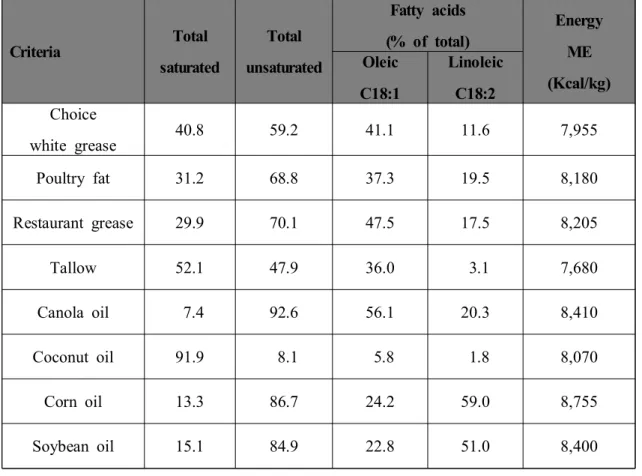
To use a fat source in animal diet, it can classified by price and fat digestibility (Shannon, 2001). In digestibility, the UFA has well known as better digestibility and absorption rate tan SFA (Shannon, 2001). In vegetable oils, proportion of UFA is higher than other ingredients whereas animal fats have more SFA than UFA. One of factors to affect the fat digestibility is the ratio of UFA to SFA (NRC, 1998). In table 4, there are characteristics of fat sources (fats or oils) as animal feed ingredients. During early postweaning period, dietary fat in diet was used by young pig during first few weeks of post weaning, but there is problem to derive the digestion and absorption of fat Cera et al., 1988a). Due to limitation of using animal fat in animal diet, high content of long-chain or saturated fatty acids were attributed even thay have a restricted entry into the micellar phase (Freeman, 1969).
Criteria Total saturated Total unsaturated Fatty acids (% of total) Energy ME (Kcal/kg) Oleic C18:1 Linoleic C18:2 Choice white grease 40.8 59.2 41.1 11.6 7,955 Poultry fat 31.2 68.8 37.3 19.5 8,180 Restaurant grease 29.9 70.1 47.5 17.5 8,205 Tallow 52.1 47.9 36.0 3.1 7,680 Canola oil 7.4 92.6 56.1 20.3 8,410 Coconut oil 91.9 8.1 5.8 1.8 8,070 Corn oil 13.3 86.7 24.2 59.0 8,755 Soybean oil 15.1 84.9 22.8 51.0 8,400
Table 6. Characteristics of fat sources (as-fed basis)(NRC, 1998)
In vegetable oil, palm oil is well known about rich of SFA and palmitic acid (C16:0) have near 45% of the total fatty acids (Edem, 2002). Extracted Corn oil had a better digestibility than high-oil corn for growing pigs (Kim et al., 2013). In fatty acids, there are different length of chain and metabolic routes and also that length doing important role in determination of fat digestion and absorption (Gu et al., 2003). In other words, SCFA and MCFA has better ability as being absorbed in diet than LCFA (Cera et al., 1989).
4.3 Positive effects in utilization of fat
4.3.1 Effects of fat on growth performance in swine
of fat in diet, it also made increased growth performance (Campbell, 2005). One research demonstrated that supplementation of linoleic acid in diet, it could maintain the growth performance during weaning to finishing period. With fat supplementation in finishing pig diet, it also help to improve the growth performance (Lopes-Bote et al., 1997). In addition, one research also demonstrated that addition of fat to diet improved the growth performance and feed efficiency in finishing pigs (Weber et al., 2006).
4.3.2 Effects of fat on nutrient digestibility in swine
With increase of supplementation level of dietary fat in growing-finishing pigs, that fat help to increase the AID for AA (Imbeah et al., 1991). Then, supplementation of soybean oil or white grease also improved AID for AA during growing period (Kil et al., 2011). In weaning pigs, AID of CP was increased linearly by increased addition of fat level in diet (Li et al., 1994). In addition, as dietary level was increased, AID and ATTD of fat were increased, repectively (Kil et al., 2010). In apparent digestibility, supplementation of fat and age of pig affect to increase the digestibility (Frobish et al., 1970). In triglycerides, short chain fatty acids affect to faster respond in hydrolyze compared with long chain fatty acids and this result show agreement with previous research as well (Desnuelle et al., 1963). Then, there is one research that proved the molecular weight also affect to digestibility of fat as heavier means decrease of digestibility of fat (Lloyd et al., 1975). Between vegetable oil and corn oil, there was no difference in digestibility of fat (Frobish et al., 1970). Then, animal fat as blended form in diet and vegetable oil in diet also made negative effect on apparent fat digestibility as well (Lauridsen et al., 2007).
During weaning period, addition of fat in diet, it brought improved digestibility of N and GE than diet without addition of fat (Jones et al., 1992). Then, one research found improved digestibility of N with fat supplementation (Asplund et al., 1960). These results introduced that improved digestibility could make increased transit time in digestive track (Choi, 2017). Apparent digestibility of CP in weaning pigs was improved via supplementation fat in diet than control groups (Berschauer, 1984). However, there is also different view with those results. Feed the diet with fat added did not affect to apparent nutrient digestibility (De Rouchey et al., 2004). In addition, mono-diglycerides
than triglycerides made improved ATTD and AID of DM, GE, N and crude fat (Cho et al., 2008). Moreover, soybean oil supplementation as fat source in diet did not improved the digestibility of protein, fiber and DM except fat (Brooks, 1967).
5. The Objectives of Using Emulsifiers in Animal Feed
5.1 Definition of emulsifier
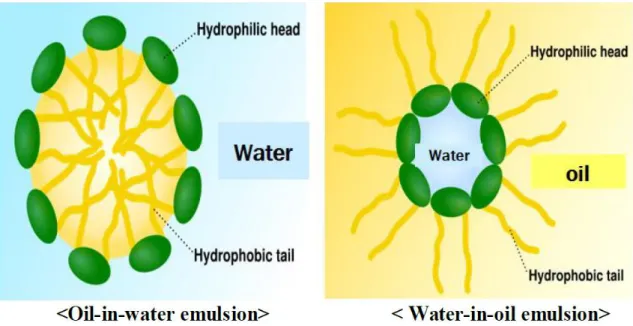
An emulsifier is a substance known as stabilizes an emulsion through decreasing the surface tension and it associate with increasing kinetic stability (Moon, 2012; Choi, 2017). In structure, an emulsifier have hydrophilic head as head and lipophilic tail. Depends on the location of head portion, emulsifier can be classified into two types. First one is the hydrophilic emulsifier as efficient in oil in water form of emulsion. Second one is lipophilic emulsifier as efficient in water in oil form of emulsion (Figure 1). In general, emulsifier in water and oil cannot mix each other may help to keeps the mixture to be stable status and it also prevents the dividing of two layers of mixture.
additives also noted into animal food field. The emulsifier give affect to fat digestibility of pig diet (Jones et al., 1992) and one research introduce that emulsifier affect to improve of growth performance in pigs (Lee, 2016). In chicken, emlusifier help to increase the absorption of tallow (Polin, 1980).
The useful tool to understand the structure or mechanism of emulsifier is hydrophile-lipophile balance (HLB). In a surface-active molecule, the number and relative polarity of functional groups will determine whether the molecule’s solubility depends on water, oil or dispersible. This concept can be worked with a given emulsifier via calculation of an HLB value. With HLB value, the higher one associated with easy wter dispensability. Then, high HLB emulsifiers can be useful in preparing and stablizing oil-in-water (O/W) emulsions. The lower HLB value of emulsifiers are useful for formulation of water-in-oil (W/O) emulsions. In HLB value, the highest or lowest values are not useful as an emulsifiers because most of molecule can be solubilized in the continuous phase. However, those extreme values are also used for full solubilization of another ingredient such as vitamin in continuous phase. With intermediate values of HLB, it may bring the high concentration at the interface.
Surfactants may assemble into organized structures described as mesophases or liquid crystals. These bilayer structures adopt several geometric forms: (1) Lamellar-sheets of bilayers where the hydrophilic groups are 20 paired. Large amounts of water may be trapped in this mesophase, thereby reducing its concentration in the bulk phase. (2) Hexagonal-two cylindrical types. In Type I, the lipophilic tails are contained inside the cylinder and the hydrophilic groups are on the surface. For Type II, the geometry is reversed, with the lipophilic tails on the outside and hydrophilic groups inside the cylinder. (3) Vesicles (liposomes)-Spherical bilayer structures (Hasenhuettl et al., 2008).
5.2 Effects of exogenous emulsifier in pigs
5.2.1 Lecithin
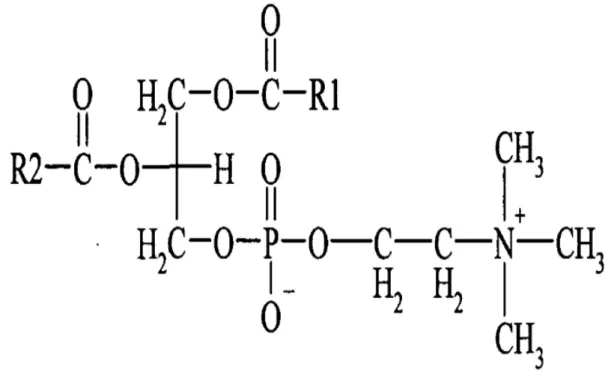
Lecithin, is a mixture of surface-active agents (Gu et al., 2003). These phospholipid molecules divided into two different types for water and oil, repectively. First one has hydrophobic portion with an affinity for fats and oils. The other one has hydrophilic portion with an affinity for water (Gu et al., 2003). Lecithin, it used to be
found in soybeans, egg yolks and wheat germ. The most common one from those resource is lecithin from soybeans to use. Lecithin is also found in the lipid bilayers of cell membranes. In chemical structure of lecithin, there is phosphate head group and it used to has negative charge. That group can be dissolved in water easily with forming hydrogen bonds as hydrophilic characteristic. The long fatty acid tail chains are uncharged usually. It means that they don’t dissolve in water as hydrophobic (Figure 2). Soy lecithin extracted from soybean oil provides energy via animal diet and it also has effect of emulsifier to improve the fat utilization in animals.
Figure 6. Chemical structure of lecithin (google, 2018)
With supplementation of lecithin, it made increased digestibility of GE, DM, EE and CP in piglets (Jin et al., 1998). In soybean oil diet with lecithin supplementation, it could increase nitrogen accretion (P<0.05) but it does not affect to fat digestibility (Overland et al., 1993). One research observed that lecithin could significantly improve average daily weight and feed intake in 21 day of weaning pigs during first 2 weeks postweaning (Jones et al., 1992). Lecithin can work as improving the digestibility of
With lecithin, there are different understand via research, but that inconsistency may come from differences in fat composition due to variations of lecithin content and quality.
5.2.2 Lysolecithin
The lyso lecithin extracted from soy is a food emulsifier and has been manufactured via pancreatic phospholipase A2 from the lecithin molecule (Choi, 2017). The phospholipids were changed into lysolecithin through remove one of the fatty acids in the phospholipids during the enzymatic conversion (Figure 3)(Joshi et al., 2006).
Figure 7. Chemical structure of lysolecithin (lysophosphatidylcholine)
In swine, lysolecithin affect to increase the growth performance and apparent digestibility of dietary fat in weaning pigs (Roads 1995; Danek et al., 2005). Lysolecithin shows lower serum triglycerides when added in animal diet (Jones et al., 1992; Roads, 1995). The dietary lysine can affect to reduce the using lysolecithin and it becomes the enhanced digestibility of various water-soluble nutrients (Averette, 2001). The lower concentration of lysophosphatidyl choline work for the surface membranes permeable (Khidir et al., 1995). As emulsifier, lecithin and lysolecithin can work in the first stage of fat digestion and improve the surface area of fat droplets as well (Zhang et al., 2011).
Ⅲ
. Effects of Various Levels of
Enzyme and Emulsifier Supplementation on
Growth Performance, Pork Quality,
Blood Profiles and Economic analysis in
Weaning to Finishing Pigs
Abstract:
Scientists use lots of feed ingredients in feed of livestock in formula such as corn, soybean meal, wheat, vitamins and minerals, etc. However, it is hard to maximize digestibility of feed because endogenous enzyme of livestock and not able to digest nutrients in ingredients, so supplementation of various enzymes or emulsifier for some of major feed ingredients over widely used as feed additives. Although exogenous enzymes are supplemented in feed, a synergistic effect with dietary emulsifier was not investigated. A 3 × 2 factorial experiment was conducted to evaluate the effect of various levels of enzyme and emulsifier supplementation on growth performance, carcass characteristics and economic analysis in weaning to growing to finishing pigs. The first factor was three levels of emulsifier (0,0.05 or 0.1%) and the second factor was two levels of enzyme (0.1 or 0.15%). A total of 192 weaning pigs ([Yorkshire × Landrace] × Duroc), average 7.26 ± 0.77 kg body weight (BW), were allotted to one of 6 treatments by BW and sex in 4 replications with 8 pigs per pen. In growth performance, G:F ratio was increased with supplementation of emulsifier during late weaning and the whole weaning period (P=0.01,0.02), respectively. The Average daily feed intake (ADFI) was increased during late growing period (P=0.03) when enzyme supplementation level was 0.15% and that result brought Average daily gain (ADG) was also increased during early finishing period (P=0.03) when enzyme supplementation level was 0.15%. In blood profiles, BUN, HDL and LDL did not make significant differences among treatments. Indifferences during late weaning period. As supplementation of emulsifier increased, the result of that was showed as decreased. In glucose, the result was similar as tri glyceride and glucose did before and it also affected by amount of emulsifier in diet during late weaning period. In free fatty acids, the result shows that decreased value during late weaning period by effect of supplementation of enzyme and emulsifier or compound of those. In pork quality, there was no significant difference in carcass trait among treatments. The cooking loss was increased as supplementation of enzyme and emulsifier was increased as well (P<0.01; P=0.03, respectively). In economic analysis during whole experimental period, feed cost was decreased when 0.1% of both dietary emulsifier and enzyme were supplemented (P<0.01). Consequently, this experiment demonstrated that dietary enzyme supplementation showed a positive response in growth performance especially a synergistic effect was observed when an emulsifier was provided simultaneously.
Keywords : Enzyme, Emulsifier, Weaning to Finishing Pig, Growth Performance, Economic analysis
Introduction
Over the last decades, price of major feed ingredients for animal diet in world market has increased continuously. As follow those increased price, there are some of factors affect to that situation. For example, bio-fuel industry for ethanol production has been expanding still usually in huge amount of major ingredient production foreign countries such as United States or European Union (EU). In addition, China and india, those two big countries also doing important role as control of major ingredients exports and imports and those countries also affect to Korea feed industry as well. As known already, feed cost is approximately 60% of total cost in animal production and energy part also accounted for about 70% of feed cost in swine industry (Saleh et al., 2004). Because of these issues, feed industry must find a way to maximize nutrients bioavailability for high animal productivity and reduce feed cost and enzyme or emulsifier can also doing important role in that.
In dietary exogenous hydrophilic emulsifier, it has sodium stearoyl-2-lactylate (SSL) as ingredient and that is hydrophilic as characteristic. That ingredient was dissolved in water easily and is beneficial in metabolism of gastrointestinal tract in the interior of body. Due to limited amount of bile salt in pig as natural and internal emulsifier, emulsifier may help the action or mechanism of bile salt.
There is limitation in digestion in the interior of animal body as many scientists mentioned before. Thus, one of respond that problem can be addition of enzyme in diet. The experiment to verify the enzyme supplementation affect to digestion or growth was conducted in poultry first. With broiler experiment conducted before, supplementation of barley-based diet with β-glucanase as enzyme made increased growth rate and it could bring the idea that increased supplementation of barley had possibility to use in diet in the broiler diets (Hesselman et al., 1986). However, utilize of exogenous enzymes in pig’s diets as feed additive did not make consistent improvements compared with broilers experiment before (Thacker et al., 1991; Inborr et al., 1993). Some of experiments
Consequently, the current study was conducted to evaluate the effect of various levels of enzyme and emulsifier supplementation on growth performance, blood profiles, pork quality and economic profits in weaning to finishing pigs.
Materials and methods
Experimental animals and management
A total of 192 weaning ([Yorkshire × Landrace] × Duroc) pigs (7.26 ± 0.77 kg BW) were allotted to one of six treatments considering sex and initial body weight in 4 replication with 8 pigs per pen. Pigs were randomly allotted to their respective treatments by EAAP (experimental animal allotment program; Kim and Lindemann, 2007). Pen was fully-concrete floor facility in experimental period and equipped with feeder, water niple and environmentally controlled facility in Seoul National University Farm. The experimental period was 20 week. Experimental period consisted of 2 phases during each weaning, growing and finishing period. For weaning period, phase 1 was 0-3 week and phase 2 was 4-6 week. For growing period, phase 1 was 7-10 week and phase 2 was 11-14 week. For finishing period, phase 1 was 15-17 week and phase 2 was 18-20 week.
Experimental design and diet
The first factor was three levels of enzyme (0, 0.05 or 0.10% of SOLMAXⓇ)
and second factor was two levels of emulsifier (0.10 or 0.15% of FarmzymeⓇ
). Dietary treatments included : 1) En10 : corn-SBM based diet + [SOLMAXⓇ50 0.00% +
FarmzymeⓇ 0.10%], 2) Em05/En10 : corn-SBM based diet + [SOLMAXⓇ50 0.05% +
FarmzymeⓇ
0.10%], 3) Em10/En10 : corn-SBM based diet + [SOLMAXⓇ
50 0.10% + FarmzymeⓇ 0.10 %], 4) En15 : corn-SBM based diet + [SOLMAXⓇ50 0.00% +
FarmzymeⓇ
0.15%], 5) Em05/En15 : corn-SBM based diet + [SOLMAXⓇ
50 0.05% + FarmzymeⓇ 0.15%], 6) Em10/En15 : corn-SBM based diet + [SOLMAXⓇ50 0.10% +
FarmzymeⓇ 0.15%]. Experimental diets were formulated for 2 phases from weaning to
finishing period. All nutrients of experimental diets except CP and ME were met or exceeded the nutrient requirement of NRC (1998). ME was determined to meet NRC 2012 and CP was set by multiplying the total nitrogen of NRC 2012 by 6.25. Formula and chemical composition of experimental diet were presented in Tables 1 and 2.
Growth performance
Body weight and feed intake were collected at the end of each phase during whole experimental period in order to calculate average daily gain (ADG), average daily feed intake (ADFI) and gain to feed ratio (G:F ratio).
Blood sampling and analysis
Blood samples were taken from the jugular vein of four pigs near average body weight in each treatment after 3 hours fasting for measuring for measuring levels total cholesterol, tri glyceride, LDL, HDL, VLDL, BUN, Glucose, FFA when the body weights were recorded. Collected blood samples were centrifuged for 15 min at 3,000 rpm on 4 ℃ (Eppendorf centrifuge 5810R, Germany). The sera were carefully transferred to 1.5 ml plastic tubes and stored at –20 ℃ until later analysis.
Pork quality and carcass traits
In each treatment, 3 pigs were slaughtered for the carcass analysis. Longissimus muscles were used from nearby 10th rib on right side of carcass. Due to chilling procedure, 30 minutes after slaughter was regarded as initial time. The time to measure pH and pork color were in 0, 3, 6, 12 and 24 hour. The pH color was determined by CIE color L※, a※ and b※ value using a CR300 (Minolta Camera Co., Japan). Proximate of pork samples were analyzed by the method of AOAC (1995).
Centrifuge method was used for water holding capacity of pork (Abdullah and Najdawi, 2005). Longissimus muscle samples were grounded and sampled in filter tube, and heated in water bath at 80。C for 20 min and centrifuged for 10 min at 2,000 rpm and 10。C (Eppendorf centrifuge 5810R, Germany). Then after that, to calculate the cooking loss, longssimus muscles were packed with polyethylene bag and geated in water bath until core temperature reached 72。C and weighed before and after cooking. After heated, samples were cored (0.5 inch in diameter) parallel to muscle fiber and the cores were used to measure the shear force using as alter (Warner Bratzler Shear, USA). Cooking loss, shear force, and water holding capacity of pork were analyzed by animal origin food science, Seoul National University.
Chemical Analyses
Diets were ground by a Cyclotec 1093 Sample Mill (Foss Tecator, Hillerod, Denmark) and ground diets were analyzed. All analyses were performed in duplicate samples and analyses were repeated if results from duplicate samples varied more than 5% from the mean. The DM of diet samples were determined by oven drying at 135。C for 2 h (method 930.15; AOAC International, 1995). Aspartic acid was used as a calibration standard, and CP was calculated as N × 6.25 (method 988.05; AOAC international, 1995) and diets were also analyzed for ash (method 942.05; AOAC International, 1995). Crude fat was hydrolized in HCl solution to release bound fat and then extracted with diethyl ether and petroleum ether (method 920.39; AOAC international, 1995). Collected excreta were pooled and dried in an air-forced drying oven at 60。C for 72 h, and ground into 1 mm particles in a Wiley mill for cemical analysis include moisture, protein, fat and ash contents (AOAC, 1995).
Economic analysis
Economic analysis was calculated by feed cost and feed efficiency (G:F ratio). The total feed cost (Won) per body weight gain (kg) was calculated using total feed intake and feed price. The feed cost per weight gain was calculated based on price of raw materials during the time of the experiment. The days to market weight (115kg) were estimated from the body weight at the end of feeding trial and ADG of 20 weeks.
Statistical analysis
The experimental data was analyzed as a randomized complete block design using the General Linear Model (GLM) procedure of SAS. For data on growth performance and economic analysis a pen was considered as an experimental unit, while individual pig was used as an unit for data on blood profiles, immune response, pork quality and economic analysis. Linear and quadratic effects for equally spaced treatments were assessed by measurement of orthogonal polynomial contrast. The differences were declared significant at P < 0.01.
Results and Discussion
Growth performance
The effect of various levels of enzyme and emulsifier supplementation on growth performance was presented in Table 7. During early finishing period (15-17 week), ADG was mounted via amount of enzyme in feed was increased (P=0.03) as followed by each treatment. This result made from increased ADFI (P=0.04) during late growing period (11-14 week) even G:F ratio was decreased at that period (P=0.04). During late weaning period (4-6 week) and whole weaning period (0-6 week), G:F ratio was increased by emulsifier supplementation in feed (P=0.01, 0.02). During whole growing period (7-14 week), G:F ratio made significantly difference among treatments by enzyme (P=0.01) and emulsifier (P=0.02). This result occurred through interaction between enzyme and emulsifier and it leads the increased G:F ratio with addition of emulsifier added in feed when 0.10% of enzyme added in feed as well.
In addition of emulsifier in feed, there were various results in previous researches. In human related researches during 1940s’, emulsifier made improved digestibility (Aldrsberg et al., 1943), 1980s’ researches with bovine (Havrevoll, 1984) and poultry, especially chick (Polin, 1980) made also improved digestibility as similar as 1940s’ researches in human. However, there were no consistency in swine researches with emulsifier (Overland et al., 1993; Jones et al., 1992; Frobish et al., 1969). The result from this research was improved growth performance during weaning period and it was similar with previous research (Overland et al., 1994).
The wheat and barley as one of the most used feed ingredients in animal feed has higher amount of NSP (non-starch polysaccharide). Due to that reason, it had been proved that effect in digestibility and feed utilization in growing pigs (Hesselman et al., 1986). Those issues associated with enzymes in feed affect to decomposition of NSP and it brought to improved digestibility of feed in various researches (Li et al., 1996; Simons et al., 1990). Moreover, those NSP had complex form instead of single form. Hence, complex form of enzyme also practicable as one of the additives in feed to made positive effect in pig’s performance instead of single form of enzyme (Slominski, 2000; Graham et al., 1988). In particular, one research performed in 2004 also made similar
result as addition of enzyme had improved ADG in growing pig and it had verified that this research had similar result with previous researches as well.
Consequently, the current study demonstrated that 0.10% of enzyme supplementation in feed during growing period and 0.15% of emulsifier supplementation in feed during weaning period made positive effect in growth performance.
Blood profiles
The effect of various levels of enzyme and emulsifier supplementation on blood profile was presented in Table 8, 9 and 10. In blood profiles, BUN, HDL and LDL did not make significant differences among treatments. In very low density lipoprotein(VLDL), the result made significant differences among treatments during late weaning period. Due to emulsifier supplementation decreased, VLDL concentration was changed. In triglyceride (TG), the result also made significant differences during late weaning period. As supplementation of emulsifier increased, TG in blood was decreased. In glucose, the result was similar as triglyceride and it was also affected by the level of emulsifier in diet during late weaning period. Free fatty acids in blood was decreased during late weaning period by effect of supplementation of enzyme and/or emulsifier or synergistic effect of two feed additives.
In very low density lipoprotein(VLDL), the result from this experiment was in agreement with previous research that emulsifier in weaning pig diet may help to reduce the serum cholesterol (Todorova et al., 2011). Due to supplementation of lysocithin in diet, a level of triglycerides from serum lowered when it compared with diet did not contains lysolecithin as additives and this result also related with metabolism of fat in blood (Rodas et al., 1995). In addition, one research proved that rates of absorption or metabolism by fat in diet could lower triglycerides concentration in serum by supplementation of emulsifier in animal diet (Jones et al., 1992).
Consequently, supplementation enzyme and emulsifier in diet by different levels did not give negative effects in blood profiles.
Pork quality
The effect of various levels of enzyme and emulsifier supplementation on pork quality was presented in Table 9. In proximate analysis for pork quality, amount of moisture, crude protein and crude fat associate with correlation of enzyme and emulsifier was not discovered during this experimental period. Instead of that result, supplementation of enzyme affect to amount of ash and result was shown as increased via that enzyme (P=0.02). This result was agreed with previous research that digestibility of mineral is increased via addition of dietary fat source in diet (Merriman et al., 2016). Thus, that result also associate with supplementation of emulsifier may improved the digestibility of fat source even there was no significant difference among treatments. In addition, it support that result also prove the amount of lipid was increased in pork numerically in crude fat. However, that numerical difference between highest value (Em10/En15: 1.81%) and lowest value (Em05/En10: 1.37%) was little and this result did not considered as huge impact in pork quality.
In cooking loss, the result was increased and it is ensured that increased supplementation of enzyme (P<0.01) and emulsifier (P=0.03) affect as support that improvement (P=0.03). Then, result associated with correlation between enzyme and emulsifier found that increased value of cooking loss when supplementation level of enzyme was 0.10% with emulsifier in diet.
In shearing force, there was different outcome compared with cooking loss. The supplementation of enzyme made increased value of that force (P<0.01), but supplementation of emulsifier made decreased value of that force (P<0.01). The reason why that differences were made is supplementation of emulsifier with amount of enzyme was 0.10% may lead to increase the degree of decline (P<0.01).
In water holding capacity, supplementation of enzyme affect to decrease in result (P<0.01) and supplementation of emulsifier made increased value in result (P=0.02). Then, the result with correlation between enzyme and emulsifier shown the highest value in Em10/En10 treatment (emulsifier 0.10% and enzyme 0.10%).
For cooking loss, the value can be decreased as amount of fat is decrease in pork (Pietrasik et al., 2000). Then, amount of crude fat as numerical value can be increased by raised suppplementation of emulsifier in diet, so this agreement also prove that