Korean Circulation Journal
Introduction
The renin angiotensin system (RAS) plays an important role in the regulation of physiological and pathophysiological responses such as arterial vasoconstriction, blood pressure, aldosterone production, cardiac fibrosis, cardiac hypertrophy and renal function.
1)2)RAS are involved in many cardiovascular diseases. The renin-angiotensin
system comprises a cascade of enzymatic reactions, which results in the production of angiotensin (AT) II from the angiotensinogen substrate. The physiological effects of angiotensin II are mediated by a final common pathway, through angiotensin II binding to specific receptors located on the cell membrane.
3)Two isoforms of endothelial receptors for angiotensin II are known so far: AT1 and AT2. Most of their physiological effects are mediated by the activation of AT1-subtype receptors which activates several intracellular signaling pathways in vascular smooth muscle cells, cardiomyocytes, and the cardiac conduction system.
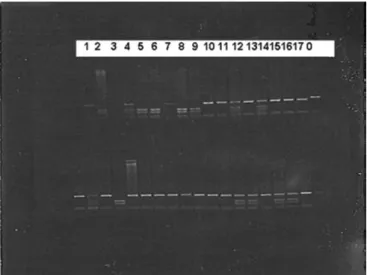
4)Although a number of polymorphisms of the angiotensin-II type 1 receptor (AT1R) gene have been identified, one of the most widely studied is an A–C substitution at position 1166 (A/C1166).
5)Chronic angiotensin II stimulation was found to produce QT prolongation, this potentially functional variant may modulate repolarization parameters. Ventricular repolarization abnormalities play an important role in the occurrence of arrhythmia.
6)QT dispersion, a marker of repolarization homogeneity, is considered a predictor of sudden cardiac death and mortality in patients with
Print ISSN 1738-5520 • On-line ISSN 1738-5555
The Relationship between Angiotensin-II Type 1 Receptor Gene Polymorphism and Repolarization Parameters after a First Anterior Acute Myocardial Infarction
Onder Ozturk, MD
2, Unal Ozturk, MD
1, Sebnem Nergiz, PhD
3, and M. Zulkif Karahan, MD
21
Department of Public Health and Neurology, Dicle University Medical Faculty,
2Department of Cardiology, Diyarbakır Gazi Yasargil Education and Research Hospital,
3