• 검색 결과가 없습니다.

Characterization of Ceramic Oxide Layer Produced on Commercial Al Alloy by Plasma Electrolytic Oxidation in Various KOH Concentrations

N/A
N/A
Protected

Academic year: 2021

Share "Characterization of Ceramic Oxide Layer Produced on Commercial Al Alloy by Plasma Electrolytic Oxidation in Various KOH Concentrations"

Copied!
6
0
0

로드 중.... (전체 텍스트 보기)

전체 글

(1)

한국표면공학회지 J. Korean Inst. Surf. Eng.

Vol. 49, No. 2, 2016.

http://dx.doi.org/10.5695/JKISE.2016.49.2.119

<연구논문>

ISSN 1225-8024(Print) ISSN 2288-8403(Online)

Characterization of Ceramic Oxide Layer Produced on Commercial Al Alloy by Plasma Electrolytic Oxidation

in Various KOH Concentrations

Jung-Hyung Lee

a

, Seong-Jong Kim

b,*

a

Korea Testing & Research Institute(KTR), Ulsan 44412, Korea

b

Division of Marine Engineering, Mokpo National Maritime University, Mokpo 58628, Korea (Received April 7, 2016 ; revised April 28, 2016 ; accepted April 29, 2016)

Abstract

Plasma electrolytic oxidation (PEO) is a promising coating process to produce ceramic oxide on valve metals such as Al, Mg and Ti. The PEO coating is carried out with a dilute alkaline electrolyte solution using a similar technique to conventional anodizing. The coating process involves multiple process parameters which can influence the surface properties of the resultant coating, including power mode, electrolyte solution, substrate, and process time. In this study, ceramic oxide coatings were prepared on commercial Al alloy in electrolytes with different KOH concentrations (0.5 ~ 4 g/L) by plasma electrolytic oxidation. Microstructural and electrochemical characterization were conducted to investigate the effects of electrolyte concentration on the microstructure and electrochemical characteristics of PEO coating. It was revealed that KOH con- centration exert a great influence not only on voltage-time responses during PEO process but also on surface morphology of the coating. In the voltage-time response, the dielectric breakdown voltage tended to decrease with increasing KOH concentration, possibly due to difference in solution conductivity. The surface morphology was pancake-like with lower KOH concentration, while a mixed form of reticulate and pancake structures was observed for higher KOH concentration. The KOH concentration was found to have little effect on the electrochemical characteristics of coating, although PEO treatment improved the corrosion resistance of the substrate material significantly.

Keywords : Plasma electrolytic oxidation (PEO), Ceramic, Al alloy, Electrolyte concentration

1. Introduction

The aluminum grade 5083 is a high strength Al- Mg alloy having high resistance to attack by both seawater and industrial chemical environments, and it is widely used for marine application, especially ship building. Marine environments can be challenging in terms of corrosion, and thus appropriate corrosion protection is required for marine structures and vessels. In this regard, various surface modification technologies are being employed to address growing

needs for service in harsh environments. The objective of the technology is to achieve functional properties such as anti-corrosion, anti-cavitation-erosion and wear resistance on the surface.

Plasma electrolytic oxidation (PEO) is one of novel ceramic processing technologies capable of creating ceramic oxide on a metal substrate by introducing micro-discharge on the surface in a dilute alkaline electrolyte solution, which is environment friendly compared to conventional wet ceramic processes. In PEO process, optimization of different electrolyte parameters such as type, concentration, composition, pH and conductivity is considered to be critical, because it is one of the governing factors in development of microstructure and characteristics of the coating [1]. Since PEO coating is achieved at a

* Corresponding Author: Seong-Jong Kim

Division of Marine Engineering, Mokpo National Maritime University

Tel: +82-61-240-7226 ; Fax: +82-61-240 -7201

E-mail: [email protected]

(2)

xide in the electrolytes tends to decrease dielectric breakdown voltage during PEO process, whereas it increases the porosity of the PEO coating. In a relevant research, L.O. Snizhko et al. investigated growth efficiency of PEO coating of 6081 Al alloy with KOH concentration, and they concluded that the growth rate of coating is governed by hydroxide ion concentration and the excessive concentration may result in anodic dissolution of the coating [4].

In the present research, the influences of KOH concentration on microstructural and electrochemical characteristics in PEO coating for Al alloy were investigated. PEO coatings were produced on marine grade 5083 Al alloy in electrolytes with KOH concentration in the range of 0.5 ~ 4 g/L by applying 0.1 A/cm

2

of constant direct current density. The discharge characteristics during PEO coating process as well as the surface and cross-sectional morphology of the PEO coatings with different KOH concentrations were examined, and their electroche- mical properties in natural seawater were investigated to reveal corrosion characteristics of the PEO coatings with KOH concentrations.

2. Experimental Method

Commercial Al alloy 5083 specimens with a dimension of 20 mm × 20 mm × 5 mm were used as substrates for PEO coating process. The specimens were mounted in epoxy resin to expose only one side (surface area: 4 cm

2

), with connecting a copper con- ducting wire on the opposite side. The samples were polished with 1000 grit emery sheet, rinsed with de- ionized water, cleaned in acetone with an ultrasonic bath, and dried with hot air stream before PEO coating treatment. PEO coating process was performed applying 0.1 A/cm

2

of galvanostatic DC between the anode (specimen) and cathode (STS304 plate) in a bath containing KOH electrolyte solution. The elec- trolyte solution for PEO coating was prepared adding

potentiodynamic polarization experiment in natural seawater was carried out in a three-electrode cell using a Pt mesh counter electrode and Ag/AgCl reference electrode. The working electrode (specimen) with exposed area of 1 cm

2

was polarized potentio- dynamically in the anodic direction from −0.25 V to 3.0 V vs OCP (open circuit potential) with a scanning rate of 2 mV/s. For the obtained polarization curves, Tafel extrapolation method was employed to deter- mine corrosion potential and corrosion current density.

3. Results and Discussion

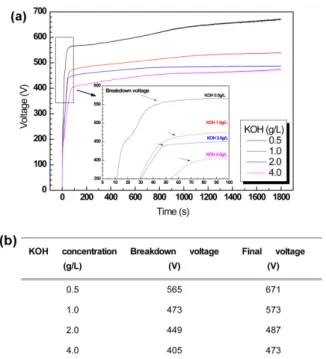
Figure 1 (a) represents the voltage-time characteristic

curves during PEO process of 5083 Al alloy in

electrolytes with different KOH concentrations

applying 0.1 A/cm

2

of current density for 1800 s, and

Fig. 1(b) compares the dielectric breakdown voltages

and final voltages for each condition. It is generally

agreed that three different stages are distinguished

during PEO process according to the voltage-time

response. In stage 1, a rapid and linear increase of

voltage is observed, where uniform barrier oxide film

is homogeneously formed on surface. The micro-

structure and formation mechanism of the oxide film

for this stage is similar to that formed by the

conventional anodizing technique. With application

of even higher voltages, dielectric breakdown can be

activated in the vicinity of weak region of the film

owing to insulating nature of the produced Al oxide

film, which is accompanied by uniformly distributed

micro-discharges over the surface. The voltage where

dielectric breakdown occurs is technically referred to

as breakdown voltage. Once the stage 1 is finalized,

the voltage increases continuously but the rate of

increase is slow downed over time than that of the

previous stage until it reaches a certain point (critical

voltage). In this stage (stage 2), micro-discharges are

continuously developed over surface near the

(3)

electrolyte-electrode interface through the discharge channels, giving rise to the growth of Al ceramic oxide. With further application of current density, the rate of increase in voltage declines progressively over time, and eventually reaches a stable value, which is referred to as critical voltage (stage 3). In stage 3, the size of micro-discharges increases but its population density decreases. It was found that lower KOH concentration tended to facilitate higher breakdown voltage, and the voltage behavior after the dielectric breakdown was greatly influenced by KOH concen- tration, namely a lower KOH concentration resulting in a higher discharge voltage. The highest breakdown voltage was 566 V for electrolyte with 0.5 g/L of KOH concentration, while the lowest breakdown voltage was 405 V for 4.0 g/L of KOH concentration, showing 30% difference between the low and high breakdown voltages. Furthermore, it was found that the time required to reach breakdown voltage was impeded by increase in KOH concentration. This is considered to be due to the difference in solution conductivity which was resulted from the different KOH concentrations [5, 6].

Figure 2 exhibits the relationship between the breakdown voltage and solution conductivity of electrolyte with KOH concentration. It was obvious that the solution conductivity of electrolyte for PEO

coating was dependent upon KOH concentration.

The conductivity for electrolyte with the lowest concentration of KOH (0.5 g/L) was measured to be 1.9 mS/cm at room temperature, showing 8 times lower conductivity than that of the electrolyte with highest concentration of KOH (4.0 g/L), 15.3 mS/cm.

In PEO process, it is generally agreed that the breakdown voltage is in inverse proportion to solution conductivity logarithmically, and the result in this study corresponds to the results in preceding research [2, 7]. In a relevant research, Kalra et al. investigated the electrical breakdown of anodic films in aqueous electrolyte, and confirmed that the major factor affecting the decrease in breakdown voltage with increasing electrolyte concentration is the increasing primary electronic current [8].

Figure 3 displays SEM images of the surface morphology of PEO coatings produced on 5083 Al alloy in electrolyte solution with different KOH concentrations at applied current density of 0.1 A/cm

2

for 1800 s. Depending on KOH concentration, two types of surface microstructure could be distinguished by their microscopic appearance: one with pancake structure, and the other with reticulate structure. The pan-cake structure is formed by rapid solidification of molten oxide, which mostly happens by high temperature and pressure plasma discharge in elec- trically weak regions of the oxide film, in the relatively cool electrolyte solution. The sinkhole in the center of the pancake structure is the discharge channel where micro-discharge occurs and molten substrate or oxide is erupted into the electrolyte, consequently generating the pancake structure [9]. In the case of the reticulate structure, the porosity is believed to be formed by oxygen entrapment in Fig. 1. (a) Voltage-time curves for PEO of Al alloy 5083

with various KOH concentrations produced at current density of 0.1 A/cm

2

for 1800 s (b) comparison of breakdown voltage and final voltage with KOH concen- trations.

Fig. 2. Dependency of breakdown voltage on elec-

trolyte solution conductivity for PEO of Al alloy 5083 in

KOH electrolyte solution.

(4)

molten alumina during localized plasma discharges.

However, the pore structure allows electrolyte to permeate into the growing layer during the PEO process, resulting in growth of coating layer [10]. In the case of PEO coating with 0.5 g/L of KOH concentration, a pancake structure was formed as a dominant microstructure. On the other hand, PEO coatings with KOH 1 g/L and 2 g/L demonstrated a porous reticulate structure, with both showing a discrepancy in appearance. For 1 g/L of KOH concentration, a closed pore structure prevails with each pore isolated from neighbor pores, whereas an open pore network was observed for 2 g/L of KOH concentration. For PEO coating with 4 g/L of KOH concentration, a mixed form of pancake and reticulate structure appeared to be prevalent. The results of surface observation suggest that control of electrolyte concentration could have an important role in the surface morphology during PEO process, providing an evidence for formation mechanism of the coating.

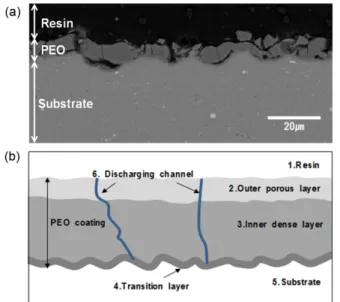
Figure 4(a) presents SEM image of the cross- section for the PEO coating formed in 1 g/L of KOH electrolyte solution with applying 0.1 A/cm

2

of current density for 1800 s, and the cross-sectional microstructure is schematically illustrated in Fig.

4(b). It can be seen that the PEO coating had a three- layered structure consisting of outer porous layer (2), inner dense layer (3) and internal transition layer (4).

The outer porous layer comprises up to 30 % of entire PEO coating layer, having a pore structure due to high volume of γ-alumina. This layer has poor mechanical properties and thus requires post- treatment such as polishing to remove the layer as a

common practice. On the contrary, the porous structure can be beneficial for application of additional coating layer because of anchor effect [11]. The internal dense layer account for relatively higher amount of α-alumina than the outer porous layer, and it is called the “functional layer” which provides protection against wear and corrosion [12]. The transition layer is an interface between substrate and electrolyte, and it is responsible for high adhesion strength of PEO coating and substrate material.

Figure 5 compares the average thickness of PEO coatings produced on 5083 Al alloy in electrolyte solution with different KOH concentrations at applied current density of 0.1 A/cm

2

for 1800 s.

According to the preceding study, the growth rate of Al PEO coating decreases with increasing KOH concentration [4]. The authors attributed such result to the increasing anodic dissolution rate with increasing KOH concentration. In this study, the thickness of the coating for the lowest KOH concentration 0.5 g/L exhibited the highest value of 27.07 µm, having an increasing tendency with increasing KOH concentration up to 2 g/L. This agrees with the results reported in the previous research. However, unexpectedly, the highest KOH concentration of 4 g/L showed greater coating thickness than KOH concentration of 2 g/L. In the preceding research, PEO coating was performed with KOH concentration of 0.5, 1.0, 1.5 and 2 g/L, and they reported discharge was not realized for 2 g/L of Fig. 3. SEM images of surface morphology for PEO of

Al alloy 5083 with different KOH concentrations. Fig. 4. (a) SEM image (Backscattered electron detector)

of cross-section for PEO coating produced on Al alloy

5083 in 1 g/L of KOH solution for 1800s, and (b)

schematic representation showing typical cross-

sectional microstructure of PEO of Al alloy 5083.

(5)

KOH concentration. In this research, however, it was confirmed that micro-discharge was successfully realized for both 2 g/L and 4 g/L KOH concentration.

This discrepancy between two results might arise from different experimental configuration, although both researches were carried out with similar KOH concentration (0.5 ~ 2 g/L) under similar electrical condition (applied current density: 935 A/m

2

).

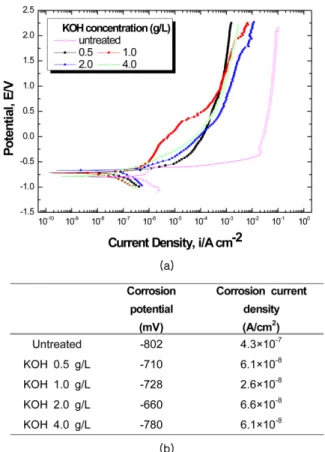
Figure 6(a) represents potentiodynamic polarization curves in natural seawater for PEO coatings produced in different KOH concentration with applied current density of 0.1 A/cm

2

for 1800 s, and Fig. 6(b) summarizes the corrosion potential and corrosion current density for PEO coatings determined by Tafel extrapolation method. All PEO coatings exhibited more noble corrosion potential and one order of magnitude lower corrosion current density, as compared to the untreated specimen. For corrosion current density, there was no distinctive difference by KOH concentration, but the lowest corrosion current density (2.6 × 10

−8

A/cm

2

) was observed for PEO coating with 1.0 g/L of KOH concentration. Generally, the internal dense layer acts as a barrier layer which suppresses through-thickness penetration of corrosive medium [13], and therefore increasing thickness of PEO coating can be beneficial for corrosion protec- tion of the substrate material. The most noble corrosion potential ( −660 mV vs Ag/AgCl) was obtained for the PEO coating with 2.0 g/L of KOH concentration, which is 142 mV noble than that of the Al substrate. In a related research, P. Bala Srinivasan performed PEO coating of AM50 Mg alloy with current density and process time to investigate the corrosion characteristics of PEO coatings. According to the authors, PEO coating with

higher current density resulted in thicker coating layer but with deteriorated corrosion characteristics.

They explained that superior corrosion resistance for the PEO coating with low thickness is attributed to the better pore structure and compactness of the coating [14]. The longer duration of process time can produce thicker coating thickness, and at the same time increase pore size of the discharge channel, where corrosive medium can be penetrated easily, resulting in deterioration of corrosion resistance [15].

Meanwhile, the anodic polarization for the untreated specimen exhibited a pseudo-passive behavior in the anodic branch of the curve (OCP ~ −0.6 V), after which a rapid increase of current density was observed due to anodic dissolution reaction. With further polarization, the curve approached the anodic limiting current density at approximately -0.3 V, after which the current density increased slightly. Although no passivation tendency was observed for PEO coating layer, its anodic limiting current density was achieved at two orders of magnitude lower than that of the substrate, indicating improvement in corrosion resistance.

Fig. 5. Comparison of coating thickness for PEO of Al alloy 5083 in different KOH concentrations.

Fig. 6. (a) Polarization curves and (b) electrochemical

data for PEO of Al alloy 5083 produced with different

KOH concentrations in natural seawater solution.

(6)

PEO coating process. This is considered to be due to difference in solution conductivity.

2. Different surface morphologies were obtained by changing KOH concentration in the electrolyte.

Pancake structure was dominantly produced with the lower KOH concentration, whereas mixed form of reticulate and pancake structures was observed for higher KOH concentration. This change may be attributed from the different discharge characteristics with KOH concentration.

3. With changing the concentration of KOH, different coating growth rates were achieved, and the maximum coating thickness was obtained with KOH concentration of 0.5 g/L.

4. The PEO coatings formed under different KOH concentration showed a slight discrepancy in corrosion characteristics, all having lower corrosion current density than that of the substrate.

Acknowledgments

This research was a part of the project titled

‘Construction of eco-friendly Al ship with painting, and maintenance / repairment free’, funded by the Ministry of Oceans and Fisheries, Korea.

References

[1] D. Kwon, S. Moon, Effects of NaOH Concentration on the Structure of PEO Films Formed on AZ31 Mg Alloy in PO

43−

and SiO

32−

Containing Aqueous Solution, J. Kor. Inst. Surf. Eng. 49 (2016) 46-53.

[2] S. Ikonopisov, Theory of electrical breakdown during formation of barrier anodic films, Electrochim.

Acta, 22 (1977) 1077-1082.

[3] A. L. Yerokhin, X. Nie, A. Leyland, A. Matthews, and S.J. Dowey, Plasma electrolysis for surface engineering, Surf. Coat. Technol., 122 (1999) 73- 93.

[4] L. O. Snizhko, A. L. Yerokhin, A. Pilkington, N.

Surf. Coat. Technol., 201 (2006) 2505-2511.

[7] E. Matykina, A. Berkani, P. Skeldon, G. E.

Thompson, Real-time imaging of coating growth during plasma electrolytic oxidation of titanium, Electrochim. Acta, 53 (2007) 1987-1994.

[8] K. C. Kalra, K. C. Singh, M. Singh, Electrical breakdown of anodic films on titanium in aqueous electrolytes, J. Electroanal. Chem., 371 (1994) 73- 78.

[9] R. O. Hussein, D. O. Northwood, and X. Nie, Coating growth behavior during the plasma electrolytic oxidation process, J. Vac. Sci. Technol.

A, 28 (2010) 766-773.

[10] J. A. Curran, T. W. Clyne, Porosity in plasma electrolytic oxide coatings, Acta Mater., 54 (2006) 1985-1993.

[11] E. I. Meletis, X. Nie, F. L. Wang, J. C. Jiang, Electrolytic Plasma Processing for Cleaning and Metal-coating of Steel Surface, Surf. Coat.

Technol., 150 (2002) 246-256.

[12] R. C. Barik, J. A. Wharton, R. J. K. Wood, K.

R. Stokes, R. L. Jones, Corrosion, erosion and erosion–corrosion performance of plasma electrolytic oxidation (PEO) deposited Al

2

O

3

coatings, Surf. Coat.

Technol., 199 (2005) 158-167.

[13] H. Duan, C. Yan, F. Wang, Effect of electrolyte additives on performance of plasma electrolytic oxidation films formed on magnesium alloy AZ91D, Electrochim. Acta, 52 (2007) 3785-3793.

[14] P. Bala Srinivasan, J. Liang, C. Blawert, M.

Störmer, W. Dietzel, Effect of current density on the microstructure and corrosion behaviour of plasma electrolytic oxidation treated AM50 mag- nesium alloy, Appl. Surf. Sci., 255 (2009) 4212- 4218.

[15] J. B. Bajat, R. Vasilić, S. Stojadinović, V. Mišković-

Stanković, Corrosion Stability of Oxide Coatings

Formed by Plasma Electrolytic Oxidation of

Aluminum: Optimization of Process Time, Corrosion,

69 (2013) 693-702.

수치

Figure 3 displays SEM images of the surface morphology of PEO coatings produced on 5083 Al alloy in electrolyte solution with different KOH concentrations at applied current density of 0.1 A/cm 2 for 1800 s
Figure 5 compares the average thickness of PEO coatings produced on 5083 Al alloy in electrolyte solution with different KOH concentrations at applied current density of 0.1 A/cm 2  for 1800 s.
Fig. 5. Comparison of coating thickness for PEO of Al alloy 5083 in different KOH concentrations.

참조

관련 문서

The corrosion behaviors of Al5454 alloy was investigated by potentiodynamic and potentiostatic polarization tests in 5 wt.% NaCl solution.. The pitting potential of the

&#34;Solution treatment and Sr Addition Effect on Microstructure and Mechanical Properties of Al-6Si-2Cu Aluminum Alloy for Automotive Parts.&#34; Master's Thesis

In this study, surface characterization of Mg-doped hydroxyapatite coatings on Ti-25Ta-xHf alloys after plasma electrolytic oxidation(PEO) for dental implants

In this study, in order to increase corrosion resistance and biocompatibility of Cp-Ti and Ti-6Al-4V alloy that surface of manufactured alloy was coated with TiN

3. In case of gold alloy inner crown, gold alloy outer crown was better than GES outer crown in retentive force. However, retentive force of gold alloy outer

표면 불순물층 중부인 dark gray 상 (Zr-rich zone) 의 안쪽 부위까지는 Si 침투가 이뤄지지 않음. • Uranium은 중부 dark gray

Surface characteristics of hydroxyapatite coated Ti-40Ta-xNb alloys by plasma electrolytic oxidation and sputtering

Figure 11.8 Crack length versus cycles data for four different levels of cyclic load applied to compact specimens of an alloy steel.. Figure 11.9 Data and