서 론
고용량의 정맥내 면역글로블린요법(Intravenous immunoglobulin; IVIg)은 Guillain-Barre syndrome (GBS), chronic inflammatory demyelinating neu- ropathy (CIDP), multifocal motor neuropathy (MMN) 등과 같은 자가면역성 신경병증(autoimmune neuropathy)에 있어 효과적인 치료법이다. 스테로이드 나 혈장치환술, 기타면역억제제 등도 이러한 질환들에서 사용되기도 하나 그 부작용이 심하며 효과가 일정치 않 아, 쉽고 안전하며 효과적인 IVIg가 더 선호되고 있다.1 지난 20여 년간 고용량 IVIg는 이러한 자가면역성 신경
병증들 외에도 염증성근질환, 람버트-이튼 근무력증후군 (Lambert-Eaton myasthenic syndrome: LEMS), 중 증근무력증(Myasthenia gravis: MG) 등 여러 자가면역 성 신경근질환들에서 효과적이며 안전한 치료법임이 밝혀 져 왔으며, 현재도 수많은 연구들에서 이의 유효성을 입 증되고 있다.2 본고에서 현재까지 알려진 IVIg의 약동학 적 특성, 작용기전 및 자가면역성 신경병증들에서의 적 용, 부작용 등에 관하여 알아보고자 한다.
1. IVIg의 생산 및 약동학
IVIg는 3천에서 만 명의 공여자로부터 얻은 혈장에 cold ethanol fractionation (Cohn’s process) 방법을 처리하여 생산된다.3 이후 효소처리를 통하여 정제되고 fractionation과 크로마토그래피를 거치며, C형 간염 등 의 바이러스를 불활성화시키는 세정처리를 거친다.4이렇 게 정제된 면역글로블린을 glucose, maltose, glycine, sucrose, mannitol, 또는 albumin 등으로 안정화시킨 다.1 시판되고 있는 IVIg는 IgG를 95%이상, IgA를 2.5%, IgM를 극소량 포함한다.3 IgG의 구성은 IgG1이
말초신경병증에 대한 정맥내 면역글로불린 요법
동국대학교 의과대학 일산병원 신경과학교실, 서울대학교 의과대학 분당서울대병원 신경과학교실�
김남희∙박경석�
Intravenous Immunoglobulin Therapy in Peripheral Neuropathy
Nam Hee Kim, M.D., Kyung Seok Park, M.D.*
Department of Neurology, Dongguk University International Hospital, Goyang-si; Department of Neurology, Seoul National University College of Medicine*, Seoul, Korea
Intravenous immunoglobulin (IVIg) is the treatment of choice for many autoimmune neuropathic disorders such as Guillain-Barre syndrome (GBS), chronic inflammatory Demyelinating neuropathy (CIDP), and multifocal motor neu- ropathy (MMN). IVIg is preferred because the adverse reactions are milder and fewer than the other immune-modulat- ing methods such as steroid, other immunosuppressant such as azathioprine, and plasmapheresis. IVIg also has been used in other autoimmune neuromuscular disorders (inflammatory myopathy, myasthenia gravis, and Lambert-Eaton myasthenic syndrome) and has been known as safe and efficient agent in these disorders. Since IVIg would get more indications and be used more commonly, clinicians need to know the detailed mechanism of action, side effects, and practical points of IVIg.
Key Words: Intravenous Immunoglobulin (IVIg), Neuropathy, Autoimmune diseases, Guillain-Barre syndrome, Chronic inflammatory demyelinating neuropathy, Multifocal motor neuropathy
Address for correspondence Kyung Seok Park, M.D.
Department of Neurology, College of Medicine, Bundang Seoul National University Hospital,
300 Gumi-dong, Bundang-gu, Seongnam-si, Gyeonggi-do, 463-707, Korea
Tel: +82-31-787-7466 Fax: +81-31-718-9327
이는 공여자 구성에 따라 달라진다.1모든 IVIg 제품들이 농도, 안정화 제제, IgA 구성비, IgG 세부구성비, 산도 등이 동일하지는 않지만, 그 생물학적 작용이 생산되는 제품마다 다르다고 아직 입증된 바도 없다.1
약동학적으로 살펴보면, 2 g/kg IVIg를 정주하면 혈청 중의 IgG가 5배 증가되나, 72시간에는 50%정도 감소되 며, 21~28일 후에는 정주 전의 농도와 같아진다.5인체의 고유한 면역글로블린의 반감기와 같이 IVIg 제제의 반감 기는 18~32일이므로, 혈청에서 초기 72시간에 50%정도 감소되는 것은 혈관 외로의 급속한 재배치에 의한 것이 다.1혈청 IgG가 최고치를 유지하는 정주 후 초기 48시간 동안, 뇌척수액에서는 IgG의 농도가 2배로 증가되며 1주 일 후에는 정상치로 감소된다.6 정주된 IVIg이 blood- CSF barrier가 적은 신경종판부나 신경근부위로 더 쉽게 들어가서 작용할 것으로 추측되지만, IVIg가 면역체계에 전반적으로 작용하는 효과와 더불어 이 부위들에서 국소 적으로 더 작용을 나타내는지는 아직 밝혀져 있지 않다.1
2. IVIg의 작용기전
수많은 연구들을 통하여 IVIg의 다양한 작용들이 밝혀 져 있다. 각각의 신경근질환에 대해서는 각 질환의 면역
병리학적 원인에 따라 주로 작용하는 기전들이 설명되고 있다(Table 1).1 이 기전들 가운데 일부는 in vivo, in vitro 연구를 통하여 잘 밝혀져 있지만 다른 일부는 IVIg 에 반응하는 자가면역질환들의 기전에 대한 정보를 통하 여 추론되기도 하였으며 아직 많은 부분이 가설이므로 추 후 여러 연구를 통하여 밝혀져야 한다.
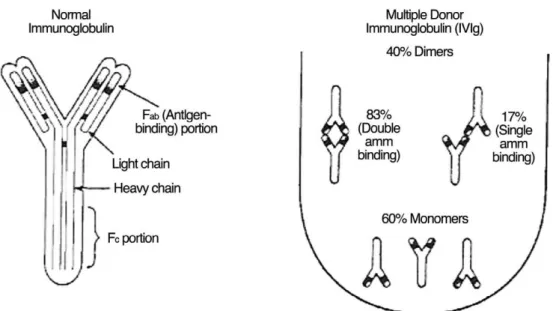
1) 자가항체에 대한 작용 (Effect on autoantibodies) IVIg는 여러 공여자로부터 생산되어 다양한 idiotypic, anti-idiotypic 특이성을 가진 항체를 포함하며, IgG분 자들이 dimer로 존재하는 비율이 40%정도 된다.8Fab는 자가항체의 항원결합부위이다(Fig. 2).2 정주된 IVIg는 세가지 기전을 통하여 작용한다.1 첫째는 anti-idiotypic 항체로서 중화작용을 한다. IVIg의 Fab부위가 병을 일으 키는 자가항체(autoantibodies; anti-acetylcholine receptor (AchR), anti-GM1, anti-thyroglobulin 등
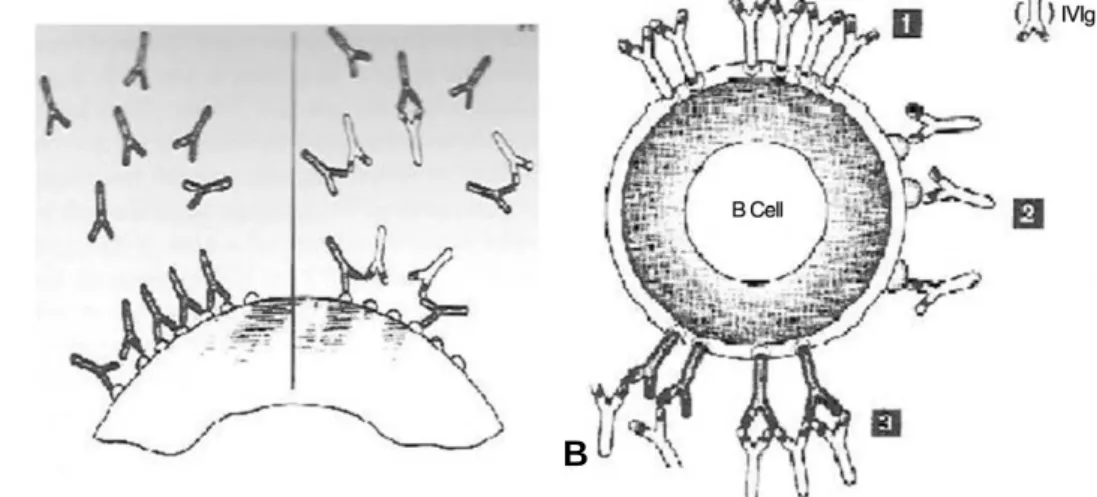
9-12)에 결합하여 결국 자가항체의 자가항원(autoantigen) 과의 결합을 방지하는 작용을 한다(Fig. 3A). GBS 환자 들에서 얻은 다양한 IgG glycolipid 항체의 신경근조직 에 대한“blocking effect”가 IVIg에 의해 중화됨이 관찰 된 바 있다.13둘째는 IVIg의 anti-idiotypic 항체가 B세
Table 1. Proposed mechanisms of action of IVIg and their relevance in the respective autoimmune neuromuscular disease
actions of IVIG Neuromuscular
1. Effect on autoantibodies by (a) Autoimmune demyelinating
(a) neutralizing pathogenic autoantibodies neuropathies (CIDP, GBS, MMN)
(b) affecting antibody production (b) MG. (C) LEMS (d) SPS
(c) accelerating catabolism of IgG antibodies by saturating FcRn transport receptor
2. Inhibition of complement binding and prevention (a) GBS. (b) CIDP. (c) DM. (d) MG of membranolytic attact complex formation
3. Modulation or blockade of Fe receptors (a) GBS. (b) CIDP.
on macrophage (c) Inflammatory myopathies
4. Suppression of pathogenic cytokines and other (a) Demyelinating neuropathies
immunoregulatory molecule (b) MG. (c) Inflammatory myopathies
5. Modulation of T-eell Function and antigen (a) GBS. (b) CIDP.
recognition (c) Inflammatory myopathies
6. possible effect on remyelination (a) GBS. (b) CIDP.
7. Effect on superantigen (a) GBS. (b) CIDP. (c) MG
8. Interaction With antigen-presenting cells (a) Demyelinating neuropathies
(b) Inflammatory myopathies (c) MG
포에 대하여 억제신호를 주어 항체 생성에 영향을 준다.14 IVIg에는 CD5에 대한 항체가 있어 자가항체 생성에 관여 하는 CD20+B세포에 영향을 주어 항체생성을 억제시킨 다(Fig. 3B).15셋째로 IVIg는 endocytic vesicle에 있는 protective transport receptor (FcRn)를 포화시킨다.
따라서 IVIg에서 기인한 많은 수의 IgG가 분해되지 않고 다시 순환되어 나감에 따라 상대적으로 병을 일으키는 자 가항체가 protective transport receptor 의 도움을 받 지 못하게 되어 분해되어 버리는 식이다. 따라서 IVIg의 이러한 작용으로 병을 일으키는 자가항체(IgG)의 많은 수 가 분해되어 버려서 전체적으로 병을 일으키는 자가항체 가 줄어들게 된다.16
이와 같은 자가항체에 대한 IVIg의 작용은 GBS, CIDP, MG, LEMS 등과 같은 자가항체 매개성의 자가면 역질환에서의 IVIg 작용 기전과 연관된다.1
2) 보체결합 억제와 세포막공격체 형성 방지 작용 (Inhibition of complement binding and prevention of membranolytic attack com- plex formation)
IVIg의 보체 결합에 대한 작용은 잘 알려져 있다. IVIg 는 보체 C3와 C4가 혈관내피세포로 흡수되는 것을 억제 시킴으로써 보체 의존성 Forssman shock으로 기니아
피그(guinea pig)가 죽는 것을 방지한다.17피부근염(der matomyositis: DM)에서의 보체의존성 미세혈관병증은 C3의 활성화와 endomysial capillary에 세포막공격체 (MAC)의 침착을 통해 발생하는데, IVIg가 이러한 보체의 흡수를 억제하며 MAC가 endomysial capillary에 침착 되는 것을 방지한다. 즉 정주된 IgG가 C3와 결합함에 따 라 C5 convertase assembly의 형성에 관여할 수 있는 C3가 감소되고 결국 MAC의 침작을 방지하게 되며, 이는 근조직생검 상에서도 확인되었다. (Fig. 4).18 이러한 IVIg의 보체에 대한 작용기전은 GBS, CIDP, MG 등 보 체활성화와 관련된 다른 자가면역성 질환들에서도 아직 객관적 입증은 되지 않았으나 관련될 것으로 생각된다.19
3) 대식세포에 대한 조절 (Modulation or blockade of Fc receptors on macrophage)
각각의 면역글로블린에 대한 특정 Fc수용체가 대식세 포에 존재하는데, IVIg는 이러한 대식세포의 Fc수용체를 포화시키며 수용체의 친화도를 떨어뜨려서, Fc수용체의 작용을 막아 포식작용(phagocytosis)을 억제시킨다.20,22 GBS와 CIDP에서 IVIg는 대식세포의 Fc수용체의 기능 을 막음으로써 항원을 나타낸 표적세포의 대식세포에 의 한 포식작용을 억제하여 대식세포에 의한 탈수초화를 방 지한다.22
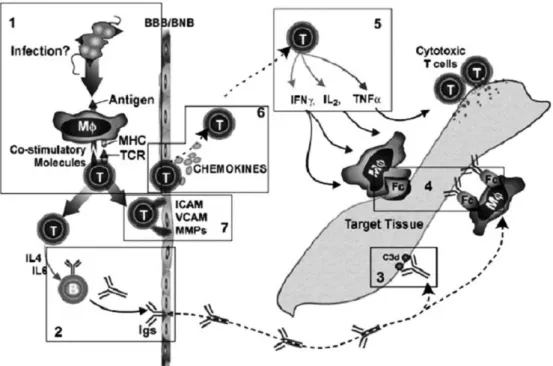
Figure 1. Main immunologic networks involved in autoimmune neurological disorders. VIg effects include (1) interference with co-
stimulatory molecules; (2) provision of anti-idiotypic antibodies or suppression of antibody production; (3) interference with the acti-
vation of complement and interception of MAC formation; (4) modulation of the expression and function of Fc receptors on
macrophages; (5) suppression of cytokines, (6) chemokines, and (7) adhesion molecules; and alterations of the activation, differentia-
4) 사이토카인 등 면역조절물질의 억제 (Suppression of pathogenic cytokines and other immunoregulatory molecules)
In vitro, in vivo 연구를 통하여 IVIg가 용량의존적으 로 하게 IL-1, TNF-α, IL-1β, TGF-β, TGF-βmRNA, MHC-I, ICAM-I, LFA-1과 같은 사이토카인이나 adhesion molecule 등의 감소를 일으킨다고 밝혀져 있
다.23,26GBS에서 IVIg 정주 1주 후에 림프구에서 ICAM-
I의 감소가 관찰되었다.27 대개의 자가면역성 신경근질환 들에서 사이토카인이나 adhesion molecule의 up-reg- ulation이 존재하는 바, IVIg에 의한 down-regulation 의 작용은 이러한 질환의 조절에 있어 매우 중요한 기전 중의 하나이다.28,29
5) T세포에 대한 조절 (Modulation of T-cell function and antigen recognition)
IVIg는 일시적인 림프구 감소를 일으키기도 하며,30T 세포의 항원인식을 간섭하는 CD4, CD8, HLA-I, HLA- II, TGF-β등을 포함하고 있다.31 또한 HLA-I의 α1
helix를 인식하는 항체들을 포함하며, 이러한 항체들은 HLA-I 항원들과 결합하여 CD8-매개성 세포독성(염증 성근염과 같은 T세포 매개성 자가면역성질환에서의 주요 기전임)을 억제한다.32
6) 이 외의 작용들
(1) 수초재생 효과 (Possible effect on remyelination) IVIg는 실험적인 allergic neuritis 모델에서 수초
(myelin sheath)에 직접적으로 작용하여 수초 재생의 효 과가 있다고 알려져 있으나,33이러한 작용이 탈수초성 신 경병증의 회복에 실제 기여하고 있는지는 아직 더 연구가 필요하다.34
(2) 초항원에 대한 작용 (Effect on superantigen) 초항원은 Vβchain을 나타내는 비감작 T세포를 자극하 여 사이토카인을 분비시켜 자가면역성 신경근질환을 일으 키거나 질환의 재발을 유도한다.35 IVIg에는 이러한 초항 원과 T세포 수용체의 Vβ3, Vβ8, Vβ17에 대한 항체를 포함하 므로,36 초항원의 자극에 의한 세포독성 T세포의 증가를 억제시킬 수 있다. MG, CIDP, GBS 등의 질환치료에서 이에 의한 기전이 관련된다.
(3) 항원제시세포와의 상호작용 (Interaction with antigen-presenting cells)
IVIg는 dendritic 세포의 분화와 성숙을 억제하며 사이 토카인 분비와 항원제시와 연관된 자극물질들을 또한 억 제시킨다.37, 38 이러한 기전은 CIDP 등의 자가면역성질환 대부분의 치료에서 적용된다.
3. 자가면역성 말초신경질환에 대한 IVIg 치료의 실제
1) Guillain-Barre syndrome (GBS)
급성 탈수초성 신경병증으로 발병 2주 안에 증상이 최 고조에 이르며, 심한 사지마비, 호흡마비 등을 일으키기 도 한다. 표적항원이 무엇인지는 아직 밝혀져 있지 않으 나 체액성과 세포성 면역기전이 모두 관련되며, 보체의 활성화와 수초에 대한 MAC의 침착, antiganglioside 또
Figure 2. Schematic drawing of immunoglobulin molecule and formation of dimers in immune globulin. (Right) Immune globulin in
a purified preparation derived from multiple donors (IVIg) contain 40% dimers, as the result of double-arm and single-arm binding,
and 60% monomers. (Modified from Dalakas MC, 1999).
는 glycolipid 항체의 존재, T세포 활성화와 사이토카인 의 증가, 감작된 대식세포의 수초 침범 등이 관찰된다.39
과거에는 심한 GBS의 초기에 혈장치환술이 사용되어 회복기간을 단축하였다. 최근 연구에 의하면 IVIg가 혈장 치환술과 동등하거나 더 나은 효과를 나타낸다.41 또한 IVIg와 혈장치환술의 병합요법이 IVIg단독요법과 크게 효과 면에서 차이 나지 않으며 IVIg와 IV methylpred- nisone의 병합 시에도 단독요법과 큰 효과의 차이는 없 다.42 Miller-Fisher variant의 경우도 IVIg가 효과가 있으나 이에 대한 체계적 연구는 아직 없다.43
(1) 용량
최적의 용량을 알아내기 위해 3일간 총 1.2 g/kg를 준 경우와 6일간 2.4 g/kg를 준 경우를 비교한 결과, 6일 치 료군이 근력을 회복해서 걷는 데까지 걸리는 시간이 더 짧았고, 1년째에 근력이 완전히 회복된 비율이 더 높았 다.44이를 토대로 적어도 2 g/kg 이상의 용량을 일반적으
로 사용한다.
(2) 초기 재발
일부 환자들에서 혈장치환술 또는 IVIg에 대해 효과를 보이나 금방 재발하기도 하는데, 이러한 재발율은 혈장치 환술과 차이는 없다.45대개 치료에 대한 반응이 빠를수록 재발율은 떨어진다.45
(3) 2차 치료
IVIg 정주 후 3주가 되어도 그 효과가 미미한 경우 2차 치료를 고려하게 되는데, 아직 이를 뒷받침하는 체계적인 연구 결과는 없으나, 일부 환자들에서 1차 치료에 3~4주 지나도 반응이 별로 없을 경우 2차 치료를 하면 효과가 있 다고 보고된 바 있다.46
(4) GM1항체
Axonal form GBS의 경우 Camphylobactor jejuni 나 GM1 항체와 관련성이 높다. 이러한 환자군에서는 혈 장치환술보다 IVIg에 오히려 더 반응이 좋기도 하며,
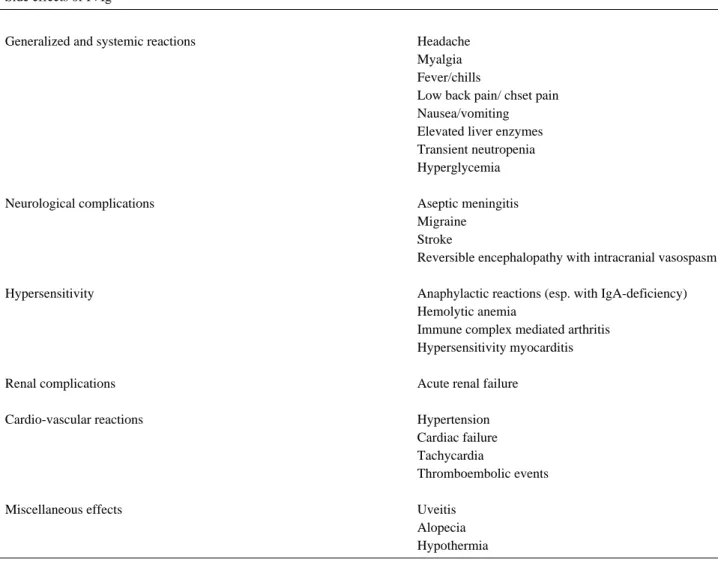
Table 2. Adverse reactions of IVIg Side effects of IVIg
Generalized and systemic reactions Headache
Myalgia Fever/chills
Low back pain/ chset pain Nausea/vomiting Elevated liver enzymes Transient neutropenia Hyperglycemia
Neurological complications Aseptic meningitis
Migraine Stroke
Reversible encephalopathy with intracranial vasospasm
Hypersensitivity Anaphylactic reactions (esp. with IgA-deficiency)
Hemolytic anemia
Immune complex mediated arthritis Hypersensitivity myocarditis
Renal complications Acute renal failure
Cardio-vascular reactions Hypertension
Cardiac failure Tachycardia
Thromboembolic events
Miscellaneous effects Uveitis
Alopecia
Hypothermia
GM1항체를 가진 경우 더 회복이 빠르고,47 axonal degeneration의 정도가 심하고 특히 근위부에 있거나, Camphylobactor jejuni 감염과 관련된 경우는 회복이 더디다고 알려져 있다.48그러나 또다른 연구에서는 혈장 치환술과의 치료 효과의 차이는 없다고 보고되어42아직은 논란의 여지가 있다.
2) Chronic inflammatory demyelinating polyneuopathy (CIDP)
수주 또는 수개월에 걸쳐 서서히 발병하며 근위약, 건반 사소실, 감각 저하 등이 특징적이다. 면역병리는 GBS와 유사하다. Molecular mimicry, antiglycolipid 항체, T 세포 감작, 활성화 대식세포에 의한 수초 손상, 보체 활성 화 등이 주요한 면역병리소견이다.39 예전부터 steroid가 first choice로 간주되어“steroid-responsive neu- ropathy”라는 별칭이 있기도 한데 최근의 연구결과를 통 해 보면 IVIg나 혈장치환술도 steroid와 비슷하거나 오히 려 약간 더 나은 치료효과를 보인다.49이 외에 disease- associated variants of CIDP의 경우, 예를 들어 DM- CIDP 등에서도 IVIg의 효과가 있는 것으로 간주되나 아 직 구체적인 증거는 없는 실정이다.1
(1) 유지요법
IVIg 투여 시 평균적으로 약 9일 후에 호전을 나타내며 4~6주 후에 최대의 호전을 나타낸다.1 호전을 유지하기 위해서는 대개 2 g/kg의 용량을 4~6주마다 반복하여 치 료해야 한다.11 g/kg 정도의 저용량을 유지해도 된다는 보고가 있으나,50아직은 이에 대한 추가적 연구가 더 필요 하다. 초기치료에 호전을 보인 경우에도 추후 치료에서 같
은 호전 반응이 유지되지 않기도 한다. 일반적으로 axon- al change까지 나타난 경우는 치료에 어려움이 있다.
(2) 치료법의 선택 및 예후인자
Steroid, IVIg, 혈장치환술 모두 치료 효과가 비슷하다.
치료의 선택에 있어 비용, 장기간 사용 시의 부작용, 환자 의 나이, 혈관상태, 병의 중증도, 동반된 다른 질환 등을 고려하여 최근에는 IVIg가 더 선호되는 경향이다.1 물론 아직도 일부에서는 steroid를 선호하기도 한다. 환자에 따 라 더 잘 반응하는 치료법이 다를 수 있는데 아직 그 이유 는 밝혀져 있지 않아서, 복합요법이 선호되기도 한다.
IVIg에 대해 치료 효과를 더 뚜렷이 나타내는 요인을 연구한 결과, (a) 이환 기간이 1년 내인 경우 (b) 근위약이 치료 직전까지 계속 진행한 경우 (c) 팔이나 다리의 근위 약이 비슷한 정도로 나타나 있는 경우 (d) 팔의 건반사가 소실된 경우 (e) 정중신경의 운동신경전도속도가 느려진 경우 (즉 진행하는, 전신적인, 최근의 탈수초화를 나타내 는 모든 징후들) 등으로 이러한 5가지의 조건에 모두 부합 한 경우 IVIg에 대한 효과가 90%라고 한다.51또한 급성 악화를 보이는 경우 IVIg가 더 효과적이다53. 비용적인 측 면을 감안할 때, steroid가 약가는 저렴하여 단기간 비용 은 적지만 2~3년간 장기 사용시 합병증 (골다공증, 당뇨, 백내장, 고혈압, 비만)에 따른 비용적인 측면을 고려하면 IVIg가 좀 더 유리하다.
3) Multifocal motor neuropathy (MMN)
서서히 진행하는 근위약과 근위축이 주로 상지 원위부 에 있으며 건반사의 감소가 있으나 감각기능은 정상으로 나타난다. Conduction block이 특징적으로 나타나며
Figure 3. Effect on autoantibodies. (A) Proposed effect of immune globulin on anti-idiotypic network. (Left) Idiotypes recognize autoantigen on the surface of cell; (Right) the variable region of the circulating idiotypes and prevents them from reacting with autoantigen. (B) Proposed scheme of binding of immune globulin to Fc receptors on B lymphocytes. The IgG in the immune globulin crosslinks with the Fc receptors on cell surface (1) and could exert a feedback inhibition on antibody production by B cells. The vari- able region of the IgG also interacts with surface antigens (2) or with antigenic determinants on the cell-surface immunoglobulin (3), causing negative signals on B cells and downregulation of antibody production.
A B
GM1 ganglioside에 대한 항체가 있는 경우가 많다.
CIDP와는 달리 steroid 나 혈장치환술에는 반응이 없으 나 IVIg에는 뚜렷한 치료효과를 나타낸다.52 증상의 호전 은 CIDP와 유사하게 7~10일 후에 발생하며 4~6주간 지 속되고, 이때 다시 새로운 2 g/kg의 IVIg의 정주가 요구 된다. Motor axon의 소실이 이미 나타난 만성 MMN의 경우도 IVIg에 대해 어느 정도 증상의 호전 및 전기생리 학적 소견의 개선을 보일 수 있다.
IVIg 치료법은 MMN에서 일차선택치료이다. 그러나 이에 호전되지 않는 일부의 환자에서 cyclophos- phamide 정주를 함께 시행하면 효과를 보이기도 한다.
장기간 유지요법을 위해서는 초기 0.4 g/kg으로 5일간 정주 후 1주마다 한번씩 0.4 g/kg으로 약 1년간 유지하며 이후 정주 빈도와 용량을 조절한다.52이렇게 하면 근력은 대개 3주 내에 호전되나 이후 기간 동안에 약간 근력이 감 소되기도 한다. 전기생리학적으로도 임상양상의 변화에 따라 호전과 악화를 반영하며 전도차단(conduction block)이 없어지기도 하는데,52 이는 IVIg 유지요법이 MMN의 치료에 유용하며 면역병리에도 영향을 주고 있 음을 반영하는 소견이다.
4) Paraproteinemic demyelinating polyneuropathy IgG 나 IgA monoclonal gammopathy와 연관된 탈 수초성 신경병증은 CIDP와 유사한 임상양상과 치료에 대 한 반응을 나타낸다. 그러나 IgM monoclonal gam-
mopathy와 연관된 탈수초성 신경병증(IgM-DP)의 경우 전자와는 다른 임상양상을 보인다. 이러한 환자 중 50%
이상은 myelin-associated glycoprotein (MAG)와 sphingoglycolipid에 대한 항체를 지니며 임상적으로는 sensory ataxia 또는 sensorimotor neuropathy를 주 로 나타낸다. Anti-MAG 신경병증은 치료에 대한 반응 이 좋지 않지만, IVIg에 대한 최근 연구에서는 통계적으 로는 유의하게 반응하였다.53IgM이 높아져 있는 경우 혈 청의 점도가 상승하여 IVIg 정주 시 추가적으로 점도 상 승을 일으켜 혈관폐색을 일으킬 수 있으므로 주의를 요 한다.
4. IVIg 치료법의 유의점
대개 2 g/kg를 투여하며 5일간에 투여하는 것이 일반 적이다. 그러나 젊은 연령에서 신장이나 심질환이 없는 경우는 2일간에 나눠 투입하는 것이 선호되기도 한다.54 IVIg가 혈장외로 빨리 확산되어나가는 것을 감안하면 고 농도로 단기간에 투여하는 것이 더 효과적일 가능성이 높 다. 정주속도는 200 ml/hr 또는 0.08 ml/kg/min을 넘 지 않아야 한다.1투여 기간에 관한 연구들에서 2 g/kg을 분할하여 투여하는 것에 비해 한꺼번에 단기간에 투여하 는 경우 사이토카인 중화, Fc수용체조절, C3의 억제 등의 측면에서 더 유리하다는 결과가 있다.55
1) 부작용 및 위험인자
일반적으로 IVIg 치료법의 부작용 빈도는 10% 정도이 다(Table 2).54,56NSAID에 잘 반응하는 경도의 두통이 가 장 흔한 부작용이며, 오한, 근육통, 가슴통증 등이 정주 1 시간 내에 발생될 수 있으나 30분 정도 정주 중단 시 대개 사라지며, 이 경우 정주 속도를 더 느리게 하여야 한다.
정주 후에는 피로감, 열감, 오심 등의 증세가 올 수 있고 24시간 정도 지속되기도 한다. 이러한 부작용의 원인은 뚜렷하지 않으나 보체의 활성화에 따른 반응일 가능성이 높다.3,54 심장질환, 울혈성심부전 시는 정주 속도를 늦추 도록 한다.
(1) Serum viscosity and thromboembolic events IVIg는 혈액의 점도를 올리는데 특히 hypercholes- terolemia, cryoglobulinemia, hypergammaglobu- linemia의 경우 점도는 더 올라갈 수 있다. 정상 혈액 점 도는 1.2~1.8 cp정도이나 2.5 cp이상의 점도가 되면 혈 관폐색의 위험이 증가되어 뇌경색, 심근경색, 폐색전 등 이 발생한다.57 최근의 정맥혈전증이 있었던 경우나 움직 일 수 없는 상태인 경우 혈관폐색의 위험성을 고려하여 초음파로 하지의 혈전에 대한 확인이 필요하며 정주속도 를 아주 늦추어야 한다. 이러한 경우 저용량 헤파린이나 항혈소판제제를 투여하여 예방할지에 대해서는 아직 결론
Figure 4. Effect of immune globulin on complement deposi-
tion. Activation of the complement pathway on the cell surface
begins by binding of the C1q on the antigen-antibody complex,
triggering the cascade of C3 activation. This leads to the acti-
vation of C3b fragments and the formation of MAC, which
causes cell lysis. Immune globulin inhibits complement deposi-
tion (dotted arrows) by acting on the C3b fragments and pre-
venting the incorporation of C3 molecules into the C5 conver-
tase assembly. The formation of MAC is therefore inhibited
(2) Migraine headache
IVIg는 편두통을 유발시킬 수 있으므로 편두통 병력이 있는 경우는 propranolol을 전처치하여 예방하기도 한 다. IVIg를 편두통 병력 있는 젊은 여성에게 투여시 뇌졸 중을 일으킨 보고도 있다.
(3) Aseptic meningitis
무균성수막염은 정주속도나 IVIg제제의 첨가성분 등과 는 특별히 연관이 없으며, 강한 진통제에 잘 반응하고 대 개는 24~48시간 내에 두통은 가라 앉는다.5특별한 진단 적인 검사는 필요치 않다.
(4) Skin reaction
정주 후 2~5일 후 나타나며 30일정도 지속되기도 한 다. 담마진, 라이켄양 병변, 손바닥의 소양감, 사지의 점 상출혈 등이 소수의 환자에서 나타난다.54
(5) Severe anaphylactic reaction
IgA가 없거나 감소된 환자들에서 발생한다. IgA 감소 는 비교적 흔하여 유병율은 1:1000 정도이나, IgA 감소 환자 모두에게서 발생하는 것은 아니다. IVIg 가운데 소 량 들어있는 IgA가 순환 anti-IgA 항체와 반응하여 macromolecular complex를 형성하여 나타난다. IgA 감소 환자 중 29%에서 anti-IgA 항체가 존재하며, 이들 중 일부에서만 이러한 부작용이 나타난다.58
(6) Renal tubular necrosis
급성 신세뇨관 괴사가 드물게 나타나며 이는 가역적이 다. 이전에 신장질환이 있고 탈수 상태, 노인, 당뇨 등을 지닌 환자에서 나타날 수 있다. 혈청 크레아티닌이 정주 후 1~10일 사이에 상승될 수 있으며 정주를 중단하면 2~60일 후 정상화된다.59이는 IVIg 제제 중 포함된 고농 도의 sucrose와 관련 있으며 삼투압에 의한 세뇨관 손상 의 결과이다.59 따라서 IVIg를 희석하거나 정주속도를 늦 추거나 삼투압 낮은 제제를 사용하여 세뇨관괴사의 위험 을 줄이도록 하며, 신질환이 있는 경우 IVIg를 사용할 때 creatinine과 BUN의 변화를 주의 깊게 관찰해야 한다.59
(7) Spurious results on serological tests
IVIg 투여 후 ESR이 6배까지 상승하기도 하는데, 2~3 주 지속되기도 한다.30 또한 저나트륨혈증이 관찰되기도 한다. 30
결 론
IVIg는 면역 이상에 의한 각종 신경계 질환의 치료에 이용되고 있다. 현재 잘 고안된 임상시험 결과를 바탕으 로 GBS, MMN, CIDP 등의 말초신경병증에서는 IVIg가 일차선택 치료로 이용되고 있다. 그러나 IVIg의 유용성이 예상 되면서도 아직 확증되지 못한 다른 자가면역성 신경 근질환들에서도 앞으로 많은 연구가 이뤄질 것이다. 또한 IVIg의 유지용량, 투여빈도, 다른 치료법과의 병용요법에
따른 효과 등의 정확한 기준이 아직 확립되지 않은 바 향 후 이에 관하여 더 연구가 되어야 할 것이다.