INTRODUCTION
Advances in reproductive technologies with high qual- ity care have increased the survival of high-risk infants who might not have previously survived. Recently, more premature, smaller, and more medically complicated neonates have been hospitalized at neonatal intensive
care units (NICU). Pregnant women may have devel- oped the maternal identity in conjunction with the blur- ry image of the growing fetus (Rubin, 1984). Every woman wants her future newborn to be perfectly healthy. In the latter stage of pregnancy and through the final experience of labor and delivery, the subjective im- age of the future newborn becomes an objective reality to the mother. When there is no discrepancy between
The Effects of a Home-Visiting Discharge Education on Maternal Self-esteem,
Maternal Attachment, Postpartum Depression and Family Function in the
Mothers of NICU Infants
Young-Mee Ahn, PhD, RN, Mi-Ran Kim, MSN, RN
1. Department of Nursing, College of Medicine Inha University
This work was supported by INHA UNIVERSITY Research Grant. (INHA-22693).
Corresponding author: Ahn, Young-Mee, PhD, RN, Department of Nursing, College of Medicine Inha University, 253 Yonghyundong, Namku, Incheon 402-751, Korea
Tel: 82-32-860-8207 Fax: 82-32-874-5880 E-mail: [email protected] Received September 30, 2004 ; Accepted November 24, 2004
Purpose: A quasi-experimental study was performed to investigate the effects of a home visiting discharge edu- cation program on the maternal self-esteem, attachment, postpartum depression and family function in 35 mothers of neonatal intensive care unit (NICU) infants.
Methods: Twenty-three mothers in the intervention group received the home visiting discharge education while 12 mothers in the control group received the routine, hospital discharge education. Baseline data was col- lected in both groups one day after delivery. The intervention group received the home visiting discharge education while the control group did the routine hospital-based discharge education. The questionnaire including the data on maternal self-esteem, attachment, postpartum depression and family function were collected within 1week after the discharge by mail.
Results: The scores of maternal self-esteem, and attachment were significantly increased, and the postpartum depression and the family function score were decreased after the home visiting discharge education in intervention group. There were no changes in these variables before and after the routine hospital-based discharge education in control group.
Conclusion: These results support the beneficial effects of home visiting discharge education on the maternal role adaptation and family function of the mothers of NICU infants.
Key Words : Premature infants, Postpartum depression, Patient discharge, Follow-up study
the subjective view and the objective reality of the neonate, mothers feel the successful completion of preg- nancy and continue to develop the maternal adaptation further.
Mothers of high-risk infants have a very different ex- perience, compared to the mothers of full-term infants who are taken home within days of birth (Brazy, Anderson, Becker & Becker, 2001; Pridham, 1998;
Rubin, 1984). They are disappointed with the unexpect- ed pregnancy outcome, and continuously overexerted with fears for their infant’s survival and feelings of loss of control in apprehension and uncertainty. For a preterm in an incubator in NICU, surely the care is 100% in the hands of the health care professionals for the first few days. Mothers feel insecure and depressed when the nurses are more skillful in caring for the baby and know their baby better than they do. In other words, the nurses become the pseudo-parents while the mothers become visitors to the hospital. Also, the moth- ers of high risk infants are high-risk patients themselves in the neo-maternal dyad due to a variety of reasons re- lated to the high risk delivery, including preterm labors, mothers with diabetes or pregnancy induced hyperten- sion, multiple gestation, congenital anomaly, infections, etc. When the mother’s complication is negligible, they are discharged from the hospital at about 48 hours after delivery with empty hands while their newborns remain hospitalized in NICU.
The current trend is toward the early discharge of new- borns, even high-risk infants from NICU due to the em- phasis on medical cost effectiveness and family-centered care in the health care environment (Fishbein, 1997;
Ortenstrand, Winbladh, Nordstrom & Waldenstrom, 2001; Poets & Harms, 2002). The discharge from NICU means that the infant is in a stable physiologic condition without acute tertiary health problems. It does not guar- antee the absence of future problems for the discharged infant. Some infants with chronic health problems may be discharged with medical devices, such as artificial ventilator, apnea monitor, or mechanical feeding tube.
There is an imperative need for the mothers of high-risk infants to know and raise their infant with the careful at- tention to the health problems and developmental cours- es at the time of NICU discharge.
Parents of high-risk infants experience extreme stress, including severe health problems, concerns about com- plications, parental mal-adaptation, low self-esteem, and even posttraumatic stress disorders (Armstrong, Fraser,
Dadds & Morris, 2000; Blair, 2002; Davis, Edwards, Mohay & Wollin, 2003; DeMier, Hynan, Harris &
Manniello, 1996). Research reports the needs for parents of premature infants during hospitalization and after dis- charge such as increased emotional support, education that addresses parents at their level, and more continu- ous and consistent communication with health care providers (Rubin, 1984). The mothers need to learn the cues of behaviors unique to their infants, common new- born concerns about high-risk infants, and the sequels of high-risks, assessment and social support including the home environment (Fishbein, 1997; Pearson &
Anderson, 2001; Poets & Harms, 2002). However, the current content of hospital-based discharge education in Korea does not cover these needs.
Most high-risk infants are discharged from NICU to home directly without the standard regulation on follow- up care in Korea. The discharge education is provided at the time of the infant’s discharge, when the mother, who may still be in high-risk postpartum transition, may not be ready to incorporate the maternal role with the lack of confidence and the overwhelming responsibility in her mothering skill (Pearson & Anderson, 2001;
VandenBerg, 2000). Few nurses are available to provide full family support and these days the hospital support is limited to a program of structured discharge education for the new mothers and their families in these days.
With a strict restriction on the visiting hours, less time is available for the interaction between the mother and the nurses before discharge. The mothers, who remain in the high-risk postpartum period, are often not ready to acti- vate themselves to obtain information and support for their high-risk infants at NICU. This implies that mothers of high-risk infants still need professional support after discharge for infant care and the educational and sup- portive needs of the complex health concerns.
Recent investigations have supported the beneficial ef- fects of home visiting follow-up care on maternal emo- tion and role, as well as on infant growth (Armstrong et al., 2000; Blair, 2002; Melnyk et al., 2001). The mother may be confronted with the reality of mothering respon- sibility when her infant is in front of her at home. She may be in vital need of the discharge education after her infant is discharged when she herself becomes the prima- ry care person. With confidence and skillful care for her infant, she may develop positive maternal self-esteem, which is an essential part of mothering, influenced by in- fant health, behavior and her own social support
(McGrath & Meyer, 1992). The affection and attitude of the mother toward her infant are reflected in maternal self-esteem within the mother-infant relationship. Others who develop positive maternal self-esteem may well de- velop fine maternal attachment with good family func- tion as social support, which reciprocally decreases post- partum depression. This study was conducted to exam- ine the effects of an enhanced discharge education pro- gram, consisting of home visiting discharge education, on the maternal self-esteem, attachment, postpartum de- pression and family function in the mothers of NICU in- fants. .
METHODS
Subjects
A quasi-experimental design was applied to investigate the effects of a program of home-visiting discharge edu- cation on the maternal self-esteem, maternal attach- ment, postpartum depression and family function in the mothers of high-risk infants at the NICU. A consecutive eligible sampling method was applied to recruit the study participants at the level III NICU of a university affiliated medical center in Incheon, Korea. The inclu- sion criteria included mothers of newborns with prema- turity, LBW, small or large size for gestational age, infec- tion, apnea, etc, with informed consent after approval by the internal review committee of the department of pe- diatrics and the nursing department. The mothers of in-
fants with congenital anomaly or intraventricular hemor- rhage (IVH) greater than grade III were excluded due to the possibility of different postpartum course in terms of psychological adaptation.
A power analysis suggested the 26 subjects per each group using a two-sided α= .05, effect size = .8 and β=
.08 (Hulley, Cummings, Brown, Grady, Hearst &
Newman, 2001). The subjects in the control group were intentionally enrolled first, then the subjects later in the intervention group. The reason for separating the two groups consecutively was to prevent their contact with each other to minimize the contamination of the re- search interventions; the hospital-based, routine dis- charge education versus the home visiting discharge edu- cation.
Fifty mothers of high-risk infants, 25 in each group, were enrolled into the study at the beginning, but 15 from the control group did not respond to the mail sur- vey after discharge. The possible reason for this may be no direct beneficial effects from the study for the control group while the intervention group received the en- hanced discharge education. Finally 35 mothers of high- risk infants, 23 for the intervention group and 12 for the control group, completed the whole process of study.
There were no significant differences in the baseline data of interest between the two groups except family func- tion as well as in the subjects between the beginning and the final (Table 3). Whole procedures such as subject re- cruitment, the employment of interventions etc, were
Table 1. Demographic and Medical Characteristics of the Subjects (N = 35)
Characteristics Frequencies(%) Characteristics Frequencies(%)
Maternal Job Family type
Not employed 29 (82.9) Nuclear 21 (60.0)
Part time employed 1 (2.9) With wife-parents 3 (8.6)
Full time employed 05 (14.3) With husband-parents 11 (31.4)
Planned pregnancy Prenatal care
No 17 (48.6) No check up 08 (17.1)
Yes 18 (51.4) Irregular check up 07 (20.0)
Caregiver Regular check up 22 (62.9)
Husband 09 (25.7) Feeding type
Mother-in-law 08 (22.9) Breast feeding 20 (57.1)
Own mother 14 (40.0) Bottle feeding 06 (17.1)
None 04 (11.4) Mixed 09 (25.7)
Newborn sex Current health problems
Female 15 (42.9) prematurity 16 (45.7)
Male 20 (57.1) RDS 06 (17.1)
Premature infant Respiratory difficulty 05 (14.3)
Yes 27 (77.1) Hyperbilirubinemia 04 (11.4)
No 08 (22.9) Sepsis 3 (8.6)
Pneumonia 04 (11.4)
performed by the researchers.
Interventions and data collection
Once the new mothers were enrolled in the study, baseline data was collected on the demographic and medical information as well as the dependant variables, such as maternal self-esteem, maternal attachment, post- partum depression and family function, before delivering the discharge education at the second day after delivery.
For the control group, the hospital-based, routine dis- charge education was performed by an NICU staff nurse at the time of discharge, which is mostly the second to third day after vaginal delivery, or the fourth to fifth day after cesarean section delivery. It took about 10 minutes, generally delivering the information limited to the dis- charge process, bill management, referral sites & sched- ule, etc. The intervention group received one home visit of discharge education within 1week of discharge by the PI in addition to the hospital-based, routine discharge education given at the time of discharge. The home visit- ing discharge education, taking about one hour, involved the guided education with a booklet consisting of the common growth and development concerns focused on high-risk infants, cues of infant behaviors, sequels of high-risks, assessment and support of home environ- ment. After administering the discharge education to both groups, a questionnaire to measure the maternal self-esteem, maternal attachment, postpartum depres- sion and family function was left with a return envelope for the mothers of high-risk infants, who were asked to
complete and mail it back within several days. Follow-up calls were made to increase compliance in both groups.
Measures
Four variables were measured to investigate the effects of discharge education in this study: maternal self-es- teem, maternal attachment, postpartum depression and family function. Maternal self-esteem measures a woman’s own reflected appraisal of herself as a mother (McGrath & Meyer, 1992). In the study, a maternal self- report inventory (MSRI) by Shea and Tronick (1988) was used to measure maternal self-esteem. The original version consisting of 26 items was translated and tested for its validity and reliability among Korean mothers by Han and Bang (1999), during which one item was delet- ed due to the low inter-item correlation. It was used for Korean mothers of LBW infants by Ahn & Kim (2003) with Cronbach’s alpha of reliability of 0.71 (Ahn &
Kim, 2003). In this study, Cronbach’s alpha was mea- sured twice before and after the intervention with results of 0.88 and 0.82.
Maternal attachment, a measure of the social relation- ship between mother and her child, is an affective tie to the child. In this study it was measured using the mater- nal attachment inventory (MAI) developed by Muller (1994). The original version consisted of a 26-item sur- vey with a 5-rating scale from 0 to 4. A higher total score indicates greater depression. Ahn (2004) translated it into Korean, retranslated back into English for com- parison check, and then applied it to the mothers of Korean LBW infants by removing 3 items which were considered not proper for mothers whose infants have been hospitalized in NICU. The reliability of this instru- ment was measured twice with Cronbach’s alpha of 0.8181 and 0.9104.
Postnatal depression was measured using the Edinburgh Postnatal Depression Scale (EPDS) which was developed by Cox et al (1987). EPDS, a 10-item self-rat-
Table 3. The Homogeneity of the Baseline Scores of MSRI, MAI, EPDS and FAPGAR between Two Groups (N = 35)
M(SD) Total Intervention Group Control Group t*(p)
MSRI 92.17 (11.50) 93.48 (9.93) 89.67 (14.19) .830 (.413)
MAI 85.63 (5.27)0 84.74 (5.71) 87.33 (3.96)0 -1.571 (.27)000
EPDS 8.03 (4.05) 08.87 (4.30) 6.42 (3.09) 1.940 (.62)00
FAPGAR 7.37 (2.37) 06.74 (2.51) 8.58 (1.51) -2.120(.011)**
MSRI: Maternal Self-Report Inventory, MAI: Maternal Attachment Inventory EPDS: Edinburgh Postnatal Depression Scale, FAPGAR: Family APGAR score
* equal variances not assumed, ** significance at α= .05 Table 2. Demographic and Medical Characteristics of the Subjects II (N = 35)
Characteristics mean (SD) range
Maternal age (year) 29.03 (4.13) 20-42
Family numbers 3 (1.24) 1-6
Marital period (year) 3.37 (3.23) 00.42-18.00 Birth weight (gram) 2199.17 (660.83) 0941-3660 Gestational age (week) 34.34 (3.29) 27+5-40+3
ing scale, has been shown to have high sensitivity for de- tection of postpartum depression.10, 22 Each item is rat- ed from 0 to 3, giving a total score of 0 to 30. A higher score indicates greater depression. The original version was translated into Korean and retranslated again for comparison check, then tested with postpartum Korean women with the normal and LBW infants(Ahn & Kim, 2003). Based on the original instruction and the report by Stamp et al (1996), a total score above 12/13 is con- sidered most presumptively depressed, below 9 is con- sidered to be normal, while between 9 and 12 is proba- bly depressed. The reliability was measured twice in this study with Cronbach’s alpha of 0.79 and 0.82.
Family function was measured with family APGAR (FAPGAR) as introduced by Gabriel (1978). It measures the 5-items of perceived family support including adap- tation, partnership, growth, affection and resolve with 2 Likert scales from 0 to 2. Each score is totaled; the range of the total score is 0-10 just like the APGAR score. A higher score indicates more effective family function.
Scores of 7-10 suggest a highly functional family; 4-6, a moderately dysfunctional family; and 0-3, a severely dysfunctional family(Gabriel, 1978). For the study, the original version was translated into Korean, and in turn retranslated back into English for comparison check in the authorand applied to the mothers of normal and low-birth weight infants (Ahn & Kim, 2003) . The Cronbach’s alpha of 0.67 for the reliability was o.71 in the previous study and 0.67 before the intervention and
0.78 after the intervention in this study.
The questionnaire included the above four instruments with demographic information for baseline measurement and without any other information for post-intervention measurement except a numeric code to match the two questionnaires. Confidentiality was assured by assigning a code number to each subject and by analyzing data only with the coded numbers and aggregate data. All of the data was double entered, and analyzed using SPSS10.5. Descriptive statistics, paired-t test, and Chi- square were used to explore the nature of the data.
Nonparametric statistics were performed to test the ef- fects of the two types discharge education because of the possibility of skewed distribution of variables of research interest with wide variances due to the nonequivalent subject numbers in the two groups.
RESULTS
The demographic and medical information of the mothers and infants are presented in Tables 1 and 2. The mean age of the mother was 29.3 years (SD = 4.13) with a mean marital period of 3 years and 4 months. Among the mothers, 82.9% were not employed. Sixty percent of the subjects were in a nuclear family type with a mean number of family members of 3. Of the subjects, 31.4% lived with their parents-in-law, and 40% of the caregivers for postpartum care were the subject’s own mothers. The pregnancy was planned for 51.4% of sub-
Table 5. The Level of Family Function between the Intervention and the Control Group before and after the Education (N = 35) family function before education family function after education
highly moderately severely highly moderately severely
functioned dysfunctioned dysfunctioned functioned dysfunctioned dysfunctioned
Inervention 14 (60.87) 06 (26.09) 3 (13.04) 18 (78.26) 4 (17.39) 1 (4.35)
Control 11 (91.67) 1 (8.33) 0 (0)0 00 11 (91.67) 1 (8.33)0 0 (0)0 0
Total 25 (71.43) 7 (20.0) 3 (8.57)0 29 (82.86) 5 (14.29) 1 (2.86)
Chi-square (p) = 3.855 (.146) Chi-square (p) = 1.146 (.564) Table 4. The Level of EPDS between the Intervention and the Control Group before and after the Education (N = 35)
EPDS before education EPDS after education
none probable presumptive none probable presumptive
Intervention 12 (52.17) 08 (34.78) 3 (13.04) 18 (78.26) 5 (21.74) 0 (0)00.
Control 9 (75.0) 02 (16.67) 1 (8.33)0 9 (75.0) 2 (16.67) 1 (8.33)
Total 21 (60.0) 10 (28.57) 4 (11.43) 27 (77.14) 7 (20.0)0 1 (2.86)
Chi-square (p) = 1.744 (.418) Chi-square (p) = 2.029 (.363) EPDS: Edinburgh Postnatal Depression Scale
jects, only 62.9% received regular prenatal care and 17.1% experienced no prenatal check-up. Twenty (57.1%) of the subjects were in complete breastfeeding and nine (25.7%) in partial breastfeeding. Only 17.1%
were in artificial bottle-feeding. The reason for the rela- tively high breastfeeding rate is considered due to the breast feeding policy in this proposed NICU. Among 35 infants, 15 (42.9%) were female and 20 (59.1%) were males. Twenty-seven (77.1%) of the 35 neonates were premature infants, with the main cause for NICU hospi- talization being prematurity (45.7%), followed by RDS (17.1%), respiratory difficulty (14.3%), hyperbilirubine- mia (11.4%), sepsis (8.6%) and pneumonia (2.9%). The mean birth weight of the newborns was 2,199.17 gram (g) (SD = 660.83) with a mean gestational age (GA) of 34+4weeks.
Table 3 presents the homogeneity of the baseline data in the scores of the variables of research interest before the discharge education was performed between two groups. The mean scores of MSRI, MAI, EPDS and FAP- GAR were 93.43 (SD = 9.93), 84.74 (SD = 5.71), 8.87 (SD = 4.30), and 6.74 (SD = 2.51) in the intervention group, while 89.67 (SD = 14.19), 87.33 (SD = 3.96), 6.42 (SD = 3.09), and 8.58 (SD = 1.51) in the control, retrospectively. There was no statistical difference in the means of MSRI, MAI and EPDS, but the mean of family function score was higher in the intervention group than in the control group. The item mean was 3.7 both for MSRI and MAI, indicating that the subjects selected the quite positive maximum choice per each item.
The EPDS and FAPGAR scores were recorded into three levels: not depressed, probably (or moderately) de- pressed and presumptive (or severely) depressed for EPDS; and normal, moderately dysfunctional and highly dysfunctional for FAPGAR. Tables 4 and 5 present the degrees of each EPDS and FAPGAR between the inter- vention and control groups before and after the dis- charge education. The baseline EPDS, which was mea- sured mostly on the second day after delivery, revealed that 14 (40.0%) of the subjects tended to experience moderate to severe postpartum depression. After the discharge education, the percentage experiencing de- pression decreased to 22.86% of all subjects. There was no significant difference of each EPDS level between the intervention and control groups, neither before nor after the education (x2= 1.744, p = .418; x2= 2.029, p = .363, retrospectively).
In the same manner, the levels of FAPGAR of all sub- jects were examined using Chi-square and paired-t test.
The FAPGAR level showed the increase in the number of highly functional families with a decrease in the num- ber of dysfunctional families after the discharge educa- tion. Though, the prevalence of each FAPGAR level be- tween the intervention and the control group, either be- fore or after the education, did not differ statistically (x2
= 3.855, p = .146; x2= 1.146, p = .564, retrospectively).
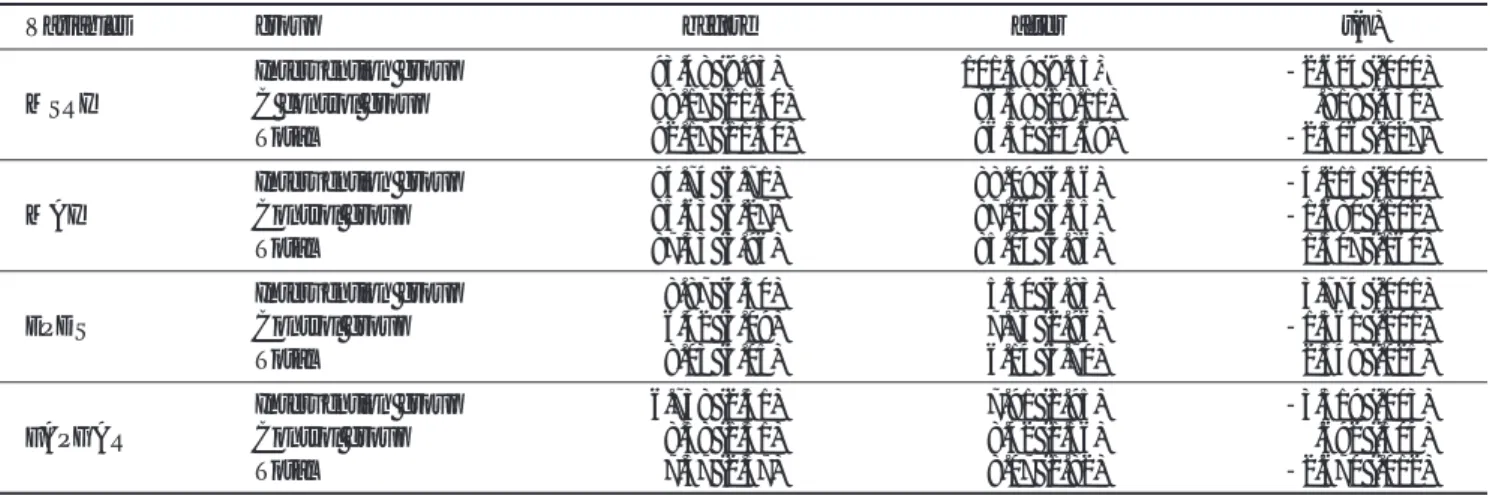
The scores of MSRI, MAI, EPDS and FAPGAR were compared before and after the discharge education be- tween the intervention group, the control group and all subjects using paired t-test (Table 6). All scores revealed
Table 6. The Scores between the Intervention and the Control Group before and after the Discharge Education (N = 35)
Variables group before after t(p)
Intervention group 93.48 (9.93) 101.39 (9.55)0 -2.624 (.000)
MSRI C control group 089.17 (11.50) 086.58 (18.11) .818 (.431)
Total 092.17 (11.50) 096.31 (14.69) -2.306 (.027)
Intervention group 84.74 (5.71) 88.09 (4.56) -4.215 (.000)
MAI Control group 85.63 (5.27) 87.06 (5.55) -1.680 (.102)
Total 87.33 (3.96) 85.04 (6.86) 1.507 (.160)
Intervention group 08.87 (4.30) 05.30 (3.83) 3.774 (.001)
EPDS Control group 06.42 (3.09) 07.75 (2.96) -1.361 (.201)
Total 08.03 (4.05) 06.14 (3.70) 2.348 (.025)
Intervention group 6.738 (2.51) 07.91 (1.95) -3.319 (.003)
FAPGAR Control group 08.58 (1.51) 08.42 (1.56) .692 (.504)
Total 07.37 (2.37) 08.07 (1.82) -2.670 (.012)
MSRI: Maternal Self-Report Inventory MAI: Maternal Attachment Inventory EPDS: Edinburgh Postnatal Depression Scale FAPGAR: Family APGAR score
significant changes after the discharge education in the intervention group but no changes in the control group.
The differences in the changes of scores before and after the education were analyzed between the intervention group and control using Mann-Whitney U test and are presented in Table 7. The MSRI score significantly in- creased with a median of 9 after the home visiting dis- charge education while the median difference score was decreased in the control group which received the rou- tine hospital-based discharge education (Z = 61.000, p = .007). The median of 3 in the difference of MAI score significantly increased after the home visiting discharge education while the median difference score was de- creased to -3 in the control group which received the routine hospital-based discharge education (Z = 51.500, p = .003). There was a decrease in EPDS scores after the home-visiting education while EPDS score was slightly increased after the routine hospital-based discharge edu- cation (Z = 47.500, p = .001). The increase in FAPGAR score after the discharge education in the intervention group was greater than that in the control group (Z = 73.000, p = .019). The observed powers in these changes were 0.894 for MSRI, 0.943 for MAI, 0.890 for EPDS and 0.703 for FAPGAR.
DISCUSSION
Recent trends toward early discharge for high-risk in- fants and their mothers demand an increasing need for the continuity of professional care after NICU discharge with a focus on family-centered care (Ahn, 2004;
Fishbein, 1997; Pearson & Anderson, 2001; Poets &
Harms, 2002). Studies support the safety of early dis- charge with the compliance of home follow-up after dis- charge with strict guidelines (Frank-Hanssen, Hanson &
Anderson, 1999; Gardner et al., 2001). However, special
caution is needed when extending such an early dis- charge policy to high-risk infants and their mothers (Ortenstrand et al., 2001). Therefore, the discharge edu- cation of NICU has been enhanced in terms of support- ive and educational function such as physical assess- ment, characteristics of newborn and high-risk infants, nature of health problem, physiologic knowledge to sup- port the progress of feeding, appropriate knowledge base for family teaching, psychosocial support and the re- quired technical skill for home management for the NICU graduates and their family (Pearson & Anderson, 2001;VandenBerg, 2000).
In this study, a program of home visiting discharge ed- ucation was developed with these considerations and de- livered within the first week of NICU discharge. The study result shows that the home visiting discharge edu- cation had a positive effect on maternal role adaptation process and family function. The traditional, hospital- based, routine education had no beneficial effects on them. The validity of this finding remains to be con- firmed because the limited sample size allows no guar- antee for the homogeneity of the two groups in the as- pect of family function. However the powers of the changes in maternal self-esteem, maternal attachment, postpartum depression and family function support a low likelihood for any statistical error in the results due to the unequal group sizes.
Considering the infants’GA and overall condition, the mothers in the study were unlikely to have been ful- ly recovered from the delivery at the time of infant dis- charge. They might not be familiar with the cues of their infants, who have been staying at NICU for the first days of life, and who have developed their own pattern of be- haviors and habituation. The maternal role may not have become a reality for the mothers as long as their infants were still in the care of others at NICU. In addition, their
Table 7. The Comparison of the Differences in the Scores between the Intervention and the Control Group (N = 35)
Intervention group Control group
M(SD) median(range) M(SD) median(range) Z(p)
MSRIa 7.91 (6.75) 9 (-6 - 25) -3.08 (13.06) 0-1.50 (-35 - 13) 61.000 (.007)*
MAIb 3.35 (3.81) 3 (-2 - 25) -2.25 (1.49)0 -3.00 (-14 - 4) 51.500 (.003)*
EPDSc -3.57 (4.53) -2 (-19 - 1)0 1.33 (3.39) 0.50 (-3 - 8) 47.000 (.001)*
FAPGARd 1.17 (1.70) 1 (-2 - 5)0 -0.17 (.83)00 00.5 (-2 - 1) 73.000 (.019)*
MSRI: Maternal Self-Report Inventory a: eta square = 0.249, observed power = 0.894 calculated in GLM.
MAI: Maternal Attachment Inventoryb: eta square = 0.287, observed power = 0.943 calculated in GLM.
EPDS: Edinburgh Postnatal Depression Scale c: eta square = 0.247, observed power = 0.890 calculated in GLM.
FAPGAR: Family APGAR score d: eta square = 0.166, observed power = 0.703 calculated in GLM.
infants might still need careful monitoring and skillful hands for their routine care because the graduation from NICU carries no guarantee for problem-free health. All of these factors validate the administration of the home visiting discharge education such as proposed in this study for the NICU graduates and their family.
The family with an NICU graduate could be consid- ered a high-risk family. However, high-risk itself does not mean the presence of any ongoing pathology. The studies using the family APAGR tool supported its effec- tiveness to measure the family function with internal consistency(Ahn & Kim, 2003). Ahn & Kim (2003) re- ported that the family APGAR score could be higher in the family of high-risk infants if supportive follow-up management such as home-visiting care is delivered, compared to normal infants without follow-up care.
Special focus is needed on the outcomes on postpar- tum depression that were measured with EPDS. A sys- tematic review of the EPDS validation studies reported the predictive values of EPDS on assuming a 5% to 20% prevalence of postpartum depression(Davis, Edwards, Mohay & Wollin, 2003). One study reported the incidence of an EPDS score of more than 8 as 54%, and of more than 12 as 22.2%, of the mothers of LBW infants who received the routine, hospital-based dis- charge education at the time of infant discharge in Korea (Ahn & Kim, 2003). In this study, 40% of the subjects showed an EPDS score above 8 and 11.4% above 12 at about the second day of delivery. The slight lower EPDS scores of the later study may be explained by differences in the infants’condition. The subjects of the previous study were all LBW infants’mothers, while 71.4% of the subjects were LBW infants’mothers in this study.
Furthermore, data of this study was collected one or two days after delivery while data of the previous study was collected several months after delivery. The mothers who has just delivered the newborn and is still hospital- ized might not develop her full emotional reality yet be- cause she is still taking-in phase, a passive and depen- dent maternal behavior phase with the personal and professional supports (Rubin, 1984). Above all, more at- tention is paid to two factors: the high incidence and the degree of depressive mood in mothers of high-risk in- fants including LBW infants and the effects of home vis- iting discharge education. In this study, the incidence of scores more than 8 decreased to about 22%, including 0% for scores more than 12, after the home visiting dis- charge education, compared to 25% for scores more
than 8, including about 8% for scores more than 12 af- ter the hospital discharge education. This result implies that the mothers of high-risk infants have an increased chance for a depressive mood and that the home visiting discharge education, compared to the routine hospital discharge education, could promptly reduce the inci- dence and degree of postpartum depression. Though postpartum depression is a maternal psychosocial factor, the cultural diversity is not certain. Rather, the infant conditions, maternal stress or the existence of profes- sional support system may be more dominant influenc- ing factors (Davis et al., 2003). A western study reports 40.3% of subjects scored ( 12 on the EPDS measured 1 month after delivery in the mothers of very premature infants whose GA was at less than 32-week gestation (Davis et al, 2003). The difference in the EPDS severity between the two different ethnic groups prevents any conclusive comparison on the cultural diversity.
Postpartum depression is related to the development of maternal role, attachment, and spousal relationship (Fishbein, 1997). In this study, postpartum depression was related to the maternal attachment before the dis- charge education in all subjects (r = 1.423, p = .001) while the relation was not revealed after the education.
This may imply that the home visiting discharge educa- tion is mainly accountable for the improvement of post- partum depression in relation to maternal attachment.
The NICU experience may seriously delay successful at- tainment of the maternal role and negatively influence early mother-infant interaction. Such maternal psycho- logical stress and altered perception of her child may in- fluence maternal self-esteem and later child develop- ment. If a negative process is triggered by these dynam- ics, a vicious cycle could be accelerated on mother-infant interaction. Therefore, early intervention such as home visiting discharge education is needed to prevent this process from becoming tenacious. The frequency of the visiting could be tailored to the needs of the family.
However, Brown and Johnson (1998) reported that the first visit is the most critical and that the second visit is not necessary for the majority of families. This supports the justification for the home visiting discharge educa- tion in vulnerable populations such as the NICU gradu- ates.
Successful home care management needs strict legal regulation of its role and responsibility. A program of hospital-based, routine home visiting after NICU gradu- ation is not yet a realistic option in terms of cost-effec-
tiveness and there is no standard regulation for its imple- mentation in Korea. The Korean government has devel- oped a policy for the nursing staff at public health cen- ters to recommend home visiting after discharge for LBW infants since 1999 (Ahn, 2004). Currently, 10% of about 250 public health care centers provide home visit- ing follow up. However, with the lack of neonatal spe- cialty among public health nurses and the absence of mandatory regulation, the effectiveness of follow-up care for NICU graduates by public nurses remains question- able. The nursing professional who is involved in the fol- low-up care of NICU graduates needs a high qualifica- tion of professional nursing skills and critical thinking ability in the area of critical infant care, along with ac- cess to the complete medical history. Therefore, hospital- based, follow-up management may be more effective in the delivery of high quality nursing care for NICU grad- uates than public health center-based follow-up. More study is needed to compare the cost-effectiveness and re- gional accessibility-effectiveness between hospital-based and public health center-based follow up programs, and to determine which is more valuable for long term, over- all health care management in the Korean population.
References
Ahn, Y. M., & Kim, J. Y. (2003). Comparison of maternal self-es- teem, postpartal depression and family function in mothers of normal and of low birth weight infants. J Korean Acad Nurs, 33 (5), 580-590.
Ahn, Y. M. (2004). The Report of Community based Follow-Up Care for the High-Risk Infants. Korea:Inha University Press.
Armstrong, K. L., Fraser, J. A., Dadds, M. R., & Morris, J. (2000).
Promoting secure attachment, maternal mood and child health in a vulnerable population: a randomized controlled trial. J Pediatr Child Health, 36 (6), 555-562.
Blair, C. (2002). Early intervention for low birth weight, premature infants: the role of negative emotionality in the specification of effects. Dev Psychopathol, 14 (2), 311-332.
Brazy, J. E., Anderson, B. M. H., Becker, P. T., & Becker, M. B.
(2001). How parents of premature infants gather information and obtain support. Neonatal Netw, 20 (2), 41-48.
Cox, J. L., Holden, J. M., & Sagovsky, R. (1987). Detection of post- natal depression. Development of the 10-item Edinburgh Postnatal Depression Scale. Br J Psychiatry, 15, 782-786.
Davis, L., Edwards, H., Mohay, H., Wollin, J. (2003). The impact of very premature birth on the psychological health of mothers.
Early Hum Dev, 73 (1-2), 61-70.
DeMier, R., Hynan, M. T., Harris, H. B., & Manniello, R. L. (1996).
Perinatal stressors as predictors of symptoms of posttraumatic stress in mothers of high-risk infants. J Perinatol, 16 (4), 276- 280.
Fishbein, E. G., & Burggrat, E. (1997). Early postpartum discharge:
how are mothers managing? J Obste Gynecol Neonatal Nurs, 27 (2), 142-148.
Frank-Hanssen, M. A., Hanson, K. S., & Anderson, M. A. (1999).
Postpartum home visit: infant outcome. J Community Health Nurs, 16 (1), 17-28.
Gabriel, S. S. (1978). The Family APGAR: a proposal for a family function test and its use by physicians. J Fam Pract, 6, 1231- 1239.
Gardner, W., Nutting, P. A., Kelleher, K. J., Werner, J. J., Farley, T., Stewart, L., Hartsell, M., & Orzano, A. J. (2001). Does the Family APGAR effectively measure family function? J Fam Pract, 50 (1), 19-25.
Han, K. J., & Bang, K. S. (1999). Confirmatory analysis of maternal self-report inventory (Maternal Self-Esteem). Korean Parent- Child Health Journal, 2, 64-82.
Hulley, S. B., Cummings, S. R., Brown, W. S., Grady, D., Hearst, N.
& Newman, T. B. Designing Clinical Research(2nd ed.).
Lippincott Williams & Wilkins. 2001.
McGrath, M. M., & Meyer, E. C. (1992). Maternal self-esteem: from theory to clinical practice in a special care nursery. CHC, 21 (4), 199-205.
Melnyk, B. M., Alpert-Gillis, L., Feinstein, N. F., Schultz-Czarniak, J., Hust, D., Sherman, L., Lemoine, C., Moldenhauser, Z., Small, L., Bender, N., & Sinkin, R. A. (2001). Improving cogni- tive development of low-birth-weight premature infants with the COPE program: A pilot study of benefit of early NICU in- tervention with mothers. Res Nurs Health, 24 (5), 373-389.
Muller, M. E. (1994). A questionnaire to measure mother to infant attachment. J Nurs Meas, 2 (2), 129-141.
Ortenstrand, A., Winbladh, B., Nordstrom, G., & Waldenstrom, U.
(2001). Early discharge of preterm infants followed by domicil- iary nursing care: parents’anxiety, assessment of infant health and breastfeeding. Acta Paediatr, 90 (10), 1190-1195.
Pearson, N., & Anderson, K. (2001). Evaluation of a program to promote positive parenting in the neonatal intensive care unit.
Neonatal Netw, 20 (4), 43-48.
Pridham, K. F. (1998). Guided participation and development of care-giving competencies for families of low-birth-weight in- fants. J Adv Nurs, 28 (5), 948-958.
Poets, C. F., & Harms, K. (2002). Early post-partum discharge of a mother and child: a literature review. Z Arzti Fotbild Qualitatssich, 96 (10), 671-675.
Rubin, R. (1984). Maternal Identity and the Maternal Experience.
New York: Springer Publishing Company, pp 128-144.
Shea, E., & Tronick, E. Z. (1988). The maternal self-report invento- ry: A research and clinical instrument for assessing maternal self-esteem. In HE Fitzgerald, B Lester, and MW Yogam (Eds).
Theory and Research in Behavioral Pediatrics.
Stamp, G. E., Williams, A. S., & Crowther, C. A. (1996). Predicting postnatal depression among pregnant women. Birth, 23 (4), 218-223.
Vandenberg, K. A. (2000). Supporting parents in the NICU:
Guidelines for promoting parent confidence and competence.
Neonatal Netw,19 (8), 63-64.
Westrup, B., Kleberg, A., Eichwald, K., Stjernqvist, K., &
Lagercrantz, H. (2000). A randomized controlled trial to evalu- ate the effects of the newborn individualized developmental care and assessment program in a Swedish setting. Pediatrics, 105 (1), 66-72.