- CONTENTS -
Ⅰ. INTRODUCTION
Ⅱ. MATERIALS AND METHODS
Ⅲ. RESULTS
Ⅳ. DISCUSSION
Ⅴ. CONCLUSIONS REFERENCES KOREAN ABSTRACT
Ⅰ. INTRODUCTION
Oral malodor is a very common problem in the dental clinic. A number of aspects of its pathogenesis has been described and elucidated. It is now commonly accepted that oral malodor(bad breath, halitosis) mostly comes from putrefactive microbial activity within the oral cavity itself.
1,2)Oral malodor intensity is significantly associated with intra-oral level of volatile sulfur compounds (VSC),
2-5)which is closely related to the accumu- lation of tongue coating, the severity of periodontal disease, and saliva putrefaction.
6-10)On the basis of such research evidences, diagnosis and treatment of oral malodor has been directed to measure and
*
This research was supported by grant No. 01-1999-067-0 from Seoul National University Hospital Research Fund.reduce the intra-oral VSC level.
11-14)As a result, simple treatment measures to rehabilitate oral hygiene such as tongue cleaning, plaque control instruction, rinsing with mouthwash, and periodontal treatment have been proven to be very effective to control oral malodor.
Variety of non-oral causes of oral malodor have been well documented as well.
15-20)Oral malodor is caused by mixture of the breath with malodorous compounds emanating from different areas of the respiratory and upper digestive tracts. It can also signal serious systemic illnesses, including diabetes and liver or kidney failure. Such studies concluded that the multidisciplinary approach is essential for the diagnosis and treatment of the oral malodor.
Some studies have emphasized the psychosomatic aspect of oral malodor and suggested to rule out the patients who cannot be improved in their subjective, sometimes delusional, symptoms by usual treatment protocol of oral malodor.
21-23)In spite of such achievements, oral malodor is still embarrassing problem in the clinic. One of the most intriguing problems regarding oral malodor is its subjectiveness. It has been previously postulated that we do not notice our own oral malodor because
Factors Related to Patients' Satisfaction Level of Treatment Outcome of Oral Malodor
Jeong-Yun Lee, D.D.S. Hong-Seop Kho, D.D.S., M.S.D., Ph.D.,
Young-Ku Kim, D.D.S., M.S.D., Ph.D., Sung-Chang Chung, D.D.S., M.S.D., Ph.D., Sung-Woo Lee, D.D.S., M.S.D., Ph.D.
Department of Oral Medicine and Oral Diagnosis, College of Dentistry, Seoul National University
we become adapted to it.
1)However, this cannot prevent some patients from insisting they can smell their own breath odor. It was pointed out that self-estimation of oral malodor was very uncertain and could be easily affected by erroneous, persistent, preconceived notions, and that some subjects noticed a bad taste in their mouth and erroneously assumed that it must be related to oral malodor.
24)If we can define some oral or non-oral factors related to subjective perception of oral malodor, it would be very helpful to predict the prognosis of treatment and control patients' behavior. The purpose of the present study was to determine whether any oral and non-oral factors believed to be related to oral malodor can affect the satisfaction level of the outcome after the usual treatment procedure for oral malodor.
Ⅱ. MATERIALS AND METHODS 1. Subjects
The subjects included in the present study were 194 outpatients visiting the Dept. of Oral Diagnosis, Seoul National University Dental Hospital complaining oral malodor primarily. There were 59 males and 135 females. Their age was from 10 to 76 years and the mean was 32.4 years. The intra-oral VSC measurement, clinical and radiological examination were performed at the first visit. The patients were instructed to come again in a fasting condition, and the intra-oral VSC level was measured again. The patients were refrained from any oral activity including tooth brushing, chewing, rinsing, gargling, and smoking for at least 2 hours before appointments.
2. Measurement of intra-oral VSC level
Intra-oral VSC level was measured by Halimeter
®(Interscan Co. Chatsworth, CA, USA), a portable sulfide monitor. Reproducibility and sensitivity of this type of sulfide monitor for
measuring oral malodor is previously stated.
25)3. Personality inventory
Personality of the patients over 14 year-old was evaluated by the Symptom Checklist - 90 Revised(SCL-90R). The SCL-90R has been successfully applied in a variety of medical- and dental-related investigations.
26)It includes the dimensions of somatization, obsession-compulsion, interpersonal sensitivity, depression, anxiety, hostility, phobic anxiety, paranoid ideation, and psychoticism, as well as global scores designated as general symptomatic index, positive symptom total, and positive symptom distress index.
4. Questionnaire to investigate factors which possibly related to oral malodor
Followings are the factors which, we assume, are related to patient's symptom of oral malodor and can affect the satisfaction level of treatment outcome of oral malodor.
1. Self-consciousness 2. Recognition by others 3. Period of symptom 4. Frequency of symptom 5. Sinusitis
6. Rhinitis 7. Rhino-surgery 8. Post-nasal drip 9. Nasal stuffiness
10. Difficulty of nasal breathing 11. Oral dryness
12. Tonsillar swelling 13. Sputum
14. Reflux from stomach 15. Indigestion problem 16. Smoking
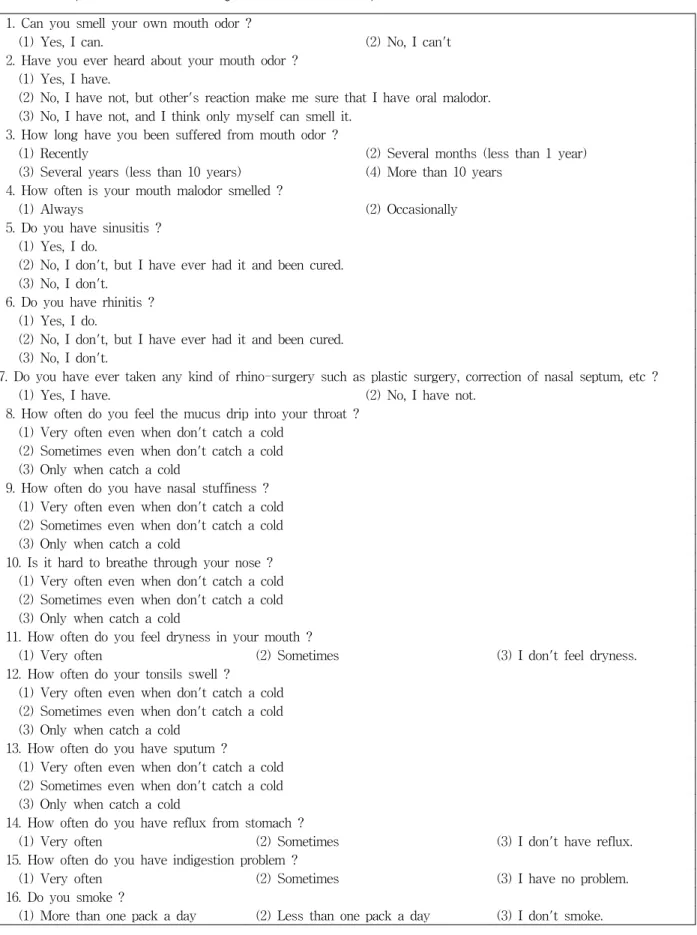
The questionnaire(Table 1) was used to
determine what kind of factors the patients had.
Table 1. The questionnaire used for investigation of factors which the patients have 1. Can you smell your own mouth odor ?
(1) Yes, I can. (2) No, I can't
2. Have you ever heard about your mouth odor ? (1) Yes, I have.
(2) No, I have not, but other's reaction make me sure that I have oral malodor.
(3) No, I have not, and I think only myself can smell it.
3. How long have you been suffered from mouth odor ?
(1) Recently (2) Several months (less than 1 year)
(3) Several years (less than 10 years) (4) More than 10 years 4. How often is your mouth malodor smelled ?
(1) Always (2) Occasionally
5. Do you have sinusitis ? (1) Yes, I do.
(2) No, I don't, but I have ever had it and been cured.
(3) No, I don't.
6. Do you have rhinitis ? (1) Yes, I do.
(2) No, I don't, but I have ever had it and been cured.
(3) No, I don't.
7. Do you have ever taken any kind of rhino-surgery such as plastic surgery, correction of nasal septum, etc ?
(1) Yes, I have. (2) No, I have not.
8. How often do you feel the mucus drip into your throat ? (1) Very often even when don't catch a cold
(2) Sometimes even when don't catch a cold (3) Only when catch a cold
9. How often do you have nasal stuffiness ? (1) Very often even when don't catch a cold (2) Sometimes even when don't catch a cold (3) Only when catch a cold
10. Is it hard to breathe through your nose ? (1) Very often even when don't catch a cold (2) Sometimes even when don't catch a cold (3) Only when catch a cold
11. How often do you feel dryness in your mouth ?
(1) Very often (2) Sometimes (3) I don't feel dryness.
12. How often do your tonsils swell ?
(1) Very often even when don't catch a cold (2) Sometimes even when don't catch a cold (3) Only when catch a cold
13. How often do you have sputum ?
(1) Very often even when don't catch a cold (2) Sometimes even when don't catch a cold (3) Only when catch a cold
14. How often do you have reflux from stomach ?
(1) Very often (2) Sometimes (3) I don't have reflux.
15. How often do you have indigestion problem ?
(1) Very often (2) Sometimes (3) I have no problem.
16. Do you smoke ?
(1) More than one pack a day (2) Less than one pack a day (3) I don't smoke.
5. Oral malodor treatment and determination of satisfaction level of treatment outcome
After routine intra-oral examination, measure- ment of intra-oral VSC and personality tests, we interviewed the patients with the questionnaire.
Treatment including tongue cleaning, instruction of plaque control, use of dental floss, and use of 0.25
% zinc chloride mouthwash was done. After 2 weeks, patients were recalled and asked how much percent of their oral malodor they feel improved comparing with the condition before treatment.
Objective improvement rate was determined by the reduction of the intra-oral VSC level in percentage.
6. Statistical analysis
Parameters were compared by independent- sample t test and one-way analysis of variance (ANOVA) with Duncan's post hoc test. The relationship between the satisfaction level and the objective improvement rate was analysed by Pearson correlation test.
Table 2. The difference of the satisfaction level according to the self consciousness
Can you smell your own breath ? Satisfaction level (%) mean ± SD
Significance between groups
1. Yes, I can. (n=166) 47.0 ± 28.4
p = 0.426
2. No, I can't. (n=28) 41.8 ± 32.1
Total (n=194) 46.2 ± 29.0
Table 3. The difference of the satisfaction level according to the recognition by others
Have you ever heard about your mouth odor ? Satisfaction level (%)
mean ± SD ANOVA Significance between
groups
1. Yes, I have. (n=150) 48.1 ± 28.5
p = 0.209 2. No, but I'm sure from other's reaction. (n=40) 41.3 ± 30.7
3. No, and I think only I can smell. (n=4) 26.7 ± 25.2
Total (n=194) 46.2 ± 29.0
Ⅲ. RESULTS
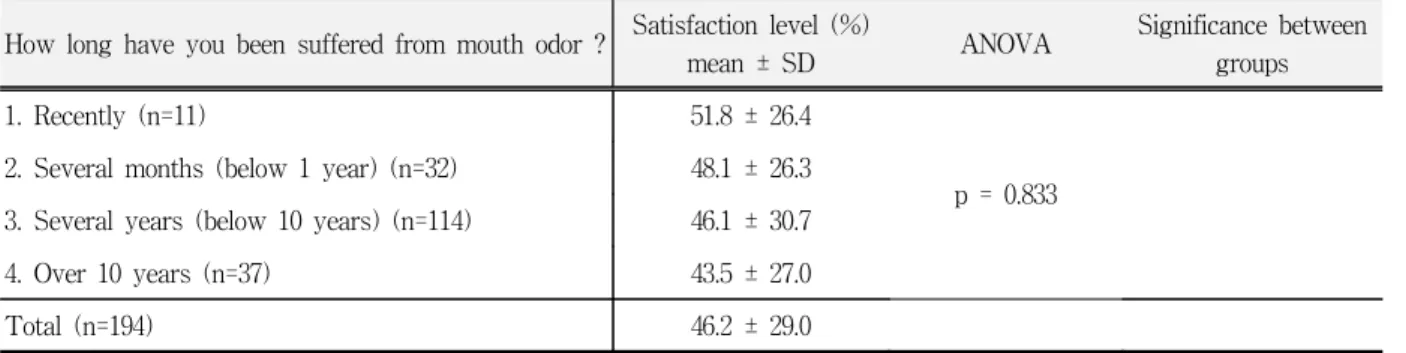
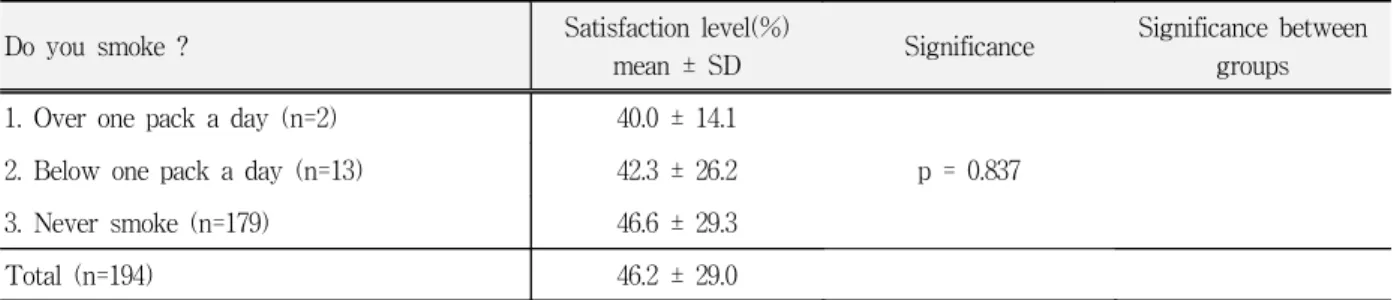
The relationship between each factor and patient's satisfaction level of the treatment outcome is shown from Table 2 to Table 17. From the results of the statistical analysis, self-consciousness(Table 2) and recognition by others(Table 3), period of symptom(Table 4), sinusitis(Table 6), rhinitis(Table 7), rhino-surgery(Table 8), and post-nasal drip did not exhibit any significant relationships with the satisfaction level.
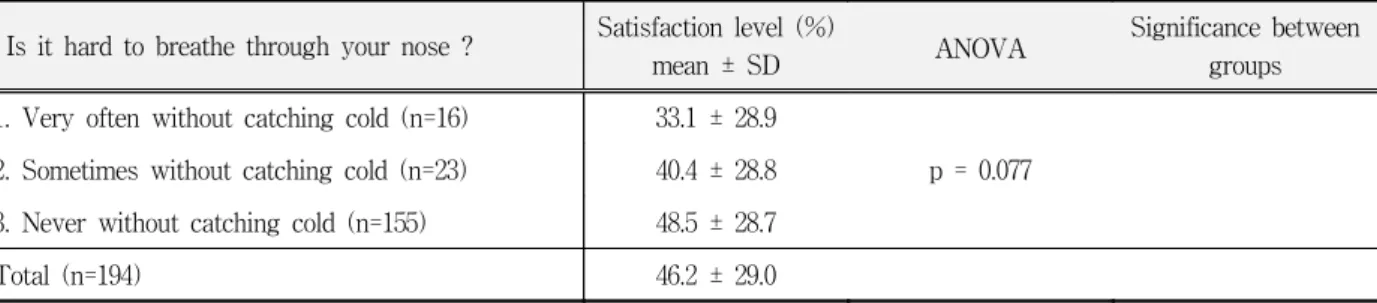
Frequency of symptom(Table 5), nasal stuffiness (Table 10), difficulty of nasal breathing(Table 11) were, though it could not be mentioned statistically(p=0.057, 0.064, and 0.077 respectively) likely to be related to the satisfaction level.
Furthermore, in the case of the nasal stuffiness, the people who answered they had nasal stuffiness without catching cold showed significantly lower satisfaction level than the people who answered sometimes or never(p<0.05).
Oral dryness(Table 12), tonsillar swelling(Table
13), and sputum(Table 14) had statistically significant
Table 4. The difference of the satisfaction level according to the period of symptom
How long have you been suffered from mouth odor ? Satisfaction level (%)
mean ± SD ANOVA Significance between
groups
1. Recently (n=11) 51.8 ± 26.4
p = 0.833 2. Several months (below 1 year) (n=32) 48.1 ± 26.3
3. Several years (below 10 years) (n=114) 46.1 ± 30.7
4. Over 10 years (n=37) 43.5 ± 27.0
Total (n=194) 46.2 ± 29.0
Table 5. The difference of the satisfaction level according to the frequency of symptom
How often is your mouth malodor smelled ? Satisfaction level (%) mean ± SD
Significance between groups
1. Always (n=143) 43.7 ± 27.6
p = 0.057
2. Occasionally (n=51) 53.3 ± 31.6
Total (n=194) 46.2 ± 29.0
Table 6. The difference of the satisfaction level according to the clinical history of sinusitis
Do you have sinusitis ? Satisfaction level (%)
mean ± SD ANOVA Significance between
groups
1. Yes, I do. (n=13) 38.3 ± 30.4
p = 0.336 2. No, but I have ever had and been cured. (n=14) 55.4 ± 32.3
3. No, I don't. (n=167) 45.9 ± 28.7
Total (n=194) 46.2 ± 29.0
Table 7. The difference of the satisfaction level according to the clinical history of rhinitis
Do you have rhinitis ? Satisfaction level (%)
mean ± SD ANOVA Significance between
groups
1. Yes, I do. (n=13) 39.0 ± 29.1
2. No, but I have ever had and been cured. (n=14) 51.1 ± 23.1 p = 0.279
3. No, I don't. (n=167) 47.4 ± 29.5
Total (n=194) 46.2 ± 29.0
Table 8. The difference of the satisfaction level according to the clinical history of rhino-surgery Do you have ever taken any kind of rhino-surgery such as plastic
surgery, correction of nasal septum, etc ?
Satisfaction level (%) mean ± SD
Significance between groups
1. Yes, I have. (n=11) 40.9 ± 32.4
p = 0.583
2. No, I have not. (n=183) 46.6 ± 28.8
Total (n=194) 46.2 ± 29.0
Table 9. The difference of the satisfaction level according to post nasal drip
How often do you feel the mucus drip into your throat ? Satisfaction level (%)
mean ± SD ANOVA Significance between
groups 1. Very often without catching cold (n=29) 40.3 ± 31.0
2. Sometimes without catching cold (n=43) 44.4 ± 27.4 p = 0.374 3. Never without catching cold (n=122) 48.3 ± 29.0
Total (n=194) 46.2 ± 29.0
Table 10. The difference of the satisfaction level according to nasal stuffiness
How often do you have nasal stuffiness ? Satisfaction level (%)
mean ± SD ANOVA Significance between
groups 1. Very often without catching cold (n=17) 30.6 ± 26.3
p = 0.064 (1,2)*
(1,3)* 2. Sometimes without catching cold (n=47) 47.0 ± 25.2
3. Never without catching cold (n=130) 48.0 ± 30.1
Total (n=194) 46.2 ± 29.0
*: p<0.05
Table 11. The difference of the satisfaction level according to difficulty to breathe though nose
Is it hard to breathe through your nose ? Satisfaction level (%)
mean ± SD ANOVA Significance between
groups 1. Very often without catching cold (n=16) 33.1 ± 28.9
2. Sometimes without catching cold (n=23) 40.4 ± 28.8 p = 0.077 3. Never without catching cold (n=155) 48.5 ± 28.7
Total (n=194) 46.2 ± 29.0
Table 12. The difference of the satisfaction level according to oral dryness
How often do you feel dryness in your mouth ? Mean of
Satisfaction level(%) ANOVA Significance between groups
1. Very often (n=71) 40.1 ± 28.4
p = 0.016 (1,3)*
(2,3)*
2. Sometimes (n=89) 46.5 ± 27.8
3. I don't feel dryness. (n=34) 57.8 ± 31.1
Total (n=194) 46.2 ± 29.0
*: p<0.05
Table 13. The difference of the satisfaction level according to tonsillar swelling
How often does your tonsils swell ? Satisfaction level(%)
mean ± SD ANOVA Significance between
groups 1. Very often without catching cold (n=13) 31.8 ± 23.2
p=0.018 2. Sometimes without catching cold (n=23) 34.3 ± 28.3
3. Never without catching cold (n=158) 49.0 ± 29.0
Total (n=194) 46.2 ± 29.0
Table 14. The difference of the satisfaction level according to sputum
How often do you have sputum ? Satisfaction level (%)
mean ± SD ANOVA Significance between
groups 1. Very often without catching cold (n=37) 35.8 ± 27.9
p = 0.033 (1,3)*
2. Sometimes without catching cold (n=49) 45.3 ± 26.9 3. Never without catching cold (n=108) 50.3 ± 29.6
Total (n=194) 46.2 ± 29.0
*: p<0.05
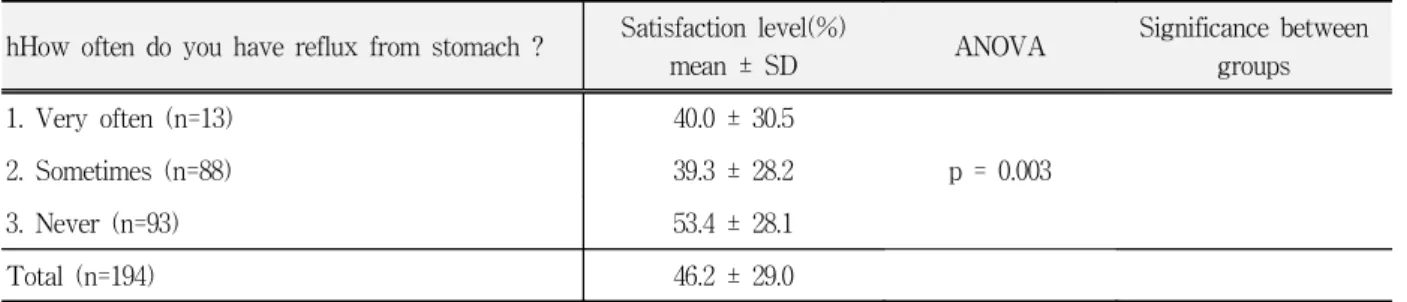
Table 15. The difference of the satisfaction level according to reflux from stomach
hHow often do you have reflux from stomach ? Satisfaction level(%)
mean ± SD ANOVA Significance between
groups
1. Very often (n=13) 40.0 ± 30.5
p = 0.003
2. Sometimes (n=88) 39.3 ± 28.2
3. Never (n=93) 53.4 ± 28.1
Total (n=194) 46.2 ± 29.0
relationship with the satisfaction level(p<0.05).
Table 12 shows additionally the people who answered they never feel dryness showed significantly higher satisfaction level than who answered sometimes or very often and Table 14 shows the people who answered they never have
stputum without catching cold showed significantly higher satisfaction level than who answered very often(p<0.05).
Reflux from stomach(Table 15) and indigestion problem(Table 16) had statistically very significant relationship with the satisfaction level(p<0.01).
Table 16. The difference of the satisfaction level according to indigestion problem
How often do you have indigestion problem ? Satisfaction level(%)
mean ± SD ANOVA Significance between
groups
1. Very often (n=23) 43.5 ± 30.2
p = 0.007 (1,3)*
2. Sometimes (n=78) 39.1 ± 28.0
3. Never (n=93) 52.9 ± 28.2
Total (n=194) 46.2 ± 29.0
*: p<0.05
Table 17. The difference of the satisfaction level according to smoking
Do you smoke ? Satisfaction level(%)
mean ± SD Significance Significance between
groups 1. Over one pack a day (n=2) 40.0 ± 14.1
p = 0.837 2. Below one pack a day (n=13) 42.3 ± 26.2
3. Never smoke (n=179) 46.6 ± 29.3
Total (n=194) 46.2 ± 29.0
Table 18. The correlation between the satisfaction level and the objective improvement of intra-oral VSC level (n=194)
Pearson correlation Significance
Satisfaction level (%) 46.2 ± 29.0
r = 0.092 p = 0.201
Objective improvement (%) 61.6 ± 32.2
Table 19. The difference of the satisfaction level according to the t-score of SCL-90R
Satisfaction level(%) Significance Patients showing over 60 t-score in any one of parameter (n=137) 47.4 ± 27.4
p = 0.071 Patients showing below 60 t-score in all parameters (n=41) 37.3 ± 31.9
Total (n=178)
Table 16 shows additionally the people who answered they never have indigestion problem showed significantly higher satisfaction level than who answered very often(p<0.05).
We examined the correlation between satisfaction level and the objective improvement of intra-oral VSC level by Pearson correlation(Table 18) and found that there was no statistically significant correlation.
The patients were divided two groups by SCL-90R profiles. We compared two groups and obtained the result that the group showing over 60t-score in any one of parameters of SCL-90R(Table 19), though it could not be mentioned statistically(p=0.071), was likely to have lower satisfaction level than the other group.
Ⅳ. DISCUSSION
Although there have been lots of studies to describe the oral- and non-oral factors which are generally accepted to be able to cause oral malodor,
15-20)
little is known about how such factors can clinically affect the subjective symptom of oral malodor. The present study was performed to investigate the clinical influences of such factors on the satisfaction level of treatment outcome of oral malodor.
The results demonstrated that reflux from stomach, indigestion problem, oral dryness, tonsillar swelling, and sputum were significantly associated with the satisfaction level of treatment outcome of oral malodor. Frequency of symptom, nasal stuffiness, and difficulty of nasal breathing were found to be associated, though it could not be mentioned statistically, with the satisfaction level.
On the other hand, we could see that patients' satisfaction level had no correlation with the objective improvement of intra-oral VSC level.
Whether gastrointestinal(GI) disorders or hemorrhages at any level of the GI tract produce halitosis remains controversial,
27,28)since there is segmentation of the GI tract through esophageal closure.
15,29)However, if the ability of the esophagus
to close is inhibited or weakened (as in esophageal reflux, pyloric stenosis or hiatal hernia), the potential for GI odors to escape via the oral cavity does exist.
17,27)The significant association of the reflux from the stomach and indigestion problem with the satisfaction level shown in the present study suggests that the patients' belief that the GI trouble may be related to oral malodor can make their complain of oral malodor persistent, though oral malodor is objectively improved.
Xerostomia, or dry mouth, is generally accepted as one of major contributing factors to oral malodor.
15,29)Reduced salivary flow facilitates the accumulation of the plaque , increase of salivary pH, and gram-negative anaerobic bacterial activity, resulting in odor production by release of VSC.
3,7)Oral dryness can occur from a number of causes including local salivary gland disease, systemic pathology, mouth breathing, neuromuscular disorder, dehydration, vitamin deficiencies, menopause, emo- tional disturbances, chemotherapy, radiation therapy, or drug administration.
27,29,30)The data suggest that if the patients feel dryness in their oral cavity, it can aggravate the subjective symptom of oral malodor.
It has been well described that nasal and respiratory problems including sinusitis, rhinitis, tonsillitis, bronchitis and mouth breathing are related to the oral malodor.
15,17,18)Any condition that alters the mucus secretion of the nose, such as atrophic rhinitis or rhinitis medicamentosa, can contribute to bacterial overgrowth and maldodorous breath. Chronic sinusitis, unilateral choanal atresia, nasal foreign body and nasal tumors may also be causative conditions of oral malodor.
31,32)In the present study, sinusitis, rhinitis, and history of rhino-surgery were not associated with the satisfaction level, otherwise, the post nasal drip and difficulty of nasal breathing were tend to be associated and tonsillar swelling and sputum were significantly associated with the satisfaction level.
This findings indicated that any of nasal or
respiratory problems which can change the feeling
of patients' oral cavity are able to affect the
self-estimation of oral malodor, worsening the
prognosis of treatment.
Comparing the satisfaction level of two patient groups divided by SCL-90R profiles, we could find that the satisfaction level of the patients showing over 60 t-score in any one of parameters of SCL-90R was tend to be lower, though it could not be mentioned statistically. This result indicates that psychological evaluation of the patients is essential in the diagnosis procedures of oral malodor and the referral of the patients with psychosomatic oral malodor to the specialists is recommended as described in the previous studies on the psychosomatic aspect of oral malodor.
21-23)In the present study, what kind of factors the patients have was stated by patients themselves through the questionnaire. This means the factors the patients believed to have might not be identified by medical or dental examination but the subjective symptoms the patients sensed. The poor relationship between the satisfaction level and the objective improvement of intra-oral VSC level reflects the subjectiveness of self-estimation of the oral malodor. These suggest that the satisfaction level of treatment can be easily affected by such variety of patient's own subjective oral- or non-oral factors.
In summary, the patients' satisfaction level of treatment outcome of oral malodor is so subjective that it has no significant association with the objective improvement of oral malodor and it is noteworthy that if the patient is turned out to have any of such factors that were found to be able to affect the satisfaction level in the present study, it must be taken into consideration that his or her satisfaction level could be lower, that is, the treatment might be unsuccessful independently from the objective improvement of symptom.
V. CONCLUSIONS
The main purpose of the present study was to determine whether any factors that are believed to be related to oral malodor can affect the satisfaction level of the outcome of the usual treatment procedure for oral malodor including plaque control
instruction, tongue cleaning and rinse with mouthwash. The subjects included in the present study were 194 outpatients visiting the Dept. of Oral Diagnosis, Seoul National University Dental Hospital with primary complaining of oral malodor.
We investigated factors the patients had with the questionnaire. The factors included were 1) Self- consciousness, 2) Recognition by others, 3) Period of symptom, 4) Frequency of symptom, 5) Sinusitis, 6) Rhinitis, 7) Rhino-surgery, 8) Post-nasal drip, 9) Nasal stuffiness, 10) Difficulty to nasal breathing, 11) Oral dryness, 12) Tonsillar swelling, 13) Sputum, 14) Reflux from stomach, 15) Indigestion problem, 16) Smoking. Patient's inra-oral volatile sulfur compound(VSC) level was measured by Halimeter
®(Interscan Co., Chatsworth, CA, USA), a portable sulfide monitor. We statistically analysed the relationship between each factor and patient's satisfaction level of treatment outcome of oral malodor and the correlation between the satisfaction level and objective improvement of intra-oral VSC level after treatment. The difference of the satisfaction level according to the patients' personality profiles was investigated as well.
The obtained results were as follows :
1. Self-consciousness, recognition by others, frequ- ency of symptom, period of symptom, sinusitis, rhinitis, history of rhino-surgery, nasal stuffiness, difficulty to breathe through nose, post-nasal drip, and smoking had no significant relationship with the satisfaction level of treatment outcome of oral malodor.
2. The reflux from stomach(p=0.003) and indige- stion problem(p=0.007), oral dryness (p=0.016), tonsillar swelling(p=0.018), and sputum(p=0.033) had statistically significant relationship with the satisfaction level of treatment outcome of oral malodor.
3. There was no statistically significant correlation
between the satisfaction level and the objective
improvement of intra-oral VSC level(r=0.092,
p=0.201).
REFERENCES
1. Spouge, J.D. : Halitosis: A review of its causes and treatment. Dent. Pract., 14:307-759, 1964.
2. Tonzetich, J. and Richter, V.J. : Evaluation of volatile odoriferous components of saliva. Archs. Oral Biol., 9:39-40, 1964.
3. Tonzetich, J. : Production and origin of oral malodor:
A review of mechanisms and methods of analysis. J.
Periodontol., 48:13-20, 1977.
4. Tonzetich, J. and Johnson, P. W. : Chemical analysis of thiol, disulphide and total sulphur content of human saliva. Archs. Oral Biol., 22:125-131, 1977.
5. Schmidt, N. F. and Tarbet, W. J. : The effect of oral rinses on oragnoleptic mouth odor ratings and levels of volatile sulfur compounds. Oral Surg., 45(6):876-883, 1978.
6. Tonzetich, J. and Kestenbaum. R.C. : Odour production by human salivary fractions and plaque.
Archs. Oral Biol., 14:815-827, 1969.
7. Kleinberg, I. And Westbay, G. : Salivary and metabolic factors involved in oral malodor formation.
J. Periodontol., 63:768-775, 1992.
8. Yaegaki, K. and Sanada, K. : Biochemical and clinical factors influencing oral malodor in periodontal patients. J. Periodontol., 63:783-789, 1992.
9. Boever, E.H. and Loesche, W.J. : Assessing the contribution of anaerobic microflora of the tongue to oral malodor. J. Am. Dent. Assoc., 126:1384-1393, 1995.
10. Wäler, S.M. : On the transformation of sulfur- containing amino acids and peptides to volatile sulfur compounds (vsc) in the human mouth. Eur. J. Oral Sci., 105:534-537, 1997.
11. Rosenberg, M., Kulkarni, G.V., Bosy, A., and Mcculloch, C.A.G. : Reproducibility and sensitivity of oral malodor measurements with a portable sulphide monitor. J. Dent. Res., 70(11):1436-1440, 1991.
12. Tessier, J.F. and Kulkarni, G.V. : Bad breath; etiology, diagnosis and treatment. Oral Health, 81(10):19-24, 1991.
13. Rosenberg, M. and McCulloch, A.G. : Measurement of oral malodor: current methods and future prospects.
J. Periodontol., 63:776-782, 1992.
14. Scully, C., El-Maaytah, M., Porter, S.R., and Greenman, J. : Breath odor: Etiopathogenesis and assessment. Eur. J. Oral Sci., 105:287-293, 1997.
15. Attia, E.L. and Marshall, K.G. : Halitosis. Can. Med.
Assoc. J., 126(11):1281-1285, 1982.
16. Preti, G., Clark, L., Cowart, B.J., Feldman, R.S., Lowry, L.D., Weber, E., and Young, I.M. : Non-oral etiologies of oral malodor and altered chemosensation.
J. Periodontol., 63(9):790-796, 1992.
17. Durham, T.M, Malloy, T., and Hodges, E.D. : Halitosis: Knowing when 'bad breath' signals systemic disease. Geriatrics, 48(8):55-59, 1993.
18. Replogle, W.H. and Beebe, D.K. : Halitosis. Am. Fam.
Physician, 53(4):1215-1218, 1996.
19. Delanghe, G., Ghyselen, J., Steenberghe, D.,and Feenstra L. : Multidisciplinary breath-odour clinic.
Lancet, 19;350(9072):187, 1997.
20. Ben-Aryeh, H., Horowitz, G., Nir, D., and Laufer, D.
: Halitosis: an interdisciplinary approach. Am. J.
Otolaryngol., 19(1):8-11, 1998.
21. Hawkins, C. : Real and imaginary halitosis. Br. Med.
J., 294:200-201, 1987.
22. Iwu, C.O. and Akpata, O. : Delusional halitosis.
Review of the literature and analysis of 32 cases. Br.
Dent. J., 73:1568-1574, 1990.
23. Yaegaki, K. and Coil, J.M. : Clinical dilemmas posed by patients with psychosomatic halitosis.
Quintessence Int., 30(5):328-333, 1999.
24. Rosenberg, M., Kozlovsky, A., Gelernter, I., Cherniak, O. Gabbay, J., Batht, R. and Eli, I. : Self-estimation of oral malodor. J. Dent. Res., 74(9):1577-1582, 1995.
25. Rosenberg, M., Kulkarni, G.V., Bosy, A., and Mcculloch, C.A.G. : Reproducibility and sensitivity of oral malodor measurements with a portable sulphide monitor. J. Dent. Res., 70(11):1436-1440, 1991.
26. Derogatis, L.R., Lipman, R.S., and Covi, I. : SCL-90:
An outpatient psychiatric rating scale preliminary report. Psychopharmocol. Bull., 9:13-28, 1973.
27. Lu, D.P. : Halitosis: An etiologic classification, a treatment approach and prevention. Oral Surg. Oral Med. Oral Pathol., 54(5):521-526, 1982.
28. Sulser, G.F., Brening, R.H., and Fosdick, L.S. : Some conditions that affect the odor concentration of breath. J. Dent. Res., 18:355-359, 1939.
29. Bogdasarian, R.S. : Halitosis. Otolaryngol Clin. North Am., 19(1):111-116, 1982.
30. Sreebny, L.M. : Salivary flow in health and disease.
Compendium suppl., 13:S461-S469, 1982.
31. Jonsson, R. : Halitosis: a review. Can. Dent. Hyg., 19:52-54, 1985.
32. McDowell, J.D. and Kassebaum, D.K. : Diagnosing and treating halitosis. J. Am. Dent. Assoc., 124:55-64, 1993.