ISSN: 2233-601X (Print) ISSN: 2093-6516 (Online)
Received: November 6, 2016, Revised: November 24, 2016, Accepted: November 24, 2016, Published online: December 5, 2016
Corresponding author: Davide Pacini, Department of Cardiac Surgery, S. Orsola-Malpighi Hospital, University of Bologna—Alma Mater Studiorum, Via Massarenti n. 9, 40128 Bologna, Italy
(Tel) 39-51-2149053 (Fax) 39-051-345990 (E-mail) [email protected] Presented at the Bundang Aortic Surgery Symposium (BASS) in July, 2016 at Bundang, Korea
© The Korean Society for Thoracic and Cardiovascular Surgery. 2016. All right reserved.
This is an open access article distributed under the terms of the Creative Commons Attribution Non-Commercial License (http://creativecommons.org/
licenses/by-nc/4.0) which permits unrestricted non-commercial use, distribution, and reproduction in any medium, provided the original work is properly cited.
The Value and Limitations of Guidelines, Expert Consensus, and Registries on the Management of Patients with
Thoracic Aortic Disease
Davide Pacini, M.D., Ph.D., Giacomo Murana, M.D., Alessandro Leone, M.D., Luca Di Marco, M.D., Ph.D., Antonio Pantaleo, M.D.
Department of Cardiovascular Surgery, S. Orsola Hospital, Alma Mater Studiorum—University of Bologna
Doctors are often faced with difficult decisions and uncertainty when patients need a certain treatment. They routinely rely on the scientific literature, in addition to their knowledge, experience, and patient preferences.
Clinical practice guidelines are created with the intention of facilitating decision-making. They may offer con- cise instructions for the diagnosis, management (medical or surgical treatments), and prevention of specific diseases or conditions. All information included in the final v ersion are the result of a systematic rev iew of scientific articles and an assessment of the benefits and costs of alternative care options. The final document attempts to meet the needs of most patients in most circumstances and clinicians, aware of these recommen- dations, should always make individualized treatment decisions. In this review, we attempted to define the intent and applicability of clinical practice guidelines, expert consensus documents, and registry studies, focus- ing on the management of patients with thoracic aortic disease.
Key words: 1. Guidelines as topic 2. Consensus
3. Registries
4. Evidence-based practice 5. Aorta
Introduction
Over the past decade, clinical practice guidelines (CG) have increasingly become a familiar part of medical practice. By creating objective standards, guidelines provide a mechanism to assess physician decision-mak- ing and provide a straightforward reference for clini- cians. As defined by the Institute of Medicine, guide- lines are “statements that include recommendations intended to optimize patient care that are informed
by a systematic review of the evidence and an as- sessment of the benefits and harms of alternative care options” [1]. They may offer concise instructions on which diagnostic or screening tests to order, how and when to provide medical or surgical treatment, how long patients should stay in the hospital, or oth- er details of clinical practice.
Clinicians, policymakers, and payers see CG as a tool for making care more consistent and efficient and for closing the gap between what clinicians do https://doi.org/10.5090/kjtcs.2016.49.6.413
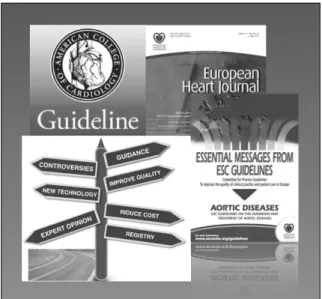
Fig. 1. Objectives of guidelines, expert consensus documents, and registry data.
and what scientific evidence supports. This article ex- amines the potential benefits and limitations of CG, expert consensus documents (ECDs), and registry studies, focusing on their applicability in the manage- ment of patients with thoracic aortic disease (Fig. 1).
Definition and role of clinical practice guidelines
The United States (US) Institute of Medicine de- fines guidelines as “systematically developed state- ments to assist practitioner and patient on appro- priate decisions for health care in specific clinical circumstances.”
These are instruments intended to reduce the gap between research and practice and should be based on the best available scientific evidence to improve the quality of patient care. Moreover, CG articulate the consensus of experts interpreting complex data in ways that streamline clinical decisions. However, they are insufficient for medical decision-making [2].
On one hand, decision-making in the absence of CG is vulnerable to cognitive errors on the part of physi- cians, and many clinical decisions could be better supported by point-of-care decision support tools than by guidelines. Moreover, all medical decisions both trade off certain patient preferences for others, and reflect gaps in medical knowledge. Considering
the data resources available in cardiology and cardiac surgery, the degree of uncertainty about these trade- offs is less than in other fields, but is still present.
These decisions are therefore amenable to sophisti- cated models that present risks, benefits, and un- certainties for the patients in ways that allow them to make tradeoffs. On the other hand, however, CG can contain conflicts and ignore certain tradeoffs, which may confuse providers and patients. Replacing CG with decision models that adequately present the complexity of the decision process would help pa- tients and providers to make better decisions.
The following section will outline the process of CG development in order to better understand the complex mechanism through which CG are created.
Developing clinic practice guidelines
The American College of Cardiology (ACC) and the American Heart Association (AHA) have jointly en- gaged in the production of guidelines in the area of cardiovascular disease since 1980. More recently, both the Society of Thoracic Surgeons and the American Association for Thoracic Surgery have es- tablished working groups and standards. Three prin- ciples are fundamentally required for the develop- ment of valid and usable guidelines.
The first is the creation of a multidisciplinary writ- ing group that accumulates and assesses all relevant published information on a topic. This group makes recommendations as to whether the data support the use or avoidance of a given therapy, basing these recommendations on the strength of the data [3,4].
The second is to identify and assess the evidence [4-6]. This usually necessitates a systematic review to collect all available evidence, assess its potential ap- plicability to the clinical question under consid- eration, inspect the evidence for susceptibility to bias, and extract and summarize the findings.
The third fundamental point is the translation of evidence into CG [4-6]. Opinions are used to inter- pret evidence and to derive recommendations. When available, information from studies on cost are also considered. The task force makes every effort to avoid potential or perceived conflicts of interest that may arise as a result of industry relationships or personal interests among the writing committee.
Currently, CG to provide recommendations for car-
Table 2. Description of the classes of recommendations used in clinical practice guidelines
Class of recomendation Description
Class I (strong): benefit>>>risk Is recommended/indicated
Procedure is beneficial, useful, and effective Evidence and/or general agreement Class IIA (moderate): benefit>>risk Should be considered
Procedure can be useful/effective/beneficial
It is reasonable to choose treatment A over treatment B
Conflicting evidence about the usefulness/efficacy of the given treatment or procedure Class IIB (weak): benefit≥risk May be considered
Effectiveness is unknown/unclear/uncertain
Conflicting evidence about the usefulness/efficacy of the given treatment or procedure Class III (no benefit): benefit=risk Is not recommended
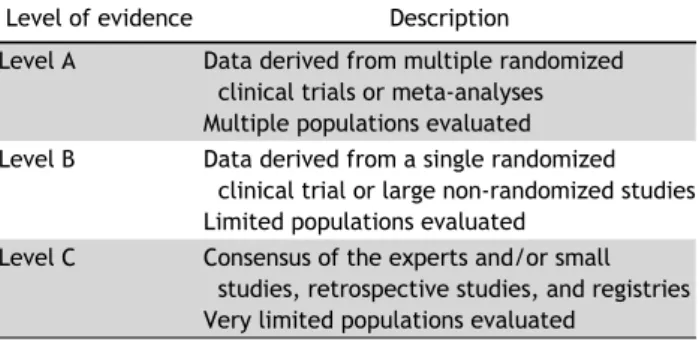
Procedure is not indicated/useful/beneficial/effective Table 1. Description of the common levels of evidence used in
clinical practice guidelines
Level of evidence Description
Level A Data derived from multiple randomized clinical trials or meta-analyses Multiple populations evaluated Level B Data derived from a single randomized
clinical trial or large non-randomized studies Limited populations evaluated
Level C Consensus of the experts and/or small studies, retrospective studies, and registries Very limited populations evaluated
diovascular disease are created in Northern America by the ACC together with the AHA and in Europe by the European Society of Cardiology with the Euro- pean Association of Cardiothoracic Surgery.
In guideline development, a grading scheme is used based on the level of evidence and class of recommendation. The classification of the level of evidence combines an objective description of the ex- istence and the types of studies supporting the rec- ommendation and expert consensus according to 3 categories (A, B, and C) (Table 1). The class of rec- ommendation designation indicates the strength of a recommendation and it requires by the authors to make a judgment about the relative strengths and weaknesses of the study data and to synthesize con- flicting findings among multiple studies [7].
The definitions of the 3 class of recommendation (Table 2) are as follows: (1) class I: conditions for which there is evidence and/or general agreement that a given procedure or treatment is useful and ef- fective; (2) class II: conditions for which there is
conflicting evidence and/or a divergence of opinion about the usefulness/efficacy of a procedure or treat- ment; (3) class IIA: weight of evidence/opinion is in favor of usefulness/efficacy; (4) class IIB: usefulness/
efficacy is less well established by evidence/opinion;
and (5) class III: conditions for which there is evi- dence and/or general agreement that the procedure/
treatment is not useful/effective and in some cases may be harmful.
At the end of the process, all the recommendations require a confidential vote by the writing committee and are approved by the consensus of the voting members.
Value and use of guidelines
1) Benefits
The broad interest in CG has its origin in issues that most healthcare systems face, such as rising healthcare costs due to increased demand for care and more expensive technologies; variations in serv- ice delivery among providers and hospitals and the presumption that some of this variation derives from inappropriate care; and, most importantly, the goal of offering the best care possible. Therefore, clinicians, as well as policymakers in the health system, see CG as a tool for making care more consistent and effi- cient and for closing the gap between what clinicians do and what scientific evidence supports.
The principal benefit of CG is to improve the qual- ity of care received by patients. Guidelines that pro- mote interventions proven to be beneficial and dis- courage ineffective ones have the potential to reduce morbidity and mortality and improve quality of life,
Table 3. Benefits and limitations of current types of scientific evidence available in the literature
Type of evidence Benefits Limitations
Clinical practice guidelines
Improve the quality of care received by patients Rigor of development
Readily available in different versions (full text, pocket, summary cards, etc.)
Multidisciplinary team approach
Describe the correct timing for surgical/medical procedures
Recommendations may be wrong
Are often based on low levels of evidence, especially in the cardiothoracic surgery field Influenced by the task force members Lack of information on new treatments
Expert consensus Updated on new treatment options Developed by experts in the specific topic Developed following a precise methology Content is expressed schematically
Less likely to include a systematic review of the literature
Developement is less rigorous than for guidelines The task force is not multidisciplinary
Registry Adaptable designs and data collection strategies Examine the impact of physician practice behaviors (not
randomized)
Include full spectrum of patients with a particular disease
Observational analysis Time-consuming Lower data quality
Confounders between different centers involved in the study
at least for some conditions.
Clinical guidelines can improve the quality of clin- ical decisions. They offer explicit recommendations for clinicians who are uncertain about how to pro- ceed, overturn the beliefs of doctors accustomed to outdated practices, improve the consistency of care, and provide authoritative recommendations that re- assure practitioners about the appropriateness of their treatment policies [8].
The timing for a specific surgical/medical proce- dure is another important matter, and CG are also extremely important to identify the correct timing in order to balance the risk and benefit for patients.
Moreover, the correct timing of the intervention may also influence the results of the procedure in cardiac surgery and especially in aortic surgery.
On one hand, late interventions can increase both intraoperative and postoperative morbidity and mor- tality, but on the other hand, in early operations or preventive surgery, the risk of the procedure can overwhelm the benefit.
Evidence-based guidelines clarify which interven- tions are of proven benefit and document the quality of the supporting data. They represent an alert for clinicians about interventions that are not supported by adequate scientific data, and reinforce the im- portance and methods of critical appraisal. Moreover, the implementation of certain CG reduces outlays for hospitalization, prescription drugs, surgery, and other procedures [9].
2) Limitations
Guidelines have potential limitations (Table 3). The most important issue is that the recommendations may be incorrect for individual patients. Additionally, recommendations that do not take adequate account of the evidence can result in suboptimal, ineffective, or harmful practices. Recommendations may be wrong for 3 main reasons:
First, scientific evidence about what to recommend is often lacking, misleading, or misinterpreted. Only a small subset of what is done in medicine has been tested in appropriate, well-designed studies.
For example the ACC/AHA CG have progressively increased the number of recommendations over the years (from 1330 to 1973 between 1998 and 2008), but these recommendations largely reflect a lower certainty of evidence [7]. Furthermore, in the current CG, the level of evidence C (indicating recommenda- tions based solely on expert opinion, case studies, or standard of care) is the most frequent designation.
The median percentage recommendations supported by evidence of level A is only 11% across current guidelines, indicating little to no objective empirical evidence for most recommended actions [7]. In par- ticular, for valvular heart disease, 70.6% of CG are based on evidence of level C [7].
Second, recommendations are influenced by the opinions, clinical experience, and composition of the group that develops the CG. The beliefs to which ex- perts subscribe, often in the face of conflicting data, can be based on misconceptions and personal recol- lections that misrepresent population norms [10].
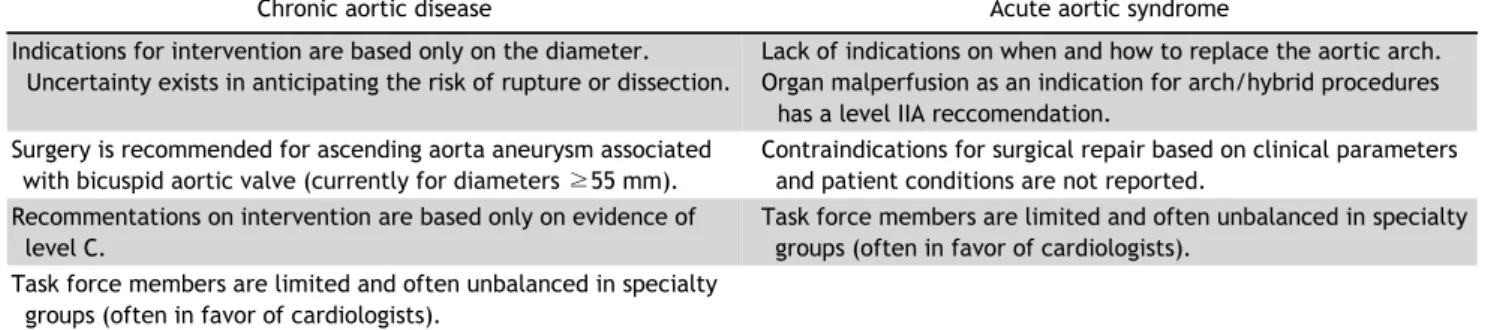
Table 4. Current controversies in the current clinical practice guidelines for thoracic aortic disease
Chronic aortic disease Acute aortic syndrome
Indications for intervention are based only on the diameter.
Uncertainty exists in anticipating the risk of rupture or dissection.
Lack of indications on when and how to replace the aortic arch.
Organ malperfusion as an indication for arch/hybrid procedures has a level IIA reccomendation.
Surgery is recommended for ascending aorta aneurysm associated with bicuspid aortic valve (currently for diameters ≥55 mm).
Contraindications for surgical repair based on clinical parameters and patient conditions are not reported.
Recommentations on intervention are based only on evidence of level C.
Task force members are limited and often unbalanced in specialty groups (often in favor of cardiologists).
Task force members are limited and often unbalanced in specialty groups (often in favor of cardiologists).
Third, patients’ needs may not be the only priority in making recommendations. Practices that are sub- optimal from the patient’s perspective may be recom- mended to help control costs, serve societal needs, or protect special interests.
Another limitation is the lack on guidelines for newly available treatments or devices. This is the reason why they often need to be revised.
Imperfect CG may encourage ineffective, dangerous, or wasteful interventions. Even when CG are correct, clinicians often find them inconvenient and time con- suming to use.
The value of expert consensus and registries
In addition to guidelines, other tools exist to help clinicians in the decision-making process. ECDs and registries are needed to verify that daily practice cor- responds with what is recommended in the CG, thus completing the loop between clinical research, writ- ing of guidelines, disseminating them, and implemen- ting them into clinical practice.
ECDs represents the collective opinions of an ex- pert panel on a specific topic relevant for evolving areas of clinical practice and/or technologies that are widely available or new to common practice. Thus, the reader should use an ECD to inform and guide clin- ical practice in areas where rigorous evidence is still not available or is not widely accepted. When fea- sible, ECDs include indications or contraindications.
Normally, formal recommendations are not provided in ECDs, as these documents do not formally classify the quality of evidence, as usually occurs in the CG.
Although consensus statements address topics in which the evidence base is less extensive compared
to CG, their development should still be methodologi- cally rigorous and transparent [11].
The task force makes every effort to avoid any ac- tual or potential conflicts of interest that might arise as a result of a personal interest. Specifically, all members of the writing panel are asked to provide disclosure statements of all such relationships that might be perceived as real or potential conflicts of interest.
Current examples of areas covered by ECDs in the cardiovascular field include the management of aortic arch disease using the frozen elephant trunk techni- que and the use of new technologies, such as trans- catheter aortic valve implantation or sutureless pros- thesis for the aortic valve disease, before CG were available on these topics.
Another powerful tool to help clinicians during clinical practice are registry studies. A registry is de- fined as “an organized system that uses observational study methods to collect uniform data (clinical and other) to evaluate specified outcomes for a population defined by a particular disease, condition or exposure, and that serves one or more predetermined scien- tific, clinical, or policy purposes” [12].
Registries that enroll patients with a specific dis- ease or who have received a particular treatment are an important source of data for patient-centered out- comes research [13]. The benefits of registries in- clude the measurement of performance criteria, de- terminations of guideline adherence, estimation of compliance with appropriate use criteria, and the measurement of safety and outcomes [14]. A major advantage of registries is the ability to include the entire spectrum of the patient population with a par- ticular disease, including patients with many comor- bidities, who are underrepresented in trials. In other
Fig. 2. Five-year follow-up images of a patient with an aortic root aneurysm associated with a bicuspid aortic valve.
words, they provide data on what we are actually doing in everyday practice.
Along with the positive attributes associated with observational registries, they also have shortcomings.
Providing all required information is time-consuming, considering that the data are manually extracted and validated by data managers and study coordinators.
Another problem is that they frequently may have some missing data, which are difficult or impossible to obtain due to the retrospective nature of registries.
Finally, is not possible to maintain the same rigorous methodology that is applied to CGs and ECDs be- cause too much data from many different centers are collected and analyzed over a long period of time.
The underreporting of adverse events or missing da- ta is a concern. Although the quality of registry data has been studied, accurate data can only be obtained by careful and meticulous data cleaning and verification [15].
Applicability of current guidelines, expert consensus, and registries in the management of thoracic aortic disease
For cardiac surgery, CGs usually provides a rapid response according to the latest high-level clinical evidence, based on thoughtful consideration by lead- ing experts in the field. Thoracic aortic diseases have the particular feature of usually being asymptomatic and not easily detectable until an acute and often catastrophic complication occurs. For this reason, over the last years, there has been growing interest and knowledge concerning the natural history of these pathologies. Moreover, the possibility of using less in-
vasive endovascular procedures along with more ac- curate imaging technologies has completely revolu- tionized the therapeutic approach to these conditions.
Such considerations have enhanced the complexity of clinical decision-making and stimulated debates re- garding the best management of aortic disease.
The general considerations regarding the benefits and drawbacks of CG presented above are applicable for the joint document on thoracic aortic diseases (Table 4). For instance, the American guidelines on valvular heart disease were composed by only 12 members and the European guidelines on aortic dis- ease by 20 members, only 5 of whom were surgeons [16,17]. Taking this into consideration, is evident that these CGs can be considered to have resulted from an unbalanced working group, especially from a mul- tidisciplinary point of view. Currently, CGs on thora- cic aortic diseases are still debated in the manage- ment of acute and chronic pathologies.
In acute aortic syndrome (AAS), pathologies involv- ing the ascending aorta, such as acute type A dis- section or intramural hematoma, require urgent sur- gery of the ascending aorta (and possibly the aortic root) and partial arch replacement (IB) [16]. However, the management of the aortic arch in this pathology is still under debate; no complete consensus yet ex- ists in the cardiothoracic surgery community regard- ing the best management of the aortic arch in AAS.
Some surgeons advocate a more conservative tear-or- iented approach (hemiarch replacement) to reduce postoperative mortality and morbidity [18]. However, other authors support a more aggressive approach for AAS, mainly consisting of total arch replacement with or without the use of the frozen elephant trunk or classic elephant trunk technique [19-22].
Moreover, a distal arch entry site, enlargement of the aortic arch, and true lumen compression are still not discussed in the CG as clear indications for sur- gery of the aortic arch in AAS, which may be consid- ered a deficency. Organ malperfusion is the only con- dition where consensus exists regarding arch threat- ment or the use of hybrid procedures (level of re- ccomendation IIA).
In chronic aortic pathology, more controversies and conflicts exist among the current CGs. For in- stance, the recent ACC/AHA CG for the management of valvular heart disease contain a class 1 (level of evidence B) recommendation for operative repair of
a dilated ascending aorta of 5.5 cm or greater if as- sociated with a bicuspid aortic valve [17]. In con- trast, in 2010, the ACC/AHA joint CG for thoracic aortic disease recommended elective aortic repair for patients with bicuspid aortic valve when the diame- ter of the aorta is between 4. 0 and 5. 0 cm (class 1, level of evidence C) [23]. In 2016, to clarify those controversies, the same societies published a clar- ification statement entitled “Surgery for aortic dilata- tion in patients with bicuspid aortic valves” as an ad- dendum to both the valvular and thoracic aortic CGs [24]. Similar limitations are also evident in the latest European CG on the diagnosis and treatment of aort- ic diseases where not even a single class of recom- mendation was supported by evidence of level A or B [16].
Such controversies in CGs still exist due to the un- predictability of aortic rupture, which is predicted only using the diameter of the aortic aneurysm (Fig. 2).
Indeed, it is impossible to know the dimensions of all individuals with aortic aneurysmal disease, and it is also the case that a large number of patients who experience aortic dissection have an aortic diameter less then 55 mm.
The International Registry of Acute Aortic Dissection enrolls patients who have acute aortic dissection and has demonstrated that dissection can occur at aortic diameters below the traditional threshold of 5.5 cm [25]. The challenge, however, is that we cannot cal- culate the risk for dissection according to the aortic diameter. We know that other risk factors for aortic dissection could be involved in the pathogenesis, and also know that other potential unknown factors are involved too, but they cannot be considered in the CGs [23].
The challenge in everyday clinical practice is to an- alyze individual patient characteristics along with the aortic diameter (as stated in the CGs) prior to mak- ing the final judgment on surgical or conservative interventions.
Conclusion
We hope that this document will stimulate further discussion and research, especially with regard to de- signing and conducting randomized trials that move the field forward, allowing the development of firmer recommendations.
As a tool, CGs summarize the state of our knowl- edge regarding a group of individuals who share a particular characteristic or finding with the ultimate aim of assisting clinicians in selecting the best man- agement strategy for the patients. The composition process of CGs is complex and has significant limi- tations, both procedural and relating to the available data. Our challenge as clinicians is to take care of the individuals who came to our attention. Efforts to im- prove the quality of care and outcomes of patients with thoracic aortic disease should focus on future research to overcome the current critical gaps in knowledge.
Conflict of interest
No potential conflict of interest relevant to this ar- ticle was reported.
References
1. Graham R, Mancher M, Wolman DM, et al. Clinical practice guidelines we can trust. Washington (DC): National Aca- demies Press; 2011.
2. Wasfy JH, Armstrong K, Milford CE, Sundt TM. Bicuspid aortic disease and decision making under uncertainty: the limitations of clinical guidelines. Int J Cardiol 2015;181:
169-71.
3. Sellke FW. Finding the truth in the guidelines and gospels.
J Thorac Cardiovasc Surg 2016;151:1474-5.
4. Shekelle PG, Woolf SH, Eccles M, Grimshaw J. Clinical guidelines: developing guidelines. BMJ 1999;318:593-6.
5. Eccles MP, Grimshaw JM, Shekelle P, Schunemann HJ, Woolf S. Developing clinical practice guidelines: target audiences, identifying topics for guidelines, guideline group composition and functioning and conflicts of interest. Implement Sci 2012;7:60.
6. Woolf S, Schunemann HJ, Eccles MP, Grimshaw JM, Shekelle P. Developing clinical practice guidelines: types of evidence and outcomes; values and economics, synthesis, grading, and presentation and deriving recommendations. Implement Sci 2012;7:61.
7. Tricoci P, Allen JM, Kramer JM, Califf RM, Smith SC Jr.
Scientific evidence underlying the ACC/AHA clinical practice guidelines. JAMA 2009;301:831-41.
8. Woolf SH, Grol R, Hutchinson A, Eccles M, Grimshaw J.
Clinical guidelines: potential benefits, limitations, and harms of clinical guidelines. BMJ 1999;318:527-30.
9. Shapiro DW, Lasker RD, Bindman AB, Lee PR. Containing costs while improving quality of care: the role of profiling and practice guidelines. Annu Rev Public Health 1993;14:
219-41.
10. Kane RL. Creating practice guidelines: the dangers of over-reliance on expert judgment. J Law Med Ethics 1995;23:62-4.
11. Mosby Inc. Mosby’s medical dictionary. 8th ed. St. Louis (MO): Mosby/Elsevier: 2009.
12. Gliklich RE, Dreyer NA. Registries for evaluating patient outcomes: a user’s guide. 2nd ed. Rockville (MD): Agency for Healthcare Research and Quality; 2010.
13. Dreyer NA, Garner S. Registries for robust evidence. JAMA 2009;302:790-1.
14. Faxon DP, Burgess A. Cardiovascular registries: too much of good thing? Circ Cardiovasc Interv 2016;9:e003866.
15. Messenger JC, Ho KK, Young CH, et al. The National Cardi- ovascular Data Registry (NCDR) data quality brief: the NCDR data quality program in 2012. J Am Coll Cardiol 2012;
60:1484-8.
16. Erbel R, Aboyans V, Boileau C, et al. 2014 ESC guidelines on the diagnosis and treatment of aortic diseases: docu- ment covering acute and chronic aortic diseases of the thoracic and abdominal aorta of the adult. The Task Force for the Diagnosis and Treatment of Aortic Diseases of the European Society of Cardiology (ESC). Eur Heart J 2014;
35:2873-926.
17. Nishimura RA, Otto CM, Bonow RO, et al. 2014 AHA/ACC guideline for the management of patients with valvular heart disease: executive summary: a report of the American College of Cardiology/American Heart Association Task Force on Practice Guidelines. J Am Coll Cardiol 2014;63:2438-88.
18. Westaby S, Saito S, Katsumata T. Acute type A dissection:
conservative methods provide consistently low mortality.
Ann Thorac Surg 2002;73:707-13.
19. Kazui T, Washiyama N, Muhammad BA, et al. Extended to- tal arch replacement for acute type A aortic dissection:
experience with seventy patients. J Thorac Cardiovasc Surg 2000;119:558-65.
20. Urbanski PP, Siebel A, Zacher M, Hacker RW. Is extended aortic replacement in acute type A dissection justifiable?
Ann Thorac Surg 2003;75:525-9.
21. Shrestha M, Fleissner F, Ius F, et al. Total aortic arch repl- acement with frozen elephant trunk in acute type A aortic dissections: are we pushing the limits too far? Eur J Cardi- othorac Surg 2015;47:361-6.
22. Di Eusanio M, Castrovinci S, Tian DH, et al. Antegrade stenting of the descending thoracic aorta during DeBakey type 1 acute aortic dissection repair. Eur J Cardiothorac Surg 2014;45:967-75.
23. Hiratzka LF, Bakris GL, Beckman JA, et al. 2010 ACCF/
AHA/AATS/ACR/ASA/SCA/SCAI/SIR/STS/SVM guidelines for the diagnosis and management of patients with thoracic aortic disease: a report of the American College of Cardiology Foundation/American Heart Association Task Force on Practice Guidelines, American Association for Thoracic Surgery, American College of Radiology, Ameri- can Stroke Association, Society of Cardiovascular Anesthe- siologists, Society for Cardiovascular Angiography and Interventions, Society of Interventional Radiology, Society of Thoracic Surgeons, and Society for Vascular Medicine. J Am Coll Cardiol 2010;55:e27-e129.
24. 2010 ACCF/AHA/AATS/ACR/ASA/SCA/SCAI/SIR/STS/SVM Guidelines for the Diagnosis and Management of Patients With Thoracic Aortic Disease Representative Members, Hiratzka LF, Creager MA, et al. Surgery for aortic dilatation in pati- ents with bicuspid aortic valves: a statement of clarifica- tion from the American College of Cardiology/American Heart Association Task Force on Clinical Practice Guidelines.
J Thorac Cardiovasc Surg 2016;151:959-66.
25. Pape LA, Tsai TT, Isselbacher EM, et al. Aortic diameter >or
= 5.5 cm is not a good predictor of type A aortic dissection:
observations from the International Registry of Acute Aortic Dissection (IRAD). Circulation 2007;116:1120-7.