본 연구는 보건복지가족부 암정복추진연구개발사업 지원으로 이루어진 것임(과제고유번호 : 0720590).
This study was supported by a grant from the National R & D Program for Cancer Control, Ministry of Health & Welfare, Republic of Korea(과제고유번호 : 0720590).
암 환자의 삶의 질 개선을 위한 보완요법
Complementary Therapy for Improvement of Quality of Life in Cancer Patients
최 준 영 | 포천중문의대 가정의학과 | Jun--Young Choi, MD
Department of Family Medicine, Pochon Cha University College of Medicine E-mail : [email protected]
J Korean Med Assoc 2008; 51(5): 00 - 00
C
omplementary Therapy for Improvement of Quality of Life in Cancer Patients. As a results of reviews of database for effects of complementary therapies for improvement of Quality of Life on cancer patients, there were 8 mind-body therapies, 2 manual based therapies, 17 biolo- gic based therapies(3 vitamin or minerals, 6 health nutrient products, 8 herbs). There were rela- tive much more proportional studies of mind-body therapies and manual based therapies for quality of life of cancer. It were reported much more positive results in cognitive behavioral thera- py, meditation, art therapy, music therapy, yoga included to mind-body therapies also it were reported much more positive result in massage & acupressure included to manual based thera- pies. And then these findings can be considered to us clinical application of these therapies by additional studies. On the other hand, the amount of study for quality of life of cancer in biologic based therapies was relatively more smaller than mind-body therapies and the results were con- trary to each other. The mistletoe, one of the biological therapeutic products, can be considered to relatively useful material as a results of this review and its seems like to have positive value for further study, materials such as honey, ginseng or heat-treated ginseng, AHCCR, selenium. The others of biologic based therapies were inconclusive due to relatively small amounts of studies or revealed negative conclusion or negative tendency by their studies. The high usual rate of com- plementary therapy in cancer patients in Korea is applying the screw to us study for complemen- tary medicine and is producing needs of complementary closed co-works or cooperation between the citizens, the government, medical doctors for high quality study.Keywords : Complementary therapy; Cancer; Quality of life 핵 심 용 어 : 보완요법; 암 환자; 삶의 질
Abstract
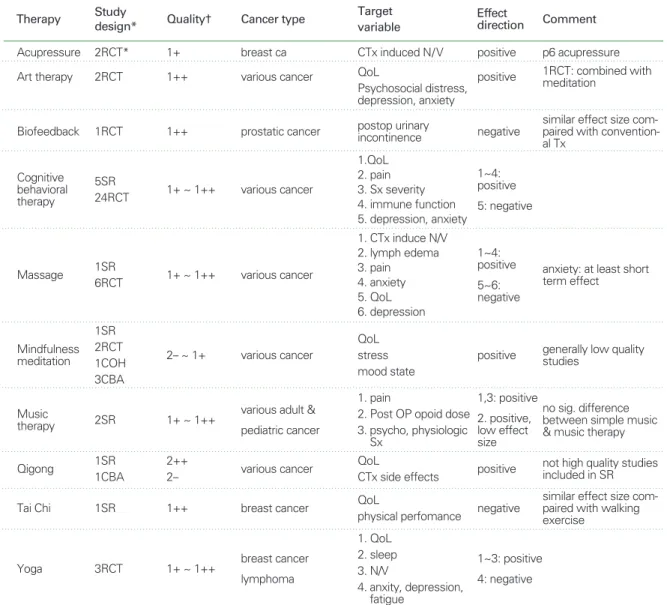
Table 1.Summary of studies of mind body therapy and manual therapy for cancer QoL
Therapy Study
design* Quality† Cancer type Target
variable
Effect
direction Comment
Acupressure 2RCT* 1+ breast ca CTx induced N/V positive p6 acupressure
Art therapy 2RCT 1++ various cancer positive 1RCT: combined with
meditation
Biofeedback 1RCT 1++ prostatic cancer negative
similar effect size com- paired with convention- al Tx
QoL
Psychosocial distress, depression, anxiety postop urinary incontinence
Cognitive behavioral therapy
5SR
24RCT 1+ ~ 1++ various cancer
1~4:
positive 5: negative 1.QoL
2. pain 3. Sx severity 4. immune function 5. depression, anxiety
Massage 1SR
6RCT 1+ ~ 1++ various cancer
1~4:
positive 5~6:
negative
anxiety: at least short term effect 1. CTx induce N/V
2. lymph edema 3. pain 4. anxiety 5. QoL 6. depression
Mindfulness meditation
1SR 2RCT 1COH 3CBA
2- ~ 1+ various cancer positive generally low quality
studies QoL
stress mood state
Music
therapy 2SR 1+ ~ 1++ various adult &
pediatric cancer
1,3: positive 2. positive, low effect size
no sig. difference between simple music
& music therapy 1. pain
2. Post OP opoid dose 3. psycho, physiologic
Sx
Qigong 1SR
1CBA
2++
2- various cancer positive not high quality studies
included in SR QoL
CTx side effects
Tai Chi 1SR 1++ breast cancer negative
similar effect size com- paired with walking exercise
QoL
physical perfomance
Yoga
* RCT: randomized control trial, SR: systematic review, COH; cohort study, CBA: controlled before and after study, BA: noncon- trolled before and after study
† evidence: levels of evidence by SIGN (Scottish Intercollegiate Guidelines Network)
1++ High-quality meta-analyses, systematic reviews of RCTs, or RCTs with a very low risk of bias 1+ Well-conducted meta-analyses, systematic reviews of RCTs, or RCTs with a low risk of bias 1- Meta-analyses, systematic reviews of RCTs, or RCTs with a high risk of biasa
2++ High-quality systematic reviews of case-control or cohort studies.
High-quality case-control or cohort studies with a very low risk of confounding, bias or chance and a high proba- bility that the relationship is causal
2+ Well-conducted case-control or cohort studies with a low risk of confounding, bias or chance and a moderate probability that the relationship is causal
2- Case-control or cohort studies with a high risk of confounding, bias, or chance and a significant risk that the rela- tionship is not causal
3RCT 1+ ~ 1++ breast cancer lymphoma
1~3: positive 4: negative 1. QoL
2. sleep 3. N/V
4. anxity, depression, fatigue
서 론
전 세계적으로 보완요법의 이용률이 급격히 증가하고 있 다. 이 중에서 암에서의 이용률 만을 놓고 볼 때(1) 미 국(2006년, 40 %), 유럽(2004년, 35.9 %), 일본(2004년, 44.6%)이며 우리나라의 경우, 2006년에 발표된 1,150명의 암환자를 대상으로 한 국내의 연구(2)에 의하면 놀랍게도 암환자의 보완요법 사용률이 75%에 달한다고 보고하고 있 다. 이와 같이 국내외적으로 사용률이 증가하면서 이들에 대한 가이드라인 제시의 필요성이 안팎에서 제기되는 과정 에서 대한의사협회에서는 2005년 일부 보완요법에 대한 근 거평가 연구를 실시하였고 2008년에는 암환자에서 사용되 는 보완요법에 대한 평가를 실시하게 되었다. 암종에 따른 암예방, 암치료, 삶의 질 향상에 대하여 총 80여가지의 보완 요법을 대상으로 Pubmed, Embase, Cochrane, Cinahl, 중국, 일본, 국내 연구 등 검토 가능한 모든 데이터베이스를 검색하여 관련 연구를 찾아내고 NICE알고리즘에 의한 질 평가를 시행하였다. 이 중에서 본 특집은 암환자의 삶의 질 에 대한 보완요법의 효과를 알아본 연구를 검토한 자료를 기반으로 별도로 정리한 것이다. 암환자의 삶의 질과 관련 한 보완요법의 종류는 총 26개가 검토되어 미국의 국립보완 대체의학연구소가 분류한 보완요법 분류체계에 따라 심신 요법, 수기요법, 생물요법으로 분류하여 기술하였다.
심신요법
(Mind-Body Medicine)(Table 1)
1. 인지행동치료(Cognitive-Behavioral Therapy) 인지치료는 그릇된 생각 패턴이 잘못된 행동과 감정반응 의 원인이 된다고 생각하며 이러한 행동과 감정반응의 결과 로 나타나는 문제점을 해결하기 위해 그릇된 생각 패턴을 바 꾸는 것에 집중하는 치료법이다. 행동요법이 적절한 훈련을 통해 잘못된 감정과 행동장애를 건강한 감정과 행동으로 수 정하는 것을 목적으로 하는 치료법인 바, 인지행동치료는 인 지 재구성을 통한 그릇된 생각 패턴의 변화를 위한 접근에 행 동교정치료를 통합하는 치료법이다. 인지행동요법이라는 개
념에는 이완요법, 바이오피이드백, 최면 등과 같은 비약물적 인 보완대체의학적인 접근법과 psychosocial intervention, psychoeducational treatment들이 포함된다. 암의 삶의 질 에 있어서 인지행동요법의 효과에 대한 연구는 아주 많다. 이 중에서 5개의 체계적인 고찰 연구(3~7)가 전체적으로 연구의 질이 우수하여 결과를 신뢰할 만 하였다. 삶의 질과 관련하여 두 개의 체계적 연구(5, 7)에서 유의한 효과가 있음을 보고하 였고 이후에 보고된 6개의 무작위연구 중(7~12) 5개의 연구 에서 같은 결과를 보여주고 있어 삶의 질에 있어서 인지행동 치료가 효과를 발휘하는 것으로 결론을 내릴 수 있다. 암으로 인한 통증에 대하여 25~61%감소시키는 효과가 있음을 3개 의 검토(3, 4, 6)에서 공통적으로 결론내리고 있으며 체계적 인 연구 이후에 발간된 통증과 관련한 무작위 연구(13)에서도 같은 결론을 내리고 있다. 반면 우울, 불안에 대하여 두 개의 체계적인 연구(3, 5)에서 상반된 결과를 보여주고 있으며 이후 발간되거나 검토에서 누락된 4개의 무작위연구(14~17)에서 도 서로가 상반된 결과를 보여주어서 우울과 불안에 관해서는 아직까지 결론을 내릴 수 없어 보인다. 관련된 무작위연구를 검토해 본 결과 4개의 연구(18~21)에서 증상 심각도를 낮추 었으며 3개의 무작위연구(22~24)에서는 면역 기능에 효과를 발휘했다고 보고하여 면역 기능과 증상 심각도에 긍정적인 반 응을 기대해 볼 수 있다. 또한 체중 감소(25), 피로(26), 수면 장애(23), 오심과 구토(9), 혈중 지방질 감소(25)와 관련하여 각각 1개의 무작위연구에서 긍정적인 결과를 보여준 반면 흡 연에 관한 1개의 무작위 연구(27)에서는 효과가 없는 것으로 보고하였다. 그러나 1개의 무작위연구 결과이므로 이러한 긍 정적인 결과를 확정하기 위해서는 더 연구가 필요하다. 결론 적으로 인지행동치료는 삶의 질, 통증, 증상 심각도, 면역기 능 향상에 긍정적인 효과가 있을 것으로 판단한다. 반면 불안 과 우울과 관련한 감정적인 문제에 대한 효과는 유보적이어서 더 많은 연구가 나올 때까지 판단을 미룰 필요가 있다. 그 밖 에 체중감소, 피로, 수면장애, 오심과 구토, 혈중 지방질 감소 와 관련하여 긍정적인 보고가 있으므로 더 연구가 필요하다.
2. 마음충만명상(Mindfulness Meditation)
명상은 각 개인의 내적 혹은 외적 경험의 특정 측면에 대
Table 2.Summary of studies of natural health products & vitamin & minerals for cancer QoL
* RCT: randomized control trial, SR: systematic review, COH; cohort study, CBA: controlled before and after study, BA: noncon- trolled before and after study
† evidence: levels of evidence by SIGN (Scottish Intercollegiate Guidelines Network)
1++ High-quality meta-analyses, systematic reviews of RCTs, or RCTs with a very low risk of bias 1+ Well-conducted meta-analyses, systematic reviews of RCTs, or RCTs with a low risk of bias 1- Meta-analyses, systematic reviews of RCTs, or RCTs with a high risk of biasa
2++ High-quality systematic reviews of case-control or cohort studies.
High-quality case-control or cohort studies with a very low risk of confounding, bias or chance and a high proba- bility that the relationship is causal
2+ Well-conducted case-control or cohort studies with a low risk of confounding, bias or chance and a moderate probability that the relationship is causal
2- Case-control or cohort studies with a high risk of confounding, bias, or chance and a significant risk that the rela- tionship is not causal
Therapy Study
design* Evidence† Cancer type Target
variable
Effect
direction comment
Agaricus 1RCT 1- gynecologic cancer NK cell, CTx side
effects all positive
AHCC 2RCT 1+ hepatoma,
prostatic cancer QoL, pain positive
Aloae 2 SR 1+
pediatic cancer breast cancer head & neck cancer
RTx induced dermati- tis or mucositis pre- vention
negative
Aromatherapy 1RCT 1++ various cancer Depression
Anxiety all negative
Multivitamin RCT 1+ breast cancer fatigue d/t RTx negative
Omega 3 2SR
2RCT
1- ~ 1++
1+ ~ 1++ various cancer Cachexia negative partially weight gain effect
Selenium SR** 1+ various cancer
breast cancer
infection
diarrhea d/t RTx positive
Shark RCT 1+ colon & breast cancer QoL negative
Soy 2RCT
1RCT
1- ~ 1++
1++ breast cancer 2 Facial flushing
menopausal Sx all negative
Zinc 2RCT* 1- head & neck cancer appititis after RT negative low quality studies Enzyme
therapy RCT 1++ breast cancer lymphatic edema all negative lowered tension &
CRP Ginseng 1RCT, 1COH 1+ ~ 2++ various cancer
breast cancer QoL positive
Mistletoe 1SR 1++ various cancer QoL
CTx side effects all positive
Lycopen BA 2+ prostate cancer QoL positive
improvement of per- formance, urinary tract Sx, bone pain
Honey 2RCT 1+
1-
head & neck cancer breast cancer
RTx induced mucositis RTx induced dermatitis positive
Astragalus 2 SR 1+ ~ 1++ colon cancer
lung cancer
Physical activity or Cx
improve positive
combined several herbal effect with astragalus
Cranberry 1RCT 1+ prostatic cancer RTx induced urologic
Sx (IPSS) negative
한 정신적인 집중, 주의에 대한 의도적인 자기 통제로 정의 할 수 있다. 명상은 육체를 이완시키고 마음의 평온을 유지 하기 위해서 시행하는 심신 과정(mind-body process)으 로 주로 집중이나 투영(reflection)을 이용한다. 흔히 시행 되는 명상법은 초월 명상(transcendental meditation)과 마음 충만 명상이다. 초월 명상은 단어나 어구를 조용히 혹 은 소리 내어 반복하는 것을 말하며 마음 충만 명상은 생겨 나는 감각, 인지, 생각을 아무런 판단 없이 관찰하는 것을 말한다. 마음충만명상에 관한 거의 대부분의 연구는 삶의 질 개선에 관한 연구였다. 총 1개의 체계적 고찰연구, 2개의 무작위 대조연구 그리고 비무작위 실험연구로는 1개의 코 호트와 3개의 통제된 사전-사후 연구(동일한 연구팀에 의 해 수행됨)가 있다. 1개의 체계적 고찰연구(28)에서는 총 538명이 참가한 3개의 무작위대조연구와 7개의 대조군 없 는 연구를 대상으로 고찰이 시행되었다. 기분의 향상, 수면 의 질, 스트레스의 감소에 효과 있음을 결론내리고 있지만 연구의 질이 낮아 결론을 수용하기 어렵다. 1개의 무작위연 구(29)에서 기분조절과 스트레스 증상 완화에 효과가 있었 다고 보고하고 있고 다른 1개의 무작위연구(30)에서는 유 방암 환자의 수면장애에 약하게 효과가 있다고 보고하였다.
1개의 코호트연구(31)에서 스트레스증상 완화에 의의가 있 음을 보고하였고 같은 연구자가 실시한 통제된 사전 사후 연구(32~34)에서 삶의 질 측정치, 스트레스 증상, 수면의 질에서 유의미한 개선을 보였다고 보고하였다. 이와 같은 결과를 종합해 볼 때 마음충만명상은 삶의 질향상, 스트레 스완화, 수면의 질 향상에 대하여 긍정적인 효과를 기대해 볼 수 있겠으나 더 엄격한 수준의 연구의 뒷받침을 통해 결 론을 내리는 것이 필요할 것으로 본다.
3. 미술치료(Art Therapy)
미술치료는 감정을 표현하기 위한 창의적인 활동을 함으 로써 신체와 감정적인 문제를 조절하는 것을 돕기 위해 사용 된다. 미술치료는 감정적인 충돌을 받아들이고 자각을 증가 시키며 질병이나 삶에 관한, 표현하지 않으며 종종 무의식적 인 감정을 표현할 수 있게 돕는다(35). 삶의 질에 관련한 미 술치료의 효과에 관해 수준 높은 2개의 무작위연구가 있다.
Monti 등(36)의 연구에서 111명의 다양한 암환자를 대상으 로 삶의 질, 심리사회적 고통에 대한 미술치료의 효과를 알 아본 결과 대조군에 비하여 실험군이 유의미하게 불안, 우 울, 수면, 강박 등 정신적인 분야에서 유의한 감소를 보였고 건강 관련 삶의 질 지수에서 신체적 부분은 의의가 없었으 나 통증과 정신사회적 지수는 통계적으로 유의하여 암환자 에 대한 정신사회적 치료에 대한 미술치료의 미래가치가 있 다고 보고하였다. 다른 연구(37)에서는 1, 2기의 유방암 환 자 39명을 대상으로 감정 표현, 영성, 심리적 안정감에 미술 치료가 미치는 영향을 알아본 결과 creative arts therapies 는 감정 표현을 하는 대처방식을 증가시키는 것과 영성의 수준에서는 효과를 나타내지 않았지만 심리적 안녕감에서 는 부정적인 감정상태가 감소하고 긍정적인 상태가 증가하 는 효과를 보였다고 보고하고 있다. 무작위연구는 아니지만 50명의 암환자를 대상으로 미술치료 전후를 비교한 연구 (38)에서도 고통, 피로, 우울, 불안, 식욕부진, 웰빙, 호흡이 짧음, 졸음, 불안과 관련된 느낌에서 유의한 변화를 보여주 었고 한 국내 사전 사후 비교 연구(39)에서도 소아암 환자에 게 공포감을 유의하게 감소시킨다는 보고가 있다.
이와 같은 연구 결과를 종합해 볼 때 미술치료는 통증과 심리적, 정신사회적 지수와 관련한 삶의 질에 유의한 효과 를 나타낼 가능성이 많으므로 추가적인 연구를 통해 더 유 익하고 세부적인 적용기준을 마련하는 것이 유익할 것으로 판단한다.
4. 음악치료(Music Therapy)
음악치료는 음악이라는 재료를 이용하여 감정의 표현을
격려하고 사회적 관계를 촉진시킴으로써 억압되어 있는 감
정으로 인해 발생하는 병적인 증상을 완화하고 능동적인 치
유를 도움으로써 전체적인 치유와 삶의 질 향상을 촉진하는
치유요법의 하나이다. 암환자에 대한 두개의 체계적 고찰연
구(40, 41)를 볼 때 암으로 인한 통증에 대하여 효과가 있을
것으로 판단되지만 현재까지의 연구는 통증을 줄여주는 정
도가 경미하거나 중등도 이하였음을 언급하고 있다. 불안에
대하여 체계적인 연구(40)에서 음악치료가 불안을 낮추는
경향을 보였으나 한편의 무작위연구(42)에서 상태불안에
효과를 보이고 345명을 대상으로 한 사전 사후 연구(43)에 서 불안에 대해 효과를 보이는 점을 감안할 때 불안에 대해 서도 음악치료가 효과를 보일 가능성이 있다. 우울이나 기 분장애에 대하여 체계적인 고찰연구(40)와 사전 사후 연구 (43)에서 긍정적인 결과를 제시하고 있다. 그러나 70명의 암환자를 대상으로 한 무작위연구(44)에서 우울, 불안, 삶 의 질에 대하여 6주와 3개월 후의 음악치료 효과를 알아본 결과 단기적으로 효과를 보이지만 장기적으로는 효과를 보 이지 않았다고 지적하였다. 또한 Dileo 등의 연구(40)는 전 체적인 음악의 치료 효과에 대하여 긍정적인 결과를 보여준 반면 단순음악청취와 음악치료를 비교할 경우 치료 효과의 차이가 없었다고 보고하였다. 이와 같은 현재까지의 연구결 과를 볼 때 음악치료는 통증, 우울, 불안 등 기분장애에 효 과를 보일 가능성이 있지만 그 효과가 장기적으로 지속될 지의 여부와 효과의 강도에 대한 검토가 더 필요하고 단순 음악청취와 음악의 치료적 중재가 유의한 차이가 있는지의 여부를 가리는 것이 필요할 것으로 판단한다.
5. 요가(Yoga)
요가는 아유르베다를 구성하는 요법으로서 건강증진을 위해 육체와 정신과 영혼의 에너지를 통합하기 위해 디자인 된 정신신체운동체계라고 설명하고 있으며 운동적인 측면에 서는 일종의 비유산소운동에 속한다(45). 암환자에서 삶의 질과 관련하여 3편의 무작위연구가 있었다. Culos-Reed 등 (46)의 연구에서는 치료를 끝낸 유방암에 대해 7주 동안의 요 가 프로그램이 삶의 질, 정서와 같은 사회심리적 지표에 유익 한 영향을 주지만 스트레스, 산체활동지수에서는 유의하지 않다고 보고하였으며 Cohen 등(47)의 연구에서는 3개월의 요가 프로그램이 림프종 환자들의 수면의 양과 질을 향상시 키는데 효과적이었지만 불안, 우울, 피로지수 등에는 대조군 과 차이가 없었다고 보고하였다. 다른 연구(48)에서는 4회 의 항암 치료를 받는 동안 수행한 요가 프로그램이 유방암 환 자들의 항암요법과 관련한 오심 및 구토의 감소에 효과적이 고 불안(STAI), 우울(BDI), 삶의 질(FLIC), 괴로운 증상에 서도 유의한 차이가 있음을 보고하여 불안과 우울지수에 있 어서는 상반된 결과를 보여주었다. 전체적으로 요가 프로그
램이 유방암, 림프종 환자에 대하여 삶의 질, 수면, 항암요법 에 의한 오심과 구토에 효과가 있고 연구의 질이 높아 연구 참 여자를 늘려 연구한다면 더 분명한 결과를 기대할 수 있을 것 으로 본다. 반면 불안, 우울에 대해서는 더 연구가 필요하다.
6. 태극권(Tai Chi)
태극권은 중국에서 발달한 도교에 기초하고 있다. 도교는 기와 음양에 대한 믿음이 중요한 철학적 기반이 된다. 태극 권은 기공의 무술 형태로 시작하였으며 여러 세기 동안 중 요한 운동의 하나로 많은 사람들에게 사랑을 받았다. 연구 에 의하면 태극권은 운동의 한 형태로 아주 유용해서 자세, 균형감, 근육량, 근 긴장도(muscle tone), 유연성에 도움 을 준다. 또한 노인의 기력 향상에도 도움을 준다. 태극권은 스트레스를 줄이는 한 방법이기 때문에 중등도 강도의 운동 과 마찬가지로 심박수를 줄이고 혈압을 낮추어 심혈관 질환 의 위험을 줄일 수 있다. 암의 삶의 질에 대한 태극권의 효 과에 대한 체계적인 고찰연구(49)에서 유방암 환자에 대해 피로(BFI), 기능(FACT-B), 체질량지수(BMI), 걷기 운동 6분 후 심박동과 혈압 측정 등의 변수에 대해 일반적 걷기 운동과 비교한 결과 두 군에서 상기의 결과변수에 차이가 없는 것으로 나타났고 정신적인 지지와 비교한 경우 자아 존중감을 높이고 운동능력을 향상시키는 것으로 나타났다.
이와 같은 현재까지의 연구결과를 볼 때 태극권은 유방암 환자에게서 일반적 걷기 운동의 효과와 유사하며 걷기 운동 과 차별되는 효과가 있다고 할 수 없지만 연구가 많지 않아 서 결론을 내리기 위해서는 더 연구가 필요하다.
7. 기공(Qigong)
신체의 생체 에너지를“기” 라고 한다. 이러한 기를 부드 러운 흐름으로 조절하기 위한 과정을“공” 이라고 한다(50).
서양의 체조가 신체적 발달을 목표로 하여 만들어진 운동이
라면 기공은 자연스러움과 부드러움을 지닌 체조로 인체의
기 에너지를 단련시키고 배양하여 기의 소통이 잘 되게 함
으로써 신체의 건강뿐 아니라 마음의 안정을 취하게 하는데
목적을 두고 있다(51). 기공에 대한 임상연구는 1편의 체계
적 고찰과 1편의 사전 사후 연구가 있다. 체계적 연구(52)는
기공을 암환자에 적용한 5편의 비무작위 연구와 4편의 무 작위 연구를 분석하였는데 피로, 오심, 구토, 육체기능, 심 적 고통에 대하여 2편의 비무작위 연구에서 효과가 있다고 하였고 삶의 질 점수에 대하여 2편의 비무작위 연구와 1편 의 무작위 연구에서 유의한 결과를 제시하였다. 그러나 삶 의 질과 관련하여 다른 1편의 무작위 연구에서 의미가 없었 다고 보고하고 있고 전반적으로 포함된 연구의 질이 높지 않아 삶의 질에 있어서 다소의 가능성을 고려할 수는 있으 나 현재까지의 연구 결과는 기공이 암환자의 삶의 질에 대 하여 효과가 있다는 결론을 내릴 수 없다고 하고 있다. 다른 한편의 사전 사후 연구(53)는 기공이 유방암 환자에서 항암 치료에서 나타나는 백혈구 감소에 효과가 있는 것으로 보고 하였으나 더 연구가 필요하다.
이와 같은 두 연구를 종합하여 볼 때 기공은 암환자의 삶 의 질에 도움을 줄 가능성이 있으나 상반된 주장이 있고 포 함된 연구의 질이 높지 않아 결론을 내리기 위해서는 질이 높은 연구가 필요하다.
8. 바이오피드백(Biofeedback)
바이오피드백은 전체적인 건강을 개선하기 위해 호흡, 맥 박, 혈압과 같은 정상적으로 무의식적인 상황에서 조절되는 인체기능을 의식적으로 조절하는 법을 배우는 기법으로 주로 전기장치에 의해 공급되는 정보를 사용한다(45).
한 무작위연구(54)에서 전립선암 수술 후 발생한 요실금 에 대하여 현대 의학적 치료(preperative pelvic floor training, PFT)와 비교한 결과 바이오피드백이 PFT보다 우 월하지는 않았으나 PFT에 준하는 정도의 효과를 보였다고 보고하였다. 바이오피드백에 관련한 코호트 연구는 2개가 있 었는데 Kim 등의 연구(55)에 의하면 유방암 절제술과 항암 치료을 끝낸 환자 25명을 대상으로 복식훈련을 4주간 실시 한 결과 실험군에서 면역기능(T3)과 삶의 질에서 유의한 차 이를 보여준 반면 상태불안, 암 신체증상, NK세포의 변화 에서 일반적 처치를 받은 대조군보다 우월하지 않았다. 다 른 코호트연구(56)에서는 전립선암에서 방사선치료를 받고 난 뒤 발생하는 bladder filling에 대한 효과를 알아본 결과 유의한 차이가 없었다고 보고하였다. 이와 같은 연구를 종
합해 볼 때 바이오피드백은 전립선 암 수술 후에 발생한 요 실금의 치료에 있어 현재까지는 기존 치료보다 우월하다고 할 수는 없으나 기존치료에 준하는 효과가 있다는 점을 고 려할 때 더 연구를 통해 효과를 규명할 필요가 있다.
수기요법
(Body Based Medicine)(Table 1)
1. 마사지(Massage)
마사지란 신체의 근육과 연조직들을 주무르거나 문지르
고 두드리는 것을 통해 안정을 유도하고 그 기능을 강화시
켜주는 것을 의미한다. 마시지와 관련하여 1개의 체계적 검
토 연구와 6개의 무작위연구가 검토되었다. 검토 결과 마사
지 단독효과와 아로마 향을 가미한 아로마-마사지 치료 등
두가지 형태로 실시된 연구가 많았다. 정리하면 체계적인
연구(57)와 1편의 무작위연구(58)에서 항암요법에 의한 오
심증상에 대하여 마사지 단독치료만으로도 효과가 있다고
보고하고 있고 두 무작위 연구(56, 60)를 통해 볼 때 림프부
종에 대하여서도 압박붕대와 같은 현대적 치료와의 병용 여
부와 무관하게 마사지 단독치료가 일정하게 효과를 발휘할
가능성이 있다. 우울 증상에 대해서는 체계적인 연구(57)와
무작위연구(61)에서 볼 때 마사지 단독치료나 아로마테라
피와의 병용이 모두 크게 의의가 없는 것으로 종합되지만
불안 증상에 대해서는 앞의 두 연구와 다른 무작위연구(62)
를 통해 볼 때 마사지단독이나 아로마테라피와의 병용이 적
어도 단기적인 증상경감 효과를 기대해 볼 수 있는 결과를
보여주고 있다. 통증에 대하여 체계적인 연구(57)에서 분석
한 3개의 무작위연구에서 마사지 단독으로 효과가 있다고
보고하고 있는 반면 다른 무작위연구(61)에서 마사지와 아
로마와 병용이 통증에 효과가 없다고 보고하고 있다. 삶의
질에 대하여서는 마사지 단독은 효과를 발휘하지 않았으나
아로마를 병용한 두 무작위연구에서 긍정적 효과를 보여 주
었다(57). 이상을 종합해 볼 때 마사지는 단독으로 사용할
때 오심, 림프부종, 통증에 대해, 아로마를 병용할 때 불안,
삶의 질 향상에 대하여 효과를 기대해 볼 수 있겠으나 좀 더
연구가 필요하다.
2. 지압(Acupressure)
지압은 특별한 부위를 접촉과 압력을 통해 영향을 주는 수기요법으로서 특히 이러한 자극을 한의학적 원리에 속하 는 경락이라는 기의 흐름체계에서 특정한 지점인 경혈을 자 극함으로서 기흐름의 균형을 찾는 것이 치료의 주요 목적이 라고 관련 옹호자들은 주장한다. 지압의 효과에 대하여 비 교적 중등도의 질을 보여주는 두 개의 무작위연구(63, 64) 를 보면 모두 유방암 환자를 대상으로 항암치료 중에 발생 하는 오심과 구토 증상에 대하여 P6경혈을 지압하여 place- bo 부위를 지압하거나 중재하지 않는 군과 비교하였을 때 오심과 구토를 유의하게 줄여주었다고 보고하고 있고 질이 나쁘지 않는 전후비교연구(65)에서도 같은 결과를 보여주 고 있어 항암치료중에 발생하는 오심과 구토에 대하여 P6경 혈의 지압이 효과가 있을 가능성이 있다. 좀 더 엄격하고 대 규모의 연구를 통해 확정적인 결론이 필요하다.
생물요법
(Biologic Based Therapy)(Table 2)
1. 건강기능식품(Health Nutritional Supplements) 오메가-3투여가 암환자의 증상 완화 혹은 삶의 질 개선 에 도움을 주는가에 대한 논문은 체계적인 고찰연구가 2편, 무작위연구가 2편 있었다. Dewey 등(66)의 체계적인 고찰 연구에서 오메가 3는 다양한 진행성 암에 대하여 일부에서 체중 증가와 신체기능 개선의 효과가 있었지만 삶의 질, 피 로, 영양 상태, 식욕 등 대부분의 지표에서 대조군에 비해 유의한 차이를 보여주지 않았다고 보고하였다. Colomer 등(67)은 총 9개의 무작위 연구와 8개의 비무작위 연구를 대상으로 체계적인 문헌고찰을 시행하였다. 일부연구에서 체중 증가, 염증지표의 개선, 에너지 소비량의 증가, 삶의 질 개선, 활동지수의 유의한 증가 등이 관찰되었지만 다른 연구에서는 비슷한 지표에 유의하지 않다고 보고하고 있다.
전체적으로 연구의 질이 높지 않아 결론도 신뢰하기 어렵 다. 두 무작위 연구(68, 69)를 살펴보아도 체중 증가에 일부 긍정적인 효과가 있을 가능성을 제외한 다른 지표는 모두 의의가 없게 나타났다. 이를 통해 볼 때 오메가 3는 암환자
의 삶의 질에 대하여 체중 증가 등 일부의 효과를 기대해 볼 수 있지만 나머지 지표에 대하여서 긍정적이지 않다. 콩 보 충제가 유방암 생존자 혹은 조기 유방암 환자를 대상으로 안면홍조 등의 폐경 증상을 호전시킬 수 있는지 평가한 무 작위 대조군 연구가 3편(70~72) 있었다. 연구의 질이 다르 지만 3편 모두 도움이 되지 않는다고 결론을 내리고 있음을 볼 때 현재까지는 적어도 암환자가 겪는 안면홍조에 대하여 콩 자체가 아닌 보충제(이소플라본 150mg 이내) 형태의 효 과는 없다고 할 수 있다.
꿀에 대하여 암 환자를 대상으로 방사선치료 후에 방사선 유발 점막염 혹은 피부염의 예방과 치료에 효과가 있는지에 대한 2편의 무작위 연구가 있었다. Biswal 등(73)의 연구에 의하면 두경부암 환자에게 방사선 치료에 의해 발생하는 인 후 점막염에 대해 시술 전후에 꿀의 도포가 점막염 발생을 줄였다고 보고하고 있다. 다른 무작위 연구(74)는 유방암에 서 방사선치료에 의한 피부염의 치유를 꿀 거즈가 촉진시키 는지의 여부를 검토하였으나 포함기준에 맞는 연구대상자 미확보로 연구를 중단하여 결과를 알 수 없었으나 환자의 만족도는 높았다고 보고하고 있다. 이를 통해 볼 때 꿀이 방 사선치료에 의한 점막염이나 피부염 감소의 효과에 대하여 긍정할 수 없으나 더 연구의 가치가 있음을 보여주고 있다.
상어연골 제품인 benefin 상어연골은 진행성 대장암과 유방
암 환자에서 삶의 질을 개선하지 못했다(75). 유방암으로
액와부 절제술로 인한 림프부종에 대하여 효소요법(단백분
해효소)를 정통적인 combined decongestive therapy
(CDT)와 병행하였을 때 단독 CDT 치료에 비해 염증수치와
장력의 유의미한 감소를 보였으나 부피 감소와 피부두께 감
소효과는 보이지 않아 전체적으로 유의하지 않지만 더 연구
할 가치를 주고 있다(76). 라이코펜 투여가 암환자의 증상
완화 혹은 삶의 질 개선에 도움을 주는가에 대한 최근
Phase II 비무작위 전후 임상시험 연구논문이 1편(77) 있었
는 바, 호르몬 치료에 반응이 없는 전이성 전립선 암환자에
서 라이코펜 투여 후 신체 활동의 호전, 뼈 통증의 호전, 하
부 요로증상의 개선 등을 보고하였으나 전후 임상시험으로
연구의 질이 높지 않고 대상수도 적어 결론을 짓기는 어려
워 더 연구가 필요하다.
2. 비타민 미네랄(Vitamin & Minerals)
아연이 암환자의 방사선 치료시 식욕 변화에 미치는 영향 에 대한 무작위연구 2편이 있었다. 1998년에 18명의 두경 부암 환자를 대상으로 1개월 동안 행해진 연구(78)에서 방 사선 치료시 아연을 투여하였을 때 아연 투여군에서 미각 예민도(taste acuity)의 회복이 빠르며 미각상실도(taste loss)도 낮은 것으로 나타난 반면 2007년 Halyald 등(79)에 의해 169명을 대상으로 6개월 동안 행해진 연구에서는 방 사선 치료시 zinc sulfate (45mg tid/day) 구강투여가 식욕 변화를 예방하는 효과가 없는 것으로 나타났다. 두 연구를 볼 때 아연이 식욕 변화에 긍정적인 결과를 보여줄 가능성 이 낮지만 앞의 연구는 n수가 작고 기간이 짧으며 뒤의 연구 는 탈락률이 높아 결론을 내리기 위해서는 더 연구가 필요 하다. 셀레늄 단독 보충이 암환자의 방사선 요법, 화학요법, 수술로 인한 부작용, 삶의 질에 도움을 주는가에 대한 체계 적 고찰연구(80)에서 셀레늄이 위약이나 비투여군에 비교 하여 림프부종으로 인한 erysipela infection과 방사선요법 과 관련된 설사의 감소에 영향을 미치는 것으로 나타났으나 참고 연구의 수가 적어(각각 무작위 연구 1개씩) 유용한 가 치의 가능성을 두고 더 연구가 필요하다. 종합비타민을 투 여하여 유방절제술 후 한 달 동안의 방사선 치료로 인한 피 로증상 개선, QoL 개선에 효과를 발휘하는지의 여부를 알 아본 무작위 교차연구(81)에서 종합비타민과 미네랄의 복 용이 위약에 비해 피로 및 QoL 개선에 도움이 되지 못하였 다고 보고하고 있으나 연구기간의 적정성 등에 대한 문제점 지적이 있어 더 연구가 필요하다고 결론 내리고 있다.
3. 허브(Herb)
암환자의 삶의 질에 대한 알로에의 효과를 알아본 2편의 체계적인 고찰 연구가 있다. 코크란 리뷰(82)에서는 암환자 의 치료 후 발생하는 구강점막염 예방에 대한 다양한 치료 방법(알로에 베라 포함)에 대해 고찰이 있었는 바, 이 중에 서 알로에 제제에 대해 포함된 무작위 대조군 연구는 1개였 다. 이 연구에 의하면 알로에 베라 겔은 두경부암 환자의 방 사선 조사 후 발생하는 구강점막염 증상의 호전, 통증 감소, well-being 호전에 유의한 영향을 미치지 못하였다. 다른
체계적 고찰(83)에서는 방사선 조사 후 발생하는 피부염에 대한 알로에 베라 겔의 효과를 연구한 5개의 무작위연구를 분석하였으나 알로에 베라 gel이 방사선 유발성 피부 병변 에 유의한 효과를 보여주지 않았다. 두 체계적인 고찰이 모 두 메타분석을 시도하지 않았지만 전반적으로 부정적이어 서 알로에는 방사선 치료에 의해 발생할 수 있는 피부염에 대하여 유의성이 낮아 보이고 구강점막염에 대해서는 더 연 구가 필요하다. 황기와 관련한 체계적인 고찰연구가 2편 (84, 85) 있었다. 이 두 연구를 통해 볼 때 황기를 포함한 한 약 제제가 대장암 환자의 화학치료에 의한 모발 탈락, 오심 구토, 식욕저하, 피로, 백혈구 감소에 유의한 효과가 있고 비소세포성폐암의 화학치료에 의한 활동도 저하에 유의한 효과를 보이지만 이 효과가 황기단독에 의한 효과인지 포함 된 다른 허브에 의한 효과인지는 알 수가 없어서 더 연구가 필요하다. 인삼을 암 환자에게 투여하면 암으로 인한 여러 가지 증상의 완화와 삶의 질 개선에 도움을 주는가에 대해 서는 1편의 무작위연구와 1편의 코호트 연구가 있었다.
Kim 등 이 시행한 무작위연구(86)에 의하면 인삼을 열처리 한 제품인 선삼
R을 투여하고 위약과 비교하였을 때 삶의 질 지표 중에서 일부 호전을 보였고 일반 정신건강지표 (GHQ -12)에서 유의한 차이를 보인다고 보고하고 있다.
코호트연구(87)에서는 유방암 진단을 받은 환자에게 평균
4.8년 동안 인삼을 복용할 경우 삶의 질에 효과가 있다고 보
고하고 있다. 이를 종합할 때 인삼이 암환자의 삶의 질에 긍
정적인 효과를 기대할 수 있으나 결론을 내리기 위해서는
더 연구가 필요하다. AHCC는 표고버섯균사체추출물분말
을 주 성분으로 하는 버섯추출물이다. 이와 관련한 무작위
연구가 2편이 있었는데 Cowawintaweewat 등(88)의 연구
에서는 AHCC를 간암 환자에게 복용하게 하였을 때 삶의
질 향상에 도움을 주는 경향을 보였다고 하였으며 Hong 등
(89)의 연구에서는 AHCC가 골전이가 있는 전립선암의 통
증 감소에 유의하게 효과를 발휘한다고 보고하고 있다. 그
러나 전체적으로 n수가 적어 좀 더 많은 수를 대상으로 한
추가연구가 필요하다. 아가리쿠스버섯에 대하여 Ahn 등
(90)은 항암치료를 받고 있는 부인암 환자(경부암, 난소암,
자궁내막암)에 아가리쿠스 버섯을 투여하였을 때 암 환자의
증상 완화 혹은 삶의 질 개선(식욕, 탈모, 오심/구토, 감정 변화, 체력 증가 등에서 특히 효과적임)에 도움을 준다고 보 고하고 있으나 연구의 질이 낮아 결과를 수용할 수 없다. 더 연구가 필요하다. 미즐토는 나무에 기생하는 반기생식물인 겨우살이 추출물로서 Kienle 등(91)에 의해 시행된 체계적 인 고찰연구가 있다. 이 연구에 포함된 전체 5천여명을 대상 으로 한 16개의 무작위연구, 9개의 비무작위연구, 12개의 전향적 연구들에서 미슬토의 사용이 암환자의 삶의 질을 증 진시키고 항암제치료나 방사선치료로 인한 부작용을 감소 시키는 효과를 보고하고 있다. 대부분의 연구에서 미슬토 피하주사의 특성상 맹검이 이루어지지 않은 제한점이 있으 나 연구에 질이 높아 일반적으로 미슬토 사용이 삶의 질 향 상 및 암 치료에 따른 부작용 완화에 효과가 있다고 할 수 있 다. 크렌베리주스가 암환자의 삶의 질에 영향을 주는 지에 대한 1편의 무작위 대조연구가 있었다(92). 연구에 의하면 전립선암에서 방사선치료에 의해 발생하는 비뇨기부작용완 화에 크렌베리 주스가 사과주스에 비해 유의한 차이를 보여 주지 못하였다고 보고하였다. 더 연구가 필요하겠다. 아로 마테라피는 식물로부터 증류되어 얻어진 오일의 향기 성분 을 이용하여 건강을 개선하거나 분위기를 바꿔주는 데 이용 하는 방법이다. 응집된 방향물질을 아로마 에센셜오일을 마 사지와 함께 바르거나 코로 흡입을 하게 되는데 주로 약 40 여종의 아로마 에센셜오일이 아로마테라피에 사용되어지고 있다. 사용되어지는 식물로는 라벤더, 로즈마리, 유칼립투 스, 카모마일, 마조람, 쟈스민, 민트, 레몬, 일랑일랑, 제라 늄 등이 있다(93). 다양한 암에 대하여 방사선 치료기간 동 안 아로마테라피와 향이 없는 오일, 향이 있는 오일을 주고 비교한 무작위 연구(94)에서 아로마테라피가 방사선 치료 를 받는 암환자의 불안이나 우울의 감소, 신체정신건강지수 증진에 효과가 없다고 보고하였다. 이후 2004년에 실시된 한 사전 사후 대조연구(95)에서 항암요법 중에 아로마향의 흡입이 오심과 구토를 유의하게 감소시켰다고 보고하였지 만 두 연구를 고려할 때 아로마테라피가 방사선치료나 항암 치료과정에서 부작용을 줄이는데 효과를 발휘한다고 할 수 없으며 결론을 내리기 위해서는 더 많은 연구를 요구하고 있다.
결 론
지금까지 8가지의 심신요법, 2가지의 수기요법, 17가지 의 생물요법(3가지의 비타민 미네랄, 6가지의 건강기능식 품, 8가지의 허브)에 대하여 알아보았다. 대체적으로 암환 자의 삶의 질과 관련하여 심신요법과 수기요법에 대한 연구 의 수가 많음을 알 수 있었고 심신요법의 경우 인지행동치 료, 명상, 미술치료, 음악치료, 요가 등에서 긍정적인 결과 가 더 많아 유용성이 주목받고 있고 심신요법을 구성하는 다른 요법의 경우도 대체로 더 연구할 가치가 있는 것을 알 수 있다. 수기요법의 경우도 마사지나 지압이 다 같이 긍정 적인 요소가 더 많아 연구의 보강을 통해 임상활용을 고려 해도 될 것으로 보인다. 반면 17가지의 생물요법의 경우는 연구의 수가 상대적으로 많지 않고 결과도 상반되는 경우가 많음을 알 수 있었다. 비교적 유용할 것으로 판단되어 긍정 적으로 검토할 만한 것은 미즐토 정도이며 꿀, 홍삼을 포함 한 인삼, AHCC, 셀레늄 등은 긍정적인 시각을 갖고 더 연구 를 해볼 가치가 있어 보인다. 오메가 3의 경우는 암환자의 삶의 질에 대하여 체중 증가 등 일부에 대해서만 효과를 기 대해 볼 수 있어 보인다. 반면 나머지 생물요법의 경우는 연 구 수가 적어서 판단할 수 없거나 부정적인 경우도 있었다.
이상의 검토를 통해 볼 때 느끼는 것은 국민의 관심이 많
은 생물요법에 대한 연구의 수가 적거나 연구의 질이 높은
연구가 적고 이에 대한 국내 연구가 아주 적다는 점이다. 서
론에서 기술한 바와 같이 2006년 조사된 연구(2)에 의하면
국내 암환자의 보완요법 사용률이 75%에 달한다고 보고하
고 있다. 이것이 의미하는 것은 보완요법에 대한 의사의 호
불호와 관계없이 의사들이 이들에 대한 가이드라인을 제시
해야 하는 것이 선택의 상황이 아닌 의무일 뿐만 아니라 시
기적으로도 빠른 대처를 요구한다는 것이다. 더구나 최근에
일본에서 발생한 2명의 암환자에서 아가리쿠스버섯에 의한
사망 보고(96)에서 보듯이 그 사용량과 속도가 일본보다 낮
지 않은 우리에게 시사하는 바가 크다. 이와 같이 국내에서
보완요법에 대한 연구가 시급한 상황에서 그 토대마련이 중
요하다. 이를 위해서는 앞서의 검토를 통해 보았던 것처럼
보완요법에 대한 연구의 수나 질이 낮은 이유에 대하여 몇
가지 고려점이 있음을 알아야 한다. 보완요법은 현대정통의 학의 약물에서 보이는 것과 같은 성분보다는 천연물 자체를 사용하거나 현대정통의학에서 사용하는 고도의 기술이 적 용된 고가의 의료장비보다는 몸을 사용하거나 간단한 기구 를 사용하는 경우가 대부분이어서 상대적으로 특허에 의한 독점이나 대량생산이 어려운 점에 따른 상품성으로서의 부 가가치가 적다는 단점을 가지고 있어서 다국적 제약회사나 의료기회사에 의한 자본투여를 통해 연구가 이루어지기가 현대의학보다는 용이하지 않다는 점이다. 또한 동종요법과 같이 보완의학을 구성하는 보완요법의 속성상 무작위적용 이 어렵다는 개념적 특성을 갖는다.
따라서 이들에 대한 국민들의 요구에 부응하기 위해서는 엄격한 연구의 기본 틀 속에서 보완요법의 특성에 맞는 연 구디자인을 개발하고 연구에 필요한 재원에 있어서 국가의 개입비중을 높여야 한다. 또한 모든 연구에서도 마찬가지지 만 국가지원의 재정적 한계를 고려할 때 독일이나 일본에서 와 같이 임상에서 재정적 압박을 완화하면서 연구가 이루어 질 수 있는 법적 제도적 방법에 대하여 따로 검토하는 작업 이 필요하다. 이러한 작업이 국민건강에 진정한 효과를 주 기 위해서는 시민과 의사, 정부와 정치계가 머리를 맞대고 충분한 토론을 통할 때 비로소 가능할 것이다. 아울러 그동 안의 검토를 통해 의학적, 경제적 우월성을 갖거나 갖을 가 능성이 높은 요법에 대하여서는 먼저 정부에서부터 적극적 인 도입을 통해 발전 분화시키는 것이 필요하다.
참고문헌
11. Choi JY. The present state of complementary and alternative medicine in the world. Research Institute for Healthcare Policy Korean Medical Association 2007; 5: 34 - 41.
12. Chang SB, Lee TW, Kim S, Yoo IY, Kim IS, Kang KH, Lee MK, Jang YH. A Study of Complementary and Alternative Me- dicine used by Cancer Patients in Korea. J Korean Acad Adult Nurs 2006;18: 92 -101.
13. Edwards AGK, Hailey S, Maxwell M. Psychological interven- tions for women with metastatic breast cancer. Cochrane Database Syst Rev 2007; 2.
14. Tatrow K, Montgomery GH. Cognitive behavioral therapy tech- niques for distress and pain in breast cancer patients: a meta- analysis. J Behav Med 2006; 29: 17 - 27.
15. Osborn RL, Demoncada AC, Feuerstein M. Psychosocial inter- ventions for depression, anxiety, and quality of life in cancer survivors: meta-analyses. Int J Psychiatry Med 2006; 36: 13 - 34.
16. Devine EC. Meta-analysis of the effect of psychoeducational interventions on pain in adults with cancer. Oncol Nurs Forum 2003; 30: 75 - 89.
17. Graves KD, Carter CL, Anderson ES, Winett RA. Quality of life pilot intervention for breast cancer patients: use of social cog- nitive theory. Palliat Support Care 2003; 1: 121-134.
18. Antoni MH, Lechner SC, Kazi A, Wimberly SR, Sifre T, Urcuyo KR, Phillips K, Glu¨ck S, Carver CS. How stress management improves quality of life after treatment for breast cancer.
Journal of Consulting and Clinical Psychology 2006; 74: 1143 - 1152.
19. Arving C, Sjo¨ de’n PO, Bergh J, Hellbom M, Johansson B, Glimelius B, Brandberg Y. Individual psychosocial support for breast cancer patients: a randomized study of nurse versus psychologist interventions and standard care. Cancer Nurs 2007; 30: E10 -19.
10. Penedo FJ, Dahn JR, Molton I, Gonzalez JS, Kinsinger D, Roos BA, Carver CS, Schneiderman N, Antoni MH. Cognitive- behavioral stress management improves stress-management skills and quality of life in men recovering from treatment of prostate carcinoma. Cancer 2004; 100: 192 - 200.
11. Penedo FJ, Dahn JR, Molton I, Gonzalez JS, Kinsinger D, Roos BA, Carver CS, Schneiderman N, Antoni MH. A randomi- zed clinical trial of group-based cognitive-behavioral stress management in localized prostate cancer: development of stress management skills improves quality of life and benefit finding. Ann Behav Med 2006; 31: 261- 270.
12. Rummans TA, Clark MM, Sloan JA, Frost MH, Bostwick JM, Atherton PJ, Johnson ME, Gamble G, Richardson J, Brown P, Martensen J, Miller J, Piderman K, Huschka M, Girardi J, Hanson J. Impacting quality of life for patients with advanced cancer with a structured multidisciplinary intervention: a ran- domized controlled trial. J Clin Oncol 2006; 24: 635 - 642.
13. Anderson KO, Cohen MZ, Mendoza TR, Guo H, Harle MT, Cleeland CS. Brief cognitive-behavioral audiotape interven- tions for cancer-related pain: Immediate but not long-term effectiveness. Cancer 2006; 107: 207 - 214.
14. Duffy SA, Ronis DL, Valenstein M, Lambert MT, Fowler KE, Gregory L, Bishop C, Myers LL, Blow FC, Terrell JE. A tailored smoking, alcohol, and depression intervention for head and neck cancer patients. Cancer Epidemiol Biomarkers Prev 2006; 15: 2203 - 2208.
15. Savard J, Simard S, Gigue`re I, Ivers H, Morin CM, Maunsell E, Gagnon P, Robert J, Marceau D. Randomized clinical trial on cognitive therapy for depression in women with metastatic breast cancer: psychological and immunological effects.
Palliative & supportive care 2006; 4: 219 - 237.
16. Antoni MH, Lechner SC, Kazi A, Wimberly SR, Sifre T, Urcuyo KR, Phillips K, Glu¨ck S, Carver CS. Reduction of cancer-spe- cific thought intrusions and anxiety symptoms with a stress management intervention among women undergoing treat- ment for breast cancer. Am J Psychiatry 2006; 163: 1791 - 1797.
17. Kissane DW, Bloch S, Smith GC, Miach P, Clarke DM, Ikin J, Love A, Ranieri N, McKenzie D. Cognitive-existential group psychotherapy for women with primary breast cancer: a ran- domised controlled trial. Psychooncology 2003; 12: 532 - 546.
18. Sherwood P, Given BA, Given CW, Champion VL, Doorenbos AZ, Azzouz F, Kozachik S, Wagler-Ziner K, Monahan PO. A cognitive behavioral intervention for symptom management in patients with advanced cancer. Oncology Nursing Forum 2005; 32: 1190 -1198.
19. Doorenbos A, Given B, Given C, Verbitsky N, Cimprich B, McCorkle R. Reducing symptom limitations: a cognitive be- havioral intervention randomized trial. Psychooncology 2005;
14: 574 - 584.
20. Given C, Given B, Rahbar M, Jeon S, McCorkle R, Cimprich B, Galecki A, Kozachik S, Brady A, Fisher-Malloy MJ, Courtney K, Bowie E. Effect of a cognitive behavioral intervention on reducing symptom severity during chemotherapy. Journal of clinical oncology: official journal of the American Society of Clinical Oncology 2004; 22: 507- 516.
21. Sikorskii A, Given C, Given B, Jeon S, McCorkle R. Testing the effects of treatment complications on a cognitive-behavioral intervention for reducing symptom severity. J Pain Symptom Manage 2006; 32: 129 -139.
22. Andersen BL, Farrar WB, Golden-Kreutz DM, Glaser R, Emery CF, Crespin TR, Shapiro CL, Carson WE 3rd. Psycholo- gical, behavioral, and immune changes after a psychological intervention: a clinical trial. Journal of clinical oncology: official journal of the American Society of Clinical Oncology 2004; 22:
3570 - 3580.
23. Savard J, Simard S, Ivers H, Morin CM. Randomized study on the efficacy of cognitive-behavioral therapy for insomnia se- condary to breast cancer, part II: Immunologic effects. J Clin Oncol 2005; 23: 6097- 6106.
24. McGregor BA, Antoni MH, Boyers A, Alferi SM, Blomberg BB, Carver CS. Cognitive-behavioral stress management increa- ses benefit finding and immune function among women with early-stage breast cancer. J Psychosom Res 2004; 56: 1- 8.
25. Mefferd K, Nichols JF, Pakiz B, Rock CL. A cognitive beha- vioral therapy intervention to promote weight loss improves body composition and blood lipid profiles among overweight breast cancer survivors. Breast Cancer Res Treat 2007; 104:
145 -152.
26. Gielissen MF, Verhagen CA, Bleijenberg G. Cognitive beha- viour therapy for fatigued cancer survivors: long-term follow- up. Br J Cancer 2007; 97: 612 - 618.
27. Schnoll RA, Rothman RL, Wielt DB, Lerman C, Pedri H, Wang H, Babb J, Miller SM, Movsas B, Sherman E, Ridge JA, Unger M, Langer C, Goldberg M, Scott W, Cheng J. A randomized pilot study of cognitive-behavioral therapy versus basic health education for smoking cessation among cancer patients. Ann Behav Med 2005; 30: 1-11.
28. Tremblay A, Sheeran L, Aranda SK. Psychoeducational inter- ventions to alleviate hot flashes: a systematic review. Me- nopause 2008; 15: 193 - 202.
29. Speca M, Carlson LE, Goodey E, Angen M. A randomized, wait-list controlled clinical trial: the effect of a mindfulness meditation-based stress reduction program on mood and symptoms of stress in cancer outpatients. Psychosom Med 2000; 62: 613 - 622.
30. Shapiro SL, Bootzin RR, Figueredo AJ, Lopez AM, Schwartz GE. The efficacy of mindfulness-based stress reduction in the treatment of sleep disturbance in women with breast cancer:
an exploratory study. J Psychosom Res 2003; 54: 85 - 91.
31. Carlson LE, Speca M, Faris P, Patel KD. One year pre-post intervention follow-up of psychological, immune, endocrine and blood pressure outcomes of mindfulness-based stress reduction (MBSR) in breast and prostate cancer outpatients.
Brain, Behavior, and Immunity 2007; 21: 1038 -1049.
32. Carlson LE, Ursuliak Z, Goodey E, Angen M, Speca M. The effects of a mindfulness meditation-based stress reduction program on mood and symptoms of stress in cancer outpa- tients: 6-month follow-up. Support Care Cancer 2001; 9:
112 - 123.
33. Carlson LE, Speca M, Patel KD, Goodey E. Mindfulness-based stress reduction in relation to quality of life, mood, symptoms of stress and levels of cortisol, dehydroepiandrosterone sul- fate (DHEAS) and melatonin in breast and prostate cancer out- patients. Psychoneuroendocrinology 2004; 29: 448 - 474.
34. Carlson LE, Garland SN. Impact of mindfulness-based stress reduction (MBSR) on sleep, mood, stress and fatigue symp- toms in cancer outpatients. Int J Behav Med 2005; 12: 278 - 285.
35. http://www.cancer.org/docroot/ETO/content/ETO_5_3X_
Art_Therapy.asp?sitearea=ETO
36. Monti DA, Peterson C, Kunkel EJ, Hauck WW, Pequignot E, Rhodes L, Brainard GC. A randomized, controlled trial of mind- fulness-based art therapy (MBAT) for women with cancer.
Psychooncology 2006; 15: 363 - 373.
37. Puig A, Lee SM, Goodwin L, Sherrard PAD. The efficacy of creative arts therapies to enhance emotional expression, spiri- tuality, and psychological well-being of newly diagnosed Stage I and Stage II breast cancer patients: A preliminary study. Arts in Psychotherapy 2006; 33: 218 - 228.
38. Nainis N, Paice JA, Ratner J, Wirth JH, Lai J, Shott S. Relieving symptoms in cancer: innovative use of art therapy. J Pain Symptom Manage 2006; 31: 162 -169.
39. Shin JH, Kim DY. The Effect of Art Therapy on Fear of Child and Anxiety of Mother with the Pediatric Cancer Patient.
Korean Journal of Art Therapy 2004; 11: 257 - 287.
40. Dileo C. Effects of music and music therapy on medical patients: A meta-analysis of the research and implications for the future. Journal of the Society for Integrative Oncology 2006; 4: 67 - 70.
41. Cepeda MS, Carr DB, Lau J, Alvarez H. Music for pain relief.
Cochrane Database Syst Rev 2006: CD004843.
42. Haun M, Mainous RO, Looney SW. Effect of music on anxiety of women awaiting breast biopsy. Behav Med 2001; 27: 127- 132.
43. Gallagher LM, Lagman R, Walsh D, Davis MP, LeGrand SB.
The clinical effects of music therapy in palliative medicine.
Supportive Care in Cancer 2006; 14: 859 - 866.
44. Hanser SB, Bauer-Wu S, Kubicek L, Healey M, Manola J, Hernandez M, Bunnell C. Effects of a music therapy interven- tion on quality of life and distress in women with metastatic breast cancer. Journal of the Society for Integrative Oncology 2006; 4: 116 -124.
45. Goldberg B. Alternative Medicine. The definitive guide. 2nd ed. Berkeley.Toronto: Celestial Arts, 2002: 94, 465.
46. Culos-Reed SN, Carlson LE, Daroux LM, Hately-Aldous S. A pilot study of yoga for breast cancer survivors: physical and psychological benefits. Psychooncology 2006; 15: 891- 897.
47. Cohen L, Warneke C, Fouladi RT, Rodriquez MA, Chaoul- Reich A. Psychological adjustment and sleep quality in a ran- domized trial of the effects of a Tibetan yoga intervention in patients with lymphoma. Cancer 2004; 100: 2253 - 2260.
48. Raghavendra RM, Nagarathna R, Nagendra HR, Gopinath KS, Srinath BS, Ravi BD, Patil S, Ramesh BS, Nalini R. Effects of an integrated yoga programmeon chemotherapy-induced nausea and emesis in breast cancer patients. Eur J Cancer Care (Engl) 2007; 16: 462 - 474.
49. Lee MS, Pittler MH, Ernst E. Is Tai Chi an effective adjunct in cancer care? A systematic review of controlled clinical trials.
Support Care Cancer 2007; 15: 597- 601.
50. www.cancer.org [homepage on the Internet]. U.S; American Cancer Society, Inc ;[updated 2007 Jul 20]Available from:
http://www.cancer.org
51. www.nlm.nih.gov [homepage on the Internet]. U.S: A sevice of NATIONAL OF MEDICINE and the NATIONAL INSTITUTE OF HEALTH ;[updated 2007 Oct 16; cited 2006 Nov 01].
Available from; http://www.nlm.nih.gov
52. Lee MS, Chen KW, Sancier KM, Ernst E. Qigong for cancer treatment: a systematic review of controlled clinical trials. Acta Oncol 2007; 46: 717 - 722.
53. Yeh M, Lee T, Chen H, Chao T. The influences of Chan- Chuang qi-gong therapy on complete blood cell counts in breast cancer patients treated with chemotherapy. Cancer Nursing 2006; 29: 149 -155.
54. Lilli P, Mercuriali M, Fiori M, Hanitzsch H, Gunelli R, Bercovich E. Impact of preoperative biofeedback on incontinence in can- cer patients undergoing radical prostatectomy. Arch Ital Urol Androl 2006; 78: 92 - 96.
55. Kim KS, Lee SW, Choe MA, Yi MS, Choi S, Kwon SH. Effects of Abdominal Breathing Training Using Biofeedback on Stress, Immune Response and Quality of Life in Patients with a Mas- tectomy for Breast Cancer. J Korean Acad Nurs. 2005; 35:
1295 -1303.
56. Stam MR, van Lin EN, van der Vight LP, Kaanders JH, Visser AG. Bladder filling variation during radiation treatment of prostate cancer: can the use of a bladder ultrasound scanner and biofeedback optimize bladder filling? Int J Radiat Oncol Biol Phys 2006; 65: 371- 377.
57. Fellowes D, Barnes K, Wilkinson S. Aromatherapy and mas- sage for symptom relief in patients with cancer. Cochrane Database Syst Rev 2004: CD002287.
58. Billhult A, Bergbom I, Stener-Victorin E. Massage relieves nausea in women with breast cancer who are undergoing chemotherapy. J Altern Complement Med 2007; 13: 53 - 57.
59. Barclay J, Vestey J, Lambert A, Balmer C. Reducing the symptoms of lymphoedema: is there a role for aromatherapy?
Eur J Oncol Nurs 2006; 10: 140 -149.
60. McNeely ML, Magee DJ, Lees AW, Bagnall KM, Haykowsky M, Hanson J. The addition of manual lymph drainage to com- pression therapy for breast cancer related lymphedema: a ran- domized controlled trial. Breast Cancer ResTreat 2004; 86: 95 - 106.
61. Soden K, Vincent K, Craske S, Lucas C, Ashley S. A randomi- zed controlled trial of aromatherapy massage in a hospice set- ting. Palliat Med 2004; 18: 87- 92.
62. Wilkinson SM, Love SB, Westcombe AM, Gambles MA, Burgess CC, Cargill A, Young T, Maher EJ, Ramirez AJ.
Effectiveness of aromatherapy massage in the management of anxiety and depression in patients with cancer: a multicen- ter randomized controlled trial. J Clin Oncol 2007; 25: 532 - 539.
63. Dibble SL, Luce J, Cooper BA, Israel J, Cohen M, Nussey B, Rugo H. Acupressure for chemotherapy-induced nausea and vomiting: a randomized clinical trial. Oncol Nurs Forum 2007;
34: 813 - 820.
64. Molassiotis A, Helin AM, Dabbour R, Hummerston S. The effects of P6 acupressure in the prophylaxis of chemotherapy- related nausea and vomiting in breast cancer patients. Com- plement Ther Med 2007; 15: 3 -12.
65. Shin YH, Kim TI, Shin MS, Juon HS. Effect of acupressure on nausea and vomiting during chemotherapy cycle for Korean postoperative stomach cancer patients. Cancer Nurs 2004;
27: 267 - 274.
66. Dewey A, Baughan C, Dean T, Higgins B, Johnson I. Eico- sapentaenoic acid (EPA, an omega-3 fatty acid from fish oils) for the treatment of cancer cachexia (Review) The Cochrane Library 2007, Issue.
67. Colomer R, Moreno-Nogueira JM, Garcl’a-Luna PP, Garc’a-l
Peris P, Garcl’a-de-Lorenzo A, Zarazaga A, Quecedo L, del Llano J, Usa’n L, Casimiro C. n-3 Fatty acids, cancer and cachexia: a systematic review of the literature. British Journal of Nutrition 2007; 97: 823 - 831.
68. Kenneth C.H. Fearon, Matthew D. Barber, Alastair G. Moses, Sam H. Ahmedzai, Gillian S. Taylor, Michael J. Tisdale, and Gordon D. Murray. Double-Blind, Placebo-Controlled, Ran- domized Study of Eicosapentaenoic Acid Diester in Patients With Cancer Cachexia. J Clin Oncol 2006: 24: 3401-3407.
69. Persson P, Glimelius B, Ro¨nnelid J, Nygren P. Impact of fish oil and melatonin on cachexia in patients with advanced gas- trointestinal cancer: A randomized pilot study Nutrition 21, 2005: 170 -178.
70. Quella SK, Loprinzi CL, Barton DL, Knost JA, Sloan JA, LaVasseur BI, Swan D, Krupp KR, Miller KD, Novotny PJ.
Evaluation of soy phytoestrogens for the treatment of hot flashes in breast cancer survivors: A North Central Cancer Treatment Group Trial. J Clin Oncol 2000; 18: 1068 -1074.
71. Van Patten CL, Olivotto IA, Chambers GK, Gelmon KA, Hislop TG, Templeton E, Wattie A, Prior JC. Effect of soy phytoestro- gens on hot flushes in postmenopausal women with breast cancer: A randomized controlled trial. Journal of Clinical oncolo- gy 2002; 20: 1449 -1455.
72. MacGregor CA, Canney PA, Patterson G, McDonald R, Paul J.
A randomised double-blind controlled trial of oral soy supple- ments versus placebo for treatment of menopausal symp- toms in patients with early breast cancer. European Journal of Cancer 2005; 41: 708 -714.
73. Biswal BM, Zakaria A, Ahmad NM. Topical application of honey in the management of radiation mucositis: a preliminary study. Support Care Cancer 2003; 11: 242 - 248.
74. Moolenaar M, Poorter RL, van der Toorn PP, Lenderink AW, Poortmans P, Egberts AC. The effect of honey compared to conventional treatment on healing of radiotherapy-induced skin toxicity in breast cancer patients. Acta Oncol 2006; 45:
623 - 624.
75. Loprinzi CL, Levitt R, Barton DL, Sloan JA, Atherton PJ, Smith DJ, Dakhil SR, Moore DF Jr, Krook JE, Rowland KM Jr, Mazurczak MA, Berg AR, Kim GP; North Central Cancer Treatment Group. Evaluation of shark cartilage in patients with advanced cancer: a North Central Cancer Treatment Group trial. Cancer 2005; 104: 176 -182.
76. Kasseroller R, Wenning HG. Efficacy and tolerability of prote- olytic enzymes as an anti-inflammatory agent in lymphoedema after axillary dissection due to mammary cancer. European Journal of Lymphology and Related Problems 2002; 10: 18 - 26.
77. Ansari MS, Gupta NP. Lycopene: a novel drug therapy in hor- mone refractory metastatic prostate cancer. Urol Oncol 2004 ; 22: 415 - 420.
78. Ripamonti C, Zecca E, Brunelli C, Fulfaro F, Villa S, Balzarini A, Bombardieri E, De Conno F. A randomized, controlled clinical trial to evaluate the effects of zinc sulfate on cancer patients with taste alterations caused by head and neck irradiation.
Cancer 1998; 82: 1938 -1945.
79. Halyard MY, Jatoi A, Sloan JA, Bearden JD 3rd, Vora SA, Atherton PJ, Perez EA, Soori G, Zalduendo AC, Zhu A, Stella PJ, Loprinzi CL. Does zinc sulfate prevent therapyinduced taste alterations in head and neck cancer patients? Results of phase III double-blind, placebo-controlled trial from the North Central Cancer Treatment Group (N01C4). Int J Radiat Oncol Biol Phys 2007; 67: 1318 -1322.
80. Dennert G, Horneber M. Selenium for alleviating the side effect of chemotherapy, radiotherapy and surgery in cancer patients(Review). In: The Cocbrane library, 2007, Issue 3.
81. de Souza Fe’de AB, Bensi CG, Trufelli DC, de Oliveira Campos MP, Pecoroni PG, Ranzatti RP, Kaliks R, Del Giglio A. Multi- vitamins do not improve radiation therapy-related fatigue:
results of a double-blind randomized crossover trial. Am J Clin Oncol 2007; 30: 432 - 436.
82. Worthington H, Clarkson J, Eden, O. Interventions for prevent- ing oral mucositis for patients with cancer receiving treatment.
Cochrane Database Syst Rev 2007; CD000978.
83. Richardson J, Smith JE, McIntyre M, Thomas R, Pilkington K.
Aloe vera for preventing radiation-induced skin reactions: a systematic literature review. Clin Oncol (R Coll Radiol) 2005;
17: 478 - 484.
84. Taixiang W, Munro AJ, Guanjian L. Chinese medical herbs for chemotherapy side effects in colorectal cancer patients.
Cochrane Database Syst Rev 2005; 25; CD0045.
85. McCulloch M, See C, Shu XJ, Broffman M, Kramer A, Fan WY, Gao J, Lieb W, Shieh K, Colford JM Jr. Astragalus-based Chinese herbs and platinum-based chemotherapy for advanced non-small-cell lung cancer: meta-analysis of randomized trials.
J Clin Oncol 2006; 24: 419 - 423.
86. Kim JH, Park CY, Lee SJ. Effects of sun ginseng on subjective quality of life in cancer patients: a double-blind, placebo-con- trolled pilot trial. Journal of Clinical Pharmacy and Therapeutics 2006; 31: 331- 334.
87. Cui Y, Shu XO, Gao YT, Cai H, Tao MH, Zheng W. Association of ginseng use with survival and quality of life among breast cancer patients. Am J Epidemiol 2006; 163: 645 - 653.
88. Cowawintaweewat S, Manoromana S, Sriplung H, Khuha- prema T, Tongtawe P, Tapchaisri P, Chaicumpa W. Prognostic improvement of patients with advanced liver cancer after active hexose correlated compound(AHCC) treatment. Asian Pacific J Allergy and Immunology 2006: 24; 33 - 45.
89. Hong SJ, Chung BH, Kim JS, Lee MJ, Yoon S, Oh HY, Lee EJ, Lim HG, Buxiang S. The Effects of GAC on the Biochemical Profiles and Quality of Life of Metastatic Prostate Cancer Patients. Korean J Urol 2006; 47: 467- 474.
90. Ahn WS, Kim DJ, Chae GT, Lee JM, Bae SM, Sin JI, Kim YW, Namkoong SE, Lee IP. Natural killer cell activity and quality of life were improved by consumption of a mushroom extract, Agaricus blazei Murill Kyowa, in gynecological cancer patients undergoing chemotherapy. Int J Gynecol Cancer 2004; 14:
589 - 594.
91. Kienle GS, Kiene H. Complementary cancer therapy: a systema- tic review of prospective clinical trials on anthroposophic mistletoe extracts. Eur J Med Res 2007: 12; 103 -119.
92. Campbell G, Pickles T, D’Yachkova Y. A randomised trial of cranberry versus apple juice in the management of urinary symptoms during external beam radiation therapy for prostate cancer. Clin Oncol (R Coll Radiol) 2003; 15: 322 - 328.
93. www. cancer. org [homepage on the Internet]. U.S; American Cancer Society, Inc ;[updated 2007 Mar 26]Available from:
http://www.cancer.org/docroot/ETO/content /ETO_5_3X_
Aromatherapy.asp?sitearea=ETO
94. Graham PH, Browne L, Cox H, Graham J. Inhalation aromathe- rapy during radiotherapy: results of a placebo-controlled double-blind randomized trial. J Clin Oncol 2003; 21: 2372 - 2376.
95. Jung ES, Lee BS. Effects of Aroma Oil Inhalation on Nausea Vomiting and Anorexia in Cancer Patients Receiving Chemo- therapy. J Korean Acad Adult Nurs 2004; 16: 135 -145.
96. Mukai H, Watanabe T, Ando M, Katsumata N. An alternative medicine, Agaricus blazei, may have induced severe hepatic dysfunction in cancer patients. Jpn J Clin Oncol 2006; 36: 808 - 810. Epub 2006 Nov 14.