Assessment of Genetic Diversity and Fatty acid Composition of Perilla (Perilla frutescens var. frutescens) Germplasm
Jae-Young Song1, Jung-Ro Lee1, Sejong Oh1, Chang-Yung Kim1, Chang-Hyu Bae2, Gi-An Lee1, Kyung-Ho Ma1, Yu-Mi Choi1, Hong-Jae Park1 and Myung-Chul Lee1*
1National Agrobiodiversity Center, NAAS, RDA, Suwon 441-853, Korea
2Deparment of Bioresources Science, Sunchon National University, Suncheon 540-742, Korea
Abstract - The objective of this study was to analyze the genetic diversity using SSR marker and investigate the fatty acid composition of perilla (P. frutescens var. frutescens) germplasm. Genetic diversity among 95 accessions, which consisted of 29 weedy types and 66 landrace accessions, was evaluated based on 12 SSR markers carrying 91 alleles. The mean values of observed (HO) and expected heterozygosities (HE) were 0.574 and 0.640, respectively, indicating a considerable amount of polymorphism within this collection. A genetic distance-based phylogeny grouped into two distinct groups, which were the landrace, moderate and weedy type, genetic distance (GD) value was 0.609. The physicochemical traits about crude oil contents and fatty acid compositions were analyzed using GC. Among tested germplasm, the total average oil contents (%) showed a range from 28.57 to 49.67 %. Five fatty acids and their contents in the crude oils are as follows: α-linolenic acid (41.12%-51.81%), linoleic acid (15.38%-16.43%), oleic acid (18.93%-27.28%), stearic acid (2.56%-4.01%), and palmitic acid (7.38%-10.77%). The average oil content of wild types was lower than landrace, and the oil content of middle genotype accessions was higher than other germplasm, but no significant variation between landrace and wild types was shown.
Nevertheless, IT117174, landrace of Korea, was highest in crude oil content (47.11%) and linolenic acid composition (64.58%) among the used germplasm. These traits of the selected accessions will be helped for new functional plant breeding in perilla crop.
Key words - Microsatellite, Genetic diversity, Genetic conservation, Perilla frutescens, Fatty acid composition
*Corresponding author. E-mail : [email protected]
Introduction
Perilla crop (Perilla L.) comprises self-fertilizing annual species as an annual herbaceous plant of the Labiatae family, which is widely distributed in East Asian regions such as China, Korea and Japan (Li, 1974; Lee et al., 2002). Nitta et al. (2005) reported that the genus Perilla was composed of one cultivated species, P. frutescens (L.) Britt., and three wild species, P. citriodora (Makino) Nakai, P. hirtella Nakai and P. setoyensis G. Honda, and the cultivated species are classified two main types, P. frutescens var. frutescens and P.
frutescens var. crispa, basis on their fragrance of leaves and the hardness of seeds (Nitta et al., 2003). P. frutescens var.
frutescens is known as Dlggae in South Korea, Egoma in Japan, and Renin in China. The applicable parts of P.
frutescens var. frutescens are the leaves for vegetation and
seeds to oil in Korea.
P. frutescens var. frutescens seeds are good source of polyunsaturated fatty acids (PUFAs). The seeds of perilla contained approximately 35-45% oil and perilla seed oil consistently contains the one of the highest proportion of omega-3 (ALA) fatty acids, at 54-64% in comparison to other plant oils. In addition, the omega-6 (linoleic acid) component is usually around 14% and omega-9 (Oleic acid) is also present in perilla oil (Asif, 2011). Omega fatty acids are the essential for our health, so the omega-3 and 6 must be obtained through our diet or by supplementation (Kopecky et al., 2009; Russo, 2009). Perilla oil has been studied in humans and is converted into DHA and EPA by the body.
Due to its anti-inflammatory effects, it has been shown to be beneficial in patients with asthma, resulting in decreased inflammatory markers, and improved ventilatory parameters (Okamoto et al., 2000).
In Korea, landraces of P. frutescens var. frutescens were
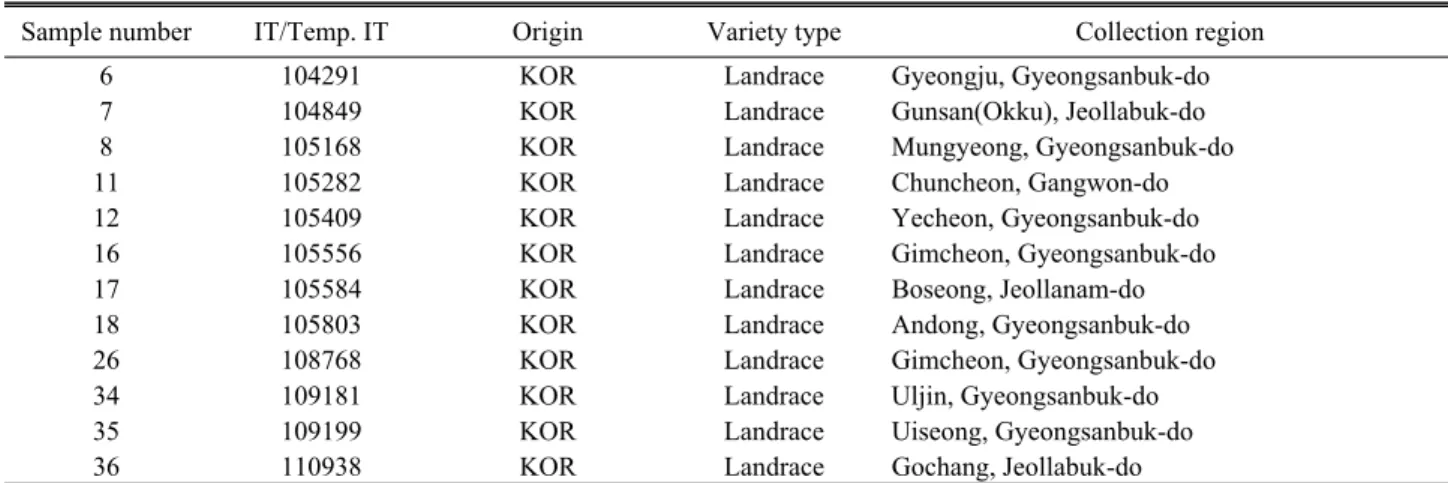
Table 1. List of 94 perilla accessions collected by the RDA
Sample number IT/Temp. IT Origin Variety type Collection region 6 104291 KOR Landrace Gyeongju, Gyeongsanbuk-do 7 104849 KOR Landrace Gunsan(Okku), Jeollabuk-do 8 105168 KOR Landrace Mungyeong, Gyeongsanbuk-do 11 105282 KOR Landrace Chuncheon, Gangwon-do 12 105409 KOR Landrace Yecheon, Gyeongsanbuk-do 16 105556 KOR Landrace Gimcheon, Gyeongsanbuk-do 17 105584 KOR Landrace Boseong, Jeollanam-do 18 105803 KOR Landrace Andong, Gyeongsanbuk-do 26 108768 KOR Landrace Gimcheon, Gyeongsanbuk-do 34 109181 KOR Landrace Uljin, Gyeongsanbuk-do 35 109199 KOR Landrace Uiseong, Gyeongsanbuk-do 36 110938 KOR Landrace Gochang, Jeollabuk-do cultivated in farmer’s fields in several areas of South Korea
(Park et al., 2008) and the weedy types are grown naturally (Lee et al., 2003), even though some varieties have been developed for mainly seed or leaf production. Landraces have been continuously maintained by farmers within their local biological, cultural and socio-economic context. As environments, as well as the people who live within them, are different in different agricultural areas, many landraces of a crop were developed within a certain region after domestication or introduction. In addition, farmers tended to suit the intra-farm multiple eco-agricultural conditions by growing a diverse range of landraces per crop (Christensen et al., 2011).
Landraces and weedy types have distinct identity and lack formal crop improvement, as well as often being genetically diverse, locally adapted and associated with traditional farming systems (Villa et al., 2006). Studies of genetic diversity using molecular markers are necessary to understand the genetic structure of a population and to orientate effective strategies of germplasm conservation (Ganapathy et al., 2011).
However, the lack of molecular characterizations and evaluations limits the utility of this conserved P. frutescens var. frutescens germplasm in breeding programs. Because the ability to identify genetic variation is indispensable to the effective management and use of any plant genetic resources (Rao, 2004), knowledge of the genetic diversity and genetic relationships among conserved and on-farm perilla landrace and weedy type accessions is critical importance, and may ensure the long-term success of perilla breeding programs.
Recently, the variability of some perilla genotypes has been
described in terms of their morphology, cultivation, use, and diversification (Lee and Ohnishi, 2001; Nitta et al., 2003 and 2005), as well as their genetic diversity and relationships with weedy forms using random amplified polymorphic DNA (RAPD) (Nitta and Ohnishi, 1999), amplified fragment length polymorphism (AFLP; Lee et al., 2002; Lee and Ohnishi, 2003), and SSR markers(Park et al., 2008; Verma et al., 2010). However, limited information is available on population structure and fatty composition of Korea landraces and weedy types in P. frutescens var. frutescens germplasm.
The objectives of this study were (i) to evaluate genetic polymorphism between landraces and weedy type collections, (ii) to investigate the mean of GD estimates between the subgroups, and (iii) to estimate the oil content and fatty acid composition to subgroups.
Materials and Methods
Plant materials
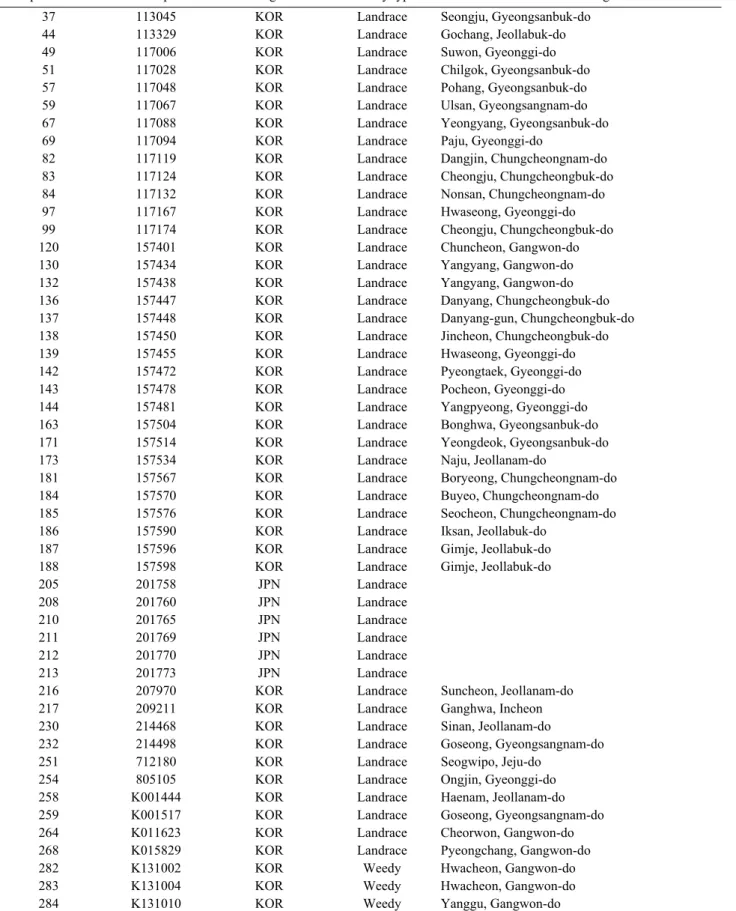
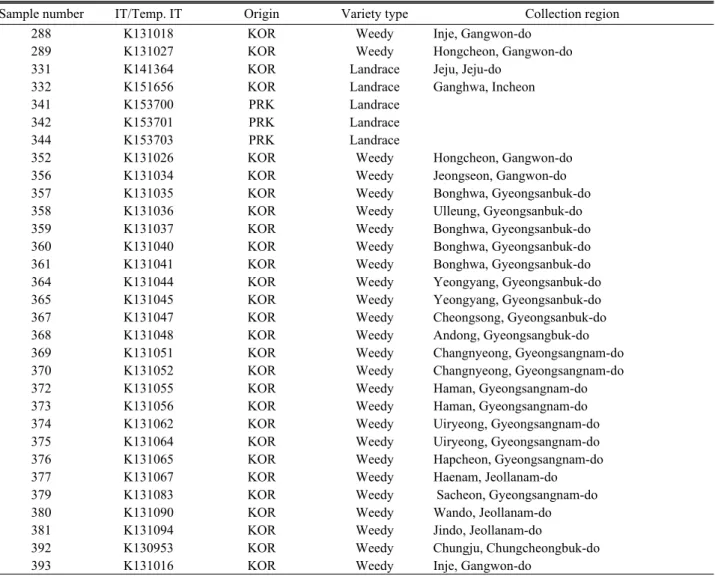
The collection contained 94 accessions of Perilla frutescens var. frutescens consisted including 56 Korean landraces and 29 Korean weedy types from eight provinces of Korea, and 6 Japanese landraces and 3 North Korean landraces from National Institute of Crop Sciences (NICS). The accession numbers and localities of the experimental accessions are presented in Table 1. Samples were sown in a nursery in May 2011, and one month later 30 seedlings were transplanted into the experimental field. Seeds of all accessions were taken during leaf yellowing stage after the flowering.
Table 1. Continued
Sample number IT/Temp. IT Origin Variety type Collection region 37 113045 KOR Landrace Seongju, Gyeongsanbuk-do 44 113329 KOR Landrace Gochang, Jeollabuk-do 49 117006 KOR Landrace Suwon, Gyeonggi-do 51 117028 KOR Landrace Chilgok, Gyeongsanbuk-do 57 117048 KOR Landrace Pohang, Gyeongsanbuk-do 59 117067 KOR Landrace Ulsan, Gyeongsangnam-do 67 117088 KOR Landrace Yeongyang, Gyeongsanbuk-do 69 117094 KOR Landrace Paju, Gyeonggi-do
82 117119 KOR Landrace Dangjin, Chungcheongnam-do 83 117124 KOR Landrace Cheongju, Chungcheongbuk-do 84 117132 KOR Landrace Nonsan, Chungcheongnam-do 97 117167 KOR Landrace Hwaseong, Gyeonggi-do 99 117174 KOR Landrace Cheongju, Chungcheongbuk-do 120 157401 KOR Landrace Chuncheon, Gangwon-do 130 157434 KOR Landrace Yangyang, Gangwon-do 132 157438 KOR Landrace Yangyang, Gangwon-do 136 157447 KOR Landrace Danyang, Chungcheongbuk-do 137 157448 KOR Landrace Danyang-gun, Chungcheongbuk-do 138 157450 KOR Landrace Jincheon, Chungcheongbuk-do 139 157455 KOR Landrace Hwaseong, Gyeonggi-do 142 157472 KOR Landrace Pyeongtaek, Gyeonggi-do 143 157478 KOR Landrace Pocheon, Gyeonggi-do 144 157481 KOR Landrace Yangpyeong, Gyeonggi-do 163 157504 KOR Landrace Bonghwa, Gyeongsanbuk-do 171 157514 KOR Landrace Yeongdeok, Gyeongsanbuk-do 173 157534 KOR Landrace Naju, Jeollanam-do
181 157567 KOR Landrace Boryeong, Chungcheongnam-do 184 157570 KOR Landrace Buyeo, Chungcheongnam-do 185 157576 KOR Landrace Seocheon, Chungcheongnam-do 186 157590 KOR Landrace Iksan, Jeollabuk-do
187 157596 KOR Landrace Gimje, Jeollabuk-do 188 157598 KOR Landrace Gimje, Jeollabuk-do 205 201758 JPN Landrace
208 201760 JPN Landrace 210 201765 JPN Landrace 211 201769 JPN Landrace 212 201770 JPN Landrace 213 201773 JPN Landrace
216 207970 KOR Landrace Suncheon, Jeollanam-do 217 209211 KOR Landrace Ganghwa, Incheon 230 214468 KOR Landrace Sinan, Jeollanam-do
232 214498 KOR Landrace Goseong, Gyeongsangnam-do 251 712180 KOR Landrace Seogwipo, Jeju-do 254 805105 KOR Landrace Ongjin, Gyeonggi-do 258 K001444 KOR Landrace Haenam, Jeollanam-do 259 K001517 KOR Landrace Goseong, Gyeongsangnam-do 264 K011623 KOR Landrace Cheorwon, Gangwon-do 268 K015829 KOR Landrace Pyeongchang, Gangwon-do 282 K131002 KOR Weedy Hwacheon, Gangwon-do 283 K131004 KOR Weedy Hwacheon, Gangwon-do 284 K131010 KOR Weedy Yanggu, Gangwon-do
Table 1. Continued
Sample number IT/Temp. IT Origin Variety type Collection region 288 K131018 KOR Weedy Inje, Gangwon-do
289 K131027 KOR Weedy Hongcheon, Gangwon-do 331 K141364 KOR Landrace Jeju, Jeju-do 332 K151656 KOR Landrace Ganghwa, Incheon 341 K153700 PRK Landrace
342 K153701 PRK Landrace 344 K153703 PRK Landrace
352 K131026 KOR Weedy Hongcheon, Gangwon-do 356 K131034 KOR Weedy Jeongseon, Gangwon-do 357 K131035 KOR Weedy Bonghwa, Gyeongsanbuk-do 358 K131036 KOR Weedy Ulleung, Gyeongsanbuk-do 359 K131037 KOR Weedy Bonghwa, Gyeongsanbuk-do 360 K131040 KOR Weedy Bonghwa, Gyeongsanbuk-do 361 K131041 KOR Weedy Bonghwa, Gyeongsanbuk-do 364 K131044 KOR Weedy Yeongyang, Gyeongsanbuk-do 365 K131045 KOR Weedy Yeongyang, Gyeongsanbuk-do 367 K131047 KOR Weedy Cheongsong, Gyeongsanbuk-do 368 K131048 KOR Weedy Andong, Gyeongsangbuk-do 369 K131051 KOR Weedy Changnyeong, Gyeongsangnam-do 370 K131052 KOR Weedy Changnyeong, Gyeongsangnam-do 372 K131055 KOR Weedy Haman, Gyeongsangnam-do 373 K131056 KOR Weedy Haman, Gyeongsangnam-do 374 K131062 KOR Weedy Uiryeong, Gyeongsangnam-do 375 K131064 KOR Weedy Uiryeong, Gyeongsangnam-do 376 K131065 KOR Weedy Hapcheon, Gyeongsangnam-do 377 K131067 KOR Weedy Haenam, Jeollanam-do 379 K131083 KOR Weedy Sacheon, Gyeongsangnam-do 380 K131090 KOR Weedy Wando, Jeollanam-do 381 K131094 KOR Weedy Jindo, Jeollanam-do
392 K130953 KOR Weedy Chungju, Chungcheongbuk-do 393 K131016 KOR Weedy Inje, Gangwon-do
†KOR, Korea; JPN, Japan; PRK, North Korea.
DNA extraction
Fresh leaves of 15-day-old seedlings were used for the genomic DNA isolation. Homogenization was accomplished by freezing fresh leaf tissue in liquid nitrogen and then grinding with pestle. DNA was extracted using QIAGEN DNA extraction kit (QIAGEN Co. Germany). The relative purity and concentration of extracting DNA was estimated with the help of NanoDrop ND-1000 (Dupont Agricultural Genomics Lab.). The final concentration of each DNA sample was adjusted to 20 ng/ul in TE buffer before conducting PCR.
Amplification of SSR loci and fragment separation The sequences of seven primer pairs of SSR markers were
obtained Park et al. (2008) and additional five polymorphic SSR markers were isolated from the microsatellite enriched library prepared using the protocol described by Dixit et al.
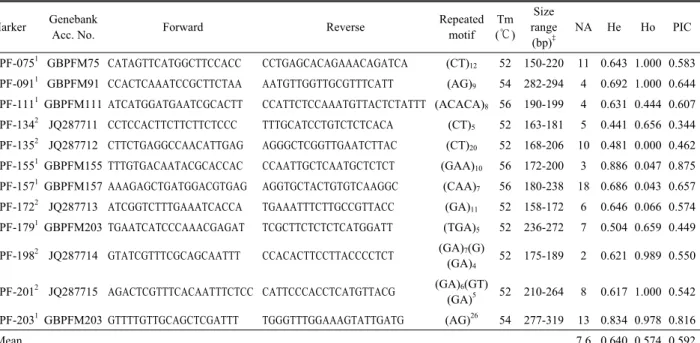
(2005) in this study. A final set of 12 SSR primer pairs was used for the analyses of 94 genotypes (Table 2).
The polymerase chain reactions (PCRs) were performed in PTC-220 thermocyclers (MJ Research, Waltham, MA, USA) under the following amplification conditions : initial denaturation at 94°C for 3 min, followed by 30 cycles of denaturation at 94°C for 30 s, annealing at 52-56°C for 45 s, then 15 cycles at 94°C for 30 s, 53°C for 45 s, and extension at 72°C for 45 s followed by a final extension at 72°C for 10 min and 4°C as the holding step. The 20μL reaction mix consisted of 0.1 μM of each primer, 2.5 U of Taq polymerase (Takara, Tokyo,
Table 2. Simple sequence repeat (SSR) marker primer pairs sequence and the number of alleles obtained from each SSR locus in 94 genotypes of perilla
Marker Genebank
Acc. No. Forward Reverse Repeated
motif Tm (℃)
Size range
(bp)‡
NA He Ho PIC
GB-PF-0751 GBPFM75 CATAGTTCATGGCTTCCACC CCTGAGCACAGAAACAGATCA (CT)12 52 150-220 11 0.643 1.000 0.583 GB-PF-0911 GBPFM91 CCACTCAAATCCGCTTCTAA AATGTTGGTTGCGTTTCATT (AG)9 54 282-294 4 0.692 1.000 0.644 GB-PF-1111 GBPFM111 ATCATGGATGAATCGCACTT CCATTCTCCAAATGTTACTCTATTT (ACACA)8 56 190-199 4 0.631 0.444 0.607 GB-PF-1342 JQ287711 CCTCCACTTCTTCTTCTCCC TTTGCATCCTGTCTCTCACA (CT)5 52 163-181 5 0.441 0.656 0.344 GB-PF-1352 JQ287712 CTTCTGAGGCCAACATTGAG AGGGCTCGGTTGAATCTTAC (CT)20 52 168-206 10 0.481 0.000 0.462 GB-PF-1551 GBPFM155 TTTGTGACAATACGCACCAC CCAATTGCTCAATGCTCTCT (GAA)10 56 172-200 3 0.886 0.047 0.875 GB-PF-1571 GBPFM157 AAAGAGCTGATGGACGTGAG AGGTGCTACTGTGTCAAGGC (CAA)7 56 180-238 18 0.686 0.043 0.657 GB-PF-1722 JQ287713 ATCGGTCTTTGAAATCACCA TGAAATTTCTTGCCGTTACC (GA)11 52 158-172 6 0.646 0.066 0.574 GB-PF-1791 GBPFM203 TGAATCATCCCAAACGAGAT TCGCTTCTCTCTCATGGATT (TGA)5 52 236-272 7 0.504 0.659 0.449
GB-PF-1982 JQ287714 GTATCGTTTCGCAGCAATTT CCACACTTCCTTACCCCTCT (GA)7(G)
(GA)4 52 175-189 2 0.621 0.989 0.550
GB-PF-2012 JQ287715 AGACTCGTTTCACAATTTCTCC CATTCCCACCTCATGTTACG (GA)6(GT)
(GA)5 52 210-264 8 0.617 1.000 0.542 GB-PF-2031 GBPFM203 GTTTTGTTGCAGCTCGATTT TGGGTTTGGAAAGTATTGATG (AG)26 54 277-319 13 0.834 0.978 0.816
Mean 7.6 0.640 0.574 0.592
1Derived from Park et al. (2008). 2Newly developed in this study. NA = total number of alleles per locus; HO = observed heterozygosity;
HE = expected heterozygosity; PIC = polymorphic information content.
Japan), 0.16 mM of each dNTP, 1x PCR Buffer (150 mM Tris –HCl, pH 8.0, and 500 mM KCl), 2.5 mM MgCl2, and 1 μL template DNA. The PCR products were fractionated on an ABI PRISM 3130XL Genetic Analyzer according to the manufacturer’s instructions (Applied Biosystems, USA).
Allele sizes were scored to ensure proper scoring of band size using GeneMapper v4.0 software (Applied Biosystems, USA).
Diversity statistics
PowerMarker version 3.25 (Liu and Muse, 2005) was utilized to create a genetic distance matrix between all pairwise combinations and summarize information on unique alleles, frequency of alleles, distribution of alleles. With this software, the MAF, the observed (HO) and expected (HE) heterozy- gosities were determined, and the degree of polymorphism was estimated from polymorphic information content (PIC) values.
Population structure analysis
The software package Structure 2.0 (Pritchard et al., 2000) was utilized to infer population structure and assign individuals to populations based on the SSR genotypes. Structure uses
model-based clustering in which a Bayesian approach is used to identify clusters based on Hardy–Weinberg equilibrium and linkage equilibrium. In our study, the membership of each genotype was tested in the range of genetic clusters from K = 1 to 10 with the admixture model, without prior information on their origin. The burn-in time and replication number was set to 100,000 for each run and each run was replicated five times as suggested by Pritchard and Wen (2004), assuming that allele frequencies are uncorrelated across clusters. Furthermore, principal co-ordinate analysis (PCoA) in GenAlEx 6.0 (Peakall and Smouse, 2006) was employed to examine further the genetic relationships among detected populations on the basis of the SSR data. PCoA analysis was performed for all markers as well as separately for the markers representing the each group, respectively.
Oil content and fatty acids composition
About three grams of seeds were ground to a particle size of 3 mm or less with pestle using liquid nitrogen, and 1 g of sample was used for analysis. Crude oil extraction was carried out in Foss soxhlet apparatus (Foss, USA), using hexane as solvents and calculated the amount of recovered
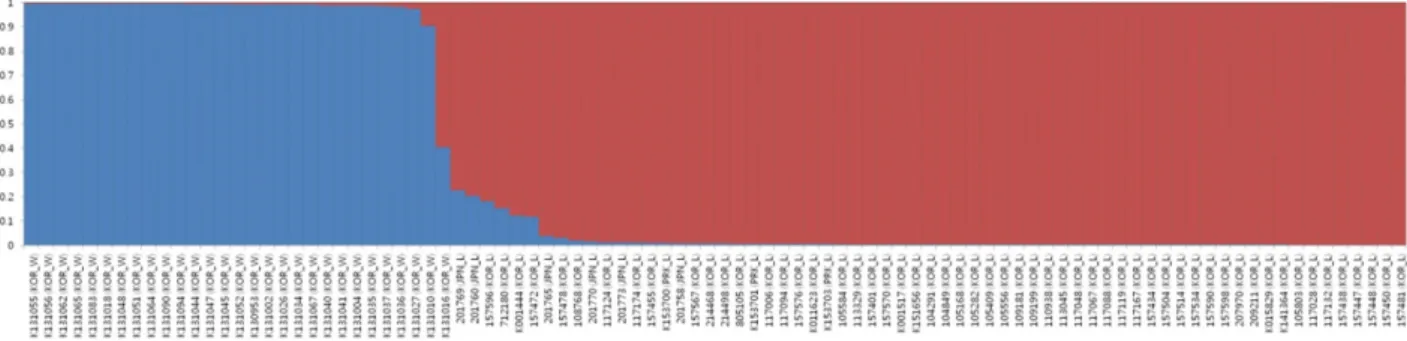
Fig. 1. Membership probability of assigning genotypes of the entire germplasm set to two subgroups. The height of blue and red bars represents the probability of two different subgroups. Each vertical bar represents one perilla accessions; KOR_L, Korean_landraces; KOR_W, Korean_weedy type; JPN_L, Japanese_landraces; PRK_L, North Korean_landraces.
lipid. The fatty acid methyl esters (FAMEs) of the total lipid extract were prepared by the BF3 method (Morrison and Smith, 1964). The boron trifluoride-methanol solution (Sigma, St. Louis, MO) was added to a final concentration of 14%, and the solution was heated on a water bath at 70°C, shaken every 30 min, and cooled to room temperature. The FAMEs were separated by capillary gas chromatography (GC) to the retention times of standard fatty acids. GC analysis was performed on a HP 5890 system (Hewlett Packard, USA) by a flame ionization detector (FID). GC separation was performed on a capillary column (0.25 mm X 30 m, film 0.5 mm) of HP-INNOWAX (Hewlett Packard, USA). Each extraction (1 ul) was injected using the splitless injection method. The column temperature was initially 150℃, then raised the temperature to 200℃ at a rate of 4℃/min, and finally held at 250℃ for 5 min. The injection port was set at 250℃ and detector was 300℃. Nitrogen gas was used as the carrier at a flow rate of 0.6 ml/min. Fatty acids were identified by comparing the gas chromatograph retention time of each peak with standard mixtures that were prepared by methylation similar to the sample preparation and the results calculated using the response area under each peak. Standard chemicals were obtained from Sigma-Aldrich (St. Louis, Mo, USA)
Results
Genetic Diversity Statistics
The average number of alleles, the frequency of the major allele and gene diversity were given in Table 2. All the 12 SSR primers were used for inter-population diversity analysis
and detected 91 alleles among 94 perilla accessions. The average alleles per primer pair was 7.6, ranging from 2 for GB-PF-198 to 18 for GB-PF-157. In general, higher values both of Ho and He revealed a higher genetic variability among the germplasm accessions. The values of HO and HE
were ranged from 0.00 to 1.00 (mean 0.57) and from 0.44 to 0.89 (mean 0.64), respectively, and the highest HO and HE
were revealed by GB-PF-075 (1.000), GB-PF-091 (1.000), GB-PF-201 (1.000) and GB-PF-155 (0.886). The PIC values, a reflection of allele diversity and frequency among the used germplasm, also varied from one locus to another. The PIC values were ranged from 0.344 to 0.875, with an average of 0.592. In comparing of repeat motif, SSR primers containing AG repeat motif showed the larger variability than the other used repeat motif. Markers with PIC values of 0.5 or higher are highly informative for genetic studies and are extremely useful in distinguishing the polymorphism rate of a marker at a specific locus (DeWoody et al., 1995). The mean PIC value observed in this study was higher than the PIC value of 0.5, but the genetic diversity of each SSR locus not appeared to be associated with the number of alleles detected per locus.
Population Structure
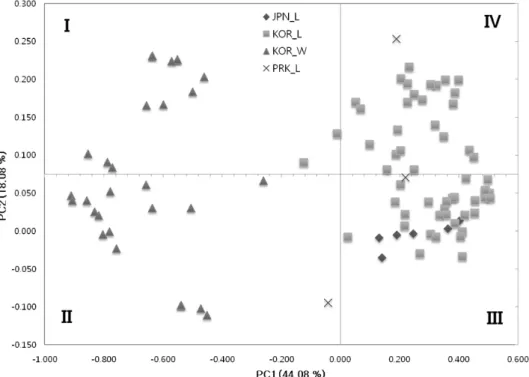
In the joint PCoA of the molecular data of 94 Perilla frutescens var. frutescens accessions, 56 Korean landraces, 29 Korean weedy types, 6 Japanese landraces and 3 North Korean landraces, The first principal coordinate (PC1) accounted for 44.1% of the total variation and the second (PC2) accounted for 18.1% of the total molecular variation of all 94 populations (Fig. 2). The first principal coordinate
Fig. 2. Scatter plot of the first two principle coordinate scales for 94 accessions. The principle coordinate analysis (PCoA) performed with the matrix of genetic similarity (GS) estimates from SSR markers. PC1 and PC2 are the first and second principle coordinates, respectively.
clearly differentiated between the weedy type accessions and landrace germplasm. Even though the weedy types were clearly separated from all other landrace accessions in PC1, weedy types were more separated than landraces in PC2 analysis. Most landrace accessions clustered in quadrants III and IV with a substantial overlap by the second principal coordinate (PC2). Six landraces of Japan were mainly assigned to quadrant III, whereas the Korean landraces was distributed among quadrants III and IV. As in the cluster analysis, accessions of cultivated perilla from Korea showed more genetical variations than those from Japan, although the number of Japanese accessions used in this study was deficiency. The Bayesian model-based STRUCTURE software (Pritchard et al., 2000) was used to determine population structure. The LnP(D), log likelihood, revealed by STRUCTURE increased gradually from K = 1 to K = 10 and showed no clear optimum values. Therefore, the ad hoc measure ΔK was applied to estimate the number of subgroups. For the entire germplasm set, the maximum ΔK value was observed for K = 2 (data not shown). The results of the population structure analysis indicate that the 94 diverse genotypes analyzed
belongs to two subpopulations (Fig. 1) that represent landrace and weedy type, while 7 genotypes were categorized as admixed form of genotype that was consisted with PCoA results.
According to the results obtained in the previous studies, by Ito et al. (1998) using RFLP markers, by Nitta et al. (2003) using RAPD markers and by Lee et al. (2007) using SSR markers, P. frutescens var. frutescens were not distinctively separated between landrace and weedy type and hence considered to belong to the same gene pool. Lee et al. (2007) suggested that natural hybrids and the outcrossing rate in perilla species have not been reported by this time, but these results due to the possibility that cultivated type might be originated from its weedy type, and some accessions of weedy types might be derived from escaped forms from cultivation. Compared with the above published literature, our results showed some differences. The clustering patterns based on the used SSR markers in this paper permitted clear distinctions landraces and weedy types, and it indicated enough polymorphism to differentiate the intra- and inter- population diversity. These 12 SSR marker set, that consist of
Table 3. Saturated and unsaturated fatty acids in seed oils
Country Oil content (%)
Saturated FA Monounsaturated FA
Polyunsaturated FA
Total unsaturated FA
Saturated : monounsaturated : polyunsaturated
Max Min Mean
KOR_L 47.11 37.85 43.59±2.28 10.46 12.62 74.5 87.12 1:1.21:7.21
KOR_W 39.67 31.39 36.51±2.04 11.44 12.71 73.54 86.25 1:1.11:6.43
PRK_L 42.7 37.58 40.34±2.58 11.6 12.93 73.16 86.09 1:1.15:6.31
JPN_L 44.7 42.32 43.45±1.05 10.88 12.98 74.13 87.11 1:1.19:6.81
Mean 43.55±3.15 37.28±4.49 40.97±3.33 11.10±0.52 12.81±0.17 73.83±0.60 86.64±0.55 1:1.15:6.65 KOR_L, Korean_landraces; KOR_W, Korean_weedy type; JPN_L, Japanese_landraces; PRK_L, North Korean_landraces.
Saturated FA, Myristic, Palmitic, Stearic, Arachidic and Behenic; Monounsaturated FA, Oleic; Polyunsaturated FA, Linoleic and inolenic.
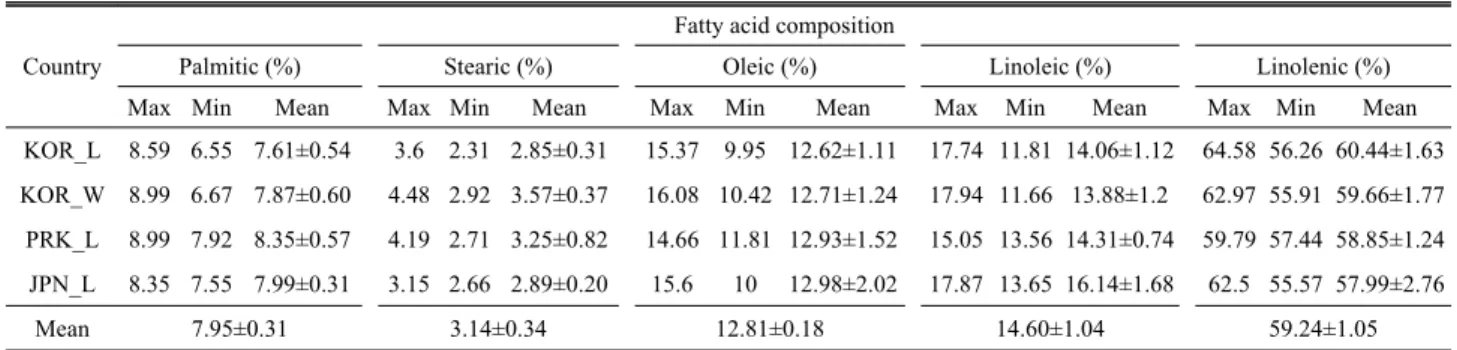
Table 4. Difference in fatty acid composition in 94 perilla accessions collected from different countries
Country
Fatty acid composition
Palmitic (%) Stearic (%) Oleic (%) Linoleic (%) Linolenic (%)
Max Min Mean Max Min Mean Max Min Mean Max Min Mean Max Min Mean
KOR_L 8.59 6.55 7.61±0.54 3.6 2.31 2.85±0.31 15.37 9.95 12.62±1.11 17.74 11.81 14.06±1.12 64.58 56.26 60.44±1.63 KOR_W 8.99 6.67 7.87±0.60 4.48 2.92 3.57±0.37 16.08 10.42 12.71±1.24 17.94 11.66 13.88±1.2 62.97 55.91 59.66±1.77 PRK_L 8.99 7.92 8.35±0.57 4.19 2.71 3.25±0.82 14.66 11.81 12.93±1.52 15.05 13.56 14.31±0.74 59.79 57.44 58.85±1.24 JPN_L 8.35 7.55 7.99±0.31 3.15 2.66 2.89±0.20 15.6 10 12.98±2.02 17.87 13.65 16.14±1.68 62.5 55.57 57.99±2.76
Mean 7.95±0.31 3.14±0.34 12.81±0.18 14.60±1.04 59.24±1.05
KOR_L, Korean_landraces; KOR_W, Korean_weedy type; JPN_L, Japanese_landraces; PRK_L, North Korean_landraces.
newly developed and derived from Park et al. (2008), will be useful tools for assessing genetic diversity and population structure in P. frutescens.
Crude Oil Content and Fatty acid Composition
The crude oil content and constituents of fatty acid are presented in Table 3 and 4. Yield of crude oil from perilla accessions was ranged from 31.39 to 47.11%. Five different kinds of fatty acids, representing over than 99% of identified compound, were identified as α-linolenic acid (55.57%-64.58%), linoleic acid (11.81%-17.94%), oleic acid (9.95%-16.08%), stearic acid (2.31%-4.48%), and palmitic acid (6.55%-8.99%).
Two essential fatty acids, oleic and linolenic acids, were the significant fatty acids in terms of quality and quantity of perilla seed oils. Most predominant fatty acid was linolenic acid as 55-64% of total fatty acid and oleic acid was about 13%. These results were similar to those reported in previous studies on perilla seed where linolenic acid content of the seed was about 58 to 60 % (Asif, 2011; Gunstones et al., 1994).
It can be clearly seen that the oil content of weedy types was lower than landraces, but the ratio of fatty acid composition did not differ significantly between weedy types and landraces. Furthermore, the oil content was not positively correlated with the contents of oleic acid and linolenic acid.
In this study, we selected an accession IT117174 as one of the elite genetic resources, showing higher contents of oil (47.11%) and linolenic acid (64.58%) than the cultivated varieties in Korea (Table 5).
Ding et al. (2012) reported that Perilla frutescens var.
frutescens had seven fatty acids, including myristic acid (0.37%), cis-11-eicosenoic acid palmitic acid (0.16%), but these kinds of fatty acid were not found in this study. The ratio of the saturated, monounsaturated and polyunsaturated fatty acids was 1:1.15:6.65 on average (Table 3). This result was comparable with those obtained by Kim and Choi (2004) in Korea (1:1.50:7.50), Siriamornpun et al. (2006) in Thailand (1:1.19:7.76) and Ding et al. (2012) in China (1:
2.00: 6.02). It suggested that environmental factors affect on fatty acid compositions.
Table. 5 List of 10 accessions containing highest oil content (%) among 94 perilla accessions Acc.No. Country Oil content (%)
Fatty acid composition (%) Palmitic
acid
Stearic acid
Oleic acid
Linoleic acid
Linolenic acid
IT117174 KOR-L 47.114 7.254 2.569 11.046 12.784 64.583 IT157576 KOR-L 46.771 7.584 2.776 12.307 13.448 62.079 IT157472 KOR-L 46.753 7.795 2.827 11.901 14.731 60.608 IT117094 KOR-L 46.459 7.668 3.397 15.374 11.814 59.288 IT105584 KOR-L 46.452 6.658 2.326 12.784 13.760 62.572 IT805105 KOR-L 46.272 8.221 3.024 12.816 13.909 59.237 IT117048 KOR-L 46.139 7.314 2.320 9.950 14.519 64.085 IT157598 KOR-L 45.932 8.043 3.021 13.533 12.891 60.639 IT157567 KOR-L 45.924 7.620 2.850 13.751 13.549 60.475 IT157596 KOR-L 45.582 7.808 2.840 12.934 12.910 61.721
Discussion
P. frutescens (L.) Britt. is widely cultivated in East Asia and used as a spicy vegetable or an oil crop. Leaves of perilla plants have specific scent derived from their variety of essential oil components (Ito et al., 1999 and 2002). However the leaves have poor source of oil, containing only 0.2%. In addition, only the seed oil contains the omega 3 fatty acid and alpha-linolenic acid, in perilla (Asif, 2011). The content of the ω-3 linolenic acid was the highest one among soybean, maize, sunflower, sesame, earthnut, walnut, olive and oil-tea, and even 10% higher than that of the flaxseed oil, and it has also been introduced to Europe, Russia and USA as a commercial oilseed crop (Ding et al., 2012). Some of varieties have been focused on mainly seed or leaf production, but many landraces are cultivated in Korea as a household vegetable and oil crop. Next to breeding stocks and wild relatives, landraces are one of the important sources for genetic improvement of cultivars in oil and linolenic acid content of perilla. The detailed assessment of oil content and fatty acid composition is important to use the landraces as genetic resources for breeding.
In this study, we determined genetic diversity of perilla germplasm based on SSR markers. Cluster analyses performed with landrace accessions and weedy type showed clearly distribution pattern. The genetic variation among the accessions revealed by SSRs reflected a high level of polymorphism at
the DNA level. Model-based structure analysis was divided into two groups, weedy types and landrace accessions, which were basically consistent with the clustering results PCoA based on genetic distance.
The results suggest that these SSR markers of perilla would be a valuable marker resource for the genetic diversity analysis of perilla germplasm and distinguish the weedy types and landraces. Furthermore, the selected perilla accession with the high oil content and linolenic composition would be one of good genetic resources for perilla breeding to improve the oil yield and quality. The information obtained here would be useful to evaluate perilla genetic resources and for the utilization of these plants for the breeding of new valuable cultivars.
Acknowledgement
This study was supported by a grant (Code no. PJ907169) from the National Academy of Agricultural Science, RDA, Republic of Korea.
Literature Cited
Asif, M. 2011. Health effects of omega-3,6,9 fatty acids: Perilla frutescensis a good example of plant oils. Orient Pharm Exp.
Med. 11:51-59.
Christensen, S., R.V. Bothmer, G. Poulsen, L. Maggioni, M.
Phillip, B.A. Andersen and R.B. Jorgensen. 2011. AFLP analysis of genetic diversity in leafy kale (Brassica oleracea L. convar. acephala ( DC.) Alef) landraces, cultivars and wild populations in Europe. Genet. Resour. Crop Evol.
58:657-666.
DeWoody, J.A, R.L. Honeycutt and L.C. Skow. 1995.
Microsatellite markers in white-tailed deer. J. Hered. 86:
317-319.
Ding, Y., M. Neo C, Y. Hu, L. Shi, C. Ma and Y.J. LIU. 2012.
Characterization of fatty acid composition from five perilla seed oils in China and its relationship to annual growth temperature. J. Medicinal Plants Res. 6(9):1645-1651.
Dixit, A., M.H. Jin, J.W. Chung, J.W. Yu, H.K. Chung, K.H.
Ma, Y.J. Park and E.G. Cho. 2005. Development of polymorphic microsatellite markers in sesame (Sesamum indicum L.). Mol. Ecol. Notes 5:736-738.
Ganapathy, K.N., B.N. Gnanesh, M.B. Gowda, S.C. Venkatesha, S.S. Gomashe and V. Channamallikarjuna. 2011. AFLP analysis in pigeonpea (Cajamus cajan (L.) Millsp.) revealed close relationship of cultivated genotypes with some of its wild relatives. Genet. Resour. Crop Evol. 58:837-847.
Gunstone, F.D., J. Harwood and F.B. Padley. 1994. The Lipid Handbook (2nd ed.), Chapman & Hall, London, UK.
Ito, M., H. Kato, Y. Oka and G. Honda. 1998. Phylogenetic analysis of Japanese perilla species by using DNA Polymorphims. Nat. Med. 52(3):248-252.
Ito, M., M. Toyoda and G. Honda. 1999. Chemical composition of essential oil of Perilla frutescens. Nat. Med. 53:32-36 Ito, M., F. Kiuchi, L.L. Yang and G. Honda .2002. A new type
of essential oil from Perilla frutescens from Thailand. J.
Essent. Oil Res. 14:416-419
Kim, H.K., S, Choi and H. Choi. 2004. Suppression of hepatic fatty acid synthase by feeding a-linolenic acid rich Perilla oil lowers plasma triacyglycerol level in rats. J. Nutr. Biochem.
15: 485-492.
Kopecky, J., M. Rossmeisl, P. Flachs, O. Kuda, P. Brauner, Z.
Jilkova, B. Stankova, E. Tvrzicka and M. Bryhn. 2009. n-3 PUFA: Bioavailability and modulation of adipose tissue function. Proc. Nutr. Soc. 68(4):361-369.
Lee, J.K. and O. Ohnish. 2001. Geographic differentiation of morphological characters among perilla crops and their weedy types in East Asia. Breed Sci. 51:247-255.
Lee, J.K. and O. Ohnish. 2003. Genetic relationships among cultivated types of Perilla frutescens and their weedy types in East Asia revealed by AFLP markers. Genet. Resour.
Crop Evol. 50:65-74.
Lee, J.K., M. Nitta, N.S. Kim, C.H. Park, K.M. Yoon, Y.B. Shin and O. Ohnishi. 2002. Genetic diversity of Perilla and related weedy types in Korea determined by AFLP analyses. Crop Sci. 42:2161-2166.
Lee, J.K., S.J. Kwon, B.J. Park, M.J. Kim, Y.J. Park, K.H. Ma, S.Y. Lee and J.H. Kim. 2007. Analysis of genetic diversity and relationships of cultivated and weedy types of Perilla frutescens collected from Korea by using microsatellite markers . Korean J. Genetics 29(1):81-87.
Li, X.W. 1974. Flora Reipublicae Popularis Sinicae. Beijing:
Sci. Press 65: 282-287.
Liu, K. and S.V. Muse. 2005. PowerMarker: an integrated analysis environment for genetic marker analysis. Bioinformatics 21:2128-2129.
Nitta M. and O. Ohnish. 1999. Genetic relationships among two perilla crops shiso and egoma and the weedy type revealed by RAPD markers. Genes Genet. Syst. 74: 43-48.
Nitta, M., J. K. Lee and O. Ohnishi. 2003. Asian Perilla crops and theie weedy from : their cultivation utilization and genetic relationships. Econ. Bot. 57:245-253.
Natta, M., J.K. Lee, C.W. Kang, M. Katsuta, S. Yasumoto, D.
Liu, T. Nagamine and O. Ohnishi. 2005 The distribution of perilla species. Genet. Resour. Crop Evol. 52:797-840.
Okamoto, M., F. Mitsunobu, K. Ashida, T. Mifune, Y. Hosaki, H. Tsugeno, S. Harada, Y. Tanizaki, M. Kataoka, K. Niiya and M. Harada. 2000. Effects of perilla seed oil supplementation on leukotriene generation by leucocytes in patients with asthma associated with lipometabolism. Int. Arch Allergy Immunol. 122(2):137-42.
Park, Y.J., A. Dixit, K.H. Ma, J.K. Lee and M.H. Lee. 2008.
Evaluation of genetic diversity and relationships wothin an on-farm collection of Perilla frutescens (L.) Britt. using microsatellite markers. Genet. Resour. Crop Evol. 55:523-535.
Peakall, R. and P.E. Smouse. 2006. GENEALEX 6; Genetic analysis in Excel. Population genetic software for teaching and research. Mol. Ecol. Notes 6:288-295.
Pritchard, J., M. Stephens and P. Donnelly. 2000. Inference of population structure using multilocus genotype data.
Genetics 155:945-959.
Pritchard, J.K. and W. Wen. 2004. Documentation for STRUCTURE software. The University of Chicago Press, Chicago, USA.
Rao, N.K. 2004. Plant genetic resources: Advancing conservation and use through biotechnology. African J. Biotechnology 3(2):136-145.
Russo, G.L. 2009. Dietary n-6 and n-3 polyunsaturated fatty acids: From biochemistry to clinical implications in cardio- vascular prevention. Biochem. Pharmacol. 77(6): 937-946.
Siriamornpun, S., D. Li, L. Yang, S. Suttajit and M. Suttajit.
2006. Variation of lipid and fatty acid compositions in Thai perilla seeds grown at different locations. J. Song Sci. Tech.
28:17-21.
Verma, N., M.K. Rana, K.S. Negi, G. Kumar, K.V. Bhat, Y.J.
Park and I.S. Bisht. 2010. Assessment of genetic diversity in Indian perilla [Perilla frutescens (L.) Britton] landraces using STMS markers. Indian J. Biotech. 9:43-49.
Villa, T.C.C., N. Maxted, M. Scholten and B. Ford-Lloyd.
2006. Defining and identifying crop landraces. Plant Genet.
Resour. 3:373-384.
(Received 19 October 2012 ; Revised 18 December 2012 ; Accepted 31 December 2012)