Assessment of Genetic Diversity of Horse Breeds Using Microsatellite Makers
Ji-Hye Jung
1, Mi-Rang Lee
1, Tae-Yong Ha
1, Seon-Ku Kim
1, Teak-Soon Shin
1, Han-Seok Kang, Hong-Gu Lee
1, Gil-Jae Cho
3, Kyung-Do Park
4and Byung-Wook Cho
1,2*
1College of Natural Resources & Life Science, Pusan National University, Miryang 627-706, Korea
2Horse Science Research Center, Pusan National University, Miryang 627-706, Korea
3College of Veterinary Medicine, Kyungpook National University, Daegu 702-701, Korea
4Genomic Informatics Center, Hankyong National University, Anseong 456-749, Korea
Received October 16, 2008 /Accepted January 30, 2009
To assist in selection schemes we estimate the genetic diversity of the horse breeds. Genetic diversity at 13 microsatellite loci was compared in six horse breeds : Jeju Native Horse, American Quarter, Jeju Racing Horse, Mongolian Horse, Japanese Horse and Thoroughbred. All of the equine microsatellite used in this study were amplified and were polymorphic. The expected total heterozygosity over all the populations varied between 0.669 and 0.869 and the expected heterozygosity within population range from 0.569 to 0.219 in this study. The low coefficient of gene differentiation value showed that only 0.118 of the diversity was between horses breeds. The constructed dendrogram from the genetic distance matrix showed little differentiation between horse breeds using DISPAN program. The genet- ic distance using 13 microsatellites ranged between 0.137 and 0.414 for the six horse breeds. These results confirm the potential use of equine microsatellite loci as a tool for genetic studies in horse populations. The genetic diversity of the six horse breeds to each other closed to their geographical distribution. Suggesting that the loci would be suitable for horse breeds parentage testing. Therefore, Microsatellite marker seems to be very useful for clarifying the evolutionary relationships of closely related populations.
Key words : Genotype, genetic diversity, microsatellite markers, horse breeds
*Corresponding author
*Tel:+82-55-350-5515, Fax:+82-55-350-5519
*E-mail : [email protected]
Introduction
Recently many investigators have used microsatellte DNA loci for studying the evolutionary relationships of closely related populations, and some authors proposed new genetic measures for this purpose. Allele frequency data are useful for studying evolutionary relationships of closely re- lated species or populations. Microsatellite DNA has been used for studies of genetic variability and population struc- ture in horse breeds [8]. Genetic characterization is the first step in the conservation of breeds and the determination of future breeding strategies. The term microsatellite, also short tandem repeats (STRs), refers to a class of codominant DNA markers which are inherited in a Mendelian fashion.
Microsatellite are highly polymorphic and abundant se- quences dispersed throughout most eukaryotic nuclear ge- nomes [11,24]. A large number of microsatellite markers have been mapped for various species including humans, mice, cattle, sheep, pigs and poultry [6]. Domestic animals
are products of selection, improvement and domestication processes. The selection pressure to which are submitted has forced races and domestic populations to adapt to specific ecological niches. These breeds have also undergone the ef- fects of genetic drift, mutation and artificial selection.
Accordingly, the preservation and conservation these breeds are of significant value for nature and for humans [5]. For a decade, concerns regarding many native breeds have in- creased, because many of them are disappearing by mixing and replacement [5]. In the present study, we performed a routine DNA typing with 13 microsatellite markers for ge- netic diversity in horse breeds.
Materials and Methods Animals and DNA extraction
We collected blood samples from Thorughbred horses
(n=44), Jeju racing horses (n=56), Jeju native horses (n=41),
Japanese horses (n=5), Mongolian horse (n=39), and
American Quarter (n=11). A total number of 196 horses from
six horse breeds were tested. No horses were injured in any
way during the collecting of samples. Genomic DNAs were
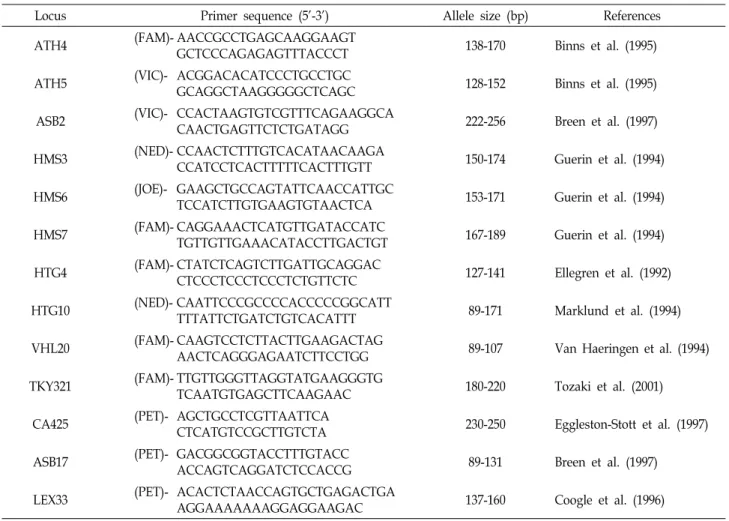
Table 1. Characteristics of 13 microsatellite loci used in this study
Locus Primer sequence (5'-3') Allele size (bp) References
ATH4 (FAM)- AACCGCCTGAGCAAGGAAGT
GCTCCCAGAGAGTTTACCCT 138-170 Binns et al. (1995)
ATH5 (VIC)- ACGGACACATCCCTGCCTGC
GCAGGCTAAGGGGGCTCAGC 128-152 Binns et al. (1995)
ASB2 (VIC)- CCACTAAGTGTCGTTTCAGAAGGCA
CAACTGAGTTCTCTGATAGG 222-256 Breen et al. (1997)
HMS3 (NED)- CCAACTCTTTGTCACATAACAAGA
CCATCCTCACTTTTTCACTTTGTT 150-174 Guerin et al. (1994)
HMS6 (JOE)- GAAGCTGCCAGTATTCAACCATTGC
TCCATCTTGTGAAGTGTAACTCA 153-171 Guerin et al. (1994)
HMS7 (FAM)- CAGGAAACTCATGTTGATACCATC
TGTTGTTGAAACATACCTTGACTGT 167-189 Guerin et al. (1994)
HTG4 (FAM)- CTATCTCAGTCTTGATTGCAGGAC
CTCCCTCCCTCCCTCTGTTCTC 127-141 Ellegren et al. (1992)
HTG10 (NED)- CAATTCCCGCCCCACCCCCGGCATT
TTTATTCTGATCTGTCACATTT 89-171 Marklund et al. (1994)
VHL20 (FAM)- CAAGTCCTCTTACTTGAAGACTAG
AACTCAGGGAGAATCTTCCTGG 89-107 Van Haeringen et al. (1994)
TKY321 (FAM)- TTGTTGGGTTAGGTATGAAGGGTG
TCAATGTGAGCTTCAAGAAC 180-220 Tozaki et al. (2001)
CA425 (PET)- AGCTGCCTCGTTAATTCA
CTCATGTCCGCTTGTCTA 230-250 Eggleston-Stott et al. (1997)
ASB17 (PET)- GACGGCGGTACCTTTGTACC
ACCAGTCAGGATCTCCACCG 89-131 Breen et al. (1997)
LEX33 (PET)- ACACTCTAACCAGTGCTGAGACTGA
AGGAAAAAAAGGAGGAAGAC 137-160 Coogle et al. (1996)
prepared from whole blood samples. Genomic DNAs from six horse breeds were extrated using the Mag Extractor System MFX-2000 (Toyobo, Osaka, Japan). DNA was ex- tracted from whole sample by the high salt extraction proce- dure, suspended in TE pH 8.0, and stored at 4
oC.
Microsatellite markers
In this study we used the following 13 microsatellite loci:
AHT4, AHT5, ASB2 [1], HMS3, HMS6, HMS7 [7], HTG10 [10], VHL20 [23], TKY321 [19,20,22], CA425 [4], ASB17 [2]
and LEX33 [3] (Table. 1).
Multiplex PCR conditions
Multiplex PCRs were carried out in 10 μl reactions cain- taining 50 ng of genomic DNA, 10 pmol of each primer, 200 μM of each dNTP, 0.5 units of Taq DNA polymerases (Promega), and reaction buffer with 1.5 mM MgCl
2.PCR was carried out in a 9700 GeneAmp PCR system by an initial denaturation at 95
oC for 10 min, followed by 30 cycles at 95
oC for 30 sec, 60
oC for 30 sec and 72
oC for 60 sec. The
thermal profile ended with a final extansion at 72
oC for 60 min. PCR products were detected by 8% polyacrylamide gel electrophoresis using an Applied Biosystems 377 DNA se- quencer with Genescan analysis software (version 3.1) using Genotyper analysis software (version 2.0)
Statistical analysis
Allele frequencies and mean heterozygosity values for
each polymorphic locus were obtained using the MS toolkit
S/W [14]. The average expected heterozygosity for each pop-
ulation (Hs), the gene diversity in the total population (Ht),
and coefficient of gene differentiation Gst [11] were esti-
mated using the computer programme DISPAN [13], and
tested by permutation test. Genetic distance and phyloge-
netic trees among populations were obtained with the dis-
tance measure D
A[12]. Takezaki and Nei [18] suggested the
D
Adistance for making phylogenetic trees when the interest
of the study mainly focused on the topology rather than evo-
lutionary time. Distance data was analysed with the neigh-
bour-joining (NJ) method of clustering [15]. The NJ method
procedure only unrooted trees. All these calculation were carried out using the DISPAN package [13].
Results
The equine microsatellite were all well-amplified in the horses. The average gene diversity based on the expected total heterozygosity over all loci was 0.796, while, it ranged from 0.669 (HTG4) to 0.869 (TKY321) for individual loci. The average gene diversity based on the Expected heterozygosity within populaiton across all loci in the total sample was 0.691 and ranged from 0.569 (HTG4) to 0.769 (TKY321). The average coefficient of gene differentiation (Gst) over the 13 loci was 0.061 for CA425 to 0.219 for LEX33 (Table 2). The mean number of alleles per locus of six horses ranged from 3.46 to 8.62 in the Mongolian horse (Table 3). The mean ob- served heterozygosity (Ho) ranged from 0.649 in the
Table 2. Total number and range of observed alleles, average heterozygosity Hs and Ht, coefficient of differentiation Gst. in horse breeds
Locus Chromosome location
Size range (bp)
No. of
alleles Ht Hs Gst ATH4
ATH5 ASB2 HMS3 HMS6 HMS7 HTG4 HTG10 VHL20 TKY321 CA425 ASB17 LEX33 All loci
24 6 15
9 4 1 9 21 30 3 2 2 1
100-160 130-148 221-259 133-171 157-169 171-185 128-142 90-112 84-104 208-232 232-250 91-121 198-216
10 8 14 10 7 8 8 12 10 13 11 16 11
0.816 0.814 0.838 0.798 0.726 0.733 0.669 0.771 0.828 0.869 0.762 0.871 0.853 0.796
0.745 0.714 0.664 0.716 0.621 0.659 0.569 0.652 0.675 0.769 0.715 0.769 0.667 0.691
0.088 0.123 0.208 0.103 0.145 0.101 0.109 0.105 0.184 0.114 0.061 0.117 0.219 0.129 Ht: Expected total heterozygosity, Hs: Expected heterozygosity within population, Gst: Coefficient of gene differentiation
Table 3. Number of alleles per locus and heterozygosity in aver- age over 13 microsatellites in 6 horse populations
Population
Mean sample size per
locus
Mean No. of alleles per
locus
Mean heterozygosity Obseved Expected JNH
Jap Qua JRH Mong Tho Means
41 5 11 56 39 44 196
6.23 3.46 5.46 8.38 8.62 5.85 6.31
0.675 0.708 0.755 0.804 0.649 0.691 0.713
0.700 0.639 0.705 0.794 0.797 0.728 0.605
Table 4. Matrix of DA genetic distance among six horse breeds
JNH Jap Qur JRH Mong
Jap Qua JRH Mong Tho
0.4146 0.3725 0.2013 0.1414 0.3930
0.3944 0.3431 0.3520 0.4103
0.2242 0.2776 0.1701
0.1373
0.1841 0.2668
Fig 1. Neighbor-joining tree constructed using DA genetic dis- tance matrix, showing the genetic relationships among the horse breeds. Numbers indicates the bootstrap values in percentage (1,000).
Mongolian horse to 0.804 in Jeju racing horse. Average ex- pected heterozygosities (H
E) ranged from 0.639 in the Japanese horse breed to 0.797 in the Mongolian horse. The D
Adistance, using 13 microsatellites, ranged between 0.137 and 0.4146 for the six horse breeds (Table 4). A neigh- bour-joining tree was constructed, and the reliability of the obtained tree was examined by 1000 bootstrap replicates (Fig. 1). The most robust features of the topology were the Jeju racing horse-Mongolian horse cluster (84% support) and the cluster (96% support) formed by American Quarter and Thoroughbred which are all from the Japanese horse.
Discussion
Recently, many microsatellites were isolated from the horse genome [22]. Microsatellite may be a useful approach for resolving the relationships of Horse populations. In this study we analyzed the allele frequencies and genotype dis- tributions among American Quarter and Thoroughbred to consider the ancestral populations for Japanese horse populations. The average heterozygosity with each pop- ulation of Mongolian horse range from 0.75 to 0.77.
Mongolian horse had the highest values in all populations.
In contrast, the average heterozygosity within each pop-
ulation of Japanese horse ranged between 0.34 and 0.66. In
addition, Mongolian horse possessed all the alleles found in
Japanese horse. These assumptions are supported by the his-
torical fact that native horses on the Asian continent were frequently transported to Japan through the Korean peninsula. Thus, the phylogenetic reconstructions using D
Adistance gave similar clustering results. In conclusion, we an- alyzed the genetic variation and phylogenetic relationship of six horse breeds using microsatellites. In the future, an inves- tigation of the pedigree of population and the genetic rela- tionships in those populations will be necessary. We con- firmed the potential use of equine microsatellite loci as a tool for genetic study and parentage testing from these results.
Acknowledgement
This work was supported by PNU Grants (2008) to PNU-Special Animal Biotechnology Center.
References
1. Binns, M. M., N. G. Holmes, A. Holmes, and A. M. Scott.
1995. The identification of polymorphic microsatellite loci in the horse and their use in thoroughbred parentage testing. Br. Vet. J. 151, 9-15.
2. Breen, M., G. Lindgren, M. M. Binns, J. Norman, Z. Irvin, K. Bell, K. Sandberg, and H. Ellegren.. 1997. Genetical and physical assignments of equine microsatellites-first in- tegration of anchored markers in horse genome mapping.
Mamm. Genome 8, 267-273.
3. Coogle, L., E. Bailey. R. Reid, and M. Russ. 1996. Equine dinucleotide repeat. polymorphism at loci LEX002, -003, -004, -005, -007, -008, -009, -010, -011, -013 and -0.14. Anim.
Genet 27, 126-127.
4. Eggleston-Stott, M. L., A. DelValle, M. Bautista, S. Dileanis, E. Wictum, and A. T. Bowling. 1997. Nine equine dinucleo- tide repeats at microsatellite loci UCDEQ136, UCDEQ405, UCDEQ412, UCDEQ425, UCDEQ437, UCDEQ467, UCDEQ487, UCDEQ502 and UCDEQ505. Anim. Genet 28, 370-371.
5. Giacomon, E. H., G. P. Fernandez-Stolzand, and T. R. O.
Freitas. 2008. Genetic diversity in the Pantaneiro horse breed. assessed using microsatellite DNA markers. Genet Mol. Res. 7, 261-270.
6. Groenen, H. H., N. Cheng, B. F. Bumstead, W. E. Benkel, T. Briles, D. W. Burke, L. B. Burt, J. Crittenden, and J.
Dodgson. 2000. A Consensus Linkage Map of the Chicken Genome. Genome Res. January 10, 137-147.
7. Guérin, G., M. Bertaud, and Y. Amigues. 1994.
Characterization of seven new horse microsatellites: HMS1, HMS2, HMS3,. HMS5, HMS6, HMS7 and HMS8. Anim.
Genet 25, 62.
8. Jordana, J., P. Folch, and J. A. Aranguren. 2001.
Microsatellite analysis of genetic diversity. in the Catalonian donkey breed. J. Anim. Breed. Genet 118, 57-63.
9. Litt, M. and J. A. Luty. 1989. A hypervariable microsatellite revealed by in vitro amplification of a nucleotide repeat within the cardiac muscle actin gene. Am. J. Hum. Genet 44, 397-401.
10. Marklund, S. H., S. Ellegren. K. Sandberg, and L.
Andersson. 1994. Parentage testing and linkage analysis in the horse using a set of highly polymorphic microsatellites.
Anim. Genet 25, 19-23.
11. Nei, M. 1973. Analysis of gene diversity in subdivided populations. Proc. Natl. Acad. Sci. USA 70, 3321-3323.
12. Nei, M., F. Tajima, and Y. Tateno. 1983. Accuracy of esti- mated phylogenetic tress from molecular data. J. Mol. Evol.
19, 153-170.
13. Ota, T. 1993. DISPAN: Genetic Distance and Phylogenetic Analysis. Pennsylvania State University. University Park, PA, USA.
14. Park, S. 1999. The microsatellite toolkit for MS Excel 97 or 2000. Molecular population genetics laboratory, Smurfit Institute of Genetics. Trinity College, Dublin 2, Ireland.
15. Saitou, N. and M. Nei. 1987. The neighbor-joining method:
A new method. for reconstructing phylogenetic trees. Mol.
Biol. Evol. 4, 406-425.
16. Santos, S. A., M. C. M. Mazza, J. R. B. Sereno, and C. S.
A. Mazza. 2004. Estratégias de conservação in situ do cavalo pantaneiro. Documentos Embrapa 29, Brasília.
17. Solis, A., B. M. Jugo, J. C. Meriaux, M. Iriondo, L. I. Mazon, A. I. Aguirre, A. Vicario, and A. Estomba. 2005. Genetic diversity within and among four South European. native horse breeds based on microsatellite DNA analysis: im- plications for conservation. Journal of Heredity 96, 670-678.
18. Takezaki, N. and M. Nei. 1996. Genetic distances and re- construction of phylogenetic trees from microsatellite DNA.
Genetics 144, 389-399.
19. Tozaki, T., H. Kakoi, S. Mashima, K. Hirota, T. Hasegawa, N. Ishida N. Miura, and M. Tomita. 2000b. The isolation and characterization of 18 equine microsatellite loci, TKY272-TKY289. Animal Genetics 31, 149-149.
20. Tozaki, T., H. Kakoi, S. Mashima, K. Hirota, T. Hasegawa, N. I. shida, M. Miura, and M. Tomita. 2000c. The isolation and characterization of 34 equine micro-satellite loci, TKY290- TKY323. Anim. Genet 31, 234-236.
21. Tozaki, T., H. Kakoi, S. Mashima, K. Hirota, T. Hasegawa, N. Ishida, N. Miura, N. H. Choi-Miura, and M. Tomita.
2001. Population study and validation of paternity testing for Thoroughbred horses by 15 microsatellite loci. J. Vet.
Med. Sci. 63, 1191-1197.
22. Tozaki, T., S. Inoue, S. Mashima, M. Ohta, N. Miura, and M. Tomita. 2000a. Sequence analysis of trinucleotide repeat microsatellite from an enrichment library of the equine genome. Genome 43, 354-365.
23. Van Haeringen, H., A. T. Bowling, M. L. Scott, J. A. Lenstra, and K. A. Zwaagstra. 1994. A highly polymorphic horse microsatellite locus: VHL20. Anim. Genet 25, 207.
24. Weber, J. L. and P. E. May. 1989. Abundant class of human DNA polymorphisms which can be typed using the poly- merase chain reaction. Am. J. Hum. Genet 44, 3.