• 검색 결과가 없습니다.

Effects of Mixture Lactic Acid Bacteria and Sea Tangle on Anti-obesity and Gut Microflora in Rats

N/A
N/A
Protected

Academic year: 2021

Share "Effects of Mixture Lactic Acid Bacteria and Sea Tangle on Anti-obesity and Gut Microflora in Rats"

Copied!
9
0
0

로드 중.... (전체 텍스트 보기)

전체 글

(1)

Effects of Mixture Lactic Acid Bacteria and Sea Tangle on Anti-obesity and Gut Microflora in Rats

Da Yoon Yu

1

, Jeong A Kim

1

, In Sung Kim

1

, Chul Young Lee

1

, Seong chan Kim

2

, Sang Suk Lee

3

, In Soon Choi

4

* and Kwang Keun Cho

1

*

1

Department of Animal Resources Technology, Gyeongnam National University of Science and Technology, Jinju 52725, Korea

2

Colleges of Medicine, Hallym University, Chuncheon 24252, Korea

3

Department of Animal Science and Technology, Sunchon National University, Suncheon 57922, Korea

4

Departmnet of Life Science, Silla University, Busan 46958, Korea

Received November 14, 2017 /Revised December 14, 2017 /Accepted December 19, 2017

The present study was undertaken to investigate the effects of dietary provision of lactic acid bacteria (LB) and sea tangle (ST) on the obesity-associated intestinal microbiota in rats with obesity induced by a high-fat diet. Forty-eight 8-wk-old Sprague-Dawley rats were fed a basal diet (CON), a high fat diet (HFD; CON supplemented with 10% lard), HF supplemented with LB [HFL; 5x10

8

cfu of each of Lactobacillus rhamnosus, Lactobacillus johnsonii, Bifidobacterium longum and Bifidobacterium lactis], or HFL containing 10% ST (HFLS), with 4 replicates (cages) of 3 rats per dietary treatment, for 6 wk, and the intestinal microbiota were determined by pyrosequencing. The HFL and HFLS groups ex- hibited reduced rates of weight gain than the HF group, and the former groups had smaller ratios of Firmicutes and greater ratios of Bacteriodetes, with decreased Firmicutes/Bacteroidetes ratios, than the latter at the level of the phylum. Compared with the results for the HF group, HFL and HFLS had reduced ratios of the families of Roseburia, Mollicute, Erysipelotrichi, and Oscillibacter within Firmicutes associated with obesity and increased ratios of the families of Prevotella, Alistipes and Bacteroides within the Bacterioidetes phylum known to have an anti-obesity effect. The content of butyric acid in feces was greater in the HFLS group vs. HF and HFL. In conclusion, the present results suggest that dietary provision of LB plus ST has an anti-obesity effect and induced changes in intestinal microorganisms, and enhanced the content of butyric acid, which is an intestinal metabolite.

Key words : Antiobesity, mixture lactic acid bacteria, gut microbiota, rat, sea tangle

*Corresponding authors

*Tel : +82-55-751-3286, Fax : +82-55-751-3689

*E-mail : [email protected] (Kwang Keun Cho)

*Tel : 82-51-999-5348, Fax : +82-51-999-5644

*E-mail : [email protected] (In Soon Choi)

This is an Open-Access article distributed under the terms of the Creative Commons Attribution Non-Commercial License (http://creativecommons.org/licenses/by-nc/3.0) which permits unrestricted non-commercial use, distribution, and reproduction in any medium, provided the original work is properly cited.

Journal of Life Science 2017 Vol. 27. No. 12. 1421~1429 DOI : https://doi.org/10.5352/JLS.2017.27.12.1421

서 론

비만(obesity)은 섭취 에너지가 소비 에너지보다 큰 에너지 대사 불균형으로 발생하는 대사성 질환(metabolic disease)으 로, 체중에서 체지방 비율이 지나치게 높은 상태를 말한다[1, 19]. 전 세계적으로 비만은 지속적으로 증가하는 추세이며 최 근 들어 급증하고 있다[64]. 비만은 당뇨병(diabetes mellitus), 고혈압(hypertension), 심뇌혈관질환(cardiocerebrovascular disease), 각종 암 등 다양한 합병증을 유발시켜 의학적으로 심각한 질병으로 분류고 있다[41].

최근 항비만 기능성식품 소재로 다시마(sea tangle)와 유산

균(lactic acid bacteria)이 많은 관심의 대상이 되고 있다[26].

대표적인 갈조류(brown algae)의 하나인 다시마는 저항성 탄 수화물(resistant carbohydrate) alginic acid가 약 20-30% 함유 되어 있다. 이러한 alginic acid는 콜레스테롤 흡수를 억제하여 동맥경화를 예방하고, 중금속을 흡착하여 체외로 배출시킨다 [11, 43, 57]. 다시마를 포함하는 해조류(seaweed)의 식이섬유 (dietary fiber)는 소장내 소화 효소에 의한 분해율은 매우 낮으 나, 대장의 미생물에 의해 발효되어 단쇄지방산(short chain fatty acids, SCFA) 생성이 높은 것으로 알려져 있으며[20], 장 의 활동을 원활하게 하고 장내 유익균 수를 증가시키며, 항암 작용(anticancer effect)과 콜레스테롤의 혈관 내 침착을 방지 한다[10, 13, 37].

유산균(Lactic acid bacteria, LAB)은 소화에 도움을 주며,

변비(constipation)와 장 누수(leaky gut), 설사(diarrhea)와 같

은 장 질환을 억제하고 면역 기능을 활성화시키는 기능[30,

54] 및 체내 콜레스테롤 합성 저해, 지방 축적과 지방 대사를

억제하는 항비만 효과를 나타낸다[38]. 또한 장점막 상피세포

에 부착 서식하면서, 병원성 미생물(pathogenic microorgan-

ism) 증식 억제와 유익 균(beneficial microorganism) 증가, 상

피세포(epithelial cell) 보호, 영양소의 분해와 흡수 촉진 등의

(2)

Table 1. Composition of the experiment diets (g/100g diet)

Ingredients Treatments

Control HFD HFL HFLS

Casein Sucrose Corn starch Corn oil Lard Cellulose DL-methionine AIN-mineral mixture AIN-vitamin mixture Choline bitrate

*

LAB (5 × 10

8

cfu) Sea Tangle Total

20.00 50.00 15.00 5.00

- 5.00 0.30 3.50 1.00 0.20 - - 100.00

20.00 50.00 5.00 5.00 10.00

5.00 0.30 3.50 1.00 0.20 - - 100.00

20.00 45.00 5.00 5.00 10.00

5.00 0.30 3.50 1.00 0.20 5.00 - 100.00

20.00 35.00 5.00 5.00 10.00

5.00 0.30 3.50 1.00 0.20 5.00 10.00 100.00 Control, basal diet group; HFD, high fat diet group; HFL, HFD+

5% LAB group; HFLS, HFL+10% sea tangle group.

*

LAB is Bifidobacterium longum, Lactobacillus johnsonill, Bifidobacte- rium lactis, Lactobacillus rhamnosus.

역할을 통하여 장내 환경을 개선시킨다[36].

현재 다시마와 유산균은 안전성이 검증된 식품으로서 다양 한 생리활성물질에 의해 항비만 효과를 보이고 있다. 하지만 혼합한 두 물질 의 항비만 효과와 장내 미생물 분포 변화에 미치는 영향에 대해서는 알려지지 않았다. 따라서 본 실험에 서는 고지방사료로 비만이 유도된 흰 쥐를 이용하여 다시마와 복합유산균의 항비만 효과를 규명하고 비만과 관련된 장내 유해균 및 유익균 집단의 변화에 미치는 영향을 규명하고자 하였다.

재료 및 방법

실험동물 및 공시재료

본 실험에서는 탈염다시마분말과 유산균 5종(Lactobacillus rhamnosus, Lactobacillus johnsonii, Bifidobacterium longum, Bifidobacterium lactis)을 사료의 0.05% 혼합하여 사료에 첨가하 였다(Table 1).

8주령의 수컷 흰 쥐를 Samtako (Osan, Korea)로부터 구입 하였으며, 1 cage 당 3마리씩 4반복하여 처리군 당 12마리를 사용하였다. 실험에 사용한 기초사료는 Ain-76 (Feed Lab, Guri, Korea)을 기준으로 조제하였으며, 고지방사료는 대조군 사료 무게의 10% lard를 기초사료에 첨가하여 사용하였다. 실 험 그룹은 Table 1과 같이 대조군(Control), 고지방 처리군 (high fat group, HFD), 고지방사료에 사료 무게의 5% 유산균 (5×10

8

cfu)을 첨가한 유산균 처리군(HFD+5% LAB, HFL), 고 지방사료에 사료 무게의 5% 유산균(5×10

8

cfu)과 10% 다시마 를 첨가한 처리군(HFL+10% sea tangle, HFLS) 로 구분하였

다. 실험 동물 사육실의 환경은 22±2°C, 상대습도 55±5%로 유지하고 명암은 12시간 주기(7:00~19:00 점등)로 조절하였다.

실험은 일주일 순화기간을 거쳐 6주간 시료를 급여하였고, 물 과 사료는 무제한으로 급여하였다. 실험시작부터 종료까지 일 주일에 한번씩 체중을 계산하여 증체량과 사료섭취량을 조사 하였다. 동물실험은 경남과학기술대학교 동물실험윤리위원 회의 인준을 받아 수행하였다(승인번호 2015-1).

장내 미생물 분석

흰 쥐의 장내 미생물 genomic DNA를 추출하기 위해 각 처리별로 장 내용물을 채취하였다. 장 내용물에 함유된 장내 미생물의 genomic DNA는 ZR Fecal DNA kit™ (Zymo Research, Orange County, CA)를 이용하여 추출하고, py- rosequencing 방법을 이용하여 장내 미생물 변화를 분석하였 다[35]. Pyrosequencing을 통해 얻어진 염기서열은 CLcom- munity

TM

CD-HIT 프로그램(ChunLab. Inc, Seoul, Korea)을 이용하여 97% sequence similarity에 의해 정의된 species(종) 를 의미하는 Operational Taxonomic Unit (OTU) 값을 나타내 었다[39].

단쇄지방산 분석

장 내용물에 함유된 SCFA (Short chain fatty acids) 함량은 Gas Chromatography (GC)로 분석하였다. GC volatile acid standard로는 volatile acid standard mix (Cat. No. 46975-U, Supelco), butyric acid (Cat. No. 19215, Fluka), propionic acid (Cat. No. 94425, Fluka)를 사용하였고, column은 30 m × 0.25 mm ID, 0.25um phase, oven range는 100℃에서 200℃까지 8℃/min, carrier는 0.75ml/min helium, inlet은 N2 gas, split 은 50:1, heater는 220℃로 설정하였다[8, 27, 47]. Oven은 40℃

for 2 min, heating by 5℃/min, 80℃ for 10min, heating by 10℃/min, 200℃ for 15min에서 처리하였고, detector는 220℃

에서 처리하였다.

통계 분석

실험 결과의 분석은 평균±표준오차(mean ± SE)로 나타내 었으며, SPSS Statistics v20 (IBM, Armonk, New York, USA) 을 이용하여 p<0.05 수준에서 Duncan's multiple range test를 실시하였다[14].

결과 및 고찰

항비만 효과

유산균과 다시마 분말 첨가가 흰 쥐의 체중 증가에 미치는

영향을 조사하기 위해 Control, HFD, HFL과 HFLS로 나누어

6주간 동물 실험을 진행하였다. 일당증체량은 4.60의 고지방

사료를 섭취한 HFD에 비해 3.25의 HFL과 HFLS에서 낮게 나

(3)

A B C

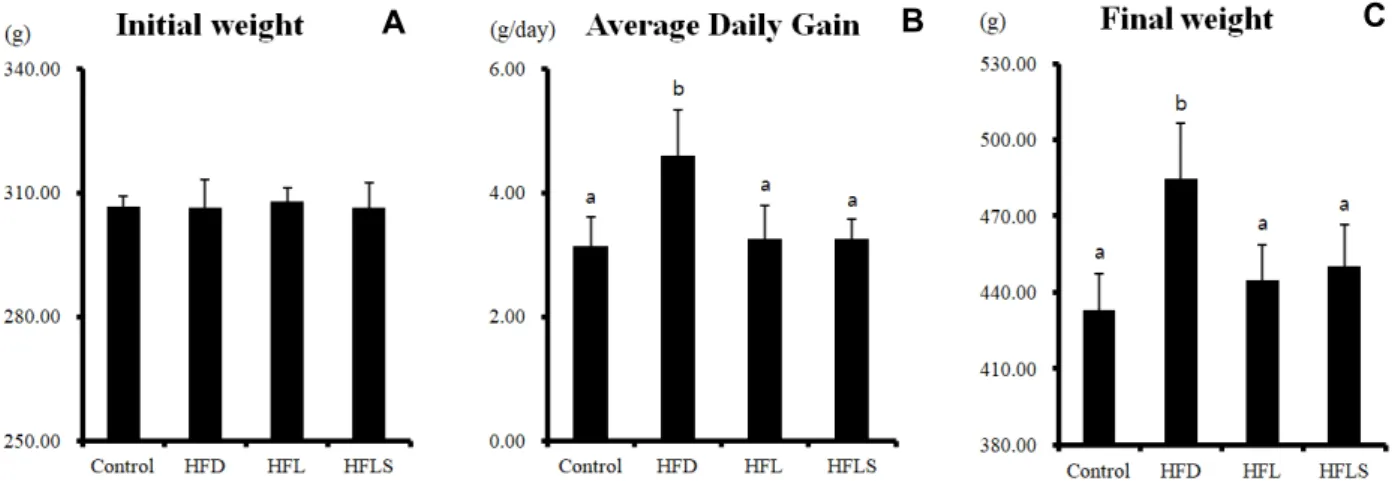
Fig. 1. Effects of dietary supplementation of sea tangle and mixture lactic acid bacteria on growth performance in rats fed a high-fat diet. Control, basal diet group; HFD, high fat diet group; HFL, HFD+5% LAB group; HFLS, HFL+10% sea tangle group.

a-b

Means are significantly different within the same row (p<0.05). Data represent means ± SD of 12 replicates.

타났고, 종료시 체중 또한 484.70g의 고지방사료를 섭취한 HFD에 비해 444.87g의 유산균과 다시마 분말을 첨가한 HFL 과 450.37g의 HFLS에서 유의적으로 낮게 나타났다(p<0.05) (Fig. 1). 유산균은 장내 미생물 변화를 유도하여 고지방사료로 증가된 장내 투과성, LPS (lipopolysaccharide) translocation, 전신성 염증(systemic inflammation), 내당능(glucose toler- ance) 및 과식성 행동(hyperphagic behavior) 등을 감소시켜 항비만 효과를 나타낸다[2, 32]. 다시마는 풍부한 식이섬유를 함유하여 포만감을 증가시켜 음식섭취량과 영양소 흡수를 줄 이고[56], 고지방사료로 비만을 유도한 동물에서 지방산 산화 및 열 발생 관련 유전자 발현을 증가시키며, 지방 섭취 관련 유전자(fat intake-related gene) acetyl-CoA carboxylase 2 (ACC2)와 지방 합성 관련 유전자(lipogenesis-related genes) 를 감소시켜 항비만 효과를 나타낸다[29]. Synbiotics는 인슐린 민감성(insulin sensitivity)을 개선하고, 인슐린 저항성(insulin resistance)을 억제시켜 체중 감소에 효과가 있다[59]. 본 논문 의 결과는 다시마와 복합유산균 처리군이 체중 증가 억제 효 과를 나타내었다.

장내 미생물 변화

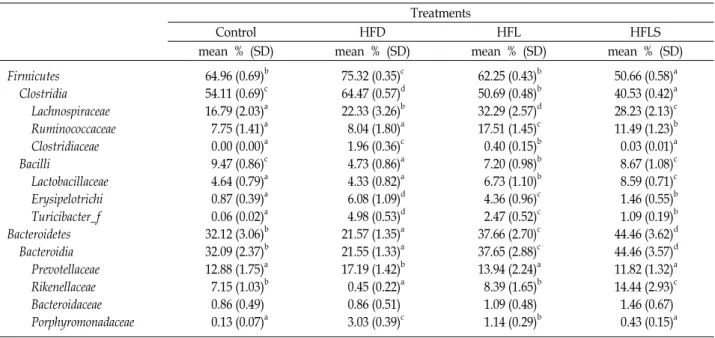
유산균과 다시마 분말 첨가가 장내 미생물에 미치는 영향을 조사하기 위해 실험동물의 장 내용물을 채취하였다. Genomic DNA를 분리하여 16s rRNA 유전자를 규명한 후 장내 미생물 을 분석하였다. 문(phylum) 수준에서 장내 미생물의 Firmi- cutes와 Bacteroidetes 분포를 비교한 결과, Firmicutes가 75.32%, Bacteroidetes가 21.57%인 HFD에 비해 HFL는 Firmicutes와 Bacteroidetes가 각각 62.25%, 37.66%, HFLS에서 Firmicutes와 Bacteroidetes가 각각 50.66%, 44.46%로, Firmicutes의 비율이 감 소하고, Bacteroidetes의 비율이 증가 하는 것으로 나타났고 (Fig. 2), 모든 처리군에서 Firmicutes가 약 50~75%, Bacteroi- detes가 약 20~40%를 차지해 두 종류의 phylum이 장내 우점

균으로 확인 되었다(Table 2) [67]. Firmicutes/Bacteroidetes 비 율 역시 3.49%인 HFD에 비해 HFL과 HFLS에서 각각 1.65%, 1.14%로 감소하였다. 장내에는 생체의 면역기능을 자극하여 각종 세균의 감염을 예방하는 유익 균과 장내 부패를 일으켜 발암물질이나 독소를 생성하는 유해균이 균형을 이루면서 안 정된 장내 미생물 균총을 형성한다[28]. 일반적으로 건강한 상 태를 유지하려면 유익 균이 장내 우세 균이 되어야 한다[9].

장내에 서식하는 미생물은 음식의 섭취에 의해 많은 영향을 받는데, 식이는 장내 미생물 우점 균뿐만 아니라 장내 미생물 이 생성하는 효소의 활성에도 밀접한 영향을 미친다[45]. 인간 과 대부분의 포유 동물의 미생물은 문 수준에서 Proteobacteria (1~20%) 및 Actinobacteria (3~15%) 등과 함께 Firmicutes (50~

80%)와 Bacteroidetes (10~30%)가 우세하게 존재한다[4, 67].

장내 미생물의 대부분을 차지하는 Firmicutes phylum과 Bacteroidetes phylum의 비율을 비교한 Bobek 등은 Firmicutes 의 감소와 Bacteroidetes의 증가가 체중 감소와 연관이 있다 보 고하였다[5]. 비만인 사람들의 장내에 서식하는 미생물의 90%

이상이 Firmicutes phylum에 속하는 Bacillus, Clostridium, Lac- tobacillus, Streptococcus 등이며, 나머지 10%는 Bacteroidetes phylum에 속하는 Bacteroides acidifaciens, B. distasonis, B. fragi- lis 등이다[61]. 이와 같이 장내 미생물의 균형은 비만과 밀접한 관계가 있는 것을 알 수 있다.

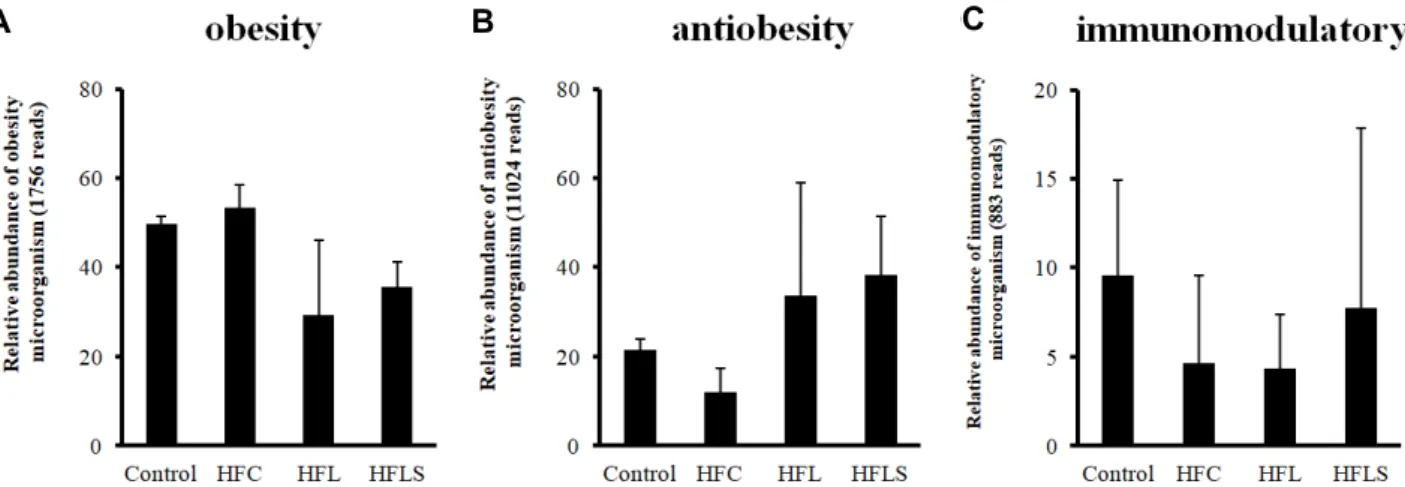
유산균과 다시마 분말을 섭취한 흰 쥐의 장내 미생물에서 비만 연관 미생물로 분류 된 Roseburia [63], Mollicute [60], Erysipelotrichi [58], Subdoligranulum [33], Oscillibacter Family [55]는 감소하는 경향을 나타내었고, anti-obesity 미생물로 분 류 된 Prevotella [18, 42], Alistipes [34], Bacteroides Family [58]는 증가하는 경향을 나타냈다(Fig. 3). 면역 관련 미생물인 Lacto- bacillus [46, 53]는 유산균과 다시마 분말을 첨가한 HFL와 HFLS에서 증가하는 경향을 나타내었다.

체중 감소와 연관 있는 것으로 알려진 Bacteroidetes [7]는

(4)

Fig. 2. Effects of dietary supplementation of sea tangle and mixture lactic acid bacteria on diversity of phyla of Intestinal microbiota in rats fed a high-fat diet. Control, basal diet group; HFD, high fat diet group; HFL, HFD+5% LAB group; HFLS, HFL+10%

sea tangle group.

a-d

Means are significantly different within the same row (p<0.05). Data represent means ± SD of 6 replicates.

Table 2. The mean of the relative abundance of dominant phyla in fecal sample obtained from rat Treatments

Control HFD HFL HFLS

mean % (SD) mean % (SD) mean % (SD) mean % (SD)

Firmicutes Clostridia Lachnospiraceae Ruminococcaceae Clostridiaceae Bacilli

Lactobacillaceae Erysipelotrichi Turicibacter_f Bacteroidetes Bacteroidia Prevotellaceae Rikenellaceae Bacteroidaceae Porphyromonadaceae

64.96 (0.69)

b

54.11 (0.69)

c

16.79 (2.03)

a

7.75 (1.41)

a

0.00 (0.00)

a

9.47 (0.86)

c

4.64 (0.79)

a

0.87 (0.39)

a

0.06 (0.02)

a

32.12 (3.06)

b

32.09 (2.37)

b

12.88 (1.75)

a

7.15 (1.03)

b

0.86 (0.49) 0.13 (0.07)

a

75.32 (0.35)

c

64.47 (0.57)

d

22.33 (3.26)

b

8.04 (1.80)

a

1.96 (0.36)

c

4.73 (0.86)

a

4.33 (0.82)

a

6.08 (1.09)

d

4.98 (0.53)

d

21.57 (1.35)

a

21.55 (1.33)

a

17.19 (1.42)

b

0.45 (0.22)

a

0.86 (0.51) 3.03 (0.39)

c

62.25 (0.43)

b

50.69 (0.48)

b

32.29 (2.57)

d

17.51 (1.45)

c

0.40 (0.15)

b

7.20 (0.98)

b

6.73 (1.10)

b

4.36 (0.96)

c

2.47 (0.52)

c

37.66 (2.70)

c

37.65 (2.88)

c

13.94 (2.24)

a

8.39 (1.65)

b

1.09 (0.48) 1.14 (0.29)

b

50.66 (0.58)

a

40.53 (0.42)

a

28.23 (2.13)

c

11.49 (1.23)

b

0.03 (0.01)

a

8.67 (1.08)

c

8.59 (0.71)

c

1.46 (0.55)

b

1.09 (0.19)

b

44.46 (3.62)

d

44.46 (3.57)

d

11.82 (1.32)

a

14.44 (2.93)

c

1.46 (0.67) 0.43 (0.15)

a

Control, basal diet group; HFD, high fat diet group; HFL, HFD+5% LAB group; HFLS, HFL+10% sea tangle group.

a-d

Means are significantly different within the same row (p<0.05). Data represent means ± SD of 6 replicates.

고지방사료 처리군에 비해 다시마와 복합유산균 처리군에서 증가하였다. Bacteroides의 증가는 대사 증후군 지표의 감소와 관련이 있다[23, 44]. 대사 증후군 환자는 장내 Firmicutes가 증 가 하고, 이로 인해 Firmicutes/Bacteroidetes 비율이 증가 하였다 [48, 51]. 다시마와 복합유산균의 섭취는 Firmicutes의 상대적 인 감소를 나타냈고, Firmicutes/Bacteroidetes 비율도 감소하였 다(Table 2). 다시마와 복합유산균을 섭취하였을 때 Clostridia 계통의 Lachnospiraceae, Ruminococcaceae와 Bacteroidia 계통의 Rikenellaceae, Bacteroidaceae가 증가하였다(Table 2). Lachnospi-

raceae, Ruminococcaceae는 미생물 불균형이 장내 염증을 일으

켜 성장 된 종양 세포를 억제하여 장내 항염 효과를 가지고

있으며, 면역 조절기능이 있는 butyrate를 생산한다고 알려져

있다[31, 49, 62, 66]. Rikenellaceae, Bacteroidaceae는 NF-κB 활성

을 억제하여 염증 억제를 통한 항비만 효과와 항 종양(antitu-

mor) 효과를 나타낸다[21, 65]. 반면, 다시마와 복합유산균을

섭취하였을 때 Clostridia 계통의 Clostridiaceae 와 Erysipelotri-

chi 계통의 Turicibacter_f, Bacteroidia 계통의 Prevotellaceae,

Porphyromonadaceaes는 감소하였다(Table 2). Clostridiaceae와

(5)

B C A

Fig. 3. Changes of relative microbial populations in rat gut. (A) obesity, (B) antiobesity, (C) immunomodulatory. Count of obesity relative microorganism (1756 reads; Roseburia, Mollicute, Erysipelotrichi, Subdoligranulum, Oscillibacter), Count of antiobesity relative microorganism (11024 reads; Prevotella, Alistipes, Bacteroides), Count of immunomodulatory relative microorganism (883 reads; Lactobacillus reuteri, sakei). Control, basal diet group; HFD, high fat diet group; HFL, HFD+5% LAB group; HFLS, HFL+10% sea tangle group. Data represent means ± SD of 6 replicates.

A B

Fig. 4. Concentration of butyric and propionic acid in different diet treated rats. Control, basal diet group; HFD, high fat diet group;

HFL, HFD+5% LAB group; HFLS, HFL+10% sea tangle group.

a-b

Means are significantly different within the same row (p<0.05). Data represent means ± SD of 6 replicates.

Turicibacter_f는 고지방사료를 섭취한 비만한 동물에서 풍부하 고, 염증성 장 질환과 밀접하다[12, 24]. Prevotellaceae, Porphyr- omonadaceaes는 쥐에서 치주염과 알코올성 간질환 등을 일으 키는 병원균으로 알려져 있다[6, 16, 52, 68].

단쇄지방산 변화

다시마와 복합유산균 첨가 가 단쇄지방산에 미치는 영향을 조사하기 위해 실험동물의 장 내용물을 추출한 후 Gas Chro- matography를 이용하여 분석하였다. 유산균과 다시마를 함께 첨가한 HFLS에서 butyric acid 생성이 77.8 g으로, 유산균만 첨가한 HFL의 59.5 g보다 butyric acid 생성이 증가하였다.

HFL과 HFLS는 HFD의 butyric acid 함량인 47.6 g 보다 높게 나타났으며, HFL 보다 HFLS에서 유의적으로 높게 나타났다

(Fig. 4). Propionic acid는 모든 처리군 간에 유의적인 차이가 없었다. 다시마와 같은 식이섬유는 대장에서 미생물에 의해 발효되어 butyric acid를 포함한 단쇄지방산을 생성한다[20].

Hur와 Lee에 따르면, 장내 미생물은 회장(lieum)에서 Fiaf

(fasting- induced adipose factor) 발현을 억제하여 LPL

(lipoprotein lipase) 활성 및 백색 지방조직에서 지방 저장을

억제하고, 단쇄지방산은 위장 내분비 세포(enteroendocrine

cell)에서 GPR41 (G protein-coupled receptor 41)을 통해 장

운동성 감소 및 장 이동 속도를 증가시킨다. 이를 통해 PYY

(peptide YY) 분비를 유도하여 에너지 섭취를 감소시키고 비

만을 예방한다. 또한, 단쇄지방산에 의한 GPR43은 GPL-1

(Glucagon-like peptide 1)을 유발하여 인슐린 감수성 증가를

통해 포만감을 증가시키고, GPR43의 활성은 지방조직에서 인

(6)

슐린 신호 전달을 억제하여 지방 축적을 예방한다. 단쇄지방 산은 포도당 대사를 향상시키고, 장-뇌 신경 회로를 통해 음식 물 섭취를 줄일 수 있는 IGN (intestinal gluconeogenesis)을 활성화시킨다[25]. 저항성 탄수화물은 미생물에 의해 장내에 서 중간 대사 물질인 lactic acid나 acetic acid로 전변되고, Clostridium butyricum 등과 같이 Firmicutes에 속하는 미생물에 의해 기능성 대사 물질인 butyric acid로 생성된다[3, 15, 17, 22, 40, 50].

결론적으로, 본 연구에서 복합유산균과 다시마의 섭취는 Firmicutes 감소와 Bacteroidetes 증가, Firmicutes/Bacteroidetes 비율 감소, butyric acid 생성 증가를 통하여 항비만 효과와 장내 유해균과 유익균의 분포를 변화시켜 장 건강을 촉진시킨 다는 것을 시사한다.

감사의 글

이 논문은 2016년도 경남과학기술대학교 대학회계 연구비 지원에 의하여 연구되었음.

References

1. Albu, J., Allison, D., Boozer, C. N., Heymsfield, S., Kissileff, H., Kretser, A., Krumhar, K., Leibel, R., Nonas, C., PiSunyer, X., VanItallie, T. and Wedral, E. 1997. Obesity solutions: re- port of a meeting. Nutr. Rev. 55, 150-156.

2. Bagarolli, R. A., Tobar, N., Oliveira, A. G., Araújo, T. G., Carvalho, B. M., Rocha, G. Z., Vecina, J. F., Calisto, K., Guadagnini, D., Prada, P. O., Santos, A., Saad, S. T. O. and Saad, M. J. A. 2017. Probiotics modulate gut microbiota and improve insulin sensitivity in DIO mice. J. Nutr. Biochem.

50, 16-25.

3. Barcenilla, A., Pryde, S. E., Martin, J. C., Duncan, S. H., Stewart, C. S., Henderson, C. and Flint, H. J. 2000. Phyloge- netic relationships of butyrate-producing bacteria from the human gut. Appl. Environ. Microbiol. 66, 1654-1661.

4. Biagi, E., Candela, M., Fairweather-Tait, S., Franceschi, C.

and Brigidi, P. 2012. Aging of the human metaorganism:

the microbial counterpart. Age. (Dordr) 34, 247-267.

5. Bobek, P., Ozdíin, L. and Galbavýy, S. 1998. Dose- and time- dependent hypocholesterolemic effect of oyster mushroom (Pleurotus ostreatus) in rat. Nutrition 14, 282-286.

6. Branchereau, M., Reichardt, F., Loubieres, P., Marck, P., Waget, A., Azalbert, V., Colom, A., Padmanabhan, R., Iaco- voni, J. S., Giry, A., Tercé, F., Heymes, C., Burcelin, R., Serino, M. and Blasco-Baque, V. 2016. Periodontal dysbiosis linked to periodontitis is associated with cardiometabolic adaptation to high-fat diet in mice. Am. J. Physiol. Gastroint- est. Liver Physiol. 310, G1091-101.

7. Caldeira, D., Martins, C., Alves, L. B., Pereira, H., Ferreira, J. J. and Costa, J. 2013. Caffeine does not increase the risk of atrial fibrillation: a systematic review and meta-analysis of observational studies. Heart 99, 1383-1389.

8. Chen, J., Zhou, J., Wei, S., Xie, Z., Wen, C. and Xu, G. 2015.

Effect of a traditional Chinese medicine prescription Quz- huotongbi decoction on hyperuricemia model rats studied by using serum metabolomics based on gas chromatog- raphy-mass spectrometry. J. Chromatogr. B Analyt. Technol.

Biomed. Life Sci. 1026, 272-278.

9. Cho, I. S., Han, Y. H., Lee, G. Y. and Park, K. Y. 2007. Search for medicinal plants on improvable effect of intestinal microflora. Kor. Soc. Med. Crop. Sci. 15, 26-29.

10. Choi, H. J., Kil, J. H., Bak, S. S., Kong, C. S., Park, K. Y., Seo, Y. W. and Lim, S. Y. 2006. Inhibitory effects of solvent extracts from seven brown algae on mutagenicity and growth of human cancer cells. J. Life Sci. 16, 1080-1086.

11. Choi, J. S., Shin, S. H., Ha, Y. M., Kim, Y. C., Kim, T. B., Park, S. M., Choi, I. S., Song, H. J. and Choi, Y. J. 2008.

Mineral contents and physiological activities of dried sea tangle (Laminaria japonica) collected from Gijang and Wando in Korea. J. Life Sci. 18, 474-481.

12. Crescenzo, R., Mazzoli, A., Di Luccia, B., Bianco, F., Cancel- liere, R., Cigliano, L., Liverini, G., Baccigalupi, L. and Iossa, S. 2017. Dietary fructose causes defective insulin signalling and ceramide accumulation in the liver that can be reversed by gut microbiota modulation. Food Nutr. Res. 61, 1331657.

13. Cui, C. B., Lee, E. Y., Lee, D. S. and Ham, S. S. 2010. Antimu- tagenic and anticancer effects of ethanol extract from Korean traditional Doenjang added sea tangle. Kor. J. Food Sci.

Technol. 42, 620-626.

14. Duncan, D. B. 1955. Multiple range and multiple F tests.

Biometrics 11, 1-42.

15. Duncan, S. H., Louis, P. and Flint, H. J. 2004. Lactate-utiliz- ing bacteria, isolated from human feces that produce buty- rate as a major fermentation product. Appl. Environ. Microbiol.

70, 5810-5817.

16. Elinav, E., Strowig, T., Kau, A. L., Henao-Mejia, J., Thaiss, C. A., Booth, C. J., Peaper, D. R., Bertin, J., Eisenbarth, S.

C., Gordon, J. I. and Flavell, R. A. 2011. NLRP6 inflamma- some regulates colonic microbial ecology and risk for colitis.

Cell 145, 745-757.

17. Falony, G., Verschaeren, A., De Bruycker, F., De Preter, V., Verbeke, K., Leroy, F. and De Vuyst, L. 2009. In vitro kinetics of prebiotic inulin-type fructan fermentation by buty- rate-producing colon bacteria: implementation of online gas chromatography for quantitative analysis of carbon dioxide and hydrogen gas production. Appl. Environ. Microbiol. 75, 5884-5892.

18. Filippo, C. D., Cavalieri, D., Paola, M. D., Ramazzotti, M., Poullet, J. B., Massart, S., Collini, S., Pieraccini, G. and Lionetti, P. 2010. Impact of diet in shaping gut microbiota revealed by a comparative study in children from Europe and rural Africa. Proc. Natl. Acad. Sci. USA 33, 14691-1496.

19. Grundy, S. M. 1988. Multifactorial causation of obesity: im- plications for prevention. J. Clin. Nutr. 67, 563S-72S.

20. Hadwiger, L. A., Fristensky, B. and Riggleman, R. C. 1984.

Chitosan, a natural regulator in plant-fungal pathogen inter-

actions, increases crop yield. In: “Chitin, chitosan and re-

lated enzymes” (ed. Zikakis, J.P.) Academic Press Inc. Orlando,

(7)

pp 291-298.

21. Hakkak, R., Korourian, S., Foley, S. L. and Erickson, B. D.

2017. Assessment of gut microbiota populations in lean and obese Zucker rats. PLoS One 12, e0181451.

22. Hedemann, M. S., Theil, P. K. and Bach Knudsen, K. E. 2009.

The thickness of the intestinal mucous layer in the colon of rats fed various sources of non-digestible carbohydrates is positively correlated with the pool of SCFA but negatively correlated with the proportion of butyric acid in digesta.

Br. J. Nutr. 102, 117-25.

23. Henning, S. M., Yang, J., Shao, P., Lee, R. P., Huang, J., Ly, A., Hsu, M., Lu, Q. Y., Thames, G., Heber, D. and Li, Z.

2017. Health benefit of vegetable/fruit juice-based diet: Role of microbiome. Sci. Rep. 7, 2167.

24. Horie, M., Miura, T., Hirakata, S., Hosoyama, A., Sugino, S., Umeno, A., Murotomi, K., Yoshida, Y. and Koike, T. 2017.

Comparative analysis of the intestinal flora in type 2 dia- betes and nondiabetic mice. Exp. Anim. 10, 1538.

25. Hur, K. Y. and Lee, M. S. 2015. Gut microbiota and metabol- ic disorders. Diabetes Metab. J. 39, 198-203.

26. Hwang, Y. J., Chae, I. S. and Lee, Y. K. 2017. Anti-inflamma- tory effects of fermented Laminaria japonica and Hizikia fu- siforme water extracts with probiotics in LPS-stimulated RAW264.7 macrophage cell line. J. East Asian. Soc. Diet Life 27, 1-8.

27. Ishiguro, T. 1984. Gas chromatographic studies on propionic acid, butyric acid and valeric acid in culture fluid of Trichomonas vaginalis. Nihon Sanka Fujinka Gakkai Zasshi 36, 363-8.

28. Isolauri, E., Salminen, S. and Ouwehand, A. C. 2004.

Microbial-gut interactions in health and disease, Probiotics.

Best Pract. Res. Clin. Gastroenterol. 18, 299-313.

29. Jang, W. S. and Choung, S. Y. 2013. Antiobesity effects of the ethanol extract of Laminaria japonica Areshoung in high-fat-diet-induced obese rat. Evid. Based. Complement.

Alternat. Med. 2013, 17.

30. Jun, H. S., Choi, Y. K., Won, Y. S., Hun, B. H. and Kim, J. W. 1999. Effects of lactic acid bacteria on infection of Salmonella typhimurium in mouse. J. Kor. Dairy Sci. 21, 171- 182.

31. Kang, C., Wang, B., Kaliannan, K., Wang, X., Lang, H., Hui, S., Huang, L., Zhang, Y., Zhou, M., Chen, M. and Mi, M.

2017. Gut microbiota mediates the protective effects of diet- ary capsaicin against chronic low-grade inflammation and associated obesity induced by high-fat diet. mBio. 8, e00470- 17.

32. Karimi, G., Jamaluddin, R., Mohtarrudin, N., Ahmad, Z., Khazaai, H. and Parvaneh, M. 2017. Single-species versus dual-species probiotic supplementation as an emerging ther- apeutic strategy for obesity. Nutr. Metab. Cardiovasc. Dis. 10, 910-918.

33. Kim, B. S., Song, M. Y. and Kim, H. 2014. The anti-obesity effect of Ephedra sinica through modulation of gut micro- biota in obese Korean women. J. Ethnopharmacol. 152, 532-539.

34. Kim, J. Y., Choi, E. Y., Hong, Y. H., Song, Y. O., Han, J.

S., Lee, S. S., Han, E. S., Kim, T. W., Choi, I. S. and Cho, K. K. 2016. Changes in Korean adult females’ intestinal mi- crobiota resulting from kimchi intake. JNFS 6, 2-9.

35. Kim, O. S., Cho, Y. J., Lee, K., Yoon, S. H., Kim, M., Na, H., Park, S. C., Jeon, Y. S., Lee, J. H., Yi, H., Won, S. and Chun, J. 2012. Introducing EzTaxon-e: a prokaryotic16S rRNA gene sequence database with phylotypes that repre- sent un ultured species. Int. J. Syst. Evol. Microbiol. 62, 716- 721.

36. Kim, S. H., Kim, D. W., Park, S. Y., Kim, J. H., Kang, G.

H., Kang, H. K., Yu, D. J., Na, J. C. and Lee, S. J. 2008.

Effect of dietary Lactobacillus on growth performance, in- testinal microflora, development of ileal villi, and intestinal mucosa in broiler chickens. J. Anim. Sci. Technol. 50, 667-676.

37. Kuda, T., Fujii, T., Saheki, K., Hasegawa, A. and Okuzumi, M. 1992. Effects of brown algae on faecal flora of rats. Nihon Suisan Gakk 58, 307-314.

38. Kwon, J. Y., CHeigh, H. S. and Song, Y. O. 2004. Weight reduction and lipid lowering effects of Kimchi lactic acid powder in rats fed high fat diets. Kor. J. Food Sci. Technol.

36, 1014-1019.

39. Li, W. and Godzik, A. 2006. Cd-hit: a fast program for clus- tering and comparing large sets of protein or nucleotide sequences. Bioinformatics 22, 1658-1659.

40. Louis, P., Young, P., Holtrop, G. and Flint, H. J. 2010.

Diversity of human colonic butyrate-producing bacteria re- vealed by analysis of the butyryl-CoA:acetate CoA-trans- ferase gene. Environ. Microbiol. 12, 304-314.

41. Mokdad, A. H., Bowman, B. A., Ford, E. S., Vinicor, F., Marks, J. S. and Koplan, J. P. 2001. The continuing epidemics of obesity and diabetes in the United States. JAMA 286, 1195-200.

42. Neyrinck, A. M., Possemiers, S., Druart, C., Wiele, T. V., Backer, F. D., Cani, P. D., Larondelle, Y. and Delzenne, N.

M. 2011. Prebiotic Effects of wheat Arabinoxyln related to the increase in Bifidofacteria, Roseburia and Bacteroides/

Prevotella in diet-induced obese mice. PLos One 6, e20944.

43. Oh, S. I., Sung, J. M. and Lee, K. J. 2014. Physicochemical characteristics and antioxidative effects of barley soybean paste (Doenjang) containing kelp extracts. J. Kor. Soc. Food Sci. Nutr. 43, 1843-1851.

44. Olli, K., Saarinen, M. T., Forssten, S. D., Madetoja, M., Herzig, K. H. and Tiihonen, K. 2016. Independent and com- bined effects of lactitol, polydextrose, and bacteroides the- taiotaomicron on postprandial metabolism and body weight in rats fed a high-fat diet. Front. Nutr. 3, 15.

45. Park, J. H., Han, N. S., Yoo, J. Y., Shin, H. K. and Koo, Y. J. 1993. Screening of the foodstuffs influencing the growth of Bifidobacterium spp. and Clostridium perfringens. Kor.

J. Food Sci. Technol. 25, 582-588.

46. Park, Y. H., Kim, J. G., Shin, Y. W., Kim, H. S., Kim, Y.

J., Chun, T. H., Kim, S. H. and Hang, K. Y. 2008. Effects

of Lactobacillus acidophilus 43121 and a mixture of

Lactobacillus casei and Bifidobacterium longum on the se-

rum cholesterol level and fecal sterol excretion in hyper-

cholesterolemia-induced pigs. Biosci. Biotechnol. Biochem. 72,

(8)

595-600.

47. Parveen, B., Pillai, K. K., Tamboli, E. T. and Ahmad, S. 2015.

Effect of piperine on pharmacokinetics of sodium valproate in plasma samples of rats using gas chromatography-mass spectrometry method. J. Pharm. Bioallied Sci. 7, 317-320.

48. Pellegrini, S., Sordi, V., Bolla, A. M., Saita, D., Ferrarese, R., Canducci, F., Clementi, M., Invernizzi, F., Mariani, A., Bonfanti, R., Barera, G., Testoni, P. A., Doglioni, C., Bosi, E. and Piemonti, L. 2017. Duodenal mucosa of patients with type 1 diabetes shows distinctive inflammatory profile and microbiota. J. Clin. Endocrinol. Metab. 102, 1468-1477.

49. Qu, W., Yuan, X., Zhao, J., Zhang, Y., Hu, J., Wang, J. and Li, J. 2017. Dietary advanced glycation end products modify gut microbial composition and partially increase colon per- meability in rats. Mol. Nutr. Food Res. 61, doi: 10.1002/mnfr.

201700118.

50. Reilly, P., O'Doherty, J. V., Pierce, K. M., Callan, J. J., O'Sullivan, J. T. and Sweeney, T. 2008. The effects of sea- weed extract inclusion on gut morphology, selected in- testinal microbiota, nutrient digestibility, volatile fatty acid concentrations and the immune status of the weaned pig.

Animal 2, 1465-1473.

51. Robles-Vera, I., Toral, M., Romero, M., Jiménez, R., Sánchez, M., Pérez-Vizcaíno, F. and Duarte, J. 2017. Antihypertensive effects of probiotics. Curr. Hypertens. Rep. 19, 26.

52. Scher, J. U., Sczesnak, A., Longman, R. S., Segata, N., Ubeda, C., Bielski, C., Rostron, T., Cerundolo, V., Pamer, E. G., Abramson, S. B., Huttenhower, C. and Littman, D. R. 2013.

Expansion of intestinal Prevotella copri correlates with en- hanced susceptibility to arthritis. Elife 2, e01202.

53. Settanni, L. and Corsetti, A. 2008. Application of bacteriocins in vegetable food biopreservation. Int. J. Food Microbiol. 121, 123-138.

54. Shida, K., Makino, K., Morishita, A., Takamizawa, K., Hachimura, S., Ametani, A., Sato, T., Kumagai, Y., Habu, S. and Kaminogawa, S. 1998. Lactobacillus casei inhibits an- tigen-induced IgE secretion through regulation of cytokine production in murine splenocyte cultures. Int. Arch. Allergy Immunol. 115, 278-287.

55. Sinh, P., Karimi, A., Devendra, K., Waldroup, P. W., Cho, K. K. and Kwon, Y. M. 2013. Influence of penicillin on mi- crobial diversity of the cecal microbiota in broiler chickens.

Poult. Sci. 92, 272-276.

56. Slavin, J. L. 2005. Dietary fiber and body weight. Nutrition 21, 411-418.

57. Son, H. S., Kim, H. S. and Ju, J. S. 1992. Effect of seaweeds intake on the absorption of sodium, calcium, potassium and hypolipidemic mechanism in healthy male subjects. J. Kor.

Soc. Food Sci. Nutr. 21, 471-477.

58. Thomas, G. and Fredrik, B. 2011. Effects of the gut micro- biota on obesity and glucose homeostasis. Trends. Endocrinol.

Metab. 22, 117-123.

59. Tunapong, W., Apaijai, N., Yasom, S., Tanajak, P., Wanchai, K., Chunchai, T., Kerdphoo, S., Eaimworawuthikul, S., Thiennimitr, P., Pongchaidecha, A., Lungkaphin, A., Pratch- ayasakul, W., Chattipakorn, S. C. and Chattipakorn, N. 2017.

Chronic treatment with prebiotics, probiotics and synbiotics attenuated cardiac dysfunction by improving cardiac mi- tochondrial dysfunction in male obese insulin-resistant rats.

Eur. J. Nutr. 10, 1-14.

60. Turnbaugh, P. J., Backhed, F., Fulton, L. and Gordon, J. I.

2008. Diet-induced obesity is linked to marked but rever- sible alterations in the mouse distal gut microbiome. Cell Host Microbe 3, 213-223.

61. Turnbaugh, P. J., Ley, R. E., Klein, S. and Gordon, J. I. 2006.

An obesityassociated gut microbiome with increased ca- pacity for energy harvest. Nature 444, 1027-1031.

62. Udayappan, S., Manneras-Holm, L., Chaplin-Scott, A., Belzer, C., Herrema, H., Dallinga-Thie, G. M., Duncan, S. H., Stroes, E. S. G., Groen, A. K., Flint, H. J., Backhed, F., de Vos, W.

M. and Nieuwdorp, M. 2016. Oral treatment with Eubacte- rium hallii improves insulin sensitivity in db/db mice. NPJ.

Biofilms. Microbiomes 2, 16009.

63. Wang, J. H., Kim, B. S., Han, K. and Kim, H. 2017. Ephedra- treated donor-derived gut microbiota transplantation ameli- orates high fat diet-induced obesity in rats. Int. J. Environ.

Res. Public Health 14, piiE555.

64. World Health Organization. 1997. Obesity: preventing and managing the global epidemic. Report of a WHO con- sultation. World Health Organ. Tech. Rep. Ser. 1-254.

65. Wu, M., Wu, Y., Deng, B., Li, J., Cao, H., Qu, Y., Qian, X.

and Zhong, G. 2016. Isoliquiritigenin decreases the in- cidence of colitis-associated colorectal cancer by modulating the intestinal microbiota. Oncotarget 7, 85318-85331.

66. Wu, Z. X., Li, S. F., Chen, H., Song, J. X., Gao, Y. F., Zhang, F. and Cao, C. F. 2017. The changes of gut microbiota after acute myocardial infarction in rats. PLoS One 12, e0180717.

67. Yang, T., Owen, J. L., Lightfoot, Y. L., Kladde, M. P. and Mohamadzadeh, M. 2013. Microbiota impact on the epi- genetic regulation of colorectal cancer. Trends. Mol. Med. 19, 714-725.

68. Zhang, X., Wang, H., Yin, P., Fan, H., Sun, L. and Liu, Y.

2017. Flaxseed oil ameliorates alcoholic liver disease via an- ti-inflammation and modulating gut microbiota in mice.

Lipids Health Dis. 16, 44.

(9)

초록:흰 쥐에서 복합 유산균과 다시마가 항비만 및 장내 미생물에 미치는 영향

유다윤

1

․김정아

1

․김인성

1

․이철영

1

․김성찬

2

․이상석

3

․최인순

4

*․조광근

1

*

(

1

경남과학기술대학교 동물소재공학과,

2

한림대학교 의과대학,

3

순천대학교 동물자원과학과,

4

신라대학교 생명과

학과)

본 연구에서는 유산균과 다시마가 항비만과 장내 미생물에 미치는 영향을 조사하기 위하여 8주령의 수컷 흰

쥐를 1 cage 당 3 마리씩 4반복하여 처리군 당 12마리를 사용하였으며, 대조구 기초사료에 고지방사료 처리구는

10% lard를 첨가하고, 여기에 5% 유산균(5×10

8

cfu, Lactobacillus rhamnosus, Lactobacillus johnsonii, Bifidobacterium

longum, Bifidobacterium lactis) 첨가구, 5% 유산균과 10% 다시마를 혼합 첨가한 처리구로 구분하였다. 고지방사료

처리군에 비해 유산균 처리군과 다시마와 유산균 혼합 처리군은 체중과 일당 증체량의 감소를 나타내었다. 장내

미생물을 pyrosequncing 방법으로 확인한 결과, 고지방사료 처리군에 비해 유산균 처리군과 다시마와 유산균 혼

합 처리군은 Firmicutes 비율이 감소하고, Bacteroidetes의 비율이 증가하였으며, Firmicutes/Bacteroidetes (F/B) 비율

은 감소하였다. 또한 이 두 처리군은 Firmicutes 문에 속하는 비만 관련 미생물 Roseburia, Mollicute, Erysipelotrichi,

Oscillibacter가 감소하였고, 반면에 Bacteroidetes 문에 속하는 항비만 관련 미생물 Prevotella, Alistipes, Bacteroides는

증가하였다. 분변 내 단쇄지방산(short chain fatty acid; SCFA) 은 다시마와 유산균을 섭취한 처리군에서 butyric

acid 함량이 높게 나타났다. 결론적으로, 다시마와 유산균의 혼합 처리는 항비만 효과를 나타내며 장내 미생물

변화를 유도하고 장내 대사 물질인 butyric acid의 함량을 높이는 것을 시사한다.

수치

Table  1.  Composition  of  the  experiment  diets      (g/100g  diet) Ingredients Treatments Control HFD HFL HFLS Casein Sucrose Corn  starch Corn  oil Lard Cellulose DL-methionine AIN-mineral  mixture AIN-vitamin  mixture Choline  bitrate * LAB  (5 × 10
Fig.  1.  Effects  of  dietary  supplementation  of  sea  tangle  and  mixture  lactic  acid  bacteria  on  growth  performance  in  rats  fed  a  high-fat  diet
Table  2.  The  mean  of  the  relative  abundance  of  dominant  phyla  in  fecal  sample  obtained  from  rat Treatments
Fig.  3.  Changes  of  relative  microbial  populations  in  rat  gut.  (A)  obesity,  (B)  antiobesity,  (C)  immunomodulatory

참조

관련 문서

Spoilage potential of psychrotrophic lactic acid bacteria (LAB) species: Leuconostoc gelidum subsp. gasicomitatum and Lactococcus piscium , on sweet bell

Contents of total lipid in the epididymal adipose of rats fed high fat-high cholesterol diet containing Stachys sieboldii Miq root powder for 6 weeks ···78 Fig.. Contents of

The purpose and necessity of this study was to investigate the effects of lactic acid fatigue and body oxidation through myofascial relaxation exercise using small tools

Probiotic properties of lactic acid bacteria isolated from mukeunji, a long-term ripened kimchi. Journal of Food

Effect of amino acid addition in culture media on the mycelial growth and g-aminobutyric acid (GABA) production of Sparassis latifolia..

The purpose of the present study was to evaluate the effect of Tisseel™, used as an adjunct to tooth ash and plaster of Paris mixture, on the early healing of surgically

Effect of mulberry leaf powder containing the lactic acid bacteria on body weight gain, food intake and food efficiency ratio in a constipation model

Effects of different feeding regimes on compensatory growth of juvenile abalone (Haliotis discus hannai) fed the formulated diet and dry sea tangle (Laminaria