이종 네트워크를 위한 Almost Blank Subframes의 성능 분석
김 승 연 , 이 형 우*, 류 승 완°
Analytical Evaluation of Almost Blank Subframes for Heterogeneous Networks
Seung-Yeon Kim , Hyong-Woo Lee
*,Seung-Wan Ryu
°요 약
이종 네트워크 환경에서 이종셀 간 간섭 제어를 위해 Almost Blank Subframes (ABS)이 제안 되었다. ABS에 서는 서브프레임에 대한 자원 할당을 하지 않음으로써 동일 채널 간섭을 줄일 수 있다. 기존 연구에서는 ABS 기 술의 성능 평가를 위한 수학적 모델링이 제안되지 않았다. 본 논문에서는 ABS 기술에 대한 수학적 모델을 제시하 였다. 분석을 위한 가정에서 OFDMA 기반의 다중 반송파 (multi carrier) 시스템을 가정하였고, large-scale 페이딩 을 가정하였다. 성능 평가로써 effective SINR에 대한 누적분포함수를 나타낸다. 시뮬레이션과 분석에 대한 결과 비교를 통해 수학적 모델에 대한 정확도를 보인다.
Key Words : exponential effective SINR, heterogeneous networks (HetNet), inter-cell interference coordination (ICIC), co-channel interference (CCI), almost blank subframes (ABS).
ABSTRACT
In heterogeneous networks, the almost blank subframes (ABS) for inter-cell interference coordination (ICIC), which can be protected from the CCI due to unutilized subframes (i.e., ABS) is proposed. However, the analytical model for ABS-based systems has not been fully studied yet. In this paper, we derive a new analytical model to evaluate the performance of ABS-based systems. In an analytic model, we assume that each carrier in multicarrier systems, such as in OFDMA, is subject to large-scale fading, which is independent of other carriers. As a performance measure, we present the cumulative distribution function (CDF) for the effective SINR. We show the accuracy of the analytical model via simulation results.
※ 이 논문은 2011년도 정부(교육과학기술부)의 재원으로 한국연구재단의 지원을 받아 수행된 연구임(KRF-2011-0012971) 주저자:고려대학교 전자정보공학과 B-ISDN 연구실, [email protected], 정회원
° 교신저자:정보시스템학과, [email protected], 종신회원
* 고려대학교 전자정보공학과 B-ISDN 연구실, [email protected], 정회원
논문번호:KICS2012-12-573, 접수일자:2012년 12월 26일, 최종논문접수일자:2013년 3월 26일
Ⅰ. Introduction
Heterogeneous networks (HetNet) are promising systems for achieving substantial gains in coverage and capacity as compared to macro-
only networks. In a heterogeneous network, low-power nodes consisting pico-, femto-, and relay nodes are placed throughout a macro cell layout, and they are placed generally in an unplanned manner. Among these low-power nodes,
the introduction of pico-nodes is important in order to accommodate efficiently high-volume traffic in local areas, and enhance the overall system capacity. However, by the difference transmission power, the number of UEs connected to the pico-node is much smaller than that for the macrocell, which results in inefficient resource utilization[1]. To solve this problem, it is beneficial for the UEs to bias the handover criteria so that the UEs select the pico-node more frequently[2,3,11]. Although this technique overcomes problem with inefficient resource utilization, the UEs connected to the pico-node suffer interference from the aggressor macro cell, since the received signal power of the macro cell is higher than that of the connected pico-nodes for such UEs. Hence, pico-node deployment requires the use of an inter-cell interference coordination (ICIC) technique such as almost blank subframes (ABS)[4].
In the ABS technique, some resource elements (REs) of the pico-node can be protected from the co-channel interference (CCI) due to unutilized subframes (i.e., ABS) of the macro base station (BS). ABS was introduced in 3GPP Rel-10 (the first LTE-Advanced release) and its performance has been evaluated in previous work[1, 4, 5]. However, earlier investigations of the ABS scheme heuristically addressed, showing the performance of the ABS scheme only in simulations.
In this paper, we establish an analytical model for evaluating the performance of a subframe of the pico-node corresponding to the ABS of the macro BS. By using the ABS technique, even if most REs of pico-node do not suffer from interference, some REs are still affected owing to common reference symbol (CRS) transmissions from the macro BS. In this case, because the performance of a subframe of the pico-node corresponding to the ABS of the macro BS depends on the existence of interference signals on the REs, it is necessary to apply the effective signal to interference plus noise ratio (SINR) method[6]. We consider the cumulative distribution
function (CDF) of the exponential effective SINR, SINReff, as a performance measure. This is because SINReff provides accuracy within a few tenths of a decibel, even when interference is included[7]. We evaluate the accuracy of the proposed analytic model via comparison with simulation results.
The rest of this paper is organized as follows.
In Section II, the ABS technique and system model are described. The analytical method to calculate the performance measures of interest is derived in Section III. In Section IV, analytical results are verified with simulation results for all the performance measures of interest and performance analysis is conducted. Section V concludes this paper.
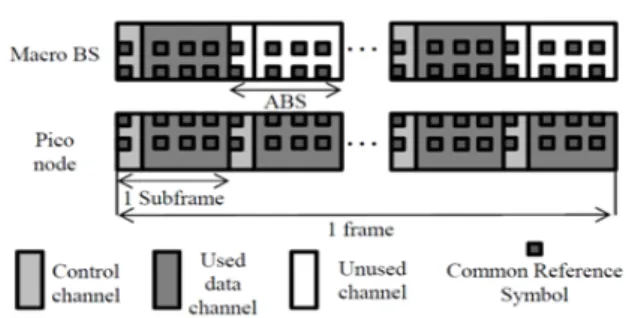
Fig. 1. Protected subframes by the ABS technique
Ⅱ. Almost Blank Subframes and System Model
2.1. Heterogeneous Networks (HetNet) and Almost Blank Subframes (ABS)
The LTE system is based on orthogonal frequency division multiple access-frequency division duplex (OFDMA/FDD). In LTE down link, the one frame consists of 12 subframes, where each subframe consists of one control and one data region, as shown in Fig. 1. In LTE-based HetNet, the only difference between the pico-node and the macro BS is that the transmit power of the pico-node is lower than that of the macro BS. Its transmit power ranges from 250mW to approximately 2W in outdoor deployments[4]. The ABS of an LTE Rel-10-based HetNet is enabled through an X2-interface for the
coordination of resources used for scheduling data traffic. In HetNet scenario, the macro BS does not schedule data traffic while transmitting CRSs in order to provide legacy support to reduce the interference created by the macro BS, on ABS[8], as shown in Fig. 1. The number of CRSs mapped to a subframe corresponds to the number of antenna ports, where 8 CRSs per antenna port are mapped to a subframe. Thus, some REs in a data channel of the pico-node are protected by the ABS of the macro BS, while other REs suffer from interference by CRSs of the macro BS.
2.2. System Modeling
For LTE-based HetNet, we assume that there are M REs in one subframe and consider the channel model consisting of a path-loss component and a log-normal shadowing component[9]. The transmit power of the pico-node is given by Pp. The path loss exponent is given by
, the shadowing effect and the noise power are given by L and N, respectively. The set of macro BS is Z, i.e. each BS uses the m-th sub-carrier as the UE and transmits with powerP
m. We denote the distance between the macro BSz and the UE by Rz. We assume that the natural logarithm of L is a Gaussian with mean zero and standard deviation
, and noise power is an exponentially distributed with N0B, where N
0and B are noise power spectral density and the bandwidth of a sub-carrier, respectively.
The associated SINRm on the m-th sub-carrier is given as
, (1)where for the macro BS set Z,
∈
, (2)
where shadow fading is assumed to be independent across REs and independent of the transmitter and receiver position. In what follows,
we assume that the random variable for the natural logarithm of L is statistically independent.
In the above expression, we assume that the pico-node to the UE is at a distance r. Thus, the conditional distributions for the natural logarithm of powers received at the UE are a Gaussian distribution with mean of
ln
andstandard deviation
for the desired power, and a Gaussian distribution with mean ofln
and standard deviation
for the interference power, respectively.Let the joint probability density function (PDF) for the position of an UE in a pico cell is
. It is
≤ ≤
≤ ≤
, (3) where r0 is the radius of the pico cell. Then for a given that
, distance between an UE and the macro BSz,
cos
, (4)where Dz
is the distance between the
pico-node and the macro BSz.Ⅲ. Modeling of Exponential Effective SINR
In order to evaluate the performance, we use the CDF of SINReff, Fe,SINR, that depends on the set of M SINRs into a unique value, SINReff such that
P r
≤
. SINReffcan be formulated as
ln
, (5)where
depends on the coding scheme and the number of coded bits in a block, and SINRmis the associated SINR on the m-th RE[6].
To evaluate the statistics of SINReff in (5), using the total probability law, we can re-formulate (5) as follows
∞
∞
⋯
∞
∞
ln
×
⋯×
(6) where
and
are the random variable and the PDF for SINR of m-th sub-carrier, respectively. Hence, in order to compute
, we need to first obtain the conditional CDF of SINR for m-th sub-carrier,
.It then is
P r
,(7) where
is the position of an UE in a pico cell, Rz, represents the set of the distance between the UE and interfering BSz.After applying the natural logarithm manipulations to (8), it can be expressed as
∞
∞
ln
ln
×
(8)
where Q() is the Q-function,
and
are mean and standard deviation for the natural logarithm of the desired signal power, respectively.
, then, is the log-normal distribution with mean
and standard deviation
for the interfering signal power sum of the set Z and whose mean and standard deviation can be obtained by using Yeh and Schwartz’s algorithm[10]. Lastly
is the exponential distribution for noise power.As mentioned above, for m-th sub-carrier, SINRm is associated with the existence of interference signals received from interfering BSz. The approximation is applied to the case that the interference occurs. In general, since the interference power is stronger than noise power, we approximate
≈
and (8) is can be expressed as
P r
.(9) By applying the natural logarithm manipulations to (9), it can be rewritten as
∞
ln
ln
×
(10) For the case that the interference do not occur, in (8),
and we have
P r
∞
ln
ln
×
(11) Finally, using the total probability law, for (9) and (11), we can get the CDF of SINRm,
, as follows
P r
(12) From (12),
can be obtained as aParameters Pico-node Macro BS Shadowing standard
deviation 3dB 4dB
Cell radius 100m 1000m
Tx power 100mW
(20dBm)
40W (46dBm)
System bandwidth 10Mhz
Noise density (N0) -174dBm/Hz function of
. Substituting each PDF of SINRfor REs into (6), we can express Fe,SINR as a function of
and M.Ⅳ. Numerical Results
In this section, we present Monte-Carlo simulation results and compare them with our analysis for the SINReff statistic. To validate our analysis, we developed a simulation program with MATLAB and performed 500 independent simulations. We consider the interference scenario with one macro-cell in which one pico-node is deployed because the pico-node usually has one dominant interfering macro BS[4]. We assume that the data channel has 132 REs including CRSs in one subframe, and the numbers of CRSs accordin-
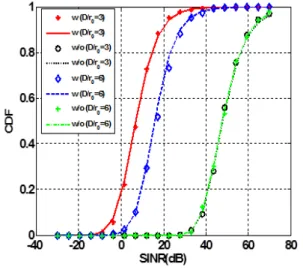
Fig. 2. Example of for the existence of interference according to D/r0.
g to the number of antenna ports 1, 2 and 4, are 8, 16 and 24, respectively. We assume that the bandwidth of a subcarrier is 15 kHz, and M,
and
are 5, 3 and 1, respectively. Additional system parameters for simulation and analysis are set as shown in Table 1[8]. In Fig. (2) and Fig.(3), the curves are numerically obtained from the equations given in the preceding analysis, whereas the symbols indicated the corresponding simulation results.
Table 1. System parameters
In Fig.2, is plotted for different interference condition and (D/r0). In this figure, (w) and (w/o) denote the CDF with and without interference, respectively. Via numerical examples, we find that the results of our analysis closely approximate those of simulations. From (9), we observe that when interference occurs, it has a
greater impact on the performance than noise does
Fig. 3. Fe,SINR with respect to the number of REs with/without interference (D/r0).
As expected, when (D/r0) increases, the performance of SINRm with interference increases.
In case of without interference, regardless of (D/r0), these performances are similar, since there is no interference from the macro BS.
In Fig. 3, Fe,SINR is plotted under various interference conditions. The ratios of the number of REs with interference to those without interference are 4:1, 3:2, 2:3 and 1:4, when
D/r
0=3. We find that the analytical result fromthe proposed model agrees with the simulation result. It is also observed that the curve of Fe,SINR
strongly depends on these ratios. For example, when the interference condition is 1:4, the curve of Fe,SINR is close to the curve without interference shown in Fig. 2, while the curve of Fe,SINR for the interference condition of 4:1 closely matches the curve with interference shown in Fig. 2.
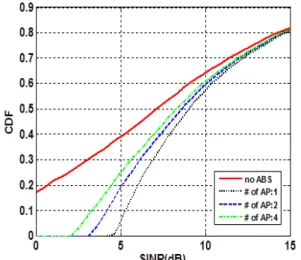
In Fig. 4, we consider an interference scenario, and the numerical results are presented for Fe,SINR
for a subframe of a pico-cell corresponding to the ABS of a macro cell. In this figure, we find that the interference introduced by the data channel increases with an increasing number of antenna ports. For example, when the SINR is 5dB, Fe,SINR for the number of the antenna ports 1, 2 and 4, is 0.05, 0.2 and 0.26, respectively.
On the whole, the performance of a subframe for
Fig. 4. Fe,SINR with respect to the number of antenna ports of macro cell (1, 2, 4).
a pico-node corresponding to the ABS of a macro BS improves, as confirmed in Fig. 4.
Ⅴ. Conclusion
In this paper, a statistical model of the effective SINR for the analytical performance evaluation of ABS-based heterogeneous networks has been developed. We have shown that the effective SINR statistics obtained by the proposed analytical model agrees with the simulation results. In the evaluation, ABSs are employed to
protect the subframes in the pico-node from severe interference from the macro BS. Although we have only shown an example of a two-cell interference scenario in this paper, the proposed model can be applied for the performance evaluation of heterogeneous networks using ICIC techniques in a multi cell environment.
REFERENCES
[1] N. Miki, Y. Saito, M. Shirakabe, A.
Morimoto, and T. Abe, “Investigation on interference coordination employing almost blank subframes in heterogeneous networks for LTE-advanced downlink,” IEICE Trans.
Commun., vol. E95, no. 4, pp. 1208-1217,
Apr. 2012.[2] P. Ying and Q. Fei, “Exploring Het-Net in LTE-Advanced System: interference mitigation and performance improvement in macro-pico scenario,” in Proc. IEEE ICC, pp. 1-5, Kyoto, Japan, June 2011.
[3] S. Landstrom, H. Murai, and A. Simonsson,
“Deployment Aspects of LTE Pico Nodes,”
in Proc. IEEE ICC, pp.1-5, Kyoto, Japan, June 2011.
[4] A. Damnjanovic, J. Montojo, Y. Wei, T. Ji, T. Luo, M. Vajapeyam, T. Yoo, O. Song, and D. Malladi, “A survey on 3GPP heterogeneous networks,” IEEE Wireless
Commun., vol. 18, no. 3, pp. 10-21, June
2011.[5] Y. Wang and K.I. Pedersen, “Performance analysis of enhanced inter-cell interference coordination in LTE-Advanced heterogeneous networks”, in Proc. IEEE VTC. Spring, pp.
1-5, Yokohama, Japan, May 2012.
[6] H. Song, R. Kwan, and J. Zhang,
“Approximations of EESM Effective SNR Distribution,”
IEEE Trans. Wireless Commun., vol. 59, no. 2, pp. 603–612,
Feb. 2011.[7] R. Giuliano and F. Mazzenga,
“Dimensioning of OFDM/OFDMA Based Cellular Networks Using Exponential
Effective SINR,”
IEEE Trans. Veh.
Technol., vol. 58, no. 8, pp. 4204-4213,
Oct. 2009.[8] A. Osseiran, W. Mohr, and J. Monserrat,
Mobile and Wireless Communications for IMT-Advanced and Beyond, Wiley, 2011.
[9] V. Erceg, L. J. Greenstein, S. Y. Tjandra, S. R. Parkoff, A. Gupta, B. Kulic, A. A.
Julius, and R. Bianchi, “An empirically based path loss model for wireless channels in suburban environments,” IEEE J. Select.
Areas Commun., vol. 17, no. 7, pp.
1205-1211, July 1999.
[10] A. A. Abu-Dayya and N. C. Beaulieu,
“Outage probabilities in the presence of correlated log-normal interferers,”
IEEE Trans. Veh. Technol., vol. 43, no. 1, pp.
164-173, Feb. 1994.
[11] H. L. Qu, S.-Y. Kim, S. Ryu, C.-H. Cho and H.-W. Lee, “Performance Evaluation of Pico Cell Range Expansion and Frequency Partitioning in Heterogeneous Network,” J.
KICS. vol. 37. no. 5, Aug. 2012.
김 승 연 (Seung-Yeon Kim)
2005년 2월 고려대학교 전자 및 정보공학부 졸업
2007년 2월 고려대학교 전자정 보공학과 석사
2012년 8월 고려대학교 전자정 보공학과 박사
2012년 8월~현재 고려대학교 전자정보공학과 연구교수
<관심분야> 통신망 설계 및 성능 분석, MAC 프로 토콜
이 형 우(Hyong-Woo Lee)
1979년 University of British Columbia Electrical Engineering (학사)
1983년 University of Water- loo, Electrical Engineering (박사)
1 9 8 3 ~ 1 9 9 1 년 C a r l e t o n University, System and Computer Engineering 조교수
1992~1995년 University of Waterloo, Electrical and Computer Engineering 조교수
1995~현재 고려대학교 전자정보공학과 교수
<관심분야> 통신망 설계 및 성능 분석, 트래픽 제 어, MAC 프로토콜
류 승 완 (Seung-Wan Ryu)
1988년 고려대학교 산업 공학 과 학사
1991년 고려대학교 산업 공학 과 석사
2003년 뉴욕주립대 (SUNY at Buffalo) 산업공학과 박사 1991~1993년 LG전자 영상미 디어연구소 (주임연구원)
1993~2004년 한국전자통신연구원 이동통신연구단 (선임연구원)
2004년~현재 중앙대학교 정보시스템학과 교수
<관심분야> 이동통신시스템 설계 및 성능 분석, 무 선 MAC 프로토콜, 컴퓨터 네트워크