Prevalence of multi-drug resistant
Acinetobacter baumannii from a
healthcare facility of Gangwon
province in Korea
Gyu Sang Lee
The Graduate School
Yonsei University
Department of Biomedical
Laboratory Science
Prevalence of multi-drug resistant
Acinetobacter baumannii from a
healthcare facility of Gangwon
province in Korea
A Dissertation Submitted to
the Department of Biomedical Laboratory Science
and the Graduate School of Yonsei University
in partial fulfillment of the
requirements for the degree of
Doctor of Philosophy
Gyu Sang Lee
This certifies that the dissertation of Gyu Sang Lee is approved
.
━━━━━━━━━━━━━━━━━━━━━ Thesis Supervisor : Jong Bae Kim
━━━━━━━━━━━━━━━━━━━━━ Yong Suk Ryang : Thesis Committee Member
━━━━━━━━━━━━━━━━━━━━━ Ok Doo Awh : Thesis Committee Member
━━━━━━━━━━━━━━━━━━━━━ Yong Serk Park : Thesis Committee Member
━━━━━━━━━━━━━━━━━━━━━ Hyeyoung Lee : Thesis Committee Member
The Graduate School Yonsei University
CONTENTS
LIST OF FIGURES AND TABLES --- iii
ABBREVIATION --- v
ABSTRACT IN ENGLISH --- vi
I. INTRODUCTION --- 1
II. MATERIALS AND METHODS ---11
Clinical isolates ---11
Species identification ---11
Antimicrobial susceptibility ---14
Screening of carbapenemase activity ---15
PCR amplification of β-lactamase genes ---16
Detection of aminoglycoside resistance genes ---23
Determination of quinolone resistance for PCR amplification and DNA sequencing ---26
REP-PCR ---30
AFLP ---31
III. RESULTS Clinical isolates ---33
Antimicrobial susceptibility ---33
Antimicrobial resistance mechanisms ---34
Detection of extended-spectrum cephalosporinase ---37
Distribution of aminoglycoside resistance genes ---37
Determination of quinolone resistance---40
Clonal relatedness of multidrug resistant A. baumannii ---43
ii
V. REFERENCES ---56 ABSTRACT IN KOREAN ---76
iii
LIST OF FIGURES AND TABLES
Figure 1. Detection of gene encoding OXA typecarbapenemase --- 35 Figure 2. AFLP fingerprints of MDR A. baumannii --- 44 Figure 3. Dendrogram of similarity index among A.
baumannii isolates by AFLP analysis --- 45
Figure 4. REP-PCR of MDR A. baumannii --- 46 Figure 5. Dendrogram of similarity index among A.
baumannii isolates by REP-PCR analysis --- 47
Table 1. Oligonucleotide sequence for detection
of β-lactam resistance genes --- 20 Table 2. Oligonucleotide sequence for detection
of OXA type carbapenemase genes --- 21 Table 3. Oligonucleotide sequence for detection
of cephalosporinase genes --- 22 Table 4. Oligonucleotide sequence for
aminoglycoside resistance genes and
16S rRNA methylase genes --- 25 Table 5. Oligonucleotide sequence used to
iv
sequence analysis --- 28 Table 6. Oligonucleotide sequence used to amplify
the adeB, adeJ and abeM genes of efflux
pump --- 29
Table 7. Distribution of β-lactamase genes in A.
baumanii --- 36
Table 8. Distribution of aminoglycoside
resistance genes in A. baumanii --- 39 Table 9. Distribution of quinolone resistant
v
ABBREVIATION
ADC : Acinetobacter derived cephalosporinase AFLP : amplified fragment length polymorphism AME : aminoglycoside modifying enzyme
ARDRA : amplified ribosomal DNA restriction analysis ATCC : american type culture collection
DDST : double disk synergy test
EDTA : ethylenediaminetetraacetic acid
ESACs : extended-spectrum AmpCs ICUs : Intensive care units
MBLs : metallo β-lactamases MDR : multi-drug resistant
MDRAB : multi-drug resistant Acinetobacter baumannii OXAs : oxacillinases
PCR : polymerase chain reaction
QRDR : quinolone resistance-determining region REP : repetitive extragenic palindromic
REP-PCR : repetitive extragenic palindromic polymerase chain
reaction
vi
ABSTRACT
The multidrug-resistant (MDR) Acinetobacter
baumannii has emerged as a significant infectious agent in
hospitals worldwide. A. baumannii was previously considered an opportunistic pathogen of relatively low virulence. However, recent reports from various locations around the world suggest that A. baumannii is now frequently isolated and is associated with severe infections and adverse outcomes. The purpose of this study was to determine the genetic basis for MDR and the clonal relationship among A. baumannii clinical isolates obtained from a university hospital in Gangwon province of Korea. To estimate the prevalence of antibiotic resistance determinants, PCR assays and sequence analysis were performed for the detection of β-lactamases, 16S rRNA methylase, aminoglycoside-modifying enzymes, and quinolone resistance determining regions (QRDR). Amplified fragment length polymorphism (AFLP) and repetitive sequence-based polymerase chain reaction (REP-PCR) were performed to determine the clonal relatedness of MDR A.
vii
baumannii. All of the MDR A. baumannii isolates were encoded
by both blaOXA-23-like and blaOXA-51-like genes and all isolates with
the blaOXA-23-like gene had the upstream element ISAba1 to
promote increased gene expression and subsequent resistance to carbapenemase. In all A. baumanni, those isolates encoded by
blaAmpC had ISAba1 inserted upstream of blaAmpC. Eighty-one A.
baumannii were encoded by the blaADC-7-like gene. To investigate
aminoglycoside resistance, 16S rRNA methylase gene armA was detected in 70 (81%) clinical isolates, and phosphotransferase genes encoding aac(3)-Ia and aac(6')-Ib were the most prevalent. A combination of 16S rRNA methylase and aminoglycoside-modifying enzyme genes (armA, aac(3)-Ia, aac(6')-Ib, and
aph(3')-Ia) were found in 45 (52%) isolates. The sequencing
results for the QRDR of gyrA and parC revealed the presence of Ser (TCA) 83 Leu (TTA) and Ser (TCG) 80 Leu (TTG) substitutions in the respective enzymes for all MDR A. baumannii isolates sequenced. Moreover, all of the A. baumannii isolates showed very similar or identical band patterns on REP-PCR and
viii
AFLP profiles, suggesting that they had originated from a common ancestor and clonally spread in the university hospital in Gangwon province. The clonal spread of MDR A. baumannii is a major factor contributing to the growing problem of antimicrobial resistance. Molecular typing for MDR A. baumannii could be helpful in confirming the identification of a common source or cross-contamination. This is an important step in enabling epidemiological tracing of these strains.
Key words : multidrug resistant Acinetobacter baumannii, blaOXA-23-like,
- 1 -
I.
INTRODUCTION
Acinetobacter baumannii has emerged as an important
nosocomial pathogen in outbreaks of hospital infections and is ranked second after Pseudomonas aeruginosa among nosocomial pathogens of aerobic nonfermentative gram-negative bacilli1, 2. A.
baumannii causes respiratory and urinary tract infections,
meningitis, endocarditis, burn infections, and wound sepsis, especially in intensive care units (ICUs)2, 3.
Infections caused by multi-drug resistant (MDR) bacteria occurred throughout the world. During the last decade efforts to combat MDR microorganisms have mainly focused on gram-positive bacteria and drug companies have developed several novel antimicrobial agents to fight these bacteria. Unfortunately, the growing problem of MDR gram-negative bacteria has not been paralleled with the development of new antimicrobial agents. As a result, there are now a growingnumber of reports on infections caused by MDR gram-negative microorganisms for which no adequate therapeutic options exist.
- 2 -
This return to the pre-antibiotic era has become a reality in many parts of the world. Although the antimicrobial susceptibility pattern of A. baumannii is variable, many isolates exhibit resistance to commonly used antimicrobial agents, such as penicillins, cephalosporins, aminoglycosides, and fluoroquinolones by intrinsic and acquired mechanisms. As a consequence of the nature of MDR microorganism, the treatment of MDR A. baumannii infections is complicated by the limited choice of effective antimicrobial agents. Carbapenems, mainly imipenem and meropenem, are the most potent β-lactams against gram-negative bacteria and are most widely used for treatment of extended-spectrum-β-lactamase-producing A. baumannii and P.
aeruginosa. However, intensive use of carbapenems has
facilitated the emergence of carbapenem-resistant bacteria4-6. Furthermore, A. baumannii strains that are resistant to all antimicrobial agents tested, but only susceptible to colistin, referred to as extensive-drug resistant strains, were detected in Taiwan7, Italy8, Greece9, and Korea10-12. The emergence of
pan-- 3 pan--
drug resistant A. baumannii, resistant to anti-pseudomonal-penicillins, cephalosporins, carbapenems, monobactam, aminoglycosides, fluoroquinolone, tetracyclines, and polymyxins, has also been reported in some country13, 14.
Carbapenem resistance in A. baumannii is mediated most often by oxacillinases (OXAs) and less frequently by metallo β-lactamases (MBLs)15. There are four main OXA
subgroups associated with A. baumannii: the chromosomally located intrinsic OXA-51-like and the acquired OXA-23-like, OXA-40-like and OXA-58-like. OXAs exhibit such weak hydrolysis of carbapenems that they should not allow the development of resistance; however, they are sometimes associated with insertion elements that can increase expression of the carbapenemase16-18.
A growing number of β-lactamases conferring resistance to expanded-spectrum cephalosporins have been identified in
Acinetobacter spp. Resistance to oxyiminocephalosporins
- 4 -
overproduction of the resident ampC-type β-lactamase19, 20 encoded by the gene blaampC.The over expression of that gene
has been associated with the insertion sequence ISAba1 providing a strong promoter19, 21.
Recently, the AmpC variants have been named according to a nomenclature specific to A. baumannii (e.g., ADC, for Acinetobacter derived cephalosporinases)20. Most AmpC-type β-lactamases naturally produced by gram-negative bacteria hydrolyze amino- and ureidopenicillins, cephamycins (cefoxitin and cefotetan), and, at a lower level, oxyiminocephalosporins, such as ceftazidime, cefotaxime, and ceftriaxone, and monobactams, such as aztreonam22. Zwitterionic cephalosporins (cefepime and cefpirome) together with carbapenems are usually excluded from the spectrum of activity of AmpC β-lactamases23
. However, natural cephalosporinases possessing broadened substrate activity in the taxa Enterobacteriaceae and P.
aeruginosa have been reported24-26. These extended-spectrum
- 5 -
cephalosporins24-26. They differ from “regular” cephalosporinases by amino acid substitutions or insertions/deletions in four specific regions that are all located in the vicinity of the active site: the Ώ-loop, the H-10 helix, the H-2 helix, and the C-terminal extremity of the protein27.
The best-described mechanism of resistance to quinolones in Acinetobacter spp. is mutations in the genes encoding DNA gyrase A (i.e., gyrA) and subunit A of topoisomerase IV (i.e., parC). The most important mutations, resulting in changes at codon 83 for gyrA and at codon 80 for
parC, have been mapped to a unique location in each of these
genes, the quinolone resistance-determining region (QRDR)28, 29. Additional mutations in the QRDR of gyrA thought to enhance quinolone resistance include mutations at codons for amino acids Gly81, Ala84, and Glu8728-34. Another previously described mutation (at the Val101 codon) does not appear to have an effect on the susceptibility profiles30. Ancillary mutations in parC, at codons for amino acids Gly78 and Glu84, when combined with
- 6 -
the Ser83 and Ser80 codon mutations, also contribute to high-level quinolone resistance28, 31, 34. These mutations interfere with target site binding. Similar to aminoglycosides, many quinolones are also substrates for multidrug efflux pumps35, including the RND-type pump AdeABC36, 37 and the MATE pump AdeM38. Thus far, plasmid-mediated quinolone resistance, mediated by
qnr genes, has not been reported for A. baumannii39.
Aminoglycosides continue to play an important role in antimicrobial therapy against both negative and gram-positive pathogens, usually in combination with β-lactam agents
40,41
. They bind specifically to 16S rRNA in the 30S ribosomal subunits and inhibit protein synthesis42. Resistance to aminoglycosides is most commonly encountered by aminoglycoside modifying enzymes, including acetyltransferases, nucleotidyltransferases, and phosphotransferases43,44. More recently, 16S rRNA methylases (ArmA, RmtA, RmtB, RmtC, and RmtD) have been reported among Enterobacteriaceae,
Aminoglycoside-- 7 Aminoglycoside--
modifying enzymes differ in aminoglycosides modified, whereas 16S rRNA methylases confer a high-level resistance to all formulated aminoglycosides. The distribution of aminoglycoside resistance genes is largely dependent on bacterial species, but the combination of aminoglycoside-modifying enzymes is correlated with the use of aminoglycosides in specific geographic regions 47.
Acinetobacter spp. carried various types of
aminoglycoside-modifying enzymes44, but the distribution of particular aminoglycoside-modifying enzymes based on
Acinetobacter genomic species was not determined. With the
emergence of 16S rRNA methylase ArmA in Acinetobacter spp.10, 45, 48, 49, it should be determined whether the prevalence of ArmA in Acinetobacter spp. was due to the spread of specific clones or horizontal gene transfer.
For epidemiological and clinical purposes, a rapid and real-time understanding of genomic fingerprinting profiles of MDRAB (multidrug resistant A. baumannii) clinical isolates is necessary in order to develop effective strategies to control their
- 8 -
spread40. A variety of methods, including biotyping, antibiotic resistance typing50, comparing outer membrane protein profiles51, plasmid profiling52, ribotyping53, and analyzing restriction fragment length polymorphisms using pulsed-field gel electrophoresis54, 55, have been used successfully for the typing of
Acinetobacter spp. These methods can be complex and
time-consuming to perform or can rely on unstable phenotypic characteristics.
A PCR-based fingerprinting system that uses consensus primers for the repetitive extragenic palindromic (REP) sequences found in many bacterial chromosomes has been shown to be applicable to a wide range of bacterial species56-58 and is known as repetitive extragenic palindromic polymerase chain reaction (REP-PCR). The highly conserved REP sequence is approximately 35 nucleotides long, includes an inverted repeat, and can occur in the genome singly or as multiple adjacent copies
59
. REP-PCR has been recognised as an effective method for bacterial genotyping60, 61. The method effectively discriminated
- 9 -
between epidemic and sporadic isolates but required time-consuming genomic DNA isolation, purification, and quantitation40.
The development and application of amplified fragment length polymorphism (AFLP) as a genomic fingerprinting method has more recently led to significant advances in the study of taxonomy and genetic diversity of bacteria62, 63. The AFLP technique is based on the selective PCR amplification of restriction fragments from total digest of genomic DNA. It involves two amplification steps: a low-level or preselective amplification, followed by a more selective amplification, which generates a set of fragments that can be used as the discriminatory marker set for a particular sample64, 65. AFLP is a well-established species identification and genomic fingerprinting method that has been used successfully to study the epidemiology of A. baumannii 66, 67.
The purpose of this study is to determine the genetic basis and molecular epidemiology of these MDR A. baumannii
- 10 -
isolates and to determine the clonal relationship among A.
baumannii clinical isolates obtained from the Gangwon province
of Korea. This study investigated the various molecular determinants of A. baumannii including carbapenem, cephalosporin, aminoglycoside, and quinolone resistance.
- 11 -
II. MATERIALS AND METHODS
Clinical isolates
A total of eight-six non-duplicate A. baumannii isolates were collected from the university hospital laboratory in the Gangwon province of Korea from July 2007 to July 2010. Over the study period, all MDR A. baumannii that were resistant to three or more classes of antimicrobial agents, including carbapenems, were collected. The isolates were identified by conventional identification techniques and Microscan walkaway 96 (Dade Behring, Sacramento, CA, USA).
Species identification
Commercial identification systems based on phenotypic tests are unable to identify most Acinetobacter species. Amplified ribosomal DNA restriction analysis (ARDRA) is one of the few genotypic methods that has been validated using a large set of reference strains to identify species of the genus Acinetobacter 11.
- 12 -
ARDRA was carried out as previously described, using restriction endonucleases (CfoI, AluI, MboI, MspI, RsaI)68.
To prepare DNA templates, brain heart infusion broth (Becton Dickinson, Franklin Lake, NJ, USA) was inoculated with one colony of A. baumannii. After 24 hours incubation at 37°C, 1 ㎖ of the culture was centrifuged at 12,000 g for 10 minutes. The
pellets were resuspended in 1 ㎖ of saline (0.85 NaCl, Duksan, Ansan, Korea) and then harvested by centrifugation. Bacterial pellet were suspended in 200 ㎕ of sterilized distilled water and boiled for 10 minutes. After being centrifuged at 12,000 g for 10 minutes, the supernatant was collected to use as the template DNA69.
The supernatant (2 ㎕) was added to 48 ㎕ aliquots of polymerase chain reaction (PCR) mixture containing 0.5 U Taq polymerase (Cosmo Genetech Co., Seoul, Korea), 100 μM deoxynucleoside triphosphates (dNTPs), and 0.2 μM primer in a reaction buffer (1.5 mM MgCl2 and 50 mM KCl in 10 mM
Tris-- 13 Tris--
HCl, pH 8.3). After initial denaturation at 95°C for 5 min, the reaction mixture was run through 35 cycles of denaturation at 95°C for 45 seconds, annealing at 50°C for 45 seconds, and extension at 72°C for 1 minute. Finally, a seven minutes extension period at 72°C was carried out. The amplification reactions were performed with a thermal cycler (GeneAmp PCR® System 2700, Applied Biosystems, Foster City, CA, USA).
The oligonucleotide primers were derived from conserved regions in the 16S rRNA. The sequences of the primers were 5’-TGGCTCAGATTGAACGCTGGC GGC-3’ (5' end of 16S rRNA gene) and 5’-TACCTTGTTACGAC TTCACCCCA-3’ (3' end of 16S rRNA gene). Amplicons with a size of 1,500 bp were used as template DNA for the restriction analysis.
Restriction enzyme digestion was carried out for 2 hours at 37°C in 20 ㎕ volumes of commercially supplied incubation buffer containing 5 U of restriction enzyme AluI (AGCT), CfoI (GCGC), MboI (GATC), MspI (CCGG), RsaI (GTAC), and 10
- 14 -
㎕ of PCR product68
. Restriction fragment patterns were separated by agarose gel electrophoresis in Tris-acetate-EDTA (TAE) buffer and visualized after being stained with ethidium bromide (0.5 ㎍/㎖). The agarose gel was photographed with the
Molecular Imager® Gel Doc™ XR+ Imaging System (Bio-Rad, Hercules, CA, USA) under UV illumination. Identification of product bands was established by molecular weight marker of the 100 bp DNA ladder (Bioneer Co., Daejeon, Korea).
Antimicrobial susceptibility test
Minimal inhibitory concentrations of clinical antimicrobials for all isolates were determined by the Microscan Walk/Away 96 AI system (Dade Behring, Sacramento, CA, USA) and were interpreted according to CLSI M100-S19 (formerly NCCLS, 2009). Twenty-three antimicrobial agents were tested: penicillin (ampicillin), β-lactam/β-lactamase inhibitor combinations (ampicillin/sulbactam, ticarcillin
- 15 -
/clavulanic acid), cephems (ceftazidime, cefepime, cefotaxime, ceftriaxone, cefazolin, cefuroxime, cefotetan), carbapenem (imipenem, meropenem), monobactams (aztreonam), aminoglycosides (gentamicin, tobramycin, amikacin), tetracyclines (tetracycline), fluoroquinolones (ciprofloxacin, levofloxacin, moxifloxacin), folate pathway inhibitors (trimethoprim-sulfamethoxazole), and ESBLs (ceftazidime/ clavulanic acid, cefotaxime/clavulanic acid).
Screening of carbapenemase activity
In order to analyze the production of class B and D carbapenemases, imipenem-nonsusceptible A. baumannii isolates were first screened by a modified Hodge test70, 71. The surface of a Muller-Hinton agar plate was inoculated with an overnight culture suspension of Escherichia coli ATCC 25922. An imipenem disk was placed at the center of the plate and imipenem-nonsusceptible Acinetobacter was streaked heavily from the edge of the disk to the periphery of the plate. The
- 16 -
presence of a distorted inhibition zone, after overnight incubation, was interpreted as a positive result. An imipenem-EDTA double disc synergy test (DDST) was performed to screen for the production of metallo-β-lactamases (MBL)71, 72.
An overnight culture of the modified Hodge test-positive strains was inoculated on a Muller-Hinton agar plate. The imipenem disk (30 μg) and a blank filter paper disk were placed 15 mm apart from edge to edge, and 10 ㎕ of 0.5 M EDTA solution was applied to the blank disk, which resulted in approximately a 1.5 mg/disk. After overnight incubation, the presence of an enlarged zone of inhibition was interpreted as a positive result, which shows the inactivation of class B MBL activity by EDTA73.
PCR amplification
of β-lactamase genes
The β-lactamases and resistance determinants were detected by PCR, including Ambler class A ESBL genes (blaTEM, blaSHV, blaCTX-M, blaVEB, blaKPC and blaPER), Amber class B MBL
- 17 -
genes (blaIMP, blaVIM, and blaSIM), an Amber class C AmpC
β-lactamase genes (blaADC), and Amber class D carbapenemase
genes (blaOXA-23-like, blaOXA24-like, blaOXA-51-like, and blaOXA-58-like).
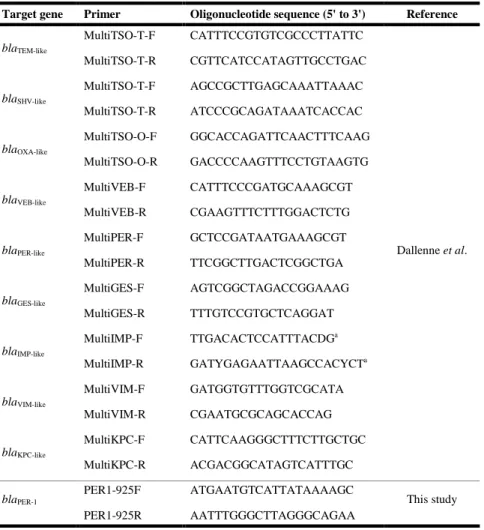
To detect ESBLs and carbapenemase were amplified by multiplex PCR method74. Genes coding for ESBLs were sought by PCR using primers specific for the genes blaTEM-like, blaSHV-like, blaOXA-like, blaVIM-like, blaIMP-like, blaKPC-like, blaVEB-like, blaPER-like,
and blaGES-like (Table 1).
PCR amplification of resistant determinants was performed in a 50 ㎕ volume containing: 2 ㎕ of boiled bacterial suspensions, 20 pM of each primer, 200 μM of dNTPs, 10 mM Tris-HCl (pH 8.3), 50 mM KCl, 1.5 mM MgCl2, and 0.5 U of Taq DNA polymerase (Cosmo Genetech Co., Seoul, Korea).
Amplification was carried out as follows: initial denaturation at 94°C for 10 minutes; 30 cycles of 94°C for 40 seconds, 60°C for 40 seconds and 72°C for 1 minute; and a final elongation step at 72°C for 7 minutes. For the carbapenemase gene multiplex PCR
- 18 -
assays, the annealing temperature was optimal at 55°C for amplification of blaVIM, blaIMP, and blaKPC genes.
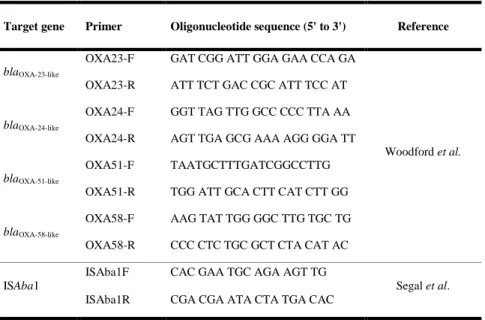
A multiplex polymerase chain reaction (PCR) assay was performed for the detection of the carbapenem resistant genes found in the A. baumannii isolates according to the method described75. These primers were combined with eight primers that were designed to amplify fragments of genes encoding for
blaOXA-23-like, blaOXA-24-like, blaOXA-58-like, and blaOXA-51-like
carbapenemase (Table 2). The amplification conditions were as follows: initial denaturation at 94°C for 5 minutes, 30 cycles of 94°C for 25 seconds, 52°C for 40 seconds, 72°C for 50 seconds, and a final elongation at 72°C for 6 minutes.
The presence of ISAba1 inserted upstream of bla OXA-23-like and blaOXA-51-like like was sought via PCR, using combinations
of the ISAba1 primers and the OXA-23-like and OXA-51-like reverse primers. An annealing temperature of 58°C was used for the ISAba1F/OXA-23-likeR and ISAba1/OXA-51-likeR PCRs17.
- 19 -
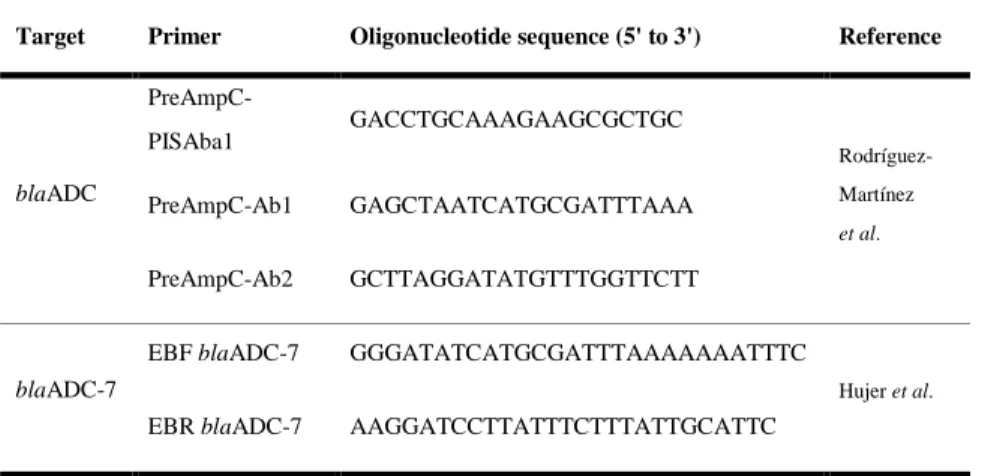
For detection of extended-spectrum cephalosporinase, primers PreAmpC-PISAba1 and PreAmpC-Ab1 were used in combination with primer PreAmpC-Ab2 to amplify 1,521 bp and 1,254 bp fragments, respectively, encompassing the entire
blaAmpC gene with and without the PISAba1 promoter,
respectively (Table 2)27. For detection of the blaADC-7-like gene, the
primer pair of EBF blaADC-7 and EBR blaADC-7was used32 (Table 3). Amplification was carried out as follows: initial denaturation at 94°C for 10 minutes; 30 cycles of 94°C for 30 seconds, 50°C for 1 minute and 72°C for 1 minute; and a final elongation step at 72°C for 10 minutes.
- 20 -
Table 1. Oligonucleotide sequence for detection of β-lactam resistance genes
Target gene Primer Oligonucleotide sequence (5' to 3') Reference
blaTEM-like MultiTSO-T-F CATTTCCGTGTCGCCCTTATTC Dallenne et al. MultiTSO-T-R CGTTCATCCATAGTTGCCTGAC blaSHV-like MultiTSO-T-F AGCCGCTTGAGCAAATTAAAC MultiTSO-T-R ATCCCGCAGATAAATCACCAC blaOXA-like MultiTSO-O-F GGCACCAGATTCAACTTTCAAG MultiTSO-O-R GACCCCAAGTTTCCTGTAAGTG blaVEB-like MultiVEB-F CATTTCCCGATGCAAAGCGT MultiVEB-R CGAAGTTTCTTTGGACTCTG blaPER-like MultiPER-F GCTCCGATAATGAAAGCGT MultiPER-R TTCGGCTTGACTCGGCTGA blaGES-like MultiGES-F AGTCGGCTAGACCGGAAAG MultiGES-R TTTGTCCGTGCTCAGGAT blaIMP-like MultiIMP-F TTGACACTCCATTTACDGa MultiIMP-R GATYGAGAATTAAGCCACYCTa blaVIM-like MultiVIM-F GATGGTGTTTGGTCGCATA MultiVIM-R CGAATGCGCAGCACCAG blaKPC-like MultiKPC-F CATTCAAGGGCTTTCTTGCTGC MultiKPC-R ACGACGGCATAGTCATTTGC blaPER-1 PER1-925F ATGAATGTCATTATAAAAGC This study PER1-925R AATTTGGGCTTAGGGCAGAA
- 21 -
Table 2. Oligonucleotide sequence for detection of OXA type carbapenemase gene
Target gene Primer Oligonucleotide sequence (5' to 3') Reference
blaOXA-23-like
OXA23-F GAT CGG ATT GGA GAA CCA GA
Woodford et al. OXA23-R ATT TCT GAC CGC ATT TCC AT
blaOXA-24-like
OXA24-F GGT TAG TTG GCC CCC TTA AA
OXA24-R AGT TGA GCG AAA AGG GGA TT
blaOXA-51-like
OXA51-F TAATGCTTTGATCGGCCTTG
OXA51-R TGG ATT GCA CTT CAT CTT GG
blaOXA-58-like
OXA58-F AAG TAT TGG GGC TTG TGC TG
OXA58-R CCC CTC TGC GCT CTA CAT AC
ISAba1
ISAba1F CAC GAA TGC AGA AGT TG
Segal et al.
- 22 -
Table 3. Oligonucleotide sequence for detection of cephalosporinase gene
Target Primer Oligonucleotide sequence (5' to 3') Reference
blaADC PreAmpC-PISAba1 GACCTGCAAAGAAGCGCTGC Rodríguez-Martínez et al. PreAmpC-Ab1 GAGCTAATCATGCGATTTAAA PreAmpC-Ab2 GCTTAGGATATGTTTGGTTCTT blaADC-7
EBF blaADC-7 GGGATATCATGCGATTTAAAAAAATTTC
Hujer et al.
- 23 -
Detection of aminoglycoside resistance genes
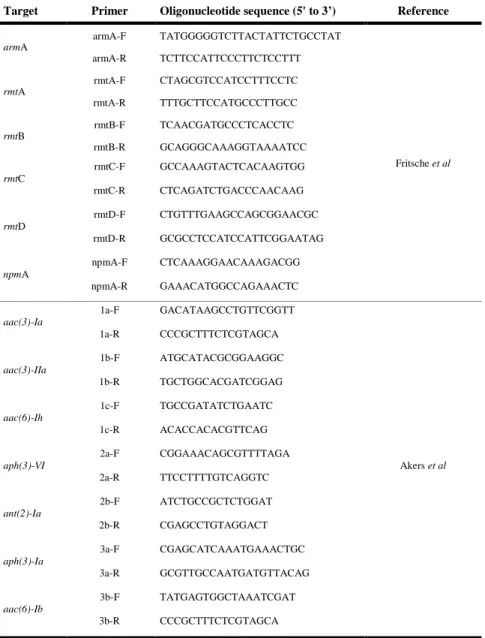
To detect 16S rRNA methylase genes, specific primers for armA, rmtA, rmtB, rmtC, rmtD and npmA were used. The PCR primers used in this study are listed in Table 4.41. The reaction was carried out in a total volume of 20 ㎕, containing 2 ㎕ of template and PCR buffer (40 mM KCl, 10 mM Tris-HCl, 1.5 mM MgCl2), 200 μM of dNTPs, 20 pM of each primer, and
0.5 U of G-Taq DNA polymerase. Amplification conditions were as follows: 94°C for 5 minutes, 25 cycles of 94°C for 30 seconds, 58°C for 30 seconds, and 72°C for 1 minute;, and a final extension at 72°C for 10 minutes.
To detect the genes encoding the following aminoglycoside-modifying enzymes were investigated: acetyltransferases AAC(3)-Ia, AAC(3)-IIa, AAC(6′) -Ib, and AAC(6')-1h;, nucleotidyltransferases ANT(2″) -Ia;, and phosphotransferases APH(3′)-Ia and APH(3′) -VI. Three different multiplex PCRs were conducted. Triplex assay 1 included primers for the amplification of aac(3')-Ia, aac(3')-IIa, and
- 24 -
aac(6')-Ih. Duplex assay 2 included primers for the amplification
of aph(3')-VI and ant(2')-Ia. Duplex assay 3 included primers for the amplification of aph(3')-Ia and aac(6')-Ib76.
A PCR was performed in a 20 ㎕ volume containing: 2 ㎕of boiled bacterial suspensions, 10 pM of each primer, 200 μM of dNTPs, 10 mM Tris-HCl (pH 8.3), 50 mM KCl, 1.5 mM MgCl2, and 0.5 U of Taq DNA polymerase (Cosmo Genetech Co.,
Seoul, Korea). Amplification was carried out as follows: initial denaturation at 95°C for 5 minutes; 30 cycles of 95°C for 30 seconds, 49°C (triplex 1 and duplex2) or 54°C (duplex 3) for 1 minute and 72°C for 1 minute; and a final elongation step at 72°C for 5 minutes.
- 25 -
Table 4. Oligonucleotide sequence for aminoglycoside resistance genes and 16S rRNA methylase genes
Target Primer Oligonucleotide sequence (5' to 3’) Reference
armA armA-F TATGGGGGTCTTACTATTCTGCCTAT Fritsche et al armA-R TCTTCCATTCCCTTCTCCTTT rmtA rmtA-F CTAGCGTCCATCCTTTCCTC rmtA-R TTTGCTTCCATGCCCTTGCC rmtB rmtB-F TCAACGATGCCCTCACCTC rmtB-R GCAGGGCAAAGGTAAAATCC rmtC rmtC-F GCCAAAGTACTCACAAGTGG rmtC-R CTCAGATCTGACCCAACAAG rmtD rmtD-F CTGTTTGAAGCCAGCGGAACGC rmtD-R GCGCCTCCATCCATTCGGAATAG npmA npmA-F CTCAAAGGAACAAAGACGG npmA-R GAAACATGGCCAGAAACTC aac(3)-Ia 1a-F GACATAAGCCTGTTCGGTT Akers et al 1a-R CCCGCTTTCTCGTAGCA aac(3)-IIa 1b-F ATGCATACGCGGAAGGC 1b-R TGCTGGCACGATCGGAG aac(6)-Ih 1c-F TGCCGATATCTGAATC 1c-R ACACCACACGTTCAG aph(3)-VI 2a-F CGGAAACAGCGTTTTAGA 2a-R TTCCTTTTGTCAGGTC ant(2)-Ia 2b-F ATCTGCCGCTCTGGAT 2b-R CGAGCCTGTAGGACT aph(3)-Ia 3a-F CGAGCATCAAATGAAACTGC 3a-R GCGTTGCCAATGATGTTACAG aac(6)-Ib 3b-F TATGAGTGGCTAAATCGAT 3b-R CCCGCTTTCTCGTAGCA
- 26 -
Determination of quinolone resistance by PCR
amplification and DNA sequencing
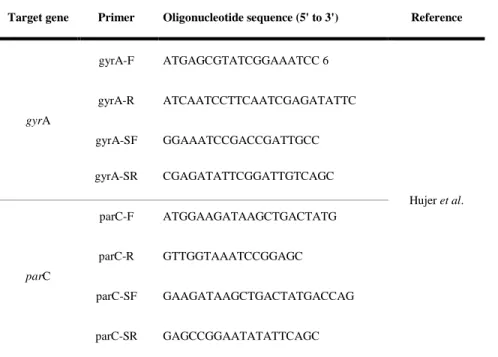
Amplification of the gyrA and parC genes for direct sequencing was performed using the forward and reverse primers listed in Table 5. PCR conditions included an initial denaturation at 95°C for 1 minute followed by 30 cycles of 95°C for 30 seconds and annealing for 45 seconds at 54°C for both gyrA and
parC, with an extension at 72°C for 30 seconds. Cycling was
followed by a final extension at 72°C for 5 minutes.
Sequencing of the PCR products was carried out at Cosmo Genetech (Seoul, Korea). Sequencing reactions were performed using nested primers (Table 6) and the resulting consensus sequences were compared to GenBank (www.ncbi.nlm.nih.gov/GenBank) reference sequences X82165 for gyrA and X95819 for parC of A. baumannii 32.
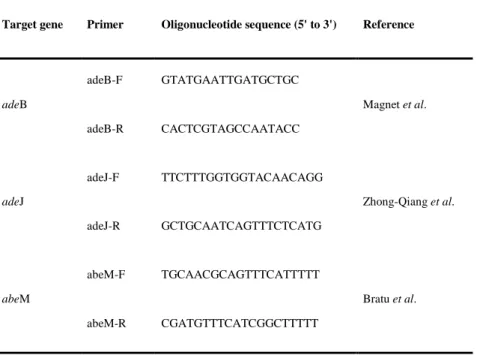
PCR amplifications with the primers for efflux genes (adeB, adeJ, and abeM) were performed40. Amplification conditions were as follows: 94°C for 5 minutes; 25 cycles of
- 27 -
94°C for 30 seconds, 53°C for 30 seconds, and 72°C for 45 seconds; and a final extension at 72°C for 7 minutes.
- 28 -
Table 5. Oligonucleotide sequence used to amplify the gyrA and parC genes for sequence analysis
Target gene Primer Oligonucleotide sequence (5' to 3') Reference
gyrA gyrA-F ATGAGCGTATCGGAAATCC 6 Hujer et al. gyrA-R ATCAATCCTTCAATCGAGATATTC gyrA-SF GGAAATCCGACCGATTGCC gyrA-SR CGAGATATTCGGATTGTCAGC parC parC-F ATGGAAGATAAGCTGACTATG parC-R GTTGGTAAATCCGGAGC parC-SF GAAGATAAGCTGACTATGACCAG parC-SR GAGCCGGAATATATTCAGC
- 29 -
Table 6. Oligonucleotide sequence used to amplify the adeB,
adeJ and abeM genes of efflux pump
Target gene Primer Oligonucleotide sequence (5' to 3') Reference
adeB adeB-F GTATGAATTGATGCTGC Magnet et al. adeB-R CACTCGTAGCCAATACC adeJ adeJ-F TTCTTTGGTGGTACAACAGG Zhong-Qiang et al. adeJ-R GCTGCAATCAGTTTCTCATG abeM abeM-F TGCAACGCAGTTTCATTTTT Bratu et al. abeM-R CGATGTTTCATCGGCTTTTT
- 30 -
REP- PCR
To prepare DNA templates, brain heart infusion broth (Becton Dickinson, Franklin Lake, NJ, USA) was inoculated with
one colony of A. baumannii. After 24 hours incubation at 37°C, 1 ㎖ of the culture was centrifuged at 12,000 g for 10 minutes. The
pellets were resuspended in 1 ㎖ of saline (0.85% NaCl) and
then harvested by centrifugation. Bacterial genomic DNA was extracted using the DOKDO-Prep® Genomic DNA Purification Kit (ELPIS-Biotech., Inc., Daejeon, Korea), and kept at -20°C until use.
With the REP-PCR method, the primer pair REP1 (5'-IIIGCGCCGICATCAGGC-3') and REP2 (5'-ACGTCTTATC AGGCCTAC-3') was used to amplify putative REP-like elements in the genomic bacterial DNA. The primer REP1 has the nucleotide inosine at ambiguous positions in the REP consensus sequences. Inosine contains the purine base hypoxanthine and is
- 31 -
able to base pair with A, C, G, and T 77. The 20 ㎕ of PCR mixture contained 2 ㎕ template DNA, PCR buffer (40 mM KCl, 10 mM Tris-HCl, 1.5 mM MgCl2), 2.5 mM(each) dNTP, and 0.5
U of SP-Taq DNA polymerase (Cosmo Genetech Co., Seoul, Korea). The Mg2+ concentration was 3 mM and primers were used at 20 μM concentration77
. The amplification was performed in a thermal cycler (GeneAmpⓇ PCR System 2700, Perkin-Elmer
Cetus, Boston, USA) beginning with an initial denaturation step at 94°C for 10 minutes; followed by 30 cycles of 94°C for 1 minute, 45°C for 1 minute, and 72°C for 2 minutes; and ending with a final extension step at 72°C for 16 minutes followed by a hold at 4°C. The PCR products were analyzed using 2.5% agarose gel electrophoresis with 0.5 ㎍/㎖ of ethidium bromide
and visualized under UV light.
- 32 -
AFLP analysis was performed using the established procedures with minor modifications62, 78. Briefly, the genomic DNA (1 ㎍) was digested with 10 U HindⅢ (Fermentas,
Burlington, Canada) and ApaⅠ (Fermentas, Burlington, Canada).
For the ligation of the adapters, 5 pmol of HindⅢ adapter (ADH),
5 pmol of ApaⅠ adapter (Apa) and 10 Weiss unit of T4 DNA
ligase (Fermentas, Burlington, Canada) were added. The primer used in the PCR step included the respective restriction enzyme and the adapter sequence plus one extension base for primer (A for HindⅢ primer). The DNA bands were analyzed using the
Quantity One version 4.5.0 program (Bio-Rad, Hercules, CA, USA) and the similarity index by dendrogram for genetical similarity to the band pattern of each clinical isolates was examined.
- 33 -
III. RESULTS
Clinical isolates
Eight-six strains of non-duplicated A. baumannii were identified by MicroScan Walkaway 96 as belonging to
Acinetobacter baumannii/haemolyticus. Genomic identification
was performed using the ARDRA method. The experimental results revealed that all strains tested were A. baumannii. They were isolated from abscess (n=2), culture of blood (n=3), bronchial washing (n=9), catheter (n=2), cerebrospinal fluid (n=2), drain (n=2), endotracheal aspiration (n=1), sputum (n=47), tip (n=1), urine (n=6), and wound (n=10).
Antimicrobial Susceptibilities
All the isolates showed resistance to ampicillin, cefazolin, cefotaxime, cefotetan, ceftazidime, ceftriaxone, cefuroxime, ciprofloxacin, meropenem, moxifloxacin and ticarcillin/K clavulanate, Moreover, all the isolates showed 99% resistance to cefepime, 98% resistance to gentamicin, 93%
- 34 -
resistance to trimethoprim/sulfamethoxazole, 91% resistance to tobramycin, 88% resistance to aztreonam, 86% resistance to amikacin, 85% resistance to imipenem, and 73% resistance to ampicillin /sulbactam,.
Antimicrobial resistance mechanisms
All of the eighty-six A. baumannii isolates showed positive results in the modified Hodge test and negative results in the EDTA disk synergy test, indicating the production of class D or another type of carbapenemase.
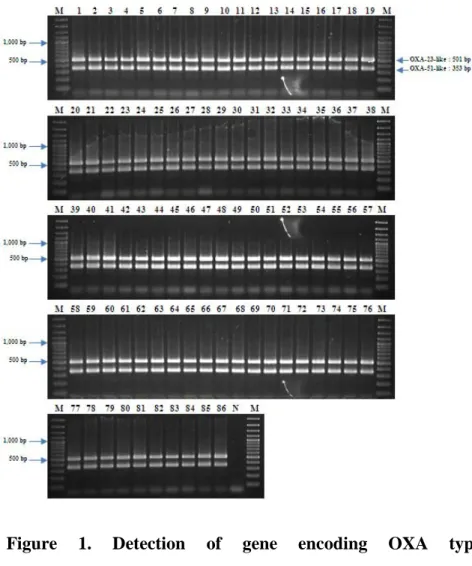
All the isolates possessed the encoding gene for an intrinsic blaOXA-51-like carbapenemase and an acquired blaOXA-23-like
carbapenemase (Figure 1). ISAba1 inserted in the upstream of blaOXA-23-like was identified in all the A. baumannii isolates.
Among the blaOXA-23-like and blaOXA-51-like carbapenemase
producing A. baumannii isolates, thirty-one isolates carried
blaTEM-like and thirty-two isolates carried blaPER-1, respectively
- 35 -
Figure 1. Detection of gene encoding OXA type
cabapenemase by multiplex PCR. Lane M, 100 bp Plus DNA
- 36 -
Table 7. Distribution of β-lactamase gene in A. baumannii isolates
Genotype Number (%) of isolates (n=86)
blaTEM-like 31 (36.0)
blaPER-1 32 (37.2)
blaOXA-23-like 86 (100.0)
blaOXA-51-like 86 (100.0)
blaOXA-23-like + blaOXA-51-like 86 (100.0)
ISAba1 + blaOXA-23-like 86 (100.0)
blaPER-1 + ISAba1 + blaOXA-23-like 32 (37.2)
blaADC-like 86 (100.0)
blaADC-7-like 81 (94.2)
- 37 -
Detection of extended-spectrum cephalosporinase
Using the PCR method with the primer pair of PreAmpC-PISAba1 and PreAmpC-Ab2, all the A. baumannii isolates were found to be positive for the ISAba1. ISAba1 inserted in the upstream of blaAmpC identified in all A. baumannii
isolates. PCR amplification nucleotide sequencing analysis using the primer pair of PreAmpC-Ab1 and PreAmpC-Ab2 showed 1,254 bp of DNA fragment as expected.
The experimental results of blaADC-7-like gene
amplification suggested that eighty-one A. baumannii isolates had the blaADC-7-like gene (Table 7).
Distribution of aminoglycoside resistance genes in A.
baumannii isolates
PCR was performed to examine the genetic basis of resistance to aminoglycosides. Three different genes encoding aminoglycoside-modifying enzymes were identified : aac(3)-Ia and aac(6')-Ib were the most prevalent, found in sixty-eight
- 38 -
isolates, followed by aph(3')-Ia in forty-nine isolates. The combination of aac(3)-Ia/aac(6')-Ib/aph(3')-Ia was also founded in forty-nine (57%) isolates and aac(3)-Ia/aac(6')-Ib in seventeen isolates.
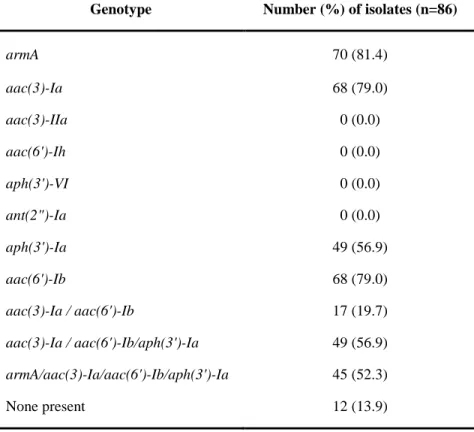
The 16S rRNA methylase gene armA was detected in seventy clinical isolates, but rmtA, rmtB, rmtC, rmtD, and npmA were not detected in any A. baumannii isolate tested. A majority of aminoglycoside resistance genes in A. baumannii was the combination of armA/aac(3)-Ia/aac(6')-Ib/aph(3')-Ia indentified in forty-five isolates (Table 8) .
- 39 -
Table 8. Distribution of aminoglycoside resistance genes in A.
baumanii
Genotype Number (%) of isolates (n=86)
armA 70 (81.4) aac(3)-Ia 68 (79.0) aac(3)-IIa 0 (0.0) aac(6')-Ih 0 (0.0) aph(3')-VI 0 (0.0) ant(2")-Ia 0 (0.0) aph(3')-Ia 49 (56.9) aac(6')-Ib 68 (79.0) aac(3)-Ia / aac(6')-Ib 17 (19.7) aac(3)-Ia / aac(6')-Ib/aph(3')-Ia 49 (56.9) armA/aac(3)-Ia/aac(6')-Ib/aph(3')-Ia 45 (52.3) None present 12 (13.9)
- 40 -
Determination of quinolone resistance in A.
baumannii
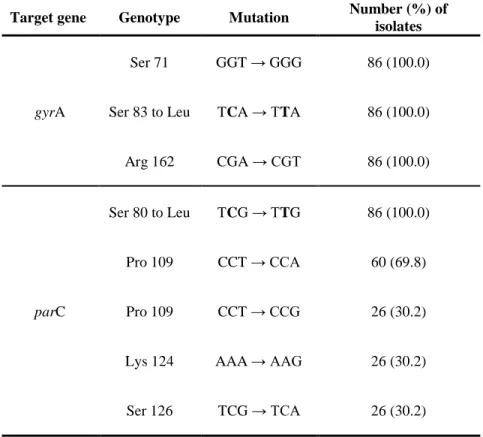
The sequencing results for the QRDR of gyrA and parC, encoding DNA gyrase and DNA topoisomerase IV, respectively, revealed substitutions of serine83 to leucine and serine80 to leucine in the respective enzymes in all quinolone-resistant isolates sequenced. All eight-six isolates that harbored amino acid substitution in gyrA and parC genes exhibited quinolone resistance. No additional amino acid changes were observed for the GyrA polypeptide in all of the isolates. However, nucleotide sequence change were observed in the codon of GyrA at 71th (GGT to GGG) and 162th (CGA to CGT) in all the isolates and in the codon of ParC at 109th (CCT to CCA), 124th (AAA to AAG) and 126th (TCG to TCA) in twenty-six A. baumannii isolates (Table 9).
In addition, this analysis shows a high distribution of the efflux pump gene adeB and adeJ in A. baumannii isolates. AdeJ
- 41 -
gene was identified in all the isolates but adeB gene in eighty-five isolates.
- 42 -
Table 9. Distribution of quinolone resistant genotype in A.
baumanii
Target gene Genotype Mutation Number (%) of
isolates
gyrA
Ser 71 GGT → GGG 86 (100.0) Ser 83 to Leu TCA → TTA 86 (100.0) Arg 162 CGA → CGT 86 (100.0)
parC
Ser 80 to Leu TCG → TTG 86 (100.0) Pro 109 CCT → CCA 60 (69.8) Pro 109 CCT → CCG 26 (30.2) Lys 124 AAA → AAG 26 (30.2) Ser 126 TCG → TCA 26 (30.2)
- 43 -
Clonal relationship of multi-drug resistant A.
baumannii
AFLP and REP-PCR were performed to determine the clonal relatedness of carbapenemase-producing A. baumannii. Agarose gel electrophoresis of the DNA fragments amplified by AFLP and REP-PCR of representative A. baumannii isolates is shown in Figure 2 and 4. Most of the MDR A. baumannii isolates showed an identical band pattern. The profile generated with AFLP and REP-PCR primers contained several bands, ranging in size from 0.1 to 3 kb. A baumannii ATCC 19606 strain tested showed a different band pattern from those of MDR A.
- 44 -
Figure 2. AFLP fingerprints of MDR A. baumannii.
Lane M, 100 bp Plus DNA Ladder (Fermentas, Burlington, Canada); lane P, A. baumannii ATCC 19606.
- 45 -
Figure 3. Dendrogram of the similarity index among
- 46 -
Figure 4. REP-PCR for MDR A. baumannii.
Lane M, 100 bp Plus DNA Ladder (Fermentas, Burlington, Canada); lane P, A. baumannii ATCC 19606.
- 47 -
Figure 5. Dendrogram of the similarity index among
- 48 -
IV. DISCUSSION
A. baumannii is an increasingly important nosocomial
pathogen, frequently causing nosocomial outbreaks in intensive care units of hospital. Most outbreak strains are highly resistant to a variety of antibiotics, and therefore therapeutic options are becoming increasingly limited17. Hence, protocols and systems for MDR resistance surveillance has become increasingly important79.
The aim of this study was to examine the prevalent types of MDR A. baumannii and related trends of antimicrobial resistance in a university hospital in the Gangwon province of Korea. For this study, A. baumannii clinical isolates were collected from July 2007 to July 2010 and then identified to the species level by ARDRA. Furthermore, the molecular determinants of resistance to carbapenem, cephalosporin, aminoglycoside, and quinolone were investigated. AFLP analysis
- 49 -
and REP-PCR were performed to verify strain relatedness as an indication of prevalence of strains, too.
Nationwide Korean surveillance in 2004 showed that
Acinetobacter spp. was the seventh most common pathogen,
and especially resistance to imipenem had risen from 5% (2001) to 17%80 (2004). This increase was more dramatic than the case of Pseudomonas aeruginosa, where imipenem resistance rose from 19% to 24%. MBLs have received serious attention as a source of carbapenem resistance in Korea, but an outbreak in 2003 involving thirty six patients was caused by A. baumannii with OXA-23-like enzyme. This was the first report in Asia2. Most isolates with OXA-23-like were from the Southeast region of Korea, while those with OXA-51-like were relatively more prevalent in the Northern region81.
An outbreak of intrinsic OXA-51-like carbapenemase and acquired OXA-23-like carbapenemase-producing A. baumannii was reported in a university hospital of Busan city
- 50 -
identical band pattern, so they appeared to be caused by the spread of a clonally related epidemic82. In addition, an investigation of the genetic determinants of MDR A. baumannii from three university hospitals in the Chungcheong province reported that MDR A. baumannii were containing the bla OXA-23-like and the blaOXA-51-like carbapenemase genes 83.
In this study, eight-six isolates of imipenem-nonsusceptible A. baumannii was confirmed to produce carbapenemase by the modified cloverleaf synergy test. Meanwhile, metallo-β-lactamase-producing isolates (EDTA disk synergy test positive) were not detected. The results suggest that all the A. baumannii isolates do not produce class B metallo- β-lactamases, but produce other type of β-lactamases. All of the eighty-six A. baumannii isolates carried both the blaOXA-23-like and
the blaOXA-51-like genes, and all isolates with the blaOXA-23-like gene
had ISAba1 upstream of the blaOXA-23-like gene (Table 7). This
result indicates that acquired 23-like and an intrinsic OXA-51-like carbapenemase-producing A. baumannii were prevalent in
- 51 -
the university hospital of Gangwon province during the research period.
Moreover, all the A. baumannii strains carried bla OXA-23-like and blaOXA-51-like for resistance to carbapenems, whereas
thirty-four isolates carried blaPER-1 for resistance to extended-spectrum
β-lactams and armA for resistance to high-level of aminoglycosides. Because blaOXA-23-like-producing A. baumannii
confers resistance to most β-lactams such as imipenem, aztreonam, ceftazidime, and cefepime, a limited number of antimicrobial agents maintain reliable activity against bla
OXA-23-like -producing A. baumannii, including polymyxin, sulbactam,
and minocycline84. Thus, it is important to monitor and control the spread of blaOXA-23-like-producing A. baumannii conferring
resistance to most β-lactams.
One of the most important mechanisms of aminoglycoside resistance is post-transcriptional rRNA methylation by 16S rRNA methylases. In this study, 16S rRNA methylase gene armA was detected in seventy (81%) clinical
- 52 -
isolates, but rmtA, rmtB, and rmtC were not detected in any A.
baumannii isolates. According to the multiplex PCR analysis,
seven different types of aminoglycoside-modifying enzymes (AME)-encoding genes were present singly or in combination (Table 4). Forty-nine isolates (57%) had one AME gene encoding
aph(3')-Ia (phosphotransferase), sisty-eight isolates (79%) had
two AME genes encoding aac(3)-Ia and aac(6')-Ib
(acetyltransferase), forty-nine isolates (57%) had three AME genes encoding aac(3)-Ia, aac(6')-Ib, and aph(3')-Ia, and seventeen isolates (20%) had no AME gene. Genes encoding
aac(3)-Ia and aac(6')-Ib were the most prevalent. In addition, a
combination of 16S rRNA methylase and AME genes (armA,
aac(3)-Ia, aac(6')-Ib, and aph(3')-Ia) was found in 45 (52%)
isolates (Table 8). All of the seventeen non-presenting isolates were resistant to gentamicin. However, seven isolates were sensitive and one isolate was intermediately resistant to tobramycin. Three were isolates sensitive and seven isolates were intermediately resistant to amikacin. Previous studies in Korea
- 53 -
have reported a different prevalence of AME genes in a polyclonal group of A. baumannii isolates : aac(3)-Ia (15%),
aac(6')-Ib (84%), ant(3”)-Ia (85%), aph(3’)-Ia (89%), and
aph(3')-VI (2%) 42. Contrastively, nucleotidyltransferase
[ant(2")-Ia and ant(3"-[ant(2")-Ia)] was not detected in any isolates in the present study. This result showed that A. baumannii containing nucleotidyltransferase was not prevalent in Gangwon province in Korea.
A major mechanism of quinolone resistance in gram-negative bacteria involves structural changes of the drug targets of DNA gyrase and DNA topoisomerase IV85. In A. baumannii, the most frequent amino acid substitutions occur at position 83 (Ser-83) of GyrA and at position 80 (Ser-80) of ParC33. Sequencing results of previous studies have revealed concurrent mutations in gyrA (Ser-83) and parC (Ser-80 or Glu-84) in all isolates collected from Chungcheong Province of Korea83. In this study, all of the isolates that harbored amino acid substitution in GyrA and ParC polypeptides also exhibited quinolone resistance.
- 54 -
The sequencing data for the QRDR of gyrA and parC (encoding DNA gyrase and DNA topoisomerase IV, respectively) revealed the presence of Ser (TCA) 83 Leu (TTA) and Ser (TCG) 80 Leu (TTG) substitutions in the respective enzymes for all the quinolone-resistant isolates sequenced. No additional amino acid changes were observed in the GyrA polypeptide in these isolates. However, nucleotide sequence changes were observed, GyrA at 71th (GGT to GGG) and 162th (CGA to CGT) and ParC at 109th (CCT to CCA), 124th (AAA to AAG) and 126th (TCG to TCA) in twenty-six clinical isolates (Table 9). These isolates belong to cluster II in the dendrogram with a similarity index of over 90% by REP-PCR (Figure 5). In A. baumannii, efflux pump-mediated resistance to antimicrobials is generally associated with the efflux pumps adeABC, AdeIJK, and AbeM37, 39. This study also showed a high distribution of adeB (99%) and adeJ (100%) genes in MDR A. baumannii.
All of the eight-six A. baumannii isolates showed similar or identical AFLP profiles (Figure 2 and 3) and similar band
- 55 -
patterns on REP-PCR profiles (Figure 4 and 5), suggesting that they originated from a common ancestor and clonally spread in the university hospital in Gangwon province. The clonal spread of MDR bacteria is a major factor contributing to the growing problem of antimicrobial resistance. Previous studies have shown the geographically widespread occurrence of MDR A. baumannii strains, which are showing genotypically and phenotypically high similarity, suggesting a clonal spread. Nosocomial infections due to MDR A. baumannii strains are increasing worldwide. The MDR A. baumannii strains are rapidly adapting to the hospital environment, thus, it is becoming difficult to control the outbreaks. Early recognition of imipenem-resistant A. baumannii clones is very important to prevent spreading within the hospital environment. Once MDR A. baumannii break out, their molecular typing could be helpful in identification of a common source or cross-contamination. The identification of MDR A. baumannii is an important step in enabling epidemiological tracing of these strains.
- 56 -
V.
REFERENCES
1. Simor AE, Lee M, Vearncombe M, Jones-Paul L, Barry C, Gomez M, et al. An outbreak due to multiresistant
Acinetobacter baumannii in a burn unit: risk factors for
acquisition and management. Infect Control Hosp Epidemiol 2002;23(5):261-7.
2. Jeon BC, Jeong SH, Bae IK, Kwon SB, Lee K, Young D, et al. Investigation of a nosocomial outbreak of imipenem-resistant Acinetobacter baumannii producing the OXA-23 beta-lactamase in korea. J Clin Microbiol 2005;43(5):2241-5.
3. Chastre J, Trouillet JL. Problem pathogens (Pseudomonas aeruginosa and Acinetobacter). Semin Respir Infect 2000;15(4):287-98.
4. Paterson DL. Looking for risk factors for the acquisition of antibiotic resistance: a 21st-century approach. Clin Infect Dis 2002;34(12):1564-7.
- 57 -
clinical outcomes and the cost of care. Crit Care Med 2001;29(4 Suppl):N114-20.
6. Bou G, Cervero G, Dominguez MA, Quereda C, Martinez-Beltran J. Characterization of a nosocomial outbreak caused by a multiresistant Acinetobacter baumannii strain with a carbapenem-hydrolyzing enzyme: high-level carbapenem resistance in A. baumannii is not due solely to the presence of beta-lactamases. J Clin Microbiol 2000;38(9):3299-305.
7. Young LS, Sabel AL, Price CS. Epidemiologic, clinical, and economic evaluation of an outbreak of clonal multidrug-resistant Acinetobacter baumannii infection in a surgical intensive care unit. Infect Control Hosp Epidemiol 2007;28(11):1247-54.
8. del Mar Tomas M, Cartelle M, Pertega S, Beceiro A, Llinares P, Canle D, et al. Hospital outbreak caused by a carbapenem-resistant strain of Acinetobacter baumannii: patient prognosis and risk-factors for colonisation and infection. Clin Microbiol Infect 2005;11(7):540-6.
- 58 -
9. Falagas ME, Karageorgopoulos DE. Pandrug resistance (PDR), extensive drug resistance (XDR), and multidrug resistance (MDR) among Gram-negative bacilli: need for international harmonization in terminology. Clin Infect Dis 2008;46(7):1121-2; author reply 2.
10. Kim JW, Heo ST, Jin JS, Choi CH, Lee YC, Jeong YG, et al. Characterization of Acinetobacter baumannii carrying
blaOXA-23, blaPER-1 and armA in a Korean hospital. Clin Microbiol
Infect 2008;14(7):716-8.
11. Dijkshoorn L, Van Harsselaar B, Tjernberg I, Bouvet PJ, Vaneechoutte M. Evaluation of amplified ribosomal DNA restriction analysis for identification of Acinetobacter genomic species. Syst Appl Microbiol 1998;21(1):33-9.
12. Park YS, Lee H, Lee KS, Hwang SS, Cho YK, Kim HY, et al. Extensively drug-resistant Acinetobacter baumannii: risk factors for acquisition and prevalent OXA-type carbapenemases--a multicentre study. Int J Antimicrob Agents 2010;36(5):430-5. 13. Seifert H, Dolzani L, Bressan R, van der Reijden T, van
- 59 -
Strijen B, Stefanik D, et al. Standardization and interlaboratory reproducibility assessment of pulsed-field gel electrophoresis-generated fingerprints of Acinetobacter baumannii. J Clin Microbiol 2005;43(9):4328-35.
14. Park YK, Choi JY, Jung SI, Park KH, Lee H, Jung DS, et al. Two distinct clones of carbapenem-resistant Acinetobacter
baumannii isolates from Korean hospitals. Diagn Microbiol
Infect Dis 2009;64(4):389-95.
15. Poirel L, Nordmann P. Carbapenem resistance in
Acinetobacter baumannii: mechanisms and epidemiology. Clin
Microbiol Infect 2006;12(9):826-36.
16. Higgins PG, Dammhayn C, Hackel M, Seifert H. Global spread of carbapenem-resistant Acinetobacter baumannii. J Antimicrob Chemother 2010;65(2):233-8.
17. Turton JF, Ward ME, Woodford N, Kaufmann ME, Pike R, Livermore DM, et al. The role of ISAba1 in expression of OXA carbapenemase genes in Acinetobacter baumannii. FEMS Microbiol Lett 2006;258(1):72-7.
- 60 -
18. Poirel L, Nordmann P. Genetic structures at the origin of acquisition and expression of the carbapenem-hydrolyzing oxacillinase gene blaOXA-58 in Acinetobacter baumannii.
Antimicrob Agents Chemother 2006;50(4):1442-8.
19. Bratu S, Landman D, Martin DA, Georgescu C, Quale J. Correlation of antimicrobial resistance with beta-lactamases, the OmpA-like porin, and efflux pumps in clinical isolates of
Acinetobacter baumannii endemic to New York City. Antimicrob
Agents Chemother 2008;52(9):2999-3005.
20. Hujer KM, Hamza NS, Hujer AM, Perez F, Helfand MS, Bethel CR, et al. Identification of a new allelic variant of the
Acinetobacter baumannii cephalosporinase, ADC-7
beta-lactamase: defining a unique family of class C enzymes. Antimicrob Agents Chemother 2005;49(7):2941-8.
21. Heritier C, Poirel L, Nordmann P. Cephalosporinase over-expression resulting from insertion of ISAba1 in
Acinetobacter baumannii. Clin Microbiol Infect
- 61 -
22. Bush K, Jacoby GA, Medeiros AA. A functional classification scheme for beta-lactamases and its correlation with molecular structure. Antimicrob Agents Chemother 1995;39(6):1211-33.
23. Hancock RE, Bellido F. Antibacterial in vitro activity of fourth generation cephalosporins. J Chemother 1996;8 Suppl 2:31-6.
24. Levin AS, Levy CE, Manrique AE, Medeiros EA, Costa SF. Severe nosocomial infections with imipenem-resistant
Acinetobacter baumannii treated with ampicillin/sulbactam. Int J
Antimicrob Agents 2003;21(1):58-62.
25. Nordmann P, Mammeri H. Extended-spectrum cephalosporinases: structure, detection and epidemiology. Future Microbiol 2007;2:297-307.
26. Rodriguez-Martinez JM, Poirel L, Nordmann P. Extended-spectrum cephalosporinases in Pseudomonas
aeruginosa. Antimicrob Agents Chemother 2009;53(5):1766-71.
- 62 -
Extended-spectrum cephalosporinase in Acinetobacter baumannii. Antimicrob Agents Chemother 2010;54(8):3484-8.
28. Vila J, Ruiz J, Goni P, Jimenez de Anta T. Quinolone-resistance mutations in the topoisomerase IV parC gene of
Acinetobacter baumannii. J Antimicrob Chemother
1997;39(6):757-62.
29. Vila J, Ruiz J, Goni P, Marcos A, Jimenez de Anta T. Mutation in the gyrA gene of quinolone-resistant clinical isolates of Acinetobacter baumannii. Antimicrob Agents Chemother 1995;39(5):1201-3.
30. Adams-Haduch JM, Paterson DL, Sidjabat HE, Pasculle AW, Potoski BA, Muto CA, et al. Genetic basis of multidrug resistance in Acinetobacter baumannii clinical isolates at a tertiary medical center in Pennsylvania. Antimicrob Agents Chemother 2008;52(11):3837-43.
31. Hamouda A, Amyes SG. Novel gyrA and parC point mutations in two strains of Acinetobacter baumannii resistant to ciprofloxacin. J Antimicrob Chemother 2004;54(3):695-6.
- 63 -
32. Hujer KM, Hujer AM, Endimiani A, Thomson JM, Adams MD, Goglin K, et al. Rapid determination of quinolone resistance in Acinetobacter spp. J Clin Microbiol 2009;47(5):1436-42.
33. Lee JK, Lee YS, Park YK, Kim BS. Mutations in the gyrA and parC genes in ciprofloxacin-resistant clinical isolates of
Acinetobacter baumannii in Korea. Microbiol Immunol
2005;49(7):647-53.
34. Wisplinghoff H, Decker M, Haefs C, Krut O, Plum G, Seifert H. Mutations in gyrA and parC associated with resistance to fluoroquinolones in epidemiologically defined clinical strains
of Acinetobacter baumannii. J Antimicrob Chemother
2003;51(1):177-80.
35. Ribera A, Ruiz J, Jiminez de Anta MT, Vila J. Effect of an efflux pump inhibitor on the MIC of nalidixic acid for
Acinetobacter baumannii and Stenotrophomonas maltophilia
clinical isolates. J Antimicrob Chemother 2002;49(4):697-8. 36. Higgins PG, Wisplinghoff H, Stefanik D, Seifert H.
- 64 -
Selection of topoisomerase mutations and overexpression of adeB mRNA transcripts during an outbreak of Acinetobacter
baumannii. J Antimicrob Chemother 2004;54(4):821-3.
37. Magnet S, Courvalin P, Lambert T. Resistance-nodulation-cell division-type efflux pump involved in aminoglycoside resistance in Acinetobacter baumannii strain BM4454. Antimicrob Agents Chemother 2001;45(12):3375-80. 38. Su XZ, Chen J, Mizushima T, Kuroda T, Tsuchiya T.
AbeM, an H+-coupled Acinetobacter baumannii multidrug efflux
pump belonging to the MATE family of transporters. Antimicrob Agents Chemother 2005;49(10):4362-4.
39. Peleg AY, Seifert H, Paterson DL. Acinetobacter
baumannii: emergence of a successful pathogen. Clin Microbiol
Rev 2008;21(3):538-82.
40. Yan ZQ, Shen DX, Cao JR, Chen R, Wei X, Liu LP, et al. Susceptibility patterns and molecular epidemiology of multidrug-resistant Acinetobacter baumannii strains from three military hospitals in China. Int J Antimicrob Agents 2010;35(3):269-73.
- 65 -
41. Fritsche TR, Castanheira M, Miller GH, Jones RN, Armstrong ES. Detection of methyltransferases conferring high-level resistance to aminoglycosides in Enterobacteriaceae from Europe, North America, and Latin America. Antimicrob Agents Chemother 2008;52(5):1843-5.
42. Cho YJ, Moon DC, Jin JS, Choi CH, Lee YC, Lee JC. Genetic basis of resistance to aminoglycosides in Acinetobacter spp. and spread of armA in Acinetobacter baumannii sequence group 1 in Korean hospitals. Diagn Microbiol Infect Dis 2009;64(2):185-90.
43. Dijkshoorn L, Nemec A, Seifert H. An increasing threat in hospitals: multidrug-resistant Acinetobacter baumannii. Nat Rev Microbiol 2007;5(12):939-51.
44. Nemec A, Dolzani L, Brisse S, van den Broek P, Dijkshoorn L. Diversity of aminoglycoside-resistance genes and their association with class 1 integrons among strains of pan-European Acinetobacter baumannii clones. J Med Microbiol 2004;53(Pt 12):1233-40.
- 66 -
45. Lee H, Yong D, Yum JH, Roh KH, Lee K, Yamane K, et al. Dissemination of 16S rRNA methylase-mediated highly amikacin-resistant isolates of Klebsiella pneumoniae and
Acinetobacter baumannii in Korea. Diagn Microbiol Infect Dis
2006;56(3):305-12.
46. Yokoyama K, Doi Y, Yamane K, Kurokawa H, Shibata N, Shibayama K, et al. Acquisition of 16S rRNA methylase gene in Pseudomonas aeruginosa. Lancet 2003;362(9399):1888-93. 47. Seward RJ, Lambert T, Towner KJ. Molecular epidemiology of aminoglycoside resistance in Acinetobacter spp. J Med Microbiol 1998;47(5):455-62.
48. Doi Y, Adams JM, Yamane K, Paterson DL. Identification of 16S rRNA methylase-producing Acinetobacter
baumannii clinical strains in North America. Antimicrob Agents
Chemother 2007;51(11):4209-10.
49. Yu YS, Zhou H, Yang Q, Chen YG, Li LJ. Widespread occurrence of aminoglycoside resistance due to ArmA methylase in imipenem-resistant Acinetobacter baumannii isolates in China.
- 67 -
J Antimicrob Chemother 2007;60(2):454-5.
50. Joly-Guillou ML, Bergogne-Berezin E, Vieu JF. A study of the relationships between antibiotic resistance phenotypes, phage-typing and biotyping of 117 clinical isolates of Acinetobacter spp. J Hosp Infect 1990;16(1):49-58.
51. Dijkshoorn L, Aucken HM, Gerner-Smidt P, Kaufmann ME, Ursing J, Pitt TL. Correlation of typing methods for
Acinetobacter isolates from hospital outbreaks. J Clin Microbiol
1993;31(3):702-5.
52. Gerner-Smidt P. Frequency of plasmids in strains of
Acinetobacter calcoaceticus. J Hosp Infect 1989;14(1):23-8.
53. Gerner-Smidt P. Ribotyping of the Acinetobacter
calcoaceticus-Acinetobacter baumannii complex. J Clin
Microbiol 1992;30(10):2680-5.
54. Gouby A, Carles-Nurit MJ, Bouziges N, Bourg G, Mesnard R, Bouvet PJ. Use of pulsed-field gel electrophoresis for investigation of hospital outbreaks of Acinetobacter baumannii. J Clin Microbiol 1992;30(6):1588-91.
- 68 -
55. Graser Y, Klare I, Halle E, Gantenberg R, Buchholz P, Jacobi HD, et al. Epidemiological study of an Acinetobacter
baumannii outbreak by using polymerase chain reaction
fingerprinting. J Clin Microbiol 1993;31(9):2417-20.
56. de Bruijn FJ. Use of repetitive (repetitive extragenic palindromic and enterobacterial repetitive intergeneric consensus) sequences and the polymerase chain reaction to fingerprint the genomes of Rhizobium meliloti isolates and other soil bacteria. Appl Environ Microbiol 1992;58(7):2180-7.
57. Versalovic J, Koeuth T, Lupski JR. Distribution of repetitive DNA sequences in eubacteria and application to fingerprinting of bacterial genomes. Nucleic Acids Res 1991;19(24):6823-31.
58. Woods CR, Jr., Versalovic J, Koeuth T, Lupski JR. Analysis of relationships among isolates of Citrobacter diversus by using DNA fingerprints generated by repetitive sequence-based primers in the polymerase chain reaction. J Clin Microbiol 1992;30(11):2921-9.
- 69 -
59. Stern MJ, Ames GF, Smith NH, Robinson EC, Higgins CF. Repetitive extragenic palindromic sequences: a major component of the bacterial genome. Cell 1984;37(3):1015-26. 60. Snelling AM, Gerner-Smidt P, Hawkey PM, Heritage J, Parnell P, Porter C, et al. Validation of use of whole-cell repetitive extragenic palindromic sequence-based PCR (REP-PCR) for typing strains belonging to the Acinetobacter calcoaceticus-Acinetobacter baumannii complex and application of the method to the investigation of a hospital outbreak. J Clin Microbiol 1996;34(5):1193-202.
61. Bergogne-Berezin E, Joly-Guillou ML. An underestimated nosocomial pathogen, Acinetobacter
calcoaceticus. J Antimicrob Chemother 1985;16(5):535-8.
62. Janssen P, Coopman R, Huys G, Swings J, Bleeker M, Vos P, et al. Evaluation of the DNA fingerprinting method AFLP as an new tool in bacterial taxonomy. Microbiology 1996;142 ( Pt 7):1881-93.