저작자표시-비영리-변경금지 2.0 대한민국 이용자는 아래의 조건을 따르는 경우에 한하여 자유롭게 l 이 저작물을 복제, 배포, 전송, 전시, 공연 및 방송할 수 있습니다. 다음과 같은 조건을 따라야 합니다: l 귀하는, 이 저작물의 재이용이나 배포의 경우, 이 저작물에 적용된 이용허락조건 을 명확하게 나타내어야 합니다. l 저작권자로부터 별도의 허가를 받으면 이러한 조건들은 적용되지 않습니다. 저작권법에 따른 이용자의 권리는 위의 내용에 의하여 영향을 받지 않습니다. 이것은 이용허락규약(Legal Code)을 이해하기 쉽게 요약한 것입니다. Disclaimer 저작자표시. 귀하는 원저작자를 표시하여야 합니다. 비영리. 귀하는 이 저작물을 영리 목적으로 이용할 수 없습니다. 변경금지. 귀하는 이 저작물을 개작, 변형 또는 가공할 수 없습니다.
Master’s Thesis of Landscape Architecture
Prioritizing climate change
adaptation options in water
management sector by applying
multi-criteria decision-making
method
MCDM을 활용한 물관리 부문
기후변화 적응정책 우선순위 선정
August 2020
Graduate School of Seoul National University
Department of Landscape Architecture and Rural
Systems Engineering, Landscape Architecture Major
Prioritizing climate change
adaptation options in water
management sector by applying
multi-criteria decision-making
method
Under the Direction of Adviser, Prof. Dong Kun Lee
Submitting a master’s thesis of Landscape
Architecture
July 2020
Graduate School of Seoul National University
Department of Landscape Architecture and Rural
Systems Engineering, Landscape Architecture Major
Ji Yeon Kim
Confirming the master’s thesis written by
Ji Yeon Kim
July 2020
Chair
(Seal)
Vice Chair (Seal)
Examiner (Seal)
i
Abstract
When establishing the climate adaptation planning, policy priority should be set for each sector based on the results of the synthesized analysis of climate change impact or vulnerability. No consensus on the uncertainty of climate change, and different interests make difficulties in selecting priorities. Decision-making methodologies used for climate change adaptation should be flexible as priorities vary greatly depending on stakeholder composition or adaptation options changes. Meanwhile, multi-criteria decision-making (MCDM), is used to evaluate objects with various aspects, distinguishes between characteristics of options through conflicting indicators. TOPSIS (Technique for Order Preference by Similarity to Ideal Solution), one of the MCDM methods, evaluates the closeness of a hypothetical optimal alternative. By using this method, it is possible to reflect the personal characteristics of the respondents as much as possible, have less problems of ranking reversal, and have the advantage of judging the difference/similarity between alternatives, which can be a useful evaluation method for climate adaptation planning. In this study, expert group including municipalities and civic organizations were formed as a governance, and trustworthy adaptation policy priorities were derived via the evaluation results of the governance. A total of 65 experts participated in the questionnaire, and specifically, the governments
ii
and local government officials participating in the decision-making process, academic researchers who derive and interpret scientific results, and general citizens participated in the decision-making process. Most of the survey participants consisted of experts with over 10 years of experience in climate change adaptation management. Since different priority results can be generated for each group using TOPSIS, the method provides flexible priority, not one best priority. This method will allow decision-makers to expand their choices not only at the national level but also at the local level by adjusting the settings to suit the region. Priority results were presented for the 21 adaptation options derived for the water management sector, and the results are interpreted as relative closeness values. This study confirmed that selecting priorities in the adaptation requires a prioritizing method that can function flexibly according to the needs of decision makers. It also suggested how assessment indicators should be constructed appropriate for climate change adaptation and evaluation of adaptation options. From within-sector adaptation to external effects of climate change, indicators have been constructed to reflect how urgent it is in terms of policy feasibility. As a result of the survey, the priority of drought strategies such as ‘Industrial, agricultural water demand management’, ‘Groundwater resource management’, and ‘Expansion of sewage reuse’ was high in the water management sector, followed by flood and water ecosystem strategies such as ‘Build flood safety system at development stage’ and ‘Water safety plan’. While the results produced are only an example, the reliability and validity of the
iii
process can be improved by referring to these results in the decision-making process. It can be helpful in the planning process in that uncertain information can be assessed with limited resources, and the consistency of the process can be provided, and it can be used as a more useful way to link weighting methods with scientific data, such as impact assessment results in the future.
Keyword : Climate change adaptation, Adaptation option, Decision-support, Policy priority, Water management, MCDM, TOPSIS
iv
Table of Contents
Abstract ... i
Chapter 1. Introduction ...
1 1.1. Study Background ... 1 1.2. Purpose of Research ... 3Chapter 2. Literature Review ...
5Chapter 3. Methodology ...
93.1. Constructing Evaluation Criteria and a List of Adaptation Options in the Sector... 9 3.2. Obtaining Stakeholder Opinion and Conducting the Policy
Evaluation Questionnaire ... 15 3.3. Choosing a Method to Synthesize Responses Determining the Final Priority ... 17
Chapter 4. Results ...
214.1. List of Adaptation Options in the Water Management Sector ... 21 4.2. Adaptation Options Priority Result in Water Management
Sector ... 22
Chapter 5. Discussion ...
285.1. Prioritization method suitable for climate change
adaptation governance ... 28 5.2. Proper criteria for evaluating adaptation options
priority ... 30 5.3. Discussion on the results of prioritization and key
priority options ... 31
Chapter 6. Conclusion ...
33Bibliography ...
36Abstract in Korean ...
45Appendix ...
48v
List of Figures
Figure 1 Research flow composed of preparatory work and policy evaluation with governance ... 9
Figure 2 The conceptual diagram of the TOPSIS method (adapted from Chang et al. 2010) ... 18
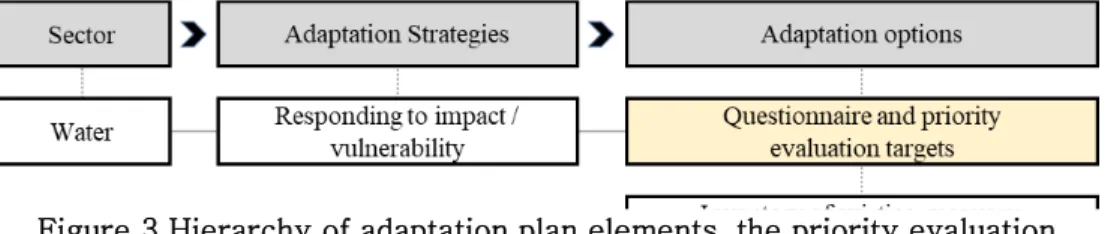
Figure 3 Hierarchy of adaptation plan elements, the priority
evaluation target is adaptation options ... 21
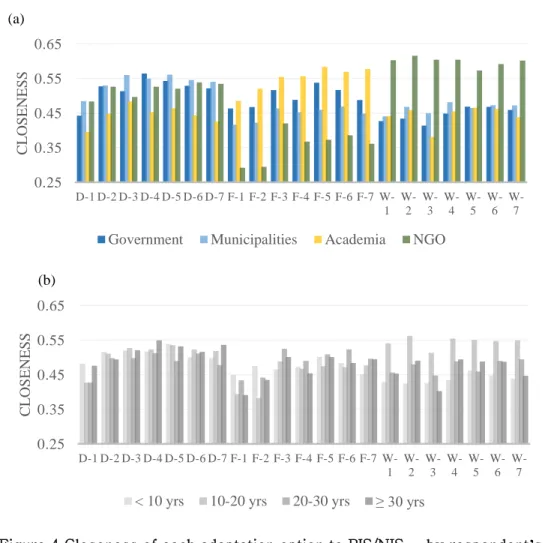
Figure 4 Closeness of each adaptation option to PIS/NIS by respondent’s characteristics identified by (a) affiliation; and (b) work experience in water sector ... 25
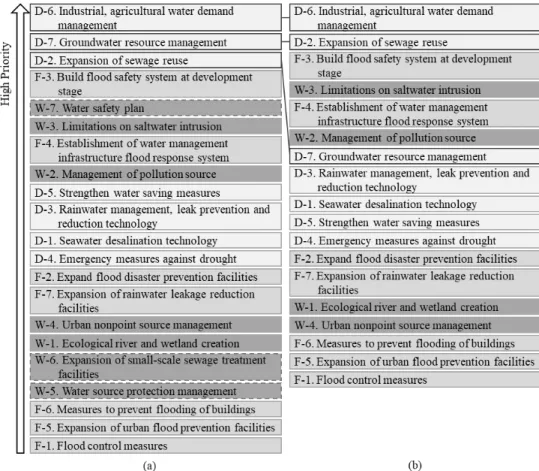
Figure 5 Adaptation options priority calculated by TOPSIS
featuring (a) all options; and (b) all options except the last three
(W-5, W-6, and W-7), which were deleted from the list, demonstrating that users can manipulate the options list freely to get results based on their interest. ... 27
List of Tables
Table 1 Evaluation criteria ... 11
Table 2 Structure of adaptation options to prioritize ... 14 Table 3 Survey Method and Respondent Composition ... 24 Table 4 Mean and standard deviation of evaluation criteria by
1
Chapter 1. Introduction
1.1. Study Background
Since adaptation was declared a pillar of climate change response in the Fifth Assessment Report of the IPCC (2014), the importance of adaptation has grown. Increased efforts to adapt from global to local actors range from implementing adaptation plans to specific projects. Yet the effectiveness of such effort has been difficult to measure and witness, discouraging further action. Though we must act now to well-adapt, devising plans to prepare for future impacts can serve as a more strategic effort to the uncertainties in current and future information. The decision-making process for adaptation planning requires a long-term perspective, thus challenging traditional values and priorities in moderate to short-term planning (Carlsson-Kanyama et al. 2013). Unfortunately, most local governments lack the capacity or technical knowledge needed to address the complexity inherently associated with climate change (Bierbaum et al. 2013).
In the case of Korea, all regional and local governments are required to establish and update adaptation plans every five years according to the Framework Act on Low Carbon Green Growth established in 2010 (Office for Government Policy Coordination 2017). The Korean government encourages prioritizing policies by assessing urgency, effectiveness, feasibility, equity, and public interest; however, carrying out this prioritization has been
2
challenging due to lack of method. The suggested prioritization approach has been left up to planners to decide which style of assessment to use (e.g., vulnerability assessment, civil survey); however, because of this ambiguity and the wide range of possible adaptations, it is increasingly important for practitioners to involve relevant stakeholders in the prioritizing process (Reed et al. 2013; Hurlbert and Gupta 2015).
According to various previous studies, the adaptation process cycle includes identification of climate risks and vulnerability, assessing and selecting options (planning), implementation, monitoring and evaluation, revising the strategies to include the lessons learned (Nordgren et al. 2016). Within this framework the purpose of adaptation planning process is thus to assess and select the most effective and efficient adaptation options suited to the identified problems, goals, and constraints. The decision-making process for adaptation planning must be sensitive to the local conditions and is best executed when it is an inclusive process including a representative and diverse group of stakeholders (Cloutier et al. 2015). In other words, a participatory approach is suggested. The benefits of public engagement include, bottom-up analysis of previous and current climate conditions, providing opinions on selecting adaptation options, etc (Hyun et al. 2019).
A participatory approach can be defined in various ways, from engagement of appropriate people (key stakeholders) to raising their voice on fundamental decisions through active involvement (Few et al. 2007; Cvitanovic et al. 2019). Once the opinions of stakeholders
3
are collected, it is difficult to synthesize them – from setting the evaluation criteria to converting it into a single value that can be interpreted and making it practically applicable. Therefore, in this paper, a method from opinion survey to prioritization was suggested and applied to the water sector. Using this methodology, it is applicable to different sectors and various jurisdictional levels.
1.2. Purpose of Research
In this study, an adaptation framework using TOPSIS and governance is introduced. This framework was applied at the national level for the water management sector; however, it would also be possible to downscale the method to fit regional level needs. The reasons for prioritizing the water management sector are 1) it is important and complex in terms of agriculture, water resources, and resource management, so the impact of climate change on the sector appears socio-economically (Iglesias and Garrote 2015), 2) policies and technologies related to the water management sector such as urban infrastructure, energy, and water resources are very diverse (Hunt and Watkiss 2011), and 3) the policy feasibility varies depending on the local context (Milman and Short 2008).
In this thesis, I use a participatory approach to engage relevant stakeholders in the process. In climate change adaptation, participatory methods, such as support tools, are applied as a way of incorporating the community-based local and traditional knowledge
4
into the decision process (Reed et al. 2013; Champalle et al. 2015; Cvitanovic et al. 2019). I wanted to determine whether TOPSIS is a valid method to prioritize adaptation options with applying governance, and what the correct procedure is to construct criteria and an adaptation options list. Using this framework, countries and communities alike would be given the opportunity to successfully adapt to local context and resolve the ambiguity of establishing adaptation plan priorities through this integrated process.
5
Chapter 2. Literature Review
Much effort has been devoted to prioritizing adaptation policies on which need to be developed, applied, and funded (Burton et al. 2002); however, there is no general method for prioritization. Priority setting is particularly important in areas where various sectors and impacts are integrated and under pressure from limited resources (Chen et al. 2016); however, because of complexity, prioritization methods are challenging to develop. In addition, while setting priorities appropriate to each local context demands reflecting local knowledge for effective implementation and policy performance, national-scale priorities must also be considered. Therefore, it is challenging to achieve an acceptable result for everyone where interests are sharply opposed at local and national scales, such as priorities.
When prioritizing, adaptation policies should be evaluated with various criteria to consider their distinctive influences and effects. Primary criteria for evaluating adaptation options have been identified as effectiveness (reducing impacts), urgency, feasibility, and no-regret (Smith 1997; De Bruin et al. 2009; Mcleod et al. 2015; Trærup and Bakkegaard 2015). The choice of evaluation criteria can be completely led by stakeholders based on existing independent scientific standards. Stakeholder groups can support framing conditions to define targets and investigate relevant policy literature and scientific documents to assist in the selection of final criteria
6
(Bertule et al. 2017). For climate adaptation, engaging key stakeholders in the planning process enables greater commitment and selection of more applicable strategies but the engagement is significantly dependent on whether there is a certain level of political commitment, previous disaster experience, familiarity with climate change issues (Tang et al. 2010; Woodruff and Stults 2016). Some studies have suggested that engaging stakeholders with limited knowledge on climate change in the planning process can in fact be the trigger for engagement in adaptation and building future capacity (Plummer 2013). In addition, due to the nature of adaptation to climate change, there is a lack of agreement on key targets, and stakeholder involvement is required because group/regional coordination is required to achieve collective goals (Huitema et al. 2016).
Decision-making processes should be opened to those who are directly or indirectly affected by policy decisions, such as practitioners, community members, civic groups, and industry, as it is important to make consensus through the participation of these various stakeholders. In selecting adaptation options and then evaluating and prioritizing them, the guidelines for adaptation to climate change in developed countries require various stakeholders’ engagement (Ribeiro et al. 2009; ICLEI 2010; Brown and Davidson 2011; Giordano et al. 2013; National Climate Change Adaptation Research Facility 2017). This process can be completed through consultative groups, such as those who provide governance. Governance in the adaptation process requires joint efforts by
7
various actors to influence climate change (Huitema et al. 2016). There are a wide range of different approaches to conceptualize governance. One is the institutionalist approach as system of rules which shape the actions of actors (Pahl-Wostl 2009). It can be referred to as adaptive co-management which relies on cooperation of stakeholders through a network of local users to regional and national organizations (Folke et al. 2005). It is a flexible organizational interaction to help create integrated solutions (Cash et al. 2006). In particular, adaptation governance is a flexible decision-making framework that can be institutionalized long-term (Quay 2010), and is considered a static system as regulations and models play an important role in its adaptive capacity to progress with learning or sharing of knowledge (Vink et al. 2013). Based on foresight and flexibility, governance is a model of decision making under high uncertainty, which brings a wide range of anticipated adaptation strategies (Quay 2010). That is, when there are no clear guidelines and only limited resources, adaptation governance is a powerful means of potential consideration through higher-level decision-making (Keskitalo et al. 2016). However, governance features participation only; it cannot easily be expressed as computational or quantified results.
To overcome these limitations, the multi-criteria decision-making method (MCDM, or multi-criteria decision analysis, MCDA) can be a solution for effectively translating priorities of individuals into credible results (O’Brien and Brugha 2010; Jun et al. 2011; Kim and Chung 2013; Golfam et al. 2019; Akbari et al. 2020; Zamani et al.
8
2020). The weighted sum method (WSM) and analytic hierarchy process (AHP) are primarily used in this capacity for ease of synthesizing expert opinion into quantifiable data; however, limitations exist, such as certain points becoming unnecessarily emphasized depending on the respondent’s preferences (Pong 2006) or decreased accuracy when the number of evaluation criteria is increased (Widianta et al. 2018).
In order to evaluate climate adaptation policies of various characteristics with distinct evaluation criteria, a more comprehensive methodology is needed. One of the solutions is the Technique for Order Preference by Similarity to Ideal Solution (hereafter; TOPSIS), which has significant flexibility in terms of the size of criteria and alternatives because they do not have a pairwise comparison. In adaptation to climate change, a flexible methodology is needed because adaptation policies continue to change over time, and option lists or evaluation criteria vary depending on the area of application and the characteristics of stakeholders. TOPSIS can be used to assess the vulnerability of a local region to climate change (Kim and Chung 2013) or prioritize adaptation scenarios in a river basin (Golfam et al. 2019), for example. As this method can be more generally applied without being limited to a specific area or situation, more complex studies using TOPSIS should be carried out.
9
Chapter 3. Methodology
3.1. Constructing Evaluation Criteria and a List of
Adaptation Options in the Sector
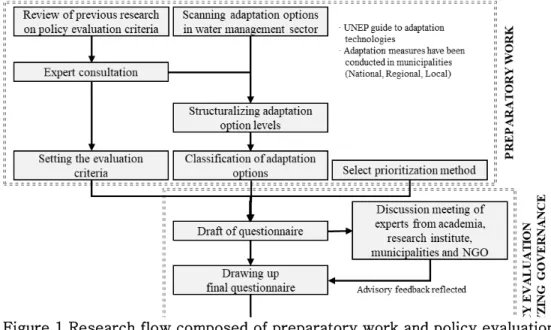
For this study, the adaptation-option-prioritizing method was designed to be participatory, in order to derive values that can be more generally applied by incorporating opinions from differing stakeholders, such as academic experts, public officials in municipalities and national government, researchers, and civic groups. Participation arises within this type of process that starts with composing adaptation options for each sector and concludes with drawing up and conducting questionnaires (Figure 1).
Figure 1 Research flow composed of preparatory work and policy evaluation with governance
10
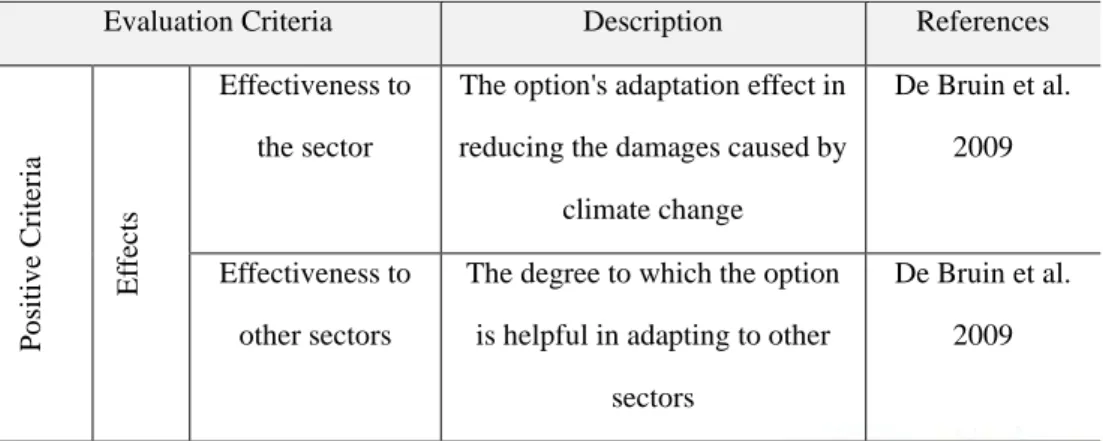
In contrast with mitigation policies, which are usually focused on only one index such as emission reduction, adaptation policies must consider criteria of various aspects (e.g., importance, no regret, feasibility) in order to maximize their effects (De Bruin et al. 2009; Mcleod et al. 2015). For this study, evaluation criteria were established by reviewing previous research (UK Climate Impacts Programme (UKCIP) 2007; De Bruin et al. 2009; Hallegatte 2009; Trærup and Bakkegaard 2015). Positive criteria types are divided into “effects” and “validity,” while effect criteria are given in a hierarchy ranging from “effectiveness to a sector” (i.e., sector-adaptation effect) to “no regret” (i.e., non-climate change effect in other sectors). Negative criteria is represented by “cost”, which includes initial cost to establish as well as operational costs of maintaining (Table 1).
“Effectiveness to the sector” of an option refers to the level of adaptation effect that can reduce the overall damage to a specific sector (i.e., in this study, the water management sector) caused by climate change. “Effectiveness to other sectors” of an option is similar, but in this case refers to this same level of adaptation effect for other sectors (e.g., agriculture, ecology, disaster sector). In one previous study, these two adaptation effects were expressed as “importance;” meaning the level of necessity to implement the option in order to avoid negative impacts (De Bruin et al. 2009). In this study, the effects criteria were divided into consideration of both the specific sector and other sectors in order to reflect the difference
11
in the adaptation effects of options. “Synergies with mitigation” refers to the level of carbon emissions reduction of an option. Since nearly all adaptation and mitigation options have synergies or conflicts between them (Hallegatte 2009), this criterion was used to show the effect of an option with respect to climate change mitigation. “No regret” of an option manages climate uncertainty; providing non-climate related benefits (Hallegatte 2009), and brings socio-economic benefits, regardless of future climate change (UK Climate Impacts Programme (UKCIP) 2007). “Validity” criteria are related to institutional capacities and severity of climate impact. “Feasibility” refers to the degree of possibility from the institutional point of view in the implementation of the national and local governments, and “urgency” refers to the degree to which the option may not be postponed to a later timeframe (De Bruin et al. 2009). These criteria were examined through a total of ten discussion meetings that took place between October 22, 2018 and September 17, 2019.
Table 1 Evaluation criteria
Evaluation Criteria Description References
P o sitiv e C rite ria E ff ect s Effectiveness to the sector
The option's adaptation effect in reducing the damages caused by
climate change
De Bruin et al. 2009
Effectiveness to other sectors
The degree to which the option is helpful in adapting to other
sectors
De Bruin et al. 2009
12 Synergies with
mitigation
Mitigation effects from carbon emissions reductions
Hallegatte 2009
No regret General positive impacts from implementing the adaptation option regardless of adaptation
or mitigation effects UKCIP 2007; De Bruin et al. 2009; Hallegatte 2009 V alid ity Feasibility / Ease of implementation
The degree of ease in implementation of adaptation based on institutional capacity (budget, awareness, leadership,
etc.) of national and local governments
UKCIP 2007; De Bruin et al.
2009
Urgency The degree to which adaptation cannot be postponed, and action must be taken within the next 5
years De Bruin et al. 2009 N eg at iv e C rite ria
Cost Total cost including initial installation and maintenance
costs
Traerup and Bakkegaard
2015
A list of adaptation options was developed based on one United Nations Environment Programme report (hereafter; UNEP report) (Bertule et al. 2017) and one adaptation option inventory made by Korea Environment Institute (KEI), who runs the Korea Adaptation Center for Climate Change (KACCC) and have compiled an inventory from regional and local adaptation plans across the country (KACCC 2020). The developed list was reviewed through academic expert’s
13
advice, and given a hierarchy adjusted to suit the adaptation context in Korea, and the option names and descriptions were revised to suit terms used in practice.
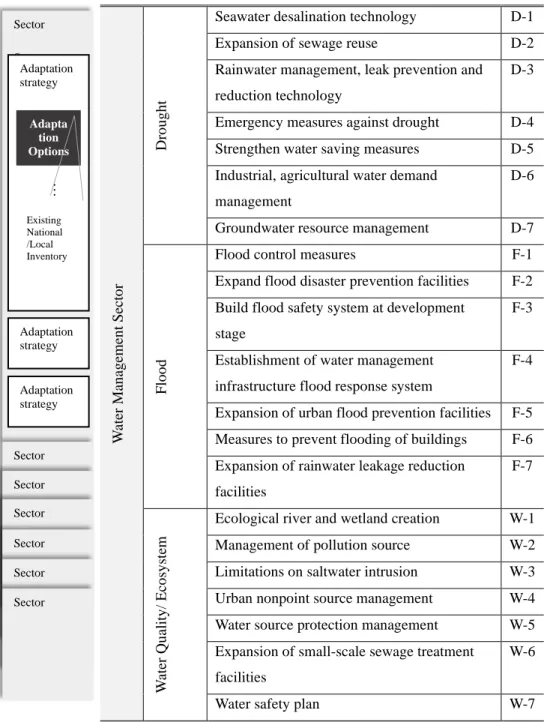
When creating the adaptation options list, the UNEP report was published in collaboration with island regions and developing countries; therefore, many of the adaptation strategies included were not relevant to Korea. At the time of expert consultation, all cases that were not associated with practiced projects were deleted, and as a result, only a large category divided into “drought-flood-water quality” and “ecosystem in the “drought-flood-water management sector” was presented (Table 2).
14
Table 2 Structure of adaptation options to prioritize
W at er M an ag em en t S ect o r D rought
Seawater desalination technology D-1
Expansion of sewage reuse D-2
Rainwater management, leak prevention and reduction technology
D-3
Emergency measures against drought D-4 Strengthen water saving measures D-5 Industrial, agricultural water demand
management
D-6
Groundwater resource management D-7
F
lood
Flood control measures F-1
Expand flood disaster prevention facilities F-2 Build flood safety system at development
stage
F-3
Establishment of water management infrastructure flood response system
F-4
Expansion of urban flood prevention facilities F-5 Measures to prevent flooding of buildings F-6 Expansion of rainwater leakage reduction
facilities F-7 W ate r Q u ality / E co sy ste m
Ecological river and wetland creation W-1 Management of pollution source W-2 Limitations on saltwater intrusion W-3 Urban nonpoint source management W-4 Water source protection management W-5 Expansion of small-scale sewage treatment
facilities
W-6
Water safety plan W-7
Sector Sector Adaptation strategy Adaptation strategyAdapta tion Options … Sector Sector Adaptation strategy Adaptation strategy Sector Sector Sector Sector Existing National /Local Inventory Sector Sector Sector Sector Sector
15
3.2. Obtaining Stakeholder Opinion and Conducting the
Policy Evaluation Questionnaire
A governing body was then formed involving experts from government agencies, local governments, research institutes, and civic groups by utilizing a pool of experts (i.e., stakeholders) from the National Assembly Forum on Climate Change (The National Assembly Forum on Climate Change 2020). This included experts from government departments (e.g., Ministry of Environment, public corporations) and municipalities (e.g., central metropolitan cities, metropolitan) and their affiliated research institutions, academia, civic groups (e.g., water related environmental groups), and consulting firms. Compared to generating the list of adaptation policies, evaluating, and prioritizing the adaptation options was relatively challenging for the policy practitioners. The solution was to compromise utilizing expert knowledge.
At each of the expert meetings, five experts participated, including one representative from each institution representing each of these groups. They provided advice on the list of pre-established evaluation criteria and adaptation options, including: 1) adding important options that were initially missed and deleting less-important options; 2) reviewing whether the level of adaptation options established was appropriate for scoring and prioritizing; and 3) deciding whether the questionnaire method was intended to answer all options in both the first and second questionnaires or whether a re-examination should be conducted with only the
16
highest-ranking options of the first questionnaire. Furthermore, experts provided an overall opinion on the adaptation options prioritization framework. Finally, the list of adaptation options about prioritization was drafted via discussion meetings of the governance forum.
An overall questionnaire was drafted combining these expert advisory comments and then divided into two main parts. The first questionnaire determined the evaluation criteria weights and weights of the strategies within the sector, while the second questionnaire assessed that value of each adaptation option according to the criteria. Within the water sector, there were three strategies and seven options for each strategy; therefore, a total of 21 options were evaluated. There were seven evaluation criteria (Table 1), and all scores were evaluated on a 5-point Likert scale. On the questionnaires, the name of the option and a brief supplementary explanation were provided. The survey targets were limited to experts, and online questionnaires were distributed after confirming the expertise of the field through judgement sampling.
Surveys were conducted for experts in the water management sector nationwide, and the total number of respondents at the end of the survey was 65; 44 participated in the first survey from October 22 to November 15, 2018, while 21 participated in the second survey from November 20 to December 27, 2018. After the first survey, a minor explanation was added to the second questionnaire to improve the understanding of the questions according to the opinions of the respondents, and the contents of the other questionnaires were kept
17
the same as in the first survey. The respondents consisted of 16 people from government departments, 18 from local governments, 20 from universities and research institutes, and 11 from civic groups. When conducting the survey, it was noted that metropolitan government officials with substantial adaptive capacity had relatively little interest, and therefore researchers from the affiliated research institutes of those cities were contacted.
3.3. Choosing a Method to Synthesize Responses
Determining the Final Priority
Simple additive weighting (SAW) is the most commonly used MCDM method, and some decision makers do not trust the results obtained in this way because of their simplicity (Hwang and Yoon 1981). To choose an alternative with the largest weighted average, SAW calculates the sum of profit utility and the cost utility to produce better quality alternatives. In the case of comparing options for monotonic utilities, SAW is a variant of the TOPSIS approach that uses Manhattan distances instead of Euclidean distances (Hwang and Yoon 1981).
The purpose of this study was to collect the opinions represented by experts, evaluate adaptation options, and interpret the results to determine the priority among options. Therefore, when applying a method for this, the reversal in the result value should not be large while the number of adaptation options increases or decreases due
18
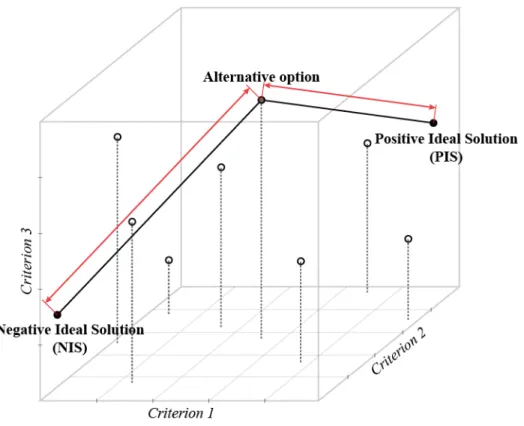
to a change in conditions. In addition, the method should be able to interpret the results of evaluating several adaptation options for criteria with different attributes (Fig. 2).
𝑐𝑐𝑖𝑖∗ = 𝑠𝑠𝑖𝑖−
𝑠𝑠𝑖𝑖∗+𝑠𝑠𝑖𝑖− (0 < 𝑐𝑐𝑖𝑖∗ < 1, 𝑖𝑖 = 1,2, … , 𝑚𝑚) (1)
Equation 1 describes the relative closeness of an option with respect to the ideal solution by TOPSIS, with a decision matrix which
Figure 2 The conceptual diagram of the TOPSIS method (adapted from Chang et al. 2010)
19
contains m alternatives ( 𝒔𝒔𝒊𝒊∗ is the separation between each alternative from the ideal one, 𝒔𝒔𝒊𝒊− is the separation from the negative-ideal one. They can be measured by the n-dimensional Euclidean distance). TOPSIS is one of the ways to minimize rank reversal in the case of adding an alternative which is not optimal to the option list (Mukherjee 2014). In order to compare alternatives, the method calculates the relative closeness to a positive ideal solution (PIS) by regarding the negative ideal solution (NIS) (Eq. 1). Positive ideal solution consists of maximum value of the benefit criteria and minimum value of the cost criteria, whereas negative ideal solution consists of the minimum value of the benefit criteria and maximum value of the cost criteria (Behzadian et al. 2012). TOPSIS can manage with a decision matrix which contains a sizable number of alternatives and attributes (or criteria), but each attribute in the matrix is assumed to take monotonically increasing or decreasing utility (Hwang and Yoon 1981). Trade-offs and interactions between attributes with different characteristics can also be considered. In addition, both positive and negative items can be used as criteria and the calculation process is relatively simple and easy to understand (Zavadskas et al. 2016). Further, the priority evaluation values between alternatives provide information to determine the differences and similarities between them (Yoon and Kim 2017). The weight of each strategy and the weight of each evaluation criteria were obtained by a questionnaire to apply the TOPSIS method. Each decision matrix was created based on each individual’s response in order to consider the individual’s opinion
20
on what is a most important (through weighting of the criteria). Then in the final step, the matrix was merged with the arithmetic mean of the overall results.
21
Chapter 4. Results
4.1. List of Adaptation Options in the Water
Management Sector
The list of adaptation options was first constructed with reference to KEI's climate change risk classification and local government implementation tasks list, and secondly through the UNEP report (Trærup and Bakkegaard 2015) and advisory on water management. At the time of the first draft, subject of evaluation was attempted as a task level which composes inventory in Fig. 3. But at the second construction, it was decided that the assessment level would take place at the level of the adaptation option itself, which is a level that can be more easily referred to the local government’s adaptation planning, and serve as a minimum level for actual survey assessment. As a result, an evaluation system of Sector-Strategies-Options(-Tasks) was established; linking options to the inventory of tasks previously implemented by national and local governments (Figure 3).
Figure 3 Hierarchy of adaptation plan elements, the priority evaluation target is adaptation options
22
As a result of classifying implementation tasks by referring to KEI climate change risk and adaptation inventory, it was possible to classify strategies into “water environment management,” “water resource planning,” and “flooding/drought.” Adapted from the UNEP report international standards, strategies were listed as climate change risk, water shortage, flood management, water quality management, and disaster prevention. Through discussion at the expert meetings, it was decided to remove climate change risk as it is generally covered by all sectors, and disaster prevention was also removed because it is represented by the disaster sector. Strategies were identified regarding drought (i.e., water shortage), flood (i.e., water overflow), and water quality/ecosystem because aquatic ecosystems are regarded as important by Korea.
4.2. Adaptation Options Priority Result in Water
Management Sector
Even if two questionnaires gave identical responses, the result of the adaptation option priority derivation can change greatly depending on how the weight was set and how the score was assigned. In this study, instead of calculating the weights separately, the weights required by the respondents were used intact and different weights were used for each decision matrix. Therefore, the results differed depending on how the respondents were grouped, and
23
different results are shown according to their affiliation as a characteristic of the main stakeholder (Figure 4). In the case of evaluation criteria, effect to the sector had the highest weight in almost all groups, followed by feasibility (Table 4). The respondents assigned their own weights to decision matrix depending on what they deemed to be more important.
24
Table 3 Survey Method and Respondent Composition
Survey objects Experts who are involved in water management field (government, municipality, academia, NGO) Research area Nationwide
Sample number 65 people
Sampling method Assigned by each group
Survey method 1. Pre-contact expert requests for cooperation 2. Conduct an online survey
Survey period Oct 22, 2018 ~ Jan 10, 2019 Response rate 75%
Survey agency Climate Change Policy Research Institute (within the National Assembly)
Table 4 Mean and standard deviation of evaluation criteria by respondents’ characteristics Criteria Affiliation Effect to the Sector Effect to the Other Sector Synergies with Mitigation No Regret
Feasibility Urgency Cost
Government 4.63 (0.62) 3.81 (0.40) 3.38 (0.81) 3.56 (0.51) 4.69 (0.48) 4.56 (0.73) 4.19 (0.75) Municipalities 4.61 (0.50) 4.00 (0.69) 3.61 (0.78) 3.50 (0.71) 4.33 (0.59) 4.44 (0.62) 3.83 (0.92) Academia 4.40 (0.68) 3.80 (0.77) 3.40 (0.88) 3.20 (0.52) 4.10 (0.91) 4.40 (0.75) 3.90 (0.79) Civic Group 4.36 (0.67) 3.64 (1.03) 3.55 (0.93) 3.09 (0.83) 4.36 (0.81) 4.00 (0.63) 3.36 (0.81)
25
Relative closeness represents how close an alternative is to the PIS and how far it is from the NIS. The PIS was determined by the highest values for benefit utilities (positive criteria) and the lowest values for cost utilities (negative criteria), with converse values determining the NIS. PIS and NIS are hypothetical solutions, but they
(a) (a) (b) Figure 5(b) 0.25 0.35 0.45 0.55 0.65 D-1 D-2 D-3 D-4 D-5 D-6 D-7 F-1 F-2 F-3 F-4 F-5 F-6 F-7 W-1 W-2 W-3 W-4 W-5 W-6 W-7 C L O SE N E SS
Government Municipalities Academia NGO
0.25 0.35 0.45 0.55 0.65 D-1 D-2 D-3 D-4 D-5 D-6 D-7 F-1 F-2 F-3 F-4 F-5 F-6 F-7 W-1 W-2 W-3 W-4 W-5 W-6 W-7 C L O SE N E SS
< 10 yrs 10-20 yrs 20-30 yrs ≥ 30 yrs
Figure 4 Closeness of each adaptation option to PIS/NIS by respondent’s characteristics identified by (a) affiliation; and (b) work experience in water
26
can exist in the possible range of utilities. As a result of calculating relative closeness using TOPSIS, different priorities were derived according to the interests of the stakeholder group. In the case of government departments or local governments, which show an average point of view for all areas, the variation in closeness value between options was relatively small. In the case of academia, the score of the adaptation option belonging to flood policy was high. In the case of civil groups, the flood option scores were very low, whilst high priorities were drawn for water quality and aquatic ecosystem options that were not considered elsewhere.
One strength of TOPSIS is that it can handle many attributes and alternatives, so I can freely adjust the number of adaptation options. If several adaptation options are added or deleted, the priority will change as the PIS and NIS may modify. Fig. 5 shows priority change when three options were deleted (W-5, W-6, W-7), there was little transition from (a) to (b). 1st and 2nd alternatives were maintained
however D-7 moved from 3rd to 7th. D-5 was demoted 2 ranks, while
27
Figure 6 Adaptation options priority calculated by TOPSIS featuring (a) all options; and (b) all options except the last three (W-5, W-6, and W-7), which were deleted from the list, demonstrating that users can manipulate
28
Chapter 5. Discussion
5.1. Prioritization method suitable for climate change
adaptation governance
There are a variety of ways to gather opinions, including expert meetings, stakeholder discussions, and company consulting, but primarily there is a need to summarize how these derive scientific and rational results. The method should be easy to use, be able to reflect changes in initial conditions, and be flexible to change according to user preferences. Even if the results in the process of establishing a climate change adaptation plan have a scientific basis, different socio-economic conditions will bring different consequences. Local governments without resources have difficulty in setting priorities, but giving them a uniform ranking, as an example, would be inappropriate. This is because it is only possible to judge in the local area whether the suggested priorities are most relevant and whether the assigned values would be coherent in the given context. Thus, a method is needed to fully reflect the characteristics of local governments and enable users to adapt the matrix as per their priorities.
Various indicators such as effectiveness and feasibility were used in this study; however, some indicators may be eliminated depending on regional/local interests. For example, among the respondent groups, planners may want to further reflect the opinions of local government officials or be able to also consider the opinions
29
of civic groups. It was confirmed in this study that respondents’ opinions could be drawn comprehensively without converging them into a median value. The use of AHP among MCDM methods is preferred because its applicability has been demonstrated numerous times in literature and is familiar to policy makers (Vaidya and Kumar 2006; Behzadian et al. 2012; Mardani et al. 2016). TOPSIS has also confirmed that it has the flexibility of additional options and user considerations. It is an appropriate model for collecting and reflecting various opinions in a short time using weight simulation.
By setting sort descending on relative closeness, high priority options are ranked in the top. Therefore, the more similar the alternative and the PIS, the higher the priority of the alternative. There was a difference between groups since the PIS changes according to the decision matrix. These results can inform the process of decision-making with diverse groups of people, such as with governance. Decision makers can review various opinions, and individuals in each group can understand how representative their voices are. Various results can be derived through various configuration methods, such as adjusting the list of options or changing the evaluation index, and this can be used for decision-making. This is possible because pairwise comparison is unnecessary, unlike AHP, therefore the large potential range of application.
As a result of prioritization, different priorities appeared according to groups. This difference among respondent groups can be confirmed by previous studies on other sectors. Government officials are expected to remain neutral (Huitema et al. 2010), while
30
civic groups have strong opinions during the discussion process, to express their self-interest, which is also reflected in the survey results (Petrokofsky et al. 2010). Disagreement among these groups makes it difficult for policy makers to propose environmental policies that satisfy everyone (Morgan-Davies and Waterhouse 2010).
5.2. Proper criteria for evaluating adaptation options
priority
In this study, the method was applied to prioritize 21 adaptation options in the water sector on a national scale; however, it can also be applied to other sectors in the same way using the adaptive options inventory, and as a result, priorities for most adaptation options can be established. However, to derive a valid result, it would be important to obtain high-quality and reliable responses through a series of information-gathering processes, including surveys. The reliability of results would be ensured if high-quality values were to be obtained in the early stages from strategy classification, brainstorming, and selection of survey items thorough investigation of various experts and stakeholders and assurance of their participation.
In addition, as adaptation may have ambivalent targets across multiple sectors under information uncertainty, it would be necessary to use enough criteria to take this into account when setting priorities. In this study, evaluation criteria were divided into three categories:
31
effectiveness, validity, and cost. Evaluation that includes these expanding effects rather than simply considering climate adaptation effectiveness improves the validity of the priority results, and aids in being able to seek opportunities for further adaptation while at the same time considering harmony between the adaptation plan and the existing policies during its implementation. Along with this, the feasibility depending on adaptive capacity of planning organization, and seriousness were considered in order to choose options that fit the context.
5.3. Discussion on the results of prioritization and key
priority options
As a result of the expert questionnaire, the priority was derived from the basic values, followed by 'Industrial, agricultural water demand management', 'Groundwater resource management' and ' Expansion of sewage reuse'. Experts in the water sector have shown that they value water demand management options, including plans for water management due to drought and flooding (Figure 5, Appendix A). This is because future climate change has raised the priority of responding to extreme climates (drought and flooding). Among them, drought is expected to be more severe, and the urgency is high because it is occurring now frequently.
32
to be added in flood strategy. And because there are only water quality-oriented options exist in water quality/ecosystem strategy, water ecology-oriented contents such as management of aquatic organisms vulnerable to climate change, and management of basal runoff should be added. In addition, they said that options are needed which enable the people/citizens to voluntarily adapt to climate change, along with measures focusing on the supply of the government/local governments. To this end, they emphasized the need for non-structural adaptation measures, such as education, improved adaptability, insurance, and information provision.
33
Chapter 6. Conclusion
To strengthen the effectiveness of the policy in establishing a climate change adaptation plan, and to successfully adapt that plan, it must be able to achieve the maximum effect with a limited budget. Prioritizing itself would be used as a basis for increasing the efficiency of the options and justifying the decision-making process. To prioritize alternatives, the most appropriate and reasonable option setting step is essential, depending on the outcome to be drawn. This study developed a framework for establishing appropriate steps to prioritize adaptation options that were appropriate for the field of climate change adaptation and that were easily understood by various stakeholder groups. The primary screening process was carried out through review of the UNEP report or of the adaptation option at the local government level, which provided the nationwide option that is typically used and was verified by experts. Afterwards, discussions were carried out to provide more realistic and easy-to-understand feedback.
To summarize the parts to be emphasized in this study, the first is to construct systematic questionnaire criteria. In the case of climate impact, the cause and effect are clear, but in the case of adaptation, it is an area that includes humanities, society, politics, and the economy, and it is difficult to decide how far to deal with. To adapt to climate change, these variables need to be set rationally, and evaluation criteria suitable for evaluating adaptation policies can be
34
constructed while being comprehensive. Second, the list of adaptation options was made reasonable through existing inventory and expert consultation. In order to extract policy issues, we covered the list of existing adaptation measures and policy technologies applied abroad. Third, priorities were derived in a consistent manner so that the option list derived above could be used for actual plans and policies. This was described in the discussion section.
Indeed, when this method was applied to the site, additional complementary data, such as impact assessment data, served as an effective, synergistic decision-making tool. Future studies could evaluate the effectiveness of using this method in collaboration with such additional data. However, even in the absence of such data, this method can serve as a meaningful tool, resulting in the collection of individual opinions underlying decision-making. This tool is an example of scientific information that can be used to prioritize strategies through a variety of respondent groups and item combinations. The differences in opinion among stakeholders can be identified; therefore, representing quantitative values of all stakeholders.
With this method, it was possible to integrate opinions from groups with different interests on different criteria and reflect preferences of individuals while dealing with a decision matrix. Positive indicators (e.g., effects and validity) can be compared to negative indicators (e.g., cost), and these results can be used in conjunction with cost-benefit analysis, which is a quantitative assessment. Priorities derived through this method represent
35
proposed options, not necessarily correct answers, and may be best used as reference data. Since weight selection is very important, it was necessary to compare the results according to various weight evaluation methods. This framework can be used to determine policy priorities during the planning process.
In summary, this method was developed to evaluate suitable options for deriving valid priorities and to produce reasonable results. Decision-makers were able to consult with these results, which improved the credibility and validity of the decision-making process. This method would be expected to help with evaluating uncertain information under conditions of limited resources and choices.
36
Bibliography
Akbari M, Memarian H, Neamatollahi E, et al (2020) Prioritizing policies and strategies for desertification risk management using MCDM–DPSIR approach in northeastern Iran. Environ Dev Sustain. https://doi.org/10.1007/s10668-020-00684-3 Behzadian M, Khanmohammadi Otaghsara S, Yazdani M, Ignatius J
(2012) A state-of the-art survey of TOPSIS applications. Expert Syst Appl 39:13051–13069.
https://doi.org/10.1016/j.eswa.2012.05.056
Bertule M, Appelquist LR, Spensley J, et al (2017) Climate Change Adaptation Technologies for Water: A Practitioner’s Guide To Adaptation Technologies for Increased Water Sector Resilience Bierbaum R, Smith JB, Lee A, et al (2013) A comprehensive review
of climate adaptation in the United States: More than before, but less than needed. Mitig Adapt Strateg Glob Chang 18:361– 406. https://doi.org/10.1007/s11027-012-9423-1
Brown B, Davidson G (2011) Climate Change Adaptation Planning: A Handbook for Small Canadian Communities. Georgetown, Canada
Burton I, Huq S, Lim B, et al (2002) From impacts assessment to adaptation priorities: the shaping of adaptation policy. Clim Policy 2:145–159. https://doi.org/10.3763/cpol.2002.0217 Carlsson-Kanyama A, Carlsen H, Dreborg KH (2013) Barriers in
37 using backcasting. Futures 49:9–21.
https://doi.org/10.1016/j.futures.2013.02.008
Cash DW, Adger WN, Berkes F, et al (2006) Scale and Cross-Scale Dynamics: Governance and Information in a Multilevel World. Ecol Soc 11:. https://doi.org/10.5751/es-01759-110208 Champalle C, Ford JD, Sherman M (2015) Prioritizing climate
change adaptations in Canadian Arctic communities. Sustain 7:9268–9292. https://doi.org/10.3390/su7079268
Chen C, Doherty M, Coffee J, et al (2016) Measuring the adaptation gap: A framework for evaluating climate hazards and
opportunities in urban areas. Environ Sci Policy 66:403–419. https://doi.org/10.1016/j.envsci.2016.05.007
Cloutier G, Joerin F, Dubois C, et al (2015) Planning adaptation based on local actors’ knowledge and participation: a climate governance experiment. Clim Policy 15:458–474.
https://doi.org/10.1080/14693062.2014.937388
Cvitanovic C, Howden M, Colvin RM, et al (2019) Maximising the benefits of participatory climate adaptation research by understanding and managing the associated challenges and risks. Environ Sci Policy 94:20–31.
https://doi.org/10.1016/j.envsci.2018.12.028
De Bruin K, Dellink RB, Ruijs A, et al (2009) Adapting to climate change in the Netherlands: An inventory of climate adaptation options and ranking of alternatives. Clim Change 95:23–45. https://doi.org/10.1007/s10584-009-9576-4
38
climate change adaptation: Avoiding the illusion of inclusion. Clim Policy 7:46–59.
https://doi.org/10.1080/14693062.2007.9685637
Folke C, Hahn T, Olsson P, Norberg J (2005) Adaptive Governance of Social-Ecological Systems. Annu Rev Environ Resour 30:441–473.
https://doi.org/10.1146/annurev.energy.30.050504.144511 Giordano F, Capriolo A, Mascolo RA (2013) Planning for Adaptation
to Climate Change. Guidelines for Municipalities
Golfam P, Ashofteh PS, Rajaee T, Chu X (2019) Prioritization of Water Allocation for Adaptation to Climate Change Using Multi-Criteria Decision Making (MCDM). Water Resour Manag 33:3401–3416. https://doi.org/10.1007/s11269-019-02307-7 Hallegatte S (2009) Strategies to adapt to an uncertain climate
change. Glob Environ Chang 19:240–247.
https://doi.org/10.1016/j.gloenvcha.2008.12.003
Huitema D, Adger WN, Berkhout F, et al (2016) The governance of adaptation: Choices, reasons, and effects. Introduction to the special feature. Ecol Soc 21:. https://doi.org/10.5751/ES-08797-210337
Huitema D, Cornelisse C, Ottow B (2010) Is the jury still out? toward greater insight in policy learning in participatory decision processes-the case of dutch citizens’ juries on water management in the rhine basin. Ecol Soc 15:.
https://doi.org/10.5751/ES-03260-150116
39
cities: A review of the literature. Clim Change 104:13–49. https://doi.org/10.1007/s10584-010-9975-6
Hurlbert M, Gupta J (2015) The split ladder of participation: A diagnostic, strategic, and evaluation tool to assess when participation is necessary. Environ Sci Policy 50:100–113. https://doi.org/10.1016/j.envsci.2015.01.011
Hwang C-L, Yoon K (1981) Multiple Attribute Decision Making: Methods and Applications a State-of-the-Art Survey. Springer-Verlag Berlin Heidelberg
Hyun JH, Kim J, Yoon S, et al (2019) A Decision-making Support Strategy to Strengthen Korea’s Local Adaptation Planning toward a Pathways Approach. J Clim Chang Res 10:89–102. https://doi.org/10.15531/ksccr.2019.10.2.89 (In Korean with English abstract)
ICLEI (2010) Changing Climate, Changing Communities: Guide and Workbook for Municipal Climate Adaptation. Bonn
Iglesias A, Garrote L (2015) Adaptation strategies for agricultural water management under climate change in Europe. Agric Water Manag 155:113–124.
https://doi.org/10.1016/j.agwat.2015.03.014
IPCC (2014) Summary for policymakers. In: Climate Change 2014: Impacts, Adaptation, and Vulnerability. Part A: Global and Sectoral Aspects. Contribution of Working Group II to the Fifth Assessment Report of the Intergovernmental Panel on Climate Change. Cambridge, United Kingdom and New York, NY, USA Jun KS, Chung ES, Sung JY, Lee KS (2011) Development of spatial
40
water resources vulnerability index considering climate change impacts. Sci Total Environ 409:5228–5242.
https://doi.org/10.1016/j.scitotenv.2011.08.027
KACCC (2020) Korea Adaptation Center for Climate Change. https://kaccc.kei.re.kr/home/. Accessed 18 Jul 2020
Keskitalo ECH, Juhola S, Baron N, et al (2016) Implementing local climate change adaptation and mitigation actions: The role of various policy instruments in a multi-level governance context. Climate 4:. https://doi.org/10.3390/cli4010007
Kim Y, Chung ES (2013) Assessing climate change vulnerability with group multi-criteria decision making approaches. Clim Change 121:301–315. https://doi.org/10.1007/s10584-013-0879-0
Mardani A, Zavadskas EK, Khalifah Z, et al (2016) Multiple criteria decision-making techniques in transportation systems: a systematic review of the state of the art literature. Transport 31:359–385. https://doi.org/10.3846/16484142.2015.1121517 Mcleod E, Szuster B, Tompkins EL, et al (2015) Using Expert
Knowledge to Develop a Vulnerability and Adaptation
Framework and Methodology for Application in Tropical Island Communities. Coast Manag 43:365–382.
https://doi.org/10.1080/08920753.2015.1046803 Milman A, Short A (2008) Incorporating resilience into
sustainability indicators: An example for the urban water sector. Glob Environ Chang 18:758–767.
41
Morgan-Davies C, Waterhouse T (2010) Future of the hills of Scotland: Stakeholders’ preferences for policy priorities. Land use policy 27:387–398.
https://doi.org/10.1016/j.landusepol.2009.05.002
Mukherjee K (2014) Analytic hierarchy process and technique for order preference by similarity to ideal solution: a bibliometric analysis “from” past, present and future of AHP and
TOPSIS. Int J Intell Eng Informatics 2:96. https://doi.org/10.1504/IJIEI.2014.066210
National Climate Change Adaptation Research Facility (2017) CoastAdapt. https://coastadapt.com.au/
Nordgren J, Stults M, Meerow S (2016) Supporting local climate change adaptation: Where we are and where we need to go. Environ Sci Policy 66:344–352.
https://doi.org/10.1016/j.envsci.2016.05.006
O’Brien DB, Brugha CM (2010) Adapting and refining in multi-criteria decision-making. J Oper Res Soc 61:756–767. https://doi.org/10.1057/jors.2009.82
Office for Government Policy Coordination (2017) FRAMEWORK ACT ON LOW CARBON, GREEN GROWTH.
http://law.go.kr/engLsSc.do?tabMenuId=tab45#, Republic of Korea
Pahl-Wostl C (2009) A conceptual framework for analysing adaptive capacity and multi-level learning processes in
resource governance regimes. Glob Environ Chang 19:354–365. https://doi.org/10.1016/j.gloenvcha.2009.06.001
42
Petrokofsky G, Brown ND, Hemery GE, et al (2010) A participatory process for identifying and prioritizing policy-relevant
research questions in natural resource management: A case study from the UK forestry sector. Forestry 83:357–367. https://doi.org/10.1093/forestry/cpq018
Plummer R (2013) Synthesis, part of a Special Feature on The Governance of Adaptation Can Adaptive Comanagement Help to Address the Challenges of Climate Change Adaptation? 18:. https://doi.org/10.5751/ES-05699-180402
Pong I-S (2006) The use of Multicriteria Decision-making
Methods in the administration of housing policies for Gyeonggi Province
Quay R (2010) Anticipatory governance: A tool for climate change adaptation. J Am Plan Assoc 76:496–511.
https://doi.org/10.1080/01944363.2010.508428
Reed MS, Kenter J, Bonn A, et al (2013) Participatory scenario development for environmental management: A methodological framework illustrated with experience from the UK uplands. J Environ Manage 128:345–362.
https://doi.org/10.1016/j.jenvman.2013.05.016
Ribeiro MM, Losenno C, Dworak T, et al (2009) Design of guidelines for the elaboration of Regional Climate Change Adaptation Strategies. Study for European Commission - DG Environment - Tender DG ENV. G.1/ETU/2008/0093r
Smith JB (1997) Setting priorities for adapting to climate change. Glob Environ Chang 7:251–264.
43
https://doi.org/10.1016/S0959-3780(97)00001-0
Tang Z, Brody SD, Quinn C, et al (2010) Moving from agenda to action: Evaluating local climate change action plans. J Environ Plan Manag 53:41–62.
https://doi.org/10.1080/09640560903399772
The National Assembly Forum on Climate Change (2020) The National Assembly Forum on Climate Change.
http://www.climateforum.or.kr/. Accessed 18 Dec 2019 Trærup SLM, Bakkegaard RK (2015) Evaluating and Prioritizing
Technologies for Adaptation to Climate Change. A hands on guidance to multi criteria analysis (MCA) and the identification and assessment of related criteria. Copenhagen: UNEP DTU Partnership
UK Climate Impacts Programme (UKCIP) (2007) Identifying adaptation options. Oxford
Vaidya OS, Kumar S (2006) Analytic hierarchy process: An overview of applications. Eur J Oper Res 169:1–29. https://doi.org/10.1016/j.ejor.2004.04.028
Vink MJ, Dewulf A, Termeer C (2013) The role of knowledge and power in climate change adaptation governance: A systematic literature review. Ecol Soc 18:. https://doi.org/10.5751/ES-05897-180446
Widianta MMD, Rizaldi T, Setyohadi DPS, Riskiawan HY (2018) Comparison of Multi-Criteria Decision Support Methods (AHP, TOPSIS, SAW & PROMENTHEE) for Employee Placement. J Phys Conf Ser 953:0–5.
https://doi.org/10.1088/1742-44 6596/953/1/012116
Woodruff SC, Stults M (2016) Numerous strategies but limited implementation guidance in US local adaptation plans. Nat Clim Chang 6:796–802. https://doi.org/10.1038/nclimate3012
Yoon KP, Kim WK (2017) The behavioral TOPSIS. Expert Syst Appl 89:266–272. https://doi.org/10.1016/j.eswa.2017.07.045 Zamani R, Ali AMA, Roozbahani A (2020) Evaluation of Adaptation
Scenarios for Climate Change Impacts on Agricultural Water Allocation Using Fuzzy MCDM Methods. Water Resour Manag 34:1093–1110. https://doi.org/10.1007/s11269-020-02486-8 Zavadskas EK, Mardani A, Turskis Z, et al (2016) Development of
TOPSIS Method to Solve Complicated Decision-Making Problems — An Overview on Developments from 2000 to 2015. Int J Inf Technol Decis Mak 15:645–682.
45
Abstract in Korean
기후변화 적응계획의 수립 시에는 기후변화 영향 또는 취약성에 대한 종합 분석 결과에 따라 각 부문의 정책 우선순위를 설정해야 한다. 기후변화에 대한 불확실성, 그리고 서로 다른 이해관계로 인하여 우선순위를 결정하는 것은 쉽지 않은 작업이다. 더하여 기후변화 적응에 사용되기 위한 의사결정 방식은 이해관계자의 구성 변화 혹은 정책 변경에 유연하게 대처할 수 있어야 한다. 한편, 다기준 의사결정 방법론(Multi-criteria decision-making; MCDM)은 여러 측면에서 대상을 평가하고 서로 다른 성격의 지표를 통해서 평가 대상을 구별하는 데에 사용된다. MCDM의 하나인 이상 해(解) 유사성 선호 기법(Technique for Order Preference by Similarity to Ideal Solution; TOPSIS)은 가상의 최적 대안과의 근접도를 평가한다. 이는 개별 응답자의 개인 특성이 반영되면서도 순위 반전 문제를 피할 수 있으며, 대안 간의 차이와 유사성을 판단할 수 있어 기후 적응 분야에서 유용하게 사용될 수 있다. 본 연구에서는 지방자치단체와 시민단체를 포함한 전문가 집단이 거버넌스를 구성하였으며, 이들의 설문 응답을 통해 신뢰할 수 있는 적응정책 우선순위를 도출하였다. TOPSIS를 사용하여 거버넌스의 각 그룹에서 서로 다른 우선순위 결과가 생성되며, 이 방법은 하나의 최선 해(解)를 제공하는 것이 아니라 여러 대안의 우선순위 옵션을 제시한다. 본 연구를 통해 의사결정자는 지역 조건에 맞는 설정이 가능하며, 국가 수준에서의 우선순위만 아니라 지역 수준에서도 선택 가능한 영역으로 확장될 수 있다. 물관리 부문에 대해서 도출된 21개의 적응 옵션에 대해서 우선순위를 도출하였으며, 결과값은 상대적인 closeness 값으로 도출된다. 본 연구에서, 적응46 분야에서 우선순위를 선정하는 데에는 의사결정자의 요구에 따라 탄력적으로 기능할 수 있는 우선순위 선정 방법이 필요하다는 점을 확인하였다. 그리고 기후변화 적응과 적응옵션 평가에 적합한 평가지표를 어떻게 구성해야 하는지를 제시하였다. 작게는 부문 내 적응에서부터 기후변화 외적인 효과까지 고려해야 하며, 정책타당성 측면에서 얼마나 시급한지도 반영할 수 있는 지표를 구성하였다. 설문지 조사에 따른 우선순위 도출 결과 물관리 부문에서는 산업/농업 수자원 수요 관리, 지하수자원관리, 하수 재이용 확대 등 가뭄정책의 우선순위가 높게 나타났으며, 침수안전 확보 체계 구축, 물 안전 계획 등의 홍수와 수생태계 정책이 그 뒤를 따랐다. 도출된 결과는 하나의 예시일 뿐이지만, 의사결정 과정에서 이러한 결과를 참고하여 과정의 신뢰성과 타당성을 향상시킬 수 있다. 자원이 제한되어 있는 상태에서 불확실한 정보를 평가할 수 있고, 그 과정의 정합성을 제공할 수 있다는 점에서 계획 과정에서 도움이 될 수 있으며, 향후 가중치 부여 방식 등을 영향평가 결과 등 과학적 데이터와 연계한다면 더욱 유용한 방법으로 활용될 수 있다. 주요어: 기후변화 적응, 적응정책, 의사결정지원, 정책 우선순위, 물관리, MCDM, TOPSIS 학번: 2018-21397
48
Appendix
Appendix A Features of the top five priority options
Title of adaptation option
Industrial, agricultural water demand management
Sector (Strategy) Water management (Drought)
Objective To effectively cope with water shortages, overcome the limitations of supply-oriented industrial and agricultural water management to improve inefficient allocation and utilization.
Contents ▪ Estimates of water supply demand are usually calculated by dividing it into domestic and industrial water, but analysis of industries such as agricultural and landscaping water is needed to effectively manage water demand.
▪ Non-regulatory tools such as business environment management programs, utilization of supply chains, and sharing of technologies for rationalizing water use can be considered to induce demand management.
▪ Problems with the supply and management of agricultural water arise not only from a lack of available water but also from inefficient allocation and utilization of agricultural water. The importance of agricultural water demand management has increased due to restrictions on securing additional water sources and economic deterioration of agricultural water supply management policies.
Title of adaptation option
Groundwater resource management
Sector (Strategy) Water management (Drought)
Objective The goal is to strengthen public management for the development, use, conservation, and management of sound underground water. Establish a management system to efficiently cope with changes in the environment, such as climate change, ground subsidence, and runoff underground