S Y M P O S I U M : S P E C I A L C O N S I D E R A T I O N S F O R T K A I N A S I A N P A T I E N T S
The Incidence of Pulmonary Embolism and Deep Vein
Thrombosis After Knee Arthroplasty in Asians Remains Low
A Meta-analysis
Woo-Suk Lee MD, PhD, Kang-Il Kim MD, PhD, Han-Jun Lee MD, PhD, Hee-Soo Kyung MD, PhD, Seung-Suk Seo MD, PhD
Published online: 22 December 2012
Ó The Association of Bone and Joint Surgeons1 2012
Abstract
Background While Western literature has mostly reported the incidence of deep vein thrombosis (DVT) and pulmonary embolism (PE) after TKA with chemoprophy-laxis, the Asian literature still has mostly reported the incidence without chemoprophylaxis. This may reflect a low incidence of DVT and PE in Asian patients, although some recent studies suggest the incidence after TKA in Asian patients is increasing. Moreover, it is unclear
whether the incidence of DVT and PE after TKA is simi-larly low among different Asian countries.
Questions/purposes We therefore determined the overall incidence of symptomatic PE and DVT without chemo-prophylaxis after TKA in the Asian population, determined whether the incidence had a tendency to increase over time in Asia, and compared the incidence of symptomatic PE and DVT among Asian countries through a meta-analysis. Methods We searched the PubMed, Embase, Cochrane Library, Web of Science, and Google Scholar websites for prospective studies published between 1996 and 2011. A total of 1947 patients from 18 studies were reviewed for meta-analysis.
Results The incidence of symptomatic PE was 0.01%. The incidences of overall DVT, proximal DVT, and symptomatic DVT were 40.4%, 5.8% and 1.9%, respectively. We found no difference in incidence of symptomatic PE among Asian countries and no trends in changes of the incidence over time. Conclusions The incidence of symptomatic PE and DVT after TKA without prophylaxis is low in Asian countries and has not changed over time, despite Westernizing life-styles and an aging populace. Further investigation with large randomized studies is necessary to confirm our findings and identify risk factors predisposing to DVT.
Each author certifies that he or she, or a member of his or her immediate family, has no funding or commercial associations (eg, consultancies, stock ownership, equity interest, patent/licensing arrangements, etc) that might pose a conflict of interest in connection with the submitted article.
All ICMJE Conflict of Interest Forms for authors and Clinical Orthopaedics and Related Research editors and board members are on file with the publication and can be viewed on request. Each author certifies that his or her institution approved or waived approval for the reporting of this investigation and that all investigations were conducted in conformity with ethical principles of research.
This work was performed at Kyung Hee University Hospital at Gangdong (Seoul, Korea) and Yonsei University
Gangnam Severance Hospital (Seoul, Korea). W.-S. Lee
Department of Orthopaedic Surgery, Yonsei University Gangnam Severance Hospital, Seoul, Korea
K.-I. Kim (&)
Department of Orthopaedic Surgery, Kyung Hee University Hospital at Gangdong, 149 Sangil-dong, Gangdong-gu, Seoul 134-090, Korea
e-mail: [email protected] H.-J. Lee
Department of Orthopaedic Surgery,
Choong-Ang University Hospital, Seoul, Korea
H.-S. Kyung
Department of Orthopaedic Surgery, Kyung Pook National University Hospital, Daegu, Korea S.-S. Seo
Department of Orthopaedics, Bumin Hospital, Busan, Korea Clin Orthop Relat Res (2013) 471:1523–1532
DOI 10.1007/s11999-012-2758-9
and Related Research
®
Introduction
Deep vein thrombosis (DVT) after TKA is a common and relatively benign treatable condition, while pulmonary embolism (PE) is frequently life-threatening and sometimes fatal. The literature suggests a substantial variation exists in the rates of DVT and PE in different countries after TKA [23]. Several recent Asian reports [13,24,30,34] suggest an incidence of PE of 0% to 1.3% and an incidence of DVT of 26.6% to 60.8% after TKA without chemoprophylaxis. A number of studies [7,8,12,15,18,24,26,27,29] show the incidence of DVT and PE is relatively lower in Asian countries than in Western countries. However, several recent studies [5,13,42] suggest the incidence after TKA in Asian patients is comparable to that in Western populations. One meta-analysis focusing on the rate of DVT and PE after major hip and knee surgery from Asia [23] reported lower rates of proximal DVT (8.7% after TKA and 9.6% after hip surgery) in Asian countries than in Western countries ([ 20% after major hip surgery) [12,16]. Furthermore, the authors questioned the true advantage of routine chemo-prophylaxis in the Asian population since they found no reported deaths due to PE regardless of a possible trend of increasing incidence of proximal DVT. That study, how-ever, included not only hip and knee arthroplasties but also hip fracture surgery. Moreover, it was unclear whether the incidence of PE and DVT without chemoprophylaxis after TKA is similarly low among different Asian countries.
We therefore determined (1) the overall incidence of symptomatic PE and DVT after TKA without chemopro-phylaxis in Asian populations, (2) whether the rates of symptomatic PE and proximal DVT have increased over time in Asian patients, and (3) the differences in the
incidence of symptomatic PE and DVT among different Asian countries through a meta-analysis.
Search Strategy and Criteria
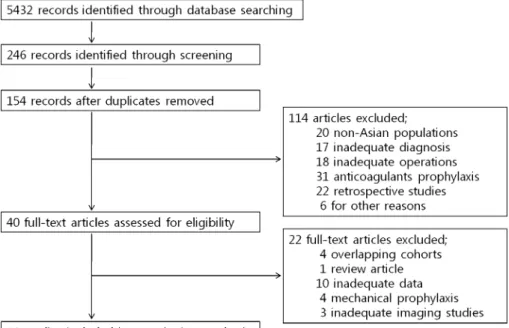
We performed a systematic review and meta-analysis under the Meta-analysis of Observational Studies in Epi-demiology guidelines [38] and the Cochrane Reviewers’ Handbook [17]. We systematically searched the PubMed, Embase, Cochrane Library, Web of Science, and Google Scholar websites for publications published between Jan-uary 1996 and December 2011. The database search was performed using the terms shown in Appendix 1. We applied the search to English language titles and abstracts. The reference lists of identified studies and key review articles were also searched. Using this search strategy, we identified 5432 articles (Fig.1).
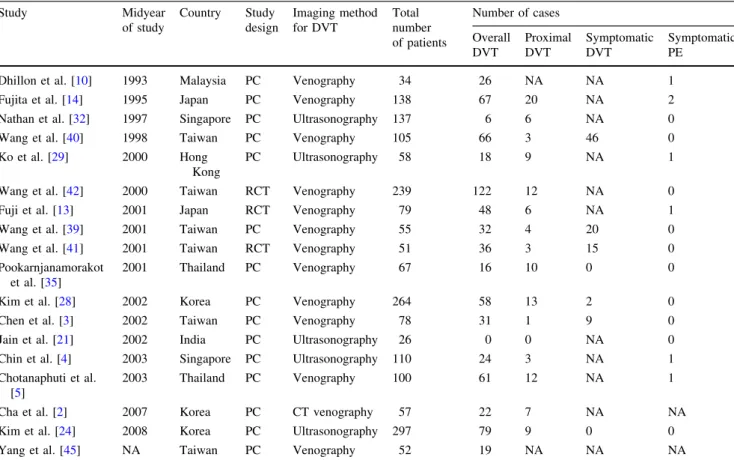
Of these, we included only randomized clinical trials and prospective cohort studies reporting the incidence of DVT and PE after TKA in the Asian population. DVT had to be confirmed by venography, ultrasonography, or CT venography (Table1). Imaging studies for DVT had to be the routine practice after TKA. For symptomatic PE, clinical symptoms had to be determined by perfusion or ventilation scintigraphy, pulmonary angiography, or spiral CT. Studies were excluded if patients received anticoagu-lants prophylaxis or mechanical prophylaxis (eg, foot pumps, intermittent pneumatic compression devices, etc) during or after surgery. Three authors (HSK, HJL, SSS) independently screened the 5432 titles and abstracts and reviewed the published articles to assess suitability for inclusion. Disagreements were resolved by consensus.
Fig. 1 A flowchart shows the selection process of studies.
After removing nonscientific or basic research articles not related to the topic, we identified 246 studies. There were 154 studies after removing duplicates. Forty of 154 studies satisfied the inclusion criteria. Two of us (WSL, SSS) then reviewed the full text of 40 articles. We excluded 22 arti-cles based on overlapping cohorts, review article, inadequate data, mechanical prophylaxis, and inadequate imaging studies (Fig.1). These 22 exclusions left 18 studies (three randomized controlled trials and 15 pro-spective observation studies) involving 1947 patients [2–5,
10,13,14, 21,24, 28,29, 32,35, 39–42, 45]. Of the 18 studies, six were conducted in Taiwan [3,39–42,45], three in Korea [2,24,28], two in Japan [13,14], two in Thailand [5, 35], two in Singapore [4, 32], and one each in Hong Kong [29], Malaysia [10], and India [21] (Table1). Two authors (WSL, KIK) assessed study quality using the Newcastle-Ottawa Scale [43], which evaluates studies on selection, comparability, and outcome in cohort studies. Inconsistencies were resolved by consensus between the two authors. No difference in quality was observed between the studies.
For data extraction, we used the following information from each study: midyear of surgery, number of patients, patient characteristics, country, imaging methods for DVT
and PE, and thromboembolic events (Table1). To assess DVT and PE events, we recorded cases of overall DVT, proximal DVT, distal DVT, symptomatic DVT, symp-tomatic PE, fatal PE, and death after surgery. Overall DVT was defined as DVT confirmed by routine radiographic studies regardless of DVT symptoms. Proximal DVT was defined when thrombosis developed in the popliteal vein and above. If thrombi were detected in both proximal and distal veins, DVTs were classified as proximal DVT. Two reviewers (WSL, KIK) extracted all data independently, according to the selection criteria. Inconsistencies in the extracted data were settled by consensus.
To identify the incidences of overall DVT, proximal DVT, distal DVT, symptomatic DVT, and symptomatic PE, we pooled DVT and PE events among the studies using random-effects or fixed-effects models, depending on the heterogeneity of the included studies. The random-effects model was utilized by applying the method of DerSimonian and Laird [9], and the fixed-effects model was utilized by applying the method of Mantel and Haenszel [31]. We tested for heterogeneity by calculating the I2 tests and interpreting I2 values of greater than 50% as indicating heterogeneity [17]. We found heterogeneity among the studies for overall DVT (I2= 98.9%), proximal DVT
Table 1. Summary of all studies included in the meta-analysis Study Midyear of study Country Study design Imaging method for DVT Total number of patients Number of cases Overall DVT Proximal DVT Symptomatic DVT Symptomatic PE
Dhillon et al. [10] 1993 Malaysia PC Venography 34 26 NA NA 1 Fujita et al. [14] 1995 Japan PC Venography 138 67 20 NA 2 Nathan et al. [32] 1997 Singapore PC Ultrasonography 137 6 6 NA 0 Wang et al. [40] 1998 Taiwan PC Venography 105 66 3 46 0 Ko et al. [29] 2000 Hong
Kong
PC Ultrasonography 58 18 9 NA 1
Wang et al. [42] 2000 Taiwan RCT Venography 239 122 12 NA 0 Fuji et al. [13] 2001 Japan RCT Venography 79 48 6 NA 1 Wang et al. [39] 2001 Taiwan PC Venography 55 32 4 20 0 Wang et al. [41] 2001 Taiwan RCT Venography 51 36 3 15 0 Pookarnjanamorakot
et al. [35]
2001 Thailand PC Venography 67 16 10 0 0
Kim et al. [28] 2002 Korea PC Venography 264 58 13 2 0 Chen et al. [3] 2002 Taiwan PC Venography 78 31 1 9 0 Jain et al. [21] 2002 India PC Ultrasonography 26 0 0 NA 0 Chin et al. [4] 2003 Singapore PC Ultrasonography 110 24 3 NA 1 Chotanaphuti et al.
[5]
2003 Thailand PC Venography 100 61 12 NA 1
Cha et al. [2] 2007 Korea PC CT venography 57 22 7 NA NA Kim et al. [24] 2008 Korea PC Ultrasonography 297 79 9 0 0 Yang et al. [45] NA Taiwan PC Venography 52 19 NA NA NA
(I2= 87.2%), distal DVT (I2= 98.6%), and symptomatic DVT (I2= 95.9%). Therefore, we used the random-effects model to pool the DVT events. There was no heterogeneity among the studies for symptomatic PE (I2= 0.0%). We used the fixed-effects model to pool the symptomatic PE events. Subgroup analyses were conducted based on mid-year of research and country in each study. To determine whether the incidences of symptomatic PE and proximal DVT in Asian populations changed over time, we used the year of surgery or research rather than the year of publi-cation in each study. Because publishing a paper takes a long time, sometimes many years, time periods during which surgeries were performed were believed to be a more valid surrogate for time. Therefore, to assess temporal trends in the incidence of symptomatic PE and proximal DVT, we enrolled 17 studies and stratified the midyear of surgery of each study (range, 1993–2008) into three time periods: 1993 to 1998 (414 patients) [10,14,32,40], 1999 to 2002 (917 patients) [3,13,21,28,29,35,39,41,42], and 2003 to 2008 (564 patients) [2, 4, 5, 24]. The incidence ratios (IRs) of proximal DVT and symptomatic PE at the last two time periods were compared with the first time period as a reference. For the analysis by country, there had to be at least two studies from a country and the pooled
number of patients had to be more than 100. The incidences of overall DVT, proximal DVT, and symptomatic PE in other Asian countries with available data were compared with those of Taiwan, from which the greatest number of studies were reported.
To assess the publication bias, we conducted funnel plots and visually evaluated their symmetry. Rates of overall DVT were broadly symmetrical and rates of PE were narrowly symmetrical. Statistical analyses were conducted using Stata1 10 software (StataCorp LP, Col-lege Station, TX, USA).
Results
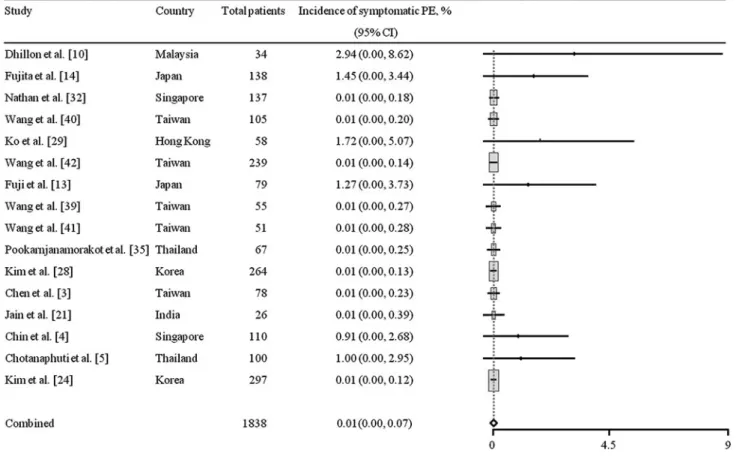
Symptomatic PE was rare and the incidence for proximal DVT was low. The incidence of symptomatic PE was 0.01% (95% CI, 0.00–0.07) in 16 studies [3–5,10,13,14,
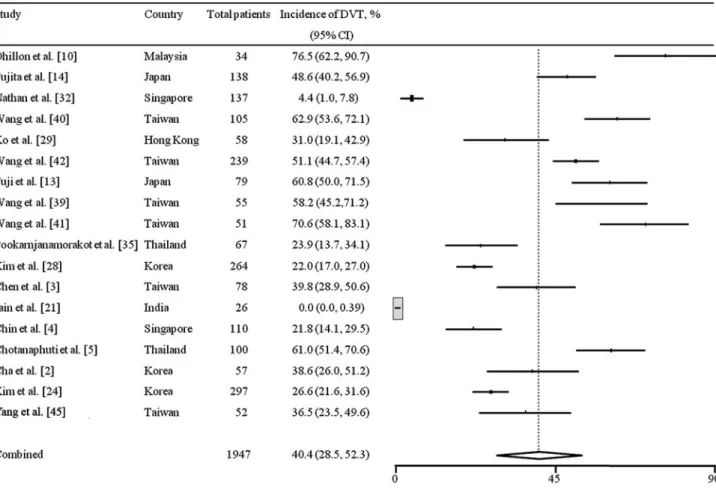
21,24,28,29,32,35,39–42], which included 1838 patients (Fig.2). No fatal PE was reported in any of these studies. The incidence of overall DVT (asymptomatic and symp-tomatic) after TKA was 40.4% (95% CI, 28.5–52.3). The incidences varied from 0% to 76% depending on the study (Fig.3). Sixteen studies [2–5,13,14,21,24,28,29,32,35,
Fig. 2 The forest plot shows rates of symptomatic PE with a table of summarized data in Asian countries. The incidence of symptomatic PE was extremely low (0.01%; 95% CI, 0.00–0.07).
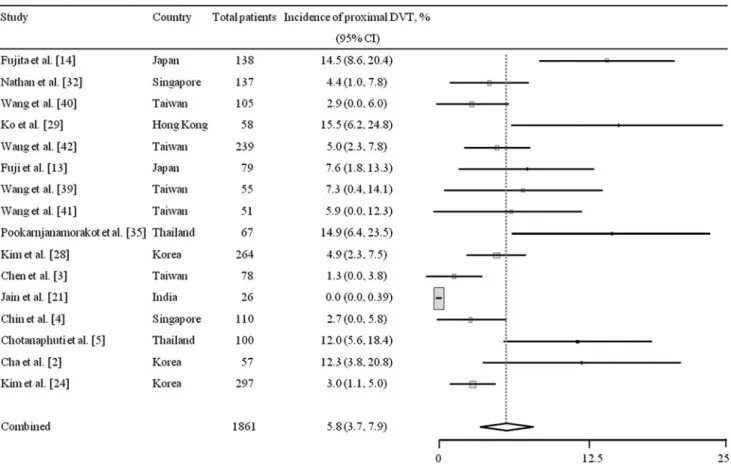
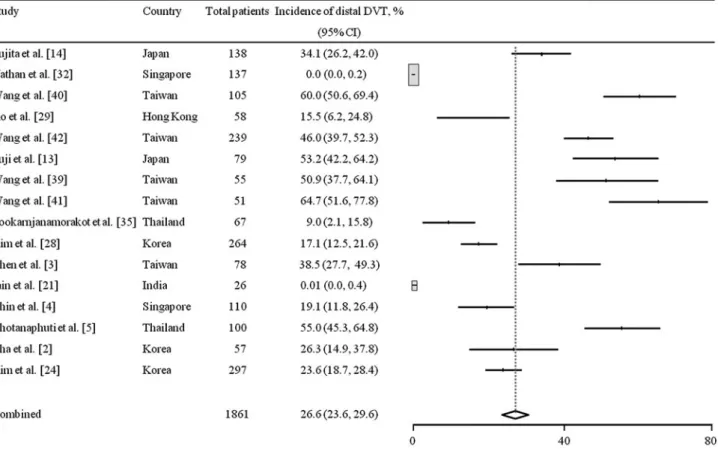
39–42], which included 1861 patients, reported incidences of proximal DVT and distal DVT, which were 5.8% (95% CI, 3.7–7.9) (Fig.4) and 26.6% (95% CI, 23.6–29.6) (Fig.5), respectively. Seven studies [3,24,28,35,39–41], which included 917 patients, provided data on incidence of symptomatic DVT: 1.9% (95% CI, 0.6–3.1) (Fig.6).
The incidences of symptomatic PE and proximal DVT in more recent two time periods were similar to those of the first time period, and no increasing temporal patterns were observed between the earlier and more recent time periods. The incidence of symptomatic PE was 0.017% from period 2003 to 2008 [4,5,24], 0.012% in 1999 to 2002 [3,13,21,
28,29,35,39,41,42], and 0.017% in 1993 to 1998 [10,14,
32, 40] (Fig.7). With the period 1993 to 1998 as a refer-ence, we identified similar incidences of symptomatic PE between the periods 2003 to 2008 (IR = 1.00; 95% CI, 0–?) and 1999 to 2002 (IR = 0.71; 95% CI, 0–?). The incidences of proximal DVT were 5.92% from 2003 to 2008 [2, 4, 5, 24], 5.47% from 1999 to 2002 [3,13, 21,
28, 29, 35, 39, 41, 42], and 6.69% from 1993 to 1998
[14, 32, 40] (Fig.7). With the period 1993 to 1998 as a reference, there were no differences in incidences of proximal DVT between patients observed from 1999 to 2002 (IR = 0.82; 95% CI, 0.52–1.28) and 2003 to 2008 (IR = 0.89; 95% CI, 0.55–1.43).
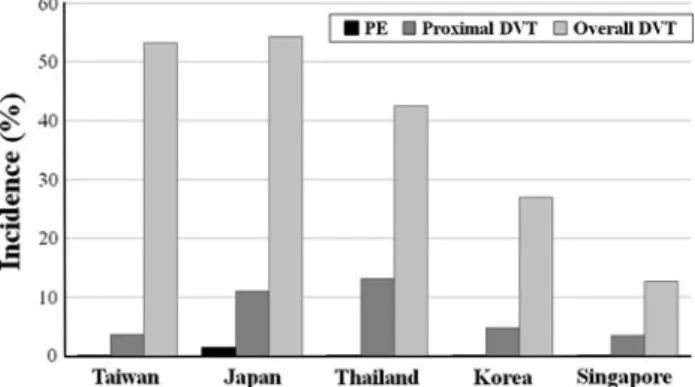
Among the different Asian countries, the incidences of symptomatic PE were similar, but the incidences of overall and proximal DVT were dissimilar. Compared with Tai-wan as a reference, there was no difference in incidences of overall DVT in Japan (IR = 1.02; 95% CI, 0.88–1.18), but there were lower incidences of overall DVT in Thailand (IR = 0.78; 95% CI, 0.66–0.97), Korea (IR = 0.51; 95% CI, 0.44–0.59), and Singapore (IR = 0.24; 95% CI, 0.17–0.34) (Fig.8). We identified higher incidences of proximal DVT in Japan (11.04%) (IR = 3.11; 95% CI, 1.73–5.57) and Thailand (13.05%) (IR = 3.67; 95% CI, 2.03–6.64) but similar incidences in Korea (4.76%) (IR = 1.34; 95% CI, 0.76–2.36) and Singapore (3.46%) (IR = 0.97; 95% CI, 0.44–2.15), compared with Taiwan (3.55%) (Fig. 8).
Fig. 3 The forest plot shows rates of overall DVT with a table of summarized data in Asian countries. The incidence of overall DVT after TKA was 40.4% (95% CI, 28.5–52.3).
Discussion
In contrast to the Western literature, which has typically reported the incidence of PE and DVT after TKA with che-moprophylaxis, most Asian literature has reported the incidence without chemoprophylaxis [7,8,12,18,24,26,27,
29]. This may reflect a low incidence of DVT and PE after TKA in Asian populations even without chemoprophylaxis. Only one meta-analysis study of the incidence of PE and DVT after major orthopaedic surgery has been reported from Asia so far and it suggested rates of proximal DVT and symptomatic PE lower than those in Western reports [23]. However, that study included not only TKAs but also THAs and hip fractures. Since the incidence and pattern of PE and DVT after TKA, THA, and hip fracture are not same [11,12,
16,44], that study could not give a clear indication of the incidence of PE and DVT after TKA. It has been also unclear whether the incidence of PE and DVT after TKA is similarly low among Asian countries. Furthermore, several recent studies have reported the incidence after TKA in Asian patients is increasing [5,13,42]. We therefore determined (1) the overall incidence of symptomatic PE and DVT after TKA without chemoprophylaxis in the Asian population,
(2) whether the rates of symptomatic PE and proximal DVT have increased over time in Asian patients, and (3) the incidences of symptomatic PE and DVT among Asian countries through a meta-analysis.
In our systematic survey, we identified a number of lim-itations in the literature, and our survey methods were also associated with some limitations. First, methods for detect-ing DVT were not the same in the 18 studies enrolled. Venography was used in 12 studies, ultrasonography in five studies, and CT venography in one study (Table1). Although invasive venography was considered the classical standard in the diagnosis of DVT, the noninvasive ultraso-nography now is widely used and has been proven to have almost equal sensitivity and specificity [1,46]. Furthermore, the American College of Radiology Appropriateness Crite-ria1recently recommended the use of ultrasonography for initial evaluation of DVT rather than venography [19]. Second, a limited number of studies have been published in each country. Although we did our best to find more publi-cations from more countries, we used only eight countries with 18 articles to assess the differences in incidences among the countries. We found no additional literature satisfying our inclusion criteria, such as no prophylaxis and routine
Fig. 4 The forest plot shows rates of proximal DVT with a table of summarized data in Asian countries. The incidence of proximal DVT after TKA was 5.8% (95% CI, 3.7–7.9).
radiographic evaluation for DVT regardless of any symp-toms. Third, our study does not convey information on the effects of potential risk factors for DVT or PE, such as age, sex, obesity, types of anesthesia, or operation time, because relevant data were not available in most included studies.
Therefore, we cannot suggest risk factors for DVT or PE. Finally, we lacked control data from Western countries to compare differences in the incidence of PE and DVT between Asian and Western populations. Although we considered inclusion of control groups in Western patients,
Fig. 5 The forest plot shows rates of distal DVT with a table of summarized data in Asian countries. The incidence of distal DVT after TKA was 26.6% (95% CI, 23.9–29.6).
Fig. 6 The forest plot shows rates of symptomatic DVT with a table of summarized data in Asian countries. The incidence of symptomatic DVT after TKA was 1.9% (95% CI, 0.6–3.1).
we found no comparable study without prophylaxis after TKA in Western patients. Hence, we only briefly mentioned the difference compared with the usual Western literature for the reference.
Our meta-analysis showed the incidence of overall DVT was 40.4%, but the incidences of proximal and symptom-atic DVT were 5.8% and 1.9%, respectively. Since distal DVT is typically stable and usually does not progress to PE [22,27, 33, 36], most surgeons focus on proximal DVT. Moreover, the incidence of symptomatic PE was 0.01% and there were no deaths related to DVT or PE. Our findings were similar to those reported in one meta-analysis from Asia [23], although that study included not only TKAs but also THAs and hip fracture surgeries. While we found no control (without chemoprophylaxis) studies of Western patients, our findings showed incidences of symptomatic PE and proximal DVT after TKA that seem low compared to those in Western studies [15] reporting an incidence of DVT of 41% to 85% without prophylaxis and an incidence of proximal DVT of 5% to 22%. Furthermore,
we found no death related to PE and DVT in the Asian literature. The lower incidence of PE and DVT has been attributed to the low prevalence of obesity, the low fre-quency of hyperlipidemia, and the absence of some genetic factors in the Asian population [25,26,28]. Differences in the dietary patterns (vegetarian versus nonvegetarian diets) have also been suggested as one of the causes of the low risk of DVT [30]. Kim and Kim [25] suggested the absence of thrombophilic polymorphisms with low clinical pro-thrombotic risk factors make the occurrence of PE after THA rare in the Asian population. Similar low rates are seen in Asians living in the West [37]. However, the rea-sons why the incidence of symptomatic DVT or PE is low in Asian patients after TKA even without chemoprophy-laxis are still not clear.
Recent epidemiologic studies [6,30,34] have reported relatively high incidences of DVT and PE in the Asian population after TKA. Moreover, a previous meta-analysis from Asia [23] suggested a possible trend toward increas-ing incidence of proximal DVT. The Scottish Arthroplasty Project showed PE and DVT rates that have remained unchanged between 1992 and 2001 despite improved pro-phylaxis usage during this period [20]. In contrast, one Western systematic review article [44] reported a decreasing trend of development of proximal DVT after TKA with time. Finally, we found no evidence of a recent increasing tendency of PE and DVT in Asia, which differed from the results of the previously mentioned Asian meta-analysis [23]. That study enrolled 14 studies, with midyear of patient recruitment ranging from 1979 to 2003 for assessment; among these 14 studies, only seven studies related to TKA, with midyear ranging from 1993 to 2003. Moreover, that study enrolled not only TKAs but also THAs and hip fractures for assessing the temporal trend. We performed our assessment by focusing purely on TKAs with longer observation periods and collected from the most recent literature. These might be reasons why the trend of incidence of PE and DVT over time was different between these two meta-analyses from Asia.
The comparisons among Asian countries suggest, despite the overall low incidence of symptomatic DVT or PE in the region, considerable variances may exist among Asian countries. Although Malaysia had the highest inci-dence of DVT and India had the lowest inciinci-dence (Table 1), we identified only one study in each country that matched our criteria, and each sample was small (\ 100 patients). Excluding these countries plus Hong Kong with a small sample size as well, there was a difference in the incidence of DVT among countries, such as Singapore (12.7%), Korea (26.9%), Thailand (42.5%), and Japan (54.2%), compared to Taiwan (53.2%). We identified no clear reason why the various countries had different reported incidences. Two studies [2,35] had a much higher
Fig. 7 A graph shows the incidences of symptomatic PE and proximal DVT stratified by midyear of study. The incidences of symptomatic PE and proximal DVT did not increase over time in Asian patients.
Fig. 8 A graph shows the reported incidences of symptomatic PE, proximal DVT, and overall DVT per country. The incidences of overall and proximal DVT were different among Asian countries, but the incidences of symptomatic PE were similarly low.
incidence of PE than any other Asian countries because the studies reported the incidence of PE with asymptomatic PE included while other studies [3–5,10, 13,14,21, 24,28,
29,32,39–42] reported only the incidence of symptomatic PE. Therefore, if we exclude asymptomatic PE in the previously mentioned studies [2, 35], the incidence of symptomatic PE might be similar in each country; specif-ically, it was extremely low. Considering the differences among Asian countries, data acquired from each country might be considered in developing optimal DVT preven-tion guidelines for a country.
In conclusion, our study demonstrates the reported incidences of symptomatic PE and proximal DVT after TKA were low even without chemoprophylaxis in Asian patients. No increasing temporal patterns were identified for the incidence of symptomatic PE or proximal DVT, regardless of the Westernizing lifestyles and an increas-ingly aging populace. Hence, routine chemoprophylaxis following Western protocols after TKA is still debatable in Asian populations. Further investigation with large ran-domized studies is needed to confirm our results and identify the risk factors that can lead to PE and DVT.
Acknowledgments This study was performed as an effort of the task force team for DVT prevention guidelines of Korean Knee Society and the authors sincerely thank Hyunsun Lim, PhD, Biosta-tistics Collaboration Unit, Gangnam Severance Hospital Biomedical Research Center, for her contribution to statistical analysis.
Appendix 1
Search Strategy Applied to Titles and Abstracts
‘‘venous thromboembolism’’ OR ‘‘deep vein thrombosis’’ OR ‘‘pulmonary embolism’’
AND
‘‘total knee arthroplasty’’ OR ‘‘total knee replacement’’ OR ‘‘total knee replacement arthroplasty’’
AND
‘‘Asia’’ OR ‘‘Asian’’ OR ‘‘Asian country’’ OR ‘‘Korea’’ OR ‘‘China’’ OR ‘‘Hong Kong’’ OR ‘‘Taiwan’’ OR ‘‘Japan’’ OR ‘‘Mongolia’’ OR ‘‘Bangladesh’’ OR ‘‘Cam-bodia’’ OR ‘‘India’’ OR ‘‘Indonesia’’ OR ‘‘Laos’’ OR ‘‘Malaysia’’ OR ‘‘Myanmar’’ OR ‘‘Nepal’’ OR ‘‘Pakistan’’ OR ‘‘Philippines’’ OR ‘‘Singapore’’ OR ‘‘Sri Lanka’’ OR ‘‘Thailand’’ OR ‘‘Vietnam’’ OR ‘‘Kazakhstan’’ OR ‘‘Kyrgyzstan’’ OR ‘‘Tajikistan’’ OR ‘‘Turkmenistan’’ OR ‘‘Uzbekistan’’ OR ‘‘Afghanistan’’ OR ‘‘Bahrain’’ OR ‘‘Iran’’ OR ‘‘Iraq’’ OR ‘‘Israel’’ OR ‘‘Jordan’’ OR ‘‘Kuwait’’ OR ‘‘Lebanon’’ OR ‘‘Oman’’ OR ‘‘Qatar’’ OR ‘‘Saudi Arabia’’ OR ‘‘Syria’’ OR ‘‘UAE’’ OR ‘‘Yemen’’
References
1. Bressollette L, Nonent M, Oger E, Garcia JF, Larroche P, Guias B, Scarabin PY, Mottier D. Diagnostic accuracy of compression ultrasonography for the detection of asymptomatic deep venous thrombosis in medical patients—the TADEUS project. Thromb Haemost. 2001;86:529–533.
2. Cha SI, Lee SY, Kim CH, Park JY, Jung TH, Yi JH, Lee J, Huh S, Lee HJ, Kim SY. Venous thromboembolism in Korean patients undergoing major orthopedic surgery: a prospective observational study using computed tomographic (CT) pulmonary angiography and indirect CT venography. J Korean Med Sci. 2010;25:28–34. 3. Chen CJ, Wang CJ, Huang CC. The value of D-dimer in the detection of early deep-vein thrombosis after total knee arthroplasty in Asian patients: a cohort study. Thromb J. 2008; 6:5.
4. Chin PL, Amin MS, Yang KY, Yeo SJ, Lo NN. Thromboembolic prophylaxis for total knee arthroplasty in Asian patients: a ran-domised controlled trial. J Orthop Surg (Hong Kong). 2009;17:1–5. 5. Chotanaphuti T, Ongnamthip P, Silpipat S, Foojareonyos T, Roschan S, Reumthantong A. The prevalence of thrombophilia and venous thromboembolism in total knee arthroplasty. J Med Assoc Thai. 2007;90:1342–1347.
6. Chung LH, Chen WM, Chen CF, Chen TH, Liu CL. Deep vein thrombosis after total knee arthroplasty in Asian patients without prophylactic anticoagulation. Orthopedics. 2011;34:15. 7. Cohen AT, Bailey CS, Alikhan R, Cooper DJ. Extended
throm-boprophylaxis with low molecular weight heparin reduces symptomatic venous thromboembolism following lower limb arthroplasty—a meta-analysis. Thromb Haemost. 2001;85:940– 941.
8. Cushner FD, Nett MP. Unanswered questions, unmet needs in venous thromboprophylaxis. Orthopedics. 2009;32:62–66. 9. DerSimonian R, Laird N. Meta-analysis in clinical trials. Control
Clin Trials. 1986;7:177–188.
10. Dhillon KS, Askander A, Doraismay S. Postoperative deep-vein thrombosis in Asian patients is not a rarity: a prospective study of 88 patients with no prophylaxis. J Bone Joint Surg Br. 1996;78:427–430. 11. Douketis JD, Eikelboom JW, Quinlan DJ, Willan AR, Crowther MA. Short-duration prophylaxis against venous thromboembo-lism after total hip or knee replacement: a meta-analysis of prospective studies investigating symptomatic outcomes. Arch Intern Med. 2002;162:1465–1471.
12. Freedman KB, Brookenthal KR, Fitzgerald RH Jr, Williams S, Lonner JH. A meta-analysis of thromboembolic prophylaxis following elective total hip arthroplasty. J Bone Joint Surg Am. 2000;82:929–938.
13. Fuji T, Ochi T, Niwa S, Fujita S. Prevention of postoperative venous thromboembolism in Japanese patients undergoing total hip or knee arthroplasty: two randomized, double-blind, placebo-controlled studies with three dosage regimens of enoxaparin. J Orthop Sci. 2008;13:442–451.
14. Fujita S, Hirota S, Oda T, Kato Y, Tsukamoto Y, Fuji T. Deep venous thrombosis after total hip or total knee arthroplasty in patients in Japan. Clin Orthop Relat Res. 2000;375:168–174. 15. Geerts WH, Bergqvist D, Pineo GF, Heit JA, Samama CM,
Lassen MR, Colwell CW. Prevention of venous thromboembo-lism: American College of Chest Physicians Evidence-Based Clinical Practice Guidelines (8th Edition). Chest. 2008;133: 381S–453S.
16. Handoll HH, Farrar MJ, McBirnie J, Tytherleigh-Strong G, Milne AA, Gillespie WJ. Heparin, low molecular weight heparin and physical methods for preventing deep vein thrombosis and
pulmonary embolism following surgery for hip fractures. Coch-rane Database Syst Rev. 2002;4:CD000305.
17. Higgins JP, Altman DG, Gotzsche PC, Juni P, Moher D, Oxman AD, Savovic J, Schulz KF, Weeks L, Sterne JA. The Cochrane Collaboration’s tool for assessing risk of bias in randomised tri-als. BMJ. 2011;343:d5928.
18. Hill J, Treasure T. Reducing the risk of venous thromboembolism (deep vein thrombosis and pulmonary embolism) in inpatients having surgery: summary of NICE guidance. BMJ. 2007;334:1053–1054. 19. Ho VB, van Geertruyden PH, Yucel EK, Rybicki FJ, Baum RA,
Desjardins B, Flamm SD, Foley WD, Jaff MR, Koss SA, Mam-men L, Mansour MA, Mohler ER 3rd, Narra VR, Schenker MP. ACR Appropriateness Criteria1 on suspected lower extremity deep vein thrombosis. J Am Coll Radiol. 2011;8:383–387. 20. Howie C, Hughes H, Watts AC. Venous thromboembolism
asso-ciated with hip and knee replacement over a ten-year period: a population-based study. J Bone Joint Surg Br. 2005;87:1675–1680. 21. Jain V, Dhaon BK, Jaiswal A, Nigam V, Singla J. Deep vein thrombosis after total hip and knee arthroplasty in Indian patients. Postgrad Med J. 2004;80:729–731.
22. Kakkar VV, Howe CT, Flanc C, Clarke MB. Natural history of postoperative deep-vein thrombosis. Lancet. 1969;2:230–232. 23. Kanchanabat B, Stapanavatr W, Meknavin S, Soorapanth C,
Sumanasrethakul C, Kanchanasuttirak P. Systematic review and meta-analysis on the rate of postoperative venous thromboem-bolism in orthopaedic surgery in Asian patients without thromboprophylaxis. Br J Surg. 2011;98:1356–1364.
24. Kim KI, Cho KY, Jin W, Khurana SS, Bae DK. Recent Korean perspective of deep vein thrombosis after total knee arthroplasty. J Arthroplasty. 2011;26:1112–1116.
25. Kim YH, Kim JS. The 2007 John Charnley Award. Factors leading to low prevalence of DVT and pulmonary embolism after THA: analysis of genetic and prothrombotic factors. Clin Orthop Relat Res. 2007;465:33–39.
26. Kim YH, Kim VE. Factors leading to low incidence of deep vein thrombosis after cementless and cemented total knee arthroplasty. Clin Orthop Relat Res. 1991;273:119–124.
27. Kim YH, Oh SH, Kim JS. Incidence and natural history of deep-vein thrombosis after total hip arthroplasty: a prospective and randomised clinical study. J Bone Joint Surg Br. 2003;85:661–665. 28. Kim YH, Yoo JH, Kim JS. Factors leading to decreased rates of deep vein thrombosis and pulmonary embolism after total knee arthroplasty. J Arthroplasty. 2007;22:974–980.
29. Ko PS, Chan WF, Siu TH, Cheng A, Lee OB, Lam JJ. Duplex ultrasonography after total hip or knee arthroplasty. Int Orthop. 2003;27:168–171.
30. Leizorovicz A, Turpie AG, Cohen AT, Wong L, Yoo MC, Dans A. Epidemiology of venous thromboembolism in Asian patients undergoing major orthopedic surgery without thromboprophy-laxis. The SMART study. J Thromb Haemost. 2005;3:28–34. 31. Mantel N, Haenszel W. Statistical aspects of the analysis of data
from retrospective studies of disease. J Natl Cancer Inst. 1959;22:719–748.
32. Nathan S, Aleem MA, Thiagarajan P, Das De S. The incidence of proximal deep vein thrombosis following total knee arthroplasty in an Asian population: a Doppler ultrasound study. J Orthop Surg (Hong Kong). 2003;11:184–189.
33. Oishi CS, Grady-Benson JC, Otis SM, Colwell CW Jr, Walker RH. The clinical course of distal deep venous thrombosis after
total hip and total knee arthroplasty, as determined with duplex ultrasonography. J Bone Joint Surg Am. 1994;76:1658–1663. 34. Piovella F, Wang CJ, Lu H, Lee K, Lee LH, Lee WC, Turpie AG,
Gallus AS, Planes A, Passera R, Rouillon A. Deep-vein throm-bosis rates after major orthopedic surgery in Asia: an epidemiological study based on postoperative screening with centrally adjudicated bilateral venography. J Thromb Haemost. 2005;3:2664–2670.
35. Pookarnjanamorakot C, Sirisriro R, Eurvilaichit C, Jaovisidha S, Koysombatolan I. The incidence of deep vein thrombosis and pulmonary embolism after total knee arthroplasty: the screening study by radionuclide venography. J Med Assoc Thai. 2004;87: 869–876.
36. Solis MM, Ranval TJ, Nix ML, Eidt JF, Nelson CL, Ferris EJ, Lavender RC, Barnes RW. Is anticoagulation indicated for asymptomatic postoperative calf vein thrombosis? J Vasc Surg. 1992;16:414–418; discussion 418–419.
37. Stein PD, Kayali F, Olson RE, Milford CE. Pulmonary throm-boembolism in Asians/Pacific Islanders in the United States: analysis of data from the National Hospital Discharge Survey and the United States Bureau of the Census. Am J Med. 2004; 116:435–442.
38. Stroup DF, Berlin JA, Morton SC, Olkin I, Williamson GD, Rennie D, Moher D, Becker BJ, Sipe TA, Thacker SB. Meta-analysis of observational studies in epidemiology: a proposal for reporting. Meta-analysis Of Observational Studies in Epidemi-ology (MOOSE) group. JAMA. 2000;283:2008–2012.
39. Wang CJ, Huang CC, Yu PC, Chen HH. Diagnosis of deep venous thrombosis after total knee arthroplasty: a comparison of ultrasound and venography studies. Chang Gung Med J. 2004;27: 16–21.
40. Wang CJ, Wang JW, Chen LM, Chen HS, Yang BY, Cheng SM. Deep vein thrombosis after total knee arthroplasty. J Formos Med Assoc. 2000;99:848–853.
41. Wang CJ, Wang JW, Weng LH, Hsu CC, Huang CC, Yu PC. Prevention of deep-vein thrombosis after total knee arthroplasty in Asian patients: comparison of low-molecular-weight heparin and indomethacin. J Bone Joint Surg Am. 2004;86:136–140. 42. Wang CJ, Wang JW, Weng LH, Huang CC, Yu PC. Clinical
significance of muscular deep-vein thrombosis after total knee arthroplasty. Chang Gung Med J. 2007;30:41–46.
43. Wells GA, Shea B, O’Connell D, Peterson J, Welch V, Losos M, Tugwell P. The Newcastle-Ottawa Scale (NOS) for assessing the quality of nonrandomised studies in meta-analyses. Available at:
http://www.ohri.ca/programs/clinical_epidemiology/oxford.asp. Accessed March 25, 2012.
44. Xing KH, Morrison G, Lim W, Douketis J, Odueyungbo A, Crowther M. Has the incidence of deep vein thrombosis in patients undergoing total hip/knee arthroplasty changed over time? A systematic review of randomized controlled trials. Thromb Res. 2008;123:24–34.
45. Yang LC, Wang CJ, Lee TH, Lin FC, Yang BY, Lin CR, Lee TC. Early diagnosis of deep vein thrombosis in female patients who undergo total knee arthroplasty with measurement of P-selectin activation. J Vasc Surg. 2002;35:707–712.
46. Yoo MC, Cho YJ, Ghanem E, Ramteke A, Kim KI. Deep vein thrombosis after total hip arthroplasty in Korean patients and D-dimer as a screening tool. Arch Orthop Trauma Surg. 2009; 129:887–894.