https://doi.org/10.4094/chnr.2021.27.2.146
CHNR
Nursing support perceived by mothers of preterm infants in a neonatal intensive care
unit in South Korea
Mihae Im
1, Jina Oh
21Assistant Professor, Department of Nursing, Choonhae College of Health Science, Ulsan; 2Professor, Institute of Health Science, College of Nursing, Inje
University, Busan, Korea
Purpose: The aim of this study was to clarify and define the concept of nursing support as perceived by mothers of preterm infants. Methods: The research was conducted using Schwartz-Barcott and Kim's hybrid model. Sixteen articles were analyzed during the theoretical phase. In-depth interviews were conducted with 10 mothers of preterm infants in the fieldwork phase. In the final analytical phase, the attributes of nursing support were defined. Results: There were four themes and 10 attributes of nursing support as perceived by mothers of preterm infants. Professional care and emotional care for the baby were identified as attributes of baby care support. Information related to the disease, inpatient environment, baby's daily hospital life, and mother-centered care were identified as attributes of information delivery support. Empathy for mothers and therapeutic communication with the mother were identified as attributes for mental care support. Lastly, providing a chance for the mother to take care of the baby and reinforcement of the maternal role were identified as attributes of maternal role support.
Conclusion: The 10 attributes of this study could provide a base for the development of a nursing support instrument and practical guidelines for mothers in neonatal intensive care units.
Corresponding author
Jina Oh
College of Nursing, Inje University, 75 Bokji-ro, Busanjin-gu, Busan 47720, Korea
TEL: +82-51-890-6833 FAX: +82-51-896-9840 E-MAIL: [email protected]
This article was adapted from a thesis by Mihae Im in partial fulfillment of the requirements for the dissertation at Inje University of Korea.
Received Jan 8, 2021 Revised Feb 8, 2021 Accepted Feb 17, 2021
This is an Open Access article distributed under the terms of the Creative Commons Attribution NonCommercial License (http://creativecommons.org/licenses/by-nc/4.0/) which permits unrestricted noncommercial use, distribution, and reproduction in any medium, provided the original work is properly cited.
Key words: Infant; Premature birth; Mothers; Intensive care units, neonatal
IN TRO D U C TIO N
Advances in medical technology and investments by hospi-tals and governments have improved the survival rate of pre-mature infants from 40.6% to 64.2%[1]. Despite continuing de-velopments and efforts to improve the survival rate of pre-mature infants, there is a relative lack of interest in mothers who have given birth to premature infants [2]. Since fam-ily-centered care (FCC) is the core philosophy of pediatric nursing, it is important that mothers of infants born prema-turely are also considered [3].
The mother of a premature infant experiences a high degree of role confusion and conflict due to the unexpected hospital-ization of her baby and an unfamiliar medical environment [A15]. These mothers can suffer from frustration and guilt, presuming that baby's hospitalization is their own fault, and may experience attachment disorder as they are not able to
fulfil their motherly duties as a result of being separated from the baby [2,4,A3]. In addition, there may be a lack of speci-alized knowledge about the condition or disease of the baby, and the provision of information is limited to visiting hours, causing uncertainty, anxiety, and stress about the baby's dis-ease and prognosis [5]. As a result, mothers of preterm infants experience difficulties in making decisions and are forced to entirely rely on health providers [6].
Nursing support is essential for mothers of premature in-fants [A1]. Through nursing support, mothers get information about the baby's treatment process, receive comfort, and re-gain their self-esteem as mothers [7,A3]. However, previous studies have focused on nurse-centered support, rather than client-centered support [5,A1,A10]. Moreover, the research on nursing support perceived by mothers is insufficient, as there is a discrepancy between nursing support as perceived by the mother and as perceived by nurses [A1,A10]. Nurses tended
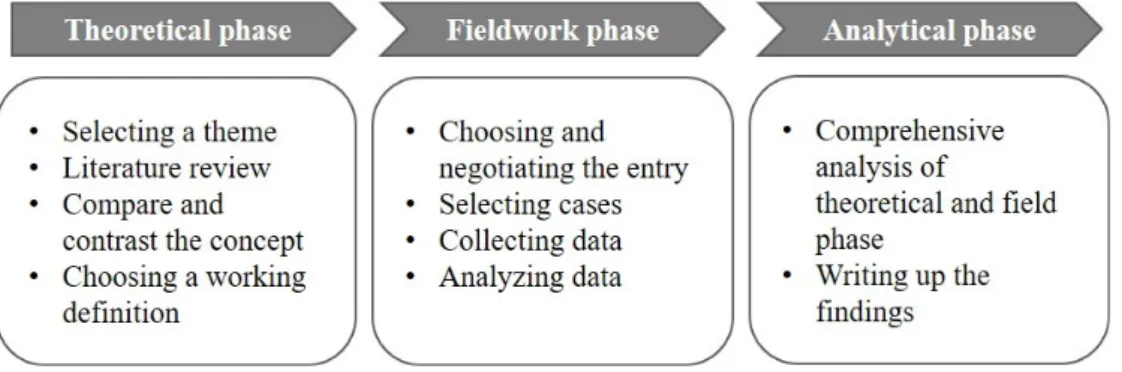
Figure 1. Process of research based on Schwartz-Barcott and Kim's hybrid model. to think that they provided full emotional support to the
pa-rents with premature infants, while papa-rents did not perceive enough support [3,A1]. Because the concept of support varies depending on subject and the environment [8,9], it is neces-sary to identify the features of nursing support as perceived by the mothers of premature infants in the context of the neo-natal intensive care unit (NICU).
In the current study, Schwartz-Barcott and Kim's [10] hy-brid model was used to analyze the concept of nursing sup-port. This model is a conceptual analysis method that com-bines theoretical and empirical analyses. It is a useful method for studying conceptual phenomena such as nursing support that are recognized in clinical practice [10]. The results of this study are expected to help define nursing support for mothers of premature infants, and provide theoretical evidence for the development of nursing support intervention programs.
METHODS
Ethics statement: This study was approved by the Institu-tional Review Board of Inje University (No. 2017-11-006-001). Informed consent was obtained from the participants.
1. Study Design
This study was conducted in three phases, theoretical, fieldwork, and analytical based on the hybrid model (Figure 1) [10]. In the theoretical phase, identified components were linked, compared, and contrasted with each other to deter-mine the attributes and definitions of each concept, resulting in a working definition. The fieldwork phase was performed to confirm whether the attributes and definitions of concepts identified in the theoretical phase appeared in practice or if there were any additional unidentified attributes. The attrib-utes identified in the theoretical phase and the attribattrib-utes re-confirmed in the fieldwork phase were considered in the
ana-lytical phase.
2. Theoretical Phase
After selecting the concept of nursing support perceived by mothers of premature infants, a literature review was con-ducted by checking the dictionary definition of nursing sup-port, determining the meaning and components of support in nursing and other disciplines, and searching for articles re-lated to nursing support for mothers of premature infants. A literature review was conducted focusing on the conceptual definitions and attributes of nursing support as perceived by mothers of premature infants. The period of publication of the literature was from 1979, when nursing support was defined by Gardner [9], to October 2019 Studies were retrieved from PubMed, Science Direct, Google Scholar, Scopus, and the Cumulative Index of Nursing and Allied Health Literature (CINHAL) as international databases, as well as from the DataBase Periodical Information Academic (DBpia), Korean Studies Information Service System (KISS), National Digital Science Library (NDSL), and Research Information Sharing Service (RISS) as South Korean databases. The databases were searched using a combination of search terms such as "pre-term infant," "mother," "support," and "nursing." The in-clusion criteria for this review were as follows: (a) peer-re-viewed articles written in English and Korean, (b) nursing support for mothers or families with preterm infants in the NICU, (c) nursing support provided by NICU nurses, and (d) articles that included the definition or component of nursing support in the NICU. As a result, 16 articles were included in the theoretical stage (Figure 2).
Subsequently, an analysis framework was constructed to identify the contents and components of nursing support. For the quality appraisal of the studies, the Strengthening the Re-porting of Observational Studies in Epidemiology (STROBE) checklist was used [11]. After sufficient discussion to allow re-searchers to understand the STROBE checklist at the same
lev-Figure 2. Flow chart of literature review. CINAHL, cumulative index of nursing and allied health literature; DBpia,
database periodical information academic; KISS, Korean studies information service system; NDSL, national digital science library; RISS, research information sharing service.
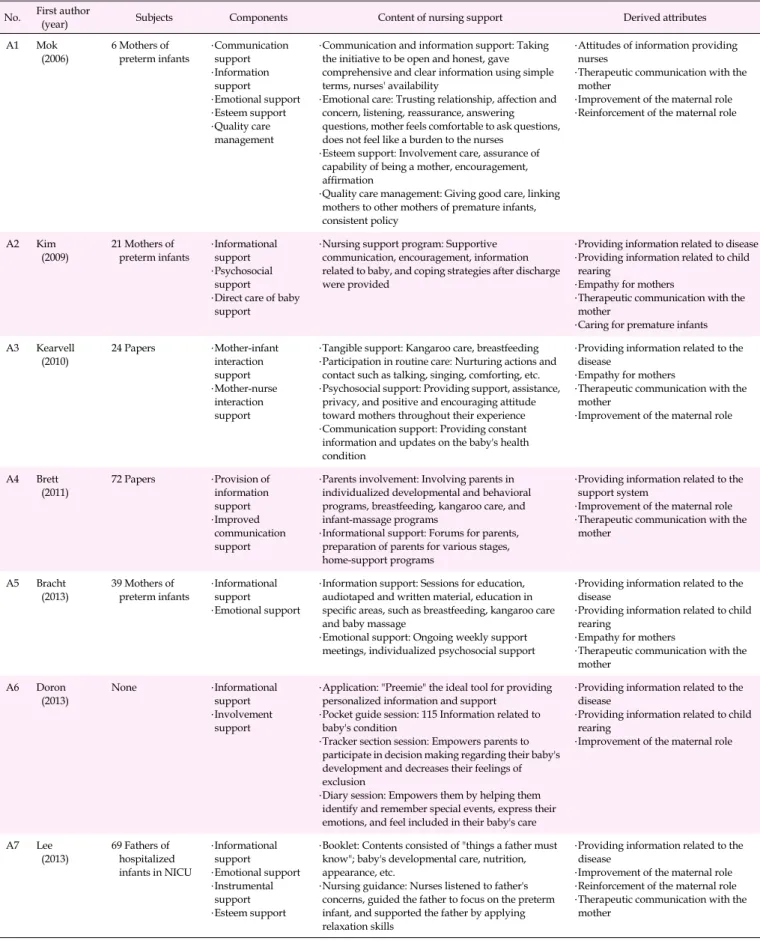
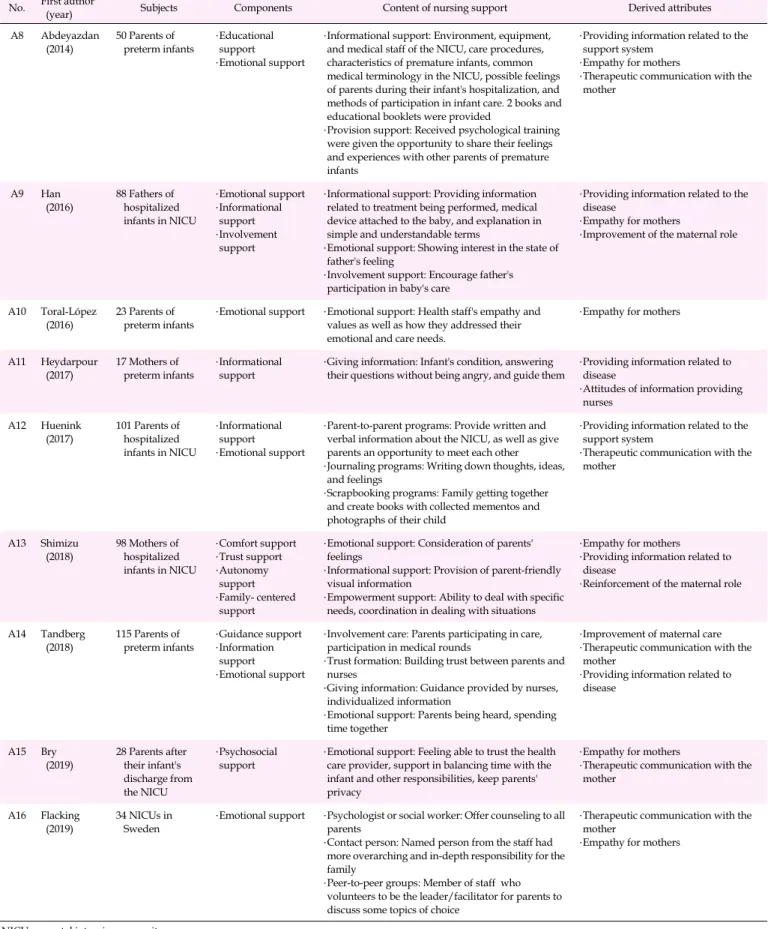
el, each article was individually appraised by two authors. All selected articles passed the quality evaluation (Table 1).
3. Fieldwork Phase
In the fieldwork phase, the NICU was chosen as a fieldwork site since the concepts being studied could be observed fre-quently. Participants were selected for interviews based on an assessment of who could best explain the concept of nursing support perceived by mothers. Data were collected through in-depth interviews with participants.
1) Selection of research participants
The intention was to select people who could best explain the contexts of nursing support as perceived by mothers of premature infants in the NICU. Specific criteria for the se-lection of candidates were: a) mothers who understood the purpose of the study and agreed to participate, b) mothers of babies with a gestational age of less than 37 weeks, c) mothers of babies without congenital deformities and hereditary dis-eases, and d) mothers within a year of childbirth. The first sui-table participant for this study was introduced by an NICU nurse where the researcher worked. Afterwards, the study subjects were introduced by other participants. The final
number of participants was 10, at which point the data were deemed to be saturated (Table 2).
2) Data collection
The interviews were conducted from November 2017 to March 2018, and the schedule was prearranged through phone calls and text messages. The interviewer attempted to relieve the tension of the participants and to create a relaxed inter-view atmosphere. The interinter-views were conducted with semi- structured, open questions based on the findings of the theo-retical phase. The main question was, "What nursing support do you think a neonatal intensive care unit nurse provides?" Additional questions were asked such as "What are some ex-amples of impressive nursing support that you received from the neonatal intensive care unit nurses?" and "What kind of nursing support was particularly needed for mothers of pre-mature infants?" One or two in-depth interviews were con-ducted with each participant. The interviews lasted for 60 to 90 minutes.
3) Data analysis
A thematic analysis method was used to identify the key findings [12]. The in-depth interviews were recorded with the consent of the participants, and the researchers attempted to
Table 1. Characteristics of Papers related to Nursing Support in Neonatal Intensive Care Unit (N=16)
No. First author (year) Subjects Components Content of nursing support Derived attributes A1 Mok
(2006) 6 Mothers of preterm infants ․Communication support ․Information support ․Emotional support ․Esteem support ․Quality care management
․Communication and information support: Taking the initiative to be open and honest, gave comprehensive and clear information using simple terms, nurses' availability
․Emotional care: Trusting relationship, affection and concern, listening, reassurance, answering questions, mother feels comfortable to ask questions, does not feel like a burden to the nurses
․Esteem support: Involvement care, assurance of capability of being a mother, encouragement, affirmation
․Quality care management: Giving good care, linking mothers to other mothers of premature infants, consistent policy
․Attitudes of information providing nurses
․Therapeutic communication with the mother
․Improvement of the maternal role ․Reinforcement of the maternal role
A2 Kim
(2009) 21 Mothers of preterm infants
․Informational support ․Psychosocial
support ․Direct care of baby
support
․Nursing support program: Supportive communication, encouragement, information related to baby, and coping strategies after discharge were provided
․Providing information related to disease ․Providing information related to child
rearing
․Empathy for mothers
․Therapeutic communication with the mother
․Caring for premature infants A3 Kearvell (2010) 24 Papers ․Mother-infant interaction support ․Mother-nurse interaction support
․Tangible support: Kangaroo care, breastfeeding ․Participation in routine care: Nurturing actions and
contact such as talking, singing, comforting, etc. ․Psychosocial support: Providing support, assistance,
privacy, and positive and encouraging attitude toward mothers throughout their experience ․Communication support: Providing constant
information and updates on the baby's health condition
․Providing information related to the disease
․Empathy for mothers
․Therapeutic communication with the mother
․Improvement of the maternal role
A4 Brett (2011) 72 Papers ․Provision of information support ․Improved communication support
․Parents involvement: Involving parents in individualized developmental and behavioral programs, breastfeeding, kangaroo care, and infant-massage programs
․Informational support: Forums for parents, preparation of parents for various stages, home-support programs
․Providing information related to the support system
․Improvement of the maternal role ․Therapeutic communication with the
mother
A5 Bracht
(2013) 39 Mothers of preterm infants
․Informational support
․Emotional support
․Information support: Sessions for education, audiotaped and written material, education in specific areas, such as breastfeeding, kangaroo care and baby massage
․Emotional support: Ongoing weekly support meetings, individualized psychosocial support
․Providing information related to the disease
․Providing information related to child rearing
․Empathy for mothers
․Therapeutic communication with the mother A6 Doron (2013) None ․Informational support ․Involvement support
․Application: "Preemie" the ideal tool for providing personalized information and support
․Pocket guide session: 115 Information related to baby's condition
․Tracker section session: Empowers parents to participate in decision making regarding their baby's development and decreases their feelings of exclusion
․Diary session: Empowers them by helping them identify and remember special events, express their emotions, and feel included in their baby's care
․Providing information related to the disease
․Providing information related to child rearing
․Improvement of the maternal role
A7 Lee (2013) 69 Fathers of hospitalized infants in NICU ․Informational support ․Emotional support ․Instrumental support ․Esteem support
․Booklet: Contents consisted of "things a father must know"; baby's developmental care, nutrition, appearance, etc.
․Nursing guidance: Nurses listened to father's concerns, guided the father to focus on the preterm infant, and supported the father by applying relaxation skills
․Providing information related to the disease
․Improvement of the maternal role ․Reinforcement of the maternal role ․Therapeutic communication with the
mother NICU, neonatal intensive care unit.
Table 1. Characteristics of Papers related to Nursing Support in Neonatal Intensive Care Unit (Continued) (N=16)
No. First author (year) Subjects Components Content of nursing support Derived attributes A8 Abdeyazdan
(2014) 50 Parents of preterm infants ․Educational support ․Emotional support
․Informational support: Environment, equipment, and medical staff of the NICU, care procedures, characteristics of premature infants, common medical terminology in the NICU, possible feelings of parents during their infant's hospitalization, and methods of participation in infant care. 2 books and educational booklets were provided
․Provision support: Received psychological training were given the opportunity to share their feelings and experiences with other parents of premature infants
․Providing information related to the support system
․Empathy for mothers
․Therapeutic communication with the mother A9 Han (2016) 88 Fathers of hospitalized infants in NICU ․Emotional support ․Informational support ․Involvement support
․Informational support: Providing information related to treatment being performed, medical device attached to the baby, and explanation in simple and understandable terms
․Emotional support: Showing interest in the state of father's feeling
․Involvement support: Encourage father's participation in baby's care
․Providing information related to the disease
․Empathy for mothers
․Improvement of the maternal role
A10 Toral-López (2016)
23 Parents of preterm infants
․Emotional support ․Emotional support: Health staff's empathy and values as well as how they addressed their emotional and care needs.
․Empathy for mothers
A11 Heydarpour (2017) 17 Mothers of preterm infants ․Informational support
․Giving information: Infant's condition, answering their questions without being angry, and guide them
․Providing information related to disease
․Attitudes of information providing nurses A12 Huenink (2017) 101 Parents of hospitalized infants in NICU ․Informational support ․Emotional support
․Parent-to-parent programs: Provide written and verbal information about the NICU, as well as give parents an opportunity to meet each other ․Journaling programs: Writing down thoughts, ideas,
and feelings
․Scrapbooking programs: Family getting together and create books with collected mementos and photographs of their child
․Providing information related to the support system
․Therapeutic communication with the mother A13 Shimizu (2018) 98 Mothers of hospitalized infants in NICU ․Comfort support ․Trust support ․Autonomy support ․Family- centered support
․Emotional support: Consideration of parents' feelings
․Informational support: Provision of parent-friendly visual information
․Empowerment support: Ability to deal with specific needs, coordination in dealing with situations
․Empathy for mothers
․Providing information related to disease
․Reinforcement of the maternal role
A14 Tandberg (2018) 115 Parents of preterm infants ․Guidance support ․Information support ․Emotional support
․Involvement care: Parents participating in care, participation in medical rounds
․Trust formation: Building trust between parents and nurses
․Giving information: Guidance provided by nurses, individualized information
․Emotional support: Parents being heard, spending time together
․Improvement of maternal care ․Therapeutic communication with the
mother
․Providing information related to disease A15 Bry (2019) 28 Parents after their infant's discharge from the NICU ․Psychosocial support
․Emotional support: Feeling able to trust the health care provider, support in balancing time with the infant and other responsibilities, keep parents' privacy
․Empathy for mothers
․Therapeutic communication with the mother
A16 Flacking (2019)
34 NICUs in Sweden
․Emotional support ․Psychologist or social worker: Offer counseling to all parents
․Contact person: Named person from the staff had more overarching and in-depth responsibility for the family
․Peer-to-peer groups: Member of staff who volunteers to be the leader/facilitator for parents to discuss some topics of choice
․Therapeutic communication with the mother
․Empathy for mothers
Table 2. General Characteristics of Mothers (N=10)
Participants (year)Age Gestational age(week) Baby's birth weight (g) Baby's age(month) Birth order caregiverPrimary Cohabitant
A 22 33+0 1,240 8 1st Mother Husband
B 30 31+3 1,400 10 1st Mother Husband, grandmother
C 32 24+6 655 5 1st Mother Husband D 42 34+2 2,000 2 1st Mother Husband E 31 32+4 1,870 4 1st Mother Husband F 37 33+3 2,000 1 2nd Mother Husband G 39 26+6 1,050 6 2nd Mother Husband H 43 33+0 1,870 1 1st Mother Husband I 40 28+6 960 1 2nd Mother Husband
J 38 32+0 1,400 1 1st Mother Husband, grandmother
understand the participants' ideas and responses by listening to the recorded files and reviewing the transcriptions repea-tedly. From the transcribed data, the researchers underlined meaningful statements related to nursing support for mothers of premature infants and identified and classified semantic units that contained the concept of implicit nursing support. All the researchers have experience in qualitative research and participated in qualitative research workshops to learn research methodology. In order to be rigorous in our qual-itative inquiry, peer review debriefing was carried out with five professors with experience in qualitative research with specialties in maternity and child nursing. In addition, mem-ber checking was conducted by sharing the research results with two research participants [13].
4) Ethical considerations
This study was approved by the institutional review board (IRB) of the university (No. 2017-11-006-001). In addition, pri-or to the interview, all participants were infpri-ormed of the pur-pose of the study and how to proceed with the interview. All participants were informed that their data would only be used as research material and were asked to provide written consent. All data and participant information were anony-mously marked by assigning unique numbers, which were kept separately in a designated space with restricted access. After the end of the meeting, a mobile gift card worth approx-imately 45 USD was presented.
4. Analytical Phase
The attributes of nursing support identified during the the-oretical phase and the fieldwork phase were compared and
analyzed. The researchers stepped back from the intensity and details of the fieldwork and reexamined the findings in light of the initial focus of interest. Definitions, attributes, and indicators of nursing support for mothers of premature in-fants were subsequently determined in this study.
RESULTS
1. Theoretical Phase
A literature review was conducted to find the components and attributes of nursing support for mothers of premature infants.
1) Dictionary meaning of nursing support
Nursing support is a compound word consisting of the words "nursing" and "support". The definition of nursing is "thejob or skills of a nurse, or the professional training that nurses receive" [14]. The definition of support is "to help someone and be kind to them when they are having a difficult time" [15]. Based on the dictionary definition, nursing support is a nurse's professional behavior of assisting the participants during a difficult time.
2) Support identified in other academic disciplines
Social support is classified as formal and informal support depending on the provider, and formal support refers to serv-ices received from experts or semi-professionals in a struc-tured community or institution [16]. Each scholar defines so-cial support slightly differently, but they each stress inter-relationships, providing assistance, and the facilitation of pos-itive outcomes for the subjects of stress or crisis [17]. Social
support can be used as a nursing intervention to promote sub-jects' health. Social support provided by nurses to subjects in a hospital can be classified as informal support [16,17].
3) Nursing support in the nursing discipline
Nursing support is a mutually beneficial relationship forged when a nurse recognizes the support needs of a subject in a stress or crisis situation [18]. Types of nursing support are divided into physical, social, and emotional support [19]. Phy-sical support refers to when nurses apply their knowledge to provide professional technical care, making the patients feel physically cared for [18,19]. Emotional support is the most common way for nurses to express support. It entails practic-ing empathy, which includes listenpractic-ing to patients with an atti-tude of interest and understanding while they express them-selves [18]. Social support is defined by nurses as the provi-sion of assistance in social functions, interactions, and in-formation such as the specific methods and knowledge need-ed to solve problems [19].
4) Nursing support for mothers of preterm infants
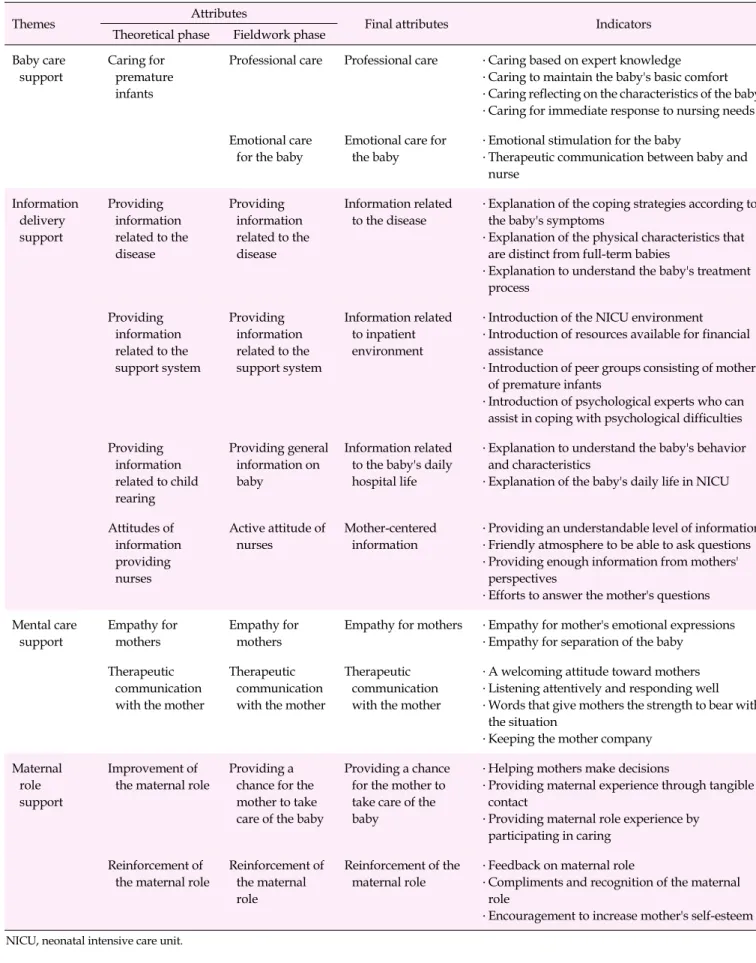
Nine attributes of nursing support were discovered after reviewing 16 articles (Tables 1, 3). "Caring for premature in-fants" refers to nurses caring to improve infants' comfort. "Providing information related to the disease" includes the sharing of information related to a baby's treatment process, test results, and body appearance with mothers. "Providing information related to the support system" refers to the in-troduction of peer-groups and social psychology experts, as well as providing an inpatient environment for mothers. "Pro-viding information related to child rearing" refers to nurses sharing information with mothers regarding a baby's living habits in the NICU and post-discharge management. "Atti-tudes of information providing nurses" means sharing accu-rate and transparent information with mothers in a friendly manner. "Empathy for mothers" means being concerned with the mother's worries and giving them the opportunity to share their memories of the baby. "Therapeutic communica-tion with the mother" means listening to the mother's emo-tional expressions as well as welcoming and being next to mothers. "Improvement of the maternal role" refers to encour-aging mothers to participate in the baby's care, which may in-clude kangaroo care and discharge education. "Reinforcement of the maternal role" includes encouraging, acknowledging, and providing feedback to mothers. The nine attributes were categorized into four themes: baby care support, information delivery support, mental care support, and maternal role support.
The working definition of nursing support perceived by mothers of preterm infants is the mutual relationship between
nurses and mothers, which includes baby care support for the baby's comfort, information delivery support for providing information related to a disease, a support system, child rear-ing with a warm attitude, mental care support, therapeutic communication with the mother and support to improve and reinforce the maternal role in mothers.
2. Fieldwork Phase
Ten mothers of premature infants were interviewed to identify the four themes and 10 attributes of nursing support from their perspective.
1) Baby care support
(1) Professional care
Professional care refers to the application of professional knowledge to care for the baby and facilitate an immediate re-sponse to the baby's nursing needs.
She was really smart. She knows everything about my baby. I felt relieved when someone with a lot of knowl-edge looked after my child. (Mother B)
Whenever I visited my baby, he was crying, whining, or the monitor alarmed. I watched the nurse respond immediately. I felt relieved that she would be watching my baby even if I was not there. (Mother G)
(2) Emotional care for the baby
Emotional care means that the baby is given necessary lov-ing attention.
As a mother, I feel compelled to have expectations for a nurse's role. I want a nurse to provide the attention and love that I cannot give my baby. (Mother D)
2) Information delivery support
(1) Providing information related to the disease
Mothers required an explanation of the treatment process for a baby's disease and information related to coping with symptoms after discharge.
The additional things that the nurses explained to me helped a lot. What did this test do, and maybe the baby would react to it this way… Talking about the process helped me understand the baby's treatment. (Mother A) (2) Providing information related to the support system Mothers required guidance regarding the inpatient envi-ronment of the baby and the institutions and policies that pro-vide financial support.
Table 3. Themes, Attributes, and Indicators of Nursing Support as Perceived by Mothers of Preterm Infants in the Analytical Phase
Themes Attributes Final attributes Indicators
Theoretical phase Fieldwork phase
Baby care support
Caring for premature infants
Professional care Professional care ․Caring based on expert knowledge
․Caring to maintain the baby's basic comfort
․Caring reflecting on the characteristics of the baby
․Caring for immediate response to nursing needs
Emotional care for the baby
Emotional care for the baby
․Emotional stimulation for the baby
․Therapeutic communication between baby and
nurse Information delivery support Providing information related to the disease Providing information related to the disease Information related to the disease
․Explanation of the coping strategies according to
the baby's symptoms
․Explanation of the physical characteristics that
are distinct from full-term babies
․Explanation to understand the baby's treatment
process Providing information related to the support system Providing information related to the support system Information related to inpatient environment
․Introduction of the NICU environment
․Introduction of resources available for financial
assistance
․Introduction of peer groups consisting of mothers
of premature infants
․Introduction of psychological experts who can
assist in coping with psychological difficulties Providing information related to child rearing Providing general information on baby Information related to the baby's daily hospital life
․Explanation to understand the baby's behavior
and characteristics
․Explanation of the baby's daily life in NICU
Attitudes of information providing nurses Active attitude of nurses Mother-centered information
․Providing an understandable level of information
․Friendly atmosphere to be able to ask questions
․Providing enough information from mothers'
perspectives
․Efforts to answer the mother's questions
Mental care support Empathy for mothers Empathy for mothers
Empathy for mothers ․Empathy for mother's emotional expressions
․Empathy for separation of the baby
Therapeutic communication with the mother
Therapeutic communication with the mother
Therapeutic communication with the mother
․A welcoming attitude toward mothers
․Listening attentively and responding well
․Words that give mothers the strength to bear with
the situation
․Keeping the mother company
Maternal role support
Improvement of the maternal role
Providing a chance for the mother to take care of the baby
Providing a chance for the mother to take care of the baby
․Helping mothers make decisions
․Providing maternal experience through tangible
contact
․Providing maternal role experience by
participating in caring Reinforcement of
the maternal role
Reinforcement of the maternal role
Reinforcement of the maternal role
․Feedback on maternal role
․Compliments and recognition of the maternal
role
․Encouragement to increase mother's self-esteem
The nurse said, 'this is an oxygen giving tube'. 'This is a fluid tube to ensure that the baby gets enough nourish-ment'. 'This is an incubator with temperature and humid-ity control'. After receiving that explanation, I deeply un-derstood my baby's situation. (Mother C)
The nurse told me about the financial support pro-gram for premature babies. Honestly, I was worried about money, but it helped me a lot. (Mother G)
(3) Providing general information on the baby
This refers to information on the baby's behavior, character-istics, and daily life in the NICU.
That nurse was like a neighbor who talks about every-thing. I feel like this kind of general chat was more help-ful than medical information. (MotherJ)
(4) Active attitude of nurses
Nurses must actively answer questions and create a com-fortable atmosphere for asking questions.
She always said, if you have any questions, feel free to ask. Every time I visited the NICU, I wished she was there that day. (Mother E)
3) Mental care support
(1) Empathy for mothers
Mothers said that nurses provided support when they ex-pressed empathy for mothers' feelings and the situation of separation from the baby.
I felt like I was being consoled when the nurse gave me some tissues and sat beside me. (Mother D)
They wrote my baby's rearing diary for me from ad-mission to discharge. (Mother E)
(2) Therapeutic communication with the mother
The participants experienced therapeutic communication when the nurses were welcoming, listened carefully, gave ap-propriate responses, and said hopeful things such as assur-ance that the baby would get through the situation.
The nurse always welcomed me with a smile… I got positive energy from the nurse. (Mother F)
Although, it was not always okay, the nurse kept say-ing positive words to me like 'your baby is holdsay-ing up very well'. (Mother H)
4) Maternal role support
(1) Providing a chance for the mother to take care of the baby
Nurses supported mothers by providing them with oppor-tunities to experience motherhood with direct care for the ba-by through tangible contact with the baba-by, such as kangaroo care and direct nursing.
As I was performing kangaroo care, I felt like I was act-ing as a mother, and I felt proud that I was helpact-ing my baby and doing something for her. (MotherJ)
The first time I held my baby was during breast-feed-ing education. (Mother E)
She demonstrated feeding, bathing, and all of the baby rearing activities. It is good for me when I get the chance to practice it. (Mother B)
(2) Reinforcement of the maternal role
Nurses can provide feedback and praise as mothers per-form their maternal duties.
It gives me a lot of strength and confidence when she encourages me as a mother. (Mother A)
In a way, like my mother… she taught me, told me how to care of the baby… you can fix these things… I think that's really necessary support for a mother of a premature infant. (Mother D)
3. Analytical Phase
A new attribute "emotional care for the baby" was found in the fieldwork phase. As a result of integrating the theoretical and fieldwork phases, nursing support as perceived by moth-ers of premature infants consisted of four themes, 10 attrib-utes, and 31 indicators (Table 3).
In this study, baby care support was defined as a nurse's pro-fessional and emotional care for the baby. Emotional care for the baby was not identified in the theoretical phase, but was in-cluded after it was discovered to be an important attribute of nursing support during the fieldwork phase. Information de-livery support was important in how well information was shared with mothers. The introduction of peer group support and social psychologists was not included in the fieldwork phase, but was included in the theoretical phase as it was identified as an important form of support. There was not much difference in mental care support between the theoret-ical and fieldwork phases. Empathy and therapeutic commu-nication for mothers were emphasized in the fieldwork phase. The maternal role was emphasized when nurses assisted the participants in playing the role of a mother. Assisting a moth-er in the decision-making process was also added, as it was an important indicator in the theoretical phase.
of premature infants was based on attributes identified through the final analytical phase and the ability of the nurses in the NICU to help the participants develop functional skills and strengths to better adapt to the situation of being a mother with a premature baby. These attributes baby care support, which refers to the quality of care that is actually provided to the baby; information delivery support, which refers to the sharing of information to help the mother understand and adapt to the baby's hospitalization; mental care support, which refers to support provided to mothers to help them psycho-logically adjust to the baby's hospitalization situation; and maternal role support, which refers to support provided to the strengthen the maternal role and enhances self-esteem in mothers.
DISCUSSION
Nurses support mothers of premature infants, who are ex-periencing psychological and emotional difficulties, and as-sist them in coping with the unexpected situation of their ba-by's hospitalization [5]. In this study, the effort to identify the concepts and attributes of nursing support as perceived by mothers of premature infants was a meaningful attempt to gain clarity in terms of knowledge of the relevant areas. As nursing support depends on the clients and the situation [8,9], the concept of nursing support should be more defined, in-cluding as it pertains to a nurse's professionalism and a sub-ject's specific situation.
1. Baby Care Support
In professional care, nurses' expertise and knowledge was emphasized at all phases. Caring based on nurses' professio-nal knowledge can enhance parents' satisfaction and assure them that their baby is receiving high-quality care [20]. Nur-ses with sufficient knowledge of developmental care for pre-term infants can provide high-quality developmental care for babies [21]. The need for professional knowledge among nur-ses in the NICU has been recognized, and some nursing schools have graduate programs for NICU nurses [22]. In ad-dition, hospitals are trying to recruit well-educated nurses by emphasizing certificates and programs that they need to ac-quire and undertake as NICU nurses [23]. To provide quality care for babies, it is necessary to create an atmosphere that en-courages continuing education to provide the best evidence- based care for premature infants.
Professional care was often perceived by the mother through her observations during visiting hours. The mothers said that they identified professional care when they saw a nurse ac-tively responding to a crying baby or monitoring alarms. Kim
[24] also showed that mothers carefully examine nurses' profi-ciency during the process of performing invasive procedures and treatments to evaluate professionalism. Although pro-fessional care is limited to being able to assess and evaluate the behavior of nurses during visiting hours, knowing the quality of professional care helps improve the mother's sat-isfaction and trust that efforts will be made to meet the moth-er's needs in terms of baby care.
In the fieldwork phase of this study, emotional care for ba-bies was important. According to the mothers, nurses in the NICU need to provide emotional stability and affection to ba-bies, rather than simply providing professional nursing care. Providing emotional stimulation was underestimated in the theoretical phase. Previous studies have shown that emo-tional stimulation plays an important role in neurodevelop-ment and brain maturity [25]. The cuddle program is one of the most famous programs for the emotional support of pre-mature infants. This program helps infants to grow by expos-ing them to nurses or educated volunteers who talk, hug, or sing to the baby [26]. Although it is still difficult to apply such a program in South Korea because of the lack of workforce and of awareness regarding the importance of such a pro-gram, efforts should be made to provide tangible and emo-tional stimulation in the care of premature infants.
2. Information Delivery Support
According to the literature review, mothers perceived in-formation delivery support as an explanation of the baby's disease, such as the baby's condition or improvement, and lab test results [A8,A9,A11]. Later, in the fieldwork phase, it was found that the mothers perceived explanations of the disease process as more important. Previous studies have also re-ported that explaining the disease process in an easy-to-derstand manner is helpful in reducing anxiety and un-certainty in mothers of premature infants [A5,A9,A11,A13]. Rather than simply listing information, it is necessary to make efforts to convey information in an easy-to-understand way and within context.
The unfamiliar hospital environment is overwhelming for mothers of preterm infants [A4,A8]. In the fieldwork phase, the mothers said that unfamiliar medical devices were espe-cially uncomfortable. In Korea, education for premature moth-ers is focused on discharge education rather than inpatient ed-ucation [27]. In the future, a detailed description of the hospi-talization environment in the NICU should also be provided to mothers to reflect this situation.
In addition, introducing social psychology experts or peer groups was stressed in the theoretical phase [A4,A8,A16]. In the fieldwork phase, only policies or programs for financial
support were mentioned. In other countries, specialized coun-selors work in the NICU to provide counseling to parents, and nurses introduce mothers to veteran parents as a peer group [A4,A5,A8,A16]. In Korea, parents themselves have to find and meet peer groups independently, often on the internet. Considering these points, efforts should be made to provide a more friendly environment to mothers of preterm infants.
In the fieldwork phase, the participants wanted to constant-ly monitor the baby's movements in the hospital rather than receiving information on the baby's disease. Mothers of pre-mature infants often asked what the baby was doing on any given day. In the medical system in Korea, nurses provide limited medical information for reasons of accountability [28]. Usually, parents can obtain information related to their baby's disease from medical doctors rather than nurses. Thus, the fieldwork phase focused on general information about the ba-by in the hospital.
In addition, mother-centered information was identified as an important part of nursing support. This refers to the com-munication of information by nurses from the mother's point of view using layman's terms. Nurses act as intermediaries, connecting patients to doctors, explaining difficult medical terms with everyday words, and sometimes providing trans-lation services for foreign patients [A9]. One of the key philos-ophies of FCC is information sharing, which refers notjust to one-sided information. It is important to share accurate in-formation on each level between patients, families, and medi-cal staff. After that, patients' family members can understand how to effectively engage in treatment and decision-making.
In addition, it was confirmed during the fieldwork phase that a nurse's active attitude is important. The mothers ex-pected nurses to do their best to provide information. One mother said that it is important for nurses to try to inform them through other means in the event that they are not able to answer a question. This attitude among nurses is based on FCC, which puts the family first. In this study, it was found that the quality of information, such as the conveying of an understandable level of information to mothers depending on what they needed, was much more important than the quan-tity of information delivered.
3. Mental Care Support
One of the most widely applied forms of nursing support is empathy [A10] for mothers who are separated from their babies. Bry et al. [29] found that NICU nurses engaged in self-centered, purpose-oriented conversations; unfortunately, only 13% of NICU nurses expressed empathy toward mothers. However, by responding to a mother's feelings through prop-er expressions of empathy, nurses can help mothprop-ers cope with
the situation of the baby's hospitalization. This also has an in-fluence on the mother's satisfaction.
Interacting with a mother who is experiencing and dealing with negative emotions, however, can be a burden to the nurse [30]. Knowing nurses' difficulties, hospitals should edu-cate nurses on proper skills to be able to communiedu-cate pos-itively with parents in stressful situations and to recognize and respond to parents' feelings.
In addition, the hospital's workforce and physical environ-ment can be improved to enhance nurses' empathy and ther-apeutic communication skills [A16]. Nurses spend a lot of time performing professional nursing work, with staff short-ages causing an increase in stress levels and exhaustion, so they cannot always afford to provide mental care support. In addition, there can be insufficient space to maintain privacy and provide therapeutic communication [29]. Nurses and mothers are partners who must cope with the hardships of a baby's hospitalization for a long time and need to build inti-mate relationships of trust through mental care support. There should be ongoing discussions about how to help nur-ses provide high-quality mental care support, such as helping nurses manage stress and burnout and educating them on em-pathy and therapeutic communication skills.
4. Maternal Role Support
Maternal role support was initiated by allowing mothers to have direct contact with the baby, such as kangaroo care or hugging the baby, which is one of the most direct ways to ex-perience motherhood [A3,A11]. Through this contact, the mother can experience a reduction in postpartum depression and improve her maternal confidence, which in turn pos-itively affects the baby's physical, cognitive, mental, and so-cial development [A1,A3,A7].
Furthermore, maternal role support does not end with di-rect nursing and contact with babies, but also extends to re-ceiving encouragement from nurses. Nurses' compliments, encouragement, and feedback following a mother's perform-ance of maternal roles helps to reinforce those roles for moth-ers of premature infants. Even mothmoth-ers who had previously experienced motherhood often complained about not know-ing how to care for a premature baby after they are discharged [A10]. In these cases, nurses' compliments and feedback on the mother's role helps the mother to be able to raise the baby at home. Recently, the NICU has devoted a lot of time to mothers' education, including providing booklets related to parenting, discharging education through online commun-ities, home care programs, and telephone counseling [A6,A8]. These programs are well-organized and allow mothers to di-rectly participate in the care of the baby with proper feedback
from nurses. By strengthening the role of the mother in vari-ous ways, a mother's confidence can ultimately improve, in-fluencing the child's health.
CONCLUSION
In this study, 10 attributes and four themes of nursing sup-port reflecting the mother's point of view in a Korean NICU were identified. Using these results, evidence-based and pro-fessional nursing support can be provided to mothers of pre-term infants in the NICU. In addition, the development of a nursing support scale is useful for monitoring individual nursing support and enhancing mothers' satisfaction with care and their quality of life.
ORCID
Mihae Im https://orcid.org/0000-0002-3795-5201
Jina Oh https://orcid.org/0000-0002-5883-7538
Authors' contribution
Conceptualization, Data collection: Mihae Im; Formal analy-sis: all authors; Writing-original draft: Mihae Im; Writing-re-view and editing: all authors; Final approval of published ver-sion: all authors.
Conflict of interest
No existing or potential conflict of interest relevant to this article was reported.
Funding
None.
Data availability
Please contact the corresponding author for data availability.
Acknowledgements
A big thank you to all the mothers that participated in the study and were interested in it.
REFERENCES
1. Myrhaug HT, Brurberg KG, Hov L, Markestad T. Survival and im-pairment of extremely premature infants: A meta-analysis. Pediar-tics. 2019;143(2):e20180933.
https://doi.org/10.1542/peds.2018-0933
2. Ionio C, Colombo C, Brazzoduro V, Mascheroni E, Confalonieri E, Castoldi F, et al. Mothers and fathers in NICU: The impact of
pre-term birth on parental distress. Europe's Journal of Psychology.
2016;12(4):604-621. https://doi.org/10.5964/ejop.v12i4.1093 3. Franck LS, Axelin A. Differences in parents', nurses' and
physi-cians' views of NICU parent support. Acta Paediatrica. 2013;102 (6):590-596. https://doi.org/10.1111/apa.12227
4. Stefana A, Lavelli M. Parental engagement and early interactions with preterm infants during the stay in the neonatal intensive care unit: Protocol of a mixed-method and longitudinal study. BMJ Open. 2017;7(2):e013824.
https://doi.org/10.1136/bmjopen-2016-013824
5. Akkoyun S, Tas Arslan F. Investigation of stress and nursing sup-port in mothers of preterm infants in neonatal intensive care units. Scandinavian Journal of Caring Sciences. 2019;33(2):351-358. https://doi.org/10.1111/scs.12630
6. Heidari H, Hasanpour M, Fooladi M. Stress management among parents of neonates hospitalized in NICU: A qualitative study. Journal of Caring Sciences. 2017;6(1):29-38.
https://doi.org/10.15171/jcs.2017.004
7. Heydarpour S, Keshavarz Z, Barkhtiari M. Factors affecting adap-tation to the role of motherhood in mothers of preterm infants ad-mitted to the neonatal intensive care unit: A qualitative study. Journal of Advanced Nursing. 2017;73(1):138-148.
https://doi.org/10.1111/jan.13099
8. Stoltz P, Andersson EP, Willman A. Support in nursing-An evolu-tionary concept analysis. International Journal of Nursing Studies. 2007;44(8):1478-1489.
https://doi.org/10.1016/j.ijnurstu.2006.07.014
9. Gardner KG. Supportive nursing: A critical review of the
litera-ture. Journal of Psychiatric Nursing and Mental Health Services.
1979;17(10):10-16.
10. Schwartz-Barcott D, Kim HS. An expansion and elaboration of the hybrid model of concept development. In: Rodgers BL, Knafl KA, editors. Concept development in nursing: Foundations, techniques, and applications. 2nd ed. Philadelphia: Saunders; 2000. p. 129-159. 11. Von Elm E, Altman DG, Egger M, Pocock SJ, Gøtzsche PC, Vanden-broucke JP, et al. The strengthening the reporting of observational studies in epidemiology (STROBE) statement: Guidelines for
re-porting observational studies. Journal of Clinical Epidemiology.
2008;61(4):344-349.
https://doi.org/10.1016/j.jclinepi.2007.11.008
12. Clarke V, Braun V. Thematic analysis. Journal of Positive Psy-chology. 2017;12(3):297-298.
https://doi.org/10.1080/17439760.2016.1262613
13. Morse JM. Critical analysis of strategies for determining rigor
in qualitative inquiry. Qualitative Health Research. 2015;25(9):1212- 1222. https://doi.org/10.1177/1049732315588501
[Inter-net]. London: Macmillan Dictionary; 2020 [cited 2020 March 20]. Available from:
https://www.macmillandictionary.com/dictionary/british/nurs ing
15. Macmillan Dictionary. Definition and synonyms of support [Inter-net]. London: Macmillan Dictionary; 2020 [cited 2020 March 20]. Available from:
https://www.macmillandictionary.com/dictionary/british/sup port
16. House JS. Work stress and social support. Massachusetts: Addison- Wesley Publishing Co.; 1981. p. 44-50.
17. Schaffer MA. Social support. In: Peterson SJ, Bredow TS, editors. Middle range theories: Application to nursing research. 2nd ed. Philadelphia, PA: Lippincott Williams and Wilkins; 2009. p. 162-182 18. Kim JA. The effect of supportive nursing care on depression, mood
and satisfaction in military patients with low back pain. The Jour-nal of Nurses Academic Society. 1990;20(3):324-340.
https://doi.org/10.4040/jnas.1990.20.3.324
19. Gardner K, Wheeler EC. Nurses' perceptions of the meaning of support in nursing. Issues in Mental Health Nursing. 1981;3(1-2): 13-28. https://doi.org/10.3109/01612848109140858
20. Baghlani R, Hosseini MB, Safaiyan A, Alizadeh M, Bostanabad MA. Neonatal intensive care unit nurses' perceptions and knowl-edge of newborn individualized developmental care and
assess-ment program: A multicenter study. Iranian Journal of Nursing
Midwifery Research. 2019;24(2):113-117. https://doi.org/10.4103/ijnmr.IJNMR_54_18
21. Kim ES, Kim EY, Lee JY, Kim JK, Lee HJ, Lee SH, et al. The effects of supportive nursing management on postpartum depression of
mothers with premature infants. Journal of Korean Clinical Nurs-ing Research. 2009;15(3):157-170.
22. Kenner C, Lott JW. Comprehensive neonatal care: An interdiscipli-nary approach. 4th ed. St. Louis, MO: Saunders; 2007. p. 6627. 23. Nurse.org. Career guide series: Neonatal intensive care [Internet].
Nurse.org; 2020 [cited 2020 March 20]. Available from: https://nurse.org/resources/neonatal-nicu-nurse
24. Kim M. The mother's experience of trusting a nurse with hospital-izing children [master's thesis]. Seoul: Seoul National University; 2017. p. 1-85.
25. Niemi AK. Review of randomized controlled trials of massage in preterm infants. Children. 2017;4(4):21.
https://doi.org/10.3390/children4040021
26. Milanaik R, Sidhu S, Spinazzola R. NICU cuddlers: Prevalence and training requirements for therapeutic touch volunteers. Pediatrics. 2019;144(2 Meeting Abstract):688.
27. Im M, Oh J. Integrative review on caring education papers for pa-rents with premature infant. Child Health Nursing Research. 2013; 19(2):120-129. https://doi.org/10.4094/chnr.2013.19.2.120
28. Beom KC. A study on the legal responsibility of nurse. Journal of
the Korean Society of Law and Medical. 2014;15(2):285-316. 29. Bry K, Bry M, Hentz E, Karlsson HL, Kyllönen H, Lundkvist M, et
al. Communication skills training enhances nurses' ability to re-spond with empathy to parents' emotions in a neonatal intensive care unit. Acta Paediatrica. 2016;105(4):397-406.
https://doi.org/10.1111/apa.13295
30. Hall SL, Ryan DJ, Beatty J, Grubbs L. Recommendations for peer- to-peer support for NICU parents. Journal of Perinatology. 2015;35 (Suppl 1):S9-S13. https://doi.org/10.1038/jp.2015.143
Appendix 1. Citations of Studies Included in this Study
A1. Mok E, Leung SF. Nurses as providers of support for mothers of premature infants. Journal of Clinical Nursing. 2006;15(6):726-734. https://doi.org/10.1111/j.1365-2702.2006.01359.x
A2. Kim ES, Kim EY, Lee JY, Kim JK, Lee HJ, Lee SH, et al. The effects of supportive nursing management on postpartum depression of mothers with premature infants. Journal of Korean Clinical Nurs-ing Research. 2009;15(3):157-170.
A3. Kearvell H, Grant J. Getting connected: How nurses can support mother/infant attachment in the neonatal intensive care unit. The Australian Journal of Advanced Nursing. 2010;27(3):75-82.
A4. Brett J, Staniszewska S, Newburn M, Jones N, Taylor L. A
sys-tematic mapping review of effective interventions for communi-cating with, supporting and providing information to parents of preterm infants. BMJ Open. 2011;1(1):e000023.
https://doi.org/10.1136/bmjopen-2010-000023
A5. Bracht M, O'Leary L, Lee SK, O'Brien K. Implementing family-in-tegrated care in the NICU: A parent education and support pro-gram. Advances in Neonatal Care. 2013;13(2):115-126.
https://doi.org/10.1097/ANC.0b013e318285fb5b
A6. Doron MW, Trenti-Paroli E, Linden DW. Supporting parents in the NICU: A new app from the US, 'MyPreemie': A tool to pro-vide parents of premature babies with support, empowerment, education and participation in their infant's care. Journal of Neo-natal Nursing. 2013;19(6):303-307.
https://doi.org/10.1016/j.jnn.2013.08.005
A7. Lee TY, Wang MM, Lin KC, Kao CH. The effectiveness of early intervention on paternal stress for fathers of premature infants admitted to a neonatal intensive care unit. Journal of Advanced Nursing. 2013;69(5):1085-1095.
https://doi.org/10.1111/j.1365-2648.2012.06097.x
A8. Abdeyazdan Z, Shahkolahi Z, Mehrabi T, Hajiheidari M. A fam-ily support intervention to reduce stress among parents of
pre-term infants in neonatal intensive care unit. Iranian Journal of
Nursing and Midwifery Research. 2014;19(4):349-353.
A9. Han SY, Chae SM. Perceived parental stress and nursing support for fathers of high risk infants. Child Health Nursing Research. 2016;22(3):190-198. https://doi.org/10.4094/chnr.2016.22.3.190 A10. Toral-López I, Fernóndez-Alcántara M, González-Carrión P,
Cruz-Quintana F, Rivas-Campos A, Pérez-Marfil N. Needs per-ceived by parents of preterm infants: Integrating care into the early discharge process. Journal of Pediatric Nursing. 2016;31(2):E99-E108. https://doi.org/10.1016/j.pedn.2015.09.007
A11. Heydarpour S, Keshavarz Z, Barkhtiari M. Factors affecting adap-tation to the role of motherhood in mothers of preterm infants ad-mitted to the neonatal intensive care unit: A qualitative study. Journal of Advanced Nursing. 2017;73(1):138-148.
https://doi.org/10.1111/jan.13099
A12. Huenink E, Porterfield S. Parent support programs and coping mechanisms in NICU parents. Advances in Neonatal Care. 2017; 17(2):E10-E18. https://doi.org/10.1097/ANC.0000000000000359 A13. Shimizu A, Mori A. Maternal perceptions of family-centred
sup-port and their associations with the mother-nurse relationship in the neonatal intensive care unit. Journal of Clinical Nursing. 2018; 27(7-8):e1589-e1599. https://doi.org/10.1111/jocn.14243 A14. Tandberg BS, Frøslie KF, Flacking R, Grundet H, Lehtonen L,
Moen A. Parent-infant closeness parents' participation, and nurs-ing support in snurs-ingle-family room and open bay NICUs. Journal of Perinatal and Neonatal Nursing. 2018;32(4):E22-E32.
https://doi.org/10.1097/JPN.0000000000000359
A15. Bry A, Wigert H. Psychosocial support for parents of extremely preterm infants in neonatal intensive care: A qualitative inter-view study. BMC Psychology. 2019;7(1):76.
https://doi.org/10.1186/s40359-019-0354-4
A16. Flacking R, Breili C, Eriksson M. Facilities for presence and provi-sion of support to parents and significant others in neonatal units. Acta Paediatrica. 2019;108(12):2186-2191.