저작자표시-비영리-변경금지 2.0 대한민국 이용자는 아래의 조건을 따르는 경우에 한하여 자유롭게 l 이 저작물을 복제, 배포, 전송, 전시, 공연 및 방송할 수 있습니다. 다음과 같은 조건을 따라야 합니다: l 귀하는, 이 저작물의 재이용이나 배포의 경우, 이 저작물에 적용된 이용허락조건 을 명확하게 나타내어야 합니다. l 저작권자로부터 별도의 허가를 받으면 이러한 조건들은 적용되지 않습니다. 저작권법에 따른 이용자의 권리는 위의 내용에 의하여 영향을 받지 않습니다. 이것은 이용허락규약(Legal Code)을 이해하기 쉽게 요약한 것입니다. Disclaimer 저작자표시. 귀하는 원저작자를 표시하여야 합니다. 비영리. 귀하는 이 저작물을 영리 목적으로 이용할 수 없습니다. 변경금지. 귀하는 이 저작물을 개작, 변형 또는 가공할 수 없습니다.
A THESIS
FOR THE DEGREE OF DOCOTR OF PHILOSOPHY
Ecological study on the damage, seasonality and
movement model of the grape rust mite,
Calepitrimerus vitis (Acari: Eriophydae) in vineyards
포도녹응애의
Calepitrimerus vitis
(Acari: Eriophydae)
피해와 계절성 및 이동 모델 연구
By Sun Kyung Lee
Entomology Program
Department of Agricultural Biotechnology
Seoul National University August 2019
Ecological study on the damage, seasonality and
movement model of the grape rust mite,
Calepitrimerus vitis (Acari: Eriophydae) in vineyards
UNDER THE DIRECTION OF ADVISER JOON-HO LEE SUBMITTED TO THE FACULTY OF THE GRADUATE SCHOOL
OF SEOUL NATIONAL UNIVERSITY
By Sun Kyung Lee
ENTOMOLOGY PROGRAM DEPARTMENT OF AGRICULTURAL BIOTECHNOLOGY
SEOUL NATIONAL UNIVERSITY August 2019
APPROVED AS A QUALIFIED DISSERTATION OF SUN KYUNG LEE FOR THE DEGREE OF DOCTOR OF PHILOSOPHY
BY THE COMMITTEE MEMBERS
CHAIRMAN Seunghwan Lee VICE CHAIRMAN Joon-Ho Lee MEMBER Kwang Pum Lee MEMBER Chuleui Jung MEMBER Jong-Ho Lee
I
Abstract
Ecological study on the damage, seasonality and
movement model of the grape rust mite,
Calepitrimerus vitis (Acari: Eriophydae) in vineyards
Sun Kyung Lee
The grape rust mite, Calepitrimerus vitis (Nalepa) (Acari: Eriophydae), is an important grapevine pest worldwide. The studies of C. vitis was conducted since 1960s, but no ecological information of its density-damage relationship, seasonality and population dynamics in the vineyard in Korea.
The damaged flower buds displayed retarded growth, became
dried up and some of the damaged flower clusters were curved. Not only symptom of damaged leaves such as malformed and bronzed
leaves, but also retarded shoot growth were observed. The highest
mean density (± SE) of C. vitis was found to be 672.6 ± 112.9 per flower cluster with the mid-level damage, while the lowest mean
density was found to be 327.6 ± 55.5 per flower cluster with the high-level damage. This was probably due to significant dispersal of grape rust mites from the highly damaged flower buds. Significantly higher numbers of C. vitis were found on the distorted leaves than on healthy ones.
The seasonal occurrence of the C. vitis and predatory mites in vineyards was investigated in 2013 and 2014 and feeding ability of dominant predatory mite for C. vitis was also observed in laboratory. The occurrence of C. vitis was somewhat different between 2013 and 2014, but overall density of the grape rust mite tended to be low in early spring and increased in summer. Amblyseius eharai was dominant species, and as the density of C. vitis increased the number of A. eharai also increased. In observation of feeding ability, predation amount of A. eharai for C. vitis was average 150.57 (± 7.37) individuals per day. Therefore, the potential of A. eharai as biological control agent for C. vitis in domestic vineyard was confirmed.
The forecasting models of early spring emergence and late summer overwintering movement of C. vitis were developed in vineyards for control time. The proportion of C. vitis was increased as accumulated degree-day (DD) was increased. This relationship was
III
well described by a linear regression model. Based on the model, 153 DD with a base temperature of 10.51 C, at which emergence rate of
C. vitis deutogynes was 70%, was proposed as the control time for C.
vitis. Movement of deutogynes in the late summer was observed. The
ratio of C. vitis movement for hibernation was increased as the relative night length was getting longer. This relationship between the ratio and relative night length was well described by a two-parameter Weibull function. Proportion of migrant deutogynes increased sharply when relative night length was 0.499 (11.97 h, middle September). Therefore, control should be conducted before autumnal equinox in late summer at the latest.
The effect of 15 extracts derived from plant were investigated for
C. vitis and A. eharai. The mortality of C. vitis were 100% in Ginkgo
biloba and Houttuynia cordata, 94.7% in Chelidonium majus var.
asiaticum, 93.3% in Brassica sp., 87.8% in Pueraria lobata, and 85%
in Azadirachta indica, other materials were observed with acaricidal rate less than 60%. The acaricidal rate of A. eharai was highest at 53% in P. lobata and other 14 plant extracts showed less than 25%. A.
indica and Brassica sp. were selected based on the results of the
eharai were confirmed in the vineyard. In both A. indica and Brassica
sp., after second spraying the effect on the C. vitis was observed, but there was no significant difference of mortality of A. eharai among treatments. Therefore, A. indica and Brassica sp. could be used for selective control of C. vitis and A. eharai.
This thesis would help to construct a sustainable management of the grape rust mite based on eco-friendly and conservation biological control in the vineyard.
Keywords: Calepitrimerus vitis, damage, control time, plant extract,
acaricidal effect, eco-friendly management, grapevine
V
List of contents
Abstract ...I List of contents ... V List of figures ... VIII List of tables ... XII List of appendices ... XIV General introduction ...1 Literature review ...9 Ⅰ. Morphological characteristic and distribution of C. vitis 11 Ⅱ. Life cycle and seasonal occurrence of C. vitis ... 18 Ⅲ. Symptoms of damage caused by C. vitis and density estimation ... 20 Ⅳ. Management of C. vitis in vineyard ... 26 ChapterⅠ. Flower and leaf damage of grapevines caused by the grape rust mite, Calepitrimerus vitis (Acari: Eriophydae) ... 33 Abstract ... 35
1.1. Introduction ... 36
1.3. Results ... 43
1.4. Discussion ... 47
Chapter Ⅱ. Seasonal occurrence of the grape rust mites, Calepitrimerus vitis (Acari: Eriophydae) and predatory mites in vineyard, and the potential for biological control ... 51
Abstract ... 53
2.1. Introduction ... 55
2.2. Method and Materials ... 57
2.3. Results ... 61
2.4. Discussion ... 68
Chapter Ⅲ. Predicting early spring emergence and late season overwintering movement of Calepitrimerus vitis (Acari: Eriophydae) in grapevine... 71
Abstract ... 73
VII
3.2. Materials and methods ... 78
3.3. Results ... 85
3.4. Discussion ... 91
Chapter Ⅳ. Effect of plant extracts on Calepitrimerus vitis (Acari: Eriophydae) and Amblyseius eharai (Acari: Phyotseiidae) ... 97
Abstract ... 99
4.1. Introduction ... 101
4.2. Material and Methods ... 104
4.3. Results ... 113 4.4. Discussion ... 120 General Conclusion ... 127 Literature cited ... 131 Appendix ... 141 국문 초록 ... 147
List of figures
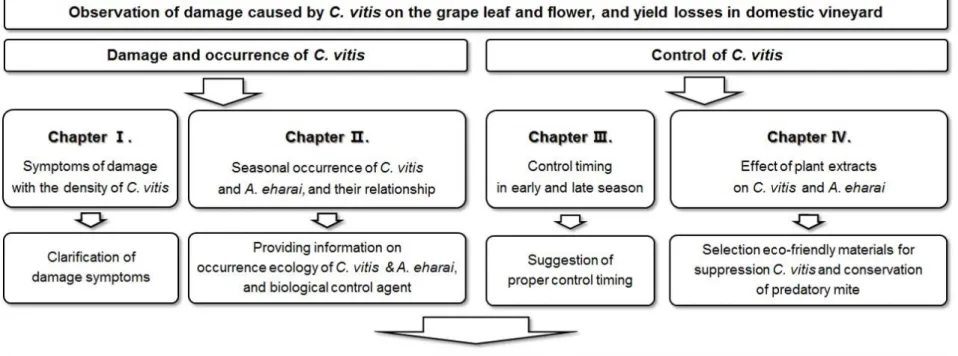
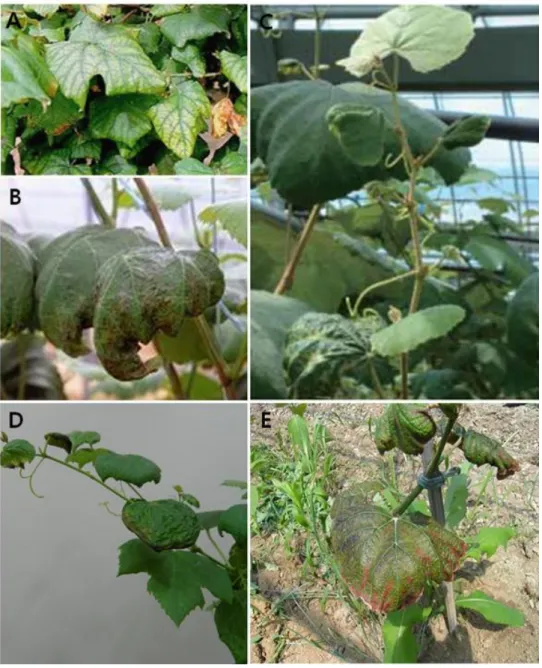
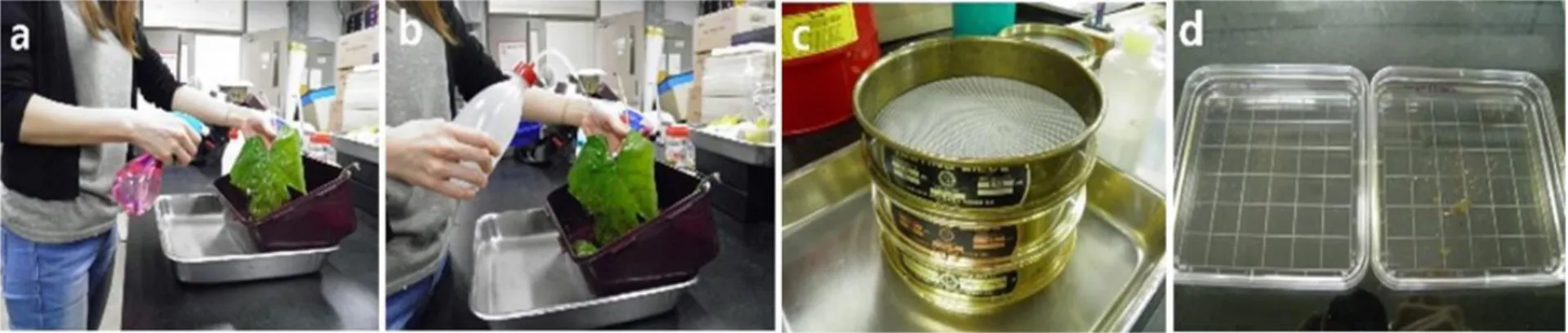
Fig. 1. Flow chart of the thesis. This thesis was consisted of two main parts: one of parts is ‘damage and occurrence’, and this part includes chapter Ⅰ and Ⅱ. The other part is ‘control’, includes chapter Ⅲ and Ⅳ………...……….7 Fig. 2. Observation of C. vitis on the grape leaf using scanning electron microscopy (SEM): Cryo-SEM (SU-3500, HITACHI), direct observation after rapid freezing of samples containing moisture (A-C); cooling-SEM (S-3500N, HITACHI), direct observation of moisture-containing samples (D)………...13 Fig. 3. Distribution of C. vitis in worldwide………..16 Fig. 4. Distribution by density of C. vitis per 30 buds from 106 vineyards surveyed in Hwaseong, in western Korea (N 37° 11' 58", E 126° 49' 53") (Kim et al., 2016)………17 Fig. 5. Symptoms similar to damage caused by C. vitis (A) deficiency of Mg (Grape Organization of Korea); (B) red blotch disease and downy mildew (Rural Development Administration of Gyeonggi-do); (C) excessive of B (Rural Development Administration); (D), (E) damage by C. vitis………..……….22 Fig. 6. Estimation of population density using modified washing & sieving method in this thesis (a, spraying detergent solution using sprayer to facilitate separation of mites from grape leaves; b, washing the mites from the leaves using tap water; c, filtering the leaf-washed water using three sieves of 1.00mm,180㎛, 38㎛; d,
IX
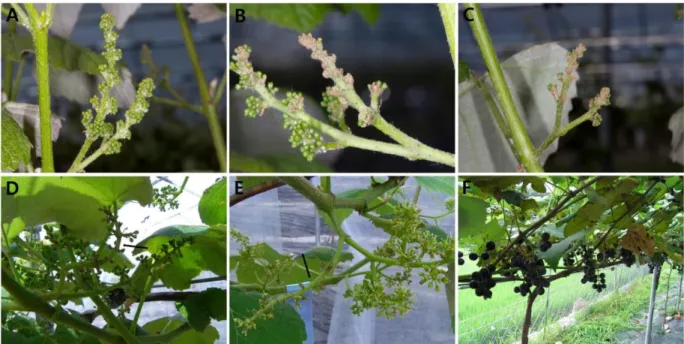
transferring the materials from the each sieve to square petri dish with grid and then identifying the species and density under a microscope)………..…25 Fig. 7. Damage symptoms caused by C. vitis feeding on flower buds during growth stages of grapevine. Infested flower clusters were classified into 3 groups based on the proportion of damaged flower
buds at inflorescence swelling stage (no visible damage (A);
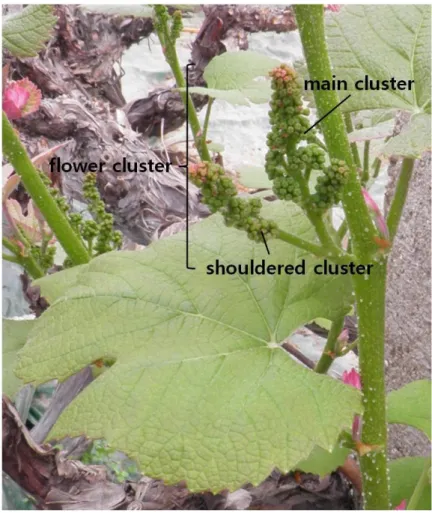
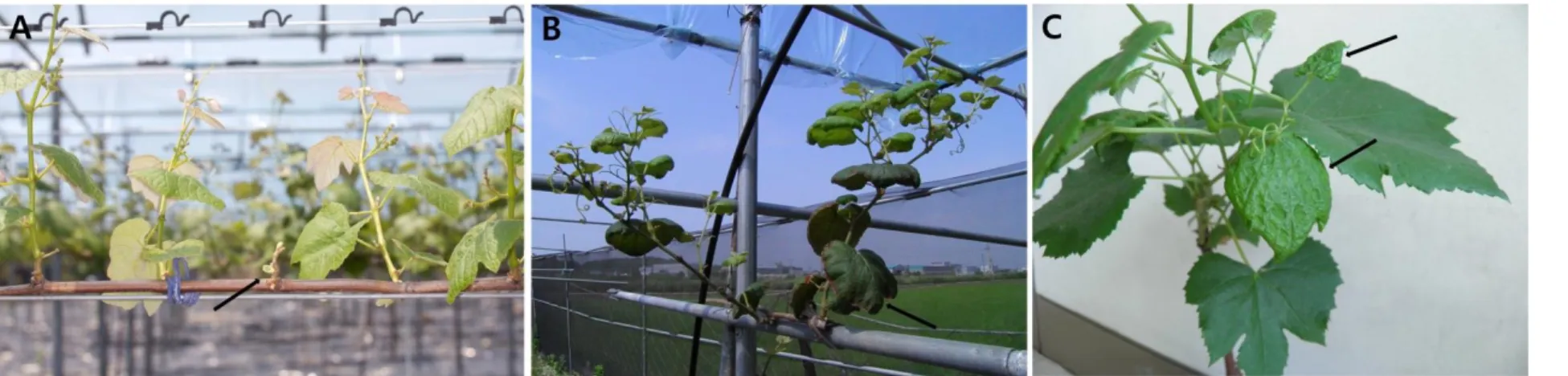
medium (B); high (C)); distorted flower cluster at inflorescences fully developed growth stage (D); significantly decreased number of berries of a bunch at growth stage 69-89, development of fruit and ripening of berries (E, F). The arrows indicate damage symptoms………...41 Fig. 8. Structure of the flower cluster of the grapevine………42 Fig. 9. (A) Stunted shoot; (B) bronzing or russeting of leaves; (C) Distorted or curled young leaves. Arrows indicated the damage symptoms……….44 Fig. 10. The number of C. vitis was counted from a flower cluster and
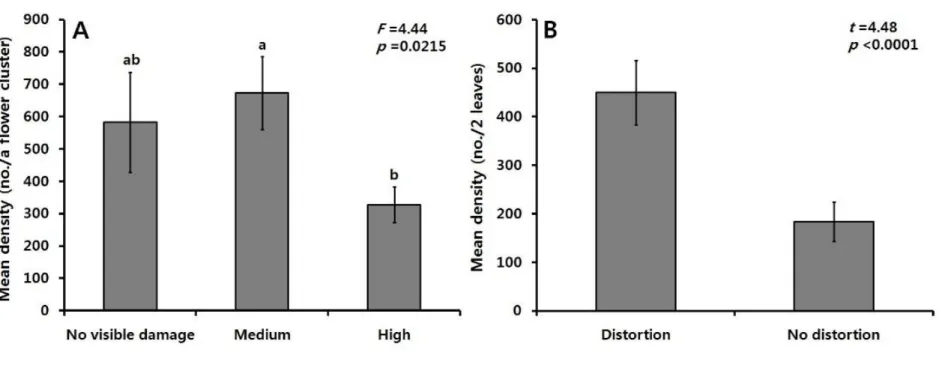
leaves. (A) Mean density (± SE) of the mite on a flower cluster according to the degree of damage. Statistical analysis was conducted based on log transformed data and the same letter above the bar indicates no statistical difference (Tukey test, p >
0.05), (B) Mean density (± SE) of the mite from distorted leaves
and leaves without distortion………...46 Fig. 11. Life cycle of C. vitis and damage symptoms caused by the grape rust mite on grape leaves, flower clusters and berries………50 Fig. 12. Seasonal occurrence of C. vitis in 2013 and 2014. Leaf
sampling was conducted every two weeks, the density of the grape rust mite was estimated by using modified washing & sieving method. The graph shows mean density per 5 leaves and standard error……….…..63 Fig. 13. Seasonal occurrence of A. eharai in 2013 and 2014. Leaf
sampling was conducted every two weeks, the density was estimated by using modified washing & sieving method. The graph shows mean density per 5 leaves and standard error…...65 Fig. 14. Buds sampling method to observe movement of C. vitis duetoynes from overwintering site in early season. (a) Dissecting bud on cane, dotted line indicates cutting part of a bud; (b) Dividing the bud into upper bud and basal bud using a blade; (c) Washing out and extracting grape rust mite individuals from each part of separated bud………..80 Fig. 15. Observed and estimated proportion for emergence of C. vitis
duetogynes on upper bud was plotted against accumulated degree-days above 10.51C (Duffner, 1999) starting January 1. A linear model was applied, and its parameter values are shown in Table 3. Pictures under the line indicate observed stages of grapevine development with accumulated degree-day and E-L number, woolly bud, green tip, rosette of leaf tips visible, and first leaf separated from shoot tip, respectively (Coombe, 1995)…….87 Fig. 16. Observed proportion of migrant C. vitis to the bud against the relative night length at vineyard 3 and vineyard 2 in 2013 and 2015, respectively. A two-parameter Weibull function was applied, and its parameter values are shown in Table 1. Square data points were excluded in the model fitting………...…90
XI
Fig. 17. Bioassay of C. vitis and A. eharai in laboratory (A) After the grape rust mite were placed on the treated disc, observation of acaricidal activity (B) Process of coating the vials with test solution using roll mixer for bioassay of A. ehari………..110 Fig. 18. Corrected mortality of control and 15 plant extracts against C.
vitis. Statistical analysis was conducted by using Kruskal-Wallis
test, there was difference of the mortality depending on treatments (p< 0.05).………..……….….115 Fig. 19. Corrected mortality of control and 15 plant extracts against A.
eharai. Statistical analysis was conducted by using Kruskal-Wallis
test, there was difference of the mortality depending on treatments (p= 0.002)……….……….…….116 Fig. 20. Mortality of control and 6 plant extracts against T. urticae.
Statistical analysis was conducted Kruskal-Wallis test, there was difference of the mortality depending on treatments (p< 0.05)....123
List of tables
Table 1. Species and density ± SE (/5 leaves) of predatory mites occurring in vineyard 1, vineyard 2 in 2013 and 2014, and vineyard 3 in 2014………...64 Table 2. Predation amount of A. eharai on C. vitis for 2 hours……….67 Table 3. Estimated values of parameters for the emergence model (x, degree day; a base temperature, 10.51C; a linear function) of C.
vitis deutogynes in early spring and movement model (x, a relative
length of night; two-parameter Weibull function) of C. vitis deutogynes in late season………...86 Table 4. AICc value (Corrected Akaike’s criterion) with variables…....89 Table 5. Number (mean ± SEM) of C. vitis deutogynes per a whole bud in vineyard 1 in 2015 and 2016. Density of C. vitis deutogynes was not statistically different among sampling dates in 2015 (F = 1.82; df = 8; p = 0.085) and 2016 (F = 0.83; df = 9; p = 0.590). The data was analyzed using PRPC GLM in SAS (SAS Institute, 2011)…..93 Table 6. List of plant species; 12 plants of extract showing effects on insects and mites by literature review, and 3 plants of commercial products consisted of a single plant extract component (shown in bold)……….……...106 Table 7. Mortality (%) ± SE of neem and canola oil against C. vitis in
the field plot. Statistical analysis was conducted by using Kruskal-Wallis test, and there was difference of mortality among treatments in second spraying (p= 0.0495)………..………….118 Table 8. Mortality (%) ± SE of neem and canola oil against A. eharai in the field plot. Statistical analysis was conducted by using
Kruskal-XIII
Wallis test, and there was no difference of mortality among
treatments in both 1st (p= 0.471) and 2nd spraying (p=
List of appendices
The grape rust mite, Calepitrimerus vitis (Nalepa) placed in the family Eriophyidae and is known as a grapevine pest distributed worldwide. The impact of C. vitis has been studied since 1960s in Europe (Duso and de Lillo, 1996), and the damage also reported in Australia, the USA, and Brazil (Bernard et al., 2005; James, 2006; Johann and Ferla, 2012). In Korea, C. vitis was known by observing putative damage caused by the grape rust mite at the vineyard located in Hwaseong in 2011 (Cho et al., 2013).
General damage symptoms were known as curled leaves, leaf bronzing, retarded shoot growth (Baillod and Guignard, 1986; Duso et al., 2010). Because the symptoms by C. vitis could be confused with physiological disorders such as frost damage, nutritional deficiency or chemical injury (Duso and de Lillo, 1996; Walton et al., 2007; Duso et al., 2010), a farmer could miss timely management of high density of the grape rust mite in vineyard. The damage symptoms of C. vitis was observed at the vineyard located in west of Hwaseong, Korea in 2014, however, the vine grower misidentified that the symptoms were caused by other factor rather than the grape rust mite and the damage subsequently led to yield losses. Although the typical symptoms by C. vitis are known in grapevine, quantitative information on the relationship between density of the grape rust mite
and damage symptoms in leaves and flower bud is insufficient in Korea. Moreover, symptoms of damage by C. vitis have not yet been studied in Korea. Hence, in ChapterⅠ, I reported the damage symptoms of leaf and flower bud observed in Korea with C. vitis density to efficient management of the grape rust mite in vineyard.
In Korea, research of distribution of C. vitis was investigated (Cho et al., 2013) and symptoms of damage was studied in chapterⅠ. However, study on the seasonal occurrence of C. vitis for efficient management in vineyard has not been conducted in Korea. In addition, although predatory mite was known as playing an important role in preventing outbreak of C. vitis as biological agent (Duso et al., 2010), the information on occurrence of predatory mites and their relationship with C. vitis in Korean vineyard is deficient for biological control. Hence, in chapter Ⅱ, the seasonal occurrence of C. vitis and phytoseiid mites in vineyard was surveyed, and the feeding ability of dominant species of predatory mite on the grape rust mite was observed to confirm the possibility of indigenous predatory species as biological control agent for C. vitis and would help the sustainable management of the grape rust mite in the vineyard.
The damage symptoms by the grape rust mite is the most serious in early spring, and leaf bronzing is observed in late summer. However, because eriophyoid mites including C. vitis are very small size (averaging 100 ㎛ - 500 ㎛) (Hoy, 2011), they are hardly recognized with naked eyes, and control timing is also difficult to determine clearly. Calendar-based control time for several eriophyoid mites has been proposed based on their seasonal occurrence pattern (James and Whitney, 1993; Ashihara et al., 2004). Forecasting models based on degree-day have also been developed to predict emergence and control timing of several eriophyoid mites (Bergh and Judd, 1993; Cross and Ridout, 2001; Webber et al., 2008). Degree-day of C. vitis has estimated to forecast movement from overwintering refuge in early spring and to overwintering refuge in late season (Walton et al., 2010), but there is lack of quantitative model based on substantive data in a field. Therefore, the objective of Chapter Ⅲ was to develop predict model for early spring emergence and late summer overwintering movement to proper control time for C. vitis.
The pests belonging to eriophyoid mites are effective against most commonly used acaricides (Childers et al., 1996; Leeuwen et al., 2010). However, synthetic chemical acaricides lead to negative
impact on other organism and environment as well as target species such as disruption of natural biological control and development of resistance (Hoy, 2011). For these reasons, eco-friendly control has been devised to replace synthetic chemical pesticides (Isman, 2006). Although, resistance of acaricide have been reported for C. vitis, there is no information on chemical pesticide substitutes for eco-friendly control. Hence, in Chapter Ⅳ, the efficacy of several plant extracts against C. vits and A. eharai was observed in order to suggest the possibility of substitution of chemical control and eco-friendly control for sustainable management in vineyard.
This thesis could contribute to the efficient and sustainable management of C. vitis and the establishment of integrated mites management in vineyard.
Fig. 1. Flow chart of the thesis. This thesis was consisted of two main parts: one of parts is ‘damage and occurrence’, and
Ⅰ. Morphological characteristic and distribution of C.
vitis
Morphological characteristic of C. vitis
C. vitis is placed in class Arachnida, order Prostigmata, family
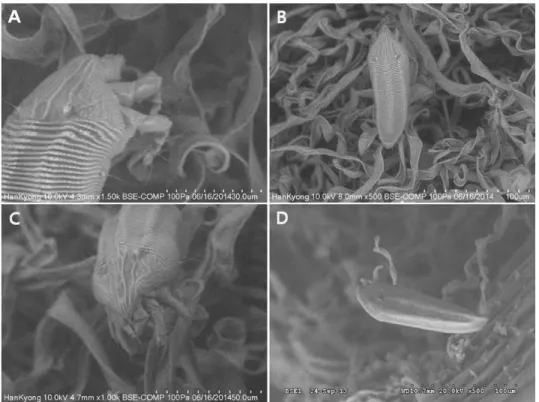
Eriophyidae. C. vitis is fusiform and wrinkled, and they hardly recognized with naked eyes due to the size of 150 – 190 ㎛. Females have two forms, protogyne and deutogyne. Protogyne is 170-190 ㎛ long and 50-52 ㎛ wide, and prodorsal shield is broadly triangular with median, admedian lines and granular lateral lines (Cho et al., 2013). The mouth consisted of a pair of small stylets (Fig. 2C). Because the stylet is small, the depth of the damage on epidermis of plants is about 5 μm, and the damaged leaves are bleached and dried (Hoy, 2011). Eriophyoid mites including C. vitis, have two pairs of legs on the front of the body, and they are distinguished from mites with
four pairs of legs (Fig. 2).Dorsal annuli with 67-71 ㎛ long is slightly
less than ventral annuli with 70-74 ㎛ and have ridges and furrows (Manson and Oldfield, 1996; Cho et al, 2013). The grape rust mite
moves slowly on the grapevine but can spread long distances using caudal and caudal seta of the opisthosoma (Lindquist, 1996). After attaching the side of tail to the leaf surface and upright standing using caudal, they move quickly upwards (Fig. 2D), and then disperse through wind, insect, and growers (Lindquist, 1996; Duffner et al., 2001; Michalska et al., 2010). Deutogyne of females is overwintering forms, and is 150-170 ㎛ long, 55 ㎛ wide and slightly smaller than protogyne (Cho et al., 2013). There is no dorsal ridges and furrows on opisthosoma of deutogyne (Manson and Oldfield, 1996). Male is 146-158 ㎛ long, 45-50 ㎛ wide and smaller than female (Cho et al., 2013).
Fig. 2. Observation of C. vitis on the grape leaf using scanning electron
microscopy (SEM): Cryo-SEM (SU-3500, HITACHI), direct observation after rapid freezing of samples containing moisture (A-C); cooling-SEM (S-3500N, HITACHI), direct observation of moisture-containing samples (D).
Distribution of C. vitis
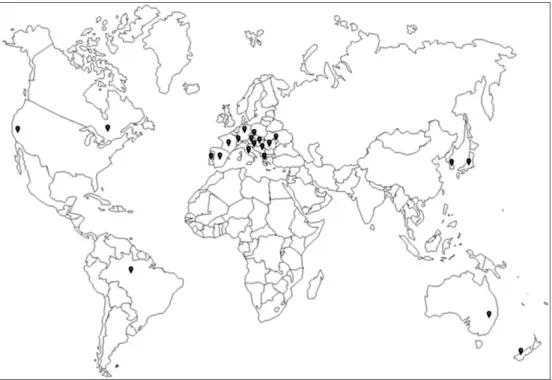
The grape rust mite is known as the pest distributed worldwide in vineyard (Fig. 3), and research of C. vitis has been studied during the last two decades (de Lillo et al., 2018). In Europe, the damage by
C. vitis was observed in Switzerland (Baillod and Guignard, 1986),
Portugal (Carmona, 1978), Hungary (Gabi and Méxzáros, 2003), Italy (Duso and Lillo, 1996), Rumania (Tomoioaga and Comsa, 2010), Spain (Pérez-Moreno and Moraza-Zorrilla, 1998), Germany (Duffner et al., 2001), and Czech (Hluchý and Pospíšil, 1992). The damage also occurred in Brazil (Johann and Ferla, 2012), Australia (James and Whitney, 1993; Bernard et al., 2005), United States (James, 2006; Walton et al., 2007). In addition to these affected areas, C. vitis was also found in Japan, Austria, France, Greece, Moldova, Slovenia, Yugoslavia, Canada, New Zealand (Cho et al, 2013) (Fig. 3).
The distribution of C. vitis in Korea was known by the observation of putative damage caused by the grape rust mite in Seosin-myeon, Hwaseong in 2013 (Cho et al., 2013), and in 2014, the damage occurred in the vineyard located in Sagot-ri, Hwaseong. C.
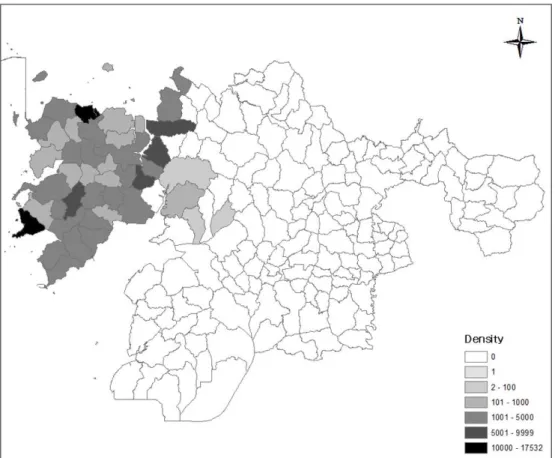
C. vitis was observed in all site among 106 vineyards surveyed in
Hwaseong, and the density was measured from at least 16 to a maximum of 22,708 individuals per 30 buds (Fig. 4) (Kim et al., 2016). The distribution of C. vitis has been confirmed, but there is a lack of studies on ecology and control for the grape rust mite in domestic vineyard.
Fig. 4. Distribution by density of C. vitis per 30 buds from 106
vineyards surveyed in Hwaseong in western Korea (N 37° 11' 58", E 126° 49' 53") (Kim et al., 2016).
Ⅱ. Life cycle and seasonal occurrence of C. vitis
Eirophyoid mites commences life as an egg and become adults after pass two stages of immature. There is a quiescent stage between
1st and 2nd instar nymph, and 2nd instar nymph and adult.
EGG → LARVA → NYMPH → ADULT
Eggs are 20 - 50 μm size and invisible to begin with because of colorlessness. Nymphs were like adults, but small size and have no external genitalia. Adults are consisted of female and male and have more female population than males. Female has two different forms, protogynes with the same shape as males and deutogynes as overwintering form. Deutogynes of rust mites have narrower tergites, plate-like structure, and do not have any ridges and furrows (Manson and Oldfield, 1996).
The protogynes of C. vitis begin to appear in mid-May, and roam on the leaves during the growing season of the grapevine (Pérez-Moreno and Moraza-Zorrilla, 1998). Walton et al. (2010) mentioned
that the grape rust mite can occur up to 14 generations based on the study of temperature-dependent development. Population begin to increase in June and rapidly increase in July and August. Deutogynes begins to appear in August and continues to move to the overwintering refuge such as buds, crevices until October (Gabi and Méxzáros, 2003). Surviving overwintering deutogynes emerge from the refuges in spring and eat young leaf and lay eggs. These eggs become protogynes female and male (Fig. 11). However, the seasonal occurrence of C. vitis in Korean vineyard has not been investigated, and more information on the ecology and occurrence is needed for management of the grape rust mite.
Ⅲ. Symptoms of damage caused by C. vitis and density
estimation
Symptoms of damage caused by C. vitis
Depending on the type of damage to the plants, the common names of eriophyoid mites such as blister mites, rust mites, bud mites, and gall mites are named, and the mites have host specificity (Hoy, 2011). The common name of C. vitis, the grape rust mite, reflects the damage symptoms of leaves like rusting and host specific to grapevine. Symptoms of damage caused by C. vitis have been observed in various country. Damaged leaves appear as wrinkling and tearing of the leaf edge in spring and rusting in late summer (Carmona, 1978; Baillod and Guignard, 1986; Duso et al., 2010). When high density occurs in the early spring due to high overwintering population, necrosis of buds (Duso and de Lillo, 1996) and short shoot by retarded growth are observed (Bernard et al., 2005; Walton et al, 2010). Damage of flower causes abnormal shape of flower cluster, decreasing of cluster size and drying and dropping of flower (Duso and de Lillo, 1996; Duso et al., 2010). Among these damages, retarded
relationship between the density of C. vitis and retarded growth was studied (Bernard et al., 2005; James, 2007), there is little information on association between the density and damage of flower cluster. Symptoms of damage by C. vitis partly confused other similar symptoms such as microelement deficiency, herbicide damage, virus, and other pests (Fig. 5) (Duso and de Lillo, 1996; Walton et al., 2007; Duso et al., 2010). This confusion prevents timely control and can continuous increase of C. vitis density and lead to yield loss. In 2014, the damage by the grape rust mite occurring in Korea was also misunderstood by grower as other symptoms and caused economic loss. In Korea, information on C. vitis is lacking except for distribution, and symptoms of damage and ecological studies of the grape rust mite are needed under domestic vineyard condition.
Fig. 5. Symptoms similar to damage caused by C. vitis (A) deficiency
of Mg (Grape Organization of Korea); (B) red blotch disease and downy mildew (Rural Development Administration of Gyeonggi-do); (C) excessive of B (Rural Development Administra-tion); (D), (E) damages
Density estimation of eriophyoid mites
According to the purposes of observation, researchers can choose
sample collection method of mite such as brush of various sizes, aspirator, a mite-brushing machine, leaf-washing, sweep net or beating sheets (Hoy, 2011).
The methods such as double-sided tape or adhesive trap, washing
have been used for sampling of eriophyoid mite. Adhesive trap is a method of attaching a trap directly to the vine and transferring the trap to a slide glass after a certain time, and measuring the mite density under a microscope in a laboratory to observe mite temporal and spatial distribution (Bergh, 1992; Davies et al., 2002; Bernard et al., 2005; Walton et al., 2007; Monfreda et al., 2010). Washing methods are used to separate individuals from plant with complex structures such as dense hairs and scaled bud, and various solutions and devices have been used in several studies (Monfreda et al, 2010). The common steps of washing methods are as follows: 1) Put the sample in solutions such as ethanol, detergence solution in water, and tap water etc.; 2) Process of shaking and wash; 3) Straining mites of different sizes through various sieves (20 μm to 850 μm); 4) Collection of mites from each sieve and measure the density under a microscope.
In this thesis, washing & sieving methods of Pérez-Moreno and Moraza-Zorrilla (1998) and de Lillo (2001) were mainly used (Fig. 6).
Fig. 6. Estimation of population density using modified washing & sieving method in this thesis (a, spraying detergent
solution using sprayer to facilitate separation of mites from grape leaves; b, washing the mites from the leaves using tap water; c, filtering the leaf-washed water using three sieves of 1.00mm,180 ㎛, 38 ㎛; d, transferring the materials from the each sieve to square petri dish with grid and then identifying the species and density under a microscope).
Ⅳ. Management of C. vitis in vineyard
Control timing of eriophyoid mites and C. vitis
Because gall, blister and bud mites are hiding in their shelter and difficult to manage, it is important to know when to emerge from the refuge (Leeuwen et al., 2010). Control of rust mites might be comparatively easy because they roam on the leaves during the growing season. However, once rust mites move to overwintering refuge, they are difficult to control, too. Hence, the period of emergence and moving to refuges should be predicted for control of eriophyoid mites.
Control has been routinely carried out to prevent damage by eriohyoid mites based on tree phenology (Bergh, 1992) or calendar date in most commercial vineyards (James and Whitney, 1993). However, E. pyri, pear rust mite, were controlled depend on fruit bud development, but the density was increased again in late spring and summer, and therefore information on other factors influencing the occurrence of E. pyri such as temperature and environment elements was required for control (Bergh, 1992).
Phenology of mites is significantly affected by temperature, and studies on prediction of the occurrence of eriophyoid mites were conducted on several species using base temperature and degree-day such as pear rust mite (Bergh and Judd, 1993), blackcurrant gall mite (Cross and Ridout, 2001), hazelnut big bud mite (Webber et al., 2008). Base temperature of C. vitis is known as 10.51 C (Duffner, 1996), a development model based on the base temperature was constructed (Walton et al., 2010). However, in order to predict the emergence of C.
vitis in early spring, occurrence data in field and a development of
quantitative model are required for timely control. In addition, population dynamics researches of C. vitis on the movement in spring and autumn were carried out (Pérez-Moreno and Moraza-Zorrilla, 1998; Gabi and Méxzáros, 2003), but survey about the environmental factors affecting movement to overwintering refuge of C. vitis is also needed.
Chemical control
Since 1945, eriophyoid mites have been recognized as a pest, and most of commonly used acaricides are known to have effect on these mites (Childers et al., 1996; Leeuwen et al., 2010). The effects of several acaricides on C. vitis such as sulfur (Bernard et al., 2005; Siqueria et al., 2016), bromopropylate, propargite, fenbutatinoxide, (Childerss, 1996), mancozeb (Iskander, 1993; Kalaisekar et al., 2000), spirodiclofen (Siqueira et al., 2016).
Synthetic chemical control is efficient and cost-effective but can develop resistance. The citrus mite, Phyllocoptruta oleivora (Ashmead), in Florida was resistant to dicofol (Omoto et al., 1994), the pink citrus rust mite, Aculus pelekassi (Keifer) and C. vitis were developed resistance to the dithiocarbamate fungicide mancozeb (Qu et al, 1997; Bernard et al, 2005). Resistance to eight species of eriophyoid mites including the citrus mite and the pink citrus rust mite was reported in Arthropod Pesticide Resistance Database (APRD, 2018). Moreover, chemical control could also have a negative impact on the predators of eriophyoid mites (Hoy, 2011), human and environment (Isman, 2006).
synthetic chemical insecticide because the materials have less effect on human and environment and resistance to insect (Feng and Isman, 1995; Isman, 2006). Pyrethrum, rotenone, nicotine, neem, and essential oil have been commercialized and used (Isman, 2006). The effects of essential oils and plant extracts on Aceria guerreronis Keifer, the coconut mite was observed in the laboratory and field (Patnaik et al., 2011; Bagde et al., 2014; Balagi and Hariprasad, 2015). The effect of canola oil on C. vitis was evaluated in field (Bernard et al., 2005). However, because of this result from a mixture of canola oil and sulfur, the influence of single substance of canola oil could not be observed. In addition, plant-derived acaricides bioassay of C. vitis have not been conducted in laboratory.
Biological control
Phyotseiid mites is important as biological control agent of C. vitis (Duso et al., 2010). Feeding activity of several predatory mites in Phytoseiidae to the grape rust mite was observed such as
Typhlodromus talbii (Camporese and Duso, 1995), Amblyseius
victoriensis (Jame and Whitney, 1993), Typhlodromus pyri,
Amblyseius aberrans, and Amblyseius andersoni (Duso and de Lillo,
1996). Moreover, T. pyri was higher growth rate when a prey was C.
vitis rather than Tetranychus urticae and Panonychus ulmi (Engel and
Ohnesorge, 1994).
Releasing of predator mites might be effective in reducing the density of C. vitis. When T. pyri (Duso and de Lillo, 1996) and
Kampimodromus aberrans (Duso and Vettorazzo, 1999) were
released in vineyard, the density of the grape rust mite decreased. However, released predatory mites could take a long time to settle, and not adapt to environment due to competition with native species (Duso and Vettorazzo, 1999; Duso et al., 2010).
Conservation of indigenous predator mites has focused on biological control of eriophyoid mites in the last decade (Leeuwen et
the ways to maintain a certain level of density without causing outbreak and damage of C. vitis (Duso et al., 2010). Therefore, biological and ecological surveys of indigenous phytoseiid mites in vineyard of southern Australia (James and Whitney, 1993) and evaluating the effect of acaricides predatory mites (Gadino et al., 2011) were conducted for conservation biological control.
Amblyseius neofirmus was observed under crevice of vine in Korea (Jeon and Kim, 2002). However, research on the occurrence and ecology of predatory mites and study of the relationship between phytoseiid mties and C. vitis are needed for the biological control in domestic vineyard.
ChapterⅠ.
Flower and leaf damage of grapevines
caused by the grape rust mite,
Abstract
The symptoms of damage on flower buds and leaves of grapevines caused by the grape rust mite, Calepitrimerus vitis (Nalepa) were examined in this study. The damaged flower buds displayed retarded growth, became dried up and some of the damaged flower clusters were curved. Not only symptom of damaged leaves such as malformed and bronzed leaves, but also retarded shoot growth were observed. Flower clusters (each flower cluster consisted of one main cluster and one side cluster) and leaves were collected to determine the relationship between degree of damage symptoms and density of the grape rust mite, which was measured by a modified washing and sieving method. The highest mean density (± SE) of C. vitis was found to be 672.6 ± 112.9 per flower cluster with the mid-level damage, while the lowest mean density was found to be 327.6 ± 55.5 per flower cluster with the high level damage. This was probably due to significant dispersal of grape rust mites from the highly damaged flower buds. Significantly higher numbers of C. vitis were found on the distorted leaves than on healthy ones.
Keywords: Calepitrimerus vitis, flower cluster damage, leaf bronzing,
1.1. Introduction
The grape rust mite, Calepitrimerus vitis (Nalepa) is known as a grapevine pest and is distributed worldwide including in Europe, the USA, Brazil, and Australia (Duso et al., 2010). Before leaves drop in the fall, female adult C. vitis moves to spurs, cracks and fissures of the grapevines for hibernation. In spring, as temperature increases C. vitis becomes active and move to buds, and then begins feeding, and reproduce. If density of C. vitis is high in spurs, symptoms of damage became evident at sprouting. Damage from C. vitis is presented with typical symptoms in the grapevine, including curled or malformed leaves, and late summer leaf bronzing. Shoot distortions and retarded shoot growth are also observed with high densities of overwintered C.
vitis in the early spring (Bernard et al., 2005). In addition, symptoms
such as delayed development (Flaherty, 1992), cluster deformation (Duso and de Lillo, 1996) and drying up of the flower buds (Hluchý and Pospíšil, 1992) are known as damage forms in flower buds.
A nationwide survey from 2011 to 2012 indicated that the occurrence of the grape rust mite was particularly high in Hwaseong, Korea. In 2011, putative damage symptoms by C. vitis, including
season in Hwaseong (Cho et al., 2013); however, leaf damage symptoms have not yet been reported in Korea. In a previous study (Cho et al., 2013) no visible color difference was found on the shoots or flower buds. In the present study, I report different levels of the symptoms of flower bud damage according to C. vitis density, as well as leaf damage symptoms which have not yet observed in Korea. This report may serve as a guide for grapevine growers to identify grapevine damage related to densities of C. vitis.
1.2. Materials and methods
1.2.1. Study site
This study was conducted in a rainshield vineyard (0.43-ha with about 400 vines, cv. Campbell Early, N 37° 09' 25.34", E 126° 43' 56.15") in Hwaseong, Korea. In May of 2014, symptoms of damage caused by C. vitis on flower buds and leaves were observed, and the infested flower clusters and leaves were sampled for estimation of the population density of C. vitis.
1.2.2. Estimation of the grape rust mite density and data analysis
The level of flower bud damage (retarded development, dried-up or shorter stalk) was classified into 3 groups based on the proportion of damaged flower buds in a flower cluster: ‘no visible damage’, no distinctively visible symptoms of damage (Fig. 7A); ‘medium’, damaged flower buds accounted for 40~50% of a flower cluster (Fig. 7B); and ‘high’ damaged flower buds accounted for more than 80~90 % of a flower cluster (Fig. 7C). Fifteen flower clusters per each level of damage were collected on May 16, 2014, and a flower cluster was composed of one main cluster and one side cluster (Fig. 8). The growth stage of the grapevines was at stage 55, inflorescence swelling and flowers closely pressed together (Lorenz et al., 1995). The typical symptoms of leaf damage caused by C. vitis were curling or distortion of the leaf shape (Fig. 7A). For estimation of density of C. vitis, two damaged leaves and two undamaged leaves were collected per vine from 15 vine stocks.
C. vitis were collected from the samples using a modified washing
and sieving method (Pérez-Moreno and Moraza-Zorrilla, 1998; Lillo, 2001), and counted using a Petri dish with grid under a microscope (40). Statistical analyses were conducted using SAS 9.4 (SAS
Institute, 2013, Cary NC, USA).
The grape rust mite data from the flower cluster samples were log transformed and analyzed using one-way ANOVA, and mean separation was conducted using a Tukey test. The grape rust mite data from the leaf samples were also log transformed and analyzed using
Fig. 7. Damage symptoms caused by C. vitis feeding on flower buds during growth stages of grapevine. Infested flower
clusters were classified into 3 groups based on the proportion of damaged flower buds at inflorescence swelling stage (no visible damage (A); medium (B); high (C)); distorted flower cluster at inflorescences fully developed growth stage (D); significantly decreased number of berries of a bunch at growth stage 69-89, development of fruit and ripening of berries (E, F). The arrows indicate damage symptoms.
1.3. Results
1.3.1. Damage symptoms
Infested flower buds displayed retarded development and enlargement of the flower buds at growth stage 55 (Fig. 7B, C). At stage 57, inflorescences fully developed and flowers separating, the previously damaged flower buds became dried-up, and some of the damaged flower clusters were curved (Fig. 7D). At the medium damage level, dried-up flower buds occurred only on the main cluster (Fig. 8B), while they occurred on both main and side clusters at the high level of damage (Fig. 7C). Eventually, the damaged flower buds did not blossom (Fig. 7D) and resulted in significantly less number of berries (Fig. 7E, F).
Retarded shoot growth was observed on only a few branches at growth stage 55 (Fig. 9A). Damaged young leaves became concave as the edge of leaves curls inward, and the damaged leaves often changed to brown in color, resulting in bronzed leaves as growth continued (Fig. 9B, C).
Fig. 9. (A) Stunted shoot; (B) bronzing or russeting of leaves; (C) Distorted or curled young leaves. Arrows indicated the
1.3.2. Population density by damage levels
Statistical differences in the density of C. vitis were found among the three different damage levels of flower cluster (F = 4.44; df = 2, 29;
p = 0.0.215). The mean density of C. vitis on the flower buds was
highest at the ‘medium’ damage level with 672.6 ± 112.9 per flower cluster, while the lowest density was observed at the ‘high’ damage level with 327.6 ± 55.5, and 583 ± 154.2 per flower cluster was obtained at the ‘no visible damage’ level. The density of the grape rust mite was significantly higher on the damaged leaves than on the undamaged leaves (t = 4.48; df = 1, 29; p < 0.0001) (Fig. 10B).
Fig. 10. The number of C. vitis was counted from a flower cluster and leaves. (A) Mean density (± SE) of the mite on a
flower cluster according to the degree of damage. Statistical analysis was conducted based on log transformed data and the same letter above the bar indicates no statistical difference (Tukey test, p > 0.05), (B) Mean density (± SE) of the mite
1.4. Discussion
This is a first study to examine the association of C. vitis densities with damages of vine flower clusters and leaves. The number of C.
vitis was found to be as high as 1,182 individuals per flower cluster
with higher C. vitis abundance on flower clusters than on leaves in the
early season (Fig. 10). In the present study, the abundance of grape rust mites on flower clusters at the ‘high’ damage level was found to be lower than those at both the ‘medium’ and ‘no visible damage’ levels. It is speculated that C. vitis probably moved from the severely damaged flower clusters to others due to the very poor host quality caused by drying-up. In the case of Tetranychus uricae, under conditions of high density and plant damage, its dispersal initiates (Suski and Naegele, 1966), and the mites begin to abandon the host when all the apical foliage becomes damaged (Hussey and Parr, 1963). Interestingly, the ‘no visible damage’ flower cluster had the grape rust
mite population of 583 ± 154.2 (mean ± SE) even though no visible
damage was detected at all by appearance. If the flower clusters at ‘no visible damage’ level blossom normally, the damage, if any, would not be progressed further, because C. vitis population would leave the flower cluster due to food shortage caused by falling of the
flowerhoods during flowering (growth stage 60-69). However, before flowering, some of the ‘no visible damage’ buds might become
damaged if density of C. vitis increases further.
The symptoms of damaged leaves observed herein, such as malformed and bronzed leaves, were the same as known symptoms
in other countries. Although density of C. vitis was not estimated on
the shoot at the early spring in this study, a few stunted shoot growth observed might be caused by C. vitis. Bernard et al. (2005) reported restricted spring growth syndrome to be associated with high density of C. vitis (> 1,000 overwintered the grape rust mite per spur). Further
study may need to clarify the relationship between stunted shoot growth and the grape rust mite density. Also, leaf bronzing or russeting with sometimes distorted or curled malformation can be caused not only by C. vitis but also by nutritional unbalance or environmental stress, and these damage symptoms may not be easily identified for the cause, which might hinder vine growers to adopt proper management options. Further research may need to clarify these damage symptoms.
Although the symptoms may be minor, bronzing or russeting of leaves indicates in fact presence of a significant grape rust mite
controlled at this time, those immense summer grape rust mites would migrate to the shelter and cause serious damage to buds and shoots in the following spring (James, 2006). Serious damage symptoms at the early growth stage such as high ratios of dried up flower buds or retarded shoot growth could subsequently lead to decreased yield and economic losses (Hluchý and Pospíšil, 1992). Hence, management practices to reduce overwintering grape rust mite populations would be very important. Once the initial symptoms of damage such as distorted leaves or bronzing of the leaves are observed, acaricides should be sprayed before grape rust mites move to the overwintering site, and at the early growth stage of the vine in following year. This would allow decrease of the grape rust mite population density in early spring, and the progression of severe damage could be prevented. Finally, the illustration of life cycle of C. vitis and damage symptoms on grape leaves, flowers and berries was inserted to help understand overall damage caused by the grape rust mite (Fig. 11).
Fig. 11. Life cycle of C. vitis and damage symptoms caused by the
Chapter Ⅱ.
Seasonal occurrence of the grape rust mites,
Calepitrimerus vitis (Acari: Eriophydae) and
predatory mites in vineyard, and the potential
for biological control
Abstract
The grape rust mite, Calepitrimerus vitis (Nalepa), is a grapevine pest worldwide. The damage caused by C. vitis was also observed in Korea, but information on the occurrence of the grape rust mite and their predatory mite for management of C. vitis is insufficient in domestic vineyard. Hence, in chapter Ⅱ, the seasonal occurrence of the C. vitis and predatory mites in vineyards was investigated in 2013 and 2014. After leaf sampling, species identification and estimation of density were conducted by using modified washing and sieving method. A feeding ability of dominant predatory mite for C. vitis was also observed in laboratory. As the results, the occurrence of C. vitis was somewhat different between 2013 and 2014, but overall density of the grape rust mite tended to be low in early spring and increased in summer. A. eharai was dominant species in both 2013 and 2014, and as the density of C. vitis increased, the number of A. eharai also increased in 2014. In observation of feeding ability, predation amount of A. eharai for C. vitis was average 150.57 (± 7.37) individuals per day. Therefore, the potential of A. eharai as biological control agent for
to construct sustainable and efficient management of C. vitis in vineyard.
Keyword: Occurrence, Calepitrimerus vitis, Amblyseius eharai, feeding ability, vineyard
2.1. Introduction
The grape rust mite, Calepitrimerus vitis (Nalepa), is a grapevine pest worldwide (Duso et al., 2010), and studies on C. vitis in vineyards have been conducted until recently (de Lillo, 2018). The symptoms of damage caused by C. vitis were observed in Korea, and researches of distribution and damage of the grape rust mite was investigated (Cho et al., 2013; Lee et al., 2015). However, study on the seasonal occurrence of C. vitis for efficient management in vineyard has not been conducted in Korea.
Phytoseiid mites prevent outbreak of C. vitis and paly role as biological control agent (Duso et al., 2010). Therefore, biological and ecological survey of indigenous mites was carried out in Australia (James and Whitney, 1993). Moreover, feeding ability of several phytoseiid mites such as Typhlodromus talbii (Camporese and Duso, 1995), Amblyseius victoriensis (James and and Withney, 1993),
Typhlodromus pyri, Amblyseius aberrans, Amblyseius andersoni
(Duso and de Lillo, 1996) on C. vitis was observed. In Korea, the occurrence of Stigmaeidae sp. and Amblyseius neofirmus were observed in vineyard in 2000 and 2001 (Jeon and Kim, 2002). However, the seasonal occurrence of predatory mites and their
relationship with C. vitis has not been studied, and in ecological information of phytoseiid mites in vineyard is deficient.
Hence, in chapter Ⅱ, the seasonal occurrence of C. vitis and A.
eharai in vineyard was surveyed, and the feeding ability of dominant
species of predatory mite on the grape rust mite was observed in laboratory. Therefore, the study suggested the possibility of indigenous predatory species, A. eharai, as biological control agent for C. vitis and would help the sustainable and efficient management of the grape rust mite in the vineyard.
2.2. Method and Materials
2.2.1. Occurrence of C. vitis and predatory mites in vineyard, Korea
Monitoring for C. vitis and predatory mites was conducted in vineyard 1 (green house without hot air heating system, cv. Campbell Early, N 37° 10’ 30.6”, E 126° 41’ 55.8”) and vineyard 2 (rain-shield vineyard, cv. Campbell Early, N 37° 10’ 28.7”, E 126° 41’ 28.8”) in 2013, and was surveyed in vineyard 1, vineyard 2, and vineyard 3 (rain-shield vineyard, cv. Campbell Early, N 37 ° 09' 25.34 ", E 126 ° 43' 56.15") in 2014 in Hwaseong, Korea. Leaf samples were collected at two weeks intervals from late April and early October, and there were some different in the total number of collecting times due to difference in cultivation method among vineyards. Each vineyard was divided into 5 blocks, and 5 leaves located under the flower cluster were sampled from 3 nonadjacent blocks.
The samples were placed in paper and plastic bags, then carried in ice boxed to the laboratory to prevent escape of mites from the leaves. C. vitis and phytoseiid mites were collected using modified washing and sieving method (Pérez-Moreno and Moraza-Zorrilla,
1998; Lillo, 2001). The materials washed from the leaf samples were filtered through 1.00mm, 180㎛, 38㎛ sieve, and then the number of
C. vitis and the species and density of predatory mites were observed
from the each 38㎛ and 180 ㎛ sieve using a Petri dish with grid under a microscope.
In the same year, the seasonal data surveyed every two weeks in the same vineyard were considered as repeated measurement data, and therefore the data were analyzed by using general estimating equation (GEE) to confirm the difference among years and vineyards. In addition, correlation analysis was conducted by using Spearman test to find out relationship between occurrence of C. vitis and dominant predatory mite, and SPSS statistics was used as a statistical program.
2.2.2. Feeding ability of A. eharai on C. vitis
Feeding ability was estimated by using modified method of Bostanian et al. (2009). After 1% plant agar was poured into a plastic petri dishes (50 mm in diameter) and a grape leaf disc (33 mm in diameter) was placed on them, and then a round plastic frame (33 mm in diameter by 5 mm in thickness) was located along the disc. The upper part of the plastic frame was coated with tanglefoot using a brush to prevent escape of A. eharai from the leaf. 200 C. vitis were inoculated on the grape leaf disc using by attached an eyelash on tip of wooden chopstick and under two microscopes ( 30), and then placed one A. eharai per disc. After 24 hours, the number of external skeletons of C. vitis by predation and living individuals were counted.
2.2.3. Test insects for estimation of feeding ability
The grape rust mites were collected in vineyard 3. The individuals on grape leaves were inoculated directly onto the leaf disc from grape leaves with high density of C. vitis.
A. eharai were sampled in vineyard 1 in August 2014. The grape
leaves were collected and transported to the laboratory, and then the female individuals were amassed on the tray placed with kidney bean leaves inoculated with Tetrnychus urticae by brushing A. eharai off grape leaves. After 24 hours without feeding, the individuals were used for estimation of feeding ability of A. eharai on C. vitis.
2.3. Results
2.3.1. Occurrence of C. vitis and predatory mites in vineyard
The seasonal occurrence pattern of C. vitis showed difference between years in both vineyard 1 and vineyard 2 (vineyard 1: n= 6,
p=0.011; vineyard 2: n= 6, p= 0.041), especially in vineyard 1, the
density was higher in 2014 than in 2013 (Fig. 12). In 2013, there was a difference in seasonal occurrence tendency between vineyard 1 and 2 (n= 6, p= 0.019), and in 2014, there was no difference in pattern of occurrence among vineyards (n= 9, p= 0.063). However, the measured density of C. vitis in vineyard 3 was higher than other vineyards at overall season in 2014, and especially the number of the grape rust mite in vineyard 3 was up to 11,432 individuals per 5 leaves, and it was much higher than 8,612 individuals in vineyard 1 and 4,650 individuals in vineyard 2 (Fig. 12).
Three species were observed such as A. eharai, Amblyseius
womersleyi, and Phytoseiid sp.. A. eharai was dominant species in all
vineyards (Table 1), and especially in vineyard 2, occurred up to 98 individuals per 5 leaves in 2014. The seasonal occurrence tendency of A. eharai showed difference between years in both vineyard 1 and
vineyard 2 (vineyard 1: n= 6, p= 0.005; vineyard 2: n= 6, p< 0.05). In 2013, there was no difference in seasonal occurrence pattern between vineyard 1 and vineyard 2 (n= 6, p= 0.812). In 2014, there was a difference in tendency of occurrence among vineyards (n= 9, p< 0.05) (Fig. 13).
The relationship between density of C. vitis and A. eharai according to the vineyards and years was not related in both vineyard 1 and vineyard 2 in 2013 (vineyard 1: rho= 0.074, n=33, p= 0.684; vineyard 2: rho= 0.255, n= 33, p= 0.254). However, in 2014, the density of A.
eharai tended to increase as the density of C. vitis increased in all
vineyards (vineyard 1: rho= 0.895, n= 39, p< 0.05; vineyard 2: rho= 0.713, n=18, p< 0.05; vineyard 3: rho= 0.761, n=18, p< 0.05). Based on the results, feeding ability of the dominant predatory mite on C. vitis in chapterⅡ and effects of 15 plant extracts on A. eharai in chapterⅢ were observed.
Fig. 12. Seasonal occurrence of C. vitis in 2013 and 2014. Leaf sampling was conducted every two weeks, and the density
of the grape rust mite was estimated by using modified washing & sieving method. The graph showed mean density per 5 leaves and standard error.
Table 1. Species and mean density ± SE (/5 leaves) of predatory mites occurring in vineyard 1, vineyard 2 in 2013 and
2014, and vineyard 3 in 2014.
Species
2013 2014
Vineyard 1 Vineyard 2 Vineyard 1 Vineyard 2 Vineyard 3
A. eharai 2.09 (± 0.48) 3.64 (± 1.32) 18.49 (± 3.63) 10.83 (± 2.03) 14.00 (± 4.77)
A. womersleyi 0.12 (± 0.07) 0.24 (± 0.16) 2.49 (± 0.59) 0.72 (± 0.19) 4.00 (± 1.31)
Fig. 13. Seasonal occurrence of A. eharai in 2013 and 2014. Leaf sampling was conducted every two weeks, the density
was estimated by using modified washing & sieving method. The graph showed mean density per 5 leaves and standard error.
2.3.2. Feeding ability of A. eharai on C. vitis
Predation of A. eharai against C. vitis was observed. After the predatory mite sucked the grape rust mite, wrinkled exoskeletons of C.
vitis remained, which was clearly differentiated from died individuals
by other factor such as humidity or leaving the leaf disc. Therefore, for the 200 grape rust mites placed on the disc, the predation amount was measured using the number of wrinkled exoskeletons after 24 hours. For a day, A. eharai consumed average 150.57 (± 7.37) C. vitis, and the maximum amount of predation was 180 individuals (Table 6).
Table 2. Predation amount of A. eharai on C. vitis for 24 hours.
Rep. No. of C. vitis placed on the disc
Predation amount
for 24 hr. Alive Dead
Wandering away
from the disc Unconfirmed
1 200 142 14 17 25 2 2 200 124 35 22 12 7 3 200 180 3 11 2 4 4 200 141 24 19 16 - 5 200 165 2 18 18 - 6 200 138 7 6 10 37 7 200 164 9 10 5 12
2.4. Discussion
In 2013, the density of vineyard 1 was lower over all season than in 2014 (Fig. 12). The vineyard 1 was damaged by C. vitis and had yield loss in 2011, and therefore control was carried out by spraying acaricides more than 6 times in 2011 and 2012. This intensive control seems to have influenced the reduction of the C. vitis density in 2013. On the other hand, in 2013 and 2014, spraying of acaricide was carried out one or two times in early season, and the relatively low intensity control over two years might have affected increasing of the density in 2014. In 2013, the density of C. vitis increased from mid-July in vineyard 2 (Fig. 12). Although the decreasing of the density was not observed, if the period of sampling is extended, the number of C. vitis would be expected to decrease in late season.
The seasonal occurrence of C. vitis in 2014 showed a tendency to increase sharply in summer and decrease in fall (Fig. 12), and the result was similar with population dynamics of the grape rust mite researched in Spain (Pérez-Moreno and Moraza-Zorrilla, 1998). The tendency to occur was similar in all vineyards, but the measured density in vineyard 3 was significantly higher than vineyard 1 and 2.
individuals in vineyard 3 and was about 170 times higher than vineyard 1 and 2. (vineyard 1: 16.7 individuals/ 5 leaves, vineyard 2: 33.3 individuals / 5 leaves) (Fig. 12). High density of C. vitis in spring has resulted in continuous high density throughout the year and yield loss in vineyard 3, and this phenomenon suggests the importance of control in the early season.
A. eharai was dominant species in Korean vineyard (Table 1),
and the predatory mite predation of C. vitis was observed in laboratory (Table 2). Eriophyoid mites are known to act as a food source for predatory mites (Hoy, 2011), and the grape rust mite is also thought to be a prey source of A. eharai in Korean vineyards. In addition, the density of A. eharai was increased as the number of C.
vitis became higher in this study. The developmental rate of
Typhlodromus pyri was higher when the grape rust mite was a food
source than when Tetranychus urticae or Panonychus ulmi were fed (Engle and Ohnesorge, 1994). Moreover, when Eotetranychus carpini,
P. culmi, Colomerus vitis were fed to T. pyri and Amblyseius andersoni,
the oviposition rate on Col. vitis was somewhat higher for both two predatory mites than other two spider mites (Duso and Camporese,
1991). Therefore, it is expected that the increase of C. vitis density
chapterⅡ, but further study on the prey preference and growth or oviposition rate depending on the type of food source for A. eharai should be done.
In this study, the possibility of a biological control agent of A.
eharai for C. vitis was confirmed in domestic vineyard, and information
on the occurrence of the grape rust mite and predatory mites would be helpful in the management of C. vitis in vineyard based on conservation biological control.