저작자표시-비영리-변경금지 2.0 대한민국 이용자는 아래의 조건을 따르는 경우에 한하여 자유롭게 l 이 저작물을 복제, 배포, 전송, 전시, 공연 및 방송할 수 있습니다. 다음과 같은 조건을 따라야 합니다: l 귀하는, 이 저작물의 재이용이나 배포의 경우, 이 저작물에 적용된 이용허락조건 을 명확하게 나타내어야 합니다. l 저작권자로부터 별도의 허가를 받으면 이러한 조건들은 적용되지 않습니다. 저작권법에 따른 이용자의 권리는 위의 내용에 의하여 영향을 받지 않습니다. 이것은 이용허락규약(Legal Code)을 이해하기 쉽게 요약한 것입니다. Disclaimer 저작자표시. 귀하는 원저작자를 표시하여야 합니다. 비영리. 귀하는 이 저작물을 영리 목적으로 이용할 수 없습니다. 변경금지. 귀하는 이 저작물을 개작, 변형 또는 가공할 수 없습니다.
A THESIS
FOR THE DEGREE OF MASTER OF SCIENCE
Systematic Study of Subfamily Nitidulinae and
Prometopinae (Coleoptera: Cucujoidea:
Nitidulidae) in Korea and Phylogeny of Nitidulidae
한국산 밑빠진벌레아과, 큰턱밑빠진벌레아과의
분류학적 연구 및 밑빠진벌레과의 계통학적 분석
By
Min Hyeuk Lee
Program in Entomology
Department of Agricultural Biotechnology Seoul National University
i
Abstract
Systematic Study of Subfamily Nitidulinae and Prometopinae (Coleoptera: Cucujoidea: Nitidulidae) in Korea and Phylogeny of Nitidulidae
Min Hyeuk Lee Program in Entomology Department of Agricultural Biotechnology Seoul National University [email protected]
This thesis consists of two main themes: i) taxonomic review of the Korean Nitidulinae and Prometopinae; ii) molecular phylogeny of Nitidulidae.
In the first chapter, the subfamily Nitidulinae was reviewed as 38 species of 19 genera from Korea, including two new species, Cyllodes sp. nov., Pallodes sp. nov. and 9 unrecorded species, Nitidula rufipes (Linnaeus), Soronia lewisi Reitter, Ipidia
sibirica (Reitter) Stelidota multiguttata Reitter, Atarphia fasciculata Reitter, Hebasculinus japonus (Reitter) Xenostrongylus variegatus (Fairmaire), Neopallodes vicinus Grouvelle and Pocadites rufobasalis Reitter. Subfamily Prometopinae
Böving and Craighead, 1931 is recorded from Korea for the first time with 2 species from different genera, Prometopia unidentata Hisamatsu, Parametopia x-rubrum Reitter. Descriptions for all species, illustrations of habitus and genitalia, key to
ii
tribes, genera and species from Korea are provided.
In the second part, phylogenetic study of family Nitidulidae is conducted based on the molecular data. Family Nitidulidae is the second largest family in Cucujoidea which includes ten subfamilies. Because of their morphological and biological diversity, the phylogenetic relationship within Nitidulidae is one of the most debated topics among Cucujoidea phylogeny and yet, is still open to many questions. To recover the internal relationship of Nitidulidae, we performed ML and BI analyses that targeted on five gene regions (COI, 28s, CAD, H3, Wingless) for 77 taxa. Our research also included the 7 outgroups and 67 ingroups which contain the nine out of ten currently recognized subfamilies of Nitidulidae. The results of our phylogenetic analysis suggest the three following conclusions i) Subfamilial status of Prometopinae is reconfirmed; ii) Epuraeinae is paraphyletic with inclusion of Calonecrinae; iii) Nitidulinae is paraphyletic with inclusion of Meligethinae and Cillaeinae. In addition, the generic relationships within Nitidulidae and the evolutionary history of their feeding behaviors are also briefly discussed.
Keyword : Nitidulidae, Nitidulinae, Prometopinae, taxonomy, molecular phylogeny Student Number : 2016-29614
iii
Contents
PART I. Systematic Study of Subamily Nitidulinae and Prometopinae (Coleoptera: Cucujoidea: Nitidulidae) in Korea
Abstract ... 1
1. Introduction ... 2
1.1. General introduction of the Family Nitidulidae ... 2
1.2. Historical review ... 7
1.2.1. Taxonomic transition of the Subamily Nitidulinae ... 7
1.2.2. Taxonomic transition of the Subamily Prometopinae ... 8
1.2.3. History of Korean Nitidulinae ... 9
2. Materials and methods ... 12
2.1. Material examined ... 12
2.2. Terminology ... 14
2.3. Abbreviations of localities in the Korean Peninsula ... 16
3. Results Family Nitidulidae ... 17 Subfamily Nitidulinae ... 18 Tribe Nitidulini ... 18 Genus Nitidula ... 20 Genus Omosita ... 22 Genus Soronia ... 31
iv Genus Stelidota ... 39 Genus Ipidia ... 41 Genus Phenolia ... 47 Genus Ussuriphia ... 52 Genus Aethina ... 54 Genus Atarphia ... 67 Genus Hebasculinus ... 71 Genus Physoronia ... 74 Genus Pocadites ... 76 Genus Pocadius ... 81 Tribe Cychramini ... 84 Genus Cychramus ... 84 Genus Xenostrongylus ... 86 Tribe Cyllodini ... 89 Genus Cyllodes ... 89 Genus Pallodes ... 102 Genus Coxollodes ... 106 Genus Neopallodes ... 109 Subfamily Prometopinae ... 114 Genus Parametopia ... 115 Genus Prometopia ... 118 4. Discussion ... 121
v
PART II. Molecular phylogeny of family Nitidulidae (Coleoptera: Cucujoidea)
Abstract ... 124
1. Introduction ... 125
2. Materials and Methods ... 130
2.1. Taxon sampling ... 130
2.2. Laboratory work ... 130
2.2.1. DNA extractions ... 130
2.2.2. PCR amplification and sequencing ... 131
2.2.3. Sequencing alignments ... 132
2.3. Phylogenetic analyses ... 133
2.4. Evolution of food preferences ... 133
3. Results ... 138
3.1. Phylogenetic analyses ... 138
3.2. Evolution of food preference ... 139
4. Discussion ... 143
4.1. Cryptarchinae ... 143
4.2. Prometopinae ... 144
4.3. Carpophilinae+Amphicrossinae+Epuraeinae+Calonecrinae ... 145
4.4. Nitidulinae+Meligethinae+Cillaeinae ... 146
4.5. Evolution of food preference ... 147
Literature cited ... 148
vi
List of Tables
Table 1. History of records of Korean Nitidulinae ... 11
Table 2. Checklist of the Subfamily Nitidulinae from Korea ... 122
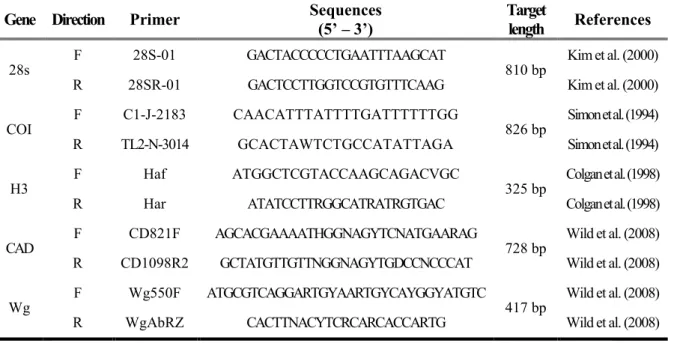
Table 3. Primers used in this study ... 132
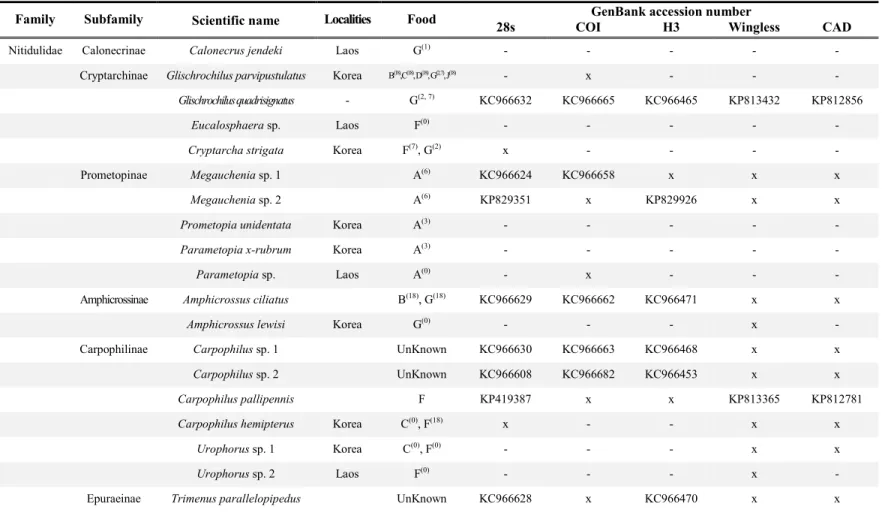
Table 4. Checklist of the Subfamily Nitidulinae from Korea ... 134
List of Figures Fig. 1. The dorsal and ventral habitus of Phenolia picta (MacLeay) ... 14
Fig. 2. Ventral habitus of antenna. ... 14
Fig. 3. Male genitalia ... 15
Fig. 4. Female ovipositor ... 15
Fig. 5. A map for abbreviations of localities in the Korean peninsula ... 16
Fig. 6. Phylogenetic studies of the Family Nitidulidae ... 129
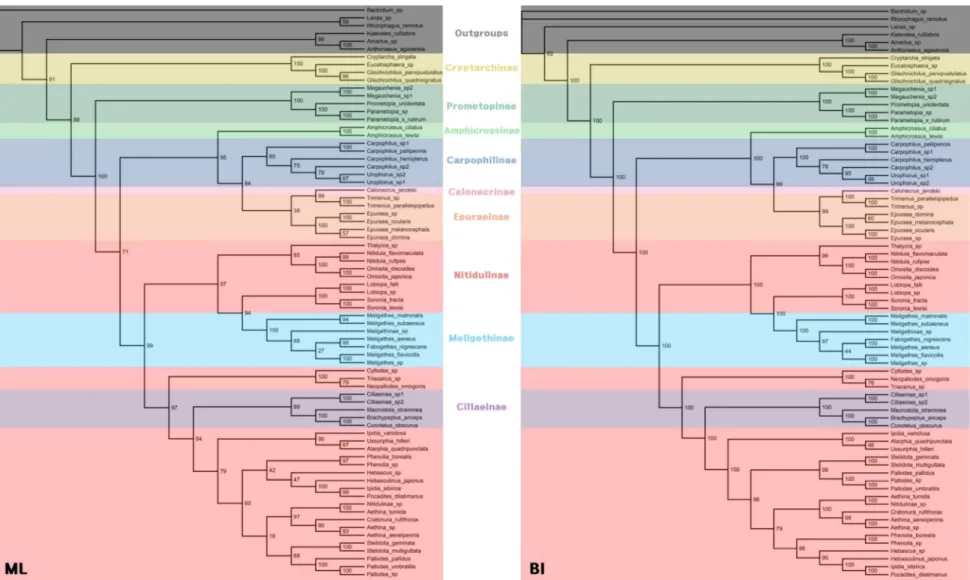
Fig. 7. Phylogenetic trees (ML, BI) indicating in subfamily level based on current classification ... 140
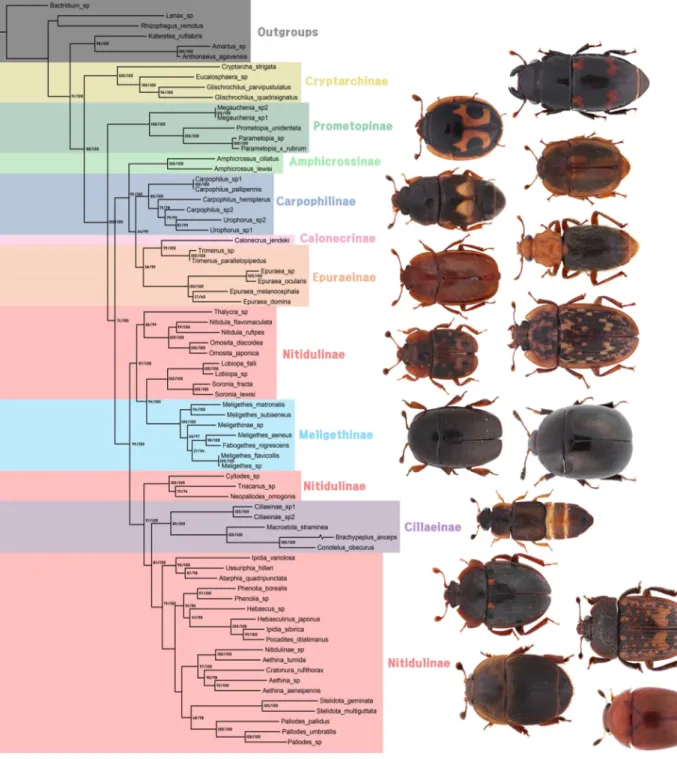
Fig. 8. Phylogenetic trees (ML/BI) of Nitidulidae ... 141
Fig. 9. Phylogenetic tree with ancestral character states of food preference ... 142
PLATES ... 162
Plate 1 (Nitidulini 1) ... 167
Plate 2 (Nitidulini 2) ... 168
Plate 3 (Nitidulini 3) ... 169
vii Plate 5 (Nitidulini 5) ... 171 Plate 6 (Nitidulini 6) ... 172 Plate 7 (Nitidulini 7) ... 173 Plate 8 (Nitidulini 8) ... 174 Plate 9 (Nitidulini 9) ... 175 Plate 10 (Nitidulini 10) ... 176 Plate 11 (Cychramini) ... 177 Plate 12 (Cyllodini 1) ... 178 Plate 13 (Cyllodini 2) ... 179 Plate 14 (Cyllodini 3) ... 180 Plate 15 (Prometopinae) ... 181
Plate 16 (Prosternal process 1) ... 182
Plate 17 (Prosternal process 2) ... 183
Plate 18 (Male Genitalia: median lobe) ... 184
Plate 19 (Male Genitalia: tegman) ... 185
Plate 20 (Female ovipositor) ... 186
Plate 21 (Habitats of new record species) ... 187
Plate 22 (Phylogenetic tree from the Bayesian Inference) ... 188
- 1 -
PART I. Systematic Study of Subamily Nitidulinae and Prometopinae (Coleoptera: Cucujoidea: Nitidulidae) in Korea
Abstract
The subfamily Nitidulinae was reviewed as 38 species of 19 genera from Korea, including two new species, Cyllodes sp. nov., Pallodes sp. nov. and 9 unrecorded species, Nitidula rufipes (Linnaeus), Soronia lewisi Reitter, Ipidia sibirica (Reitter)
Stelidota multiguttata Reitter, Atarphia fasciculata Reitter, Hebasculinus japonus
(Reitter) Xenostrongylus variegatus (Fairmaire), Neopallodes vicinus Grouvelle and
Pocadites rufobasalis Reitter.
Subfamily Prometopinae Böving and Craighead, 1931 is recorded from Korea for the first time with 2 species from different genera, Prometopia unidentata Hisamatsu, Parametopia x-rubrum Reitter.
Descriptions for all species, illustrations of habitus and genitalia, key to tribes, genera and species from Korea are provided.
- 2 -
1. Introduction
1.1. General introduction of the Family Nitidulidae
The family Nitidulidae (Coleoptera: Cucujoidea) is the second largest family in Cucujoidea, comprising approximately 342 genera and nearly 4000 recorded species (Jeli'nek, et al., 2010; Cline et al., 2014) within ten recognized subfamilies (Calonecrinae, Cryptarchinae, Prometopinae, Amphicrossinae, Carpophilinae, Epuraeinae, Maynipeplinae, Meligethinae, Cillaeinae and Nitidulinae) (Kirejtshuk, 2008; Cline et al., 2014). Because of their morphological and biological diversity, the phylogenetic relationship within Nitidulidae is one of the most debated topics among Cucujoidea phylogeny. The family is currently placed in arguably monophyletic series nitidulid series or the Cucujoidea, along with Kateretidae and Smicripidae.
Characterization of the family is challenging due to extreme variation in body forms. For example, until recently, several other families such as Kateretidae and Cybocephalidae have been included in the Nitidulidae based on the following shared morphological characteristics, 1) antennae 11 segmented with the apical 3 forming a club (except Calonecrinae, some Cillaeinae (Macrostola), Maynipeplinae (antennae with 10 antennomeres with apical 1-2 forming a club); 2) abdominal ventrite 1 not much longer than 2; 3) anal lobe of hindwing present; 4) maxilla with lacinia only; 5) anal lobe of hindwing present. However, Nitidulidae can be distinguished from Smicripidae and Kateretidae, by the followng characters, 1) procoxae strongly transverse; 2) prothoracic trochantin always exposed; 3) procoxal
- 3 - cavities not always open externally.
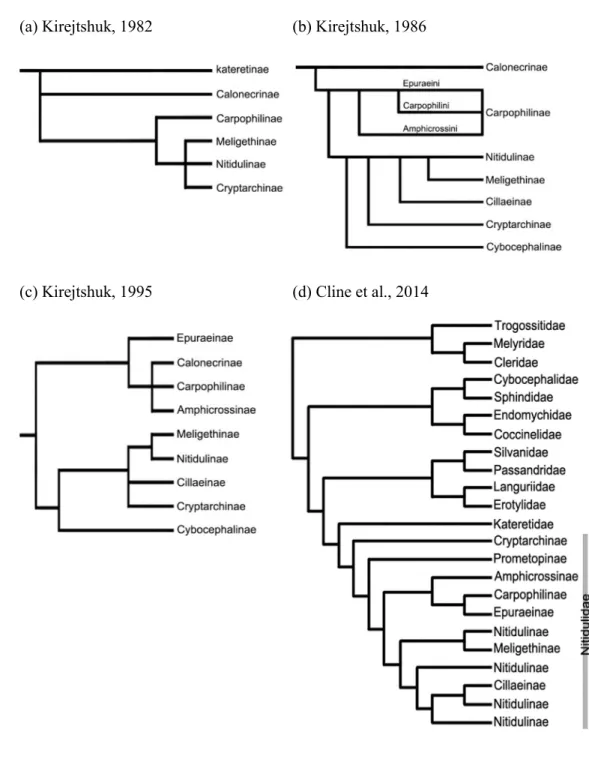
Because of their variety of body forms and ambiguous mix of characters, Nitidulidae remains one of the most taxonomically confusing groups in Cucujoidea. Historically, the subfamilial status of Nitidulidae has been studied by only a few researchers. Earlier morphological phylogenetic analyses of subfamily relationships offered by Kirejtshuk (1982, 1986, 1995), were based only on several morphological characteristics and with his intuition for a few taxa, but not all subfamilies were studied (Fig 6). According to Kirejtshuk (1982, 1986) Calonecrinae is the most ancestral subfamily among the nitidulid subfamilies. Kirejtshuk (1995) suggested two groups: Carpophilinae- and Nitidulinae-lineages each characterized by genitalic characters, and Calonecrinae was included in the Carpophilinae-lineage along with Epuraeinae, Capophilinae and Amphicrossinae. Kirejtshuk proposed that Epuraeinae was the most basal subfamily in the carpophilinae-lineage, and Carpophilinae, Amphicrossinae and Calonecrinae were represented as a polytomy. Although Kirejtshuk (2008) proposed that the family Nitidulidae is classified into two groups (Carpophilinae-lineage: (Amphicrossinae, Epuraeinae and Carpophilinae), Nitidulinae-lineage: (Cryptarchinae, Nitidulinae, Cillaeinae, Meligethinae and Cybocephalinae)) and an ambiguous group (Calonecrinae and Maynipeplinae), rigorous morphological analyses for Nitidulidae are still inconclusive. Also, the phylogenetic position of Calonecrinae and its proposed position as an ancestral subfamily are still unknown.
Recently, the research performed by Cline et al. (2014) is the only molecular phylogenetic data available for the status of Nitidulid subfamilies, along with a
- 4 -
limited suited of morphological characters. In their study, the subfamily Prometopinae was resurrected by molecular phylogenetic evidence and some morphological evidence based on larval characteristics. Cline et al. (2014) also formalized Cybocephalidae as a distinct family based on morphological evidence of the adults and immature forms and molecular data. In addition, according to studies done by Cline et al. (2014) and Bocak et al. (2014), the Cybocephalidae is more closely related to Spindidae than to Nitidulidae, based on both molecular and morphological data.
However, Kirejtshuk and Mantič (2015) proposed a counterargument for the resurrection of the subfamily Prometopinae, and suggested that characters used by Cline et al., (2014) were inconclusive to define the subfamily. Furthermore, the objection pointed out that the size of dataset provided by Cline et al. (2014) is insufficient to support their conclusions. Kirejtshuk and Mantič (2015) also indicated that Cline et al., (2014) did not consider synapomorphy of the family Cybocephalidae and Nitidulidae and several branches of trees provided by Cline et al., (2014) are not characterized by high node values. Despite these objections, Cline et al. (2014) has been generally cited by many successive papers (Baviera and Audisio, 2014; Dasgupta et al., 2015; Lawrence, 2016; Navarrete-Heredia et al., 2016; Alekseev, 2017; Lee et al., 2018) as the most rigorous phylogenetic treatment of the family to date.
Members of Nitidulidae has exhibit one of the most diverse feeding habits repertoires among beetle families, presumably due to their occurrence. As different Nitidulid speciesoccur in various many different habitats worldwide, their feeding
- 5 -
habits are highly varied in the group. Because of their various ingestion characters, some ofA few Nitidulid species are classified as serious agricultural pests (e.g., Stelidota geminatae, Aethina tumida, Glischrochilus quadrisignatus, Carpophilus sp., Lobiopa sp.). With the exception of Aethina tumida, most pest species are secondary pests, attracted by the products of fermentation, followed by damage to sugar rich fruit and grain crops.
Nitidulid mycophagy has been studied by many authors. Many species of Nitidulinae feed on mushrooms (e.g., Agaricales=Apsectochilus Reitter, Carinocyllodes Leschen, Cyclocaccus Sharp, Cyllodes Sharp, Eusphaerius Sharp, Hebascus Erichson, Neopallodes Reitter, Niliodes Murray, Oxycnemus Erichson, Pallodes Sharp, Somatoxus Sharp, Teichostethus Sharp, Triacanus Erichson and others; Aphyllophorales=Lobiopa Erichson, Platychora Erichson, Parametopia Reitter, Atarphia Reitter, Pocadites Reitter, Hebasculinus Kirejtshuk, and others). Some species are specialists of particular fungi (e.g., Phallaceae= Psilopyga LeConte; Gasteromycetes=Pocadius Reitter, Physoronia Reitter; Hymenogastrales= Thalycra Erichson). And some nitidulid species feed on microscopic fungi that occur on subcortical habitats or decaying organic matter or on plant tissues.
As the common name “Sap beetle” suggests, some species feed on tree sap (e.g., Cryptarchinae, Calonecrinae, Cillaeinae, Nitidulinae, Amphicrossinae, Carpophilinae, Epuraeinae). Ingestion of tree sap is associated with general mycophagous feeding habits since ingesting tree sap involves ingestion of yeasts and other fermenting fungi.
- 6 -
members (e.g., Glischrochilus, Epuraea, Carpophilus). Both Nitidula and Omosita species feed on dead organisms, and due to forensic and ecological importance, their feeding habits are well known. Saprophagy has been verified in members of most subfamilies (e.g., Glischrochilus, Epuraea, Carpophilus, Cillaeinae, Nitidulinae).
Anthophagy and phytophagy are prevalent in many nitidulids (Crowson 1981). Some species associated with plant parts actually feed on smuts, rusts, yeasts and other surface fungi (LaChance et al., 2001), but many feed directly on plant tissue and fruits. Feeding on vegetative and plant structures, especially on pollen or flowers, is well known in most species of Meligethinae, Epuraeinae, Cillaeinae, and some Nitidulinae (e.g., Cychramus, Aethina, Camptodes, Xenostrongylus, Anister, Mystropini and others). Frugivory is most commonly associated with Carpophilinae species but also occurs in other taxa such as Epuraea, Colopterus, Brachypeplus, Haptoncus and Lobiopa. Carpophilus species are known from a variety of hosts and species exhibit a wide known host range including citrus, pineapple, stone fruit, figs, strawberries, corn, almond, cherries, grapes, quince, plum, peaches, apples, and more (Jeli'nek, et al., 2010).
Inquilinism is associated with the most specialized ecological habitus found in Nitidulidae. Some species in Nitidulinae are parasitic in nests of social insects (e.g., Amphotis, Aethina tumina). Amphotis species trespass in various ant nests and their adult species solicit food from ants by antennation. Aethina tumina (Common name: Small Hive Beetle, SHB) is an obligate associate of social bees (e.g., Apis, Bombus). SHB larvae make a tunnel in the nest, and their excrement causes
- 7 -
discoloration and fermentation of the honey. They are serious pest to European honeybee colonies throughout the world. SHB was originally distributed in sub-Saharan region but has rapidly spreaded into many parts of the world since the mid-1990s: USA in 1996, Australia in 2002, Canada in 2002, Jamaica in 2005, Portugal in 2005, Mexico in 2007, Philippines and Italy in 2014, Korea in 2016 (Palmeri et al., 2015; Giangaspero and Turno, 2015; Lee et al, 2017).
Predation is known in only a few species. Cychramptodes species are predator of the wattle tick scale (Homoptera: Coccidae). This species does not directly obtain nutrients from social Hymenoptera (ants), but are intimate associated with them. Amphicrossus japonicus hunts preimaginal mosquitoes from submerged bamboo stumps (Kovac et al. 2007).
1.2. Historical review
1.2.1. Taxonomy of the Subfamily Nitidulinae
The subfamily Nitidulinae Latreille, 1802 is a largest group of sap beetle with more than 1,000 species in 974 genera in the world (Jelínek et al., 2010) and seven tribes (Nitidulini Erichson, 1843; Cychramini Lacordaire, 1854; Mystropini Murray, 1864; Cyllodini Everts, 1898; Cychramptodini Kirejtshuk et Lawrence, 1992; Lawrencerosini Kirejtshuk, 1990; Amborotubini Leschen and Carlton, 2004) are recognized (Kirejtshuk, 2008). Characterization of the subfamily is difficult and until recently, Nitidulinae included many misplaced species of other subfamilies (e.g., Prometopinae). Based on the molecular phylogenetic study presented by Cline et al. (2014), the Nitidulinae is paraphyletic with inclusion of Meligethinae and
- 8 -
Cillaeinae. Cline et al. (2014) noted that Cillaeinae need to be either subsumed as a tribe of Nitidulinae, or Nitidulinae will need to be divided into several subfamilies. But they did not propose any classificatory emendations for Meligethinae, due to insufficient data. Therefore, still more research is needed to resolve taxonomic relationships of constituents of the subfamily.
1.2.2. Taxonomy of the Subfamily Prometopinae
The subfamily Prometopinae Böving and Craighead, 1931 (Coleoptera: Cucujoidea: Nitidulidae) is a small group of sap beetles with 12 species in 4 genera in the Palaearctic region (Jelínek and Audisio, 2007; Cline et al., 2014). Prometopinae has a complicated taxonomic history. The type species Prometopia sexmaculata (Say, 1825) was originally described as a member of Nitidulinae (Erichson, 1843). Prometopinae was elevated to subfamily based solely on larval characters (Böving and Craighead 1931), but the subfamily status had been largely ignored (Parsons, 1943; Audisio, 1993; Jelínek and Audisio, 2007; Kirejtshuk, 2005; Kirejtshuk, 2008). Recently, Prometopinae was resurrected by molecular phylogenetic evidence as well as some morphological evidence (Cline et al., 2014). The prometopine clade was removed from the Nitidulinae, Amphicrossinae, Carpohilinae, and Epuraeinae clades with high support values. They also provided six combinations of morphological characteristics that differentiate the subfamily Prometopinae from other subfamilies. However, an immediate argument against this resurrection was presented by Kirejtshuk and Mantič (2015), who stated that none of the characters used by Cline et al. (2014) can be used to define the subfamily Prometopinae since
- 9 -
they overlap with other taxa. It was also pointed that the size of data used in Cline et al. (2014) is insufficient to support the resurrection. Prometopinae has been accepted as a subfamily in some successive studies (Dasgupta et al., 2015; Lawrence, 2016), while Powell (2015) treated Prometopia sexmaculata (Say, 1825) as a member of the Nitidulinae. Since then, then results (e.g., elevation of Cybocephalidae Jacquelin du Val 1858, resurrection of Prometopinae) of Cline et al. (2014) have been generally accepted by many successive papers (Hisamatsu, 2013; Baviera and Audisio, 2014; Dasgupta et al., 2015; Lawrence, 2016; Navarrete-Heredia et al., 2016; Alekseev, 2017; Lee et al., 2018) and are accepted here, including subfamily status for Prometopinae.
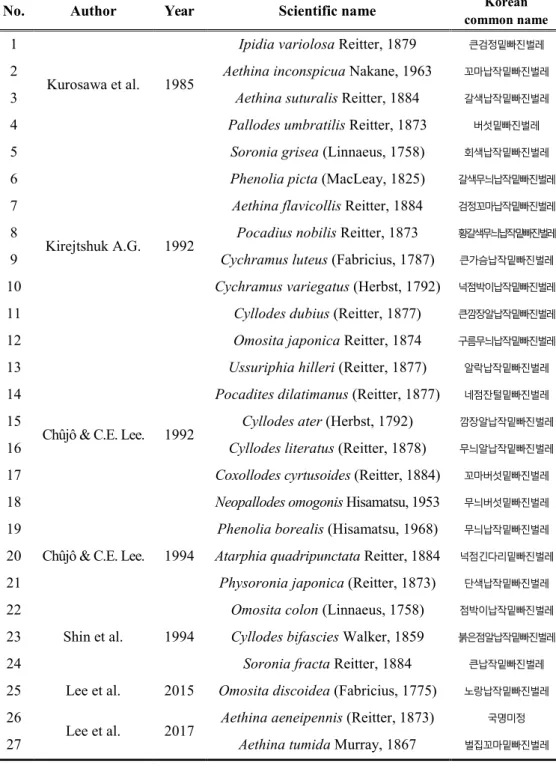
1.2.3. History of Korean Nitidulinae (Table 1)
27 species of Nitidulinae have been record in Korea before this study.
In 1985, Kurosawa et al. firstly reported 4 species, Ipidia variolosa Reitter, Aethina
inconspicua Nakane, Aethina suturalis Reitter, Pallodes umbratilis Reitter. After
that, Kirejtshuk (1992) reported 8 species, Soronia grisea (Linnaeus), Phenolia
picta (MacLeay), Aethina flavicollis Reitter, Pocadius nobilis Reitter, Cychramus luteus (Fabricius), Cychramus variegatus (Herbst), Cyllodes dubius (Reitter), Omosita japonica Reitter. In 1992, Chûjô and C.E. Lee reported 6 species from Is.
Jeju, Ussuriphia hilleri (Reitter), Pocadites dilatimanus (Reitter), Cyllodes ater (Herbst), Cyllodes literatus (Reitter), Coxollodes cyrtusoides (Reitter), Neopallodes
omogonis Hisamatsu. After that, Chûjô and C.E. Lee (1994) reported 3 species from
- 10 -
Physoronia japonica (Reitter). In addiction, Shin et al. (1994) reported 3 species, Omosita colon (Linnaeus), Cyllodes bifascies Walker, Soronia fracta Reitter.
Recently, Lee et al. reported 3 species from 2015 to 2017, Omosita discoidea (Fabricius), Aethina aeneipennis (Reitter), Aethina tumida Murray. This is the first report of the small hive beetle in the Far Eastern Asia, which is a serious beekeeping pest all over the world (Lee et al., 2017).
- 11 -
Table 1. History of records of Korean Nitidulinae
No. Author Year Scientific name Korean
common name
1
Kurosawa et al. 1985
Ipidia variolosa Reitter, 1879 큰검정밑빠진벌레
2 Aethina inconspicua Nakane, 1963 꼬마납작밑빠진벌레
3 Aethina suturalis Reitter, 1884 갈색납작밑빠진벌레
4 Pallodes umbratilis Reitter, 1873 버섯밑빠진벌레
5
Kirejtshuk A.G. 1992
Soronia grisea (Linnaeus, 1758) 회색납작밑빠진벌레
6 Phenolia picta (MacLeay, 1825) 갈색무늬납작밑빠진벌레
7 Aethina flavicollis Reitter, 1884 검정꼬마납작밑빠진벌레
8 Pocadius nobilis Reitter, 1873 황갈색무늬납작밑빠진벌레
9 Cychramus luteus (Fabricius, 1787) 큰가슴납작밑빠진벌레
10 Cychramus variegatus (Herbst, 1792) 넉점박이납작밑빠진벌레
11 Cyllodes dubius (Reitter, 1877) 큰깜장알납작밑빠진벌레
12 Omosita japonica Reitter, 1874 구름무늬납작밑빠진벌레
13
Chûjô & C.E. Lee. 1992
Ussuriphia hilleri (Reitter, 1877) 알락납작밑빠진벌레
14 Pocadites dilatimanus (Reitter, 1877) 네점잔털밑빠진벌레
15 Cyllodes ater (Herbst, 1792) 깜장알납작밑빠진벌레
16 Cyllodes literatus (Reitter, 1878) 무늬알납작밑빠진벌레
17 Coxollodes cyrtusoides (Reitter, 1884) 꼬마버섯밑빠진벌레
18 Neopallodes omogonis Hisamatsu, 1953 무늬버섯밑빠진벌레
19
Chûjô & C.E. Lee. 1994
Phenolia borealis (Hisamatsu, 1968) 무늬납작밑빠진벌레
20 Atarphia quadripunctata Reitter, 1884 넉점긴다리밑빠진벌레
21 Physoronia japonica (Reitter, 1873) 단색납작밑빠진벌레
22
Shin et al. 1994
Omosita colon (Linnaeus, 1758) 점박이납작밑빠진벌레
23 Cyllodes bifascies Walker, 1859 붉은점알납작밑빠진벌레
24 Soronia fracta Reitter, 1884 큰납작밑빠진벌레
25 Lee et al. 2015 Omosita discoidea (Fabricius, 1775) 노랑납작밑빠진벌레 26
Lee et al. 2017 Aethina aeneipennis (Reitter, 1873)
국명미정
- 12 -
2. Materials and methods
2.1. Material examined
Collection of sap beetles
Materials for this study were mostly collected from 2014 to 2018. The samples were mainly collected by flight intercept traps (FIT, window traps), pitfall traps (Pig carcass bait) installed in the mixed forest. Light traps and visual collecting were also used for collection and observation of habits.
Most specimens examined in this study are deposited in the College of Agriculture and Life Sciences, Seoul National University (CALS, SNU). Some specimens were borrowed from the National Academy of Agricultural Science (NAAS, Wanju, Korea), Korea National Arboretum (KNA, Pocheon, Korea), and National Institute of Biological Resources (NIBR, Incheon, Korea).
Specimen preparation
Most of the specimens were preserved in dry for identifications. The remainder were preserved in 99% ethyl alcohol. Sap beetles too small to be pinned were glued to cards. To examine the male and female genitalia, the specimens were relaxed in distilled water for two hours. The genitalia were separated from the last abdominal segment using a hooked pin or forceps without removing the abdomen. Separated genitalia were cleared by heating in 5ml tubes of 10% potassium-hydroxide (KOH) 1~2 hrs at 50–60℃, depending on the sample condition. After examination,
- 13 -
genitalia were stored in polyethylene genitalia vials with glycerin.
Examinations
Photographs of dorsal and ventral habitus were captured using a Canon digital camera (80d, MP-E 65mm f/2.8 1–5x Macro lens mounted). Several layers of photographs were combined in Zerene Stacker 1.04 software (Zerene Systems 2014; http://www.zerenesystems.com/cms/stacker). Calibration of images and plates was completed using software (Photoshop CC 2014, Adobe system, USA). Photographs of genitalia were prepared using a Microscope (DM 4000B, Leica Microsystem, Wetzlar, Germany) with a USB digital camera (Infinity3, Lumenera Corporation, Ottawa, Ontario) was used. Measurements were made using Active Measure software (ver. 3.0.3, Mitani Co. ltd, Japan).
- 14 -
2.2. Terminology
Terminology for adult characters of Nitidulidae follows Cline (2005) (Figs. 1-4).
Fig. 1. The dorsal and ventral habitus of Phenolia picta (MacLeay). A, dorsal; B, ventral.
- 15 -
Fig. 3. Male genitalia A, B: median lobe; C: tegmen; D: male anal sclerite; (scale bar 0.1mm)
- 16 -
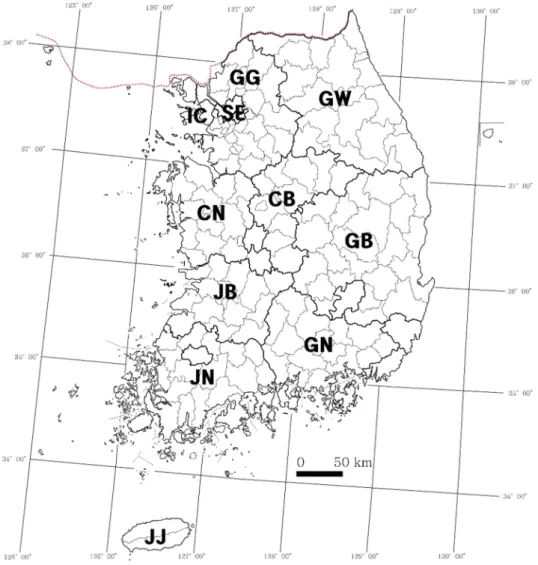
2.3. Abbreviations of localities in the Korean Peninsula
The province abbreviations are as follows: SE, Seoul-si; IC, Incheon-si; GG,
Gyeonggi-do; GW, Gangwon-do; CB, Chungcheongbuk-do; CN,
Chungcheongnam-do; JB, Jeollabuk-do; JN, Jeollanam-do; GB, Gyeongsangbuk-do; GN, Gyeongsangnam-Gyeongsangbuk-do; JJ, Jeju-do (Is.).
- 17 - 3. Results SYSTEMATIC ACCOUNTS Class Insecta Order Coleoptera Suborder Polyphaga Infraorder Cucujiformia Superfamily Cucujoidea
Family Nitidulidae Latreille, 1802
Diagnosis
Family Nitidulidae is allied to Smicripidae or Kateretidae in several characters, 1) antennae 11 segmented with a last 3-segmented club (except Calonecrinae, some Cillaeinae (Macrostola), Meynipeplinae: 10 segmented with a last 1-2-segmented club); 2) abdominal ventrite 1 not much longer than 2; 3) anal lobe of hindwing present; 4) maxilla with lacinia only; 5) anal lobe of hindwing present. However, adult members Nitidulidae are distinguished from Smicripidae and Kateretidae by the following characters: 1) procoxae strongly transverse; 2) prothoracic trochantin always exposed; 3) procoxal cavities not always open externally.
- 18 -
Subfamily Nitidulinae Latreille, 1802 밑빠진벌레아과
Key to the tribes of Korean Nitidulinae
1. Pronotum not margined at base; head almost horizontal ... Nitidulini - Pronotum margined at base, covering base of elytra; head more or less deflexed .. 2 2. Dorsal surface of body pubescent ... Cychramini - Dorsal surface of body not pubescent ... Cyllodini
Tribe Nitidulini Erichson, 1843
Key to the Genera of Korean Nitidulini
1. Tarsomeres 1-3 not dilated ... 2 - Tarsomeres 1-3 strongly dilated ... 6 2. Antennomere 8 flattened, disc-like ... 3 - Antennomere 8 not flattened ... 4 3. Bicolored; protibia not curved medially ... Pocadius - Unicolored; protibia outer margin slightly, medially arcuate ...Physoronia 4. Antennal scape forming an asymmetrical ellipse; pronotum impunctate ... 5 - Antennal scape asymmetrically triangular; pronotum punctate ... Soronia 5. Body setae dimorphic; hind tibia not elongated, similar in length to hind tarsi ... Ussuriphia - Body setae monomorphic; hind tibia elongated, almost two times longer than hind tarsi... Atarphia
- 19 -
6. Pygidium with 8-10 punctures along anterior margin... Aethina - Pygidium without punctures along anterior margin ... 7 7. Elytra with punctate-striate ... 8 - Elytra without striate ... 9 8. Bicolored; antennomere 3 longer than antennal pedicel ... Stelidota - Unicolored, almost black; antennomere 3 and antennal pedicel subequal ... Ipidia 9. Antennomere 8 not flattened ... 10 - Antennomere 8 flattened, disc-like ... 12 10. Large, >5.5mm in length; tibia bicolored; sap feeding ...Phenolia - Smaller, <5.0mm in length; tibia unicolored; saprophagous ... 11 11. Elytral sutural stria distinct; pronotum with puncate impressions ... Omosita - Elytral sutural stria almost absent; pronotum impunctate ... Nitidula 12. Bicolored; ovipositor apex simple, with stylus ... Pocadites - Unicolored; ovipositor with pointed apex, without stylus ... Hebasculinus
- 20 -
Genus Nitidula Fabricius, 1775: 77 참밑빠진벌레속 (신칭)
Type species Silpha bipustulata Linnaeus, 1761
Theridiosmum Gistel, 1856: 361 Type species Silpha bipustulata Linnaeus, 1761
Nitidula rufipes (Linnaeus, 1767) 참밑빠진벌레 (신칭)
Silpha rufipes Linnaeus, 1767: 573 Nitidula bicolor Dalla Torre, 1879: 87 Nitidula castanea C. Sahlberg, 1820: 74 Dermesles fulvipes Geoffroy, 1785: 22 Nitidula marginata Dalla Torre, 1879: 87 Nitidula obscura Fabricius, 1777: 215 Nitidula ossium Kirby, 1837: 106
Redescription
Length 3.4 - 3.5mm, Width 1.7mm. Body Weakly convex and oblong; mostly
blackish brown; lateral margin of pronotum, legs, antennomeres 1-8 more brightly colored; covered with yellowish pubescence; pronotum and elytral margins fimbriate; ventral surface relatively brightly colored. Head prognathous, horizontal, transverse, wider than long (W:L = 2.6:1 / including eyes); with circular or irregular, dense punctures; mandibles well developed with acute apices, 1-2 subapical teeth present; antennal groove distinct, convergented; labrum short, medial anterior marginal incision almost absent. Antennae 11 segments, apical 3 segments clavate and covered with yellowish brown pubescence; antennal scape forming an
- 21 -
asymmetrical ellipse, 2 times longer than pedicel; antennal club compact, ovate, moderately flattened, almost symmetrical, 1/3 of total length and 1.3 times longer than wide. Pronotum weakly convex, quadrate, wider than long (W:L = 1.7:1); anterior margin weakly concave; posterior margin almost rectilinear; lateral margins arciform, more brightly colored; circular or irregularly, densely punctate. Scutellum broadly rounded almost hemispherical, densely punctate. Elytra unicolored, subrectangular, somewhat rounded; densely punctate; sutural stria almost absent; elytra covering entire abdomen except apex of pygidium; lateral margins flatly arcuate, weakly explanate; epipleura narrow. Prosternum transverse; proepisternum more brightly colored; pubescence relatively less dense than other ventral surfaces; prosternal process laterally dilated at apex, apical margin moderately rounded. Mesosternum densely punctate; posterior margin extending midway between mesocoxae. Metasternum much wider than long; densely punctate; pubescence relatively longer and more dense than on prosternum; metasternal line incomplete. Abdomen relatively brightly colored, densely punctate; first abdominal sternite 2-times longer than second abdominal sternite; sternites 2-4 subequal in length. Legs rather stout and simple, covered with yellowish pubescence; more brightly colored than body; tarsi 5-5-5, tarsomeres 1-3 dilated and tarsal setae present, tarsomeres 4 minute, tarsal claws simple; tibia outer margin slightly, medially arcuate, protibial apical region slightly expanded, lateral margin smooth, without sexual dimorphism. Male genitalia well-sclerotized. Tegmen thumb-shaped, rounded apically, longer than wide (W:L = 1.0:1.2 / without ring), short setae visible around apex. Penis trunk subrectangular, rounded apically;
- 22 -
shallowly incised at middle of apex. Female ovipositor moderately long and slightly sclerotized; with distinct apical styli.
Specimens examined
GW: 2exx, Hangye-ri, Buk-myeon, Inje-gun, 30 VI. 2017, Minhyeuk Lee (NIBR);
1ex, Wontong-ri, Buk-myeon, Inje-gun, 14 IV. 2018, Minhyeuk Lee (SNU).
SE: 2exx,Sillim-dong, Gwanak-gu, 03.V. 2018, Minhyeuk Lee (SNU).
Distribution
Korea, Europe, Russia, West Siberia, Japan, Mongolia, Kazakhstan, Nepal, Turkmenistan, Uzbekistan, Nearctic region
Remark
Most specimens were found on the dried carrion of Sus scrofa (Linnaeus, 1758) and some individuals were collected from food waste.
Genus Omosita Erichson, 1843: 298 송장밑빠진벌레속 (신칭)
Type species Silpha depressa Linnaeus, 1758
Saproboa Ganglbauer, 1899: 489 Type species Silpha colon Linnaeus, 1758 Scatocharis Gistel, 1856: 362 Type species Silpha depressa Linnaeus, 1758
Key to the species of Korean Omosita
1.Antennal club oblong, 1.5 times longer than wide ... Omosita colon
- 23 -
2. Elytra with yellowish pattern from middle to posterior margin; metasternal line strongly distinct... Omosita japonica - Elytra with bright yellowish pattern from scutellum to anterior 2/3; metasternal line slightly distinct ... Omosita discoidea
Omosita colon (Linnaeus, 1758) 점박이송장밑빠진벌레 (개칭)
Silpha colon Linnaeus, 1758: 362 Nitidula bipartita Trost, 1801: 18
Nitidula haemorrhoidalis Fabricius, 1777: 216 Omosita viana Gistel, 1857: 587
Redescription
Length 2.0 - 3.9 mm, Width 1.0 - 2.1 mm. Body Weakly convex and oblong;
mostly dark brown; lateral margin of pronotum, legs, antennomeres 1-8, apical margin of elytra more brightly colored; covered with whitish or yellowish pubescence; pronotum margins fimbriate; ventral surface similar in color. Head prognathous, horizontal, transverse, wider than long (W:L = 2:1 / including eyes); with circular or irregular, dense punctures; mandibles well developed with acute apices, 1-2 subapical teeth present; antennal groove distinct, almost parallel sided; labrum short, medial anterior marginal incision almost absent. Antennae 11 segments, apical 3 segments clavate and covered with yellowish brown pubescence; antennal scape forming an asymmetrical ellipse, 2 times longer than pedicel; antennal club compact, ovate, moderately flattened, almost symmetrical, 1/4 of total
- 24 -
length and 1.3 times longer than wide. Pronotum weakly convex, quadrate, wider than long (W:L = 1.87:1); with punctate impressions; anterior margin weakly undulate; posterior margin almost rectilinear; lateral margins arciform, more brightly colored; irregularly, densely punctate. Scutellum broadly rounded almost hemispherical, sparsely punctate. Elytra bicolored; subrectangular, somewhat rounded; densely punctate; with many pale spots, posterior spots largest and various pattern; sutural stria distinct, relatively brightly colored; elytra covering entire abdomen except apex of pygidium; lateral margins flatly arcuate, narrowly explanate; epipleura narrow. Prosternum transverse; proepisternum more brightly colored, pubescence relatively less dense than on other ventral surfaces; prosternal process laterally dilated at apex, apical margin moderately rounded. Mesosternum densely punctate; posterior margin extending midway between mesocoxae.
Metasternum much wider than long; densely punctate; metasternal line incomplete. Abdomen densely punctate; first abdominal sternite 2-times longer than second
abdominal sternite; sternites 2-4 subequal in length. Legs rather stout and simple, covered with yellowish pubescence; more brightly colored than body; tarsi 5-5-5, tarsomeres 1-3 dilated and tarsal setae present, tarsomeres 4 minute, tarsal claws simple; tibia outer margin slightly medially arcuate, protibial apical region slightly expanded, lateral margin weakly crenulate, without sexual dimorphism. Male
genitalia well-sclerotized. Tegmen thumb-shaped, rounded apically, slightly longer
than wide (W:L = 1.0:1.2 / without ring), short setae visible around apex. Penis trunk subrectangular-shaped, with lateral apical angles slightly projecting; rounded apically; shallowly incised at middle of apex. Female ovipositor moderately long
- 25 - and slightly sclerotized; with distinct apical styli.
Specimens examined
GB: 1ex, Cheongsong-gun, 27.iv.1994. (?).
GG: 2exx, Seodun-dong, Suwon-si, 27.iv.1983, Y.I.Lee; 1ex, Seodun-dong,
Suwon-si, 10.vi.1983, S.B.Ahn; 1♂, Suwon-si, 2.iv.1985, K.J.Hong; 1ex, Seodun-dong, Suwon-si, 14.iv.1986, J.H.Yoo; 3exx, Seodun-Seodun-dong, Suwon-si, 8.vii.1986, W.H.Paik; 1ex, Seodun-dong, Suwon-si, 20.iii.1989, S.B.Ahn; 1ex, Seodun-dong, si, 29.iii.1989, K.J.Hong; 1ex, Goyang-si 16.vi.1989, S.H.Lee; 1♂, Suwon-si, 1.vi.1990, K.U.Chun; 1ex, Seodun-dong, Suwon-Suwon-si, 26~30.vi.1993, R.G.O; 1ex, Seodun-dong, Suwon-si, 30.vii.1997; 1ex, Seodun-dong, Suwon-si, 14.vi.1999, J.Y. Choi; 1ex, Seodun-dong, Suwon-si, 12.iv.2000, M.O.Yeom.
GN: 1♀, Mt. jiri, 23.vi.1993, S.W.Park; 1♀, Mt. Geumoh, Geumnam-myeon,
Hadong-gun, 16.ix.1994, J.G.Jung.
GW: 2exx, Wondongjae-ro, Yeongwol-gun, 3.x.2014, Seunghyun Lee; 1ex,
Samcheok-si 26~30.vi.1993, R.G.O.; 1ex, Hongcheon-gun, 13.v.1996, J.Y.Choi; 1ex, Hongcheon-gun, 12.v.2006, J.Y.Choi.
IC: 1♂, Ongjin-gun, Deokjuk-myeon, Gureop-ri, 25.iv.2014, S.I.Park.
JB: 1ex , Mt. Nejang, Jeungeup-si, 6.xi.1999, S.I.Kim; 1ex, Jeonju-si, 20.x.2007,
J.Y.Choi.
JN: 1ex, Gwangyang-si, Ongnyong-myeon, Chusan-ri, 23.iv.1991, D.J.K. SW: 1♂, Seoul-si, 24.ix.1985, C.M.Kim.
Distribution
- 26 -
Remarks
Most specimens were found on the dried carrion of Sus scrofa (Linnaeus, 1758) and one specimen was collected on the dried carrion of Neophocaena phocaenoides (G. Cuvier, 1829) on the seashore with O. japonica. Some individuals were collected from food waste or decaying fruits and vegetables together with O. discoidea.
Omosita japonica Reitter, 1874 구름무늬송장밑빠진벌레 (개칭)
Omosita japonica Reitter, 1874: 510
Redescription
Length 2.9 - 4.2 mm, Width 1.3 - 2.2 mm. Body Weakly convex and oblong;
mostly reddish brown; lateral margin of pronotum, legs, antennomeres 1-8, apical margin of elytra more brightly colored; covered with whitish or yellowish pubescence; pronotum margins fimbriate; ventral surface similar in color. Head prognathous, horizontal, transverse, wider than long (W:L = 1.5:1 / including eyes); with circular or irregular, dense punctures; mandibles well developed with acute apices, 1-2 subapical teeth present; antennal groove distinct, almost parallel sided; labrum short, medial anterior marginal incision almost absent. Antennae 11 segments, apical 3 segments highly clavated and covered with yellowish brown pubescence; antennal scape forming an asymmetrical ellipse, 2 times longer than pedicel; antennal club compact, almost circular, moderately flattened, almost symmetrical, 1/4 of total length, almost same length and width. Pronotum weakly convex, quadrate, wider than long (W:L = 1.7:1); with punctate impressions;
- 27 -
anterior margin broadly concave; posterior margin almost rectilinear; lateral margins arciform, more brightly colored; irregularly, densely punctate. Scutellum broadly rounded almost hemispherical, sparsely punctate. Elytra bicolored; subrectangular, somewhat rounded; densely punctate; with many pale spots, posterior spots largest and various pattern; sutural stria distinct, relatively brightly colored; elytra covering entire abdomen except apex of pygidium; lateral margins flatly arcuate, narrowly explanate; epipleura wider than mesotarsus. Prosternum transverse; proepisternum more brightly colored, pubescence relatively less dense than on other ventral surfaces; prosternal process laterally dilated at apex, apical margin rectilinear. Mesosternum densely punctate; posterior margin extending midway between mesocoxae. Metasternum much wider than; densely punctate; metasternal line complete. Abdomen densely punctate; first abdominal sternite 2-times longer than second abdominal sternite; sternites 2-3 subequal in length; sternites 4 narrowed. Legs rather stout and simple, covered with yellowish pubescence; more brightly colored than body; tarsi 5-5-5, tarsomeres 1-3 dilated and tarsal setae present, tarsomeres 4 minute, tarsal claws simple; tibia outer margin slightly medially arcuate, protibial apical region slightly expanded, lateral margin weakly crenulate, without sexual dimorphism. Male genitalia well-sclerotized. Tegmen thumb-shaped, rounded apically, slightly longer than wide (W:L = 1.0:1.14 / without ring), short setae visible around apex. Penis trunk subrectangular with lateral apical angles slightly projecting; rounded apically; shallowly incised at middle of apex. Female ovipositor moderately long and slightly sclerotized; with distinct apical styli.
- 28 -
Specimens examined
CB: 3exx, Mt.Worak, Hansu-myeon, Jecheon-si, 24.v.1985, W.H.Paik.
CN: 1ex, Gongju-si, 19.vii.1992; 1ex, Gongju-si, 6~10.vii.1992, R.G.O.; 1ex,
Nonsan-si, 11~15.viii.1993, R.G.O.; 1ex, Nonsan-si, 26~31.viii.1993, R.G.O.
GB: 1ex, Dodong-ri, Ulleung-eup, Ulleung-gun, 10.viii.2006, G.S.Lee.
GG: 2exx, Seodun-dong, Suwon-si, 9.viii.1982, C.H.Ryu; 1ex, Seodun-dong,
Suwon-si, 10.vi.1983, O.J.IM; 1ex, Seodun-dong, Suwon-si, 20.vii.1983, W.H Paik; 1ex, Seodun-dong, Suwon-si, 29.viii.1984, W.H Paik; 1ex, Seodun-dong, Suwon-si, 31.x.1984, W.H Paik; 1♂, Suwon-si, 2.iv.1985, K.J.Hong; 2exx, Seodun-dong, Suwon-si, 14.vii.1990, S.D.Lee; 1ex, Seodun-dong, Suwon-si, 13.vi.1993; 2exx, Seodun-dong, Suwon-si, 13.vii.1993; 1ex, Seodun-dong, Suwon-si, 20.vii.1994; 1ex, Seodun-dong, Suwon-si, 20.vii.1994, J.Y.Choi; 2exx, Seodun-dong, Suwon-si, 30.vii.1994, J.Y.Choi; 1ex, Seodun-dong, Suwon-si, 25.vi.1995; 1ex, Pocheon-si, 18.ix.1996; 2exx, Seodun-dong, Suwon-si, 16.vii.1996, S.K.Lee; 1ex, Seodun-dong, Suwon-si, 14.viii.1996; 1ex, Seodun-dong, Suwon-si, 8.ix.1997; 2exx, Seodun-dong, Suwon-si, 30.vii.1997; 1ex, dong, Suwon-si, 11.ix.1998; 3exx, Seodun-dong, Suwon-si, 11.ix.1998; 1ex, Seodun-Seodun-dong, Suwon-si, 12.ix.1998; 5exx, Seodun-dong, Suwon-si, 5~6.ix.1998; 2exx, Taehwa, Sanglim-ri, Deokcheon-myeon, Gwangju-si, 5.viii.1998, J.B.Jeon; 1ex, Seodun-dong, Suwon-si, 8.viii.1998; 1ex, Seodun-dong, Suwon-si, 21.viii.1998; 1ex, Seokcheon-ri, Baegam-myeon, Yongin-si, 1.vii.2000, G.M.Kwon, M.H.Lee; 1♀, Mt.Taehwa, Sanglim-ri, Deokcheon-myeon, Gwangju-si, 16.vi.2013.
- 29 -
JJ: 1ex, Seogwipo-si, 10.iii.1986, G.S.Lee. SC: 1ex, Seoul, 15.vii.1993, R.G.O.
Distribution Korea, Russia, Sakhalin, Kuriles, Japan, China Remarks
Some specimens were found on the dried carrion of Sus scrofa (Linnaeus, 1758) and one specimen was collected on the dried carrion of Neophocaena phocaenoides (G. Cuvier, 1829) on the seashore with O. japonica.
Omosita discoidea (Fabricius, 1775) 노랑송장밑빠진벌레 (개칭)
Nitidula discoidea Fabricius, 1775: 78 Nitidula cincta Heer, 1841: 396 Omosita inversa LeConte, 1857: 36
Redescription
Length 2.0 – 3.8 mm, Width 1.1 – 1.9 mm. Body Weakly convex and oblong;
mostly reddish brown; lateral margin of pronotum, central part of elytra more brightly colored; covered with whitish or dark pubescence; pronotum margins fimbriate; ventral surface similar in color. Head prognathous, horizontal, transverse, wider than long (W:L = 2.3:1 / including eyes); with circular or irregular, dense punctures; mandibles well developed with acute apices, 1-2 subapical teeth present; antennal groove distinct, almost parallel sided; labrum short, medial anterior marginal incision almost absent. Antennae 11 segments, apical 3 segments clavate and covered with yellowish brown pubescence; antennal scape forming an
- 30 -
asymmetrical ellipse, 2 times longer than pedicel; antennal club compact, almost circular, moderately flattened, almost symmetrical, 1/4 of total length, almost same length and width. Pronotum weakly convex, quadrate, wider than long (W:L = 2:1); with punctate impressions; anterior margin undulate; posterior margin almost rectilinear; lateral margins arciform, yellowish brown colored; irregularly, densely punctate. Scutellum broadly rounded, almost hemispherical, sparsely punctate.
Elytra bicolored; subrectangular, somewhat rounded; densely punctate; with many
pale spots; largest pattern from scutellum to anterior 2/3; sutural stria distinct; elytra covering entire abdomen except apex of pygidium; lateral margins flatly arcuate, narrowly explanate; epipleura wider than mesotarsus. Prosternum transverse; proepisternum yellowish brown colored, pubescence almost absent; prosternal process laterally dilated at apex, apical margin weakly acuminate. Mesosternum densely punctate; posterior margin extending midway between mesocoxae.
Metasternum much wider than long; densely punctate; metasternal line incomplete. Abdomen densely punctate; first abdominal sternite 2-times longer than second
abdominal sternite; sternites 2-4 subequal in length. Legs rather stout and simple, covered with yellowish pubescence; more brightly colored than body; tarsi 5-5-5, tarsomeres 1-3 dilated and tarsal setae present, tarsomeres 4 minute, tarsal claws simple; tibia outer margin slightly medially arcuate, protibial apical region slightly expanded, lateral margin weakly crenulate, without sexual dimorphism. Male
genitalia well-sclerotized. Tegmen thumb-shaped, rounded apically, slightly longer
than wide (W:L = 1.0:1.2 / without ring), short setae visible around apex. Penis trunk subrectangular with lateral apical angles slightly projecting; rounded apically;
- 31 -
shallowly incised at middle of apex. Female ovipositor moderately long and slightly sclerotized; with distinct apical styli.
Specimens examined
GB: 53ex, Ulleung-gun, 6.vi.1985, W.H.Paik.
GG: 1ex, Anyang, 22.v.1990, E.T.Kim; 1ex, Seodun-dong, Suwon-si, 20.iii.1993,
S.B.Ahn.
GW: 2♂, 1♀, 7exx, Wondongjae-ro, Yeongwol-gun, 3.x.2014, Seunghyun Lee;
5exx, Hangye-ri, Buk-myeon, Inje-gun, 30 VI. 2017, Minhyeuk Lee.
JJ: 2exx, Seogwipo-si, 2.i.1986, G.S.Lee; 1ex, Aewol-eup, Jeju-si 4.vi.1998,
J.Y.Choi.
Distribution Korea, Europe, Siberia, Middle East, Turkey, Iran, Russia, Japan,
China, India, South Africa, Nearctic and Neotropical.
Remarks
Some specimens were found on the dried carrion of Sus scrofa (Linnaeus, 1758) with N.rufipes. Also some individuals were collected from food waste or decaying fruits and vegetables with O. colon.
Genus Soronia Erichson, 1843: 298 얼룩밑빠진벌레속 (신칭)
Type species Silpha grisea Linnaeus, 1758
- 32 -
Key to Korean Soronia species
1. Body size more than 6.6mm; sexually dimorphic in shape of protibia, male protibial apical 1/2 inner margin expanded...Soronia fracta - Body size less than 6.6mm; no distinction of male and female protibia ... 2 2. Body more chunky; dark colored ... Soronia lewisi - Body more slander; bright yellowish colored ... Soronia grisea
Soronia fracta Reitter, 1884 큰얼룩밑빠진벌레 (개칭)
Soronia fracta Reitter, 1884: 263 Soronia maxima Heller, 1923: 67
Redescription
Length 6.6 - 9.5 mm. Body weakly convex and oblong; mostly dark brown; lateral
margin of pronotum, legs, apical and lateral margin of elytra more brightly colored; covered with dark or yellowish pubescence, some pubescence relatively thick and translucent; ventral surface reddish brown. Head prognathous, horizontal, transverse, wider than long (W:L = 2:1 / including eyes); with circular or irregular, dense punctures; mandibles well developed with acute apices, 1-2 subapical teeth present; antennal groove distinct and strongly impressed, almost convergent; labrum normal length, medial anterior margin strongly incised. Antennae 11 segments, apical 3 segments clavate and covered with yellowish pubescence; antennal scape asymmetrical rounded, triangular; antennal club compact, ovate, moderately flattened, almost symmetrical, 1/3.6 of total length and 2 times longer than wide.
- 33 -
Pronotum weakly convex, quadrate, wider than long (W:L = 1.8:1); with punctate
impressions; anterior margin broadly concave; posterior margin almost rectilinear; lateral margins arciform, narrowed to anterior, more brightly colored; irregularly, densely punctate. Scutellum broadly rounded triangular, apical margin moderately rounded, densely punctate. Elytra bicolored; subrectangular, narrowed to posterior, somewhat rounded; densely punctate; with many pale spots; sutural stria almost absent; elytra covering entire abdomen include pygidium; lateral margins flat, arcuate, moderately explanate; epipleura wider than mesotarsus. Prosternum transverse; sparsely punctate; proepisternum more brightly colored, pubescence relatively less dense than on other ventral surfaces; prosternal process laterally dilated at apex, apical margin moderately rounded. Mesosternum densely punctate; posterior margin extending midway between mesocoxae. Metasternum much wider than long; densely punctate; metasternal line complete. Abdomen densely punctate; first abdominal sternite 2-times longer than second abdominal sternite; sternites 2-4 subequal in length. Legs simple, covered with yellowish pubescence; more brightly colored than body; tarsi 5-5-5, tarsomeres 1-3 not dilated and tarsal setae present, tarsomeres 4 minute, tarsal claws simple; protibiae lateral margin weakly crenulate, protibiae sexually dimorphic; apical 1/2 of male protibia inner margin expanded, lateral margin arcuate; female protibial apical apical inner not expanded, lateral margin rectilinear; mesotibia and metatibia almost rectilinear.
Male genitalia well-sclerotized. Tegmen bullet-shaped; rounded apically; shallowly
incised in the middle of apex; longer than wide (W:L = 1:1.7 / without ring); short setae visible around apex. Penis trunk thumb-shaped; rounded apically; shallowly
- 34 -
incised at middle of apex. Female ovipositor long and slightly sclerotized; with distinct apical styli.
Specimens examined
IC: 5exx, Namchon-dong, Namdong-gu, 12.vii.2014, Seunghyun Lee (SNU). GG: 5exx, Bogwangsa(temple), Yeongjang-ri, Gwangtan-myeon, Paju-si,
30.viii.2014, Seunghyun Lee (SNU); 3exx, Bogwangsa(temple), Yeongjang-ri, Gwangtan-myeon, Paju-si, 30.ix.2017, Min Hyeuk Lee (SNU); 10exx, Yongam-ri, Byeollae-myeon, Namyangju-si, 12.vii.2018, Min Hyeuk Lee (SNU); 3exx, Yongam-ri, Byeollae-myeon, Namyangju-si, 20.vii.2018, Min Hyeuk Lee (SNU).
GW: 2exx, Osaek-ri, Seo-myeon, Yangyang-gun, 14.ix.2014, Woong Choi. Distribution Korea, Russia, Japan, China
Remarks
Most specimens were found on tree sap of Quercus sp., and some individuals were collected using pineapple bait traps.
Soronia grisea (Linnaeus, 1758) 회색얼룩밑빠진벌레 (개칭)
Silpha grisea Linnaeus, 1758: 362 Nitidula colon A.G. Olivier, 1811: 210 Soronia conicicollis Roubal, 1923: 181 Soronia japonica Reitter, 1873: 47 Silpha maculata DeGeer, 1774: 184 Nitidula varia Fabricius, 1781: 92
- 35 -
Dermestes variegata Geoffroy, 1785: 20
Redescription
Length 3.0 - 6.2 mm. Body Weakly convex and oblong; mostly yellowish brown;
covered with dark or yellowish pubescence, some pubescence relatively thick and translucent; ventral surface reddish brown, sparsely punctate. Head prognathous, horizontal, transverse, wider than long; with circular or irregular, dense punctures; mandibles well developed with acute apices, 1-2 subapical teeth present; antennal groove distinct and strongly impressed, weakly convergent; labrum normal length, medial anterior margin strongly incised. Antennae 11 segments, apical 3 segments clavate and covered with yellowish pubescence; antennal scape asymmetrical rounded, triangular; antennal club reddish brown, compact, ovate, moderately flattened, almost symmetrical, 1/4 of total length and 1.5 times longer than wide.
Pronotum weakly convex, quadrate, wider than long (W:L = 2:1); with punctate
impressions; anterior margin broadly concave; posterior margin almost rectilinear; lateral margins arciform, narrowed anteriorly, more brightly colored; irregularly, densely punctate. Scutellum broadly subtriangular, apical margin moderately rounded, densely punctate. Elytra bicolored; subrectangular, narrower posteriorly, somewhat rounded; densely punctate; with many dark spots; sutural stria weakly developed; elytra covering entire abdomen include pygidium; lateral margins flatly arcuate, moderately explanate; epipleura wider than mesotarsus. Prosternum transverse; sparsely punctate; proepisternum more brightly colored, pubescence relatively less dense than on other ventral surfaces; prosternal process strongly dilated at apex, apical margin moderately rounded. Mesosternum sparsely punctate;
- 36 -
posterior margin extending midway between mesocoxae. Metasternum much wider than long; densely punctate; metasternal line complete. Abdomen densely punctate; first abdominal sternite 2-times longer than second abdominal sternite; sternites 2-4 subequal in length. Legs simple, covered with yellowish pubescence; tarsi 5-5-5, tarsomeres 1-3not dilated and tarsal setae present, tarsomeres 4 minute, tarsal claws simple; tibia outer margin almost rectilinear, protibial apical region not expanded, lateral margin weakly crenulate, without sexual dimorphism. Male genitalia well-sclerotized. Tegmen bullet-shaped; rounded apically; shallowly
incised in the middle of apex; longer than wide (W:L = 1:1.8 / without ring); short setae visible around apex. Penis trunk thumb-shaped; pointed apically; shallowly incised at middle of apex. Female ovipositor moderately long and slightly sclerotized; with distinct apical styli.
Specimens examined
JJ: 1♀, Gwaneumsa, Ara-dong, Jeju-si, 12.vi.1998, Light trap, J.Y.Choi (NIAST). GW: 1♂, Mt. Hambaeksan, Taebaek-si, 14.viii.1999, T.H.Kang (SNU); 1ex,
Gwangwon-ri, Nae-myeon, Hongcheon-gun, 19.vi.2018, Light trap, Min Hyeuk Lee (SNU).
Distribution
Korea, East Siberia, Russia, Japan, Mongolia, Europe, Nearctic Region
Remarks
Only few individuals were found in this study. This species is generally known to be found in tree sap.
- 37 -
Soronia lewisi Reitter, 1884 꼬마얼룩밑빠진벌레 (신칭)
Soronia lewisi Reitter, 1884: 263
Redescription
Length 3.6 - 6.6 mm. Body Weakly convex and oblong; mostly dark brown; lateral
margin of pronotum, legs, Antennomeres 1-8, apical and lateral margin of elytra more brightly colored; covered with dark or yellowish pubescence, some pubescence relatively thick and translucent; ventral surface reddish brown. Head prognathous, horizontal, transverse, wider than long (W:L = 2:1 / including eyes); with circular or irregular, dense punctures; mandibles well developed with acute apices, 1-2 subapical teeth present; antennal groove distinct and strongly impressed, almost convergent; labrum short, medial anterior margin weakly incised. Antennae 11 segments, apical 3 segments clavate and covered with yellowish pubescence; antennal scape asymmetrical rounded, triangular; antennal club darkish brown, compact, ovate, moderately flattened, almost symmetrical, 1/3 of total length and 1.6 times longer than wide. Pronotum weakly convex, quadrate, wider than long (W:L = 1.8:1); with punctate impressions; anterior margin broadly concave; posterior margin almost rectilinear; lateral margins arciform, narrowed to anterior, more brightly colored; irregularly, densely punctate. Scutellum broadly subtriangular, apical margin moderately rounded, densely punctate. Elytra bicolored; subrectangular, narrowed to posterior, somewhat rounded; densely punctate; with many pale spots; sutural stria almost absent; elytra covering entire abdomen include pygidium; lateral margins flat, arcuate, moderately explanat;
- 38 -
epipleura wider than mesotarsus. Prosternum transverse; sparsely punctate; proepisternum more brightly colored, pubescence relatively less dense than on other ventral surfaces; prosternal process strongly dilated at apex, apical margin rectilinear forms. Mesosternum sparsely punctate; posterior margin extendind midway between mesocoxae. Metasternum much wider than long; densely punctate; metasternal line complete. Abdomen densely punctate; first abdominal sternite 2-times longer than second abdominal sternite; sternites 2-4 subequal in length. Legs simple, covered with yellowish pubescence; more brightly colored than body; tarsi 5-5-5, tarsomeres 1-3 not dilated and tarsal setae present, tarsomeres 4 minute, tarsal claws simple; tibia outer margin almost rectilinear, protibial apical region not expanded, lateral margin weakly crenulate, without sexual dimorphism. Male genitalia well-sclerotized. Tegmen bullet-shaped; rounded apically; shallowly incised in the middle of apex; longer than wide (W:L = 1:2.6 / without ring); short setae visible around apex. Penis trunk sharply narrow toward end with acute apex. Female ovipositor moderately long and slightly sclerotized; with distinct apical styli.
Specimens examined
CB: 1ex, Seokhyeon-ri, Baekgok-myeon, Jincheon-gu, 17.ix.2009, Jong Un Sung. GG: 3exx, Bogwangsa(temple), Yeongjang-ri, Gwangtan-myeon, Paju-si,
30.viii.2014, Seunghyun Lee (SNU); 1ex, Bogwangsa(temple), Yeongjang-ri, Gwangtan-myeon, Paju-si, 30.ix.2017, Min Hyeuk Lee (SNU); 20exx, Yongam-ri, Byeollae-myeon, Namyangju-si, 12.vii.2018, Min Hyeuk Lee (SNU).
- 39 - (SNU).
Distribution
Korea, Russia, Japan
Remarks
Most specimens were found on tree sap of Quercus sp., and some individuals were collected using pineapple bait traps.
Genus Stelidota Erichson, 1843: 300 애밑빠진벌레속 (신칭)
Type species Nitidula geminata Say, 1825
Stelidota multiguttata Reitter, 1877 애밑빠진벌레 (신칭)
Stelidota multiguttata Reitter, 1877: 110
Redescription
Length 2.4 – 2.9 mm. Body Weakly convex and oval; mostly reddish brown; lateral
margin of pronotum more brightly colored; covered with yellowish pubescence; pronotum and elytral margins fimbriate; ventral surface similar in color. Head prognathous, horizontal, transverse, wider than long; with large, dense, circular punctures; mandibles well developed with acute apices, 1-2 subapical teeth present; antennal groove distinct, parallel sided; labrum normal length, medial anterior margin moderately incised. Antennae 11 segments, apical 3 segments clavate and covered with yellowish pubescence; antennal scape forming an asymmetrical ellipse;
- 40 -
antennal club reddish brown, compact, ovate, moderately flattened, almost symmetrical, 1/3.6 of total length and 1.5 times longer than wide. Pronotum weakly convex, quadrate, wider than long (W:L = 1.86:1); anterior margin weakly concave; posterior margin almost rectilinear; lateral margins arciform, narrowed anteriorly, more brightly colored; with large, circular, irregularly dense punctures.
Scutellum transverse, subtriangular, apical margin moderately rounded, rarely
punctate. Elytra bicolored; subrectangular; strongly narrower posteriorly, somewhat rounded; with many pale spots; distinctly punctate-striate, with alternating circular and tiny irregular punctures, each bearing a single seta; sutural stria almost absent; elytra covering entire abdomen except apex of pygidium; lateral margins arcuate, moderately explanate; epipleura wider than mesotarsus.
Prosternum transverse; densely punctate; proepisternum more brightly colored,
pubescence relatively less dense than on other ventral surfaces, rarely punctate; prosternal process dilated at apex, apical margin moderately acuminate.
Mesosternum sparsely punctate; posterior margin extending midway between
mesocoxae. Metasternum much wider than long; densely punctate; metasternal line complete. Abdomen densely punctate; first abdominal sternite 3-times longer than second abdominal sternite; sternites 2-4 subequal in length. Legs simple, covered with yellowish pubescence; tarsi 5-5-5, tarsomeres 1-3 dilated and tarsal setae present, tarsomeres 4 minute, tarsal claws simple; protibial apical region expanded, lateral margin weakly crenulate, without sexual dimorphism. Male genitalia well-sclerotized. Tegmen pointed square-shaped; narrowed apically;
- 41 -
lateral side. Penis trunk thumb-shaped; rounded apically. Female ovipositor moderately long and slightly sclerotized; with distinct apical styli.
Specimens examined
GG: 20exx, Nam-dong, Cheoin-gu, Yongin-si, 09.viii.2017, Min Hyeuk Lee (SNU);
1ex, Yongam-ri, Byeollae-myeon, Namyangju-si, 08.ix.2017, Min Hyeuk Lee (SNU).
GW: 1ex, Mt. Seorak, Osaek-ri, Seo-myeon, Yangyang-gun, 4.v.2015, Seunghyun
Lee (SNU).
JN: 2exx, Haedong-ri, Yaksan-myeon, Wando-gun, 23.viii.2017, Pitfall trap, Min
Hyeuk Lee (SNU).
JJ: 6exx, Gyorae-ri, Jocheon-eup, Jeju-si, 05.vii.2017 – 28.viii.2017 Pitfall trap,
Min Hyeuk Lee (SNU).
Distribution
Korea, China, Japan, Taiwan, Pakistan, Nepal, India
Remarks
Most specimens were found under dead tree bark, and in mushrooms and tree sap.
Genus Ipidia Erichson, 1843: 289 검정밑빠진벌레속 (신칭)
- 42 -
Key to the Subgenus of Korean Ipidia
1. Elytral lateral margin arciform, less 1.5 times longer than width ... Hemipidia - Elytral lateral margin paralleled, more 2 times longer than width... Ipidia
Subgenus Hemipidia Kirejtshuk, 1992: 188
Type species Nitidula sexguttata R.F.Sahlberg, 1834
Ipidia (Hemipidia) sibirica (Reitter, 1879) 검정밑빠진벌레 (신칭)
Stelidota sibirica Reitter, 1879: 216
Redescription
Length 3.0 – 3.8 mm. Body Weakly convex and oval; mostly black; covered with
yellowish pubescence; lateral margin of pronotum, legs, antennomeres 1-8, apical and lateral margin of elytra more brightly colored; ventral surface similar in color, sparsely pubescence. Head prognathous, horizontal, transverse, wider than long; with dense, circular punctures; mandibles well developed with acute apices, 1-2 subapical teeth present; antennal groove distinct, parallel sided; labrum short, medial anterior margin weakly incised. Antennae 11 segments, apical 3 segments clavate and covered with yellowish pubescence; antennal scape forming an asymmetrical ellipse, 2 times longer than pedicel; antennal club reddish brown, compact, ovate, moderately flattened, almost symmetrical, 1/3.4 of total length and 1.4 times longer than wide. Pronotum weakly convex, quadrate, wider than long (W:L = 1.8:1); anterior margin moderately concave; posterior margin weakly