Brand Activism in the Age of Transmedia:
Lessons Learned from Business Practices
Yoo, Seung-Chul
1, Piscarac, Diana
2, Kang, Seung-Mi
3, Truong, Tu Anh
41
Associate Professor, Division of Communication & Media, Ewha Womans University
2Doctoral Student, Division of Communication & Media, Ewha Womans University
3Doctoral Student, Division of Communication & Media, Ewha Womans University
4Master’s Student, Division of Communication & Media, Ewha Womans University
1[email protected],
2[email protected],
3[email protected]
,
4[email protected]
Abstract
Brands have begun to act without giving in to the challenges facing our society. Just like the slogan in the novel “The Three Musketeers” by Alexandre Dumas proclaimed, “All for one, one for all!” in the age of transmedia the success of brand activism must reflect the same principle. Specifically, by embracing the big as well as the little stories of consumers scattered everywhere, each and every one should create a huge resonance. This means that brands should use the cultural lever of transmedia so that the various stories of consumers do not fade into oblivion and, furthermore, expand the brand’s call to action. By analyzing brand activism cases in business, this study explores the effectiveness of brand activism for advertisers to develop a better understanding of brand communication strategy. Building on findings that show new young generation consumers to favor brands that respond to social, political, and environmental issues and conceptual implications of the snowball effect, this study emphasizes consumer participation in the brand story creation process and the need for brands to aim for high standards of professionalism and accountability, so that they can grow together with their consumers.
Keywords: brand activism, snowball effect, brand communication, consumer participation, transmedia
1. INTRODUCTION
The role of brands that have played a crucial part in the modern (capitalist) consumption culture has changed significantly in recent years [1]. Brands, which are symbols of the tangible and intangible things that we market, make their voice present everywhere in our lives. The basis of branding is that it allows consumers to empathize with the brand identity through communication [2]. However, consumers now expect the brand to become a kind of “virtual personality” that goes beyond the representation of the brand’s value and mission in the consumer’s mind and be actively involved in various social issues. This phenomenon is called “brand activism” and can be defined as “a brand’s effort to make positive changes in society through social, political, economic, or environmental improvements” [3].
Accordingly, the current paper aims to review brand activism and explore strategies that effectively boost brand communication using a case study analysis approach. Notably, in the digital era it is beneficial to capitalize on the influences of the snowball effect and transmedia on brand activism effectiveness. Moreover, this study has conceptual and practical implications as it contributes to brand communication literature and offers practitioners further insight into brand activism strategies.
IJACT 21-3-9
Manuscript received: January 30, 2021 / revised: February 10, 2021 / accepted: February 26, 2021 Corresponding Author: [email protected]
2. FROM BRAND TO REALITY: BRANDS IN ACTION AND BRANDING
In the past, there have been calls for brands’ social contribution and related concepts such as Corporate Social Responsibility (CSR) and Cause-Related Marketing (CRM) that steadily use social issues for corporate marketing activities. Consumer awareness of social responsibility positively influences attitude, attribution, and purchase decisions, which link with the brand’s leadership ability to generate an appropriate marketing objective which directly affects the brand identity and perception [4]. In turn, this process raises the level of brand loyalty of current consumers and attracts new consumers [4]. So how is brand activism different? According to Sarkar and Kotler in their book “Brand Activism (From Purpose To Action),” while cause-related marketing started from marketing and moved into society, brand activism paradoxically starts from society and moves toward marketing [3]. It emphasizes the importance of participating in social issues for brand value as consumers evolve into brand citizens, beyond ordinary customers, shareholders, and stakeholders [5]. Consumers keep seeking to belong and identify with the brands they purchase. They have a strong connection with the brand that sufficiently attaches functional, emotional, and spiritual weight. Consequently, advertising no longer serves only financial profits. To be outstanding among growing competitors, brands need to change their strategy and show responsibility on the most fundamental social causes, thus building brand loyalty and trust between the brand and the target audience [4].
Brand activism is generally divided into six categories: 1. business, 2. political, 3. environmental, 4. economic, 5. law, and 6. social. For example, issues related to gender equality, lesbian, gay, bisexual, and transgender (LGBT), healthcare, are categorized as social brand activism. If it pertains to a matter of minimum wage or wealth distribution, it can be classified as economic activism. Political activism includes voting, privatization, policies. Workplace activism addresses labor and organizational issues. Environmental activism deals with air and water pollution, or environmental policies. Likewise, legal activism focuses on citizenship and employment laws and policies. [3]
Figure 1. The domains of brand activism
Levi’s brand activism is an excellent example of social activism. Rhodri Evans, Levi’s European Brand Engagement manager, cited four factors as successful elements of brand activism: integrity, originality, authenticity, and bravery. The “Levi Music Project” is a campaign that blends in these four elements well [6]. Levi’s is working on a unique project that opens possibilities for local young people who want to become musicians. Moreover, the collaboration with famous American rapper, actor, and producer Snoop Dogg in 2017 has garnered a positive response. By connecting the social value of achieving a dream of the youth with the brand’s character and choosing an original and high-impact musical genre, he has gained sympathy for the voluntary participation of fans and the authenticity of the brand.
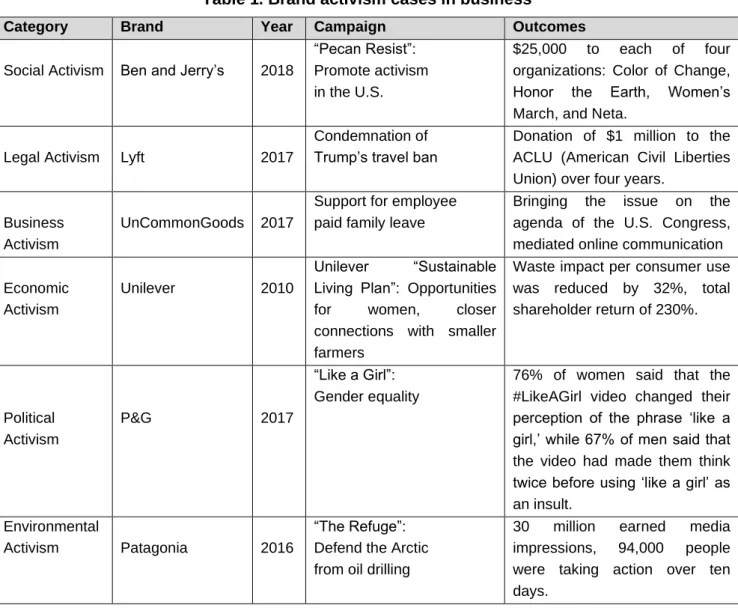
Table 1. Brand activism cases in business
Category Brand Year Campaign Outcomes
Social Activism Ben and Jerry’s 2018
“Pecan Resist”: Promote activism in the U.S.
$25,000 to each of four organizations: Color of Change, Honor the Earth, Women’s March, and Neta.
Legal Activism Lyft 2017
Condemnation of Trump’s travel ban
Donation of $1 million to the ACLU (American Civil Liberties Union) over four years.
Business Activism
UnCommonGoods 2017
Support for employee paid family leave
Bringing the issue on the agenda of the U.S. Congress, mediated online communication
Economic Activism
Unilever 2010
Unilever “Sustainable Living Plan”: Opportunities for women, closer connections with smaller farmers
Waste impact per consumer use was reduced by 32%, total shareholder return of 230%. Political Activism P&G 2017 “Like a Girl”: Gender equality
76% of women said that the #LikeAGirl video changed their perception of the phrase ‘like a girl,’ while 67% of men said that the video had made them think twice before using ‘like a girl’ as an insult.
Environmental
Activism Patagonia 2016
“The Refuge”: Defend the Arctic from oil drilling
30 million earned media impressions, 94,000 people were taking action over ten days.
3. VIRTUE COMES WITH ADDED BENEFITS: THE SNOWBALL EFFECT
Brand activism is increasing and spreading like a fashion. These changes are primarily due to a shift in consumer psychology and behavior. In the past, it was sufficient for brands if they could be a symbol of functional value competitiveness and consumer self-expression to outsiders [7]. However, new young consumers expect brands to be engaged with the socio-political environment and take action on social issues, such as making donations, starting petitions, changing products, and pursuing ethical employment practices. A recent study showed that 76% of Gen Z respondents (aged 13 to 24 years old) are more conscious as consumers and more likely to buy products and services from brands that respond to social issues that matter to them than those aged 25 years or older (accounting for 62%) [8]. As such, consumers are deepening their concerns about their core values and choose “meaningful brand ownership” as one solution to their concerns [9]. Modern consumers are sometimes extremely price-sensitive, but at the opposite extreme, they are willing to buy the philosophy put forth by brands while being indifferent to the price [10]. In times of force majeure such as the COVID-19 pandemic, political and social anxiety or long-term global economic downturn, in addition to the spread of materialism throughout generations, efforts by consumers to hold their own center of gravity is becoming a driving force that directs them toward fundamental values amid social changes that are hard for individuals to confront.
Another growth factor for brand activism is that companies change. In recent years, non-profit organizations have been growing steadily in terms of quantity and quality, and their growth has surpassed that of for-profit companies [11]. Recent trends show an increase in the number of non-profit organizations accompanied by an increase in the proportion of non-profit activities of for-profit companies. Amid these changes, for-profit companies’ social participation has increased further, and the distinction between profit and non-profit has been blurred, with consumers beginning to assign no meaning to it [12]. The reaction of the stock market changes according to the company’s philosophy and story, beyond the indicators of corporate management performance [13]. It is also noteworthy that independent social participation is now required at the brand level, not at the corporate level. This is because the brand, a symbolic personality and value messenger, comes in a more immediate sense to consumers.
In order to illustrate the compounding effect, Warren Edward Buffett, a world-renowned investor, explained in his autobiography that the “snowball effect” means increasing capital much like making a snowman [14]. It is challenging to make snowballs for the first time, but once the lump is formed, it adds up easily and quickly. Brand activism is similar. To consumers, “conducting good deeds” seems complicated and has no tangible effect, but in the end, the effects add up benefits, making brands and companies rich. Consumers are applauding the brand that sounds and acts at society’s injustice, not the brand that shines with rhetoric and beautiful decorations.
4. TRANSMEDIA AND BRAND ACTIVISM
In his book “Convergence Culture” (2008), MIT Professor Henry Jenkins, an expert in transmedia storytelling, said that “participatory culture” is directly completed by the hands of content consumers, not only at the technical level [15]. In the same book, “transmedia storytelling,” a concept combining ‘trans’ and ‘media’ in the sense of “transcendence,” means that the story experience transcends the limitations of the medium and becomes processed content that is delivered through various platforms. Consumers’ social participation is increasing, and the influence they directly exert on brands is growing in the participatory culture and transmedia environment [16]. Therefore, it is expected that the ‘full-scale un-contact’ experience created by the coronavirus pandemic in 2020 will further accelerate this trend.
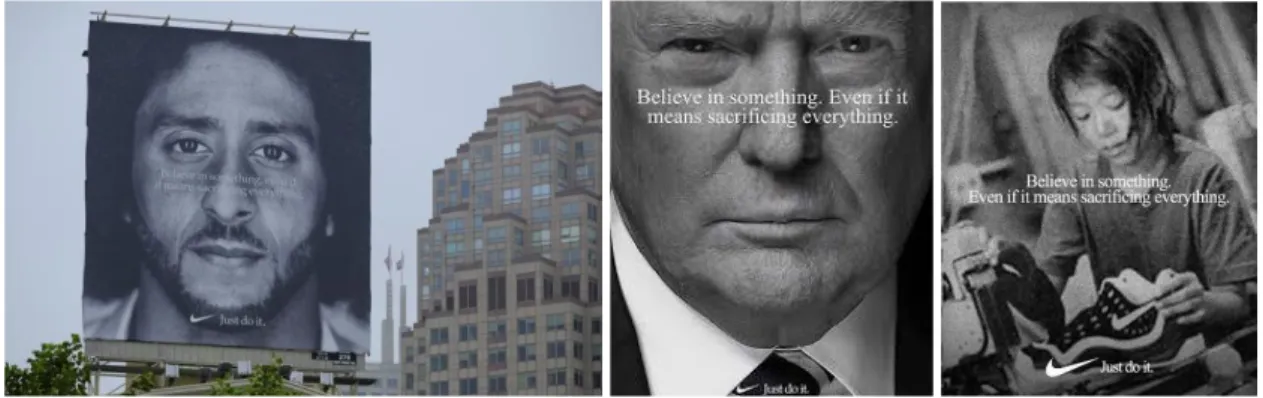
Indeed, the advent of the Internet and social media substantially changed the game. The emergence of digital platforms took away the one-way transmission from the brand to consumers. Consumers who have become participants beyond the brand story’s audience are now sharing their ideas directly as content creators and boldly express their opinions as content even if they are not influencers [16]. The interactive feature motivates people to get involved in brand discussions. Now that transmedia and participatory culture have matured, it has become more than textbook knowledge to let the consumers’ opinions flow in one direction through Integrated Brand Communication (IBC). Now, rather than respecting the diversity of consumer opinions that occur spontaneously and bringing them together, it is reasonable to take an activist approach to move the brand’s philosophy into action and encourage consumer participation. In 2018, Nike launched their Dream Crazy campaign with American athlete Colin Kaepernick who refused to sing the national anthem and started a kneeling performance in 2016 when the police excessively crackdown on black people sparked a controversy in the American Pro Football (NFL) [17]. Upon Nike’s releaseof the campaign, there was an extremely antagonistic reaction due to their support for Kaepernick. A vast number of Nike mentions with adverse reactions occurred on the Internet, such as hashtags #nikeboycott and #boycottnike. Ultimately, there is a fine line between being appropriate and controversial, which causes an adverse reactions to the brand when addressing any social issues. As consumers highly expect brands to engage more in social and political issues, it is vital to take into account whether the brand has promoted the value of the product inappropriately or offensively, causing a backlash from consumers [4].
Moreover, with the campaign slogan “Believe in something, even if it means sacrificing everything,” the catchphrase quickly became viral, as consumers reacted by producing their own version of the ad to point out social problems that were neglected. For example, one parody featured president Trump’s close-up face to suggest dangerous populism, while another consumer-generated ad hinted at child labor practices by big corporations (see Fig.2). Internet memes tailored to the controversial Nike ad went as far as featuring Hitler, Osama Bin Laden, and Jesus Christ. Consumers were able to communicate the original meaning and value of
the brand by acknowledging various opinions of people who hated them and those who liked them and reorganizing Nike’s brand spirit (“Just Do It”) amid such a wide gap. In the era of transmedia, brands need the courage and aggressiveness to make bold choices as active brand story makers and beyond brand storytellers.
Figure 2. Nike’s 2018 advertisement and consumer-generated ads.
Founded in 1978, “Ben & Jerry’s” ice cream brand is a company that supports fair trade and is known to promote various social issues such as equality and environmental conservation. “We are a company with a set of values. We are not a brand,” said Ben Cohen, founder of the company, stressing that the pursuit of value comes before commercial success [18]. In fact, recently, he did not hesitate to act in front of some of the most powerful people in the world, including the launch of the “Pecan Resist” product in 2018 to oppose U.S. President Trump’s racism. In 2020, he participated in the “Stop Hate for Profit” campaign carried out by U.S. civic groups and stopped paying for advertisements on Facebook and Instagram (owned by Facebook). Facebook ignored President Trump’s posts during a protest against racial discrimination, and at the time, North Face, Patagonia, and camping equipment maker REI stopped advertising. Ben & Jerry’s unconventional moves have led to a massive controversy on social media and an explosive increase in consumer-generated content.
5. CONCLUSION
Therefore, what should the advertisements and advertisers’ appearance be in an era when transmedia and brand activism have emerged as a big tide? Advertising is primarily divided into performance goal ads and branding goal ads. Often, if the performance is “advertising in the scientific aspect,” branding can be easily understood as “advertising in the artistic aspect.” Since modern advertising began in the early 1900s, science and art have been leading the advertising industry, but now we live in the era of leading science with performance as the ground goal. Under the pressure of accountability for short-term advertising performance requested by advertising costs, advertisers are running out of breath. These short-term advertising effects and limitations of performance marketing are getting bigger with larger brands. Recently, as ad abuse is escalating, there is a feeling of skepticism about forced performance to the extent that the demand for brand safety has intensified as attention to advertising has increased.
Brand activism is a brief departure from the marketing anecdotes mentioned above and requires advertisers to reflect on the brand and society together. Unfortunately, such introspection cannot be replaced by artificial intelligence (AI) and cannot be achieved in real-time. The advertising agency should look back on the “original value of advertising” and establish itself as a “professional group that discovers and grows value” that can view the present, past, and future of the brand together. Obviously, advertisers should actively learn from new technology-based challenges, but they should also be more faithful to their vocation to “create brand voices and actions,” which is the essence of brand activism.
REFERENCES
[1] McCracken, G. D., Culture and consumption II: Markets, meaning, and brand management. (Vol. 2). Indiana University Press, 2005.
[2] Madhavaram, S., Badrinarayanan, V., & McDonald, R. E., “Integrated marketing communication (IMC) and brand identity as critical components of brand equity strategy: A conceptual framework and research propositions”. Journal of Advertising, 34(4), 69-80, 2005.
https://doi.org/10.1080/00913367.2005.10639213
[3] Sarkar, C., & Kotler, P., “Brand activism”. From purpose to action. Kindle edition, 2018.
[4] Eyada, B. Brand Activism, “the Relation and Impact on Consumer Perception: A Case Study on Nike Advertising”. International Journal of Marketing Studies, 12(4), 2020.
https://doi.org/10.5539/ijms.v12n4p30
[5] Moorman, C., “Commentary: Brand Activism in a Political World”. Journal of Public Policy & Marketing, 39(4), 388-392, 2020. https://doi.org/10.1177/0743915620945260
[6] Evans, R., “I’m With The Brand: Meet The Brands That Can Give You Help!”, Introducing Live, BBC Radio, 2020. https://www.introducinglive.co.uk/speakers/rhodri-evans.
[7] Kim, H. S., & Drolet, A. “Choice and self-expression: A cultural analysis of variety-seeking”. Journal of personality and social psychology, 85(2), 373, 2003. https://doi.org/10.1037/0022-3514.85.2.373
[8] Admirand, Leigh. “Thinking beyond an empty black box: meeting Gen Z’s expectations for genuine brand activism”, Research World, Aug. 21, 2020. https://www.researchworld.com/thinking-beyond-an-empty-black-box-meeting-gen-zs-expectations-for-genuine-brand-activism/
[9] Hollis, N., The Meaningful Brand: How Strong Brands Make More Money. Macmillan, 2013.
[10] Oswald, L. R., & Oswald, L., Marketing semiotics: Signs, strategies, and brand value. Oxford University Press, 2012.
[11] Golensky, M., & Hager, M. Strategic leadership and management in non-profit organizations: Theory and practice. Oxford University Press, 2020.
[12] Moore, M. H., “Managing for value: Organizational strategy in for-profit, non-profit, and governmental organizations”. Non-profit and voluntary sector quarterly, 29(1_suppl), 183-204, 2000.
https://doi.org/10.1177/0899764000291S009
[13] Gill, R. “An integrative review of storytelling: Using corporate stories to strengthen employee engagement and internal and external reputation”. PRism, 8(1), 1-16, 2011.
[14] Schroeder, A. The snowball: Warren Buffett and the business of life. A&C Black, 2008.
[15] Jenkins, H. “Rethinking ‘rethinking convergence/ culture’”. Cultural Studies, 28(2), 267-297, 2014.
https://doi.org/10.1080/09502386.2013.801579
[16] Jenkins, H., “Participatory culture: From co-creating brand meaning to changing the world”. Marketing Intelligence Review, 6(2), 34-39, 2014. https://doi.org/10.2478/gfkmir-2014-0096
[17] Kim, J. K., Overton, H., Bhalla, N., & Li, J. Y. “Nike, Colin Kaepernick, and the politicization of sports: Examining perceived organizational motives and public responses”. Public Relations Review, 46(2), 101856, 2020. https://doi.org/10.1016/j.pubrev.2019.101856
[18] Ciszek, E., & Logan, N. (2018). “Challenging the dialogic promise: How Ben & Jerry’s support for Black Lives Matter fosters dissensus on social media”. Journal of Public Relations Research, 30(3), 115-127. https://doi.org/10.1080/1062726X.2018.1498342