† 책임저자 : 정회원, 한국철도기술연구원, 무선통신열차제어연구단, 선임연구원 E-mail : [email protected] TEL : (031)460-5745 FAX : (031)460-5809 * 정회원, 한국철도기술연구원, 무선통신열차제어연구단, 선임연구원 ** 정회원, 한국철도기술연구원, 열차제어통신연구실, 수석연구원
한국형 무선통신기반 열차제어시스템 표준체계 구축을 위한
ATP 개발사양 연구
System Specification of ATP for Standard System of KRTCS
오세찬† 윤용기* 김용규**
Oh, Seh-Chan Yoon, Yong-Ki Kim, Yong-Kyu
ABSTRACT
The train control system is a facility to ensure safe train operation, and its safety is the most important factor for system introduction. Therefore, in order to improve practical usability in the business, safety analysis and evaluation of train control system and train control related core technologies are needed. Korea Railroad Research Institute has carried out standard development of radio-based train control system as a government research and development project.
In this paper, we present a system specification of ATP, a core part of train control system, for standard system of Korean radio-based train control system(KRTCS). The paper present a operation environment and primary ATP functions, and functional requirement specifications.
1. 서론 열차제어시스템은 열차운행을 감시·통제하는 열차관제설비, 지상에서 열차의 운행에 필요한 제어정보 를 생성하는 지상설비, 지상에서 전송된 정보를 통해 차량의 운행조건과 열차속도를 제어하는 차상설 비 및 지상에서 차상으로 정보를 전송하는 유무선 열차제어통신망으로 구성되며, 철도시스템을 구성하 는 시설물, 서비스설비, 안전설비 및 차량장치와 긴밀한 인터페이스를 갖는다. 특히, 열차제어시스템은 실시간 열차위치추적정보를 바탕으로 하여 선행열차와 후속열차간의 안전공 간을 확보하는 것이 기술적 핵심이며, 열차제어시스템의 도입을 결정하는 가장 중요한 인자는 시스템 의 안전성이다. 따라서 열차제어기술의 안전성을 확보하여야만 실제 시스템에 적용할 수 있는 기반을 마련하는 것이라 볼 수 있다. 한국철도기술연구원은 지난 2010년부터 무인자동운전을 지원하는 도시철도용 무선통신기반 열차제어 시스템을 실용화하고 상호운영성을 확보하기 위해 국토해양부 국가연구개발 과제로 무선통신기반 열차 제어시스템의 표준체계 구축 및 성능평가를 수행하고 있다. 주요 연구내용으로는 철도건설·운영기관의 열차제어시스템요구사항을 토대로 열차제어핵심기술과 열차제어시스템에 대해서 객관적이고 엄격한 성 능평가와 안전성평가를 수행하며, 최종적으로 열차제어시스템의 표준체계를 구축하는 것이다. 본 연구는 무선통신기반 열차제어시스템의 표준체계 구축을 위한 열차제어시스템의 핵심이라 할 수 있 는 ATP(Automatic Train Protection) 시스템 사양의 설계에 대한 것으로 무선통신기반 열차제어시스 템의 대상 환경에 대한 정의와 ATP 기능적 요구사양에 대해 언급한다.
2. 한국형 무선통신기반 열차제어시스템
한국형 무성통신기반 열차제어시스템(KRTCS)는 KRTCS가 설치된 선로를 대상으로 하며 KRTCS가 설치되 지 않은 선로의 전후 통과지역도 고려한다. KRTCS가 설치되는 선로 유형은 수익서비스 선로, 회차구 역, 정지구역, 환승선로, 시험선로, 세차장, 기지의 기타선로 등이며, 차량을 검수하는 장소는 시스템 고려대상에서 제외한다.
KRTCS는 특정 어플리케이션에 따라 다양한 구성이 가능하다. 즉, ATP 기능만 제공하며, ATS 및 ATO 기능은 제공하지 않는 구성과 운행상 특정 어플리케이션을 충족시켜야 할 필요가 있으므로 특정 ATO 및 ATS 기능을 제공하는 구성이 있을 수 있다.
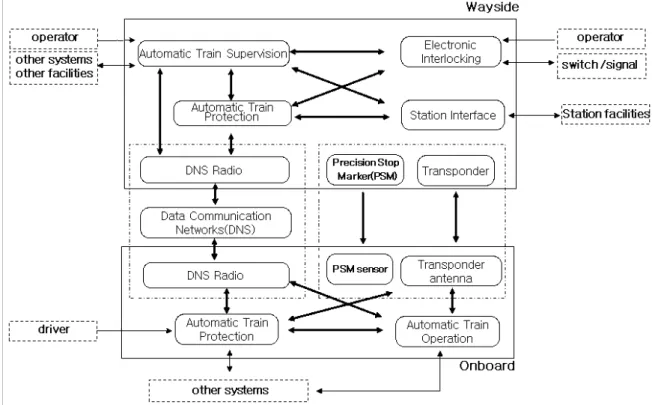
KRTCS는 그림 1에서와 같이 지상(Wayside)시스템과 차상(Onboard) 시스템으로 구분되며 무선통신으로 이 둘 간에 통신이 이루어진다. 지상시스템은 크게 ATS(Automatic Train Supervision)과 지상 ATP(Automatic Train Protection), DNS Radio, PSM(Precision Stop Marker), Transponder 그리고 플랫 폼 스크린도어(PSD)와 같은 역 설비의 제어와 상태감시를 위한 Station Interface로 구성된다. 차상의 경우 차상 ATP, ATO(Automatic Train Operation), DNS Radio로 구성된다.
그림 1. Configuration of KRTCS 3. KRTCS ATP 기능설계 KRTCS ATP 기능설계는 표준체계 구축을 목표로 IEEE 1474.3에 기반하여 기능 분류를 수행하였으며, 국내 신호제작사에서 기 개발된 신호시스템의 특성KRTCS의 ATP 시스템의 전체 기능적 구성은 그림 2와 같다. 열차의 안전한 방호와 관련된 기능 뿐만 아니라 열차의 영업노선의 투입과 주박, 열차 운전모드 및 안전한 출발조건, 여러 위급상황에 대한 대처, 열차 운전자 UI 등이 제시되어 있다. 본 장에서는 ATP의 가장 중요한 방호기능의 측면에서 기능을 설명하면, 열차의 위치결정과, Target Point 및 Safety Margin을 포함한 이동권한의 결정, ATP profile의 결정과 관련된 기능에 대해서 언급 하기로 한다.
Train location
determination External interlockingCommands Limit of movement protection
and target point Determination
ATP profile determination
Authorize speed determination
Door control interlocks
Fixed ATP data Management
Supervise/enforce authorized speed
Actual train speed/ travel direction
Determination Train-borne ATP user interfaces
EI function Set in/off Train operation Train operation management Management of emergency situation EI function
Limit of safe route Determination
그림 2. KRTCS APT Functions 3.1 Train Location Determination
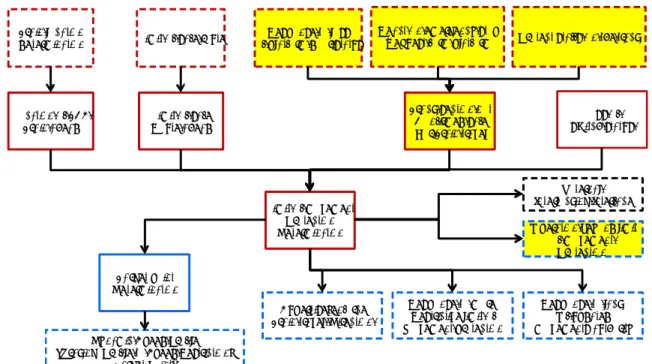
열차의 위치결정의 기능적 구성도는 그림 3에 제시되어 있다. 그림에서 파란색 테두리 기능은 차상 ATP의 기능이고 빨간색 테두리 기능은 지상 ATP에서 수행하는 기능을 의미한다. 열차 위치결정을 직 접적으로 수행하는 기능은 실선테두리로 표기하였으며 이들과 입력 및 출력 인터페이스 하는 기능은 점선의 테두리로 표시하였다. 노란색 바탕의 기능은 Optional한 기능을 표시하였다. 열차의 위치결정은 우선 열차 위치의 초기화로부터 시작된다. 열차가 제어영역으로 들어온 경우, 고장으로부터 복구된 경 우 열차의 정확한 위치를 초기화 하여야 한다. 초기 위치를 시작으로 차상 ATP는 자신의 열차를 계산 하여 열차의 길이(Train Length Determination) 및 무결성정보(Parted Train Detection)와 함께 지상 ATP로 전송한다. 지상ATP에서는 제어영역 상의 모든 열차에 대한 위치를 결정한다. Train Location Initialization Train location initialization on Recovery from TCS equipment failure Train length
determination Train locationcalculation P osition uncertaintycompensation P arted Train
detection
O ccupancy status O f track section Interlocking protection
with loss of TCS train location report
Movement of train with inoperable TCS equipment
Train with inoperable TCS equipment
at entry point P rotection of train
with loss of TCS train location report Train location initialization on entry to TCS territory Failure management Train location determination Route status information Route/Section Blocking O ccupied track Ahead
Determine train berthing Location
Location of TCS Train ahead
Authorize speed determination
Door open interlocks -train/platform doors Ex ternal Interlocking
Interface
Train speed regulation
3.2 Limit of Movement Protection and Target Point Determination
열차의 이동권한은 그림 4에서와 같이 절대 넘어서는 안되는 열차이동한계(Limit of Movement Protection)과 열차의 속도, 제동성능, 열차길이의 불확실성 등을 고려한 Safety Margin과 ATP Target Point 그리고 ATP 속도 프로파일을 통해 제어 된다. ATP Profile은 비상 제동곡선(Emergency Braking Curve)와 전상용제동곡선(Full Service Braking Curve), 알람을 위한 제동투입곡선(Braking Intervention Curve)로 구성된다.
(2) Target point
(1) Limit of movement protection (Movement protection limit) Safety margin
(3) ATP profile (Train protection profile)
Emergency braking curve
그림 4. Train Movement Authority
지상 ATP에서는 열차의이동한계를 결정하기 위해 필요한 선행열차의 위치(Location of Train ahead) 와 안전한 진로의 한계(Limit of safe Route ahead), 열차진행에 확인되지 않은 선로구간(Track Section not Confirmed Safe for Train Travel), 선로전환기 상태의 손실 등과 같은 상황들을 고려한 다. 지상 ATP에서는 제어영역 상에 모든 열차의 이동한계를 결정하여 차상 ATP에 전송한다. 또한 열차 의 이동한계 결정에 차상 ATP에서는 전송받은 열차의이동한계를 기반으로 차량의 속도, 제동성능 등을 고려한 Safety Margin과 Target Point를 결정한다.
Location of TCS
Train ahead Route aheadLimit of safe
Track section not Confirmed safe For Train travel
Loss of switch status Limit of movement P rotection Determination Target point Determination Train location
determination Limit of safe route of platform door statusResponse to loss
React on emergency stop
Request form platform P rotect staffs on the track
S upervise/enforce Train travel Direction
Response to more Restrictive limit of Movement protection Response to lack O f updated movements authority O peration beyond limit
of movement P rotection
Ex ternal Interlocking Interface
Dy namic Speed Profile (Braking Profile to Speed Restriction/
Target Point)
3.3 ATP Profile Determination
지상 ATP는 열차와 지상의 고정인프라 속도제한 값과 임시속도 제한 값을 가지고 정적속도 프로파일 (Static Speed Profile)을 생성한다. 정적속도 프로파일은 선구 및 차량의 여러 가지 속도제한 프로파 일을 비교하여 가장 제약적인 속도제한 값을 선택한다. 최종적으로 선택된 가장 제한적인 속도제한 프 로파일에 열차의 길이를 반영한다. 열차의 길이를 반영하는 이유는 속도증가 구간시 열차의 후미부가 허용된 속도제한 값을 초과하여 지나가는 것을 방지하기 위함이다.
지상 ATP에서 생성한 정적속도프로파일과 Target Point를 가지고 차상의 ATP는 동적속도프로파일 (Dynamic Speed Profile)을 생성한다. 이때 차량의 제동성능을 고려하여 비상제동곡선, 전상용제동곡 선, 제동투입곡선 등의 ATP 프로파일을 생성한다. 생성된 동적속도프로파일은 ATP 방호를 위한 속도결 정 기능과 ATO 속도프로파일 결정에 사용된다.
P ermanent Infrastructure S peed Limits
S tatic Speed Profile Determination(MRSP) Temporary
Infrastructure S peed Limits
Dy namic Speed Profile (Braking Profile to Speed Restriction/
Target Point) Temporary train
S peed limit P ermanent train
S peed limit
ATP Profile Determination
Target point Determination Temporary
S peed Restrictions (ATS)
Determine ATO profile Authorize
speed determination
그림 6. ATP Profile Determination 4. 결론 및 향후연구 본 논문은 한국형 무선통신기반 열차제어시스템의 표준체계 구축을 위한 ATP 시스템 설계 과정에 대 해 제시하였다. 열차제어시스템 표준체계 구축을 위해서 IEEE 1474.3의 기능배치 요구사항을 기반으로 사양서 작성 워킹그룹을 통해 KRTCS 열차제어시스템 ATP 시스템 기능을 배치하였으며 입력 출력 데이 터에 대한 정의를 하였다. 향후 열차제어시스템의 상호운영성 및 상호교체성을 보장하기 위해서 각 기능별 입력 출력을 인터페이 스 사양을 명확하게 정의할 필요가 있다. 참고문헌
1. ERTMS, Functional Requirements Specification, Ver 4.29 2. ERTMS, System Requirements Specification, Ver 2.3.0
3. IEEE 1474.1 IEEE Standard for Communication-Based Train Control(CBTC) Performance and Functional Requirements
4. IEEE 1474.3 IEEE Recommended Practice for Communication-Based Train Control(CBTC) System Design and Functional Allocations
5. B. Vincze & G. Tarmai, Development and Analysis of Train Brake Curve Calculation Methods with Complex Simulation, Proceedings of International Exhibition of Electrical Equipment for Power Engineering, Electrical Engineering, Electronics, Energy and Resource-saving Technologies, Household Electric Appliances(ELECTR 2006) May 23, 24, 2006 Zilina. Slovika. 6. 백종현, 김종기, 이영훈, 김백현, 윤용기, “통신을 이용한 자동 열차간격 제어 알고리즘 개발,” 한국철 도학회 춘계학술대회, 2003 7. 백종현, 김용규, “이동권한을 이용한 열차간격제어에 대한 연구,” 대한전기학회 하계학술대회, 2007 8. 백종현, 신덕호, 변윤섭, 이영훈, “통신을 이용한 열차제어시스템에서의 간격제어를 위한 알고리즘 개 발,” 대한전기학회 춘계학술대회, 2003 9. 윤용기, 오세찬, 김창훈, 김용규, “열차간격제어를 위한 정적속도프로파일 생성 연구,” 한국철도학회 추계학술대회, 2010