저작자표시-비영리-변경금지 2.0 대한민국 이용자는 아래의 조건을 따르는 경우에 한하여 자유롭게
l 이 저작물을 복제, 배포, 전송, 전시, 공연 및 방송할 수 있습니다. 다음과 같은 조건을 따라야 합니다:
l 귀하는, 이 저작물의 재이용이나 배포의 경우, 이 저작물에 적용된 이용허락조건 을 명확하게 나타내어야 합니다.
l 저작권자로부터 별도의 허가를 받으면 이러한 조건들은 적용되지 않습니다.
저작권법에 따른 이용자의 권리는 위의 내용에 의하여 영향을 받지 않습니다. 이것은 이용허락규약(Legal Code)을 이해하기 쉽게 요약한 것입니다.
Disclaimer
저작자표시. 귀하는 원저작자를 표시하여야 합니다.
비영리. 귀하는 이 저작물을 영리 목적으로 이용할 수 없습니다.
변경금지. 귀하는 이 저작물을 개작, 변형 또는 가공할 수 없습니다.
의학박사 학위논문
비뇨기과 수술 후 폐 합병증에 대한 새로운 예측 인자 : 예후 영양 지수와 횡경막 두께 분율
Emerging predictors for pulmonary complications after urologic surgery: prognostic nutritional index and
diaphragm thickening fraction
울 산 대 학 교 대 학 원 의 학 과
유지현
비뇨기과 수술 후 폐 합병증에 대한 새로운 예측 인자: 예후 영양 지수와 횡경막 두께 분율
지 도 교 수 김 영 국
이 논문을 의학박사 학위 논문으로 제출함
2022 년 2 월
울 산 대 학 교 대 학 원 의 학 과
유 지 현
유지현의 의학박사학위 논문을 인준함
심사위원 황 재 현 인 심사위원 노 영 진 인 심사위원 이 봉 재 인 심사위원 백 종 화 인 심사위원 김 영 국 인
울 산 대 학 교 대 학 원
2022 년 2 월
ABSTRACT
Background:Radical cystectomy is a major and long-time abdominal surgery that frequently leads to postoperative pulmonary complications. Robot-assisted laparoscopic prostatectomy requires particular surgical conditions, such as carbon dioxide pneumoperitoneum and steep Trendelenburg positioning, which may have adverse effects on the respiratory system. Furthermore, most patients undergoing urologic surgery are elderly patients with lower lung compliance and pulmonary function. However, little is known about the predictive ability of clinically available indices for postoperative pulmonary complications in patients who undergo urologic surgery. This study aimed to evaluate the predictive ability of clinically available indices such as the prognostic nutritional index and diaphragm thickening fraction for postoperative pulmonary complications in urologic surgery.
PART 1
Purpose: We evaluated the impact of preoperative prognostic nutritional index on postoperative pulmonary complications in radical cystectomy. The prognostic nutritional index allows for routine and easy assessment of patients’ nutritional status and may predict postoperative complications and outcomes in cancer patients.
Methods: Patients who underwent radical cystectomy between January 2007 and February 2019 were retrospectively reviewed and included in the analysis. The prognostic nutritional index was calculated as 10 × (serum albumin) + 0.005 × (total lymphocyte count). The postoperative pulmonary complications were determined if any of the following occurred within seven days of radical cystectomy:
atelectasis, pleural effusion, pneumothorax, bronchospasm, respiratory infection, respiratory failure, or aspiration pneumonitis. The risk factors for postoperative pulmonary complications were evaluated using multivariate logistic regression analysis. A receiver operating characteristic curve analysis of prognostic nutritional index was performed, and an optimal cut-off value was identified. Propensity score-matched analysis was used to determine the impact of prognostic nutritional index on
postoperative pulmonary complications. Postoperative outcomes such as included intensive care unit admission rate, prolonged (more than two days) intensive care unit stay, and hospital stay duration (number of days from surgery to discharge) were also evaluated.
Results: Postoperative pulmonary complications occurred in 112 (13.6%) of 822 patients. Multivariate logistic regression analysis identified prognostic nutritional index, age, and serum creatinine level as risk factors. The area under the receiver operating characteristic curve of prognostic nutritional index for predicting postoperative pulmonary complications was 0.714 (optimal cut-off value: 45). After propensity score matching, the incidence of postoperative pulmonary complications in the prognostic nutritional index ≤45 group was significantly higher compared with the prognostic nutritional index
>45 group (20.8% vs. 6.8%, p <0.001), and prognostic nutritional index ≤45 was associated with a higher incidence of postoperative pulmonary complications in radical cystectomy (odds ratio = 3.308, 95% confidence interval [1.779–6.151], p <0.001). The rates of intensive care unit admission and prolonged (>2 days) stay thereof were higher in patients who developed postoperative pulmonary complications.
Conclusions:Preoperative prognostic nutritional index ≤45 was associated with a higher incidence of postoperative pulmonary complications in radical cystectomy. This result suggests that preoperative prognostic nutritional index provides useful information about pulmonary complications after radical cystectomy.
PART 2
Purpose:We evaluated the effect of diaphragm thickening fraction on the occurrence of postoperative pulmonary complications in robot-assisted laparoscopic prostatectomy.
Methods: We measured the preoperative thickness of the diaphragm at peak inspiration (Tpi) and end expiration (Tee) using ultrasonography. Diaphragm thickening fraction was calculated as thickening fraction = (Tpi–Tee)/Tee. A receiver operating characteristic curve analysis of thickening fraction was performed. After dividing patients into two groups according to the optimal thickening fraction cut-off value, we compared the occurrence of postoperative pulmonary complications between the groups. The
predictivity of diaphragm thickening fraction for the occurrence of postoperative pulmonary complications was evaluated.
Results: Of 145 patients, 40 patients (27.6%) developed postoperative pulmonary complications.
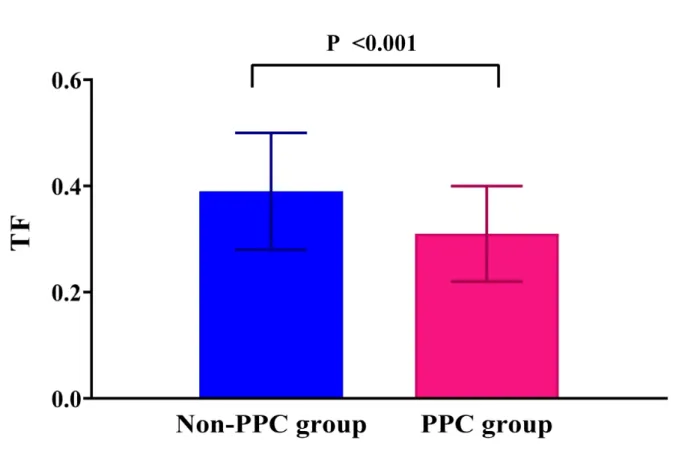
Patients with postoperative pulmonary complications had a significantly lower thickening fraction than those without postoperative pulmonary complications in robot-assisted laparoscopic prostatectomy (0.31 ± 0.09 vs. 0.39 ± 0.11, p <0.001). In receiver operating characteristic curve analysis, the optimal cut-off value was 0.28. The patients were divided into thickening fraction ≥0.28 group (n = 114) and thickening fraction <0.28 group (n = 31). The incidence of postoperative pulmonary complications was significantly higher in the thickening fraction <0.28 group than in the thickening fraction ≥0.28 group (51.6% vs. 21.1%, p = 0.001). Diaphragm thickening fraction <0.28 was associated with a higher incidence of postoperative pulmonary complications than diaphragm thickening fraction ≥0.28 (odds ratio = 4.534, 95% confidence interval [1.763–11.658], p = 0.002).
Conclusions: Preoperative diaphragm thickening fraction <0.28 was associated with an increased incidence of postoperative pulmonary complications, suggesting that diaphragm thickening fraction as a prognostic imaging marker provides useful information on postoperative pulmonary complications in robot-assisted laparoscopic prostatectomy requiring the Trendelenburg position and pneumoperitoneum.
TABLE OF CONTENTS
ABSTRACT··· i
LIST OF FIGURES ··· vii
LIST OF TABLES ··· viii
INTRODUCTION ···1
PART 1. Impact of prognostic nutritional index on postoperative pulmonary complications in radical cystectomy: a propensity score-matched analysis 1.1 INTRODUCTION··· 4
1.2 METHODS ···5
1.3 RESULTS··· 9
1.4 DISCUSSION··· 11
1.5 CONCLUSION ··· 15
PART 2. Diaphragm thickening fraction as a prognostic imaging marker for postoperative pulmonary complications in robot-assisted laparoscopic prostatectomy: a prospective observational study 2.1 INTRODUCTION··· 28
2.2 METHODS ··· 29
2.3 RESULTS··· 32
2.4 DISCUSSION··· 33
2.5 CONCLUSION ··· 36
CONCLUSION··· 48 REFERENCES ··· 49 ABSTRACT IN KOREAN ··· 56
LIST OF FIGURES
Figure 1.1 ··· 16
Figure 1.2 ··· 17
Figure 1.3 ··· 18
Figure 2.1 ··· 37
Figure 2.2 ··· 38
Figure 2.3 ··· 39
Figure 2.4 ··· 40
Figure 2.5 ··· 41
Figure 2.6 ··· 42
LIST OF TABLES
Table 1.1 ··· 19
Table 1.2 ··· 21
Table 1.3 ··· 23
Table 1.4 ··· 26
Table 2.1 ··· 43
Table 2.2 ··· 44
Table 2.3 ··· 46
INTRODUCTION
Radical cystectomy is the gold standard treatment for non-metastatic muscle-invasive bladder cancer.1However, it is one of the most technically demanding urological procedures, with 30%–70% of patients undergoing the procedure showing various postoperative complications, particularly postoperative pulmonary complications (PPCs).2-5 Robot-assisted laparoscopic prostatectomy (RALP) has a number of advantages, such as lower perioperative blood loss and transfusion rate and a shorter hospital stay, compared with open prostatectomy in patients with prostate cancer.6,7 RALP requires carbon dioxide pneumoperitoneum and steep Trendelenburg positioning. Carbon dioxide pneumoperitoneum can cause hypercarbia and respiratory acidosis. In addition, a steep Trendelenburg position can result in decreased lung volume, lung compliance, functional residual capacity, and vital capacity and increased ventilation–perfusion mismatch and peak airway pressure.8Furthermore, most patients undergoing RALP are elderly patients, who have lower lung compliance and pulmonary function.9 These particular surgical conditions and patient characteristics may compromise the respiratory system and lead to a relatively high incidence of PPCs. Therefore, careful management is necessary to prevent PPCs in patients undergoing radical cystectomy and RALP.
Malnutrition is associated with poor oncological survival, disease progression, and postoperative outcomes.10-13 Therefore, evaluating the preoperative nutrition of cancer patients is crucial. The prognostic nutritional index (PNI) is widely utilized and may predict postoperative complications and outcomes in cancer patients.14-16By using serum albumin concentration and total lymphocyte count, PNI allows for routine and easy assessment of patients’ nutritional status before surgery.17However, to our knowledge, there are no studies on the association between PNI and pulmonary complications in patients undergoing radical cystectomy.
The diaphragm is a principal muscle of respiration, and its function can be evaluated by diaphragm thickening fraction (TF) during respiration at the zone of apposition.18Diaphragm TF, which can be simply measured at bedside by ultrasonography, can precisely reflect the invasive gold standard measure (i.e., transdiaphragmatic pressure measurement).19,20 In particular, a low diaphragm TF can be a predictor of the failure of mechanical ventilation weaning in the intensive care unit and is associated with PPCs in cardiac surgery.21,22 However, little is known about the association between diaphragm TF and PPCs in surgeries
requiring the steep Trendelenburg position and carbon dioxide pneumoperitoneum that adversely affect the respiratory system.
In this doctoral thesis, the author aimed to evaluate the predictive ability of clinically available indices, such as the prognostic nutritional index (in Part 1) and diaphragm thickening fraction (in Part 2) for PPCs in urologic surgery.
PART 1
Impact of prognostic nutritional index on postoperative pulmonary complications in radical cystectomy: a propensity score-matched analysis
This part was published in Annals of Surgical Oncology.23
1.1. INTRODUCTION
Radical cystectomy is the gold standard treatment for non-metastatic muscle-invasive bladder cancer.1However, it is one of the most technically demanding urological procedures, with 30–70% of patients undergoing the procedure showing various postoperative complications (e.g., pulmonary, cardiovascular, neurological, genitourinary, thromboembolic, and septic complications).2-5 Particularly, postoperative pulmonary complications (PPCs) are associated with prolonged hospital stays and increased cost.24-26
Nutrition is associated with oncological survival, disease progression, and postoperative outcomes.10-13 Particularly, malnutrition leads to a higher likelihood of postoperative complications, and as much as 40–80%
of cancer patients may be affected by malnutrition.27,28Therefore, evaluating the preoperative nutrition of cancer patients is crucial. The prognostic nutritional index (PNI) is widely utilized, and may predict postoperative complications and outcomes in cancer patients.14-16By using serum albumin concentration and total lymphocyte count, PNI allows for routine and easy assessment of patients’ nutritional status before surgery.17However, to our knowledge, there are no studies on the association between PNI and pulmonary complications in patients undergoing radical cystectomy.
Thus, we evaluated the effect of preoperative PNI on PPCs in radical cystectomy. First, we identified the risk factors for PPCs and the capability of PNI for predicting the occurrence of PPCs. Additionally, we compared the postoperative outcomes, including intensive care unit (ICU) admission rate, prolonged (more than two days) ICU stay rate, and hospital stay duration between patients who developed PPCs (PPC group) and those who did not (non-PPC group).
1.2 METHODS Patients
The institutional review board of Asan Medical Center (Seoul, Republic of Korea) approved this study (approval no. 2019-1279). Patients who underwent radical cystectomy due to bladder cancer at Asan Medical Center between January 2007 and February 2019 were retrospectively reviewed and included in the analysis. Patients with incomplete medical records or those who underwent radical cystectomy combined with other surgery were excluded. Computerized databases were reviewed to collect the demographic, laboratory, and clinical data of the patients and PPCs were noted.
Intraoperative Protocols
Before the induction of anesthesia, all patients were monitored with electrocardiography, pulse oximetry, non- invasive blood pressure, end-tidal carbon dioxide concentration, and the bispectral index. General anesthesia was induced with 4–5 mg/kg thiopental sodium or 1.5–2 mg/kg propofol and 0.5–0.8 mg/kg rocuronium and maintained with 1–4 vol% sevoflurane and 50% oxygen. Arterial catheterization was performed to continuously monitor the arterial blood pressure, and central venous catheterization was performed through the internal jugular vein. Tidal volume was adjusted to 8–10 mL per ideal body weight, and the respiratory rate was adjusted to maintain an end-tidal carbon dioxide concentration of 35–40 cmH2O. Positive end-expiratory pressure and the recruitment maneuver were not applied in any patient. The concentration of sevoflurane was adjusted to maintain a bispectral index of 40–60. Mean arterial blood pressure was maintained above 65 mmHg, with fluid administration and the intermittent usage of inotropic agents or vasopressors (e.g., ephedrine, phenylephrine, or norepinephrine). For fluid administration, both crystalloids such as lactated Ringer’s solution or plasma solution A (CJ Pharmaceutical, Seoul, Republic of Korea) and colloids such as 6% hydroxyethyl starch or 5% albumin were used. Transfusion of red blood cells was performed when hemoglobin concentration was less than 8 g/dL.
Neuromuscular blockade was reversed with a neostigmine-glycopyrrolate mixture or sugammadex at the discretion of the anesthesiologist. Intravenous patient-controlled analgesia with fentanyl was used for postoperative pain management. Radical cystectomy and pelvic lymphadenectomy were performed according to the standard technique used at our center.29,30 Standard or extended pelvic lymph node dissection was
performed at the discretion of urologic surgeons. Standard pelvic lymph node dissection included the hypogastric, distal common iliac, external iliac, obturator, and perivesical lymph nodes. Extended lymph node dissection included the lymph node to the extent of the inferior vena cava, distal aorta, and proximal common iliac artery. A subsequent urinary diversion with an ileal neobladder or ileal conduit was performed at the discretion of urologic surgeons. Five highly experienced urologic surgeons performed all the operations.
Definition of PNI and PPCs
The following formula was used to calculate the PNI = 10 × serum albumin (g/dL) + 0.005 × total lymphocyte count (per mm3).17The existence of PPCs was determined if any of the following occurred within seven days of radical cystectomy: atelectasis, pleural effusion, pneumothorax, bronchospasm, respiratory infection, respiratory failure, or aspiration pneumonitis.31 Clinicians diagnosed atelectasis, pleural effusion, and pneumothorax with chest X-rays. Bronchospasm was defined as newly detected expiratory wheezing that required treatment with bronchodilators. Respiratory infection was defined as the presence of one or more symptoms (i.e., new or changed lung opacities, new or changed sputum, leukocyte count more than 12,000/mm3, or fever) while being treated with antibiotics for a suspected respiratory infection. Respiratory failure was defined as a partial arterial oxygen pressure less than 60 mmHg in room air, partial arterial oxygen pressure/fractional inspired oxygen concentration less than 300, or arterial oxygen saturation measured with pulse oximeter less than 90%, requiring oxygen therapy. Aspiration pneumonitis was defined as an acute lung injury based on the aspiration of gastric contents.
Data Collection and Definitions
We collected demographic and preoperative data including sex, age, body mass index, American Society of Anesthesiologist Physical Status, comorbidities (i.e., diabetes mellitus, hypertension, coronary artery disease, cerebrovascular disease, and chronic obstructive pulmonary disease), smoking history, tumor stage, tumor grade, neo-adjuvant chemotherapy, and preoperative laboratory tests (i.e., white blood cells count, lymphocyte count, hemoglobin concentration, platelets count, serum albumin concentration, PNI, and serum creatinine level).
Coronary artery disease included a history of myocardial infarction, angina, heart attack, interventional
angioplasty, or coronary artery bypass graft surgery. Cerebrovascular disease included cerebrovascular accident, transient ischemic accident, stroke, or mini-stroke. Chronic obstructive pulmonary disease included chronic obstructive pulmonary disease, emphysema, or chronic bronchitis. Tumor stage was classified by the 2010 American Joint Committee on Cancer tumor-node-metastasis staging system.32Tumor grade was classified by the 2016 World Health Organization grading system.33Neo-adjuvant chemotherapy was performed with one of the following combinations: gemcitabine and cisplatin; methotrexate and vinblastine; gemcitabine and carboplatin; or sulfate, cisplatin, and doxorubicin. Intraoperative data included operation duration, anesthesia duration, crystalloid and colloid amounts, red blood cell transfusion, reversal agent of neuromuscular blockade, and urinary diversion type. Postoperative outcomes included ICU admission rate, prolonged (more than two days) ICU stay,34and hospital stay duration (number of days from surgery to discharge).
Statistical Analysis
Continuous variables are expressed as mean ± standard deviation and categorical variables as number (percent).
Continuous variables were compared using the Student’s t-test or the Mann–Whitney U-test and categorical variables were compared using the chi-square test or the Fisher’s exact test between the PPC and non-PPC groups in all cohorts. Univariate and multivariate logistic regression analyses were performed to identify independent risk factors for PPCs. All covariates with a p-value of less than 0.05 in the univariate logistic regression analysis were entered into the multivariate logistic regression analysis. The ability of preoperative PNI for predicting PPCs in patients who underwent radical cystectomy was determined by calculating the area under the receiver operating characteristic (ROC) curve, which was calculated using the trapezoid rule. The optimal cut-off value was determined as the value with the highest sensitivity and specificity. The variance inflation factor was examined to check the multicollinearity. Variables with a variance inflation factor of more than 10 were considered as highly multicollinear and eliminated from analyses. The Hosmer–Lemeshow goodness-of-fit statistic was used to measure the calibration of the logistic regression model, and the C-statistic was used for measuring the discrimination of the logistic regression model.
A 1:1 propensity score-matched analysis was performed by the nearest neighbor method with a caliper size of 0.2 to identify the impact of PNI on PPCs. To reduce selection bias and confounding factors, the
propensity score was calculated using logistic regression analysis by including the following variables: sex, age, body mass index, American Society of Anesthesiologist Physical Status, history of diabetes mellitus, hypertension, coronary artery disease, cerebrovascular accident, and chronic obstructive pulmonary disease, smoking history, tumor stage, tumor grade, neo-adjuvant chemotherapy, hemoglobin concentration, serum creatinine concentration, operation duration, crystalloid and colloid amounts, red blood cell transfusion, reversal agent of neuromuscular blockade, and urinary diversion type. The standardized mean difference (SMD) was measured to determine the balance between the two groups before and after propensity score matching. The SMD cut-off value was less than 0.2, which was regarded to indicate a sufficient balance between the two groups.
After 1:1 propensity score matching, continuous variables were compared using the paired t-test, and categorical variables were compared using the McNemar’s test. The predictive value of PNI for the occurrence of PPCs in the propensity score-matched cohort was evaluated by conditional logistic regression analysis. All statistical analyses were carried out using STATA ver. 13.1 (Stata Corp., College Station, TX, USA) and SPSS®version 23.0 software (IBM, Armonk, NY, USA), with significance set atp <0.05.
1.3 RESULTS
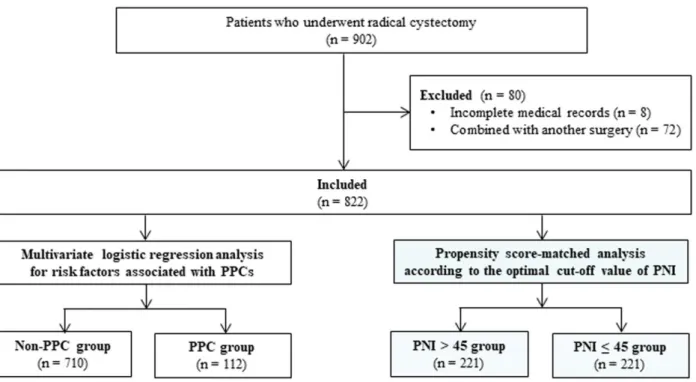
A total of 902 patients underwent radical cystectomy between January 2007 and February 2019. Eighty patients were excluded (eight due to incomplete medical records and 72 due to having other surgical procedures combined with radical cystectomy). Thus, 822 patients were included, of whom PPCs occurred in 112 patients (13.6%) (Fig. 1.1).
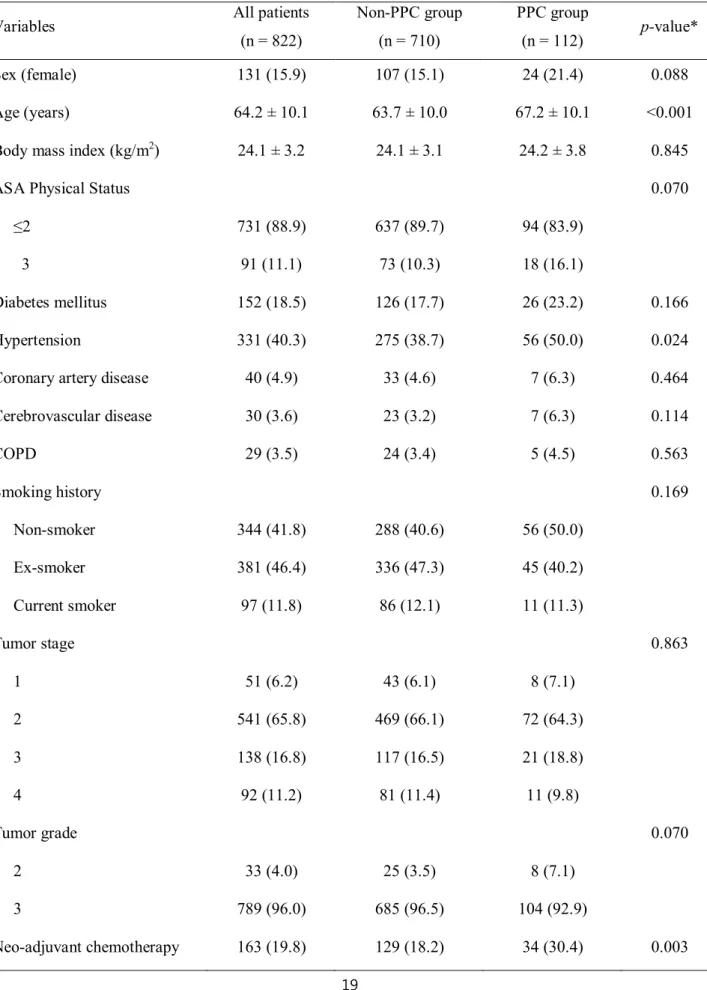
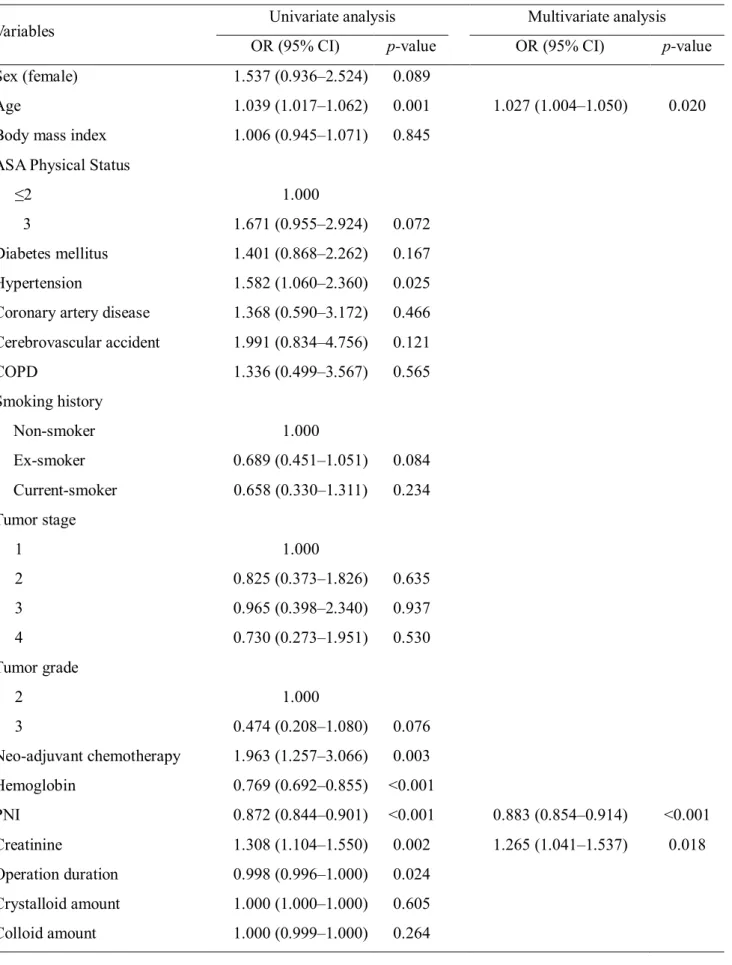
The demographic, preoperative, and intraoperative data of the patients are shown in Table 1.2. Age, hypertension, neo-adjuvant chemotherapy, lymphocyte count, hemoglobin concentration, serum albumin concentration, PNI, serum creatinine level, operation duration, anesthesia duration, red blood cell transfusion, reversal agent of neuromuscular blockade, and urinary diversion type were all significantly different between the PPC and non-PPC groups. Univariate logistic regression analysis demonstrated that PNI, age, hypertension, neo-adjuvant chemotherapy, hemoglobin concentration, serum creatinine level, operation duration, red blood cell transfusion, reversal agent of neuromuscular blockade, and urinary diversion type were associated with PPCs in patients who underwent radical cystectomy. Multivariate logistic regression analysis revealed that PNI (odds ratio (OR) = 0.883, 95% confidence interval (CI) [0.854–0.914], p<0.001), age (OR = 1.027, 95% CI [1.004–1.050], p= 0.020), and serum creatinine level (OR = 1.265, 95% CI [1.041–1.537], p= 0.018) were all significantly associated with PPCs in radical cystectomy (Table 1.2). ROC curve analysis revealed that the area under the curve of PNI was 0.714; the optimal cut-off value was 45, with a sensitivity of 66.2% and specificity of 66.1%. The highest variance inflation factor was 4.122, ensuring a lack of multicollinearity. The Hosmer- Lemeshow goodness-of-fit probability was 0.311, and the C-statistic for the model was 0.734, indicating good calibration and discrimination.
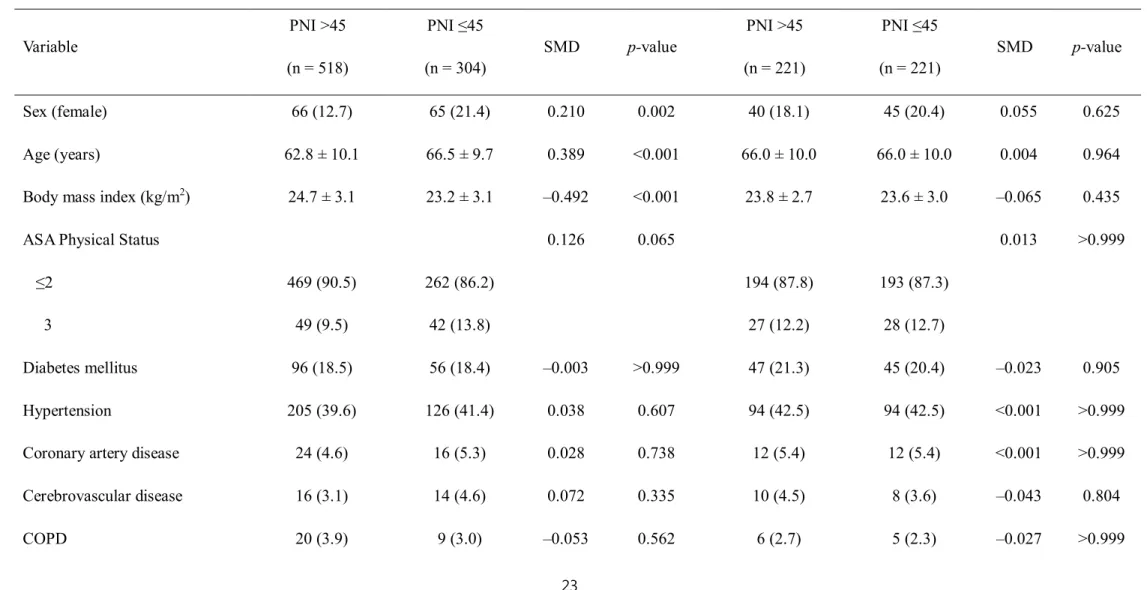
Of the 822 patients, 518 (63.0%) patients had PNI >45 and 304 (37.0%) patients had PNI ≤45 (Table 1.3). After 1:1 propensity score matching, we generated 221 matched pairs and divided the patients into PNI
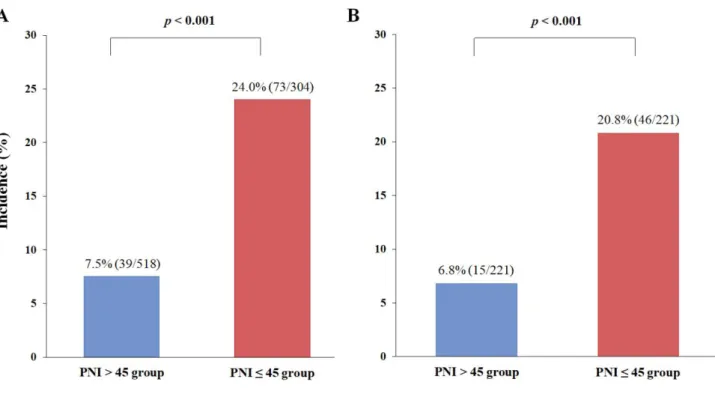
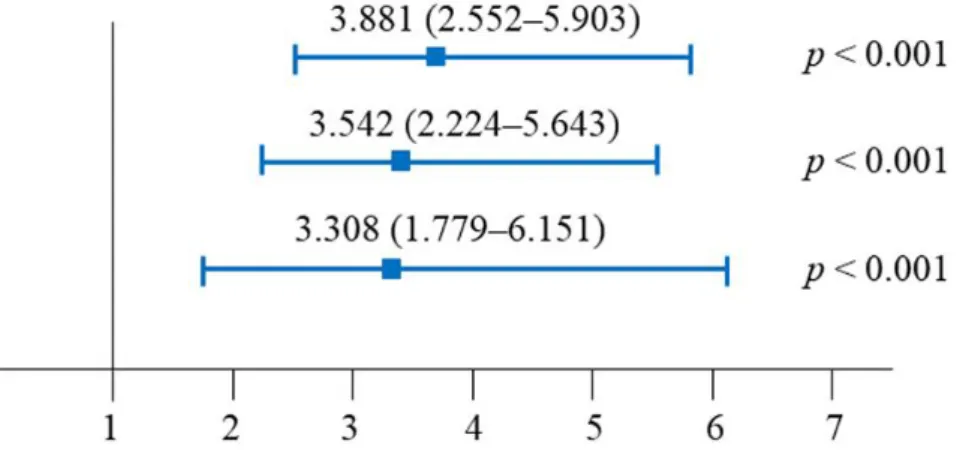
>45 (n = 221) and PNI ≤45 (n = 221) groups (Table 1.3). All covariates were well-balanced with SMD <0.2, and no significant differences were found between the PNI >45 and PNI ≤45 groups (Table 1.3). The incidence of PPCs in the PNI ≤45 group was significantly higher than that in the PNI >45 group, before (24.0% vs. 7.5%, p <0.001) (Fig. 1.2A) and after (20.8% vs. 6.8%, p <0.001) (Fig. 1.2B) propensity score matching. The predictive value of the PNI ≤45 for the occurrence of PPCs is shown in Fig. 1.3. Compared with PNI >45, PNI
≤45 was associated with higher incidences of PPCs in unadjusted (OR = 3.881, 95% CI [2.552–5.903], p <0.001), multivariate-adjusted (OR = 3.542, 95% CI [2.224–5.643], p <0.001), and propensity score-matched analyses (OR = 3.308, 95% CI [1.779–6.151], p <0.001) (Fig. 1.3).
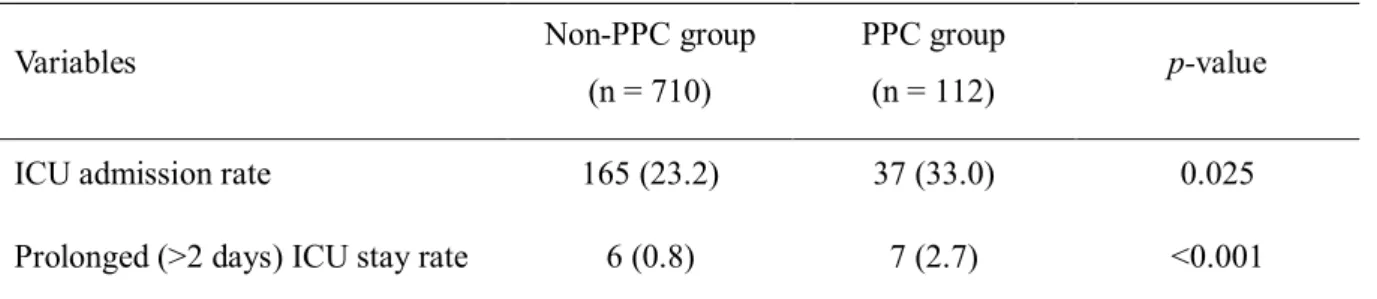
The ICU admission rate and prolonged (more than two days) ICU stay rate were significantly higher in the PPC group than in the non-PPC group (37/112 (33.0%) vs. 165/710 (23.2%), p= 0.025; 7/112 (2.7%) vs.
6/710 (0.8%), p<0.001, respectively) (Table 1.4). However, there was no significant difference in the hospital stay duration between the PPC and non-PPC groups.
1.4 DISCUSSION
The main findings of the present study are that the incidence of PPCs in 822 patients who underwent radical cystectomy was 13.6% and that PNI, age, and serum creatinine level were independent risk factors for PPCs.
The optimal cut-off value of preoperative PNI for predicting PPCs in radical cystectomy was 45. After propensity score matching, the incidence of PPCs in the PNI ≤45 group was significantly higher than that in the PNI >45 group, and preoperative PNI ≤45 was significantly associated with an increased incidence of PPCs in radical cystectomy. Furthermore, ICU admission rate and a prolonged (more than two days) ICU stay were significantly higher in the PPC group than in the non-PPC group. To our knowledge, the present study is the first to demonstrate that preoperative PNI is significantly associated with PPCs in patients undergoing radical cystectomy.
Radical cystectomy is one of the most complex urological procedures for muscle-invasive bladder cancer and provides good local cancer control and long-term survival. However, radical cystectomy is associated with high likelihoods for postoperative morbidity and mortality.35,36Pulmonary complications, in particular, are one of the most common postoperative complications.4,37 In previous studies, the incidence of PPCs varied between 5% and 80% depending on the type of surgery, patient characteristics, and the definition of PPCs.31,38 Xia et al. reported that the incidence of PPCs was 5.6% in radical cystectomy when PPCs were defined as pneumonia, unplanned reintubation, and ventilator support >48 hours within 30 days of radical cystectomy.39 The present study demonstrated that the incidence of PPCs was 13.6%, and the discrepancies in the incidence rates of PPCs might have resulted from the different definitions of PPCs used in the two studies. In contrast, Mossanen et al. reported that the incidence of PPCs was 13.4% in radical cystectomy;40 in their study, PPCs were defined as pleural effusion, respiratory failure, atelectasis, aspiration, and pneumothorax, which is similar to the definition used in this study. Therefore, the incidence of PPCs in the present study might be comparable to that reported by Mossanen et al.40
We found that preoperative PNI was an independent risk factor for PPCs in radical cystectomy.
Nutritional status in cancer patients is an essential factor in determining postoperative prognosis, morbidity, and mortality.41,42 Especially, malnutrition might weaken respiratory muscles, decrease ventilatory drive, and damage the defense mechanism against infection.43 Malnutrition can also impair the immune system by
suppressing and inhibiting lymphocyte transformation.44PNI was initially proposed by Onodera et al. and was calculated by the serum albumin concentration to assess nutritional status and the lymphocyte count to reflect the aspects of immunity.17Moreover, PNI has been used as a useful predictor of postoperative prognoses such as complications and mortality by estimating the nutritional status of various oncologic patients preoperatively.45,46Previous studies reported that oncologic patients with low PNI had low survival rates and high rates of postoperative complications.47,48 Hypoalbuminemia delays tissue healing, reduces collagen synthesis, and impairs the immune response.44,49A low lymphocyte count reflects an increase in the degree of systemic inflammation and an impairment of the immune status of patients.50,51 Therefore, we assume that preoperative PNI, which can be easily calculated using routine laboratory testing, may be used to minimize PPCs in radical cystectomy.
Our propensity score-matched analysis showed that the optimal cut-off value of the preoperative PNI for predicting PPCs in radical cystectomy was 45. This cut-off value of the PNI is in line with the results of other studies and is related to poor postoperative prognosis in various cancers.46,52-54Mohri et al. reported that in patients with colorectal cancer, PNI less than 45 is significantly associated with serious complications including anastomotic leakage, severe infection, bowel obstruction requiring additional surgery, cardiopulmonary failure, pulmonary embolism, and poorer postoperative survival after colorectal surgery.52 Chan et al. also reported that in patients with early-stage hepatocellular carcinoma, overall postoperative survival and disease-free survival were worse when the PNI was less than 45.53Additionally, several studies have reported that PNI less than 45 indicates moderate-to-severe malnutrition and is associated with poor survival and surgical complications such as fistula, leakage, bleeding, and surgical site infection.46,54However, the optimal cut-off value of the PNI to predict PPCs in radical cystectomy has not yet been evaluated, and our study is the first to report that bladder cancer patients with PNI ≤45 are at a higher risk of PPCs in radical cystectomy. Therefore, radical cystectomy patients with a preoperative PNI less than 45 should be given special attention to minimize the risk of PPCs.
The present study also found that PPCs were more common in older patients. Advanced age was consistently identified in several studies as a risk factor for PPCs.31,55 With aging, the thorax and lung parenchyma stiffen, ciliary function decreases, and dead space increases. The net pulmonary function overall
declines, leading to an increased risk of PPCs.56These PPCs account for approximately 40% of the perioperative mortality in patients over 65 years old.57 Moreover, in previous studies, there were significant associations between age and overall complications in radical cystectomy.58,59The incidence of bladder cancer increases with age and occurs most frequently in people over 70 years old.58As life expectancy increases, a greater number of older patients are undergoing radical cystectomy. Therefore, meticulous perioperative management in older patients might be a key factor for improving postoperative outcomes in radical cystectomy.
Similar to previous studies,60-62this study demonstrated that the preoperative serum creatinine level was associated with PPCs in radical cystectomy. Radical cystectomy requires copious fluid administration because of the extended operation time and bleeding. Patients with high serum creatinine levels have impaired kidney function, which might make it difficult to handle excessive perioperative fluid administration.63Thus, these factors could increase the risk of postoperative pulmonary edema or effusion, which might explain why preoperative increased serum creatinine level is one of the risk factors for PPCs in radical cystectomy. Therefore, our results suggest that carefully balanced fluid management is an essential intervention for reducing PPCs in radical cystectomy patients with high serum creatinine levels.
In the present study, we found that low PNI, old age, and high serum creatinine level were associated with PPCs in bladder cancer patients undergoing radical cystectomy. However, our previous studies demonstrated that male sex, older age, and high body mass index were independent risk factors of PPCs in robot-assisted laparoscopic prostatectomy, percutaneous nephrolithotomy, and laparoscopic pylorus-preserving pancreaticoduodenectomy.25,26,64These differences in independent risk factors for PPCs may be, at least in part, explained by differences in the patient characteristics and the type of surgery.
This study demonstrated that ICU admission rate and prolonged (more than two days) ICU stay rate were significantly higher in the PPC group than in the non-PPC group. Nilsson et al. defined prolonged (more than two days) ICU stay as a poor outcome because it could reliably predict mortality and hospital costs in open- heart surgery.65Michalopoulos et al. also reported that prolonged (more than two days) stay in the ICU increased overall hospital costs for patients undergoing elective coronary artery bypass graft surgery, and limited the number of other operations.34As with other studies, we consider that a prolonged ICU stay as well as the ICU admission rate represent a meaningfully poor postoperative outcome.
The present study has several limitations. First, because this study had a retrospective design, we could not evaluate all covariates that may have a ected the analysis. Therefore, our study may be, at least in part, influenced by inevitable selection bias. However, we included almost all covariate factors related to PPCs in patients undergoing radical cystectomy. Moreover, we performed a propensity score-matched analysis to minimize the bias. Second, because all surgery was performed by highly specialized surgeons at a single, large- sized center, our results might not be readily applicable in other types of facilities. Therefore, the results should be generalized with caution. Third, because the relationship between PNI and PPCs in other surgeries has not been specifically evaluated, further studies are needed to clarify it.
1.5 CONCLUSION
PPCs occurred in 13.6% of patients undergoing radical cystectomy. PPCs were associated with PNI, age, and serum creatinine level. PNI ≤45 was significantly associated with a higher likelihood of PPCs in patients undergoing radical cystectomy. Moreover, the rates of ICU admission and prolonged ICU stay were higher in radical cystectomy patients with PPCs than those without. These results suggest that preoperative PNI provides useful information about pulmonary complications that lead to poor postoperative outcomes in radical cystectomy. Additionally, preoperative PNI evaluation can be recommended in radical cystectomy patients at risk of PPCs.
Figure 1.1.Flowchart of the study patients. A total of 902 patients who underwent radical cystectomy were evaluated, and 822 patients were included in the study. Patients were categorized according to the occurrence of PPCs in radical cystectomy and multivariate logistic regression analysis was performed. Then, the patients were dichotomized according to the optimal cut-off value (i.e., 45) of PNI for predicting PPCs in radical cystectomy and a propensity score-matched analysis was performed. PPC, postoperative pulmonary complication; PNI, prognostic nutritional index.
Figure 1.2.Comparison of the incidence of postoperative pulmonary complications between the PNI >45 and PNI ≤45 groups before (A) and after (B) propensity score matching in radical cystectomy. The incidences of postoperative pulmonary complications in the PNI ≤45 group were significantly higher than those in the PNI
>45 group. PNI, prognostic nutritional index.
Figure 1.3. Predictive value of the PNI ≤45 for the occurrence of postoperative pulmonary complications in radical cystectomy. *The multivariate-adjusted odds ratio was adjusted by using the variables shown in Table 1.2. †Propensity score matching was performed by using the variables shown in Table 1.3. PNI, prognostic nutritional index.
Table 1.1.Demographic, preoperative, and intraoperative data
Variables All patients
(n = 822)
Non-PPC group (n = 710)
PPC group
(n = 112) p-value*
Sex (female) 131 (15.9) 107 (15.1) 24 (21.4) 0.088
Age (years) 64.2 ± 10.1 63.7 ± 10.0 67.2 ± 10.1 <0.001
Body mass index (kg/m2) 24.1 ± 3.2 24.1 ± 3.1 24.2 ± 3.8 0.845
ASA Physical Status 0.070
≤2 731 (88.9) 637 (89.7) 94 (83.9)
3 91 (11.1) 73 (10.3) 18 (16.1)
Diabetes mellitus 152 (18.5) 126 (17.7) 26 (23.2) 0.166
Hypertension 331 (40.3) 275 (38.7) 56 (50.0) 0.024
Coronary artery disease 40 (4.9) 33 (4.6) 7 (6.3) 0.464
Cerebrovascular disease 30 (3.6) 23 (3.2) 7 (6.3) 0.114
COPD 29 (3.5) 24 (3.4) 5 (4.5) 0.563
Smoking history 0.169
Non-smoker 344 (41.8) 288 (40.6) 56 (50.0)
Ex-smoker 381 (46.4) 336 (47.3) 45 (40.2)
Current smoker 97 (11.8) 86 (12.1) 11 (11.3)
Tumor stage 0.863
1 51 (6.2) 43 (6.1) 8 (7.1)
2 541 (65.8) 469 (66.1) 72 (64.3)
3 138 (16.8) 117 (16.5) 21 (18.8)
4 92 (11.2) 81 (11.4) 11 (9.8)
Tumor grade 0.070
2 33 (4.0) 25 (3.5) 8 (7.1)
3 789 (96.0) 685 (96.5) 104 (92.9)
Neo-adjuvant chemotherapy 163 (19.8) 129 (18.2) 34 (30.4) 0.003
Continuous variables are presented as mean ± standard deviation and categorical variables as number (percent).
*For comparisons between the PPC and non-PPC groups. PPC, postoperative pulmonary complication; ASA, American Society of Anesthesiologists; COPD, chronic obstructive pulmonary disease; PNI, prognostic nutritional index. NMB, neuromuscular blockade.
Preoperative laboratory tests
White blood cells (/mm3) 6869.4 ± 2742.0 6885.2 ± 2747.5 6769.6 ± 2716.7 0.679 Lymphocyte (/mm3) 1918.6 ± 793.8 1968.1 ± 797.5 1604.4 ± 694.6 <0.001
Hemoglobin (g/dL) 12.3 ± 2.0 12.4 ± 1.9 11.4 ± 2.2 <0.001
Platelets (103/µL) 245.4 ± 85.7 245.8 ± 84.0 242.8 ± 96.0 0.730
Albumin (g/dL) 3.7 ± 0.5 3.7 ± 0.5 3.3 ± 0.6 <0.001
PNI 46.6 ± 6.7 47.4 ± 6.1 41.4 ± 8.1 <0.001
Creatinine (mg/dL) 1.1 ± 0.9 1.0 ± 0.7 1.4 ± 1.4 <0.001
Operation duration (min) 430.0 ± 103.0 433.3 ± 100.4 409.6 ± 116.5 0.024 Anesthesia duration (min) 451.1 ± 99.9 454.0 ± 97.3 432.9 ± 114.0 0.038 Crystalloid amount (mL) 3421.5 ± 1368.5 3431.3 ± 1342.7 3359.4 ± 1527.2 0.606
Colloid amount (mL) 570.2 ± 463.9 577.4 ± 468.9 524.7 ± 430.0 0.265
Red blood cell transfusion 482 (58.6) 404 (56.9) 78 (69.6) 0.011
Reversal agent of NMB 0.001
Neostigmine-glycopyrrolate 730 (88.8) 641 (90.3) 89 (79.5)
Sugammadex 92 (11.2) 69 (9.7) 23 (20.5)
Urinary diversion type <0.001
Ileal conduit 310 (37.7) 247 (34.8) 463 (56.3)
Ileal neobladder 512 (62.3) 463 (65.2) 49 (43.8)
Table 1.2.Univariate and multivariate logistic regression analyses of risk factors for postoperative pulmonary complications in radical cystectomy
Variables Univariate analysis Multivariate analysis
OR (95% CI) p-value OR (95% CI) p-value
Sex (female) 1.537 (0.936–2.524) 0.089
Age 1.039 (1.017–1.062) 0.001 1.027 (1.004–1.050) 0.020
Body mass index 1.006 (0.945–1.071) 0.845
ASA Physical Status
≤2 1.000
3 1.671 (0.955–2.924) 0.072
Diabetes mellitus 1.401 (0.868–2.262) 0.167
Hypertension 1.582 (1.060–2.360) 0.025
Coronary artery disease 1.368 (0.590–3.172) 0.466 Cerebrovascular accident 1.991 (0.834–4.756) 0.121
COPD 1.336 (0.499–3.567) 0.565
Smoking history
Non-smoker 1.000
Ex-smoker 0.689 (0.451–1.051) 0.084
Current-smoker 0.658 (0.330–1.311) 0.234
Tumor stage
1 1.000
2 0.825 (0.373–1.826) 0.635
3 0.965 (0.398–2.340) 0.937
4 0.730 (0.273–1.951) 0.530
Tumor grade
2 1.000
3 0.474 (0.208–1.080) 0.076
Neo-adjuvant chemotherapy 1.963 (1.257–3.066) 0.003
Hemoglobin 0.769 (0.692–0.855) <0.001
PNI 0.872 (0.844–0.901) <0.001 0.883 (0.854–0.914) <0.001
Creatinine 1.308 (1.104–1.550) 0.002 1.265 (1.041–1.537) 0.018
Operation duration 0.998 (0.996–1.000) 0.024 Crystalloid amount 1.000 (1.000–1.000) 0.605
Colloid amount 1.000 (0.999–1.000) 0.264
OR, odds ratio; CI, confidence interval; ASA, American Society of Anesthesiologists; COPD, chronic obstructive pulmonary disease; PNI, prognostic nutritional index; NMB, neuromuscular blockade.
Red blood cell transfusion 1.738 (1.131–2.669) 0.012 Reversal agent of NMB
Neostigmine-glycopyrrolate 1.000
Sugammadex 2.401 (1.425–4.044) 0.001
Urinary diversion type
Ileal conduit 1.000
Ileal neobladder 0.415 (0.277–0.621) <0.001
Table 1.3. Demographic, preoperative, and intraoperative data of patients dichotomized according to the optimal cut-off value of PNI before and after propensity score matching
Before propensity score matching After propensity score matching
Variable
PNI >45 (n = 518)
PNI ≤45 (n = 304)
SMD p-value
PNI >45 (n = 221)
PNI ≤45 (n = 221)
SMD p-value
Sex (female) 66 (12.7) 65 (21.4) 0.210 0.002 40 (18.1) 45 (20.4) 0.055 0.625
Age (years) 62.8 ± 10.1 66.5 ± 9.7 0.389 <0.001 66.0 ± 10.0 66.0 ± 10.0 0.004 0.964
Body mass index (kg/m2) 24.7 ± 3.1 23.2 ± 3.1 –0.492 <0.001 23.8 ± 2.7 23.6 ± 3.0 –0.065 0.435
ASA Physical Status 0.126 0.065 0.013 >0.999
≤2 469 (90.5) 262 (86.2) 194 (87.8) 193 (87.3)
3 49 (9.5) 42 (13.8) 27 (12.2) 28 (12.7)
Diabetes mellitus 96 (18.5) 56 (18.4) –0.003 >0.999 47 (21.3) 45 (20.4) –0.023 0.905
Hypertension 205 (39.6) 126 (41.4) 0.038 0.607 94 (42.5) 94 (42.5) <0.001 >0.999
Coronary artery disease 24 (4.6) 16 (5.3) 0.028 0.738 12 (5.4) 12 (5.4) <0.001 >0.999
Cerebrovascular disease 16 (3.1) 14 (4.6) 0.072 0.335 10 (4.5) 8 (3.6) –0.043 0.804
COPD 20 (3.9) 9 (3.0) –0.053 0.562 6 (2.7) 5 (2.3) –0.027 >0.999
Smoking –0.154 0.034 0.054 0.651
Non/Ex-smoker 316 (61.0) 162 (53.3) 105 (47.5) 99 (44.8)
Current smoker 202 (39.0) 142 (46.7) 116 (52.5) 122 (55.2)
Tumor stage 0.101 0.171 0.098 0.368
<3 382 (73.7) 210 (69.1) 158 (71.5) 148 (67.0)
≥3 136 (26.3) 94 (30.9) 63 (28.5) 73 (33.0)
Tumor grade 0.295 0.009 –0.071 0.727
2 28 (5.4) 5 (1.6) 3 (1.4) 5 (2.3)
3 490 (94.6) 299 (98.4) 218 (98.6) 216 (97.7)
Neo-adjuvant chemotherapy 76 (14.7) 87 (28.6) 0.308 <0.001 54 (24.4) 63 (28.5) 0.090 0.374
Hemoglobin (g/dL) 13.0 ± 1.7 11.0 ± 1.7 –1.157 <0.001 11.7 ± 1.5 11.5 ± 1.6 –0.123 0.210
Creatinine (mg/dL) 1.0 ± 0.8 1.2 ± 1.0 0.110 0.090 1.1 ± 0.9 1.0 ± 0.4 –0.087 0.188
Operation duration (min) 440.0 ± 103.3 413.1 ± 100.5 –0.268 <0.001 423.1 ± 103.2 419.8 ± 97.6 –0.033 0.735 Crystalloid amount (mL) 3491.8 ± 1290.9 3301.7 ± 1486.0 –0.128 0.055 3370.6 ± 1294.3 3397.6 ± 1397.4 0.018 0.832
Colloid amount (mL) 600.2 ± 460.4 519.1 ± 466.0 –0.174 0.016 549.0 ± 455.0 514.4 ± 476.9 –0.074 0.431
Red blood cell transfusion 276 (53.3) 206 (67.8) 0.309 <0.001 141 (63.8) 138 (62.4) –0.029 0.830
Reversal agent of NMB 0.249 <0.001 0.024 0.890
Neostigmine-glycopyrrolate 478 (92.3) 252 (82.9) 191 (86.4) 189 (85.5)
Sugammadex 40 (7.7) 52 (17.1) 30 (13.6) 32 (14.5)
Urinary diversion type 0.484 <0.001 –0.027 0.847
Ileal conduit 149 (28.8) 161 (53.0) 100 (45.2) 103 (46.6)
Ileal neobladder 369 (71.2) 143 (47.0) 121 (54.8) 118 (53.4)
Data are expressed as mean ± standard deviation or number of patients (%), as appropriate. PNI, prognostic nutritional index; SMD, standardized mean difference; ASA, American Society of Anesthesiologist; COPD, chronic obstructive pulmonary disease; NMB, neuromuscular blockade.
Table 1.4.Postoperative outcomes after radical cystectomy in 822 patients
Variables are presented as number (percent). PPC, postoperative pulmonary complication; ICU, intensive care unit.
Variables Non-PPC group
(n = 710)
PPC group
(n = 112) p-value
ICU admission rate 165 (23.2) 37 (33.0) 0.025
Prolonged (>2 days) ICU stay rate 6 (0.8) 7 (2.7) <0.001
PART 2
Diaphragm thickening fraction as a prognostic imaging marker for postoperative pulmonary complications in robot-assisted laparoscopic
prostatectomy: a prospective observational study
This part was published in Disease Markers.66
2.1 INTRODUCTION
Robot-assisted laparoscopic prostatectomy (RALP) has been primarily adopted for prostate cancer due to its several advantages over open prostatectomy, including lower intraoperative blood loss, fewer blood transfusions, fewer anastomotic strictures, and shorter hospital stay.67 However, RALP requires the steep Trendelenburg position and carbon dioxide pneumoperitoneum to maintain a good surgical condition. These specific surgical conditions reduce the functional residual capacity, vital capacity, and lung compliance.68,69Consequently, in patients undergoing RALP, these conditions can adversely affect the respiratory system and lead to postoperative pulmonary complications (PPCs).68,69Furthermore, PPCs are associated with increased morbidity and mortality rates, even mild PPCs, such as atelectasis.55,70,71Therefore, meticulous preoperative evaluation and perioperative management are required to reduce PPCs in RALP.
The diaphragm is a principal muscle of respiration, and its function can be evaluated by diaphragm thickening fraction (TF) during respiration at the zone of apposition, which is the area of the diaphragm where it begins to peel away from the lower rib cage.18Diaphragm TF, which can be simply measured at bedside by ultrasonography, can precisely reflect the invasive gold standard measure (i.e., transdiaphragmatic pressure measurement).19,20In particular, a low diaphragm TF can be a predictor of the failure of mechanical ventilation weaning in the intensive care unit and is associated with PPCs in cardiac surgery.21,22However, little is known about the association between diaphragm TF and PPCs in surgeries requiring the steep Trendelenburg position and carbon dioxide pneumoperitoneum that adversely affect the respiratory system.
In this study, we hypothesized that low diaphragm TF can predict PPCs in RALP, which requires carbon dioxide pneumoperitoneum and the steep Trendelenburg position. To this end, after dividing the patients into two groups according to the optimal TF cut-off value for predicting PPCs, we evaluated the effect of low diaphragm TF as an imaging marker on the occurrence of PPCs in RALP.
2.2 METHODS Methods
This prospective observational study was conducted at a tertiary referral center. Prior to patient enrolment, the study protocol was registered at the Clinical Research Information Service (KCT 0005028, registration date:
May 18, 2020). All patients provided written informed consent prior to study participation. The institutional review board of Asan Medical Center (Seoul, Republic of Korea) approved the study protocols (approval number: 2020-0761, approval date: May 15, 2020).
Patients
The study patients were enrolled between May 2020 and September 2020. The inclusion criteria were age 20–
79 years, scheduled RALP, American Society of Anesthesiologists (ASA) physical status I–III, and voluntary participation in this study. Patients who underwent pneumonectomy or those who were converted to open prostatectomy were excluded.
Study Protocol
All patients were monitored with pulse oximetry, electrocardiography, end-tidal carbon dioxide concentration, non-invasive blood pressure, and bispectral index (A-1050 Monitor; Aspect Medical Systems, Newton, MA, USA). Anesthesia was induced using thiopental sodium (4–5 mg/kg) and rocuronium (0.5–0.8 mg/kg) and maintained with sevoflurane (1–2 vol%), medical air containing 50% oxygen, and 1.0–4.0-ng/mL remifentanil.
The ventilation setting was a tidal volume of 6–8 mL/kg of the ideal body weight and an inspiratory-to- expiratory ratio of 1:2. Respiratory rate of 10–16 cycles/min was adjusted to achieve an end-tidal carbon dioxide partial pressure of 35–45 cmH2O but not to exceed the maximum peak airway pressure of 30 cmH2O. Positive end-expiratory pressure was applied at 6 cmH2O with a recruitment maneuver (40 cmH2O airway pressure for 30 seconds). The depth of anesthesia was maintained with the bispectral index of 40–60. Fluids and vasopressors, such as ephedrine and phenylephrine, were administered to maintain systolic blood pressure above 80 mmHg.
Patients were administered crystalloid fluid at 2–4 mL/kg/h. Train-of-four monitoring was used to measure the degree of neuromuscular blockade. Rocuronium bromide was intermittently administered to maintain train-of-
four count ≤2 throughout surgery. RALP was performed using the standard techniques of our institution.72,73 Pneumoperitoneum was induced with carbon dioxide gas at 15 mmHg abdominal pressure. Patients were positioned in the steep Trendelenburg position (45 degrees) during RALP. After skin closure, 2 mg/kg sugammadex (Bridion®; MSD, Oss, the Netherlands) was used to reverse the neuromuscular blockade if the train-of-four count was ≥2 at the end of surgery.
Measurements
Diaphragm TF was measured using a 13-6 MHz linear transducer (Sonosite X-Porte; Fujifilm SonoSite, Bothell, WA, USA) before anesthesia induction by two investigators highly experienced in lung and diaphragm ultrasonography. Patients were placed in a semi-recumbent position with the head of the bed tilted downward at 45 degrees. The probe was placed on the ninth or tenth intercostal space in the left and right mid-axillary line and perpendicularly angled to the chest wall. A 2D-clip (B-mode) was acquired while the patient performed a maximal inspiration and expiration. The diaphragm thicknesses at peak inspiration (Tpi) and end expiration (Tee) were measured on the clip. Diaphragm TF was calculated as TF = (Tpi – Tee)/Tee(Figure 2.1).19We acquired the measurements twice for both left and right sides and used the average of all four values in the analysis.
Interobserver variability was calculated by evaluating a random sample of approximately 25% (i.e., 37/145 patients) of diaphragm TF twice by two investigators. Intraobserver variability was calculated by evaluating a random sample of approximately 25% of diaphragm TF twice by one investigator. The interobserver and intraobserver variabilities were determined as the mean absolute difference between the two values divided by their mean and presented as a percentage.
Assessments
Preoperative data included age, body mass index, ASA physical status, hypertension, diabetes mellitus, cerebrovascular disease, coronary artery disease, interstitial lung disease, chronic obstructive pulmonary disease, pulmonary tuberculosis, and preoperative pulmonary function test findings. Intraoperative data included pre- induction hemodynamics, such as mean blood pressure, systolic blood pressure, diastolic blood pressure, body temperature, heart rate, peripheral oxygen saturation, arterial blood gas analyses before induction and at skin
closure, anesthesia duration, operation duration, and crystalloid amount. Arterial blood gas analysis included arterial pH, arterial oxygen partial pressure (PaO2), arterial carbon dioxide partial pressure (PaCO2), bicarbonate (HCO3-), base excess, and arterial oxygen saturation.
Postoperative variables included PPCs and the duration of hospitalization defined as the period from the day of surgery to the day of discharge. PPCs were diagnosed as the occurrence of the following within seven days after RALP: atelectasis, pleural effusion, bronchospasm, pneumothorax, respiratory infection, aspiration pneumonitis, and respiratory failure (Table 2.1).23,25,31,74-77
Statistical Analysis
By referring to our previous study,25we assumed a normal distribution, correlation of 0.2 with other variables, and 30% occurrence of PPCs in RALP. Accordingly, it was calculated that 145 patients were needed to detect an odds ratio 2.0 for a low diaphragm TF with 90% power, a two-sided α = 0.05, and a 10% dropout rate.
Categorical variables were compared using the Fisher’s exact test or the chi-squared test as appropriate and are presented as number (percentage). Continuous variables were compared using the Mann–Whitney U test or unpaired t-test as appropriate and are presented as mean ± standard deviation.
To determine the prognostic ability of preoperative diaphragm TF for the occurrence of PPCs in RALP, the receiver operator characteristics (ROC) curve analysis was performed. The value with the highest specificity and sensitivity was designated as the optimal cut-off value. After dividing into two groups according to the optimal diaphragm TF cut-off value for predicting PPCs (i.e., low TF vs. high TF), we compared the occurrence of PPCs between high and low TFs in RALP. The predictive ability of low diaphragm TF for the occurrence of PPCs was evaluated by a multivariate-adjusted odds ratio. A p-value of <0.05 was considered to denote statistical significance. IBM SPSS version 21.0.0 for Windows (IBM Corp., Armonk, NY, USA) and MedCalc version 11.3.3.0 (MedCalc Software bvba, Mariakerke, Belgium) were used for statistical analyses.
2.3 RESULTS
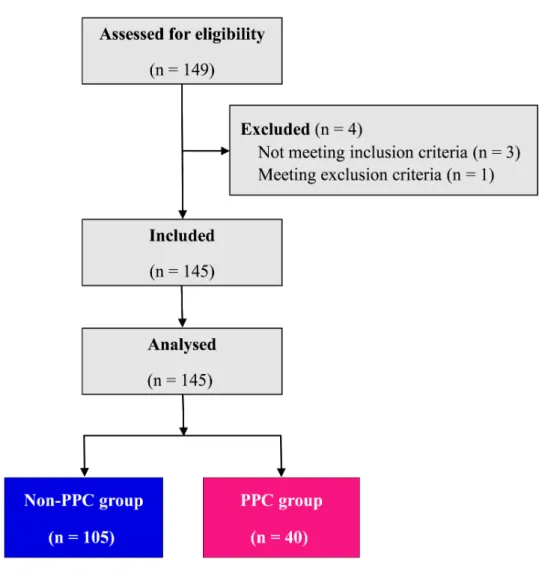
A total of 149 patients were preoperatively assessed for eligibility, of whom 145 patients were finally included in the analysis after excluding four patients (Figure 2.2). Forty patients (27.6%) developed PPCs. One patient developed pneumonia, 22 patients developed pleural effusion, and 27 patients developed atelectasis. Table 2.2 enlists the preoperative and intraoperative data. Except for diaphragm TF, the PPC group and the non-PPC group did not show significant differences in preoperative and intraoperative data (Table 2.2).
Preoperative diaphragm TF was significantly lower in the PPC group than in the non-PPC group (0.31
± 0.09 vs. 0.39 ± 0.11, p<0.001) (Figure 2.3). No significant differences were found between TFs in the right and left diaphragm (0.36 ± 0.14 vs. 0.38 ± 0.13, p= 0.167). The interobserver and intraobserver variabilities of diaphragm TF measurements were 2.2% and 2.4%, respectively. In ROC curve analysis, the area under the curve of diaphragm TF for predicting PPCs was 0.714 (Figure 2.4). The optimal diaphragm TF cut-off value for predicting the occurrence of PPCs was 0.28. The patients were then categorized according to the optimal diaphragm TF cut-off value: TF ≥0.28 group (n = 114) and TF <0.28 group (n = 31). Table 2.3 enlists preoperative and intraoperative data of the two groups. There were no significant differences in preoperative and intraoperative data between TF ≥0.28 and TF <0.28 groups (Table 2.3). The incidence of PPCs was significantly higher in the TF <0.28 group than in the TF ≥0.28 group (51.6% [16/31] vs. 21.1% [24/114], p= 0.001; Figure 2.5). Compared with the TF ≥0.28 group, the TF <0.28 group had higher incidences of PPCs in unadjusted (odds ratio = 4.000, 95% confidence interval [1.734–9.229], p = 0.001) and multivariate-adjusted analyses (odds ratio = 4.534, 95% confidence interval [1.763–11.658], p= 0.002; Figure 2.6). The duration of hospitalization was not significantly different between the PPC group and the non-PPC group (7.9 ± 4.4 days vs. 7.3 ± 1.8 days, p= 0.304).
2.4 DISCUSSIONS
In this prospective study, 40/145 patients (27.6%) developed PPCs in RALP. We found that the patients who developed PPCs had a significantly lower preoperative diaphragm TF than those who did not develop PPCs in RALP performed with specific conditions of the Trendelenburg position and pneumoperitoneum. The optimal cut-off value of preoperative diaphragm TF for predicting PPCs in RALP was 0.28. The incidence of PPCs was significantly higher in the TF <0.28 group than in the TF ≥0.28 group, and diaphragm TF <0.28 was associated with increased incidence of PPCs in RALP. To our knowledge, our study is the first to present the empirical evidence that preoperative low diaphragm TF as a prognostic imaging marker is associated with a high occurrence of PPCs when RALP is performed with specific intraoperative conditions of the Trendelenburg position and pneumoperitoneum, which confer unfavorable effects on the respiratory system.
In this large prospective observational study, the incidence of PPCs in prostate cancer patients who underwent RALP was 27.6%. Previous studies have reported PPC occurrence rates of 2.7%–33.4% in non- cardiac surgeries.55,78,79 Our findings may have been influenced by the aforementioned special surgical conditions and patient characteristics. RALP warrants the surgical conditions of carbon dioxide pneumoperitoneum and the steep Trendelenburg position, which adversely affect the respiratory system.25The steep Trendelenburg position can reduce lung compliance and lung volume parameters, such as functional residual capacity and vital capacity; furthermore, it can cause edema of the upper airway and elevation in ventilation–perfusion mismatch and peak airway pressure. These conditions may be aggravated further by carbon dioxide pneumoperitoneum, which causes hypercapnia and respiratory acidosis.8 Moreover, most patients undergoing RALP are elderly and are thus even more vulnerable under the specific surgical conditions due to decreased lung compliance and pulmonary function.9 Therefore, patients undergoing RALP show relatively a higher incidence of PPCs compared with those undergoing other non-cardiac surgeries.25
We found that low diaphragm TF was associated with high occurrence of PPCs in RALP requiring the steep Trendelenburg position and pneumoperitoneum. Diaphragm TF at the zone of apposition allows for direct visualization of the diaphragm muscle; as such, the diaphragm TF depends on the activity of the diaphragm and reflects the work of breathing of the diaphragm.18In addition, it could be well correlated with overall respiratory function and offers valuable information, such as ventilator-induced diaphragmatic dysfunction and the
prediction of difficult weaning in ventilated patients.21,80 Moreover, unlike other tools for evaluating the diaphragm function, such as diaphragmatic electromyography, transdiaphragmatic pressure measurement, magnetic resonance imaging, phrenic nerve stimulation, and computed tomography, the ultrasonographic assessment of diaphragm function as an imaging marker is a real-time and non-invasive method with high feasibility and reproducibility and can be done at bedside in awake patients.19,20
Importantly, the strength of respiratory muscles is associated with lung re-expansion after surgery.22It is known that evaluating the diaphragm function reflects the strength of the inspiratory muscle.81Therefore, diaphragmatic dysfunction could contribute to the etiology of PPCs after non-cardiac surgery. In particular, the function of the diaphragm could be characterized by diaphragm TF.22,81,82 In agreement with our results, in several previous studies, diaphragm TF was measured using ultrasonography for evaluating diaphragm function in different clinical settings, such as cardiac surgery and intensive care unit setting.22,82Vivier et al. reported that ultrasonographic assessment of diaphragm TF could evaluate the diaphragmatic function and respiratory workload in critically ill patients with non-invasive ventilation.82In addition, Cavayas et al. reported that low diaphragm TF was a risk factor for PPCs after cardiac surgery.22,82Therefore, to minimize the risk of PPCs in patients undergoing RALP under carbon dioxide pneumoperitoneum and the steep Trendelenburg position, special attention should be given to patients with low preoperative diaphragm TF.
In our analysis, the optimal cut-off value of the preoperative diaphragm TF in terms of the prediction of PPCs in RALP was 0.28. In line with the results of our study, Dubé et al. demonstrated that a diaphragm TF of less than 0.29 was significantly associated with poor diaphragm strength and could predict prolonged mechanical ventilation and higher intensive care unit and hospital deaths.83However, the optimal cut-off value of diaphragm TF for predicting PPCs in RALP is yet to be evaluated, and our current study is the first to report that patients with TF <0.28 are at a higher risk of PPCs in RALP performed under the Trendelenburg position and pneumoperitoneum.
Respiratory muscles include expiratory muscles (e.g., diaphragm and internal intercostal muscles) and inspiratory muscles (e.g., diaphragm and external intercostal muscles).19 The reduced respiratory muscle capacity contributes to pulmonary complications in critically ill patients.84 In particular, the diaphragm is the main respiratory muscle that has a key role in pulmonary complications.19Therefore, measuring diaphragm TF
using ultrasonography can properly reflect the active contraction of respiratory muscle bundles and help assess the diaphragm activity and function.85,86 Furthermore, ultrasonography could be simply and non-invasively performed at bedside. Taken together, our study has its strengths because we evaluated the ultrasonographic diaphragm TF for predicting PPCs in a large number of patients undergoing RALP under the Trendelenburg position and pneumoperitoneum.
Our study is limited in that it was conducted in a single center and may have limited generalizability;
therefore, multicenter studies are needed for further validation of the results. In addition, our study did not specifically evaluate the relationship between PPCs and diaphragm TF in patients undergoing other types of surgeries, which should be investigated in further targeted studies.
2.5 CONCLUSION
PPCs occurred in 27.6% of patients who underwent RALP requiring carbon dioxide pneumoperitoneum and the steep Trendelenburg position. Diaphragm TF <0.28 was associated with a higher likelihood of PPCs in RALP.
These results suggest that the evaluation of preoperative diaphragm TF as an imaging marker should be recommended in prostate cancer patients undergoing RALP for predicting the risk of PPCs.
Figure 2.1. Measurement of diaphragm thickening fraction (TF) by ultrasonography. The diaphragm thicknesses at peak inspiration (Tpi) (a) and end expiration (Tee) (b) were measured. Diaphragm TF was calculated as follows: TF = (Tpi– Tee)/Tee.
Figure 2.2.Study flow diagram of patients. PPC, postoperative pulmonary complication.
Figure 2.3. Comparison of the preoperative diaphragm TF between the PPC group and non-PPC group in patients undergoing RALP. Note that diaphragm TF is significantly lower in the PPC group than in the non-PPC group. TF, thickening fraction; PPC, postoperative pulmonary complication; RALP, robot-assisted laparoscopic prostatectomy.
Figure 2.4.Receiver operating characteristic curve analysis of diaphragm TF for predicting PPCs in patients undergoing RALP. The AUC is 0.714, with an optimal cut-off value of 0.28. TF, thickening fraction; PPCs, postoperative pulmonary complications; RALP, robot-assisted laparoscopic prostatectomy; AUC, area under the curve.
Figure 2.5.Comparison of the incidence of PPCs between the TF ≥0.28 group and TF <0.28 group. Note that the TF <0.28 group has a higher incidence of PPCs than TF ≥0.28 group. PPCs, postoperative pulmonary complications; TF, thickening fraction.
Figure 2.6.Predictive ability of diaphragm TF ≥0.28 for the occurrence of PPCs in patients undergoing RALP.
*The multivariate-adjusted odds ratio was adjusted using the variables shown in Table 2.2. TF, thickening fraction; PPCs, postoperative pulmonary complications; RALP, robot-assisted laparoscopic prostatectomy.