INTRODUCTION
Severe sepsis and septic shock are complex systemic responses to infection and have immunologic, cardiovascular, and pul-
monary implications. There have been numerous treatment strategies aimed at reversing pathophysiologic derangement in sepsis patients. Since its introduction in a landmark trial in 2001,1 goal-directed therapy (GDT) has demonstrated signifi- cant survival benefits in sepsis. GDT focuses on the early initia- tion of monitoring measurements such as central venous pres- sure and lactate levels, as well as therapeutic maneuvers involving fluid, vasopressors, and transfusion. It was thus a rea- sonable decision to adopt early GDT in the Surviving Sepsis Campaign (SSC) international guidelines due to the accumula- tion of clinical evidence of its benefits.2,3
However, this method of treating patients with sepsis has been challenged by several recent multicenter trials. The ARISE trial4 randomized 1600 early septic-shock patients divided into GDT and usual-care groups. The investigators found that there
Protocol-Based Resuscitation for Septic Shock:
A Meta-Analysis of Randomized Trials and Observational Studies
Woo Kyung Lee1, Ha Yeon Kim1, Jinae Lee2, Shin Ok Koh3, Jeong Min Kim1,4, and Sungwon Na1,4
1Department of Anesthesiology and Pain Medicine, 2Biostatistics Collaboration Unit, and 4Anesthesia and Pain Research Institute, Yonsei University College of Medicine, Seoul;
3Department of Anesthesiology and Pain Medicine, Chung-Ang University Hospital, Seoul, Korea.
Purpose: Owing to the recommendations of the Surviving Sepsis Campaign guidelines, protocol-based resuscitation or goal-di- rected therapy (GDT) is broadly advocated for the treatment of septic shock. However, the most recently published trials showed no survival benefit from protocol-based resuscitation in septic shock patients. Hence, we aimed to assess the effect of GDT on clinical outcomes in such patients.
Materials and Methods: We performed a systematic review that included a meta-analysis. We used electronic search engines in- cluding PubMed, Embase, and the Cochrane database to find studies comparing protocol-based GDT to common or standard care in patients with septic shock and severe sepsis.
Results: A total of 13269 septic shock patients in 24 studies were included [12 randomized controlled trials (RCTs) and 12 obser- vational studies]. The overall mortality odds ratio (OR) [95% confidence interval (CI)] for GDT versus conventional care was 0.746 (0.631–0.883). In RCTs only, the mortality OR (95% CI) for GDT versus conventional care in the meta-analysis was 0.93 (0.75–
1.16). The beneficial effect of GDT decreased as more recent studies were added in an alternative, cumulative meta-analysis. No significant publication bias was found.
Conclusion: The result of this meta-analysis suggests that GDT reduces mortality in patients with severe sepsis or septic shock.
However, our cumulative meta-analysis revealed that the reduction of mortality risk was diminished as more recent studies were added.
Key Words: Sepsis, septic shock, shock, meta-analysis Yonsei Med J 2016 Sep;57(5):1260-1270
http://dx.doi.org/10.3349/ymj.2016.57.5.1260 pISSN: 0513-5796 · eISSN: 1976-2437
Received: September 7, 2015 Revised: December 31, 2015 Accepted: January 6, 2016
Corresponding author: Dr. Sungwon Na, Department of Anesthesiology and Pain Medicine, Anesthesia and Pain Research Institute, Yonsei University College of Medicine, 50-1 Yonsei-ro, Seodaemun-gu, Seoul 03722, Korea.
Tel: 82-2-2227-3569, Fax: 82-2-2227-7185, E-mail: [email protected]
•The authors have no financial conflicts of interest.
© Copyright: Yonsei University College of Medicine 2016
This is an Open Access article distributed under the terms of the Creative Com- mons Attribution Non-Commercial License (http://creativecommons.org/licenses/
by-nc/3.0) which permits unrestricted non-commercial use, distribution, and repro- duction in any medium, provided the original work is properly cited.
was no significant difference in 90-day mortality, duration of organ support, and length of hospital stay. Another multicenter trial comparing GDT to standard care was the ProCESS study,5 which showed no differences in 90-day and 1-year all-cause mortality or in the need for organ support; this outcome was similar to that of the ARISE trial.
To evaluate the effect of GDT on mortality risk reduction, two meta-analyses were recently published.6,7
One advocated for the survival benefit of GDT,6 while the other showed conflicting results with no difference observed in survival; in fact, an even worse outcome was associated with GDT in the early-lactate clearance subgroup of patients.7
Given such inconsistent results, we conducted a meta-analy- sis that included the most recent trials of GDT in patients with sepsis. In particular, we assessed the time-dependent changes in risk reduction of GDT by performing a cumulative meta- analysis.
MATERIALS AND METHODS
Ethics committee approval and patient informed consent were not required, as we conducted a meta-analysis of previously published studies. We followed the Preferred Reporting Items for Systematic Reviews and Meta-Analyses (PRISMA) guide- lines8 and the Cochrane Handbook of Systematic Review of In- terventions to perform the study.
Literature search
Two authors (Lee and Kim) independently conducted searches in PubMed, Embase, and the Cochrane Register of Controlled Trials databases during the period between the March 20, 2015 and the May 30, 2015 to identify all randomized clinical trials involving GDT in human subjects with septic shock. Search terms were “sepsis,” “shock,” “septic,” “early goal-directed thera- py,” “EGDT,” “central venous oxygen saturation,” and “goal-di- rected resuscitation.” Studies published from January 1992 to May 2015 were additionally included.
We also screened the references included in the articles and published systematic reviews during the same periods to iden- tify other potentially eligible studies.
Inclusion criteria
We included prospective clinical trials conducted in adult pa- tient populations with septic shock. Adults were defined as be- ing over 17 years of age. The intervention was required to com- prise GDT, defined as an explicit protocol encompassing the use of hemodynamic monitoring as well as manipulation of hemodynamic parameters to achieve predetermined hemody- namic endpoints. The goals regarding the hemodynamic pa- rameters were different depending on the trials. We defined GDT as a treatment with a specific hemodynamic goal. We only included studies reporting mortality and excluded those re-
porting only physiological endpoints. Only English-language publications were reviewed.
Quality assessment
The quality of the included studies was determined by two in- dependent assessors who had no role in the design, conduct, analysis, or reporting of any of the included studies. The Co- chrane Collaboration tool was used to assess the risk of bias for the randomized studies across the following domains: random sequence generation (selection bias), allocation concealment (selection bias), blinding of participants and personnel (perfor- mance bias), blinding of outcome assessment (detection bias), incomplete outcome data (attrition bias), selective reporting (reporting bias), and other sources of bias.
The RoBANS Tool 9 was used to assess the risk of bias for the observational, non-randomized studies across the following domains: selection of participants (selection bias), confound- ing variables (selection bias), measurement of intervention (performance bias), blinding for outcome assessment (detec- tion bias), incomplete outcome (attrition bias), and selective outcome reporting (reporting bias).
Outcome measures
The primary outcome was overall mortality. If the study report- ed mortality at one time-point, we used only the data provided in the study for our analysis. If the study authors reported mor- tality at more than one time-point, we preferentially used hos- pital mortality data. Overall mortality was the only measure we used to compare the efficacy of GDT.
Fig. 1. Flow diagram showing results of search and reasons for exclusion of studies.
PubMed 1475 Embase 3142 Cochrane library 76
1259 records were screened
44 articles assessed for eligibility
24 studies included for meta-analysis
1863 duplicates were excluded
1215 records were excluded
· Only abstract
· Non clinical trials
· Not in adults
· Ongoing study
· Not all sepsis patients
20 full text articles were excluded
· Review and meta-analysis 6
· Chinese only 5
· Inappropriate age 4
· Restrospective study 5
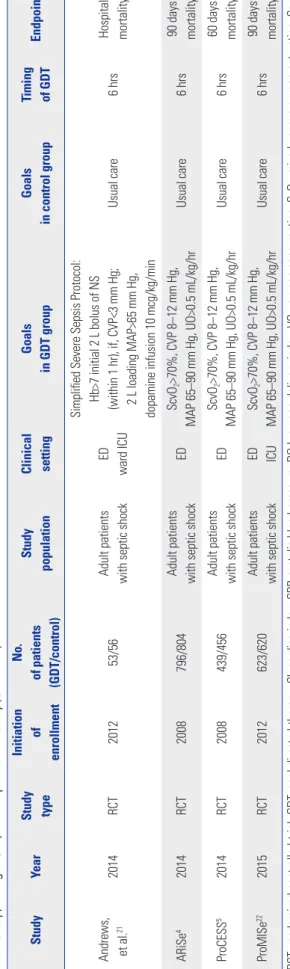
Table 1. Characteristics of Included Studies with Published Year, Study Type, Initiation of Enrollment Year, Number of Patients of Each Group, Study Population, Clinical Settings, Treatment Goals in Each Group, Timing of GDT, and Endpoint of the Study StudyYearStudy type Initiation of enrollment No. of patients (GDT/control)
Study populationClinical settingGoals in GDT groupGoals in control groupTiming of GDTEndpoint Tuchschmidt, et al.141992RCTUnknown26/25Adult patients with septic shockICUCI>6 L/min/m2 SBP>90 mm HgCI>3 L/min/m2 SBP>90 mm Hg6 hrsHospital mortality Yu, et al.151993RCTUnknown30/22Adult patients with sepsis or septic shockICUDO2I>600 mL/min/m2 SBP>100 mm HgDO2I 450–550 mL/min/m224 hrs30 days mortality Hayes, et al.131994RCTUnknown50/50Adult patients with septic shockICUCI>4.5 L/min/m2 DO2I>600 mL/min/m2 VO2>170 mL/min/m2Usual careUnclearHospital mortality Gattinoni, et al.161995RCT1991124/57Adult patients with septic shock or septic syndromeICU CI>4.5 L/min/m2 or SvO2>70% MBP>65 mm Hg CVP 8–12 mm Hg UO>0.5 mL/kg/hr CI 2.5–3.5 L/min/m2 MBP>65 mm Hg CVP 8–12 mm Hg UO>0.5 mL/kg/hr
Unclear180 days mortality Alía, et al.171999RCT199331/32Adult patients with severe sepsis or septic shockICUDO2I>600 mL/min/m2 MBP>60 mm HgDO2I>330 mL/min/m2 MBP>60 mm HgUnclearICU mortality Rivers, et al.12001RCT1997130/133
Adult patients with severe sepsis, septic shock or sepsis syndrome EDSvO2>70%, CVP 8–12 mm Hg, MAP 65–90 mm Hg, UO>0.5 mL/kg/hr
CVP 8–12 mm Hg MBP 65–90 mm Hg UO>0.5 mL/kg/hr6 hrsHospital mortality Gao, et al.252005Prospective observational200452/49Adult patients with septic shockWard ICU
Compliant to EGDT protocol; SvO2>70%, CVP 8–12 mm Hg, MAP 65–90 mm Hg, UO>0.5 mL/kg/hr
Noncompliant to EGDT protocol6 hrsHospital mortality Micek, et al.192006Before and after200460/60Adult patients with septic shockICUAdd an order set for EGDT protocol; SvO2>70%, CVP 8–12 mm Hg, MAP 65–90 mm Hg, UO>0.5 mL/kg/hr
Before adding an order set for EGDT protocol6 hrsHospital mortality Lin, et al.292006RCT2003108/116Adult patients with septic shockICUCVP 8–12 mm Hg, MAP>65 mm Hg, UO>0.5 mL/kg/hrUsual care6 hrsHospital mortality Nguyen, et al.262007Prospective observational200377/253Adult patients with septic shockED ICU
After education of therapeutic target of EGDT; ScvO2>70%, CVP 8–12 mm Hg, MAP 65–90 mm Hg, UO>0.5 mL/kg/hr Before education of EGDT6 hrsHospital mortality
Table 1. Characteristics of Included Studies with Published Year, Study Type, Initiation of Enrollment Year, Number of Patients of Each Group, Study Population, Clinical Settings, Treatment Goals in Each Group, Timing of GDT, and Endpoint of the Study (Continued) StudyYearStudy type Initiation of enrollment No. of patients (GDT/control)
Study populationClinical settingGoals in GDT groupGoals in control groupTiming of GDTEndpoint Jones, et al.122007Prospective interventional200577/79Adult patients with septic shockED ICU ScvO2>70%, CVP 8–12 mm Hg, MAP 65–90 mm Hg, UO>0.5 mL/kg/hr
Before education of EGDT6 hrsHospital mortality Zambon, et al.22008Prospective observational200544/17Adult patients with septic shockICUCompliant to target of EGDT; ScvO2>70%, CVP 8–12 mm Hg, MAP 65–90 mm Hg, UO>0.5 mL/kg/hr
Not compliant to target of EGDT6 hrsHospital mortality Ferrer, et al.232008Before and after20061465/854Adult patients with septic shockICUAfter education of EGDT protocol; ScvO2>70%, CVP 8–12 mm Hg, MAP 65–90 mm Hg, UO>0.5 mL/kg/hr
Before education of EGDT protocol6 hrsHospital mortality MacRedmond, et al.242010Prospective observational cohort200837/37Adult patients with septic shockED ICUScvO2>70%, CVP 8–12 mm Hg, MAP 65–90 mm Hg, UO>0.5 mL/kg/hrBefore EGDT protocol6 hrsHospital mortality Puskarich, et al.272009Before and after2005206/79Adult patients with septic shockEDScvO2>70%, CVP 8–12 mm Hg, MAP 65–90 mm Hg, UO>0.5 mL/kg/hrBefore EGDT protocol6 hrs1 yr mortality Crowe, et al.302010Prospective observational cohort2007183/123Adult patients with septic shockEDScvO2>70% (not continuous) CVP 8–12 mm Hg, MAP 65–90 mm Hg, UO>0.5 mL/kg/hr
Before EGDT protocol6 hrsHospital mortality De Miguel- Yanes, et al.282009Observational cohort200750/53Adult patients with septic shockEDAfter education of EGDT; ScvO2>70%, CVP 8–12 mm Hg, MAP 65–90 mm Hg, UO>0.5 mL/kg/hr
Before education of EGDT6 hrsHospital mortality Castellanos- Ortega, et al.32010Quasi- experimental study2005384/96Adult patients with septic shockICUAfter education of EGDT; ScvO2>70%, CVP 8–12 mm Hg, MAP 65–90 mm Hg, UO>0.5 mL/kg/hr
Before education of EGDT6 hrsHospital mortality Jones, et al.182010RCT2007150/150Adult patients with septic shockEDScvO2>70%, CVP 8–12 mm Hg, MAP 65–90 mm Hg, UO>0.5 mL/kg/hr
Lactate clearance CVP>8 mm Hg MBP>65 mm HgUnclearHospital mortality Coba, et al.202011Prospective cohort200664/434Adult patients with septic shockED ICU
Compliant within 6 hrs to EGDT protocol; ScvO2 70%, CVP>8 mm Hg, MAP>65 mm HgNot compliant6 hrsHospital mortality
Statistical analysis
Whether heterogeneity between study effects was significant or not was evaluated by using the Q statistical value obtained via chi-squared distribution analysis in order to identify appropri- ate studies. The random effect model was adopted where the p- value of the Q statistic for the accumulated effects was greater than 0.1.9 The odds ratio (OR) along with the 95% confidence interval (CI) of the overall mortality are presented. Publication bias was investigated by using a funnel plot and Egger and Begg’s statistical tests.10,11 The funnel plots did not indicate pub- lication biases, a finding that was further confirmed in the Egg- er and Begg’s tests, which yielded p-values greater than 0.05. All data analyses were performed using Comprehensive Meta- Analysis version 2.0 (Biostat, Inc., Englewood, NJ, USA).
RESULTS
Identification of eligible trials
In the initial search, we identified 4693 articles (Fig. 1). After the removal of 1863 duplicates, we reviewed 1259 titles and ab- stracts and eliminated 1215 articles not meeting the study in- clusion criteria. Two investigators reviewed 44 full-text articles and subsequently excluded 20 that did not meet the inclusion criteria: six articles were reviews or meta-analyses, five were published in Chinese only, four were inappropriate owing to the age range of those studied (i.e., children or geriatric pa- tients), and five were retrospective studies. Randomized con- trolled trials (RCTs), prospective cohort studies, and before- and-after studies were included in the analysis.
Characteristics of included trials
Twenty-four studies fulfilled the inclusion criteria: 12 each of RCTs and non-RCTs. In Table 1, the characteristics of the includ- ed trials are summarized. The regions where the studies were performed included the United States, Canada, Spain, Italy, Ger- many, Taiwan, Africa, and Australia; thus, there was a broad in- ternational distribution. The population age targeted by Jones, et al.12 was over 17 years, while that targeted by Hayes, et al.13 was over 21 years. The protocols for GDT were variable. The early studies13-17 targeted the oxygen delivery index, cardiac index, and oxygen consumption. The therapeutic targets of the study by Riv- ers, et al.1 included SvO2 (mixed venous oxygen saturation) >70, central venous pressure 8–12, and mean arterial pressure >65.
The later studies mostly followed the GDT protocol of Rivers, et al.,1 and one of the studies modified the protocol by using lactate instead of SvO2.18 The target time for therapy administration was generally within 6 hours except in five studies; four3,13,15,16 had un- clear target times and one14 targeted 24 hours. The years of publi- cation of these studies were between 1992 and 2015.
Risks of bias in the included studies
The details of the risks of bias, summarized in Fig. 2, are each Andrews, et al.212014RCT201253/56Adult patients with septic shockED ward ICU
Simplified Severe Sepsis Protocol: Hb>7 initial 2 L bolus of NS (within 1 hr), if, CVP<3 mm Hg; 2 L loading MAP>65 mm Hg, dopamine infusion 10 mcg/kg/min
Usual care6 hrsHospital mortality ARiSe42014RCT2008796/804Adult patients with septic shockEDScvO2>70%, CVP 8–12 mm Hg, MAP 65–90 mm Hg, UO>0.5 mL/kg/hrUsual care6 hrs90 days mortality ProCESS52014RCT2008439/456Adult patients with septic shockEDScvO2>70%, CVP 8–12 mm Hg, MAP 65–90 mm Hg, UO>0.5 mL/kg/hrUsual care6 hrs60 days mortality ProMISe222015RCT2012623/620Adult patients with septic shockED ICUScvO2>70%, CVP 8–12 mm Hg, MAP 65–90 mm Hg, UO>0.5 mL/kg/hrUsual care6 hrs90 days mortality RCT, randomized controlled trial; GDT, goal-directed therapy; CI, cardiac index; SBP, systolic blood pressure; DO2I, oxygen delivery index; VO2, oxygen consumption; SvO2, mixed venous oxygen saturation; ScvO2, central venous oxygen saturation; CVP, central venous pressure; MAP, mean arterial pressure; UO, urine output; ED, emergency department; hr, hour; ICU, intensive care unit; MBP, mean blood pressure; EGDT, early goal-directed therapy.
Table 1. Characteristics of Included Studies with Published Year, Study Type, Initiation of Enrollment Year, Number of Patients of Each Group, Study Population, Clinical Settings, Treatment Goals in Each Group, Timing of GDT, and Endpoint of the Study (Continued) StudyYearStudy type Initiation of enrollment No. of patients (GDT/control) Study populationClinical settingGoals in GDT groupGoals in control groupTiming of GDTEndpoint
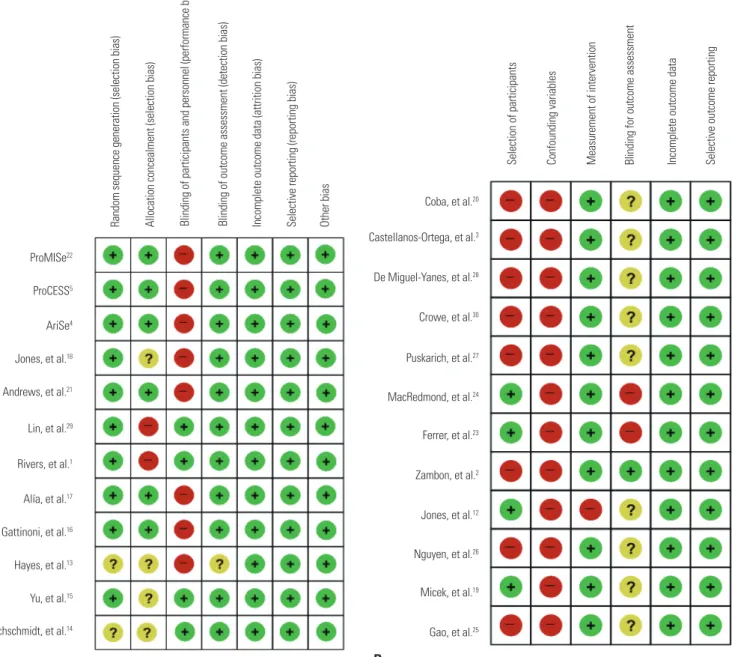
categorized into RCTs and non-RCTs. The RCTs (Fig. 2A) most- ly exhibited a low risk of bias,4,5,13,14,16,17,19-22 although the risk in two studies was unclear.15 Adequate randomized sequences were generated in six trials, while proper randomization was questionable in two studies. None of the RCTs were double- blinded; blinding of patients and clinicians is extremely diffi- cult when treating for septic shock, especially when applying GDT protocols. However, we concluded that the primary out- come (mortality) was seldom influenced by blinding the study.
Biases related to reporting were low; other biases were unclear.
Almost all non-RCTs (Fig. 2B) were at high risk of selection bias except in four studies.12,19,23,24 These four studies were con- ducted consecutively, and their data were collected prospec- tively. All non-RCTs were at a high risk of containing con-
founding variables. Four non-RCTs were before-and-after investigations,19,23,25 while the others were prospective observa- tional studies. We assumed that the learning effects were clear to the researchers when performing the before-and-after stud- ies using the GDT protocol. In the prospective observational studies, major confounders were confirmed, although adjust- ing for the confounders was difficult. The bias in measure- ments was relatively low as the primary outcome was patient mortality.
Overall mortality
A total of 13269 patients were available for the analysis of our primary endpoint. Overall mortality in the GDT and control groups was 1717 of 5259 patients and 1638 of 4655 patients, re-
Random sequence generation (selection bias) Selection of participants Confounding variables Measurement of intervention Blinding for outcome assessment Incomplete outcome data Selective outcome reporting
ProMISe22
ProCESS5
AriSe4
Jones, et al.18
Andrews, et al.21
Lin, et al.29
Rivers, et al.1
Alía, et al.17
Gattinoni, et al.16
Hayes, et al.13
Yu, et al.15
Tuchschmidt, et al.14 Gao, et al.25
Micek, et al.19 Nguyen, et al.26 Jones, et al.12 Zambon, et al.2 Ferrer, et al.23 MacRedmond, et al.24 Puskarich, et al.27 Crowe, et al.30 De Miguel-Yanes, et al.28 Castellanos-Ortega, et al.3 Coba, et al.20 Allocation concealment (selection bias) Blinding of participants and personnel (performance bias) Blinding of outcome assessment (detection bias) Incomplete outcome data (attrition bias) Selective reporting (reporting bias) Other bias
A B
Fig. 2. (A) Risk of bias summary of RCTs with Cochrane Collaboration tool. (B) Risk of bias summary of non-RCTs with Cochrane Collaboration tool. RCTs, randomized controlled trials.
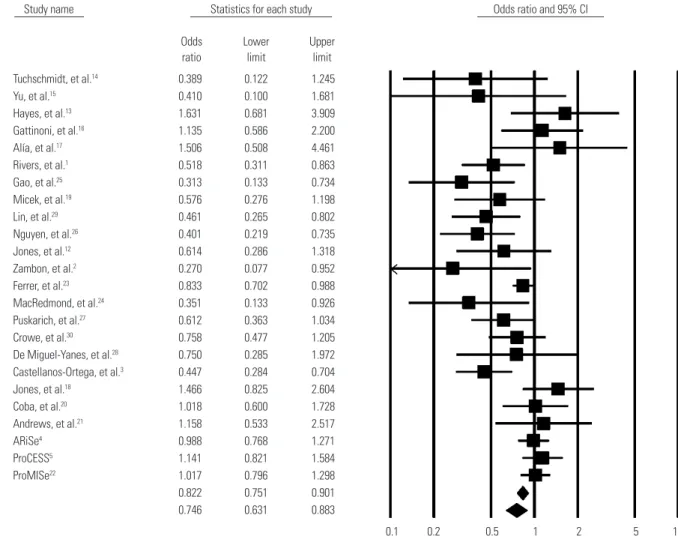
spectively. Overall, GDT significantly reduced overall mortality in the random-effects model (OR, 0.746; 95% CI, 0.631–0.883; p- value for heterogeneity <0.0001; I2=57.71%) (Fig. 3). The results of the subgroup analyses are presented in Table 2.
RCT-only meta-analysis
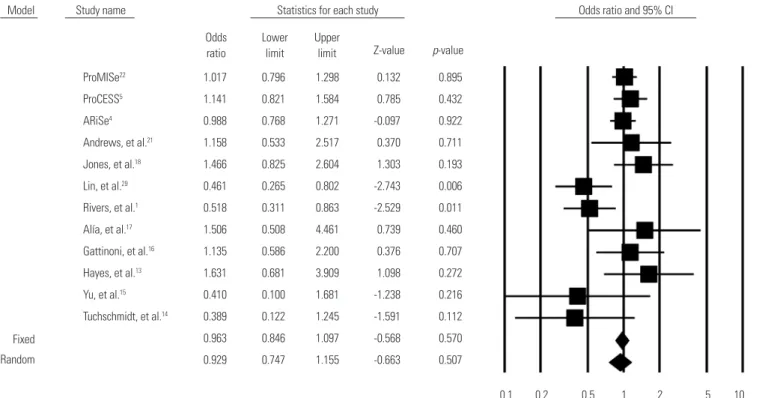
In the subgroup analysis (Table 2), we evaluated RCT studies only.1,4,5,13-18,21,22,29 GDT had no benefit regarding overall mortality compared to the results of all studies including non-RCTs (OR, 0.929; 95% CI, 0.747–1.155; p-value for heterogeneity=0.024;
I2=50.07%) (Fig. 4). This result contrasted with that of the analy- sis of all studies.
Cumulative statistics
We indexed the studies based on when each was performed and then categorized them into three groups: 2001–2003,19,25,29 2004–2007,2,3,12,18-20,23,25,27-30 and 2008 or later.4,5,21,22,24 This classifi- cation was according to the SSC publication update. We then conducted a cumulative meta-analysis. The results revealed that the effectiveness of each GDT was decreasing (Fig. 5) and was
Model Study name Statistics for each study Odds ratio and 95% CI
Odds ratio
0.1 0.2 0.5 1 2 5 10
Lower limit
Upper limit Tuchschmidt, et al.14 0.389 0.122 1.245
Yu, et al.15 0.410 0.100 1.681
Hayes, et al.13 1.631 0.681 3.909 Gattinoni, et al.16 1.135 0.586 2.200 Alía, et al.17 1.506 0.508 4.461 Rivers, et al.1 0.518 0.311 0.863
Gao, et al.25 0.313 0.133 0.734
Micek, et al.19 0.576 0.276 1.198
Lin, et al.29 0.461 0.265 0.802
Nguyen, et al.26 0.401 0.219 0.735 Jones, et al.12 0.614 0.286 1.318 Zambon, et al.2 0.270 0.077 0.952 Ferrer, et al.23 0.833 0.702 0.988 MacRedmond, et al.24 0.351 0.133 0.926 Puskarich, et al.27 0.612 0.363 1.034 Crowe, et al.30 0.758 0.477 1.205 De Miguel-Yanes, et al.28 0.750 0.285 1.972 Castellanos-Ortega, et al.3 0.447 0.284 0.704 Jones, et al.18 1.466 0.825 2.604 Coba, et al.20 1.018 0.600 1.728
Andrews, et al.21 1.158 0.533 2.517
ARiSe4 0.988 0.768 1.271
ProCESS5 1.141 0.821 1.584
ProMISe22 1.017 0.796 1.298
0.822 0.751 0.901 0.746 0.631 0.883 Fixed
Random
Fig. 3. Forest plot of the effectiveness of goal-directed therapy on overall mortality including RCTs and non-RCTs. RCTs, randomized controlled trials; CI, confidence interval.
Table 2. Subgroups Based on Study Type and Initiation Year
Subgroups No. of studies No. of patients OR (95% CI) p value I2 (%)
All trials 24 13269 0.75 (0.63–0.88) <0.0001 57.71
Study type
RCTs 12 6521 0.93 (0.75–1.16) 0.024 50.07
Non-RCTs 12 6748 0.60 (0.48–0.76) 0.031 48.13
Initiation of enrollment
2001–2003 3 817 0.66 (0.44–0.98) 0.041 53.31
2004–2007 11 4472 0.69 (0.55–0.88) 0.003 51.88
2008–2015 5 3921 1.01 (0.87–1.17) 0.899 23.63
RCTs, randomized controlled trials; OR, odds ratio; CI, confidence interval.
comparable with the subgroup analysis based on the study initi- ation year (Fig. 6).
Subgroup analysis based on the year of enrollment In the subgroup analysis (Table 2), we evaluated the initiation year of the study enrollment and grouped studies into three pe-
Model Study name Statistics for each study Odds ratio and 95% CI
Odds ratio
0.1 0.2 0.5 1 2 5 10
Lower limit
Upper
limit Z-value p-value
ProMISe22 1.017 0.796 1.298 0.132 0.895
ProCESS5 1.141 0.821 1.584 0.785 0.432
ARiSe4 0.988 0.768 1.271 -0.097 0.922
Andrews, et al.21 1.158 0.533 2.517 0.370 0.711 Jones, et al.18 1.466 0.825 2.604 1.303 0.193 Lin, et al.29 0.461 0.265 0.802 -2.743 0.006 Rivers, et al.1 0.518 0.311 0.863 -2.529 0.011 Alía, et al.17 1.506 0.508 4.461 0.739 0.460 Gattinoni, et al.16 1.135 0.586 2.200 0.376 0.707 Hayes, et al.13 1.631 0.681 3.909 1.098 0.272 Yu, et al.15 0.410 0.100 1.681 -1.238 0.216 Tuchschmidt, et al.14 0.389 0.122 1.245 -1.591 0.112 0.963 0.846 1.097 -0.568 0.570 0.929 0.747 1.155 -0.663 0.507 Fixed
Random
Fig. 4. Forest plot of the effectiveness of goal-directed therapy on overall mortality including only RCTs. RCTs, randomized controlled trials; CI, confi- dence interval.
Model Study name Cumulative statistics Cumulative odds ratio (95% CI)
Point
0.1 0.2 0.5 1 2 5 10
Lower limit
Upper limit
Lin, et al.29 0.461 0.265 0.802
Nguyen, et al.26 0.433 0.288 0.651
Gao, et al.25 0.407 0.282 0.589
Micek, et al.19 0.437 0.314 0.607
Jones, et al.12 0.461 0.340 0.623
Zambon, et al.2 0.448 0.334 0.600
Puskarich, et al.27 0.482 0.373 0.623
Castellanos-Ortega, et al.3 0.474 0.379 0.592
Ferrer, et al.23 0.527 0.397 0.699
Coba, et al.20 0.568 0.437 0.739
Crowe, et al.30 0.592 0.469 0.748
De Miguel-Yanes, et al.28 0.601 0.482 0.750
Jones, et al.18 0.639 0.508 0.804
MacRedmond, et al.24 0.623 0.496 0.782
ARiSe4 0.658 0.533 0.813
ProCESS5 0.692 0.565 0.848
ProMISe22 0.722 0.599 0.870
Andrews, et al.21 0.736 0.614 0.882
0.736 0.614 0.882 Random
Fig. 5. Cumulative forest plot of RCTs and non-RCTs published after 2001. RCTs, randomized controlled trials; CI, confidence interval.
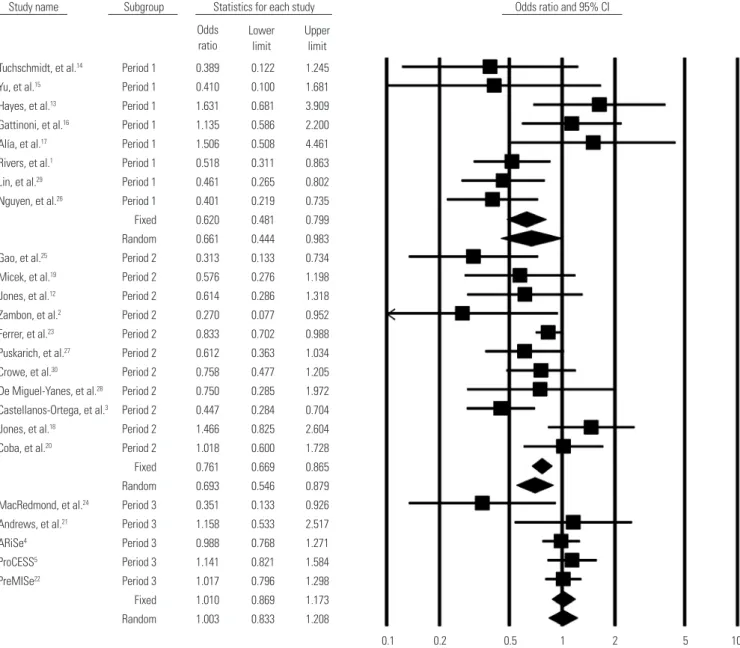
riods; period 1, before 2003; period 2, 2004–2007; and period 3, 2008–2015. This categorization was to analyze the change of clinical performance with time passage, and the results showed that the ORs approached values of 1 as time progressed (period 1, 0.661; period 2, 0.693; period 3, 1.010). We surmised that the difference between the effectiveness of GDT and usual care has decreased since 2001, simultaneously with the introduction of EGDT. Table 3 shows the amount of fluid administration within the first 6 hours in the recent RCTs. In the most recent study, the amount of fluid administration was not statistically different between the two groups, GDT and usual care.
Publication bias
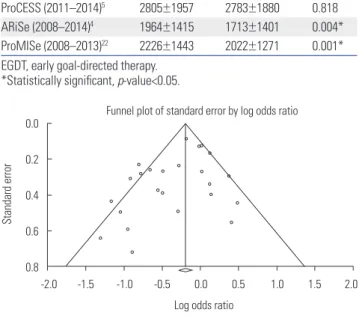
We detected no evidence of publication bias as determined by the funnel plot both visually (Fig. 7) and statistically (p=0.359 by the Begg’s test); we also checked the RCTs alone (p=0.837 using
Begg’s test) (Fig. 8).
DISCUSSION
In this meta-analysis, 12 RCTs and 12 non-RCTs were analyzed to compare overall mortality between GDT and non-GDT strat- egies. GDT remains an effective treatment modality for reduc- ing the mortality rate among septic shock patients. Prospective and retrospective studies accumulated over the years verify the efficacy of the GDT protocol in reducing mortality among pa- tients in septic shock. However, the differences in outcome be- tween GDT and standard care have been decreasing according to recent trials.
A concrete form of GDT focusing on early therapeutic mea- sures involving fluid, vasopressors, and transfusion to meet pre-
Fig. 6. Subgroup analysis, forest plot by study initiation year (period 1, before 2003; period 2, 2004–2007; period 3, 2008–2015). CI, confidence interval.
Study name Subgroup Statistics for each study Odds ratio and 95% CI
0.1 0.2 0.5 1 2 5 10
Lower limit
Upper limit Odds
ratio
Tuchschmidt, et al.14 Period 1 0.389 0.122 1.245 Yu, et al.15 Period 1 0.410 0.100 1.681 Hayes, et al.13 Period 1 1.631 0.681 3.909 Gattinoni, et al.16 Period 1 1.135 0.586 2.200 Alía, et al.17 Period 1 1.506 0.508 4.461 Rivers, et al.1 Period 1 0.518 0.311 0.863 Lin, et al.29 Period 1 0.461 0.265 0.802 Nguyen, et al.26 Period 1 0.401 0.219 0.735 Fixed 0.620 0.481 0.799 Random 0.661 0.444 0.983 Gao, et al.25 Period 2 0.313 0.133 0.734 Micek, et al.19 Period 2 0.576 0.276 1.198 Jones, et al.12 Period 2 0.614 0.286 1.318 Zambon, et al.2 Period 2 0.270 0.077 0.952 Ferrer, et al.23 Period 2 0.833 0.702 0.988 Puskarich, et al.27 Period 2 0.612 0.363 1.034 Crowe, et al.30 Period 2 0.758 0.477 1.205 De Miguel-Yanes, et al.28 Period 2 0.750 0.285 1.972 Castellanos-Ortega, et al.3 Period 2 0.447 0.284 0.704 Jones, et al.18 Period 2 1.466 0.825 2.604 Coba, et al.20 Period 2 1.018 0.600 1.728 Fixed 0.761 0.669 0.865 Random 0.693 0.546 0.879 MacRedmond, et al.24 Period 3 0.351 0.133 0.926 Andrews, et al.21 Period 3 1.158 0.533 2.517
ARiSe4 Period 3 0.988 0.768 1.271
ProCESS5 Period 3 1.141 0.821 1.584 PreMISe22 Period 3 1.017 0.796 1.298 Fixed 1.010 0.869 1.173 Random 1.003 0.833 1.208
specified targets was introduced by a highly influential single- center trial performed by Rivers et al.,1 although its primitive resuscitation protocol had been attempted beforehand.13-17 They administered approximately 5 liters of fluid in the first 6 hours of resuscitation, resulting in a 16% improvement of in- hospital survival in severe sepsis and septic shock patients.
Although the efficacy of GDT remains a matter of debate, it has been rapidly integrated into clinical practice as a form of the sepsis bundle due to its definite survival benefit, and its clin- ical efficacy was established via subsequent trials.27 In recent years, it has become less apparent whether GDT has any ad- vantage for survival of patients with severe sepsis.4,5,22 Investiga- tors who published the latest meta-analyses, including RCTs, have already pronounced the end of the GDT era. However, further research is required to identify the efficacy of GDT for resuscitation of patients with sepsis and to re-evaluate the ef- fect of GDT in clinical practice.
In our study, GDT showed no additional efficacy when ana- lyzing RCTs only. However, in the overall analysis of prospective studies, including observational studies, GDT is effective in re- ducing mortality in sepsis patients. This finding is striking, as heterogeneous results from RCTs and observational studies could be the reason for detecting inconsistent effects of GDT in sepsis patients. The most recent meta-analysis of RCTs failed to show a survival benefit with GDT,7 although GDT effectively re- duced mortality in sepsis patients according to the meta-analy- sis published prior to the recent large multicenter trials.6
There are several possible explanations as to why the clinical benefit of GDT is diminishing in the more recent trials. As we observed in the present analysis, the amount of fluid adminis- tration (Table 3) between standard-care and GDT groups in the most recent RCT5 (study period: 2011–2014) was not signifi- cantly different, compared with other two prior RCTs (Table 3).
Since GDT was integrated into the SSC guidelines, it has been widely adopted as a part of sepsis care, and healthcare profes- sionals involved in the recent trials were very familiar with GDT practices. We surmise that this is why the amount of fluid was not different between the standard-care and GDT groups with the passage of time.
We also noted the issue of the time of study enrollment, which is the reason why we conducted a cumulative meta-analysis to assess the time-dependent changes in risk reduction of GDT in sepsis patients. Subgroup analysis according to the actual peri- od of the trial enrollment was performed. There are always time intervals between the year of enrollment and study publication;
a clinical trial of patients with septic shock is extensive and can span many years. The actual clinical practices in the field are al- ways changing; therefore, methods in more recent publications will differ from those of previous years. We assumed that the GDT protocol set in the year of the initiation of the trial reflected the skill and methodology trends of the clinical staff in that par- ticular year. Hence, in addition to our main analysis, we ar- ranged the trials chronologically according to the year of initia- tion of study enrollment and performed a cumulative analysis (Fig. 5), which showed that the 95% CIs of the ORs were sur- passed as more recent trials were included. The comparison of the amount of fluid administration in Table 3 also indicates that the usual care is changing. The fluid management of usual care seems to be becoming similar to the fluid administration of GDT. However, we cannot hastily conclude that usual care is identical to GDT care based on this data alone.
A limitation of our study was that we included RCTs and non- RCTs together. We therefore could not dismiss the heterogene- ity of this study. In Table 2, the overall I2 value was 57.71% for all trials, which suggests that there is heterogeneity amongst the included trials; therefore, it cannot be ruled out that heteroge- neity may have affected the results of the analysis. In critical care settings, it is extremely difficult to perform randomized studies; hence, there are numerous prospective observational studies evaluating the effectiveness of GDT.
Table 3. The Amount of Fluid Administration for First 6 Hours, Unit Is Presented As mL (Mean±Standard Deviation)
Author (study period) EGDT Control p value
ProCESS (2011–2014)5 2805±1957 2783±1880 0.818 ARiSe (2008–2014)4 1964±1415 1713±1401 0.004*
ProMISe (2008–2013)22 2226±1443 2022±1271 0.001*
EGDT, early goal-directed therapy.
*Statistically significant, p-value<0.05.
Fig. 7. Funnel plot of overall trials, RCTs and non-RCTs (p-value=0.359).
RCTs, randomized controlled trials.
Standard error
0.0
0.2
0.4
0.6
0.8
Log odds ratio
Funnel plot of standard error by log odds ratio
-2.0 -1.5 -1.0 -0.5 0.0 0.5 1.0 1.5 2.0
Fig. 8. Funnel plot of RCTs (p-value=0.837). RCTs, randomized controlled trials.
Standard error
0.0
0.2
0.4
0.6
0.8
Log odds ratio
Funnel plot of standard error by log odds ratio
-2.0 -1.5 -1.0 -0.5 0.0 0.5 1.0 1.5 2.0
Additionally, as we aimed to investigate the effectiveness of GDT, the treatment duration goal was heterogeneous. In a sub- group analysis that includes the initiation of the study enroll- ment, the year cannot reflect the entire eligibility period of a tri- al. Even during study enrollment, the clinical performance of the medical staff can progress, regress, or change. When ar- ranging the trials chronologically according to the initiation year, such performance changes were not taken into account.
In summary, this meta-analysis suggests that GDT reduces mortality in patients with severe sepsis or septic shock. Howev- er, a cumulative meta-analysis revealed that the effect of risk re- duction decreased as more recent studies were incorporated.
Additional investigation is required prior to making definitive recommendations with respect to the effect of GDT on the re- suscitation of patients with sepsis.
REFERENCES
1. Rivers E, Nguyen B, Havstad S, Ressler J, Muzzin A, Knoblich B, et al. Early goal-directed therapy in the treatment of severe sepsis and septic shock. N Engl J Med 2001;345:1368-77.
2. Zambon M, Ceola M, Almeida-de-Castro R, Gullo A, Vincent JL.
Implementation of the Surviving Sepsis Campaign guidelines for severe sepsis and septic shock: we could go faster. J Crit Care 2008;
23:455-60.
3. Castellanos-Ortega A, Suberviola B, García-Astudillo LA, Holan- da MS, Ortiz F, Llorca J, et al. Impact of the Surviving Sepsis Cam- paign protocols on hospital length of stay and mortality in septic shock patients: results of a three-year follow-up quasi-experimen- tal study. Crit Care Med 2010;38:1036-43.
4. ARISE Investigators; ANZICS Clinical Trials Group, Peake SL, Del- aney A, Bailey M, Bellomo R, et al. Goal-directed resuscitation for patients with early septic shock. N Engl J Med 2014;371:1496-506.
5. ProCESS Investigators, Yealy DM, Kellum JA, Huang DT, Barnato AE, Weissfeld LA, et al. A randomized trial of protocol-based care for early septic shock. N Engl J Med 2014;370:1683-93.
6. Gu WJ, Wang F, Bakker J, Tang L, Liu JC. The effect of goal-directed therapy on mortality in patients with sepsis - earlier is better: a meta- analysis of randomized controlled trials. Crit Care 2014;18:570.
7. Zhang L, Zhu G, Han L, Fu P. Early goal-directed therapy in the management of severe sepsis or septic shock in adults: a meta- analysis of randomized controlled trials. BMC Med 2015;13:71.
8. Liberati A, Altman DG, Tetzlaff J, Mulrow C, Gøtzsche PC, Ioanni- dis JP, et al. The PRISMA statement for reporting systematic reviews and meta-analyses of studies that evaluate health care interven- tions: explanation and elaboration. J Clin Epidemiol 2009;62:e1-34.
9. Cochran WG. The combination of estimates from different experi- ments. Biometrics 1954;10:101-29.
10. Egger M, Davey Smith G, Schneider M, Minder C. Bias in meta- analysis detected by a simple, graphical test. BMJ 1997;315:629-34.
11. Begg CB, Mazumdar M. Operating characteristics of a rank corre- lation test for publication bias. Biometrics 1994;50:1088-101.
12. Jones AE, Focht A, Horton JM, Kline JA. Prospective external vali- dation of the clinical effectiveness of an emergency department- based early goal-directed therapy protocol for severe sepsis and septic shock. Chest 2007;132:425-32.
13. Hayes MA, Timmins AC, Yau EH, Palazzo M, Hinds CJ, Watson D.
Elevation of systemic oxygen delivery in the treatment of critically ill patients. N Engl J Med 1994;330:1717-22.
14. Tuchschmidt J, Fried J, Astiz M, Rackow E. Elevation of cardiac out-
put and oxygen delivery improves outcome in septic shock. Chest 1992;102:216-20.
15. Yu M, Levy MM, Smith P, Takiguchi SA, Miyasaki A, Myers SA. Ef- fect of maximizing oxygen delivery on morbidity and mortality rates in critically ill patients: a prospective, randomized, controlled study. Crit Care Med 1993;21:830-8.
16. Gattinoni L, Brazzi L, Pelosi P, Latini R, Tognoni G, Pesenti A, et al.
A trial of goal-oriented hemodynamic therapy in critically ill pa- tients. SvO2 Collaborative Group. N Engl J Med 1995;333:1025-32.
17. Alía I, Esteban A, Gordo F, Lorente JA, Diaz C, Rodriguez JA, et al. A randomized and controlled trial of the effect of treatment aimed at maximizing oxygen delivery in patients with severe sepsis or sep- tic shock. Chest 1999;115:453-61.
18. Jones AE, Shapiro NI, Trzeciak S, Arnold RC, Claremont HA, Kline JA, et al. Lactate clearance vs central venous oxygen saturation as goals of early sepsis therapy: a randomized clinical trial. JAMA 2010;
303:739-46.
19. Micek ST, Roubinian N, Heuring T, Bode M, Williams J, Harrison C, et al. Before-after study of a standardized hospital order set for the management of septic shock. Crit Care Med 2006;34:2707-13.
20. Coba V, Whitmill M, Mooney R, Horst HM, Brandt MM, Digiovine B, et al. Resuscitation bundle compliance in severe sepsis and sep- tic shock: improves survival, is better late than never. J Intensive Care Med 2011;26:304-13.
21. Andrews B, Muchemwa L, Kelly P, Lakhi S, Heimburger DC, Ber- nard GR. Simplified severe sepsis protocol: a randomized con- trolled trial of modified early goal-directed therapy in Zambia. Crit Care Med 2014;42:2315-24.
22. Mouncey PR, Osborn TM, Power GS, Harrison DA, Sadique MZ, Grieve RD, et al. Trial of early, goal-directed resuscitation for sep- tic shock. N Engl J Med 2015;372:1301-11.
23. Ferrer R, Artigas A, Levy MM, Blanco J, González-Díaz G, Garna- cho-Montero J, et al. Improvement in process of care and outcome after a multicenter severe sepsis educational program in Spain.
JAMA 2008;299:2294-303.
24. MacRedmond R, Hollohan K, Stenstrom R, Nebre R, Jaswal D, Dodek P. Introduction of a comprehensive management protocol for severe sepsis is associated with sustained improvements in timeliness of care and survival. Qual Saf Health Care 2010;19:e46.
25. Gao F, Melody T, Daniels DF, Giles S, Fox S. The impact of compli- ance with 6-hour and 24-hour sepsis bundles on hospital mortal- ity in patients with severe sepsis: a prospective observational study.
Crit Care 2005;9:R764-70.
26. Nguyen HB, Corbett SW, Steele R, Banta J, Clark RT, Hayes SR, et al.
Implementation of a bundle of quality indicators for the early man- agement of severe sepsis and septic shock is associated with de- creased mortality. Crit Care Med 2007;35:1105-12.
27. Puskarich MA, Marchick MR, Kline JA, Steuerwald MT, Jones AE.
One year mortality of patients treated with an emergency depart- ment based early goal directed therapy protocol for severe sepsis and septic shock: a before and after study. Crit Care 2009;13:R167.
28. De Miguel-Yanes JM, Muñoz-González J, Andueza-Lillo JA, Moy- ano-Villaseca B, González-Ramallo VJ, Bustamante-Fermosel A.
Implementation of a bundle of actions to improve adherence to the Surviving Sepsis Campaign guidelines at the ED. Am J Emerg Med 2009;27:668-74.
29. Lin SM, Huang CD, Lin HC, Liu CY, Wang CH, Kuo HP. A modified goal-directed protocol improves clinical outcomes in intensive care unit patients with septic shock: a randomized controlled tri- al. Shock 2006;26:551-7.
30. Crowe CA, Mistry CD, Rzechula K, Kulstad CE. Evaluation of a modified early goal-directed therapy protocol. Am J Emerg Med 2010;28:689-93.