• 검색 결과가 없습니다.

Assessment of Relationship between Fyn-related Kinase Gene Polymorphisms and Overweight/Obesity in Korean Population

N/A
N/A
Protected

Academic year: 2022

Share "Assessment of Relationship between Fyn-related Kinase Gene Polymorphisms and Overweight/Obesity in Korean Population"

Copied!
5
0
0

로드 중.... (전체 텍스트 보기)

전체 글

(1)

83 Corresponding to: Joo-Ho Chung, Kohwang Medical Research Institute, Department of Pharmacology, School of Medicine, Kyung Hee University, 1, Hoegi-dong, Dongdaemun-gu, Seoul 130-701, Korea. (Tel) 82-2-961-0281, (Fax) 82-2-968-0560, (E-mail) joohochung@

empal.com, [email protected]

ABBREVIATIONS: BMI, body mass index; CI, confidence interval;

LD, linkage disequilibrium; FRK, fyn-related kinase; OR, odds ratio;

SNP, single nucleotide polymorphism.

Assessment of Relationship between Fyn-related Kinase Gene Polymorphisms and Overweight/Obesity in Korean Population

Mi Young Jung

1

, Bum Shik Kim

1,2

, Youn Jung Kim

1,3

, In Song Koh

4

, and Joo-Ho Chung

1

1

Kohwang Medical Research Institute,

2

Department of Thoracic and Cardiovascular Surgery, School of Medicine,

3

College of Nursing Science, Kyung Hee University, Seoul 130-701,

4

Department of Physiology, College of Medicine, Han Yang University, Seoul 133-791, Korea

The fyn-related kinase (FRK) belongs to the tyrosine kinase family of protein kinases. Recent studies have shown that Frk affects pancreatic beta cell number during embryogenesis and promotes beta cell cytotoxic signals in response to streptozotocin. To investigate the genetic association between FRK polymorphisms and the risk of obesity in Korean population, single nucleotide polymorphisms (SNPs) in the FRK gene region were selected and analyzed. The body mass index (BMI) was calculated, and biochemical data (systolic blood pressure, diastolic blood pressure, hemoglobin A1C, triglyceride, total cholesterol, high density lipoprotein, and low density lipoprotein) of blood sample from each subject were also measured. One hundred fifty five healthy control and 204 overweight/obesity subjects were recruited. Genotype frequencies of six SNPs [rs6568920 (+ 8391G> A), rs3756772 (+ 56780A> G), rs3798234 (+ 75687C> T), rs9384970 (+ 68506G> A), rs1933739 (+ 72978G> A), and rs9400883 (+

75809A> G)] in the FRK gene were determined by Affymetrix Targeted Genotyping Chip data.

According to the classification of Korean Society for the Study of Obesity, control (BMI 18 to < 23) and overweight/obesity (BMI≥ 23) subjects were recruited. For the analysis of genetic data, EM algorithm, SNPStats, Haploview, HapAnalyzer, SNPAnalyzer, and Helixtree programs were used.

Multiple logistic regression analysis (codominant, dominant, and recessive models) was performed. Age and gender as covariates were adjusted. For biochemical data, Student's t test was used. The mean value of BMI in the control and overweigh/obesity groups was 21.1±1.2 (mean±SD) and 25.6±2.0, respectively. All biochemical data of the overweight/obesity group were statistically significance, compared with the control group. Among six SNPs, two linkage disequilibrium (LD) blocks were discovered. One block consisted of rs1933739 and rs9400883, and the other comprised rs3756772 and rs3798234. One SNP (rs9384970, + 68506G> A) showed an association with overweight/obesity in the codominant model (p=0.03). Interestingly, the AA genotype distribution in the overweight/obesity group (n=7, 3.5%) was higher than those in the control group (n=1, 0.6%), which is not found in either Japanese or Chinese subjects. Therefore, the AA genotype of rs9384970 may be a risk factor for development of obesity in Korean population. The results suggest that FRK may be associated with overweight/obesity in Korean population.

Key Words: Body mass index, Fyn-related kinase, Linkage disequilibrium, Obesity, Overweight, Single nucleotide polymorphism

INTRODUCTION

Obesity is a common and rapidly growing health problem, which raises the mortality due to diabetes, hypertension, and cardiovascular diseases (Burton et al, 1985; Alberti &

Zimmet, 1998). Obesity is exacerbated by physical inactivity, advancing age, and endocrine dysfunction. The tendency for weight gain is more likely due to influences of multiple genes and environmental factors (Hubert et al, 1983; Flegal et al, 1998). Nevertheless, the relationship between obesity and diabetes has well been established:

obesity is a major risk factor for the development of diabetes, and approximately 80% of type 2 diabetes is overweight or obese (Flegal et al, 1998; Mokdad et al, 1999).

Insufficient insulin causes deficiencies in pancreatic beta cell function or insulin secretion (Bell et al, 2001; Kahn, 2003).

The fyn-related kinase (FRK; other aliases, GTK, PTK5,

RAK) is located on chromosome 6q21-q22.3. The Frk is a

tyrosine kinase expressed in various tissues, such as the

gastrointestinal tract and pancreatic islet cells (Thuveson

et al, 1995). The Frk has been shown to induce beta cell

cytotoxic signals in response to several cytokines and beta

cell toxin, streptozotocin (Annerén, 2002; Annerén & Welsh,

(2)

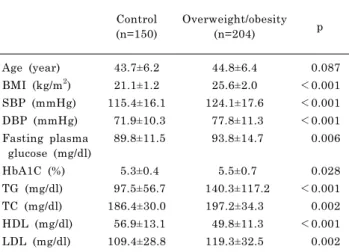
Table 1. Clinical and biochemical characteristics of overweight/

obesity and control subjects

  Control

(n=150) Overweight/obesity

(n=204) p

Age (year) 43.7±6.2 44.8±6.4 0.087

BMI (kg/m

2

) 21.1±1.2 25.6±2.0 < 0.001 SBP (mmHg) 115.4±16.1 124.1±17.6 < 0.001 DBP (mmHg) 71.9±10.3 77.8±11.3 <0.001 Fasting plasma

glucose (mg/dl)

89.8±11.5 93.8±14.7 0.006

HbA1C (%) 5.3±0.4 5.5±0.7 0.028

TG (mg/dl) 97.5±56.7 140.3±117.2 <0.001 TC (mg/dl) 186.4±30.0 197.2±34.3 0.002 HDL (mg/dl) 56.9±13.1 49.8±11.3 < 0.001 LDL (mg/dl) 109.4±28.8 119.3±32.5 0.002 Data are mean±SD. BMI, body mass index; SBP, systolic blood pressure; DBP, diastolic blood pressure; HbA1C, hemoglobin A1C; TG, triglyceride; TC, total cholesterol; HDL, high density lipoprotein; LDL, low density lipoprotein.

Fig. 1. Gene map and linkage disequilibrium (LD) in fyn-related kinase (FRK) gene. (A) Gene map of single nucleotide poly- morphisms (SNPs) in FRK on chromosome 6q21-q22.3. Exons are marked with box. The coding regions are represented by black boxes and untranslation regions by white boxes. The first nucleotide of the transcriptional start site is denoted as +1. Asterisk (*) indicates a significant SNP. Arrow indicates the location of each SNP. EX, exon. (B) LD coefficient (│D'│) and LD blocks among FRK SNPs. Block 1 consists of rs9400883 and rs1933739. Block 2 comprises rs3798234 and rs3756772.

2002). Annerén et al (2007) reported that transgenic mice expressing the Frk tyrosine kinase under the control of the rat insulin promoter showed glucose intolerance and reduced islet blood flow, and Akerblom et al (2007) demonstrated with Frk knockout (−/−) mice that Frk regulates beta cell number during embryogenesis in early life. Recently, polymorphisms of FRK have been shown to be related with the development of schizophrenia or Alzheimer's disease (Nakano et al, 2004; Rybakowski et al, 2007). However, no study has yet been carried out on the possible relationship between FRK gene and obesity. In this study, therefore, an association between single nucleotide polymorphisms (SNPs) of the FRK gene and overweight /obesity in Korean population was investigated.

METHODS Subjects

The body mass index (BMI) of each subject was calculated from height and weight using the formula: BMI=kg/m

2

. As per the Classification of Korean Society for the Study of Obesity (underweight, BMI <18; normal, BMI 18 to <23;

moderately obese, BMI 23 to <25; obesity I, BMI 25 to <30;

obesity II, BMI ≥30), normal control (BMI 18 to <23, n=155) and overweight/obesity (BMI ≥23, n=204) subjects were recruited at Kyung Hee University Medical Center.

Patients with hypertension, diabetes, hyperlipidemia, stoke, and cardiac diseases were excluded. All studies were carried out according to the Declaration of Helsinki guidelines. All the subjects gave written informed consent before joining the study. This study was approved by the ethics committee of the Medical Research Institute, Kyung Hee University Medical Center.

Biochemical measurements and DNA isolation Blood samples were drawn for biochemical measure- ments: systolic blood pressure (SBP), diastolic blood pre- ssure (DBP), fasting plasma glucose, hemoglobin A1C (HbA1C), triglyceride (TG), total cholesterol (TC), low density lipoprotein (LDL), and high density lipoprotein (HDL). DNA samples were isolated by using Core One

TM

Blood Genomic DNA Isolation Kit (CoreBioSystem

TM

, Seoul, Korea).

SNP selection and genotyping

We initially selected 6 SNPs (rs6568920, rs3756772, rs3798234, rs9384970, rs1933739, and rs9400883) within the FRK gene region using the following websites: (1) human SNP websites (http://www.ensembl.org; www.ncbi.

nlm.nih.gov/SNP) (2) HapMap database (http://www.

hapmap.org) (3) tag SNPs site (http:// broad.mit.edu/mpg/

tagger). The SNPs with unknown heterozygosity and minor

allele frequency (below 5%) were excluded. The genotyping

was performed using the Affymetrix Targeted Genotyping

Chip array (Affymetrix, CA, USA). In brief, DNA was

digested and then subjected to PCR using primers that

were specific to the adaptor sequence. PCR products were

purified, and the fragmented DNA was end-labeled with

biotin using terminal deoxynucleotidyl transferase. Labeled

DNA was then hybridized onto the Mapping Array. The

hybridized array was washed, stained, and scanned

(3)

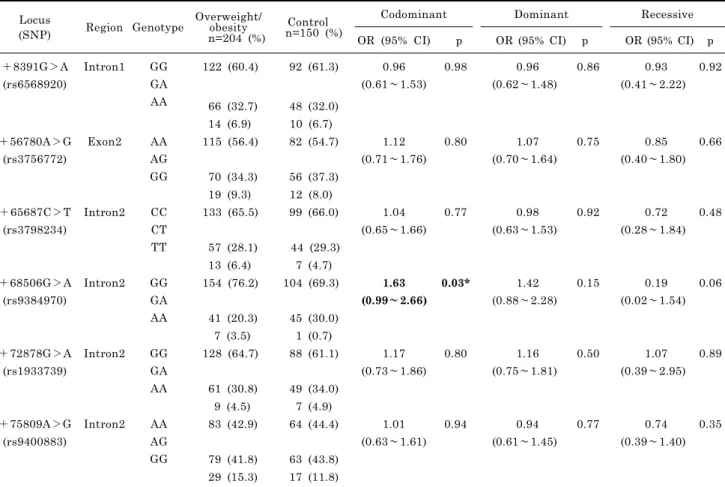
Table 2. Logistic regression analysis and genotype frequency of fyn-related kinase (FRK) polymorphisms in overweight/obesity and control subjects

Locus

(SNP) Region Genotype Overweight/

obesity n=204 (%)

Control n=150 (%)

Codominant Dominant Recessive

OR (95% CI) p OR (95% CI) p OR (95% CI) p

+8391G>A (rs6568920)

Intron1 GG GA AA

122 (60.4) 92 (61.3) 0.96 (0.61∼1.53)

0.98 0.96

(0.62∼1.48)

0.86 0.93

(0.41∼2.22) 0.92

66 (32.7) 48 (32.0) 14 (6.9) 10 (6.7)

+56780A>G (rs3756772)

Exon2 AA

AG GG

115 (56.4) 82 (54.7) 1.12 (0.71∼1.76)

0.80 1.07

(0.70∼1.64)

0.75 0.85

(0.40∼1.80) 0.66

70 (34.3) 56 (37.3) 19 (9.3) 12 (8.0)

+ 65687C>T (rs3798234)

Intron2 CC CT TT

133 (65.5) 99 (66.0) 1.04 (0.65∼1.66)

0.77 0.98

(0.63∼1.53)

0.92 0.72

(0.28∼1.84) 0.48

57 (28.1) 44 (29.3) 13 (6.4) 7 (4.7)

+68506G>A (rs9384970)

Intron2 GG GA AA

154 (76.2) 104 (69.3) 1.63 (0.99∼2.66)

0.03* 1.42

(0.88∼2.28)

0.15 0.19

(0.02∼1.54) 0.06

41 (20.3) 45 (30.0) 7 (3.5) 1 (0.7)

+ 72878G>A (rs1933739)

Intron2 GG GA AA

128 (64.7) 88 (61.1) 1.17 (0.73∼1.86)

0.80 1.16

(0.75∼1.81)

0.50 1.07

(0.39∼2.95) 0.89

61 (30.8) 49 (34.0) 9 (4.5) 7 (4.9)

+ 75809A>G (rs9400883)

Intron2 AA AG GG

83 (42.9) 64 (44.4) 1.01 (0.63∼1.61)

0.94 0.94

(0.61∼1.45)

0.77 0.74

(0.39∼1.40) 0.35

79 (41.8) 63 (43.8) 29 (15.3) 17 (11.8)

Genotype distributions are shown as number (%). Odds ratio (OR), 95% confidence interval (CI), and p values were from logistic regression analysis with codominant, dominant, and recessive models controlling age and gender as covariates. Total number of each SNP is different, because genotypes of some SNPs are unreadable. SNP, single nucleotide polymorphism.

according to the manufacturer's instructions. The image was analyzed using GCOS software (Affymetrix).

Statistical analysis

Hardy-Weinberg equilibrium was calculated by SNPStats (http://bioinfo.iconcologia.net/index.php) (Solé et al, 2006).

For the linkage disequilibrium (LD), Haploview version 3.32 was used (Barrett et al, 2005). The haplotypes and their frequencies were estimated using the EM algorithm (Stephens et al., 2001). To evaluate odds ratio (OR), 95%

confidence intervals (CI), and p value, SNPStats, Hap- Analyzer version 1.0 (Jung et al, 2004), SNPAnalyzer (ISTECH Inc., Goyang, Korea), and Helixtree (Golden Helix Inc., MT, USA) were used. Clinical characteristics were compared between control and overweigh/obesity subjects, using Student's t test. For all statistical tests, the significant level was set at 0.05. Power analysis was performed using G*Power computer software (Faul et al, 2007).

RESULTS

Clinical and biochemical characteristics of control and

overweight/obesity subjects are shown in Table 1. The mean value of BMI in the overweight/obesity group (25.6±2.0, mean±SD) was significantly higher than that in the control group (21.1±1.2). The levels of SBP, DBP, fasting plasma glucose, HbA1C, TG, TC, HDL, and LDL in overweight/

obesity subjects were significantly different, compared to those in control subjects (p<0.05) (Table 1).

To assess whether polymorphisms of FRK have any correlation with the risk of obesity, genotype frequencies of 6 SNPs in the FRK gene were examined in 204 overweight/obesity and 155 control subjects, and multiple logistic regression analysis with adjustment for age and gender was performed. Six SNPs [rs6568920 (+8391G>A), rs3756772 (+56780A>G), rs3798234 (+75687C>T), rs9384970 (+68506G>A), rs1933739 (+72978G>A), and rs9400883 (+75809A>G)] of the FRK gene region are illustrated in Fig. 1A. The first nucleotide of the transcrip- tional initiation site of FRK is denoted as +1, and genotype distributions of all polymorphisms in this study were in Hardy-Weinberg equilibrium (p>0.05). As shown in Fig.

1B, two LD blocks were discovered by the Gabriel method

(Gabriel et al, 2002). Haplotype analysis of block 1

(rs1933739 and rs9400883) and block 2 (rs3756772 and

rs3798324) showed no significant association in any models

(4)

(data not shown). The genotype distributions of six SNPs in overweight/obesity and control subjects are shown in Table 2. Among six SNPs, one SNP (rs9384970, +68506G>

A) presented an association with overweight/obesity in the codominant model (p=0.03, OR=0.21, 95% CI=0.02∼1.70).

The rest of the SNPs (rs6568920, rs3756772, rs3798234, rs1933739, and rs9400883) were not statistically associated with overweight/obesity (Table 2). We calculated the sample power for the significant SNP (rs9384970). In our case-control study, we had 0.844 (effect size w=0.174), assuming an α-level of 0.05. Thus, the rs9384970 SNP was sufficiently powerful for determining a positive association.

DISCUSSION

Although evidences that FRK is involved in the regulation of pancreatic beta cells and glucose intolerance have been published, no genetic study concerning the association between FRK and obesity has yet been reported.

In this study, we investigated whether FRK gene poly- morphisms in Korean population are related to obesity by genotyping six SNPs, and found that only one (rs9384970) SNP was significantly associated with overweigh/obesity.

The rs6568920 (+8391G>A) is located on intron 1. The GG, GA, and AA genotype frequencies are reported to be 0.712, 0.271, and 0.017 in European, 0.711, 0.267, and 0.022 in Chinese, 0.636, 0.318, and 0.045 in Japanese, and 0.317, 0.467, and 0.217 in Sub-Saharan African, respec- tively (http://www.ncbi.nlm.nih.gov/SNP). In the present study, the GG, GA, and AA genotype frequencies in Korean population were 0.606, 0.329, and 0.065, respectively, which are similar to those in Japanese. The rs3756772 (+56780 A>G) is located on exon 2, and is a missense SNP (Gly122Arg) with 0.498 heterozygosity. The missense rs3756772 (Gly122Arg) is the only one SNP with known heterozygosity in the coding SNPs of FRK gene region (http://www.ncbi.nlm.nih.gov/SNP). The AA, AG, and GG genotype frequencies are reported to be 0.233, 0.417, and 0.350 in European, 0.622, 0.356, and 0.022 in Chinese, 0.591, 0.364, and 0.045 in Japanese, 0.017, 0.267, and 0.717 in Sub-Saharan African, and 0.053, 0474, and 0.474 in African American, respectively (http://www.ncbi.nlm.nih.

gov/SNP). The AA, AG, and GG genotype frequencies in the Korean population were 0.542, 0.381, and 0.077, respec- tively, which are also similar to those in Japanese. FRK protein (P42685) consists of 505 amino acids and molecular mass of 58,254 Da. Amino acids from 42 to 110 comprise Src homology 3 (SH3), 116 to 208 SH2, 234 to 248 protein kinase domains, and 240 to 248 nucleotide binding region (UniProt, http://beta.uniprot.org; SwissProt, http://www.

expasy.org). The SH2 domain acts as a regulatory module of intracellular signaling cascades by interacting to phosphotyrosine-containing target peptides with high affinity (http://beta.uniprot.org). However, the rs3756772 in the SH2 domain in FRK was not associated with obesity in Korean population (Table 2). The CC, CT, and TT genotype distributions of the rs3798234 in Korean population (0.651, 0.303, and 0.046, respectively) are close to those in Japanese. The GG, GA, and AA genotype frequencies of the rs1933739 in Korean population (0.604, 0.349, and 0.047, respectively) show patterns similar to those in Japanese. However, the genotype distributions (AA, 0.443; AG, 0.436; GG, 0.121) of the rs9400883 in Korean population are close to those in Chinese (http://www.ncbi.

nlm.nih.gov/SNP, Table 2).

The rs9384970 (+68506G>A) is located on intron 2. The GG, GA, and AA genotype frequencies are reported to be 0.695, 0.288, and 0.017 in European, 0.800, 0.200, and 0.000 in Chinese, 0.750, 0.250, and 0.000 in Japanese, and 0.200, 0.600, and 0.200 in Sub-Saharan African, respec- tively. There is no AA genotype in 90 Chinese and 88 Japanese (http://www.ncbi.nlm.nih.gov/SNP). In the pre- sent study, the GG, GA, and AA genotype frequencies in Korean overweight/obesity subjects were 0.762, 0.203, and 0.035, respectively, while those in Korean healthy control subjects were 0.695, 0.299, and 0.006, respectively. We found the AA genotype of the rs9384970 in Korean popula- tion, and the rs9384970 was associated with overweight/

obesity in the codominant model. Interestingly, AA genotype distribution in overweight/obesity group (n=7, 3.5%) was higher than those in the control group (n=1, 0.6%). Therefore, AA genotype of the rs9384970 may be a risk factor for the development of obesity in Korean population.

In conclusion, the result suggests that FRK gene may be associated with obesity in Korean population.

ACKNOWLEDGEMENT

This study was supported by a grant of the Small and Medium Business Administration (S0604222-A0120014- 10100022) and partially by the Governance Program of Kyung Hee University.

REFERENCES

Akerblom B, Anneren C, Welsh M. A role of FRK in regulation of embryonal pancreatic beta cell formation. Mol Cell Endocrinol 270: 73−78, 2007

Alberti KG, Zimmet PZ. Definition, diagnosis and classification of diabetes mellitus and its complications. Part 1: diagnosis and classification of diabetes mellitus provisional report of a WHO consultation. Diabet Med 15: 539−553, 1998

Annerén C. Dual role of the tyrosine kinase GTK and the adaptor protein SHB in beta-cell growth: enhanced beta-cell replication after 60% pancreatectomy and increased sensitivity to strepto- zotocin. J Endocrinol 172: 145−153, 2002

Annerén C, Welsh M. Increased cytokine-induced cytotoxicity of pancreatic islet cells from transgenic mice expressing the Src-like tyrosine kinase GTK. Mol Med 7: 301−310, 2001 Annerén C, Welsh M, Jansson L. Glucose intolerance and reduced

islet blood flow in transgenic mice expressing the FRK tyrosine kinase under the control of the rat insulin promoter. Am J Physiol Endocrinol Metab 292: E1183−1190, 2007

Barrett JC, Fry B, Maller J, Daly MJ. Haploview: analysis and visualization of LD and haplotype maps. Bioinformatics 21: 263−

265, 2005

Bell GI, Polonsky KS. Diabetes mellitus and genetically pro- grammed defects in beta-cell function. Nature 414: 788−791, 2001

Burton BT, Foster WR, Hirsch J, Van Itallie TB. Health implications of obesity: an NIH Consensus Development Con- ference. Int J Obes 9: 155−170, 1985

Faul F, Erdfelder E, Lang AG, Buchner A. G*Power 3: a flexible statistical power analysis program for the social, behavioral, and biomedical sciences. Behav Res Methods 39: 175−191, 2007 Flegal KM, Carroll MD, Kuczmarski RJ, Johnson CL. Overweight

and obesity in the United States: prevalence and trends,

1960-1994. Int J Obes Relat Metab Disord 22: 39−47, 1998

(5)

Gabriel SB, Schaffner SF, Nguyen H, Moore JM, Roy J, Blumenstiel B, Higgins J, DeFelice M, Lochner A, Faggart M, Liu-Cordero SN, Rotimi C, Adeyemo A, Cooper R, Ward R, Lander ES, Daly MJ, Altshuler D. The structure of haplotype blocks in the human genome. Science 296: 2225−2229, 2002

Hubert HB, Feinleib M, McNamara PM, Castelli WP. Obesity as an independent risk factor for cardiovascular disease: a 26-year follow-up of participants in the Framingham Heart Study.

Circulation 67: 968−977, 1983

Jung HY, Park JS, Park YJ, Kim YJ, Kim K, Koh I. HapAnalyzer:

minimum Haplotype analysis system for association studies.

Genomics Inform 2: 107−109, 2004

Kahn SE. The relative contributions of insulin resistance and beta-cell dysfunction to the pathophysiology of Type 2 diabetes.

Diabetologia 46: 3−19, 2003

Mokdad AH, Serdula MK, Dietz WH, Bowman BA, Marks JS, Koplan JP. The spread of the obesity epidemic in the United States, 1991-1998. JAMA 282: 1519−1522, 1999

Nakano Y, Akahane A, Tanaka H, Ueno M, Kunugi H, Nanko S.

Analysis of the fyn kinase gene in Alzheimer's disease and schizophrenia. No To Shinkei 56: 153−156, 2004

Rybakowski JK, Borkowska A, Skibinska M, Hauser J. Poly- morphisms of the Fyn kinase gene and a performance on the Wisconsin Card Sorting Test in schizophrenia. Psychiatr Genet 17: 201−204, 2007

Solé X, Guinó E, Valls J, Iniesta R, Moreno V. SNPStats: a web tool for the analysis of association studies. Bioinformatics 22:

1928−1929, 2006

Stephens M, Smith NJ, Donnelly P. A new statistical method for haplotype reconstruction from population data. Am J Hum Genet 68: 978−989, 2001

Thuveson M, Albrecht D, Zürcher G, Andres AC, Ziemiecki A. iyk,

a novel intracellular protein tyrosine kinase differentially

expressed in the mouse mammary gland and intestine. Biochem

Biophys Res Commun 209: 582−589, 1995

수치

Fig. 1. Gene map and linkage disequilibrium (LD) in fyn-related kinase (FRK) gene. (A) Gene map of single nucleotide  poly-morphisms (SNPs) in FRK on chromosome 6q21-q22.3
Table 2. Logistic regression analysis and genotype frequency of fyn-related kinase (FRK) polymorphisms in overweight/obesity and  control subjects

참조

관련 문서

Therefore, this study aims to identify the relations between gastroesophageal reflux disease and body mass index, and waist measurement as indexes of obesity.. For the

Therefore, this study aims to analyze the effects of Soru massage therapy on the following variables: fatigue, stress, and obesity-related indexes including weight, waist girth

Comparison of the prevalence of Malnutrition and Overweight, Obesity between South Korean families and North Korean refugees families 15 Table 5.. Comparison of the

As for the relationship of obesity level to clothing shopping orientation, the underweight boys made up the largest brand-oriented group, and the

The Relationship between Physical Activities and Health-related Quality of Life in Korean Adults with Diabetes

There was no significant difference between the groups in problems of eating habits, but the obesity group considered overeating as a problem while the normal

This study aims to identify whether socioeconomic level of parents affects obesity of adolescents and whether the relations between adolescent's obesity

This study was conducted to analyze the effects of obesity on the core stability and metabolic syndrome risk factors of middle - aged women.. The effect