• 검색 결과가 없습니다.

Inhibitory Effects of Water Extracts of Eucommiae Cortex and Psoraleae Semen Alone and in Combination on Osteoclast Differentiation and Bone

N/A
N/A
Protected

Academic year: 2021

Share "Inhibitory Effects of Water Extracts of Eucommiae Cortex and Psoraleae Semen Alone and in Combination on Osteoclast Differentiation and Bone"

Copied!
18
0
0

로드 중.... (전체 텍스트 보기)

전체 글

(1)

Inhibitory Effects of Water Extracts of Eucommiae Cortex and Psoraleae Semen Alone and in

Combination on Osteoclast Differentiation and Bone

Jin Soo Park

1

, Ga Young Park

1

, Han Gyul Choi

1

, Seong Joung Kim

1

, June Hyun Kim

1

, Min Cheol park

2,3

, Yun Kyung Kim

4,5

, Sang Yong Han

4,5

and Eun Heui Jo

1,3,*

1

Department of Acupuncture & Moxibustion Medicine, College of Oriental Medicine, Wonkwang University

2

Department of Oriental Medical Ophthalmology & Otolaryngology & Der- matology, College of Oriental Medicine, Wonkwang University

3

Research Center of Traditional Korean Medicine, Wonkwang University

4

Department of Herbal Medicine, College of Pharmacy, Wonkwang Uni- versity

5

Wonkwang oriental Medicines Research Institute, Wonkwang University

[Abstract]

Objectives : ThepurposeofthisstudywastoevaluatetheeffectsofwaterextractsofEucommiae cortex(EC),Psoraleaesemen(PS),andtheircombinationonreceptoractivatorofnuclearfac- tor-kappa-Bligand(RANKL)-inducedosteoclastdifferentiation.

Methods : WeassayedtheproteinexpressionlevelsofnuclearfactorofactivatedT-cells,cy- toplasmic1(NFATc1),c-Fos,mitogen-activatedproteinkinases(MAPKs),andβ-actinincell lysatesusingwesternblotting.Similarly,mRNAexpressionlevelsofNFATc1,c-Fos,tartrate- resistantacidphosphate(TRAP),andglyceraldehyde-3-phosphatedehydrogenase,sper- matogeni(GAPDHS)frombonemarrowmacrophages(BMMs)wereanalyzedusingreverse transcription-polymerasechainreaction(RT-PCR).Furthermore,wedeterminedtheanti-os- teoporoticeffectsofthewaterextractsofEC,PS,andtheircombinationinalipopolysaccharide (LPS)-inducedbone-lossmousemodel.

Results : Theinvitro datarevealedshowedthatthecombinationofECandPSextractshowed amoreremarkableinhibitionofosteoclastdifferentiationthaneachherbdidalone.Thecom- binationdownregulatedtheinductionofc-Fos,NFATc1,andTRAPbysuppressingthephos- phorylation of p38 and c-Jun N-terminal kinases (JNKs) and inhibiting nuclear factor kappa-light-chain-enhancerofactivatedBcells(NF-κB).Lastly,theinvivo datashowed thatPSreducedtheLPS-inducedboneerosion.

Conclusion : TheresultofthisstudysuggeststhatECandPScouldbepotentialtherapeutic agentsforbonelossdiseasessuchasosteoporosis.

※ ThisstudywassupportedbyacademicresearchgrantofWonkwangUniversityin2017

✱ Correspondingauthor:DepartmentofAcupuncture&MoxibustionMedicine,CollegeofOriental Medicine,WonkwangUniversity,460,Iksandae-ro,Iksan-si,Jeollabuk-do,54538,Republicof Korea

Tel:+82-63-270-1022 E-mail:[email protected]

OriginalArticle

pISSN 1229-1137 eISSN 2287-7797

http://dx.doi.org/10.13045/acupunct.2017079

Key words : Eucommiaecortex;

Psoraleaesemen;

Osteoporosis;

Osteoclast

differentiation;

Boneresorption

Received : 2016. 11. 28.

Revised : 2017. 03. 16.

Accepted : 2017. 05. 02.

On-line : 2017. 05. 20.

ThisisanOpen-AccessarticledistributedunderthetermsoftheCreativeCommonsAttributionNon-CommercialLicense(http://creativecommons.org/licenses/by- nc/3.0)whichpermitsunrestrictednon-commercialuse,distribution,andreproductioninanymedium,providedtheoriginalworkisproperlycited.

TheAcupuncture istheJournalofKoreanAcupuncture&MoxibustionMedicineSociety.(http://www.TheAcupuncture.org)

Copyright2017KAMMS.KoreanAcupuncture&MoxibustionMedicineSociety.Allrightsreserved.

(2)

I. Introduction

Bone undergoes a continuous remodeling process of regeneration and degradation. Osteoblasts are involved in bone-forming while osteoclasts are as- sociatedwiththeboneresorption, andanimbalance between these two cell types can lead to the devel- opment of bone-related disorders such as osteo- porosis

1)

. Medications available for osteoporosis in the modern field of medicine include bone resorption inhibitors and bone-forming agents.

Most clinical treatments for osteoporosis involve theuseofboneresorptioninhibitorsthathavecom- mon side effects including gastrointestinal distur- bance mediated by cells in the T-cell lineage and monocytes, 3-day flu-like symptoms

2)

, increased bone mass during the early treatment period, jaw bone necrosis with long-term treatment, atypical subtrochanteric fracture, and delayed fracture re- covery

3)

. These side effects have prompted research on alternative osteoporosis medications derived from natural substances, such as herbal medicines that have few side effects. Furthermore, a previous study has reported that various kinds of herbal medicines can increase the bone mass of the spinal column more significantly than existing medications for osteoporosis

4)

.

Although there has been no direct report on os- teoporosis in the oriental medicine literature, os- teoporosis appears to fall under the category of Golwi (骨萎), Golgeuk (骨極), Golbi (骨痺), and Golgo (骨枯) based on its clinical symptoms and patterns

5)

. In addition, EC and PS have function of Bosin (補 腎) according to theories of physiology in oriental medicine, Sinjugol(腎主骨). Thus, in this study, we postulated that EC and PS would have therapeutic effects on osteoporosis

6)

.

Previous studies investigating the therapeutic effects of EC extracts on osteoporosis using scien- tific methods

7-11)

have only used ovariectomized white (albino) mice. Furthermore, a study reported that EC extracts inhibit the expression of nuclear factor of activated T-cells, cytoplasmic 1 (NFATc1)

by inhibiting the activation of p38, c-Jun N-ter- minal kinases (JNKs), extracellular signal-regu- lated kinases (ERKs), and nuclear factor kappa-light-chain-enhancer of activated B cells (NF-κB)

12)

. However, the experiment conducted in that study used relatively high intracellular extract concentrations of 50–300 μg/mL

12)

.

Apreviousstudy, whichreportedthetherapeutic effects of PS extracts in osteoporosis

13)

, only used a whitemousemodelofosteoporosisinducedbyestro- gen deprivation via ovariectomy. Furthermore, the therapeutic effects of the PC extracts were assessed in vivo by assaying related biochemical markers in- cluding serum and urine components as well as and bone density

13)

.

Naturalsubstancesandtheirderivativeswithin- hibitory cellular effects on different stages of os- teoclast differentiation have been investigated including deer antler

14)

and Taxilli ramulus ex- tracts

15-26)

. There has not been any research on the cellular inhibitory effects of EC and PS extracts on osteoclast differentiation, inflammatory bone loss, or their mechanisms of action and combined effects. Therefore, the present study was aimed at investigating the inhibitory effects of single or combined administration of EC and PS extracts on osteoclast differentiation in a white mouse model of experimentally induced bone loss.

II. Materials and Methods

1.Materials

The receptor activator of nuclear factor-kappa- B ligand (RANKL) and macrophage colony-stimu- lating factor (M-CSF) used in our research were purchased from Peprotech (London, UK). The 2,3- bis-(2-methoxy-4-nitro-5-sulfophenyl)-2H- tetrazolium-5-carboxanilide (XTT) assay kit was purchased from Roche (Indianapolis, IN, USA).

Phosphorylated-JNK (p-JNK), JNK, p-ERK, ERK,

(3)

p-p38, p38, and inhibitor of NF- κB (I-κB) anti- bodies were purchased from Cell Signaling Tech- nology (Beverly, MA, USA). c-Fos, NFATc1, and actin antibodies were purchased from Santa Cruz Biotechnology (Santa Cruz, CA, USA).

2.Methods

1)Preparation of EC and PS extracts

The EC and PS material used in this study were from Yeongchun of Gyeongbuk Province and China, respectively, and were purchased from Om- niherb Company. The EC and PS samples were evenly cut into pieces, macerated for 30 min, and boiled in a heating mantle for 2 h. Freeze-dried samples of the concentrates were used in our ex- periments, and their yields are shown in Table 1.

Purified water (1 L) was added to 100 g of each herb and heated in a Glas-Col (Terre Haute, IN, USA) heating mantle for 2 h for the extraction. The ob- tained extracts were filtered, concentrated using a rotary vacuum evaporator, freeze-dried, and then powdered for use in the experiments. The extract combination was prepared by mixing the EC and PS extracts in a 1:1 ratio, followed by further ex- traction and processing using the procedure de- scribed above.

2)Osteoclast culture and differentia- tion inhibition

Bone marrow cells were obtained by euthanizing 5-week-old male ICR mice by dislocating the cer- vical vertebrae. The tibias and femurs were then separated, and a 1× antibiotic solution containing α-minimum essential medium (MEM) was injected into the bones using a 1-cc syringe to

flush out the bone marrow inside. Following re- moval of the red blood cells, the bone marrow cells were cultured in α-MEM medium containing 10%

fetal bovine serum (FBS), antibiotics, and M-CSF (30 ng/mL) for 3 days. A cell suspension containing lymphocytes was removed, and the adherent cells were used as bone marrow macrophages (BMMs) of osteoclastprogenitors. TheBMMswereseededinto a 48-well plate at 3.5 × 10

4

cells/well and cultured with different concentrations of EC or PC extracts or their combination in a growth medium contain- ing M-CSF (30 ng/mL) and RANKL (100 ng/mL).

The growth medium was replaced 3 days later, and the cells were stained with tartrate-resistant acid phosphate (TRAP) solution 4 days later. Red violet- coloredTRAP-positivecellswereconsideredosteo- clasts and those with three or more nuclei were recorded for statistical analysis.

3)Toxicity test

BMMs were seeded into a 96-well plate at 1 × 10

4

cells/well and cultured with M-CSF (30 ng/mL), fol- lowedbytheextractsatdifferentconcentrationsfor 3 days. Then, 50 μL XTT was added to each well, and after a 4-h incubation, the optical density was measured at 450 nm using an enzyme-linked im- munosorbent assay (ELISA) plate reader (Molecular Devices, CA, USA).

4)Western blot analysis

The cultured cells were washed 2–3 times with 1 × phosphate-buffered saline (PBS) to remove any residue and dissolved in a lysis buffer (50 mM Tris-chloride [Cl], 150 mM sodium chloride [NaCl], 5 mM ethylenediaminetetraacetic acid [EDTA], 1%

Triton X-100, 1 mM sodium fluoride, 1 mM sodium vanadate, 1% deoxycholate, and protease

Table 1. ExtractionYieldofMedicinalHerbsUsedintheStudy

Korean name Pharmaceutical name Abbreviation Yield (%)

Duchung Eucommiae Cortex EC 11.1

Bogolji Psoraleae Semen PS 16.9

Duchung plus Bogolji Eucommiae Cortex plus Psoraleae Semen EC + PS 14.4

(4)

inhibitors). The solution was centrifuged (14,000 rpm, 20 min) to obtain the proteins, which were quantified using a DC protein assay kit (Bio-Rad, Hercules, CA, USA), and separated using 10%

sodium dodecyl sulfate (SDS)-polyacrylamide gel electrophoresis (PAGE). The separated proteins were transferred to a polyvinylidene fluoride (PVDF) membrane, which was blocked with 5%

skim milk in Tris-buffered saline plus Tween (TBS- T) to prevent nonspecific reactions, at 20℃ for 1 h, followed by incubation with the primary antibodies at 4°C. Following the antibody reaction, the PVDF membrane was washed thrice with TBS-T every 10 min and then incubated with secondary antibodies (1:5000) at room temperature for 1 h. After washing the PVDF membrane thrice with TBS-T, an enhanced chemiluminescence (ECL) kit was used to develop and visualized the blots to assess the protein expression levels.

5)Reverse transcription-polymerase chain reaction (RT-PCR)analysis

Intracellular RNA was separated using 1 mL isol- RNA lysis reagent (5PRIME) according to the man- ufacturer’sinstructions. Briefly, 0.5 pg–1 μg of the separated RNA was used to synthesize cDNA using the ReverTra Ace

®

quantitative polymerase chain reaction (qPCR) reverse transcription (RT) kit (Toy- obo, Japan). The synthesized cDNA was amplified

using PCR with the primers listed in Table 2. Then, the amplified DNA was electrophoresed using a 1%

agarose gel, stained with ethidium bromide (Et- Br), and subsequently visualized under ultraviolet (UV) light.

6)Animal experiment

To investigate the effects of the herbal extracts on bone loss in vivo, five 5-week-old male ICR micewereassignedtoeachofthefollowinggroups:

EC, PS, combination, and PBS groups (0.4 or 0.2 mg per body weight in g). The mice were orally ad- ministered the preassigned treatment solutions for 10 days. To induce bone loss, lipopolysaccharide (LPS) was intraperitoneally injected into the mice in the experimental groups on day 4 and 7 after ex- tract administration (day 1) while the control group mice were injected with PBS to reduce experimental errors. On day 10, the mice were euthanized, their femurswereharvested, fixedwith4% paraformalde- hyde, and then three-dimensional (3D) images of the interior were captured using micro-CT (Bruker, Kartuizersweg 3B, 2550 Kontich, Belgium, Skyscan 1172).

7)Statistical analysis

The statistical analysis was performed thrice or more for each experimental group, and the results are presented as the means ± standard deviation

Primer Sequence

c-Fos Forward 5'- CTGGTGCAGCCCACTCTGGTC-3'

Reverse 5'- CTTTCAGCAGATTGGCAATCTC-3'

NFATc1

*

Forward 5'- CAACGCCCTGACCACCGATAG-3'

Reverse 5'- GGCTGCCTTCCGTCTCATAGT-3'

TRAP

Forward 5'-ACTTCCCCAGCCCTTACTAC-3'

Reverse 5'-TCAGCACATAGCCCACACCG-3'

GAPDH

Forward 5'-ACCACAGTCCATGCCATCAC-3'

Reverse 5'-TCCACCACCCTGTTGCTGTA-3' Table 2. PrimersUsedforPolymeraseChainReaction(PCR)Amplification

* NFATc1, nuclear factor of activated T-cells, cytoplasmic1.

† TRAP, tartrate-resistant acid phosphate.

‡ GAPDHS, glyceraldehyde-3-phosphate dehydrogenase, spermatogeni.

(5)

(SD). All experiments were repeated thrice or more, and only consistent results were used in the statis- tical analyses. For quantitative results, the Stu- dent’s t-test was used. The results of the animal experiments did not meet the assumption of nor- mality since each group contained only five animals. Therefore, nonparametric Kruskal- Wallis, as well as Mann-Whitney tests, were per- formed to analyze results. The level of statistical significance was set at p < 0.05.

III. Results

1)Inhibitory effects of EC and PS water extracts in combination on RANKL- induced osteoclast differentiation

The differentiation of osteoclasts, which resorb bone, plays an important role in inducing osteo- porosis. In this study, we investigated the effects of EC and PS extracts in combination on osteoclast differentiation. BMMs were treated with M-CSF and RANKL at concentrations of 5 and 10 μg/mL

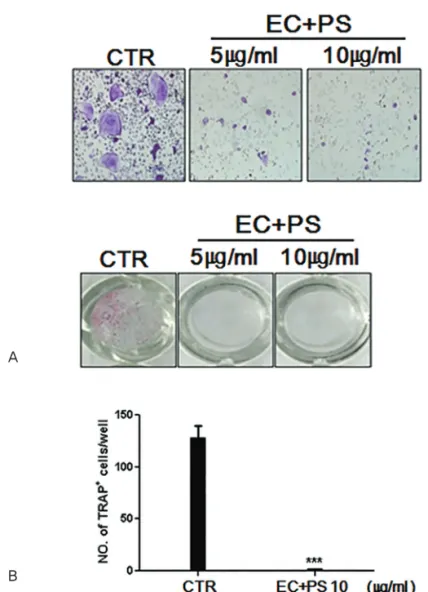
Fig. 1.Eucommiaecortex(EC)plusPsoraleaesemen(PS)waterextractsinhibitosteoclastdifferentiation

Bone marrow macrophages (BMMs) were cultured for 4 days with macrophage colony-stimulating factor (M-CSF, 30 ng/mL) and recep- tor activator of nuclear factor-kappa-B ligand (RANKL, 100 ng/mL) in the presence or absence of EC and PS water extracts.

(A) After 4 days, the cells were fixed in 3.7% formalin, permeabilized in 0.1% Triton x-100, and stained for tartrate-resistant acid phos- phate (TRAP).

(B) TRAP-positive cells were counted as osteoclasts. *Statistically different from control (***p < 0.001).

A

B

(6)

and cultured. The differentiation of BMMs into TRAP-positive multinucleated osteoclasts was ob- served in the control group, which was treated with M-CSF and RANKL only. However, osteoclast differentiation was inhibited in the EC andPSgroups(Fig. 1A). Thenumberofmultinucle- ated osteoclasts after staining with TRAP was counted, and the results revealed that differentia- tion into multinucleated osteoclasts was signifi- cantly inhibited by the EC and PS extracts (Fig. 1B).

In the subsequent experiments, the EC and PS ex- tracts were used at a concentration of 10 μg/mL.

2)Effects of EC and PS extracts alone on RANKL-induced osteoclast dif- ferentiation

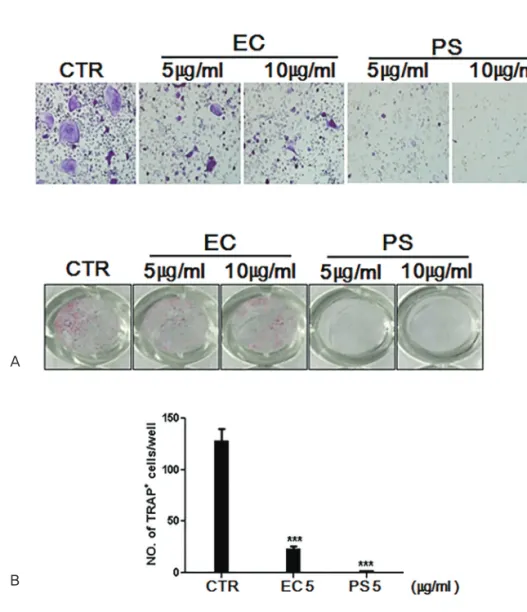
The combination of the EC and PS extracts in- hibited osteoclast differentiation and, therefore, we investigated their individual effects on RANKL- induced osteoclast differentiation. BMMs were cul- tured with M-CSF and RANKL and treated with EC or PS extracts at concentrations of 5 or 10 μg/mL. In contrast to BMMs in the control group, which were treated with M-CSF and RANKL only, the EC group showed inhibition of the production of TRAP-positive multinucleated osteoclasts. Fur-

Fig. 2.Eucommiaecortex(EC)andPsoraleaesemen(PS)inhibitosteoclastdifferentiation

Bone marrow macrophages (BMMs) were cultured for 4 days with macrophage colony-stimulating factor (M-CSF, 30 ng/mL) and recep- tor activator of nuclear factor-kappa-B ligand (RANKL, 100 ng/mL) in the presence or absence of EC or PS.

(A) After 4 days, cells were fixed in 3.7% formalin, permeabilized in 0.1% Triton x-100, and stained for tartrate-resistant acid phosphate (TRAP).

(B) TRAP-positive cells were counted as osteoclasts. *statistically different from control (***p < 0.001).

A

B

(7)

thermore, the differentiation of BMMs into mature, multinucleated osteoclasts was also inhibited.

However, this inhibition was not significant com- pared with that observed in the combination group.

The PS extract inhibited osteoclast differentiation;

however, the cells treated at a concentration of 10 μg/mL exhibited cytotoxicity (Fig. 2).

2.Cytotoxicity of EC and PS extracts

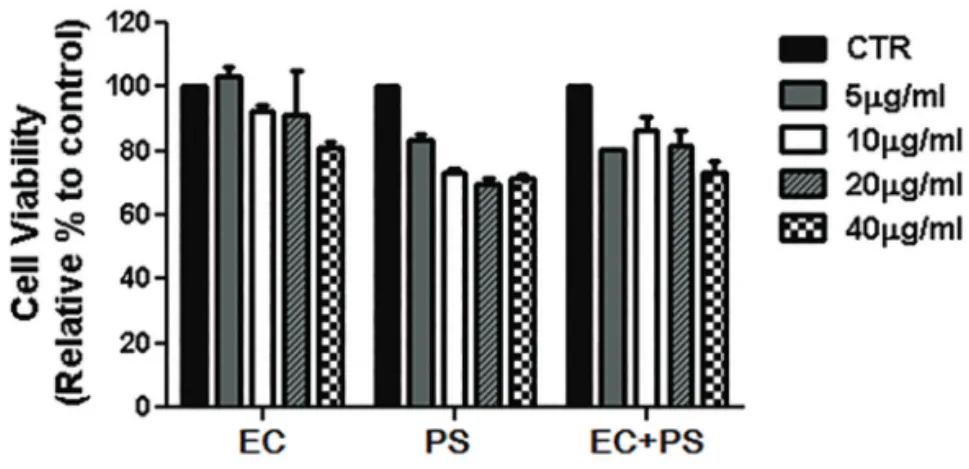
To eliminate the involvement of cytotoxicity in the inhibitory effects of EC and PS extracts alone and in combination on osteoclast differentiation, an XTT assay was performed using BMMs treated with different concentrations. Based on the cell survival rate of the untreated control group that was considered to be 100%, the survival rates were 103.2%, 92.7%, 91.6%, and 81.0% in the EC group mice treated with extract concentrations of 5, 10, 20, and 40 μg/mL, respectively. Furthermore, sur- vival rates of 80.6%, 73.5%, 69.9%, and 71.4% were found in the PS group mice treated with extract concentrations of 5, 10, 20, and 40 μg/mL. The combination treatment showed survival rates of 80.4%, 86.7%, 81.5%, and 73.5% at extract concen-

trations of 5, 10, 20, and 40 μg/mL. With a cell sur- vival rate ≥ 70% as the minimum standard for no cytotoxicity, a slight cytotoxicity was observed fol- lowing administration of the PS extract at 20 μg/mL while no cytotoxicity was observed in the EC and combination groups. Based on this result, we set the concentration of the EC and PS extracts at 5 μg/mL and that of the extract combination at 10 μg/mL. At this concentration, the extract com- bination exhibited synergistic effects over those of the EC and PS extracts while cytotoxicity was not observed (Fig. 3).

3.Inhibitory effects on RANKL-me- diated expression of osteoclast differentiation-inducing factors 1)Effects of the combination of EC and

PS extracts on RANKL-induced gene expression

RANK binds RANKL to induce the expression of transcription factors such as c-Fos and NFATc1 via various intracellular signaling pathways, thereby inducing the expression of TRAP, which is a marker of osteoclasts. To investigate the effects

Fig. 3.EffectofEucommiaecortex(EC),Psoraleaesemen(PS),andEC+PSwaterextractsoncellviability Bone marrow macrophages (BMMs) were cultured for 3 days with macrophage colony-stimulating factor (M-CSF, 30 ng/mL) in the pres- ence or absence of EC, PS, and EC + PS water extracts.

After 3 days, 2,3-bis-(2-methoxy-4-nitro-5-sulfophenyl)-2H-tetrazolium-5-carboxanilide (XTT) solution was added to each well, followed by incubation for 4–6 h.

Reaction solution in plate was measured at 450 nm using a microplate reader.

(8)

of the EC and PS extracts alone and in combination on the gene expression of c-Fos, NFATc1, and TRAP, we performed RT-PCR. The results showed increased mRNA expression of c-Fos, NFATc1, and TRAP induced by RANKL on day 1–2. However, themRNAexpressionofc-Fos, NFATc1, andTRPA was significantly inhibited in the combination group (Fig. 4).

2)Effects of EC and PS alone on RANKL-induced protein expression

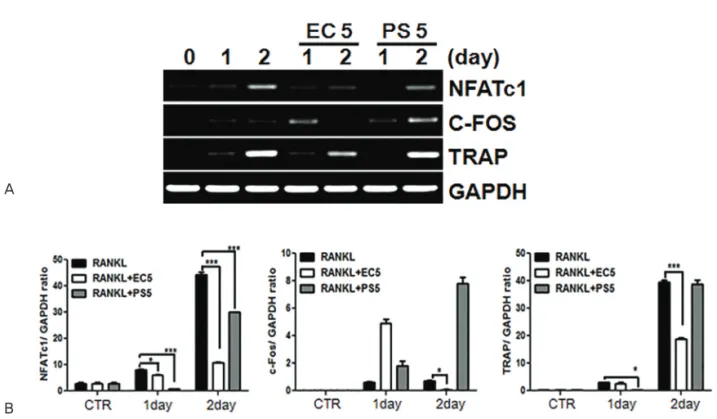
The RT-PCR results showed increased mRNA expression of c-Fos, NFATc1, and TRAP induced by RANKL on Day 1–2. The mRNA expression of NFATc1 was significantly inhibited in the EC and PSgroups. ThemRNAexpressionofTRAPwassig-

nificantly inhibited on Day 2 in the EC group, and on Day 1 in the PS group (Fig. 5).

4.Inhibitory effects on RANKL-in- duced expression of c-Fos and NFATC1proteins

1)Effects of the combination of EC and PS extracts on RANKL-induced ex- pression of c-Fos and NFATc1pro- teins

RANKL induces C-Fos expression, thus inducing the expression of NFATc1, which plays an important role in osteoclast differentiation. West- ern blotting was performed to investigate the ef- Fig. 4.Eucommiaecortex(EC)plusPsoraleaesemen(PS)waterextractssuppressreceptoractivatorofnuclear factor-kappa-Bligand(RANKL)-inducedc-Fos,nuclearfactorofactivatedT-cells,cytoplasmic1(NFATc1),and tartrate-resistantacidphosphate(TRAP)expression

Bone marrow macrophages (BMMs) were pretreated with or without EC and PS water extracts (10 μg/mL) for 1 h and then stimulated with RANKL (100 ng/mL) for indicated times (1 day [24 h] and 2 days [48 h]).

(A) mRNA expression was analyzed using reverse transcription-polymerase chain reaction (RT-PCR).

(B) Quantitative analysis using ImageJ program. Significance: *indicates significant difference between control and extraction treatment group (***p < 0.001).

Error bars indicate standard deviation (SD), n = 3.

GAPDHS, glyceraldehyde-3-phosphate dehydrogenase, spermatogeni.

A

B

(9)

fects of EC and PS extracts alone and in combina- tion on the expression of c-Fos and NFATc1 pro-

teins. The expression of NFATc1 was increased 12, 24, and 48 h after RANKL treatment in a time-de- Fig. 5.Eucommiaecortex(EC)andPsoraleaesemen(PS)suppressreceptoractivatorofnuclearfactor-kappa-B ligand(RANKL)-inducedc-Fos,nuclearfactorofactivatedT-cells,cytoplasmic1(NFATc1),andtartrate-resis- tantacidphosphate(TRAP)expression

Bone marrow macrophages (BMMs) were pretreated with or without EC and PS (5 μg/mL) for 1 h and then stimulated with RANKL (100 ng/mL) for indicated times (1 day [24 h], 2 days [48 h]).

(A): mRNA expression was analyzed using reverse transcription-polymerase chain reaction (RT-PCR).

(B) Quantitative analysis using ImageJ program.

*Significant difference between control and extract treatment groups (*p < 0.05 and ***p < 0.001).

Error bars indicate standard deviation (SD); n = 3.

GAPDHS, glyceraldehyde-3-phosphate dehydrogenase, spermatogeni.

A

B

Fig. 6.Eucommiaecortex(EC)plusPsoraleaesemen(PS)waterextractssuppressreceptoractivatorofnuclear factor-kappa-Bligand(RANKL)-inducedc-FosandnuclearfactorofactivatedT-cells,cytoplasmic1(NFATc1) expression

Bone marrow macrophages (BMMs) were pretreated with or without EC and PS water extracts (10 μg/mL) for 1 h and then stimulated with RANKL (100 ng/mL) for indicated times.

Cell lysates were analyzed using western blotting with antibodies for c-Fos, NFATc1, and β-actin.

(10)

pendent manner, and that of c-Fos was increased at 12 and 24 h. However, the expression of c-Fos and NFATc1 proteins was inhibited in the combina- tion treatment group (Fig. 6).

2)Effects of EC and PS extracts alone on RANKL-induced expression of C- Fos and NFATc1proteins

The expression of NFATc1 increased in a time- dependent manner 12, 24, and 48 h after RANKL treatment while that of c-Fos was increased 12 and 24 h after RANKL treatment. No change in the expression level of c-Fos and NFATc1 proteins was observed in the PS group, whereas the expression of NFATc1 protein was inhibited in the EC group (Fig. 7).

5.Effects on signaling pathways of osteoclast differentiation

1)Effects of the combination of EC and PS extracts on signaling pathways of RANKL-induced osteoclast differ- entiation

We investigated the effects of EC and PS extracts alone and in combination on major signaling path-

ways induced by RANKL to identify the mechanisms of osteoclast differentiation inhibition.

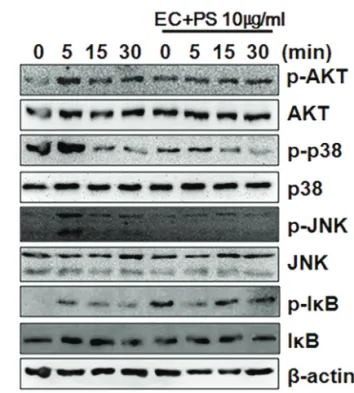
BMMs were pretreated with the EC and PS extracts alone or in combination, followed by RANKL at 0, 5, 15, and 30 min, and MAPK phosphorylation was as- sessed. While phosphorylation of AKT, p38, and JNK was increased in the EC and PS groups, phos- phorylation of p38 and JNK was simultaneously in- hibited in the combination group. The proteolysis of I-κB was also inhibited by RANKL (Fig. 8).

2)Effects of EC and PS extracts alone on signaling pathways of RANKL-in- duced osteoclast differentiation

BMMs were pretreated with EC and PS extracts, followed by RANKL at 0, 5, 15, and 30 min, and then MAPK phosphorylation was assessed. The phosphorylation of AKT and p38 was inhibited in the EC group, and that of p38 and JNK was inhib- ited in the PS group (Fig. 9).

6.Effects on LPS-induced inflam- matory bone loss

A mouse model of inflammatory bone loss was used to investigate the in vivo effects of EC and PS

Fig. 7.Eucommiaecortex(EC)andPsoraleaesemen(PS)suppressesreceptoractivatorofnuclearfactor-kappa- Bligand(RANKL)-inducedc-FosandnuclearfactorofactivatedT-cells,cytoplasmic1(NFATc1)expression Bone marrow macrophages (BMMs) were pretreated with or without EC and PS (5 μg/mL) for 1 h and then stimulated with RANKL (100 ng/mL) for indicated times.

Cell lysates were analyzed using western blotting with antibodies for c-Fos, NFATc1, and β-actin.

(11)

Fig. 8.Eucommiaecortex(EC)plusPsoraleaesemen(PS)waterextractsinhibitreceptoractivatorofnuclearfac- tor-kappa-BligandRANKLsignalingpathways

Bone marrow macrophages (BMMs) were pretreated with or without EC and PS water extracts (10 μg/mL) and further stimulated with RANKL(100 ng/mL) for indicated times.

Cells were lysed, proteins were resolved using 10% sodium dodecyl sulfate-polyacrylamide gel electrophoresis (SDS-PAGE), and sub- jected to western blot analysis.

p-JNK, phosphorylated-c-Jun N-terminal kinase; inhibitor of nuclear factor kappa-light-chain-enhancer of activated B cells, I-κB.

Fig. 9.Eucommiaecortex(EC)andPsoraleaesemen(PS)inhibitreceptoractivatorofnuclearfactor-kappa-Blig- andRANKLsignalingpathways

Bone marrow macrophages (BMMs) were pretreated with or without EC and PS (5 μg/mL) and further stimulated with RANKL (100 ng/mL) for indicated times.

Cells were lysed, proteins were resolved using 10% sodium dodecyl sulfate-polyacrylamide gel electrophoresis (SDS-PAGE), and sub- jected to western blot analysis.

p-JNK, phosphorylated-c-Jun N-terminal kinase; inhibitor of nuclear factor kappa-light-chain-enhancer of activated B cells, I-κB.

(12)

extracts alone and in combination. LPS (5 μg/g) was intraperitoneally injected into the mice once every 3 days, and then each extract was orally ad- ministered once daily at various concentrations.

The extent of LPS-induced bone loss was assessed based on 3D images of the femur specimens ob- tained using the Skyscan BE/skyscan 1172 (Table 3).

The mean bone loss was 16.9% in the LPS- treated group compared to that in the control group. No bone loss was observed in groups treated with the single EC and PS extracts alone.

The bone volume/tissue volume (BV/TV) was sig- nificantly increased in the group treated with the PS extract and LPS-stimulated, indicating a sig- nificant recovery of bone loss. No bone loss recovery was observed in the group treated with the extract combination (Fig. 10).

IV. Discussion

Osteoporosis is a systemic musculoskeletal dis- order characterized by reduced bone mass and mi- crostructure abnormalities and is a major geriatric disease that causes the bones to weaken and be- come brittle

27)

. The aging population has led to an

increase in the number of patients with osteoporo- sis.

28

Bone diseases such as osteoporosis are be- lieved to be caused by excessive proliferation and activation of osteoclasts, which degenerate bone.

Therefore, medications that can inhibit osteoclast activities have been widely used to treat osteoporo- sis. These medications include bisphosphonates, which mechanically inhibit bone resorption by os- teoclasts and induce osteoclasts to undergo apop- tosis.

29

While bisphosphonates have been shown to be effective in the treatment of osteoporosis, they canresultinserioussideeffectssuchasnecrosisof the jaw bone in patients with periodontal diseases.

30

For this reason, much attention has been focused on the development of osteoporosis medications from natural substances that tend to have few side effects. Natural substances derived from plants have been widely used to treat various diseases from ancient times. Identifying their mechanisms of action using modern research methods as a strategy to assess their values as os- teoporosis medications would contribute to the de- velopment of osteoporosis medications from natural substances.

EC is the dried bark of Eucommia ulmoides OLIV.), whichbelongstotheEucommiaceaefamily.

The bark is peeled off the trees in April and May, cut, stacked, and dried until the inner side turns purplish brown. EC is mild, non-toxic (溫無毒), and

CTR

*

EC

200 PS

200 LPS

§

+

- EC200 PS200 EC+PS200 EC+PS200

BV/TV (%) 30.9±0.0 28.6±0.4 31.5±0.9 25.7±0.7 26.5±1.4 30.6±1.9 26.5±2.5 26.3±2.8 Trabecular

thickness(㎛) 15.6±0.0 15.1±0.7 16.3±0.5 14.8±1.0 15.2±1.4 16.0±0.2 15.1±6.9 15.4±0.1 Trabecular

separation(㎛) 35.0±0.0 37.7±1.2 35.4±0.2 42.8±1.4 42.2±6.2 36.5±2.8 42.1±6.9 43.7±6.5 Trabecular

number(1/㎛) 0.020±0.0 0.019±0.0 0.019±0.0 0.017±0.0 0.018±0.0 0.019±0.0 0.018±0.0 0.017±0.0 Table 3. SkyscanAnalysisofLipopolysaccharide(LPS)-inducedBoneLossinMice

* CTR, control group

† EC, Eucommiae Cortex

‡ PS, Psoraleae Semen asdasd

§ LPS, lipopolysaccharide

BV/TV, bone volume/trabecular volume

(13)

has a sweet and slightly spicy taste (甘微辛). It ef- fects on (歸經) the kidney and liver meridian (肝腎 經) and strengthens muscle and bone (强筋骨) and, therefore is used to treat numbness and weakness of feet and knees (足膝痿弱) and other diseases

6)

. It is combined with Psoraleae semen to treat chills and pain in the waist and knees (腰膝酸痛) and musculoskeletal weakness (筋骨無力) caused by

liver and kidney yang deficiencies (肝腎不足)

31)

. Psoraleae fructus is the dried ripe fruit of Pso- ralea corylifolia L., which is an annual herb that belongs to the Leguminosae family. It is harvested in September and then dried. Psoraleae fructus is mild and non-toxic (溫無毒) with a bitter and spicy taste (辛苦). It effects on (歸經) the kidney and spleen meridian (腎脾經), and adding Yang energy Fig. 10.Skyscananalysisoflipopolysaccharide(LPS)-inducedbonelossinmice

(A) Mice were orally treated with Eucommiae cortex (EC), Psoraleae semen (PS), and EC + PS extracts (200 or 400 mg·kg

-1

·day

-1

) or 1× phosphate-buffered saline (PBS) daily for 10 days. LPS (5 µg/g body weight) or 1× PBS was administered intraperitoneally on day 4 and 7, and the femurs were harvested on day 10 after EC, PS, and EC + PS extract treatments. Radiographs were captured using Sky- scan.

(B) Bone volume/tissue volume (BV/TV), trabecular thickness, separation, and number were analyzed using histomorphometric results.

*Statistically different from LPS group. (*p < 0.05).

A

B

(14)

to kidney-Gi with warm medicine (溫 腎 助 陽 ).

Therefore, it is used to treat cold feeling and pain in the waist and knees (腰膝冷痛)

6)

. It is combined with EC to treat kidney yang deficiency and back pain

31)

.

Considering the description of osteoporosis as

“腎主骨髓” in《素問∙陰陽應象大論》, as“腎主骨” in《素 問∙宣明五氣》, and as“腎之合骨也” in《素問∙五藏生成 論》, Sinheo (腎虛) can be recognized as the main cause of osteoporosis, and medications that Bosin (補腎) may be effective in the treatment of osteo- porosis, a geriatric disease. We hypothesized that EC and PS, both of which enhance kidney yang, can effectively treat osteoporosis. Therefore, we investigatedtheinhibitoryeffectsoftheECandPS extracts alone and in combination on osteoclast differentiation and bone resorption.

M-CSF and RANKL are cytokines that are es- sential for the differentiation of stem cells into multinucleated osteoclasts

32)

. RANK binds with RANKL to promote the expression of c-Fos and NFATc1 via intracellular signaling pathways, thereby inducing the expression of TRAP, which is a marker of osteoclasts. TRAP is the only bone re- sorption factor expressed by mature osteoclasts and can be used to determine their differentiation stage

33)

. TRAP-positive cells were stained to inves- tigate the inhibitory effects of EC and PS extracts and their combination on osteoclast differentiation, which was found to be significantly inhibited by the extract combination.

While osteoclast differentiation was also inhibited in cells treated with each extract of EC or PS alone, this inhibition was not significant compared to that observed in the combination group. Although EC and PS extracts inhibited osteoclast differenti- ation, their combination had stronger effects than each extract did alone. Furthermore, while the PS extract showed cytotoxicity, the EC extract and combination treatment showed no cytotoxicity, suggesting that EC may mitigate the cytotoxicity of PS. The combination of the EC and PS extracts may provide important insights that could con- tribute to the development of osteoporosis medica-

tions.

The c-Fos protein, whose expression is induced by RANKL, induces the expression of NFATc1 and plays an important role in osteoclast differentiation. Western blotting was performed to investigate the effects of EC and PS extracts and their combination on the expression of c-Fos and NFATc1 proteins. The expression of NFATc1 was increased in a time-dependent manner 12, 24, and 48 h after RANKL treatment. The expression of c- Fos was increased at 12 and 24 h after RANKL treatment; however, the expression of c-Fos and NFATc1 was inhibited in the combination group (Fig. 4). On the other hand, no change in the ex- pression level of c-Fos and NFATc1 was observed in the PS group while the expression of NFATc1 was inhibited in this group. The extract combina- tion inhibited osteoclast differentiation more ef- fectively than the single ES or PS extracts did alone, possibly because the EC extract likely en- hanced the inhibitory effects of the PS extract on the expression of NFATc1 proteins.

C-Fos is a transcription factor that is expressed within 30 min after RANKL stimulation. C-Fos in- creases the expression of NFATc1, which subse- quently induces the expression of the osteoclast-specific marker genes such as TRAP and cathepsin K to induce osteoclast differentiation. In- hibiting the expression of c-Fos reduces that of NFATc1, whichleadstoreducedexpressionof TRAP, an osteoclast-specific marker

34-35)

. We performed RT-PCR to assess the expression level of the c-Fos, NFATc1, and TRAP genes and observed increased mRNA expression of c-Fos, NFATc1, and TRAP in- duced by RANKL on day 1–2. However, the mRNA expression of c-Fos, NFATc1, and TRAP was signif- icantly inhibited in the combination group.

Although the EC and PS extracts significantly in-

hibited the expression of c-Fos, NFATc1, and TRAP,

which are the key genes involved in the process of

osteoclast differentiation induced by RANKL, the

inhibition of NFATc1 expression by EC and PS ex-

tracts was not significant compared to that by the

extract combination. The expression of c-Fos was

(15)

not inhibited by EC and PS extracts. This explains why the inhibition of osteoclast differentiation was more evident in the combination group than it was in the EC and PS groups, and indicates that the combination of EC and PS extracts inhibits the key mechanism of osteoclast differentiation.

In osteoclast precursor cells, the cytoplasmic do- main of RANK binds TRAFs following exposure to an RANKL-induced stimulus to activate proteins in various signaling pathways. P38, JNK, and ERK, which are MAPKs, are known to be involved in im- portant signaling pathways of osteoclast differen- tiation

36)

. MAPKs play an important role in the expression of c-Fos. SB203580 and SP600125, which inhibit p38 and JNK, respectively, also in- hibit RANKL-induced expression of cFos and, thus, the activation of p38 and JNK could be con- sidered an important intermediate process in os- teoclast differentiation. The inhibition of different stages of the RANKL signaling pathway to inhibit osteoclast production could facilitate the develop- ment of a therapeutic approach for osteoporosis.

We assessed the effects of EC and PS extracts and theircombinationontheactivationofsignaltrans- ducers to investigate their mechanism of inhibition of NFATc1. The combination of EC and PS extracts inhibited the activation of p38 and JNK, suggesting that the inhibition of NFATc1 expression by the ex- tract combination may be associated with the acti- vationofp38 andJNK. PhosphorylationofAKTand p38 was inhibited in the EC group while that of p38 and JNK was inhibited in the PS group. This sug- gests that the effects of the PS extract on the rele- vant signaling pathways were greater than those of EC in the extract combination.

NF-κB is a transcription factor involved in dif- ferentiation, survival, and activation of various cells and is known to be involved in the expression of NFATc1 in osteoclasts

37)

. I-κB binds NF-κB in the cytoplasm to prevent it from traveling to the nucleus while RANKL destroys I-κB to enable NF- κB to translocate the nucleus. Continuous expres- sion of I-κB inhibits NF-κB activity and ultimately inhibits differentiation into

osteoclasts

38)

. We investigated the effects of EC and PS extracts and their combination on the activation of NF-κB. The level of I-κB was re- duced at 5 and 10 min as I-κB was degraded by RANKL. However, in the combination group, the level of I-κB was unchanged over time. Therefore, the inhibition of NFATc1 expression by the combi- nation of the EC and PS extracts may be associated with inhibition of NF-κB activation.

A study using an LPS-induced rat model of in- flammation, which is commonly used in research on bone loss and destruction in chronic inflamma- tory environments, reported that osteoclast differ- entiation is promoted by LPS

39)

. Furthermore, the authors reported that their observations were at- tributable to the LPS-induced expression of tumor necrosis factor (TNF)-α, which subsequently in- creased the expression of the proto-oncogene ty- rosine-protein kinase Src (c-src)

39)

. Bone loss results from the effects of inflammatory cytokine expression, whichisincreasedbyLPSaswellasin- flammatory mediators such as prostaglandin E

2

(PGE

2

)

40)

. Results in this studies have suggested that single extracts of EC and PS and their combi- nation inhibit osteoclast differentiation to promote a recovery from bone loss. Therefore, we investi- gated the effects of single EC and PS extracts and their combination in an animal model of LPS-in- duced inflammation.

EC has been reported to increase bone density

and bone strength in white rat models of induced

osteoporosis when coadministered with PS and

treadmill exercise and, therefore, could be

effective in the treatment of osteoporosis

41)

. EC ad-

ministered to ovariectomized white rats has been

observed to increase the trabecular bone volume

10)

.

PS has been observed to reduce the serum level of

osteocalcin and increase the level of phosphorus

and calcium in bones in ovariectomized white rats

and, thus, has been reported to be effective in the

prevention and treatment of osteoporosis

42)

.Based

on these observations, we investigated the effects

of EC and PS extracts and their combination on

LPS-induced bone loss. The results showed that

(16)

single extracts of EC and PS and their combination did not promote recovery of LPS-induced bone loss. The BV/TV was increased in the PS group, in- dicating a significant recovery of bone loss com- pared to the group treated with LPS alone. No significant changes in the trabecular thickness, separation, number were observed although slight improvements were evident. This finding may be associated with the previous observation where NFATc1 expression and phosphorylation of p38 and JNK were inhibited in the PS group. Since EC has previously been reported to increase bone den- sity in an ovariectomized model, it appears that EC affects bone metabolism via pathways that are not associated with inflammation.

In summary, EC and PS inhibited osteoclast dif- ferentiation, and their inhibitory effects were sig- nificantly stronger when the extracts were combined. The mechanisms of action of the EC and PS extracts were associated with the inhibition of NFATc1 expression by the inhibition of p38, JNK, and NF-κB activation. However, in the in vivo LPS-induced bone loss model, a more significant recovery of bone loss was observed in animals treated with PS, which inhibited p38 and JNK phosphorylation and the expression of NFATc1 proteins, than in those treated with the extract combination. This study is meaningful because to thebestofourknowledge, itisthefirststudytore- port the inhibitory effects of the combination of EC and PS extracts on osteoclast differentiation and bone resorption. Further investigation on the syn- ergistic effects of ES and PC extracts, their com- bined ratio, and whether the signaling pathways they affect are independent or not is necessary.

V. Conclusion

We investigated whether single extracts of EC

and PS and their combination had inhibitory effects on RANKL-induced osteoclast differentia- tion as well as bone resorption.

1. Based on the TRAP assay results, RANKL-in- ducedosteoclastdifferentiationwasmoresig- nificantly inhibited by the combination of EC and PS extracts than by each of the extracts alone.

2. The EC and PS extracts at a concentration of 5 μg/mL showed no cytotoxicity and, therefore, were used in the experiment. The extract combination was prepared by mixing the EC and PS extracts in a 1:1 ratio and was used at a concentration of 10 μg/mL since no cytotox- icity was observed at this concentration.

3. The EC extract inhibited the phosphorylation of AKT and p38 in RANKL-induced pathways to inhibit the expression of the NFATc1 gene, thereby inhibiting osteoclast differentiation.

4. The PS extract inhibited the phosphorylation of AKT and p38 in RANKL-induced pathways to inhibit the gene expression of NFATc1, thereby inhibiting osteoclast differentiation.

5. The EC and PS extract combination inhibited the phosphorylation of p38 and JNK in RANKL-inducedpathwaysandtheactivation of NK-κB to inhibit the gene and protein ex- pression of c-Fos and NFATc1, thereby in- hibiting osteoclast differentiation.

In the in vivo experiment, the EC and PS extract combination had no effects on recovery from LPS- induced bone loss and the BV/TV was increased in the PS- and LPS-treated group, indicating a sig- nificant recovery of bone mass compared to the re- covery in the group treated with LPS only.

In conclusion, the EC and PS extracts inhibited osteoclast differentiation through different routes.

The inhibition of osteoclast differentiation was en- hanced when the extracts were coadministered.

Only the single extract of PS was effective against

bone loss caused by inflammation.

(17)

VI. References

1. WJ Boyle, WS Simonet, DL Lacey. Osteoclast differentiation and activation. Nature. 2002;

423(6937):337-42.

2. Welton JL, Morgan MP, Marti S et al.

Monocyte and γδ T cells control the acute- phase response to intravenous zoledronate: in- sights from a phase IV safety trial. J Bone Miner Res. 2013;28(3):464-71.

3. Rachner TD, Khosla S, Hofbauer LC. Osteo- porosis: now and the future. Lancet. 2011;

377(9773):1276-87.

4. Wang ZQ, Li JL, Sun YL et al. Chinese herbal medicineforosteoporosis: asystematicreviewof randomized controlled trails. Evid Based Com- plementary Alternat Med. 2013;2013:356260.

5. The Society of Korean Medicine Rehabilitation.

Korea Rehabilitation Medicine. Seoul: Koonja Publishing INC. 2003:105-7.

6. SinMG. Clinicalherbalmedicine. Seoul: Younglimsa.

2000:556-9.

7. Oh HS, Kim HC, Lee SI, Ahn DK. Effects of Eu- commiae cortex and Folium on the ovariec- tomized rat as the model of postmenopausal osteoporosis. Kor. J Herbology. 1995;10(1):59- 68.

8. Lee JA, Noh SH, Ann DK, Choi HY. Effect of Eucommiae cortex and Chanenomelis fructus on the aged ovariectomized rat of post- menopausal osteoporosis. Kor. J Herbology.

2001;16(1):201-6.

9. Kim MS, Seo BI, Kwak MA, Jee SY. Effect of Chungajihwangtang on osteoporosis in ovariec- tomized rats. Kor. J Herbology. 2003;18(2):49- 58.

10. LeeDS, ByunSY. Effectsofthedietarymixture of Eucommia ulmoides oliver on osteoporosis.

Korean J. Biotechnol. Bioeng. 2001;16(6):614-9.

11. JeYM, YooDY. EffectsofDokhwalgisaengtang- gami water extract on osteoclast differentiation andosteoblastfunctioninRANKL-induedRAW 264.7 cell. J Korean Obstet Gynecol. 2013;26(2):

1-16.

12. Jung YT, Choi YH, Song JH et al. Effect of water extract of Eucommiae cortex in RANKL- induced osteoclast differentiation. Korean J Oriental Physiol Pathol. 2009;23(3):613-8.

13. Kwon HT, Seo BI, Kim SH, Kim MR. A study on the effects of Psoraleae fructus in ovariec- tomized rat model of postmenopausal osteo- porosis. Kor. J Herbology. 1997;12(2):21-38.

14. Kwak HB, Kim JH, Kim DJ, Kwon YM, Oh JM, Kim YK. Effect of water extract of Deer antler in osteoclast differentiation. Korean J Oriental Physiol Pathol. 2008;22(4):891-5.

15. Baek JM, Kim JY, Lee MS et al. Inhibition effect of Taxilli ramulus extract on osteoclast differentiation and bone resorption. Korean J Oriental Physiol Pathol. 2013;27(4):431-6.

16. Lee SY, Kim SN, Kim JK. Effects of Asparagus cochinchinensis(Lour.) Merr. on the stimulation of osteoblast differentiation and inhibition of osteoclast generation. J Korean Soc Food Sci Nutr. 2008;37(1):16-9.

17. Kim JH, Ki JY, Ann JY et al. Inhibitory effects of Achyranthis bidentatae radix on osteoclast differentiation and bone resorption. Kor J Her- bology. 2010;25(1):65-74.

18. Yun YJ, Lee JM, Lee CH, Jang JB, Lee KS. A study on inhibitory mechanism of Melia fructus extract on osteoclast differentiation. J Korean Obstet Gynecol. 2012;25(2):1-11.

19. ParkCK, KimHJ, KwakHBetal. Inhibitoryef- fects of Stewartia koreana on osteoclast differ- entiation and bone resorption. Int Immunopharmacol. 2007;7(12):1507-16.

20. HanKY, YangD, ChangEJetal. Inhibitionofos- teoclast differentiation and bone resorption by sauchinone. Biochem Pharmacol. 2007;74(6):911- 23.

21. Jang HJ, Hwang DS, Lee JM, Lee CH, Lee KS, Jang JB. Osteoclast differentiation of polygoni cuspidatiradixextractseffectsandmechanism of inhibition studies. J Korean Obstet Gynecol.

2014;27(1):17-27.

22. Heo JK, Hwang DS, Lee JM, Lee CH, Jang JB,

(18)

Lee KS. Inhibitory effects of ursolic prunella vulgarisonosteoclastdifferentiation. JKorean Obstet Gynecol. 2014;27(2):59-70.

23. Yoon KH, Baek JM, Kim JY et al. Inhibitory ef- fect on RANKL-induced osteoclast differentia- tion by water extract of zizyphus jujuba mill.

Korean J Oriental Physiol Pathol. 2014;28(1):29- 34.

24. Cheon YH, Kwack SC, Oh JM et al. Effect of Hoelen in RANKL-induced osteoclast differen- tiation. Korean J Oriental Physiol Pathol.

2012;26(3):320-24.

25. Hobson, E.E, Ralsteo, S.H. Role of genetic fac- tors in the pathophysiology and management of osteoporosis. Clin Endocrinlo. Oxf. 2001;54(1):1- 9.

26. Fujiwara S. Epidemiology of osteoporosis and fracture. Clin calcium. 2004;14(11):13-8.

27. Lee Y, Lee HS, Jang SJ, Song JH. Effect of water extract of schisandra chinensis on osteo- clast differentiation. Korean J Oriental Physiol Pathol. 2010;24(5):848-53.

28. Kim JH, Lee JH, Oh JM, Kim YK. Inhibitory ef- fects on bone resorption and osteoblast prolif- eration of Kyungok-go. Korean J Oriental Physiol Pathol. 2011;19(2):61-71.

29. Nishikawa M, Akatsu T, Katayama Y et al. Bis- phosphonates act on osteoblastic cells and in- hibit osteoclast formation in mouse marrow cultures. Bone. 1996;18(1):9-14.

30. Abrahamsen B. Bisphosphonate adverse effects, lessons from large databases. Curr Opin Rheumatol. 2010;22(4):404-9.

31. Ju YS. Ungok Herbology. Soeul: Seolimje.

2004:407-13.

32. Roodman G.D. Regulation of osteoclast differ- entiation. Ann N Y Acad Sci. 2006;1068:100-9.

33. Minkin C. Bone acid phosphatase: tartrate-re- sistant acid phosphatase as a marker of osteo- clast function. Calcif Tissue Int.

1982;34(3):285-90.

34. Matsuo K, Galson DL, Zhao C et al. Nuclear factor of activated T-cells (NFAT) rescues os- teoclastogenesis in precursors lacking c-Fos. J Biol Chem. 2004;279(25):26475-80.

35. Takayanagi H. Mechanistic insight into osteo- clast differentiation in osteoimmunology. J Mol Med. 2005;83(3):170-9.

36. Lee ZH, Kim HH. Signal transduction by recep- tor activator of nuclear factor kappa B in os- teoclasts. Biochem Biophys Res Commun.

2003;305(2):211-4.

37. Jimi E, Aoki K, Saito H et al. Selective inhibitionofNF-kappaBblocksosteoclastoge- nesisandpreventsinflammatorybonedestruc- tion in vivo. Nat Med. 2004;10(6):617-24.

38. Shimizu H, Nakagami H, Tsukamoto I et al.

NFkappaB decoyoligodeoxynucleotides amelio- rates osteoporosis through inhibition of activa- tion and differentiation of osteoclasts. Gene Ther. 2006;13(12):933-41.

39. Abu-Amer Y, Ross FP, Edwards J, Teitelbaum SL. Lipopolysaccharide -stimulated osteoclas- togenesis is mediated by tumor necrosis factor via its P55 receptor. J Clin Invest. 1997;100(6):

1557-65.

40. Qureshi ST, Lariviere L, Leveque G et al. Endo- toxin-tolerant mice have mutations in Toll-like receptor4 (Tlr4). JExpMed. 1999;189(4):615-25.

41. Yoon SJ, Kim KY, Kim GY et al. Effects of Eu- commia Ulmoides Oliver and Treadmill Exercise on the Osteoporosis of Rats Caused by Glucocorticoid Induction. Korean J Oriental Physiol Pathol. 2008;22(4):884-90.

42. Seo BI, Kim SH. A Study on the effect of

fructus Psoraleaeon ovariectomy-induced os-

teoporosis in rats. Korean J Oriental Physiol

Pathol. 1997;5(1):179-83.

수치

Table 1. ExtractionYieldofMedicinalHerbsUsedintheStudy
Fig. 1.Eucommiaecortex(EC)plusPsoraleaesemen(PS)waterextractsinhibitosteoclastdifferentiation
Fig. 2.Eucommiaecortex(EC)andPsoraleaesemen(PS)inhibitosteoclastdifferentiation
Fig. 3.EffectofEucommiaecortex(EC),Psoraleaesemen(PS),andEC+PSwaterextractsoncellviability Bone marrow macrophages (BMMs) were cultured for 3 days with macrophage colony-stimulating factor (M-CSF, 30 ng/mL) in the  pres-ence or abspres-enc
+4

참조

관련 문서

In addition, the expression of REDD1 was increased when Huh7 cells were treated with PA, and overexpression of REDD1 affected cell survival and lipid

Inhibition effects of flavonoids on hOAT1 and hOAT3: The inhibitory effects of five flavonoids such as morin, naringin, naringenin, silybin and quercetin on the uptake of [

A and E, In control group, a small amount of new bone was observed at the margin of bone defect (40×); B and F, In experimental group 1, a large amount of new bone was formed

3 Mean percentages of bone implant contact ratio in the control group and experimental groups at 6 and 12 weeks after placement of the

Inhibitory effects of classified methanol extracts of Smilax china L on the COX-2 and iNOS expression of human colorectal cancer cell lines... Inhibitory

Results : The expression of p21 was increased in boderline serous tumor and serous cystadenocarcinoma in contrast to benign serous tumors. The expression of

Fig 4 : Inhibitory effects of classified methanol extracts of Acalypha australis the COX-2 protein expression of the human oral cavity carcinoma KB cells....

To evaluate the Effect of mutant RANKL on mRNA expressions in related with osteoclastogenesis,we investigated the expression of several osteoclast- specific genes both