How do Lung Cancer Patients Experience Stigma?:
A Meta-synthesis of Qualitative Studies
Jeong, Ji Yeon1 · Jeong, Gyeonghui2 · So, Hyang Sook3
1Chonnam National University Hospital, Gwangju
2Dream CIS, Seoul
3College of Nursing, Chonnam National University, Gwangju, Korea
Purpose: Lung cancer patients are often stigmatized since lung cancer is closely associated with smoking, which is a self-administered life style. The stigma of lung cancer has been examined in some qualitative studies; however, their findings were diverse and not yet synthesized. Therefore, this meta-synthesis study aimed to explore how lung cancer patients experience stigma. Methods: A meta-synthesis method, as suggested by Sandelowski and Barroso in 2007, was applied by aggregating the findings after an evaluation according to consolidated criteria for reporting qualitative research (COREQ). Results: By synthesizing the findings of the selected seven papers, a synthesized theme was emerged as “experiencing external and internal distances, which mandates authentic and consistent supports.” The four sub-themes included ‘experiencing some distance from the surrounded world,’
‘experiencing self-made distance between the disease and oneself,’ ‘the disease experience causes social iso- lation and loneliness,’ and ‘there is lack of supportive care for myself.’ Conclusion: Health care providers should be more attentive to supporting lung cancer patients by providing more effective advocacy programs that improve patients’ quality of life.
Key Words: Lung cancer, Stigma, Qualitative study, Meta-synthesis
Corresponding author: Jeong, Gyeonghui
Dream CIS, 130 Sajik-ro, Jongno-gu, Seoul 03170, Korea.
Tel: +82-2-2010-4493, Fax: +82-2-2010-4593, E-mail: [email protected] Received: Jan 10, 2016 / Revised: Feb 13, 2016 / Accepted: Feb 13, 2016
This is an open access article distributed under the terms of the Creative Commons Attribution Non-Commercial License (http://creativecommons.org/licenses/
by-nc/3.0), which permits unrestricted non-commercial use, distribution, and reproduction in any medium, provided the original work is properly cited.
INTRODUCTION
Lung cancer was the most common cause of cancer death in South Korea in 2014[1]. Compared to other types of cancer, lung cancer has a higher death rate with re- gard to incidence. According to a report from the Natio- nal Cancer Information Center, the incidence of lung cancer was ranked third and fifth in men and women, respectively; however, the death rates of lung cancer in both sexes were all ranked first[1]. The high mortality rate of lung cancer can be explained by the silent symp- toms during the early stages; consequently, patients are usually diagnosed at late phase or metastasis stage[2].
Therefore, it is unavoidable that the survival rate for pa- tients with lung cancer is lower than that in patients with other cancers, thereby having the highest death rate. Fur- thermore, patients with lung cancer present significantly
higher psychological distress and lower quality of life compared to those with other types of cancer[3-7,a4].
Since approximately 80% of lung cancer deaths are asso- ciated with smoking, which is a self-administered life style choice[8], patients with lung cancer could experi- ence this stigma when diagnosed.
The term “stigma” can be defined as an attribute that discredits certain social relationships [9], including soci- etal attitudes towards the affected groups, institutional stigmatizing practices, actual discrimination experiences, perceived (felt) stigma, and self-referenced stigma. In particular, patients with lung cancer reported much high- er levels of perceived stigma than that in patients with other cancers due to the close relationship between lung cancer and smoking[10,a4]. Even a recent study[11]
found that depressive symptomatology was positively associated with the perceived stigma among patients
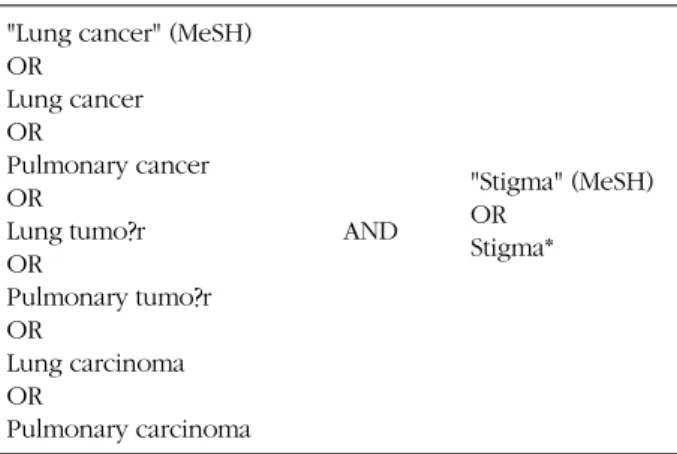
Table 1. Searching Terms
"Lung cancer" (MeSH) OR
Lung cancer OR
Pulmonary cancer OR
Lung tumo?r OR
Pulmonary tumo?r OR
Lung carcinoma OR
Pulmonary carcinoma
AND
"Stigma" (MeSH) OR
Stigma*
with lung cancer; and the stigma was above and beyond that accounted for by relevant demographic, clinical, and psychosocial factors[11,a4]. Furthermore, with in- creased awareness about the harmful effects of smok- ing, as well as passive smoking, smokers acquire public stigmatization acknowledged by health care providers, family, and national press[12]. As a result, this stigmati- zation of lung cancer and smoking is deeply associated with high levels of depression, blame, guilt, and anxiety among patients with lung cancer by deterring them from seeking proper treatment from health care providers who stigmatize those patients[a4].
There were only four previous studies about stigma related to lung cancer in South Korea, all of which used quantitative methods such as survey. The studies com- monly determined that stigma and distress had negative effects on quality of life among lung cancer patients in South Korea[13-16]. However, since those quantitative studies could not rigorously explore patients’ lives with this health-related phenomenon[17], qualitative studies were recommended to be conducted in order to prop- erly investigate stigma among patients with lung cancer.
It was found that there were no qualitative papers which gave an understanding of life with stigma among lung cancer patients in South Korea; although many qual- itative studies about lung cancer and stigma were re- ported from other countries. Owing to the cultural gap between South Korea and other countries, applying the findings from foreign qualitative studies may not be di- rectly transferable into South Korean settings. Therefore, it is ideal to directly conduct qualitative studies in South Korea. However, it is also crucial to have the essence of the phenomenon from those studies performed in dif- ferent countries in order to provide fundamental qual- itative data to South Korean healthcare, with an integrat- ed sense rather than to implement scattered findings from single studies[18]. A meta-synthesis is a complete and in- tegrated study that involves interpreting, appraising, and analyzing the findings of a number of qualitative studies[18,19]. It is not just a sum of qualitative studies, but also a systematic and scientific synthesis of the find- ings from the studies followed by new interpretations or a deeper understanding of the subject. Thus, this meta-synthesis study aims to explore how patients with lung cancer experience stigma in order to provide pre- liminary qualitative data to South Korean settings.
METHODS
This meta-synthesis was performed in accordance
with the process proposed by Sandelowski and Barroso [19]. The process encompassed identifying a research question, collecting relevant papers, appraising the qual- ity of the studies, and conducting a meta-synthesis.
1. Research Question
To identify a research question is the foremost step which gives a clear direction of a meta-synthesis[19]. The question should be broad enough to grab the essential phenomenon that the investigators are interested in [20].
Therefore, the main research question of this study was
“How do patients with lung cancer experience stigma?”
2. Collecting Relevant Data 1) Search strategy
Systematic searches were performed in four interna- tional search engines (EMBASE from 1947 to November 3, 2015, PsycInfo from 1806 to October Week 4 2015, CINAHL, and PubMed) as well as five Korean search engines (RISS, KISS, DBpia, NDSL, and KoreaMed) be- tween October 26, 2015 and November 4, 2015 by the three authors. To increase searching sensitivity, Medical Subject Headings (MeSH) terms were used with all sub- terms and sub-headings by exploding headings. Trun- cation (i.e., stigma*) and wildcards (i.e., tumo?r) were also applied when searching for free-text terms. All searching terms were used in combinations with “OR”
and “AND”(Table 1).
Inclusion and exclusion criteria were set according to the study aim. Papers were included if they were a qual- itative study and written in Korean or English. Studies that used a mixed method design were also screened since they could have qualitative data; however, quanti- tative studies were excluded because of the study in-
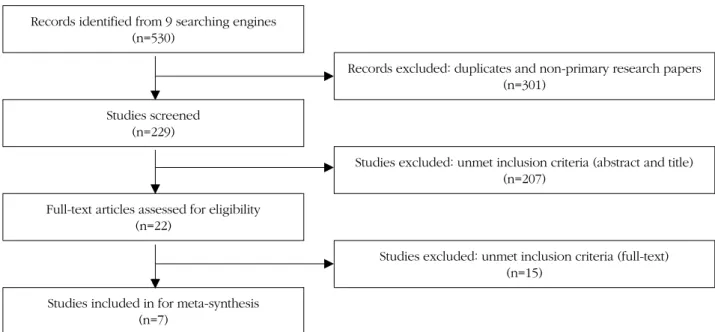
Records identified from 9 searching engines (n=530)
Records excluded: duplicates and non-primary research papers (n=301)
Studies screened (n=229)
Studies excluded: unmet inclusion criteria (abstract and title) (n=207)
Full-text articles assessed for eligibility (n=22)
Studies excluded: unmet inclusion criteria (full-text) (n=15)
Studies included in for meta-synthesis (n=7)
Figure 1. Flowchart of the search process.
terest. The study population included patients diagnos- ed with primary lung cancer regardless of the type of lung cancer, treatment period, or other characteristics (i.e., sex, age, and smoking history).
The initial list of search results was scrutinized by two authors (JJ and GJ). After examining the search results by title and abstract, all full-texts of relevant papers were reviewed; if there were any suspicious records, the third author (HS) was consulted to review the papers.
2) Search Outcomes
A total 530 papers were found through the systematic searching process (Figure 1). By screening the titles and abstracts of those papers, duplicates and non-primary research papers (n=301) were excluded. The rest of the papers were examined by assessing the titles and ab- stract with the inclusion criteria described above; then unsuitable records were eliminated (n=207). After re- viewing the remaining papers (n=22) in full-text, 15 pa- pers were excluded: no qualitative data (n=4), review paper (n=2), different population (n=4), online data an- alysis (n=2), duplicate with different title (n=1), and non- lung cancer (n=2). Finally, a total seven papers were se- lected that fully met the inclusion criteria.
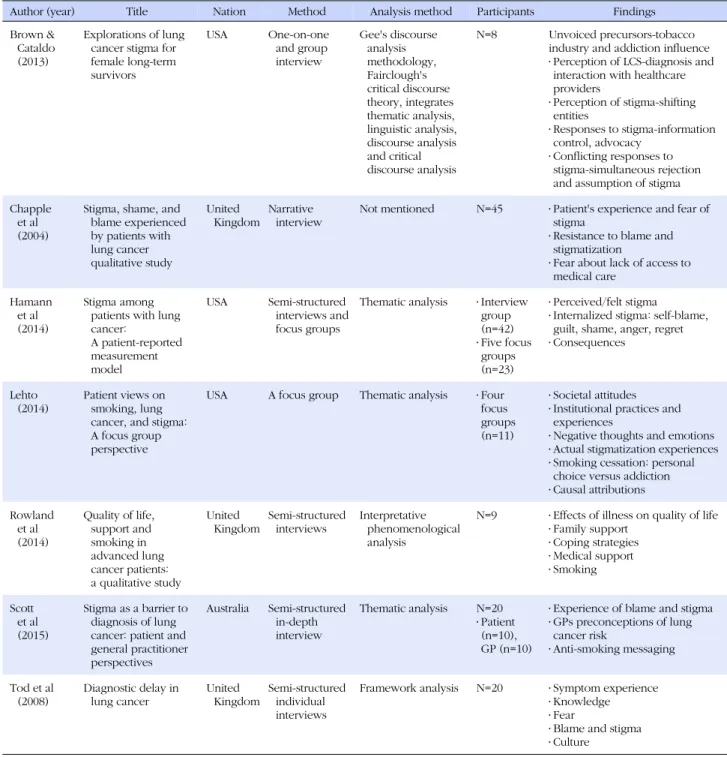
The seven selected papers were all written in English, as there were no qualitative studies published in Korean with the same topic. The studies were conducted in the U.S.(n=3), U.K.(n=3), and Australia (n=1) between 2002 and 2014. A total of 168 patients with lung cancer were included. As per Table 2, the aims, analysis methods,
and findings of the studies were very diverse. Although there was heterogeneous data, the differences could be addressed by comparability work[21] such as the proc- ess of identifying a problem, setting inclusion criteria, selecting search terms and sources, and extracting data [21]. As a result, the comparability work enabled this meta-synthesis paper to be transparent and reproduci- ble, which allowed a comparison of the differences.
3. Quality Appraisal
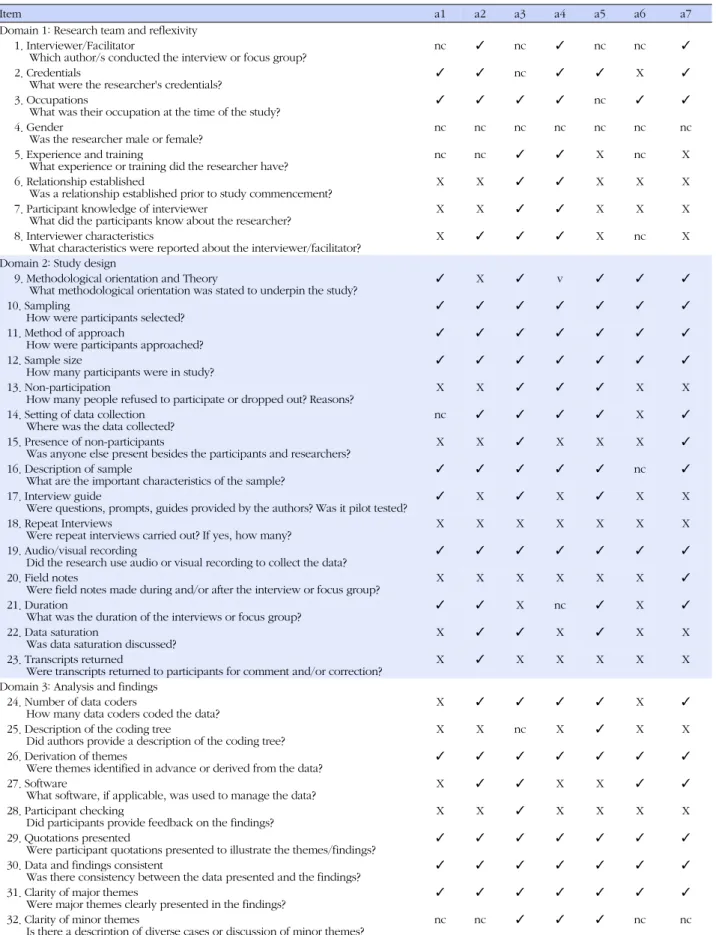
Appraisal of the selected studies was performed in ac- cordance with Criteria for Reporting Qualitative Research (COREQ) developed by Tong et al.,[22]. The COREQ helps researchers to evaluate the quality of qualitative papers in three main domains:(1) research team and re- flexivity,(2) study design, and (3) analysis and findings.
All selected studies were initially assessed by JJ and GJ individually; then, a consensus was made through discussion in order to enhance reliability. The result of this assessment was illustrated in Table 3.
4. Meta-synthesis
When synthesizing the findings of the selected pa- pers, the meta-aggregative approach developed by the Joanna Briggs Institute (JBI)[23] was mainly applied.
This approach is a detailed and specified methodology which seeks to move beyond the implicit suggestions from primary findings of research papers[23]. It entails
Table 2. Summary of the Included Studies
Author (year) Title Nation Method Analysis method Participants Findings
Brown &
Cataldo (2013)
Explorations of lung cancer stigma for female long-term survivors
USA One-on-one
and group interview
Gee's discourse analysis methodology, Fairclough's critical discourse theory, integrates thematic analysis, linguistic analysis, discourse analysis and critical discourse analysis
N=8 Unvoiced precursors-tobacco industry and addiction influence
․ Perception of LCS-diagnosis and interaction with healthcare providers
․ Perception of stigma-shifting entities
․ Responses to stigma-information control, advocacy
․ Conflicting responses to stigma-simultaneous rejection and assumption of stigma Chapple
et al (2004)
Stigma, shame, and blame experienced by patients with lung cancer qualitative study
United
Kingdom Narrative
interview Not mentioned N=45 ․ Patient's experience and fear of stigma
․ Resistance to blame and stigmatization
․ Fear about lack of access to medical care
Hamann et al (2014)
Stigma among patients with lung cancer:
A patient-reported measurement model
USA Semi-structured interviews and focus groups
Thematic analysis ․ Interview group (n=42)
․ Five focus groups (n=23)
․ Perceived/felt stigma
․ Internalized stigma: self-blame, guilt, shame, anger, regret
․ Consequences
Lehto
(2014) Patient views on smoking, lung cancer, and stigma:
A focus group perspective
USA A focus group Thematic analysis ․ Four focus groups (n=11)
․ Societal attitudes
․ Institutional practices and experiences
․ Negative thoughts and emotions
․ Actual stigmatization experiences
․ Smoking cessation: personal choice versus addiction
․ Causal attributions Rowland
et al (2014)
Quality of life, support and smoking in advanced lung cancer patients:
a qualitative study
United
Kingdom Semi-structured
interviews Interpretative phenomenological analysis
N=9 ․ Effects of illness on quality of life
․ Family support
․ Coping strategies
․ Medical support
․ Smoking
Scott et al (2015)
Stigma as a barrier to diagnosis of lung cancer: patient and general practitioner perspectives
Australia Semi-structured in-depth interview
Thematic analysis N=20
․ Patient (n=10), GP (n=10)
․ Experience of blame and stigma
․ GPs preconceptions of lung cancer risk
․ Anti-smoking messaging
Tod et al
(2008) Diagnostic delay in
lung cancer United
Kingdom Semi-structured individual interviews
Framework analysis N=20 ․ Symptom experience
․ Knowledge
․ Fear
․ Blame and stigma
․ Culture
extracting, categorizing, and synthesizing the themes from the selected papers.
First, all findings from the chosen papers were ex- tracted and gathered by the authors (JJ and GJ). As JBI recommended, the authors tried to ensure the findings remained as close to the original stance as possible.
Second, those findings were categorized after evaluating the similarity in meaning of the findings. Finally, a com-
prehensive set of synthesized findings was produced.
RESULTS
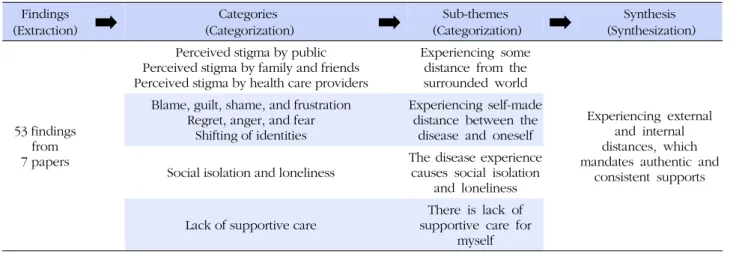
During the meta-aggregation process, total 53 find- ings were extracted by the authors from the selected papers. Those findings were identified as 8 categories;
then, 4 sub-themes were categorized. Finally, a synthe-
Table 3. Quality Appraisal Tool (COREQ)
Item a1 a2 a3 a4 a5 a6 a7
Domain 1: Research team and reflexivity 1. Interviewer/Facilitator
Which author/s conducted the interview or focus group? nc ✓ nc ✓ nc nc ✓
2. Credentials
What were the researcher's credentials?
✓ ✓ nc ✓ ✓ X ✓
3. Occupations
What was their occupation at the time of the study?
✓ ✓ ✓ ✓ nc ✓ ✓
4. Gender
Was the researcher male or female? nc nc nc nc nc nc nc
5. Experience and training
What experience or training did the researcher have? nc nc ✓ ✓ X nc X
6. Relationship established
Was a relationship established prior to study commencement? X X ✓ ✓ X X X
7. Participant knowledge of interviewer
What did the participants know about the researcher? X X ✓ ✓ X X X
8. Interviewer characteristics
What characteristics were reported about the interviewer/facilitator? X ✓ ✓ ✓ X nc X Domain 2: Study design
9. Methodological orientation and Theory
What methodological orientation was stated to underpin the study?
✓ X ✓ v ✓ ✓ ✓
10. Sampling
How were participants selected?
✓ ✓ ✓ ✓ ✓ ✓ ✓
11. Method of approach
How were participants approached? ✓ ✓ ✓ ✓ ✓ ✓ ✓
12. Sample size
How many participants were in study?
✓ ✓ ✓ ✓ ✓ ✓ ✓
13. Non-participation
How many people refused to participate or dropped out? Reasons? X X ✓ ✓ ✓ X X
14. Setting of data collection
Where was the data collected? nc ✓ ✓ ✓ ✓ X ✓
15. Presence of non-participants
Was anyone else present besides the participants and researchers? X X ✓ X X X ✓
16. Description of sample
What are the important characteristics of the sample?
✓ ✓ ✓ ✓ ✓ nc ✓
17. Interview guide
Were questions, prompts, guides provided by the authors? Was it pilot tested?
✓ X ✓ X ✓ X X
18. Repeat Interviews
Were repeat interviews carried out? If yes, how many? X X X X X X X
19. Audio/visual recording
Did the research use audio or visual recording to collect the data? ✓ ✓ ✓ ✓ ✓ ✓ ✓
20. Field notes
Were field notes made during and/or after the interview or focus group? X X X X X X ✓ 21. Duration
What was the duration of the interviews or focus group?
✓ ✓ X nc ✓ X ✓
22. Data saturation
Was data saturation discussed? X ✓ ✓ X ✓ X X
23. Transcripts returned
Were transcripts returned to participants for comment and/or correction? X ✓ X X X X X Domain 3: Analysis and findings
24. Number of data coders
How many data coders coded the data? X ✓ ✓ ✓ ✓ X ✓
25. Description of the coding tree
Did authors provide a description of the coding tree? X X nc X ✓ X X
26. Derivation of themes
Were themes identified in advance or derived from the data?
✓ ✓ ✓ ✓ ✓ ✓ ✓
27. Software
What software, if applicable, was used to manage the data? X ✓ ✓ X X ✓ ✓
28. Participant checking
Did participants provide feedback on the findings? X X ✓ X X X X
29. Quotations presented
Were participant quotations presented to illustrate the themes/findings?
✓ ✓ ✓ ✓ ✓ ✓ ✓
30. Data and findings consistent
Was there consistency between the data presented and the findings?
✓ ✓ ✓ ✓ ✓ ✓ ✓
31. Clarity of major themes
Were major themes clearly presented in the findings? ✓ ✓ ✓ ✓ ✓ ✓ ✓
32. Clarity of minor themes
Is there a description of diverse cases or discussion of minor themes? nc nc ✓ ✓ ✓ nc nc Key: ✓=Information was provided and described; X=Information was not provided; nc=Information was not clear or sufficient.
Table 4. Meta-aggregation Process Findings
(Extraction)
➡
(Categorization)Categories➡
(Categorization)Sub-themes➡
(Synthesization)Synthesis53 findings from 7 papers
Perceived stigma by public Perceived stigma by family and friends Perceived stigma by health care providers
Experiencing some distance from the surrounded world
Experiencing external and internal distances, which mandates authentic and
consistent supports Blame, guilt, shame, and frustration
Regret, anger, and fear Shifting of identities
Experiencing self-made distance between the
disease and oneself Social isolation and loneliness
The disease experience causes social isolation
and loneliness Lack of supportive care
There is lack of supportive care for
myself sized theme “experiencing external and internal dis-
tances, which mandates authentic and consistent sup- ports” was emerged (Table 4).
Synthesized Theme
By synthesizing those findings, the comprehensive theme was found as “experiencing external and internal distances, which mandates authentic and consistent supports.” The first phrase of ‘experiencing external and internal distances’ is elicited from the following two sub-themes: ‘experiencing some distance from the surrounded world,’ and ‘experiencing self-made dis- tance between the disease and oneself.’ In addition, the latter part of the final theme, ‘it mandates authentic and consistent supports,’ is demonstrated within two sub- themes, ‘the disease experience causes social isolation and loneliness,’ and ‘there is lack of supportive care for myself.’ Aforementioned four sub-themes are described as follows.
1. Experiencing Some Distance from the Surrounded World
1) Perceived stigma by public
Perceived stigma can be defined as the thoughts or beliefs of most people about the stigmatized group in general[24]. Some patients with lung cancer experienced perceived stigma by the public because they were smo- kers (self-inflicted) or were assumed to be even if they never smoked[a1-a7]. In particular, anti-smoking cam- paigns from television advertisements and tobacco packaging warning messages were closely related to public stigmatization[a2,a5,a6]. Since these campaigns and messages focus on increasing awareness about the
importance of anti-smoking, the negative effects of smok- ing were excessively highlighted; consequently, patients with lung cancer were perceived as a group of people who have a “self-inflicted disease”[a2]. Not only smok- ers, but also non-smoking patients felt stigmatized since public opinion associates patients with lung cancer with smoking, which could be attributed to biased anti-smok- ing advertisements that portray a relationship between lung cancer and smoking[a2,a5,a6].
2) Perceived stigma by family and friends
Patients with lung cancer in both smoking and non- smoking groups had negative appraisal and devaluation from family and friends who had knowledge about the patient’s lung cancer diagnosis[a2,a3,a5]. Although we found a case of a positive reaction towards patients with lung cancer[a5] by contacting the patients more frequent- ly than before, negative reactions, such as avoiding con- tact, outweighed the positive reactions in many cases [a2,a3,a5]. Avoidance among family and friends was re- ported in relation to several factors: the negative images of lung cancer (e.g., a horrible death), symptoms like
“gasping for air,” embarrassment (felt dirtied), and not knowing what to say[a2,a4,a5].
3) Perceived stigma by health care providers
Some patients with lung cancer reported that they ex- perienced uncomfortable interactions with health care providers[a1-a6]. Some medical staff possessed smok- ing-related stigma [a1,a2-a4,a6] by showing unsuitable verbal expressions towards patients[a1-a3]. Indeed, most patients with lung cancer without a history of smoking even received smoking-related assumptions from health care providers[a2], “The doctor will almost certainly say to you, ‘Do you smoke?’.” This stigmatization from me-
dical staff was also linked with unsuitable verbal ex- pressions such as the epistemic “must” construction that was used in conversation when health care providers met patients; “Your immune system must be messed up”[a1].
2. Experiencing Self-made Distance between the Disease and Oneself
1) Internalized stigma: blame, guilt, shame and frustration Stigma can also be identified by internalization of the stigma by others (i.e. general public, friend, family, health providers)[25]. The product of internalized stigma encompasses shame, blame, hopelessness, guilt, and fear of discrimination associated with mental illness[26].
Most lung cancer patients felt negative emotions such as blame, shame, guilt, and frustration[a1,a2-a4,a6,a7].
Self-blame was associated with self-deprecation in rela- tion to smoking among some patients who have a his- tory of smoking; “I blame myself… it is my fault”[a4].
Interestingly, older people tended to be less self-blam- ing for having lung cancer compared to younger people since they were addicted when smoking was socially ac- cepted, before smoking harms were widely known[a2].
Self-blame and guilt [a2,a3,a4,a6,a7] were often man- ifested among patients, regardless of smoking status, in relation to smoking and family impact; “I feel guilty about it, in regards to the burden it’s put on [my famil y]… as a smoker, a risk taker, I failed to think of the risks”[a3]. Moreover, it was found that smoking-related guilt and severe depression were also associated[a4].
The emotional expression “shame”[a2,a3] was not of- ten used by patients in the selected studies; however, a participant felt deeply ashamed because as a patient with lung cancer, the patient was not able to support the family as before[a2]. Another patient also described
“shame” in a mixed emotional expression; “So I felt all those thoughts, the guilt, shame, anger, regret, all those”
[a3].
Frustration [a1,a4] was identified when the patients described about the emotion that is related to loss of a career; “It’s frustrating.. I can’t continue with the ca- reer”[a1]; and how their family members reacted to a di- agnosis associated with smoking; “My mom went up to them and said, ‘my daughter was just diagnosed with cancer please stop smoking’.”[a4].
2) Internalized stigma: regret, anger and fear
Negative thoughts and feelings associated with hav- ing lung cancer were also expressed as regret, anger,
and fear among the patients. Regret[a3,a4] was closely related to smoking history; “It wouldn’t do any good be- cause I have smoked for that many years” [a3]; “I wish I had done that different”[a4].
Some participants expressed “anger”[a1-a5] at both themselves and others. For example, a participant re- ported that he was not able to control his anger when he was with his wife; “I started getting nasty with her… I just got bad… why should I put them through all of this?”[a4]. In addition, some smokers or ex-smokers up- set over tobacco industry, government, or anti-smoking legislation; “It’s not our fault, it’s the tobacco manu- facturers’ fault for putting the carcinogen”[a2]; “Why in the world are they allowing the tobacco companies to continue without being fined? I’m very angry about our government letting this continue” [a3];“I hate those ad- verts”[a2].
The emotion “fear” for being a lung cancer patient was also associated with the anti-smoking adverts, caus- ing delays in diagnosis[a6]; since lung cancer patients who were smokers knew the relationship between smok- ing and lung cancer, they were hesitant to seek medical support for symptoms that had the potential to be lung cancer. Moreover, fear of being stigmatized was also de- scribed in a participant’s story who had epilepsy and ex- perienced stigma already; “I was diagnosed as having epilepsy… that was catching to everyone and stopped her children seeing my children very abruptly… It really made me feel very uncomfortable”[a2].
3) Shifting of identities
The patients with lung cancer perceived their identi- ties in various forms [a1-a7] including patient with lung cancer, smoker or non-smoker, and mother or father. In particular, it was notable that almost all patients with lung cancer mainly defined themselves as either a smok- er or non-smoker. In particular, when the non-smokers described themselves, they used the words such as
“normal people” or “victim” in order to keep themsel- ves from the smoking-related stigma; “I think sharing is important to make people aware that normal people who weren’t smokers… do get lung cancer”[a1].
3. The Disease Experience Causes Social Isolation and Loneliness
Most patients with lung cancer experienced feelings of isolation [a1,a2,a4,a5] from social support groups and having lack of advocacy[a1-a4,a6,a7]. Isolation from so- cial support groups among lung cancer patients was
found in most of the selected papers[a1-a5]. Social iso- lation can be measured in an objective manner by using observations of a person’s social interactions, while lone- liness can be measured in a subjective manner by seek- ing the questions about relationships, social activity, and feelings about social activity[27]. Both terms iso- lation and loneliness are usually interchangeable in lay- man’s term; as a result, most patients described their lives as “isolated” rather than “lonely.” The patients tended to be isolated by either themselves or others (public or family) because of the lung cancer related stigma described above. A patient described self-iso- lation as her response to stigmatization; “Just becoming isolated from everybody”[a1]. This isolation was often described in patients’ talks by comparing lung cancer to a communicable disease such as leprosy although lung cancer is a not contagious disease[a2,a3]; “leper”[a2];
“Some of my friends sort of moved away like I had the leprosy” [a3].
4. There is a Lack of Supportive Care for Myself Many participants reported more discrimination against lung cancer compared to other common cancers [a2-a4, a6,a7] such as breast cancer; “If you compare the amount of money that’s allocated to breast cancer for research and screening programs… with that those of lung can- cer, there is a huge difference”[a2]. This discrimination was reported to make patients feel more stigmatized since lung cancer was considered a self-inflicted disease undeserving of help[a2,a3,a6].
Interestingly, one patient with lung cancer mentioned a negative experience about an advocacy program for lung cancer patients. The lung cancer advocacy founda- tion she joined was intended to build a new “face of lung cancer” among that public about atypical patients such as young people and non-smokers. However, the participant reported feeling excluded and even more stigmatized because she was very close to a non-atyp- ical patient: “sixty-year-old and ex-smoker”[a1].
DISCUSSION
This meta-synthesis study explored the experiences of lung cancer patients with stigma by integrating the findings of seven qualitative studies with 168 patients.
The main theme, ‘experiencing external and internal dis- tances, which mandates authentic and consistent sup- ports’ was identified by the meta-aggregative approach.
The findings clarify the need for authentic and con-
sistent social supports for patients with lung cancer and highlight the hidden area in oncology nursing care. Ad- ditionally, this study also contributes to the few preced- ing studies that raise the issue of stigma against patients with lung cancer in South Korea.
Recently, scholars have become increasingly aware about the lack of support for lung cancer patients. Weiss et al.,[28] performed a telephone survey in the U.S.
showing only 8% of participants were involved with lung cancer organizations, while support involvement for breast cancer was the greatest among all cancer types with 18% participation. The authors also pointed out that stigmatization of lung cancer might have influ- enced this poor level of support. Moreover, the national survey from South Korea conducted by Cho et al.,[15]
found that people who were never diagnosed cancer would avoid working with co-workers who have can- cer. It can be seen that this avoidance of being in contact with patients with cancer represents negative public atti- tudes towards cancer patients: stigmatization.
In addition, a recent meta-synthesis by Suh[29] ascer- tained the impact of cancer diagnosis and its treatment on Korean women’ lives by synthesizing 21 qualitative studies. Three main themes were identified: spaced-out from the usualness, mindfulness on profound desires, and redefinition of every relation. Although this meta- synthesis study included only female cancer patients, the findings indicated the importance of social support for cancer patients.
We found no meta-synthesis paper about lung cancer and stigma-related topics. Therefore, one of the strengths of this paper is that it is the first meta-synthesis study to provide integrated findings of existing papers in refer- ence to sigma on lung cancer. Although we found sev- eral single papers with similar study aims, the findings were scattered. As a result, the synthesized findings of this paper can give a holistic view to understand and gain knowledge about how the patients with lung can- cer experience stigma. Moreover, the theme “mandates authentic and consistent supports” was found through the synthesizing process. By introducing this theme, it was possible to highlight this unrecognized issue among lung cancer patients. In particular, in oncology nursing practice, the rationale for setting advocacy groups for lung cancer patients can be justified by the findings of this study. In addition, the use of COREQ[22] enabled this study to have more credible findings by taking into account the important aspects of qualitative studies, evaluating the papers by the authors (JJ and GJ).
In terms of limitations, this study contains heteroge-
neous populations and settings. More specifically, the selected studies synthesized have different proportions of sex, ages, lung cancer stages, and cultures. Additio- nally, two studies[a2,a4] did not mention important characteristics of lung cancer patients such as smoking history and types of lung cancer. However, it was ac- cepted because one of the strengths of a qualitative study is to collect data in a naturalistic setting with few con- trolled variables; therefore, each case is identified uni- que and less amenable to generalization, but having transferability[30]. Nonetheless, those heterogeneous characteristics have made the findings too diversified from seven different papers. In order to collect more representative qualitative data, specified population se- lection criteria including sex, age, type of lung cancer, and smoking history should be considered when re- cruiting participants. Additionally, this study merely syn- thesized studies from the U.S., U.K., and Australia. Thus, to rigorously understand the experience of lung cancer patients with stigma in South Korea, single qualitative studies within South Korean settings should be per- formed and synthesized once the data is available.
When it comes to implications for practice, health care providers should be more concerned about the stigma of lung cancer by not assuming a patient is a smo- ker, and by supporting effective advocacy programs.
For instance, historically breast cancer was once highly stigmatized and hardly known to the public; however, by the aids from breast cancer supporters who bore pink ribbons, breast cancer began to be openly discussed in public by increasing awareness. Consequently, more funding and volunteerism were generated; subsequently breast cancer patients now suffer from less stigma[28].
Likewise, more advocacy activities should be promoted in order to reduce burden of suffering from lung cancer.
The biased statements of anti-smoking advertisements should also be modified as lung cancer patients experi- ence more stigmatized feelings from them; “They [anti- smoking ads] are actually harming every single lung can- cer patient that is fighting this disease”[a6]. Furthermore, through the searching process, it was revealed that there were no qualitative studies conducted in South Korea about lung cancer and stigma-related issues. To under- stand and consider the patients’ lives in a holistic view, qualitative studies should be encouraged.
CONCLUSION
The experiences of lung cancer patients with stigma were explored in this study. The synthesized results of
the selected studies revealed that patients with lung can- cer experienced external and internal distances, which mandated authentic and consistent supports. The per- ceived stigmas by public, family, and health care pro- viders were felt as if they had some distance from the world. The internalized stigma resulted in shifting of identity. In addition, an obvious experience of being isolated among the lung cancer patients with insufficient advocacy revealed the needs for authentic and consis- tent support for them. The findings of the present study suggest that health care providers should be more atten- tive to supporting patients with lung cancer by provid- ing more effective support programs in order to reduce stigma and improve quality of life.
REFERENCES
1. Korea Central Cancer Registry. National cancer statistics in 2014. Goyang-si, Gyeonggi-do: National Cancer Information Center; 2014 [cited 2015 September 25]. Available from:
http://www.cancer.go.kr/mbs/cancer/subview.jsp?id=cance r_040201000000
2. Chatwin J, Sanders C. The influence of social factors on help- seeking for people with lung cancer. European Journal of Cancer Care. 2013;22(6):709-13.
http://dx.doi.org/10.1111/ecc.12078
3. Schag C, Ganz P, Wing D, Sim MS, Lee J. Quality of life in adult survivors of lung, colon and prostate cancer. Quality of Life Research. 1994;3(2):127-41.
4. Sikorskii A, Given CW, Given B, Jeon S, Decker V, Decker D, et al. Symptom management for cancer patients: a trial com- paring two multimodal interventions. Journal of Pain and Symptom Management. 2007;34(3):253-64.
http://dx.doi.org/10.1016/j.jpainsymman.2006.11.018 5. Sarna L, Evangelista L, Tashkin D, Padilla G, Holmes C, Brecht
ML, et al. Impact of respiratory symptoms and pulmonary function on quality of life of long-term survivors of non-small cell lung cancer. Chest. 2004;125(2):439-45.
http://dx.doi.org/10.1378/chest.125.2.439
6. Zabora J, BrintzenhofeSzoc K, Curbow B, Hooker C, Pian- tadosi S. The prevalence of psychological distress by cancer site. Psycho-Oncology. 2001;10(1):19-28.
7. Hill KM, Amir Z, Muers MF, Connolly CK, Round CE. Do newly diagnosed lung cancer patients feel their concerns are being met? European Journal of Cancer Care. 2003;12(1):35-45.
http://dx.doi.org/10.1046/j.1365-2354.2003.00324.x.
8. American Cancer Society. Cancer Facts & Figures 2012. Atlan- ta GA: American Cancer Society; 2012 [cited 2015 December 18]. Available from:
http://www.cancer.org/acs/groups/content/@epidemiology
surveilance/documents/document/acspc-031941.pdf 9. Goffman E. Stigma: notes on the management of spoiled iden-
tity. Cliffs E, editor. New Jersey: Prentice Hall; 1963.
10. LoConte NK, Else-Quest NM, Eickhoff J, Hyde J, Schiller JH.
Assessment of guilt and shame in patients with non-small-cell lung cancer compared with patients with breast and prostate cancer. Clinical lung cancer. 2008;9(3):171-8.
http://dx.doi.org/10.3816/CLC.2008.n.026
11. Gonzalez BD, Jacobsen PB. Depression in lung cancer pati- ents: the role of perceived stigma. Psycho-Oncology. 2012;21 (3):239-46. http://dx.doi.org/10.1002/pon.1882
12. Conlon A, Gilbert D, Jones B, Aldredge P. Stacked stigma:
oncology social workers' perceptions of the lung cancer ex- perience. Journal of Psychosocial Oncology. 2010;28(1):98- 115. http://dx.doi.org/10.1080/07347330903438982
13. Lee JL, Kim KS. The Relationships between stigma, distress, and quality of life in patients with lung cancer. Asian Onco- logy Nursing. 2011;11(3):237-46.
http://dx.doi.org/10.5388/jkon.2011.11.3.237
14. Byun HS, Kim EK, Kim GD. Impacts of stigma and distress on the quality of Life in patients with lung cancer. Journal of safety and crisis management. 2015;11(8):223-40.
15. Cho J, Smith K, Choi EK, Kim IR, Chang YJ, Park HY, et al.
Public attitudes toward cancer and cancer patients: a national survey in Korea. Psycho-Oncology. 2013;22(3):605-13.
http://dx.doi.org/10.1002/pon.3041
16. Kim MA, Yi J. Life after cancer: How does public stigma in- crease psychological distress of childhood cancer survivors?
International journal of nursing studies. 2014;51(12):1605-14.
http://dx.doi.org/10.1016/j.ijnurstu.2014.04.005.
17. Bowling A. Research methods in health: investigating health and health services: McGraw-Hill Education (UK); 2014.
18. Jensen LA, Allen MN. Meta-synthesis of qualitative findings.
Qualitative Health Research. 1996;6(4):553-60.
19. Sandelowski M, Barroso J. Handbook for synthesizing quali- tative research. Springer Publishing Company; 2007.
20. Finfgeld DL. Metasynthesis: the state of the art-so far. Qualita- tive Health Research. 2003;13(7):893-904.
http://dx.doi.org/10.1177/1049732303253462
21. Sandelowski M, Voils CI, Barroso J. Comparability work and
the management of difference in research synthesis studies.
Social Science & Medicine. 2007;64(1):236-47.
http://dx.doi.org/10.1016/j.socscimed.2006.08.041
22. Tong A, Sainsbury P, Craig J. Consolidated criteria for report- ing qualitative research (COREQ): a 32-item checklist for inter- views and focus groups. International Journal for Quality in Health Care. 2007;19(6):349-57.
23. Joanna Briggs Institute. Joanna Briggs Institute reviewers' manual 2014: methodology for JBI umbrella reviews. Aust- ralia: Joanna Briggs Institute; 2014 [cited 2015 December 23].
Available from:
http://joannabriggs.org/assets/docs/sumari/ReviewersManu al-Methodology-JBI_Umbrella%20Reviews-2014.pdf 24. LeBel TP. Perceptions of and responses to stigma. Sociology
Compass. 2008;2(2):409-32.
http://dx.doi.org/10.1111/j.1751-9020.2007.00081.x 25. Corrigan PW, Watson AC. The paradox of self-stigma and men-
tal illness. Clinical Psychology: Science and Practice. 2002; 9 (1):35-53. http://dx.doi.org/10.1093/clipsy.9.1.35
26. Corrigan PW. The impact of stigma on severe mental illness.
Cognitive and Behavioral Practice. 1999;5(2):201-22.
http://dx.doi.org/10.1016/S1077-7229(98)80006-0
27. British Columbia Ministry of Health. Social isolation of seni- ors: an emerging issues. Children's, Women's and Seniors Health Branch. Canada: Ministry of Health; 2004 [cited 2015 December 22]. Available from:
http://www.health.gov.bc.ca/library/publications/year/2004 /Social_Isolation_Among_Seniors.pdf
28. Weiss J, Stephenson BJ, Edwards LJ, Rigney M, Copeland A.
Public attitudes about lung cancer: stigma, support, and pre- dictors of support. Journal of Multidisciplinary Healthcare.
2014;7:293-300. http://dx.doi.org/10.2147/JMDH.S65153 29. Suh EE. The impact of cancer diagnosis and its treatment on
Korean women's lives: a meta-synthesis study. Korean Jour- nal of Adult Nursing. 2015;27(1):117-26.
http://dx.doi.org/10.7475/kjan.2015.27.1.117
30. Krefting L. Rigor in qualitative research: the assessment of trust- worthiness. American Journal of Occupational Therapy. 1991;
45(3):214-22.
Appendix
a1. Brown C, Cataldo J. Explorations of lung cancer stigma for female long-term survivors. Nursing Inquiry. 2013;20(4):352- 62. http://dx.doi.org/10.1111/nin.12024
a2. Chapple A, Ziebland S, McPherson A. Stigma, shame, and blame experienced by patients with lung cancer: Qualitative study. British Medical Journal. 2004;328 (7454):1470-3.
http://dx.doi.org/10.1136/bmj.38111.639734.7C
a3. Hamann HA, Ostroff JS, Marks EG, Gerber DE, Schiller JH, Lee SJ. Stigma among patients with lung cancer: a patient- reported measurement model. Psycho-Oncology. 2014;23(1):
81-92. http://dx.doi.org/10.1002/pon.3371
a4. Lehto RH. Patient views on smoking, lung cancer, and stigma:
a focus group perspective. European Journal of Oncology Nursing: The Oficial Jurnal of European Oncology Nursing Society. 2014;18(3):316-22.
http://dx.doi.org/10.1016/j.ejon.2014.02.003
a5. Rowland C, Danson S, Rowe R, Merrick H, Woll P, Hatton M, et al. Quality of life, support and smoking in advanced lung cancer patients: a qualitative study. BMJ supportive & pallia- tive care. 2014:1-8.
http://dx.doi.org/10.1136/bmjspcare-2013-000589
a6. Scott N, Crane M, Lafontaine M, Seale H, Currow D. Stigma as a barrier to diagnosis of lung cancer: Patient and general prac- titioner perspectives. Primary Health Care Research and De- velopment. 2015:1-5.
http://dx.doi.org/10.1017/S1463423615000043
a7. Tod AM, Craven J, Allmark P. Diagnostic delay in lung cancer:
a qualitative study. Journal of Advanced Nursing. 2008;61(3):
336-43. http://dx.doi.org/10.1111/j.1365-2648.2007.04542.x