• 검색 결과가 없습니다.

Heavy Metal(loid) Levels in Paddy Soils and Brown Rice in Korea

N/A
N/A
Protected

Academic year: 2021

Share "Heavy Metal(loid) Levels in Paddy Soils and Brown Rice in Korea"

Copied!
7
0
0

로드 중.... (전체 텍스트 보기)

전체 글

(1)

Heavy Metal(loid) Levels in Paddy Soils and Brown Rice in Korea

Anitha Kunhikrishnan, Woo-Ri Go, Jin-Hee Park

1

, Kwon-Rae Kim

2

, Hyuck-Soo Kim, Kye-Hoon Kim

3

, Won-Il Kim*, and Nam-Jun Cho

Chemical Safety Division, Department of Agro-Food Safety, National Academy of Agricultural Science, Wanju-gun, Jeollabuk-do 55365, Republic of Korea

1

Geologic Environment Division, Korea Institute of Geoscience and Mineral Resources, Daejeon 34132, Republic of Korea

2

Department of Agronomy and Medicinal Plant Resources, Gyeongnam National Institute of Science and Technology, Jinju 52725, Republic of Korea

3

Department of Environmental Horticulture, University of Seoul, Seoul 02504, Republic of Korea

(Received: September 24 2015, Revised: October 26 2015, Accepted: October 26 2015)

There is an increasing concern over heavy metal(loid) contamination of soil in agricultural areas including paddy soils. This study was conducted to monitor the background levels of heavy metal(loid)s, arsenic (As), cadmium (Cd), copper (Cu), mercury (Hg), nickel (Ni), lead (Pb), and zinc (Zn) in major rice growing soils and its accumulation in brown rice in Korea. The samples were collected from 82 sites nationwide in the year 2012. The mean and range values of As, Cd, Cu, Hg, Ni, Pb, and Zn in paddy soils were 4.41 (0.16-18.9), 0.25 (0.04-0.82), 13.24 (3.46-27.8), 0.047 (0.01-0.20), 13.60 (3.78-35.0), 21.31 (8.47-36.7), and 54.10 (19.19- 103.0) mg kg -1 , respectively. This result indicated that the heavy metal(loid) levels in all sampled paddy soils are within the permissible limits of the Korean Soil Environment Conservation Act. The mean and range values of As, Cd, Cu, Hg, Ni, Pb, and Zn in brown rice were 0.146 (0.04-0.38), 0.024 (0.003-0.141), 4.27 (1.26-16.98), 0.0024 (0.001-0.008), 0.345 (0.04-2.77), 0.113 (0.04-0.197), and 22.64 (14.1-35.1) mg kg -1 , respectively. The mean and range BCF (bioconcentration factor) values of As, Cd, Cu, Hg, Ni, Pb, and Zn in brown rice were 0.101 (0.01-0.91), 0.121 (0.01-0.70), 0.399 (0.05-2.60), 0.061 (0.016-0.180), 0.033 (0.004-0.44), 0.005 (0.003-0.013), and 0.473 (0.19-1.07), respectively, with Zn showing the highest. The results show that the levels of all metal(loid)s in all sampled brown rice are generally within the acceptable limit for human consumption.

Key words: Heavy metal(loid)s, Paddy soil, Brown rice, Bioconcentration factor Mean and range of heavy metal(loid) concentrations in brown rice in Korea.

Heavy metal(loid) Metal(loid) concentrations in brown rice (mg kg

-1

)

As 0.146 (0.04-0.38)

Cd 0.024 (0.003-0.141)

Cu 4.27 (1.26-16.98)

Hg 0.0024 (0.001-0.008)

Ni 0.345 (0.04-2.77)

Pb 0.113 (0.04-0.197)

Zn 22.64 (14.1-35.1)

1)

*Corresponding author : Phone: +82633283245, Fax: +82632383837, E-mail: [email protected]

§
Acknowledgement : This study was financially supported by “Research Program for Agricultural Science & Technology Development

(Project No. PJ 010923)” National Academy of Agricultural Science, Rural Development Administration, Korea.

(2)

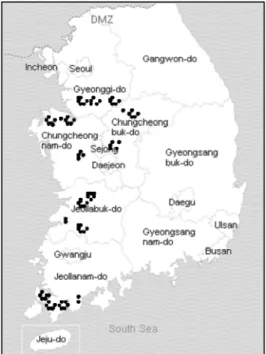
Fig. 1. Sampling areas for paddy soils and brown rice in Korea.

Introduction

Heavy metal(loid)s are released into the environment by both natural and anthropogenic sources. The concent- rations of heavy metal(loid)s releasing into soil systems by pedogenic processes are low and depend largely on the origin and nature of the parent materials (Adriano, 2001). However, anthropogenic processes such as application of metal(loid)-containing pesticides, commercial fertilizers, wastewaters and sewage sludge have led to a widespread accumulation of metal(loid)s in agricultural soils (Bolan et al., 2014; Wuana and Okieiman, 2011). High levels of toxic elements in soil can have a negative impact on soil fertility, lead to detrimental effects on crop growth and yield, and may pose a severe toxic risk to animals as well as human beings through the food chain (Cardosa et al., 2013).

Heavy metal(loid) accumulation in crops is a function of complex interactions between the soil, the plant and environmental factors. It has been well documented that the content of heavy metal(loid)s in crop plants is closely related to the levels in the soil (Adriano, 2001; Cheng et al., 2006). Previous studies have investigated the effect of soil properties such as soil pH, organic matter (OM), redox potential, cation exchange capacity (CEC), and phosphorus content on the transfer of heavy metal(loid)s (Zhao et al., 2010). Heavy metal(loid) contamination in paddy soils is one of the most serious problems facing rice production and soil management in Asian countries.

Among agricultural food products, rice (Oryza sativa L.) is one of the most widely consumed staple cereal foods in the world constituting about 89% of the diet of people in Asian countries. In many East and South Asian countries including Japan, Bangladesh, Indonesia, and Korea, the accumulation of metal(loid)s, particularly arsenic (As) and cadmium (Cd), in rice ecosystems and its subsequent transfer to the human food chain is a major environmental issue.

The most significant anthropogenic source of these metal(loid)s including As, Cd, lead (Pb), and zinc (Zn), is the mining industry and the inappropriate management of associated mining wastes. In Korea, rice is the most common crop grown on agricultural land. The cultivated land in Korea is around 21%, and of that 61% is paddy fields. Large areas of agricultural land, including paddy fields, have been contaminated by As, Cd and Pb via effluent from mine tailings and other wastes generated by closed or abandoned mines (Kim et al., 2007; Kwon et al., 2013; Yang et al., 2006) and thus results to the uptake of heavy metal(loid)s by rice plants, posing a significant public health risk to the local community. Most previous studies on accumulation of heavy metal(loid)s in Korea were focused on special field areas such as industrial and

mining regions. Only little information is available on the heavy metal(loid) accumulation in non-contaminated paddy fields throughout the country, and the relationship between heavy metal(loid)s in soil-rice system has been less investi- gated. Based on this fact, there was a need to survey the levels of heavy metal(loid)s in non-contaminated paddy soils and rice grains. The present study was undertaken in order to (1) assess the background levels of heavy metal(loid)s (As, Cd, copper (Cu), mercury (Hg), nickel (Ni), Pb, and Zn) in paddy soils and brown rice in Korea;

(2) assess the degree of contamination by calculating bioconcentration factor (BCF) and (3) determine the effect of soil properties and total metal(loid) concentrations in influencing the availability of heavy metal(loid)s to rice.

Materials and Methods

Sample collection and analysis Eighty-two rice grain samples were collected in October 2012 from various rice cultivated fields throughout Korea (Fig. 1). Eighty-two soil samples were collected from the root zone (<15 cm depth), corresponding to rice samples during the early harvest period. Soil samples were air dried to constant weight, crushed and passed through 2 mm sieve. Paddy rice (rice grains with husks) was air dried to constant weight, husks were removed and pulverized using a homogenizer (Ace Homogenizer, Nihonseiki Kaisha Ltd, Tokyo, Japan) and stored until analysis.

The soil samples were analyzed for pH, electrical

conductivity (EC), CEC, and total heavy metal(loid)s. The

soil pH and EC were determined using end-over-end

(3)

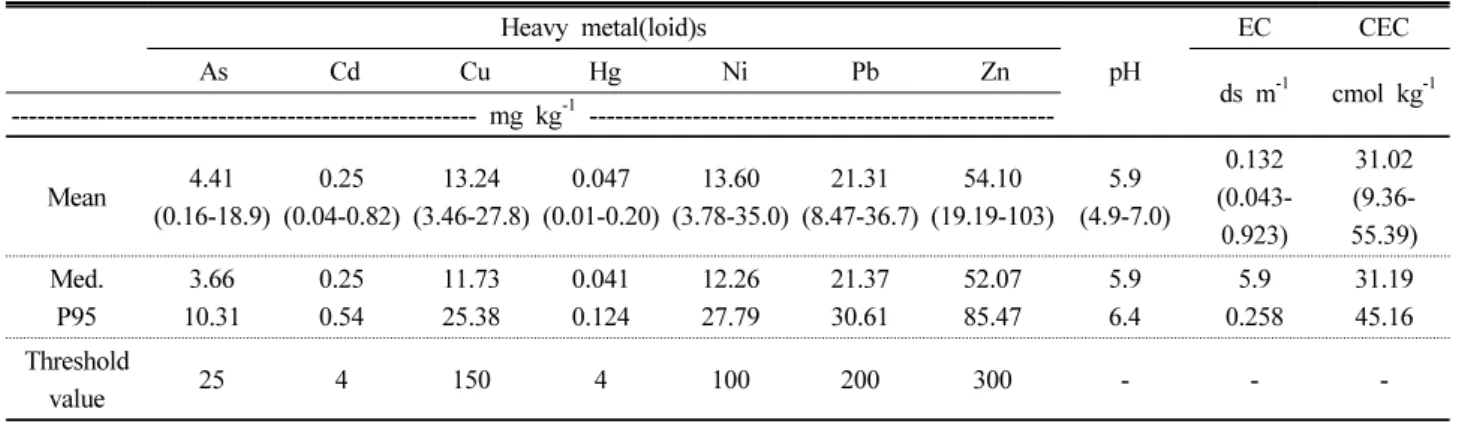
Table 1. Heavy metal(loid) concentrations in paddy soils and selected soil properties.

Heavy metal(loid)s

pH

EC CEC

As Cd Cu Hg Ni Pb Zn

ds m

-1

cmol kg

-1

--- mg kg

-1

---

Mean 4.41

(0.16-18.9) 0.25 (0.04-0.82)

13.24 (3.46-27.8)

0.047 (0.01-0.20)

13.60 (3.78-35.0)

21.31 (8.47-36.7)

54.10 (19.19-103)

5.9 (4.9-7.0)

0.132 (0.043-

0.923)

31.02 (9.36- 55.39) Med.

P95

3.66 10.31

0.25 0.54

11.73 25.38

0.041 0.124

12.26 27.79

21.37 30.61

52.07 85.47

5.9 6.4

5.9 0.258

31.19 45.16 Threshold

value 25 4 150 4 100 200 300 - - -

EC: Electrical conductivity, CEC: Cation exchange capacity; *values in parentheses indicate range equilibration of soil with water at a ratio of 1:5 for an

hour and measuring the solution with calibrated pH and conductivity meters (250A, Thermo Orion, Beverly, MA).

The exchangeable cations, i.e. calcium (Ca), potassium (K), magnesium (Mg), and sodium (Na), were measured using 1 N ammonium acetate at pH 7.0, and analyzed by inductively coupled plasma mass spectroscopy (ICP-MS) (Agilent Technologies 7500a, Santa Clara, CA). Cation exchangeable capacity was determined by the summation of exchangeable cations. For the analysis of total heavy metal(loid) contents, soil samples (3 g) were digested using aqua regia at 30

o

C for 2 h, and then extracted at 90

o

C for 150 min, by Kjeldatherm block digestion system (Gerhardt GmbH, Northants, UK). After cooling to ambient tempera- ture, the digests were filtered through a 0.45-μm membrane filter, made up to a volume of 50 ml and analysed for total metal(loid) concentrations using hydride generation inductively coupled plasma atomic emission spectroscopy (HG-ICP-AES; Integra XL Dual, GBC, Melbourne, Australia).

A standard reference material (SRM; contaminated soil BAM-U112a; certified by the BAM Federal Institute for Materials Research and Testing, Berlin, Germany) and a blank were included to validate the digestion operation. A direct Hg analyzer (DMA-80 Milestone, Italy) was used for total Hg concentration in soil and rice samples by following the EPA method 7473.

The brown rice samples (0.25 g) were transferred to a high pressured-polytetrafluoroethylene (PTFE) vessel and digested with 8 mL of 70% HNO

3

and 1 mL H

2

O

2

using microwave digestion system (ETHOS, Milestone, Italy).

After cooling to room temperature, the extracts were filtered through a 0.45- μm membrane filter, adjusted to a final volume of 25 mL and analysed for metal(loid) contents using HG-ICP-MS. A standard reference material (SRM rice flour NIST 1568a, certified by the National Institute Standards Technology, Gaithersburg, MD) and a blank were included to validate the digestion operation. All the analyses were carried out in triplicate.

Bioconcentration factor Biocencentration factor (BCF) is the ratio of the content of metal(loid)s in various parts of crop to that in the soil (Liu et al., 2009). In this study, the BCF was calculated for rice grains. If a BCF ≤ 1.00, it indicates that the plant can only absorb but not accu- mulate the metal(loid). On the contrary, if a BCF > 1.00, it means that the plant has the potential to accumulate metal(loid)s (Liu et al., 2009; Satpathy et al., 2014).

Statistical analysis All calculations and standard devia- tions between the replicates were done using the graphing software, SigmaPlot (version 10.0). Pearson correlations between metal(loid)s in grains and, soil properties and total metal(loid) concentrations were performed using SPSS software (version 18.0).

Results and Discussion

Heavy metal(loid) concentrations in paddy soils The mean and range values of As, Cd, Cu, Hg, Ni, Pb, and Zn in paddy soils were 4.41 (0.16-18.9), 0.25 (0.04-0.82), 13.24 (3.46-27.8), 0.047 (0.01-0.20), 13.60 (3.78-35.0), 21.31 (8.47-36.7), and 54.10 (19.19-103.0) mg kg

-1

, respectively (Table 1). This result indicates that the heavy metal(loid) levels in all sampled paddy soils are within the permissible limits of the Korean Soil Environment Conservation Act.

Satpathy et al. (2014) determined the metal(loid) (Cd, Cu, Pb and Zn) contamination in paddy soils and rice grains at the East coast of India and noted that the concentrations of Pb, Cd, Cu, and Zn ranged from 5.3-19.8, 0.2-0.6, 1.10-2.9, and 3.8-33.8 mg kg

-1

, respectively. Zhao et al.

(2009) observed that the soils in Zhejiang province, China

were contaminated by Cd, Ni and Hg to some extent

based on the permissible limits set by the Ministry of

Environmental Protection in China. However, the pollution

by Cu, Pb, and Zn were relatively low and were below

the threshold values.

(4)

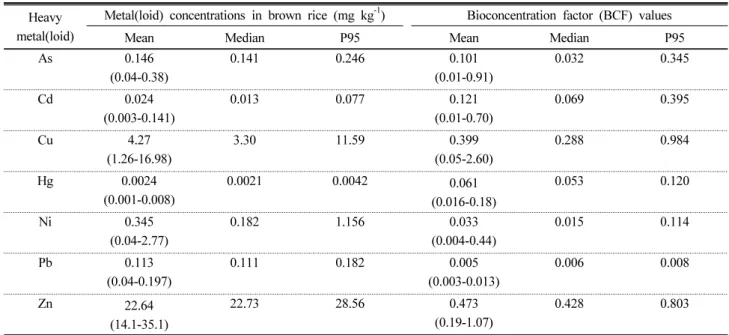
Table 2. Heavy metal(loid) concentrations in brown rice and bioconcentration factor (BCF) values for heavy metal(loid)s.

Heavy metal(loid)

Metal(loid) concentrations in brown rice (mg kg

-1

) Bioconcentration factor (BCF) values

Mean Median P95 Mean Median P95

As 0.146

(0.04-0.38)

0.141 0.246 0.101

(0.01-0.91)

0.032 0.345

Cd 0.024

(0.003-0.141)

0.013 0.077 0.121

(0.01-0.70)

0.069 0.395

Cu 4.27

(1.26-16.98)

3.30 11.59 0.399

(0.05-2.60)

0.288 0.984

Hg 0.0024

(0.001-0.008)

0.0021 0.0042 0.061

(0.016-0.18)

0.053 0.120

Ni 0.345

(0.04-2.77)

0.182 1.156 0.033

(0.004-0.44)

0.015 0.114

Pb 0.113

(0.04-0.197)

0.111 0.182 0.005

(0.003-0.013)

0.006 0.008

Zn 22.64

(14.1-35.1)

22.73 28.56 0.473

(0.19-1.07)

0.428 0.803

*values in parentheses indicate range

Heavy metal(loid) concentrations in brown rice In this study, the mean and range values of As, Cd, Cu, Hg, Ni, Pb, and Zn in brown rice were 0.146 (0.04-0.38), 0.024 (0.003-0.141), 4.27 (1.26-16.98), 0.0024 (0.001-0.008), 0.345 (0.04-2.77), 0.113 (0.04-0.197), and 22.64 (14.1-35.1) mg kg

-1

, respectively (Table 2). The results showed that the metal(loid) concentrations in rice samples were within the permissible levels as recommended by the Korean Food and Drug Administration (Pb and Cd in rice: 0.2 mg kg

−1

), the Joint FAO/WHO Expert Committee on Food Additives (As: 1 mg kg

−1

; Zn: 60 mg kg

−1

; and Cu: 40 mg kg

−1

), and the Ministry of Health of the People’s Republic of China (Hg: 0.02 mg kg

−1

).

According to (Jung, 1995), the Cd content in rice grown in various countries ranged from 0.01 to 0.05 mg kg

-1

. Machiwa (2010) surveyed the concentrations of heavy metal(loid)s in paddy soils and grains at a wider scale in different locations including closer to mining and within urbanized areas in Tanzania. The results showed that the levels of Cd, Cu, Hg, Pb, and Zn in brown rice were generally within the acceptable levels for human con- sumption, with Hg content in polished rice ranging from

<0.0001 to 0.0062 mg kg

-1

. Park et al. (2008) investigated the Hg content in paddy soils and its uptake to rice plant in Korea and noticed that the Hg levels in brown and polished rice were 0.00166 and 0.00145 mg kg

-1

, res- pectively. Al-Saleh and Shinwari (2001) reported that the average Hg in polished rice grains was 0.003 mg kg

-1

and Cd and Pb values ranged from <0.001-0.178 and 0.023- 1.529 mg kg

-1

, respectively. Zhao et al. (2015) observed that concentrations of Cd in rice ranged from 0.003 mg kg

−1

to 0.103 mg kg

−1

, with an average of 0.011 mg kg

−1

.

The concentrations of Cu and Zn ranged from 1.06-4.23 and 9.45-21.97 mg kg

−1

, respectively.

Huang et al. (2006) investigated the health risks of As in soils collected from paddy rice fields in Fujian Province, China and noted that the As concentration in brown rice ranged from 0.041-0.201 mg kg

-1

. Rogan et al. (2007) showed that the As in unpolished rice was in the range 0.11 –0.52 mg kg

-1

, with a median value of 0.18 mg kg

-1

. While Payus and Talip (2014) noticed that concentrations of Cu, Cd and Zn, except Pb, in rice grains were within FAO/WHO (2002) permissible limits for human consump- tion. Halim et al. (2015) observed that As and Pb uptake in rice grains were 6.87- and 5.26-fold higher than the maximum permissible concentration.

Bioconcentration factor Toxic metal(loid)s are mostly geochemically mobile where they are readily taken up by plant roots and translocated to aerial parts (Satarug et al., 2003). In order to understand the relationship of heavy metal(loid)s in soil–rice system, the BCF value was applied in this study. The BCF value provides a useful indication of the metal(loid) availability from soil to plants.

In this study, BCF values of less than 1 were obtained for all the metal(loid)s in the rice grains (Table 2). The mean BCF values for As, Cd, Cu, Hg, Ni, Pb, and Zn were 0.101, 0.121, 0.399, 0.061, 0.033, 0.005, and 0.473, respectively, indicating the availability of heavy metal(loid)s to rice was generally in the order of Zn>Cu>Cd>As>

Hg>Ni>Pb. The results showed that the bioavailability of metal(loid)s was low in the investigated paddy fields.

Zhao et al. (2015) reported that the average BCF

values for Cd, Cu, Ni, and Zn were 0.0829, 0.0567,

(5)

Table 3. Correlation matrix [Pearson correlation coefficients (r)] between metal(loid) concentrations in rice grains and, soil properties and total metal(loid)s in soil.

Metal(loid) in rice pH EC CEC Total metal(loid) in soil

As -0.175 -0.151 0.099 -0.040

Cd 0.186 -0.283* -0.280* 0.031

Cu 0.061 -0.123 -0.075 -0.029

Hg 0.036 -0.002 -0.121 0.567**

Ni -0.009 -0.047 -0.014 -0.019

Pb 0.056 -0.114 -0.115 0.090

Zn 0.116 -0.172 -0.124 0.058

EC: Electrical conductivity, CEC: Cation exchange capacity

* Correlation is significant at p<0.05; ** Correlation is significant at p<0.0001

0.0041, and 0.1429, respectively, indicating the availability of heavy metal(loid)s to rice was generally in the order of Zn>Cd>Cu>Ni. Kashem and Singh (2001) reported that the accumulation of Cd and Zn was higher than that of Ni in rice. Jung and Thornton (1997) noticed that Cd and Zn concentrations in rice increased with increasing metal(loid) concentrations in paddy soil than that of Cu and Pb. Rice genotypes also influence the transfer and bioavailability of heavy metal(loid)s in the soil-rice system.

For instance, Zeng et al. (2008) have reported that hybrid rice accumulated more heavy metal(loid)s than Japonica rice under the same soil conditions.

Influence of soil properties and total soil metal(loid)s on metal(loid) availability to rice grains The Pearson correlation coefficient, r, was used to establish the relationship between the concentrations of metal(loid)s in rice grains and, soil properties and total metal(loid)s in soil. The influence of soil properties on the availability of heavy metal(loid)s to brown rice varied among the metal(loid)s. Only Cd and Hg showed some significant correlations amongst the metal(loid)s. Rice grain Cd showed negative and significant correlations with soil EC and CEC (p<0.05) (Table 3). In a recent study, Zhao et al. (2015) also observed negative correlations between EC and metal(loid)s, Cu, Ni, Pb, and Zn in rice grains. The concentration of Hg in rice grains showed a positive and significant correlation only with the total Hg in soil ( p<0.0001). Kosolsaksakul et al. (2014) observed a linear relationship between soil total Cd and rice grain Cd.

Correlation analysis by Zhang et al. (2013) showed that As concentration in rice had a significant positive correlation with soil As concentration (R

2

= 0.759, p <0.01), a negative correlation with soil pH, K, Ca, and Mg contents, and a positive correlation with soil OM and iron content.

Zhao et al. (2010) used cross-correlograms and illustrated that BCF values (availability of metal(loid)s, Cu, Cd, Pb, and Zn to rice grains) were significantly correlated with

most soil properties, among which soil pH and OM had the strongest correlations with BCFs. However, BCF value of Cu showed relative weak correlations with soil properties;

particularly soil pH and OM had no correlations with BCF of Cu, indicating that the availability of Cu may be influenced by other factors. Feng et al. (2012) found the spatial variation of the heavy metal(loid)s contents in rice grains was mainly affected by the soil OM or soil pH.

However, in this study, the metal(loid) concentrations in rice grains showed weak correlations with the investigated soil properties and total metal(loid)s in soil.

Conclusion

Heavy metal(loid) contamination in agriculture soils and their transfer in soil –rice system have been of increasing concern. This study provides useful information on the heavy metal(loid) concentrations in major rice growing soils and brown rice in Korea. The results indicate that the heavy metal(loid) levels in all sampled paddy soils are within the permissible limits as per the Korean Soil Environment Conservation Act. The levels of metal(loid)s in brown rice are also generally within the acceptable limit for human consumption. The BCF values in this study indicate that the rice grains only absorb and does not accumulate the metal(loid)s. While the statistical analysis provided useful information about the relationship between metal(loid)s in grains as affected by the soil properties and total metal(loid)s in soil, the bioavailability may also be influenced by other factors such as organic matter in soil. Further study on soil properties is required to under- stand its influence on the bioavailability of metal(loid)s in rice grains.

References

Adriano, D.C. 2001. Trace elements in terrestrial environ-

ments: Biogeochemistry, bioavailability and risks of metals.

(6)

2nd ed., Springer, New York.

Ahmed, Z.U., G.M. Panaullah, H. Gauch, S.R. McCouch, W.

Tyagi, M.S. Kabir, and J.M. Duxbury. 2010. Genotype and environment effects on rice (Oryza sativa L.) grain arsenic concentration in Bangladesh. Plant Soil 338:367-382.

Al-Saleh, I. and N. Shinwari. 2001. Report on the levels of cadmium, lead, and mercury in imported rice grain samples.

Biol. Trace Elem. Res. 83:91-96.

Basta, N.T., J.A. Ryan, and R.L. Chaney. 2005. Trace element chemistry in residual-treated soil: Key concepts and metal bioavailability. J. Environ. Qual. 34:49-63.

Bhattacharya, P., A.C. Samal, J. Majumdar, and S.C. Santra.

2010. Accumulation of arsenic and its distribution in rice plant (Oryza sativa L.) in Gangetic West Bengal, India.

Paddy Water Environ. 8:63-70.

Bolan, N.S., A. Kunhikrishnan, R. Thangarajan, J. Kumpiene, JH. Park, T. Makino, MB. Kirkham, and K. Scheckel. 2014.

Remediation of heavy metal(loid)s contaminated soils – To mobilize or to immobilize? J. Hazard. Mater. 266:141-166.

Cardoso, E.J.B.N., R.L.F. Vasconcellos, D. Bini, M.Y.H.

Miyauchi, C.A. dos Santos, P.R.L. Alves, A.M. de Paula, A.S. Nakatani, J. de Moraes Pereira, and M.A. Nogueira.

2013. Soil health: looking for suitable indicators. What should be considered to assess the effects of use and management on soil health? Sci. Agric. 70:274-289.

Cheng, F.M., N.C. Zhao, H.M. Xu, Y. Li, W.F. Zhang, Z.W.

Zhu, and M.X. Chen. 2006. Cadmium and lead contami- nation in japonica rice grains and its variation among the different locations in southeast China. Sci. Total Environ.

359:156-166.

FAO/WHO. 2002. Codex Alimentarius General Standards for Contaminants and Toxins in Food. Schedule 1. Maximum and Guideline Levels for Contaminants and Toxins in Food, Joint FAO/WHO Food Standards Programme, Reference CX/FAC 02/16, Codex Committee, Rotterdam, The Nether- lands.

Feng, J., J. Zhao, X. Bian, and W. Zhang. 2012. Spatial distribution and controlling factors of heavy metals contents in paddy soil and crop grains of rice–wheat cropping system along highway in East China. Environ. Geochem. Health 34:605-614.

Halim, M.A., R.K. Majumder, and M.N. Zaman. 2015. Paddy soil heavy metal contamination and uptake in rice plants from the adjacent area of Barapukuria coal mine, northwest Bangladesh. Arab. J. Geosci. 8:3391-3401.

Huang, R.Q., S.F. Gao, W.L. Wang, S. Staunton, and G.

Wang. 2006. Soil arsenic availability and the transfer of soil arsenic to crops in suburban areas in Fujian Province, southeast China. Sci. Total Environ. 368:531-541.

Jiang, W., Q. Hou, Z. Yang, C. Zhong, G. Zheng, Z. Yang, and J. Li. 2014. Evaluation of potential effects of soil available phosphorus on soil arsenic availability and paddy

rice inorganic arsenic content. Environ. Pollut. 188:159-165.

Jung, M.C. 1995. Heavy metal contamination of soils, plants, waters and sediments in the vicinity of metalliferous mines in Korea. Ph.D. thesis, University of London, pp 455.

Jung, M.C. and I. Thornton. 1997. Environmental contami- nation and seasonal variation of metals in soils, plants and waters in the paddy fields around a Pb-Zn mine in Korea.

Sci. Total Environ. 198:105-121.

Kashem, M.A. and B.R. Singh. 2001. Metal availability in contaminated soils: Effects of flooding and organic matter on changes in Eh, pH and solubility of Cd, Ni and Zn. Nutr.

Cycl. Agroecosys. 61:247-255.

Kim, W.I., J.E. Yang, G.B. Jung, B.J. Park, S.W. Park, J.K.

Kim, O.K. Kwon, and G.H. Ryu. 2007. Bioavailability and safety issues of heavy metals in paddy soil-rice continuum in Korea. Food and fertilizer technology center (FFTC), 597:14 pages.

Kosolsaksakul, P., J.G. Farmer, I.W. Oliver, and M.C. Graham.

2014. Geochemical associations and availability of cadmium (Cd) in a paddy field system, northwestern Thailand.

Environ. Pollut. 187:153-161.

Kwon, J.C., M.C. Jung, and M.H. Kang, 2013. Contents and seasonal variations of arsenic in paddy soils and rice crops around the abandoned metal mines. Econ. Environ. Geol.

46:329-338.

Liu, W.X., J.W. Liu, M.Z. Wu, Y. Li, Y. Zhao, and S.R. Li.

2009. Accumulation and translocation of toxic heavy metals in winter wheat ( Triticum aestivum L.) growing in agricultural soil of Zhengzhou, China. Bull. Environ. Contam. Toxicol.

82:343-347.

Machiwa, JF. 2010. Heavy metal levels in paddy soils and rice ( Oryza sativa (L)) from wetlands of lake Victoria basin, Tanzania. Tanz. J. Sci . 36:59-72.

MOE. 2007. Examination of heavy metal contamination of soils in abandoned metal mine sites in Korea. Korean Ministry of Environment, Seoul.

Payus, C. and A.F.A. Talip. 2014. Assessment of heavy metals accumulation in paddy rice (Oryza sativa). Afr. J. Agric.

Res. 9:3082-3090.

Park, SW., J.S. Yang, J.K. Kim, B.J. Park, W.I. Kim, J.H.

Choi, O.K. Kwon, and G.H. Ryu. 2008. Mercury contents of paddy soil in Korea and its uptake to rice plant. J. Fd Hyd. Safety 23:6-14.

Rogan, N., T. Serafimovski, R. Jačimović, M. Dolenec, and T. Dolenec. 2007. Major and trace elements in rice seeds from Kočani Field (Macedonia). Acta Chim. Slov. 54:623- 634.

Satarug, S., J.R. Baker, S. Urbenjapol, M. Haswell-Elkins, P.E.B. Reilly, D.J. Williams, and M.R. Moore. 2003. A global perspective on cadmium pollution and toxicity in non-occupationally exposed population. Toxicol. Lett. 137:

65-83.

(7)

Satpathy, D., MV. Reddy, and S.P. Dhal. 2014. Risk assessment of heavy metals contamination in paddy soil, plants, and grains (Oryza sativa L.) at the East Coast of India. BioMed Res. Internat. 2014, Article ID 545473, 11 pages.

Simmons, R.W., P. Pongsakul, D. Saiyasitpanich, and S.

Klinphoklap. 2005. Elevated levels of cadmium and zinc in paddy soils and elevated levels of cadmium in rice grain downstream of a zinc mineralized area in Thailand:

Implications for public health. Environ. Geochem. Health 27:501-511.

Wuana, R.A. and F.E. Okieimen. 2011. Heavy metals in contaminated soils: A review of sources, chemistry, risks and best available strategies for remediation. ISRN Ecol.

2011, Article ID 402647, p.20.

Yang, J.E., J.G. Skousen, Y.S. Ok, K.R. Yoo, and H.J. Kim.

2006. Reclamation of abandoned coal mine wastes using lime cake by-products in Korea. Mine Water Environ.

25:227-232.

Zeng, F., S. Ali, H. Zhang, Y. Ouyang, B. Qiu, F. Wu, and G. Zhang. 2011. The influence of pH and organic matter content in paddy soil on heavy metal availability and their

uptake by rice plants. Environ. Pollut. 159:84-91.

Zeng, F.R., Y. Mao, W.D. Cheng, F.B. Wu, and G.P. Zhang.

2008. Genotypic and environmental variation in chromium, cadmium and lead concentrations in rice. Environ. Pollut.

153:309-314.

Zhang, C., P. Wu, C. Tang, Z. Han, and J. Sun. 2013. Assess- ment of arsenic distribution in paddy soil and rice plants of a typical karst basin affected by acid mine drainage in Southwest China. Environ. Pollut. 2, doi:10.5539/ep.v2n2p27.

Zhao, K., W. Zhang, L. Zhou, X. Liu, J. Xu, and P. Huang.

2009. Modeling transfer of heavy metals in soil-rice system and their risk assessment in paddy fields. Environ. Earth Sci. 59:519-527.

Zhao, K.L., W. Fu, Z. Ye, and C. Zhang. 2015. Contami- nation and spatial variation of heavy metals in the soil-rice system in Nanxun County, Southeastern China. Int. J.

Environ. Res. Public Health 12:1577-1594.

Zhao, K.L., X.M. Liu, J.M. Xu, and H.M. Selim. 2010. Heavy

metal contaminations in a soil-rice system: Identification of

spatial dependence in relation to soil properties of paddy

fields. J. Hazard. Mater. 181:778-787.

수치

Fig. 1. Sampling areas for paddy soils and brown rice in Korea.
Table 1. Heavy metal(loid) concentrations in paddy soils and selected soil properties
Table 2. Heavy metal(loid) concentrations in brown rice and bioconcentration factor (BCF) values for heavy metal(loid)s.
Table 3. Correlation matrix [Pearson correlation coefficients (r)] between metal(loid) concentrations in rice grains and, soil  properties and total metal(loid)s in soil.

참조

관련 문서

The study determined the concentrations of lead, cad- mium, arsenic, chromium, antimony, nickel, copper and cobalt in cosmetics such as lipstick, lip gloss, lip balm, founda- tion

The levels of five heavy metals (mercury, cadmium, lead, copper and zinc) were analyzed in edible tissues of Lophius piscatorius Linnaeus, 1758 marketed

Then an equilibrium adsorption experiment was performed for verifying the adsorption effect of biochar bead on heavy metals (cadmium, copper, lead, arsenic, and zinc)..

This study was carried out to find out properties and total and phytoavailable contents of heavy metals (Cd, Pb, Cu, Zn) in 21 urban agricultural soils in Seoul.. Total

Hardness dependent metals include cadmium, copper, chromium (III), nickel, lead, zinc and silver. Developed countries have applied the hardness correc- tion procedure to

This research was focused on health risk assessment to investigate the mushrooms in Korea, arsenic (As), cadmium (Cd), lead (Pb) and mercury (Hg) contaminations in

As to the heavy metal concentration in the urine of the residents in the whole exposed region and the comparing region, the content of cadmium, mercury, and inorganic arsenic

Abstract This study was conducted to examine the contents of lead (Pb), cadmium (Cd), arsenic (As), and mercury (Hg) in meat and meat products in Korea.. The contents of Pb, Cd, As,