Effect of Biochar bead on Adsorption of Heavy Metals
Ho-Jin Kim*, Hochul Lee, Hyuck-Soo Kim
1, and Kye-Hoon Kim
14EN Inc., Seoul, Republic of Korea, 143-200
1
Department of environmental horticulture, University of Seoul, Seoul, Republic of Korea, 130-743
(Received: August 18 2014, Revised: October 6 2014, Accepted: October 20 2014)
In recent years, biochar has received much attention as soil amendment, enhancing soil fertility and reducing toxicity of heavy metals with its large specific surface area and high pH. Biochar has also the effect of alleviating global warming by carbon sequestration from recycling organic wastes by pyrolysis. However, scattering of fine particles of biochar is a hindrance to expand its use from human health point-of-view.
Alginate, a natural polymer without toxicity, has been used for capsulation and hydrogel fabrication due to its cross-linking nature with calcium ion. In this study, the method of cross-linkage between alginate and calcium ion was employed for making dust-free biochar bead. Then an equilibrium adsorption experiment was performed for verifying the adsorption effect of biochar bead on heavy metals (cadmium, copper, lead, arsenic, and zinc). Results showed that biochar bead had effects on adsorbing heavy metals, especially lead, except arsenic.
Key words: Alginate, Biochar bead, Heavy metals
Adsorption of heavy metals in 500ppm stock solution (See figure 2).
1)
*Corresponding author : Phone: +8223912575, E-mail: [email protected]
§
Acknowledgement: This study was financially supported by Eco-Innovation project (project #:2012000210003) in Ministry of Environment.
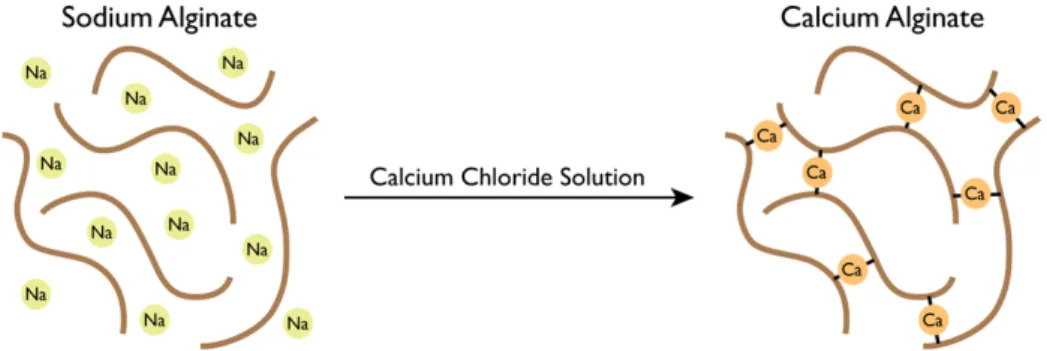
Fig. 1. Schematic diagram of Cross-linking process (Science & Food, 2013).
Table 1. Properties of biochar used in this study.
pH EC CEC Cd Cu Pb Zn
1:5 (water) dS m
-1cmol kg
-1--- mg kg
-1---
10.64 0.79 10.9 0.20 22.30 1.19 15.97
Introduction
바이오차 (Biochar)는 유기성 바이오매스를 산소가 희박 한 상태에서 열분해 (pyrolysis)한 일종의 숯을 일컫는다 (Chen et al., 2011). 이는 최근에 토양 비옥도, 작물 생산 력, 양분 보유력 등을 증가 시키기 위한 토양개량제로서 주 목을 받고 있다 (Lehmann, 2007a; Lehmann, 2007b). 바이 오차는 그 생산 조건에 따라 회수율이 다른데 온도가 올라 감에 따라 회수율이 줄어들고 탄소 비율은 증가하며 (Tanaka, 1963), 흡착능력에 영향을 미치는 비표면적 또한 증가한다 (Day et al., 2005). 그러나 고온에서 생산된 바이오차는 회 수율이 매우 낮기 때문에 경제적으로 유리하지 않아 온도 조건에 따른 바이오차의 특성연구가 많이 이루어 지고 있 다. 바이오차 재료로서의 다양한 유기성 바이오 매스에 대 해서도 연구가 진행되고 있는데 대표적인 것들은 목질계 부 산물 (Mohan et al., 2007), 축산 부산물 (Cao et al., 2009), 축사 폐기물 (Uchimiya et al., 2010) 등이 있다. 바이오차 는 이화학적 특성이 뛰어나 표면흡착력이 매우 높은데, 이 는 넓은 비표면적, 다공성 구조, 활성 작용기, 높은 pH 등에 기인한다 (Paul and Lin, 2001). 이러한 흡착능 때문에 바이 오차를 이용한 중금속 제거 연구가 활발히 진행되고 있다 (Uchimiya et al., 2010; Park et al., 2011; Uchimiya et al., 2011; Inyang et al., 2012).
해조류에서 추출한 sodium alginate는 칼슘이온과 만나 면 용액 중 나트륨이온이 칼슘이온과 급속히 치환되어 칼슘 이온과 alginate가 cross-linking됨 (Fig. 1)으로써 구형의 젤상으로 변성되는 특징을 가지고 있다. Alginate는 β-D- mannuronic acid와 α-L-guluronic acid로 구성된 hetero- polysaccharide로서 하이드로겔, 마이크로캡슐 제형에 많이 이용된다 (Clark and Ross-Murphy, 1987). 또한 alginate 는 흡착 특성이 강하여 바이오차와 마찬가지로 중금속 흡착
효과를 구명 (Ibáñez and Umetsu, 2002)하는 연구에 많이 이용되고 있다.
바이오차 재료로는 다양한 물질이 이용되므로 그 크기나 모양이 균일하지 않아 이용 시 이용 효율을 높이기 위한 분 쇄 작업을 필요로 한다. 그러나 분쇄된 바이오차는 쉽게 비 산되고 작업 시 인체의 호흡기를 통해 신체 내부로 유입된 다. 본 연구는 바이오차 비산 문제를 해결하기 위하여 바이 오차와 sodium alginate를 혼합한 젤리 형태의 바이오차 비 드를 제작하고, 이를 이용한 중금속 흡착 효과를 알아보기 위하여 수행하였다.
Materials and Methods
본 실험에 사용된 바이오차는 참나무를 400°C에서 열분 해 하여 생산한 후 비드 성형을 위해 100mesh 사이즈로 분 쇄하였다. 분쇄한 바이오차는 대기 중 수분 흡수를 막기 위 해 밀봉상태로 보관하였다. 본 연구에 사용된 바이오차의 화학적 특성은 Table 1에 나타냈다. Sodium alginate (Daejung chemicals & metals Co., Ltd., Korea)는 점성이 강해 high- torque overhead stirrer (HT-50DX, Korea)를 이용해 세가 지 농도 (1, 1.5, 2%)로 용해시켰다. 칼슘 이온 공급을 위한 염화칼슘 (Daejung chemicals & metals Co., Ltd., Korea) 용액은 무수화물을 이용해 0.05, 0.1, 0.5M의 농도로 만들 었다. 이는 Velings와 Mestdagh (1995)가 비드 성형을 위해 사용했던 염화칼슘 농도 (0.05~0.33M)를 참고하여 정해졌다.
비드는 일반적인 Ca-alginate cross-linkage 원리를 이 용하였는데 바이오차 미립을 sodium alginate에 혼합하여 염화캄슘 용액에 자유낙하시켜 성형하였다. 비드 성형 시 sodium alginate가 염화칼슘과 충분히 반응할 수 있도록 성 형 후 10~20분 정도 염화칼슘 용액내에서 방치하였고, 성 형이 완료된 후 표면의 염화칼슘 용액을 제거하기 위해 증
Fig. 2. Adsorption of heavy metals in 5ppm stock solution (Stock sol.: Heavy metal solution without biochar bead, SA1 C0.05: Sodium alginate 1% + CaCl
20.05M, SA1 C0.1:
Sodium alginate 1% + CaCl
20.1M, SA1 C0.5: Sodium alginate 1% + CaCl
20.5M, SA1.5 C0.05: Sodium alginate 1.5% + CaCl
20.05M, SA1.5 C0.1: Sodium alginate 1.5% + CaCl
20.1M, SA1.5 C0.5: Sodium alginate 1.5% + CaCl
20.5M, SA2 C0.05: Sodium alginate 2% + CaCl
20.05M, SA2 C0.1:
Sodium alginate 2% + CaCl
20.1M, SA2 C0.5: Sodium alginate 2% + CaCl
20.5M).
Fig. 3. Adsorption of heavy metals in 50ppm stock solution (See figure 2).
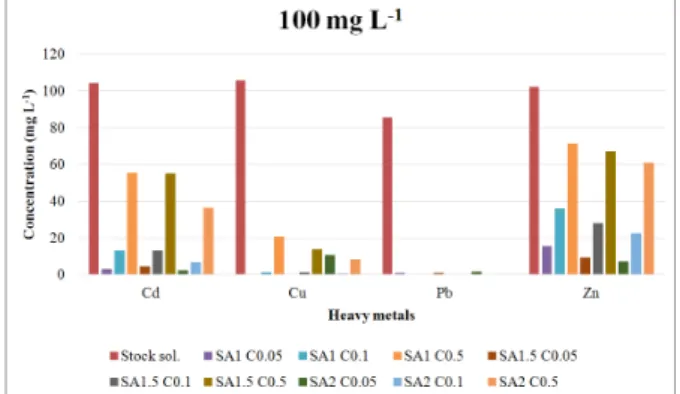
Fig. 4. Adsorption of heavy metals in 100ppm stock solution (See figure 2).
류수로 세척하였다. 세척한 비드는 흡착 실험을 위해 건조 기에서 50°C로 12시간 건조하였다.
중금속 흡착실험에는 카드뮴 (Cd(NO3)2∙4H2O), 구리 (Cu(NO3)2∙ 3H2O), 납 (Pb(NO3)2), 비소 (AsCl3), 아연 (Zn(NO3)2∙6H2O) 시약 (Daejung chemicals & metals Co., Ltd., Korea)을 이 용하여 각각 5, 50, 100, 250, 500 mg L-1 용액으로 만들어 사용하였다. 1 g의 바이오차 비드를 삼각플라스크에 넣고 각각의 중금속 용액을 50 mL씩 첨가하여 항온 진탕기에서 25°C로 24시간 진탕한 후 여과하여 유도결합플라즈마 (ICP- OES, iCAP 6000 series, Thermo Scientific, UK)를 이용하 여 각각의 중금속 농도를 정량하였다. 측정된 데이터는 Langmuir와 Freundlich 등온흡착식의 흡착상수를 도출하 는데 이용하였다. 각각의 모델식은 아래와 같았다.
Langmuir isotherm:
Freundlich isotherm:
Ce
(mg L-1): 용액의 평형 농도Qe
(mg L-1): 흡착된 중금속 농도Qm
(mg L-1): 최대 중금속 흡착 농도b
: Langmuir 흡착평형 상수k
: Freundlich 흡착평형 상수1/n
: Freundlich 상수Results and Discussion
모든 처리 조합에서 온전한 구형의 바이오차 비드를 얻 을 수 있었는데 이 바이오차 비드를 손가락으로 눌러보았을 때 낮은 농도의 염화칼슘을 처리한 것들은 높은 농도에 처 리한 것들에 비해 비드의 탄성이 떨어지는 것으로 조사되었 다. 이는 높은 농도의 염화칼슘 용액에 반응을 위한 칼슘 이 온이 더 많아 Ca-alginate linkage가 견고히 이루어졌기 때 문이다.
비소를 제외한 모든 처리에서 중금속 흡착 효과가 나타 났고 흡착 효과의 순서는 납≫카드뮴>구리>아연 순 이었다 (Fig. 2~6). 비소의 결과 데이터는 모든 처리에서 효과가 나 타나지 않아 제외하였다. Masscheleyn et al. (1991)은 비소 의 흡착이 이루어지지 않은 것이 비소가 일반 중금속 원소 와 달리 금속의 성질을 적게 띠고 수용액 중에서 음이온으 로 존재하기 때문이라고 하였다.
납은 다른 중금속에 비해 상당히 높은 흡착률을 보였는 데 이는 alginate의 납 흡착 효과가 매우 높기 때문이다 (Do and Lee, 2013). Alginate 자체의 납 흡착효과와 바이오차 의 pH 상승 효과가 상승작용을 일으켜 본 연구에서는 매우 우수한 납 흡착효과를 얻을 수 있었다. 카드뮴과 구리 또한
높은 흡착률을 보였는데 이 또한 두 물질의 상승효과로 인 한 것으로 판단된다.
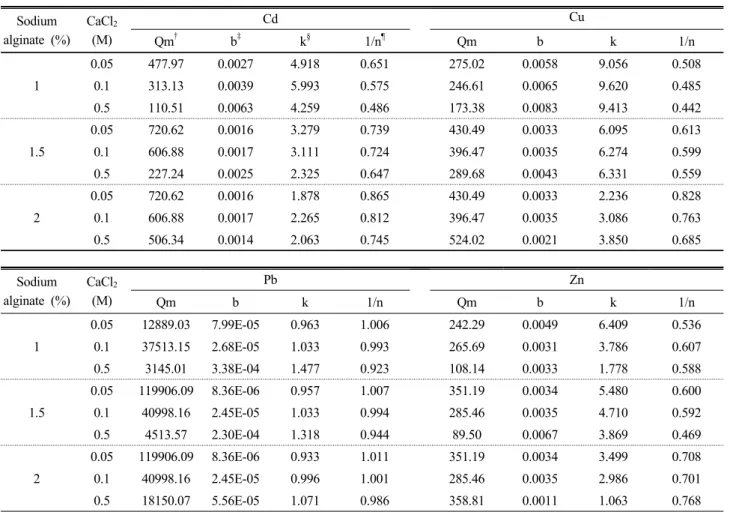
Langmuir와 Freundlich의 흡착 등온 모델 (Table 2) 또 한 실측한 중금속 결과와 같은 경향을 보였다. 납의 최대 흡
Fig. 5. Adsorption of heavy metals in 250ppm stock solution (See figure 2).
Fig. 6. Adsorption of heavy metals in 500ppm stock solution (See figure 2).
Table 2. Calculated adsorption constants for Langmuir and Freundlich isotherm model.
Sodium alginate (%)
CaCl
2(M)
Cd Cu
Qm
†b
‡k
§1/n
¶Qm b k 1/n
1
0.05 477.97 0.0027 4.918 0.651 275.02 0.0058 9.056 0.508
0.1 313.13 0.0039 5.993 0.575 246.61 0.0065 9.620 0.485
0.5 110.51 0.0063 4.259 0.486 173.38 0.0083 9.413 0.442
1.5
0.05 720.62 0.0016 3.279 0.739 430.49 0.0033 6.095 0.613
0.1 606.88 0.0017 3.111 0.724 396.47 0.0035 6.274 0.599
0.5 227.24 0.0025 2.325 0.647 289.68 0.0043 6.331 0.559
2
0.05 720.62 0.0016 1.878 0.865 430.49 0.0033 2.236 0.828
0.1 606.88 0.0017 2.265 0.812 396.47 0.0035 3.086 0.763
0.5 506.34 0.0014 2.063 0.745 524.02 0.0021 3.850 0.685
Sodium alginate (%)
CaCl
2(M)
Pb Zn
Qm b k 1/n Qm b k 1/n
1
0.05 12889.03 7.99E-05 0.963 1.006 242.29 0.0049 6.409 0.536
0.1 37513.15 2.68E-05 1.033 0.993 265.69 0.0031 3.786 0.607
0.5 3145.01 3.38E-04 1.477 0.923 108.14 0.0033 1.778 0.588
1.5
0.05 119906.09 8.36E-06 0.957 1.007 351.19 0.0034 5.480 0.600
0.1 40998.16 2.45E-05 1.033 0.994 285.46 0.0035 4.710 0.592
0.5 4513.57 2.30E-04 1.318 0.944 89.50 0.0067 3.869 0.469
2
0.05 119906.09 8.36E-06 0.933 1.011 351.19 0.0034 3.499 0.708
0.1 40998.16 2.45E-05 0.996 1.001 285.46 0.0035 2.986 0.701
0.5 18150.07 5.56E-05 1.071 0.986 358.81 0.0011 1.063 0.768
†
Qm: maximum adsorption capacity.
‡
b: adsorption equilibrium constant.
§
k: adsorption equilibrium constant.
¶
1/n: Freundlich constant.
착량은 다른 중금속에 비해 월등히 높았고 카드뮴, 구리, 아 연의 순서로 높았다. Freundlich 흡착 모델에서 흡착 강도 를 나타내는 1/n 또한 납에서 가장 높은 1에 가까운 값을 보 였고 카드뮴, 구리, 아연의 순으로 높게 나타났다.
전체적으로 낮은 농도의 염화칼슘에 반응시킨 바이오차 비드의 중금속 흡착효과가 좋았는데 이는 alginate와 칼슘 이온과의 cross-linking 강도 차이로 설명될 수 있다. 낮은
농도의 염화칼슘은 높은 농도의 염화칼슘 보다 적은 칼슘이 온을 함유하고 있어 alginate와 칼슘이온의 cross-linking 에 작용하는 칼슘이온을 상대적으로 적게 공급하게 되므로 alginate와 칼슘이온의 결합 빈도가 줄어 전체적인 결합 강도를 떨어뜨린다. 이로 인해 비드를 지탱하고 있는 alginate polymer 에 상대적으로 큰 공극이 생성되고 밀도 또한 낮아진다. 따라 서, 낮은 농도의 염화칼슘에서 성형된 바이오차 비드의 중금속
흡착효과가 큰 것은 큰 공극과 낮은 밀도로 인해 바이오차를 포 함하고 있는 alginate polymer 사이에 중금속 이온의 침투를 용 이하게 하기 때문인 것으로 판단된다. Alginate는 농도가 높을 수록 중금속 흡착에 보다 효과적인 것으로 나타났는데 이는 중 금속 용액과 반응할 수 있는 alginate의 절대적인 양이 상대적 으로 높기 때문인 것으로 사료된다.
Conclusion
바이오차 비드는 제작 비율에 따라 흡착 효율이 달랐는 데, alginate의 농도가 높고 염화칼슘의 농도가 낮을수록 그 효과가 상대적으로 우수하였다. 그러나 비드 성형에 있어서 alginate의 농도가 2%를 넘으면 점성이 매우 강해 재료의 혼 합이 어렵고, 염화칼슘의 농도가 너무 낮으면 비드가 불균일 하게 성형되는 문제가 있다. 바이오차 비드는 비소를 제외한 카드뮴, 구리, 납, 아연 흡착에 탁월한 효과를 보였으며 이 결과를 토대로 바이오차 비드를 중금속 오염지 토양에서 중 금속 오염 확산 방지에 활용할 수 있을 것으로 보인다.
바이오차는 최근에 토양개량제로서 많은 연구가 진행되 고 있는데 넓은 비표면적, 높은 pH, 양분 보유력 등의 특성 이 강하여 척박한 토양의 성질을 개선하고 중금속을 흡착하 는 효과가 있다. 또한 바이오차는 유기성 폐자원을 재활용 함으로써 탄소를 격리하는 효과를 가지고 있어 지구 온난화 를 경감시키는 역할을 한다. 그러나 바이오차는 분쇄과정 및 분쇄 후 비산되는 성질이 매우 강하여 인간의 호흡기 등 을 통해 인체에 유입되는 단점을 가지고 있다. Alginate는 천연 고분자 물질로서 독성이 전혀 없고 칼슘이온과 cross- linkage를 형성하는 작용을 해 구형의 젤리가 되는 성질을 가 지고 있어 제형이나 캡슐 성형을 하는데 많이 이용되고 있다.
그리고 중금속을 흡착하는 성질이 있어 수질정화에도 활용되 었다. 본 연구에서는 alginate를 이용해 바이오차를 비드화 함으로서 비산 먼지의 발생을 방지하였고, 이와 더불어 생산 된 바이오차 비드의 중금속 흡착 효과를 검증하였다. 연구 결 과, 비소를 제외한 모든 중금속에서 흡착 효과가 검증되었는 데 특히, 납에서 매우 높은 중금속 흡착효과를 보였다.
References
Cao, X., Ma, L., Gao, B., and Harris, W. 2009. Dairy-manure derived biochar effectively sorbs lead and atrazine. Environmental Science & Technology 43:3285-3291.
Chen, X., Chen, G., Chen, L., Chen, Y., Lehmann, J., McBride, M.B., and Hay, A.G. 2011. Adsorption of copper and zinc by biochars produced from pyrolysis of hardwood and corn straw in aqueous solution. Bioresource Technology 102:8877-8884.
Clark, A.H. and Ross-Murphy, S.B. 1987. Structural and mechanical properties of biopolymer gels. In “Biopolymers”, pp. 57-192.
Springer.
Day, D., Evans, R.J., Lee, J.W., and Reicosky, D. 2005.
Economical CO2, SOx, and NOx capture from fossil-fuel utilization with combined renewable hydrogen production and large-scale carbon sequestration. Energy-the International Journal 30:2558-2579.
Do, X.H. and Lee, B.K. 2013. Removal of Pb2+ using a biochar–
alginate capsule in aqueous solution and capsule regeneration.
Journal of Environmental Management 131:375-382.
Ibáñez, J.P. and Umetsu, Y. 2002. Potential of protonated alginate beads for heavy metals uptake. Hydrometallurgy 64:89-99.
Inyang, M., Gao, B., Yao, Y., Xue, Y., Zimmerman, A.R., Pullammanappallil, P., and Cao, X. 2012. Removal of heavy metals from aqueous solution by biochars derived from anaerobically digested biomass. Bioresource Technology 110:50-56.
Lehmann, J. 2007a. A handful of carbon. Nature 447:143-144.
Lehmann, J. 2007b. Bio-energy in the black. Frontiers in Ecology and the Environment 5:381-387.
Masscheleyn, P.H., Delaune, R.D., and Patrick Jr., W.H. 1991.
Effect of redox potential and pH on arsenic speciation and solubility in a contaminated soil. Environmental Science &
Technology 25:1414-1419.
Mohan, D., Pittman Jr, C.U., Bricka, M., Smith, F., Yancey, B., Mohammad, J., Steele, P.H., Alexandre-Franco, M.F., Gómez- Serrano, V., and Gong, H. 2007. Sorption of arsenic, cadmium, and lead by chars produced from fast pyrolysis of wood and bark during bio-oil production. Journal of Colloid and Interface Science 310:57-73.
Park, J.H., Choppala, G.K., Bolan, N.S., Chung, J.W., and Chuasavathi, T. 2011. Biochar reduces the bioavailability and phytotoxicity of heavy metals. Plant and soil 348:439-451.
Paul Chen, J. and Lin, M. 2001. Equilibrium and kinetics of metal ion adsorption onto a commercial H-type granular activated carbon: experimental and modeling studies. Water Research 35:2385-2394.
Science & Food. “Deconstructed apple pie”. Last modified May 19, 2013. http://scienceandfooducla.wordpress.com.
Tanaka, S. 1963. Fundamental study on wood carbonization.
Bulletin of Experimental Forest of Hokkaido University.
Uchimiya, M., Lima, I.M., Thomas Klasson, K., Chang, S., Wartelle, L.H., and Rodgers, J.E. 2010. Immobilization of heavy metal ions (CuII, CdII, NiII, and PbII) by broiler litter-derived biochars in water and soil. Journal of Agricultural and Food Chemistry 58:5538-5544.
Uchimiya, M., Wartelle, L.H., Klasson, K.T., Fortier, C.A., and Lima, I.M. 2011. Influence of pyrolysis temperature on biochar property and function as a heavy metal sorbent in soil.
Journal of Agricultural and Food Chemistry 59:2501-2510.
Velings, N.M., and Mestdagh, M.M. 1995. Physico-chemical properties of alginate gel beads. Polymer Gels and Networks 3:311-330.