Effect of Conditioning Methods on the Shear Bond Strength of Veneering composite on Zirconia Ceramic
Hyun-Seok Nam, Kwang-Yeob Song, Seung-Geun Ahn, Ju-Mi Park Department of Prossthodontics. School of Dentistry. Chonbuk National University
The purpose of this study is to know whether Yttrium-stabilized-tetragonal -zirconia-polycrystal(Y-TZP ceramic) gets enough shear bond strength for clinical uses by applying veneering composite resin through surface treatment on it and finally to compare it with the case of applying veneering porcelain. LavaTM zirconia frameworks(3M ESPE, Seefeld, Germany) were prepared. Group P was manufactured with LavaTM Ceram(3M ESPE, Seefeld, Germany) in cylindrical shape which has 4mm diameter, 5mm height. Group ZSR disposed sandblasting and applied silane, bonding agent and after that indirect composite resin was applied. Group ZRR got tribochemical coating by RocatecTM system(3M ESPE. Seefeld, Germany) and treated silane. Finally Group ZPR took the same treatment and applied LavaTM Ceram in the size of 0.3-0.5mm height. After burning out, sandblasting, HF and silane was applied. And then, indirect composite resin was applied. 1000 cycle thermocycling was performed in 5-55℃ and shear bond strength was measured. There were no significant differences between combining veneering porcelain to Y-TZP ceramic group and combining veneering resin to Y-TZP ceramic group in the aspect of shear bond strength (p>.05).
Key words: Y-TZP ceramic, zirconia, shear bond strength, veneering composite resin
(Journal of Dental Rehabilitation and Applied Science 2010:26(3):253~264)
INTRODUCTION
Aesthetics of the restoration has become a major issue for many patients. A growing number of patients are in favor of all-ceramic restorations even in the posterior region for esthetic reason. Zirconia ceramic was introduced to replace traditional metal
Correspondence to : Kwang-yeob Song, DDS, PhD
Department of Prosthodontics, Dental School, Chonbuk National University.
664-14, Deokjin-Dong, Deokjin-Gu, Jeonju, Jeonbuk, Korea. 561-756,
Tel: +82-63-250-2024, Fax: +82-63-250-2218, E-Mail: [email protected]
Received: June 18, 2010, Last Revision: August 10, 2010, Accepted: September 25, 2010
framework of fixed partial denture. It has good physical properties such as biocompatibility, high flexural strength and fracture resistance, and esthetics. However, fracture is relatively frequently observed with posterior all-ceramic restorations with zirconia core. Brittleness of the veneering porcelain makes the prosthesis prone to fracture.
Recently composite resin has been used as an alternative veneering material for implant fixed partial denture. Composite is less brittle than porcelain. Its wear resistance is lower than enamel and it does not wear off enamel structure. Composite restoration is easy to fix when fractured. Fabricating implant supported fixed partial denture with indirect composite is advantageous especially in high stress- bearing areas.
Several in-vitro studies examined the bond failure modes of bi-layered all-ceramic restorations.
Difference of physical properties between the two layers caused failures of the restorations. Takahashi et al. found that the failures of all-ceramic restoration were not meaningfully different from those of metal ceramic restorations. Kobayashi et al.
argued that bond strength between indirect composite and zirconia was enhanced with a low viscosity adhesive and a primer containing monomer 10-methacryloyloxydecyl dihaydrogen phosphate (MDP monomer. Intrinsic mechanical properties of the veneering material and adhesion of the veneering material to zirconia core is essential in success.
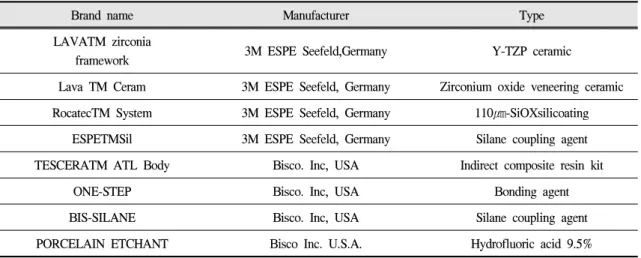
Brand name Manufacturer Type
LAVATM zirconia
framework 3M ESPE Seefeld,Germany Y-TZP ceramic
Lava TM Ceram 3M ESPE Seefeld, Germany Zirconium oxide veneering ceramic RocatecTM System 3M ESPE Seefeld, Germany 110㎛-SiOXsilicoating
ESPETMSil 3M ESPE Seefeld, Germany Silane coupling agent TESCERATM ATL Body Bisco. Inc, USA Indirect composite resin kit
ONE-STEP Bisco. Inc, USA Bonding agent
BIS-SILANE Bisco. Inc, USA Silane coupling agent
PORCELAIN ETCHANT Bisco Inc. U.S.A. Hydrofluoric acid 9.5%
Table I. Materials used in this study
The aim of this study was to evaluated shear bond strength of composite veneered zirconia ceramic.
Y-TZP ceramic was surface-treated and bonded with veneering composite. Shear bond strength was compared with porcelain veneered traditional zirconia restorations.
MATERIAL AND METHODS 1. Materials
Presintered yttrium-stabilized-tetragonal-zirconia- polycristal ceramic(LAVATM, 3M ESPE, Seefeld, Germany) blocks were cut with asaw. Followings are the materials used in this study(TableⅠ).
2. Methods
1) zirconia ceramic block fabrication
The 40 zirconia specimens to be used as a bonding substrate were made of zirconia ceramic material. The elliptical zirconia blocks (25 x 18 x 3.6 mm) were wet-ground with 600-grit silicon
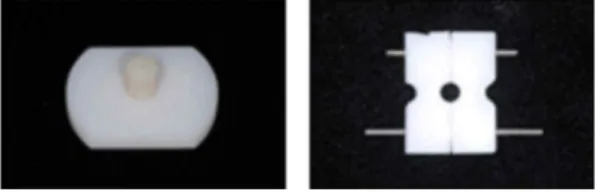
Fig. 1. Zirconia ceramic block.
carbide abrasive paper. They were completely sintered following LAVA sintering schedule. Shrunk blocks (19 x 14 x 2.8 mm) were ground again with 1000-grit silicon carbide abrasive paper. They were cleaned in an ultrasonic bath and dried (Fig. 1).
2) porcelain and veneering resin build-up
Zirconia ceramic blocks were surface-treated with aluminum oxide. Veneering porcelain and composite resin were applied on top of the zirconia blocks.
Ceramic block was divided into four groups according to the veneering materials and the ceramic surface treatment.
(1) P group
Airborne particle abrasion with 110 μm aluminum oxide particles(3M ESPE, Seefeld, Germany) was performed perpendicular to the surface from a distance of 10 mm for 15 seconds at 3 bar pressure1,11). Sandblasted blocks were cleaned with condensed air for 5 seconds. LavaTM Cerammodifier (MOA3,3MESPE,Seefeld,Germany) was applied following manufacturer’s recommendations and first firing was conducted. LavaTMCeram dentin (A3, 3M ESPE, Seefeld, Germany) was packed in the putty index that the form of a disk was 4.0 mm in diameter and 5.0 mm in thickness. Residual porcelain at the interface was removed and second firing was carried out according to the manufacturer’s recommendations.
(2) ZSR group
After same surface treatment of the P group ceramic blocks, silane coupling agent (BIS–
SILANE, Bisco, Inc. Schaumburg, Illinois, USA) was applied with microbrush 1-2 times. The ceramic blocks were dried with warm air for 30 seconds.
Bonding agent (ONE-STEP, Bisco, Inc. Schaumburg, Illinois, USA) was applied with microbrush 1-2 times to form a thin layer. The blocks were light-cured for 20 seconds. Indirect composite resin (TESCERA
TMATL Body resin, Bisco, Inc. Schaumburg, Illinois, USA) was builtup utilizing Teflon jig. The jig was removed afte r20 seconds of ligh tcuring. Final curing was conducted in the light pressure cup for 1-2 minutes and in the heat cup for 20-30 minutes following manufacturer (Fig. 2).
(3) ZRR group
110 μm aluminum oxide particles(RocatecTM Pre, 3M ESPE, Seefeld, Germany) were homogeneously sprayed to the surface of the zirconia blocks at right angle from a distance of 10mm for 15 seconds at
Fig. 2. Fabricated specimen and Teflon zig.
3 bar pressure. The blocks were cleaned with condensed air for 5 seconds and dried. Tribo- chemical coating was carried out with 110 μm SiOx,
particles(RocatecTMPlus, 3M ESPE, Seefeld, Germany) from a distance of 10 mm for 15 seconds at 3 bar pressure. The blocks were again cleaned with condensed air for 5 seconds. Silane coupling agent(ESPETMSil, 3M ESPE, Seefeld, Germany) and a bonding agent(ONE-STEP) and indirect resin (TESCERATMATL Body) was applied with the same method mentioned above.
(4) ZPR group
Porcelain layer was intermixed between Y-TZP and composite in this group. After same surface treatment, Lava Ceram modifier was applied according to the manufacturer’s recommendations and first firing was carried out. Lava Ceram dentin was applied with 0.3-0.5mm of thickness. After second baking ,the ceramic blocks were sand- blastedwith 50μm aluminum oxide(DENTARUM, Germany). It was perpendicularly sprayed for 3 seconds from a distance of 15 mm at 2.8 bar pressure. The ceramic blocks were acid etched with 9.5% hydrofluoric acid(PORCELAIN ETCHANT, Bisco, Inc. Schaumburg, Illinois, USA) for 90 seconds and washed. After drying, it was silanized with BIS-SILANE. ONE-STEP and TESCERA ATL Body resin were applied as for ZSR andZRR. Each ceramic block underwent 5000 thermocycles at 5- 55˚
and stored in water at37 degrees Celsius for 24 hours.
Fig. 3. Materials used in this study.
3) Shear bond strength measurement
Shear bond strength of all-ceramic blocks was measured. Shearing force was applied with 1mm/min crosshead speed using a mechanical testing machine (Instron 4201, Instron Co. USA) until facture occurred. Maximum application force (N) was measured and shear bond strength was calculated by the formula shown below. Elliptical formula was used to calculate the surface area (τ =4P/ πab) (Fig. 4).
4) Scanning electron microscopy observation Bond failure modes of each surface treatment were observed with scanning electron microscopy (SEM).
5) Statistical analysis
Difference of shear bond strength among four groups was analyzed with SPSS. One-way ANOVA test and Tukey’s multiple range test were performed with a significance level of 5%.
Fig. 4. Shear bond strength test in Universal testing mashine.
Shear bond strength(MPa)=
Maximum applied force(N)/
bonded cross-sectional area(mm)
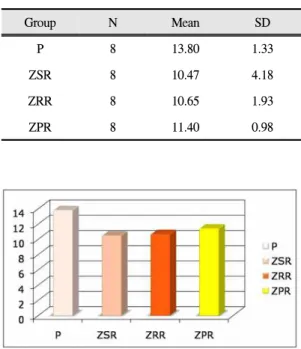
Group N Mean SD
P 8 13.80 1.33
ZSR 8 10.47 4.18
ZRR 8 10.65 1.93
ZPR 8 11.40 0.98
Table Ⅱ. Shear bond strength(MPa) with SD
Fig. 5. Mean shear bond strength.
(1) Groups (2) Groups Mean Difference(1)-(2) Std. Error Sig.
P
ZSR 3.33 1.22 .051
ZRR 3.14 1.22 .071
ZPR 2.40 1.22 .226
ZSR
P -3.33 1.22 .051
ZRR -.187 1.22 .999
ZPR -.93 1.22 .872
ZRR
P -3.14 1.22 .071
ZSR .19 1.22 .999
ZPR -.74 1.22 .929
ZPR
P -2.40 1.22 .226
ZSR .929 1.22 .872
ZRR .74 1.22 .929
Table Ⅲ. The results of Tukey multiple comparisons
RESULTS
Mean values and standard deviations of shear bond strength (SBS) of each group are listed in table II. Fig. 5 illustrates the shear bond strength mean values. The highest value was in group P and followed by ZPR, ZRR and ZSR. Tukey’s multiple range test revealed no meaningful difference between groups (p> .05) (Table. Ⅲ). T-test revealed no meaningful difference between the blocks of P and ZPR groups with mixed failures (Table. Ⅳ).
Y-TZP ceramic and feldspathic porcelain were surface-treated and were observed with SEM.
Sandblasting with 110 μm of aluminum oxide particles on Y-TZP ceramic achieved a consistent rough surface. When feldspathic porcelain was sandblasted with 50 μm of aluminum oxide particles and acid-etched with 9.5% of hydrofluoric acid, microporosities were more obvious than in Y-TZP
T-test for Equality of Means group N Mean Std.Deviation
t df Sig.(2-tailed) P 8 13.61 3.80
value 1.598 14 .132 ZPR 8 11.40 .98
Table Ⅳ. The result of T-test (P and ZPR group. Mixed failure specimens)
Fig. 6. SEM micrographs of Y-TZP ceramics (magnifigation x1,000); A: Y-TZP ceramic surface (polished with 1000 grit SiC paper), B: Y-TZP ceramic surface(sandblasted with airborne abrasion with 110-㎛ alumina), C: porcelain surface(sandblasted with airborne abrasion with 50-㎛ alumina & 9.5% HF).
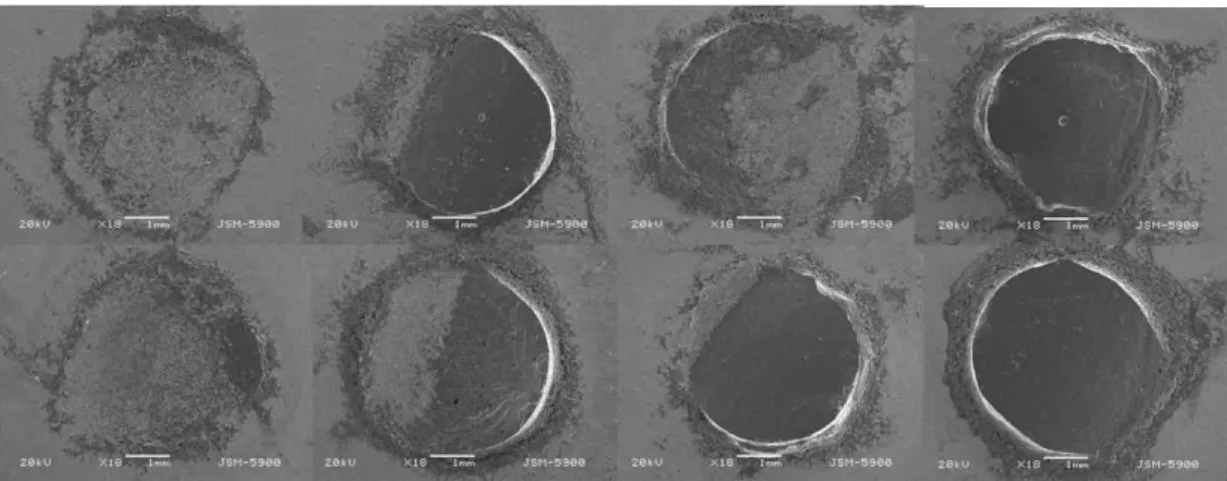
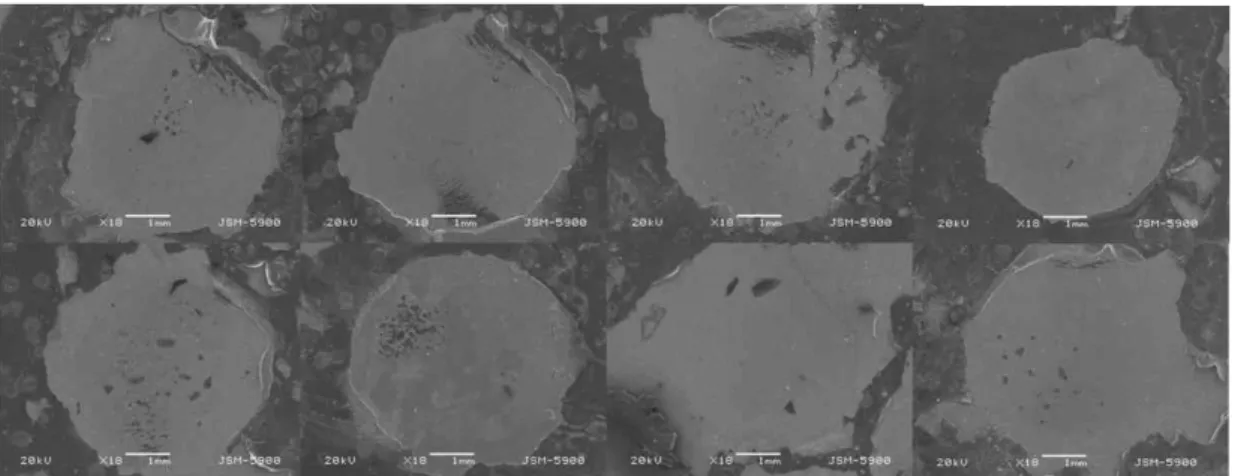
Fig. 7. SEM micrographs of P group after shear bond strength test(magnifigation x18). They presented 6 mixed failures and 2 cohesive failures.
ceramic (Fig. 6).
Regarding failure modes of shear bond strength test, P group manifested mixed failures in 6 blocks
and cohesive failures in the porcelain layer in 2 ceramic blocks (Fig. 7). ZSR group showed mixed failures in 5 blocks due to the residual composite.
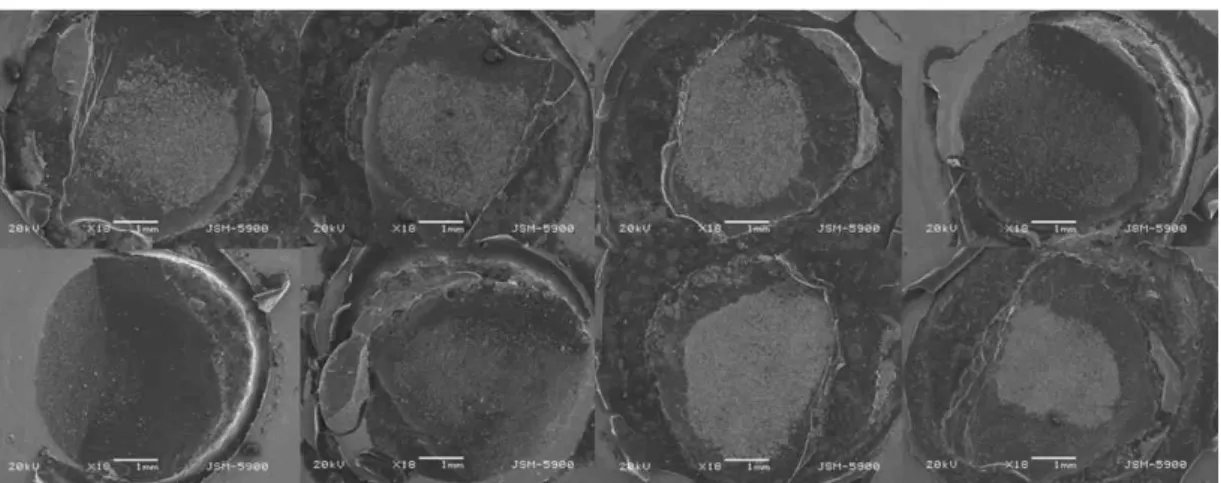
Fig. 8. SEM micrographs of ZSR group after shear bond strength test(magnifigation x18). They presented 5 mixed failures and 3 adhesive failures.
Fig. 9. SEM micrographs of ZRR group after shear bond strength test(magnifigation x18). They presented 6 mixed failures and 2 adhesive failures.
Adhesive failures were observed in the other 3 ceramic blocks (Fig. 8). Mixed failures were found in 6 ceramic blocks of ZRR group because of slight amount of residual composite. The other two ceramic blocks exerted adhesive failures (Fig. 9). All 8 ceramic blocks of ZPR group showed mixed failures with residual porcelain and composite (Fig.
10).
DISCUSSION
Although all-ceramic restoration has been widely used in dentistry for excellent esthetics and good biocompatibility, fracture of the veneering porcelain still limits the use of all-ceramic restoration. In this study, to evaluate performance of composite veneered zirconia crown as alternative to porcelain
Fig. 10. SEM micrographs of ZRR group after shear bond strength test(magnifigation x18). They presented all mixed failures.
Fig. 11. Failure type.
veneering, shear bond strength of veneering composite and Y- TZP ceramic were measured.
Shear bond strength test is the most widely used method for measuring bond strength. Reliability of the test was verified in previous literatures and there are advantages and disadvantages 12-14). It is relatively simple and easy to perform. Results can be quickly obtained. However, cohesive failure can be produced due to the unfavorable stress distribution pattern15). Standard variation is big.
Prediction of clinical performance from the test result is difficult16). To increase clinica lusefulness
o fshear bond strength test, ceramicblock fabrication, standardization of the cutting surface, and percentage of force application is important.
Fischer et al. 11) stated the bond strength of zirconia and porcelain is higher than cohesive strength of porcelain. Veneering porcelain remained in all of fractured surfaces of zirconia in the shear bond strength test of zirconia and porcelain. The same results were observed in this study. Remnants of veneering porcelain were found in all of Y-TZP ceramic in group P. P group showed 6 mixed failures and 2 cohesive failures. No adhesive failure was found. On the contrary, adhesive failures predominated in ZSR and ZRR groups and mixed failures were rarely found. All the ceramic blocks of ZPR group showed mixed failures. Middle portion of the fractured surfaces seemed adhesive failure at low magnification. At high magnification, porcelain was remained in the middle portion of all the ceramic blocks.
Some authors16-18)argues that clinically acceptable bond strength is at least 10-13 megapascals(MPa).
The shear bond strength mean value of group P,
Group ZSR, ZRR, and ZPR were 13.80 MPa, 10.47 MPa, 10.65 MPa, and 11.40 MPa, respectively.
Although bond strengths were relatively lower than that of zirconia core to veneering ceramics in previous studies, they were close to the clinically acceptable bond strength.
Aboushelib et al. 19) stated that sandblasting decreased the percentage of interface failure. Borges et al.3)found that sandblasting with 50 μm of aluminum oxide created shallow microscopic irregularities on the surfaces of IPS Empress and IPS Empress 2. No change on the surfaces texture, however, was created in In-Ceram Alumina and In-Ceram Zirconia. Kern and Thompson20) sandblasted In-Ceram Alumina with 100μm of aluminum oxide and created microporosities on the ceramic surfaces. Microporosities were also verified in this study with electron microscopy when Y- TZP ceramic were sandblasted with 110 μm of aluminum oxide particles.
The Rocatec system enhances bond strength by tribochemical surface treatment. It delivers a chemical bond by frictional force for the ofthesurfaces.The system creates tribochemical coating of the microblasted surfaces with 110-㎛
silica-modified aluminum oxide particles. ZRR group conditioned the ceramic blocks with tribochemical coating. ZRR group exhibited more stable bond with less standard deviation than ZSR group although those groups were no statistically meaningful difference.
Porcelain was veneered in Y-TZP ceramic and surface-treated in ZPR group. Composite resin was bonded to porcelain layer, and shearing force was applied. Bond failure was expected to be produced in the interface between porcelain and resin which is relatively weakly bonded. Most of fractured surfaces revealed residual porcelain and all of the
bond failures were mixed failures. Higher shear bond strength was obtained in ZPR where a porcelain layer was intermixed between Y-TZP ceramic and resin than in groups where Y-TZP ceramic was directly bonded to veneering resin. When compared to ceramic blocks of P group which showed mixed failures, T-test revealed no meaningful difference.
Lower mean value, however, was obtained. It can be explained by following reasons: polymerization shrinkage created a crack in thin porcelain layer when composite resin was cured on porcelain;
adhesion between Y-TZP ceramic and porcelain would be weakened due to the crack; incremental curing of the composite with proper application of pressure would have exerted higher bond strength;
and heat in the light pressure cup and heat cup of final curing of the TESCERA ATL resin and heat during thermocycling might contributed to low bond strength.
Blatz et al.12)and Kobayashi et al.10)argued that use of adhesive containing both MDP monomer and silane is essential to reliable and long-standing bond of zirconia. Kobayashi et al.10)obtained more than 20MPa of shear bond strength between indirect composite and zirconia. They used MDP monomer- containing conditioner and low viscosity adhesive.
Mode of bond failures was cohesive.
In this study, most of bond failures between Y-TZP ceramic and veneering composite resin were adhesive failures. Mixed failures were found in the entire ceramic blocks in ZPR where porcelain layer was intermixed. Intermixing of porcelain enhanced the bond strength although there were some reasons that slight decrease of bond strength occurred.
Currently many studies on the bond between zirconia and composite resin are carried out. Further studies are required to investigate limitations of this study.
CONCLUSION
Effects of a few surface treatment methods of Y-TZP ceramic were evaluated. Adhesion between pretreated Y-TZP and veneering composite was compared with shear bond strength of conventional veneering porcelain to Y-TZP. Clinical usefulness of composite veneered zirconia restoration was examined. Surface of Y-TZP ceramic was sandblasted with aluminum oxide, tribochemical silica-coated, and silanized. Veneering composite was bonded and bond strength was compared with traditional porcelain veneered Y-TZP. Fabricated ceramic blocks underwent 1000 thermocycles at 5- 55˚ and stored indistilled water for 24 hours. Shear bond strength of the blocks were measured with the Instron testing machine. The following conclusions were drawn: (1) no meaningful difference of shear bond strength was found between porcelain-bonded to Y-TZP ceramic group and composite veneered groups;(p>.05) (2) that T-test revealed no meaningful difference between the blocks of P and ZPR groups with mixed failures; (p>.05) and (3) that between composite veneered Y-TZP groups, porcelain- intermixed ZPR group manifested higher bond strength.
REFERENCES
1. Kern M, Wegner SM. Bonding to zirconia ceramic:
Adhesion methods and their durability. Dent Mater 1998;14:64-71.
2. Kosmac T, Oblak C, Jevnikar P, Funduk N, Marion L. The effect of surface grinding and sandblasting on flexural strength and reliability of Y-TZP zirconia ceramic. Dent Mater 1999;15:426-33.
3. Borges GA, Sophr AM, de Goes MF, Sobrinho LC, Chan DCN. Effect of etching and airborne particle abrasion on the microstructure of different dental ceramics. J Prosthet Dent 2003;89:479-88.
4. Vult von Steyern P, Carlson P, Nilner K. All- ceramic fixed partial dentures designed according to the DC-Zircon technique. A 2-year clinical study. J Oral Rehabil 2005; 32:180-187.
5. Raigrodski AJ, Chiche GJ, Potiket N. The efficacy of posterior three-unit zirconium- oxide-based ceramic fixed partial dental prostheses: A prospective clinical pilot study. J Prosthet Dent 2006;96:237-244.
6. Ҫifҫy Y, Canay S. The effect of veneering materials on stress distribution in implant- supported fixed prosthetic restorations. Int J Oral Maxillofac Implants 2000;15:571-582.
7. Hermann I, Bhowmick S, Lawn BR. Role of core support material in veneer failure of brittle layer structures. J Biomed Mater Res B Appl Biomater 2007;82:115-121.
8. Kim B, Zhang Y, Pines M, Thompson VP.
Fracture of porcelain-veneered structures in fatique. J Dent Res 2007;86:142-146.
9. Takahashi Y, Hisama K, Sato Hl. Probability of failure of highly filled indirect resin- veneered implant-supported restorations:An in vitro study.
Int J Prosthodont 2002;15: 179-182.
10. Kobayashi K, Komine F, Blatz MB, Saito A.
Influence of priming agents on the short-term bond strength of an indirect composite veneering material to zirconium dioxide ceramic.
Quintessence Int 2009;40:545-551.
11. Fischer J, Grohmann P and Stawarczyk B. Effect of zirconia surface treatments on the shear strength of zirconia/veneering ceramic composites. Dent Mater 2008;27:448 -454.
12. Blatz MB, Sadan A, Martin J, Lang BR. In vitro evaluation of shear bond strengths of resin to densely-sintered high-purity zirconium-oxide ceramic after long-term storage and thermal cycling. J Prosthet Dent 2004;91:356-362.
13. Blatz MB, Sadan A, Arch GH, Lang BR. In vitro evaluation of long-term bonding of Procera AllCeram alumina restorations with a modified resin luting agent. J Prosthet Dent 2003;89:
381-387.
14. Blatz MB, Sadan A, Blatz U. The effect of silica coating on the long-term resin bond to the intaglio surface of Procera AllCeram restorations.
Quintessence Int 2003;34:542-547.
15. Aboushelib MN, Kleverlaan CJ, Feilzer AJ.
Microtensile bond strength of different components of core veneered all-ceramic restorations Part Ⅱ:
Zirconia veneering ceramics. Dent Mater 2006;22:
857-863.
16. Al-Dohan HM, Yaman P, Dennison JB, Razzoog ME, Lang BR. Shear bond of core-eneer interface in bi-layered ceramics. J Prosthet Dent 2004;91:
349-55.
17. Thurmond JW, Barkmeier WW, Wilwerding TM.
Effect of porcelain surface treatments on bond strengths of composite resin bonded to porcelain. J Prosthet Dent 1994;72:355-359.
18. Matsumura H, Yanagida H, Tanoue N, Atsuta M, Shimoe S. Shear bond strength of composite resin veneering material to gold alloy with varying metal surface preparations. J Prosthet Dent 2001;86:315-319.
19. Aboushelib MN, de jager N, Kleverlaan CJ, Feilzer AJ. Microtensile bond strength of different components of core veneered all-ceramic restorations. Dent Mater 2005;21:984-91.
20. Kern M, Thompson VP. Sandblasting and silica coating of a glass-infiltrated alumina ceramic:
Volume loss, morphology, and changes in the surface composition. J Prosthet Dent 1994;71:453- 61.
Y-TZP ceramic의 표면처리에 따른 전장용 레진의 전단결합강도
전북대학교 치의학 전문대학원 치과보철학교실 남현석․송광엽․안승근․박주미
최근 개발된 Yttrium-stabilized-tetragonal-zirconia-polycrystal(Y-TZP ceramic)은 생체 친화적이며 높은 굴곡 강도, 파절 저항성, 파괴 인성을 지니고 CAD-CAM을 통해 milling이 가능하여 많은 치과 영역에서 사용되고 있다. 구치 부 zirconia framework을 사용하는 고정성 수복물의 경우에는 상부 장석 도재의 상대적으로 높은 빈도의 파절을 보이고 있다. 복합레진은 취성이 적고 법랑질 보다 마모도가 낮으며 수리가 용이하다. 높은 교합압 부위에서 전장 용 복합레진을 사용한 임플란트 수복은 기능적인 장점을 지니며 흥미롭게 여겨지고 있다. 이번 연구의 목적은 Y-TZP ceramic에 몇 가지 표면 처리를 시행하여 전장용 복합레진을 적용 시켰을 때 도재 전장시과 비교하여 임상 적 활용을 위한 유용한 전단결합강도를 지니는지를 알고자 함이다.
주요어: Y-TZP 도재, zirconia, 전단결합강도, 전장용복합레진
교신저자:송광엽
561-756 전북 전주시 덕진구 덕진동 1가 664-14, 전북대학교 치의학전문대학원 치과보철학교실 Tel: 063-250-2117, Fax: 063-250-2218, E-mail: [email protected]
원고접수일: 2010년 6월 18일, 원고수정일: 2010년 8월 10일, 원고채택일: 2010년 9월 25일