Analysis of MAPK Signaling Pathway Genes in the Intestinal Mucosal Layer of Necrotic Eenteritis-Afflicted Two Inbred Chicken Lines
Anh Duc Truong
1,3, Yeojin Hong
1, Janggeun Lee
1, Kyungbaek Lee
1, Hyun S. Lillehoj
2and Yeong Ho Hong
1†1
Department of Animal Science and Technology, Chung-Ang University, Anseong 17546, Republic of Korea,
2
Animal Biosciences and Biotechnology Laboratory, Agricultural Research Services, United States Department of Agriculture, MD 20705, USA
3
National Institute of Veterinary Research, 86 Truong Chinh, Dong Da, Hanoi, Vietnam.
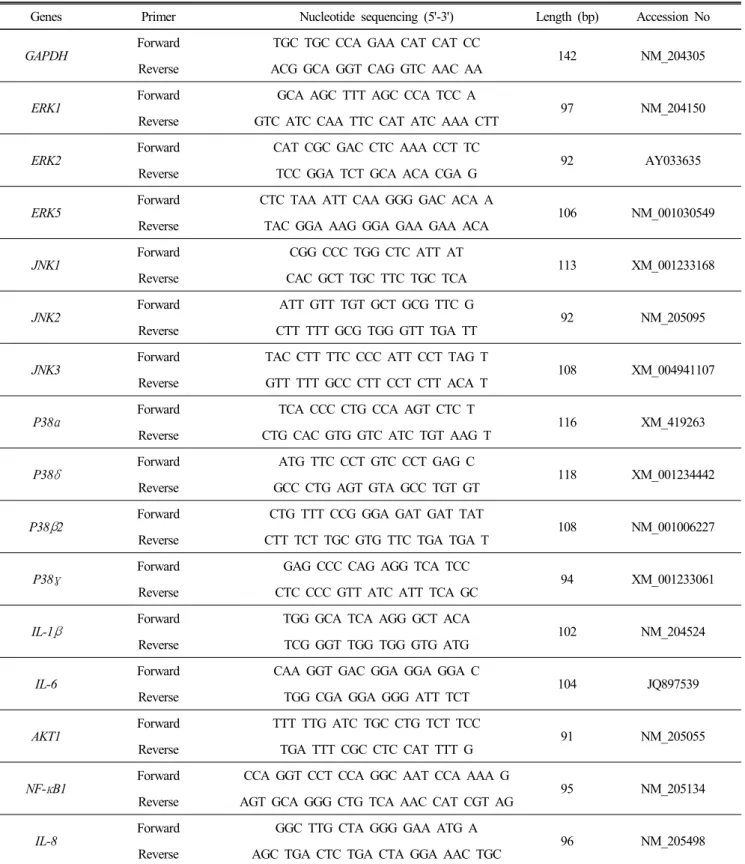
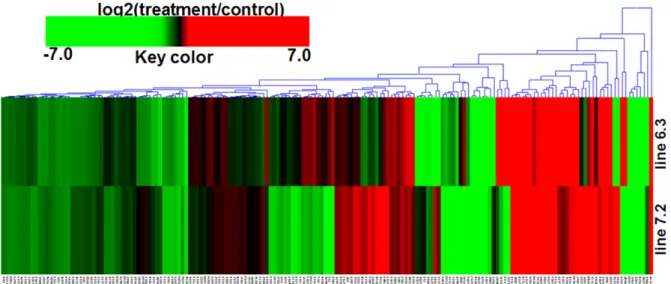
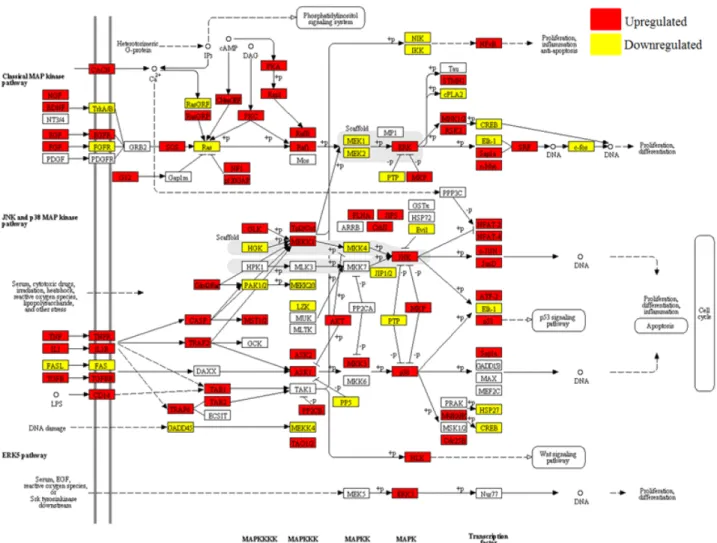
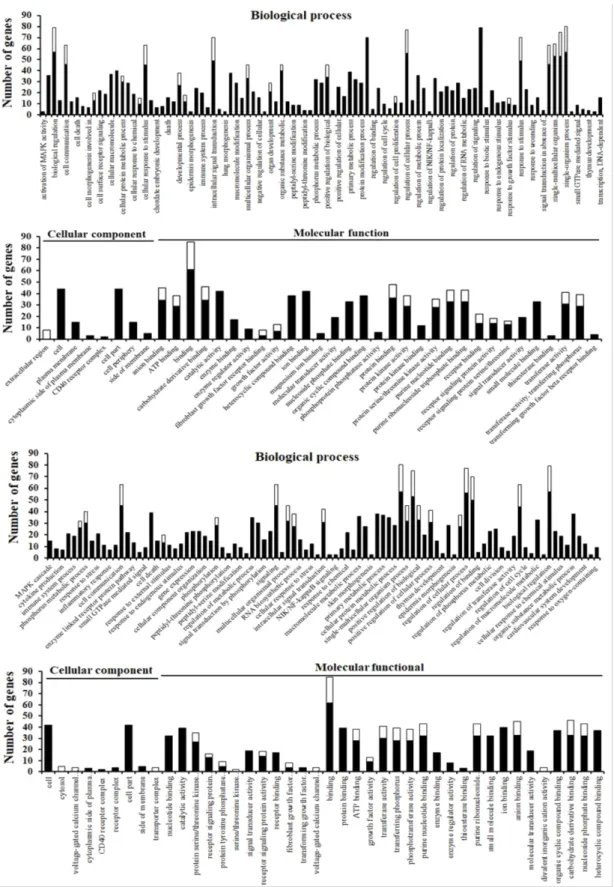
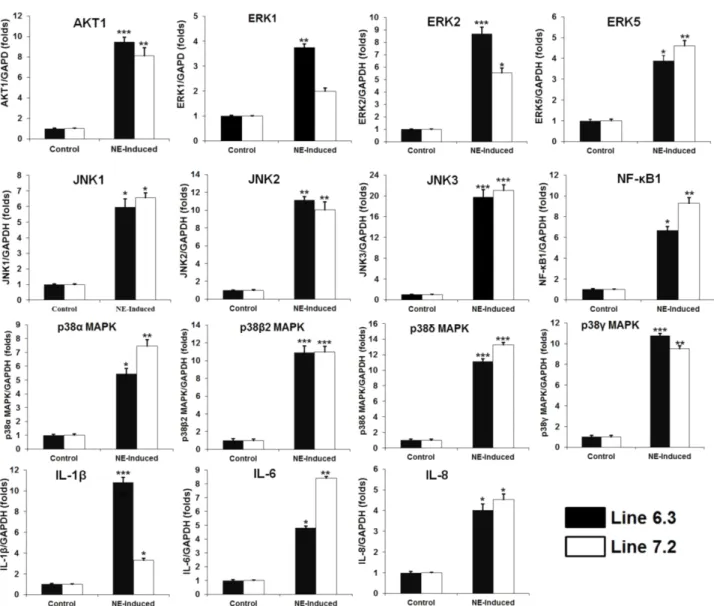
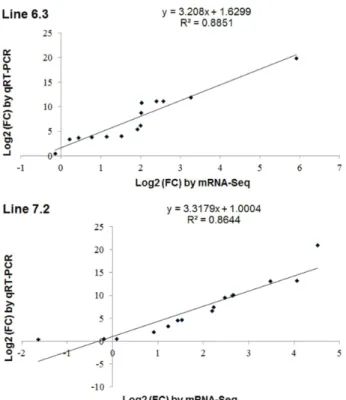
ABSTRACT Mitogen-activated protein kinase (MAPK) signaling pathways play a key role in innate immunity, inflammation, cell proliferation, cell differentiation, and cell death. The main objective of this study was to investigate the expression level of candidate MAPK pathway genes in the intestinal mucosal layer of two genetically disparate chicken lines (Marek’s disease- resistant line 6.3 and Marek’s disease-susceptible line 7.2) induced with necrotic enteritis (NE). Using high-throughput RNA sequencing, we investigated 178 MAPK signaling pathway related genes that were significantly and differentially expressed between the intestinal mucosal layers of the NE-afflicted and control chickens. In total, 15 MAPK pathway genes were further measured by quantitative real-time PCR(qRT-PCR) and the results were consistent with the RNA-sequencing data. All 178 identified genes were annotated through Gene Ontology and mapped onto the KEGG chicken MAPK signaling pathway. Several key genes of the MAPK pathway, ERK1/2, JNK1-3, p38 MAPK, MAP2K1-4, NF-κB1/2, c-Fos, AP-1, Jun-D, and Jun, were differentially expressed in the two chicken lines. Therefore, we believe that RNA sequencing and qRT-PCR analysis provide resourceful information for future studies on MAPK signaling of genetically disparate chicken lines in response to pathogens.
(Key words: chicken, DEG, MAPK pathway, RNA-seq, qRT-PCR)
†