Print ISSN: 1738-3110 / Online ISSN 2093-7717 JDS website: http://www,jds.or.kr/
http://dx.doi.org/10.15722/jds.19.5.202105.23
Time Lost forever: Relational bonds of watch manufacturers with retailers in India
Vibhas AMAWATE
Received: Febrary 15, 2021.Revised: April 20, 2021.Accepted: May 05, 2021.
Abstract
Purpose: This study identifies the critical elements of relationship management required to be studied in distribution sciences to create a relational bond of watch manufacturers with their retailers in India. The offline watch retail market is undergoing a rapid transformation due to technology intervention in the product portfolio and the advent of online retailing. The study identifies the interrelationships amongst the constructs of interdependence, trust, affective commitment, and information exchange to form long-lasting relational bonds in the watch industry. Research design, data and methodology: We used a path analysis to investigate the relationship between interdependence, trust, affective commitment, and information exchange. Data has been collected from 143 watch retailers using judgmental sampling method. Results: The data analysis suggested the establishment of measurement and structural model. The absolute and relative goodness of fit models in the causal analysis are 0.628 and 0.959 suggesting a sufficient fit index. Based on the analysis of direct and indirect effects, the results indicate that trust fully mediates the effect of interdependence and information exchange of retailers with the manufacturer. Conclusions: Trust plays an important role in driving commitment and information exchange between watch manufacturers and retailers. Interdependence in the manufacturer-channel relationships would lead to affective commitment only when trust exists in the relationship. [AMAWATE, Vibhas.] in Web of Science and Scopus).
Keywords: Distribution Science , Relational bonds, Emerging Markets, Information Exchange , Marketing Channels JEL Classification Code: D3,M31, L14
1. Introduction
12As per a report of Statista, the Indian watch market was US$1,329m in 2021 and expected to grow annually by 7.60%
(CAGR 2021-2025). As a few players control most of the organized retail channels (Titan has a 65% market share), it leads to a high market concentration and dependency.
In a competitive market environment firm that has relationships based on trust achieves higher business success. In distribution sciences, it has been suggestedthat
* Acknowledgements (if any): The author would like to thank Mr.
Anupam Mathur, Head of Sales Timex for providing guidance on industry dynamics.
1 VibhasAmawate. Associate Professor, Marketing, Faculty, Indian Institute of Management, Shillong, India
Email: [email protected]
ⓒCopyright: The Author(s)
This is an Open Access article distributed under the terms of the Creative Commons Attribution Non-Commercial License (http://Creativecommons.org/licenses/by-nc/4.0/) which permits unrestricted noncommercial use, distribution, and reproduction in any medium, provided the original work is properly cited.
collaborative relationships based on a high level of trust create relational bonds which improve performance and market competitiveness (Noordewier et al. 1990, Morgan and Hunt 1994, Ganesan 1994). Dependence is critical to understand business relationships, as elucidated in resource dependency and transaction cost theory (Pfeffer and Salancik, 1978; Williamson, 1985). A need exists to change the Transaction cost economics theory to apply in different contexts and situations (Kwon & Mun, 2012).
Relational-oriented exchanges are the hybrid structure that ensures conditions that make it impossible for contracting parties to come out of the relation (Williamson 1985, 1993). Dependence in a relationship can exist with or without trust (Andaleeb, 1995). The relational orientation of business relationships is due to the channel partners' perception of dependence and trust (Ganesan, 1994;
Andaleeb, 1995; Lusch & Brown, 1996). Dependence exerts a weaker influence on information sharing as opposed to trust (Sezen 2007). The existing studies have treated dependency-based governance efforts and trust- based governance efforts as acting independently in driving
behavioral responses from channel partners. The present study suggests that the governance efforts of dependency- based trust impact the relational behavior of information sharing. Information is a vital non-economic resource exchanged in marketing channels; most of the existing academic studies have not explored the role of dependency- based trust in information exchange.
Trust has two elements sincerity-based honesty (Dwyer and Oh 1987; Anderson & Narus 1990; Scheer & Stern 1992) and partner’s benevolence (Deutsch 1958; Larzele &
Houston 1980; Rempel, Homes &Zanna 1985) both drive the information exchange between channel partners.
Existing studies have considered information exchange leading to trust in business relationships (Anderson &
Narus, 1990; Selnes et al., 1996; Kwon and Suh, 2004, 2005; Dubey et al., 2019), they have not explored the nature of trust concerning dependency. In non-relational-oriented exchange, information sharing develops mutual trust in the business relationship. Relational communication consists of the presence and frequency of information sharing and information quality (Agrawal & Narayana, 2020). In non- relational oriented exchanges, the quality of information sharing might be low due lack of contractual mechanisms.
The contractual mechanisms in dependency-based relational-oriented exchange lead to trust. Based on these research streams, this paper is meaningful as it explores trust as an antecedent to information sharing.
Contracts ensure that the businesses interact to define the mechanism for implementation and evaluation of performance. The existing studies have suggested that trust leads to affective commitment in conditions of less contractual mechanism monitoring. Dependence driven by fear of incurring relationship termination costs may lead to commitment (Morgan & Hunt, 1994) and may lead to opportunistic behavior, trust may lower the same. The previous studies have not explored the role of trust as
mediating variable in interdependence and commitment relationships. Therefore this study develops an understanding of creating relational bonds based on trust- based dependence rather than contractual mechanism. A trust-based dependence would lead to collaborations and efforts so that the firm achieves a sustainable competitive advantage.
2. Literature Review
2.1. Theoretical BackgroundThe role of channel structure, power, dependence, information sharing, trust and commitment has been explored in academic literature in distribution sciences.
Channel structure and performance is determined by the way an organisation uses power (Antia, Zheng, & Frazier 2013; El-Ansary & Stern 1972).Power is derived from dependence, in case of power or dependence asymmetry a feeling of unfairness and conflict arises in channel relationships which may impact performance (Kumar, Scheer, & Steenkamp 1998; Koza & Dant 2007; Samaha, Palmatier,& Dant 2011). The Relational norms theory assumes that transactions happen in a context (Heide and John 1992), in case of channel relationship involving contract led dependence, relational norms promote cooperation and reduce environmental uncertainty (Palmatier, Dant, & Grewal 2007; Kaufmann &
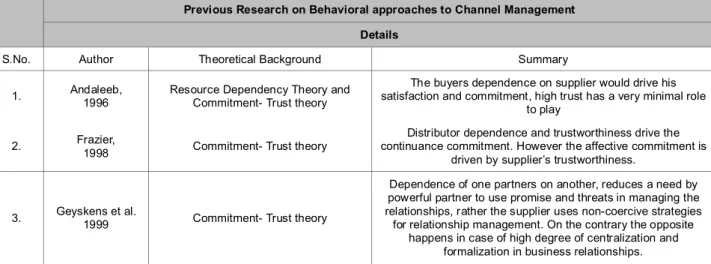
Rangan1990; Kumar, Heide, &Wathne 2011). Commitment – trust theory extends the relational norms theory when power and dependence symmetry exists in channel relationships. The table 1 details the academic studies and the theoretical background.
Table 1: Theoretical Overview of Research on Channel Management
Previous Research on Behavioral approaches to Channel Management Details
S.No. Author Theoretical Background Summary
1. Andaleeb,
1996 Resource Dependency Theory and Commitment- Trust theory
The buyers dependence on supplier would drive his satisfaction and commitment, high trust has a very minimal role
to play
2. Frazier,
1998 Commitment- Trust theory
Distributor dependence and trustworthiness drive the continuance commitment. However the affective commitment is
driven by supplier’s trustworthiness.
3. Geyskens et al.
1999 Commitment- Trust theory
Dependence of one partners on another, reduces a need by powerful partner to use promise and threats in managing the relationships, rather the supplier uses non-coercive strategies
for relationship management. On the contrary the opposite happens in case of high degree of centralization and
formalization in business relationships.
4. Kwon and Suh,
2004 TCE and Social Exchange Theory
Partner’s specific asset investments and behavioral uncertainty improve the level of trust and commitment in supply chain partners. Information sharing reduces behavioral uncertainty.
5. Gao et al., 2005 Social Exchange Theory, Commitment- Trust theory
The buyers’ perception of supplier trust, dependence and commitment drives his trust in the supplier. The buyers perceptions and experience reduce the uncertainty in decision
making process.
6. Yilmaz et al.
2005 Power Dependence and Relational
Marketing Theory Trust has a greater positive impact in highly interdependent dyadic structure
7. Sezen and
Yilmaz 2007 Power Dependence and Relational Marketing Theory
The study empirically validates that both trust and dependence drive the relational behavior-information exchange, flexibility and solidarity. The interdependence in channel relationships
drives the channel member flexibility. The Information exchange happens due to trust in the relationship. Both interdependence and trust are required to develop the solidarity
of channel members.
8. Jiang et al., 2012 Social Exchange theory, Resource Dependency Theory, Commitment-
Trust theory
Interpersonal Trust as opposed to interorganisational power and dependence structures has greater impact on relational consequences. Buyers share confidential information with the
suppliers only when trust exists in the relationship.
9. Wu et al. 2014 Social Exchange Theory Trust, commitment, reciprocity and power are important antecedents of information sharing which lead to a collaborative relationship and better supply chain performance.
10.. Jia et al 2021 Resource Dependency Theory
Trust in channel relationship increases when there is a mutual dependence. In case of dependence asymmetry either in manufacturer-channel relationship, the perception of support
decreases impacting the level of trust in the relationship.
2.2. Interdependence
Emerson (1962) identified the dependence-power relationship, leading to emergence of dependence as a critical element in business relationship management (e.g.
El-Ansary & Stern, 1972; Brown et al., 1983; Andaleeb, 1995). Most of the early studied focused on power based dependency in channel relationships (Frazier & Rody; 1991;
Casciaro & Piskorski 2005). Dependence in any inter- organizational relationships is defined as the degree to which the target firms needs to be in a relationship with the source firm for achievement of its goals (Frazier, 1983;
Kale, 1986; Frazier et al., 1989). Interdependence defines the inter-relationships between the organizations (Kumar et al., 1995) which impacts the relational measures of commitment and cooperation (Scheer et al., 2015; Ming et al., 2014) and performance (Andaleeb, 1996; Kim, 2000).
Perceptions of interdependence are formed due to importance or criticality of resources owned by source firm and choices to look for an alternative with the target firm (Andaleeb, 1995). Information is a critical resource owned by the source firm, information sharing happens in a dependence based relationship due to contractual
mechanism. In dependence relationships which have trust at the core there is stability which drives integrative behavior (Andaleeb, 1995). Previous academic studies have established that interdependence enhances relational outcomes and firm performance, as both the partners work towards achieving their mutual goals and avoid any destructive actions (Kumar et al., 1995; Hibbard et al., 2001).
2.3. Trust
In channel relationships, reduction of risk and minimization of uncertainty are two important aspects, trust mediates the successful relationship between buyer and seller (Morgan and Hunt 1994). Interfirm benevolence is an important competitive factor in environmentally uncertain conditions (Kim, 2019). Trust is defined as ones belief about the motives or intent of another party so that the trusting parties achieve positive outcomes as they believe in mutual honesty and benevolence (Barber, 1983; Butler &
Cantrell, 1984; Luhmann, 1979; Pruitt, 1981; Rempel &
Holmes, 1986; Anderson & Narus, 1990; Ring & Van De Ven 1992). Culture and nature of governance structure
(degree of centralization and formalization) impact the trust in manufacturer-channel relationship (Dwyer & Oh, 1987;
Gronhaug and Haugland, 1988; Dahlstrom and Nygaard, 1995 a,b). Power Asymmetry in dependence based relationships could impact trust (Anderson & Weitz, 1989) which could be negated if the distributive and procedural fairness exists in the manufacturer-channel relationship (Kumar et al., 1995a). Trust based dependence would lead to cooperative behavior in channel relationships (Lewicki &
Litterer, 1985; Anderson & Narus, 1990; Skinner, Gassenheimer, & Kelley, 1992; Ming et al. 2014).
2.4. Commitment
Relational behavior driven by dependence basedrelationship formulated based on contractual mechanism may lead to contractual commitment (Rese &
Roemer, 2004). Contractual commitment is defined as degree to which the entities in the manufacturer-channel relationships adhere to the contract and assume responsibility of the contract (Jia et al., 2014). Contractual commitment has found to increase information sharing (Jia et al., 2014), however collaborative information exchange might not happen. One view of commitment treats it as an affective state of mind and another as a behavioral calculative relationship (Johnson et al., 2001; Gustafsson, Johnson, & Roos 2005). Calculative relationships are contractual or might involve investments and related switching costs (Gundlach, Achrol, & Mentzer, 1995;
Gilliland & Bello 2002, p. 28). Dependency based relationships may involve contractual and/or calculative commitment. Affective commitment is defined as relationship based on social and psychological investments rather than financial aspects; it creates feelings of identification, loyalty, and affiliation amongst the exchange partners. Dependency based relationship leads to affective commitment if trust exists in the relationship.
2.5. Information Exchange
Knowledge management and IT systems have lead to greater information sharing in the channel relationships (Cho et al. 2012). The academic literature in the area of channel relationships has identified communication as an antecedent to trust (Anderson & Weitz, 1989; Stern & El – Ansary 1988; Anderson & Narus 1990; Morgan & Hunt 1994).Relational Communication involves information sharing, quality of information and frequency (Agrawal &
Narayana 2020). If trust is absent then the target may view the information influence strategies suspiciously and message may be distorted (Jonson & Zineldin, 2003). In case of dependence based relationships, effective information exchange can happen only when trust is present in the relationship.
3. Hypothesis Development
3.1. Interdependence and TrustExtant research denotes a central role to the notion of interdependence, i.e. joint dependence (Emerson, 1962;
Kumar et al.,1995). A high and symmetric interdependence structure is critical for the emergence of trust, commitment, and relational behaviors (Kumar et al., 1995; Lusch &
Brown, 1996). Interrelationships between dependence and trust are complex, intertwined and have temporal interplay (Sanner, 2005). The dependence structure in a channel relationship represents the “present or existing conditions”
(Ganesan, 1994). Interdependence structure positively guides the intensity of total interdependence and trust (Kumar et al., 1995). Hence, “In summarizing we can say that the trust is formed by interdependence” (Bagdoniene &
Hopeniene, 2013). Also, in organizations with a strong sense of mutual dependence and importance developed cooperative goals development of trusting relationships happens (Wong et al., 2005; Jowett & Nezlek, 2012).
Thus we propose the following hypothesis:
H1: Higher interdependence increases trust of watch retailers toward the manufacturers.
3.2. Trust and Commitment
Relational satisfaction in channel relationships leads to commitment (Yang et al., 2010). In recent times, trust and/or commitment has replaced satisfaction as the focal consequence of channel relationships (Anderson & Weitz, 1989; Anderson &Weitz, 1992; Morgan & Hunt, 1994).
Trust and commitment are important constructs for relationship development (Dwyer et al., 1987). Trust based commitment defines the relational quality (Tran et al., 2020). Researchers in B2B marketing are unanimous, that trust is paramount to the sustainability of the supplier-buyer relationships and requires more in-depth research (McAllister, 1995). Trust has a positive effect on commitment (Dwyer et al., 1987; Geyskens et al., 1999;
Morgan & Hunt, 1994; Lyu & Yang, 2013). The operationalizations primarily reflect affective commitment (Geyskens et al., 1996). Studies have identified affective commitment centrality in achieving positive relationship outcomes (Cater & Zabkar, 2009) and in increasing a business partner’s intention to stay in the relationship (Anderson & Weitz, 1989; Morgan & Hun, 1994; Andaleeb, 1996).
Thus we propose the following hypothesis:
H2: Retailers that trust the manufacturers show more affective commitment towards manufacturers.
3.3. Trust, Interdependence and Commitment Higher interdependence between the partners had a positive effect on affective commitment (Anderson & Weitz, 1989;Geyskens et al., 1996; Houweling, 2011;Kumar et al., 1995; Yang & Lee, 2014).Further, this study has attempted to understand the role of trust when introduced in whole dynamics. Dependence played a role in determining long- term orientation, but it was insufficient to explain it (Ganesan, 1994). In this context, it is critical to note that out of interdependence and trust, trust has a higher effect on affective commitment, and in the absence of trust; affective commitment is unlikely to be created (Geyskens et al., 1996).
Hence, based on the concept of path analysis (mediation effect), trust may be analyzed as a construct potentially mediating the relationship between interdependence and affective commitment. The logic of temporal precedence is relevant in this context. Relationships evolve over five general phases’: awareness, exploration, expansion, commitment, and dissolution (Dwyer et al., 1987). While the honesty component of trust forms during the exploration phase, the rudiments of benevolence establish themselves until the expansion phase. Commitment does not fully develop until relationships enter the fourth phase.
Hence, trust positively affects commitment.
Interdependence forms during the relationship while trust forms in the future indicated that interdependence precedes commitment (Sanner, 2005).
In business relations in which trust is high, the buyer's commitment is high regardless of its level of dependence on the supplier. Commitment is also significantly higher in the high-trust low-dependence than in the low-trust high- dependence relationships (Andaleeb, 1996).
Thus we propose the following hypothesis:
H3: Trust mediates the impact of the retailer's interdependence on its influential commitment to the manufacturer.
3.4. Trust and Information Exchange
Over the recent years, business marketing researchers put forth a compelling argument for buyers and sellers to develop closer relationships for more information sharing between them. The flow of information is at the heart of the supply chain concept (Thomas et al., 2010). In this integrated discussion context, the role of a construct like information exchange, which is among a workable core set of important relational behaviors (Lusch & Brown, 1996), is also very relevant.
Trust is one among six variables as potential antecedents of information exchange (Moberg et al., 2002). Trust in the partner is an important determinant of information exchange (Morgan and Hunt, 1994).
Thus we propose the following hypothesis:
H4: Trust increases the likelihood that information will be exchanged.
3.5. Trust, Interdependence and Information Exchange
Greater interdependence magnitude (mutual dependence) increases the distributor’s willingness to share strategic information with the manufacturer (Va´zquez-Casielles &
Iglesias, 2013). Supply chain members are often reluctant to share information, trust is a vital factor driving information exchange (Moberg et al., 2002). It suggests a potential impact of trust as a mediating variable. The amount of information exchanged between channel members impacts the strength of the relationship between the manufacturer- retailer (Moberg et al., 2002). Trust is an essential element of stronger relationships (Morgan & Hunt, 1994; Moorman et al., 1992). The influence of trust in suppliers on information exchange was more than the effect of dependence (Sezen & Yilmaz, 2007).
Thus we propose the following hypothesis:
H5: Trust mediates the effect of interdependence on the level of exchange of information between the retailer and the manufacturer
3.6. Research Model
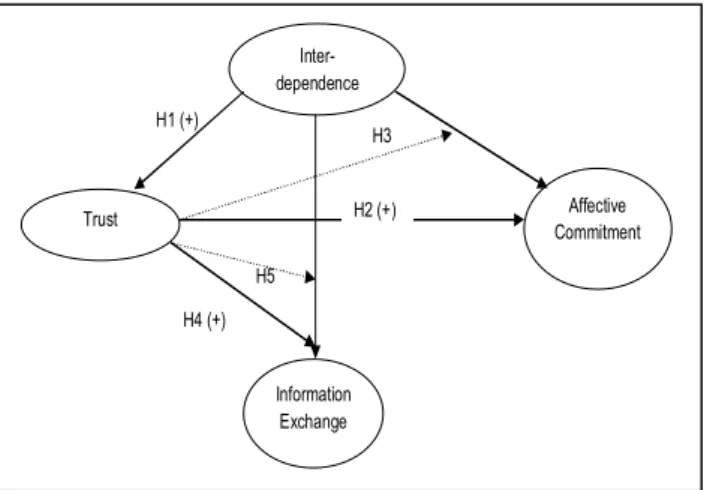
Based on the hypothesis, the research model is described as follows. Trust plays a mediating role in the Interdependence- Affective commitment (H3) and Interdependence-information exchange relationship (H5).
Figure 1: Proposed Model of relationship between Trust, Inter-dependence, affective commitment and Information
Exchange
H5
H2 (+) H3
H4 (+) H1 (+)
Inter- dependence
Affective Commitment Trust
Information Exchange
4. Research Methods and Materials
4.1. Research Design and MeasurementThe watch retailing in India is done by traditional method (shops selling watches along with other household products) and also in modern trade (shopping malls). The survey was conducted to cover the view and opinions of all multi-brand watch retailers selling in traditional and
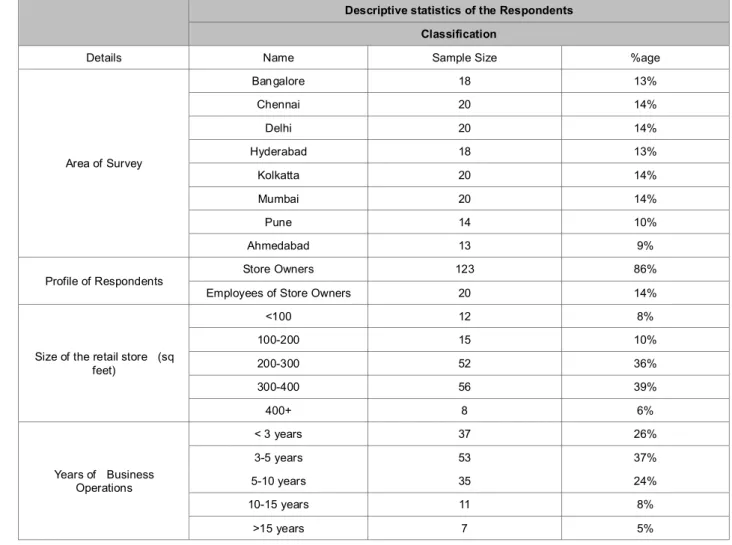
modern trade formats. A face to face interview was conducted with either the store owner or the key employee/manager of the store. The data for the research study was collected using judgmental sampling during the period March - July 2019 from watch stores located in the eight Indian cities. In all 163 watch retailers were contacted out of which 143 were selected due to complete survey responses provided by them.
Table 2: Sample Size and Distribution
Descriptive statistics of the Respondents Classification
Details Name Sample Size %age
Area of Survey
Bangalore 18 13%
Chennai 20 14%
Delhi 20 14%
Hyderabad 18 13%
Kolkatta 20 14%
Mumbai 20 14%
Pune 14 10%
Ahmedabad 13 9%
Profile of Respondents Store Owners 123 86%
Employees of Store Owners 20 14%
Size of the retail store (sq feet)
<100 12 8%
100-200 15 10%
200-300 52 36%
300-400 56 39%
400+ 8 6%
Years of Business Operations
< 3 years 37 26%
3-5 years 53 37%
5-10 years 35 24%
10-15 years 11 8%
>15 years 7 5%
4.2. Generation of Scale Items
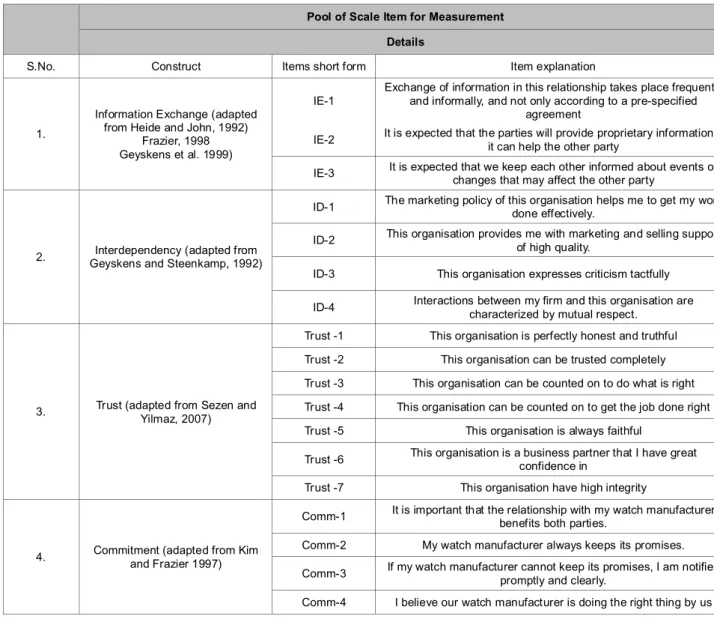
A literature review was done of the previous research on constructs of trust, commitment, interdependence and information exchange, basis which the scale items were compiled. The total number of items produced was 18 items.
Each item is given a scale of 1 to 7, where a scale of 1
shows strongly disagree, and 7 shows strongly agree. A pretest was conducted among 30 respondents, a reliability analysis was performed, any item with an item-to-total value below 0.30 was deleted, based on the suggestions received in the pilot study, the questionnaire was adapted before using it for data collection. The overall results of items that have been tested are shown in Table 3.
Table 3: Constructs, Items and Sources
Pool of Scale Item for Measurement Details
S.No. Construct Items short form Item explanation
1.
Information Exchange (adapted from Heide and John, 1992)
Frazier, 1998 Geyskens et al. 1999)
IE-1
Exchange of information in this relationship takes place frequently and informally, and not only according to a pre-specified
agreement
IE-2 It is expected that the parties will provide proprietary information if it can help the other party
IE-3 It is expected that we keep each other informed about events or changes that may affect the other party
2. Interdependency (adapted from Geyskens and Steenkamp, 1992)
ID-1 The marketing policy of this organisation helps me to get my work done effectively.
ID-2 This organisation provides me with marketing and selling support of high quality.
ID-3 This organisation expresses criticism tactfully
ID-4 Interactions between my firm and this organisation are characterized by mutual respect.
3. Trust (adapted from Sezen and Yilmaz, 2007)
Trust -1 This organisation is perfectly honest and truthful Trust -2 This organisation can be trusted completely Trust -3 This organisation can be counted on to do what is right Trust -4 This organisation can be counted on to get the job done right Trust -5 This organisation is always faithful
Trust -6 This organisation is a business partner that I have great confidence in
Trust -7 This organisation have high integrity
4. Commitment (adapted from Kim and Frazier 1997)
Comm-1 It is important that the relationship with my watch manufacturer benefits both parties.
Comm-2 My watch manufacturer always keeps its promises.
Comm-3 If my watch manufacturer cannot keep its promises, I am notified promptly and clearly.
Comm-4 I believe our watch manufacturer is doing the right thing by us
5. Results and Discussion
The causal relationship in the assumed mediation process, the simultaneous nature of indirect and direct effects, and the dual roles played by the arbitrator on both the results and effects of the intervention are more appropriately represented using structural equation modeling (SEM).
A Partial Least Squares path modeling (PLPSM) is used as opposed to covariance-based structural equation modeling (CBSEM), as it is more beneficial for (1) testing theories and analyzing structural relationships among latent constructs (2) dealing with sample size limitations and non- normal data (3) analyzing complex models that have
'formative' and 'reflective' latent constructs and (4) analyzing models with higher-order molar and molecular constructs.
The PLPSM framework has two inter-related models a) the measurement model which describes the assignment of the observed items (or indicators) to each unobserved construct and b) the structural model which describes the relationship between the construct. In a reflective construct, the items are assumed to reflect the variation in the construct, thus a change in construct is manifested in the items, in formative construct, it is assumed that the observed items represent different dimensions of the construct so the items would not be correlated to each other.
The dataset is consisting of eighteen manifest variables observed on 143 watch retailers in India. The retailers rated
on a 7 point Likert scale ranging from Strongly Agree to Strongly Disagree. The structural model for this dataset of understanding the information exchange amongst the retailers consists of one latent endogenous variable Information Exchange and three latent exogenous variables of interdependence, trust and commitment.
5.1. Measurement Model
The item loadings were large enough and statistically significant. The composite reliability coefficients (D.G.Roh) were all above the suggested level of 0.7 indicating internal consistency. Convergent validity was exhibited as AVE value is higher than 0.5 except for trust, however as convergent reliability is more than 0.6 the construct is adequate (Fornell & Larcker 1981).
Table 4: Results of Confirmatory Factor Analysis Constructs and Items consistency and validity
Details
Construct Items Loadings CR AVE
Information Exchange
IE-1 0.783
0.799 0.578
IE-2 0.785
IE-3 0.711
Interdependency
ID-1 0.514
0.842 0.578
ID-2 0.830
ID-3 0.818
ID-4 0.831
Trust
Trust -1 0.703
0.839 0.452 Trust -2 0.498
Trust -3 0.688 Trust -4 0.746 Trust -5 0.583 Trust -6 0.727 Trust -7 0.724
Commitment
Comm-1 0.737
0.902 0.686
Comm-2 0.874
Comm-3 0.820
Comm-4 0.875
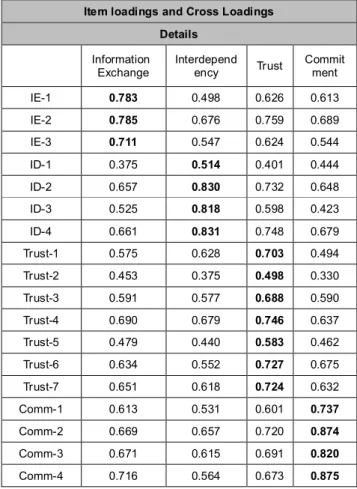
Face Validity exists as all the items were selected based on previous work done to explain these construct. The item loading of a variable on its own construct is higher than that on other construct thus showing that there is some construct validity. Multicollinearity does not exist with an exception of few variables thus reflecting that the measurement model is valid..
Table 5: Factor Loadings
Item loadings and Cross Loadings Details
Information Exchange
Interdepend
ency Trust Commit
ment
IE-1 0.783 0.498 0.626 0.613
IE-2 0.785 0.676 0.759 0.689
IE-3 0.711 0.547 0.624 0.544
ID-1 0.375 0.514 0.401 0.444
ID-2 0.657 0.830 0.732 0.648
ID-3 0.525 0.818 0.598 0.423
ID-4 0.661 0.831 0.748 0.679
Trust-1 0.575 0.628 0.703 0.494
Trust-2 0.453 0.375 0.498 0.330
Trust-3 0.591 0.577 0.688 0.590
Trust-4 0.690 0.679 0.746 0.637
Trust-5 0.479 0.440 0.583 0.462
Trust-6 0.634 0.552 0.727 0.675
Trust-7 0.651 0.618 0.724 0.632
Comm-1 0.613 0.531 0.601 0.737
Comm-2 0.669 0.657 0.720 0.874
Comm-3 0.671 0.615 0.691 0.820
Comm-4 0.716 0.564 0.673 0.875
5.2. Structural Model
The partial correlation between the variables is less than 0.5 and R2 for the endogenous variable is more than 0.1.
Thus the structural model is also valid for interpretation and analysis. The absolute and relative goodness of fit models are 0.628 and 0.959 indicating an adequate model
Table 6: Mediation Analysis Hypothesis Testing Direct and Indirect Effects
Details
Path Direct Indirect Total
Interdependence to Trust 0.828 0.828
Interdependence to Commitment 0.142 0.575 0.717
Trust to Commitment 0.695 0.695
Trust to Information Exchange 0.627 0.195 0.821 Interdependence to Information
Exchange 0.019 0.720 0.739
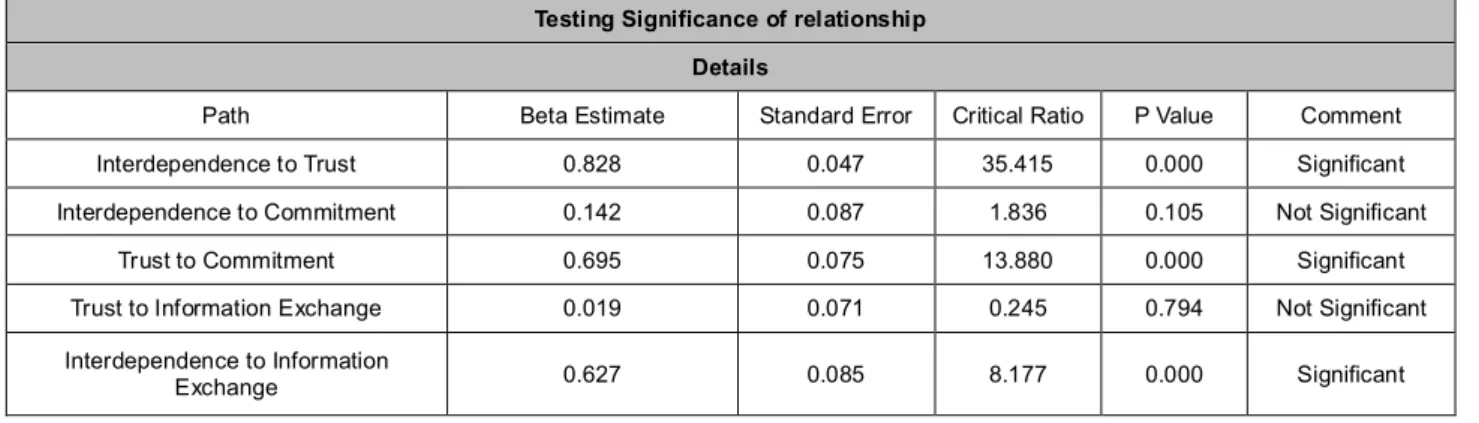
Table 7: Results of Partial Least Square Structural Equation Modeling
Testing Significance of relationship Details
Path Beta Estimate Standard Error Critical Ratio P Value Comment
Interdependence to Trust 0.828 0.047 35.415 0.000 Significant
Interdependence to Commitment 0.142 0.087 1.836 0.105 Not Significant
Trust to Commitment 0.695 0.075 13.880 0.000 Significant
Trust to Information Exchange 0.019 0.071 0.245 0.794 Not Significant
Interdependence to Information
Exchange 0.627 0.085 8.177 0.000 Significant
Table 8: Results of Hypothesis Testing
Summary of Hypothesis Testing Details
Hypothesis Comment
H1: Higher interdependence increases trust among retailers toward the manufacturers
This hypothesis is established as the path coefficient is 0.828 and the relationship is significant
H2: Retailers that trust the manufacturers show more affective
commitment towards manufacturers This hypothesis is established as the path coefficient is 0.695 and the relationship is significant
H3: Trust mediates the effect of interdependence on the affective commitment of retailer towards the manufacturer
The hypothesis 1 and 2 detailed earlier are clearly established additionally the direct effect coefficient (0.142) is lower than the indirect effect (0.575), however the relationship between interdependence and commitment is not significant indicating the full mediation of trust, hence the hypothesis is supported
H4: Trust increase the likelihood that information will be
exchanged This hypothesis is established as the path coefficient
is 0.627 and the relationship is significant
Hypothesis 5: Trust mediates the effect of interdependence on the level of exchange of information between the retailer and the
manufacturer
The hypothesis 3A and 3B detailed earlier are clearly established additionally the direct effect coefficient (0.019) is lower than the indirect effect (0.720), however the relationship between interdependence and information is not significant, indicating the full mediation of trust, hence the hypothesis is supported
5.3. Discussion
The study addresses the research gap by empirically validating and theoretical developing on the role of trust in manufacturer-retailer relationships. The dependence of channel members on the manufacturer leads to a reciprocal exchange of information only when trust exists in the relationship. The study expands the academic knowledge of the relationship between trust and commitment; it also expands and validates the findings of the study done by Morgan and Hunt that the presence of trust and relationship commitment was central to successful relationship
marketing. Higher dependence in manufacturer-retailer relationships leads to greater trust, leads to affective commitment, and stronger social relationship bonds.
6. Conclusions
This study has high relevance in the present market situation. The study looks at the concerned channel relationships in a not so frequently studied watch category (where the practice of reciprocal exchange exists) and in an
emerging market context like India. As the category complexity is rising due to increased usage of technology and greater consumer exhibitionism, a need exists to look at the elements of social exchange theory to build long-lasting relationships. The findings of the study enhance the understanding of the role played by trust in business relationships. The presence of trust makes the dependence between both manufacturer and retailer beneficial to both, it leads to a relationship based on reciprocity. The study also empirically proves that trust-based dependence is critical for sharing information between the manufacturer and retailer. A better sharing of information between the manufacturer and retailer can lead to a strategic competitive advantage for the manufacturer as they can cater to consumer demands in a more time-cost effective manner. It leads to a reduction in time to market of product and services.
7. Managerial Implications and Future Research Directions
The watch manufacturers enjoy positive perception amongst the retailers on the analyzed four constructs. From the analysis of these ratings, watch manufacturers can devise strategies to enhance scores on items (of constructs) where the scores are marginally lower. Marketers specifically need to ensure that the exchange of information in the relationship takes place frequently. Marketers need to put more effort, to transform the interactions from transactional level to more relationship-based (mutual respect based) interaction. The changing market and consumer dynamics would require a trust-based interdependence in the relationship to drive the exchange process. Marketers need to focus on co-creation with channel partners. The watch manufacturers also need to focus on picking the right set of people with similar value systems as channel partners. They need to provide quality training opportunities and reward and recognition opportunities to the staff of channel partners.
High trust and affective commitment scores of watch manufacturers are due to greater transparency and quality of products. Marketers are developing connections with the retailers to keep them loyal and engaged. The manufacturers need to provide retailers with information on new products and services besides rewarding them for loyalty.
The study focuses only on watch retailers, future research can look at retailers of different product categories.
Future studies can explore the role of adaption on the constructs relating to dependence and information sharing.
Future studies can also look to cover retailers located in smaller towns and cities of India.
References
Agarwal, U., &Narayana, S. A. (2020). Impact of relational communication on buyer–supplier relationship satisfaction:
role of trust and commitment. Benchmarking: An International Journal. https://doi.org/10.1108/BIJ-05- 2019- Andaleeb, S. S. (1995). Dependence relations and the moderating 0220
role of trust: Implications for behavioral intentions in marketing channels. International Journal of Research in Marketing, 12(2), 157 – 172
Andaleeb, S. S. (1996). An Experimental Investigation of Satisfaction and Commitment in Marketing Channels: The Role of Trust and Dependence. Journal of Retailing, 72(1), 77-93
Anderson, E., and Barton. W. (1989). Determinants of Continuity in Conventional Industrial Channel Dyads. Marketing Science, 8 (Fall), 310-23.
Anderson, E., and Barton, W. (1992). The Use of Pledge to Build and Sustain Commitment in Distribution Channel. Journal of Marketing Research, 29 (February), 18-39
Anderson, J. C., and Narus, J. A. (1990). A Model of Distributor Firm and Manufacturer Firm Working Partnerships. Journal of Marketing Research, 54 (January), 42-58.
Antia, K. D., Zheng, X., & Frazier, G. L. (2013). Conflict management and outcomes in franchise relationships: the role of regulation. Journal of Marketing Research, 50(5), 577-589.
Bagdoniene, L., and Hopeniene, R. (2013). Interdependence and Trust in Business Relationships Development: the Differences of Lithuanian Professional Services Providers’ and Clients’
Approaches. International Journal of Services Economics and Management, 24 (2), 160-168
Barber, B. (1983). The logic and limits of trust. New Brunswick, N.J. : Rutgers University Press
Brown, J. R., Lusch, R. F., & Muehling, D. D. (1983). Conflict and power-dependence relations in retailer–supplier channels.
Journal of Retailing, 59, 53 – 80
Butler Jr, J. K., & Cantrell, R. S. (1984). A behavioral decision theory approach to modeling dyadic trust in superiors and subordinates. Psychological reports, 55(1), 19-28.
Casciaro, T., & Piskorski, M. J. (2005). Power imbalance, mutual dependence, and constraint absorption: A closer look at resource dependence theory. Administrative science quarterly, 50(2), 167-199.
Cater, B., and V. Zabkar (2009). Antecedents and consequences of commitment in marketing research services: the client’s perspective. Industrial Marketing Management, 38(7),785-797 Cho, J. S.,& Kim, B. Y. (2011). Knowledge Management Strategy
of a Franchise Business: The Case of a Paris Baguette Bakery.
Journal of Distribution Science, 10(6), 39-53.
Dahlstrom, R., & Nygaard, A. (1995a). An exploratory investigation of interpersonal trust in new and mature market economies. Journal of retailing, 71(4), 339-361.
Deutsch, M. (1958). Trust and suspicion. Journal of conflict resolution, 2(4), 265-279.
Dubey, R., Gunasekaran, A., Childe, S. J., Roubaud, D., Wamba, S.
F., Giannakis, M., & Foropon, C. (2019). Big data analytics and organizational culture as complements to swift trust and collaborative performance in the humanitarian supply
chain. International Journal of Production Economics, 210, 120-136.
Dwyer, F.,Schurr, R. P. H., and Oh, S. (1987). Developing Buyer-Seller Relationships. Journal of Marketing, 51 (April), 11-27.
El-Ansary, A. I., & Stern, L. W. (1972). Power measurement in the distribution channel. Journal of Marketing research, 9(1), 47-52.
Emerson, R. M. (1962). Power-Dependence Relations. American Sociological Review, 27 (February), 31-41.
Fornell, C., and Larcker, D. (1981). Evaluating structural equation models with unobservable variables with measurement errors.
Journal of Marketing Research, 18(February), 39‐50.
Frazier, G. L. (1983). Interorganizational exchange behavior in marketing channels: a broadened perspective. Journal of marketing, 47(4), 68-78.
Frazier, G. L., Gill, J. D., & Kale, S. H. (1989). Dealer dependence levels and reciprocal actions in a channel of distribution in a developing country. Journal of marketing, 53(1), 50-69.
Frazier, G. L., & Rody, R. C. (1991). The use of influence strategies in interfirm relationships in industrial product channels. Journal of marketing, 55(1), 52-69.
Ganesan, S. (1994). Determinants of Long-Term Orientation in Buyer-Seller Relationships. Journal of Marketing, 58(April), 1-19
Gao, T., Sirgy, M. J., & Bird, M. M. (2005). Reducing buyer decision-making uncertainty in organizational purchasing: can supplier trust, commitment, and dependence help?. Journal of Business Research, 58(4), 397-405.
Geyskens, I. J., Steenkamp, B. E. M., and Kumar, N. (1999). A Meta Analysisof Satisfaction in Marketing Channel Relationships.
Journal of Marketing Research, 36(May),.223-238
Grönhaug, K., & Haugland, S. A. (1988). Perceived Trust and Formalization in International Market Relationships.
In Proceedings of the 17th Annual Conference of the European Marketing Academy (pp. 248-69). Bradford, England: European Marketing Academy.
Heide, J. B., & John, G. (1992). Do norms matter in marketing relationships?. Journal of marketing, 56(2), 32-44.
Hibbard, J. D., Kumar, N., & Stern, L. W. (2001). Examining the impact of destructive acts in marketing channel relationships. Journal of marketing research, 38(1), 45-61.
Houweling, J. C. (2011). Effects of trust and interdependence on relationship commitment: a study within a service supply chain (Master's thesis, Open Universiteit Nederland).
Jia, F., Cai, S., & Xu, S. (2014). Interacting effects of uncertainties and institutional forces on information sharing in marketing channels. Industrial Marketing Management, 43(5), 737-746.
Jiang, Z., Henneberg, S. C., & Naudé, P. (2012). Supplier relationship management in the construction industry: the effects of trust and dependence. Journal of Business &
Industrial Marketing, 27(1), 3-15.
Johnson, M. D., Gustafsson, A., Andreassen, T. W., Lervik, L., &
Cha, J. (2001). The evolution and future of national customer satisfaction index models. Journal of economic Psychology, 22(2), 217-245.
Jowett, S., and Nezlek, J. (2012). Relationship interdependence and satisfaction with important outcomes in coach-athlete dyads. Journal of Social and Personal Relationships, 29 (3),
May, 287-301
Kale, S. H. (1986). Dealer perceptions of manufacturer power and influence strategies in a developing country. Journal of Marketing Research, 23(4), 387-393.
Kaufmann, P. J., and V. K. Rangan (1990). A Model for Managing System Conflict During Franchise Expansion. Journal of Retailing 66(2), 155–173
Kim, K. (2000). On interfirm power, channel climate, and solidarity in industrial distributor-supplier dyads. Journal of the Academy of Marketing Science, 28(3), 388-405.
Kim, K., & Frazier, G. L. (1997). On distributor commitment in industrial channels of distribution: a multicomponent approach. Psychology & Marketing, 14(8), 847-877.
Kim, M. J. (2019). Marketing Environment and governance mechanisms: Focusing on Manufacturer's Interfirm Benevolence. The Journal of Industrial Distribution &
Business, 10(1), 51-58.
Koza, K. L., & Dant, R. P. (2007). Effects of relationship climate, control mechanism, and communications on conflict resolution behavior and performance outcomes. Journal of Retailing, 83(3), 279-296.
Kumar, N., Scheer, L.K., and Steenkamp, J.B. E.M. (1995). The Effect of Perceived Interdependence on Dealer Attitudes.
Journal of Marketing Research, 32(3), 348-356
Kumar, N., Scheer, L. K., & Steenkamp, J. B. E. (1998).
Interdependence, punitive capability, and the reciprocation of punitive actions in channel relationships. Journal of Marketing Research, 35(2), 225-235.
Kumar, A., Heide, J. B., & Wathne, K. H. (2011). Performance implications of mismatched governance regimes across external and internal relationships. Journal of Marketing, 75(2), 1-17.
Kwon, Y. S., & Mun, J. S. (2012). A Conceptual Review of the Transaction Costs within a Distribution Channel. The Journal of Distribution Science, 10(2), 29-41.
Kwon, I. W. G., & Suh, T. (2004). Factors affecting the level of trust and commitment in supply chain relationships. Journal of supply chain management, 40(1), 4-14.
Kwon, I. W. G., and Suh, T. (2005). Trust, Commitment and Relationships in Supply Chain Management: A Path Analysis.
Supply Chain Management: An International Journal, 10, 26–
33.
Larzelere, R. E., and Huston, T. L. (1980). The Dyadic Trust Scale:
Toward Understanding Interpersonal Trust in Close Relationships. Journal of Marriage and the Family, August, 595-604.
Lee, H., Yi, H. T., & Son, M. (2020). The Effect of Relationship Incompatibility on Relationship Termination Intention in B2B Transaction. The Journal of Distribution Science, 18(4), 51-60.
Lewicki, R. J., and Litterer, J. A. (1985). Negotiations. Irwin, Homewood, Il.
Lohtia, R., Bello, D. C., & Porter, C. E. (2008). Building trust in US–Japanese business relationships: Mediating role of cultural sensitivity. Industrial Marketing Management, 38(3), 518–527 Luhmann, N. (1979). Trust and Power. Chichester. UK: John
Wiley & Sons.
Lusch, R.F., & Brown, J.R. (1996). Interdependency, Contracting, and Relational Behavior in Marketing Channels. Journal of Marketing, 60(October), 19-38
Lyu, M. K., & Yang, H. C. (2013). The Effect of Trust and Justice on Relation Satisfaction and Long-term Commitment in Franchise Business. The Journal of Distribution Science, 11(1), 25-34.
Manolis, C., Dahlstrom, R., & Nygaard, A. (1995b). A preliminary investigation of ownership conversions in franchised distribution systems. Journal of Applied Business Research (JABR), 11(2), 1-8.
McAllister, D. J. (1995). Affect-and cognition-based trust as foundations for interpersonal cooperation in organizations.
Academy of management journal, 38(1), 24-59.
Mehta, R., Anderson, R.E. A., Dubinsky, J., Mazur, J., and Polsa, P.(2011). Managing Channel Partner Relationships: A Cross National Study. Journal of Global Marketing, 24, 105- 124 Ming, Y., Grabot, B., & Houé, R. (2014). A typology of the
situations of cooperation in supply chains. Computers &
Industrial Engineering, 67, 56-71.
Moberg, C.R., Cutler, B.D., Gross, A., and Speh, T.W. (2002).
Identifying antecedents of information exchange within supply chains. International Journal of Physical Distribution &
Logistics Management, 32(9/10),755 - 770
Moorman, C., Zaltman, G., and Deshpande, R. (1992).
Relationships between Providers and Users of Market Research:
The Dynamics of Trust within and between Organizations.
Journal of Marketing Research, 29(Aug.), 314-329.
Morgan, R.M., and Hunt, S. (1994). The Commitment-Trust Theory of Relationship Marketing. Journal of Marketing, 58(July), 20-38.
Nevins, J.L., and Money,R.B. (2008). Performance implications of distributors effectiveness, trust and culture in import channels of distribution. Industrial Marketing Management, 37,.46-58 Noordewier, T. G., John, G., & Nevin, J. R. (1990). Performance
outcomes of purchasing arrangements in industrial buyer- vendor relationships. Journal of marketing, 54(4), 80-93.
Palmatier, R. W., Dant, R.P., Grewal, D., and Evans, K.R. (2006).
Factors influencing the Effectiveness of Relationship Marketing: A Meta Analysis. Journal of Marketing, 70 (October), 136-153
Palmatier, R. W., Dant, R. P., & Grewal, D. (2007). A comparative longitudinal analysis of theoretical perspectives of interorganizational relationship performance. Journal of marketing, 71(4), 172-194.
Pruitt, D. G. (1981). Negotiation Behavior. New York: Academic.
Rempel, J. K., & Holmes, J. G. (1986). How do i trust thee-trust is one of the most important and necessary aspects of any close relationship-by taking this trust test you can count the ways and understand the whys. Psychology today, 20(2), 28.
Rese, M., & Roemer, E. (2004). Managing commitments and flexibility by real options. Industrial Marketing Management, 33(6), 501-512.
Ring, P. S., & Van de Ven, A. H. (1992). Structuring cooperative relationships between organizations. Strategic management journal, 13(7), 483-498.
Salancik, G. R., & Pfeffer, J. (1978). A social information processing approach to job attitudes and task design. Administrative science quarterly, 23(2), 224-253.
Samaha, S. A., Palmatier, R. W., & Dant, R. P. (2011). Poisoning relationships: Perceived unfairness in channels of distribution. Journal of Marketing, 75(3), 99-117.
Sanner, L. (2005). Dependence and trust between suppliers and
industrial customers. Working Paper No. 6, SE 701 82 Orebro, Sweden
Scheer, L. K., & Stern, L. W. (1992). The effect of influence type and performance outcomes on attitude toward the influencer. Journal of marketing research, 29(1), 128-142.
Scheer, L. K., Miao, C. F., & Palmatier, R. W. (2015). Dependence and interdependence in marketing relationships: Meta-analytic insights. Journal of the Academy of Marketing Science, 43(6), 694-712.
Selnes, F., Jaworski, B. J., & Kohli, A. K. (1996). Market orientation in United States and Scandinavian companies. A cross-cultural study. Scandinavian journal of management, 12(2), 139-157.
Sezen, B., and Cengiz, Y.(2007). Relative effects of dependence and trust on flexibility, information exchange and solidarity in marketing channels.Journal of Business & Industrial Marketing, 22 (1), 41 – 51.
Skinner, S. J., Gassenheimer, J. B., & Kelley, S. W. (1992).
Cooperation in supplier-dealer relations. Journal of retailing, 68(2), 174-193.
Thomas, R.W., Esper, T.L. and Stank, T.P. (2010). Testing the Negative Effects of Time Pressure in Retail Supply Chain Relationships. Journal of Retailing, 86 (4), 386 – 400
Tran, T. T., Tran, A. T., & Pham, T. N. (2020). Mediation role of satisfaction and trust on attitudinal commitment and relationship quality. The Journal of Asian Finance, Economics and Business (JAFEB), 7(10), 275-281.
Va´zquez-Casielles, R., Iglesias, V., and Varela-Neira, C. (2013).
Collaborative manufacturer- distributor relationships: the role of governance, information sharing and creativity. Journal of Business & Industrial Marketing, 28(8), 620–637
Williamson, O. E. (1985). Assessing contract. Journal of Law.
Economics, & Organization, 1(1), 177-208.
Williamson, O. E. (1993). Opportunism and its critics. Managerial and decision economics, 14, 97-107.
Wong, A., Tjosvold, D., and Zhang, P. (2005). Supply Chain Relationships for Customer Satisfaction in China:
Interdependence and Corporate Goals. Asia Pacific Journal of Management, 22, 179-199
Wu, L., Chuang, C. H., & Hsu, C. H. (2014). Information sharing and collaborative behaviors in enabling supply chain performance: A social exchange perspective. International Journal of Production Economics, 148, 122-132.
Yang, H. C., Hong, G. H., & Lee, Y. C. (2010). Impacts of Relational characteristics between Optical Franchisor and Franchisees on Relational Performance. Journal of Distribution Science, 8(2), 23-31.
Yang, J. S., & Lee, S. Y. (2014). The Effects of TSI (Transaction Specific Investment) on Dependence, Trust, Commitment and Re-Contract Intention. The Journal of Distribution Science, 12(12), 19-26.
Yi, H. T., Fortune, A. E., & Yeo, C. K. (2019). Investigating Relationship between Control Mechanisms, Trust and Channel Outcome in Franchise System. The Journal of Distribution Science, 17(9), 67-81.
Yilmaz, C., Sezen, B., & Ozdemir, O. (2005). Joint and interactive effects of trust and (inter) dependence on relational behaviors in long-term channel dyads. Industrial Marketing Management, 34(3), 235-248.