Vol.33, No.9 pp. 609~614, 2009 (ISSN-1598-5725)
A Study on the Development of a Wide-Area Monitoring and Control System for Tug/barges
Serng-Bae Moon*, Bo-Kyung Kim**, Tae-Gweon Jeong†
*Div. of Navigation System Engineering, Korea Maritime University, Busan 606-791, Republic of Korea
**Marine Simulator Center, Korea Maritime University, Busan 606-791, Republic of Korea
†Div. of Navigation System Engineering, Korea Maritime University, Busan 606-791, Republic of Korea
Abstract : The traffic of tug/barges which are carrying construction materials, large plants for harbor development, or offshore structures has recently increased in the coast of Korea. The west and south coast of Korea are always congested due to a lot of islands and traffic concentration. Specially tug/barges have higher probability of marine accidents due to their bad maneuverability than others. Considering the operational circumstance and maneuverability, this study was to develop a wide-area monitoring and control system for tug/barges in the coastal area of Korea. The system was made in the form of three program modules i.e. navigation analysis program module, monitoring and control program module, database module. And seven functions were programmed to monitor and control the tug/barges efficiently. These are ship information search, tug/barge information and track management, designated area and safe navigation zone management, fairway management, accident data management, warning of danger, safety information management.
Key words : AIS receiver, Navigation analysis program module, Monitoring and control program module, Database module, Ship information search
* [email protected] (051)410-4280
** [email protected] (051)410-4762
†Corresponding author : Tae-Gweon Jeong, [email protected] (051)410-4246
1. Introduction
The traffic of tug/barges which are carrying construction materials, large plants for developing harbor, ship's blocks, or offshore structures has recently increased in the coast of Korea(Lee, 2007). The west and south coast of Korea have a lot of islands and traffic concentration. Tug/barges have higher probability of marine accidents due to their poor maneuverabilities, so much more cautions are especially needed in their coastal navigation. In recent year, some marine accidents had happened by tug/barges and graved severe consequences of environment pollution. Therefore the Korean government, the ministry of land, transportation and maritime affairs(hereafter MLTM) has been endeavoring to build a various methods and policies those can be helpful to safe navigation of tug/barges(Im et al, 2006).
In order to improve safe navigation and prevent a dangerous situation in tug/barge operation, the technique and watchfulness of crew aboard tug/barges are too much more important factors than others. But it is very difficult to resolve those problems. Considering the current situation of tug/barge industry, the systematic and overall monitoring and control for tug/barges is essential as is that of merchant
ships(Lee and An, 2008).
This study is to develop a wide-area monitoring and control system for tugs(hereafter WAMCS) which will be operated based upon ship information. MLTM has been developing and operating GICOMS(General Information Center on Maritime Safety and Security) which plays a key role of acquiring, managing and distributing the AIS information gathered from ships all over the coast of Korea(MLTM, 2009). Therefore the WAMCS should be developed so as to obtain and process information from the GICOMS. However this study aims at developing the programs which are able to monitor and control the tug/barges based on the information acquired from an AIS receiver. To do this, we have analyzed and defined the fundamental functions and developed the system to embody the functions. The strategy for developing the WAMCS are as follows.
Embodying the functions which are able to remotely monitor and control the tug/barges in a wide area
Providing an operation environment and its compatibility with other program for VTS operators to carry out their jobs conveniently
Establishing the environment of information exchange
between VTS centers and a tug/barges
2. Configuration of WAMCS program modules
The WAMCS consists of three program modules : navigation analysis program module, monitoring and control program module, and database module. These are interlinked each other to conduct a various of functions which are realized for monitoring and control of tug/barges.
2.1 Navigation analysis program module
Navigation analysis program module(hereafter "NAS300") was programed to carry out the functions which manage the operation of the WAMCS like the management and control of communication network, the analysis of ship's AIS data, the parsing of AIS raw data, etc.
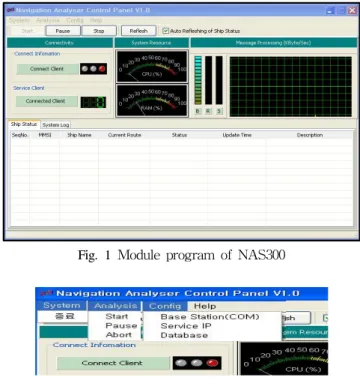
Fig.1 shows the start-up screen of NAS300. This screen is to indicate the status of the hardware system : the connection status of an AIS receiver, the number of accessing clients, the status of CPU and RAM, the network and the list of tug/barges selected by the WAMCS operator.
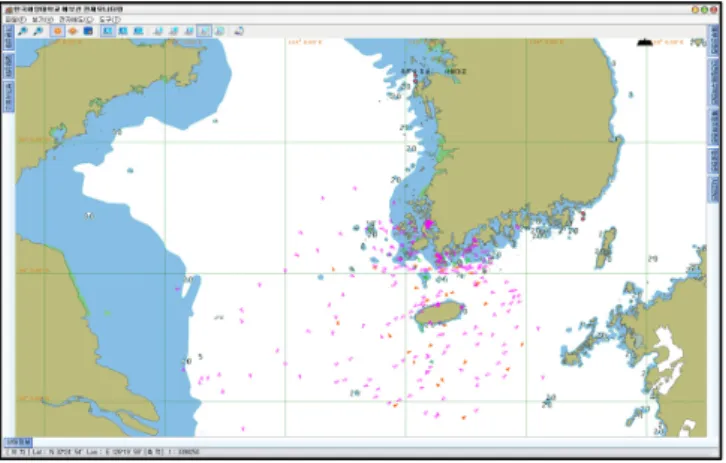
Fig.2 displays four main menus and each sub menus of them belonging to NAS300. Main menus are 'System', 'Analysis', 'Config', and 'Help'. The 'System' menu has a 'Exit' sub menu which ends the operating WAMCS. And the 'Analysis' has three sub menus like 'Start', 'Pause', and 'Abort' which are to control the analyzing process of AIS data. The
‘Config’ has three sub menus, 'Base Station(COM)', 'Service IP', and 'Database'. The ‘Base Station(COM)’ is used for setting up serial communication ports which directly connect the AIS to the WAMCS and receive the AIS raw data. The
‘Service IP’ is programmed to set up the IP(Internet Protocol) when the AIS information is received from another information server like GICOMS through a internet service network.
The command button of 'Refresh' and the check button of 'Auto Refreshing of Ship Status' are used for updating the tug/barges list being selected for monitoring and controlling by the system operators.
The sub-windows in Fig.1, i.e. 'Connectivity', 'System Reference', and 'Message Processing', are developed to indicate the operating status of WAMCS. The 'Connect Information' in 'Connectivity' sub-window shows the status of connection with other ship information sources like AIS, GICOMS, another WAMCS. 'Service Client' in the sub-windowcounts the number of connected clients. And 'System Resource' sub-window indicates the cu 'peraCPU and RAM usage percperage. 'Message Processing'
sub-window is designed to draw the levels of buffer(B), received queue(R), sending queue(S), and a graph of data receiving rate(byte/sec).
Fig. 1 Module program of NAS300
Fig. 2 Main menu of NAS300
2.2 Monitoring and control program module This program module(hereafter “VMS_KMU”) plays a key role in the WAMCS and is composed of the functions which are necessary to control the tug/barges underway in the coastal waters of Korea. This module was developed to display real ship’s information and the functions requested by a VTS operator on ENC(Electronic Navigational Chart).
1) Window of VMS_KMU
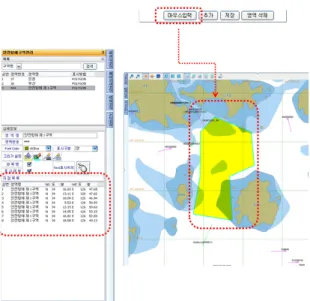
Fig.3 represents the main display of VMS_KMU that consists of various menus and command buttons conducting many functions and ENC displaying AIS information.
① Main menus and tool bar
Fig.4 shows four main menus and sub menus of them.
The main menus are 'File', 'View', 'ENC', and 'Tool'.
The sub menus of 'File' were designed to carry out some functions such as are able to save the captured ENC screen, register the areas where are frequently monitored with the short keys of 0 to 9 number, save and open the editing information like the characteristics of text, symbol, color, shape, pattern being applied on ENC.
Sub menus of 'View' are to select the visible state of tool bar, and to set up the locking function of current screen. Sub menus of 'ENC' was programmed to handle the functions
related to ENC operations which are to change the scale of ENC, the monitoring area, the brightness of screen, the display mode(Basic, Standard, The others), the color of water levels, the type of chart.
Fig. 3 Overall display of VMS_KMU
Fig. 4 Main and sub menus of VMS_KMU
'Tool' menu has nine sub menus which are helpful to efficiently monitor the tug/barges on ENC. 'EBL & VRM mode' sub menu being handy measures the range and bearing from user position to designated vessel or landmasses on ENC. It is the same with the EBL(Electronic range line) and VRM(Variable range marker) functions of radar. And 'Distance measurement mode' sub menu calculates the distance between two points being clicked by mouse and sums up all the distances. And also the latitude and longitude of clicked positions are displayed on the screen. 'Group Selection Mode' and 'Group Selection Mode(Circle)' are used for selecting the a few ships on ENC at the same time. 'Edit Function' sub menu is programmed to set up the object properties like font, size, color, shape, etc. 'Target Setting' is to select the symbol, color, size of tug/barge which will be registered and monitored as a target.
The menus, which will be able to be often used by VTS
operator, were made into icons. These are arranged on a tool bar and enable to adjust the scale of ENC, brightness and mode of screen, etc.
② Left quick button
‘Left Quick Button’ is composed of three command buttons : 'Basic Status', 'Alarm Status', 'Other Service'. When the 'Basic Status' button is clicked, AIS information being received is displayed on a window. And if VTS operator selects one vessel on the window, more details show up. The 'Alarm Status' button is used for confirming an alarm information which has happened during the monitoring and control of tug/barges. The 'Other Service' button displays a various marine traffic safe information.
③ Right quick button
‘Right Quick Button’ is composed of five command buttons : 'Tug/barge Management', 'Safe Navigation Zone', 'Designated Area', 'Fairway Management', 'Accident Data Management'. The operators of WAMCS can register the tug/barge being selected as the object for monitoring, and search the information of registered tug/barge by using the 'Tug/barge Management' button. If 'Safe Navigation Zone' is clicked, the window that allows the operator to build area where tug/barges are capable of navigating safely is opened.
And the 'Designated area' button is used for designating special area where the navigators of tug/barges have to navigate with caution. The 'Fairway Management' and the 'Accident Data Management' buttons are helpful to track the tug/barge and manage the accident information.
2) Major functions of VMS_KMU
① Ship information search
VMS_KMU was programmed to search the information of tug/barges through three methods in order to efficiently monitor and control them.
Received AIS information is displayed in the window of 'Received Ship Information'(Fig.5). If operator selects the one ship on the list, the details are showed up in another window. Specially AIS information can be sorted or filtered by various factors : ship's name, call sign, MMSI(Maritime mobile service identity), ship's type, etc. And if the 'Position Change' button in this window is clicked, the center of ENC is changed to the position of selected target at once.
'Group Selection Mode' and 'Group Selection Mode(Circle)' menus are used for selecting some targets at the same time which are located within a specific area. If the area is designated by the computer mouse, the information on all ships within the area is displayed in the window of the 'designated area searching'(Fig.6).
Fig. 5 Searching and sorting of ship information
Fig. 6 Retrieval of ship information in designated area
Fig. 7 Retrieval of double clicked ship information
Also when one ship on ENC screen is selected by double click, the information on her will be displayed on the window of 'Ship Information'(Fig.7).
② Tub/Barge information and track management
Fig.8 shows a sequence of general process that the acquired ship information through 'Ship Information' window is transferred to the window of 'Tug/barge Management' and the shipe is registered as targets in above target list box. And the registered information in the detail information
box can be altered, saved and deleted at any time.
Fig. 8 Registration of tug-barge
Fig. 9 Display of target's track
The 'Track' button of 'Ship Information' window lists up the received time of AIS information, the ship's position, and allows to select the tacking duration, label position, and label contents like received time of AIS information, ship's name, call sign, MMSI, SOG(Speed of ground), COG(Course of ground), ship's position.
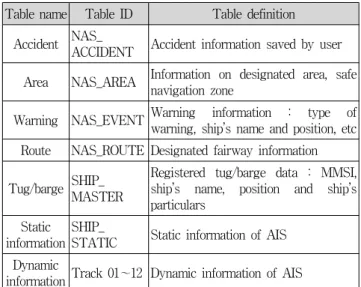
Fig. 10 Drawing of designated area and safe navigation zone
Fig. 11 Drawing of navigation route for tug/barge
③ Designated area and safe navigation zone management These functions were developed to prevent the tug/barges being monitored and controlled from entering into dangerous situations in advance. Fig.10 shows the sweeping process making the safe navigation zone on ENC and the configuration of the 'Safe Navigation Zone Management' window. This window is used for giving a name to the zone, changing the color of phase and line, and altering the zone easily. And also the method designating the area was programmed to work in a similar way the safe navigation zone does.
④ Fairway management
This function is to designate the course which tug/barges frequently use as a fairway, and to display it on ENC. The fairway can be assigned to the registered tug/barges in order to monitor them efficiently. Fig.11 shows the fairway being drawn on ENC and the window of 'Fairway Management'.
Fig. 12 Management of marine accident information
Fig. 13 Deviation warning from fairway
⑤ Accident data management
Marine accident information is helpful to monitor and control the targets. This function allows the VTS operator to handle the information on the window of 'Accident Data Management'. And it was programmed to sort much more information by some factors : type of accident, time, ship's type, etc.
⑥ Warning of danger
This function was developed to represent the unexpected warning that occurred in case tug/barges entered into the designated area or deviated from the safe navigation zone and fairway. But the tug/barges should be already registered as targets for monitoring by user. Fig.13 shows that a warning came out because a monitored target deviated from the fairway.
⑦ Safety information management
Safety information management function was developed to exchange safety information, safety news, weather information which are required to monitor and control the tug/barges. And it was designed to exchange with the
tug/barges, government agencies and other related organizations. In this study, we have mainly focused on building the fundamental functions. Because an agreement on the exchange of information must be worked out between them and what kind of communication network will be better for this system is considered beforehand.
Table 1 Structure of database module
Table name Table ID Table definition Accident NAS_
ACCIDENT Accident information saved by user Area NAS_AREA Information on designated area, safe
navigation zone
Warning NAS_EVENT Warning information : type of warning, ship’s name and position, etc Route NAS_ROUTE Designated fairway information
Tug/barge SHIP_
MASTER
Registered tug/barge data : MMSI, ship’s name, position and ship’s particulars
Static information
SHIP_
STATIC Static information of AIS Dynamic
informationTrack 01~12 Dynamic information of AIS
2.3 Database module
This module, which was produced by MySQL being used for building database, plays an important role in saving a lot of information being created from the navigation analysis program module and the monitoring and control program module. Table 1 indicates the structure of this module which was structuralized by seven(7) sub-tables.
3. Conclusion
This study was to develope a wide-area monitoring and control system for tug/barges in the coast of Korea based upon AIS information. The system was made in the form of three program modules i.e. navigation analysis program module, monitoring and control program module, database module. And seven functions were programmed to monitor and control the tug/barges efficiently. These are ship information search, tug/barge information and track management, designated area and safe navigation zone management, fairway management, accident data management, warning of danger, safety information management. Specially the functions might be expected to help VTS operators control and manage tug/barges in the coastal waters of Korean peninsular.
The Korean government is operating the GICOMS, which
plays a key role of acquiring, managing and distributing the AIS information being transmitted via AIS. Therefore the WAMCS should be compatible and linkable with the GICOMS. The future study will deal with it.
Acknowledgements
This research was part of the results of the project called
"the Development of Safe Operation Model of Tug-Barge based on Advanced Technology of Vessel Handling Method"
supported by a grant from "the Development Program for Ship Safety & Technology" funded by the Ministry of Land, Transport and Maritime Affairs.
References
[1] Im, N.K., Park, S.H., and Park, G.K.(2006), "A study on the present status of safety in tug-barge transportation", Journal of Korean Society of Marine Environment &
Safety, Vol. 12, No. 1, pp. 61-66.
[2] Lee, S.M., and An, B.G.(2008), "A study on the safety towing system for barge using portable GPS", Journal of Korean Society of Marine Environment & Safety, Vol. 14, No. 4, pp.301-332
[3] Lee, S. P.(2007), "A study on the intensification scheme of competitiveness for tugboat & barge business in Korea", Korea Maritime University, The Graduate School of Maritime Industrial Studies, Department of Shipping Management, pp.1-3
[4] Ministry of Land, Transport and Maritime Affairs(2009), GICOMS, http://www.gicoms.go.kr/
Received 3 November 2009 Revised 22 December 2009 Accepted 23 December 2009