Abstract
BACKGROUND: Plant growth under smart greenhouse (that is plant factory system) conditions of an artificial light type is significantly depending on the artificial light sources such as a fluorescent lamps or Light-Emitting Diodes (LEDs) with specific spectral wavelengths regardless of the outside environmental changes. In this experiment, characteristics on the growth and compound synthesis of kale seedlings affected by light qualities and intensities provided by LEDs were mentioned.
METHODS AND RESULTS: The kale seedlings which developed 3~4 true leaves were exposed by fluorescent lamps or LEDs lights of red (R), blue+white (BW), blue+red (BR) with 50 (L) or 100 (H) μ mol/m
2/s
1photosynthetic photon flux (PPF) under hydroponic culture system of deep flow technique for 50 days. Shoot fresh weight increased under the RH, BWH, and BRH treatments with higher PPF. Shoot elongation of the seedlings decreased, and polyphenol synthesis promoted by the higher light intensity conditions. Sugar synthesis in the leaves was above 2 times greater under the RH treatment of
monochromic red light quality with 100 mol/m μ
2/s
1PPF than 50 mol/m μ
2/s
1PPF.
CONCLUSION: The results show that the control of light quality and intensity in the smart greenhouse conditions with artificial lights significantly affects the growth and compound synthesis in the fresh kale leaves with higher culture efficiency compared to the conventional soil culture under greenhouse or field conditions. Researches on the optimum light intensities of the LEDs with special spectral wavelengths are necessary for maximum growth and metabolism in the seedlings.
Key words: Artificial light source, Hydroponic culture, Light-Emitting Diodes (LEDs), Metabolites
서 론
폐쇄형 작물생산 시설인 인공광 스마트온실 식물공장 에( ) 서는 작물 생장이 주로 인공광에 의해 좌우되기 때문에 작물 재배 할 때 사용하는 인공광원의 광질과 광강도 영향에 대한 다양한 연구들이 진행되고 있다(Wu
et al
., 2007; Heoet al
., 2010a; 2010b; 2011a; 2011b; Leeet al
., 2016a).자연 광에 의존하여 작물을 재배하는 온실과 달리 인공광을 사용, 하는 스마트온실에서는 강우 고온 및 저온 등 외부 물리환경, 의 영향을 거의 받지 않기 때문에 비교적 시설 내 재배환경을 정밀하고 안정적으로 제어할 수 있어 작물 생장이 균일하고*Corresponding author: Jeong-Wook Heo Phone: +82-63-238-4063; Fax: +82-63-238-4035;
E-mail: [email protected]
Korean J Environ Agric. 2017;36(3):193-200. Korean Online ISSN: 2233-4173
Published online 2017 September 30. https://doi.org/10.5338/KJEA.2017.36.3.31 Print ISSN: 1225-3537
인공광 스마트온실에서 광질 및 광강도 제어가 케일 실생묘의 생장에 미치는 영향
허정욱*, 이재수 이공인 김현환, ,
농촌진흥청 국립농업과학원 농업공학부
Growth of Kale Seedlings Affected by the Control of Light Quality and Intensity under Smart Greenhouse Conditions with Artificial Lights
Jeong-Wook Heo*, Jae-Su Lee, Gong-In Lee and Hyun-Hwan Kim (Department of Agricultural Engineering, National Academy of Agricultural Science, Rural Development of Administration, Jeonju 54875, Korea)
Received: 19 September 2017/ Revised: 24 September 2017/ Accepted: 25 September 2017 Copyright ⓒ 2017 The Korean Society of Environmental Agriculture
This is an Open-Access article distributed under the terms of the Creative Commons Attribution Non-Commercial License (http://creativecommons.org/licenses/by-nc/3.0) which permits unrestricted non-commercial use, distribution, and reproduction in any medium, provided the original work is properly cited.
ORCID
Jeong-Wook Heo
http://orcid.org/0000-0002-9968-7783
193
Research Article Open Access
으로 재배면적 당 수확량을 증대시킬 수 있다(Dorais, 2003;
Darko
et al
., 2014). 온실과 같은 재배시설의 경우에도 작물 생장을 촉진하기 위하여 고압나트륨등 삼파장등 백열등이나, , 메탈할라이드등과 같은 다양한 인공광원을 보조광원으로 이 용하기도 한다(Samuolieneet al
., 2012; Heoet al
., 2015).온실에서 주로 시설 내 입사하는 태양광이 부족할 때 보조 광원으로 이용되고 있는 상기의 광원들은 광원으로부터의 발 열에 의한 공조비 증가나 전력소모량 증가 등의 단점이 지적 되고 있으며 광원 자체의 크기가 커서 다단식으로 작물을 재, 배하는 인공광 스마트온실에서는 적합하지 않다 따라서 비교. 적 광원의 크기가 작고 비교적 전력소모량이 적으며 특정 파 장역에 해당하는 광질의 선택조사가 가능한 발광다이오드 를 광원으로 이용하는 경우 (Light-Emitting Diodes, LEDs)
가 많다(Barreiro
et al
., 1992; Hoeneckeet al
., 1992;Hunter and Burritt, 2004; Heo
et al
., 2006; 2009; 2013;Massa
et al
., 2008; Morrow, 2008; Olle and Viršile, 2013; Chenet al
., 2014).한편 세계, 10대 Food의 하나로 선정된 케일(
Brasicca oleracea
L.)은 쌈채나 샐러드채로 이용되는 엽채소로 비타, 민류 철분 섬유질이나 베타카로틴 글루코실레이트 등 다양, , , 한 영양성분을 함유하고 있어서(Lampe, 1999; Ayazet al
., 2006; Velascoet al
., 2011; Kim, 2012) 최근 들어 우리나 라에서도 노지나 온실에서 재배한 케일 잎을 배 당근 사과, , 등 다른 과채류와 혼합한 녹즙이나 쥬스 원료로 생산하는 등 케일 신선잎에 대한 관심이 증가하고 있다.케일은 대부분 노지나 온실 조건에서 토경재배하면서 지 속적으로 잎을 수확하는데 봄에 파종하여 육묘한 후 여름철, 개화기 전까지 잎을 수확하고 가을에 파종하여 이듬해 봄 파 종 전까지 수확한다 녹즙용 케일은 쌈채로 이용되는 케일과. 는 달리 재식거리를40~45 cm로 유지하면서 하위의 잎부터 지속적으로 수확하기 때문에 초장이1 m 이상 신장하게 된 다 노지나 온실조건에서는 작물의 생장이 강우 고온 저온. , , 등 외부 기상변화에 의해 좌우되는데 특히 강우나 폭설 등에, 의해 시설 내 입사되는 자연광의 양이 감소하여 작물 생장과 잎 수확량이 감소하기도 한다 시설 내 친환경적 병충해 방제. 에 실패하게 되면 연 회 이상의 파종과 육묘작업을 해야 하2 는 등의 문제점이 발생한다 또한 녹즙이나 쥬스용으로 유통. 되는 케일 잎을 노지나 온실에서 재배할 경우에는 재배기간 중 병충해 방제목적으로 화학물질을 사용할 수 없기 때문에 고가의 미생물 제제를 빈번히 사용하여 병충해를 방제해야 하는 등 노동력과 농가 경영비 부담이 가중되기도 한다(Heo
et al
., 2015).녹즙이나 쥬스용으로 활용되는 케일 잎은 생물학적 병충 해 방제 상태 세척작업 및 작물의 청결상태가 품질을 좌우하, 기 때문에 외부의 물리 화학적 환경 영향을 거의 받지 않는, · 인공광 스마트온실과 같이 재배환경을 용이하게 제어할 수 있고 무농약 재배가 가능한 폐쇄된 환경에서 수경재배 할 경 우 토경재배에 비해 외부 기상변화와 상관없이 친환경적으로
본 연구에서는 스마트온실 내에서 특정 파장역의LEDs와 형 광등을 인공광원으로 한 광질 및 광강도 제어가 수경재배 한 케일 잎의 생장 및 물질합성에 미치는 영향을 검토하였다.
재료 및 방법
식물재료 및 재배조건
식물재료는 흑색 우레탄 스폰지에 종자를 파종한 후 주4 간 육묘하여 잎이3~4매 전개한 케일(
Brassica oleracea
L., 실생묘를 이용하였다 케일 실생묘를 수경 cv. Juicy Green) .재배하기 위하여Yamazaki 배양액(N: 6.5, P: 1.5, K: 4.0, Ca: 2.0, and Mg: 1.0 me L-1)을 사용하였다 케일 수경재배. 방식은 수평형 담액식(Deep Flow Technique, DFT)을 채 택하여 배양액 급수와 배수를 자동 제어하였다 실험기간 동. 안 스마트온실 내 온도 및 습도는20±1℃ 및50±10%로 제 어하였으며 재배실 내 이산화탄소 농도는 대기상태 300±100 을 유지하였다 인공광원은 형광등 적색 청색 및
mol/mol . , ,
μ
백색 종의3 LEDs를 단일 또는 혼합제어 하였으며 각 광질, 별 광강도(Photosynthetic Photon Flux, PPF)는 50과 100±10 mol/mμ 2/s의 수준으로 설정하였다 또한2 . LED혼 합광 처리구에서 각 광질 간 혼합비율은 1:1로 조절하였다. 실험구는 형광등 조사구(FLL, FLH ),구 적색광 조사구(RL,
구 청색 백색광 조사구 구 및 청색 적색
RH ), + (BWL, BWH ) +
광 조사구(BRL, BRH )구 등으로 설정하였으며 대조구는 광 강도 50 mol/mμ 2/s의 형광등 조사구(FLL )구 로 하였다.
생장량 조사 및 통계분석
재배장치 상부 광원부 에 식물체의 잎이 닿은 시점을 기준( ) 으로 하여50일째에 실험을 종료하였고 실험반복은 회였으, 2 며 처리당 반복수는16이였다 재배개시. 50일째 케일의 생체 중 줄기직경 초장 및 전개잎수 등을 조사하였으며 잎에서, , , 합성된 당 폴리페놀 및 플라보노이드 함량을 분석하여 평균, 값을 산출하였다(Rufty and Huber, 1983; Chaplin, 1987;
Dai and Mumper, 2010; Khoddami
et al
., 2013). 케일 잎의 건물중은 생체중을 측정한 후에70℃로 설정된 드라이 오븐(VS-1202D4, VISION Co., LTD, Korea)에서 일간4 건조시킨 후 측정하였다 통계분석은. SAS 프로그램(Version 을 이용하여 수 6.21; SAS Institute Inc., Cary, NC, USA)행하였으며, ANOVA 분석 후 생육 결과에 대하여Duncan 의 다중검정(
P
=0.05)을 실시하였다.결과 및 고찰
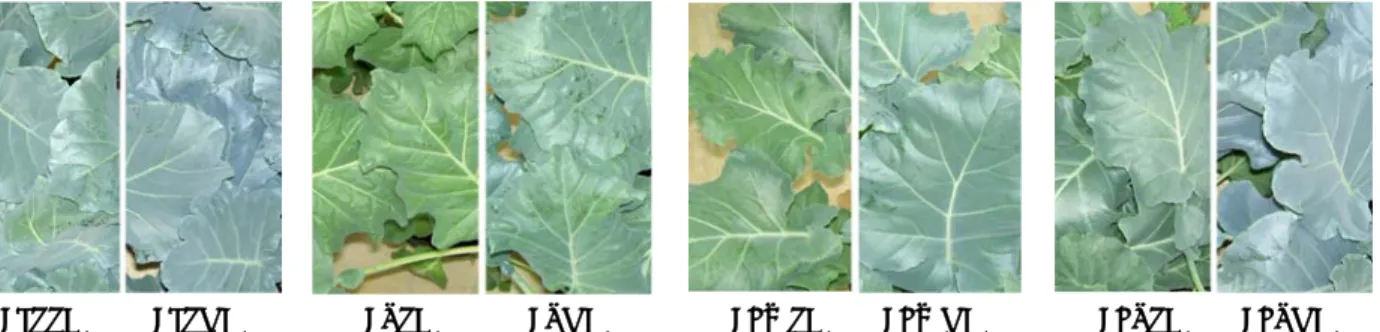
정식 후50일간 스마트온실 조건에서 형광등과 적색 청색, 및 백색의 발광다이오드를 활용한 광질 및 광강도 제어는 수 경재배한 케일 실생묘의 생장 및 잎 내 물질 합성에 유의한 영향을 미치는 것으로 나타났다(Fig. 1). 그림 에서 보는 바1 와 같이 재배종료 시 케일 잎 내 왁스 합성량을 측정하지는,
않았으나, 100 mol/mμ 2/s PPF 형광등 조사구인FLH구와 청색 적색 혼합광 조사구인+ BRH구에 비해50 mol/mμ 2/s 형광등 조사구나 적색 또는 청색 백색 혼합광 조사구에
PPF +
서 왁스형성이 억제되는 것을 육안으로 관찰할 수 있었다.
잎과 줄기를 포함하는 케일 지상부 생체중은 PPF 50 μ mol/m2/s에 비해 PPF 100 μmol/m2/s 처리구인 BWH 구, RH구 및BRH구에서 유의하게 증가하였으며 형광등 조. 사구에서는 광강도의 차이에 의한 생체중 증가에 영향을 미 치지 않은 것으로 나타났다(Fig. 2). LEDs 혼합광질 조사구 인BWH , RH구 구 또는BRH구의 생체중은 최솟값을 보인
구에 비해 이상 증가하였으며 대조구인 구에 비
RL 50% FLL
해10%이상 증가하였다 한편. PPF 100 mol/mμ 2/s인 조 건에서는 적색 청색 백색 및 적색 청색의 혼합광질은 케일, + + 지상부 생체중 증가에 유의한 영향을 미치지 않은 것으로 보 아, LEDs를 인공광원으로 하여 수경재배 한 케일 생체중 증 가에 있어서 광질보다는 광강도의 영향이 큰 것으로 판단된 다 케일의 줄기비대는 적색 청색 혼합광 조사구에서는 광강. + 도의 차이에 의한 영향이 없는 것으로 나타났으며 그 밖의, 광질에서는 생체중 변화와 마찬가지로 PPF 100 mol/mμ 2/s 조건에서 줄기비대가 촉진되는 경향을 보였다 지상부 생체중. 이 최솟값을 나타내었던 RL구에서 줄기직경은 PPF 100 μ mol/m2/s 처리구에 비해29%이상 감소하였다 한편 적색.
및 청색 혼합광질에서는 줄기비대에는 광강도 차이에 의한 영향이 없었으나 적색광질의 경우 줄기비대 또한 생체중과 마찬가지로 광강도의 영향을 받은 것을 알 수 있다.
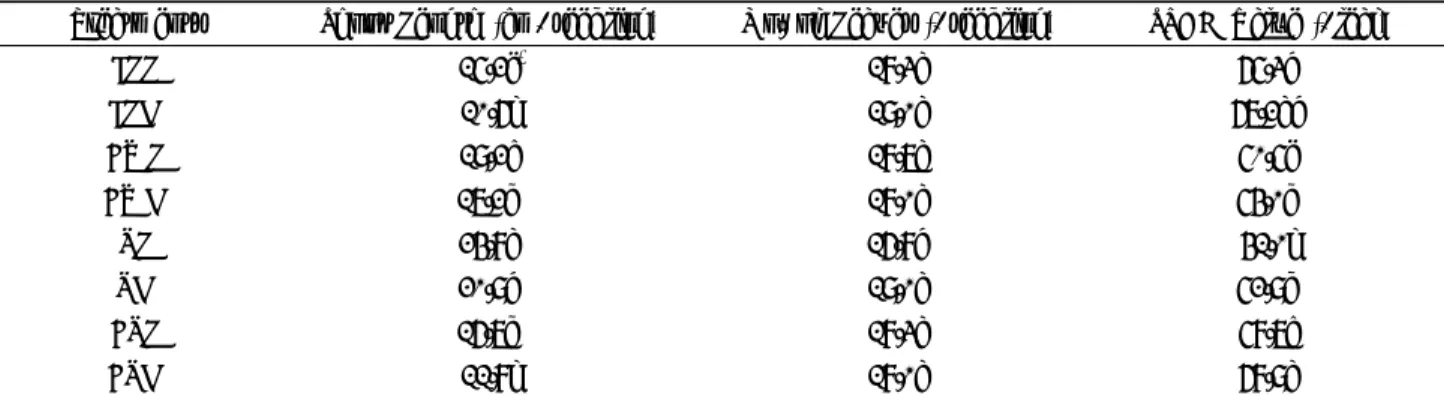
케일 실생묘의 신초신장은 광강도가 높은 처리구에서 억 제되는 경향을 나타내었는데 특히, RL구에서 최댓값을, FLH 구 및BRH구에서 최솟값을 보였다(Table 1).케일의 신초신 장이 촉진된 RL구에서는 FLH구 및 BRH구에 비해 각각 64%및68%로 다른 광질에 비해 현저히 증가하였다. Yanagi 등(1996)이나Heo 등(2010a, 2010b)이 보고한 LEDs를 인 공광원으로 한 연구결과에 의하면 단일광질 보다는 형광등이 나 혼합광질 조사가 전개잎수 증가에 유리한 것으로 보고되 었는데 본 실험, 조건에서도 전개잎수는 단일광질 조사구인 구를 제외한 혼합광 처리구에서 잎수가 증가한 것으로 보 RL
아 형광등 청백색 및, , 청적색 광질이나 광강도의 차이에 의한 영향은 인정되지 않았다 케일 잎내. SPAD치는 형광등 조사 구를 제외하고PPF가 높은 처리구에서 증가하는 경향을 나타 내었는데 엽내 색소 합성량은 PPF 100 mol/mμ 2/s 조건의
나 구에서 구에 비해 이상 증가하였다
FLH BRH RL 60% .
형광등을 제외한 특정 광질에 의한 작물의 바이오매스 증 가에 관한 연구결과들이Johkan 등(2010), Li 등(2012)이나
등 에 의해 보고되고 있다 등 에 의하
Dong (2014) . Li (2012)
면 상추 실생묘의 경우 청색 단일광을 조사하는 것이 형광등
<FLL> <FLH> <RL> <RH> <BWL> <BWH> <BRL> <BRH>
Fig. 1. Kale leaves hydroponically grown under the different light qualities and intensities for 50 days. FLL, fluorescent light with 50μmol/m2/s PPF considered as a control; FLH, fluorescent light with 100μmol/m2/s PPF; BWH, blue plus white LEDs with 100μmol/m2/s PPF; RH, red LEDs light with 100μmol/m2/s PPF; BRH, blue plus red LEDs with 100 μmol/m2/s PPF. Energy ratio in the mixture treatments of blue plus white and blue plus red LEDs was 1:1.
Fig. 2. Shoot fresh weight and stem diameter of kale seedlings hydroponically grown under the different light qualities and intensities for 50 days. Vertical bars represent mean ± standard error (n=16). *Different letter indicates the significantly difference at the 5% level by Duncan’s multiple range test. Treatment codes see Figure 1.
에 비해 지상부 및 지하부 생체중 및 건물중 증가에 효과적이 라고 하였다 이와 달리. , 50 mol/mμ 2/s로 비교적 낮은 광강 도 조건에서는 적색 단일광질 조사는 체내 안토시아닌 합성 을 촉진하거나 엽병신장에 영향을 주었으나 적색 청색 및 녹, 색 등의 단일광은 작물의 건물중이나 생체중 증가에는 영향 을 미치지 않는 경우도 있다(Mizuno
et al
., 2011). 이상의 연구결과들은 LEDs를 인공광원으로 하여 작물을 재배하는 경우 작물체내 물질합성 이외에 생체중 건물중 및 줄기비대, , 와 같은 양적생장을 촉진하기 위해서는 전기에너지 투입량과 생장작물과의 관계를 구명하여 적정 광강도 조건을 도출하는 것이 중요하다는 것을 시사한다.에서 알 수 있듯이 단일광 또는 혼합광 조사 조건
Table 1 ,
에서 재배한 케일의 신초신장은 PPF 50 mol/mμ 2/s에 비해 100 mol/mμ 2/s조건에서 억제되었는데 단일의 적색광질에, 의한 작물의 줄기신장은 다른 광질에 비해 현저히 촉진되었 으나 청색광이나 적색 청색의 혼합광질을 조사하므로써 상쇄+ 될 수 있다고 판단된다 이와 같은 연구결과는. Eskins
등
(1992), Heo (2002, 2003, 2006), Folta (2004), Shimizu 등(2005)및Nanya등(2012)의 줄기신장과 광질과의 관계에 서도 알 수 있다 서술한 바와 같이 엽채류 화훼류 등 다양한. ,
실생묘의 줄기신장에 미치는 광질의 영향에 대한 연구들이 오래전부터 진행되어 왔으나 작물 종류 및 생육단계에 따라 광질의 영향은 다양하게 나타난다 상기 열거한 연구사례를. 보면 가지나 해바라기 실생묘의 줄기신장은 청색광질에 의해 촉진되지만 국화의 경우에는 청색광질에 의해 줄기신장이 억 제되며 잎상추나 애기장대에서는 적색 또는 녹색광질에 의해 줄기신장이 촉진되지만 청색광질에 의해 억제되기도 한다.
재배개시50일째 케일 잎에서 합성된 당함량은PPF 100 mol/m
μ 2/s 조건에서 통계적으로 유의하게 증가하였으며, 특히 적색광 조사구인RH구에서 당합성량이 최대였으며RL 구에서 최솟값을 나타내었다(Table 2).또한 다른 광질에 비 해 적색과 청색 혼합광질 하에서는 광강도 차이가 당합성에 유의한 영향을 미치지 않았다. RH구에서 당합성량은 RL구 에 비해12배 이상 증가하였고 특히 대조구인FLL구에 비해
배 이상 증가하였으며 형광등 조사구의 경우
6 , PPF 100 μ
mol/m2/s에서50 mol/mμ 2/s 대비 배 이상 증가하였다2 .
구의 당합성량은 및 구에 비해 약 배 증가하
RH FLH BRH 3
였으며 BWH구에 비해 배 이상 증가하는 등 적색광질에4 , 의한 당합성 촉진효과는 다른 광질에 비해 현저한 것을 알 수 있었다 시설재배시. LEDs를 보광광원으로 이용하여 재배한 Treatments Shoot Length (cm/seedling) No. of Leaves (/seedling) SPAD Value (/leaf)
FLL 15.2e* 18.3a 65.3b
FLH 10.6f 19.0a 67.2ab
BWL 19.2c 18.7a 50.5e
BWH 17.2d 18.0a 54.0d
RL 24.8a 16.8b 41.0f
RH 20.9b 19.0a 52.9d
BRL 16.7d 18.3a 58.7c
BRH 11.8f 18.0a 68.9a
*Different letter indicates the significantly difference at the 5% level by Duncan’s multiple range test. Treatment codes see Fig. 1.
different light qualities and intensities for 50 days
Treatments Total sugar Polyphenol (g/seedling) Flavonoid
FLL 5.14d 0.54c 0.26c
FLH 11.91b 0.64b 0.30b
BWL 3.76e 0.35e 0.16f
BWH 8.00c 0.65b 0.27c
RL 2.72f 0.43d 0.17e
RH 34.29a 0.45d 0.18d
BRL 10.55b 0.71ab 0.27c
BRH 11.47b 0.74a 3.84a
*Different letter indicates the significantly difference at the 5% level by Duncan’s multiple range test. Treatment codes see Figure 1.
Table 2. Total sugar, flavonoid, and polyphenol contents synthesized in the leaves of kale seedlings hydroponically grown under the different light qualities and intensities for 50 days
케일의 잎 내 당축적에 미치는 광질의 영향은 적색 또는 적색 과 청색의 혼합광질 조사 시험에서도 보고되고 있다(Lin
et al
., 2013; Heoet al
., 2015). 특히 시설재배의 경우 적색광 질을 보광광원으로 이용할 경우에는 광강도를 일정 수준 높 게 유지하는 것이 잎내 당합성을 촉진할 수 있다고 한다 본. 실험결과 케일의 경우 시설재배와 마찬가지로 폐쇄형 스마, , 트온실내에서 인공광을 조사하여 수경재배한 케일의 잎 내 당합성은 적색광질의 자극에 의한 영향이 큰 것을 알 수 있었 다. Lin 등(2013)은 상추 재배시 적색광질 이외에 적색 백색, 또는 청색광과의 혼합광 조사에 의해서도 당합성이 촉진된다 고 보고하고 있다 그러나 본 연구에서와 마찬가지로 작물체. 내 당합성은 적색 이외의 광질에서도 합성은 되지만 특정 작, 물의 체내 당합성량의 현저한 증가는 주로 적색광질에 의한 영향이 지배적인 것으로 판단된다.폴리페놀 합성 역시 모든 처리구에서 PPF 100 μmol/
m2/s 조건에서 촉진되었고 적색 및 청색 적색 혼합광질에, + 의한 폴리페놀 합성효과는 인정되었으나 두 광질 조건에서는, 광강도 차이에 의한 영향은 미미한 것으로 나타났다. PPF 50
mol/m
μ 2/s의 청색 백색 혼합광질은 다른 광질조건에 비해+ 잎내 폴리페놀 합성을 억제하였으며 적색 및 청색 적색 혼합+ 광질 처리구에서는 광강도의 차이에 의한 폴리페놀 합성량에 는 유의한 차이가 없었다 또한 다른 광질 조건에 비해 광강. 도의 영향이 현저하였던BWH구에서는BWL구 대비 약 배2 증가하였다 케일 잎내 폴리페놀 합성은 광강도 차이와 상관. 없이 청적색 혼합광질에 의해 촉진되었으며BRH구의 폴리페 놀 함량은FLL구 및RL구 대비 각각37%및72%증가하였 다 각 처리구의 플라보노이드 성분은 고광강도 조건에서 통. 계적으로 유의하게 증가하였으며 폴리페놀 성분과 마찬가지, 로 광강도 50 mol/mμ 2/s청백색 혼합광질 조건에서 합성이 억제된 것으로 나타났다 플라보노이드 합성은 형광등 및 적. 색광질 처리구에 비해 청백색 및 청적색 혼합광질 조사구에 서는 광강도의 영향이 유의하게 나타나 광강도 100 μmol/
m2/s 조건에서 최댓값을 나타내었다 광강도. 100 μmol/
m2/s의 청적색 혼합광질 조사에 의해 플라보노이드 합성이 촉진되었고, BWL구 또는RL구에서 억제되었으며BRH구의 플라보노이드 함량은 BWL구에 비해 24배 증가하였으며 구에 비해 배 이상 증가하였다 결과에는 나타내지 않
BRL 1.4 .
았으나 폴리페놀 합성에 미치는 광질의 영향과 마찬가지로, , PPF 100 μmol/m2/s의 조건에서 섬유질 함량이 증가하였 으나 청색 백색 혼합광질 이외에는 광강도에 의한 유의한 영+ 향은 없는 것을 알 수 있었다 청색 백색 광질 조건에서는 광. + 강도 차이에 의한 영향이 인정되었는데 광강도가 상대적으로 낮았던BWL구에서는 잎내 섬유질 합성이 억제되었고BWH 구에서는 촉진되는 것을 확인하였다 폴리페놀이나 플라보노. 이드 합성 등 식물체내 물질합성을 촉진하는 적색 또는 청색 광질의 영향은 실생묘 이외에 무균의 조직배양 소식물체에서 도 보고되고 있다(Manivannan
et al
., 2015). 이와 같은 결 과로부터 인공광 스마트온실 조건에서, PPF 100 μmol/m2/s 청색 백색 혼합광질은 지상부 생체중 줄기비대나 신+ ,
장 및 전개잎수 증가와 같은 케일의 양적생장은 촉진하였으 나 식물체내 당 폴리페놀 및 플라보노이드 합성에는 유의한, 영향을 미치지 않는 광질로 판단된다 또한 청색 백색 혼합. + 광질과는 달리 적색광질의 경우 저광강도 조건에서 잎의 양, 적생장에 유의한 영향을 미치지는 않으나 저광강도 조건에서 도 잎내 특정 유용물질 합성을 촉진하는데에는 유효한 광질 임을 알 수 있었다.
인공광 스마트온실에서 광원으로 이용되는 형광등에 비해 적색 청색이나 원적색 등 특정 파장역의, LEDs를 주광원으 로 하여 작물을 재배하는 경우 체내 당 합성 항산화물질 활, , 성이나 페놀물질 합성에 있어 광질이 중요한 역할을 하는 것 으로 알려져 있다(Farina and Veruggio, 1996; Shiga
et al
., 2009; Leeet al
., 2016a). 본 실험 결과와 마찬가지로, 케일 잎내 물질합성에 미치는 청색 백색의 혼합광질 효과와+ 유사한 연구결과가 보고되고 있는데(Leeet al
., 2016b), 형 광등 이외에LEDs 간의 혼합광질 이외에 적색 및 청색의 단 일광질은 수경재배 조건에서 재배한 케일 실생묘의 잎내 엽 록소 글루코실레이트 및 루테인 등 다양한 이차대사산물 합, 성을 촉진한다(Lefsrud, 2008). 또한, Bantis 등(2016)도 형 광등보다는 적색 녹색 원적색 및 청색 등 종 이상의, , 2 LEDs 혼합광질이 상추 실생묘의 생장 및 체내 폴리페놀 합성을 촉 진한다고 보고되고 있다 또한. Lee등(2016a)의 연구 결과에 의하면 인공광 스마트온실내, PPF 150 mol/mμ 2/s의 청색+ 백색 청색 적색 백색 등 종 또는 종 이상의, + + 2 2 LEDs혼합광 질 및LED와 형광등의 혼합광을 조사할 경우 수경재배한 케, 일 잎내 글루코실레이트 합성량은 다른 광질에 비해 청색 백+ 색의 혼합광질 처리구에서 유의하게 감소하였다. Lee 등의 실험은 본 실험에 비해 가
(2016a) PPF 500 μmol/m2/s 높은 조건에서 수행되었으나 케일 식물체내 일부 물질합성에, 있어서 청색 백색 혼합광질은 유의한 영향을 미치지 않는 광+ 질로 판단되었다 인공광 스마트온실 조건에서 병충해 방제작. 업을 생략하고 수확 후 세척횟수나 강도를 줄이는 등 재배효 율성을 높이면서 고품질의 녹즙용 케일 잎을 생산하고자 하 는 경우에는 경제적 측면에서 투입되는 전기에너지를 줄이면, 서도 생장을 촉진시킬 수 있는 적정 광강도 제어방법에 대한 더 많은 연구가 필요하다고 생각된다.
등 은 적색광질의 효과를 조사하기 위하여 인 Heo (2015)
공광 스마트온실 조건과 달리 단일의 적색LEDs를 활용하여 케일을 보광재배한 경우 보광을 하지 않는 관행의 재배조건, 에 비해 케일 잎의 지상부 생장 수확량 및 잎내 당 합성을, 촉진한다고 보고하였다 그러나 인공광 스마트온실에서 수경. 재배하는 것에 비해 자연광 의존형 온실에서 녹즙용 케일을 토경재배하는 경우 병충해 방제나 잎 세척 잎 수확 전 후의, · 관리 등 작업 효율성이 낮다 따라서 외부의 물리 화학적 환. · 경 영향을 거의 받지 않는 인공광 스마트온실과 같은 폐쇄된 환경에서 케일을 수경재배하는 것이 특정 물질 합성을 촉진 하고 잎 세척 및 재배관리 등 작업효율을 향상시키면서 신선 잎을 안정적으로 생산하는 데에 유리할 것으로 판단된다 그. 러나 녹즙용으로 재배하는 케일의 경우에는 쌈채에 비해 초
랭성 엽채류 위주의 다단식 재배시스템으로는 케일과 같이 초장이 긴 작물을 인공광 스마트온실에서 장기재배하기가 곤 란하다 따라서 케일 잎과 같이 특정의 활성물질을 함유한 친. 환경 고품질의 작물 잎을 장기간 지속적으로 수확하기 위해 서는 장간종 재배에 적합한 재배시스템 개발이 선행되어야 한다 현재 농촌진흥청에서는 회 파종으로 장기간 지속적으. 1 로 신선잎을 생산할 수 있는 장간종 작물재배 시스템을 개발 중에 있다.
요 약
인공광 스마트온실 식물공장 조건에서 작물의 생장은 주( ) 로 외부 환경조건의 변화와 상관없이 형광등이나 특정 파장 역의 발광다이오드와 같은 인공광원에 의해 좌우된다 본 실. 험에서는 형광등 및 발광다이오드를 활용한 광질 및 광강도 제어가 케일 실생묘의 생장 및 물질합성에 미치는 영향을 조 사하였다 잎이. 3~4매 전개한 케일 실생묘는 광강도를50 및 100 μmol/m2/s로 제어한 형광등(FLL 및 FLH ),구 적색
및 구 청색 백색 및 구
LEDs (RL RH ), + LEDs (BWL BWH ) 및 청색 적색+ LEDs (BRL및BRH )구 등 단일 및 혼합광질 로 제어하였으며50일간 담액방식으로 수경재배하였다 케일. 지상부 생체중은 광강도 100 μmol/m2/s의 적색 청색 백, + 색 및 청색 적색의 혼합광 조사구에서 유의하게 증가하였으+ 며 신초신장은 광강도가 높은 처리구에서 억제되었고 잎내, 폴리페놀 함량은 증가하였다 당합성은 광강도. 50 μmol/
m2/s에 비해100 mol/mμ 2/s 조건의 적색광질에 의해 배2 이상 증가하였다 본 실험을 통하여 인공광 스마트온실 조건. 에서 특정 파장역의 광질 및 광강도를 제어하면서 작물을 수 경재배하는 것은 노지나 온실에서 토경재배하는 관행적 재배 방식에 비해 작업효율성을 높이면서 잎의 생장 및 물질합성 을 촉진할 수 있다는 것을 알 수 있었다 금후 인공광 스마트. , 온실에서 특정 파장역의 LEDs를 인공광원으로 할 때 작물 생장을 최대로 유지할 수 있는 적정 광강도에 대한 연구를 수 행할 계획이다.
Notes
The author declare no conflict of interest.
Acknowledgement
This study was funded by a research program (PJ010972) of Rural Development Administration (RDA), Republic of Korea.
References
Ayaz, F. A., Glew, R. H., Millson, M., Huang, H. S., Chuang, L. T., Sanz, C., & Hayırlıoglu-Ayaz, S. (2006).
acephala DC.). Food Chemistry, 96(4), 572-579.
Barreiro, R., Guiamét, J. J., Beltrano, J., & Montaldi, E. R.
(1992). Regulation of the photosynthetic capacity of primary bean leaves by the red: far red ratio and‐ photosynthetic photon flux density of incident light.
Physiologia Plantarum, 85(1), 97-101.
Bantis, F., Ouzounis, T., & Radoglou, K. (2016). Artificial LED lighting enhances growth characteristics and total phenolic content of Ocimum basilicum, but variably affects transplant success. Scientia Horticulturae, 198, 277-283.
Chaplin, M. F. (1987). Monosaccharides. Carbohydrate Analysis a– practical approach, Chaplin, M. F., Kennedy J. F. (eds.), pp. 1-13, IRL Press, Washington DC, USA.
Chen, C. C., Huang, M. Y., Lin, K. H., Wong, S. L., Huang, W. D., & Yang, C. M. (2014). Effects of light quality on the growth, development and metabolism of rice seedlings (Oryza sativa L.). Research Journal of Biotechnology, 9(4), 15-24.
Dai, J., & Mumper, R. J. (2010). Plant phenolics: extraction, analysis and their antioxidant and anticancer properties.
Molecules, 15(10), 7313-7352.
Darko, E., Heydarizadeh, P., Schoefs, B., & Sabzalian, M.
R. (2014). Photosynthesis under artificial light: the shift in primary and secondary metabolism. Philosophical Transactions of the Rotal Society B, 369, 243-249.
Dong, C., Fu, Y., Liu, G., & Liu, H. (2014). Growth, photosynthetic characteristics, antioxidant capacity and biomass yield and quality of wheat (Triticum aestivum L.) exposed to LED light sources with different spectra combinations. Journal of Agronomy and Crop Science, 200(3), 219-230.
Dorais, M. (2003). The use of supplemental lighting for vegetable crop production: light intensity, crop response, nutrition, crop management, cultural practices.
In Canadial Greenhouse Conference, 1-8.
Eskins, K. (1992). Light quality effects on Arabidopsis‐ development. Red, blue and far red regulation of‐ flowering and morphology. Physiologia Plantarum, 86(3), 439-444.
Farina, E., & Veruggio, R. (1996). The effects of high- intensity lighting on flower yield of rose “Dallas”.
International Society for Horticultural Science Acta Horticulturae: In II International Rose Symposium, 424, 35-40.
Folta, K. M. (2004). Green light stimulates early stem elongation, antagonizing light-mediated growth inhibition.
Plant Physiology, 135(3), 1407-1416.
Heo, J. W., Kim, D. E., Han, K. S., & Kim, S. J. (2013).
Effect of light-quality control on growth of Ledebourilla seseloides grown in plant factory of an artificial light type. Korean Journal of Environmental Agriculture, 32(3), 193-200.
Heo, J. W., Kim, H. H., Lee, K. J., Yoon, J. B., Lee, J. K., Huh, Y. S., & Lee, K. Y. (2015). Effect of supplementary radiation on growth of greenhouse-grown kales.
Korean Journal of Environmental Agriculture, 34(1), 38-45.
Heo, J. W., Lee, C. W., Chakrabarty, D., & Paek, K. Y.
(2002). Growth responses of marigold and salvia bedding plants as affected by monochromic or mixture radiation provided by a light-emitting diode (LED).
Plant Growth Regulation, 38(3), 225-230.
Heo, J. W., Lee, C. W., Murthy, H. N., & Paek, K. Y.
(2003). Influence of light quality and photoperiod on flowering of Cyclamen persicum Mill. cv.‘Dixie White’.
Plant Growth Regulation, 40(1), 7-10.
Heo, J. W., Lee, C. W., & Paek, K. Y. (2006). Influence of mixed LED radiation on the growth of annual plants.
Journal of Plant Biology, 49(4), 286-290.
Heo, J. W., Lee, J. T., Hong, S. C., & Kang, K. K. (2011a).
Effects of light quality and intensity on the growth of cut roses under greenhouse conditions. Japan Biology
& Environmental Engineer & Scientists Conference, 86-87.
Heo, J. W., Lee, Y. B., Bang, H. S., Hong, S. G., & Kang, K. K. (2011b). Supplementary blue and red radiation at sunrise and sunset influences growth of Ageratum, African Marigold, and Salvia plants. Korean Journal of Environmental Agriculture, 30(4), 382-389.
Heo, J. W., Lee, Y. B., Chang, Y. S., Lee, J. T., & Lee, D.
B. (2010b). Effects of light quality and lighting type using an LED Chamber System on Chrysanthemum growth and development cultured in vitro. Korean Journal of Environmental Agriculture, 29(4), 374-380.
Heo, J. W., Lee, Y. B., Kim, D. E., Chang, Y. S., & Chun, C. H. (2010a). Effects of supplementary LED lighting on growth and biochemical parameters in Dieffenbachia amoena ‘Camella’and Ficus elastica ‘Melany’. Korean Journal of Horticultural Science & Technology, 28(1), 51-58.
Heo, J. W., Lee, Y. B., Lee, D. B, & Chun, C. H. (2009).
Light quality affects growth, net photosynthetic rate, and ethylene production of ageratum, African marigold, and salvia seedlings. Korean Journal of Horticultural Science & Technology, 27(2), 187-193.
Hoenecke, M. E., Bula, R. J., & Tibbitts, T. W. (1992).
Importance ofBlue'Photon Levels for Lettuce Seedlings Grown under Red-light-emitting Diodes. HortScience, 27(5), 427-430.
Hunter, D. C., & Burritt, D. J. (2004). Light quality influences adventitious shoot production from cotyledon explants of lettuce (Lactuca sativa L.). In Vitro Cellular and Developmental Biology-Plant, 40(2), 215-220.
Johkan, M., Shoji, K., Goto, F., Hashida, S. N., &
Yoshihara, T. (2010). Blue light-emitting diode light irradiation of seedlings improves seedling quality and growth after transplanting in red leaf lettuce.
HortScience, 45(12), 1809-1814.
Khoddami, A., Wilkes, M. A., & Roberts, T. H. (2013).
Techniques for analysis of plant phenolic compounds.
Molecules, 18(2), 2328-2375.
Kim, S. Y. (2012). Comparison of nutritional compositions and antioxidant activities of building blocks in shinseoncho and kale green vegetable juices. Preventive Nutrition and Food Science, 17(4), 269-273.
Lampe, J. W. (1999). Health effects of vegetables and fruit:
assessing mechanisms of action in human experimental studies. The American Journal of Clinical Nutrition, 70(3), 475s-490s.
Lee, G. J., Heo, J. W., Jung, C. R., Kim, H. H., Jo, J. S., Lee, J. G., Lee, G. J., Nam, S. Y., Hong, E. Y. (2016a).
Effects of artificial light sources on growth and glucosinolate contents of hydroponically grown kale in plant factory. Protected Horticulture & Plant Factory, 25(2), 77-82.
Lee, M. K., Arasu, M. V., Park, S. Y., Byeon, D. H., Chung, S. O., Park, S. U., Yong, P. L., & Sun, J. K.
(2016). LED lights enhance metabolites and antioxidants in chinese cabbage and kale. Brazilian Archives of Biology and Technology, 59, 1-9.
Lefsrud, M. G., Kopsell, D. A., & Sams, C. E. (2008).
Irradiance from distinct wavelength light-emitting diodes affect secondary metabolites in kale. HortScience, 43(7), 2243-2244.
Li, H., Tang, C., Xu, Z., Liu, X., & Han, X. (2012). Effects of different light sources on the growth of non-heading Chinese cabbage (Brassica campestris L.).
Journal of Agricultural Science, 4(4), 262-273.
Lin, K. H., Huang, M. Y., Huang, W. D., Hsu, M. H., Yang, Z. W., & Yang, C. M. (2013). The effects of red, blue, and white light-emitting diodes on the growth, development, and edible quality of hydroponically grown lettuce (Lactuca sativa L. var. capitata). Scientia Horticulturae, 150, 86-91.
Manivannan, A., Soundararajan, P., Halimah, N., Ko, C.
growth, phytochemical contents, and antioxidant enzyme activities of Rehmannia glutinosa cultured in vitro. Horticulture, Environment, and Biotechnology, 56(1), 105-113.
Massa, G. D., Kim, H. H., Wheeler, R. M., & Mitchell, C.
A. (2008). Plant productivity in response to LED lighting. HortScience, 43(7), 1951-1956.
Mizuno, T., Amaki, W., & Watanabe, H. (2009). Effects of monochromatic light irradiation by LED on the growth and anthocyanin contents in leaves of cabbage seedlings. International Society for Horticultural Science Acta Horticulturae: In VI International Symposium on Light in Horticulture, 907, 179-184.
Morrow, R. C. (2008). LED lighting in horticulture.
HortScience, 43(7), 1947-1950.
Nanya, K., Ishigami, Y., Hikosaka, S., & Goto, E. (2012).
Effects of blue and red light on stem elongation and flowering of tomato seedlings. International Society for Horticultural Science Acta Horticulturae: In VII International Symposium on Light in Horticultural Systems, 956, 261-266.
Olle, M., &Viršile, A. (2013). The effects of light-emitting diode lighting on greenhouse plant growth and quality. Agricultural and Food Science, 22(2), 223-234.
Rufty, T. W., & Huber, S. C. (1983). Changes in starch formation and activities of sucrose phosphate synthase and cytoplasmic fructose-1, 6-bisphosphatase in response to source-sink alterations. Plant Physiology, 72(2), 474-480.
Samuolien , G., Sirtautas, R., Brazaityt , A., Viršil , A.,ė ė ė
& Duchovskis, P. (2012). Supplementary red-LED
two baby leaf lettuce varieties during three seasons.
Journal of Food, Agriculture and Environment, 10(10), 701-706.
Shiga, T., Shoji, K., Shimada, H., Hashida, S. N., Goto, F.,
& Yoshihara, T. (2009). Effect of light quality on rosmarinic acid content and antioxidant activity of sweet basil, Ocimum basilicum L. Plant Biotechnology, 26(2), 255-259.
Shimizu, H., Ma, Z., Tazawa, S., Douzono, M., Runkle, E.
S., & Heins, R. D. (2005, June). Blue light inhibits stem elongation of chrysanthemum. International Society for Horticultural Science Acta Horticulturae: In V International Symposium on Artificial Lighting in Horticulture, 711, 363-368.
Velasco, P., Francisco, M., Moreno, D. A., Ferreres, F., García
‐Viguera, C., & Cartea, M. E. (2011). Phytochemical fingerprinting of vegetable Brassica oleracea and Brassica napus by simultaneous identification of glucosinolates and phenolics. Phytochemical Analysis, 22(2), 144-152.
Wu, M. C., Hou, C. Y., Jiang, C. M., Wang, Y. T., Wang, C. Y., Chen, H. H., & Chang, H. M. (2007). A novel approach of LED light radiation improves the antioxidant activity of pea seedlings. Food Chemistry, 101(4), 1753-1758.
Yanagi, T., Okamoto, K., & Takita, S. (1996). Effects of blue, red, and blue/red lights of two different PPF levels on growth and morphogenesis of lettuce plants.
International Society for Horticultural Science Acta Horticulturae: In International Symposium on Plant Production in Closed Ecosystems, 440, 117-122.