• 검색 결과가 없습니다.

Prognostic Factors of Patients Requiring Prolonged Mechanical Ventilation in a Medical Intensive Care Unit of Korea

N/A
N/A
Protected

Academic year: 2022

Share "Prognostic Factors of Patients Requiring Prolonged Mechanical Ventilation in a Medical Intensive Care Unit of Korea"

Copied!
7
0
0

로드 중.... (전체 텍스트 보기)

전체 글

(1)

Tuberc Respir Dis 2012;73:224-230

CopyrightⒸ2012. The Korean Academy of Tuberculosis and Respiratory Diseases. All rights reserved.

Prognostic Factors of Patients Requiring Prolonged Mechanical Ventilation in a Medical Intensive Care Unit of Korea

Mi Hyun Kim, M.D., Woo Hyun Cho, M.D., Kwangha Lee, M.D., Ki Uk Kim, M.D., Doo Soo Jeon, M.D., Hye-Kyung Park, M.D., Yun Seong Kim, M.D., Min Ki Lee, M.D., Soon Kew Park, M.D.

Department of Internal Medicine, Pusan National University School of Medicine, Busan, Korea

Background: We evaluated the clinical outcomes and prognostic factors of patients requiring prolonged mechanical ventilation (PMV), defined as ventilator care for ≥21 days, who were admitted to the medical intensive care unit (ICU) of a university hospital in Korea.

Methods: During the study period, a total of 2,644 patients were admitted to the medical ICU, and 136 patients (5.1%) were enrolled between 2005 and 2010.

Results: The mean age of the patients was 61.3±14.5 years, and 94 (69.1%) were male. The ICU and six-month cumulative mortality rates were 45.6 and 58.8%, respectively. There were 96 patients with tracheostomy placement after admission and their mean period from admission to the day of tracheostomy was 21.3±8.4 days. Sixty-three patients (46.3%) were successfully weaned from ventilator care. Of the ICU survivors (n=74), 34 patients (45.9%) were transferred to other hospitals (not university hospitals). Two variables (thrombocytopenia [hazard ratio (HR), 1.964; 95% confidence interval (CI), 1.225∼3.148; p=0.005] and the requirement for vasopressors [HR, 1.822; 95%

CI, 1.111∼2.986; p=0.017] on day 21) were found to be independent factors of survival on based on the Cox proportional hazard model.

Conclusion: We found that patients requiring PMV had high six-month cumulative mortality rates, and that two clinical variables (measured on day 21), thrombocytopenia and requirement for vasopressors, may be associated with prognostic indicators.

Key Words: Ventilators, Mechanical; Intensive Care Units; Korea

Address for correspondence: Kwangha Lee, M.D.

Department of Internal Medicine, Pusan National University School of Medicine, 179, Gudeok-ro, Seo-gu, Busan 602-739, Korea

Phone: 82-51-240-7743, Fax: 82-51-245-3127 E-mail: [email protected]

Received: Jun. 18, 2012 Revised: Jul. 31, 2012 Accepted: Sep. 27, 2012

CC
It is identical to the Creative Commons Attribution Non-Commercial License (http://creativecommons.org/licenses/by-nc/3.0/).

Introduction

Advances in critical care have enabled more patients to survive from an acute catastrophic ill state; however these also created a population of patients who were dependent on continuous ventilator care and unable to recover rapidly to a point at which they were fully in- dependent of life support

1

. The number of patients who

require prolonged mechanical ventilation (PMV) has been increasing worldwide, and they were defined as ventilator care for ≥21 days

1-10

. Several studies reported that these patients consumed a disproportionately high amount of healthcare resources and medical expenses both in the intensive care unit (ICU) and after hospital discharge

1-10

. There were also several reports regarding prognostic factors for these patients to help physicians determine prognoses by communicating with patients or their surrogates

3,11,12

.

In Korea, these patients account for a significant por-

tion of the ICU population; there would be distinct clin-

ical characteristics and outcomes because Korea differs

from Western countries in many aspects relating to

medical expenses, familial support, concept of death,

and social customs that would lead to distinctly different

characteristics and clinical outcomes. Although there is

(2)

one previous study that attempted to provide insight on this subset of patients

13

, it was not representative of our country's population as a whole. Thus little is known about the clinical characteristics and outcomes of pa- tients requiring PMV in our country.

The aim of this study was to investigate the specific patterns of demographic, clinical characteristics and the objective parameter(s) related to poor prognosis in pa- tients requiring PMV in a medical ICU of a uni- versity-affiliated tertiary care hospital.

Materials and Methods 1. Subjects

This study was conducted at Pusan National Univer- sity Hospital, Busan, Korea, a university-affiliated ter- tiary care hospital with a 12-bed adult medical ICU with full cardiovascular and close airway monitoring, and a separate 7-bed adult coronary care unit. The physician staff in the medical ICU was comprised of 1 full-time specialist, 1 clinical fellow in pulmonary and critical care medicine, 2 resident physicians, and 1 intern.

Overnight care was provided by fellow and resident physicians, while the nurse to bed ratio was 1:3.

Full-time physical and respiratory rehabilitation thera- pies were available for all patients. Consultation serv- ices were available for all the subspecialists in the hospital.

2. Study patients

All data were derived retrospectively from the medi- cal records of patients admitted to the adult (≥18 years old) medical ICU between January 1, 2005 and Decem- ber 31, 2010. Patients with PMV were defined as those who had undergone mechanical ventilation for longer than 21 days

14

, regardless of the tracheostomy date.

Excluded from the study were patients who had been diagnosed with irreversible brain damage, regardless of length of ICU admission. Two investigators (M.H.K.

and K.L.) confirmed that the study objectives and proce- dures were honestly disclosed and both had full access to all data. The study protocol was approved by the

Institutional Review Board (IRB) of the Pusan National University Hospital (E-2011027).

3. Data collection

The following data were gathered from the medical records of each patient: age, gender, diagnosis on initial ICU admission, Acute Physiology and Chronic Health Evaluation (APACHE) II scores on day 1 of ICU admis- sion

15

, length of stay in the ICU and hospital, trache- ostomy rate after admission, period from admission to the day of tracheostomy, ventilator weaning rate, ICU and hospital survival, and 6-month survival after ICU admission. The Sequential Organ Failure Assessment (SOFA) score and its components were calculated to quantify the severity of illness based on the degree of organ dysfunction

16

, and the simplified Therapeutic Intervention Scoring System 28 (TISS) score was calcu- lated to assess the intensity of care on days 1 and 21 of ICU admission

17

. The Charlson Comorbidity Index was calculated to predict the effect of comorbid disease on patient outcome, acquired from the medical records regarding patient comorbidity before the catastrophic ill- ness requiring ICU care

18

. All APACHE II, SOFA, TISS scores and Charlson Comorbidity Index were calculated from the raw data collected during chart review by the authors. Survivors were defined as patients who had survived for 6 months after ICU admission. Patients dis- charged without documentation of a post-discharge fol- low-up examination were contacted by telephone to de- termine the length of survival. Successful ventilator weaning was defined as breathing without assistance.

4. Statistical analysis

Statistical analyses were performed using the SPSS

version 17.0 (SPSS Inc., Chicago, IL, USA). Descriptive

results were expressed as mean and standard deviation

or medians with range. Student's t-test was used to com-

pare the continuous variables and the Chi-square or

Fisher's exact tests (for small expected cell sizes) were

used to compare categorical characteristics. Patient sur-

vival was analyzed using the Kaplan-Meier method, and

compared using the log-rank test. The factors found to

(3)

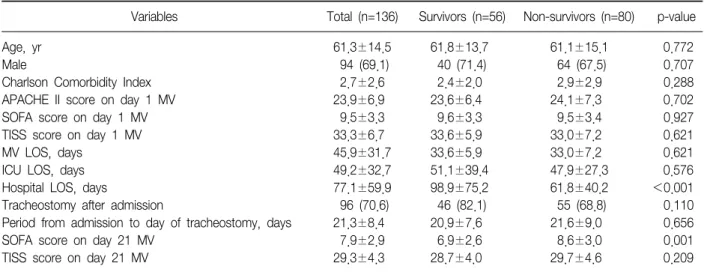
Table 1. Clinical characteristics of enrolled patients

Variables Total (n=136) Survivors (n=56) Non-survivors (n=80) p-value

Age, yr 61.3±14.5 61.8±13.7 61.1±15.1 0.772

Male 94 (69.1) 40 (71.4) 64 (67.5) 0.707

Charlson Comorbidity Index 2.7±2.6 2.4±2.0 2.9±2.9 0.288

APACHE II score on day 1 MV 23.9±6.9 23.6±6.4 24.1±7.3 0.702

SOFA score on day 1 MV 9.5±3.3 9.6±3.3 9.5±3.4 0.927

TISS score on day 1 MV 33.3±6.7 33.6±5.9 33.0±7.2 0.621

MV LOS, days 45.9±31.7 33.6±5.9 33.0±7.2 0.621

ICU LOS, days 49.2±32.7 51.1±39.4 47.9±27.3 0.576

Hospital LOS, days 77.1±59.9 98.9±75.2 61.8±40.2 <0.001

Tracheostomy after admission 96 (70.6) 46 (82.1) 55 (68.8) 0.110

Period from admission to day of tracheostomy, days 21.3±8.4 20.9±7.6 21.6±9.0 0.656

SOFA score on day 21 MV 7.9±2.9 6.9±2.6 8.6±3.0 0.001

TISS score on day 21 MV 29.3±4.3 28.7±4.0 29.7±4.6 0.209

Values are presented as mean±standard deviation for continuous variables and number (%) for categorical variables. Statistical sig- nificance was tested by Student's t-test for continuous variables or the Chi-square test or Fisher's exact test (for small numbers) for categorical variables.

APACHE: Acute Physiology and Chronic Health Evaluation; MV: mechanical ventilation; SOFA: Sequential Organ Failure Assessment;

TISS: Therapeutic Intervention Scoring System 28; LOS: length of stay; ICU: intensive care unit.

be significantly associated with survival were analyzed further with a Cox proportional hazard model to adjust for the potential confounding effect of each factor.

Hazard ratios with 95% confidence intervals were used to report the results. A two-tailed p<0.05 was consid- ered to indicate a significant difference.

Results 1. Clinical characteristics of patients

During the study period, a total of 2,644 patients were admitted to the medical ICU. Of those, 136 pa- tients (5.1%) met our definition of PMV patients. The median number of days on mechanical ventilation was 45 (range, 21∼231). Clinical characteristics of the pa- tients are shown in Table 1. The most common diag- nosis of initial ICU admission was respiratory failure caused by pulmonary causes (n=97) which included pneumonia (n=69), acute exacerbation of chronic lung disease (n=15), pulmonary tuberculosis (n=9), and pul- monary edema (n=4). The medical ICU and hospital mortality rates were 45.6% and 48.5%, respectively, and the 6-month cumulative mortality rate was 58.8%. There

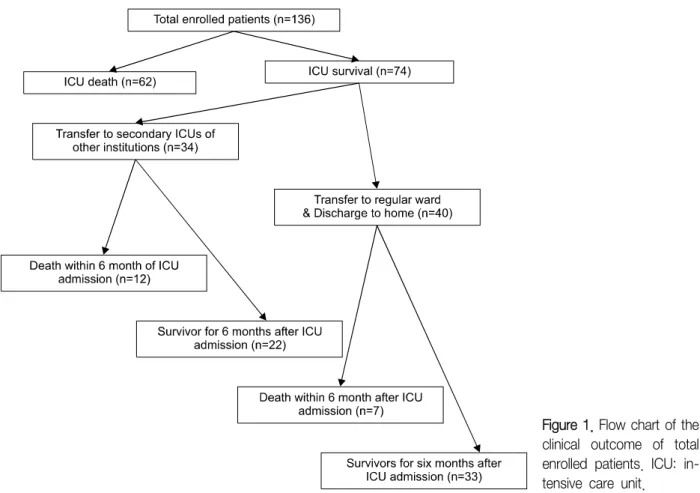
were 96 patients who underwent tracheostomy place- ment after admission and their mean period from admis- sion to the day of tracheostomy was 21.3±8.4 days (median, 22 days; range, 1st day∼50th day after admis- sion). Among the 96 patients with trachesotomy after admission, 57 subjects (59.3%) had their placement date after 21 days of mechanical ventilation. Sixty-three pa- tients (46.3%) were successfully weaned from ventilator care; however, we could not find any factors that were associated with successful weaning from ventilator (data not shown). Of the ICU survivors (n=74), 34 patients (45.9%) were transferred to other hospitals (not uni- versity hospitals), but there was no significant 6-month cumulative mortality difference compared to patients who were transferred to the general ward (Figure 1).

2. Predictors of survival

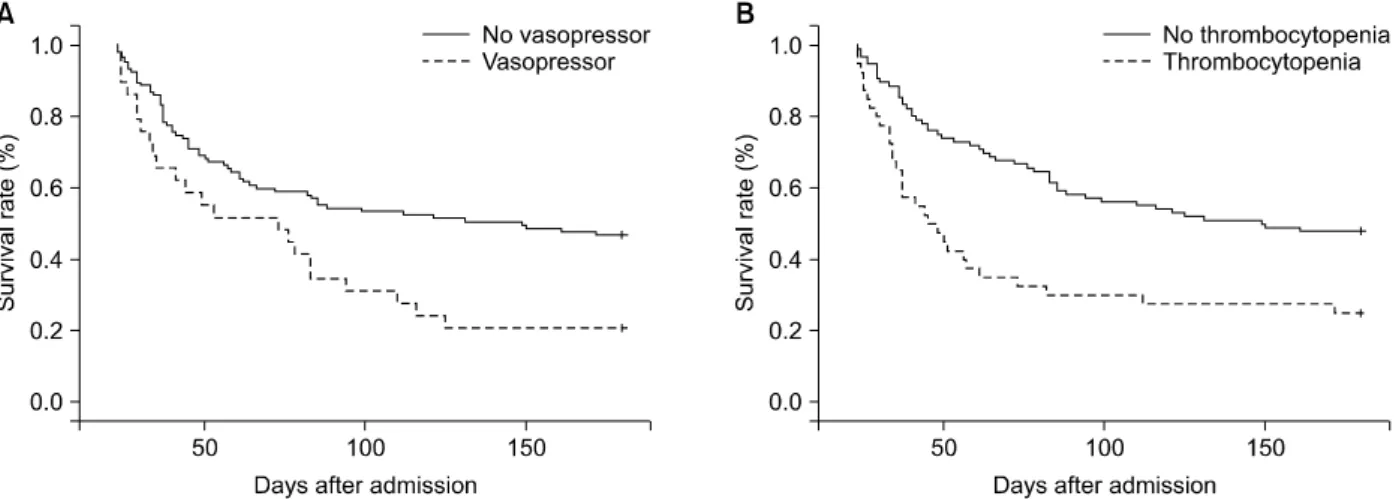
Aforementioned clinical factors in data collection were evaluated with regard to their influence on survival. Three factors were associated with mortality based on Kaplan-Meier survival curves and log-rank tests (p<0.05): thrombocytopenia (platelet count≤

150×10

9

/L) (p<0.001), requirement for vasopressors

(4)

Figure 1. Flow chart of the clinical outcome of total enrolled patients. ICU: in- tensive care unit.

Table 2. Multivariate analysis of prognostic factors contributing to mortality in patients requiring prolonged mechanical ventilation

Variables HR (95% CI) p-value

Male 1.028 (0.623∼1.697) 0.913

Age, yr 0.998 (0.983∼1.014) 0.816

Tracheostomy during hospitalization 0.660 (0.400∼1.087) 0.102

Requirement for vasopressors on day 21 1.822 (1.111∼2.986) 0.017

Thrombocytopenia* on day 21 1.964 (1.225∼3.148) 0.005

*Thrombocytopenia is defined as platelet count≤150×10

9

/L.

HR: hazard ratio; CI: confidence interval.

on day 21 (p=0.007) and tracheostomy during hospital- ization (p=0.025). After adjusting for age and sex, these three factors were introduced into the Cox regression hazard model, which revealed that two variables (thrombocytopenia and requirement for vasopressors on day 21) were independent factors of survival (Table 2, Figure 2). Patients (n=57) with at least one of two fac- tors had higher APACHE scores on admission day (25.3±7.2 vs. 22.9±6.6, p=0.044), TISS scores on day

21 (31.2±4.8 vs. 27.9±3.4, p<0.001) and 6-month cu- mulative mortality rates (75.4% vs.46.8%, p=0.001) than patients without these two factors.

Discussion

In this analysis of a cohort of patients with PMV, our

findings were within the range compared to published

studies that demonstrated the incidence of PMV patients

(5)

Figure 2. Survival curves according to the requirement for vasopressor and thrombocytopenia on day 21 for patients requiring prolonged mechanical ventilation. (A) Requirement for vasopressor or not (log rank, 7.26; p=0.007). (B) Thrombocytopenia or not (log rank, 11.27; p=0.008).

and ventilator liberation rates in ICU

2-4,6,7,13

. Our study also showed a reduced 6-month cumulative mortality rate as compared to previous reports on Korean PMV patients

13

, which may have been due to the skilled care and advanced various medical resources of critical care.

In the future, the number of patients requiring PMV is likely to increase continuously due to new therapeutic strategies and medical resources available in critical care, and would be an emerging challenge for the health care system in Korea. There is a limited amount of data about these patients in our country, thus it would be necessary to evaluate demographic and clin- ical characteristics through a large prospective study us- ing a formal definition for PMV.

The definition of PMV is defined differently in other studies as ventilator care for ≥4 days with trache- ostomy

2,6

, because the placement of a tracheostomy for patients with prolonged weaning failure is a clinical marker of the transition between the acute and chronic phases of critical illness. From the current study result, however, the period from admission to the day of tra- cheostomy was not constant. Also, more than half of the total number of subjects received tracheostomy after 21 days of mechanical ventilation which suggested that the day of tracheostomy and its placement may be influ- enced by differences of opinions between physicians and families of the patients. Therefore, it seems to be

appropriate to define patients requiring PMV as those on mechanical ventilation for ≥21 days based on a consensus conference in order to obtain clear and con- cise clinical characteristics

14

.

Considering the high symptom burden of these pa-

tients and frequent poor outcomes, a mortality pre-

diction model that identifies patients on PMV with the

highest and lowest risk for death would be useful to

inform discussions of prognoses among clinicians and

patients or their family. Recently, a 1-year mortality pre-

diction model was developed for these patients using

clinical variables measured on day 21 including throm-

bocytopenia, requirement for vasopressors, hemodial-

ysis and age ≥50 years

3

. Of these variables, the former

two factors (thrombocytopenia and requirement for vas-

opressors on day 21) were prognostic indicators in the

present study; however the remaining two factors

(hemodialysis and age≥50 years) were not. In addition

to this model, it was suggested that the long-term prog-

nosis also would be influenced by various factors such

as functional or cognitive recovery as well as the opin-

ions of patients' family and physician-family communi-

cation

6,19-21

. There were also cultural differences be-

tween Western countries and Korea to be taken into

consideration for providing life support; therefore it

would be necessary to develop a new mortality pre-

diction model through a multicenter study which would

(6)

be applicable to the Korean patient population requir- ing PMV.

This study had several limitations. First, we expected that the concentration of vasopressors and degree of thrombocytopenia would affect outcomes; however, we were unable to identify any statistically significant differ- ences, possibly due to the small sample size. Second, we could not complete interviews for survivors and sur- vey the general conditions (such as quality of life) of the total number of enrolled patients which could have provided more significant results. Third, the study was an observational retrospective analysis and the sample size was small, in that the results of our study may not be generalized. Our data represented the experience of a single center and reflected a unique organization and process of care.

In conclusion, we found that patients requiring PMV had high 6-month cumulative mortality rates and two clinical variables measured on day 21 (thrombocytope- nia and requirement for vasopressors) may be asso- ciated with prognostic indicators. Prospective, large- scale multicenter studies with longer follow-up time pe- riods are required to determine the distinct demographic and clinical characteristics as well as prognostic factors in the Korean patient population.

Acknowledgements

This work was supported by clinical research grant from Pusan National University Hospital (2011).

References

1. Nelson JE, Cox CE, Hope AA, Carson SS. Chronic crit- ical illness. Am J Respir Crit Care Med 2010;182:446-54.

2. Cox CE, Carson SS, Lindquist JH, Olsen MK, Govert JA, Chelluri L, et al. Differences in one-year health out- comes and resource utilization by definition of pro- longed mechanical ventilation: a prospective cohort study. Crit Care 2007;11:R9.

3. Carson SS, Garrett J, Hanson LC, Lanier J, Govert J, Brake MC, et al. A prognostic model for one-year mor- tality in patients requiring prolonged mechanical

ventilation. Crit Care Med 2008;36:2061-9.

4. Lone NI, Walsh TS. Prolonged mechanical ventilation in critically ill patients: epidemiology, outcomes and modelling the potential cost consequences of establish- ing a regional weaning unit. Crit Care 2011;15:R102.

5. Hung MC, Lu HM, Chen L, Hu FC, Chan SY, Yan YH, et al. Life expectancies and incidence rates of patients under prolonged mechanical ventilation: a population- based study during 1998 to 2007 in Taiwan. Crit Care 2011;15:R107.

6. Unroe M, Kahn JM, Carson SS, Govert JA, Martinu T, Sathy SJ, et al. One-year trajectories of care and re- source utilization for recipients of prolonged mechan- ical ventilation: a cohort study. Ann Intern Med 2010;

153:167-75.

7. Wu YK, Tsai YH, Lan CC, Huang CY, Lee CH, Kao KC, et al. Prolonged mechanical ventilation in a respi- ratory-care setting: a comparison of outcome between tracheostomized and translaryngeal intubated patients.

Crit Care 2010;14:R26.

8. Robson V, Poynter J, Lawler PG, Baudouin SV. The need for a regional weaning centre, a one-year survey of intensive care weaning delay in the Northern Region of England. Anaesthesia 2003;58:161-5.

9. Zilberberg MD, Luippold RS, Sulsky S, Shorr AF.

Prolonged acute mechanical ventilation, hospital re- source utilization, and mortality in the United States.

Crit Care Med 2008;36:724-30.

10. Cox CE, Carson SS, Govert JA, Chelluri L, Sanders GD.

An economic evaluation of prolonged mechanical ventilation. Crit Care Med 2007;35:1918-27.

11. Dematte D'Amico JE, Donnelly HK, Mutlu GM, Feinglass J, Jovanovic BD, Ndukwu IM. Risk assess- ment for inpatient survival in the long-term acute care setting after prolonged critical illness. Chest 2003;124:

1039-45.

12. Carson SS, Bach PB, Brzozowski L, Leff A. Outcomes after long-term acute care. An analysis of 133 mechan- ically ventilated patients. Am J Respir Crit Care Med 1999;159(5 Pt 1):1568-73.

13. Lee K, Hong SB, Lim CM, Koh Y. Sequential organ fail- ure assessment score and comorbidity: valuable prog- nostic indicators in chronically critically ill patients.

Anaesth Intensive Care 2008;36:528-34.

14. MacIntyre NR, Epstein SK, Carson S, Scheinhorn D, Christopher K, Muldoon S, et al. Management of pa- tients requiring prolonged mechanical ventilation: re- port of a NAMDRC consensus conference. Chest 2005;

128:3937-54.

(7)

15. Knaus WA, Draper EA, Wagner DP, Zimmerman JE.

APACHE II: a severity of disease classification system.

Crit Care Med 1985;13:818-29.

16. Vincent JL, Moreno R, Takala J, Willatts S, De Mendonça A, Bruining H, et al. The SOFA (Sepsis-re- lated Organ Failure Assessment) score to describe or- gan dysfunction/failure. On behalf of the Working Group on Sepsis-Related Problems of the European Society of Intensive Care Medicine. Intensive Care Med 1996;22:707-10.

17. Miranda DR, de Rijk A, Schaufeli W. Simplified Thera- peutic Intervention Scoring System: the TISS-28 items:

results from a multicenter study. Crit Care Med 1996;

24:64-73.

18. Charlson ME, Pompei P, Ales KL, MacKenzie CR. A new method of classifying prognostic comorbidity in longitudinal studies: development and validation. J Chronic Dis 1987;40:373-83.

19. Nelson JE, Mercado AF, Camhi SL, Tandon N, Wallenstein S, August GI, et al. Communication about chronic critical illness. Arch Intern Med 2007;167:2509- 15.

20. Cox CE, Martinu T, Sathy SJ, Clay AS, Chia J, Gray AL, et al. Expectations and outcomes of prolonged me- chanical ventilation. Crit Care Med 2009;37:2888-94.

21. Song T, Kim K, Koh Y. Factors determining the estab-

lishment of DNR orders in oncologic patients at a uni-

versity hospital in Korea. Korean J Med 2008;74:403-10.

수치

Table  1.  Clinical  characteristics  of  enrolled  patients
Figure 1. Flow chart of the clinical  outcome  of  total  enrolled  patients.  ICU:   in-tensive  care  unit.
Figure  2.  Survival  curves  according  to  the  requirement  for  vasopressor  and  thrombocytopenia  on  day  21  for  patients requiring  prolonged  mechanical  ventilation

참조

관련 문서

Factors influencing nurses' intention to care for patients with COVID-19: Focusing on positive psychological capital and nursing

Therefore, nurses should be responsible for the relations to resolve the needs of care between nurses and patients and through communication with the patients,

As the number of clinical cases requiring supracrestal apical-coronal positioning is increasing, we examined the utility of FEA in such cases. In this study,

period was prolonged unavoidably, (3) by explaining the risk factors associated with the failure to patients honestly, and subsequently performing

ventilation unit at the top and a hydrogen charging station with a ventilation unit at the bottom by using it, the flame and temperature generated inside the

Through a review of electronic medical records, we analyzed the applied BCSs, perioperative hematologic changes, and morbidity and mortality in JW patients

VENTILATION MECHANICAL VENTILATION OR ELECTRIC FANS FITTED IN SLEEPING ROOMS AND MESS ROOMS ARE NOT IN SATISFAC -TORY WORKING CONDITION.. CARGO ACCOMMODATION

Korea Institute of child care and education 6 7 Korea Institute of child care and education... Korea Institute of child care and education 12 13 Korea Institute of child