• 검색 결과가 없습니다.

Bilateral Ophthalmic Artery Occlusion in Rhino-Orbito-Cerebral Mucormycosis

N/A
N/A
Protected

Academic year: 2022

Share "Bilateral Ophthalmic Artery Occlusion in Rhino-Orbito-Cerebral Mucormycosis"

Copied!
4
0
0

로드 중.... (전체 텍스트 보기)

전체 글

(1)

Korean Journal of Ophthalmology 22(1):66-69, 2008 DOI : 10.3341/kjo.2008.22.1.66

66

Bilateral Ophthalmic Artery Occlusion in Rhino-Orbito-Cerebral Mucormycosis

Yoo-Mi Song, MD

1

, Sun Young Shin, MD

2

Department of Ophthalmology, Hanyang University College of Medicine

1

, Seoul, Korea Department of Ophthalmology, The Catholic University College of Medicine

2

, Seoul, Korea

Purpose: To report a case of bilateral ophthalmic artery occlusion in rhino-orbito-cerebral mucormycosis.

Methods: Reviewed clinical charts, photographs, and fluorescein angiography

Results: An 89‐year‐old man with poorly controlled diabetes developed sudden bilateral ptosis, complete ophthalmoplegia of the right eye, and superior rectus palsy of the left eye. Brain and orbit magnetic resonance imaging showed midbrain infarction and mild diffuse sinusitis. On the 2nd day of hospitalization, sudden visual loss and light reflex loss developed. There were retinal whitening, absence of retinal arterial filling, and a total lack of choroidal perfusion on fluorescein angiography of the right eye. The left eye showed a cherry red spot in the retina and the absence of retinal arterial filling and partial choroidal perfusion on fluorescein angiography. On rhinologic examination, mucormyosis was noticed. Despite treatment, visual acuity and light reflex did not recover and he died 4 days after admission.

Conclusions: Bilateral ophthalmic artery occlusion can occur in rhino‐orbital‐cerebral mucormycosis.

Korean Journal of Ophthalmology 22(1):66-69, 2008

Key Words: Bilateral ophthalmic artery occlusion, Mucormycosis

Received: May 30, 2006 Accepted: September 10, 2007

Reprint requests to Sun Young Shin, MD. Department of Ophthal- mology, Gangnam St. Mary’s Hospital, College of Medicine, The Catholic University of Korea. 505 Banpo-dong, Seocho-gu, Seoul 137-040, Korea. Tel: 82-2-590-1523, Fax: 82-2-533-6718, E-mail:

[email protected]

* Presented at the 95th Meeting of the Korean Ophthalmological Society, Pusan, Korea, April 14, 2006.

Rhino-orbito-cerebral mucormycosis (ROCM) is a fatal fulminant opportunistic infection leading to death in some cases, which mostly occurs among patients with a weakened immune system. This case involved bilateral ophthalmic artery occlusion with third nuclear, as well as fourth and sixth cranial nerve palsies of the right eye, which is a rare initial presentation of mucormycosis.

Case Report

An 89-year-old man presented with sudden onset of bilateral ptosis on November 2, 2005. He had a one week history of xerostomia. Three days prior to hospitalization, the patient was diagnosed with diabetes mellitus and had a history of surgery for gastric cancer, which occurred four years ago.

His fasting glucose level and postprandial (2 hr-after-meal) glucose level were 196 mg/dL and 300 mg/dL, respectively.

His visual acuity was 20/100 in both eyes. The right pupil was mid-dilated and had no light reflex. Complete ophthlamoplegia of the right eye and superior rectus palsy of the left eye were observed. Bilateral ptosis, mild proptosis, and periorbital puffiness were also observed. His anterior segment examination was notable for moderate nuclear sclerotic cataracts and mild chemosis, while fundoscopic examination revealed no specific abnormal finding.

Brain and orbit magnetic resonance imaging (MRI) revealed no specific abnormal findings in the cavernous sinus and orbit, except bilateral midbrain infarction and mild diffuse sinusitis (Fig. 1). Based on the brain MRI finding, the bilateral ptosis and superior rectus palsy of the left eye were regarded to be caused by 3

rd

nuclear palsy. The results of CSF analysis showed that white blood cell count and protein were elevated and intravenous antibiotics were given for a central nervous system infection.

On November 3, 2005, the visual acuity of both eyes

decreased to perception of hand motion and bilateral

complete ophthlamoplegia developed (Fig. 2). Anterior

segment examination revealed no specific change compared

with the previous finding. Fundoscopic examination revealed

that the optic disc was pale and the posterior pole was

generally edematous in both eyes. A cherry-red spot was

found in the left eye (Fig. 3). Fluorescein angiography (FAG)

demonstrated that retinal vessels were not imaged, even 10

minutes after injecting the dye.

(2)

Fig. 3. Fundus photographs on the day after initial presentation: (Left) Right eye (Right) left eye, Both eyes show retinal whitening and optic disc edema, the left eye shows a cherry-red spot.

YM Song, et al. OPHTHALMIC ARTERY OCCLUSION IN MUCORMYCOSIS

67 Fig. 2. On the day after initial presentation, his visual acuity of both eyes decreased to perception of hand motion and bilateral complete ophthlamoplegia developed. Arrows represent direction of ocular movement.

Fig. 1. Brain and orbit magnetic resonance imaging (A. T2 weighted image, B. pre-enhanced T1 weighted image, C. gadolinium-enhanced

T1 image) revealed no specific abnormal findings in the orbit, except mild diffuse sinusitis.

(3)

Kor J Ophthalmol Vol.22, No.1, 2008

68

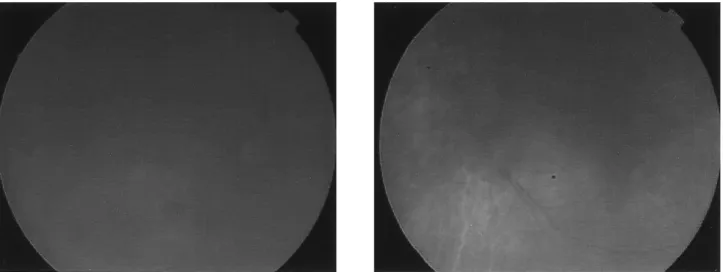
Fig. 4. Fluorescein angrography on the day after initial presentation: (Left) Right eye (Right) left eye, at late phase. The retinal vessels are not imaged at all, even 10 minutes after injecting the dye. Slight choroid fluorescence is observed in the left eye.
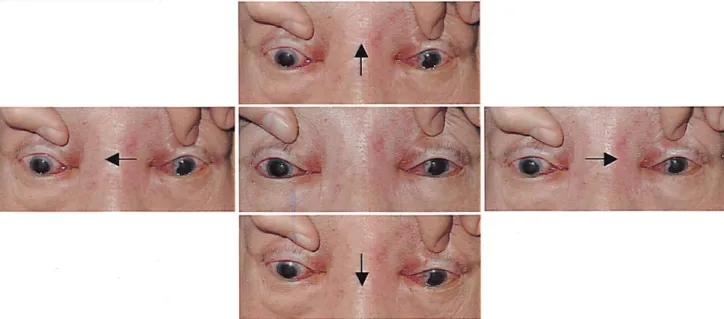
Fig. 5. Biopsy of the hard palate ulcer confirmed mucormycosis.

Candida is discovered on the surface of ulcer (arrow head) and mucor is discovered in the necrotizing deep area as widely spreading spawn (arrow). (PAS stain, ×400)

Choroidal perfusion was not found in the right eye and partial choroidal fluorescence was observed in the left eye (Fig. 4). Thus, he was diagnosed with simultaneous bilateral ophthalmic artery occlusions. On the same day, rhinologic examination revealed a destructed nasal septum, black necrotic lump in the nasal cavity and an ulcer on the hard palate, which was confirmed as murcomycosis upon biopsy (Fig. 5).

Based on the clinical findings and biopsy result, ROCM was diagnosed and Amphotericin B (50 mg/day) was intravenously administered. Although extensive local excision was required, the patient and his guardian rejected to have surgery. On November 6, 2005, the patient died.

Discussion

Typical ROCM initially involves general weakness,

headache in the occipital area, fever and bloody rhinorrhea.

Subsequently, facial and/or orbital cellulitis, ptosis, and ophthlamoplegia occur.

1

In this case, 3

rd

nuclear palsy, 4th, and 6th cranial nerve palsies of the right eye initially developed and subsequently, ophthalmolplegia of the left eye and bilateral ophthalmic artery occlusions followed.

Ferry et al.

2

reported 16 patients with rhino-orbito-cerebral mucormycosis. In their report, rhinologic symptoms were mostly common initial symptoms (11 cases), while ocular pain and facial cellulitis were observed in 6 and 5 cases, respectively. This patient did not complain of rhinologic symptoms, although rhinologic examination revealed a black eschar in the nasal cavity.

Absence of a cherry red spot in the retina and FAG finding

of the right eye are consistent with concomitant choroidal and

retinal ischemia. Although a cherry red spot in the retina was

present in the left eye, retinal arterial imaging was not found,

and partial choroidal perfusion was observed. The lack of

sign of anterior segment ischemia can be explained by

incomplete ophthalmic arterial occlusion. Also, the 3

rd

cranial

nerve palsy of the right eye may have been caused by orbital

ischemia, infarction of the midbrain, or both. In this case, the

brain MRI revealed no specific abnormal findings in the

cavernous sinus and orbit, except bilateral midbrain

infarction. It suggested that midbrain infarction caused the

ophthalmoplegia; however, ocular ischemia secondary to

invasion of the orbital artery cannot be excluded as the cause

of ophthalmoplegia. The mechanism of orbital ischemia is

that the hyphae have a marked tendency to invade and

thrombose arteries.

3,4

In this case, the orbital apex was not

involved according to radiologic examination. Direct vascular

invasion most likely caused ophthalmic ischemia and

ophthalmoplegia. A case of unilateral orbital infarction

syndrome associated with rhino-orbito-cerebral mucormycosis

has been reported in Korea.

5

When the eye is infected, the

choroids usually exhibit the greatest number of organisms,

(4)

YM Song, et al. OPHTHALMIC ARTERY OCCLUSION IN MUCORMYCOSIS

69 the fungi having entered the globe via the ciliary arteries.

3,4

As is the case with acute central retinal artery obstruction, retinal opacification is also present with acute ophthalmic artery obstruction. However, the latter it is usually more pronounced, both in the severity and the extent of the area involved. The presence of a cherry red spot with an acute ophthalmic artery obstruction is variable. With an ophthalmic artery obstruction, the presence or absence of a cherry red spot is probably determined by the degree of choroidal hypoperfusion, the rapidity of onset of vascular compromise, and the duration of the insult.

The most common causes of ophthalmic artery and/or central retinal artery occlusion are embolization from ulcerated plaques of the carotid artery and atherosclerotic occlusion of the internal carotid artery. However, it is extremely rare for either one of these etiologies to cause bilateral visual loss. Brown et al.

6

reported a case of acute simultaneous bilateral obstruction of central retinal and posterior choroidal circulations in atrial fibrillation and typhoid fever. A case of virtually simultaneous bilateral ophthalmic artery occlusions was reported in a patient with acquired immunodeficiency syndrome and central nervous system lymphoma. In ROCM, visual loss usually has been attributed to ophthalmic artery and/or central retinal artery occlusions; however, most previous reports covered unilateral or sequential ophthalmic artery and/or central retinal artery occlusions.

Physicians should be alerted to rhino-orbito-cerebral mucormycosis in patients who present with ocular abnormalities, including orbital cellulitis, ptosis, and ophthlamoplegia, and have diabetes mellitus or a weak immune system. A high index of suspicion is very important for the early diagnosis of this very progressive disease. Our case illustrates that patients with rhino-orbito-cerebral mucormycosis can have bilateral ophthalmic artery occlusion and loss of vision within a few days.

References

1. Vessely VB, Zitsch RP 3r, Estrem SA, Renner G. Atypical presentations of mucormycosis in the head and neck.

Otolaryngol Head Neck Surg 1996;115:573-7.

2. Ferry AP, Abedi S. Diagnosis and management of rhino- orbitocerebral mucormycosis. Ophthalmology 1983;90:

1096-104.

3. Onerci M, Gursel B, Hosal S. Rhinocerebral mucormycosis with extention to the cavernous sinus. Rhinology 1991;29:

321-4.

4. Bendet E, Talmi YP, Kronenberg J. Rhino‐orbito-cerebral mucormycosis. Otolaryngol Head Neck Surg 1996;114:

830-2.

5. Yang SW, Kim SY, Chung J, Kim KB. Two cases of orbital infarction syndrome. Korean J Ophthalmol 2000;14:

107-11.

6. Brown GC, Magargal LE, Simeone FA et al. Arterial

obstruction and ocular neovascularization. Ophthalmology

1982;89:139-46.

수치

Fig.  1.  Brain  and  orbit  magnetic  resonance  imaging  (A.  T2  weighted  image,  B
Fig.  4.  Fluorescein  angrography  on  the  day  after  initial  presentation:  (Left)  Right  eye  (Right)  left  eye,  at  late  phase

참조

관련 문서

Four volumes of the text are used as a core text to instruct third and fourth year elementary school students in the rudiments of Korean language related to daily

As a result, this study suggests some desirable teaching methods to gain knowledge of traditional Korean music in a familiar way, as well as a simple and effective teaching

The locations of aneurysms were middle cerebral artery in 15 patients, cerebral artery in 15 patients, cerebral artery in 15 patients, cerebral artery in

Though discourse between Silong and Huja could be delivered through narration of questions and answers, in this case, Huja disputed what Silong said as well

The purpose of this study was to analyze the impaction pattern of the impacted mandibular third molar and the relationship with the inferior alveolar nerve

The object of this paper is to examine resistance against the ruling ideology as a means of true survival in the novel Cat’s Eye by the iconic

This paper has significant as a study of case marker reflecting the colloquialism in Yanbian region in China which neglected by the studies on relying on

The minimum distance from production well is used as spatial information of well to avoid a complexity of neural network and the reservoir properties are used as combined