• 검색 결과가 없습니다.

Olibanum Extract Inhibits Vascular Smooth Muscle Cell Migration and Proliferation in Response to Platelet-Derived Growth Factor

N/A
N/A
Protected

Academic year: 2022

Share "Olibanum Extract Inhibits Vascular Smooth Muscle Cell Migration and Proliferation in Response to Platelet-Derived Growth Factor"

Copied!
7
0
0

로드 중.... (전체 텍스트 보기)

전체 글

(1)

107

ABBREVIATIONS: PDGF, platelet-derived growth factor; RASMC, rat aortic smooth muscle cells; MAPK, mitogen-activated protein kinase; Hsp, heat shock protein; ERK, extracellular signal-regulated kinase; JNK, c-Jun N-terminal kinase; DMEM, dulbecco modified eagle medium; FBS, fetal bovine serum; OWE, olibanum water extract.

Corresponding to: Bokyung Kim, Department of Physiology, School of Medicine, Konkuk University, 322, Danwol-dong, Chungju 380-701, Korea. (Tel) 82-43-8403726, (Fax) 82-43-8519329, (E-mail) bkkim2@

kku.ac.kr

*Additional corresponding author: Dr. HM Lee, [email protected]

Olibanum Extract Inhibits Vascular Smooth Muscle Cell Migration and Proliferation in Response to Platelet-Derived Growth Factor

Ok-Byung Choi

1

, Joo-Hoon Park

1

, Ye Jin Lee

1

, Chang-Kwon Lee

2

, Kyung-Jong Won

2

, Junghwan Kim

3

, Hwan Myung Lee

1,*

, and Bokyung Kim

2

1

Department of Cosmetic Science, College of Natural Science, Hoseo University, Asan 336-795,

2

Department of Physiology, School of Medicine, Konkuk University, Chungju 380-701,

3

Department of Physical Therapy, College of Health & Welfare, Yongin University, Yongin 449-714, Korea

Olibanum (Boswellia serrata) has been shown to have anti-inflammatory, anti-arthritic and anti- cancer effects. This study determined the role of a water extract of olibanum in platelet-derived growth factor (PDGF)-stimulated proliferation and migration of rat aortic smooth muscle cells (RASMCs).

PDGF-BB induced the migration and proliferation of RASMCs that were inhibited by olibanum extract in a dose-dependent manner. The PDGF-BB-increased phosphorylation of p38 mitogen-activated protein kinase (MAPK); the heat shock protein (Hsp) 27 was significantly inhibited by the olibanum extract.

The effects of PDGF-BB-induced extracellular signal-regulated kinase1/2 was not altered by the olibanum extract. Treatment with olibanum extract inhibited PDGF-BB-stimulated sprout out growth of aortic rings. These results suggest that the water extract of olibanum inhibits PDGF-BB-stimulated migration and proliferation in RASMCs as well as sprout out growth, which may be mediated by the inhibition of the p38 MAPK and Hsp27 pathways.

Key Words: Olibanum, Migration, Proliferation, Rat aortic smooth muscle cells, Mitogen-activated protein kinase

INTRODUCTION

Olibanum is a resin obtained from Boswellia serrata, an Indian herb used as incense. This resin has been shown to have anti-inflammatory and -arthritic effects and has been extensively used in oriental medicine for the pre- vention and/or treatment of inflammatory disorders, includ- ing arthritis, asthma and inflammatory bowel disease (Gupta et al., 1998; Kimmatkar et al., 2003). The resin ex- tracts have been shown to have anti-cancer effects in leuke- mia and brain tumors (Winking et al., 2000). The extracts are also known to influence cellular responses such as the proliferation of liver cancer cells and lymphocytes (Gayathri et al., 2007), and the migration of leukocytes (Sharma et al., 1988). However, it is not been known whether olibanum extracts affect vascular smooth muscle cell behavior, such as migration and proliferation.

Many vascular diseases are characterized by the abnor- mal accumulation of vascular smooth muscle cells in the intima of vessels, a process that is thought to occur, in part, as a result of the migration and proliferation of these cells from the tunica media (Ross, 1999; Lee et al., 2009).

Vascular smooth muscle cell migration and proliferation is induced by various inflammatory cytokines and growth factors. PDGF has been recognized as a major mitogen and

one of the most important growth factors; it has been shown to stimulate vascular smooth muscle cell proliferation and migration (Grotendorst et al., 1981; Raines, 2004; Millette et al., 2006). PDGF is known to induce signaling molecules that are associated with the activation of mitogen-activated protein kinases (MAPKs) (Pearson et al., 2001). MAPKs be- long to a family of serine/threonine-specific protein kinases, consisting of three isoforms: extracellular signal-regulated kinase (ERK) 1/2, p38 MAPK, and stress-activated protein kinase/c-Jun N-terminal kinase (JNK) (Geraldes et al., 2002;

Kim et al., 2004). These MAPKs are involved in the regu- lation of the migration and proliferation of vascular smooth muscle cells (Liu et al., 2007). Most of the PDGF-stimulated signaling cascade requires the activation of MAPKs. The MAPK pathway mediates migration and proliferation in re- sponse to PDGF in the vascular smooth muscle (Lee et al., 2007). The small heat shock protein (Hsp) 27, a physio- logical substrate for p38 MAPK, modulates the polymer- ization of actin by its phosphorylation (Hedges et al., 1999).

The Hsp27/p38 MAPK pathway plays an important role in

actin cytoskeleton remodeling and smooth muscle cell mi-

gration (Hedges et al., 1999). Moreover, Hsp27 has been

reported to be involved in the regulation of smooth muscle

cell proliferation (Champagne et al., 1999; Salinthone et al.,

2007).

(2)

A variety of studies on herbal medicines have been per- formed for the prevention and cure of patients with vas- cular disorders, including hypertension and atherosclerosis.

However, to date, the responses of proliferation and migra- tion, in rat aortic smooth muscle cells (RASMCs), to oliba- num extract, have not been studied. The present inves- tigation was designed to determine the role of olibanum ex- tract in the proliferation and migration response of RASMCs to PDGF using the water extraction method.

METHODS Materials

PDGF-BB was purchased from R&D Systems (Minneapolis, MN, USA) and Matrigel was purchased from BD Bioscience (San Jose, CA, USA). Dulbecco modified Eagle medium (DMEM) and fetal bovine serum (FBS) were purchased from Hyclone (Logan, UT, USA). The antibodies used in- cluded anti-p38 MAPK, anti-phospho p38 MAPK (Cell sig- naling, Beverly, MA, USA), anti-phospho Hsp27 (Affinity BioReagents, Golden, CO, USA), anti-ERK1/2, anti-phospho ERK1/2 (Promega, Madison, WI, USA), and anti-β-actin (Sigma, St Louis, MO, USA).

Preparation of olibanum extract

The olibanum was pounded in a mortar. The powder (25 g) was mixed with 200 ml of distilled water and stirred overnight at room temperature. This mixture was centri- fuged at 1,500 g for 10 min and the supernatant was collected. Thereafter, the supernatant was again centri- fuged at 2,500 g for 10 min and successively at 10,000 g for 20 min, and then was filtered. The filtrates were stored at −80

o

C and then freeze-dried to yield 3.875 g of water soluble extract.

Cell preparation and culture

All experiments were conducted according to the institu- tional guidelines of Konkuk University, Republic of Korea.

RASMCs were enzymatically isolated from male Sprague Dawley rats (5 weeks old, 160 g, n=2, Daehanbiolink, Chungju, Republic of Korea), and cultured in DMEM con- taining 10% FBS, 100 U/ml penicillin, 100 μg/ml strepto- mycin, and 200 mM glutamine. RASMCs, used at passages 5∼8, were grown to 70∼80% confluence and starved in FBS-free DMEM for 24 h.

Immunoblotting

The cells were treated with PDGF-BB or olibanum ex- tract and were lysed with a cold buffer (20 mM HEPES [pH 7.5], 1% Nonidet P-40, 150 mM NaCl, 10% glycerol, 10 mM NaF, 1 mM Na

3

VO

4

, 2.5 mM 4-nitrophenylphosphate, 0.5 mM PMSF, and 1 tablet of complete proteinase inhibitor cocktail [Roche, Indianapolis, IN, USA]). The proteins (30∼

50 μg/lane) were separated on 8∼12% polyacrylamide SDS gels, and then transferred electrophoretically to a poly- vinylidene fluoride membrane (Millipore, Bedford, MA, USA).

The membranes were incubated overnight at 4

o

C with anti- bodies diluted 1:1,000∼2,000 and used for the secondary antibodies. The blots were then incubated with enhanced chemiluminescence reagents (Amersham Pharmacia, Pis-

cataway, NJ, USA) and exposed to photographic film.

Migration assay

Cell migration was examined in 48-well Boyden micro- chemotaxis chambers (Neuro Probe, Cabin John, MD, USA). Polycarbonate membranes with 8 μm pores (Neuro Probe) were coated with 0.1 mg/ml type I collagen isolated from rat’s tail tendon (BD Bioscience) and then dried for 60 min. The bottom chamber was loaded with 3×10

4

cells and the membrane was laid over the cells. The micro- chamber was then inverted and incubated at 37

o

C for 120 min. The chamber was then returned to an upright posi- tion, and the upper wells were loaded with DMEM contain- ing 0.1% BSA, PDGF-BB, and olibanum extract. The cham- ber was then incubated at 37

o

C for 90 min, and the mem- branes were fixed and stained using Diff-Quik (Baxter Healthcare, Miami, FL, USA). The number of cells that had migrated through the membrane was determined by count- ing four randomly chosen regions of each well by micro- scopy (×400). All samples used in the experiments con- tained 0.1% dimethyl sulfoxide, which did not affect the RASMC migration.

Proliferation assay

RASMC proliferation was performed with a 5-bromo- 2'-deoxyuridine (BrdU) incorporation assay (Roche). Cells, which were seeded in 96-well microtiter plates at a density of 2×10

3

cells/well for 12 h, were incubated in FBS-free DMEM for 6 h and then treated with olibanum extract and PDGF-BB for 36 h. The cells were treated with BrdU-label- ing solution (10 μM) and then incubated for 12 h. After the denaturation of the DNA, peroxidase-labeled anti-BrdU monoclonal antibodies were added and the samples in- cubated at room temperature for 90 min. The BrdU-anti- body complexes were detected with a Victor 3 luminometer (PerkinElmer, Boston, MA, USA).

Cell viability assay

The cell viability was measured by an 2,3-bis [2-methyloxy- 4-nitro-5-sulfophenyl]-2H-tetrazolium-5-carboxanilide (XTT) assay using the WelCount

TM

cell viability assay kit (WelGENE, Daegu, Korea). The RASMCs were incubated in 96-well plates (1×10

4

cells/well) for 24 h at 37

o

C and treated with XTT (200 μg/ml) per each well. After the in- cubation of the plates in the presence of XTT dye, for 4 h to induce the formation of formazan dye, the samples were quantitated with an enzyme-linked immunosorbent assay reader at 450 nm.

Aortic ring assay

Ex vivo migration of the RASMCs was measured by an aortic ring assay using Matrigel, with some modifications of a previously reported method (Nicocia and Ottinetti, 1990).

The endothelium and adventitium, of the aorta in Sprague

Dawley rats (5 weeks, n=4), was removed enzymatically, the

vessels were then cut into rings (1 mm). The rings were

placed and embedded in 48-well plates coated with Matrigel

(BD Bioscience), then PDGF-BB and olibanum extract were

simultaneously added into the FBS-free medium. The rings

were stained with Diff-Quik, photographed and the length

of the sprouts analyzed using Scion Image software on day 5.

(3)

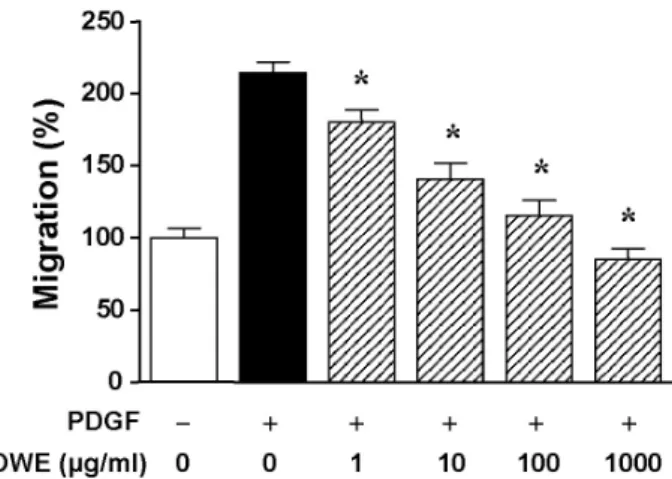
Fig. 1. Effect of olibanum extract on PDGF-BB-stimulated RASMC migration. The effect of olibanum extract on RASMC migration.

The cells from SD rats were treated with or without olibanum extract (1∼1,000 μg/ml) or PDGF-BB (10 ng/ml) for 90 min.

Migration was quantified using a Boyden chamber assay as described in the Methods section. Cell migration in the quiescent state was expressed as 100% (n=8). Each value represents the mean±SEM. *Denotes a significant difference from the PDGF-BB- stimulated state, with p<0.05.

Fig. 2. Effect of olibanum extract on PDGF-BB-stimulated RASMC proliferation. Cells were treated with or without olibanum extract (1∼1,000 μg/ml) and then stimulated by PDGF-BB (10 ng/ml) for 36 h. Cell proliferation was examined with the BrdU incorporation assay. Proliferation in the quiescent state was considered as 100%

(n=10). Each value represents the mean±SEM. *Significant differences from responses in the PDGF-BB-stimulated state, with p<0.05.

Statistical analysis

Data are expressed as means±SEM. The student t test was used to compare the data. Findings with p values < 0.05 were considered statistically significant.

RESULTS

Effect of olibanum extract on PDGF-BB-induced mig- ration and proliferation

To examine the effect of olibanum extract, on cellular re- sponses, the effects of the water extract of olibanum was tested on migration and proliferation in response to PDGF- BB in RASMCs using a modified Boyden chamber and the BrdU incorporation assay. PDGF-BB (10 ng/ml) increased RASMC migration (214.1±7.3% of control). Olibanum extract (1∼1,000 μg/ml) inhibited PDGF-BB (10 ng/ml)-stimu- lated migration in a dose-dependent manner; this response was maximum at the 1,000 μg/ml concentration (84.9±7.5%

of control, n=8; Fig. 1). PDGF-BB (10 ng/ml) also increased the proliferation of RASMCs (333.3±37.1% of control); this response was inhibited by treatment with olibanum (1∼

1,000 μg/ml) in a dose dependent fashion. This inhibitory effect was significant at a concentration of 100 μg/ml (117.8±9.3% of control) and reached a maximum at 1,000 μg/ml, which was associated with a level lower than ob- served at the basal level of RASMC proliferation (43.3±

16.7% of control, n=10; Fig. 2). In addition, we attempted to confirm whether the decrease in the RASMC pro- liferation, below basal levels in response to olibanum, re- sulted from its cytotoxic effects on the cells. However, the RASMC viability, using the XTT assay, was not altered by olibanum (1∼1,000 μg/ml; n=8; data not shown).

Effect of olibanum extract on PDGF-BB-induced phos- phorylation of kinases in RASMCs

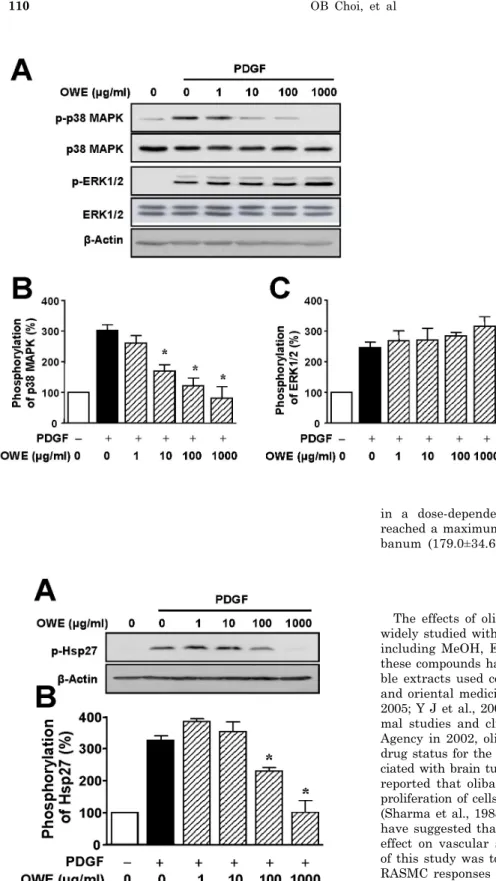
PDGF-induced vascular smooth muscle cell migration and proliferation has been shown to be mediated by MAPKs and many other kinases (Bilato et al., 1995; Liu et al., 2007). To determine the mechanism of the inhibitory effects of olibanum, on vascular responses, the RASMCs were stimulated with PDGF-BB after dose-dependent treatment with olibanum extract. PDGF-BB (10 ng/ml) increased the phosphorylation of p38 MAPK (312±19.0% of control).

PDGF-BB-stimulated phosphorylation of p38 MAPK was inhibited by olibanum extract in a dose-dependent manner (1∼1,000 μg/ml) (n=4; Fig. 3); this was significant starting at an olibanum concentration of 10 μg/ml (169.4±20.4% of control), and reached a maximum at 1000 μg/ml (81.4±

37.2% of control). On the other hand, the ERK1/2 phosphor- ylation induced by PDGF-BB (10 ng/ml) did not alter the RASMCs treated with olibanum extract (1∼1,000 μg/ml) (n=4; Fig. 3). It is known that Hsp27 acts as a downstream molecule to p38 MAPK and participates in vascular cell mi- gration (Lee et al., 2007). The effects of olibanum on the phosphorylation of Hsp27 in response to PDGF-BB were examined. PDGF-BB (10 ng/ml) increased the phosphor- ylation of Hsp27 (326.4±3.5% of control, n=4), which was maximally inhibited by treatment with 1,000 μg/ml of oli- banum (101.3±36.9% of control, n=4; Fig. 4).

The role of olibanum extract in PDGF-BB-stimulated sprout growth of aortic rings

To investigate the role of olibanum extract ex vivo, the

effect of olibanum extract was examined using the aortic

ring assay in Matrigel. The sprout outgrowth of the aortic

rings was increased by treatment with 10 ng/ml of

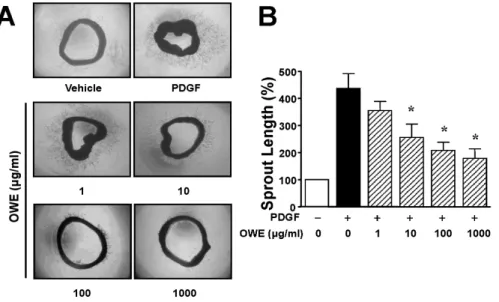
PDGF-BB (436.2±54.5% of control). Pretreatment of the

RASMCs with olibanum extract (1∼1,000 μg/ml) dimin-

ished the PDGF-BB-increased formation of aortic sprouts

(4)

Fig. 3. Effects of olibanum extract on activity of MAPK in RASMCs. After cells were treated without or with olibanum extract (1∼1,000 μg/ml) for 30 min, cells were stimulated with PDGF-BB (10 ng/ml) for 10 min. The RASMC lysates were immunoblotted with antibodies. The phosphorylation of p38 MAPK and ERK1/2 was examined using phosphor-specific antibodies. The total expression of kinases and β-actin was measured using non- phospho-specific antibodies and anti-β- actin antibody, respectively. (B, C) Statis- tical analysis of the phosphorylation level of MAPKs obtained in (A). The basal levels of phosphorylation are considered as 100% (n=4). Each value represents the mean±SEM. *Significant differences from the PDGF-BB-stimulated state, with p<0.05. p-p38, phosphorylated p38 MAPK;

p-ERK1/2, phosphorylated ERK1/2.

Fig. 4. Effect of olibanum extract on PDGF-BB-induced phosphory- lation of Hsp27 in RASMCs. The phosphorylation of Hsp27 was examined using a phospho-specific antibody. (B) Statistical analysis of the phosphorylation level of Hsp27 obtained in (A). The basal levels of phosphorylation are considered as 100% (n=4). Each value represents the mean±SEM. *Significant differences from the PDGF-BB-stimulated state, with p<0.05. p-Hsp27, phosphorylated Hsp27.

in a dose-dependent manner. This inhibitory response reached a maximum at a 1,000 μg/ml concentration of oli- banum (179.0±34.6% of control, n=4; Fig. 5).

DISCUSSION

The effects of olibanum in various disorders have been widely studied with extracts isolated with organic solvents including MeOH, EtOH and Hexane in herbal medicines;

these compounds have been compared with the water-solu-

ble extracts used commonly in Indian ayurvedic medicine

and oriental medicine (Huang et al., 2000; Chevrier et al.,

2005; Y J et al., 2006). Based on the positive results in ani-

mal studies and clinical trials of the European Medicine

Agency in 2002, olibanum extract was designated orphan

drug status for the treatment of the peritumor edema asso-

ciated with brain tumors (Winking et al., 2000). It has been

reported that olibanum extract affects the migration and

proliferation of cells including cancer cells and lymphocytes

(Sharma et al., 1988; Gayathri et al., 2007). These findings

have suggested that olibanum extract exerts an inhibitory

effect on vascular smooth muscle cell behavior. The goal

of this study was to investigate the effects of olibanum on

RASMC responses with olibanum extract isolated using a

water extraction method. The results of this study demon-

strate, for the first time, that olibanum extract inhibits

PDGF-induced migration and proliferation in rat aortic

smooth muscle cells. These effects were confirmed by the

findings of the ex vivo analysis of the formation of sprouts

from aortic rings. Our results suggest that olibanum ex-

tracts might be considered a candidate agent for the in-

hibition of vascular smooth muscle cell migration and

proliferation.

(5)

Fig. 5. Ex vivo analysis of olibanum extract on sprout formation of aortic rings in response to PDGF-BB. Aortic rings (1 mm) were embedded in Matrigel and cultured. Rings without any treatment (vehicle) and PDGF-BB (10 ng/ml) or olibanum extract (1∼1,000 μg/ml)-treated rings. Results were obtained on day 5.

(B) The statistical results obtained from panel (A). The level in vehicle (0.1%

DMSO)- treated rings is expressed as 100% (n=4). Each value represents the mean±SEM. *Denotes a significant diffe- rence from the PDGF-BB (10 ng/ml)- stimulated state, with p<0.05.

MAPK pathways play an important role in a variety of cell functions. Proliferation and migration of RASMCs are critical events in vascular disorders such as atherosclerosis and restenosis (Ranies and Ross, 1993), and are associated with MAPKs. PDGF is known to play a central role in the pathogenesis of various vascular disorders (Pompili et al., 1995). PDGF enhances the phosphorylation of p38 MAPK and ERK1/2, and increases the migration and proliferation of RASMCs (Lee et al., 2007). Moreover, it has recently been reported that the olibanum extract from Boswellia ser- rata inhibits the LPS-induced phosphorylation of MAPKs, JNK and p38 MAPK, in blood mononuclear cells (Gayathri et al., 2007); these findings imply that olibanum can exert an inhibitory effect on the MAPK signaling pathway. In this study, we explored the possible role of p38 MAPK and ERK 1/2, and the effects of olibanum on PDGF-induced RASMC migration and proliferation; JNK, an important isoenzyme of MAPK was not included because these two PDGF-in- duced RASMC responses (proliferation and migration) were not significantly suppressed by JNK inhibition in previous studies (Lee et al., 2007). The activation of p38 MAPK stimulated various cell functions such as contraction, mi- gration, and proliferation in the vascular smooth muscle cells (Geraldes et al., 2002; Kim et al., 2004). PDGF-induced migration and proliferation was associated with p38 MAPK phosphorylation in RASMCs (Lee et al., 2007). The findings of this study showed that olibanum extract inhibited the PDGF-induced phosphorylation of p38 MAPK in the RASMCs and attenuated RASMC migration induced by PDGF stimulation. Therefore, our data suggest that the suppression of p38 MAPK activity may be responsible for the inhibition of PDGF-increased RASMC migration and proliferation in response to olibanum extract. However, oli- banum-induced interaction between the p38 MAPK activity and the two cellular responses, migration and proliferation, in the RASMCs, was not directly demonstrated in this study.

Hsp27 has been reported to be an actin binding protein that regulates its polymerization, and is expressed at high levels in smooth muscle (Guay et al., 1997). The signaling pathway involved in Hsp27 activity is known to be im- portant in actin cytoskeleton remodeling and has been asso-

ciated with migration in smooth muscle (Hedges et al., 1999). PDGF induced the phosphorylation of p38 MAPK and Hsp27, and p38 MAPK phosphorylated Hsp27 in smooth muscle cells (Kozawa et al., 1999); these results suggest that p38 MAPK is an upstream molecule with respect to Hsp27. Similarly, in a recent study from this lab, we re- ported that the phosphorylation of Hsp27 was enhanced by PDGF in RASMCS, which was attenuated by a p38 MAPK inhibitor, and PDGF-induced migration was inhibited by the treatment of a p38 MAPK inhibitor and the small inter- fering RNA of Hsp27 (Lee et al., 2007). Moreover, it has been reported that Hsp27 promotes proliferation in vas- cular smooth muscle cells (Champagne et al., 1999). In the present study, we found that the PDGF-induced phosphor- ylation of Hsp27 was attenuated by treatment with oliba- num extract. Therefore, the findings of this study suggest that the olibanum extract-induced inhibition of PDGF- stimulated RASMC migration and proliferation may be as- sociated with the p38 MAPK-mediated Hsp27 pathway.

Among the three MAPKs, ERK1/2 is known to have a significant impact on PDGF-induced cell growth (Zhan et al., 2003). The phosphorylation level of ERK1/2 has been shown to be enhanced by PDGF stimulation. The stimu- lated migration and proliferation in response to PDGF, in the vascular smooth muscle cells, was attenuated by in- hibitors of ERK1/2 (Dardick et al., 2005; Lee et al., 2007).

In the present study, PDGF increased the phosphorylation of ERK1/2 in the RASMCs, and this response was not in- hibited by treatment with olibanum extract. Similarly, a previous report demonstrated that olibanum extract did not induce ERK1/2 phosphorylation in response to LPS, in dif- ferent cells than the type used in this study (Gayathri et al., 2007), Therefore, it is possible that olibanum extract does not affect the ERK1/2 activity in RASMCs, and this kinase pathway might not be involved in the olibanum ex- tract inhibition of PDGF-induced migration and pro- liferation of the RASMCs. These results suggest that MAPK isoforms may be regulated differently by olibanum extract.

In summary, the results of the present study demon-

strated, for the first time that PDGF-induced migration and

proliferation in RASMCs was inhibited by olibanum extract

treatment, and that olibanum extract attenuated the

(6)

PDGF-enhanced phosphorylation of p38 MAPK and Hsp27.

However, the level of phosphorylation of ERK1/2, enhanced by PDGF, was not altered by olibanum. These data provide evidence that olibanum extract exerts inhibitory effects on PDGF-induced migration and proliferation in RASMCs, and that these inhibitory effects may be induced by the p38 MAPK and/or Hsp27 pathways. The findings of this study, therefore, may provide valuable information for additional research or drug development for the prevention and treat- ment of vascular diseases such as atherosclerosis. However, further study will be required for elucidating the mecha- nism linking olibanum extract and PDGF-stimulated sig- nals, in the p38 MAPK and Hsp 27 pathways, associated with RASMC migration and proliferation. It appears that olibanum extract targets the cell surface because the oliba- num extract used in this study was water soluble; this might provide an important clue as to the mechanism in- volved in the inhibitory effects of olibanum extract on RASMC migration and proliferation in response to PDGF.

Further studies are needed to clarify the mechanisms.

ACKNOWLEDGEMENTS

This research was supported by the Academic Research fund of Hoseo University, Korea, in 2008 (20080123).

REFERENCES

Bilato C, Pauly RR, Melillo G, Monticone R, Gorelick-Feldman D, Gluzband YA, Sollott SJ, Ziman B, Lakatta EG, Crow MT.

Intracellular signaling pathways required for rat vascular smooth muscle cell migration. Interactions between basic fibroblast growth factor and platelet-derived growth factor. J Clin Invest 96: 1905−1915, 1995.

Champagne MJ, Dumas P, Orlov SN, Bennett MR, Hamet P, Tremblay J. Protection against necrosis but not apoptosis by heat-stress proteins in vascular smooth muscle cells: evidence for distinct modes of cell death. Hypertension 33: 906−913, 1999.

Chevrier MR, Ryan AE, Lee DY, Zhongze M, Wu-Yan Z, Via CS.

Boswellia carterii extract inhibits TH1 cytokines and promotes TH2 cytokines in vitro. Clin Diagn Lab Immunol 12: 575−580, 2005.

Dardik A, Yamashita A, Aziz F, Asada H, Sumpio BE. Shear stress-stimulated endothelial cells induce smooth muscle cell chemotaxis via platelet-derived growth factor-BB and interleukin- 1alpha. J Vasc Surg 41: 321−331, 2005.

Gayathri B, Manjula N, Vinaykumar KS, Lakshmi BS, Balak- rishnan A. Pure compound from Boswellia serrata extract exhibits anti-inflammatory property in human PBMCs and mouse macrophages through inhibition of TNFalpha, IL-1beta, NO and MAP kinases. Int Immunopharmacol 7: 473−482, 2007.

Geraldes P, Sirois MG, Bernatchez PN, Tanguay JF. Estrogen regulation of endothelial and smooth muscle cell migration and proliferation: role of p38 and p42/44 mitogen-activated protein kinase. Arterioscler Thromb Vasc Biol 22: 1585−1590, 2002.

Grotendorst GR, Seppä HE, Kleinman HK, Martin GR. Attachment of smooth muscle cells to collagen and their migration toward platelet-derived growth factor. Proc Natl Acad Sci USA 78: 3669−

3672, 1981.

Guay J, Lambert H, Gingras-Breton G, Lavoie JN, Huot J, Landry J. Regulation of actin filament dynamics by p38 map kinase- mediated phosphorylation of heat shock protein 27. J Cell Sci 110: 357−368, 1997.

Gupta I, Gupta V, Parihar A, Gupta S, Lüdtke R, Safayhi H, Ammon HP. Effects of Boswellia serrata gum resin in patients with bronchial asthma: results of a double-blind, placebo-controlled,

Hedges JC, Dechert MA, Yamboliev IA, Martin JL, Hickey E, Weber LA, Gerthoffer WT. A role for p38 MAPK/HSP27 pathway in smooth muscle cell migration. J Biol Chem 274: 24211−

24219, 1999.

Huang MT, Badmaev V, Ding Y, Liu Y, Xie JG, Ho CT. Anti-tumor and anti-carcinogenic activities of triterpenoid, beta-boswellic acid. Biofactors 13: 225−230, 2000.

Kim B, Kim J, Bae YM, Cho SI, Kwon SC, Jung JY, Park JC, Ahn HY. p38 mitogen-activated protein kinase contributes to the diminished aortic contraction by endothelin-1 in DOCA-salt hypertensive rats. Hypertension 43: 1086−1091, 2004.

Kimmatkar N, Thawani V, Hingorani L, Khiyani R. Efficacy and tolerability of Boswellia serrata extract in treatment of osteoar- thritis of knee-a randomized double blind placebo controlled trial. Phytomedicine 10: 3−7, 2003.

Kozawa O, Tanabe K, Ito H, Matsuno H, Niwa M, Kato K, Uematsu T. Sphingosine 1-phosphate regulates heat shock protein 27 induction by a p38 MAP kinase-dependent mechanism in aortic smooth muscle cells. Exp Cell Res 250: 376−380, 1999.

Lee CK, Lee HM, Kim HJ, Park HJ, Won KJ, Roh HY, Choi WS, Jeon BH, Park TK, Kim B. Syk contributes to PDGF-BB- mediated migration of rat aortic smooth muscle cells via MAPK pathways. Cardiovas Res 74: 159−168, 2007.

Lee HM, Jeon BH, Won KJ, Lee CK, Park TK, Choi WS, Bae YM, Kim HS, Lee SK, Park SH, Irani K, Kim B. Gene transfer of redox factor-1 inhibits neointimal formation: involvement of platelet-derived growth factor-beta receptor signaling via the inhibition of the reactive oxygen species-mediated Syk pathway.

Circ Res 104: 219−227, 2009.

Lee HM, Kim HJ, Park HJ, Won KJ, Kim J, Shin HS, Park PJ, Kim HJ, Lee KY, Park SH, Lee CK, Kim B. Spleen tyrosine kinase participates in Src-mediated migration and proliferation by PDGF-BB in rat aortic smooth muscle cells. Arch Pharm Res 30: 761−769, 2007.

Liu B, Ryer EJ, Kundi R, Kamiya K, Itoh H, Faries PL, Sakakibara K, Kent KC. Protein kinase C-δ regulates migration and proliferation of vascular smooth muscle cells through the extra- cellular signal-regulated kinase 1/2. J Vascs Surg 45: 160−168, 2007.

Millette E, Rauch BH, Kenagy RD, Daum G, Clowes AW.

Platelet-derived growth factor-BB transactivates the fibroblast growth factor receptor to induce proliferation in human smooth muscle cells. Trends Cardiovasc Med 16: 25−28, 2006.

Nicocia RF, Ottinetti A. Growth of microvessels in serum-free matrix culture of rat aorta. Lab Invest 63: 115−122, 1990.

Pearson G, Robinson F, Beers Gibson T, Xu BE, Karandikar M, Berman K, Cobb MH. Mitogen-activated protein (MAP) kinase pathways: regulation and physiological functions. Endocr Rev 22: 153−183, 2001.

Pompili VJ, Gordon D, San H, Yang Z, Muller DW, Nabel GJ, Nabel EG. Expression and function of a recombinant PDGF B gene in porcine arteries. Arterioscler Thromb Vasc Biol 15: 2254−2264, 1995.

Raines EW, Ross R. Smooth muscle cells and the pathogenesis of the lesions of atherosclerosis. Br Heart J 69: S30−37, 1993.

Robinson MJ, Cobb MH. Mitogen-activated protein kinase pathways.

Curr Opin Cell Biol 9: 180−186, 1997.

Ross R. Atherosclerosis is an inflammatory disease. New Engl J Med 340: 115−126, 1999.

Salinthone S, Ba M, Hanson LJ, Martin JL, Halayko AJ, Gerthoffer WT. Overexpression of human Hsp27 inhibits serum induced proliferation in airway smooth muscle myocytes and confers resistance to hydrogen peroxide cytotoxicity. Am J Physiol Lung Cell Mol Physiol 293: L1194−L1207, 2007.

Sharma ML, Khajuria A, Kau, A, Singh S, Singh GB, Atal CK.

Effect of salai guggal ex-Boswellia serrata on cellular and humoral immune responses and leucocyte migration. Agents Actions 24: 161−164, 1988.

Wei CY, Chou YH, Ho FM, Hsieh SL, Lin WW. Signaling pathways

of LIGHT induced macrophage migration and vascular smooth

muscle cell proliferation. J Cell Physiol 209: 735−743, 2006.

(7)

Winking M, Sarikaya S, Rahmanian A, Jödicke A, Böker DK.

Boswellic acids inhibit glioma growth: a new treatment option?

J Neurooncol 46: 97−103, 2000.

Y J, Kamath JV, Asad M. Effect of hexane extract of Boswellia serrata oleo-gum resin on chemically induced liver damage. Pak

J Pharm Sci 19: 129−133, 2006.

Zhan Y, Kim S, Izumi Y, Izumiya Y, Nakao T, Miyazaki H, Iwao

H. Role of JNK, p38, and ERK in platelet-derived growth

factor-induced vascular proliferation, migration, and gene

expression. Arterioscler Thromb Vasc Biol 23: 795−801, 2003.

수치

Fig. 1. Effect of olibanum extract on PDGF-BB-stimulated RASMC  migration. The effect of olibanum extract on RASMC migration
Fig. 3. Effects of olibanum extract on  activity of MAPK in RASMCs. After cells were treated without or with olibanum  extract (1∼1,000 μg/ml) for 30 min, cells were stimulated with PDGF-BB (10  ng/ml) for 10 min
Fig. 5.  Ex vivo analysis of olibanum  extract on sprout formation of aortic  rings in response to PDGF-BB

참조

관련 문서

Objective :::: The neovascularization is an essential a factor for the growth of solid organ cancer, and especially vascular endothelial growth factor (VEGF)

Determining optimal surface roughness of TiO₂blasted titanium implant material for attachment, proliferation and differentiation of cells derived from

It might also act in conjunction with a growth factor, such as bone morphogenic protein (BMP), insulin-like growth factor, or platelet-derived growth factor.

In conclusion, Pilates chair exercise is a positive factor in improving skeletal muscle mass among menopausal women's body composition and lower muscles EMG

In this study, platelet-derived growth factors-BB (PDGF-BB), vascular endothelial growth factor (VEGF), and insulin-like growth factor-1 (IGF-1) were quantified in the PRF

Stimulates secretion of growth hormone Resistance to a wide variety of viruses Stimulates cell immune system. A bone-resorbing factor Sulfate

In this study, we tested whether a potent AMP-activated protein kinase (AMPK) activator, nectandrin B inhibits VSMC proliferation and neointiima formation and tried to

Conclusion: In conclusion, the relaxant effects of neuromuscular blockers on the uterine smooth muscle may be transmitted via nicotinic acetylcholine receptors