http://dx.doi.org/10.5763/kjsm.2012.30.2.110
자가 혈소판 농축 혈장 주사요법을 이용한 만성 슬개건염의 치료
인제대학교 서울백병원 정형외과학교실
서원영ㆍ하정구ㆍ김진구ㆍ왕배건
Treatment of Chronic Patellar Tendinitis with Platelet Rich Plasma Injection
Won Yeong Seo, MD, Jeong Ku Ha, MD, Jin Goo Kim, MD, Bae Gun Wang, MD
Department of Orthopedic Surgery, Inje University Seoul Paik Hospital, Inje University College of Medicine, Seoul, Korea
The aim of this study was to evaluate the efficacy of platelet rich plasma (PRP) injections on the healing of chronic patellar tendinitis. We treated 44 patients affected by chronic patellar tendinitis. Lysholm, International Knee Documentation Committee, visual analogue scale score were used for clinical evaluation before, at the end of the treatment. A statistically significant improvement in all scores was observed at the end of the PRP injections in patients with chronic patellar tendinitis. The clinical results are encouraging, indicating that PRP injections have the potential to promote the achievement of a satisfactory clinical outcome to chronic patellar tendinitis.
Key Words: Chronic patella tendinopathy, Platelet rich plasma
Received: April 24, 2012 Revised: October 31, 2012 Accepted: November 1, 2012
Correspondence: Jeong Ku Ha
Department of Orthopedic Surgery, Inje University Seoul Paik Hospital, Inje University College of Medicine, 9 Mareunnae-ro, Jung-gu, Seoul 100-032, Korea
Tel: +82-2-2270-0028, Fax: +82-2-2270-0085 E-mail: [email protected]
CC
This is an Open Access article distributed under the terms of the Creative Commons Attribution Non-Commercial License (http://creativecommons.org/
licenses/by-nc/3.0) which permits unrestricted non-commercial use, distribution, and reproduction in any medium, provided the original work is properly cited.
서 론
만성 슬개건염(chronic patellar tendinitis, jumper’s knee)은 과사용에 의해 슬개건에 염증이 발생하여 슬부 전방부에 동통 을 초래하는 질환이다. 주로 강한 도약을 필요로 하는 배구, 농구 , 단거리 육상, 높이뛰기 운동 선수들에게 높은 이환율을 보이는데 배구선수의 경우 40–50%, 농구선수의 경우 35–40%
의 이환율이 보고된바 있다 1,2) . 대개 이환된 운동선수들은 강한 도약과 같은 특정 동작을 포함한 운동 훈련을 중단하거나 감소하여야 했으며 통증의 지속기간이나 운동 강도의 감소 기간이 약 3년에 달할 정도로 선수로서의 경력에 있어 치명적 인 질환이라 할 수 있다 3-5) .
슬개건염의 초기 치료로는 휴식, 얼음찜질, 전기치료, 마사 지, 항염증제제 복용 또는 스테로이드제 주사와 같은 비수술적 방법을 시행한다 . 하지만 이러한 방법들의 효과에 대하여서는 명확한 보고가 부족하다 5,6) . 다른 연구에서 수술적 치료의 우수 한 결과를 보고하였지만 치료 방법의 선택에 있어 명확한 기준이 없는 상태이며 비수술적 치료와 수술적 치료 모두 완치나 스포츠 활동으로의 복귀에 있어 열악한 예후를 보이고 있다 7-10) .
1990년대에 악안면외과 분야에 최초로 혈소판풍부혈장
(platelet rich plasma, PRP)을 치료에 이용한 이래로 다양한
스포츠 관련 손상 분야에 손상된 인대와 건에 대한 치유성을
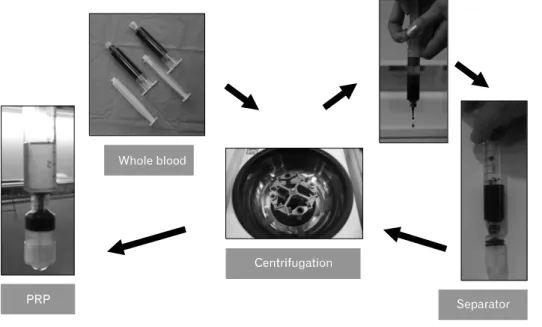
Fig. 1. Preparation of platelet rich plasma (PRP).
기대하고 사용되고 있다. 회전근개 파열, 주관절 건증, 아킬레 스 건증 등에 PRP를 이용하여 좋은 치료 결과를 얻었다는 보고가 있으며, 슬개건염에서도 몇몇 연구 결과가 보고되어 있다. 동물실험을 통해 좋은 치유결과를 얻었다는 연구가 있으 며 11) , 임상실험에서도 좋은 치료결과를 보고한 바 있다 12) . 하지 만 , 이 논문 외에 다른 논문은 그 수가 충분치 않으며, 국내에서 는 이에 관한 연구 보고가 전무한 상황이라서 추가적인 연구가 절실하다. 이에 본 저자들은, 만성 슬개건염의 치료에 PRP 주사요법을 사용하여 좋은 결과를 얻었기에 이를 보고하고자 한다.
연구 방법
1. 환자선정
2010년 1월부터 2011 년 9월까지 본원 정형외과 외래를 방문하여 슬개건염으로 진단받은 환자 중 다음과 같은 조건을 만족시키는 경우에 PRP 치료를 시행하였다. 1) 임상적으로 운동 시 발생하는 슬개건 부위의 통증 및 압통이 있으며, 2) 3개월 이상 증상이 지속되었고, 3) 초음파나 자기공명영상 검사 상 슬개건의 염증성 변화를 보이며, 4) PRP 치료에 대해 설명을 듣고 치료에 동의한 환자가 대상으로 포함되었다. 당 뇨, 류마티스 관절염, 혈액학적 질환(혈우병, 혈소판 감소증 등), 감염, 시술 전 5일 이내에 항응고제나 비스테로이드성 항염증제 복용한 환자들은 PRP 치료 대상에서 제외하였다.
상기 기간 동안 총 48명의 환자를 대상으로 PRP 치료를
시행하였는데 이 중 1명은 전방십자인대 재건술을 동측 슬부 에 시행, 1명은 관절강 내 주사요법을 동시에 시행, 2명은 단순 외래 경과 관찰 탈락으로 인해 총 4명의 환자가 연구에서 탈락되어 최종 44명의 환자를 대상으로 연구하였다. 남자는 29명(65.9%)이었고 여자는 15명(34.1%)이었다. 환자의 평균 나이는 24.6세(최소13세, 최고 66세)였다. 처음 시술을 받은 후 평균 13.4주(범위, 10–20주) 전 환자를 대상으로 대면 인터 뷰, 전화 인터뷰 등을 통하여 치료 결과에 대해 설문조사를 시행하였다. 각 환자에게 1회의 PRP치료를 기본으로 하였으 며 2회 이상 시행한 10명의 환자 중 5명은 증상의 호전이 없어 추가적으로 시행하였고 5명은 증상의 호전에 따른 환자 의 추가적 시행의 의지에 반응하여 결과적으로 최종 추시까지 5명에서 2회, 5명에서 3회, 나머지 34명에서 1회 시행하여 평균 주사 횟수는 1.34회 시행하였다.
2. 혈소판풍부혈장 제조 과정
모든 PRP은 ADDCELL PRP kit (Unimed Corp., Seoul, Korea)
를 이용하여 한 명의 동일한 전문 간호사에 의하여 제조되었다 .
먼저 총 20 mL의 말초혈액을 채혈한 다음 1 mL의 구연산나트
륨이 포함된 10 mL 주사기에 9 mL씩 나누어 담아 총 10
mL 주사기 2개를 준비하였다. 채혈한 2개의 10 mL주사기를
원심분리기에 마주하게 넣고 2,500 rpm으로 5분간 작동시켰
다 . 원심분리가 종료된 후 주사기의 분리된 혈액층이 섞이지
않도록 꺼내어 적혈구를 약 1 mm 남기고 2차 원심분리용
농축용 용기의 공간을 1.5–2 mm 남기고, 10 mL 주사기에
연결한 다음 3,000 rpm으로 5분간 다시 원심 분리하였다. 원심
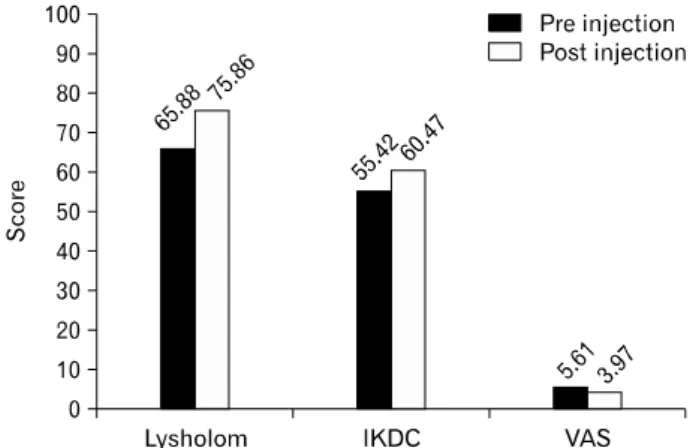
Fig. 2. Lysholm, IKDC, VAS changes pre-injection and post-injection. IKDC: International Knee Documentation Committee, VAS: visual analogue scale.
Table 1. Lysholm, IKDC, and VAS changes were all statistically significant (p<0.05) between pre-injection and post-injection
Pre-injection Post-injection p-value Lysholm 65.88±18.42 75.86±14.63 0.000 IKDC 55.42±15.36 60.47±17.66 0.012
VAS 5.61±1.38 3.97±1.97 0.000
Values are presented as mean±standard deviation.
IKDC: International Knee Documentation Committee, VAS:
visual analogue scale.
분리가 종료된 후 3 mL 또는 5 mL 주사기에 23 gauge long needle로 교체한 다음, 주사기 상층의 혈소판 희소 혈장(platelet poor plasma)을 3–4 mL 추출하면 각각의 10 mL 주사기 하층의 PRP을 1–1.5 mL 제조하였다(Fig. 1).
3. 혈소판풍부혈장 주입 과정
시술이 결정되고 주입하기 30분 전에 채혈한 다음 제조한 PRP을 주입직전에 3% 염화 칼슘(CaCl 2 ) 1 mL와 섞어 혈소판 활성화를 거친 후 시술하였다 . 이전에 초음파나 자기공명영상 검사상 확인된 병변 부위를 중심으로 무균적 소독을 한 다음 초음파 유도하에 22 gauge 바늘을 이용하여 건 내 저에코성 병변과 슬개건 주위 연부조직, 슬개건 부착부에 광범위하게 주입하였다. 시술 후 약 10분간 앙와위를 유지하였다.
4. 시술 후 지침 및 경과 평가 방법
시술 후 환자는 환측 하지를 적어도 24시간 동안 안정하게 하고 , 비스테로이드성 항염증 약물이나 스테로이드성 약물은 1주일간 복용하지 말도록 하였으며, 통증이 있을 경우 환부에 얼음 찜질을 하거나, acetaminophen을 복용하도록 교육한 후 귀가 하였다. 약 1주일간은 과격한 운동을 삼가도록 하였고, 그 이후에는 통증이 허용하는 한도에서 스트레칭 운동과 경미 한 운동(자전거 타기, 수영 등)을 진행하도록 하였다. 시술 1주일 이후부터 최종 추기까지 환자가 통증을 호소할 경우에 는 비스테로이드성 항염증 약물을 포함한 경구 약물처방과 얼음찜질을 교육하였다.
모든 사례에 대하여 PRP 주입 시술 이전과 치료 종료 시점에 전향적으로 International Knee Documentation Committee (IKDC), visual analogue scale (VAS), Lysholm score를 이용하여
임상적 평가를 하였다.
5. 통계방법
통계학적 분석은 SPSS ver. 18.0 (IBM, Armonk, NY, USA)을 이용하였으며, 시술 전후의 결과 비교를 위해 paired t-test를 시행하였고, 통계적 유의 수준은 p<0.05로 하였다.
결 과
수술 전 Lysholm 점수는 평균 65.88점에서 수술 후 75.86점으 로 상승하였고, 수술 전 IKDC 점수는 평균 55.42점에서 수술 후 60.47점으로 상승하였고, VAS는 수술 전 5.61점에서 수술 후 3.97점으로 감소하였으며(Fig. 2) 이는 모두 통계적으로 유의하였다(Table 1).
총 44예 중 1예(2.2%)에서 시술 후 실신(syncope)의 부작용을 경험하였다 . 시술 후 약 5분 후에 병원 복도에서 갑자기 의식을 잃고 쓰러져 응급실에서 조치 받았으며 미주신경성 실신 (vasovagal syncope)로 최종 진단하고 경추 염좌로 이후에 물리 치료를 시행하였다.
고 찰
본 연구에서 만성 슬개건염 환자를 대상으로 PRP 주사
요법을 이용하여 치료를 시도하였고, Lyshlom, IKDC, VAS
등 주관적 슬관절 기능 설문조사 결과에서 모두 통계적으로
유의하게 호전되는 것을 알 수 있었다. Filardo 등 12) 은 난치성의
만성 슬개건염(Jumper’s knee)환자를 PRP를 이용하여 치료하
였고, 그 결과를 치료를 받아 본적이 없었던 보통의 슬개건염
환자를 운동 요법만 실시하여 치료하였던 결과와 비교하여
보고한 바 있는데 시술 전과 시술종료 시, 6개월 후 추적 관찰에
서 VAS, Tegner activity level에서 모두 통계적으로 유의하게
PRP 주입술이 효과적인 것으로 보고 다른 치료에 불응적인
만성 슬개건염에 대하여서도 적용해 볼 수 있겠다고 보고한 바 있다.
슬개건염은 운동선수에서 발생하는 과사용에 의한 손상이 며 일종의 부착부 건염으로 통증을 유발하고 잠재적인 기능의 저하를 야기할 수 있는 매우 흔한 질환 중 하나이다. 슬개건염 은 염증성의 질환이라기보다는 슬개건의 수용 가능한 부하 이상의 반복적인 부하가 가해지면서 미세적인 파열과 건실질 의 퇴행이 발생하는 질환이라 할 수 있다.
건증은 다양한 조직학적 상태의 집합이며 최초의 증상으로 통증, 강직, 압통 등이 나타나기 전에 이미 퇴행성 손상이 장시간 축적된다 . 느리고 간헐적인 건의 손상과 증상의 발현은 그만큼 더디고 긴 회복의 과정이 필요로 하게 되는데 이러한 병태생리학적 이론 모델이 만성 건 질환의 치료가 더 어려움을 설명해준다 13) .
현재까지 만성 슬개건염에 대하여 소염 진통제 복용, 신장 운동, 체외 충격파, dextrose 주입술 등의 다양한 치료 방법이 제시되었으나 그 중에서 어떠한 방법도 명확한 단일 치료 방법으로 권장되지 못하고 있다. Fredberg 등 14) 은 만성 슬개건 염에 대하여 steroid injection을 시행한 후 초음파로 건 상태를 추적한 결과 건부종의 감소는 보이나 퇴행성 변화에 대하여서 는 효과적이지 못함을 보고 하였고, Ryan 등 15) 은 hyperosmolar dextrose injection을 시행한 후 VAS와 그에 상응하는 초음파적 고에코성 병변의 해소를 보고하였다. Alfredson과 Ohberg 16) , Hoksrud 등 17) 은 만성 슬개건염의 통증의 원인으로 신생혈관과 신경 생성에 초점을 두고 그 생성을 저해하는 polidocanol과 같은 화학적 방해물을 주입하는 sclerosing injection을 시행하 여 VAS의 유의한 감소를 보고하였으나 대조군이 설정되지 않았고 짧은 추시 관찰로 인한 연구의 한계를 보고하였다.
Visnes와 Bahr 18) 은 만성 슬개건염에 적용할 수 있는 다양한 eccentric exercise를 제시하였으나 그 효과에 대한 통계적 유의 성은 보고하지 못했고, van Leeuwen 등 19) 은 체외 충격파를 만성 슬개건염의 치료로 적용해 볼 수는 있으나 통계적인 유의성이 뒷받침 되지 않아 단일치료 방법으로 추천하기는 힘들다고 하였다.
하지만 최근 많은 연구에서 정상적인 조직과 손상 받은 조직에 대한 반응으로 복잡한 성장인자의 조절작용에 초점을 맞추고 있는데, 특히 건 재생에 있어서의 성장인자의 중요성과 손상된 조직의 치유에 성장인자의 효용성에 주목하고 있다.
몇몇 연구에서는 transforming growth factor (TGF-β)가 제1형 과 제 3형 procollagen의 발현을 증가시키고 기계적 특성을 향상 시킴을 증명하였고, platelet-derived growth factor (PDGF),
insulin-like growth factor 1 (IGF-1), vascular endothelial growth factor (VEGF)역시 건 세포의 분화와 치유를 촉진한다 20,21) .
혈소판은 PDGF, TGF-β, platelet-derived epidermal growth factor, VEGF, IGF-1, fibroblastic growth factor, epidermal growth factor와 같은 성장인자를 함유하고 있으며 platelet factor 4, CD40L 같은 사이토카인도 포함하고 있다 22) .
성장인자는 다양한 polypeptide의 집합으로 다양한 조직의 성장과 발달의 조절에 중요한 역할을 한다. 혈소판 겔의 형태 로 성장인자를 주입하면 성장인자를 선택된 부위에 작용할 수 있는 흡착성의 보강 효과를 줄 수 있다. 게다가 성장인자가 혈소판이나 섬유소(fibrin)에 연결됨으로써 재조합 단백질까 지 포함시킬 수 있는 강화효과도 있다 23) .
PRP으로부터 분비되는 물질은 세포 기질 분자의 유전자 표현, 콜라겐 합성, 건 배양에서 건 세포의 분화를 자극한다 24,25) . 동물을 이용한 연구에서 PRP을 절단한 건에 경피적으로 주입 한 후 tendon callus strength와 stiffness가 증가됨을 확인하여 건손상의 치료에 유용함을 보고하였다 26,27) . 뿐만 아니라 인체 연구에서도 수술적으로 복원술을 시행한 건에 PRP을 적용한 후 더 빠른 회복 속도가 보고되었다 28) .
인체 중에서도 정형외과적 영역에 있어서는 지금까지 주관 절 외상과염과 아킬레스 건염에 PRP을 치료로 적용한 효과를 보고하고 있으며 최근에는 슬개건염에서도 적용 효과가 보고 되었다 12) . Mishra와 Pavelko 29) 는 주관절 외상과염에 대하여 15명의 PRP군과 5명의 대조군에 적용하여 VAS와 modified Mayo elbow score에서 유의한 효과를 보고하였고, Gaweda 등 30) 은 14명의 아킬레스건염 환자에 대하여 PRP 주입술을 적용하여 American Orthopaedic Foot and Ankle Society score, Victorian Institute of Sport Assessment - Achilles score, 초음파에 서 모두 호전됨을 보고하였다.
하지만 현재 PRP의 수집에 대한 다양한 방법(기구, 원심분 리기 및 원심분리의 속도)이 제시되어 정립되지 못하고 있고 백혈구 및 개별 성장 호르몬(growth factor)의 역할이 명확히 규명되지 않은 한계가 있다.
본 연구에서는 PRP의 제조 이전에 환자의 전혈에 대한
혈소판의 농도 및 제조 후 PRP의 혈소판 농도를 측정하지
못하여 PRP으로서의 적절성을 평가하지 못하였다. 또한 대조
군이 마련되지 못하였으며 시술 후 재활 프로그램을 표준화
하지 못했으며 방사선학적 경과관찰이 이루어 지지 못했고
시술 후 일정한 시점에서의 경과관찰이 이루어 지지 못한
것이 연구의 한계점이라 생각한다. 슬개건 질환에 특화된 평가
항목을 이용하였다면 더 특이적인 결과를 도출할 수 있었을
것이다.
많은 한계점을 가지고 있는 연구임에도 불구하고, 만성 슬개건염의 환자에서 PRP를 사용하여 치료한 후, 평균 13.4주 추시 관찰 결과 주관적 슬관절 기능 점수의 향상을 관찰할 수 있었다. 국내외적으로 해당분야에 관한 연구가 많지 않다는 점이 본 연구가 가지는 의미중의 하나라고 생각하며 최종적으 로 PRP 주사 요법은 만성 슬개건염의 효과적인 치료법으로 고려될 수 있을 것으로 생각한다.
참 고 문 헌