I. Introduction
Many healthcare organizations (HCOs) have been adopt- ing Electronic Medical Record (EMR) systems worldwide.
It is known that more than 85% of hospitals have adopted EMR systems in both the United States and European Union countries [1-4]. EMR systems are very promising for the provision of high quality of care and managerial efficiency.
However, not everyone can benefit from these advantages.
Only those who are equipped with sophisticated EMR sys- tems may reap those benefits.
One previous study empirically described levels of EMR adoption as ‘no EMR system’, ‘minimal’, ‘basic’, and ‘fully
Association between Electronic Medical Record System Adoption and Healthcare Information Technology Infrastructure
Youn-Tae Lee, PhD1, Young-Taek Park, PhD2, Jae-Sung Park, PhD3, Byoung-Kee Yi, PhD4,5
1Bureau of Future Health Industry Policy, Korea Health Industry Development Institute, Cheongju, Korea; 2Research Institute for Health Insurance Claims Review & Assessment, Health Insurance Review & Assessment Service (HIRA), Wonju, Korea; 3Department of Health Care Administration, Kosin University, Busan, Korea; 4Smart Healthcare & Device Research Center, Samsung Medical Center, Seoul, Korea; 5Samsung Advanced Institute of Health Science and Technology, Sungkyunkwan University, Seoul, Korea
Objectives: The objective of this study was to investigate the relationship between the level of Electronic Medical Record (EMR) system adoption and healthcare information technology (IT) infrastructure. Methods: Both survey and various healthcare administrative datasets in Korea were used. The survey was conducted during the period from June 13 to Septem- ber 25, 2017. The chief information officers of hospitals were respondents. Among them, 257 general hospitals and 273 small hospitals were analyzed. A logistic regression analysis was conducted using the SAS program. Results: The odds of having full EMR systems in general hospitals statistically significantly increased as the number of IT department staff members in- creased (odds ratio [OR] = 1.058, confidence interval [CI], 1.003–1.115; p = 0.038). The odds of having full EMR systems was significantly higher for small hospitals that had an IT department than those of small hospitals with no IT department (OR = 1.325; CI, 1.150–1.525; p < 0.001). Full EMR system adoption had a positive relationship with IT infrastructure in both gen- eral hospitals and small hospitals, which was statistically significant in small hospitals. The odds of having full EMR systems for small hospitals increased as IT infrastructure increased after controlling the covariates (OR = 1.527; CI, 1.317–4.135; p = 0.004). Conclusions: This study verified that full EMR adoption was closely associated with IT infrastructure, such as orga- nizational structure, human resources, and various IT subsystems. This finding suggests that political support related to these areas is indeed necessary for the fast dispersion of EMR systems into the healthcare industry.
Keywords: Electronic Medical Records, Electronic Health Records, EMR Adoption, EHR Adoption
Healthc Inform Res. 2018 October;24(4):327-334.
https://doi.org/10.4258/hir.2018.24.4.327 pISSN 2093-3681 • eISSN 2093-369X
Submitted: September 21, 2018 Revised: October 21, 2018 Accepted: October 21, 2018 Corresponding Author Young-Taek Park, PhD
Research Institute for Health Insurance Claims Review & Assess- ment, Health Insurance Review & Assessment Service (HIRA), 60, Hyeoksin-ro, Wonju 26465, Korea. Tel: +82-33-739-0944, E-mail:
[email protected] (https://orcid.org/0000-0002-7574-4165)
This is an Open Access article distributed under the terms of the Creative Com- mons Attribution Non-Commercial License (http://creativecommons.org/licenses/by- nc/4.0/) which permits unrestricted non-commercial use, distribution, and reproduc- tion in any medium, provided the original work is properly cited.
ⓒ 2018 The Korean Society of Medical Informatics
functional EMR system’ based on frequently used function- alities. This study found that the breast examination rates of providers increase as the EMR adoption levels increase from no or minimal EMR systems to full EMR systems [5].
The level of EMR systems generally measured in terms of functional and technical integration of information have been significantly associated with ‘mortality’, ‘postopera- tive hemorrhage’, and ‘postoperative hip fracture’ rates [6].
Several other studies clearly showed that EMR systems bring quality of care improvements [7,8]. However, the results of some studies suggest that EMR systems have no relationship with quality of care, while others have found mixed results in relation to quality of care [9,10]; therefore, the level of EMR system adoption may be a critical factor that requires further investigation.
Many studies have considered the factors affecting EMR system adoption. For example, in one study, internal fea- tures, such as IT infrastructure, location of hospitals, organic organizational culture, and environmental factors influenc- ing competition were associated with EMR adoption [11].
In other studies, practice size, location, maintenance costs of IT systems, and specialty type were also related to EMR/
Electronic Health Record (EHR) adoption [12-14]. EMR systems were related to affiliation status of practice with a medical center or university health system and practice net- work status in another study [15]. However, a few studies have investigated the relationship between the level of EMR system adoption and healthcare IT infrastructure focusing on organizational features.
For the rest of hospital covariates, this study suggests that full EMR adoption is closely associated with healthcare IT infrastructure. IT infrastructure generally refers to IT com- ponents, such as computer hardware, software, etc.; human and technical IT capabilities, such as knowledge, skills, etc.;
and shared IT services, such as networks, data management, communication technology, etc. [16-18]. Thus, three features of IT infrastructure were selected for this study, namely, the number of IT staff members, the existence of an IT depart- ment, and the adoption of various IT subsystems. This study predicted and proposed two hypotheses. First, the number of IT staff members and the existence of an IT department are related to level of EMR system adoption (H1). Second, IT subsystems are positively associated with the level of EMR system adoption measured by full (rather than partial) EMR system adoption (H2).
Theoretically, structural contingency theory may fit well in this situation: H1 & H2. There are many perspectives on contingency theory. However, the main explanation of
the theory is that organizations are affected by internal and external factors, but there is no best way to achieve better performance or organizational effectiveness or to organize a corporation [19]. Structural contingency theory focuses more on internal structural features. It states that organiza- tional structure changes due to internal and external impetus to adopt the most efficient practices [20,21].
Regarding H1, we argue that EMR systems, generally speaking, bring many advantages of better performance in HCOs, such as quality of care, managerial efficiency, and electronic healthcare information exchange. Employees working in IT areas of HCOs see and experience various improvements related to EMR systems in the healthcare in- dustry. EMR system adoption is widespread in HCOs. Thus, they would be likely to express their opinions to top-level managers or decision-makers of hospitals suggesting the advantages of introducing full EMR systems. Those voices would increase as the number of those staff members in- creases. In contrast, when there are few IT employees, there would be a low probability of full EMR adoption because reports or feedback to top-level managers would be weaker.
Similarly, if there are IT departments in HCOs, then their influence would be greater in comparison to HCO that do not have IT departments. Thus, these kinds of internal pres- sure would affect the level of full EMR adoption.
According to a previous study, hospitals with partial EMR adoption had greater difficulties in recruiting ICT staff members than hospitals with full EMR adoption [15]. Al- though the study result was subjective, the finding suggests that full EMR system adoption could be connected with IT staffs or IT departments. Practically, the installation of EMR systems requires a team approach and staff members who have various IT skills and knowledge [22]. IT infrastructure, including technical support, is an important factor for the implementation of EMR systems [23]. Thus, hospitals with those employees are more likely to have full EMR systems.
Even though these previous studies were not empirical, they could support our arguments in that they dealt with similar study subjects.
Regarding H2, EMR systems generally have a dominant role that links various internal and external IT systems.
Thus, hospitals with high levels of IT subsystems are more likely to install full EMR systems because those hospitals could easily make their various systems connect with EMR systems. They would also have lower marginal costs and high marginal utility by investing financial resources in EMR systems. However, hospitals with lower levels of subsystems do not have these motivations because of low marginal util-
ity or efficiency. Thus, the level of EMR system adoption would increase when the level of IT infrastructure increases.
Several empirical studies support this argument. One pre- vious study showed that there was a direct association be- tween IT infrastructure and EMR adoption [11]. According to an empirical study on small physician practices, current computer infrastructure that was interoperable with existing systems was one of three important factors in the process of EMR system selection [24].
Thus, the purpose of this study was to investigate the rela- tionship between full EMR system adoption and healthcare IT infrastructure, which was measured by considering the number of IT staff members (general hospitals), the es- tablishment of an IT department (hospitals), and various IT systems in both HCOs. Findings from this study would contribute to areas related to EMR system adoption, such as policy making, EMR dispersion support, monitoring of EMR system sophistication, and academic EMR adoption studies.
II. Methods
1. Study Design
This study had a cross-sectional design, and the unit of anal- ysis was HCOs, or hospitals. In Korea, the medical law cat- egorizes hospitals into five types, namely, general hospitals, small hospitals, dental hospitals, oriental-medicine hospitals, and long-term care hospitals. According to the law, a ‘gen- eral hospital’ is a medical accommodation facility with 100 or more beds and at least 7 medical specialty departments, whereas a ‘small hospital’ is a medical facility accommodat- ing 30 or more beds. This study only considered these two types of hospitals as the main study subject for the gener- alization of study findings. According to previous studies, the size of hospitals, teaching status, location, multi-hospital systems, and affiliation were related to EMR system adop- tion [13-15]. Thus, this study used the number of beds as a proxy variable for the size of a hospital and location in the model to control those effects. However, data on teaching status and affiliation status could not be obtained, so those variables were not included in the model.
Finally, regarding the ethical issue of human study subjects, approval of the Institutional Review Board was not obtained because the study did not directly consider human study subjects, rather it focused on HCOs.
2. Data Source
This study used a nationwide healthcare IT survey and vari- ous healthcare administrative data obtained from the Korea
Health Industry Development Institute (KHIDI). The survey was conducted by the KHIDI and the Health Insurance Re- view and Assessment Service (HIRA) to assess the current IT status and to support healthcare IT of the healthcare in- dustry. The survey was conducted from June 13 to Septem- ber 25, 2017. Based on the population of the study hospitals, the KHIDI and HIRA randomly selected a group of hospitals based on their prescheduled methodological guidelines. The survey tool was a structured questionnaire. A total of 275 general hospitals (response rate [RR] = 83.1%) and 298 small hospitals (RR = 32.7%) participated in the survey. The data obtained by this survey were merged with KHIDI’s health- related administrative data. During this process, this study excluded 18 and 25 study subjects of general hospitals and small hospitals, respectively, due to missing values regarding the number of beds, number of doctors, IT staff members, and the Herfindahl‒Hirschman Index (HHI). Thus, the final results obtained from 257 general hospitals and 273 small hospitals were analyzed.
3. A Major Outcome and Independent Variables
This study had one outcome variable, namely, level of EMR system adoption: full versus partial EMR system adoption.
This study descriptively defined it as the degree of digita- lization of patients’ demographic and clinical information.
HCOs were simply considered as having full EMR systems when they were storing and pulling patients clinical infor- mation electronically without using paper-based charts and as having partial EMR systems when they were using both electronic medical charts and paper-based charts. This scale of measurement is almost the same as those used in previous studies [25-27].
Regarding major independent variables, this study de- scriptively defined IT infrastructure as computer hardware, software, human resources, and shared knowledge related with healthcare IT resources following the general defini- tion used in previous studies [16-18]. IT infrastructure was measured in terms of three factors: IT staff members (general hospitals), IT department (small hospitals), and various IT subsystems (both general and small hospitals). The num- ber of staff members in IT departments included full-time equivalent employees and staff members directly contracted and working for the HCOs from outsourced IT companies.
Most of the general hospitals considered in this study had IT departments; thus, this study considered the number of IT department staff members as one of the organizational struc- ture measures for general hospitals. However, almost half of the small hospitals did not have IT departments due to their
relatively small size; thus, this study included the existence of an IT department in the model for small hospitals. We considered whether an HCO had an IT department or not.
IT subsystems were considered by counting the following IT systems: (1) computerized physician order entry system, (2) picture archiving communication system, (3) laboratory information system, (4) pharmacy management system, (5) patient referral system, (6) telemedicine system, (7) medical examination system, (8) billing and health insurance claim processing system, (9) enterprise resource planning system, (10) electronic sanction system, and (11) data warehouse system. Thus, IT infrastructure has number values ranging from a maximum of 11 to a minimum of zero.
The location of HCOs was measured as Seoul and mega metro cities or others. If the population of the local admin- istrative district area was greater than one million including Seoul, then they were considered Seoul and mega metro cities; otherwise, they were considered as belonging to the other group. Regarding the type of foundation, if HCOs were for-profit organizations, such as private foundations, corpo- rate foundations, medical foundations, or privately owned hospitals, then they were considered private; otherwise, they were considered public. The number of beds was measured according to the number of operating beds, and the number of physicians was the number of full-time equivalent phy- sicians. The HHI was calculated based on the sum of the squares of the total running beds of the hospitals within each local area; thus, it was the sum of the squares of the bed por- tion of the specific hospitals in a local area.
4. Statistical Analysis
This study first looked at the descriptive statistics targeting the main independent variables and an outcome variable showing full EMR system adoption. For the main statisti- cal analysis, which is the association of the main dependent variable, level of EMR system adoption, with two indepen- dent variables, a logistic regression analysis was conducted using the logistic procedure of the SAS program version 9.4 (SAS Institute Inc., Cary, NC, USA).
III. Results
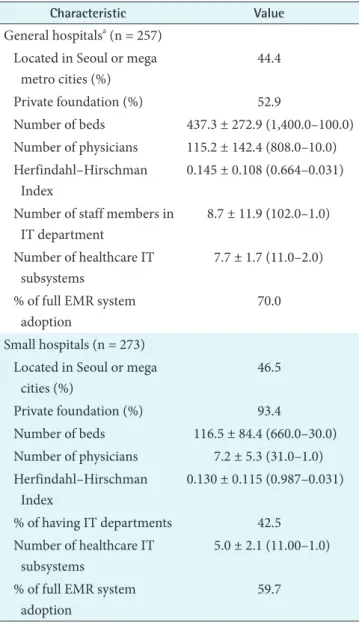
Table 1 shows the general characteristics of the study sub- jects. Regarding the main independent variables of general hospitals, the average numbers of IT staff members and IT subsystems were 8.7 persons and 7.7 systems, respectively.
Seventy percent of general hospitals had adopted full EMR systems, and the remaining 30% has adopted partial EMR
systems. For small hospitals, almost 43% had IT depart- ments, and these hospitals had an average of 5 subsystems.
Approximately 60% of these small hospitals had adopted full EMR systems, and the remaining 40% had adopted partial EMR systems.
Table 2 shows the current status of IT infrastructure mea- sured in terms of 11 IT subsystems. As presented in Table 2, the percentage having 11 IT subsystems was higher in gen- eral hospitals than small hospitals.
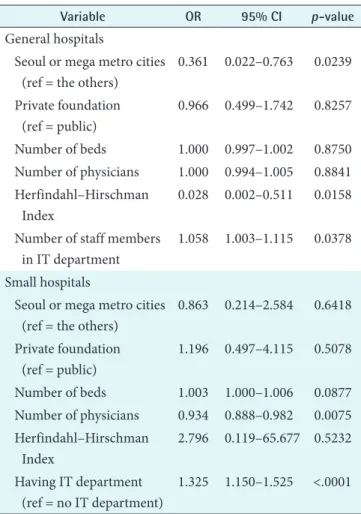
Table 3 presents the logistic regression results showing the relationship between EMR system adoption level and the main independent variables, namely, the number of IT staff
Table 1. General characteristics of study subjects
Characteristic Value
General hospitalsa (n = 257) Located in Seoul or mega
metro cities (%)
44.4
Private foundation (%) 52.9
Number of beds 437.3 ± 272.9 (1,400.0–100.0) Number of physicians 115.2 ± 142.4 (808.0–10.0) Herfindahl–Hirschman
Index
0.145 ± 0.108 (0.664–0.031) Number of staff members in
IT department
8.7 ± 11.9 (102.0–1.0) Number of healthcare IT
subsystems
7.7 ± 1.7 (11.0–2.0) % of full EMR system
adoption
70.0
Small hospitals (n = 273) Located in Seoul or mega
cities (%)
46.5
Private foundation (%) 93.4
Number of beds 116.5 ± 84.4 (660.0–30.0) Number of physicians 7.2 ± 5.3 (31.0–1.0) Herfindahl–Hirschman
Index
0.130 ± 0.115 (0.987–0.031)
% of having IT departments 42.5 Number of healthcare IT
subsystems
5.0 ± 2.1 (11.00–1.0) % of full EMR system
adoption
59.7
Values are presented as mean ± standard deviation (max–min).
EMR: Electronic Medical Record, IT: information technology.
aincludes tertiary hospitals.
members (general hospitals) and IT department (small hos- pitals). Level of EMR system adoption was statistically sig- nificantly related with IT infrastructure measured in terms of IT staff members and IT department. The odds of full EMR system adoption increases 5.8% for a one-unit increase in the number of IT staff members after controlling the general hospital’s covariates (odds ratio [OR] = 1.058; confi- dence interval [CI], 1.003–1.115; p = 0.038). The odds of full EMR system adoption for a small hospital with an IT depart- ment was 1.325 times higher than those of a small hospitals without an IT department, which was statistically significant (OR = 1.325; CI, 1.150–1.525; p < 0.001).
Table 4 shows the logistic regression results for the rela- tionship between level of EMR system adoption and IT sub- systems after controlling HCO’s covariates. Full EMR adop- tion was significantly associated with IT subsystems in small hospitals. When the number of IT subsystems increases by one unit, the odds of full EMR system adoption shows a 1.527 times increase after controlling small hospital’s covari- ates (OR = 1.527; CI, 1.317–4.135; p = 0.004). In the case of
environmental competition, HHI was significantly associ- ated with full EMR system adoption in general hospitals (p = 0.014), but not small hospitals.
IV. Discussion
There has been little study investigating factors related with level of EMR system adoption. This study investigated the relationship between level of EMR system adoption and the internal features of general hospitals and smaller hospitals based on the prediction of the structural contingency theory.
Level of EMR system adoption was measured in terms of full EMR system or partial EMR system adoption. In the former case, patients’ clinical data is electronically stored and pulled out when it is needed. In the latter case, patients’ clinical data are electronically stored or kept in paper-based medical charts.
This study proposed two hypotheses. First, the number Table 2. Installation status of various IT subsystems in Korea
Type of IT subsystems
Response rate (%)
χ2 or p-value General
hospitals (n = 257)
Small hospitals (n = 273) Computerized physician
order entry system
100 100 -
Picture archiving communication system
99.6 87.6 -
Laboratory information system
88.3 54.5 <0.0001 Pharmacy management
system
80.9 44.3 <0.0001
Patient referral system 48.6 19.4 <0.0001
Telemedicine system 15.2 7.7 0.0066
Medical examination system
93.0 40.3 <0.0001 Billing and health
insurance claim processing system
98.4 93.8 -
Enterprise resource planning system
68.5 28.6 <0.0001 Electronic sanction
system
49.4 15.0 <0.0001 Data warehouse system 29.2 11.4 <0.0001
Table 3. Association of full EMR system adoption with IT infra- structure (IT staff members and IT department)
Variable OR 95% CI p-value
General hospitals
Seoul or mega metro cities (ref = the others)
0.361 0.022–0.763 0.0239 Private foundation
(ref = public)
0.966 0.499–1.742 0.8257
Number of beds 1.000 0.997–1.002 0.8750 Number of physicians 1.000 0.994–1.005 0.8841 Herfindahl–Hirschman
Index
0.028 0.002–0.511 0.0158 Number of staff members
in IT department
1.058 1.003–1.115 0.0378
Small hospitals
Seoul or mega metro cities (ref = the others)
0.863 0.214–2.584 0.6418 Private foundation
(ref = public)
1.196 0.497–4.115 0.5078
Number of beds 1.003 1.000–1.006 0.0877 Number of physicians 0.934 0.888–0.982 0.0075 Herfindahl–Hirschman
Index
2.796 0.119–65.677 0.5232 Having IT department
(ref = no IT department)
1.325 1.150–1.525 <.0001 EMR: Electronic Medical Record, IT: information technology, OR: odds ratio, CI: confidence interval.
of IT staff members and the existence of an IT department is related to the level of EMR systems adoption. Second, healthcare IT subsystems are positively associated with level of EMR system adoption. The two hypotheses were statisti- cally significantly supported except the relationship between full EMR system adoption and IT subsystems in general hospitals. Although this relationship in general hospitals was not statistically supported, the study results show the same relationship direction as the proposed hypotheses, which was positive association.
More specifically, the number of IT department staff mem- bers and the existence of IT departments were significantly associated with full EMR system adoption regarding H1.
The study results show that the number of IT staff members and the existence of IT departments are equally associated with full EMR system adoption, although there are different regulating guidelines, such as the number of beds and the number of medical specialty departments according to Ko- rean medical law. The results of this study show agreement with the results of previous international studies [15,23].
For example, according to a study on EHR adoption, lack of availability of IT staff members was an important barrier to the adoption of EMR systems for hospitals that lacked these systems. Hospitals adopting EMR systems considered technical support for implementation of EMR system as an important facilitator [15]. Although this study was based on survey results, the results indirectly imply that IT depart- ments and IT staff members may be important factors for full EMR system adoption.
Another study result regarding H2, in contrast, was some- what surprising. Contrary to our expectation, the full EMR adoption of larger hospitals, such as general hospitals, was not related with IT subsystems, but the level of EMR system adoption was statistically significantly associated with IT subsystems in small hospitals. This means that IT infrastruc- ture has a critical role in full EMR system adoption in small hospitals. This finding also agrees with the results of a previ- ous study [24]. Thus, H2 has several meaningful implica- tions in that we may need to focus more on various aspects of the IT infrastructure of small hospitals.
Regarding the other hospital covariates other than the two main independent variables, this study found that full adoption rates of EMR system in general hospitals and small hospitals were 70.0% (180/257) and 59.7% (163/273), re- spectively. The location of small hospitals was not associated with full EMR adoption contrary to our expectations and the results of previous studies [13-15]. The size of hospitals mea- sured in terms of the number of physicians was related to full EMR adoption in small hospitals. Interestingly, HHI was also significantly associated with full EMR system adoption in general hospitals, but not in small hospitals.
Although this study produced several meaningful findings, there were some limitations. First, a simple measure of EMR system adoption, such as full or partial EMR system adop- tion, would be weak from a methodological point of view because the current measure, by itself, might not fully detect the variation coming from more sophisticated EMR func- tionalities. Future studies are necessary to incorporate vari- ous healthcare IT standards, functionalities, and usability into full EMR system adoption measures [5,28,29]. Second, the fact that full EMR adoption was measured according to the respondents’ memories was another limitation. There is the possibility of memory errors or incorrect recording.
However, using a larger sample would reduce some bias ef- fects caused by this subjective data measure. Third, another limitation is related to the study design. This study had a cross sectional dataset. The results only provide some associ- ations or relationships rather than causal relationships. Thus, Table 4. Association of full EMR system adoption with IT infra-
structure (IT subsystems)
Variable OR 95% CI p-value
General hospitals
Seoul or mega metro cities (ref = the others)
0.374 0.025–0.795 0.0265 Private foundation
(ref = public)
0.963 0.495–1.734 0.8113
Number of beds 1.000 0.998–1.002 0.9601 Number of physicians 1.002 0.997–1.007 0.4429 Herfindahl–Hirschman
Index
0.029 0.002–0.490 0.0142
Healthcare IT subsystem 1.038 0.875–1.232 0.6693 Small hospitals
Seoul or mega metro cities (ref = the others)
0.913 0.248–2.802 0.7679 Private foundation
(ref = public)
1.208 0.522–4.087 0.4713
Number of beds 1.003 1.000–1.006 0.0802 Number of physicians 0.931 0.884–0.981 0.0075 Herfindahl–Hirschman
Index
2.944 0.126–68.999 0.5023
Healthcare IT subsystem 1.527 1.317–4.135 0.0037 EMR: Electronic Medical Record, IT: information technology, OR: odds ratio, CI: confidence interval.
further research should be conducted with longitudinal data.
In conclusion, full EMR system adoption has crucial re- lationships with IT staff members, IT departments, and IT subsystems of general hospitals and smaller hospitals.
Prediction based on organizational theory well explained the relationship and supported our two hypotheses. Wide- spread dispersion of sophisticated EMR systems is impor- tant because there is a high probability that sophisticated EMR systems are related to the provision of high quality of care. These days, most HCOs are adopting EMR systems.
We expect that our study results will provide some research insights to those who are interested in levels of EMR system adoption.
Conflict of Interest
No potential conflict of interest relevant to this article was reported.
References
1. Henry J, Pylypchuk Y, Searcy T, Patel V. Adoption of electronic health record systems among US non- federal acute care hospitals: 2008-2015. ONC Data Brief 2016;35:1-9.
2. Sabes-Figuera R. European hospital survey: benchmark- ing deployment of e-Health services (2012–2013). Brus- sels: European Commission; 2013.
3. Codagnone C, Lupianez-Villanueva F. Benchmarking deployment of eHealth among general practitioners (2013): executive summary. Brussels: European Com- mission; 2013.
4. Codagnone C, Lupianez-Villanueva F. Benchmarking deployment of eHealth among general practitioners (2013): final report. Brussels: European Commission;
2013.
5. Tundia NL, Kelton CM, Cavanaugh TM, Guo JJ, Hanse- man DJ, Heaton PC. The effect of electronic medical record system sophistication on preventive healthcare for women. J Am Med Inform Assoc 2013;20(2):268-76.
6. Hart VA. Technology sophistication and outcomes of acute care hospitals in Texas [dissertation]. Arlington (TX): University of Texas at Arlington; 2006.
7. Walsh MN, Yancy CW, Albert NM, Curtis AB, Stough WG, Gheorghiade M, et al. Electronic health re- cords and quality of care for heart failure. Am Heart J 2010;159(4):635-642.e1.
8. Cebul RD, Love TE, Jain AK, Hebert CJ. Electronic
health records and quality of diabetes care. N Engl J Med 2011;365(9):825-33.
9. Campanella P, Lovato E, Marone C, Fallacara L, Mancu- so A, Ricciardi W, et al. The impact of electronic health records on healthcare quality: a systematic review and meta-analysis. Eur J Public Health 2016;26(1):60-4.
10. Furukawa MF. Electronic medical records and the ef- ficiency of hospital emergency departments. Med Care Res Rev 2011;68(1):75-95.
11. Park YT, Lee J. Factors affecting electronic medical re- cord system adoption in small korean hospitals. Healthc Inform Res 2014;20(3):183-90.
12. Gans D, Kralewski J, Hammons T, Dowd B. Medi- cal groups' adoption of electronic health records and information systems. Health Aff (Millwood) 2005;24(5):1323-33.
13. Shields AE, Shin P, Leu MG, Levy DE, Betancourt RM, Hawkins D, et al. Adoption of health information tech- nology in community health centers: results of a nation- al survey. Health Aff (Millwood) 2007;26(5):1373-83.
14. Kim YG, Jung K, Park YT, Shin D, Cho SY, Yoon D, et al. Rate of electronic health record adoption in South Korea: a nation-wide survey. Int J Med Inform 2017;101:100-7.
15. Kemper AR, Uren RL, Clark SJ. Adoption of electronic health records in primary care pediatric practices. Pedi- atrics 2006;118(1):e20-4.
16. McKay DT, Brockway DW. Building IT infrastructure for the 1990s. Stage stage 1989;9(3):1-11.
17. Nyrhinen M. IT infrastructure: structure, properties and processes. Helsinki, Finland: Helsinki School of Economics; 2006.
18. Laudon KC, Laudon JP, Brabston ME. Management information systems: managing the digital firm. 6th Ca- nadian ed. Toronto: Pearson Canada; 2013.
19. Scott WR. Organizations: rational, natural, and open systems. 5th ed. Upper Saddle River (NJ): Prentice Hall;
2003.
20. Pennings JM. The relevance of the structural-contin- gency model for organizational effectiveness. Adm Sci Q 1975;20(3):393-410.
21. Knoke D. Political networks: the structural perspective.
Cambridge, UK: Cambridge University Press; 1990.
22. Souther E. Implementation of the electronic medical re- cord: the team approach. Comput Nurs 2001;19(2):47- 55.
23. duPont NC, Koeninger D, Guyer JD, Travers D. Select- ing an electronic medical record system for small physi-
cian practices. N C Med J 2009;70(5):399-403.
24. Tilahun B, Fritz F. Modeling antecedents of electronic medical record system implementation success in low- resource setting hospitals. BMC Med Inform Decis Mak 2015;15:61.
25. Park YT, Han D. Current status of electronic medical record systems in hospitals and clinics in Korea. Healthc Inform Res 2017;23(3):189-98.
26. Organisation for Economic Co-operation and Develop- ment. OECD Guide to measuring ICTs in the Health Sector [Internet]. Paris: Organisation for Economic Co- operation and Development; 2013 [cited at 2018 Oct 1].
Available from: http://www.oecd.org/els/health-systems/
measuring-icts-in-the-health-sector.htm
27. Zelmer J, Ronchi E, Hypponen H, Lupianez-Villanueva F, Codagnone C, Nohr C, et al. International health IT benchmarking: learning from cross-country compari- sons. J Am Med Inform Assoc 2017;24(2):371-9.
28. Lee S, Do H. Comparison and analysis of ISO/IEEE 11073, IHE PCD-01, and HL7 FHIR messages for per- sonal health devices. Healthc Inform Res 2018;24(1):46- 52.
29. Trudel MC, Marsan J, Pare G, Raymond L, Ortiz de Guinea A, Maillet E, et al. Ceiling effect in EMR sys- tem assimilation: a multiple case study in primary care family practices. BMC Med Inform Decis Mak 2017;17(1):46.