Corresponding author: Hwang, Seon Young https://orcid.org/0000-0003-3613-3350
School of Nursing, Hanyang University, 222 Wangsimni-ro, Seondong-gu, Seoul 04763, Korea.
Tel: +82-2-2220-0700, Fax: +82-2-2220-1163, E-mail: [email protected] Received: Mar 2, 2020 / Revised: Jul 9, 2020 / Accepted: Jul 24, 2020
This is an open access article distributed under the terms of the Creative Commons Attribution Non-Commercial License (http://creativecommons.org/licenses/
by-nc/3.0), which permits unrestricted non-commercial use, distribution, and reproduction in any medium, provided the original work is properly cited.
ORIGINAL ARTICLE Open Access
Development and Evaluation of a Web-based Learning Course for Clinical Nurses: Anticancer Chemotherapy and Nursing
Mun, Mi Yeong1
·
Hwang, Seon Young21Assistant Professor, Department of Nursing, Semyung University, Jecheon, Korea
2Professor, School of Nursing, Hanyang University, Seoul, Korea
Purpose: Since anticancer medication nursing is an evaluation area for accreditation by medical institutions in Korea, all clinical nurses are required to attend an annual classroom lecture. However, it is necessary to reconsider the methods and effects of this requirement. This study was conducted to develop a web-based anticancer chemo- therapy nursing course for clinical nurses and to examine its effectiveness in terms of job knowledge, self-efficacy, and nursing performance. Methods: A randomized controlled design using random selection was utilized. The content was developed into 5 modules featuring basic and advanced learning, and the total learning time was 80 minutes. To test the effect of the multimedia contents, a randomized control group pretest-posttest study design was adopted. Clinical nurses with less than five years of experience were recruited from a university-affiliated hospital and randomly assigned to an experimental (n=28) or control (n=28) group. The experimental group autonomously learned web-based anticancer chemotherapy nursing for two weeks through a website. Results: There was a statistically significant increase in the job knowledge of the experimental group receiving the classroom lecture (p=.001). However, there were no statistically significant differences between the two groups in self-efficacy (p=.055) and nursing performance (p=.359). Conclusion: This study found that web-based self-learning could be a useful learning strategy for the anticancer chemotherapy and nursing education that clinical nurses must complete annually. However, it is necessary to verify the effect on self-efficacy and nursing performance through repeated studies.
Key Words: Cancer chemotherapy; Nursing education; Multimedia; Oncology nursing
INTRODUCTION
Despite developments in treatment and advanced diag- nostic technology, the incidence of cancer in Korea is con- tinuously increasing due to the aging of the general pop- ulation, an increase in westernized lifestyles, and environ- mental pollution [1]. Additionally, the mortality rate asso- ciated with cancer has also increased, making cancer the leading cause of death [2]. Anticancer medication, i.e., che- motherapy, accounts for more than 50% of cancer treat- ments. It is a systemic treatment that uses chemotherapeu- tic agents [3] and is most commonly used to treat primary or metastatic cancers [4]. As anticancer drugs are high-risk
drugs, they must be administered safely by someone with accurate knowledge. Continued in-hospital education for nurses is necessary to ensure the safety of patients receiv- ing chemotherapy and to reduce the burden and medical errors in nursing care [5].
Providing medication is an important nursing task, and every nurse should be confident in administering safe and effective medication to patients [6]. Anticancer drugs have a narrow therapeutic range, the dose calculation is based on surface area, and the drug and dose determination and administration methods according to the drug combina- tion are complicated [7]. Thus, there is a high possibility of medication error, and effective educational training is re-
quired [7]. Currently, there are no official statistics regard- ing administration errors by nurses working in Korea.
However, according to a systematic review of 54 foreign studies related to medication administration over the past 30 years, errors occurred in about 20% of cases and the causes were various individual and environmental factors [8].
To prevent mis-administration of anticancer medication, it is necessary to improve the transfer of professional know- ledge related to anticancer medication to nurses and to provide standardized guidelines and training to ensure nurses possess up-to-date knowledge. In addition, with increasing safety regulations for hazardous chemical sub- stances and accreditation by medical institutions, each medical institution should emphasize the importance of toxic chemical management related to processing chemo- therapy drugs and implement guidelines for the safe man- agement of chemotherapy [9].
Nursing for anticancer chemotherapy is one of the ac- creditation standards for medical institutions, and all Ko- rean clinical nurses in this field must complete annual mandatory training [10]. In particular, caring for patients undergoing chemotherapy requires nurses to have clinical competence in safe dosing due to the continuous develop- ment of new drugs and regimens, the increase in combina- tion therapies, and the complex procedures related to ad- vanced cancer treatment [11]. In clinical practice, anti-can- cer chemotherapy nursing education is conducted by in- structors in the form of lectures. However, to increase the effectiveness of practical education, individualized ap- proaches that take clinical needs and nursing abilities into account, rather than traditional lecture-based education, should be used to increase nurses' motivation and satisfac- tion [12,13].
Web-based learning can improve the accessibility of contents to users without time and space constraints, and users can select and repeat the learning contents according to their needs and abilities [12]. Such self-directed learning can be a useful educational strategy for busy clinical nur- ses [14] and is expected to be more cost-effective and re- peatable than classroom lectures [15]. In previous studies, e-learning interventions improved student knowledge of patient safety compared to classroom instructional groups [16], increased nurses' confidence in caring for diabetic pa- tients [17], and enhanced nurses' clinical competence in diabetes management [18]. However, an integrative re- view found that there was no significant difference in clin- ical performance compared to a control group [19], so it is necessary to compare and confirm the effect of anticancer drug treatment nursing education.
Nurses must have knowledge of and self-efficacy in anti- cancer medication administration in order to deliver accu- rate nursing care, so it is necessary to revitalize web-based education if it has no better effect, or at least there is no dif- ference in knowledge, self-efficacy, and performance. If it appears to be better or no different compared to lectures, it can be said that it is more efficient for clinical nurses to do repetitive web-based learning according to their level.
Therefore, the purpose of this study was to develop a web- based learning course in anticancer chemotherapy nurs- ing for clinical nurses and to evaluate its effect on their knowledge of chemotherapy nursing, self-efficacy, and performance in chemotherapy nursing.
METHODS
1. Development of a Web-based Leaning Course for Anticancer Chemotherapy Nursing
The multimedia learning contents were developed in the following five stages based on Jung's [20] web-based instructional system design model.
1) Analysis
In the analysis phase, an integrated literature review of cancer treatment and care in the past decade to confirm the learning contents to be included in the web-based learning course was completed using Korean and foreign academic search engines.
Through the search engines of the Research Information Sharing Service, PubMed, and Nursing and Cumulative Index of Nursing and Allied Health Literature, we searched using Korean and English search terms for "anti-cancer drugs", "chemotherapy", "cancer treatment", "anti-cancer medication", "chemotherapy nursing", and "chemotherapy guidelines". In addition, from May 19 to 27, 2016, in-per- son focus group interviews were conducted with 10 nurses with fewer than five years of anticancer chemotherapy nursing experience at a university hospital in Guri-city, South Korea. The educational needs of nurses providing anticancer chemotherapy were identified as the following:
i) monitoring and countering the side effects of anticancer drugs, ii) the safe use of anticancer drugs, iii) the main- tenance of intravenous administration, iv) the general principles of anticancer drug administration, and v) edu- cating patients receiving anticancer drugs.
2) Design
The main screen opens when the website is first ac- cessed; when the user logs in, the course outline, learning
objectives, and learning module are configured to allow the learner to view the course contents, and the objectives are arranged in the following order: i) learning contents, ii) learning materials, iii) question and answer, and iv) sitemap. The screen configuration and layout, menu, lo- cation, guidelines for progressing through the course, and interaction method were all configured to determine and refine the design. In order to motivate learners to learn, photo materials, flash animations, sounds, and pop-up windows were used. In particular, the necessity of safely administering anticancer drugs was based on cases of nursing errors reported in clinical practice. To increase the interest and educational impact, the contents were divided into basic and advanced modules, and they were designed to allow users to sequentially learn the overall contents along with the presentation of the learning goals and learning contents before each lesson. We designed an approach for learners to access learning materials and auxiliary media by providing quizzes and questioning methods.
3) Production
Based on consultations with 1 hematologic oncologist, 2 nursing professors, and 5 oncology nurses with over 15 years of experience, the contents were modified and sup- plemented. Finally, the multimedia contents were devel- oped, including five modules (comprehensive cancer di- agnosis and treatment, general principles of chemothera- py, safe management of chemotherapy drugs, intravenous maintenance management, and chemotherapy drug side effect management) that were divided into “basic” and
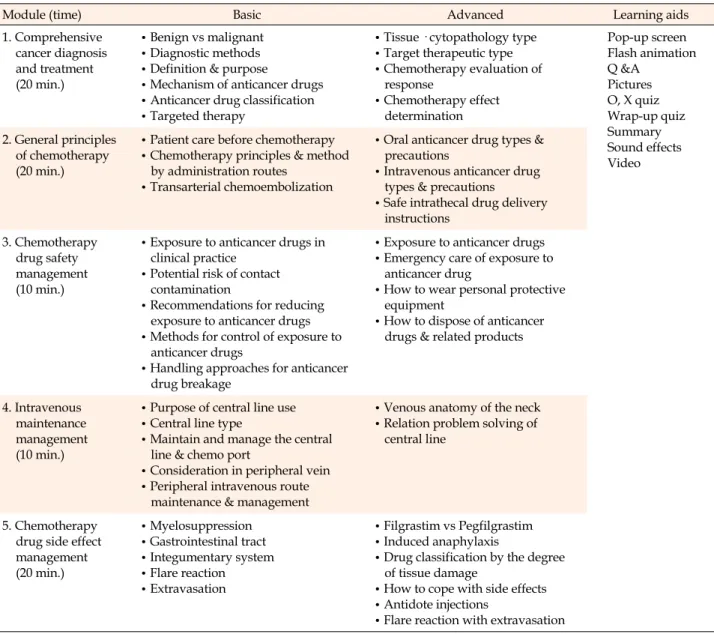
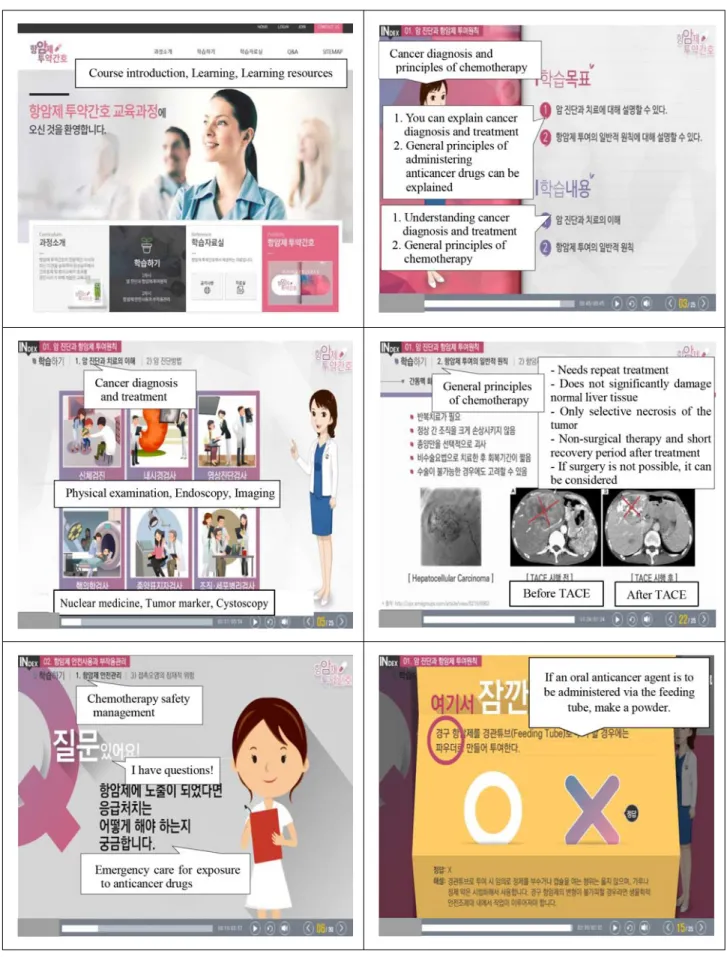
“advanced” contents. The learning process was managed through a learning management system linked to the university, and it took about 80 minutes to learn all of the learning contents, including the basic and advanced courses. However, learners were able to repeat a lesson if it was necessary during the two-week period, according to their level. All contents were customizable, from the prog- ress screen to basic and advanced learning (Table 1). The multimedia contents were created after several meetings with a web content company, revised and supplemented, and made available in connection with groupware in the hospital (Figure 1).
4) Operation and evaluation
The operation and evaluation stages will be explained in the following steps relating to the application and effec- tiveness of the web-based learning course developed in this study.
2. Effect of the Web-based Learning Course 1) Study design
This study adopted a randomized controlled design us- ing random selection to confirm the effectiveness of the web-based learning course.
2) Setting and participants
The subjects of this study were clinical nurses working at a university hospital in Guri-city, Gyeonggi-do, South Korea who met the following selection criteria: i) fewer than five years of clinical experience in general wards; ii) nurses in the internal medicine, surgery, gynecological, and hematology/oncology wards where chemotherapy nursing is performed; and iii) nurses who had not received in-hospital education for anticancer chemotherapy nurs- ing within the last 12 months. They were informed of the purpose of the study and agreed to participate. The num- ber of samples in this study was calculated based on the re- sults on the proven effectiveness of education with a large effect size in a previous study [21], which evaluated the ef- fectiveness of web-based Cardiopulmonary Resuscitation (CPR) training for nurses. It was calculated using G*Power 3.1.9.2 and Cohen's sampling formula; with a large effect size of 0.80, significance level of .05, and power of 80%, the number of samples suitable for a t-test was at least 26 in each group. The subjects for this study were 56 staff nurses who met the selection criteria and agreed to participate in the study, among about 120 nurses from 8 general wards who had not been trained in practice in the hospital within the past year.
The experimental and control groups were randomly selected using boxes with numbers from 1 to 56. Those who were selected from number 1 to 28 by assigning a number tag were assigned to the experimental group, and numbers after No. 29 were assigned to the control group.
All participants in the experimental and control groups completed the questionnaire without dropping out. In or- der to prevent spread among subjects, the data collection of the control group was performed first, and then the ex- perimental group's data were collected. Also, the wards to which the experimental and control groups belonged were selected in different ways, and the subjects were not informed whether they were in the experimental or con- trol group.
3) Measurements
Data on age, gender, marital status, education, working department, total clinical experience, frequency of anti- cancer drug administration, online learning experience,
Table 1. Basic and Advanced Learning Modules for Anticancer Chemotherapy Nursing
Module (time) Basic Advanced Learning aids
1. Comprehensive cancer diagnosis and treatment (20 min.)
•Benign vs malignant
•Diagnostic methods
•Definition & purpose
•Mechanism of anticancer drugs
•Anticancer drug classification
•Targeted therapy
•Tissue · cytopathology type
•Target therapeutic type
•Chemotherapy evaluation of response
•Chemotherapy effect determination
Pop-up screen Flash animation Q &A
Pictures O, X quiz Wrap-up quiz Summary Sound effects Video 2. General principles
of chemotherapy (20 min.)
•Patient care before chemotherapy
•Chemotherapy principles & method by administration routes
•Transarterial chemoembolization
•Oral anticancer drug types &
precautions
•Intravenous anticancer drug types & precautions
•Safe intrathecal drug delivery instructions
3. Chemotherapy drug safety management (10 min.)
•Exposure to anticancer drugs in clinical practice
•Potential risk of contact contamination
•Recommendations for reducing exposure to anticancer drugs
•Methods for control of exposure to anticancer drugs
•Handling approaches for anticancer drug breakage
•Exposure to anticancer drugs
•Emergency care of exposure to anticancer drug
•How to wear personal protective equipment
•How to dispose of anticancer drugs & related products
4. Intravenous maintenance management (10 min.)
•Purpose of central line use
•Central line type
•Maintain and manage the central line & chemo port
•Consideration in peripheral vein
•Peripheral intravenous route maintenance & management
•Venous anatomy of the neck
•Relation problem solving of central line
5. Chemotherapy drug side effect management (20 min.)
•Myelosuppression
•Gastrointestinal tract
•Integumentary system
•Flare reaction
•Extravasation
•Filgrastim vs Pegfilgrastim
•Induced anaphylaxis
•Drug classification by the degree of tissue damage
•How to cope with side effects
•Antidote injections
•Flare reaction with extravasation
and frequency of internet use were collected as general characteristics of the subjects.
(1) Knowledge on chemotherapy nursing
Based on previous research and a literature review, the authors developed a 25-item questionnaire with consul- tation from a hematologic oncologist, 2 nursing profes- sors, 5 oncology advanced practice nurses with over 15 years of experience, and 2 clinical advanced practice nur- ses. Five-items with a Content Validity Index (CVI) of less than .85 were excluded from the questionnaire, and ulti- mately, 20 questions were selected. The difficulty of the items was .05~.96 and the discrimination rate was .07~.86, including 25.0% of the upper and lower groups. Know- ledge measurement was done using questions about what
is the most important way to prevent infections when car- ing for patients with neutropenia, what is the right nursing treatment when extravasation occurs during chemothera- py, and so on. For each question, the correct answer was worth 1 point and the wrong answer 0 points, and the score range was 0 to 20 points. The higher the score, the higher the knowledge level. The CVI of the tool was .92 and a reli- ability test was performed using the Kuder-Richardson formula 20 (KR-20); the result was .70.
(2) Self-efficacy for chemotherapy nursing
Self-efficacy was measured with a 14-item tool devel- oped by Sherer et al. [22] and translated into Korean by Yang [23]. We gained permission from the authors before using the tool. This tool covered the degree of knowledge
Figure 1. Screen captures of the website.
required for anticancer chemotherapy nursing work, the level of anticancer medication that could be administered based on comfort and ability, the degree of adaptation to the ward, and the degree of challenge for new anticancer medication nursing.
Self-efficacy consisted of items that were perceived by the nurses about their overall nursing care and confidence, rather than specific behaviors related to anti-cancer che- motherapy nursing. The items included the following statements: “When administering anticancer drugs, I can handle my duties with my skills” and “When it comes to administering anticancer drugs, I can get it done.” The re- sponses were graded on a four-point Likert scale (4=very much, 1=not at all); higher scores meant greater self-effi- cacy. In terms of reliability, Yang [23] reported that the in- strument had a Cronbach's ⍺ of .79, and it was .75 in this study.
(3) Nursing performance ability for chemotherapy nurs- ing
This tool, which was composed of 25 items, was devel- oped by the researchers because there was no research tool for measuring nursing performance related to caring for patients undergoing anticancer chemotherapy. The pri- mary questionnaire was created in consultation with two nursing professors, five oncology advanced practice nur- ses, and two clinical advanced practice nurses.
Regarding treatment with anticancer drugs, items such as the management of veins performed by nurses, waste treatment, and the prevention and treatment of side effects were included. The items included the following state- ments: “Personal protective equipment can be worn accu- rately and safely before chemotherapy” and “In the event of a hemorrhage, nursing can be performed by knowing the indications of cold and hot therapy.”
The CVI of all items was 0.8 or more and the average CVI was 0.98, but we modified four items based on the ex- perts' opinions. The responses were rated on a four-point Likert scale (4=very performable, 1=not performable). The higher the score, the higher the ability to perform nursing care. The internal consistency of the tool was ⍺=.96 in this study.
4) Procedure and data collection
The web-based course in anticancer chemotherapy and nursing was presented to the experimental group for two weeks between September 19 and October 3, 2016 through links on the hospital's web site. The learning course con- sists of 5 learning areas in basic and advanced modules and took 80 minutes to complete. The control group re-
ceived a single 60-minute education session on cancer treatment and chemotherapy drugs in the auditorium of the hospital on August 22, 2016. Such sessions are con- ducted four times a year for all nurses in the hospital. The session was carried out by a nurse with 16 years of experi- ence in the field of hemato-oncology.
In order to control exogenous variables such as expo- sure to new web-based education as it applied to the ex- perimental group, lecture-type education, which was pre- viously used for nurses, was first conducted using the con- trol group, and then the intervention was provided to the experimental group. Posttest measurements of the re- search variables were performed two weeks after the com- pletion of the nursing course by the experimental group and two weeks after the classroom lecture for the control group. Based on the finding of the previous systematic re- view that the appropriate time to examine the effect of web-based education was two weeks after the completion of training, this study attempted to confirm changes in the dependent variables two weeks after the completion of training in both the experimental and control group [24].
5) Ethical considerations
To protect the rights and interests of the subjects, this re- search was approved by the bioethics committee of the hospital (Approval no. GURI 2016-03-011-001). Voluntary written consent was obtained after the purpose and meth- od of the study were explained to the participants. The consent process also explained that there were no disad- vantages to refusing or stopping participation in the study, and that confidentiality and anonymity were guaranteed.
6) Data analysis
The collected data were analyzed using the SPSS/WIN 21.0 statistical program. The reliability of the instruments was measured using the KR-20 and Cronbach's ⍺. The pre-homogeneity tests of the experimental and control groups were analyzed using the x2 test and independent t-test. The normality test on the study variables using the Shapiro-Wilk test confirmed that the null hypothesis could not be rejected because the p value of all three study variables was greater than .05, and thus the data was con- firmed to follow the normal distribution. In addition, to verify the homogeneity of the variance of the two groups of variables for the independent t-test, Levene's test was used to evaluate whether the assumption of equal vari- ance based on the p value was violated. The independent student t-test was used to examine the difference between the pre- and post-test scores for the experimental and con- trol groups.
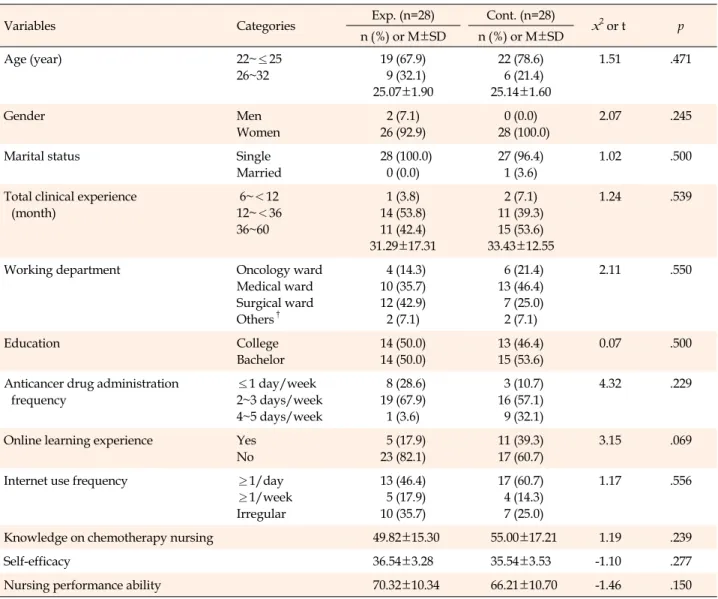
Table 2. Demographic Characteristics of the Participants and Homogeneity of the Variables (N=56)
Variables Categories Exp. (n=28) Cont. (n=28)
x2 or t p n (%) or M±SD n (%) or M±SD
Age (year) 22~≤25
26~32
19 (67.9) 9 (32.1) 25.07±1.90
22 (78.6) 6 (21.4) 25.14±1.60
1.51 .471
Gender Men
Women
2 (7.1) 26 (92.9)
0 (0.0) 28 (100.0)
2.07 .245
Marital status Single
Married
28 (100.0) 0 (0.0)
27 (96.4) 1 (3.6)
1.02 .500
Total clinical experience (month)
6~<12 12~<36 36~60
1 (3.8) 14 (53.8) 11 (42.4) 31.29±17.31
2 (7.1) 11 (39.3) 15 (53.6) 33.43±12.55
1.24 .539
Working department Oncology ward
Medical ward Surgical ward Others†
4 (14.3) 10 (35.7) 12 (42.9) 2 (7.1)
6 (21.4) 13 (46.4) 7 (25.0) 2 (7.1)
2.11 .550
Education College
Bachelor
14 (50.0) 14 (50.0)
13 (46.4) 15 (53.6)
0.07 .500
Anticancer drug administration frequency
≤1 day/week 2~3 days/week 4~5 days/week
8 (28.6) 19 (67.9) 1 (3.6)
3 (10.7) 16 (57.1) 9 (32.1)
4.32 .229
Online learning experience Yes No
5 (17.9) 23 (82.1)
11 (39.3) 17 (60.7)
3.15 .069
Internet use frequency ≥1/day
≥1/week Irregular
13 (46.4) 5 (17.9) 10 (35.7)
17 (60.7) 4 (14.3) 7 (25.0)
1.17 .556
Knowledge on chemotherapy nursing 49.82±15.30 55.00±17.21 1.19 .239
Self-efficacy 36.54±3.28 35.54±3.53 -1.10 .277
Nursing performance ability 70.32±10.34 66.21±10.70 -1.46 .150
Cont.=control group; Exp.=experimental group; M=mean; SD=standard deviation; †Others include pediatric ward, gynecology ward.
RESULTS
1. Demographic Characteristics of the Participants and Homogeneity of the Variables
The mean total clinical experience of the experimental and control groups was 31.29±17.31 months and 33.43±
12.55 months, respectively. At the time, 35.7% of the ex- perimental group and 46.4% of the control group worked most frequently in the medical ward, and the frequency of anticancer drug administration for 2 to 3 days per week was the highest in the experimental group (67.9%; control group: 57.1%). The knowledge of chemotherapy nursing was 55.00±17.21 in the control group, which was higher than the 49.82±15.30 in the experimental group, but there was no statistically significant difference. For self-efficacy
(36.54±3.28 vs. 35.54±3.53) and nursing performance abil- ity (70.32±10.34 vs. 66.21±10.70), there was no statistical difference in scores between the two groups. In terms of the general characteristics and dependent variables, there was no significant difference between the experimental and control groups, so homogeneity between the groups was ensured (Table 2).
2. Effect of the web-based learning
The difference between the pre- and post-test average knowledge scores of the experimental group was 16.61
±21.90 points and that of the control group was 7.14±
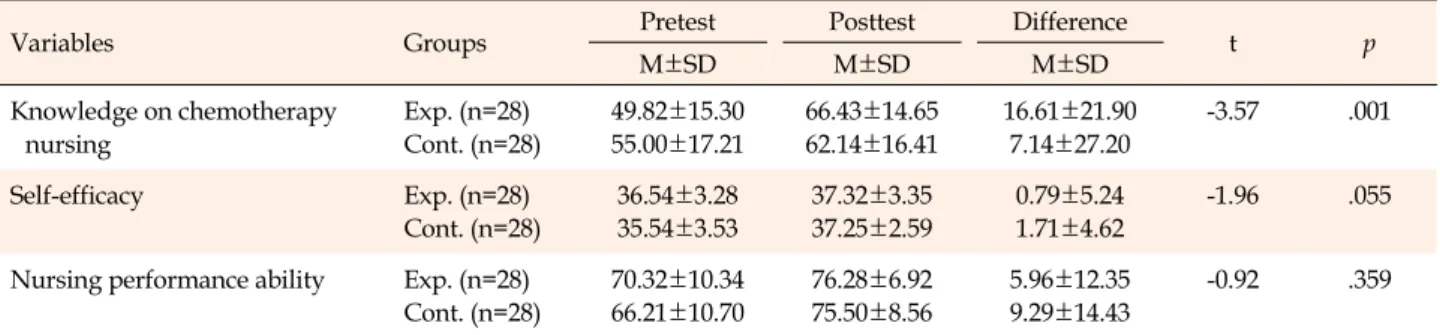
27.20 points; there was a statistically significant difference between the two groups' pre- and post-test values (t=-3.57, p=.001). For self-efficacy, the pre- and post-test score dif-
Table 3. Comparisons of Knowledge, Self-Efficacy, and Nursing Performance Ability between Experimental Group and Control
Group (N=56)
Variables Groups Pretest Posttest Difference
t p
M±SD M±SD M±SD
Knowledge on chemotherapy nursing
Exp. (n=28) Cont. (n=28)
49.82±15.30 55.00±17.21
66.43±14.65 62.14±16.41
16.61±21.90 7.14±27.20
-3.57 .001
Self-efficacy Exp. (n=28)
Cont. (n=28)
36.54±3.28 35.54±3.53
37.32±3.35 37.25±2.59
0.79±5.24 1.71±4.62
-1.96 .055
Nursing performance ability Exp. (n=28) Cont. (n=28)
70.32±10.34 66.21±10.70
76.28±6.92 75.50±8.56
5.96±12.35 9.29±14.43
-0.92 .359
Cont.=control group; Exp.=experimental group; M=mean; SD=standard deviation.
ference was 0.79±5.24 for the experimental group and 1.71±4.62 for the control group, which was not statisti- cally significant (t=-1.96, p=.055). Also, the index of nurs- ing performance was not significantly different between the experimental (5.96±12.35) and control groups (9.29±
14.43) (t=-0.92, p=.359) (Table 3).
DISCUSSION
Anticancer chemotherapy and nursing have been taught through lecture-based education as an in-hospital prac- tical course that all clinical nurses must take, but it is nec- essary to switch to web-based self-learning at the indi- vidual level in order to increase the effectiveness of this education. To this end, in this study, we developed web- based learning contents in consultation with clinical ex- perts and tried to verify their effectiveness in comparison with lecture-based education.
The degree of improvement of the knowledge score of the experimental group was significantly higher com- pared with the control group in this study. This finding is consistent with a previous study that showed that e-learn- ing interventions on patient safety significantly increased students' knowledge of patient safety compared to class- room lectures [16]. In addition, this finding supports other studies that used a single-group design and showed that e-learning diabetes education for school personnel signifi- cantly increased their knowledge of diabetes and main- tained it for more than 12 months [17], and that web-based continuing education significantly increased nurses' know- ledge of diabetes after their education [18]. McCutcheon et al. [25] confirmed a significant increase in web-based learn- ing knowledge in 7 of 13 articles through a systematic re- view of the knowledge levels of web-based and traditional face-to-face training methods. In a meta-analysis of 11 ex- perimental studies on nurses and nursing students by Lahti et al. [26], e-learning was shown to be more effective
in knowledge acquisition than traditional face-to-face learning in 4 studies; however, these differences were not statistically significant. Because knowledge is a prerequi- site of attitude and behavior, it is necessary to study it re- peatedly in order to establish that knowledge improve- ment is an effect of web-based learning.
Self-efficacy showed an improvement in the posttest values in both groups compared to the pre-test values, but there was no significant difference between the two groups' posttest values. This is in contrast to the finding that online diabetes education promoted school person- nel's confidence in caring for diabetic students [17], al- though a direct comparison is difficult due to the single- group design. However, the results of this study, which showed no significant difference in self-efficacy between the two groups after the intervention, support the finding of a previous study that the self-efficacy of nurses who used a mobile web-based convergence CPR training pro- gram did not differ from the control group [21]. Our find- ings were also similar to the result that an e-learning pro- gram did not affect nurses' attitude toward patient safety in the long term [24]. Although not statistically significant at this study's level of .05, it showed a marginal signifi- cance level of .055. Self-efficacy is the most important fac- tor that explains behavior, so further repeated research is needed.
There were also no significant differences between the two groups in terms of nursing performance, although both improved their performance after the education. The results of the current study suggest that the participants had little time to apply their learning to their actual skills because their performance was measured after a self-learn- ing period of two weeks. This finding is partly supported by a study that found that nursing students' ability to cal- culate drug dosages was improved via web-based educa- tion, although it used a single-group design [27]. However, the results of this study are inconsistent with the finding
that a web-based CPR training [17] and education program for clinical questioning in evidence-based practice [28] sig- nificantly increased related nursing performance compared to a lecture. They also contradict the results of a study by Moattari et al. [18], who found that web-based education significantly increased nurses' clinical competency in dia- betes management, measured with an objective structured clinical examination.
However, as in the current study, many studies meas- ured perceived nursing performance with a self-report questionnaire, and thus the accuracy of the differences in the actual results cannot be guaranteed. An integrative re- view has shown that clinical performance, such as nursing assessment skills, cannot be improved by e-learning alone and needs to be linked to face-to-face patient simulation or traditional education [19]. In particular, among the online learning methods, it was found that a method where the group interacted with an instructor and students using video was the most effective in terms of emergency educa- tion [29]. Therefore, further studies are needed to identify why knowledge does not lead to improved performance, and to study the effects of blended education methods that can be practiced during learning.
This study is meaningful in that it developed a web- based learning course for anticancer chemotherapy nurs- ing that can be repeatedly performed and updated based on the latest clinical knowledge, and compared it with the existing lecture method. However, this study has several limitations. It was conducted on nurses at a single univer- sity hospital and was based on a self-report questionnaire, so the results cannot be generalized to nurses at other hospitals. Also, since there were no appropriate tools for measuring nursing knowledge and performance, the au- thors developed the tools themselves, limiting the com- parability of the findings. In addition, this study is limited in that the effect of the experiment was measured shortly after the test application, and the evaluation was based on self-assessment rather than observation or peer evaluation.
CONCLUSION
In this study, a course in anticancer chemotherapy and nursing that clinical nurses have to complete every year was made into web-based contents and compared with lecture-based education to verify its effectiveness. Nurses who utilized web-based self-learning had higher know- ledge of anticancer chemotherapy nursing than nurses who received traditional lecture-based education, and there was no significant difference in their self-efficacy and nursing performance ability. In other words, it was
confirmed that web-based education in chemotherapy nursing is similar to or more effective than lecture-type education in terms of the learning outcomes. Therefore, although more research is necessary, this study supports the use of anticancer chemotherapy nursing education with a web-based self-learning method over traditional lecture-based education.
CONFLICTS OF INTEREST
The authors declared no conflict of interest.
AUTHORSHIP
Study conception and design acquisition - MMY and HSY; Data collection - MMY; Analysis and interpretation of the data - MMY and HSY; Drafting and critical revision of the manuscript - MMY and HSY.
ACKNOWLEDGEMENT
This manuscript is a condensed version of the first author's doc- toral dissertation from Hanyang University.
REFERENCES
1. National Cancer Information Center. Cancer statistics in Korea 2016 [Internet]. Goyang: National Cancer Information Center;
2017 [cited 2018 July 22]. Available from:
http://www.cancer.go.kr/mbs/cancer/
2. Statistics Korea. 2016 Causes of death [Internet]. Daejeon:
Statistics Korea; 2017 [cited 2018 July 22]. Available from:
http://kostat.go.kr/portal/korea/index.action
3. Evans JM, Qiu M, MacKinnon M, Green E, Peterson K, Kaizer L. A multi-method review of home-based chemotherapy. Euro- pean Journal of Cancer Care. 2016;25(5):883-902.
https://doi.org/10.1111/ecc.12408
4. Turkcan A, Zeng B, Lawley M. Chemotherapy operations plan- ning and scheduling. IIE Transactions on Healthcare Systems Engineering. 2012;2(1):31-49.
https://doi.org/10.1080/19488300.2012.665155
5. Beaver CC, Magnan MA. Managing chemotherapy side ef- fects: Achieving reliable and equitable outcomes. Clinical Jour- nal of Oncology Nursing. 2016;20(6):589-91.
https://doi.org/10.1188/16.cjon.589-591
6. Adhikari R, Tocher J, Smith P, Corcoran J, MacArthur J. A multi-disciplinary approach to medication safety and the im- plication for nursing education and practice. Nurse Education Today. 2014;34(2):185-90.
https://doi.org/10.1016/j.nedt.2013.10.008
7. Ulas A, Silay K, Akinci S, Dede DS, Akinci MB, Sendur MAN, et al. Medication errors in chemotherapy preparation and ad- ministration: a survey conducted among oncology nurses in
Turkey. Asian Pacific Journal of Cancer Prevention. 2015;16 (5):1699-705. https://doi.org/10.7314/APJCP.2015.16.5.1699 8. Keers RN, Williams SD, Cooke J, Ashcroft DM. Causes of medi-
cation administration errors in hospitals: a systematic review of quantitative and qualitative evidence. Drug Safety. 2013;36 (11):1045-67. https://doi.org/10.1007/s40264-013-0090-2 9. Neuss MN, Gilmore TR, Belderson KM, Billett AL, Conti-Kal-
chik T, Harvey BE, et al. 2016 Updated american society of clin- ical oncology/oncology nursing society chemotherapy admin- istration safety standards, including standards for pediatric oncology. Journal of Oncology Practice. 2016;12(12):1262-71.
https://doi.org/10.1200/JOP.2016.017905
10. Korea Institute for Healthcare Accreditation. Guideline for healthcare accreditation ver 2.0 [Internet]. Seoul: Korea Insti- tute for Healthcare Accreditation; 2016 [cited 2018 June 22].
Available from:
http://www.koiha.kr/member/kr/board/establish/establish _BoardList.do
11. Callahan A, Ames NJ, Manning ML, Touchton-Leonard K, Yang L, Wallen R. Factors influencing nurses' use of hazardous drug safe-handling precautions. Oncology Nursing Forum.
2016;43(3):342-9. https://doi.org/10.1188/16.ONF.43-03AP 12. Truong HM. Integrating learning styles and adaptive e-learn-
ing system: current developments, problems and opportu- nities. Computers in Human Behavior. 2016;55:1185-93.
https://doi.org/10.1016/j.chb.2015.02.014
13. Georg C, Zary N. Web-based virtual patients in nursing educa- tion: development and validation of theory-anchored design and activity models. Journal of Medical Internet Research.
2014;16(4):e105. https://doi.org/10.2196/jmir.2556
14. Du S, Liu Z, Liu S, Yin H, Xu G, Zhang H, et al. Web-based dis- tance learning for nurse education: a systematic review. Inter- national Nursing Review. 2013;60(2):167-77.
https://doi.org/10.1111/inr.12015
15. Schnetter VA, Lacy D, Jones MM, Bakrim K, Allen PE, O'Neal C. Course development for web-based nursing education pro- grams. Nurse Education in Practice. 2014;14(6):635-40.
https://doi.org/10.1016/j.nepr.2014.06.007
16. Gaupp R, Dinius J, Drazic I, Körner M. Long-term effects of an e-learning course on patient safety: a controlled longitudinal study with medical students. PloS one. 2019;14(1):e0210947.
https://doi.org/10.1371/journal.pone.0210947
17. Taha NA, Rahme Z, Mesbah N, Mahmoud F, AlKandari S, Othman N, et al. Evaluation of the impact of a diabetes educa- tion eLearning program for school personnel on diabetes knowledge, knowledge retention and confidence in caring for students with diabetes. Diabetes Research and Clinical Prac- tice. 2018;139:348-56.
https://doi.org/10.1016/j.diabres.2018.03.019
18. Moattari M, Moosavinasab E, Dabbaghmanesh MH, Zarif-
Sanaiey N. Validating a web-based diabetes education program in continuing nursing education: knowledge and competency change and user perceptions on usability and quality. Journal of Diabetes & Metabolic Disorders. 2014;13(1):70-7.
https://doi.org/10.1186/2251-6581-13-70
19. McDonald EW, Boulton JL, Davis JL. E-learning and nursing assessment skills and knowledge - an integrative review. Nurse Education Today. 2018;66:166-74.
https://doi.org/10.1016/j.nedt.2018.03.011
20. Jung IS. Understanding of distance education. 1st ed. Seoul:
Koyyuk Science Company; 1999. p. 77-100.
21. Bang JY, Kim JS. Effects of a mobile web-based cardiopulmo- nary resuscitation convergence education for nurses. Journal of the Korea Convergence Society. 2018;9(3):307-17.
https://doi.org/10.15207/JKCS.2018.9.3.307
22. Sherer M, Maddux JE, Merchandate B, Prentice-Dunn S, Jacobs B, Rogers RW. The self-efficacy scale: construction and vali- dation. Psychological Reports. 1982;51(2):663-71.
23. Yang KM. Analysis of the relationship between the empower- ment the job-related individual characteristics and the work performance of nurses. Journal of Korean Academy of Nurs- ing Administration. 1999;5(1):39-61.
24. Kang JW. A systematic review and meta analysis of the effect on web based nursing education program for knowledge [mas- ter's thesis]. Seoul: Korea University; 2014.
25. McCutcheon K, Lohan M, Traynor M, Martin D. A systematic review evaluating the impact of online or blended learning vs.
face to face learning of clinical skills in undergraduate nurse education. Journal of Advanced Nursing. 2014;71(2):255-70.
https://doi.org/10.1111/jan.12509
26. Lahti M, Hätönen H, Välimäki M. Impact of e-learning on nur- ses' and student nurses' knowledge, skills, and satisfaction: a systematic review and meta-analysis. International Journal of Nursing Studies. 2014;51(1):136-49.
https://doi.org/10.1016/j.ijnurstu.2012.12.017
27. Aydin AK, Dinç L. Effects of web-based instruction on nursing students' arithmetical and drug dosage calculation skills. CIN:
Computers, Informatics, Nursing. 2017;35(5):262-9.
https://doi.org/10.1097/CIN.0000000000000317
28. Jeong M, Park M. Development and effects of e-learning pro- gram for clinical questioning in evidence-based practice using case-based animation for nurses. Korean Journal of Adult Nursing. 2018;30(6):643-55.
https://doi.org/10.7475/kjan.2018.30.6.643
29. Leszczyński P, Gotlib J, Kopański Z, Wejnarski A, Świeżewski S, Gałązkowski R. Analysis of web-based learning methods in emergency medicine: randomized controlled trial. Archives of Medical Science. 2018;14(3):687-94.
https://doi.org/10.5114/aoms.2015.56422