• 검색 결과가 없습니다.

Study of Characteristics of Patients with Chronic Fatigue

N/A
N/A
Protected

Academic year: 2021

Share "Study of Characteristics of Patients with Chronic Fatigue"

Copied!
5
0
0

로드 중.... (전체 텍스트 보기)

전체 글

(1)

Study of Characteristics of Patients with Chronic Fatigue

Chang-Gue Son

Liver-Immune Center of Oriental Medicine College, Daejeon University

Original Article

⋅Received:23 August 2010 ⋅Revised:12 October 2010 ⋅Accepted:18 October 2010

⋅Correspondence to:Chang-Gue Son

Liver-Immune Department of Daejeon Oriental Hospital of Daejeon University. 22-5 Daeheung-dong, Jung-gu, Daejeon, 301-724, South Korea.

Tel:+82-42-229-6723, Fax:+82-42-254-3403, E-mail:[email protected]

Objective: This study aimed to produce a description of features of chronic fatigue patients visiting an Oriental Hospital.

Methods: 121 patients (75 male and 46 female) who visited a fatigue-care center were enrolled in this study, and the main complaints besides fatigue feeling, symptom differentiation, and health-related factors were analyzed.

Results: On a visual analogue scale (VAS), average severity of fatigue was 7.0 (male 6.77 and female 7.4; 0 indicates no fatigue vs. 10 indicates intolerable fatigue), and the main complaints included headache (male and female) and dyspepsia (female). Patients generally slept about 7 hrs and caught a cold 2.4 times per year (same in both male and female). 54.6 % of patients used functional supplements, and red ginseng, vitamin and herbal medicine were chosen in that order.

Conclusions: Chronic fatigue is a main target of traditional Korean medicine (TKM). This study can be helpful to design TKM-based treatment for chronic fatigue-related symptoms.

Key Words : Chronic fatigue, herbal medicine, traditional Korean medicine.

Introduction

Chronic fatigue is a subjective feeling of exhaustion or lethargy lasting for longer than 6 months. The acute fatigue can be generally relieved by taking a rest;

however, chronic fatigue disturbs daily life and affects quality of life

1)

. Fatigue symptoms are very prevalent, in nearly 10 % of the general population worldwide

2,3)

. Poor understanding of its etiology and lack of effective therapies are a fact in conventional medicine

4)

. Chronic fatigue untreated for long periods leads to pathogenic status regarding physical, social, and occupational well-being

5)

.

On the other hand, a comprehensive approach of diagnosis and treatment for subjective symptoms including chronic fatigue, is a strength of traditional

Korean medicine (TKM), so many patients with chronic fatigue visit Oriental doctors

6,7)

. TKM or Oriental medicine explains chronic fatigue as an unbalanced state of inter-functions of internal major organs as well as vital elements such as Chi and blood

8)

. The anti-fatigue effects of herbal medicine and acupuncture treatment have been partially demonstrated by clinical studies

9,10)

.

Nevertheless, there is lack of study of TKM-based

epidemiology and pathophysiology on chronic

fatigue-associated disorders. In addition, standardized

diagnosis, classification and quantitative measurement

of severity of chronic fatigue are essentially required

in the TKM field

7)

. As part of an effort to address

this, this study reports features of chronic fatigue

patients visiting an Oriental fatigue-care center.

(2)

Male Female

Headache Muscle pain

Dyspepsia Back pain

Sleeping disorder

Diarrhea Catch cold

Depression Only fatigue 20.0

28.3

9.3 15.2

6.7 13.0

5.3 4.3

2.7 2.2 4.0 4.3 8.06.5

2.7 4.3 38.7

30.4

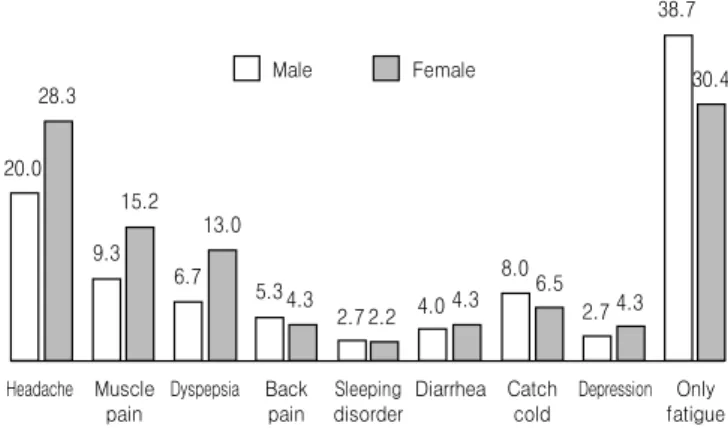
Fig. 1. Main complaints and their frequency (%) in patients with chronic fatigue

Method

Subjects and study design

This study was designed as a pilot study to characterize patients with chronic fatigue. 121 patients (74 male and 47 female, median age 39.5 years, range 13 to 72) who visited the fatigue-care center of Daejeon University Hospital were involved.

All patients had suffered from chronic fatigue lasting over six months, and had no abnormality in laboratory or radiologic examination. No control group was enrolled. Using []

Data collection and statistical analysis

All patients were requested to indicate their feeling of severity of fatigue by drawing a vertical line on a 10-cm visual analogue scale (VAS). The starting point (0cm) indicates “no symptom” while the terminal point (10cm) represents “the most severe feeling of fatigue”. In addition, other fatigue-related factors such as sleeping, exercise, dietary patterns, stress, physical problems, and taking of food supplements were collected using a questionnaire. Data comparisons between males and females were analyzed by t-test or χ

2

-test (chi-square test) using PASW Statistics 17 program.

Results

Severity of chronic fatigue and main complaints

The average fatigue severity of total patients was 7.03 ± 2.03. The male’s score was 6.77 ± 2.05 while severity score of female patients was 7.38 ± 1.96. A statistically significant difference between males and females was not observed (p = 0.126).

Besides chronic fatigue, the main complaints of men included headache, muscle pain, catching cold, dyspepsia, and back pain in while women patients presented headache, muscle pain, dyspepsia, catching cold, back pain, diarrhea, and depression in order (Fig. 1). Multiple responses were allowed in this survey. Statistically significant difference between male and female patients was not observed for any symptom (p > 0.05).

Sleeping, exercise, stress and frequency of catching cold

Patients generally slept about 7.3 ± 2.0 hrs (male

7.3 ± 1.9 and female 7.4 ± 2.2) daily. The frequency

of exercise over 30 min within one week was 2.6 ±

2.1 times (male 2.8 ± 2.0 and female 2.1 ± 2.0). For

the question of how strongly they felt stress, 5.2 %

(3)

None Moderate Severe None Moderate Severe 3.3

66.7

30.0

8.1

48.6 43.3

Fig. 2. Stress status of male (left) and female (right) patients with chronic fatigue (%)

Male Female

Red ginseng Herbal drugs Vitamin Others No taken 20.0

26.1

10.7 4.3

16.0 23.9

5.3 6.5

50.7 47.8

Fig. 3. Functional supplements taken by patients with chronic fatigue (%)
of patients answered no stress while 59.7 % and 35.1 %

of patients reported moderate and severe stress, respectively (Fig. 2). Patients had caught a cold 2.4

± 2.0 times per year, similarly in both males (2.4 ± 3.1) and females (2.3 ± 3.3). No factors showed any statistical significance between males and females (p

> 0.05).

Functional supplements taken by patients 54.6 % of patients took functional supplements for their fatigue symptoms. The consumption rate was slightly higher in females, at 63.1 %, than 49.3 % in male patients. The most popular supplement used by fatigue patients was red ginseng (20.0 % of male and 26.1% of female patients). Vitamins and herbal drugs were second and third ranked, respectively (Fig. 3). Multiple responses were allowed in this survey. There was no statistical difference according to sex (p > 0.05).

Discussion and conclusion

American Centers for Disease Control and Prevention define chronic fatigue as fatigue extended for over six months. In particular, two subclasses of medically unexplained chronic fatigue, idiopathic chronic fatigue and chronic fatigue syndrome, are considered to be medical problems

11)

. One study reported that 8.4 % of 1,648 visitors to eight Korean primary family clinics complained of chronic fatigue.

20 % of them had no explained medical causes, and 0.6 % of patients met criteria for chronic fatigue syndrome

12)

. However, there is a lack of epidemiologic data and clinical study on chronic fatigue-associated disorders, especially in the field of TKM.

This study shows features of chronic fatigue

patients visiting a fatigue-care center in an Oriental

Hospital. A total of 121 patients complaining of

chronic fatigue without any abnormality in objective

examinations were surveyed. The average fatigue-

(4)

severity of patients was around 7.0 when the maximum level 10 indicates the worst feeling condition: “cannot to do anything due to fatigue”.

The quantitative measurement of fatigue severity is very important for management of patients with chronic fatigue, however to assess fatigue level is difficult because fatigue is a subjective feeling

7)

. This result represents the status of fatigue severity at time of visiting the Oriental clinic. The females’ severity was slight higher than males’ symptom at 7.4 vs.

6.8, respectively. This might result from a gender-dependent different pattern of response to symptoms such as pain or fatigue

13)

.

This result was in accordance with the rate of complaints besides chronic fatigue. About 70 % of female patients had at least one symptomatic disorder besides chronic fatigue, while male patients were about 61 % (Fig. 1). Headache, muscle pain, dyspepsia and depression were the main disorders, more frequently in female than male patients. Headache, muscle pain, and depression are well known as accompanying symptoms or possibly causative diseases of idiopathic chronic fatigue or chronic fatigue syndrome

14,15)

. Stress and immunity are other important factors in fatigue-related disorder

16-18)

. 30.0

% and 43.2 % of male and female patients respectively reported that they have been in severe stress conditions (Fig. 2). Both male and female patients had caught a cold about 2.4 times per year. However, it was impossible to do comparative analysis with healthy subjects because of no reference data from normal people. It was supposed that fatigue patients had similar life patterns with healthy people regarding sleeping and exercise.

For their health improvement, 49.3 % of male and 63.1 % of female patients have used one or more functional supplements. Red ginseng was the most favorite, followed by vitamins and herbal drugs as second and third choices (Fig. 3). Chronic fatigue greatly affects quality of life; however no curing conventional therapeutics exist for patients with

medically unexplained chronic fatigue symptoms.

Therefore, chronic fatigue patients traditionally have used herbal treatments, especially in, Asia including Korea. These results indicate that traditional Korean medicine has a high potency to be a main therapeutic for chronic fatigue-related symptoms. TKM has developed many therapeutics associated with chronic fatigue, such as herbal formulae. However, recently the rate of use of herbal medicine by patients is decreasing. One study reported that high-school students use vitamins, ginseng and herbal medicine in order as functional supplements

19)

. Based on the above statistic, a new strategy for patients with chronic fatigue might be needed in the field of TKM. We need more systematic and scientific studies on remedy development for chronic fatigue.

The current report has a limitation due to being just one hospital-based investigation; however this study did create a description of features of chronic fatigue patients. This result can be a useful baseline, and much further data from multiple Oriental clinics should be made and added to this finding. In conclusion, the author hopes that this result may contribute to study of TKM-derived therapeutic developments against chronic fatigue disorders in the future.

Acknowledgement

This study was supported by a grant from the National Research Foundation as Mid-career Researcher Program (R01-2007-000-11248-0) from the MEST, Republic of Korea.

References

1. Jorgensen R. Chronic fatigue: an evolutionary concept analysis. J Adv Nurs. 2008; 63(2):

199-207.

2. Wessely S, Chalder T, Hirsch S, Wallace P,

Wright D. The prevalence and morbidity of

chronic fatigue and chronic fatigue syndrome: a

(5)

prospective primary care study. American Journal of Public Health. 1997; 87(9):1449-55.

3. Ricci JA, Chee E, Lorandeau AL, Berger J.

Fatigue in the US workforce: prevalence and implications for lost productive work time.

Journal of Occupational and Environmental Medicine. 2007; 49(1):1-10.

4. Glacken M, Coates V, Kernohan G, Hegarty J.

The experience of fatigue for people living with hepatitis C. Journal of Clinical Nursing. 2003;

12(2):244-52.

5. Sekiya N, Shimada Y, Shintani T, Tahara E, Kouta K, Shibahara N, et al. Reduction of perception of chronic fatigue in an observational study of patients receiving 12 weeks of Kampo therapy. Journal of Alternative and Com- plementary. Medicine. 2005; 11(5):895-901.

6. Kim CH, Shin HC. Clinic for chronic fatigue.

J Korean Acad Fam Med. 1998; 19(8):592-603.

7. Cho JH, Son CG. Need for Development of Oriental Medicine-derived Systemic Treatments against Chronic Fatigue-associated Symptoms. J Korean Oriental Med. 2009; 30(4): 28-36.

8. Yiu YM, Qiu MY. A preliminary epide- miological study and discussion on traditional Chinese medicine pathogenesis of chronic fatigue syndrome in Hong Kong. Zhong Xi Yi Jie He Xue Bao 2005; 3:359-62.

9. Cho JH, Cho CK, Shin JW, Son JY, Kang W, Son CG. Myelophil, an extract mix of Astragali Radix and Salviae Radix, ameliorates chronic fatigue: a randomised, double-blind, controlled pilot study.

Complement Ther Med. 2009; 17(3):141-6.

10. Huang Y, Liao XM, Li XX, Song YB. Clinical observation on the effects of Bo’s abdominal acupuncture in 40 cases of chronic fatigue syndrome. J Tradit Chin Med. 2008; 28(4):264-6.

11. Fukuda K, Straus SE, Hickie I, Sharpe MC, Dobbins JG, Komaroff A. International chronic

fatigue syndrome study group. The chronic fatigue syndrome: a comprehensive approach to its definition and study. Ann Intern Med. 1994;

121:953-9.

12. Kim CH, Shin HC, Won CW. Prevalence of chronic fatigue and chronic fatigue syndrome in Korea: community-based primary care study. J Korean Med Sci. 2005; 20(4):529-34.

13. Reddy H, Arendt-Nielsen L, Staahl C, Pedersen J, Funch-Jensen P, Gregersen H, et al. Gender differences in pain and biomechanical responses after acid sensitization of the human esophagus.

Dig Dis Sci. 2005; 50(11):2050-8.

14. May M, Emond A, Crawley E. Phenotypes of chronic fatigue syndrome in children and young people. Arch Dis Child. 2010; 95(4):245-9.

15. Griffith JP, Zarrouf FA. A Systematic Review of Chronic Fatigue Syndrome: Don't Assume It’s Depression. Prim Care Companion J Clin Psychiatry. 2008; 10(2):120-8.

16. Van Houdenhove B, Van Den Eede F, Luyten P. Does hypothalamic-pituitary-adrenal axis hypofunction in chronic fatigue syndrome reflect a ‘crash’ in the stress system? Med Hypotheses.

2009;72(6):701-5.

17. Glaser R, Kiecolt-Glaser JK. Stress-associated immune modulation: relevance to viral infections and chronic fatigue syndrome. Am J Med. 1998;

105(3A):35S-42S.

18. Siegel SD, Antoni MH, Fletcher MA, Maher K, Segota MC, Klimas N. Impaired natural immunity, cognitive dysfunction, and physical symptoms in patients with chronic fatigue syndrome: preliminary evidence for a subgroup?

J Psychosom Res. 2006; 60(6):559-66.

19. Seo KS, Ahn YC, Son CG. Survey for General

Traits of Health-associated Factors of High

School Students in Daegeon City. J Korean

Oriental Med. 2010;31(4):171-7.

수치

Fig. 1.  Main  complaints  and  their  frequency  (%)  in  patients  with  chronic  fatigue
Fig. 3.  Functional  supplements  taken  by  patients  with  chronic  fatigue  (%)of patients answered no stress while 59.7 % and 35.1 %

참조

관련 문서

Chronic kidney disease (partial update): Early identification and management of chronic kidney disease in adults in primary and secondary care (Clinical

1 John Owen, Justification by Faith Alone, in The Works of John Owen, ed. John Bolt, trans. Scott Clark, "Do This and Live: Christ's Active Obedience as the

Tenofovir alafenamide versus tenofovir disoproxil fumarate for the treatment of patients with HBeAg-negative chronic hepatitis B virus infection: a randomised, double-blind,

Purpose: This study was performed to identify the association between family support, ADL and depression among hospitalized older patients with chronic

Therefore, this study aims to analyze the effects of Soru massage therapy on the following variables: fatigue, stress, and obesity-related indexes including weight, waist girth

Full genome cloning and nucleotide sequence analysis of hepatitis C virus from sera of chronic hepatitis patients in Korea. Detection of hepatitis C virus RNA

Baseline characteristics of genotype 1b chronic hepatitis C patients who treated with daclatasvir and asunaprevir (n=231)... Characteristics of genotype 1b

Correlation between Results ofthe Multiple Allergosorbent Test-Chemiluminescent Assay(MAST-CLA) and Clinical Severity of Chronic Urticaria. A study of food allergy