INTRODUCTION
Allergic rhinitis (AR) is a symptomatic disorder of the nose in- duced after exposure to allergens via IgE-mediated hypersensi- tivity reactions, which are characterized by 4 cardinal symptoms of watery rhinorrhea, nasal obstruction, nasal itching and sneez- ing.1 The prevalence of AR is increasing all over the world. In the United States, AR is estimated to affect approximately 60 million peoples, and the prevalence is about 10-30% in adults and near- ly 40% in children.2-4 In Korea, the prevalence of perennial AR was 3.39% according to the survey of 71,120 patients who visited the otolaryngology clinics of 23 tertiary referral centers between November 1999 and April 2000.5 According to the surveillance of 42,886 Koreans using the International Study of Asthma and Allergies in Childhood (ISSAC) questionnaire, 12-month prev- alences of AR in elementary and middle school children (6-12 and 12-15 years) were 28.8% and 29.1%, respectively.6 AR is as- sociated with an enormous economic burden causing problems in quality of life such as work/school performance and sleep. In the United States, direct cost for AR was 1.9 billion dollars in 1996.7 In another study, the direct cost for AR exceeded 3 billion dollars in 1996, and additional cost of 4 billion dollars resulted from comorbidities.8 Furthermore, as many studies on the rela- tionship between AR and asthma have been reported, there has been a growing interest in the treatment of AR. Therefore, Aller- gic Rhinitis and Its Impact on Asthma (ARIA) published the
The Pathophysiology, Diagnosis and Treatment of Allergic Rhinitis
Yang-Gi Min*
Department of Otorhinolaryngology, Seoul National University College of Medicine, Seoul, Korea
guidelines for AR and revised them in 2008.9 The points of the ARIA guidelines are as follows: AR is subdivided by symptom duration and the severity of AR, a stepwise therapeutic approach is needed depending on the ARIA classification, and patients with persistent AR should be evaluated for asthma. There were some changes in the 2008 ARIA guidelines as compared to the 2001 guidelines: (1) intranasal corticosteroid became a first-line drug which was second-line drug in the 2001 guidelines, (2) sec- ond-generation antihistamines were preferred to first-generation one’s, (3) leukotriene antagonists were entered into suggested drugs and (4) the role of immunotherapy was re-evaluated.
We review herein the pathophysiology, ARIA classification, di- agnosis and treatment of AR, including recent update of AR.
PATHOPHYSIOLOGY OF AR Sensitization to allergens
Antigen presenting cells (APCs), such as dendritic cells in the mucosal surface, process allergens and present some peptides Allergy Asthma Immunol Res. 2010 April;2(2):65-76.
doi: 10.4168/aair.2010.2.2.65 pISSN 2092-7355 • eISSN 2092-7363
Treatment of AR requires a stepwise approach depending on the severity and duration of symptoms. Treatment options for AR consist of allergen avoidance, pharmacotherapy, immunotherapy and surgery. For the mechanisms of AR, anti-IgE antibody and specific antibody to cytokines such as IL-4 or IL-5 that correlate with allergic inflammation have recently emerged. SLIT is currently widely used due to its efficacy, safety and convenience, which replaces subcutaneous immunotherapy. Although allergen avoidance and immunotherapy are theoretically ideal, antihistamines and intrana- sal corticosteroids will play the main role in the management of AR until an innovative treatment develops. However, patients’ main symptom, the duration and severity of AR, patients’ compliance, safety of medication and cost-effectiveness should be considered when treatment options are chosen. In conclusion, physicians should be aware of etiology, pathophysiology, symptoms, signs and diseases related to AR in order to make a cor- rect diagnosis and choose a proper treatment option for each patient.
Key Words: Hypersensitivity; perennial allergic rhinitis; seasonal allergic rhinitis; physiopathology; diagnosis; therapy
This is an Open Access article distributed under the terms of the Creative Commons Attribution Non-Commercial License (http://creativecommons.org/licenses/by-nc/3.0/) which permits unrestricted non-commercial use, distribution, and reproduction in any medium, provided the original work is properly cited.
Correspondence to: Yang-Gi Min, MD, PhD, Department of Otorhinolaryn- gology, Seoul National University College of Medicine, 101 Daehak-ro, Jongno- gu, Seoul 110-744, Korea.
Tel: +82-2-760-2446; Fax: +82-2-745-2387; E-mail: [email protected] Received: March 1, 2010; Accepted: March 4, 2010
•There are no financial or other issues that might lead to conflict of interest.
from allergens on the major histocompatibility complex (MHC) class II molecule.10 This MHC class II molecule and antigen complex take a role as the ligand of T-cell receptors on Naive CD4+ T cells, which result in differentiation of Naive CD4+ T cells to allergen-specific Th2 cell. Activated Th2 cells secret sev- eral cytokines, which induce isotype switching of B cells to pro- duce specific IgE and proliferation of eosinophils, mast cells and neutrophils (Fig. 1).11 Produced antigen-specific IgE binds to high-affinity IgE receptors on mast cells or basophils.
Early and late reactions
When AR patients are exposed to allergens, allergic reactions develop in 2 different patterns according to time sequence. One is the early reaction, in which sneezing and rhinorrhea devel- ops in 30 minutes and disappears. The other is the late reaction, which shows nasal obstruction approximately 6 hours after ex- posure to allergens and subsides slowly. The early reaction is the response of mast cells to offending allergens (type I hyper- sensitivity). Stimulated mast cells induce nasal symptoms by secreting chemical mediators such as histamine, prostaglan- dins and leukotrienes.12 In contrast to the early reaction, eo- sinophil chemotaxis is the main mechanism in the late reac- tion, which is caused by chemical mediators produced in the early reaction. Several inflammatory cells, eosinophils, mast cells and T cells migrate to nasal mucosa, break up and remod- el normal nasal tissue,13 and these processes result in nasal ob- struction which is the main symptom of AR patients.
Neurogenic inflammation
When respiratory epithelium is destroyed and nerve endings are exposed by cytotoxic proteins from eosinophils, sensory
nerve fibers are excited by nonspecific stimuli and stimulate both sensory afferent and surrounding efferent fibers, the so- called retrograde axonal reflex. This makes the sensory nerve fi- bers secrete neuropeptides such as substance P and neuroki- nin A, which induce contraction of smooth muscles, mucous secretion of goblet cells and plasma exudation from capillaries.
This process is called neurogenic inflammation.14 Non-specific hyperresponsiveness
Non-specific hyperresponsiveness is one of the clinical char- acteristics of allergic inflammation. Due to eosinophilic infiltra- tion and destruction of nasal mucosa, the mucosa becomes hy- peractive to normal stimuli and causes nasal symptoms such as sneezing, rhinorrhea, nasal itching and obstruction.15 This is a non-immune reaction that is not related to IgE. Hypersensitivi- ty to non-specific stimuli such as tobacco or cold and dry air as well as specific allergens increases in AR patients.
Relationship between AR and asthma - “One airway, one disease”
Epidemiologic studies have reported that almost all of the asth- ma patients have AR symptoms16,17 eosinophilic inflammation of nasal mucosa regardless of nasal symptoms.18 This character- istic finding of asthma is not found in patients with other pul- monary diseases and is the evidence that asthma is a systemic disease. The prevalence of asthma in AR patients has been re- ported to be from 10% up to 40%.5,16,19-21 Several clinical studies have revealed that although AR patients do not have asthma, they can have eosinophilic infiltration in bronchial mucosa.22-25 Madonini et al.26 have indicated that AR patients with positivity to pollens have bronchial hyperresponsiveness during the pol- len season. Corren et al.27 have demonstrated that allergen stim- Fig. 1. Allergen-induced sensitization and inflammation.11
Allergen
Basophil B cell Eosinophil Mast cell
T cell IgE
Dendritic cell
IL-3 IL-4 IL-5 IL-9
ulation to nasal mucosa in AR patients induces bronchial hyper- responsiveness. With cumulative of evidence for structural an- alog28,29 and the similarity of allergic inflammatory cells, inflam- matory mediators and cytokines between upper and lower air- ways,13,30 the “one airway, one disease” concept has been intro- duced. This means that since AR and asthma are not separate disease entity, concurrent asthma in AR patients and concur- rent AR in asthmatic patients should be indentified and both upper and lower airway allergy should be treated simultane- ously. The ARIA (2008) recommends that asthma should be evaluated in moderate-severe persistent AR patients.
THE ARIA CLASSIFICATION OF AR
In the past, AR was subdivided by the kind of allergens into seasonal or perennial AR. The later is caused by indoor aller- gens such as house dust mites, cockroaches, animal dander or fungi, and the former by outdoor allergens, pollens. However, in some areas, pollens can induce perennial AR when patients are exposed to the pollens adhering to indoor carpet, furniture or bedclothes after the pollen season. In addition, perennial AR symptoms do not persist all around the year, and seasonal AR patients sensitized to multiple allergens may have rhinitis symp- toms in all seasons. Furthermore, there are seasonal exacerba- tions in perennial AR patients when they are exposed to pollens.
For these reasons, in 2001, ARIA suggested “intermittent” and
“persistent” instead of “seasonal” and “perennial”.1 Also, disease severity was classified as “mild” and “moderate-severe” consid- ering its influence on work/school performance, daily activities and sleep (Fig. 2).
DIAGNOSIS OF AR
The diagnosis of AR is based on a typical history of allergic symptoms and diagnostic tests.9 When 2 or more symptoms out of watery rhinorrhea, sneezing, nasal obstruction and nasal pruritus persist for ≥1 hour on most days, AR is strongly sus-
pected. In this situation, disease severity should be classified according to the ARIA guidelines and a confirmative diagnosis should be established by the skin prick test or the serum-specif- ic IgE level. Unilateral nasal stuffiness, mucopurulent rhinor- rhea, mucoid postnasal drip, pain, recurrent epistaxis or anos- mia is usually not associated with AR.
Skin testing
Skin testing is the most important to find offending allergens.
There are various testing methods including the scratch, prick/
puncture, intradermal and patch tests. Among them, the skin prick test is usually recommended in clinical practice. False- positive or false-negative reactions are frequently evoked in skin tests, which means that positive reactions to specific aller- gens in skin tests does not always have a direct correlation with actual allergic reactions in the nasal cavity. There is controversy regarding the interpretation of the test results, and criteria for positivity are different among allergy clinics. Furthermore, skin tests have some problems. This test can be influenced by some drugs, particularly antihistamines, patients’ age and test sites. If a patient has dermatologic disease, skin tests are difficult to perform. Despite these weak points, skin testing is regarded as the most important diagnostic method. A previous study on skin prick test results of 1,564 Korean AR patients reported that house dust mites was the most common allergen with a posi- tive reactivity of 70%-80% (Table 1).31
Serum specific IgE level
Although the radioallergosorbent test (RAST) was the first method to detect serum-specific IgE, this test has not been widely used because it requires a radioactive isotope and ex- pensive equipment and also because this test cannot detect multiple antibodies simultaneously. The next method is the multiple allergen simultaneous test (MAST). Since the MAST has some advantages over the RAST, it has been widely used.
The MAST uses a photo reagent instead of a radioactive iso- tope, does not require expensive equipment and can detect Fig. 2. ARIA classification of severity of allergic rhinitis.1
Intermittent
symptoms
• <4 days per week
• or <4 consecutive weeks
Persistent
symptoms
• >4 days/week
• and >4 consecutive weeks
Mild
all of the following
• normal sleep
• no impairment of daily activities, sport, leisure
• no impairment of work and school
• symptoms present but not troublesome
Moderate-severe
one of more items
• sleep disturbance
• impairment of daily activities, sport, leissure
• impairment of school or work
• troublesome symptoms
multiple allergens simultaneously. This test is not affected by drugs such as antihistamines, is less invasive and can be adopt- ed in patients with dermographism. One problem with the MAST is a low sensitivity as compared to the skin prick test.
However, Finnerty et al.32 reported that the MAST shows 66.5%
and 78.5% concordance rates when the criteria for positivity are
≥3 mm and ≥5 mm, respectively, and they recommended the MAST rather than skin tests. The capsulated hydrophilic carrier polymer (CAP) system is a more accurate in vitro test. Its proce- dure is similar to that of the MAST, but it uses a solid phase that has a high affinity to antigens. The CAP system can detect aller- gens more quantitatively than the MAST using antigens bound to a fine thread because antigens bind to the inner surface of sponge-like cellulose polymer bubbles.
Clinical parameters related to asthma
Guerra et al.33 have reported that the severity of AR has a posi- tive link with asthma and the risk of asthma incidence is 5 times higher in AR patients with elevated serum IgE. Silvestri et al.34 have pointed out that the eosinophil count of the nasal cavity is related to bronchial hyperresponsiveness and that the changes in the number and distribution of eosinophils after nasal mu- cosal challenge are also associated with bronchial hyperrespon- siveness. They suggest that the local inflammation of AR can predict bronchial hyperresponsiveness. A domestic study of 83 pediatric AR patients and 32 normal children reported that prev- alence of bronchial hyperresponsivenss was higher in AR pa- tients than in control subjects (32.5% vs. 9.4%) and that persis- tent AR and parental asthma are closely related to bronchial hyperresponsiveness.35 In addition, it is known that bronchial hyperresponsiveness in AR patients is a predictor of asthma.36 It has generally recognized that the development and severity of asthma increase when a patient is sensitized to indoor allergens
such as house dust mites or cat dander. The prevalence of asth- ma further increases in moderate to severe AR patients sensi- tized to both indoor and outdoor allergens.
TREATMENT Avoidance
Avoidance of indoor allergens including house dust mites is sometimes difficult. Therefore, few studies on avoidance of of- fending allergens have been conducted. For this reason, the 2001 ARIA guidelines classified the avoidance as evidence D.1 The 2008 ARIA guidelines have reported that there is the lack of evidence for effectiveness of avoidance of house dust mites or pet animal dander.9 However, a previous study has shown that cleaning with 60°C hot water removes house dust mites and other allergens effectively as compared to 30°C water (26.8% vs.
0.6%).37 Avoidance is mandatory for occupational AR. The Eu- ropean Academy of Allergy and Clinical Immunology (EAACI) stated that the safest and most effective treatment of occupa- tional AR is the strict avoidance of offending allergens.38 Pharmacological treatment
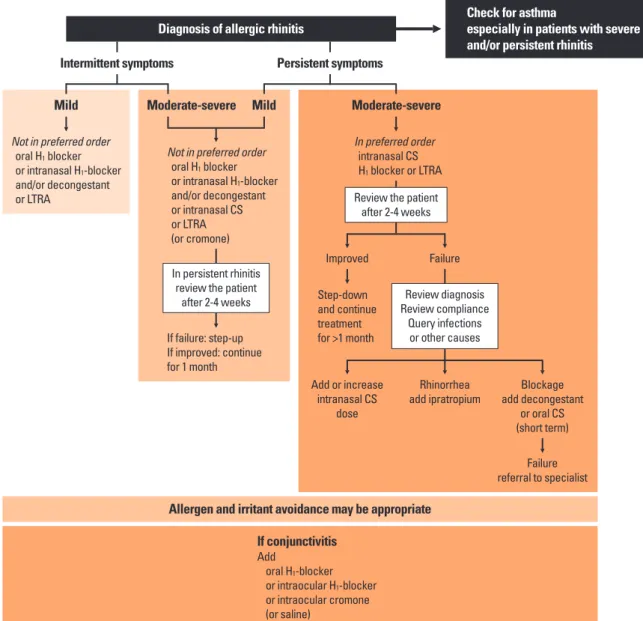
The principle of pharmacological treatment is a stepwise ap- proach according to the severity and duration (Fig. 3). The 2008 ARIA guidelines are different from the 2001 ARIA guidelines as follows: (1) leukotriene receptor antagonists can be used in all AR, (2) second-generation antihistamines are preferred to first- generation antihistamines and (2) topical steroids are regarded as the most effective drug for adult and pediatric AR patients.
Oral antihistamines
First-generation antihistamines, which have been used since the early 1940s, have some side effects such as sedation, mem- ory impairment and psychomotor dysfunction, which cause many problems in clinical practice. In contrast, second-genera- tion antihistamines penetrate the blood-brain barrier much less than first-generation antihistamines, and thus they have few side effects on the central nervous system.39 Therefore, the 2008 ARIA guidelines recommended second-generation anti- histamines rather than first-generation antihistamines. Oral an- tihistamines are effective in the treatment of rhinorrhea, sneez- ing, nasal itching and eye symptoms but less effective in nasal obstruction.40 Oral antihistamines have been reported to be safe and effective in children.41 Terfenadine and astemizole were initially used second-generation antihistamines. These drugs have severe cardiac toxicity inducing QT prolongation and tor- sade de pointes. When these antihistamines are administered along with macrolide antibiotics or azole antifungal agents, the risk of cardiac side effects is elevated because these drugs affect cytochrome p450 isoenzyme CYP3A4 activity. Therefore, ter- fenadine and astemizole have not been prescribed in many countries. Since ebastine is metabolized by CYP3A4, it can also Table 1. Positive rates of common offending aeroallergens (n=1,564)
Allergens Positive rate (%)
Mite
Dermatophagoides farinae
Dermatophagoides pteronyssinus 77.6
73.3 Epithelia
Cat hair
Dog hair 39.9
32.6 Pollens
Mugwort Tree Ragweed Grass
23.4 18.8 18.2 14.1 Others
Cockroach
Fungus 21.8
6.0
induce such drug interactions theoretically. When high-dose ebastine (50 mg/kg/day) is given to guinea pigs, QT prolonga- tion is observed in electrocardiography. When ebastine 20 mg/
kg/day is administered with ketoconazole 400 mg/kg/day or erythromycin 2,400 mg/kg/day, QT intervals are prolonged up to 10 m sec with no clinical significance. Care should be taken in prescribing ebastine along with other drugs inhibiting CY- P3A4 in patients with previous QT prolongation, liver failure or renal dysfunction.
Intranasal antihistamines
Topical antihistamines have been reported to reduce itching, sneezing and rhiorrhea.42 However, they are less effective than intranasal corticosteroids and ineffective in eye symptoms.43 In- tranasal azelastine twice a day can reduce the symptoms of sea-
sonal AR patients who do not respond to oral antihistamines.
They have some side effects such as mild sedation and metallic taste.44
Intranasal corticosteroids
Since intranasal corticosteroids are not absorbed systemical- ly, they induce few systemic side effects. Steroid particles pene- trate the cellular membrane and bind to cytoplasmic steroid re- ceptors. The steroid-receptor complex is transferred to the nu- cleus and binds to the specific DNA site. The anti-inflammatory effect is induced by alteration in protein synthesis after binding of the steroid-receptor complex to DNA or by affecting other transcription factors. Intranasal corticosteroids inhibit both early and late reactions and reduce IgE production and eosino- philia by inhibiting the secretion of cytokines including IL-4,
Fig. 3. Rhinitis management.9 Check for asthma
especially in patients with severe and/or persistent rhinitis
Allergen and irritant avoidance may be appropriate
Consider specific immunotherapy If conjunctivitis
Add
oral H1-blocker or intraocular H1-blocker or intraocular cromone (or saline)
Intermittent symptoms Persistent symptoms
Mild Not in preferred order
oral H1 blocker or intranasal H1-blocker and/or decongestant or LTRA
Moderate-severe In preferred order
intranasal CS H1 blocker or LTRA Review the patient
after 2-4 weeks
Rhinorrhea
add ipratropium Blockage add decongestant
or oral CS (short term)
Failure referral to specialist Add or increase
intranasal CS dose
Failure Improved
Step-down and continue treatment for >1 month
Review diagnosis Review compliance
Query infections or other causes Moderate-severe Mild
Not in preferred order oral H1 blocker or intranasal H1-blocker and/or decongestant or intranasal CS or LTRA (or cromone)
If failure: step-up If improved: continue for 1 month
In persistent rhinitis review the patient
after 2-4 weeks
Diagnosis of allergic rhinitis
1L-5 and IL-13. When intranasal corticosteroids are adminis- tered, eosinophils and basophils decrease in 1 week.45 Intrana- sal corticosteroids are effective in all AR symptoms, especially nasal obstruction and eye symptoms.46 The therapeutic effect of intranasal corticosteroids is encountered 7 hours after adminis- tration47 and reaches the maximal level after 2 weeks.
Recently, budesonide, triamcinolone acetonide, fluticasone propionate, mometasone furoate and fluticasone furoate have been widely used. For a better choice of topical steroids, their pharmacological characteristics should be considered. Although these drugs have similar clinical effects, their systemic absorp- tion rates are different. The systemic absorption rates of fluni- solide, triamcinolone acetonide and beclomethasone dipropi- onate are 20-50%, whereas those of mometasone furoate and fluticasone propionate are very low (≤0.1% and ≤2%, respec- tively). In addition, most of the intranasal corticosteroids are eliminated by first-pass hepatic metabolism.
Currently prescribed intranasal corticosteroids are thought to be safe. Even when children aged 7-12 years use mometasone 200 μg or budesonide 400 μg for 2 weeks, their growth rates of the lower extremities are not significantly affected. Twelve- month use of beclomethasone dipropionate may cause growth retardation in children.48 However, 1-year mometasone or fluti- casone therapy in children do not cause growth retardation.49,50
Intranasal corticosteroids usually improve the symptoms of patients with asthma. Watson et al.51 have documented that in- tranasal beclomethasone therapy reduces bronchial hyperre- sponsiveness and asthmatic symptoms in patient with AR and asthma. Foresi et al.52 have demonstrated that fluticasone pro- pionate suppresses bronchial hyperresponsiveness in patients with seasonal AR.
Leukotriene receptor antagonists (LTRAs)
The role of leukotrienes in allergic reactions is well known. The efficacy of LTRA has been demonstrated in asthma. Recently, some studies on the efficacy of LTRAs in AR patients have been reported. As previously mentioned, the 2008 ARIA guidelines re-evaluated the role of LTRAs. Interest in LTRAs has been in- creasing with the concept of “one airway, one disease”, and there- fore many studies on LTRAs are being conducted. Pranlukast (Onon®), montelukast (Singulair®) are commercially available.
Care should be taken in the clinical use of Pranlukast which is metabolized by hepatic CYP3A4 enzymes because its serum concentration can be elevated when administered with terfen- adine, astemizole, ketoconazole or erythromycin.
Montelukast is effective in reducing nasal and eye symptoms in patients with seasonal AR and improves nasal obstruction comparable to loratadine.9 The additive or synergic effect of montelukast and loratadine is controversial. Some previous studies have advocated that a combination of montelukast and loratadine has faster and a better efficacy than montelukast or loratadine alone,53 whereas others have not.54 Kurowski et al.55
reported that montelukast plus cetirizine which was adminis- tered 6 weeks before the pollen season effectively prevented the exacerbation of seasonal AR symptoms. The additive effect of LTRAs and antihistamines requires more investigations. Up to now, the pharmacological effects of LTRAs are estimated to be similar to those of antihistamines but less than those of intrana- sal corticosteroids in patients with seasonal AR.9
Anti-IgE antibody
Omalizumab, an anti-IgE recombinant humanized monoclo- nal antibody, interferes with the interactions between mast cells/eosinophils and IgE by binding to free IgE and hence low- ers serum free IgE.56 It also suppresses inflammatory reactions in blood or nasal mucosa57 and expression of FceRI located on the surface of mast cells or eosinophils.58 Casale et al.59 have demonstrated that omalizumab pretreatment (300 mg) just be- fore and during the pollen season for 12 weeks with 3-4 weeks intervals reduces AR symptoms significantly in patients with severe seasonal AR. Although there were some adverse reac- tions, they stated that the incidence of adverse effects of omali- zumab such as headache, upper respiratory infection and si- nusitis in the patient group is not significantly different from that of the placebo group. Urticaria may occur at the injection site, but it subsides spontaneously or with the administration of antihistamines. While anti-IgE antibody therapy appears to be helpful in severe asthma, it is controversial whether anti-IgE therapy is suitable as a treatment option for AR due to anaphy- lactic risk60 and high costs.
Immunotherapy
Immunotherapy is the only therapeutic option that modifies the basic allergic mechanism by inducing desensitization and producing an anergy state for offending allergens. Immuno- therapy was initially introduced for seasonal AR due to pollens.
At present, its indications have been extended to other allergic diseases due to hymenoptera, house dust mite, animal dander or fungi.61 Extracts of offending allergens are injected subcuta- neously with increasing doses until a maintenance dose is reached. The maintenance dose is administered for ≥3 years.
Although subcutaneous immunotherapy is a well-established treatment option, the risk of anaphylaxis has led to the develop- ment of other administration routes such as the oral, sublingual or nasal route. Sublingual immunotherapy (SLIT) has been used for 20 years in European countries because of its non-invasive- ness, low incidence of adverse effects and convenience of self- administration. Recently, it has replaced subcutaneous immu- notherapy. In Korea, sublingual immunotherapy for house dust mites was initiated in 2007.62
Taken together, immunotherapy is effective in house dust mite and pollen AR of adult and children, prevents asthma in AR pa- tients and reduces new atopic sensitization. Its long-term effect after discontinuation of immunotherapy has been demonstrat-
ed. Herein we describe SLIT whose safety and efficacy have been proven.
Mechanism of SLIT
Recently, many studies on immunologic changes after SLIT have been conducted. Regulation of antigen-specific responses (an increase in the IgG4/IgE ratio), inhibition of recruitment/
activation of inflammatory cells, shift of Th2 to Th1 responses and activation of regulatory T cells are the main mechanisms of SLIT.63 Regulatory T cells are known to play a crucial role in im- mune tolerance, and they are related to the mechanism of SLIT.
High-dose allergen extracts for SLIT induce regulatory T cells, which inhibit allergic inflammatory reactions by suppressing Th2 cells and producing IL-10 and TGF-b (Fig. 4).64
Clinical efficacy
During the last 20 years, researches into SLIT have mainly been conducted in European countries. Although most studies have included a small sample size, meta-analyses of these studies have recently been published. A meta-analysis of 22 trials and 979 subjects showed that SLIT reduced the symptom score and medication frequency.65 In this meta-analysis, the symptom score and medication frequency were not improved in children.
However, this study has some limitations due to the small sam- ple size.66 Another meta-analysis of pediatric patients aged 4-18 years have suggested that SLIT reduces allergic symptoms and medication score.67 A previous study conducted in Korea re- ported that subjective symptoms assessed with a questionnaire were improved 6 months after SLIT, and 45% of patients were satisfied with SLIT.62
Like subcutaneous immunotherapy, SLIT reduces the inci- dence of asthma.68 A long-term follow-up study of pediatric pa- tients with asthma and AR who were treated with SLIT for 4-5 years have pointed out that SLIT decreases the symptoms of asthma, medication frequency, and peak expiratory flow rate,
and its efficacy is maintained for 4 to 5 years after discontinua- tion.69
SLIT has been shown to reduce sensitization to new allergens.
In a previous study in 216 patients, it was found that 5.9% of pa- tients in the SLIT group showed positive skin test results to new allergens, whereas 38% of patients in the control group, suggest- ing that SLIT could prevent sensitization to new allergens.70
Safety of SLIT
SLIT is safer than subcutaneous immunotherapy. Common adverse events are local reactions (oral pruritus or swelling) and gastrointestinal problems (nausea, vomiting, diarrhea or abdominal pain), which subside spontaneously or with conser- vative management. Fatal adverse events causing death or se- vere sequelae have not yet been reported. Three cases of ana- phylaxis after SLIT have been reported in the English language literatures: 2 of them were due to a mixture of multiple aller- gens and the remaining occurred during the treatment with la- tex allergen.71-73 However, anaphylaxis caused by commercially available allergens has not yet been reported. When 66 reports on SLIT were analyzed, there were no serious adverse effects during 1,181,654 administrations for 4,378 patients.74 Of the 66 reports, 41 reported adverse events: 1,047 adverse events oc- curred during 386,149 doses (2.7/1,000 doses). In 49 reports, 529 (12%) of 4,378 patients showed adverse events. Of 314,959 doses, 169 (0.056%) induced systemic side reactions and exac- erbation of asthma occurred in 7 patients. In a previous study with 126 patients aged 3-5 years who underwent SLIT for aller- gic respiratory disease for ≥2 years, 9 adverse events were iden- tified, which occurred during the dose escalation: 2 cases of oral pruritus, 1 case of mild abdominal pain and 6 cases of gas- trointestinal problems, and all cases were successfully treated by decreasing doses.69 Therefore, SLIT is thought to be safe, even for children aged ≤5 years. Table 2 shows the level of evidence of different interventions in allergic rhinitis.
Fig. 4. The possible mechanism of action of sublingual immunotherapy.64 Allergens
Oral mucosal dendritic cell
Th0 TREG
B cell
IgG Th2
IgA Suppression
Interleukin-10 TGF-b
OTHER COMPLICATIONS AND COMORBID DISEASES Allergic conjunctivitis
Allergic conjunctivitis is one of the most common accompa- nying diseases of AR. This is attributable to outdoor allergens such as pollens rather than indoor allergens. About 75% of AR patients complain of the symptoms of allergic conjunctivitis.
Rhinosinusitis
Influence of AR on the paranasal sinuses is not well under- stood. Many studies have suggested that allergic inflammation could affect acute or chronic rhinosinusitis. In AR patients due to ragweed, abnormal findings in computed tomography are found during the ragweed pollen season.75 A previous radiolog- ic study using computed tomography has demonstrated that Table 2. Level of evidence of different interventions in allergic rhinitis9
Seasonal rhinitis Perennial rhinitis (mostly applies
for studies ≤4 weeks)* Persistent rhinitis†
Intervention Adults Children Adults Children
H1-antihistamine Oral Intranasal Intraocular
A A A
A A A
A A B
A A B
A No data No data Glucocorticosteroid
Intranasal Oral IM
A A A
A B B
A B B
A B B
No data No data No data Cromones
Intranasal
Intraocular A
A A
A A
B B
B No data
No data
NAAGA (topical) B C C C No data
Antileukotriene A A over 6 years No data
Decongestant Intranasal Oral
Oral + H1-antihistamine
C A A
C B
C B
C B
No data No data No data
Anticholinergic A A No data
Homeopathy D D D D No data
Acupuncture D D D D No data
Phytotherapy B D D D No data
Other CAM D D D D No data
Specific immunotherapy: rhinoconjunctivitis Subcutaneous
Sublingual‡ A
A A
A A
A A
A No data
No data
Intranasal‡ A No data
Specific immunotherapy: asthma Subcutaneous
Sublingual‡ A
A A
A A
A A
A
Anti-IgE A A over 12 years A A over 12 years No data
Allergen avoidance House dust mites Other indoor allergens
Total avoidance of occupational agent Partial avoidance of latex
D
D D
D D
D A (for asthma)
B
D
D No data
No data No data No data
*Very few studies longer than 4 weeks.
†Applies to treatments only carried out in studies with persistent rhinitis.
‡Applied to high-dose treatment.
nasal allergen challenge can induce paranasal sinus inflamma- tion.76 However, epidemiologic studies have suggested that the incidence of rhinosinusitis is not significantly higher in AR pa- tients than in normal subjects. Therefore, it is not clear whether AR play a critical role in the development of rhinosinusitis. An- tihistamines improve nasal symptoms such as sneezing or na- sal obstruction in AR patients with acute rhinosinusitis.77
It is noteworthy that long-term use of nasal decongestants in AR patients may cause ciliary dysfunction with subsequent ir- reversible chronic hypertrophic rhinitis or sinusitis. In an ani- mal study using rabbits, long-term administration of deconges- tants induced histologic and functional changes of cilia and re- sulted in ciliary dysfunction and rhinosinusitis.78
Nasal polyposis
The relationship between nasal polyposis and allergy is not clear. It has been suggested that atopy itself may not contribute to the pathophysiology of nasal polyposis because the expres- sion of IL-4, IL-5 and IFN-g is not significantly different between nasal polyps of patients with seasonal AR and those with infec- tious rhinitis.79 Mechanisms involving edema and protrusion of nasal mucosa in nasal polyposis are similar to the pathophysi- ology of AR.80
Adenoid hypertrophy
Sensitization to inhalant allergens can alter immunological parameters of the adenoid. The numbers of CD1a+ Langerhans cells, eosinophils and IL-4 or IL-5-producing inflammatory cells increase in adenoid tissue of AR patients.81,82 The degree of ade- noid hypertrophy does not seem to correlate with the presence of atopy.83 Although there have been few reports on the efficacy of antihistamines in AR patients with adenoid hypertrophy, in- tranasal corticosteroids are known to improve the symptoms of adenoid hypertrophy regardless of the presence of atopy. A re- cent study reported that the consecutive administration of short- term oral steroid and long-term antihistamines/intranasal cor- ticosteroids reduce the size of adenoid and improve the symp- toms of adenoid hypertrophy.84
Eustachian tube dysfunction and otitis media with effusion Since the nasal mucosa is lined with the respiratory epitheli- um, allergic reactions due to inhalant allergens can occur in the eustachian tube. Therefore, the eustachian tube function of AR patients is impaired and otitis media with effusion occurs fre- quently, especially in children. It is controversial whether aller- gic inflammation in the eustachian tube is a reaction to local ir- ritation or part of systemic reaction.
Middle ear effusion fluid taken from AR patients contains IL-4 and IL-5 secreting cells.82 This represents a positive relationship between AR and the development of otitis media with effusion.
It might be helpful to check the presence of allergy in patients with recurrent middle ear effusion.85
Changes in cognitive abilities
Although cognitive abilities in AR patient have not yet been studied, there is growing interest in this issue. Learning or cog- nitive problems should be considered as psychological compli- cations of AR. AR patients do not concentrate on their school work due to sneezing, rhinorrhea or nasal itching. Marshall et al.86 reported that during ragweed season, allergic reactions to ragweed pollens cause a decrease in the speed of cognitive pro- cessing and difficulties in working memory in patients with ragweed AR. Symptomatic AR is related to poor school perfor- mance.87
REFERENCES
Bousquet J, Van Cauwenberge P, Khaltaev N. Allergic rhinitis and 1.
its impact on asthma. J Allergy Clin Immunol 2001;108:S147-334.
Nathan RA. The burden of allergic rhinitis. Allergy Asthma Proc 2.
2007;28:3-9.
Berger WE. Allergic rhinitis in children: diagnosis and management 3.
strategies. Paediatr Drugs 2004;6:233-50.
Settipane RA. Rhinitis: a dose of epidemiological reality. Allergy 4.
Asthma Proc 2003;24:147-54.
Min YG, Choi BY, Kwon SK, Lee SS, Jung YH, Kim JW, Oh SJ. Multi- 5.
center study on the prevalence of perennial allergic rhinitis and al- lergy-associated disorders. J Korean Med Sci 2001;16:697-701.
Lee SI, Shin MH, Lee HB, Lee JS, Son BK, Koh YY, Kim KE, Ahn YO.
6.
Prevalences of symptoms of asthma and other allergic diseases in korean children: a nationwide questionnaire survey. J Korean Med Sci 2001;16:155-64.
Reed SD, Lee TA, McCrory DC. The economic burden of allergic 7.
rhinitis: a critical evaluation of the literature. Pharmacoeconomics 2004;22:345-61.
Nash DB, Sullivan SD, Mackowiak J. Optimizing quality of care and 8.
cost effectiveness in treating allergic rhinitis in a managed care set- ting. Am J Manag Care 2000;6:S3-15; quiz S19-20.
Bousquet J, Khaltaev N, Cruz AA, Denburg J, Fokkens WJ, Togias A, 9.
Zuberbier T, Baena-Cagnani CE, Canonica GW, van Weel C, Agache I, Ait-Khaled N, Bachert C, Blaiss MS, Bonini S, Boulet LP, Bousquet PJ, Camargos P, Carlsen KH, Chen Y, Custovic A, Dahl R, Demoly P, Douagui H, Durham SR, van Wijk RG, Kalayci O, Kaliner MA, Kim YY, Kowalski ML, Kuna P, Le LT, Lemiere C, Li J, Lockey RF, Mavale- Manuel S, Meltzer EO, Mohammad Y, Mullol J, Naclerio R, O’Hehir RE, Ohta K, Ouedraogo S, Palkonen S, Papadopoulos N, Passalacqua G, Pawankar R, Popov TA, Rabe KF, Rosado-Pinto J, Scadding GK, Simons FE, Toskala E, Valovirta E, van Cauwenberge P, Wang DY, Wickman M, Yawn BP, Yorgancioglu A, Yusuf OM, Zar H, Annesi- Maesano I, Bateman ED, Ben Kheder A, Boakye DA, Bouchard J, Burney P, Busse WW, Chan-Yeung M, Chavannes NH, Chuchalin A, Dolen WK, Emuzyte R, Grouse L, Humbert M, Jackson C, John- ston SL, Keith PK, Kemp JP, Klossek JM, Larenas-Linnemann D, Lipworth B, Malo JL, Marshall GD, Naspitz C, Nekam K, Niggemann B, Nizankowska-Mogilnicka E, Okamoto Y, Orru MP, Potter P, Price D, Stoloff SW, Vandenplas O, Viegi G, Williams D; World Health Or- ganization; GA(2)LEN; AllerGen. Allergic Rhinitis and its Impact on Asthma (ARIA) 2008 update (in collaboration with the World Health Organization, GA(2)LEN and AllerGen). Allergy 2008;63 Suppl 86:
8-160.
Chaplin DD. 1. Overview of the human immune response. J Allergy 10.
Clin Immunol 2006;117:S430-5.
Broide DH. The pathophysiology of allergic rhinoconjunctivitis.
11.
Allergy Asthma Proc 2007;28:398-403.
Prussin C, Metcalfe DD. 5. IgE, mast cells, basophils, and eosino- 12.
phils. J Allergy Clin Immunol 2006;117:S450-6.
Kay AB. Allergy and allergic diseases. Second of two parts. N Engl J 13.
Med 2001;344:109-13.
Togias A. Unique mechanistic features of allergic rhinitis. J Allergy 14.
Clin Immunol 2000;105:S599-604.
Gerth van Wijk RG, de Graaf-in’t Veld C, Garrelds IM. Nasal hyper- 15.
reactivity. Rhinology 1999;37:50-5.
Linneberg A, Henrik Nielsen N, Frolund L, Madsen F, Dirksen A, 16.
Jorgensen T. The link between allergic rhinitis and allergic asthma:
a prospective population-based study. The Copenhagen Allergy Study. Allergy 2002;57:1048-52.
Montnemery P, Svensson C, Adelroth E, Lofdahl CG, Andersson M, 17.
Greiff L, Persson CG. Prevalence of nasal symptoms and their rela- tion to self-reported asthma and chronic bronchitis/emphysema.
Eur Respir J 2001;17:596-603.
Gaga M, Lambrou P, Papageorgiou N, Koulouris NG, Kosmas E, 18.
Fragakis S, Sofios C, Rasidakis A, Jordanoglou J. Eosinophils are a feature of upper and lower airway pathology in non-atopic asthma, irrespective of the presence of rhinitis. Clin Exp Allergy 2000;30:
663-9.
Bousquet J, Annesi-Maesano I, Carat F, Leger D, Rugina M, Pribil C, 19.
El Hasnaoui A, Chanal I. Characteristics of intermittent and persis- tent allergic rhinitis: DREAMS study group. Clin Exp Allergy 2005;
35:728-32.
Leynaert B, Neukirch C, Kony S, Guenegou A, Bousquet J, Aubier 20.
M, Neukirch F. Association between asthma and rhinitis according to atopic sensitization in a population-based study. J Allergy Clin Immunol 2004;113:86-93.
Downie SR, Andersson M, Rimmer J, Leuppi JD, Xuan W, Akerlund 21.
A, Peat JK, Salome CM. Association between nasal and bronchial symptoms in subjects with persistent allergic rhinitis. Allergy 2004;
59:320-6.
Chakir J, Laviolette M, Boutet M, Laliberte R, Dube J, Boulet LP.
22.
Lower airways remodeling in nonasthmatic subjects with allergic rhinitis. Lab Invest 1996;75:735-44.
Djukanovic R, Lai CK, Wilson JW, Britten KM, Wilson SJ, Roche WR, 23.
Howarth PH, Holgate ST. Bronchial mucosal manifestations of ato- py: a comparison of markers of inflammation between atopic asth- matics, atopic nonasthmatics and healthy controls. Eur Respir J 1992;
5:538-44.
Brown JL, Behndig AF, Sekerel BE, Pourazar J, Blomberg A, Kelly FJ, 24.
Sandstrom T, Frew AJ, Wilson SJ. Lower airways inflammation in allergic rhinitics: a comparison with asthmatics and normal con- trols. Clin Exp Allergy 2007;37:688-95.
Marcucci F, Passalacqua G, Canonica GW, Frati F, Salvatori S, Di 25.
cara G, Petrini I, Bernini M, Novembre E, Bernardini R, Incorvaia C, Sensi LG. Lower airway inflammation before and after house dust mite nasal challenge: an age and allergen exposure-related phe- nomenon. Respir Med 2007;101:1600-8.
Madonini E, Briatico-Vangosa G, Pappacoda A, Maccagni G, Car- 26.
dani A, Saporiti F. Seasonal increase of bronchial reactivity in aller- gic rhinitis. J Allergy Clin Immunol 1987;79:358-63.
Corren J, Adinoff AD, Irvin CG. Changes in bronchial responsive- 27.
ness following nasal provocation with allergen. J Allergy Clin Im-
munol 1992;89:611-8.
Togias A. Rhinitis and asthma: evidence for respiratory system in- 28.
tegration. J Allergy Clin Immunol 2003;111:1171-83; quiz 1184.
Igarashi Y, Goldrich MS, Kaliner MA, Irani AM, Schwartz LB, White 29.
MV. Quantitation of inflammatory cells in the nasal mucosa of pa- tients with allergic rhinitis and normal subjects. J Allergy Clin Im- munol 1995;95:716-25.
Holgate ST, Polosa R. The mechanisms, diagnosis, and management 30.
of severe asthma in adults. Lancet 2006;368:780-93.
Bang JH, Kim YJ, Shin HS, Lee BJ. Cinical analysis of allergic rhinitis 31.
in Seoul. J Rhinol 1996;3:130-4.
Finnerty JP, Summerell S, Holgate ST. Relationship between skin- 32.
prick tests, the multiple allergosorbent test and symptoms of aller- gic disease. Clin Exp Allergy 1989;19:51-6.
Guerra S, Sherrill DL, Martinez FD, Barbee RA. Rhinitis as an inde- 33.
pendent risk factor for adult-onset asthma. J Allergy Clin Immunol 2002;109:419-25.
Silvestri M, Battistini E, Defilippi AC, Sabatini F, Sale R, Pecora S, 34.
Rossi GA. Early decrease in nasal eosinophil proportion after nasal allergen challenge correlates with baseline bronchial reactivity to methacholine in children sensitized to house dust mites. J Investig Allergol Clin Immunol 2005;15:266-76.
Choi SH, Yoo Y, Yu J, Rhee CS, Min YG, Koh YY. Bronchial hyperre- 35.
sponsiveness in young children with allergic rhinitis and its risk factors. Allergy 2007;62:1051-6.
Ferdousi HA, Zetterstrom O, Dreborg S. Bronchial hyper-respon- 36.
siveness predicts the development of mild clinical asthma within 2 yr in school children with hay-fever. Pediatr Allergy Immunol 2005;16:478-86.
Choi SY, Lee IY, Shon JH, Lee YW, Shin SH, Lee DH, Kim PH, Yong 37.
TS, Hong CS, Park JW. Effect of steam-drum laundry machine for removal of allergens. J Asthma Allergy Clin Immunol 2006;26:289- 96. Korean.
Moscato G, Vandenplas O, Van Wijk RG, Malo JL, Perfetti L, Quirce 38.
S, Walusiak J, Castano R, Pala G, Gautrin D, De Groot H, Folletti I, Yacoub MR, Siracusa A; European Academy of Allergology and Clinical Immunolgy. EAACI position paper on occupational rhini- tis. Respir Res 2009;10:16.
Bousquet J, Van Cauwenberge P, Bachert C, Canonica GW, Demoly 39.
P, Durham SR, Fokkens W, Lockey R, Meltzer EO, Mullol J, Naclerio RM, Price D, Simons FE, Vignola AM, Warner JO. Requirements for medications commonly used in the treatment of allergic rhinitis.
European Academy of Allergy and Clinical Immunology (EAACI), Allergic Rhinitis and its Impact on Asthma (ARIA). Allergy 2003;58:
192-7.
Simons FE. Advances in H1-antihistamines. N Engl J Med 2004;351:
40.
2203-17.
de Blic J, Wahn U, Billard E, Alt R, Pujazon MC. Levocetirizine in 41.
children: evidenced efficacy and safety in a 6-week randomized seasonal allergic rhinitis trial. Pediatr Allergy Immunol 2005;16:
267-75.
McNeely W, Wiseman LR. Intranasal azelastine. A review of its effi- 42.
cacy in the management of allergic rhinitis. Drugs 1998;56:91-114.
Yanez A, Rodrigo GJ. Intranasal corticosteroids versus topical H1 43.
receptor antagonists for the treatment of allergic rhinitis: a system- atic review with meta-analysis. Ann Allergy Asthma Immunol 2002;
89:479-84.
Berger WE, White MV. Efficacy of azelastine nasal spray in patients 44.
with an unsatisfactory response to loratadine. Ann Allergy Asthma
Immunol 2003;91:205-11.
Lee BJ, Kim YJ, Kim JH, Shin HS, Chung YS. A comparative study of 45.
intranasal budesonide and oral terfenadine in perennial allergic rhinitics: effect on the symptom score and nasal secretion eosino- phils. J Asthma Allergy Clin Immunol 2001;21:216-22. Korean.
Bhatia S, Baroody FM, deTineo M, Naclerio RM. Increased nasal 46.
airflow with budesonide compared with desloratadine during the allergy season. Arch Otolaryngol Head Neck Surg 2005;131:223-8.
Selner JC, Weber RW, Richmond GW, Stricker WE, Norton JD. On- 47.
set of action of aqueous beclomethasone dipropionate nasal spray in seasonal allergic rhinitis. Clin Ther 1995;17:1099-109.
Skoner DP, Rachelefsky GS, Meltzer EO, Chervinsky P, Morris RM, 48.
Seltzer JM, Storms WW, Wood RA. Detection of growth suppression in children during treatment with intranasal beclomethasone dipro- pionate. Pediatrics 2000;105:E23.
Schenkel EJ, Skoner DP, Bronsky EA, Miller SD, Pearlman DS, Rook- 49.
lin A, Rosen JP, Ruff ME, Vandewalker ML, Wanderer A, Damaraju CV, Nolop KB, Mesarina-Wicki B. Absence of growth retardation in children with perennial allergic rhinitis after one year of treatment with mometasone furoate aqueous nasal spray. Pediatrics 2000;105:
E22.
Allen DB, Meltzer EO, Lemanske RF Jr, Philpot EE, Faris MA, Kral 50.
KM, Prillaman BA, Rickard KA. No growth suppression in children treated with the maximum recommended dose of fluticasone pro- pionate aqueous nasal spray for one year. Allergy Asthma Proc 2002;
23:407-13.
Watson WT, Becker AB, Simons FE. Treatment of allergic rhinitis 51.
with intranasal corticosteroids in patients with mild asthma: effect on lower airway responsiveness. J Allergy Clin Immunol 1993;91:
97-101.
Foresi A, Pelucchi A, Gherson G, Mastropasqua B, Chiapparino A, 52.
Testi R. Once daily intranasal fluticasone propionate (200 micro- grams) reduces nasal symptoms and inflammation but also atten- uates the increase in bronchial responsiveness during the pollen season in allergic rhinitis. J Allergy Clin Immunol 1996;98:274-82.
Meltzer EO, Malmstrom K, Lu S, Prenner BM, Wei LX, Weinstein 53.
SF, Wolfe JD, Reiss TF. Concomitant montelukast and loratadine as treatment for seasonal allergic rhinitis: a randomized, placebo- controlled clinical trial. J Allergy Clin Immunol 2000;105:917-22.
Nayak AS, Philip G, Lu S, Malice MP, Reiss TF. Efficacy and tolera- 54.
bility of montelukast alone or in combination with loratadine in seasonal allergic rhinitis: a multicenter, randomized, double-blind, placebo-controlled trial performed in the fall. Ann Allergy Asthma Immunol 2002;88:592-600.
Kurowski M, Kuna P, Gorski P. Montelukast plus cetirizine in the 55.
prophylactic treatment of seasonal allergic rhinitis: influence on clinical symptoms and nasal allergic inflammation. Allergy 2004;
59:280-8.
Holgate S, Casale T, Wenzel S, Bousquet J, Deniz Y, Reisner C. The 56.
anti-inflammatory effects of omalizumab confirm the central role of IgE in allergic inflammation. J Allergy Clin Immunol 2005;115:
459-65.
Plewako H, Arvidsson M, Petruson K, Oancea I, Holmberg K, Adel- 57.
roth E, Gustafsson H, Sandstrom T, Rak S. The effect of omalizumab on nasal allergic inflammation. J Allergy Clin Immunol 2002;110:
68-71.
Beck LA, Marcotte GV, MacGlashan D, Togias A, Saini S. Omali- 58.
zumab-induced reductions in mast cell Fce psilon RI expression and function. J Allergy Clin Immunol 2004;114:527-30.
Casale TB, Busse WW, Kline JN, Ballas ZK, Moss MH, Townley RG, 59.
Mokhtarani M, Seyfert-Margolis V, Asare A, Bateman K, Deniz Y.
Omalizumab pretreatment decreases acute reactions after rush immunotherapy for ragweed-induced seasonal allergic rhinitis. J Allergy Clin Immunol 2006;117:134-40.
Price KS, Hamilton RG. Anaphylactoid reactions in two patients af- 60.
ter omalizumab administration after successful long-term therapy.
Allergy Asthma Proc 2007;28:313-9.
Cohen SG, Evans R, 3rd. Allergen immunotherapy in historical per- 61.
spective. Clin Allergy Immunol 2004;18:1-36.
Chang H, Han DH, Mo JH, Kim JW, Kim DY, Lee CH, Min YG, Rhee 62.
CS. Early compliance and efficacy of sublingual immunotherapy in patients with allergic rhinitis for house dust mites. Clin Exp Oto- rhinolaryngol 2009;2:136-40.
Potter PC. Update on sublingual immunotherapy. Ann Allergy Asth- 63.
ma Immunol 2006;96:S22-5.
Frew AJ. Sublingual immunotherapy. N Engl J Med 2008;358:2259- 64.
64.
Wilson DR, Lima MT, Durham SR. Sublingual immunotherapy for 65.
allergic rhinitis: systematic review and meta-analysis. Allergy 2005;
60:4-12.
Pajno GB, Morabito L, Barberio G, Parmiani S. Clinical and immu- 66.
nologic effects of long-term sublingual immunotherapy in asthmat- ic children sensitized to mites: a double-blind, placebo-controlled study. Allergy 2000;55:842-9.
Penagos M, Compalati E, Tarantini F, Baena-Cagnani R, Huerta J, 67.
Passalacqua G, Canonica GW. Efficacy of sublingual immunother- apy in the treatment of allergic rhinitis in pediatric patients 3 to 18 years of age: a meta-analysis of randomized, placebo-controlled, double-blind trials. Ann Allergy Asthma Immunol 2006;97:141-8.
Novembre E, Galli E, Landi F, Caffarelli C, Pifferi M, De Marco E, 68.
Burastero SE, Calori G, Benetti L, Bonazza P, Puccinelli P, Parmiani S, Bernardini R, Vierucci A. Coseasonal sublingual immunotherapy reduces the development of asthma in children with allergic rhi- noconjunctivitis. J Allergy Clin Immunol 2004;114:851-7.
Di Rienzo V, Marcucci F, Puccinelli P, Parmiani S, Frati F, Sensi L, 69.
Canonica GW, Passalacqua G. Long-lasting effect of sublingual im- munotherapy in children with asthma due to house dust mite: a 10- year prospective study. Clin Exp Allergy 2003;33:206-10.
Marogna M, Tomassetti D, Bernasconi A, Colombo F, Massolo A, 70.
Businco AD, Canonica GW, Passalacqua G, Tripodi S. Preventive effects of sublingual immunotherapy in childhood: an open ran- domized controlled study. Ann Allergy Asthma Immunol 2008;101:
206-11.
Dunsky EH, Goldstein MF, Dvorin DJ, Belecanech GA. Anaphylaxis 71.
to sublingual immunotherapy. Allergy 2006;61:1235.
Antico A, Pagani M, Crema A. Anaphylaxis by latex sublingual im- 72.
munotherapy. Allergy 2006;61:1236-7.
Eifan AO, Keles S, Bahceciler NN, Barlan IB. Anaphylaxis to multi- 73.
ple pollen allergen sublingual immunotherapy. Allergy 2007;62:
567-8.
Cox LS, Larenas Linnemann D, Nolte H, Weldon D, Finegold I, Nel- 74.
son HS. Sublingual immunotherapy: a comprehensive review. J Al- lergy Clin Immunol 2006;117:1021-35.
Naclerio RM, deTineo ML, Baroody FM. Ragweed allergic rhinitis 75.
and the paranasal sinuses. A computed tomographic study. Arch Otolaryngol Head Neck Surg 1997;123:193-6.
Piette V, Bousquet C, Kvedariene V, Dhivert-Donnadieu H, Cram- 76.
pette L, Senac JP, Bousquet J, Demoly P. Sinus CT scans and medi-
ator release in nasal secretions after nasal challenge with cypress pollens. Allergy 2004;59:863-8.
Braun JJ, Alabert JP, Michel FB, Quiniou M, Rat C, Cougnard J, Czar- 77.
lewski W, Bousquet J. Adjunct effect of loratadine in the treatment of acute sinusitis in patients with allergic rhinitis. Allergy 1997;52:
650-5.
Min YG, Kim HS, Suh SH, Jeon SY, Son YI, Yoon S. Paranasal sinus- 78.
itis after long-term use of topical nasal decongestants. Acta Otolar- yngol 1996;116:465-71.
Rhee CS, Min YG, Lee CH. Expression of IL-4, IL-5 and IFN-gamma 79.
mRNAs in patients with nasal polyps. Korean J Otolaryngol - Head Neck Surg 1996;39:1243-8.
Alobid I, Benitez P, Valero A, Berenguer J, Bernal-Sprekelsen M, 80.
Picado C, Mullol J. The impact of atopy, sinus opacification, and nasal patency on quality of life in patients with severe nasal poly- posis. Otolaryngol Head Neck Surg 2006;134:609-12.
Vinke JG, KleinJan A, Severijnen LW, Hoeve LJ, Fokkens WJ. Differ- 81.
ences in nasal cellular infiltrates between allergic children and age- matched controls. Eur Respir J 1999;13:797-803.
Nguyen LH, Manoukian JJ, Sobol SE, Tewfik TL, Mazer BD, Schloss 82.
MD, Taha R, Hamid QA. Similar allergic inflammation in the mid-
dle ear and the upper airway: evidence linking otitis media with ef- fusion to the united airways concept. J Allergy Clin Immunol 2004;
114:1110-5.
Cassano P, Gelardi M, Cassano M, Fiorella ML, Fiorella R. Adenoid 83.
tissue rhinopharyngeal obstruction grading based on fiberendo- scopic findings: a novel approach to therapeutic management. Int J Pediatr Otorhinolaryngol 2003;67:1303-9.
Georgalas C, Thomas K, Owens C, Abramovich S, Lack G. Medical 84.
treatment for rhinosinusitis associated with adenoidal hypertrophy in children: an evaluation of clinical response and changes on mag- netic resonance imaging. Ann Otol Rhinol Laryngol 2005;114:638- 44.
Tewfik TL, Mazer B. The links between allergy and otitis media with 85.
effusion. Curr Opin Otolaryngol Head Neck Surg 2006;14:187-90.
Marshall PS, O’Hara C, Steinberg P. Effects of seasonal allergic rhin- 86.
itis on selected cognitive abilities. Ann Allergy Asthma Immunol 2000;84:403-10.
Walker S, Khan-Wasti S, Fletcher M, Cullinan P, Harris J, Sheikh A.
87.
Seasonal allergic rhinitis is associated with a detrimental effect on examination performance in United Kingdom teenagers: case- control study. J Allergy Clin Immunol 2007;120:381-7.