•접수 : 2014년 7월 5일 •수정접수 : 2014년 8월 5일 •채택 : 2014년 8월 11일
✽
공동교신저자 : 구세광, 대구한의대학교 한의과대학 해부학교실, 경북 경산시 한의대로 1, 712-715 전화 : 053-819-1549, 팩스 : 053-819-1576, 전자우편 : [email protected]
이영준, 대구한의대학교 한의과대학 예방의학교실, 경북 경산시 한의대로 1, 712-715 전화 : 053-819-1296, 팩스 : 053-819-1576, 전자우편 : [email protected]
#These authors contributed equally to this work.
Effect of Gongjindan, a Polyherbal Formula on the Pharmacokinetics Profiles of Sorafenib in Male SD Rats (1)
- Single Oral Combination Treatment of Sorafenib 50mg/kg with Gongjindan 100mg/kg within 5min -
SeungMo Kim1)#, Chang Hyeong Lee2)#, Soo Jin Park3),4), Su Jin Kang4),5), Chang Hyun Song3),4),
Chang Hyun Han6), Sae Kwang Ku3),4)* & Young Joon Lee4),5)*
1)Department of Korean Internal Medicine of Hepatology, College of Korean Medicine, Daegu Haany University
2)Department of Internal Medicine, Daegu Catholic University Hospital
3)The Medical Research center for Globalization of Herbal Formulation, Daegu Haany University
4)Department of Anatomy and Histology, College of Oriental Medicine, Daegu Haany University
5)Department of Preventive Medicine, College of Oriental Medicine, Daegu Haany University
6)Center for Medical History and Literature, Korean Institute of Oriental Medicine
Abstract
Objective : The co-administration effects of Gongjindan
(GJD) on the pharmacokinetics (PK) of sorafenib were observed as a process of the comprehensive and integrative medicine.
Methods : After sorafenib treatment, GJD was administered within 5 min. The plasma were collected at
30min before administration, 30min, 1, 2, 3, 4, 6, 8 and 24hrs after end of GJD treatment, and plasma concentrations of sorafenib were analyzed using LC-MS/MS methods. PK parameters of sorafenib (T
max, C
max, AUC, t
1/2and MRT
inf) were analysis as compared with sorafenib single administered rats.
Results : The absorption of sorafenib were significantly increased at 30min, 1, 6 and 6hrs after co-
administration with GJD as compared with sorafenib single treated rats. Accordingly, the AUC
0-t(47.20%) of sorafenib was significantly increased but t
1/2(-30.63%) and MRT
inf(-34.11%) in co-administered rats were non-significantly decreased. These findings are considered as direct evidences that GJD increased the oral bioavailability of sorafenib through increase of the absorption, when they co-administered within 5min.
Conclusion : Based on the results, co-administration of GJD increased the oral bioavailability of sorafenib
through increase of the gastrointestinal absorption. It is considered that the more detail pharmacokinetic
studies should be tested to conclude the effects of GJD on the pharmacokinetics of sorafenib, when they
were co-administered, like the effects after co-administration with reasonable intervals considering the
T
maxof sorafenib (about 3.5hr-intervals) and after repeated co-administrations.Hence, concomitant uses of
GJD with sorafenib may require close monitoring for potential drug interactions.
Key words : Gongjindan, Pharmacokinetics, Drug-drug interactions, Rat, Sorafenib, Nexavar
I. Introduction
Sorafenib (NexavarTM) is an antineoplastic agent approved for the treatment of primary kidney cancer (advanced renal cell carcinoma) and advanced pri- mary liver cancer (hepatocellular carcinoma)1,2). It acts as antineoplastic agent through inhibition of several tyrosine protein kinases (VEGFR and PDGFR) and Raf kinases (more avidly C-Raf than B-Raf)3,4); Protein kinases are overactive in many of the molecular pathways that cause cells to become cancerous and these pathways include Raf kinase, platelet-derived growth factor (PDGF), Vascular endothelial growth factor(VEGF) receptor 2 and 3 kinases and c Kit the receptor for Stem cell factor5-7). Recently, the evidences that sora- fenib also effective in non-responsive thyroid cancer8,9), in some kinds of lung cancer with squamous-cell histology10,11) and in recurrent glioblastoma12,13) were suggested. However, various side effects were also arise from sorafenib treated patients, especially include skin rash, hand-foot skin reactions, diarrhea, hypertension, reversible posterior leukoencephalopathy syndrome and ery- throcytosis1,14,15), and also hypersensitivity to sorafenib or any ingredient in the formulation were also known16-18).
Common adverse effects of sorafenib is hypo- phosphatemia, diarrhea, increased lipase concen- trations, rash/desquamation, fatigue, hand-foot syndrome, increased amylase concentrations, alopecia, nausea, lymphopenia, pruritus, neu- tropenia, hypertension, anorexia, vomiting, con- stipation, hemorrhage (all sites, including gas- trointestinal and respiratory tract), dyspnea, cough, sensory neuropathy, dry skin, pain (abdominal, joint, headache, mouth, bone, and tumor), weight
loss, erythema, asthenia, leucopenia1,19,20). Sora- fenib should be used with caution in children, pregnancy, lactation, elder, situations where a patient has a history of hypersensitivity, renal and hepatic impairment1, 16-18).
As results of combination therapies with other drugs to improve the side effects of sorafenib or to achieve synergic effects, various drug-drug interactions of sorafenib have been evaluated;
Although sorafenib does not appear to affect pharmacokinetics of gemcitabine21,22) and oxali- platin23), Sorafenib containing any of the following medications, depending on the amount present, may also interact with anticonvulsants (carba- mazepine, phenobarbital, phenytoin) - possible decreased plasma sorafenib concentrations, dexa- methasone - possible decreased plasma sorafenib concentrations, dextromethorphan, ketoconazole, midazolam, omeprazole - pharmacokinetic inte- raction unlikely, doxorubicin - possible increased AUC of doxorubicin, irinotecan - possible increased AUC of irinotecan and its active metabolite, SN- 381, with rifampin - possible decreased plasma sorafenib concentrations1, 24-28). Interactions with herbal products have not been established except for some restricted natural compounds, sorafenib increased risk of bleeding interact with warfarin29) and single extracts, St. John’s wort (Hypericum perforatum) possible decreased plasma sorafenib concentrations1).
Gongjindan, a traditional Korean polyherbal formula is one of the most famous tonic agents, and consisted of 4 herbs including Angelicae gigas radix, Ginseng steamed red, Corni fructus and Rehmanniae radix preparata, and 2 animal resources - antler and musk. These 6 agents were plastered using honey, and coated by gold plates.
The hypolipidemic and immune stimulatory effects
of Gongjindan are relatively well documented30,31) with anti-oxidative effects32), anti-gliosis effects on middle cerebral artery occlusion rats33) and anti-dementia effects34,35). In addition, single oral dose toxicity36) and micronucleus test37) of Gong- jindan itself were already reported.
In the present study, the effects of GJD co- administration on the pharmacokinetics of sora- fenib were observed as a process of the comp- rehensive and integrative medicine.
II. Materials and Methods
1. Animals and husbandry
Total ten male Sprague-Dawley (SD) rats (6-wk old upon receipt, SLC, Japan) were used after acclimatization for 9 days. Animals were allocated five per polycarbonate cage in a temperature (20- 25℃) and humidity (40-45%) controlled room.
Light : dark cycle was 12hr : 12hr and feed (Samyang, Korea) and water were supplied free to access. All animals were marked by picric acid, and overnight fasted (about 18 hrs; water was not restricted) before treatment, and further fasted during 3 hrs after end of treatment. All laboratory animals were treated according to the national regulations of the usage and welfare of laboratory animals, and approved by the Ins- titutional Animal Care and Use Committee in Daegu Haany University (Gyeongsan, Gyeongbuk, Korea) prior to animal experiment.
2. Test articles and formulation
GJD, prepared and purchase from Daegu Ori- ental Hospitals, Daegu Haany University (Daegu, Korea) and sorafenib (Jeil Pharm., Co., Ltd, Youngin, Korea) was used as control drug as listed follows. Sorafenib and GJD were stored in a refrigerator at 4℃ to protect from light and
degeneration until use. Both drugs are well sus- pended or dissolved (upto 20mg/ml suspensions in GJD and up to 10mg/mlsolutions in sorafenib) in distilled water as vehicle, respectively.
3. Groupings and administration
Five rats per group (two groups; A: Sorafenib 50mg/kg single orally administered group, B:
Sorafenib 50mg/kg and GJD 100mg/kg orally co- administered group) were used in this study as follows. The doses of test materials were selected based on their toxicity and pharmacodynamics.
After 50mg/kg of sorafenib treatment, GJD 100mg/kg was administered, within 5min. In sora- fenib single treated rats, 50mg/kg of sorafenib was orally administered and after 5 min later, only distilled water 5ml/kg was orally admini- stered, instead of GJD suspensions. Each sorafenib or GJD was single orally administered, in a volume of 5ml/kg, dissolved in distilled water.
4. Plasma collections
All rats were slightly anesthesia under ethyl ether (Duksan Pure Chemical, Seoul, Korea) and blood samples (0.5 ml) were collected into 50IU heparinized tubes via the orbital plexus at 30min before treatment (as a control), 30min, 1, 2, 3, 4, 6, 8 and 24hrs after end of oral admi- nistration. Blood samples were immediately cen- trifuged for 10 min at 13,000 rpm and about 0.3ml aliquots of plasma were stored in a -70℃
deep freezer until analysis.
5. Sample preparation and calibrations
Primary stock solution, 1.0mg/ml of sorafenib in 90% acetonitrile (Sigma, MO, USA) mixtures with distilled water and internal standard working solution, carbamazepine (Sigma, MO, USA) 500ng/
ml in acetonitrile were prepared. Working standard
solutions were prepared by dilution with ace- tonitrile. All standard solutions were stored at -20℃ in the dark when not in use, and cali- brated the standard samples as 100μl of blank plasma, working standard solutions and internal standard working solution were mixed with 100μl of acetonitrile. The mixtures were mixed by vortex-mixing and centrifuged at 12,000rpm for 10min at 4℃. The clear supernatants were tran- sferred to injection vials and the aliquot was injected into the LC-MS/MS system. In addition, 100μl of sample plasma and internal standard working solution were mixed with 200μl of ace- tonitrile. The mixtures were mixed by vortex- mixing and centrifuged at 12,000rpm for 10min at 4℃. Clear supernatants (10μl) were directly transferred to injection vials and the aliquot was injected into the LC-MS/MS system.
6. LC-MS/MS conditions
Concentrations of sorafenib in the rat plasma samples were determined LC-MS/MS method.
Chromatographic analysis was performed using an Agilent 1100 Series HPLC (Agilent Technologies, CA, USA) equipped with on-line degasser, binary pump, autosampler and column compartment.
Separation of the analyte from potentially inter- fering material was achieved at ambient tem- perature using Waters Xterra MS C18 columns (2.1×50mm, 3.5μm) (Waters Corp., MA, USA) at column oven 30℃. The mobile phase used for the chromatographic separation was composed of 5% acetonitrile/95% distilled water (0.1% formic acid) to 95% acetonitrile/5% distilled water (0.1%
formic acid), and was delivered isocratically at a flow rate of 0.35ml/min. The column effluent was monitored using an API 2000 triple-quadruple mass-spectometric detector (Applied Biosystems, CA, USA). The instrument was equipped with an electrospray interface in positive ion mode, and
controlled by the Analyst version 1.4.2 software (Applied Biosystems, CA, USA). Samples were introduced to the interface through a Turbo IonSpray with the temperature set at 400°C. A high positive voltage of 5.0 kV was applied to the ion spray. Nitrogen was used as the nebulizer gas, curtain gas, and collision gas with the settings of 12, 6, and 8, respectively. The multiple reaction monitoring (MRM) detection method was employed for the detection of sorafenib; the transitions monitored were carbamazepine (IS): m/z 237>
194 (Retention time: 2.4min), sorafenib: 465>252 (Retention time: 2.7 min). Calibration curves of sorafenib were linear over the ranges studied with r2>0.999. The lower limit of quantification of the sorafenib in the rat plasma was 1ng/ml.
7. Pharmacokinetic analysis
The plasma concentration data were analyzed using a noncompartmental method on commercial pharmacokinetics data analyzer programs (PK solutions2.0; Summit, CO, USA)38,39). The elimi- nation rate constant (Kel) was calculated by the log-linear regression of sorafenib concentration data during the elimination phase, and the terminal half-life (t1/2) was calculated by 0.693/
Kel. The peak concentration (Cmax) and time to reach the peak concentration (Tmax) of sorafenib in the plasma were obtained by visual inspection of the data in the concentration-time curve. The area under the plasma concentration-time curve (AUC0-t) from time zero to the time of the last measured concentration (Clast) was calculated using the linear trapezoidal rule40). The AUC zero to infinity (AUC0-inf) was obtained by adding AUC0-t
and the extrapolated area was determined by Clast/Kel. The mean residence time infinity (MRTinf) was calculated by dividing the first moment of AUC (AUMC0-inf) by AUC0-inf.
Figure 1. Plasma concentrations of sorafenib with and without GJD co-administration in male rats. Sorafenib was detected from 30min to 24hrs after end of administration in the both sorafenib singleand co-administered rats with GJD, respectively.
GJD significantly (p<0.01 or p<0.05) increased the absorption of sorafenib at 30, 1, 6 and 8hrs after co-administration of sorafenib 50mg/kg and GJD 100mg/kg as compared with sorafenib single treated rats, and the absorption of sorafenib were also non-significant but markedly increased at 2, 4 and 6hrs after co-administration as compared with sorafenib single treated rats. Values are expressed as mean ±SD of five rats (μg/ml). S sorafenib, GJD Gongjindan aqueous suspensions (Test material). * p<0.01 and ** p<0.05 as compared with sorafenib single treated rats by MW test
8. Statistical analyses
All the means are presented with their standard deviation of five rats (Mean ± SD of five rat plasma concentrations of sorafenib). The phar- macokinetic parameters were compared using a non-parametric comparison test, Mann-Whitney U (MW) test, on the SPSS for Windows (Release 14.0K, SPSS Inc., USA). A p-value <0.05 was considered statistically significant. In addition, the percent changes between sorafenib single treated rats and sorafenib with GJD co-admi- nistered rats were calculated to help the under- standing of the effects of co-administration.
III. Results
1. Changes on the plasma concentrations of sorafenib
Sorafenib was detected from 30min to 24hrs
after end of administration in the both sorafenib single and co-administered with GJD, respectively.
GJD significantly (p<0.01 or p<0.05) increased the absorption of sorafenib at 30, 1, 6 and 8hrs after co-administration of sorafenib 50mg/kg and GJD 100mg/kg as compared with sorafenib single treated rats, and the absorption of sorafenib were also non-significant but markedly increased at 2, 3 and 4hrs after co-administration as compared with sorafenib single treated rats, in the present study(Fig 1).The plasma sorafenib concentrations at 30min, 1, 2, 3, 4, 6, 8 and 24hrs after end of treatment were changed as 423.38, 278.43, 53.04, 21.57, 21.30, 65.17, 67.18 and 3.11% in sorafenib + GJD treated rats as compared with sorafenib single treated rats, respectively.
2. Changes on the Tmax of sorafenib
The Tmax of sorafenib were non-significantly and slightly decreased as -6.67% in co-admini- strated with sorafenib 50mg/kg and GJD 100mg/kg
Parameters Sorafenib (50mg/kg)
Without GJD co-administration (Distill water) With GJD co-administration (100mg/kg)
T
max(hrs) 3.00 ± 0.00 2.80 ± 0.45
C
max(μg/ml) 5.72 ± 1.17 7.21 ± 1.68
AUC
0-t(hr⋅μg/ml) 65.70 ± 10.78 96.71 ± 21.82*
AUC
0-inf(hr⋅μg/ml) 111.14 ± 38.43 126.72 ± 32.77
t
1/2(hr) 16.85 ± 7.03 11.69 ± 2.88
MRT
inf(hr) 24.94 ± 11.17 16.43 ± 4.14
Values are expressed as mean ± SD of five rats. GJD Gongjindan aqueous suspensions (Test material), C
maxThe peak plasma concentration, T
maxTime to reach C
max, AUC
0-tThe total area under the plasma concentration-time curve from time zero to time measured, AUC
0-infThe total area under the plasma concentration-time curve from time zero to time infinity, t
1/2half life, MRT
infmean residence to time infinity.
* p<0.05 as compared with sorafenib single treated rats by MW test
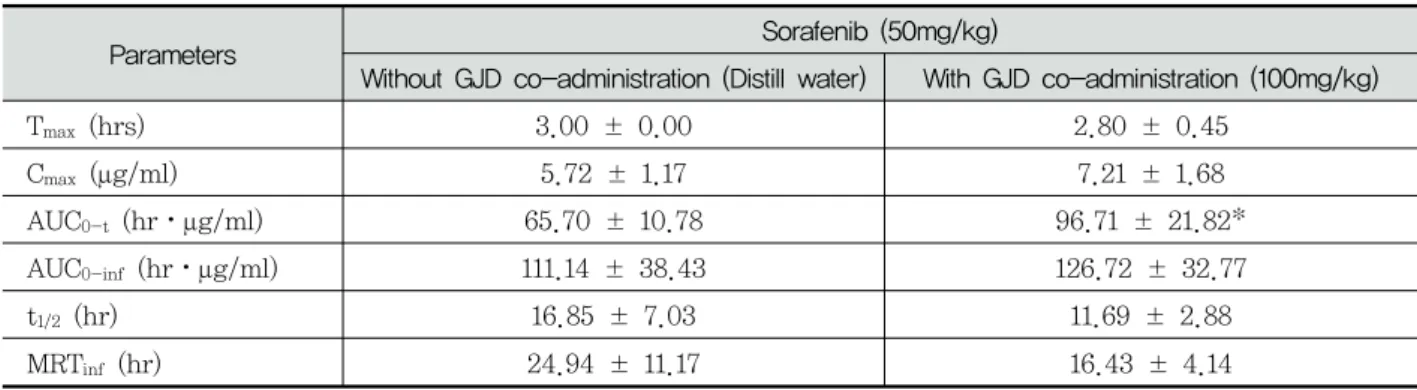
Table 1. Pharmacokinetic parameters of sorafenib with and without GJD co-administration in male rats
(2.80±0.45hr) as compared with sorafenib single treated (3.00±0.00hr) (Table 1).
3. Changes on the Cmax of sorafenib
The Cmax of sorafenib were non-significantly increased as 25.97% in co-administrated with sorafenib 50mg/kg and GJD 100mg/kg (7.21±
1.68μg/ml) as compared with sorafenib single treated rats (5.72±1.17μg/ml), in the present study(Table 1).
4. Changes on the AUC of sorafenib
The AUC0-t of sorafenib were significantly (p
<0.05) increased as 47.02% in co-administrated rats with sorafenib 50mg/kg and GJD 100mg/kg (96.71±21.82hr⋅μg/ml) as compared with sora- fenib single treated rats (65.70±10.78hr⋅μg/ml).
In addition, AUC0-inf of sorafenib were also non- significantly increased as 14.02% in co-admi- nistrated rats with sorafenib and GJD (126.72±
32.77hr⋅μg/ml) as compared with sorafenib single treated rats (111.14±38.43hr⋅μg/ml), in the present study(Table 1).
5. Changes on the t1/2 of sorafenib
The t1/2 of sorafenib were markedly but non- significantly decreased as -30.63% in co-admi- nistrated rats with sorafenib 50mg/kg and GJD 100mg/kg (11.69±2.88hr) as compared with sora- fenib single treated rats (16.85±7.03hr), in the present study(Table 1).
6. Changes on the MRTinf of sorafenib
The MRTinf of sorafenib were markedly but non-significantly increased as -34.11% in co- administrated rats with sorafenib 50mg/kg and GJD 100mg/kg (16.43±4.14hr) as compared with sorafenib single treated rats (24.94±11.17hr), in the present study(Table 1).
IV. Discussion
Although sorafenib is an antineoplastic agent approved for the treatment of primary kidney cancer (advanced renal cell carcinoma) and advanced primary liver cancer (hepatocellular carcinoma)1,2) through inhibition of several tyrosine protein kinases and Raf kinases3,4) and may
offer a novel therapeutic strategy for non- responsive thyroid cancer8,9), some kinds of lung cancer with squamous-cell histology 10,11) and recurrent glioblastoma 12,13), various side effects were also arise from sorafenib treated patients, especially include skin rash, hand-foot skin reactions, diarrhea, hypertension, reversible pos- terior leukoencephalo-pathy syndrome and erythrocytosis1,14,15), and also hypersensitivity to sorafenib or any ingredient in the formulation were also known16-18). In addition, sorafenib also has been showed various drug-drug interactions with drugs affecting hepatic microsomal enzymes, metabolized by hepatic microsomal enzymes and uridine diphosphate-glucuronosyltransferase, like dexamethasone, ketoconazole, rifampin and doxo- rubicin1, 24-28). Interactions with herbal products have not been established except for some res- tricted natural compounds, sorafenib increased risk of bleeding interact with warfarin29) and single extracts, St. John’s wort (Hypericum perforatum) possible decreased plasma sorafenib concent- rations1). GJD, a traditional Korean polyherbal formula is one of the most famous tonic agents, and consisted of 4 herbs including Angelicae gigas radix, Ginseng steamed red, Corni fructus and Rehmanniae radix preparata, and 2 animal resources - antler and musk. These 6 agents were plastered using honey, and coated by gold plates.
In the present study, the effects of GJD co- administration on the pharmacokinetics of sora- fenib were observed as a process of the com- prehensive and integrative medicine, combination therapy of sorafenib with GJD to achieve synergic pharmacodynamics and reduce toxicity. After 50mg/kg of sorafenib treatment, GJD 100mg/kg was administered within 5min. The plasma were collected at 30min before administration, 30min, 1, 2, 3, 4, 6, 8 and 24hrs after end of GJD treatment, and plasma concentrations of sora- fenib were analyzed using LC-MS/MS methods.
PK parameters of sorafenib (Tmax, Cmax, AUC,
t1/2 and MRTinf) were analysis as compared with sorafenib single administered rats.
GJD markedly increased the absorption of sora- fenib (from 0.5hr after co-administration of sora- fenib 50mg/kg and GJD 100mg/kg) as compared with sorafenib single treated rats, the absorption of sorafenib were significantly (p<0.01 or p<
0.05) increased at 30min, 1, 6 and 8hrs after co- administration as compared with sorafenib single treated rats. Accordingly, the AUC0-t (47.20%) of sorafenib was significantly (p<0.05) increased but t1/2 (-30.63%) and MRTinf (-34.11%) in co- administered rats were non-significantly decreased as compared with sorafenib single treated rats, respectively. These findings are considered as direct evidences that GJD increased the oral bioavailability of sorafenib through increase of the absorption, when they co-administered within 5min.
Sorafenib was absorbed after oral administ- ration with relative oral bioavailability of 38- 49%26,41). High fat meals can be reduced bio- availability of sorafenib by about 29%26). Sora- fenib showed relatively high 99.5% protein bindings42,43). Tmax of sorafenib after oral admi- nistration is approximately 3hrs44,45), and slowly eliminated by feces (77%) and urine (19%) with relatively long approximately 25-48hr of t1/246,47). AUC in Japanese patients receiving sorafenib 400mg twice daily reduced by 45% compared with data from phase 1 studies in Caucasian patients
48-50).
In the present study, Tmax of sorafenib in sora- fenib single oral treated rats was detected as 3.00±0.00hr, and Cmax, AUC0-t, AUC0-inf, t1/2
and MRTinf were detected as 5.72±1.17μg, 65.70± 10.78hr⋅μg/ml, 111.14±38.43hr⋅μg/ml, 16.85±7.03hr and 24.94±11.17hr, respectively.
In sorafenib with GJD co-administered rats, Tmax, Cmax, AUC0-t, AUC0-inf, t1/2 and MRTinf of sorafenib were detected as 2.80±0.45hr, 7.21±
1.68μg, 96.71±21.82hr⋅μg/ml, 126.72±32.77hr⋅
μg/ml, 11.69±2.88hr and 16.43±4.14hr; changed as -6.67, 25.97, 47.20, 14.02, -30.63 and -34.11%
as compared with sorafenib 50mg/kg single oral treated rats, respectively. Especially, AUC0-t of sorafenib in co-administered rats were signi- ficantly (p<0.05) increased as compared with sorafenib single treated rats.
Sorafenib extensively metabolized mainly in the liver via oxidation by CYP3A4 and glucuronidation by UGT1A9, to 8 metabolites, including an active metabolite, a pyridine N-oxide derivative51) and, therefore, sorafenib can be interacted with other drugs affecting hepatic microsomal enzymes, metabolized by hepatic microsomal enzymes and uridine diphosphate-glucuronosyltransferase, like dexamethasone, ketoconazole, rifampin and doxo- rubicin1, 24-28). In addition, interactions with wafarin29) and St. John’s wort1) were also already reported. In the present study, co-administration of GJD with sorafenib within 5min induced marked increases of oral bioavailability of sorafenib through the increases of absorption. It, therefore, considered that co-administration with GJD can be increased the pharmacodynamics of sorafenib because toxicity or pharmacodynamics of sorafenib were directly related to the plasma concent- rations. However, it also obvious evidences that the toxicity or side effects of sorafenib, including skin rash, hand-foot skin reactions, diarrhea, hypertension, reversible posterior leukoencephalo- pathy syndrome and erythrocytosis1,14,15) with the incidence of the hypersensitivity to sorafenib16-18) may be increased. More detail pharmacokinetic studies should be tested to select optimal dosing regimens and to observe the possibilities that can be used as comprehensive and integrative therapy with GJD and sorafenib for hepatic cancer, when they were co-administered, like the effects after co-administration with reasonable intervals considering the Tmax of sorafenib (about 3.5hr-intervals, in my opinion) and after repeated co-administrations.
V. Conclusions
Based on the results, co-administration of GJD increased the oral bioavailability of sorafenib through increase of the gastrointestinal absorption.
Hence, concomitant uses of GJD with sorafenib may require close monitoring for potential drug interactions. Co-administration of GJD signifi- cantly increased AUC0-t, but marked decreased t1/2 and MRTinf of sorafenib as compared with sorafenib single oral treatment in rats. It, therefore, is considered that the more detail pharmacokinetic studies should be tested to conclude the effects of GJD on the pharma- cokinetics of sorafenib, when they were co- administered, like the effects after co-admi- nistration with reasonable intervals considering the Tmax of sorafenib (about 3.5hr-intervals) and after repeated co-administrations.
Acknowledgements
This study was supported by grant of Korea of Health & Welfare, Republic of Korea (Project No: 20-11-0-090-091-3000-3033-320).
References
1. Bayer. Nexavar (sorafenib tosylate) tablets pre- scribing information. West Haven; 2007.
2. Keating GM, Santoro A. Sorafenib: a review of its use in advanced hepatocellular carci- noma. Drugs. 2009;69(2):223-240.
3. Wilhelm SM, Adnane L, Newell P, Villanueva A, Llovet JM, Lynch M. Preclinical overview of sorafenib, a multikinase inhibitor that targets both Raf and VEGF and PDGF receptor tyrosine kinase signaling. Mol Cancer Ther.
2008;7(10):3129-3140.
4. Smalley KS, Xiao M, Villanueva J, Nguyen
TK, Flaherty KT, Letrero R, Van Belle P, Elder DE, Wang Y, Nathanson KL, Herlyn M. CRAF inhibition induces apoptosis in melanoma cells with non-V600E BRAF muta- tions. Oncogene. 2009;28(1):85-94.
5. Fabian P, Berkovcovά J. Molecular predictive markers of EGFR-targeted therapy in meta- static colorectal cancer. Cesk Patol. 2011;47 (4):154-158.
6. Kang GH. Four molecular subtypes of colo- rectal cancer and their precursor lesions.
Arch Pathol Lab Med. 2011;135(6):698-703.
7. Ranieri G, Gadaleta-Caldarola G, Goffredo V, Patruno R, Mangia A, Rizzo A, Sciorsci RL, Gadaleta CD. Sorafenib (BAY 43-9006) in hepatocellular carcinoma patients: from discovery to clinical development. Curr Med Chem. 2012;19(7):938-944.
8. Brose MS, Nutting CM, Sherman SI, Shong YK, Smit JW, Reike G, Chung J, Kalmus J, Kappeler C, Schlumberger M. Rationale and design of decision: a double-blind, randomized, placebo-controlled phase III trial evaluating the efficacy and safety of sorafenib in patients with locally advanced or metastatic radioactive iodine (RAI)-refractory, differentiated thyroid cancer. BMC Cancer. 2011;11:349.
9. Koh YW, Shah MH, Agarwal K, McCarty SK, Koo BS, Brendel VJ, Wang C, Porter K, Jarjoura D, Saji M, Ringel MD. Sorafenib and Mek inhibition is synergistic in medullary thyroid carcinoma in vitro. Endocr Relat Cancer. 2012;19(1):29-38.
10. Adjei AA, Blumenschein GR, Jr., Mandrekar S, Hillman S, Gatzemeier U, Heigener D.
Long-term safety and tolerability of sora- fenib in patients with advanced non-small- cell lung cancer: a case-based review. Clin Lung Cancer. 2011;12(4):212-217.
11. Dammrich DJ, Santos ES, Raez LE. Efficacy of sorafenib, a multi-tyrosine kinase inhibitor, in an adenoid cystic carcinoma metastatic to
the lung: case report and review of literature.
J Med Case Rep. 2011;5:483.
12. Hainsworth JD, Ervin T, Friedman E, Priego V, Murphy PB, Clark BL, Lamar RE. Concu- rrent radiotherapy and temozolomide followed by temozolomide and sorafenib in the first- line treatment of patients with glioblastoma multiforme. Cancer. 2010;116(15):3663-3669.
13. Siegelin MD, Raskett CM, Gilbert CA, Ross AH, Altieri DC. Sorafenib exerts anti-glioma activity in vitro and in vivo. Neurosci Lett.
2010;478(3):165-170.
14. Dasanu CA, Alexandrescu DT, Dutcher J.
Yellow skin discoloration associated with sora- fenib use for treatment of metastatic renal cell carcinoma. South Med J. 2007;100(3):
328-330.
15. Alexandrescu DT, McClure R, Farzanmehr H, Dasanu CA. Secondary erythrocytosis pro- duced by the tyrosine kinase inhibitors su- nitinib and sorafenib. J Clin Oncol. 2008;26 (24):4047-4048.
16. Franck N, Barete S, Moguelet P, Blanchet B, Carlotti A, Ropert S, Avril MF, Francés C, Billemont B, Goldwasser F. Spiny follicular hyperkeratosis eruption: a new cutaneous adverse effect of sorafenib. J Clin Oncol.
2010;28(31):e640-642.
17. Liang CP, Yang CS, Shen JL, Chen YJ.
Sorafenib-induced acute localized exanthe- matous pustulosis in a patient with hepato- cellular carcinoma. Br J Dermatol. 2011;165 (2):443-445.
18. McLellan B, Kerr H. Cutaneous toxicities of the multikinase inhibitors sorafenib and su- nitinib. Dermatol Ther. 2011;24(4):396-400.
19. Schöffski P, Dumez H, Clement P, Hoeben A, Prenen H, Wolter P, Joniau S, Roskams T, Van Poppel H. Emerging role of tyrosine kinase inhibitors in the treatment of ad- vanced renal cell cancer: a review. Ann Oncol. 2006;17(8):1185-1196.
20. Escudier B, Eisen T, Stadler WM, Szczylik C, Oudard S, Siebels M, Negrier S, Chevreau C, Solska E, Desai AA, Rolland F, Demkow T, Hutson TE, Gore M, Freeman S, Schwartz B, Shan M, Simantov R, Bukowski RM, Group TS. Sorafenib in advanced clear-cell renal-cell carcinoma. N Engl J Med. 2007;
356(2):125-134.
21. Siu LL, Awada A, Takimoto CH, Piccart M, Schwartz B, Giannaris T, Lathia C, Petrenciuc O, Moore MJ. Phase I trial of sorafenib and gemcitabine in advanced solid tumors with an expanded cohort in advanced pancreatic cancer. Clin Cancer Res. 2006;12(1):144-151.
22. Ricciardi S, Mey V, Nannizzi S, Pasqualetti G, Crea F, Del Tacca M, Danesi R. Synergistic cytotoxicity and molecular interaction on drug targets of sorafenib and gemcitabine in human pancreas cancer cells. Chemotherapy.
2010;56(4):303-312.
23. Kupsch P, Henning BF, Passarge K, Richly H, Wiesemann K, Hilger RA, Scheulen ME, Christensen O, Brendel E, Schwartz B, Hofstra E, Voigtmann R, Seeber S, Strumberg D.
Results of a phase I trial of sorafenib (BAY 43-9006) in combination with oxaliplatin in patients with refractory solid tumors, including colorectal cancer. Clin Colorectal Cancer.
2005;5(3):188-196.
24. Mross K, Steinbild S, Baas F, Reil M, Buss P, Mersmann S, Voliotis D, Schwartz B, Brendel E. Drug-drug interaction pharma- cokinetic study with the Raf kinase inhibitor (RKI) BAY 43-9006 administered in combi- nation with irinotecan (CPT-11) in patients with solid tumors. Int J Clin Pharmacol Ther.
2003;41(12):618-619.
25. Hu S, Chen Z, Franke R, Orwick S, Zhao M, Rudek MA, Sparreboom A, Baker SD. Inte raction of the multikinase inhibitors sorafenib and sunitinib with solute carriers and ATP- binding cassette transporters. Clin Cancer
Res. 2009;15(19):6062-6069.
26. Di Gion P, Kanefendt F, Lindauer A, Scheffler M, Doroshyenko O, Fuhr U, Wolf J, Jaehde U. Clinical pharmacokinetics of tyrosine kinase inhibitors: focus on pyrimidines, pyridines and pyrroles. Clin Pharmacokinet. 2011;50 (9):551-603.
27. Flaherty KT, Lathia C, Frye RF, Schuchter L, Redlinger M, Rosen M, O’Dwyer PJ. Inte- raction of sorafenib and cytochrome P450 isoenzymes in patients with advanced mela- noma: a phase I/II pharmacokinetic interaction study. Cancer Chemother Pharmacol. 2011;
68(5):1111-1118.
28. Infante JR, Jones SF, Bendell JC, Greco FA, Yardley DA, Lane CM, Spigel DR, Hains- worth JD, Burris HA, 3rd. A drug interaction study evaluating the pharmacokinetics and toxicity of sorafenib in combination with capecitabine. Cancer Chemother Pharmacol.
2012;69(1):137-144.
29. Moretti LV, Montalvo RO. Elevated Inter- national Normalized Ratio associated with concurrent use of sorafenib and warfarin.
Am J Health Syst Pharm. 2009;66(23):2123- 2125.
30. Kim YH, Bae MJ. The effect of Kong Jin Dan on the lipid metabolism in rats fed high fat-diet. J East-West Med. 2001;14:61-78.
31. Kim YS, Lee JD, Kim CH, Choi DY, Park DS, Nam SS, Kang SK. The Effect of Kong- jindan Aqua-acupuncture on the CD4+ T cell count at al. in rats were administered with MTX. J Korean Acup Moxi Soc. 1999;16:
179-202.
32. Choi KH, Park CS. An analysis of the Gong- jindan’s ingredients and its efficacy on anti- oxidation. Kor J Herbology. 2007;22(2):51-63.
33. Seong KM, Hae RK, Song BK. The Effect of Gongjin-dan on Gliosis in Middle Cerebral Artery Occlusion (MCAO) Rats. Korean J Orient Int Med. 2009;30(4):674-684.
34. Chung DK, Hwang SM. The Effects of Kong- Jin-Dan (KJD) on the Alzheimer’s disease model induced by CT105. J Oriental Neuro- psychiatry. 2004;15(2):103-118.
35. Jung HC, Jang HJ, Sung WY, Lee SH, Son JH, Han SH. A study of Gongjin-dan in patients with mild dementia of Alzheimer type. J Oriental Neuropsychiatry. 2004;15 (2):141-148.
36. Park MY, Kim JD, Ku SK. Single Oral Dose Toxicity Test of Kong-Jin-Dan, a Polyherbal Formula in ICR Mice. Biomol Ther. 2007;15 (4):245-251.
37. Lee SN, Park JH, Ku SK. Micronucleus Test of Kong-Jin-Dan, a Polyherbal Formula, in Bone Marrow Cells of Male ICR Mice. Toxi- cological Research. 2008;24(3):213-218.
38. Gibaldi M, Perrier D. Pharmacokinetics. 2nd ed. New York: Marcel Dekker; 1982.
39. Bailer AJ. Testing for the equality of area under the curves when using destructive measurement techniques. J Pharmacokinet Biopharm. 1988;16(3):303-309.
40. Chiou WL. Critical evaluation of the potential error in pharmacokinetic studies of using the linear trapezoidal rule method for the calculation of the area under the plasma level-time curve. J Pharmacokinet Biopharm.
1978;6(6):539-546.
41. Wang XQ, Fan JM, Liu YO, Zhao B, Jia ZR, Zhang Q. Bioavailability and pharmacokinetics of sorafenib suspension, nanoparticles and nanomatrix for oral administration to rat.
Int J Pharm. 2011;419(1-2):339-346.
42. Tod M, Mir O, Bancelin N, Coriat R, Thomas- Schoemann A, Taieb F, Boudou-Rouquette P, Ropert S, Michels J, Abbas H, Durand JP, Dauphin A, Vidal M, Goldwasser F, Blanchet B. Functional and clinical evidence of the influence of sorafenib binding to albumin on sorafenib disposition in adult cancer patients.
Pharm Res. 2011;28(12):3199-3207.
43. Villarroel MC, Pratz KW, Xu L, Wright JJ, Smith BD, Rudek MA. Plasma protein binding of sorafenib, a multi kinase inhibitor: in vitro and in cancer patients. Invest New Drugs.
2012;30(6):2096-2102.
44. Iyer R, Fetterly G, Lugade A, Thanavala Y.
Sorafenib: a clinical and pharmacologic review.
Expert Opin Pharmacother. 2010;11(11):1943- 1955.
45. Kennoki T, Kondo T, Kimata N, Murakami J, Ishimori I, Nakazawa H, Hashimoto Y, Kobayashi H, Iizuka J, Takagi T, Yoshida K, Tanabe K. Clinical results and pharma- cokinetics of sorafenib in chronic hemodialysis patients with metastatic renal cell carcinoma in a single center. Jpn J Clin Oncol. 2011;41 (5):647-655.
46. Clark JW, Eder JP, Ryan D, Lathia C, Lenz HJ. Safety and pharmacokinetics of the dual action Raf kinase and vascular endothelial growth factor receptor inhibitor, BAY 43- 9006, in patients with advanced, refractory solid tumors. Clin Cancer Res. 2005;11(15):
5472-5480.
47. Hornecker M, Blanchet B, Billemont B, Sassi H, Ropert S, Taieb F, Mir O, Abbas H, Har- couet L, Coriat R, Dauphin A, Goldwasser F, Tod M. Saturable absorption of sorafenib in patients with solid tumors: a population model.
Invest New Drugs. 2012;30(5):1991-2000.
48. Akaza H, Tsukamoto T, Murai M, Nakajima K, Naito S. Phase II study to investigate the efficacy, safety, and pharmacokinetics of sorafenib in Japanese patients with advanced renal cell carcinoma. Jpn J Clin Oncol. 2007;
37(10):755-762.
49. Furuse J, Ishii H, Nakachi K, Suzuki E, Shimizu S, Nakajima K. Phase I study of sorafenib in Japanese patients with hepa- tocellular carcinoma. Cancer Sci. 2008;99(1):
159-165.
50. Minami H, Kawada K, Ebi H, Kitagawa K,
Kim YI, Araki K, Mukai H, Tahara M, Naka- jima H, Nakajima K. Phase I and pharma- cokinetic study of sorafenib, an oral multi- kinase inhibitor, in Japanese patients with advanced refractory solid tumors. Cancer Sci.
2008;99(7):1492-1498.
51. Sparidans RW, Vlaming ML, Lagas JS,
Schinkel AH, Schellens JH, Beijnen JH.
Liquid chromatography-tandem mass spec- trometric assay for sorafenib and sorafenib- glucuronide in mouse plasma and liver homo- genate and identification of the glucuronide metabolite. J Chromatogr B Analyt Technol Biomed Life Sci. 2009;877(3):269-276.