1. Introduction
Microalgae are the fastest-growing plants that can be found in the freshwater and marine environments (Demirbas and Fatih Demirbas, 2011). Their biodiversity has been estimated more than 30,000 species (Guiry, 2012). This huge number represents a rich genetic resource and interest in their biotechnology potential.
They draw an interest from biotechnology, especially thanks to their secondary metabolites as potential compounds such as anti- inflammatory, antimicrobial, and antioxidant activities as well as biofuel (Rhodes et al., 2006; de Morais et al., 2015). To take the advantage of their potential, useful marine microalgae strains should be maintained for further research (Brand and Diller, 2004; de Morais et al., 2015).
Historically, microalgae collections have been maintained by a successive culturing (routine serial subculture) (Pringsheim, 1946;
Day et al., 1997; Day et al., 2005). This method is preferred for the most phycologists when the number of strains are small. However, this method becomes problematic when a large number of micro- algae (Day et al., 1997; Day et al., 2000). This approach needs huge space, growth media, labor cost, and etc. Therefore, main- taining a large number of microalgae in a collection using this method is costly (Borowitzka, 1997). In addition, there is a con- tinuous risk of contamination and genetic drift occurring in serial
sub-culturing (Rhodes et al., 2006; Heesch et al., 2012).
One of the preferred solution to this is cryopreservation (Polges et al., 1949). The main aim of cryopreservation is to prevent the transformation of morphological, biochemical, and hereditary pro- perties (Polges et al., 1949; Day et al., 2000). In principle meta- bolism of the organism would be halted at a very low temperature, and be reactivated by thawing them. However, cryopreservation method available to date are not suitable to preserve all types of microalgae because each of microalgae has own unique properties (Abreu et al., 2012).
Many parameters should be considered to optimize cryopre- servation. Here, we delineated the state of the art and current cryopreservation method for various types of microalgae including freezing and thawing methods, and cryoprotectants (CPAs).
2. Current Cryopreservation Technology
Cryopreservation has been proven able to maintain genotype of cryopreserved cells (Hipkin et al., 2013). Cryopreservation also has been successfully maintained the chlorophyll content of microalgae for 15 years (Nakanishi et al., 2012). Currently, cryo- preservation method is a preferred alternative method for main- taining a large number of microalgae. However, the established method for cryopreservation is still limited to certain species.
JMLS
http://jmls.or.krCurrent Advances in Cryopreservation of Microalgae
Wahyu Sri Kunto Nugroho1, Do-A Kim1, Dong-Woo Kim1, Bon-Won Koo1, Young Baek Hur2, Hak Jun Kim1*
1Department of Chemistry, Pukyong National University, Busan 48513, Korea
2Southeast Sea Fisheries Research Institute, National Fisheries Research and Development Institute, Namhae 52440, Korea
Corresponding Author Hak Jun Kim
Department of Chemistry, Pukyong National University, Busan 48513, Korea E-mail : [email protected]
Received : April 05, 2016 Revised : April 07, 2016 Accepted : April 25, 2016
Microalgae are of significant importance for future biotechnological applications. Many microalgae banks or laboratories attempt to maintain various microalgae for further research purposes. Cryopreservation has been preferred to reduce a labor-intensive and costly routine sub-culturing. Cryopreservation can also diminish the genetic drift risk. However, cryopreservation as a long term storage of microalgae method are still in developing progress because it cannot be generalized for all microalgae. Microalgae types, cryoprotectant agents (CPAs) types, freezing and thawing methods are the most important factors that should be considered for cryopreservation. In this short review the basic principles and the current advanced of microalgae cryopreservation methods are discussed with a suggested starting parameters for microalgae cryopreservation.
Keywords: Microalgae, Cryopreservation, Cryoprtectants, Intracellular ice formation
The research to optimize the cryopreservation of microalgae has been grown and became an interesting research field.
Cryopreservation of microalgae uses two basic concepts: dehy- dration of cells using compatible solutes and the consequent pre- vention of intracellular ice crystal formation (Taylor and Fletcher, 1999). The dehydration of microalgae is used to prevent the ice growth in the inside microalgae. The intracellular ice growth can disrupt the microalgae.
Successful microalgae cryopreservation is generally assessed by viability levels, and genetic integrity. According to Day et al.
(2005), good quality of cryopreservation means at least 10~60%
post-thaw viability of the cryopreserved microalgae (Day et al., 2005). However, the most important thing to consider is the post- thawed growth of microalgae without genetic changes.
The cryopreservation parameters such as microalgae cell con- centration, culture age, centrifugation, freezing step rate, CPAs types and CPAs concentration have been examined and would be discussed here.
2.1. Cell concentration, culture age, and centrifu- gation
The first optimization step of microalgae cryopreservation is the cell concentration. High cell concentration has been reported to reduce the viability of microalgae. An injurious substance is enzymatically released upon microalgae death (Piasecki et al., 2002; Piasecki et al., 2008). Therefore, lower cell concentration seems to be beneficial (Bui et al., 2013). However, if the microalgae concentration is too low, it could reduce the chance of microalgae survival after cryopreservation. Generally, 1 × 10⁶ cell/ml concen- tration is a good starting point for microalgae cryopreservation.
Microalgae culture age is also generally thought to affect viability level of cryopreserved samples (Cañavate and Lubián, 1997). The cultures age of mid and late exponential phase from 7 to 14 days are generally resulting high viability levels ±67% (McLellan, 1989; Harding et al., 2004). However, if the culture is in the late stationary phase, it would be in the death phase soon then the viability level is reduced (Lavens and Sorgeloos, 1996). Therefore, the growth rate of each strain should be determined before cyropreservation.
In the thawing step, cryoprotentants (CPAs) are usually removed to minimize the cytotoxic effect by centrifugation and washing multiple times during thawing step. However, according to Bui et al. (2013), the centrifugation step could decrease 22% of cell viability of post-thawed samples. Furthermore, this effect could be
augmented by higher speed centrifugation. Shear forces between microalgae and centrifugation tube can damage algae cells, espe- cially when they are fragile (post-thawed samples). Interestingly Youn and Hur (2009) showed that viability and growth of the microalgae were not influenced by the removal of CPAs after thawing. Hence, post-thaw centrifugation step is not suggested or recommended only using lower speed centrifugation (Bui et al., 2013).
2.2. Freezing rate
Cryopreservation is usually maintained at -196℃ (in liquid nitrogen) without serious damage (McLellan, 1989; Zhou et al., 2007). In order to reach this temperature, the freezing rate is controlled to reduce the formation of ice during freezing, which can be causing damage to the microalgae. Serious damage on the cryopreserved samples would lead to decrease of viability or death of microalgae in the post-thaw step. Generally, there are two types of freezing steps utilized: single step (rapid freezing), and two step (slow freezing at certain speed and then rapid freezing). Additionally, there is a vitrification method in which water molecules solidifies amorphously.
2.2.1. Single step freezing
In rapid single step freezing the microalgae samples in cryovial are directly plunged into liquid nitrogen (-196℃). Cells will be frozen rapidly in both extracellularly and intracellularly. The fatal intracellular ice formation should be prevented (Barry J. Fuller et al., 2004). In rapid freezing there is no time for water loss (dehy- dration) from the cell to minimize intracellular ice formation, resulting in lower viability. Therefore the single step rapid freezing is not recommended. However, some microalgae like diatom Navicula glaciei was shown to tolerate with single step freezing.
This tolerance may be due to an antifreeze protein (AFP), ice- crystal growth inhibitory protein that N. glaciei produces (Kang and Raymond, 2004). To date, AFPs have been extensively tested as a CPA. Some microalgae species with thick cell wall were reported to survive after single step freezing: Gloeocystis gigas, Nannochloris oculata, Stichococcus bacillaris, N. oceanica, N. salina, Nannochloris sp., Chrococcus minutus, Oscillatoriaangustissima, Synechococcus nidulans, Trichodismium erythraeum (Youn and Hur, 2009).
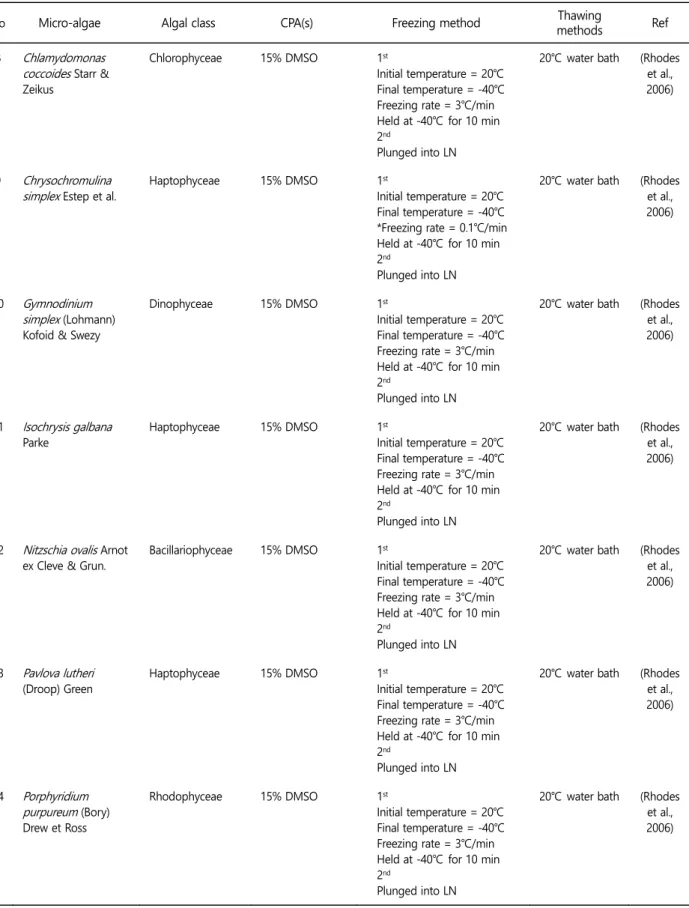
Table 1. Successful cryopreservation of microalgae
No Micro-algae Algal class CPA(s) Freezing method Thawing
methods Ref
1 Amphidinium carterae Hulburt a
Dinophyceae 15% DMSO 1st
Initial temperature = 20℃
Final temperature = -40℃
Freezing rate = 3℃/min Held at -40℃ for 10 min 2nd
Plunged into LN
20℃ water bath (Rhodes et al., 2006)
2 Amphidinium trulla Murray, Rhodes et Flø Jørgensen
Dinophyceae 15% DMSO 1st
Initial temperature = 20℃
Final temperature = -40℃
Freezing rate = 3℃/min Held at -40℃ for 10 min 2nd
Plunged into LN
20℃ water bath (Rhodes et al., 2006)
3 Aphanizomenon flosaquae Ralfs ex Bornet et Flahault
Cyanophyceae 15% DMSO 1st
Initial temperature = 20℃
Final temperature = -40℃
Freezing rate = 3℃/min Held at -40℃ for 10 min 2nd
Plunged into LN
20℃ water bath (Rhodes et al., 2006)
4 Chaetoceros calcitrans (Paulsen) Tanako a
Bacillariophyceae 15% DMSO 1st
Initial temperature = 20℃
Final temperature = -40℃
Freezing rate = 3℃/min Held at -40℃ for 10 min 2nd
Plunged into LN
20℃ water bath (Rhodes et al., 2006)
5 Chaetoceros calcitrans (Paulsen) Tanako a
Bacillariophyceae 5% DMSO 1st
Initial temperature = 25℃
Held for 1 min at -4℃
Final temperature = -60℃
Freezing rate = 3℃/min Held at -60℃ for 10 min
25℃ water bath (Dupré, 2011)
6 Chaetoceros sp. Bacillariophyceae 15% DMSO 1st
Initial temperature = 20℃
Final temperature = -40℃
Freezing rate = 3℃/min Held at -40℃ for 10 min 2nd
Plunged into LN
20℃ water bath (Rhodes et al., 2006)
7 Chaetoceros muelleri
Lemmermann Bacillariophyceae 15% DMSO 1st
Initial temperature = 20℃
Final temperature = -40℃
Freezing rate = 3℃/min Held at -40℃ for 10 min 2nd
Plunged into LN
20℃ water bath (Rhodes et al., 2006)
Table 1. Successful cryopreservation of microalgae (Continued)
No Micro-algae Algal class CPA(s) Freezing method Thawing
methods Ref
8 Chlamydomonas coccoides Starr &
Zeikus
Chlorophyceae 15% DMSO 1st
Initial temperature = 20℃
Final temperature = -40℃
Freezing rate = 3℃/min Held at -40℃ for 10 min 2nd
Plunged into LN
20℃ water bath (Rhodes et al., 2006)
9 Chrysochromulina simplex Estep et al.
Haptophyceae 15% DMSO 1st
Initial temperature = 20℃
Final temperature = -40℃
*Freezing rate = 0.1℃/min Held at -40℃ for 10 min 2nd
Plunged into LN
20℃ water bath (Rhodes et al., 2006)
10 Gymnodinium simplex (Lohmann) Kofoid & Swezy
Dinophyceae 15% DMSO 1st
Initial temperature = 20℃
Final temperature = -40℃
Freezing rate = 3℃/min Held at -40℃ for 10 min 2nd
Plunged into LN
20℃ water bath (Rhodes et al., 2006)
11 Isochrysis galbana
Parke Haptophyceae 15% DMSO 1st
Initial temperature = 20℃
Final temperature = -40℃
Freezing rate = 3℃/min Held at -40℃ for 10 min 2nd
Plunged into LN
20℃ water bath (Rhodes et al., 2006)
12 Nitzschia ovalis Arnot ex Cleve & Grun.
Bacillariophyceae 15% DMSO 1st
Initial temperature = 20℃
Final temperature = -40℃
Freezing rate = 3℃/min Held at -40℃ for 10 min 2nd
Plunged into LN
20℃ water bath (Rhodes et al., 2006)
13 Pavlova lutheri (Droop) Green
Haptophyceae 15% DMSO 1st
Initial temperature = 20℃
Final temperature = -40℃
Freezing rate = 3℃/min Held at -40℃ for 10 min 2nd
Plunged into LN
20℃ water bath (Rhodes et al., 2006)
14 Porphyridium purpureum (Bory) Drew et Ross
Rhodophyceae 15% DMSO 1st
Initial temperature = 20℃
Final temperature = -40℃
Freezing rate = 3℃/min Held at -40℃ for 10 min 2nd
Plunged into LN
20℃ water bath (Rhodes et al., 2006)
Table 1. Successful cryopreservation of microalgae (Continued)
No Micro-algae Algal class CPA(s) Freezing method Thawing
methods Ref
15 Prymnesium parvum N. Carter
Haptophyceae 15% DMSO 1st
Initial temperature = 20℃
Final temperature = -40℃
Freezing rate = 3℃/min Held at -40℃ for 10 min 2nd
Plunged into LN
20℃ water bath (Rhodes et al., 2006)
16 Prymnesium parvum f. patelliferum Green, Hibberd et Pienaar
Haptophyceae 15% DMSO 1st
Initial temperature = 20℃
Final temperature = -40℃
Freezing rate = 3℃/min Held at -40℃ for 10 min 2nd
Plunged into LN
20℃ water bath (Rhodes et al., 2006)
17 Raphidiopsis sp. Cyanophyceae 15% DMSO 1st
Initial temperature = 20℃
Final temperature = -40℃
Freezing rate = 3℃/min Held at -40℃ for 10 min 2nd
Plunged into LN
20℃ water bath (Rhodes) et al., 2006)
18 Tetraselmis chuii Butcher a
Prasinophyceae 15% DMSO 1st
Initial temperature = 20℃
Final temperature = -40℃
Freezing rate = 3℃/min Held at -40℃ for 10 min 2nd
Plunged into LN
20℃ water bath (Rhodes et al., 2006)
19 Tetraselmis suecica (Kylin) Butcher
Prasinophyceae 15% DMSO 1st
Initial temperature = 20℃
Final temperature = -40℃
Freezing rate = 3℃/min Held at -40℃ for 10 min 2nd
Plunged into LN
20℃ water bath (Rhodes et al., 2006)
20 Phaeodactylum
tricornutum Bacillariophyceae 10% DMSO + 0.1 mg/ml LeIBP 10% Glycerol + 0.1 mg/ml LeIBP 10% Propylene glycol + 0.1 mg/ml LeIBP 10% Ethylene glycol + 0.1 mg/ml LeIBP
1st
Initial temperature = 20℃
Up to 0°C freezing rate = 5℃/min
Initial = 0℃
Final temperature = -40℃
Freezing rate = 1℃/min 2nd
Plunged into LN
30℃ water bath for 2 min.
(Koh et al., 2015)
2.2.2. Two step freezing
Controlling the freezing rates to avoid lethal intracellular ice formation is a key to successful cryopreservation. In the two step freezing, the microalgae samples are cooled to certain tempera- ture at freezing rate, and then the samples are plunged into liquid nitrogen. Controlled rate freezing allows dehydration of micro- algae. As a results, intracellular ice formation is minimized and higher viability levels are obtained. Therefore, two step freezing method is preferred in the microalgae cryopreservation. Some of successful microalgae cryopreservation are summarized in the Table 1. Various experiments to optimize cryopreservation of micro- algae have been conducted because cryopreservation methods
cannot be generalized and applied to all kinds of microalgae.
2.2.3. Vitrification
Vitrification is the transformation of liquid water into glassy water, where water still possesses a random molecular structure (amorphous) in solid state (Harding et al., 2004). Vitrification has been pioneered by Fahy et al. (1986) in medical cryobiology. In contrast with the two step freezing cryopreservation, the vitrifi- cation uses high cooling and warming rates to avoid ice crystal formation inside cells (Sibinga et al., 1986). Glasses are considered metastable, so it can easily form a solid crystalline during cryo- preservation or thawing which can damage cells. Appropriate Table 1. Successful cryopreservation of microalgae (Continued)
No Micro-algae Algal class CPA(s) Freezing method Thawing
methods Ref
21 Chlorella vulgaris
C-27 Trebouxiophyceae Mixture of 5%
DMSO, 5% EG, and 5% proline
1st
Samples incubated in an ice bath for 45 min Initial = 0℃
Final = -40℃ in deep freezer for 4 hours 2nd
Immerse samples in LN
40℃ water bath Nakanishi et al., 2012)
22 Chlorella vulgaris
M-207A7 Trebouxiophyceae Mixture of 5%
DMSO, 5% EG, and 5% proline
1st
Samples incubated in an ice bath for 45 min Initial = 0℃
Final = -40℃ in deep freezer for 4 hours 2nd
Immerse samples in LN
40℃ water bath Nakanishi et al., 2012)
23 Nannochloropsis
oculata ST-4 Eustigmatophyceae Mixture of 5%
DMSO, 5% EG, and 5% proline
1st
Samples incubated in an ice bath for 45 min Initial = 0℃
Final = -40℃ in deep freezer for 4 hours 2nd
Immerse samples in LN
40℃ water bath Nakanishi et al., 2012)
24 Tetraselmis tetrathele
T-501 Prasinophyceae Mixture of 5%
DMSO, 5% EG, and 5% proline
1st
Samples incubated in an ice bath for 45 min Initial = 0℃
Final = -40℃ in deep freezer for 4 hours 2nd
Immerse samples in LN
40℃ water bath Nakanishi et al., 2012)
cooling and warming rates, important keys of vitrification and devitrification, should be determined for each species (Harding et al., 2004).
2.3. Cryoprotectants (CPAs)
Cryoprotectants are substances which can be used to reduce cryodamage (van der Meer and Simpson, 1984; Iwamoto et al., 2012). Generally, CPAs can be classified based on their ability to penetrate or nonpenetrate into cells. Penetrating CPAs can be equilibrated inside and outside solution of cells whereas non- penetrating CPAs do not pass through the membrane or cell walls and remains extracellularly. Lower molecular weight is better than higher molecular weight in its penetrating ability. However, the penetration is highly dependent on the temperature and cell type (Hubálek, 2003).
2.3.1. Penetrating CPAs
In 1949, glycerol is used for the first time as a penetrating CPA which was used in cryopreservation (Polges et al., 1949). After that, other CPAs such as dimethylsulfoxide (DMSO), ethylene glycol, propylene glycol were examined in cryopreservation of many cells (Benson, 2008). Generally DMSO, methanol, ethylene glycol, propylene glycol, glycerol, polyethylene glycol, and PVP (poly- vinylpyrrolidone) are CPAs used widely with acceptable results for microalgae cryopreservation (Polges et al., 1949). Penetrating CPAs are known to be more effective than nonpenetrating CPAs.
However, some CPAs were discovered to be toxic at certain con- centrations because microalgae susceptibility to the CPAs.
CPA toxicity is always the first priority to consider before cryo- preservation of microalgae. If penetrating CPAs are used, it is advised to incubate the samples for a few minutes (15~30 minutes) before cryopreservation to allow the equilibrium of CPAs and
microalgae (Lovelock, 1954). It should be noted that every micro- algae also has its own permeability and susceptibility which can affect to the equilibration time and CPAs concentration (Tanaka et al., 2001). Consequently, the optimal type and concentration of CPA or combinations of CPAs, and equilibrium times should be determined empirically to increase the viability level of cryo- preserved microalgae (Hubálek, 2003). These general CPAs pro- perties which commonly used for microalgae cryopreservation are shown in the Table 2.
2.3.2. Nonpenetrating CPAs
Nonpenetrating CPAs means the CPAs are remained outside the microalgae cells. The advantage of nonpenetrating CPAs are much less toxic than the penetrating counterparts. Unlike pene- trating CPAs, equilibration time is not needed if nonpenetrating CPAs are used. Nonpenetrating CPAs are not used widely for microalgae cryopreservation because they are less effective than penetrating CPAs. Therefore, the combination of penetrating and nonpenetrating CPAs are used to increase the viability levels.
Recently, AFP or ice-binding proteins, ice growth inhibitor, were successfully used to improve the cryopreservation of microalgae Phaeodactylum tricornutum (Koh et al., 2015). There is still limited report about the AFPs as a CPAs additive in microalgae cryo- preservation. As mentioned before, N. glaciei is one of example microalgae that has its own antifreeze proteins (AFPs) to protect themselves from freezing damage (Kang and Raymond, 2004).
3. Conclusions
Microalgae are rich with their potential applications, therefore various microalgae are attempted to be maintained. Currently cryopreservation methods for microalgae cannot be generalized (Rastoll et al., 2013). In the cryopreservation of microalgae, many Table 2. Common cryoprotectants used in cryopreservation of microalgae
CPA Formula MW Concentration Ref
Dimethylsulfoxide (CH3)2SO 78.13 5~15% (Rhodes et al., 2006; Koh et al., 2015)
Glycerol (CH2)2CH(OH)3 92.09 10% (Hong et al., 2011; Koh et al., 2015)
Methanol CH3OH 32.04 10% (Hong et al., 2011)
Ethylene glycol (CH2)2(OH)2 62.07 10% (Hong et al., 2011; Koh et al., 2015)
Propylene glycol CH3CH2CH(OH)2 76.09 10% (Hong et al., 2011; Koh et al., 2015)
things should be considered: microalgae types, cell concentration, culture age before preservation, freezing rates, CPAs used and CPAs concentrations. Among all kinds of CPAs, DMSO is the most universal CPA which is used successfully in the range of 5~15%.
In the freezing step, two step freezing is more preferred than single step freezing since the latter can reduce the intracellular ice formation. The following parameters in the Table 3 may be used as starting parameters for microalgae cryopreservation.
Conflict of Interest
The authors declare that there is no conflict of interest regarding the publication of this paper.
References
Abreu L, Borges L, Marangoni J, Abreu PC. 2012. Cryopreservation of some useful microalgae species for biotechnological ex- ploitation. Journal of Applied Phycology 24: 1579-1588.
Amaral R, Pereira JC, Pais AACC, Santos LMA. 2013. Is axenicity crucial to cryopreserve microalgae? Cryobiology 67: 312-320.
Barry J. Fuller, Lane N, Benson EE. 2004. Life in the Frozen State.
CRC Press.
Benson EE. 2008. Plant Cryopreservation: A Practical Guide (B. M.
ReedEd.). Springer New York, New York, NY.
Borowitzka MA. 1997. Microalgae for aquaculture: Opportunities and constraints. Journal of Applied Phycology 9: 393-401.
Brand JJ, Diller KR. 2004. Application and theory of algal cryopre- servation. Nova Hedwigia 79: 175-189.
Bui TVL, Ross IL, Jakob G, Hankamer B. 2013. Impact of procedural steps and cryopreservation agents in the cryopreservation of
chlorophyte microalgae. PloS One 8: e78668.
Cañavate JP, Lubián LM. 1997. Effects of culture age on cryo- preservation of marine microalgae. European Journal of Phycology 32: 87-90.
Day, JG, Benson EE, Harding K, Knowles B, Idowu M, Bremmer D, Santos L, Santos F, Friedl T, Lorenz M, Lukesova A, Elster J, Lukavsky J, Herdman M, Rippka R, Hall T. 2005. Cryopre- servation and conservation of microalgae: the development of a pan-european scientific and biotechnological resource (the COBRA project). Cryo Letters 26: 231-238.
Day JG, Fleck RA, Benson EE. 2000. Cryopreservation-recalcitrance in microalgae: novel approaches to identify and avoid cryo- injury. Journal of Applied Phycology 12: 369-377.
Day JG, Watanabe MM, Morris GJ, Fleck RA, McLellan MR. 1997.
Long-term viability of preserved eukaryotic algae. Journal of Applied Phycology 9: 121-127.
Demirbas A, Fatih Demirbas M. 2011. Importance of algae oil as a source of biodiesel. Energy Conversion and Management 52: 163-170.
Guiry MD. 2012. How many species of algae are there? Journal of Phycology 48: 1057-1063.
Harding K, Day JG, Lorenz M, Timmermann H, Friedl T, Bremner DH, Benson EE. 2004. Introducing the concept and application of vitrification for the cryo-conservation of algae ? a mini- review. Nova Hedwigia 79: 207-226.
Heesch S, Day JG, Yamagishi T, Kawai H, Müller DG, Küpper FC.
2012. Cryopreservation of the Model Alga Ectocarpus (Phaeo- phyceae). Cryo Letters 33: 327-336.
Hipkin R, Day JG, Rad-Menéndez C, Mock T. 2013. The first evi- dence for genotypic stability in a cryopreserved transgenic diatom. Journal of Applied Phycology 26: 65-71.
Hong SS, Lee SY, Kim YN, Kang S, Kim HJ. 2011. A Modified Cryopreservation Method of Psychrophilic Chlorophyta Pyra- mimonas sp. from Antarctica. Ocean and Polar Research 33(September): 303-308.
Hubálek Z. 2003. Protectants used in the cryopreservation of microorganisms. Cryobiology 46: 205-229.
Iwamoto K, Fukuyo S, Okuda M, Kobayashi M, Shiraiwa Y. 2012.
Cryopreservation of the Chlorophyll d-Containing Cyanobac- terium Acaryochloris Marina. Procedia Environmental Sciences 15: 118-125.
Kang J-S, Raymond JA. 2004. Reduction of freeze-thaw-induced hemolysis of red blood cells by an algal ice-binding protein.
Cryo Letters 25: 307-310.
Koh HY, Lee JH, Han SJ, Park H, Lee SG. 2015. Effect of the anti- Table 3. Initial parameters for microalgae cryopreservation
Parameter Value
Cell concentration 1 × 10⁶ cell/ml
Culture age 7~14 days
(mid to late exponential phase)
Freezing step
Two step freezing,
First freezing step from 20 to 40℃, freezing rate 3~5℃/min and put the samples into LN
CPAs DMSO 5~15%
Thawing step 20~30℃ in water bath
freeze protein from the arctic yeast Leucosporidium sp. AY30 on cryopreservation of the marine diatom Phaeodactylum tricornutum. Applied Biochemistry and Biotechnology 175:
677-686.
Lavens P, Sorgeloos P. 1996. Manual on the production and use of live food for aquaculture (P. Lavens & P. SorgeloosEds.).
Ghent, Belgium.
Lovelock JE. 1954. The protective action of neutral solutes against haemolysis by freezing and thawing. The Biochemical Journal 56: 265-270.
McLellan MR. 1989. Cryopreservation of Diatoms. Diatom Research 4: 301-318.
van der Meer JP, Simpson FJ. 1984. Cryopreservation of Gracilaria tikvahiae (Rhodophyta) and other macrophytic marine algae.
Phycologia 23: 195-202.
de Morais MG, Vaz B da S, de Morais EG, Costa JAV. 2015. Bio- logically Active Metabolites Synthesized by Microalgae. Bio- Med Research International 2015 1-15.
Nakanishi K, Deuchi K, Kuwano K. 2012. Cryopreservation of four valuable strains of microalgae, including viability and char- acteristics during 15 years of cryostorage. Journal of Applied Phycology 24: 1381-1385.
Piasecki BP, Diller KR, Brand JJ. 2008. Cryopreservation of Chla- mydomonas reinhardtii: a cause of low viability at high cell density. Cryobiology 58: 103-109.
Piasecki B, Fan Y, Diller KR, Brand JJ. 2002. Survival of Chlamydo- monas Subsequent to Cryopreservation is Prevented by a Substance Released from Damaged Cells. Journal of Phy- cology 38: 30-30.
Polges C, Smith AU, Parkes AS. 1949. Revival of Spermatozoa after
Vitrification and Dehydration at Low Temperatures. Nature 164: 666-666.
Pringsheim EG. 1946. Pure Cultures of Algae: Their Preparation
& Maintenance. CUP Archive.
Rastoll MJ, Ouahid Y, Martín-Gordillo F, Ramos V, Vasconcelos V, del Campo FF. 2013. The development of a cryopreservation method suitable for a large cyanobacteria collection. Journal of Applied Phycology 25: 1483-1493.
Rhodes L, Smith J, Tervit R, Roberts R, Adamson J, Adams S, Decker M. 2006. Cryopreservation of economically valuable marine micro-algae in the classes Bacillariophyceae, Chlorophyceae, Cyanophyceae, Dinophyceae, Haptophyceae, Prasinophyceae, and Rhodophyceae. Cryobiology 52: 152-156.
Salas-Leiva JS, Dupré E. 2011. Cryopreservation of the microalgae Chaetoceros calcitrans (Paulsen): analysis of the effect of DMSO temperature and light regime during different equi- librium periods. Aquatic 39: 271-279.
Sibinga CTS, Das PC, Greenwalt TJ (Eds.). 1986. Future Develop- ments in Blood Banking. Springer US, Boston, MA.
Tanaka JY, Walsh JR, Diller KR, Brand JJ, Aggarwal SJ. 2001. Algae permeability to Me(2)SO from -3 to 23 degrees C. Cryo- biology 42: 286-300.
Taylor R, Fletcher RL. 1999. Cryopreservation of eukaryotic algae - a review of methodologies. Journal of Applied Phycology 10: 481-501.
Youn J-Y, Hur S-B. 2009. Cryopreserved Marine Microalgae Grown Using Different Freezing Methods. ALGAE 24: 257-265.
Zhou W, Li Y, Dai J. 2007. Study on cryopreservation of Porphyra yezoensis conchocelis. Journal of Ocean University of China 6: 299-302.