• 검색 결과가 없습니다.

Microspore-derived Embryo Formation in Response to Cold Pretreatment, Washing Medium, and Medium Composition of Radish (Raphanus sativus L.)

N/A
N/A
Protected

Academic year: 2021

Share "Microspore-derived Embryo Formation in Response to Cold Pretreatment, Washing Medium, and Medium Composition of Radish (Raphanus sativus L.)"

Copied!
6
0
0

로드 중.... (전체 텍스트 보기)

전체 글

(1)

Kor. J. Hort. Sci. Technol. 29(5):494-499, 2011

Microspore-derived Embryo Formation in Response to Cold Pretreatment, Washing Medium, and Medium Composition of Radish

(Raphanus sativus L.)

Changhoo Chun

1,2

and Haeyoung Na

1*

1

Research Institute for Agriculture and Life Sciences, Seoul National University, Seoul 151-921, Korea

2

Department of Horticultural Science, Seoul National University, Seoul 151-921, Korea

Abstract. Cold pretreatment, washing medium and composition of nutrient media may have marked effects on microspore embryogenesis. When microspores isolated from radish (Raphanus sativus L. cv. Gwanhun) flower buds were washed with Nitsch & Nitsch (NLN) medium liquid medium containing 130 g・L

-1

sucrose (NLN-13), yields of microspore-derived embryos were greater than when using B5 liquid medium containing 130 g・L

-1

sucrose. Microspore viability is known to decrease rapidly with storage; however, in this experiment, microspore viability was maintained for 24 h at 4°C without media. Among the various medium concentrations used (0.25×, 0.5×, 1.0×, 2.0×, and 4.0× NLN liquid medium), 0.5× NLN liquid medium induced the most efficient formation of microspore-derived embryos. In addition, microspore-derived embryos yields were greater when microspores were cultured in 0.5× NLN liquid medium supplemented with 0.25×, 0.5×, and 1.0× NLN microelements, compared to medium not supplemented with microelements. In this study, the highest yield of microspore-derived embryos was observed when the microspores derived from flower buds were washed using NLN-13 liquid medium and then cultured on 0.5× NLN liquid medium supplemented with 0.25× NLN microelements, followed by incubation at 25°C for 30 days.

Additional key words: embryogenesis, flower bud, microelement, microspore viability, Nitsch & Nitsch (NLN) medium

*Corresponding author: [email protected]

※ Received 28 September 2011; Accepted 4 October 2011.

Introduction

Radish (Raphanus sativus L.) is a popular crop cultivated mainly for its enlarged hypocotyl and taproot. Leaves and seeds of radish also have culinary and medicinal uses, respectively. In South Korea, 85% of the land surface area devoted to root crops is for radish cultivation (Curtis, 2009).

However, the cultivation of Korean ecotypes is rather restricted due to their sensitivity to low temperature, which causes phase transition in radish crop; the vegetative rosette growth habit transitions to a flowering habit, i.e., the plant bolts, which results in the root becoming shrunken and inedible. For this reason, a breeding system for developing late-flowering species of radish is highly desirable. In addition, due to the large size of the radish root, the production of transgenic plants containing antibodies or synthetic vaccines to be used orally in passive immunization may also be of considerable benefit (Curtis, 2011). Conventional breeding approaches are restricted to a certain number of self-compatible

plants, but even in species such as these it takes a long time to obtain new varieties (Olmedilla, 2010). To avoid self- incompatibility barriers and to shorten the duration of breeding processes, a breeding technique based on tissue culture has been developed and improved to obtain doubled haploid plants (Wędzony et al., 2009). Plant tissue culture is a very useful technique for the introduction of foreign genes into plants and has been used successfully in a diversity of crops (Curtis, 2011). Above all, the development of haploid and doubled haploid plants through microspore culture systems is a modern technique for improving cultivated species, enabling plant breeders to produce homozygous lines in a short period, and resulting in easy selection due to the absence of heterozygosity (Clément et al., 2005). The ability to induce totipotency in isolated microspore cultures is greatly influenced by several factors (Prem et al., 2005). These include genetic and exogenic factors that may have profound implications for in vitro microspore embryogenesis.

To date, microspore embryogenesis has been successfully

combined with genetic transformation in Datura and Nicotiana

(Sangwan et al., 1993), Zea mays (Jardinaud et al., 1995),

Triticum (Loeb and Reynolds, 1994) and Hordeum vulgare

(2)

0.5 mm

Fig. 1. Flower bud of Raphanus sativus L. cv. Gwanhun with sepals removed for microspore-derived embryo culture.

Stigma is longer than the length of the floral leaf.

(Yao et al., 1997). Thus far, factors influencing microspore embryogenesis in Brassica crops have been clarified, including genotypes, developmental stage of microspores, donor plant physiology, flower bud and/or microspore pretreatments, culture media, and culture conditions (Takahashi et al., 2011). However, It has not yet been reported that production of doubled plants through microspore embryogenesis in R. sativus L.

The purpose of the present study was to develop a protocol for efficient doubled haploid plant development through microspore embryogenesis in radish (R. sativus L.). The effects of cold pretreatment, washing medium and medium composition on microspore-derived embryo induction from isolated microspores were investigated with the goal of breeding a new homozygous radish cultivar.

Materials and Methods

Plant Materials

The donor plants for isolated microspores were F

1

hybrids obtained from R. sativus L. cv. Gwanhun (Moungsan Co., Korea). Donor plants were grown in plastic pots (500 × 290 mm) in a greenhouse for 10 weeks. Later, they were vernalized in a cold room maintained at 6 ± 1°C under a 16 h photoperiod with a photosynthetic photon flux (PPF) of 60 μmol・m

-2

・ s

-1

for 8 weeks. After floral differentiation and the start of generative development, plants were transferred to a growth chamber at 25°C under a 16 h photoperiod with 150 μmol・m

-2

・ s

-1

PPF.

Microspore Isolation

Flower buds having a shorter floral leaf length relative to the length of the stigma were chosen (Fig. 1). Buds at

this stage contain anthers at the late uninucleate stage of microspore development. The buds were wrapped in gauze and surface sterilized in 1% sodium hypochlorite for 15 min on a shaker at 70 rpm; they were then rinsed three times in sterile water for 3 min each time. Next, the buds were gently macerated with 2 mL B5 (Gamborg et al., 1968) or Nitsch & Nitsch (NLN) liquid medium (Lichter, 1982) containing 130 g・L

-1

sucrose, and ground using a mortar.

They were then filtered through a 45 µm metal mesh screen and collected in a 50 mL centrifuge tube. The microspore suspension was washed three times with 10 mL B5 or NLN liquid medium containing 130 g・L

-1

sucrose by centrifugation at 1000 rpm for 3 min. Then, the supernatant was removed and pelleted microspores were re-suspended at a density of 40,000 microspores to 1 mL NLN liquid medium. The number of microspores was estimated with a hemacytometer.

The final microspore suspension was re-suspended in NLN liquid medium containing 130 g・L

-1

sucrose. The 2.5 mL of microspore suspension was dispensed into a 60 × 15 mm sterile petri dish and sealed with Parafilm.

All culture media were adjusted to pH 5.8 using NaOH or HCl and filter-sterilized using a 25 µm low protein-binding membrane filter (Corning, USA). After a 24 h heat shock treatment and 14 days incubation in darkness, all microspores were placed on a shaker at 60 rpm and 25°C under a 16 h photoperiod with 50 μmol・m

-2

・ s

-1

PPF for 2 weeks.

Microspore Culture for Microspore-derived Embryo Formation Microspores were incubated in the dark at 32.5°C during the 24 h heat shock treatment and then transferred to a 25°C in the dark. After 15 days, the petri dishes were placed on a shaker and agitated at 60 rpm under a 16 h photoperiod with 50 μmol・m

-2

・s

-1

PPF at 25°C. The embryo number was scored four weeks after microspore isolation.

Flower buds at the late uninucleate stage were selected from the donor plants based on flower bud length. The buds were put into 60 × 15 mm sterile petri dishes without medium.

The dishes were sealed with double layers of Parafilm and then placed for 0, 1, 2, 3, 4, and 5 days at 4°C in the dark.

The microspore isolation and culture procedure was the same

as described above. The microspore suspension was washed

3 times with 10 mL B5 or NLN liquid medium containing

130 g・L

-1

sucrose by centrifugation at 1000 rpm for 3 min,

and then the microspore isolation and culture procedure was

the same as described above. After microspore isolation,

microspores were cultured with various NLN liquid medium

strengths (0.25×, 0.5×, 1.0×, 2.0×, and 4.0×). Moreover,

microspores were also cultured in 0.5× NLN liquid media

containing various NLN microelements at strengths of 0.25×,

0.5×, 1.0×, 2.0×, and 4.0×. The procedure of microspore

(3)

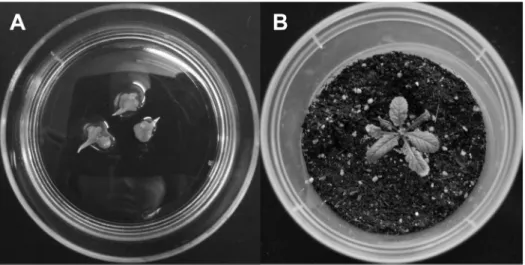
Fig. 2. Morphologies of microspore-derived embryos and a microspore-derived plantlet of R. sativus L. cv. Gwanhun. A: Microspore- derived embryos cultured for 30 days on NLN liquid medium containing 150 g・L

-1

sucrose, after 24 h heat shock at 32.5°C.

B: microspore-derived plantlet developed from a microspore-derived embryo transferred to ex vitro conditions in artificial soil.

culture was the same as described above. Embryo yields were determined 30 days after microspore were cultured in each petri dish. Embryo yield was the mean of embryo numbers from the 20 petri dishes.

Germination of Microspore-derived Embryos

For the conversion of microspore-derived embryo into plantlets, fully developed dicotyledonous embryos and torpedo embryos (Fig. 2A) were transferred directly to MS medium containing 3% sucrose and 8% agar. All microspore-derived embryos were incubated at 25 ± 1°C under a 16 h photoperiod with 150 μmol・m

-2

・ s

-1

PPF for 4 weeks. After 4 weeks, plants that germinated from the microspore-derived embryo were transferred from in vitro to ex vitro conditions on artificial soil (Fig. 2B).

Ploidy Analysis Using Flow Cytometry

The nuclear DNA content of the leaves of microspore- derived plantlets was measured with a flow cytometer (Cytoflow PA, Partec GmbH, Germany) using the protocol described by Mishiba et al. (2000). Seedling leaves of ‘Gwanhun’

radish (2n = 2x = 18) were used as a control. Young leaves (3-5 mm

2

) from microspore-derived plantlets and from seedlings were analyzed for nuclear DNA content. Fresh tissues were individually chopped with a sharp razor blade to less than 1 mm in a 60 mm glass petri dish containing 400 µL of extraction buffer (Solution A in the CyStain UV Precise P Kit, Partec). After chopping, 1,600 mL of 4,6- diamidino-2-phenylindol staining buffer (Solution B of the kit) was added. The suspension was filtered through a 30 µm nylon mesh (CellTrics, Partec). For each sample, 2,500-5,000 nuclei were analyzed using a flow cytometer equipped with

an HBO-100 mercury lamp.

Statistical Analysis

Each treatment of all the experiments was replicated 20 times. Statistical analyses were performed using the SAS statistical software, release 9.2 (SAS Institute Inc., Cary, NC, USA). One-way analysis of variance was used to examine any significant differences in microspore-derived embryo formation among the treatments, and means with significant treatment differences were separated using Duncan’s multiple range test at the 0.05 level.

Results and Discussion

A number of technical factors influencing microspore embryogenesis have been identified. These include the growth conditions of the donor plant, the developmental stage of microspores, the type of pretreatment, the nature of carbohydrates in the culture medium, and culture conditions (Clément et al., 2005). The culture of isolated microspores also requires the mechanical extraction of microspores into the medium from the anther, together with their cleaning and concentration by filtration and differential centrifugation (Olmedilla, 2010).

The embryogenic potential is usually triggered by stress

pre-treatment (Olmedilla, 2010). Various pre-treatments in

embryo formation have been used, such as cold pretreatment,

heat shock, starvation, or osmotic shock through the culture

medium. Pretreatment of the plants, inflorescences, buds, and

isolated microspores before microspore culture might affect

microspore embryogenesis (Sato et al., 2002). Pretreatments

reported to be effective for Brassica species include decreased

atmospheric pressure, gamma irradiation, colchicine treatment,

and ethanol stress. However, the effects of cold pretreatment

(4)

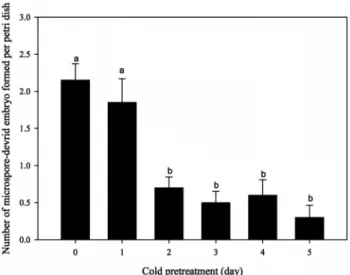
Fig. 3. Microspore-derived embryo yields (number of embryos/

petri dish) of R. sativus L. cv. Gwanhun in response to various cold pretreatment periods in NLN liquid medium. Each value is the mean of 20 replications. Columns with the same letter are not significantly different based on Duncan’s multiple range test at p < 0.05.

Fig. 4. Microspore-derived embryo yields (number of embryos/

petri dish) of R. sativus L. cv. Gwanhun in response to two different B5 and NLN washing media. Data were collected 30 days after culture. Each value is the mean of 20 replications.

Columns with the same letter are not significantly different based on Duncan’s multiple range test at p < 0.05.

Fig. 5. Microspore-derived embryo yields (number of embryos/

petri dish) of R. sativus L. cv. Gwanhun in response to various medium concentrations. Data were collected 30 days after culture. Each value is the mean of 20 replications. Columns with the same letter are not significantly different by Duncan’s multiple range test at p < 0.05.

varied with Brassica species (Keller, 1984). In addition, microspore viability is known to decrease rapidly with storage.

Many studies have reported that microspores need to be isolated from flower buds immediately after the flower buds are obtained. In the present study, however, we found that flower buds stored in a petri dish without media remained viable for 24 h at 4°C (Fig. 3).

In the isolation and culture of microspores from anthers of Brassicaceae using the standard protocol (B5 medium for isolation and wash, and NLN medium for culture), a correlation was found between the color of the microspore pellet and embryogenesis potential (Burnett et al., 1992); all microspores of Brassica rapa were yellow in color when freshly isolated and changed from yellow to green in color within an hour of exposure to B5 medium. B5 medium has high salt content and NLN medium has high vitamin content. Microspore-derived embryo yields per petri dish were 1.15 and 2.3 when isolated microspores were washed with B5-13 and NLN-13 liquid medium, respectively (Fig. 4).

The nutritional requirements for induction and production of embryos vary widely among species. Improvements in the formulation of culture media have also helped advance microspore culture techniques (Wędzony et al., 2009). One of the most important media components influencing embry- ogenesis is basal salt. Basal media such as NLN media with slight modifications are commonly used for isolated microspore culture in Brassica crops. Most experimental protocols for microspore-derived embryo production in Brassica use the standard NLN-13 media. In the present study, microspore-derived embryo formation was 1.65, 1.5, and 1.45 per petri dish in

the 0.5×, 1.0×, and 1.5× NLN liquid medium, respectively;

however, the difference was not significant. The 0.25× and 4.0× NLN liquid media had low embryo formation (0.1 and 0.6 per petri dish, respectively), and did not differ significantly (Fig. 5). The 0.5× NLN liquid medium had the highest embryo formation (1.65 per petridish). The high (4.0×) and low (0.25×) concentrations of macro- and micronutrients were not effective for microspore-derived embryo formation.

Therefore, reducing the concentration of major salt to one

half in the NLN liquid medium seems to increase embryogenesis

(5)

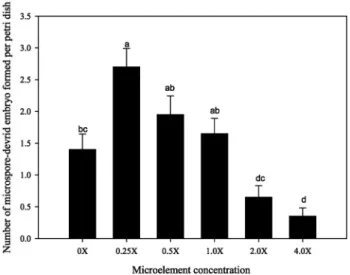
Fig. 6. Microspore-derived embryo yields (number of embryos/

petri dish) of R. sativus L. cv. Gwanhun in response to various microelement concentrations in half-strength NLN liquid medium.

Data were collected 30 days after culture. Each value is the mean of 20 replications. Columns with the same letter are not significantly different by Duncan’s multiple range test at

p < 0.05.

frequency in radish microspore culture. The standard NLN-13 medium has been used as the basal medium for microspore- derived embryo formation in many Brassica crops. In this study, 0.5× NLN liquid medium proved more effective than the other media strengths. Sato et al. (1989) obtained similar results in B. campestris ssp. pekinensis, and the same result was reported for somatic embryo formation in Pimpinella brachycarpa (Na and Chun, 2009).

A reduction in the concentrations of some of the macronutrients in NLN-13, mainly NO

3

, may be useful for promoting embryogenesis. Higher concentrations of macronutrients may inhibit the induction of embryogenesis, as well as embryo growth (Na and Chun, 2009). The addition of various NLN microelement strengths (0.25×, 0.5×, and 1.0×) to 0.5× NLN liquid medium was more effective than adding no microelements.

The 0.5× NLN liquid medium supplemented with 0.25× NLN microelements had the highest microspore-derived embryo formation rate (Fig. 6).

The results of the polyploidy test for microspore-derived plantlets produced from the above experiments showed 51.5% haploid, 19.7% double haploid, and 28.8% mixoploid nuclei (data not shown). Double haploid plants had normal flowers and anthers with pollen, whereas haploid plants had abnormal flowers without anthers. Some haploid plants had anthers without pollen. These finding concerning the polyploidy of microspore-derived plant were consistent with the research of Chen et al. (2009), who obtained various mixoploid plants from the protocorm-like body of Phalaenopsis.

In conclusion, this study demonstrated the importance of

cold pretreatment, washing medium, and medium composition during microspore embryogenesis of R. sativus cv. Gwanhun.

A technique was also described to achieve the production of microspore-derived embryo by controlling nutritional and environmental factors. This is the first report of the production of microspore-derived radish plants. Moreover, the efficient microspore culture protocols developed for microspore-derived embryos and plants in this study may be useful in the production of a homozygous line that could be used to produce F

1

hybrids of R. sativus.

Literature Cited

Burnett, L., S. Yarrow, and B. Huang. 1992. Embryogenesis and plant regeneration from isolated microspores of Brassica rapa L. ssp. oleifera. Plant Cell Rpt. 11:215-218.

Chen, W.H., C.Y. Tang, and Y.L. Kao. 2009. Ploidy doubling by in vitro culture of excised protocorms or protocorm-like bodies in Phalaenopsis species. Plant Cell Tissue Organ Cult.

98:229-238.

Clément, C., R. Sangwan, and B. Sangwan-Norreel. 2005. Microspore embryo induction and development in higher plants: Cytological and ultrastructural aspects. Biotechnol. Agr. For. 56:53-72.

Curtis, I.S. 2009. Radish, p. 381-389. In: E.C. Pua and M.R.

Davey (eds.). Biotechnology in agriculture and forestry. Springer, Dordrecht.

Curtis, I.S. 2011. Genetic engineering of radish: Current achievements and future goals. Plant Cell Rpt. 30:733-744.

Gamborg, O.L., R.A. Miller, and K. Ojima. 1968. Nutrient requirements of suspension cultures of soybean root cells. Expt. Cell Res.

50:151-158.

Jardinaud, M.F., A. Souvré, M. Beckert, and G. Alibert. 1995.

Optimization of DNA transfer and transient β-glucuronidase expression in electroporated maize (Zea mays L.) microspores.

Plant Cell Rpt. 15:55-58.

Keller, W.A. 1984. Anther culture of Brassica, p. 302-310. In:

I.K. Vasil (ed.). Cell culture and somatic cell genetics of plants. Academic Press, New York.

Lichter, R. 1982. Induction of haploid plants from isolated pollen of Brassica napus. Z. Pflanzenphysiol. 105:427-434.

Loeb, T.A. and T.L. Reynolds. 1994. Transient expression of the uidA gene in pollen embryoids of wheat following microprojectile bombardment. Plant Sci. 104:81-91.

Mishiba, K., T. Ando, M. Mii, H. Watanabe, H. Kokubun, G.

Hashimoto, and E. Marchesi. 2000. Nuclear DNA content as an index character discriminating taxa in the genus Petunia sensu Jussieu (Solanaceae). Ann. Bot. 85:665-673.

Na, H. and C. Chun. 2009. Nutritional, chemical and physical factor affecting somatic embryo formation and germination in Pimpinella brachycarpa. Kor. J. Hort. Sci. Technol. 27:

280-286.

Olmedilla, A. 2010. Microspore embryogenesis, p. 27-44. In:

E.C. Pua and M.R. Davey (eds.). Plant developmental biology- biotechnological perspectives, Springer, Dordrechf.

Prem, D., K. Gupta, and A. Agnihotri. 2005. Doubled haploids:

(6)

a powerful biotechnological tool for genetic enhancement in oilseed Brassicas, p. 18-30. In: P.S. Srivastava, A. Narula, and S. Srivastava (eds.). Plant biotechnology and molecular markers. Anamaya Publishers, New Delhi.

Sangwan, R.S., C. Ducrocq, and B. Sangwan-Norreel. 1993.

Agrobacterium-mediated transformation of pollen embryos in Datura innoxia and Nicotiana tabacum: Production of transgenic haploid and fertile homozygous dihaploid plants. Plant Sci.

95:99-115.

Sato, S., N. Katoh, S. Iwai, and M. Hagimori. 2002. Effect of low temperature pretreatment of buds or inflorescence on isolated microspore culture in Brassica rapa (syn. B. campestris).

Breed. Sci. 52:23-26.

Takahashi, Y., S. Yokoi, and Y. Takahata. 2011. Improvement of microspore culture method for multiple samples in Brassica.

Breed. Sci. 61:96-98.

Wędzony, M., B.P. Forster, I. Żur, E. Golemiec, M. Szechyńska- Hebda, E. Dubas, and G. Gotębiowska. 2009. Progress in doubled haploid technology in higher plants, p. 1-33. In: A.

Touraev, B.P. Forster, and S.M. Jain (eds.). Advances in haploid production in higher plants. Springer, Dordrechf.

Yao, Q.A., E. Simion, M. William, J. Krochko, and K.J. Kasha.

1997. Biolistic transformation of haploid isolated microspores

of barley (Hordeum vulgare L.). Genome 40:570-581.

수치

Fig. 1. Flower bud of Raphanus sativus L. cv. Gwanhun with  sepals removed for microspore-derived embryo culture
Fig. 2. Morphologies of microspore-derived embryos and a microspore-derived plantlet of R
Fig. 4. Microspore-derived embryo yields (number of embryos/
Fig. 6. Microspore-derived embryo yields (number of embryos/

참조

관련 문서

Seeing the type of medium to obtain sexual information, the order in getting the more accurate sexual information was education, video, language, print, PC

A new intravenous fat emulsion containing soybean oil, medium-chain triglycerides, olive oil, and fish oil: a single-center, double-blind randomized study

Current study explores the effects of entrepreneurial orientation both on financial and innovative performance with 1,497 Korean small and medium-sized

The main effects of rooting medium composition, growth regulators and node parts of shoot on rooting and growth of plug plantlets using stem cuttings of

• Pyrolysis process has been shown to be able to produce high yields of liquid products which can be easily shipped and stored and then utilised in small and medium size

platensis under variously mixed medium conditions of low cost medium based on deep sea water.. platensis in the growth medium at 22 days

Chitosan/Carbopol ® 971NF (poly acrylic acid) interpolymer complexes were prepared in pH 3.0, 4.0 and 5.0 medium to control the ratio of chitosan and Carbopol ® 971NF in

In the tissue culture using leaf tissue of Orostachys japonicus , callus were induced most efficiently in 5-week-after culture in the MS medium supplemented with 10 μ BAP and 4