Introduction
Pneumocystis jirovecii pneumonia (PCP) is a potentially life-threatening fungal infection that is seen in immunocom- promised individuals
1,2. Prior to 1980s, PCP was recognized as a rare but fatal infection primarily among patients with acute leukemia and other hematological malignancies. In 1980s, the worldwide epidemic of human immunodeficiency virus (HIV) dramatically increased the prevalence of PCP as one of its most common complications. Although PCP once increased explosively among HIV-infected patients, progress in anti- retroviral therapies and the use of routine prophylaxis against PCP led to reduced rates of PCP in the HIV-infected popula- tion in most industrialized countries. However, the national database of the United Kingdom demonstrated an increase in the number of admissions due to PCP in patients without HIV infection
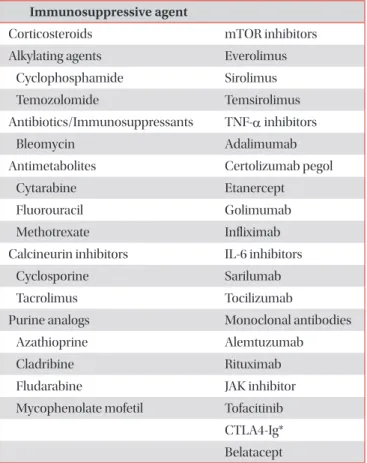
3. This could be associated with the recent in-
Recent Advances in the Diagnosis and
Management of Pneumocystis Pneumonia
Sadatomo Tasaka, M.D.
Department of Respiratory Medicine, Hirosaki University Graduate School of Medicine, Hirosaki, Japan
In human immunodeficiency virus (HIV)-infected patients, Pneumocystis jirovecii pneumonia (PCP) is a well- known opportunistic infection and its management has been established. However, PCP is an emerging threat to immunocompromised patients without HIV infection, such as those receiving novel immunosuppressive therapeutics for malignancy, organ transplantation, or connective tissue diseases. Clinical manifestations of PCP are quite different between patients with and without HIV infections. In patients without HIV infection, PCP rapidly progresses, is difficult to diagnose correctly, and causes severe respiratory failure with a poor prognosis. High-resolution computed tomography findings are different between PCP patients with HIV infection and those without. These differences in clinical and radiological features are due to severe or dysregulated inflammatory responses that are evoked by a relatively small number of Pneumocystis organisms in patients without HIV infection. In recent years, the usefulness of polymerase chain reaction and serum β-D-glucan assay for rapid and non-invasive diagnosis of PCP has been revealed. Although corticosteroid adjunctive to anti- Pneumocystis agents has been shown to be beneficial in some populations, the optimal dose and duration remain to be determined. Recent investigations revealed that Pneumocystis colonization is prevalent and that asymptomatic carriers are at risk for developing PCP and can serve as the reservoir for the spread of Pneumocystis by airborne transmission. These findings suggest the need for chemoprophylaxis in immunocompromised patients as well as infection control measures, although the indications remain controversial. Because a variety of novel immunosuppressive therapeutics have been emerging in medical practice, further innovations in the diagnosis and treatment of PCP are needed.
Keywords: Pneumocystis jirovecii Pneumonia; Immunocompromised Host; Loop-Mediated Isothermal Amplification;
Chemoprophylaxis; Infection Control
Address for correspondence: Sadatomo Tasaka, M.D.
Department of Respiratory Medicine, Hirosaki University Graduate School of Medicine, 5 Zaifucho, Hirosaki 036-8562, Japan Phone: 81-172-39-5468, Fax: 81-172-39-5469
E-mail: [email protected] Received: Feb. 19, 2020 Revised: Feb. 20, 2020 Accepted: Feb. 21, 2020 Published online: Mar. 10, 2020
cc It is identical to the Creative Commons Attribution Non-Commercial License (http://creativecommons.org/licenses/by-nc/4.0/).