투 고 규 정
제정: 1991. 4. 20 개정: 1998. 2. 18 1999. 11. 30 2005. 4. 13 2007. 4. 30 2011. 8. 31
본 학술지의 명칭은 한국항공우주의학회지이며, 영문명 은 The Korean Journal of Aerospace and Environmental Medicine (KJAsEM)이다. 본 학술지는 한국항공우주의학협회(분과학 회: 한국 항공우주의학회, 한국항공인적요인학회, 및 한국 항공간호 학회)의 공식 학술잡지이며, 연 3회 발행하고 그 발행일은 4월 30일, 8월 31일, 12월 31일이다. 본 학술지 투 고 자격은 게재 신청한 원고의 교신저자 혹은 제 1 저자가 한국 항공우주의학협회의 회원에 한함을 원칙으로 하며, 비회원의 경우는 간행편집위원회의 심의를 거쳐 게재할 수 있다.
1. 원고의 성격 및 종류
1) 항공우주의학, 항공우주생리, 항공인적요인 및 항공 간호에 관련된 학문 분야의 발전에 기여할 독창성 있는 원고이어야 하고 원고의 종류는 원저, 증례, 종 설, 논평(letters to editors), 기타 단신 등으로 하며, 종 설은 간행편집위원회의 청탁 원고에 의한다.
2) 제출된 원고와 동일 또는 유사한 원고를 타 학술지 에 임의로 게재할 수 없으며, 이 규정은 Uniform Requirements for Manuscripts Submitted to Biomedical Journals (N Engl J Med 1997; 336:309-15. 참조)에서 규 정한 요건을 준용한다.
2. 사용 언어
한글 또는 영어로 기술하는 것을 원칙으로 한다. 한글 학 술 용어는 대한의사협회에서 발행, 제정한 의학사전과 의 학용어를 따른다. 적절한 번역어가 없는 경우 의학 용어, 고 유명사, 약품명, 단위 등은 원어 그대로 사용한다. 번역어가 있으나 의미 전달이 확실치 않을 때는 그 용어가 최초로 사용될 때 번역어 다음에 소괄호 안에 원어로 표기하고 그 이후로는 번역어만 사용한다. 영문 약어는 최소화하며 최 초 사용시 원어를 표기한 다음 소괄호에 약어를 쓰며 그 이후에는 약어만 사용하여도 된다.
3. 원고 작성의 일반적 참고사항
1) 원고의 편집: 제출하는 원고는 A4 용지 크기에 Microsoft word로 작성(추천)하며 줄 간격은 1.5줄로 한 다. 좌우상하 여백은 3 cm로 하며, 글자 크기는 본문 의 경우 11로 한다(아래한글의 경우 줄 간격 180%).
2) 논문의 길이: 원저의 경우 한글 20,000자, 영문 단어 3,000자(학회지 10쪽) 이내(참고: 3.3항을 기준으로 작성한 경우 약 20쪽 분량임)로 하고 증례보고 및 수 기의 경우 원저의 절반 수준으로 하며, 논평의 경우 한글 2,000자, 영문 단어 600자 이내로 한다.
3) 논문 형식: 한글 논문일 경우 제목, 저자명, 소속기관, 영문 제목, 영문 저자명, 영문 소속기관, 영문 초록, 서 론, 재료 및 방법, 결과, 고찰, 결론, 참고문헌, 표, 그 림, Koramed 제공 정보, 영문 논문일 경우 title, authors, institutions, abstract, introduction, materials and methods, results, discussion, conclusion, references, tables, figures 순 으로 한다. 논문 제목은 간략하고 기술적(descriptive)이 어야 하며 평서체(declarative)가 아니어야 한다. 또한 40자 간격 미만의 난외 표제(running title)를 포함한다.
12명 이상의 이름을 논문 제목 밑에 기입할 수 없으 며, 나머지 저자들은 각 주에 넣을 수 있다.
4) 초록: 한글 원고에는 영문 초록을, 영문 원고에는 영 문 초록과 참고문헌 뒤에 한글 초록을 삽입하며 한 글 600자 이내, 영문은 200단어 이내로 한다. 초록 끝 에 10개 이내의 Key Word를 영문으로 기입한다. 논 문의 목적, 대상 및 방법, 결과 그리고 결론을 간단 명료하게 기술하여 구체적인 자료를 제시한다.
5) 서론: 연구의 목적을 간단 명료하게 제시하며, 배경에 대한 기술은 목적과 연관이 있는 내용만 포함한다.
6) 재료 및 방법: 연구의 계획, 대상 및 방법을 순서대로 상세히 기록하며, 어떤 자료를 어떻게 분석하였고, 비틀림(bias)을 어떻게 조절하였나를 기술한다. 실험 방법이 주안점인 경우에는 재현이 가능하도록 구체 적으로 기술한다.
7) 결과: 전 문단에서 기술된 방법으로 관찰 및 분석한 결과를 논리적으로 기술하고 실제적인 자료를 제시
한다. 실측치에 변동이 많은 생물학적인 계측에서는 통계 처리를 원칙으로 한다. 표(Table)를 사용할 경우 본문의 표의 내용을 중복해서 기술하지는 않으나, 중 요한 경향 및 요점은 기술한다. 실험성적은 아라비아 숫자와 미터법을 써서 기술한다. 저자들은 논문 전체 에 걸쳐 모든 측정들을 관례적인 단위(conventional unit)로 표시하되 괄호 속에 System International (SI) 단 위를 포함시켜야 한다.
8) 고찰: 연구의 결과에 대한 고찰 및 이에 관련된 다른 자료들과 연관하여 해석한다. 새롭고 중요한 관찰을 강조하며 결과의 내용을 중복하여 기술하지 않는다.
관찰된 소견의 의미 및 제약(limitation)을 기술하며,연 구 결과의 내용이 허용하는 범위 내에서 결론과 연 구의 목적을 연관시킨다. 마지막 문단에 결과의 요약 과 결론을 기술한다.
9) 결론: 본 연구의 결과로부터 도달한 결론을 간략하게 기술하며, 이는 연구의 목적에 부합한 것이어야 한다.
10) 참고문헌의 기재 방법: 문헌은 관련된 국내외 문헌을 인용 순으로 정리하고, 저자명은 6인 이하의 경우 저 자명을 다 쓰고 7명 이상일 경우에는 6인까지 기재 하고 그 뒤에 등(et al.)을 기재한다. 잡지명의 약어는 Index Medicus에 따른다. 인용 문헌의 기술은 다음의 형식으로 한다.
잡지
∙White JR, Frobe HF. Small-airways dysfunction in nonsmokers chronically exposed to tobacco smoke. N Engl J Med 1980;302(13):
720-729.
∙김칠영, 최연철, 강현도, 문봉섭.조종실의 업무성과 증진을 위한 요인에 관한 연구. 항공우주의학회지 2004;14(2):57-64.
∙Cheong HS, Kwon KT, Rhee JY, Ryu SY, Heo SY, Chung KR, et al.Imported malaria in Korea: a 13-year experience a single center. Korean J Parasitol 2009;47:299-302.
∙Jager RD, Mieler WF, Miller JW. Age-related macular degeneration. N Eng J Med 2008;358:2606-2617.
단행본
∙Fraser RG, Pare JAP. Diagnosis of disease of the chest. 2nd ed.
Philadelphia: Saunders, 1979:1420-1430.
∙계원철. 비행과 인체. 서울: 동문사, 1992:25-30.
단행본 내의 논문(장)
∙Marchesi VT. Inflammation and healing. In: Kissane JM, Anderson WAK, eds. Anderson’s pathology. 8th ed. St. Louis: Mosby, 1985:22-60.
∙박항배. 비행안전과 항공우주의학. 박항배 등. 항공우주의학개 론. 서울: 한빛, 1997:307-354.
학술대회 초록집(Conference proceedings)
∙Lim J, Lee W, Yang S. Hearing in Korean military pilots. Aviat
Space Environ Med 2011;82:322-323.
인쇄중
∙Diem C, Runger TM. A novel plasmid shuttle vector for detection and analysis of microsatellite instability in cell lines. Mutat Res. In press 2011.
인터넷
∙National Transportation and Safety Board. Accident database
& synopses. Retrieved July 2007 from http://www.ntsb.gov/ntsb/
query.asp.
11) 표, 그림 및 사진: 영문 제목 및 설명과 함께 논문뒤 에 별첨하고, 영문 제목과 설명이 난해한 경우 한글 도 가능하다. 그림과 사진의 이미지 파일은 300만 화소 이상, 2M 이하의 jpg나 gif 형식으로 한다.
(1) Table과 Figure는 본문에서 인용되는 순서에 따라 번호를 붙이며, Table의 제목은 상단에, Figure의 설 명(legends)은 하단에 표시한다. Table의 제목에는 마침표(period)를 쓰지 않고, Figure의 설명에는 마 침표를 쓴다.
(2) Table에는 불필요한 종선을 긋지 않으며, 횡선도 가급적 억제한다. Table의 제1열은 왼쪽 정렬을 시 키며, 제2열부터는 가운데 정렬을 원칙으로 한다.
숫자는 가운데 정렬을 하되, 소수점을 기준으로 하고 구간(range)을 표시하는 이음줄(-), ±, × 등의 기호가 있을 때는 기호를 기준으로 한다. 괄호( )가 있을 때는 괄호의 시작 부분과 괄호 앞의 마지막 글자를 기준으로 정렬한다.
(3) Table에서 증례를 나타내는 숫자에는 괄호( )나 마 침표(.)를 사용하지 않고 숫자만 쓴다. 증례(case)를 나타내는 heading은 No. Case로 하고, 증례 수를 나 타내는 heading은 N으로 한다.
(4) 하단의 설명은 어깨글자 설명, 약어 설명의 순으로 하며 어깨글자 설명과 약어 설명 사이에는 반드시 줄을 바꾸어 쓴다.
(5) 어깨글자의 위치는 단어의 우측에 하며 *, †, ‡,
§, ∥, ¶, **, ††, ‡‡의 순서로 사용하고 숫자나 알파 벳은 사용하지 않는다. 여러 어깨글자의 설명은 다음 예와 같은 형식(어깨글자 설명; 어깨글자 설 명.)을 따른다. (예) *not tested; †P<0.05.
(6) 표준화되지 않은 약어는 모두 하단에 설명을 첨부한 다. 약어 설명은 다음 예와 같은 형식(Abbreviations:
약어, 설명; 약어, 설명.)을 따른다. Table마다 약어 설명이 중복될 경우에는 ‘See Table 1.’과 같이 표시 한다. (예) Abbreviations: NT, not tested; SAA, severe aplastic anemia.
(7) Figure가 현미경 사진일 경우에는 염색 방법과 배
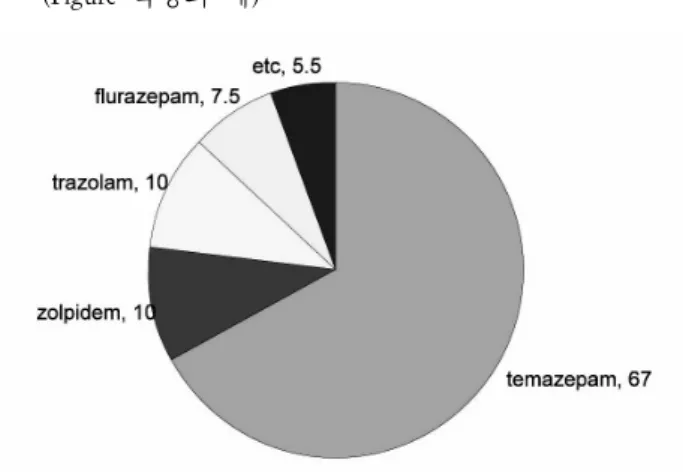
Fig. 2. The detail medication distribution.
율을 표기하여야 한다.
(8) Figure가 두 개 이상의 그림으로 구성될 때는 ‘A) 설명. B) 설명.’과 같이 각각 설명하거나 한꺼번에 설명하고 괄호( )속에서 설명할 수도 있다.
(Table 작성의 예)
Table 1. Bone marrow findings of patients diagnosed as bone marrow involvement of peripheral T cell lymphoma
No. HPH Tumor cells Infiltration pattern Subtypes*
Case in aspirate (%) in sectio
1 + 5 Interstitial ALC
2 + 10 Interstitial US
3 − <1 Focal US
4 − <1 Sinusoidal AIM
*based on revised European-American classification of lymphoid neoplasms (REAL) classification systerm, proposed from the International Lymphoma Study Group in 1993.
Abbreviations: HPH, hemophagocytic histiocytosis; ALC, ana- plastic large cell; AIM, angio-immunoblastic; US, unspecified.
(Figure 작성의 예)
12) 편집자에게 보내는 글 및 논평: 학회지에 출판된 특 정 논문에 대한 건설적인 비평 또는 의견, 혹은 항 공우주의학 분야의 특정 주제에 대한 개인적인 의 견, 각 분과학회의 공지사항을 제출할 수 있다.
13) 본문 내 문헌인용 시 본문의 인용순서대로 번호를 부여하고 본문에는 괄호[ ]속에 번호를 기재한다.
14) 편집인은 접수 순으로 심사된 논문을 게재하되 본 규정에 맞지 않는 논문은 그 심사를 보류할 수 있다.
15) 모든 원고는 제출 후에는 일체 반환하지 않는다.
16) Koreamed에 제공하기 위한 정보를 13가지 항목 (field)에 맞추어 영문으로 작성한다. 작성된 정보는 논문 마지막에 첨부하여 제출한다.
4. 원고의 제출 및 간행
1) 논문 심사 및 게제를 위한 논문 제출 시 논문원고, 표, 그래프, 사진 및 기타 관련서식이 포함된 파일 (MS word 2000 이상 버전 권장)을 아래 전자우편주소 로 제출 한다.
(우) 07505 서울특별시 강서구 하늘길 221 국토교통부 항공철도사고조사위원회 B/D 210호 한국항공우주의학협회 간행편집위원장
Tel: 02)6091-6101, Fax: 02)6091-6102 e-mail주소: [email protected]
2) 제출된 원고에 대하여 간행편집위원회는 그 게재 여 부를 결정하며 논문의 수정, 보완 또는 삭제를 요구 할 수 있다. 또한 편집인은 원고 중 필요할 때에는 원문에 영향을 미치지 않는 범위 내에서 자구와 체 제 등을 수정할 수 있다.
3) 논문의 제1 저자 혹은 교신저자는 반드시 본 협회의 회원이어야 하며, 비회원의 경우는 간행편집위원회 의 심의를 거쳐야 한다.
4) 논문의 심사료, 게재료, 특수사진 인화료와 별책에 사용되는 비용은 간행편집위원회에서 정한다.
5) 별책 인쇄는 50부 단위로 수익자 부담으로 신청할 수 있다.
5. 저자 점검 사항(Checklist)
1) 모든 원고는 다음의 점검 사항을 확인하고 논문 게 재 신청 시 아래 점검 사항에 맞도록 작성하고 저작 권에 관한 동의서 양식에 소정 사항을 기록 서명한 뒤 제출한다.
2) 논문은 MS word로 작성(추천)하고 줄 간격은 1.5로 한다(아래한글의 경우 180%).
3) 표지는 겉 표지와 내 표지로 분리한다. 겉 표지에는 논문의 제목, 전 저자의 성명과 소속을 한글과 영문 으로 표기한다. 소속이 다른 다수의 저자인 경우는 연구가 주로 이루어진 기관을 먼저 기록하고 그 이 외의 경우는 해당 저자의 이름에 어깨번호를 하고 소속기관을 번호순으로 표기한다. 표지 하단에 교 신저자(Corresponding author)의 주소(E-mail주소 포 함), 전화번호 및 FAX번호 등을 기록하고 학술대회 발표여부, 연구비 수혜 사항 등은 필요한 경우에 기 술한다. 내 표지에는 논문의 제목만을 한글과 영문 으로 기술한다. 저자의 이름 및 소속은 일체 표기하 지 않는다.
4) 모든 원고는 초록부터 쪽수를 기록하며, 초록 이후
의 원고 및 사진 등에는 저자의 성명이나 소속을 기 록하지 않는다.
5) 임상 연구인 경우에는 Institutional Review Board (IRB) 승인서를 제출해야 한다.
6) 영문 초록은 200단어, 한글 초록은 600자 이내로 작 성한다.
7) 색인단어(key word)는 10개 이내로 작성한다.
8) 참고 문헌은 투고 규정에 맞도록 작성한다.
9) 사진 등으로 신원이 노출될 가능성이 있는 경우, 환 자 또는 보호자의 게재에 대한 서면 동의서를 제출 한다.
10) Koreamed에 제공하기 위한 정보를 논문 마지막에 추 가한다.
6. 저작권에 관한 동의서
다음 쪽의 <양식> 참조
7. 원저 이외의 원고
1) 일반적 사항과 점검 사항은 원저에 준한다 2) 종설: 특정 제목에 초점을 맞춘 고찰로서 간행편집위
원회에서 위촉하여 게재한다.
3) 화보: 화보는 사진과 이의 설명을 통하여 내용을 전 달하는 것으로 이는 독창적 원저와는 달리 사진을 통한 교육에 그 주목적이 있으며 학술 대회장에서의 학술 전시와 같은 성격을 갖는다. 이의 형식은 초록, 서론 화보, 참고문헌, 사진설명의 순으로 하며 참고 문헌은 5개 이내, 사진의 숫자는 30장 이내로 한다.
8. Koreamed에 제공하기 위한 정보는 다음의 형식 으로 기재한다.
1) 모든 정보는 영문으로 기재하며 다음과 같은 13개의 표준 양식(필드)에 맞추어 기재한다.
TI: Title (제목) AU: Author (저자)
AD: Address (소속 혹은 주소) CO: Correspondence (교신저자) SO: Source (학회지 이름 및 권, 면수) YR: Year (발행 연도)
IS: ISSN (International Standard Serial Number) LA: Language (언어)
AB: Abstract (초록)
ME: MeSH (Medical Subject Headings) SU: Supporter (연구비 지원 기관)
PU: Publisher (발행처) ID: Identification number
2) 모든 문자는 텍스트 문자로 하고 그리스어 등의 특 수 부호는 풀어서 쓴다. 윗첨자 또는 아랫첨자는 괄 호( )안에 넣는다.
3) 해당 항목에 기재 사항이 없더라도 필드명은 모두 쓴다.
4) AU (Author)를 기재할 때, 성을 앞에 쓰며, 이름은 약자를 쓰지 않고 전체를 풀어 쓴다.
5) AD (Address)는 저자들의 주소가 다른 경우 모두 다 쓴다.
6) CO (Correspondence)는 교신저자의 전자우편 주소 (E-mail address)를 쓴다.
7) ME (MeSH)는 미국립의학도서관(NLM)의 MeSH를 따른다.
8) SU (Supporter)는 연구비 지원 기관이 있는 경우 기 관과 지원 번호를 쓴다.
9) SO (Source), YR (Year)는 학회 편집위원회에서 결정 하므로 쓰지 않는다.
10) ID (Identification number)는 대한의학학술지편집인협 의회에서 부여하는 번호이므로 기재하지 않는다.
(예)
TI: Comparison of molecular biologic methods for detecting HBV-DNA in the sera which showed both hepatitis B surface
antigen and antibody positivity.
AU: Kim Mun Jeong, Kim Hyon Suk, Kwon Oh Hun, Hahn Kwang Hyub
AD: Department of Clinical Pathology, Yonsei University College of Medicine, Seoul 120-752, Korea; Department of Internal Medicine, Yonsei University College of Medicine, Seoul 120-752, Korea
SO: Korean J Clin Pathol 17(6):1124-36, Decem 1997 YR: 1997
IS: 1015-6445 LA: Korean
AB: Background: Serologic markers are used to screen and diagnose the hepatitis B virus infection. In endemic area of … Conclusions: More than half of the patients who showed both HBsAg and anti-HBs positivity were positive for HBV-DNA by molecular biologic met- hods.In contrast, no one … Taken together, the management and follow-up of the patients of both HBsAg and anti-HBs positivity could be greatly aided by combined adoption of any one molecular biologic assay of HBVDNA with other serologic markers such as
HBsAg and anti-HBc IgM.
ME: Hepatitis B virus, Hepatitis B surface antigens, Hepatitis B antibodies, DNA, Chemiluminescence, Nucleic acid hybridization, Comparative study, Polymerase chain reaction
SU:
PU: Korean Society of Clinical Pathologists ID:
윤리 규정
모든 원고는 연구의 대상이 사람인 경우, 헬싱키 선언에 입각하여 연구 참여자 혹은 환자에게 연구의 목적과 연구
참여 중 일어날 수 있는 정신적, 신체적 위해에 대해 충분히 설명하여야 하고, 이에 대한 서면 동의서를 받았음을 명시 하여야 한다. 연구 참여자 혹은 환자의 성명 또는 머리글자 를 표기하여서는 안되고, 임상사진이나 가계도를 제출할 때에는 신원을 알 수 없도록 하여야 한다. 만일 조금이라도 신원이 노출될 가능성이 있는 경우에는 이에 대한 서면 동 의를 받았음을 명시하여야 한다.
연구의 대상이 동물인 경우에는 실험동물의 고통과 불편 을 줄이기 위하여 행한 처치를 기술하여야 하며, 실험 과정 이 연구기관의 윤리위원회 규정이나 NIH guide for the Care and Use of Laboratory Animals에 저촉되지 않았음을 명시하여 야 한다. 편집위원은 필요 시 서면 동의서 및 윤리위원회 승인서의 제출을 요구할 수 있다.
<양식>
저작권에 관한 동의서
논문 제목:
라는 제목의 논문이 “항공우주의학회지”라는 학회지에 출간될 경우 그 저작권을 한국항공우주의학협회 에 위임한다.
저자는 저작권 이외의 모든 권한 즉, 특허 신청이나 향후 논문을 작성하는 데 있어서 본 논문 일부 혹은 전부를 사용하는 등의 권한을 소유한다. 저자는 한국항공우주의학협회로부터 서면으로 승인을 받으면 타 논문에 본 논문의 자료를 사용할 수 있으며, 이 경우 자료가 발표된 원 논문을 밝힌다. 논문의 모든 저자는 본 논문에 실제적이고 지적인 공헌을 하였으며 논문의 내용에 대해서 책임을 공유한다.
본 논문은 과거에 출판된 적이 없으며 현재 타 학술지에 제출되었거나 제출할 계획이 없음을 보장하 고 아래에 서명하는 바이다.
제 1 저자 / 년 월 일
제 2 저자 / 년 월 일
제 3 저자 / 년 월 일
제 4 저자 / 년 월 일
제 5 저자 / 년 월 일
(6명 이상의 저자가 있는 경우에는 이면에 서명해도 가함)
Effective: 1999. 11. 30 2007. 4. 30
INFORMATION FOR CONTRIBUTORS
The Korean Journal of Aerospace Medicine and Human Factors is published quarterly by the Aerospace Medical Association of Korea: Korean Academy of Aerospace Medicine and Korean Academy of Aerospace Human Factors.
The Korean Journal of Aerospace Medicine and Human Factors is devoted to the publication of invited and submitted articles in all of the sub-fields of aerospace medical science, including basic research and clinical investi- gations as well as brief communications (including case reports). Only those papers that report results of novel and timely studies that meet high standards of scientific quality will be accepted. Investigators for aerospace medical science are eligible for submission of manuscripts. Papers are subjected to stringent review. Minimum publication charges except typesetting expenses and a fee for extra reprints exceeding 50 copies will be made for every manuscript accept for publication. Color illustrations are charged to the authors. Well written, concise articles in English will be published within 2 to 6 months after acceptance.
CATEGORIES OF PUBLICATIONS
The categories of publications include the followings. (1) Original articles: papers containing results of basic research and clinical investigations that are sufficiently well do- cumented to be acceptable to the critical readers. (2) Invited review articles: concise review on subjects of importance to medical researchers. The review articles should not exceed 30 pages of double spaced typing, and also receive editorial evaluation before acceptance. (3) Editorial: perspectives in aerospace medical science, which are invited articles on very active areas of research and fresh insights. (4) Case reports as well as brief communications which deal with issues of importance to researchers. (5) Abstracts of original articles which awarded by any scientific journals.
MANUSCRIPT SUBMISSION
All materials in triplicate submitted to the journal for publication and editorial correspondence should be sent to Editor-In Chief, The Aerospace Medical Association of Korea, Korea Aviation Accident Investigation Board B/D Room 210, 221 Haneul-gil, Gangseo-gu, Seoul 07505, Korea, Phone) 82-2-6091-6101, email address: [email protected]. Papers should be submitted by the corresponding author, who should indicate in a covering letter the exact address to which all related correspondences should be sent and a telephone number at which the author can be reached.
Revised manuscript should be submitted in duplicate, including two sets of original illustration. The authors must indicate clearly what alterations have been made in response to the reviewers’ comments. Satisfactory reasons should be given for noncompliance with any of the recommendations of the reviewers. If a new author has been added or an author has been deleted since the original submission, it is the responsibility of the corresponding author to ensure that the authors involved are aware of and agree to the changes in authorship. The Korean Journal of Aerospace Medicine and Human Factors accepts no responsibility for such changes.
EDITORIAL POLICY
Only previously unpublished materials will be considered for publication. Materials submitted to the Journal must not be under consideration for publication elsewhere. When a manuscript is received for consideration, the editors assume that no similar paper, other than an abstract or preliminary report, has been or will be submitted for publication elsewhere. The Editors also assume that all authors listed in a manuscript have agreed to its submission. Submission of a manuscript implies acceptance to the policy of the Korean Journal of Aerospace Medicine and Human Factors that, under any circumstances, the identities of the Editors and reviewers will not be revealed. Typically, the scientific review
of a manuscript is handled by the Editors who select two investigators in the field as reviewers. The critiques of reviewers and the recommended decisions of reviewer are then approved by the Editors. Editorial decisions are forwarded to the corresponding author by the Editorial Office. The review process usually takes an average of 4-8 weeks. If there is marked discrepancy in the opinions among the reviewers or between the reviewer(s) and author(s), the Editors may send the manuscript to other reviewers for additional comments. In this case, more time may be needed to finalize the review process.
MANUSCRIPT FORM
All materials in triplicate submitted must be written proper English or Korean. The manuscript, including figure legends and table footnotes, must be typed in double space on A4 size paper, with a margin of at least 2.5 cm (1 inch) on all sides. Materials prepared on a word processor should be printed with a letter-quality printer. The text of the manuscript should be in the following sequence; title page, abstract, introduction, materials and methods, results, dis- cussion, acknowledgements, references, tables, and figure legends. All pages should be numbered consecutively start- ing with the title page as page 1. Manuscripts, including all tables, figures, and references must be submitted in triplicate arranged as follows:
1) Title page: This should include the title, the author’s name(s) and institutional affiliation(s), the address and E-mail address, telephone number, FAX number of the corresponding author, and running title (less than 10 words).
Expressions such as “Studies on ………” or “Observations of ………” is better to be avoided in the title, since they are not sufficiently informative. The full name of institu- tion(s) and subsidiary laboratory(ies) should be given, together with a corresponding address. If several authors and institutions are listed on a paper, it should be clearly indi- cated with which department and institution each author is affiliated. Information concerning sources of financial support should be placed in a footnote.
2) Abstract and Key Words: The page following the title page should include an abstract of up to 200 words describing the purpose, methods, results, and conclusions of
the study. The abstract should be concise, yet indicative of the content of the paper. They should repeat in a shortened form, the purpose of the study and the experimental technique, results, and interpretations of the data. Vague, general statement such as “significance of the results are discussed” or “some physical properties were studied” are uninformative and not acceptable. All of the important terms relevant to the content of the paper should be used in the abstract to assist indices in their search for Key words.
Abbreviations, if they are needed, should be kept to absolute minimum with proper identifications. Authors may wish to remember that “Medline”, a computerized monthly biblio- graphy and CD-ROM includes only those abstracts that contain less than 200 words. Longer abstracts are not accessible through the Medline service. Abstracts for case reports may deviate from this format, but carry the same restrictions of length. Abstracts are not required for Editorials. Below the abstract includes a list of key words (up to 10 words) to be used as index terms. For the selection of the key words, please refer Medical Subject Heading (MeSH) of Index Medicus.
3) Introduction: Brief background and references to the most pertinent papers generally are enough to inform the reader with the findings of others in the field and with the question to which the author’s particular investigation is being studied.
4) Materials and Methods: Explanation of the experi- mental methods should be concise but sufficient for re- petition by qualified investigators. Procedures that have been published previously should not be described in detail, but merely cited with appropriate references. Only new and significant modifications or previously published procedures need complete explanation. The sources of the special chemicals of preparations used should be given along with their locations (name of the company, city and state and country, if foreign). This journal endorses the principles embodied in the Declaration of Helsinki and expects that all investigates involving human materials have been performed in accordance with these principles. For animal experiment reported in this Journal, it is expected that the
“Guiding Principles in the Care and Use of Animals”
approved by the American Physiological Society have been observed.
5) Results: This should include a concise description of the data presented in all tables and figures. Excessive elaboration of data already given in tables and figures should be avoided. In case report, case presentation can replace the materials and methods and the results.
6) Discussion: In this section, the data should be interpreted concisely without repeating material already presented in the results section. Speculation is permitted, but it must be supported by the presented data of authors’ and be well founded.
7) Acknowledgements:
8) References: Citation of references in the text should be made by giving consecutive serial number in parenthesis (Vancouver style). The references should include only works cited in the text. They should be listed in the order of citation with consecutive number in a separate section. (1) Periodicals: name and initials of all authors, full title of article, journal name abbreviated in accordance with Index Medicus, year, volume, first and last page numbers. (2) Books: author(s) of the chapter and its title, editor(s) of the book, book title, edition, volume, place, publisher, year, first and last page numbers. Sample references are given below for a journal article, a book, and a chapter in a book.
Before submission of the paper, authors should verify the accuracy of all references have been cited in the text. Papers in press may be listed among the references with the journal name and tentative year of publications. This rule also applies to unpublished data or personal communications.
The names of all authors should be given, along with manuscript titles.
FOR PERIODICALS:
∙White JR and Frobe HF. Small-airways dysfunction in non-smokers chronically exposed to tobacco smoke. N Engl J Med 1980;302:720-9.
FOR BOOKS:
∙Fraser RG and Pare JAP. Diagnosis of disease of the chest. 2nd ed. Philadelphia: Saunders, 1979:1420-30.
∙Marchesi VT. Inflammation and healing. In: Kissane JM, Anderson WAK, eds. Anderson’s pathology. 8th ed. St.
Louis: Mosby, 1985:22-60.
9) Tables: Tables should be typed neatly, each on a separate sheet, with the title above and any footnotes below.
Explain all abbreviations. Do not repeat information in the tables and figures. Large groups of individual values should be avoided; instead, averaged and proper designation of the dispersion such as standard deviation or standard error should be included. Authors are obligated to indicate the significance of their results by appropriate statistical analysis.
Each column should have an appropriate heading and, if numerical measurements are given, these units should be added to the column heading. Tables should be numbered with Arabic numerals and table footnotes should be indicated with superscript letters (a, b, c, etc.). All units of measurement and concentration should be clearly designated. Exponential terminology is discouraged (the term mM is preferable to 10-3 M).
10) Figures: Graphs, drawings and photographs are to be designated as figures. Flow diagrams and complex biochemical structures should be prepared professionally (not simply type written). Graphs should be used only when a relevant points needs illustration. Straight-line functions such as relationship between concentration and absorbance, of Lineweaver-Burk plots when these are linear, should instead be described in a few lines in the text. To conserve space, those curves that could appropriately appear together should be included in a single figure. Clear, glossy prints are acceptable instead of original drawings, provided that all parts of the figure are in focus. X-ray films or Polaroid photographs are not acceptable. Except for especially com- plicated drawings showing large amounts of data, all figures are published at one-page or one-column width. When the figures are reduced to the size of a single column or of a single-page width, the letters and numbers must be at least 1.5 mm high and the smallest part of the figure must be readable, otherwise the figures will be returned to the author for correction. Points of observations should be noted with different symbols rather than with different types of lines
; their significance can be explained directly in the body of the figure or in the legend. Only those common symbols for which the printer has type (×, ◦, *, ■, ▵, ▴) should be used. If a figure contains a left-and a right-hand ordinate, explanations of the left ordinate should read in the upward direction and those of the right ordinate should read downward.
In case of photographs, the preferred size of photography
is 8 cm×8 cm, but one-page (16.5 cm in width×8 cm in length) is also acceptable. Color photographs are discouraged and will be published only if the Editors decide them absolutely necessary. The entire expense of reproducing color photographs will be charged to the author. The author is also responsible for submitting prints that are of sufficient quality to permit accurate reproduction, and for approving the final color galley proof. All photographs should be correctly exposed, sharply focused, and submitted on glossy white paper. The Journal of Korean Medical Science assumes no responsibility for the quality of the photograph as it appears in the Journal. Current estimates for color reproduction can be obtained from the Editorial Office.
Photographs should be mounted on “plates” of white cardboard. The figure numbers, in Arabic numerals, should appear directly of the photographs using lettering such as PRESTYPE, LETRASET or India ink and, if possible, should be in the lower right-hand corner of each photograph. These numbers should be no larger than 0.6 cm. Symbols, arrows, or letters used in photomicrographs should contrast with the background. Tissue or thin paper overlay on plate is a necessary protection for figures. Indicate on overlays the important areas of the photographs that must be reproduced with greatest accuracy. An appropriate legend for each light microscopic photograph includes name of stain but not magnifications. However electron microscopic photographs should have internal scale marker.
Each figure must be accompanied by an explanatory legend, typewritten with double spacing (do not use a separate sheet for each legend). Figure legend should briefly describe the data shown; details in the text need not be repeated. Any abbreviations or reference points on a photograph should be explained in the legend. Each legend should properly identify all units, mathematical expressions, abscissas, ordinates, and symbols.
All kinds of figure may be reduced, enlarged, or trimmed for publication by the Editors. On the back of each figure affix a label (never write directly on any figure) giving the figure number and first author's name, and indicate the top of the figure with an arrow.
AUTHOR’S MANUSCRIPT CHECKLIST
1. Double-spaced typing in A4 size paper.
2. Sequence of title page, abstract, introduction, materials
and methods, results, discussion, acknowledgments, references, tables, and figure legends. All pages should be numbered consecutively starting with the title page as page 1.
3. Title page with article title, author’s name, corresponding author’s name, address, institutional affiliations, telephone number, fax number and running title (less than 10 words).
4. Abstract in prescribed format (up to 200 words) and key words.
5. Three copies of text, table(s) and figure(s).
6. Table and figure number in parenthesis in the text.
7. References in proper format. Check that all references listed in the reference section are cited in the text and vice versa.
8. Computer files, which include a copy of text, table(s), and figure(s).
ALTERATIONS IN PROOF
The Journal of Korean Medical Science provides authors with galley proofs for their examination. Extensive alterations in proof lead to sharply increased costs and cause delays in publication. We urge our contributors to proofread and edit their accepted manuscript carefully before submission and being sent to the printer. The Editors retain the prerogative to question minor stylistic alterations and major alterations that might affect the scientific content of the paper. The authors may be contacted, depending on the nature of corrections in proof. If proof is not returned to the Editorial Office within 48 hours of receipt, it may be necessary to reschedule the paper for a subsequent issue.
ELECTRONIC MANUSCRIPTS
After being accepted, computer files that match the final form of the article needs to be submitted for publication for fast editing and printing process. Please specify the type of computer and word processing-package used (preferentially, HWP 2002 or later and Ms Word 2000, or later versions) Do not convert your text file to plain ASCII.