․교신저자: 장인수 전북 전주시 완산구 중화산동 2-5 우석대부속한방병원
TEL: 063-220-8608 FAX: 063-220-8616 E-mail: [email protected]
중풍 급성기에 있어서 레이저치료에 대한 최신지견 고찰 : 임상 논문을 중심으로
양창섭1, 장인수1, 선승호2
1우석대학교 한의과대학 한방내과학교실,2상지대학교 한의과대학 한방내과학교실
May Low Level Laser Therapy be the Candidate of First Choice for the Acute Stroke?
Chang-sop Yang1, In-soo Jang1, Seung-ho Sun2
1Dept. of Internal Medicine, College of Korean Medicine, Woo-Suk University
2Dept. of Internal Medicine, College of Korean Medicine, Sang-Ji University
ABSTRACT
Background :Low level laser therapy may be an effective method to protect tissue damage in acute stroke. Recently, series of clinical studies on the basis of animal experiments report efficacy and safety of laser therapy at early stages of acute stroke.
Laser promotes mitochondrial ATP synthesis to reduce cell death by ischemic infarction.
Objectives : To report possibility of non-invasive laser therapy for acute stroke by reviewing literature about its effectiveness, safety and mechanism.
Methods : We searched papers using PubMed and 'Web of Knowledge' of Thomson ISI, using the keywords "Laser Therapy, Low-Level" and “Stroke”. Limitations were last 10 years of publications and only in English. Search range includes RCTs, clinical reports, reviews and animal experiments. Papers not matched with inclusion criteria were excluded.
Results : A total 223 studies were found, 203 excluded during title and extract screening. After scanning 20 papers the final 2 serial RCTs were selected and analyzed. They reported that transcranial laser therapy led in neuroprotective effect for acute stroke patents. Clinical evaluation factors showed favorable trend and initial safety.
Conclusions : Non-invasive laser secured safety of clinical application. It may be a favorable choice for the acute stage of stroke.
Key words : Low level laser therapy, Transcranial laser therapy, Acute stroke, Efficacy, safety
Ⅰ. 서 론
급성기 중풍환자에게서 초기 처치의 중요성은 수술적 처치가 급선무인 뇌출혈은 물론 허혈성 뇌중 풍에서도 강조되고 있다. 허혈성 뇌중풍의 경우, 발
생 3시간 이내에 tissue plasminogen activator(tPA) 의 사용이 권고되고 있으며, 이는 대증적 처치를 제외한 치료 수단 중에서 현재까지 거의 유일한 요 법이자 가장 비중있는 치료법으로 알려져 있다1,2,3. 그런데, 최근 미국 캘리포니아대학(UC San Diego) 등을 중심으로 레이저 치료를 급성기 중풍환자에 적용하려는 연구가 보고되고 있다1,2. 지난 수년간 Stroke誌를 비롯한 여러 권위있는 저널에 연구 성 과들이 소개되고 있으며, 쥐와 토끼 등을 이용한
동물실험에 이어서 비교적 큰 규모의 임상연구가 잇달아 발표되었다. 이들 이중맹검 무작위대조 임 상연구는 경두개레이저치료(Transcranial laser therapy, TLT)가 급성기 뇌중풍에 있어서 뇌손상 회복에 매우 효과적이며, National Institutes of Health Stroke Scale(NIHSS) 등 중풍 평가 변수를 이용한 비교에서도 대조군에 비해 우월하다고 보고하고 있다. 약물치료나 수술적 처치가 아닌 치료법으로 중풍 급성기 치료에 접근하는 연구방법 자체는 매 우 흥미로운 점이며, 한방 내과의 영역에서도 관심 을 기울일 가치가 있다고 생각된다.
이에 저자들은 급성기 중풍 환자의 초기 처치로 서 다양한 가능성을 보여주고 있는 레이저치료의 임상 연구 성과 및 향후의 전망에 대해서 다음과 같이 고찰하고자 한다.
Ⅱ. 경두개레이저치료의 개요
경두개레이저치료는 transcranial laser therapy (TLT) 또는 transcranial near infrared laser therapy (NILT)라고 부르며, 여기에 사용되는 레이저 기기 는 여러 가지가 있으나 NeuroThera Laser System (NTS, PhotoThera Inc. USA)이 대표적으로 사용 된다. 사용되는 레이저 장비는 10 mW 출력의 808 nm 파장의 적외선레이저인 GaAs 레이저를 사용하 는 것으로 알려져 있다4.
응용방법은 사람에 적용하는 경우 발병한지 24 시간 이내의 급성 뇌중풍 환자를 대상으로 CT, MRI 등의 영상진단 장비를 통해서 경색 부위를 확인한 다. 다음에 미리 준비된 20개의 구획으로 나뉘어 머리카락을 제거하고 나서 환부에 해당하는 부위마 다 2분씩 레이저 광선을 두피에 비침습적으로 조사 한다. 조사에너지는 환자마다 평균 약 1 Joule/cm2 로 사용되었다1. 사체(cadaver)를 이용한 실험적 연구에서 레이저 광선이 두개골을 통과하여 대뇌
Ⅲ. 문헌 검색
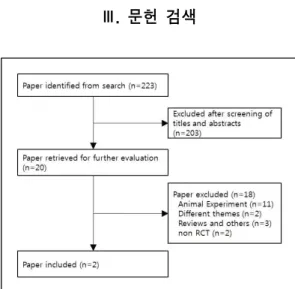
Fig. 1. Flow chart of the trial selection process.
중풍 급성기의 레이저치료와 관한 문헌을 조사 하기 위해서 PubMed와 Thomson ISI의 Web of Knowledge를 이용하여 검색을 실시하였다. 최근 10년간 보고된 문헌을 조사하기 위하여 2000년 8월 부터 2010년 8월까지 전자출판된 문헌을 검색하였다.
급성기 뇌중풍의 최신지견을 살펴보기 위해 사람을 대상으로 하는 무작위배정비교임상시험(randomized controlled trial: RCT)을 찾고자 하였으며 검색과 정에서는 임상시험 뿐만 아니라 증례보고, 종설논 문, 단신보고 등을 모두 포함시켰다. 검색어는 레 이저치료의 조사 방식이 저단계 레이저 치료(Low level laser therapy)이므로 이에 해당하는 표준검색 어(Medical Subject Headings: MeSH)인 "Laser Therapy, Low-Level"과 중풍에 해당하는 표준검색 어 “Stroke”를 동시에 만족하는 문헌을 검색하였 다. 위의 검색어로 검색된 문헌에 대하여 제목과 초록을 검토하여 문헌을 1차 선별하였고, 이후 본 문을 조사하여 연구에 사용된 레이저의 형태와 중 풍급성기에 대한 치료인지를 확인하여 문헌을 재 차 선별하였다. 그리고 사람 대상의 임상 연구 문 헌과 동물시험연구, 그리고 종설논문을 비롯한 비
편이었고, 제목과 초록을 검토한 결과 검색 목적에 적합하지 않은 문헌 203편을 배제하고 20편을 대상 으로 2차 선별을 진행하였다. 이 중 11편은 동물을 이용한 연구였으며, 1편은 급성기치료에 대한 적용 이 아니었고5, 1편은 하악관절수술이후 발생한 말 초신경마비증상에 대한 레이저치료를 다룬 문헌이
었다6. 그 외에 3편의 논문이 임상논문이 아닌 리 뷰 형식의 문헌이었고4,7,8, 임상연구이나 RCT의 형 식이 아닌 문헌이 2편이었다9,10. 최종적으로 2편의 연구가 사람대상 무작위배정비교임상시험이었다1,2.
Ⅳ. 임상 문헌 분석
Title Infrared Laser Therapy for Ischemic Stroke: A New Treatment Strategy: Results of the NeuroThera Effectiveness and Safety Trial-1 (NEST-1)1
Journal Stroke 2007;38;1843-1849
Objective To evaluate the safety and preliminary effectiveness of the NeuroThera Laser System in the ability to improve 90-day outcomes in ischemic stroke patients treated within 24 hours from stroke onset.
Study design RCT double blind
Subjective N=120(79/41) age=40-85, onset<24 hrs, NIHSS score 7-22
Intervention Allocation: active laser n=79, placebo laser(laser off) n=41 / Laser: PhotoThera, Inc, 808 nm, near-infrared, Class IV, 20 predetermined locations on the shaved scalp skin by cap, 2min at each sites, total 1 J/cm2, mean treatment time 18h(laser)/16h(placebo) Evaluation methods 1st factor(tested at screening, randomizing): NIHSS, 2nd factor(tested at 30, 60, 90d):NIHSS, mRS, Barthel Index, and Glasgow Outcome Scale Statistical analysis 1. stratified Cochran-Mantel-Haentzel (CMH) test(van Elteren test)[for full mRS,binary mRS, binary NIH] 2. logistic regression[for binary mRS, binary NIH]
Results-Baseline 122 enrolled, 2 dropout before randomization. NO baseline difference, No adverse effect Results-Efficacy dNIH(70%/51%, P=0.035[severity & treat time from onset], P=0.048{severity only});
Odd ratio 1.40(95% CI, 1.01-1.93) at only controlling baseline severity; a:b:c:d
=38%:20%:11%:30% (laser) vs 29%:7%:15%:49% (placebo) Results-Safety No serious adverse events were directly attributable to TLT
Conclusion May indicate that infrared laser therapy has potential to become a treatment of ischemic stroke in humans when initiated within 24 hours of stroke onset
dNIH: dichotomous NIIHSS. a=final NIHSS 0-1 & improved ≥9points, b=improved ≥9points, c=final NIHSS 0-1, d=non either
Table 1. Transcranial laser therapy for Ischemic Stroke-1
Title Effectiveness and Safety of Transcranial Laser Therapy for Acute Ischemic Stroke2 Journal Stroke published online Feb 20, 2009
Objective To investigate transcranial laser therapy (TLT) can use near-infrared laser technology to treat acute ischemic stroke .
Study design RCT double blind
Subjective N=660(331/327) age=40-90, onset<24 hrs, NIHSS score 7-22
Intervention Allocation: active laser n=331, placebo laser(laser off) n=327(2 drop out) / Laser:
PhotoThera, Inc, 808 nm, near-infrared, 20 predetermined locations on the shaved scalp skin by cap, 2min at each sites, mean treatment time 14:38(laser)/14:43(placebo) Evaluation methods 1st factor: dichotomous mRS(0-2=success/3-6=failure) 2nd factor: dichotomous NIHSS(success when 90day score 0-1 or change over 9 points)
Statistical analysis 1. multiple logistic regression(for d-mRS) 2. stratified Cochran-Mantel-Haentzel (CMH)test(van Elteren test) Results-Baseline 660 enrolled, 2 dropout(placebo), baseline balanced
Results-Efficacy success 120(36.3%)[laser] vs 101(30.9%)[placebo] p=0.094 OR 1.38(95% CI, 0.95 to2.00) All covariates except sex Results-Safety No serious adverse events were directly attributable to TLT
Conclusion TLT was safe but did not significantly improve patient outcomes as Table 2. Transcranial laser therapy for Ischemic Stroke-2
최종 선정된 2편의 연구는 모두 미국, 이스라엘, 스웨덴 등에서 10곳 이상의 병원을 중심으로 수행 된 공동임상연구였다1,2. Table 1과 Table 2의 연구 는 수행된 기간과 피험자의 수는 다르지만 동일한 레이저 장비와 동일한 연구방법을 적용하여, 급성 뇌중풍 환자의 경두개레이저 치료의 효과와 안전 성을 평가하기 위한 임상연구이다. 두 연구에서 대 상자는 허혈성 뇌경색이 발병한 시점에서 24시간 이 경과하지 않은 환자로 NIIHSS 점수가 7-22점 을 만족하는 신경학적 이상을 보이는 환자를 대상 으로 하였다. 피험자에 대해 PhotoThera Inc. USA 의 NeuroThera Laser System(NTS)을 이용하며, 면도된 두피에 모자형태의 부착물을 사용하여 일 정한 두개위치에 808 nm 파장의 레이저를 평균 15 시간가량 조사한 후 시술 전, 시술 후 5, 30, 60, 90 일에 평가하였다. 시험 도중 동일한 처치를 하되 레이저 전원을 끈 상태로 유지한 대조군과 비교분 석하였다. 치료효과는 Table 1의 경우 NIHSS와
질환 환자의 신경학적 증상을 평가하는 도구를 사 용하였고, 그 결과를 호전 정도에 따라 이분화하여 평가하였고, Table 2의 경우 처음부터 NIHSS와 mRS 척도의 결과를 이분화하여 평가하였다. 그 결 과 NIHSS에서 증상이 심할수록, 조기에 치료받을 수록 시험군에서 더 나은 호전도를 보였다는 결과 를 얻었으며1, 두 군간에 유의한 차이는 없었으나 시험군에서 더 나은 효과를 보이는 경향을 얻었다 고 평가하였다2. 안전성에 있어서는 두 연구 모두 에서 레이저 치료로 인한 심각한 부작용이 없었으 며, 경두개레이저치료가 안전한 치료방법이었다고 보고하였다.
Ⅴ. 고찰 및 결론
의료용 레이저는 외과레이저(surgical laser)와 치료레이저(therapeutic laser)로 구분된다. 치료레 이저는 생체자극효과(biostimulation effect)를 통해
효과를 목표로 한다11,12.
레이저의 치료 원리는 일반적인 견해와는 달리 온열 효과가 아니라, 세포활성을 촉진하고 세포에 에너지 생성을 촉진하는 데에 있다13. 광선의 자극에 대하여, 세포내의 미토콘드리아 respiratory chain에 서 cytochrome c oxidase가 photo-receptor로서 작 용하여 ATP 생성을 촉진하는 것이 그 기본적인
원리이다14-20.
통상적으로 뇌경색이 발생한 부분은 해부학적으 로 뇌조직에서 경색 중심부의 ‘괴사 부위’, 괴사부 위을 둘러싼 주변 조직의 ‘상해 부위’, 인접 부분의
‘허혈 부위’가 생성된다. 괴사 부위 주변의 상해 부 위와 허혈 부위는 경색의 진행 여부와 뇌부종, 산 소 및 에너지 공급의 유무에 따라서 회복이 가역 적 또는 비가역적인 양상으로 전개될지가 결정되
게 된다21,22. 동물실험모델에서도 허혈이 유발된 토
끼 대뇌피질 조직에서 ATP의 감소가 발견된다27. 따라서 뇌경색이 발생한 부위에 레이저 광선을 조 사한다면, 미토콘드리아에서 ATP 생성이 촉진됨 으로써 뇌 세포 및 glial cell이 에너지 공급을 받아 세포사멸이 진행되는 것을 방지할 수 있게 되고, 이는 궁극적으로 뇌 세포 손상을 최소화하여 후유 증을 줄이는데 기여할 수 있는 것이다.
이와 같은 이론적 배경을 바탕으로 Leung은 쥐를 대상으로 한 뇌허혈모델에서 8.8 mW 출력, 660 nm 파장의 GaAlAs레이저가 신경독소로 작용하는 nitric oxide의 발생을 억제하고 신경보호작용과 재생작용 이 있는 transforming growth factor-β1(TGF-β1) 의 발현을 향상시킨다는 보고를 하였다23.
2004년부터 Lapchak에 의해서 주도적으로 진행 된 일련의 연구는 small clot embolic stroke model 을 사용하여 뇌경색을 유발한 토끼를 대상으로 동 물 실험이 수행되었다4,24. 이 연구에서 중풍발병 6 시간 이내에 diode laser의 일종인 GaAs 레이저를 조사하고 치료 24시간과 21일이 경과한 다음에 행 동기능(behavioral function)에서 유의한 치료 효과 를 보인다는 사실을 보고하였다. 2007년 연구에서
는 펄스모드(pulse mode)의 경두개레이저가 연속 모드(continuous mode)에 비해서 마비된 운동능력 의 향상을 보였다고 하였다25. 2008년 연구에서는 토끼의 색전경색모델에서 tPA와의 병행요법을 시 도하였는데, 경색 후 출혈의 위험성이 없어서 레이 저치료 단독이나 tPA와의 병행치료가 안전할 것이 라 주장하였다26. 또한 2010년 연구에서는 레이저치 료 결과 피질조직내 ATP 수준이 향상된 것을 토 대로 레이저치료가 세포내 미토콘드리아에 에너지 를 전달하여 ATP합성을 촉진하고 이것이 레이저 치료의 허혈성 경색치료의 메커니즘이라는 가정을 실험적으로 증명하였다27.
임상 연구 결과를 살펴보면, 뇌경색 환자 120명 을 대상으로 한 Lampl의 연구(NEST-1)에서 뇌경 색 발병후 24시간 이내에 경두개레이저치료를 시 행했을 때, 30일, 60일, 90일 뒤에 NIHSS 및 mRS 등이 모두 대조군에 비해서 유의한 차이를 보이는 점은 이 같은 가정을 뒷받침한다1,4.
Zivin 등이 수행한 4개국 57개 center에서 이루 어진 연구(NEST-2)에서 660명의 뇌경색 환자를 대상으로 유사한 연구가 진행되었다. Zivin의 연구 는 미국의 캘리포니아대학, 스탠포드대학, 보스턴 대학, 메사추세츠 의과대학, 펜실베니아 의과대학 등과 독일의 하이델베르크대학 등을 비롯하여 스 웨덴, 이스라엘, 페루 등의 공동 연구로 진행되었 다. 연구 결과 레이저치료군의 NIHSS 및 mRS는 대조군에 비해서 우수하였으나, 유의성이 떨어지는 결과를 보였다(P=0.094). 그러나 고찰에서 중등도 가 심한 환자군을 제외한 결과에서는 유의하다고 하였다고 보고하였으며2,4, Lampl과 Zivin의 연구 모두 안전성에 대해서는 매우 우수한 것으로 확인 되었다2,4.
이와 같은 연구의 진행에 영향을 받아 중풍 이 외의 적용증에도 연구가 진행되었다. 하버드의대의 Schiffer 등 연구진이 수행한 보고에서는 전두엽에 near infrared light을 조사하여 우울증과 불안을 치 료한 임상 연구가 보고되기도 하였다28. 이는 대뇌
에 대한 경피적 비침습적 레이저 조사가 얼마든지 다른 연구 성과로서 나타날 수 있음을 시사하며, 새로운 연구 방향을 제시해주는 좋은 척도가 된다.
아울러 한의학의 각 임상영역, 특히 뇌신경계와 관련된 분야에서 얼마든지 적응이 가능한 새로운 연구의 방향을 제시해줄 수 있을 것으로 기대된다.
한의학에서 사용되는 레이저는 경혈 자극에 주로 사용하는 레이저침과 근육에 사용하는 경근(經筋) 레이저, 경맥(經脈)레이저, 이(耳), 구(口), 비강 (鼻腔)에 사용하는 오관(五官)레이저 등으로 구분 된다11. 레이저치료 자체가 온열효과가 아니라 생체 자극 효과에 기반을 두고 있으며, 레이저 치료를 비롯한 광선치료는 생체의 근원적인 생명활동을 자극하여 치료목적에 도달하는 것으로 益氣補腎, 溫煦命門의 치료 효과를 가지고 있는 한의학적 이 론과도 부합되는 치료이다29. 그러나, 경근레이저나 경맥레이저의 경우에 최근 임상활용이 감소하는 경향을 보이고 있는데, 그 원인으로 올바른 치료방 법이나 조사방법, 정확한 조사량에 대한 이해가 부 족하여 활용이 떨어지는 면도 있었다.
최근 미국 등에서 급성기 중풍환자를 대상으로 레이저를 이용한 경두개 광선치료를 시도하는 것 은 우리에게 시사하는 바가 크다. 이 치료법은 한 의학의 두침(頭鍼)의 원리를 이용하여 레이저 자 극을 주는 것과 동일한 치료방법으로서 한의학적 치료 영역에서도 충분히 적용이 가능할 것으로 생 각된다. 또한 중풍을 비롯한 뇌질환에 多用하는 風 府, 風池, 百會 등의 경혈 자극과 함께 응용이 가능 하므로 좋은 치료 수단으로 발전시킬 수 있다.
역사적으로 학문은 인접 학문과 교류하고, 하나 의 기술은 새로운 기술을 흡수하면서 발전해 왔다.
따라서 한의학의 원리에 입각해서 전통적인 치료 방법을 레이저나 light emitting diode(LED)와 같 은 새로운 도구와 기술에 접목시켜 발전시킬 필요 가 있다. 아울러 경두개 광선 치료의 한방 임상 활
감사의 글
이 논문은 2010년 교육과학기술부의 재원으로 한국연구재단의 지원을 받아 수행된 연구입니다 (과제번호 2010-0013579).
참고문헌
1. Lampl Y, Zivin J, Fisher M, Lew R, Welin L, Dahlof B, Borenstein P, Andersson B, Perez J, Caparo C, Ilic S, Oron U. Infrared laser therapy for ischemic stroke: a new treatment strategy.
Results of the NeuroThera effectiveness and safety trial-1 (NEST-1). Stroke. 2007;38:1843-9.
2. Zivin J, Albers G, Bornstein N, Chippendale T, Dahlof B, Devlin T, Fisher M, Hacke W, Holt W, Ilic S, et al.: Effectiveness and safety of transcranial laser therapy for acute ischemic stroke. Stroke 2009;40(4):1359-64.
3. Streeter J, De Taboada L, Oron U. Mechanisms of action of light therapy for stroke and acute myocardial infarction. Mitochondrion 2004 Sep;
4(5-6):569-76.
4. Stemer AB, Huisa BN, Zivin JA. The evolution of transcranial laser therapy for acute ischemic stroke, including a pooled analysis of NEST-1 and NEST-2. Curr Cardiol Rep. 2010;12(1):
29-33.
5. Oron A, Oron U, Chen J, Eilam A, Zhang C, Sadeh M, Lampl Y, Streeter J, DeTaboada L, Chopp M. Low-level laser therapy applied transcranially to rats after induction of stroke significantly reduces long-term neurological deficits. Stroke. 2006 Oct;37(10):2620-4.
6. Ozen T, Orhan K, Gorur I, Ozturk A. Efficacy
after injury to the inferior alveolar nerve. Head Face Med. 2006 Feb 15;2:3.
7. Yip S, Zivin J. Laser therapy in acute stroke treatment. Int J Stroke. 2008 May;3(2):88-91.
8. Lampl Y. Laser treatment for stroke. Expert Rev Neurother. 2007 Aug;7(8):961-5.
9. Kochetkov AV, Gorbunov FE, Minenkov AA, Strel'tsova EN, Filina TF, Krupennikov AI. The optimization of an early rehabilitation program for cerebral stroke patients: the use of different methods of magneto-and laser therapy. Vopr Kurortol Fizioter Lech Fiz Kult. 2000 May- Jun;(3):17-21.
10. Anishchenko GIa, Pisareva GI, Kochetkov VD.
Laser therapy of post-stroke Dejerine-Roussy thalamic syndrome. Sov Med. 1986;(4):41-3.
11. 장인수, 신금백 共譯. Tunér J, Hoe L 原著. 레 이저 치료학. 서울: 정담; 2006, p. 8-9, 27-49, 104-7.
12. 장인수 譯. Litscher G, Schikora D 原著. 레이 저침치료학-과학적접근과임상. 서울: 메디컬코 리아; 2007, p. 31-3, 210-13.
13. 황의형, 양창섭, 장인수. 레이저침 시술에 사용 되는 레이저 기기의 적용 범위에 대한 고찰. 대 한침구학회지. 2009;26(1):49-57.
14. Karu T. Photobiological Fundamentals of Low Power Laser Therapy. IEEE Journal of Quantum Electronics. 1987;QE23(10):1703-17.
15. Karu T. Photobiology of low-power laser effects.
Health Physics. 1989;56:691-704.
16. Karu T. Primary and secondary mechanisms of action of visible to near-IR radiation on cells.
J Photochem Photobiol B 1999;49:1-17.
17. Karu T. Ten lectures on basic science of laser phototherapy. Prima books. Grängesberg Sweden.
2007.
18. Campbell SS, Murphy PJ. Extraocular circadian
phototransduction in humans. Science. 1998 Jan 16;279(5349):396-9.
19. Eells JT, Wong-Riley MT, VerHoeve J, Henry M, Buchman EV, Kane MP, Gould LJ, Das R, Jett M, Hodgson BD, Margolis D, Whelan HT.
Mitochondrial signal transduction in accelerated wound and retinal healing by near-infrared light therapy. Mitochondrion. 2004 Sep;4(5-6):559-67.
20. Huang YY, Chen AC, Carroll JD, Hamblin MR.
Biphasic dose response in low level light therapy.
Dose Response. 2009 Sep;7(4):358-83.
21. 김영석, 문상관, 박성욱, 한창호. 임상중풍학.
서울: 도서출판정담; 2007, p. 42-6.
22. 전국한의과대학심계내과학교실. 한방순환신경내 과학. 서울: 군자출판사; 2010, p. 465-7.
23. Leung MC, Lo SC, Siu FK, So KF. Treatment of experimentally induced transient cerebral ischemia with low energy laser inhibits nitric oxide synthase activity and up-regulates the expression of transforming growth factor-beta 1. Lasers Surg Med. 2002;31(4):283-8.
24. Lapchak PA, Wei J, Zivin JA. Transcranial infrared laser therapy improves clinical rating scores after embolic strokes in rabbits. Stroke.
2004 Aug;35(8):1985-8.
25. Lapchak PA, Salgado KF, Chao CH, Zivin JA.
Transcranial near-infrared light therapy improves motor function following embolic strokes in rabbits: an extended therapeutic window study using continuous and pulse frequency delivery modes. Neuroscience. 2007 Sep 21;148(4):907-14.
26. Lapchak PA, Han MK, Salgado KF, Streeter J, Zivin JA. Safety profile of transcranial near -infrared laser therapy administered in combination with thrombolytic therapy to embolized rabbits.
Stroke. 2008 Nov;39(11):3073-8.
27. Lapchak PA, De Taboada L. Transcranial near
infrared laser treatment (NILT) increases cortical adenosine-5'-triphosphate (ATP) content following embolic strokes in rabbits. Brain Res. 2010 Jan 8;1306:100-5.
28. Schiffer F, Johnston AL, Ravichandran C, Polcari A, Teicher MH, Webb RH, Hamblin MR.
Psychological benefits 2 and 4 weeks after a single treatment with near infrared light to the
forehead: a pilot study of 10 patients with major depression and anxiety. Behav Brain Funct.
2009;5:46.
29. 장인수, 조기호, 김영석, 배형섭 이경섭, 강신화, 선중기. 저단계 레이저 치료에 대한 국내 논문 분석 및 한의학 임상 활용 방안. 대한한의학회 지. 2001;22(3):11-20.